Showing posts with label Mukul Anand. Show all posts
Showing posts with label Mukul Anand. Show all posts
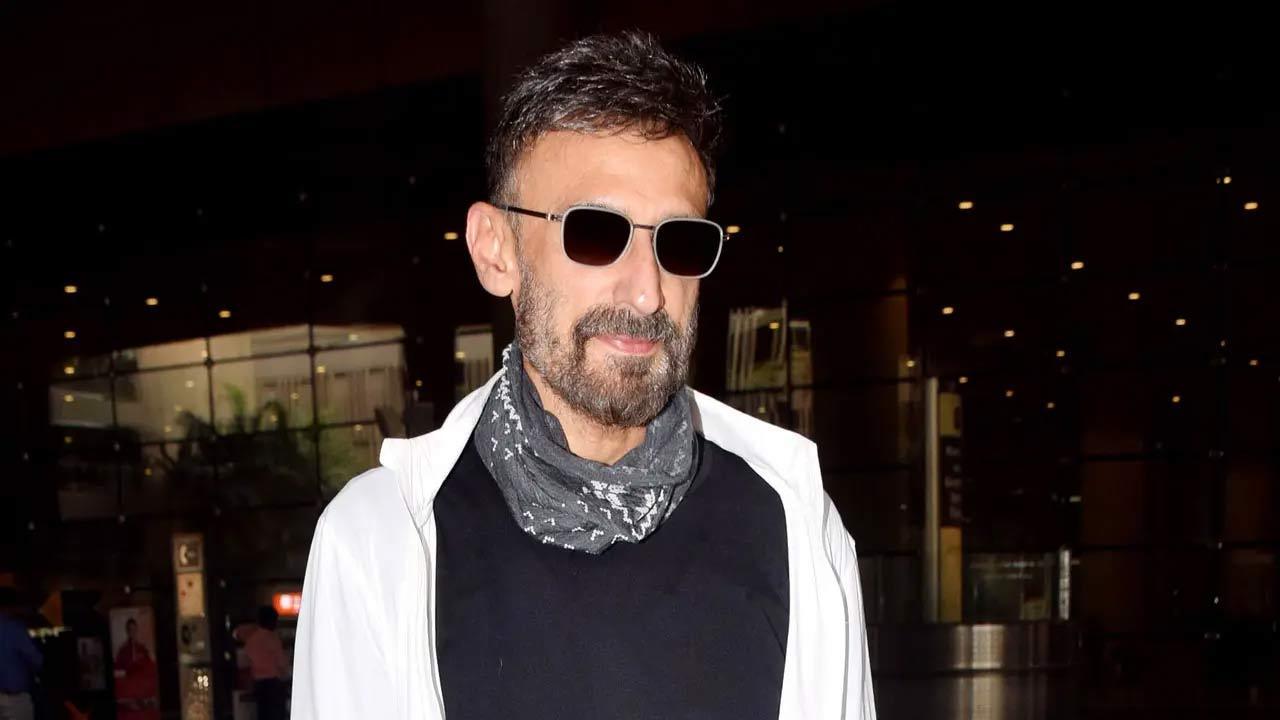
I played the villain in almost every film and was doing well-Rahul Dev
9:29 AM
Kanksha Vasavada (AHMEDABAD TIMES; February 21, 2025)
Known for playing strong antagonists in Bollywood and south Indian films, along with doing Odia, Punjabi, Bengali and Bhojpuri films, Rahul Dev is in an interesting phase of his career. Rahul, who was in Ahmedabad recently, says, “I tried breaking my image as a villain in films by doing other characters, but I was always offered negative roles. Now, thanks to OTT, I am exploring so many other genres and characters. I am enjoying myself more. Bahot real content pe kaam karne ko mil raha hai, which I was seeking for a while.”
He adds, “I now believe in doing roles which make me happy instead of focusing on what makes others happy. By God’s grace, I am not in a position where I have to work to sustain. I am grateful for the work I am getting across mediums and languages.”
‘I ACCEPTED GETTING TYPECAST AS A VILLAIN’
Before he got into films, Rahul was a top model. He says, “I was enjoying modelling when I got a call in the ’90s from Mukul Anand for Dus. I was supposed to be the negative lead opposite Salman Khan and Sanjay Dutt. However, the film got shelved halfway (after Mukul Anand passed away). In 2000, my journey in films began with Champion, where I played an antagonist.”
Asked about getting typecast as a villain, he says, “In those days, being typecast was very easy. I played the villain in almost every film and was doing well. Playing a negative character puts you in a larger-than-life situation, where you have big guns, or you are riding a horse or own a chopper. For a middle-class man from Delhi, these were new experiences. I even tried doing positive characters in films like Kyon? and 88 Antop Hill, but people called them art films. Those were the days of commercial cinema, and I accepted getting typecast. I tried making each character impactful.”
‘IT TOOK ME A WHILE TO GET BACK TO WORK AFTER MY WIFE RINA PASSED AWAY’
Rahul lost his wife Rina to cancer in 2009 and has been a single parent since then. He says, “It was a very sudden change for me, and I didn’t get time to cope with it. While I didn’t take up new projects, I was busy with completing the ongoing projects till 2011. I moved to Delhi with my son, where I donned the role of single parent. It was challenging and I was working in the gyms that I owned in Delhi. In 2013, my guru asked me to get back to films. After that, there was no looking back.”
I’m the one who brought John Abraham to this world of masala heroism-Milap Zaveri
7:49 AM

Renuka Vyavahare (BOMBAY TIMES; November 23, 2021)
Writer-director Milap Milan Zaveri talks about the longevity of masala potboilers in an age of critic-friendly OTT platforms, creative conflict with John Abraham, why ’70s cinema influences him a lot and his upcoming film Satyameva Jayate 2. Excerpts:
John Abraham plays a triple role in Satyameva Jayate 2. It’s clearly an ambitious project for you. One sees the return of ’70s melodrama in it with lines like ‘Chappan inch ka jigra’, isn’t it?
Satyameva Jayate 2 is a film that wages war against corruption. It’s my tribute to filmmakers Manmohan Desai ji, Prakash Mehra, Subhash Ghai, Rakesh Roshan and Mukul Anand. It’s a tribute to these directors, the films they made and that era when cinema was larger than life and heroes had all the good qualities. They preached harmony, secularism, fought evil and corruption and protected women. They did it all while entertaining you. They sang, danced, cracked jokes and beat up the bad guys. That is the kind of cinema that I grew up on. I would go to Gaiety-Galaxy (chain of single-screen theatres) with whatever little pocket money I had and I would watch these films. Look at Rohit Shetty’s films today, for that matter. I don’t make films on a scale as big as his, but he inspires me to offer over the top entertainment. Someone might say, how can anyone rip a tyre apart? But a common man has an alter ego. He wants to display that kind of strength. They want to see a kind of heroism that gives them an adrenalin rush. I want them to feel for that moment that hum bhi hero ban sakte hai.
Did John’s sensibility match yours, or did you have to convince him to play along?
I had to convince him. John has a physique that looks like he can lift a bike. It looks believable. He asked me, ‘Milap, how can I tear a tyre or lift a bike?’ In Force, he picked a bike, I told him this time, you lift the bike with the rider (laughs!). I remember this was trolled a lot on Twitter.
John asked me, “Milap, are you sure!” He has often said that I am his cheat day. He generally follows a healthy diet otherwise, in terms of his film choices, and then there’s me. He gets to indulge in some masala entertainment with me. By nature, he leans towards something like a Parmanu: The Story Of Pokhran, Batla House or Madras Cafe. I am the one who has brought him to this world of masala heroism. Nikkhil (Advani) often teases me by saying, “Yaar, thode kam punch line likh.”
Theatres have reopened, and things have started to look up for the film industry. How do you weigh the two scenarios — comfort of OTT at home versus the movie-going experience?
Cinemas are ten thousand times more comfortable than sitting at home. This whole notion of how cinemas are over, and OTT is the way ahead, is absolute gibberish. The day a big film like Sooryavanshi was released, you couldn’t stop people from going to the cinemas. We saw that happening. Even Eternals! The box office was on fire that weekend. People want to see big-budget action extravaganzas and commercial films on the big screen. You cannot enjoy those on TV without a crowd whistling and cheering around you. Cinemas are back in a huge way; I would say bigger than before. It took a Rohit Shetty who waited for two years to give us the courage to hold on to our films, too. People are bound to come in big numbers as they want to get out. Everyone was in their homes for almost two years! OTT can never replace the big screen. Aap chaahe jitna bhi ghar ka khaana khaalo, aap restaurant jaoge.
So, would you say that co-existing is the way ahead?
I agree. Both offer unique experiences. They said radio will kill cinemas, TV will kill cinemas, VCR will kill cinemas, and now, OTT will kill cinemas, but no one has to die for the other to survive. Everyone can live and co-exist. I feel going forward, content that is critic-friendly may find its way into the OTT more. They will be appreciated more on that platform. Big budget extravaganzas will need the big screens. Look at the south market. They have never lost sight of the mass audience. Commercial entertainment rules there, so heroes are revered. The escapism that these films offer will never be obsolete. You want to get away from your day-to-day problems. Of course, I want to see realistic, gritty content as well, but I want some guilty pleasure, too. I want to be taken over by masala entertainment with its claps, whistle inducing dialoguebaazi and action.

Mukul Anand's Mikhail Anand makes his short film debut with The Dinner Invite; stars Divya Dutta
7:59 AM
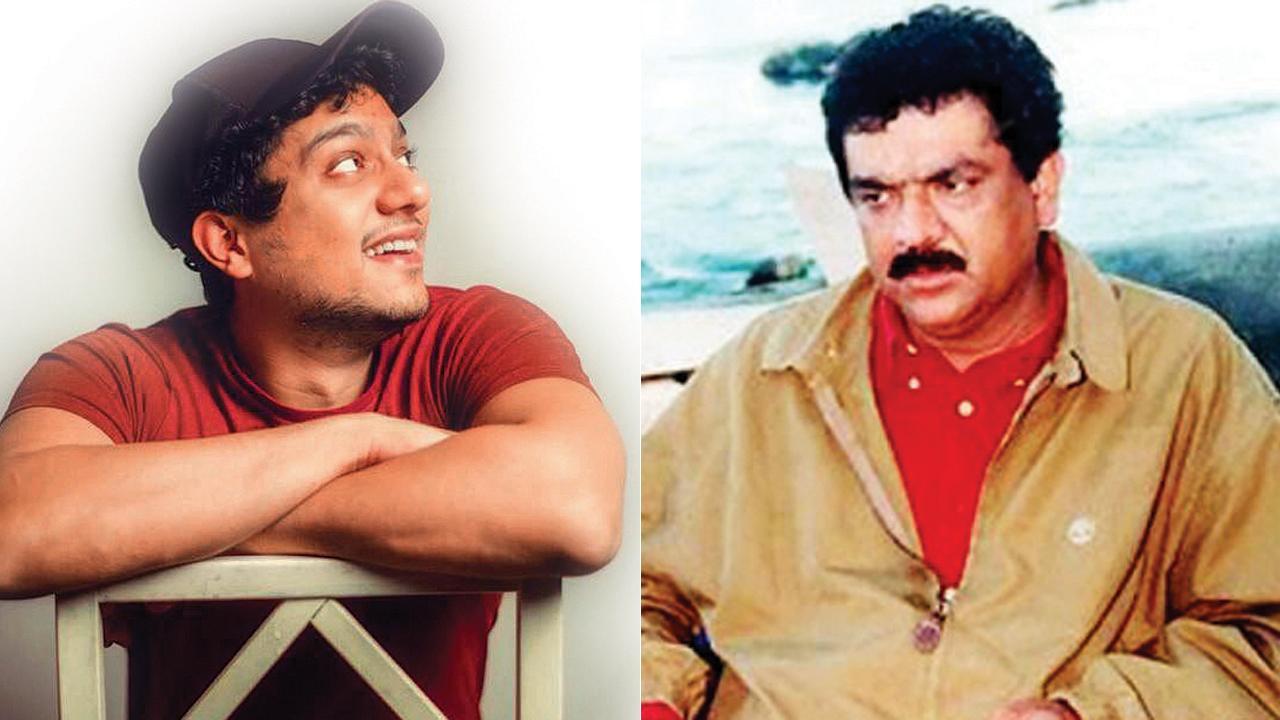
Mikhail Anand; (right) Mukul Anand
Mikhail, who makes his directorial debut with The Dinner Invite, on inheriting passion from late filmmaker-dad Mukul Anand
Mohar Basu (MID-DAY; November 19, 2021)
The flipside of nepotism, if one were to argue, is that star kids have the onus of taking ahead their family legacy. So, charting one’s own path becomes all the more important. That’s the note on which we kick off our chat with Mikhail Anand, son of the late Mukul S Anand, director of films like Agneepath (1990) and Khuda Gawah (1992). Mikhail is set to make his directorial debut with the short film, The Dinner Invite, starring Divya Dutta, Natasha Bharadwaj and Parzaan Dastur.
Asked about the learnings from his father that he has used in the film, Mikhail says, “He was relentless in pursuit of his vision; he pushed himself to extreme lengths to achieve it. I want to approach every moment on the set with the same passion and conviction.” The crime comedy was shot in Alibaug on November 18 and 19.
Mukul was all of 45 when he died of a heart attack in 1997. He was in Utah shooting the action film, Dus, which was to feature Salman Khan and Sanjay Dutt. The film remained incomplete after his demise. Does he feel the pressure of carrying forward his filmmaker father’s legacy? Mikhail says, “I feel a little pressure following in the footsteps of someone whose stories are so loved and well-remembered, but I view the legacy as a blessing. That’s what I plan to focus on, as I try to create my own legacy.”
Waman Bhonsle was my friend, philosopher, guide and the first genius I came across in the industry-Vikram Bhatt
7:51 AM

The filmmaker remembers National Award winning editor Waman Bhonsle who passed away yesterday
Onkar Kulkarni (BOMBAY TIMES; April 27, 2021)

Post the news break, the film fraternity was quick to post condolences and share memories on social media. Vikram Bhatt was one of the firsts to share a few words on social media about the man who was his friend, philosopher and guide. When BT reached out to the filmmaker, he said, “He is the first genius that I came across in the film industry. He was so good when it came to editing. He was my friend, philosopher and guide. He’s taught me so much. I was a Chief Assistant on Agneepath (1990) when I first met him. He took me under his wings. He taught me the finer points of film editing. That was the time when the process used to be different as there were no computers.”

After Vikram turned to direction, he continued to closely work with Waman but soon the latter made an exit. “He edited my films all the way till Ghulam (1998). Then, computers came in, however he didn’t want to take the leap. When I was making Kasoor (2001), I told him that I will hire a guy who he can sit with and do the editing. He said, ‘No, Vikram, if I cannot hold a film in my hand then I can’t edit it.' I missed him. There was a time when he used to be so busy with film projects that he used to give filmmakers 3-4 hours everyday. The who’s who have worked with him, right from Subhash Ghai, Raj Khosla, Shekhar Kapur, Mahesh Bhatt, Gulzar saab, Boney Kapoor, Mukul Anand, and the list is endless.”

What we have done is just the warm up-Shreya Ghoshal, Shekhar Ravjiani
8:29 AM

Shreya Ghoshal, Shekhar Ravjiani are aware of the measures they've taken to survive in the industry for 20 years. In an interaction, they say they are only getting started
Sonia Lulla (MID-DAY; February 1, 2021)
Two years after Shekhar Ravjiani and Shreya Ghoshal first expressed their interest in collaborating on this property, mid-day is finally able to have them arrive at a time suitable to both. Brought together via a video-conferencing app, the talkative singer-composer duo leave little scope for a third person’s intervention. Over cups of coffee, they amuse one another with poor jokes, and us, with noteworthy stories of their respective journeys in the music industry. Edited excerpts from the interview:
Shreya: How has this phase been for you? You look so comfortable in Khandala that it seems like you no longer want to come back.
Shekhar: This has been a great year for me. I understand that people have gone through a tough time, physically, mentally, in their relationships and due to the pressure of work. But, for me, it was like a gate had opened. I didn’t have to think about anything, and simply went with the flow. If someone asked me which year has been among my most favourite in recent past, it will be 2020. Things rolled with ease. I was busy [working for] my music school, and making songs without worrying about the platform for which they were being created, or how they were being promoted. I wanted to go back to that stage in my life when I had no films, and created music because I loved to do so. Those wings are out now, and I am experiencing that feeling of flying [again].
Shreya: I had a similar experience. I have never spent as much time in my kitchen or living room as I have been spending now. The first few days were about cooking meals. Then, it seemed like [we had been in lockdown for] too long. At some point, I [feared] for the future. Then, I gave in, and took to a routine I had once diligently followed. [I began to] do my riyaaz regularly. An aspect of self-improvement was completely lacking in my life. And implementing that again has brought about a big change.
Shekhar: If you could revisit your life and do anything differently, what would that be?
Shreya: Had the things that happened to me, not have happened, I would not have been able to take the decisions that I did to reach here. I lived in Rajasthan, in a township of scientists and engineers. No one in the community had made a career out of music, and often [school authorities] would frown upon me for skipping school to fulfil a music commitment. But, my parents were supportive, and made me believe that what I was doing was special, and I was privileged to have this gift. I didn’t have a degree. My friends are all big techies today, and I could have been among them. But I would have been mediocre, and I am glad that I didn’t [choose another career]. I realised early on that I may not be great, but I felt good about myself when I sang.
Shreya: Tell us about how you fell in love with music.
Shekhar: It started pretty early. Luckily, my family members were such that if any chord was struck at home, each member was capable of catching the note and singing in tune. We didn’t come from a music background, but music was always played at home. When guests would come over, people would jam. My dad was a phenomenal accordion player, which he pursued as a hobby. I eventually took music lessons from the piano player Xavier Fernandes. I was never interested in the first 50 minutes of the sessions, which involved theory. But, the last 10 minutes, when he taught me a song, were cherished. I would practice what he’d teach in those last minutes, long after he would leave. Thus, I say, I have learnt by listening. A friend who worked for Mr Mukul Anand took a tape of mine to him. He heard it, and wanted to meet me. At 16, I got my first job as a composer and singer, and at 17, I was among the busiest composers for 60-second ads.
Shreya: When did [your debut film] Pyaar Mein Kabhi Kabhi, come out?
Shekhar: I had been working in the industry for seven years before it came my way. It was made by Mukul Anand’s assistant Raj Kaushal, and most of the artistes associated with the film, went on to [achieve immense fame].
Shreya: I want to know about your new music school, the GIIS Shekhar Ravjiani School of Music.
Shekhar: In 2018-2019, I did workshops in Singapore. The kids were so talented, and sang Carnatic and Hindustani classical music so well, that the limited workshops that I did there were very successful. That’s when we locked the GIIS and Shekar Ravjiani Music School, with 22 campuses and 15,000 students. Fifteen of them will be personally mentored by me. I will pick those students who really have the desire to learn, and who are happy souls. Your heart has to be happy to flourish.
Shekhar: Can you tell us about your latest song?
Shreya: The music that we have around us is not inspiring. With Angana more, I wanted to do a bandish, but decided to make a song instead. I wanted it to be unique, and that is when [I roped in] my brother [Soumyadeep]. He is a full-time techie, but has always been passionate about music. But, neither did [the family] encourage him to take it up [professionally], nor did he consider it a [career option]. But, he has found an outlet [to express himself]. I have been a singer and have not been [exposed to] the process of composing. So, this is a journey I really enjoyed.
Shreya: I want you to start working on the collection of songs you have created. When do we begin? I am supposed to work on many of them.
Shekhar: Yea, unfortunately I haven’t been able to connect with Shreya Ghoshal. Do you have a line on her?
I remember Shah Rukh Khan feeding me. He only knew how to make omelette-Anurag Kashyap
8:39 AM

Sit With Hitlist: Maverick director Anurag Kashyap traces his journey in the movies -- from a wannabe actor in college to now -- via funny, never-heard-before anecdotes
Mayank Shekhar (MID-DAY; June 12, 2020)
 The first time ever that filmmaker Imtiaz Ali saw what a portfolio looked like — an album with photos of a person, in multiple looks and poses — was that of an actor called Anurag Kashyap. Back then, Ali was in college in Delhi, helping out a local TV serial crew, when Kashyap approached him with his portfolio.
"It was 1992. Imtiaz was in [Delhi's] Hindu College. I had just discovered theatre, and was told that you need to get pictures clicked, if you want work. I did, after collecting Rs 3000, which was a big sum then. And I started doing a lot of acting on stage, and I did some films," the candid Kashyap recalls.
Ever since Ali told me about that portfolio (in jest, during an interview), I've been meaning to ask Kashyap about it. Besides, he is before me on the screen — this conversation being held over a video-conferencing app. And the last time I saw him on screen was as an actor in the recent, cutesy Zee5 release, Ghoomketu, where he played a cop. Kashyap shuts his eyes with his palm, feigning embarrassment at the mention!
 "Also, what Imtiaz did not tell you was one of the first films that I did as the lead-actor, he was my co-star. The only copy of the film is with Zee, where it had premiered on January 26, 1994. We don't talk about it. Imtiaz will kill me. If you ever pull out a copy from the Zee library, he will come after you too!"
"The good thing about being a bad actor is you know how to extract great performances," Kashyap tells me later. Which in his case, I'm told, notoriously involves hardly ever saying "action" or "cut" on set. Often, no lines for actors to mug up, let alone extensive rehearsals, before shoot. It's a process only the best can survive.
Ali, of course, played the '93 Bombay bomb blast accused Yakub Memon in Kashyap's first release, Black Friday (2007). He played a bigger role in his life, if you consider that Kashyap used to shack up at Ali's place while the latter was doing a post-grad course at Mumbai's Xavier Institute of Communications (XIC).
This is also how Kashyap first met his key associate, Vikramaditya Motwane, with whom he later founded the production company, Phantom, where they did a string of films together. Kashyap also produced Motwane's directorial debut, Udaan (2010). Likewise, Motwane was the show-runner for the Netflix global series Sacred Games (2018), which Kashyap directed both seasons of.
He reminisces, "I couldn't get into XIC, and was living in Imtiaz's room. Aarti Bajaj, my first wife and permanent editor for both mine and Imtiaz's films, was a year junior. Vikramaditya Motwane was Aarti's classmate. That's how we knew each other. But we really became friends during the shoot of [Deepa Mehta's] Water. Vikram was an assistant, and I was writing dialogues. The shoot got stalled [due to protests], and we spent a lot of time in Banaras. Thereafter, I kept meeting him because he was first assistant director (AD) to Vishal Bhardwaj in his first film called Barf, before Maqbool — that never got made."
In fact, if it wasn't for spotting Motwane — somewhere in the back, in a baseball hat — in a picture from the 'mahurat shot' of Kashyap's directorial debut Paanch, that he had posted on Twitter, I wouldn't have known that the two went that far back together. No, it wasn't the film's anniversary being celebrated on social-media. Can't be. That movie never released.
 Kashyap says, "Yeah, that was sometime around 2000. Vikram was one of the sound designers on Paanch. And because I was scared of shooting songs, and he had been Sanjay Leela Bhansali's assistant, I asked him to direct the songs. He had two credits in the film — sound designer, and director of songs. It was a first for many people —Bosco-Caesar as choreographer, Natty [Natarajan Subramanian] as cameraman, Wasiq Khan as art director, Aarti Bajaj as editor. Abbas Tyrewala was the lyricist in the film and Vishal Bhardwaj did the music. Both of them, Vikram, I and others, used to hang out together. Then, there was Sriram Raghavan, Shivam Nair and a whole lot of others — part of another gang. Even Tigmanshu Dhulia, Irrfan and others were all close to my brother [Abhinav]. That was the third gang. I was the centre-point, everywhere. And then I had another friends' circle, with Anand Surapur [who directed Fakir Of Venice, Farhan Akhtar's acting debut], Zoya Akhtar and the lot. When I wrote a script, I had way too many boards to bounce off. And that's what we did!
"I was a huge fan of Sriram Raghavan's Raman Raghav [a docu-drama on a serial killer that Kashyap remade in 2016]. And I used to write with Shiva Nair. They gave me credit on their [script] Ranga Billa, although I was happy to work without credit. Likewise, I rewrote a script of Shiv Subramaniam, Auto Narayan, because I had a take on it. But they also gave me credit. Then a strange thing happened, with a script I wrote officially, for the first time, called Nagarajan — with Kamal Swaroop (Om Darbadar) as director. For that film, I found an actor I was a fan of from Delhi stage, called Manoj Bajpayee. I put the film together. But it never happened. Nobody was showing faith in Manoj. He was going through a hard time and doing Ram Gopal Varma's Daud, which is when Ramu ji said he wanted to make a film [Satya] with Manoj. And asked if he knew of a writer for it. Without having seen any of my written works, Manoj took me to Ram Gopal Varma."
The rest, as they say — if you casually scroll up the 'gangs'/cast of characters again — is history. Of post-millennial, part indie, part commercial, wholly entertaining Hindi cinema. Charge of the bright brigade, if you will. The new subversive Bollywood, arguably. It helps that Kashyap was not just at the centre of several spokes (and that he continues to be).
But that he's also a liberal raconteur: "Oh, one of my favourite stories is about Mahesh Bhatt. He happened to me, right before Ram Gopal Varma. He got me to write films. And Mukesh Bhatt [his brother, and producer] was very miserly with money. I was struggling for rent. Pooja Bhatt was the nicest and kindest; I would tell her to talk to her dad."
"Then I just walked up to [Mahesh] Bhatt saab once and said that I'd rather be a carpenter than work in his office. With his brother [Mukesh] around, he didn't say a word. When I was leaving, he came down, said, 'Don't ever change.' And he put Rs 10,000 in my hand. That was big money in 1994-1995."
Years later, at a post-screening event in a film-festival abroad, Kashyap was narrating the first part of the story above. He heard a voice from the audience: "Aur Mahesh Bhatt ne paise diye the. Woh bhool gaye?" "Bhatt saab was sitting in the crowd. I got so emotional. I have had funny incidents like these."
"I remember [the media maven] Amit Khanna trying to hold me back to work on TV serials, where there was so much money. Naseeruddin Shah also cast me in a play, Androcles And The Lion. I walked out of everything to do [Varma's] Satya. It was instinctive. I had to write that film."
My favourite Kashyap story is about a prominent '90s film-critic who was chatting with Ram Gopal Varma on the sets of Shool. Gazing at a young Kashyap, who had written the film, and mainly to haze him, he asked Varma if his bratty assistant even knew what the word 'shool' meant. Kashyap stuck out his three fingers, "That's tri-shool." Staring at him still, he left his middle-finger pointed up: "And this is shool!"
He repeats the punch-line/move, laughs, continues: "There was a time when Mukul Anand was making Trimurti (1995). I wanted to work with him as an assistant. I would call his house land-line. Every call was a rupee gone. And he was always busy. Third time I said, 'Subhash Ghai bol raha hoon. Unko bolna kal se set pe aane ki zarurat nahin hai [This is producer Subhash Ghai, tell him not to show up on the sets from tomorrow],' and hung up. Now when somebody trolls me on social media, I just remember my time!"
There is then the moment he randomly landed up at Shah Rukh Khan's bungalow Mannat (he mistakenly calls it Jannat) on Bandstand: "I was hungry and I walked into his house, using our college connection [both went to Hansraj in Delhi]. I remember him feeding me. He only knew how to make omelette."
And then, there are the more famous spats, with those clichéd kickers, 'Anurag Kashyap ko gussa kyun aata hai': "Karan Johar gave an interview calling me a psychopath. Till then we had not met. I called him a fat kid, who still thinks he is in school. Remember we had this fight in mid-day. I also said something about Anil Kapoor in the interview that became a headline. But people always knew I was childlike."
Of course much about public exchanges have changed since the late 2000s, where the audience is now equally a participant — altering and shaping opinions on public figures, based on beliefs, rather than any first-hand knowledge. Despite lack of the latter, one opinion is as good as the other.
Kashyap vividly remembers, "I bought my first laptop, and discovered the Internet. What's the first thing you do then? Google yourself. I landed on a page where people were talking about me and my films with incorrect information. I was also going through a phase when everybody was saying things that I am not. I told them this is not true. These people were like, who told you? I said I am Anurag Kashyap! They said, why don't you start talking? I said fine, I'll talk, assuming 20 people will read."
That website was called Passion For Cinema (PFC). If you'll excuse the exaggeration, it was Bombay/Versova's very own Cahiers du Cinema, with diverse/off-stream voices expressing themselves as critics/bloggers, before filmmakers.
Kashyap cites, "Chaitanya Tamhane [Court], Anand Gandhi [Ship of Theseus], Dibakar Banerjee, even before his first movie… There was [composer] Sneha Khanwalkar, Kartik Krishnan, who runs Filter Copy… So many names. Vasan Bala [Mard Ko Dard Nahin Hota] and Neeraj Ghaywan [Masaan] quit their jobs. Suddenly many of these people started working with me. We were raising money. My office-space became a kind of dharamshala. People stayed and lived there — all we could provide was food."
This alternate eco-system might be Kashyap's far more dramatic contribution to films, than merely his movies alone. He's perhaps a film buff/activist, first. And this has always been the case. He's gone to the extent of rescuing actor Rajpal Yadav from Andheri railway station, since he was returning to his hometown, having given up. That's when, Kashyap says, he first met the nondescript Nawazuddin Siddiqui, standing next to Yadav.
At a data/practical level, consider the ensemble cast of Gangs Of Wasseypur (GOW; 2012), which looks now like the first batch of national school of lead-actors, for films and web-series — besides Nawaz, Manoj Bajpayee, Rajkummar Rao, Pankaj Tripathi, Richa Chadha, Huma Qureshi, even Jaideep Ahlawat, who killed it in the deathly dark Paatal Lok. Or, why not Vicky Kaushal, since he assisted Kashyap in GoW!
Also, over years, he's allowed unfettered access to young/untested/fresh writing-directing talents, having actively produced their films, lent his name/heft for no benefit to himself; or generally egged on peers and past associates alike. "Who am I? Someone like Martin Scorsese still makes time for that," Kashyap reasons. Speaking of which, and exploring the film-buff side still — in a very PFC fan-boy sort of way — Kashyap equally lights up when you ask about his Alice/Anurag In Wonderland moments, meeting his own greats.
Like Scorsese, for instance who, after having watched GOW, invited him to be on the jury of the Marrakech film festival. Before Scorsese walked in, Kashyap was smoking outside with the Oscar winning Italian director Paulo Sorrentino, without knowing it was Sorrentino! Both were nervously puffing away.
"When Scorsese sat down on his table — me, [German-Turkish star-director] Fatih Akin, [French sensation] Marion Cotillard, [Italian star] Golshifteh Farahani…We were all equals, looking up to him. We were also there, because of him!"
Or this other time, Kashyap was in the same room as Francis Ford Coppola, "Sophia Coppola, his daughter, was with him. He is old. I kept staring at him for so long that he made me sit on his lap and said, now talk to me!"
These are of course perks of having your works travel among audiences/aesthetes abroad, as Kashyap's (both as producer and director) have, especially at the movie Mecca, Cannes. Plus a global streaming giant like Netflix helps reach around 200 countries simultaneously.
Since Netflix began commissioning Indian content only three-four years ago, Kashyap has already directed two shorts (in the self-explanatory Lust Stories, Ghost Stories), directed-produced two seasons of a show (the underworld saga Sacred Games), produced a zombie mini-series (Ghoul), and directed a feature (Choked).
While the Netflix model evidently allows him to go out of the box (office), as it were, there is also the mainstream audience that can't be altogether alienated. I know at least one friend who did not understand Kashyap's short film in Ghost Stories at all. While the others were gently scratching their heads, it went totally over hers. It was the same look on theatrical audiences with Kashyap's No Smoking (2007). Where does he stand on the art for self-expression versus art for mass-communication debate?
"No film is ever made with the intention of people not getting it. I just don't like to over-explain. So, I try to leave hints here and there. With Ghost Stories, I thought absolutely everybody will get it. The idea behind that was of a woman dealing with her own trauma. Then Zoya [Akhtar] pointed out that I could have confused people by putting the kid in there. No Smoking taught me how not to make Choked. Both are magic realism."
Choked is about kitchen and bathroom plumbing, choking with money/cash! It's also the first Indian filmic commentary on the 2016 demonetisation. Screenshots of related scenes from the film are already doing the rounds as memes on the Internet. Which is the default pop-culture response to most of Kashyap's films.
For instance, the tagline Emotional Atyachar in Dev D (2009). Where does that come from? "There was a line in the song Pardesi, that went, 'Ikke ho gaye, agge yaar'. Sounded like atyachar to me, which is what I kept humming, when 'emotional' hit my head at night, so I called [composer] Amit Trivedi to write it down. The brass band elements came from Kamal Swaroop's Om Darbadar and Emir Kasturica's The Underground. I told Amit and [lyricist] Amitabh Bhattacharya, "Band ko record karna hai. Emotional atyachar gaana hai. Baaki, you guys figure out."
What about the running/chase sequence in Black Friday (2007)? "There were too many arrests to be shown in Black Friday, so we just compressed them with a chase, where we could see the world these characters [blast-accused] came from." How about 'Tumse naa ho payega' from GOW? "That was all in Tigmanshu Dhulia's delivery!" And what about… Okay, this could leap across pages. Will stop now. Deserves a series.

Has Rohit Shetty shelved his plans to remake Angoor with Shah Rukh Khan?
8:05 AM

 Hiren Kotwani (BOMBAY TIMES; December 11, 2017)
Long before Rohit Shetty’s first collaboration with Shah Rukh Khan, Chennai Express (2013), the two were reportedly keen on remaking Gulzar’s cult comedy Angoor (1982) and had even acquired the rights for it. The idea of recreating the classic took a back seat again, when SRK and Rohit worked together on the action-romance Dilwale in 2015. Recently, when we met with the filmmaker, post the success of his last film Golmaal Returns, we asked him whether recreating Angoor with Shah Rukh Khan was still on his mind. He said, “If you give SRK (a film like) Angoor, he will make it into a watermelon! It’s a very sweet story. But when we try to make a simple film bigger, its essence and sweetness diminishes and it goes into another zone. I can go to a hill station, and make a film like Angoor in two months and come back. But I’m still wondering if I want to make a film on that scale or not.” His reasoning is not misplaced, because generally, when a filmmaker like Rohit teams up with an actor like SRK, the audience expects the film to be made on a mega canvas.
Talking about what inspires him to make films that are larger than life, Rohit said, “When we were kids, we looked up to filmmakers like Vijay Anand and Manmohan Desai. Later, when we worked as assistant directors, we were inspired by filmmakers like Mukul Anand. Back then, they didn’t have big budgets but even then they made grand films. Now we have the budgets and technical advantage, but strangely, fewer grand films. My schooling in movies comes from films of those days. So for me, cinema is 70mm, larger than life. When someone sees a film in theaters, it should be a big cinematic experience.”
Some time ago, there were also talks of Rohit remaking Ram Lakhan (1989), but that doesn’t seem to be on the cards either.
During the making of Dus, everyone was surprised to see three composers-Shankar Mahadevan
8:16 AM

Soumya Vajpayee Tiwari (MID-DAY; January 1, 2017)
Ehsaan (Noorani), Loy (Mendonsa) and I (Shankar Mahadevan) were friends since we worked together in the advertising field. But we never imagined that the three of us would be doing music for films together. We were doing a Pepsi commercial for Mukul Anand and he offered Ehsaan to do music for his next film, Dus. Ehsaan refused immediately. But when Mukul pushed him, he said he’d do it if Loy and I also do the film. We met Mukul and had the narration.
When we reached the studio to record the first song, the makers and people from the industry were all there. They asked Mukul who the composer of the film was and he pointed at us. Everyone was surprised to see three composers. They were shocked that there were no musicians, arrangers and music coordinators, etc. Mukul said these three would do everything. So they told Mukul, “Boss, tumne kisko sign kiya hai!” They’d completely given up. In the evening, we recorded the first song, Chandni, and they were floored. They offered us the entire soundtrack! A few days later, Mukul called me from New York, before we were about to record the most important song of the film, Suno Gaur Se Duniya Waalon. He blessed us, saying, “It’s a patriotic number, but I want it to play for every cricket and football match, and even at clubs.” We did the song and the team loved it.
But Mukul passed away during the making of the movie and Dus got stalled. We were happy doing jingles, but we were upset that our career in the film industry saw such a low right at the beginning. It was then that Nitin Manmohan (the producer of Dus), shot a video for Suno Gaur Se to pay tribute to Mukul. The song took off. It played everywhere, from cricket matches to clubs. Mukul was and has been a guiding force. Later, Vidhu Vinod Chopra gave us Mission Kashmir and Farhan (Akhtar) gave us Dil Chahta Hai.
No misunderstanding can change Shah Rukh being our family member-Shekhar Ravjiani
8:18 AM

Priya Gupta (BOMBAY TIMES; January 28, 2014)
Shekhar Ravjiani, 38, is a Kutchi, born and brought up in South Mumbai. He is emotional, sensitive and simple. Emotionally, he depends only on himself and is vulnerable only in front of God. While he is usually calm, there are times when he has a bad temper. He loves his daughter Bipasha the most, considers himself blunt and travels to different places when he is not working. His biggest critics are his daughter and wife Chhaya, who are currently hooked on to his latest song Zehnaseeb from the upcoming film Hasee Toh Phasee. Over an hour-long conversation with Bombay Times in his studio, he talks about the mad Sujoy Ghosh, the extremely talented Sukhwinder Singh and why he needs to go to London every two months. Excerpts:
How was the duo of Vishal-Shekhar formed?
Music was a hobby for me. It was also in the family as my dad played the accordion. My dad was a share trader, but it was therapeutic for him to play his favourite songs on the accordion in the evening. Mum also had a beautiful voice and would sing. Their friends would come home and they would have music sessions. We lived very close to Jagjit Singh sahab, who was a close family friend. He would come home and I would go to his house when he was doing riyaz and would attend his concerts. I started learning classical music at eight and then the piano. At 17, my father got me a big keyboard and I started making music just for fun. A friend of mine once came home and said, ‘Why don't you create jingles?’ I didn’t even know what a jingle was, but was happy to do it. He took me to Mad Films to meet Mukul Anand, who coincidentally was making Dus at that time. He liked my stuff and asked me to make a title track for Dus. While the track could finally not be used in the film, it was a great experience just being with Mukul and learning from him. I also started doing a lot of ad jingles for him. At 20, my friend pushed me to audition for Sa Re Ga Ma where I got selected. I was 23 when Raj Kaushal, who had been Mukul’s assistant, gave me two songs to compose for his film Pyaar Mein Kabhi Kabhi. One day, I was leaving the studio and bumped into Vishal Dadlani. As it happens, Vishal and I had met years back, when a common friend had got us together in a band, to perform for the Nofra Navy Ball, since both of us belonged to South Mumbai. He played the guitar and I, the keyboard, and that was like one of the worst bands in the world. Coincidentally, he had also been asked by Raj to compose two songs for the same film. We exchanged our stuff and decided to make the title track together. We felt our collaboration had worked and Vishal-Shekhar was formed. We set up out first studio in 2002 inside a marble factory in Worli, next to a graveyard. While we have now moved to a better place in Bandra, that first studio will always remain special to us.
What is Vishal like?
He is a kind-hearted soul and a good man. Despite not having formal training in music, he is extremely talented and a fantastic singer, composer and writer. We are very different as people, but there is something about our friendship, that is the strong bond between us. Our combination is the force. I believe that everyone who comes into your life is destined.
You were obviously upset with Shah Rukh asking Honey Singh to make Lungi Dance for Chennai Express. What went wrong?
Shah Rukh is and will always remain a family member. No misunderstanding can change that. Every family has that and we are now creating this mad album for Happy New Year. Shah Rukh is a really nice human being and a lot of fun. He also has a great sense of music and is a super guy. I bumped into Yo Yo Honey Singh and he is a very sweet guy. I enjoy collaboration and whenever the opportunity comes to work together, it will be fun. His music is doing well and at the end of the day, the audience decides what it likes.
We earlier saw music directors singing their own songs and now see music directors singing each other’s songs.
Every single song chooses its own singer. Music directors like Shankar Mahadevan can sing anything. I am also a big fan of his music and we are really good friends and play each other’s music to each other, when we hang out together. I also like Amit Trivedi and Pritam’s music. We have heard stories of how Panchamda and Laxmikant Pyarelal would sit and drink together and jam and sometimes even help each other if they got stuck somewhere.
Your favourite singers?
I love Sukhwinder Singh. He is unbelievable and becomes a part of the song he sings. I also like Shankar Mahadevan, Sunidhi Chauhan and Shreya Ghoshal.
Most promising new singers?
Arijit Singh, Sanam Puri, Neeti Mohan, Nitesh Kadam, and Nandini Srikar.
Other music directors you really like?
There were three people whose music I always bought when I started. AR Rahman, Ismail Darbar and Vishal Bhardwaj. They are fantastic.
Which directors have you enjoyed working the most with?
We had a lot of fun working with Sujoy Ghosh, Milan Luthria (Taxi No. 9211, The Dirty Picture) and Anubhav Sinha (RA.One). Sujoy is a dear friend with a big heart and is totally mad. Milan and Anubhav are very musically inclined. Also, Farah Khan, who is extremely clear about what she wants and for her, it’s always a clear yes or no. If she doesn't like a song, she will say, ‘Yeh Sujoy (Ghosh) ko de do.’
Your song Zehnaseeb from Hasee Toh Phasee, sung by you, is beautiful. Talk about it?
I asked Amitabh Bhattacharya, the lyricist of the song, if he knew of a new word and he said ‘betehaasha’ meaning ‘bahut’. He said, ‘I have another word also and the word is ‘zehnaseeb’ meaning ‘fortunate’. It sounded beautiful, but since I had liked ‘betehaasha’ also, he put both in that song, Tujhe chahoon betehaasha zehnaseeb. We recorded the song and Karan Johar, who is extremely musical, loved it. We kept it on the backburner, till Karan met me two months later and asked for it to be put in the film.
Talk about yourself?
I sometimes get up at 2 in the morning and start playing the piano in my living room if I’ve got a song in my head, without realising that there are other people sleeping at home. Sometimes, I just go off on a long drive in the evening to clear my head. Or I will just take off for two days to London all by myself. I take walks around to disconnect. There is a place called Serpentine in Hyde Park, where I just like to sit with my cup of coffee and be totally blank. I try and do it once every two months. In a creative process, there is a lot of usage of your brain cells and you start feeling claustrophobic and exhausted after a while and want to disconnect. But, come to think of it, I feel really blessed to be the chosen one, to be able to create music, be able to sing a little, have a beautiful family and be happy at work. From a time, years back, when I had visited Film Centre to see a recording with 180 musicians, it was destiny to have got to work with the same number of musicians myself in Om Shanti Om. I have no regrets in life.
Subscribe to:
Posts (Atom)