Showing posts with label Mohammed Rafi. Show all posts
Showing posts with label Mohammed Rafi. Show all posts
"It happened organically": Sonu Nigam on singing Mohammed Rafi’s song during surgery
10:13 AM

Vishakha Pandit (HINDUSTAN TIMES; August 10, 2026)
On Sunday, singer Sonu Nigam shared a video of himself crooning late singer Mohammed Rafi’s Suhani Raat Dhal Chuki (Dulari, 1949) while lying on an operating table undergoing surgery. The unusual moment left fans concerned and wondering what had happened. Nigam now tells us that the surgery was related to a recurring growth on his left ring finger.
“It’s been happening for some time. I had a surgery four months back to remove it, but it has come back again. I think it’s got to do with my arthritis,” he shares.
Explaining how he ended up singing during the procedure, the 53-year-old says, “Dr Nilesh Satbhai is an admirer of mine and he was playing my songs during the surgery. There were some songs playing without vocals, so I just started singing. It happened organically. They enjoyed it and said it has never happened that a patient is singing for the doctors while they operate.”
Nigam says he was the one who suggested that the doctors record the moment: “I told them they could record it as a memory if they wanted.”
Despite the health setback, the singer says he has no plans to slow down. “After the surgery, on Thursday, I went for the launch of my song Chunni. So I have been on the move even after the surgery, and I am not on a break.”
Veteran singer Suman Kalyanpur passes away at 89
8:52 AM

Bella Jaisinghani (THE TIMES OF INDIA; June 1, 2026)
Mumbai: Weeks after Asha Bhosle passed away April 12, India lost another stalwart singer Suman Kalyanpur at age 89 on Sunday May 31. Her voice bore such striking similarity to that of melody queen Lata Mangeshkar that common listeners sometimes mistook one for the other.
Born Suman Hemmady on January 28, 1937, in Dhaka (undivided India), she went on to make a glorious career as a playback singer in Hindi and Marathi apart from a few other Indian languages. Her non-film songs span bhajans, ghazals and Marathi abhang and bhavgeet.
After completing school from St Columba, Mumbai, an artistic Suman enrolled in the JJ School of Art to learn painting. She went on to learn vocal music from Pt Keshavrao Bhole, Ustad Khan Abdul Rehman Khan and Master Navrang.
Her early successes came in two films Shukrachi Chandni and Mangu (1954) followed by a colourful pyramid layered with Sharaabi sharaabi yeh saawan ka mausam, Rahein na rahein hum, Aajkal tere mere pyar ke charche, Na na karte pyaar, Na tum hamein jaano, Parbaton ke pedon par and Nimbonichya zhaada maage. Her duets with Mohammed Rafi peaked in the early 1960s, driven by the Lata-Rafi rift.
As news of her death broke Sunday, NCP leader Sharad Pawar and singer Fayyaz were among the first to express condolence.
Pawar said, "The news of the passing of Suman Kalyanpur is extremely heartbreaking. With her sweet, melodious, and soul-stirring voice, she enriched the world of Indian music. Her immortal songs in Hindi, Marathi, and numerous other regional languages have reigned supreme over the emotional realms of generations. With her demise, the curtains are drawn on an era of gold in Indian classical and light music. I offer my heartfelt tribute to her and extend my condolences to her family."
Suman had married businessman Ramanand Kalyanpur in 1958. She is survived by her daughter Charu Agny and son-in-law Manoj Agny.
--------------------------------------
Narendra Kusnur (MID-DAY; June 2, 2026)
After news of singer Suman Kalyanpur’s death came in on Sunday night, one noticed two common reactions. One was that she was the closest to sound like Lata Mangeshkar, and the other was that she didn’t get the accolades she deserved.
Both responses may be justified, but the fact remains that Kalyanpur had some iconic hits in the 1960s. Even today, songs like Na Tum Hamein Jaano (Baat Ek Raat Ki, 1962), Tumne Pukaara (Rajkumar, 1964), Na Na Karte Pyar (Jab Jab Phool Khile, 1965), and the super-hit Aajkal Tere Mere Pyaar Ke Charche (Brahmachari, 1968) rule radio shows and talent competitions.
The Padma Bhushan awardee passed away in Mumbai at the age of 89, following old age-related issues. Her death comes seven weeks after that of Asha Bhosle, and is thus seen as the definitive end of the Golden Era. Though Kalyanpur is best remembered as a Hindi playback singer, she was also admired for her Marathi bhavgeet and bhajans, Punjabi shabd and wedding songs, and tunes in Bengali, Assamese, Gujarati, Kannada, and other regional languages. Her rendition of the Marathi devotional song, Keshava Madhava, is an audience favourite.
Born Suman Hemmady in Dhaka on January 28, 1937, she moved to Mumbai with her family when she was six. She took formal training in singing and painting. She got an offer from All India Radio in 1952, and sang in the Marathi film Shukrachi Chandni the following year. In 1954, she sang in Mangu and Darwaza.
After marriage, her husband Ramanand Kalyanpur encouraged her to pursue her singing career. The hits came in the first half of the 1960s, with Garjat Barsat, a duet with Kamal Barot in Barsat Ki Raat (1960), the Dil Ek Mandir (1963) title track, Ajahun Na Aaye Balma in Sanjh Aur Savera (1964), and Mere Mehboob Na Ja in Noor Mahal (1965).
During this time, many had noticed how similar Kalyanpur’s voice texture and style of delivery was to Mangeshkar’s, and often listeners found it difficult to differentiate between the two. It began when they sang Kabhi Aaj Kabhi Kal in Chand (1959), but became more noticeable when Kalyanpur got many songs with Mohammed Rafi after his four-year fallout with Mangeshkar in 1964. In Mamta (1966), Mangeshkar was hugely admired for Rahen Na Rahen Hum, and very few people knew the alternate version was sung by Kalyanpur.
She slowed down in the 1970s, and subsequently kept a low profile. In the few interviews she gave, she attributed her destiny for not getting the attention she may have deserved, also saying her songs were dropped from some films. Of course, the melodies she has left behind fill a treasure trove.
Even after singing well, I was replaced in many films-Udit Narayan
4:20 PM

Tanvi Trivedi (BOMBAY TIMES; April 15, 2026)
Veteran playback singer Udit Narayan has long been a voice synonymous with some of Hindi cinema’s most enduring melodies. But behind the timeless songs lies a journey shaped as much by quiet resilience as by success. Reflecting candidly on a career spanning nearly five decades, the singer opts for composure over controversy, choosing instead to highlight the discipline and mindset that have carried him through the industry’s many highs and lows.
‘I am a farmer’s son… from khetiwadi I came to Mumbai’
For Narayan, staying grounded has been central to his longevity. Speaking about industry politics and favouritism, he says, “Politics has always been there in the music industry, but I never paid attention. I only wanted to focus on my work.”
Reflecting on his early days, he adds, “I started my career with a Mohammed Rafi song. I was a farmer’s son. There was no name, no fame. It was all a struggle. We had to keep moving forward. If I have worked for 47 years, it is because I focused on my goals.”
‘My songs were dubbed by other singers’
His path, however, was not without setbacks. He recalls instances when his recorded songs were replaced. “Even after singing well, I was replaced in many films. My songs were dubbed by other singers — sometimes by my favourite actors and music directors. I would not like to name anyone or bring anyone down. Some of the iconic songs of my career like Jadoo Teri Nazar and Pehla Nasha, which the current generation even today sings in shows, did not get enough recognition. It is painful and sad, but if I kept thinking about it, I wouldn’t be able to move ahead,” he says, adding, “I chose to keep walking, like an elephant — steady and focused.”
‘Most of my songs have been remixed’
Despite past disappointments, he takes pride in the continued relevance of his music. “All my songs are being remixed — Tip Tip Barsa Pani (Mohra), Tu Cheez Badi Hai Mast Mast (Mohra), Hum Dono Hai Alag Alag (Main Khiladi Tu Anari). I even re-recorded songs for Gadar 2 after 21 years. This is an achievement,” he says, highlighting how his voice continues to reach newer audiences.
I am sure Arijit Singh must have made this decision after giving it good thought-Javed Ali
8:55 AM
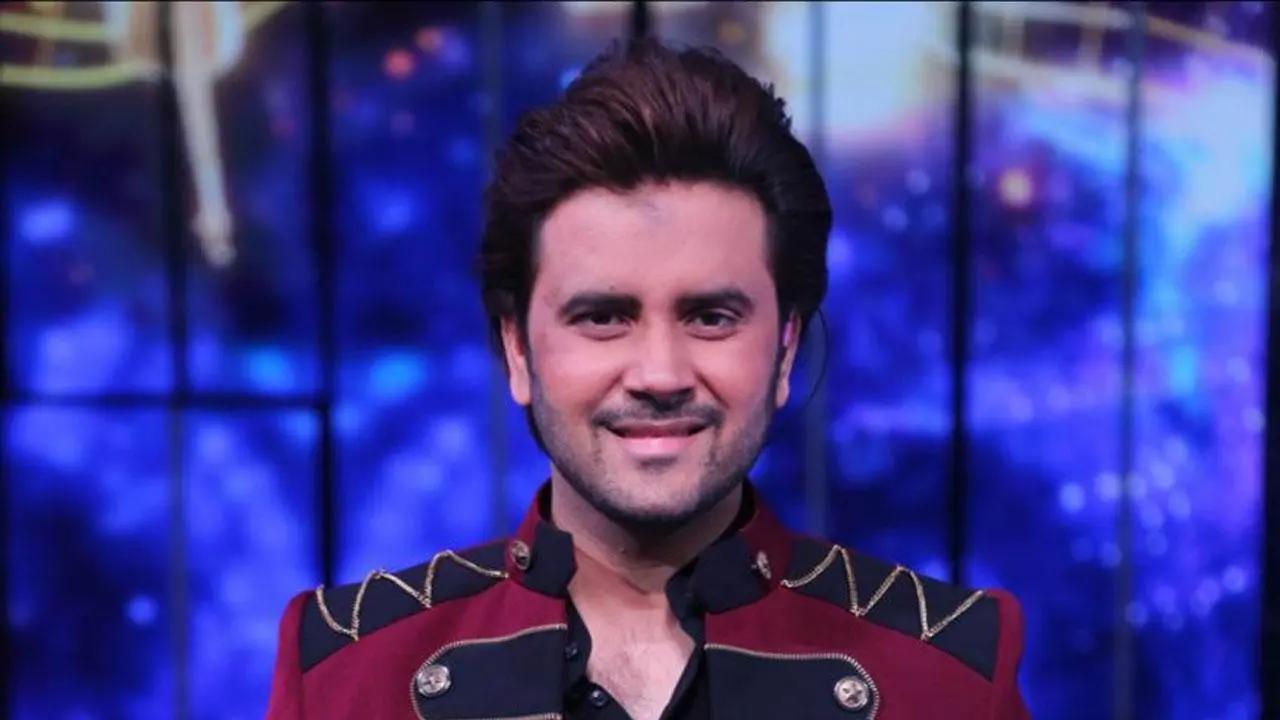
Dnyaneshwari Katkar (BOMBAY TIMES; February 8, 2026)
Javed Ali has been constantly travelling for his concerts in the last couple of weeks. But there’s a sense of calm and focus when he meets us for a chat. The singer slips between anecdotes and musings, occasionally humming a phrase to make a point, as he talks to us about making choices and how to keep things interesting for himself and the listeners.
‘I DON’T BELONG TO A PARTICULAR GENRE’
The first listen matters more than the banner or the buzz around a film for Javed. “This instinct has kept me anchored,” he says. From the soft romance of Jashn-e-Bahaara, Tum Tak and Saudebaazi, to the playful energy of Tinku Jiya, Nagaada Nagaada, Kajra Re, and the spiritual depth of Arziyaan and Kun Faya Kun, the singer’s discography is varied. “I don’t belong to a particular genre. For me it’s all about versatility,” he adds.
‘ARIJIT IS ONE OF MY FAVOURITE SINGERS’
The conversation inevitably turns to the current playback landscape and the singers defining it. When Arijit Singh’s name comes up, Javed speaks with both admiration and caution about the singer’s decision to step back from playback singing.
“I am sure Arijit must have made this decision after giving it good thought. I don’t think this is something he decided on a whim, especially at the peak of his career.”
The Kun Faya Kun singer adds, “I don’t really think he should have done this. He is a brilliant singer and one of my favourites. I’m sure his fans everywhere must be disappointed.”
On hook steps and social media
Bringing up the song Aashiqon Ki Colony from the upcoming O'Romeo as an example of how songs travel today, Javed shares, “The song has gone viral. At the same time, I feel that the virality is not just about the audio. One of the big reasons that song has become so popular is Shahid Kapoor’s hook step.”
The visual, he acknowledges, can push a song into people’s feeds, and from there into their playlists. “There are benefits to songs trending on Instagram because they reach more people,” he says. But he draws a line at letting it define creativity. “I don’t think artists should take a lot of pressure for that, though. A song has to work beyond a 30-second reel,” he adds.
On AI’s appropriate use in music
Javed says that technology, if wielded appropriately, isn’t a threat, but an advantage. For him, AI in music is a new space to explore. “When AI is used properly, like the way Sonu Nigam did by bringing Rafi sahab’s voice alive for a duet recently, it can be a great tool for music. I will probably do something like that too,” he says.
I was crying during the AI-powered live duet with Mohammed Rafi-Sonu Nigam
9:20 AM

Soumitra Das (BOMBAY TIMES; December 14, 2025)
Sonu Nigam, who will be performing in Ahmedabad later this month as part of his ongoing multi-city tour, is eagerly looking forward to the experience. He shares, “I have a very inexplicable connection with Gujarat. Wherever in the world I go, Gujaratis flock to my shows in huge numbers. Some of my closest friends are Gujaratis. Thus, coming to Ahmedabad with a special show like Satrangi Re is a great feeling. It’s like coming back home. I am a big foodie. Gujarati food is delicious, and my favourite is the undhiyu sent to me by Anand Pandit ji every year.”
‘AI gave me the opportunity to sing with my guru’
Recently, his AI-powered live duet with Mohammed Rafi at a concert created a lot of buzz. Talking about it, Sonu says, “The idea came to me when we were working on the show flow for my US tour. I thought I would give myself this opportunity to sing with my guru, and what better song than my own (Kal Ho Naa Ho) for the duet?”
He adds, “I was crying when I sang the part that was meant to be transformed into Rafi sahab’s voice through AI. And can you believe it, I enacted Rafi sahab for the AI to get his mannerisms right.”
‘I have been singing Gujarati songs for a long time’
Sonu, who has performed in numerous cities in Gujarat, tells us, “Over the last three decades, I have made innumerable trips to Gujarat. Gujaratis have literally seen me growing up. In fact, no one expresses their love for me the way Gujaratis do it, and I love it. The men, women physically hug me, hold me as if I’m their own. They feel they kind of own me, and I respect that kind of feeling. Very fortunate are those who are loved like this.”
The versatile singer, who has also sung for Gujarati films (Udi Re from Vickida No Varghodo and Ishq Rang from Romance Complicated, to name a few), adds, “I have been singing Gujarati songs for a very long time now. I love my recent song Misri (title track of Misri). I understand Gujarati quite a lot, so I don’t have any problem singing in the language.”
‘There are excellent, average, and mediocre artistes in all eras’
Asked about the biggest changes he has noticed in the music industry over the years, he says, “The music business changes, of course, but not much changes artistically. There are excellent, average, and mediocre artistes in all eras.”
How can artistes make their songs stand out in an era of reels and viral fame, where ‘views’ matter a lot? “Honestly, I am not an expert on this. I believe in doing my job honestly and leaving the rest to God,” he says. And how has he managed to remain popular with every age group? “Because I am God’s chosen one!” he quips.
He adds, “It’s a very good time for indie music and artistes. The market has opened up due to various music streaming platforms. The concert scenario in India has also improved drastically. It is more organised now. So, international artistes are more comfortable and surer about performing here. They know they will be treated professionally.”
‘Karan Johar and Varun Dhawan reintroduced Bijuria to the world’
His song Bijuria was recreated recently for the film Sunny Sanskari Ki Tulsi Kumari, and Sonu enjoyed it. He says, “The younger generation wasn’t aware of the glory of Bijuria. Karan Johar and Varun (Dhawan) reintroduced my song to the world. Today, three generations groove to it. The kind of reels and responses I have seen on social media — it’s astonishing.”
‘Kirtidan Gadhvi’s love for me is humbling’
Sonu shares a special bond with Kirtidan Gadhvi, one of Gujarat’s most loved singers. In an interview with us last year, Gadhvi said that they would love to collaborate someday. Sonu says, “Kirtidan Gadhvi’s love for me is humbling. He is a fantastic artiste and an even better man. I love him and his family. We have decided that he will take me to Dwarka and a few other pilgrimage sites in Gujarat when our schedules are a bit relaxed.”
Whenever I sing, I imagine an 18 or 20 year old singing-Shaan
4:21 PM

Priyanka Sharma (MID-DAY; September 15, 2025)
How does one keep the passion for their art alive over a 26-year singing career? With riyaaz, dedication, and the knowledge that the craft is almost like a lover you can’t stay away from, chuckles Shaan. In a free-wheeling chat with mid-day, the singer — who voiced Bam Bam Bhole in Sikandar and is looking forward to his upcoming song from Farhan Akhtar’s 120 Bahadur — opens up about holding on to the magic of one’s voice despite ageing, and his secret to sounding young, year on year. Excerpts from the interview.
Is it tough to keep a 26-year relationship with music alive?
Love happens first, and then it turns into a profession. What comes first will stay till the end. Obviously, there will be a point when the voice may not be how it should be. But in terms of appreciating and having an ear for music, that will always stay. For me and any singer, it can be frustrating [to be at a point] when we’re alive and not able to sing. It’s like being estranged from your lover. We have a crazy, ek tarfa pyaar with our voice.
With love comes commitment that an artiste has to their craft. After all these years, is it difficult to be disciplined and adhere to your riyaaz?
Honestly, my riyaaz has increased because after a certain point, the voice gets delicate. I started doing more riyaaz after my 40s. Until I met my guruji, my riyaaz was erratic. Sitting down, practising a bandish or doing a sargam — all that started only after 30. But by the time I got to 40, I could see a slight [change in my voice]. I could also see a lot of my seniors sounding older. I wouldn’t want that to happen with my voice. So, the only way I could postpone it was by doing riyaaz.
What do you feel is the key to your voice sounding young?
I feel young. Whenever I sing, I imagine an 18- or 20-year-old singing. Also, I often get youthful songs. If I were told that I would be singing for a mature, aged person, I would modulate my voice that way. But mostly, our romantic heroes are young. Even if they’re in their 50s or 60s, it’s important to sound young for them (laughs).
As a ’90s kid, I grew up listening to you, Sonu Nigam and many other voices, each of which was distinct. Today, it gets difficult to differentiate one singer from another, except Arijit Singh. Is it the demand today that voices sound similar?
It’s the Arijit effect; everyone wants to sound like him. Arijit is an intelligent singer. So, sometimes he surprises you with a different tonality. His voice is so popular with the [decision makers] in the industry that they think, ‘If we can’t get Arijit, at least let us get someone who sounds like him’. A singer doesn’t have much choice.
Also, aspiring singers, who have been listening to Arijit and Atif [Aslam] for 10-15 years, will think that if they sound like them, they will probably get a job. I had a similar situation when I started out. They would ask me, ‘Are you Kishore Kumar or Mohammed Rafi?’ They were two strong schools of singing. Udit ji [Narayan] had a touch of Rafi saab’s style of singing, and [Kumar] Sanu da was from the Kishore Kumar school.
So, what did you do?
I came from Hindi pop and there was no precedent to it. There was no one who was doing pop for me to copy. So, I was an original voice.
Mohammed Rafi at 100: From a barber shop to India’s heart
8:08 AM

From Chaudvin Ka Chand Ho to Chahe Koi Mujhe Junglee Kahe…Yahoo to Sar Jo Tera Chakraye, Hindi films wouldn’t have been the same without the magically versatile voice of Mohd Rafi, whose 100th birth anniversary falls today
Avijit Ghosh (THE TIMES OF INDIA; December 24, 2024)
On returning from a trip abroad sometime in the 1960s, Shammi Kapoor gave a listen to a song recorded for him by Mohd Rafi and was astounded by how the singer had captured his verve and andaaz to the last detail. “I asked him how he did it. Rafi saab smilingly said, ‘I imagined this is how Shammi would jump or roll or lift his hand or shake his leg or head, and sang accordingly,” the filmstar told TOI in 2010, a few months before he passed away.
It was this ability to infuse an extra dimension to any song – courting duets, farewell ballads, boisterous qawwalis, immersive devotionals, up-tempo folk, soft ghazals, complex classicals, naughty nightclub numbers – that made Rafi the most popular and versatile male playback singer of the 1950s and ’60s. He could even yodel; just listen to Unse rippi tippi ho gayee (film: 'Agra Road', 1957). Shringar, karuna, hasya, roudra, veera – his voice could effortlessly express each rasa (emotion).
On his 100th birth anniversary, it’s evident that Rafi’s popularity is undiminished. On every digital music platform and online video portal, Rafi playlists abound. There are adoring fans in the unlikeliest of places and a Rafi clone in every small-town orchestra.
But talking to those who shared both the recording booth and stage with him, one realises that their indelible memories are as much tied to Rafi, the singer, as Rafi, the man. And they run out of adjectives in describing his humility, nobility and gentleness. As singer Sudha Malhotra says, “He was perfect in everything.”
Singer Usha Timothy remembers how he made her relax during the recording of her first duet, Tu raat khadi thhi chhat pe (film: 'Himalay Ki God Mein', 1965). “Kalyanji [Anandji’s composer half] told me, ‘Jamm ke gaana, aapke saamne sher hai. [Sing with gusto, you are facing a tiger].’ I was a teenager, got nervous and fumbled during the recording. But when ‘saab’ (as she refers to Rafi) came to know why, he immediately put me at ease with his gentle talk.”
Other singers, too, acknowledge his human touch. Malhotra talks of Naa To Karvaan Ki Talash Hai and Yeh Ishq Ishq Hai, two iconic qawwalis from the film, ‘Barsaat Ki Raat’ (1960). “He was very encouraging and made me feel like I know everything and am singing very well,” says Malhotra. The qawwalis had multiple singers with Manna Dey, Asha Bhosle and S D Batish also joining in.
Rafi didn’t have any pretensions. Preeti Sagar remembers recording for comedian Mohan Choti’s film, ‘Dhoti, Lota aur Chaupati’ (1975), when a musician said something in English that Rafi couldn’t comprehend. “When the guy went away, he just asked me, ‘What's he saying?’. He didn't feel embarrassed asking me. He didn’t pretend to understand. Everyone knows he was an extraordinary singer. But he was also an honest soul. He never behaved big or flaunted his seniority. He was very affectionate, just wonderful.”
Another incident showcases his professional and benevolent side. In 2010, music director Khayyam told TOI that during the recording of the poignant Jaane kya dhoondti hain (film: 'Shola Aur Shabnam', 1961), Rafi had a 102-degree fever. “But he was worried about the producer’s losses and we went ahead with the recording. Despite the fever, nobody could have sung it better.”
Loved In Tokyo
Rafi captivated listeners home and abroad. Timothy, who toured worldwide with Rafi as part of a musical troupe, recalls a show in Tokyo for a mostly Japanese audience that didn’t know Hindi or Urdu. “We wondered how they would react. But when he started singing, Madhuban mein Radhika naache (film: 'Kohinoor', 1960), there was all-round applause. The announcer later told him, ‘We just love listening to your voice, even though we don’t understand the words. His voice had that kind of taseer [effect],” she says.
Born in Kotla Sultan Singh village, about 20km from Amritsar, Rafi left for Lahore when he was 12 to assist his elder brother, who ran a barber shop. But as Sujata Dev writes in the neatly-detailed biography, ‘Mohammed Rafi: Golden Voice of The Silver Screen’, he was obsessed with music. In a radio interview, Rafi named the peerless K L Saigal, Vidya Nath Seth and Pankaj Mullick as singers who had influenced him.
The biography also recounts how Rafi, still a teenager, was “giving a shave to a customer” and singing when he was heard by chance by Jiwan Lal Mattoo, All India Radio’s Lahore programme executive. Impressed, Mattoo offered him an audition in 1943, which he passed easily.
A year later, he left for Bombay with mentor Hameed, a friend of his brother Deen, to try his luck in films. “The ’40s tested Rafi’s tenacity and desire to become a successful singer,” writes Dev.
Shining Bright Among Stars
Male playback was a crowded place those days with Mukesh, Manna Dey, Kishore Kumar, Talat Mehmmod, Hemant Kumar – all masters in the making – jostling for space on the podium. Rafi rose to the top in the 1950s and stayed there for most of the 1960s, as Binaca Geetmala records show, when the Kishore Kumar reign began.
Rafi’s success spawned a generation of singers influenced by his voice and style to a greater or lesser degree. Anwar, Shabbir Kumar, Mohd Aziz, Jaspal Singh, Sonu Nigam being some of the notable ones. “Whatever I am, my name, my livelihood, it’s because of him. Woh mere rom rom mein baste hain. [He’s in the breath of my being],” says Baroda-born Shabbir.
“His voice made us aware of every twist in life, of every season that comes and goes. Every song he sang was complete from the adayegi to expression. He wasn’t just singing songs; if you listen carefully, he was also acting and choreographing them. Some actors are remembered only for what Rafi saab sang for them,” says Shabbir.
Jaspal says Rafi could sing in any octave and it made no difference to his voice. “His throw of words remained matchless,” says the singer, who still regrets that the only song he recorded with Rafi was for an incomplete film, ‘Sarhad’. Adds Timothy, “For him, singing wasn’t a profession, but a form of prayer.”
Rafi stormed back to prominence with ‘Laila Majnu’ (1976) and kept the momentum up in ‘Hum Kisi Se Kum Nahin’ (1977) and ‘Sargam’ (1979). The untimely end came following a heart attack in 1980. He was 55. Mukesh and Kishore Kumar, too, died in their 50s.
Over the decades, Rafi fans have carried out campaigns and online petitions demanding the Bharat Ratna for him. In his lifetime, he had only received the Padma Shri. But it’s undeniable that across the globe Mohammed Rafi remains Bharat’s Ratna.


I sought permission from Mohammed Rafi before every song I sing on the mic-Sonu Nigam
8:34 AM
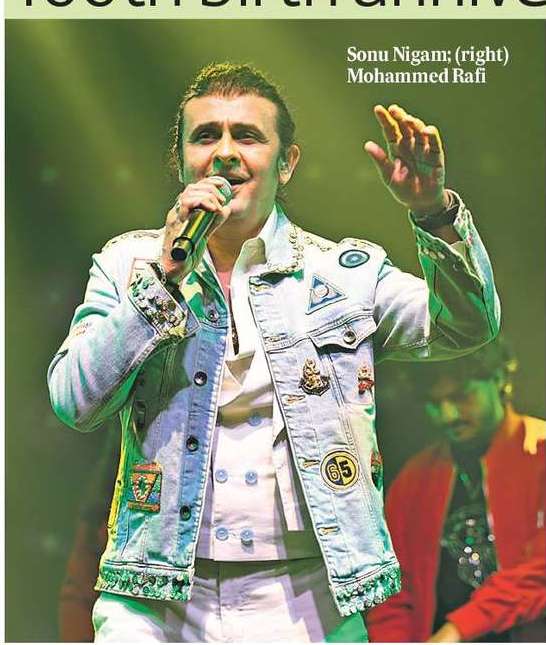
Soumya Vajpayee (HINDUSTAN TIMES; October 7, 2024)
In his 47-year-long career, Sonu Nigam has considered late singer Mohammed Rafi a guru. Now, the singer is set to pay homage to the veteran by performing at a tribute concert on Rafi’s birth centenary on December 24. Titled Sau Saal Pehle, the show will mark Nigam’s first-ever Rafi concert in India.
“Rafi sahab is not just my guru, but also my pir (spiritual guide), who I have worshipped and sought permission from before every song I sing on the mic. I’ve cried in admiration listening to him. To realize that he chose me to do his centenary show reassures me that my reverence has been reaching him in the other world. He is blessing me,” he tells us, exclusively.
Sharing how “it’ll not be an ordinary concert”, Nigam says, “It’s akin to my life getting encapsulated into a concert. Every song and emotion his music conveyed will be relived by me and the audience. It’s going to be a festival — the Mohammed Rafi Festival.”
On doing his first-ever Rafi show in India, Nigam says, “I performed three concerts, titled Rafi Resurrected, in 2008, in the UK. It marked my collaboration with the City of Birmingham Symphony Orchestra. It’s been 16 years since my last Rafi show. So, I can’t wait to take the stage in Mumbai on December 24.”
Sharing how the idea of this tribute show came about, he adds, “It’s surreal that it was ideated by the families of both my gurus — Firdaus Rafi ji and Shahid Rafi ji from Rafi sahab’s family and Rabbani Mustafa Khan and Namrata Gupta Khan from Ustad Ghulam Mustafa Khan sahab’s family.”
Mohammed Rafi’s grandson to organise live shows for his 100th birth anniversary celebrations; Sonu Nigam to join in
4:11 PM
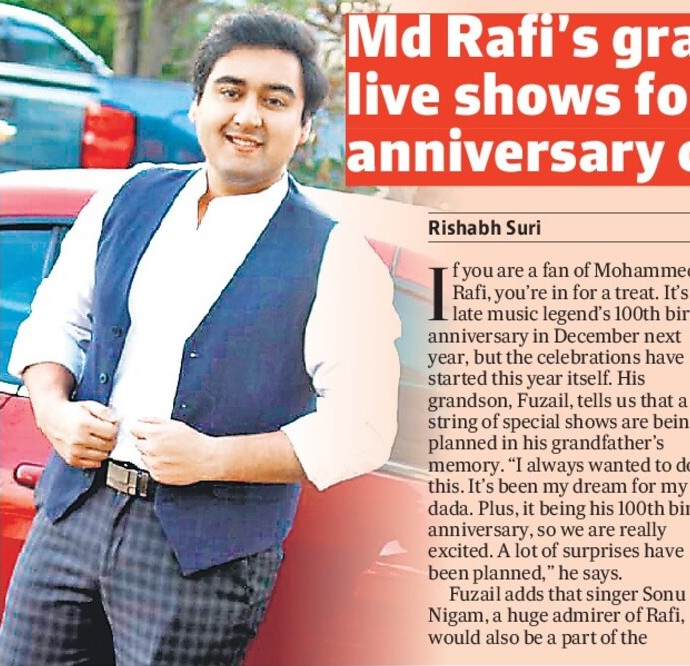
Rishabh Suri (HINDUSTAN TIMES; October 2, 2023)
If you are a fan of Mohammed Rafi, you’re in for a treat. It’s the late music legend’s 100th birth anniversary in December next year, but the celebrations have started this year itself. His grandson, Fuzail, tells us that a string of special shows are being planned in his grandfather’s memory. “I always wanted to do this. It’s been my dream for my dada. Plus, it being his 100th birth anniversary, so we are really excited. A lot of surprises have been planned,” he says.
Fuzail adds that singer Sonu Nigam, a huge admirer of Rafi, would also be a part of the initiative. “When you hear of Rafi sahab, Sonu ji’s name comes first. I met him in Atlanta recently. Even today, when he does his riyaaz in the morning, he does it in front of Rafi sahab’s photograph. So, he is definitely a part of this. Javed Ali (singer) too. We cannot reveal more names currently. We will start announcing more towards the end of the year,” says Fuzail.
The shows will be spread out over a year, across countries. “Besides India, we will also cover the Middle East, India, Canada and the US,” he says.
Ask why he didn’t take his grandfather’s legacy forward by becoming a singer, and Fuzail says, “I am musically inclined. But I didn’t get into singing as I was worried people would compare me to my dada. There’s nobody in this world who can even touch him (his legacy), and I didn’t want to do anything to mess with that.”
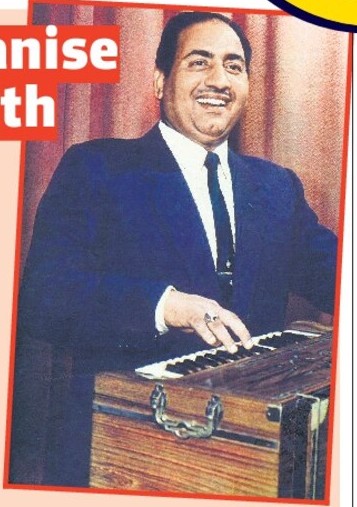
I consider myself a Muslim, Christian, Jew, and Hindu-Sonu Nigam
8:12 AM

With this year marking his 46th as a live performer, Sonu on the essentials of honing his craft, year after year
Sonia Lulla (MID-DAY; February 20, 2023)
With his soulful renditions in Laal Singh Chaddha behind him, Sonu Nigam’s latest Bollywood offering has him head behind the mic for the energetic title track of Shehzada. At a time when reality television shows are thrusting singers into Bollywood in abundance, Nigam still finds himself enjoying a certain command over an array of genres. “It’s all hard work,” he says, addressing questions on the gamut of songs he has been appointed for, of late.
“One must take care of the voice, and focus on the work at hand. I train as smartly as possible, and continue to work hard towards the craft.”
With 2023 marking his 46th year as a performing artiste, Nigam attributes the attention that he has paid to live gigs for his success as a singer. “Live music is the litmus test for a singer. Only when one sings live can the audience know if he can or cannot sing. Your fitness as a singer, and the training that you have done, is made evident on stage.”
Admitting that if he turned to Kumar Sanu and Udit Narayan to learn the tropes of singing when he was 18, today, he looks toward the younger lot, including Arijit Singh and Armaan Mallik, as well. “When the student dies, the master dies. This approach has led me to where I am today. No one is luckier than I am, because I have enjoyed such a long journey — from Acha sila in 1995, to Shehzada, today.”
His most cherished live rendition, however, dates back to 2008, when he paid tribute to Mohammed Rafi. “I was already [an established singer] at the time, and I was singing songs of my guru, with the Symphony orchestra. In a span of two hours, I sang 21 songs of his. I made 75 foreigners adapt to the Indian style of music to create that concert. It will always be a memorable one.”
Meanwhile, Nigam also trained his attention to devotional numbers and recently released his versions of the Hanuman Chalisa, and the Mahamrityunjay Mantra. It is owing to his mother’s love for devotional numbers that he says he took on the endeavour.
“My mom used to [chant them]. She was a spiritual woman, and I did it for her. As far as I am concerned, I consider myself a Muslim, Christian, Jew, and Hindu. I am simply a resident of this planet.”
Neeti Mohan and Shaan join hands for the remix of Mohammed Rafi’s Chura Liya Hai Tumne
8:14 AM

Sonia Lulla (MID-DAY; August 29, 2022)
Neeti Mohan and Shaan join hands to bring back Mohammed Rafi’s Chura Liya Hai Tumne for the young generation, and lend a contemporary twist to the classic.
Rechristened Sajaunga Lutkar Bhi, this version, says Mohan, was approached like she would a fresh song. “I have grown up listening to this song and to [revive] it with Shaan was a pleasure. This will always be memorable. I admire, and look up to him, and he sounds amazing in this track. We wanted to make it sound young and fresh, and we tried to sing it [by employing an] RnB [flavour]. Dharan Kumar [composer] has made it more youthful,” she says, adding that with this number being “more groovy”, listeners can now dance to a track that they could, until now, only sing.
No longer apprehensive about revisiting old classics, Mohan says singers benefit from paying heed to a composer’s vision. “What was created earlier was suited for that era. Each composer offers a fresh take. It is subjective. Here, the melodic content is high; this one has a certain tease attached with it too.”
Everyone is trying to be the next Arijit Singh-Shaan
8:28 AM

Singer Shaan rues the lack of originality in the music industry
Juhi Chakraborty (HINDUSTAN TIMES; January 30, 2022)
Shaan, who has been in the music industry for over two decades, applauds the surge of new talent in the industry while simultaneously lamenting how originality is being lost. Even in an era when the music industry is swamped with new voices, he says, “there are hardly any artistes who have quick recall value”.
“It is not the fault of the new singers,” says the Tanha Dil and Jab Se Tere Naina (Saawariya, 2007) hitmaker, adding, “There is tremendous pressure, especially on boys. Everyone is trying to be the next (singer) Arijit Singh and [in the process] failing to find their own identity.”
He believes that even in the ’80s and ’90s, this problem persisted. The 49-year-old recalls, “Everyone had to sound like (singers) Kishore Kumar or Mohammed Rafi at the time. That pressure was present even when (singer) Sonu (Nigam) entered. But when (singers) Kunal (Ganjawala), KK, and I started in the industry, there was no pressure to sound like someone else.”
Sadly, he believes that the same trend has returned: “Abhi ghoom firr ke wapas aa gaya hai. Everyone is looking for a voice like Arijit’s. As a result, everyone is starting to sound the same.”
He goes on to say that because of this, the kinds of songs being produced has taken on a monotonous tone.
“Before they start writing their own songs, people look at what’s working. Itne gaane hain iss chakkar mein bewafayi pe. What’s new about that?” says the singer, who claims that he is not required to do so and that he enjoys experimenting with his music. His latest, Rang Le, for example, is a Sufi rock single. “I try to find some or the other genre, for people as well as for myself,” he ends.
Just the way Korea’s music exploded across the globe with K-pop, I think it is India’s time-Armaan Malik
8:07 AM

Discussing his love track that was shot in Paris, Armaan chronicles his journey as an English pop singer, and wanting to create an EP
Sonia Lulla (MID-DAY; January 10, 2022)
Armaan Malik makes a transition to an English pop music career appear seamless. And yet, several unsuccessful attempts by artistes before him suggest otherwise. As he discusses “returning home” to the genre of love ballads with You — his latest lilting pop rendition — he opens up on how his seemingly overnight success as an English singer was a “master plan”, a decade in the making.
Edited excerpts from the interview.
How did the concept of creating a love song in Paris, in the middle of a pandemic, come about?
You has been with me since two years. It was recorded and produced around the time I had released my debut English track, Control. Recently I was in Paris for a show, and decided that since I was in such a beautiful place, I should record a song. The entire team thought that since You was ready, and we were in Paris, the love capital, it was a no-brainer that we should film it there. The whole thing was conceptualized and shot in 48 hours, even though it may not look like it has. As soon as I came back, we saw cases rise again. I feel, God was looking out for me. I managed to go there, shoot and come back with such a beautiful product. Also, when I began my English music career, I did so in a different zone when pitted against what I was doing in Bollywood. People didn’t relate to me. People know me as this romantic singer who has his way around ballads. So, with You, I felt like I was coming home.
There is only a small chunk of your major fan base in India that also consumes English music. As a singer with a fine business acumen, who is your target audience then?
I am an Indian singer with a body of work in Bollywood and in the Telugu, Tamil, and Kannada [industries]. The ability to do what I did in that market came from the push that I got from here. I am a mainstream artiste trying to make it internationally. My ultimate goal is to develop and create a global audience. For them, I am a new artiste. Some of them could be NRIs who know me through my Bollywood work, and are now discovering me with my English music. I hope they say, ‘Wow, he can sing Bol do na zara, and something like a Control too.’ I am a multilingual singer. I can’t stop singing in all these amazing languages that I know. India is a very big market for [international music labels]. Just the way Korea’s music exploded across the globe with K-pop, I think it is India’s time. This changes how Indians have been perceived so far — which is a country that primarily consumes Bollywood music. I want to make a dent in the international scene.
Surely that has to do with the entire packaging of the product that you put out. When Control released, it didn’t seem like the work of a débutante, but one with experience in that market.
That’s because this was my master plan. Not too many people know this but my English career journey was in the making for about a decade. It may look like its just the beginning, but I have dreamt this dream over and over again as a child. Releasing Control was a mammoth task for me. A lot of Indians release English songs, but to do so with the aim of creating that impact is not easy. Which is why I went to Los Angeles, and spent time with people to learn the kind of songs that people write. I spent time in New York understanding the industry. I knew that if I wanted to make a dent in the industry, I need to understand it first. Also, while I went about my work in Bollywood, I would silently practice singing in English as well. I have 100 demos of English songs in my laptop, only four of which have released into the world. Every artiste needs to keep hustling. I had this dream at 15. It was realised at 24.
The reception to your Hindi songs was testimony that you were on the right path. But how did you judge yourself as an English singer when you had no one to guide you?
It’s not easy to sing in English the way I do. People say Indians don’t sing in English correctly because it is not polished. But I’ve consumed it since I was nine. It is as engrained in me as Hindi ragas. Just as much as [I’ve listened to] Mohammed Rafi sa’ab, I have heard John Mayer, and Bruno Mars. It’s part of my DNA. It’s been a silent journey, and now people are seeing the results. I didn’t have anyone to brief me. Vocally, a lot of the training was self-taught. But, the knowledge of being in the right direction came from the reception I got from an acclaimed [music label head] who wanted to sign me. That came as a seal of approval.
If sob stories weren’t working on reality shows, we wouldn’t be seeing them so often-Sonu Nigam
8:14 AM

Tanvi Trivedi (BOMBAY TIMES; June 14, 2021)
Singer-composer Sonu Nigam, who had relocated to Dubai last year, came back to Mumbai around three months ago. In an exclusive chat with BT, he speaks about why he chose to come back to Mumbai during the pandemic, why sob stories work for reality shows and how the pandemic gave most of us a new perspective. Excerpts:
You had relocated to Dubai with your wife Madhurima and son Nevaan last year. Now, when Dubai has opened up to a large extent, you returned to Mumbai. What inspired the move?
This year, I spent the entire lock-down in Mumbai. I have been here for the past three months. When I relocated to Dubai last year, I did not know that the lockdown would last for so long back home. I felt guilty being there because I was far away from my father and sister, who were alone in Mumbai for six months. This year, though my wife and son are in Dubai, I am happy that I am spending quality time with my father and sister. My father (singer Agam Kumar Nigam) occasionally cooks for me, sometimes I cook for him, he watches my sister and me work out in the gym, we recall memories of my struggling days and talk about the present and future plans.
Have your wife Madhurima and son Nevaan adjusted to life in Dubai? It must be hard to divide your time between two bases…
Schools have opened up in Dubai, and my son is happy as he is not studying online anymore. We have many friends and Madhu’s sister is staying with them, so they are fine. There has to be a balance in the time I spend with my families. I can’t forget my first family to be with my wife and son. It is my duty to be with my father, too.
As for being in two cities, I have never depended on a place. Even if you keep me in the woods, I will be happy. But partly, my purpose of being in India was to contribute to society during the pandemic, but I don’t like to talk about how I am helping others.
Whatever I am doing in this pandemic is not some act of greatness. We are all doing our bit, because at the end of the day we are in the same boat.
You recently posted a video on the controversy that erupted after singer Amit Kumar said that he was asked to praise the contestants on Indian Idol. What’s your take on music reality shows that often dramatize sob stories to move the audience to tears?
If they weren’t working (sob stories), it would not be happening so often on reality shows. In the deepest corner of my heart, I feel sob stories are working. It is a marketing thing, and people are not fools. Their hearts are in the right place. I also feel that the contestants in reality shows are extremely talented. They are ‘dhurandhars’. Secondly, the definition of entertainment varies from person to person. Recently, I was watching a Korean film and I connected with it because it reminded me of my struggles, but it could be boring for someone else. Who am I to comment on the music reality shows? They are doing well, getting good viewership and the singers are phenomenal.
Would you judge a music reality show at this stage of your career?
I will go with my gut feeling. If I feel I can contribute to a show and they come with an offer, why not? If I feel I am a misfit, I won’t do it.
Remixes seem to be the order of the day, and many non- filmi tracks, too, have been reprised lately. Would you consider recreating any of your hits?
No, I don’t think so. I feel they aren’t working so well now. Many of my songs were sung by singers and they were trolled heavily. I am also scared of singing a song originally sung by someone else (laughs!). Anil Kapoor had requested me to sing a Mohammed Rafi song (Badan Pe Sitaare) in Fanney Khan, and it was only after he convinced me that it was about a stage singer who is a fan of Rafi saab singing it in the film, that I agreed to sing it.
Your son seems to have inherited your love for music and has been seen performing with you. Would you encourage him to become a singer?
I want my son to be a happy child and don’t want to advise him on his career. Zaroori nahi hai ki doctor ka child doctor aur singer ka child singer banne…Yesterday, he told me he wants to become a lawyer, a few years back he wanted to become a cricketer. I believe in happiness and not success. I feel that an enlightened man is successful and not otherwise.
Last year, you had expressed that the music industry needs to change and give a fair chance to young talented singers…
Not just the music industry, the entire universe got a break due to the pandemic. Things have changed a lot, post the pandemic. Sabko aate aur dal ke bhaav pataa lag gaya hai. So, many changes have taken place and there will be many corrections.
With the digital space opening up, do you want to give acting a shot seriously again?
I did the short film Spotless in 2019, which got good reviews in festivals abroad. After that, I got a few good offers. There are no major plans to act, but I will consider it if I am offered something interesting.
A 70mm voice is missing for many years now-Mika Singh
8:08 AM

Nikita Deb (HINDUSTAN TIMES; June 11, 2020)
As we slowly move towards reopening things after an almost three-month-long nationwide Coronavirus lockdown, singer Mika Singh says he is very excited that life is getting back to normal. “Everyone knows about the dos and don’ts of going out, so if they continue to follow the rules of social distancing, etc., I think we will be fine,” he says.
During the lockdown, Singh had released a single titled Quarantine Love, and yesterday he released another single titled Tum Jo Mil Gaye Ho (Lockdown). With this remake of the popular song, Tum Jo Mil Gaye Ho (Hanste Zakhm; 1973), the singer has attempted to remake a Mohammad Rafi song for the first time. “I have sung remakes in the past but I never tried Mohammed Rafi Saab’s songs. Thankfully and luckily, none of my remakes got trolled,” says Singh, who has sung recreations such as Poster Lagwado (Luka Chuppi; 2019) and Aankh Marey (Simmba; 2018), among others.
He adds, “All these songs became hits by God’s grace, but most importantly, no one said anything bad about them. Meri hamesha koshish rehti hai ki in gaano ki kabhi taang na todi jaye, unke lyrics kharab na ho, so that people like the song.”
The 43-year-old singer feels we have extremely talented young singers in the industry but there’s a problem with the way they sing remakes. “They give the old songs a certain kind of sound jisse gaana kharab ho jata hai. For example, Kumar Sanu is the tiger of the music industry, and when I sang Aankh Marey, I had to match his voice. I took a week to listen to all of dada’s songs, to understand how he has such a brilliant voice — the kind of voice that we call a 70mm voice, a voice that suits the big screen. Woh bade parde wali awaaz hi gayab ho rakhi hai pichle kayi saalon se,” shares Singh.
“When you remake a legend’s song, you have to be very careful because you can never compare yourself to them. Aapko yeh maan ke chalna hai ki main uske ird gird nahi gaa paunga, na hi better ga paunga. But because the song is maybe 20 years old, there are a lot of young people who may not have heard it. So it is important to remake these songs for them,” he explains.
Good or bad times don’t last, even the Coronavirus will go away-Asha Bhosle
8:12 AM

Shreya Mukherjee (HINDUSTAN TIMES; May 28, 2020)
We have it in us to surpass every hurdle if we face it with a smile, believes Asha Bhosle. While everyone is talking about precautions to stay healthy during these unprecedented times, the veteran singer is also focusing on the importance of “inner peace”.
She says, “These difficult times are frustrating, so we need to enjoy the smaller joys in life. Yeh khushi aapke andar hai, bahar dhoondne ki zaroorat nahi hai. Chaahe ek niwaala kam bhi ho, chaahe kitne bhi kasht seh rahe ho, aap khush phir bhi reh sakte hain.” She believes that people need to adapt to the changing world. “Neither good nor bad times last. Even this corona will go away. We go through so many difficult phases in our lives. This time, too, we’ll emerge winners. Bas haste raho, hasaate raho, ek dusre ka saath dete raho,” she adds.
Bhosle, 86, plans to talk about the significance of contentment and her journey via her new channel on a video-sharing platform. “My granddaughter, Zanai, has been telling me to start my own channel, but I didn’t have the time,” she says, adding, “I’ve been singing since the age of 10 and have many stories to share. About collaborating with [Mohammed] Rafi saab, Kishore Kumar, Pancham (R D Burman), singing duets with didi (singer Lata Mangeshkar), kya kya karte thhe hum...”
Quarantining in Lonavala (Maharashtra) with son Anand and his wife Anuja, and grandchildren Zanai and Ranjai, she shares, “My son takes care of our restaurants abroad, while my daughter-in-law manages the business here. My grandchildren study abroad. We rarely meet each other properly, but now we are getting to know each other better.”
On the work front, she plans to team up with new artistes for upcoming tracks. But the new projects will begin once she and her family go back to Mumbai in the next few days.
Mohammed Rafi's son Shahid in danger losing family home in Bandra
8:17 AM

Sunil Baghel (MUMBAI MIRROR; October 12, 2019)
 Almost 40 years after Mohammed Rafi’s death, his youngest son Shahid Rafi is fighting a legal battle to retain the family home – Rafi Mansion – that the legendary singer built on Bandra’s 28th Road in the 1970s. HDFC Bank had filed a petition in the court seeking possession of Shahid’s fifth floor flat in the building, which came up in the 1980s after the bungalow in which Rafi resided was razed.
The bank has claimed that Shahid inked a deal with a company, Nimbus Industries Limited, to sell the flat, and the company took a Rs 4.16-crore loan from the bank to purchase the property. After Nimbus defaulted on repayment, the bank moved the court claiming the property.
Shahid said that the flat is worth at least Rs 5 crore, even in today’s weak economic climate. He argued that he never intended to sell the property to Nimbus, and that he had entered into an agreement with the company in November 2017 in lieu of a loan for a “short period” after he suffered losses in business. He further said that he did not receive the entire amount promised to him by the company, hence the agreement wasn’t executed. Moreover, the agreement wasn’t registered with the authorities, hence it cannot be binding, he argued.
While the high court refused to grant relief to Shahid citing that the fact that a cancellation deed was executed, which meant that the sale did take place, he received a glimmer of hope at the Debt Recovery Tribunal, which granted stay in his favour on Thursday.
Shahid, who approached the tribunal after the high court allowed him to take appropriate proceedings, said that this is the sole house in his name. In the suit he filed in the high court, he said, “The flat has memories and sentiments attached thereto since Mohammed Rafi once lived in the bungalow standing in place of the existing building.”
In the Debt Recovery Tribunal where he is represented by advocates Hiren Pandya and Trupti Kapadia, he said that the agreement with Nimbus was being signed “only for finance purposes for a short term” and that he never had any plan to sell the flat. He said that he received Rs 1.95 crore, though the agreement records payment of Rs 3.16 crore. “I was asked not to deposit the cheques by Nimbus’s director,” he claimed.
Advocate Firoz Bharucha, representing HDFC Bank in the high court, said that the agreement between Shahid and Nimbus had concluded, giving the bank all the rights to attach the property.
I became confident when I wore headphones for the first time-Ranu Mondal
7:55 AM

Himesh Reshammiya's protege and Internet sensation Ranu Mondal on her journey from the railway station to the studio
Sonil Dedhia (MID-DAY; September 12, 2019)
Her singing skill may have thrust her to overnight stardom, but Ranu Mondal seems at ease in the spotlight. Mondal — who became an Internet sensation after a video of her singing Ek Pyaar Ka Nagma Hai, at the Ranaghat railway station went viral last month — has lent her voice to two songs in mentor Himesh Reshammiya's upcoming film, Happy Hardy And Heer.
"I never gave up hope. Even during the worst phase of my life, singing kept me going. I didn't imagine that I would get such a huge platform, but I had complete faith in my voice," she says. Ask her if recording the first number was an intimidating experience, and she says assuredly, "When I wore the headphones for the first time, it made me even more confident. I used to listen to songs of Lata ji [Mangeshkar], Mohammed Rafi and Kishore Kumar and keep learning."
Reports suggested that the singer, 58, had been abandoned by daughter Elizabeth Sathi Roy, which was subsequently denied by the latter. "I don't want to dwell in the past. God willing, we all can be together again someday." Proud to help her find a footing in Bollywood, Reshammiya says, "Salman bhai's [Khan] father, Salim uncle once advised me that whenever I come across a talented person, I should encourage him. Ranu ji's singing was so mesmerising that I had to give her this platform."
The industry had stopped giving me work-Javed Akhtar
7:42 AM

Javed Akhtar talks about receiving flak from the fraternity for supporting the Copyright Bill, mediocre scriptwriters, and his upcoming film Namaste England
Sonil Dedhia (MID-DAY; September 30, 2018)
After working for almost every day of your life (since the 1970s), you seem to have slowed down. Is it a conscious decision?
I didn't opt for retirement. The industry had stopped giving me work for a while. During the fight to pass the Copyright Amendment Bill [which ensured that writers, lyricists, singers, scriptwriters get an equal financial share in their work and not just the producer], I received support from the music fraternity, but was removed from the most popular writer's list [laughs]. Several filmmakers withdrew from me and I was not being offered films. Thankfully, things have changed in the last few months because I believe, producers and music companies have reconciled with the idea that the law has changed, and no one is going to be at the losing end. Composers and lyricists will get a better royalty, something that they truly deserve.
Being a veteran in this industry, did you expect to receive flak from the fraternity?
I had decided to speak up and if I had to pay a price for it, I was fine. It was my choice and I still stand by it. Even if people don't want to work with me in future, I am not going to hold grudges against them. I was guided by conscience and principles. It was great when the government and opposition unanimously passed this bill.
You have spent more than four decades in the industry. How do you look back at your career?
I have seen the highs and the lows. Both are important. Overall, it has been a satisfying journey. My only regret is my lack of discipline. Had I had that I could have achieved a lot more. But I haven't given up. I'm in competition with myself, but when I look at the mediocrity around me, I feel poignant. I am not saying that there are no good lyric writers, but I believe the charm is lost. Apart from a handful lyricists, nobody understands poetry.
Is that an observation over the remixes we've seen lately?
That is one of the pressing concerns. It is creative vandalism and bankruptcy. I don't understand the need to remix classic songs. Why is there a lack of self-confidence? Lyricists should be confident enough to give hit songs. Why do they feel the need to borrow? Besides that, these songs by Lata Mangeshkar, Mohammed Rafi, Kishore Kumar are our cultural heritage and must be preserved, rather than adding rap to it. Some things need to be respected the way they are.
Do you feel mediocrity has seeped into script-writing as well?
The script is the core of any successful project, but that concept seems lost. Films these days are made on magnanimous budgets, but only one per cent is spent on the script. You may shoot in foreign locales, add special effects and get the best actors on board, but without a good script, everything falls flat. Unfortunately, scriptwriters are paid peanuts. Everyone seems to be in a rush to announce their release dates. Writers need to be paid well and be given ample time to work on the material. When Pandit Mukhram Sharma [before our time] or we [Salim-Javed] wrote scripts, we commanded a position that compelled producers to pay the price we quoted. I wonder if writers today would be allowed to be that powerful or be given that position. Precisely why, I am not sure if we'll ever have another Salim-Javed. At the same time, it's interesting to see the variety of stories offered today, which was not available back in the day. Things are better in that aspect.
Do you feel the restriction on freedom of expression by some fringe groups force filmmakers to compromise on their work?
We have seen many unconstitutional powers in society take a stand and get away with it often. It is undemocratic and sad that the freedom of speech is lost. It's a law and order problem. I believe it is the responsibility of the government that the dignity of a prestigious body like the Censor Board needs to be preserved. Indian film industry is a huge organisation which generates a lot of revenue and employment, but the government tends to be cynical about our problems. There is a lot of callousness, carelessness, and jealousy involved, which needs to be looked into.
What stops you from writing a script?
Sheer laziness. My songs are doing well and writing them comes easy to me, which also gets me the appreciation and a lot of money [laughs], but I miss writing scripts. I have written a couple of scripts and am waiting to find the right people who would be passionate enough to make it.
It's been a while since your son [Farhan Akhtar] directed a film.
My guess is as good as anybody, but I feel he is finding pleasure in working as an actor or going on stage and performing for now. Direction is a serious job and there have been many times that he has toyed with the idea of getting back to direction, but I don't know what happened of it. He hasn't closed the doors to direction for sure.
Coming up next
Javed Akhtar, who had earlier written songs for Vipul Shah's Namastey London, is also penning the lyrics for the Arjun Kapoor-Parineeti Chopra-starrer Namaste England. "Vipul is an easy-going director and a dear friend. When filmmakers know what they want from a song and scene, it becomes easy to write, that's why I love working with Vipul. I also enjoyed working in tandem with Manan Shah [music composer]. He is young, talented and has a bright future."

Image: Anil Kapoor brings back 'Badan Pe Sitare' with Fanney Khan
8:09 AM

The actor’s upcoming musical-drama brings back the evergreen track ‘Badan Pe Sitare’ which features playback by Sonu Nigam
Avinash Lohana (MUMBAI MIRROR; July 19, 2018)
Even as Atul Manjrekar’s musical drama, Fanney Khan, featuring Anil Kapoor, Aishwarya Rai Bachchan and Rajkummar Rao is gearing up for an unveiling on August 3, Mirror has learnt that the makers recently filmed “Badan Pe Sitare Lapete Hue”, from Lekh Tandon’s 1969 film Prince on Anil. Mohd. Rafi ’s iconic rendition was originally picturised on Shammi Kapoor.
 “AK sir’s character who is an orchestra singer considers Mohammad Rafi
and Shammi Kapoor as his Gods and sings their songs. This one is his
most favourite. You’ll also see him pull off some of Shammi saab’s
iconic moves,” informs Atul.
“AK sir’s character who is an orchestra singer considers Mohammad Rafi
and Shammi Kapoor as his Gods and sings their songs. This one is his
most favourite. You’ll also see him pull off some of Shammi saab’s
iconic moves,” informs Atul.
He is quick to add that they have not recreated the song for the Bhushan Kumar, Anil Kapoor and PS Bharathi production but have only given it a new voice, retaining the original lyrics and music. National Award-winning singer Sonu Nigam has lent his voice to it this time around. “We couldn’t use Rafi saab’s voice as AK Sir’s character sings in the film. At the same time, we wanted someone who would do justice to our tribute to the original. It was AK sir who suggested Sonu’s name and all of us instantly agreed because who better than him to do justice to this great song,” adds the director.
Born and brought up in Mumbai, as a child Atul had seen a lot of orchestras, many of them with a junior Mohammad Rafi or Kishore Kumar who besides singing would also perform on a number sung by the originals. “These orchestra experiences have stayed with me and made their way into the script,” he smiles.
Anil was extremely excited to be a part of the song as his filmmaker-father, Surinder Kapoor, had worked with Shammi Kapoor and he would visit the actor’s house and spend a lot of time with him. “In fact, as a child he even sang and danced to this particular song and his eyes lit up when I had discussed the idea with him,” Atul signs off with a laugh.
Subscribe to:
Posts (Atom)