Showing posts with label Mitesh Shah. Show all posts
Showing posts with label Mitesh Shah. Show all posts
If content is called king then why are you not paying kingmakers, ask writers
8:14 AM
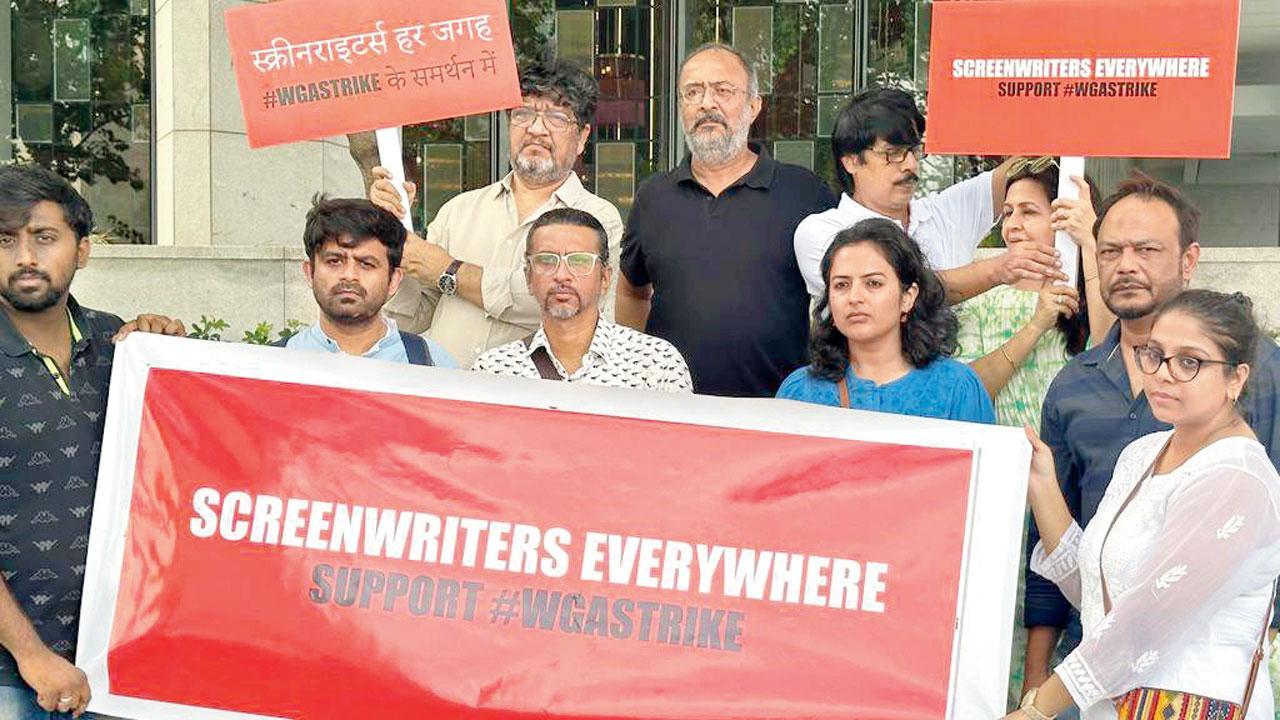
While writers in Hollywood are on strike demanding better pay from studios, screenwriters in India say that their condition is much worse compared to their US counterparts
Niharika Lal (BOMBAY TIMES; June 14, 2023)
The Writers Guild of America (WGA) strike, which kicked off in early May, is a result of a clash between writers, who see themselves working more but earning less in the streaming era, and studios attempting to rein in costs. Back in India too, writers of films and TV shows have demands that are quite similar – credit, compensation and fair contracts. However, many writers here feel that the situation is much worse compared to US.
Many writers point out, “Jinki stories pe taaliyan aur seetiyan bajti hain unko aksar screening pe bulana bhool jaate hai.” While the scenario has been slowly changing, writers feel it will take years for them to be at par with their US counterparts.
‘INDIAN WRITERS’ FEE MUCH LOWER THAN U.S. WRITERS’
In solidarity with the strike, India’s Screenwriters Association (SWA), asked all members working on US projects to stop working. SWA is fighting several battles on behalf of Indian writers. Anjum Rajabali, screenwriter and senior activist of SWA, shared his thoughts on the issues that Indian writers are facing:
‘CONTRACTS ARE ONE-SIDED’
Those who work on US projects are much better paid. In India, screenwriters, especially the new ones, receive fees far lower than the value of their work. Moreover, the contracts are one sided and protect their (producers and studios) rights, while the writer is left vulnerable. Credit is not guaranteed, termination can be at the whim of the producer, impossible indemnity is demanded from the writer.
‘OTT TREATS INDIAN WRITERS DIFFERENTLY COMPARED TO THEIR U.S. COUNTERPARTS’
More writers are now gainfully employed because of OTT. However, platforms brought in their own contract culture, with clauses that writers find unreasonable. OTT platforms treat Indian writers differently than their US counterparts. While US writers are striving to increase writers’ fees to fair levels, even their existing fees are still much higher than what Indian writers receive. Moreover, in the US, every time a show is aired anywhere outside of a cinema hall, the writer receives an additional remuneration.
‘SWA WILL NEGOTIATE FOR CREDIT’
Credit has to be given based on the work that the writer has done and not at the producer’s discretion. In case of a dispute between writers, SWA’s experts should arbitrate the issue by examining the respective written contribution of the writers to the final script and decide. Credit, dignified fees, regulation of the termination clause, indemnity, freedom to seek redress from the union are some of the clauses that need discussion with producers.
‘WHAT INDIAN WRITERS ARE SEEKING IS A SYSTEM CHANGE’
Screenwriter Mitesh Shah says, “What writers are seeking is a system change – equitable contracts, better compensation, credit guarantees, royalties. Streaming has given a lot of opportunities to writers. Things are certainly getting better but it’s still a long way to go. Be it a film or a web-series, everything starts with a blank page, and writers need to be accorded their due for filling up that page.”
Most writers say that they usually work on four-five projects at a time. Akshat Ghildial, who has written films like Badhaai Do and Badhaai Ho, shares, “From the initial idea to the dubbing, writers are paid in chunks. Kabhi kabhi chaar saal tak film ki total payment nahi aati. Agar aapne blockbuster likha hai toh aapki fees thodi zyada ho jayegi. Agar actor ki ek film blockbuster ho jaye to uski fees skyrocket ho jati hai, aisa writers ke saath nahi hota,” adding, “If content is called king then why are you not paying kingmakers?”
HOLLYWOOD STARS BACK U.S. WRITERS
The ongoing strike in US also saw many celebs step forward to stand in solidarity with screenwriters. Julia Louis-Dreyfus, Tina Fey, Rob Lowe and Modern Family stars Nolan Gould, Sarah Hyland and Jesse Tyler Ferguson, were among stars who protested with writers
WHAT INDIAN WRITERS HAVE TO SAY:
"A director doesn't ask for design credit when sharing his vision with a costume designer. But when it comes to writing credit, I have heard of many instances where directors have demanded their name be included. Sabko lagta hai writing sabko aati hai. Koi bhi aake suggest karta hai yeh dialogue work nahin kar raha"
- Akshat Ghildial, who has written films like Badhaai Do and Badhaai Ho
"It is quite common for some producers and directors to demand writing credit even for a minor input. It happened once with me when a producer wanted writer credit for giving feedback on the screenplay (that project never got made). In the last couple of years, writers have openly criticized these demands, which has changed things. Giving feedback is not the same as writing."
- Pooja Tolani, who has written Sacred Games
"The Indian screenwriting ecosystem is still learning how to read and execute a fair contract, negotiate good remuneration and deliver a good script"
- Hiteh Kewalya, who has written Shubh Mangal Zyada Saavdhan
"Because a lot of work is being done, the incremental value of writers have gone up in the last few years. But has it changed anything for writers and their rights in India? I'd say not much"
- Trishant Srivastava, who has written Jamtara
WHAT DO WRITERS DEMAND?
> Fixed minimum basic compensation
> Contract clauses like payment linked to approval, producer’s discretion if credit needs to be given
> Royalties – profit share in remakes and reruns
Writing fees in India is nowhere close to the value that a script brings to a film-Anjum Rajabali
8:28 AM

The Writers Guild of America’s action has led to the resurgence of concerns among writers in India
Rishabh Suri (HINDUSTAN TIMES; May 13, 2023)
The Writers Guild of America’s strike against Hollywood studios demanding higher pay and fairer deals, among other asks, has entered its second week. The guild is seeking a 25% hike in writer-producer minimums, for a total of 31% in the first year of the contract, reported Variety.
As a result of the strike, which has been supported by big names, including filmmaker Christopher Nolan, several projects have been impacted. The strike has revived the pay parity concern among Indian writers, too, who have time and again voiced their apprehension regarding writers’ issues.
Anjum Rajabali, who wrote Ghulam (1998) and co-wrote the screenplay of Raajneeti (2010), says, “While their strike doesn’t have a direct bearing on the Indian situation, it has brought into focus the unfair treatment that writers receive. Writing fees in India is nowhere close to the value that a script brings to a film. New and young writers are distressed as they feel exploited. The contracts that producers and studios offer are grossly one-sided.”
Lack of industry support
Writer Apurva Asrani feels that support from big actors and directors is imperative for a writers’ strike to bear fruit. The Criminal Justice: Behind Closed Doors (2020) writer says, “In the US, you have Christopher Nolan and Game Of Thrones co-creator George R R Martin supporting writers. In India, actors and directors are paid way higher than writers. So, no one really wants to change the status quo.”
Gangs Of Wasseypur (2012) writer Zeishan Quadri says there’s a lack of unity among writers in India: “There is no organized way here. Also, there’s no one to guide the writers.”
Will the exploitation stop?
Mitesh Shah, co-writer for the films Helicopter Eela (2018) and Tumbbad (2020), points out that the Screenwriters Association (SWA) “has been talking about all this for a long time”.
He adds, “But I haven’t received as many calls as I am getting now, after the US writers’ strike. Barring a few industry people, there has been very little support. I know a few writers who sold their scripts for as little as Rs. 50,000 or Rs. 1 lakh, while it should be at least Rs. 12 lakhs.”
Raj-DK’s next is a laugh riot set in times of Kama Sutra, stars Pankaj Tripathi, Kunal Kemmu
8:22 AM
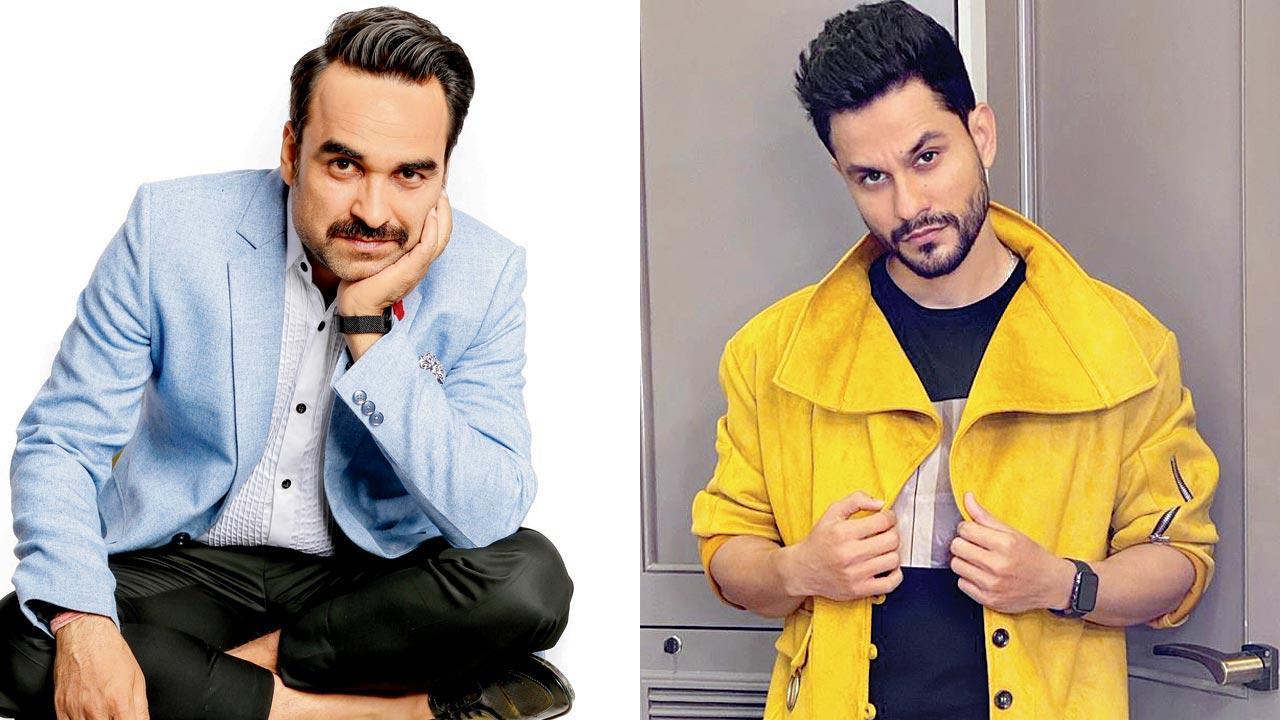
Post success of The Family Man 2, Raj-DK’s next is laugh riot set in times of Kama Sutra; Pankaj Tripathi-Kunal Kemmu starrer to roll next month
Mohar Basu (MID-DAY; June 23, 2021)
Weeks into the thunderous success of The Family Man 2, creators Raj-DK (Raj Nidimoru, Krishna DK) are back at work, ready to kick off their next production, tentatively titled Ashwalinga. The Amazon Prime Video series sees the filmmaker duo reunite with their favourite collaborators — Pankaj Tripathi and Kunal Kemmu. While Tripathi had won acclaim for his rib-tickling performance in their 2018 hit Stree, Kemmu has previously headlined their directorial offerings, 99 (2009) and Go Goa Gone (2013).
A source reveals that the comedy, set in the period of the Kama Sutra, will be helmed by Tumbbad (2018) director Rahi Anil Barve. “Ashwalinga has been envisioned as a big-budget period project. True to Rahi’s style, the story has its roots in mythology and Indian folklore. He has finished writing it with Tumbbad co-writer Mitesh Shah and will take it on floors soon. At the moment, elaborate sets, designed as per the architectural style of the era, are being built in the suburbs” says the source.
It is heard that Tripathi and Kemmu had just begun filming the comedy in March when the junta curfew made them hit the brakes. “Along with Dongri To Dubai and Four More Shots Please 3, this will be among the first Amazon shows to resume shoot in the first week of July,” adds the source.
Subscribe to:
Posts (Atom)