Showing posts with label Mihir Desai. Show all posts
Showing posts with label Mihir Desai. Show all posts
Why do TV actors suck up to the most frivolous of stars?-Rajeev Khandelwal
9:46 PM
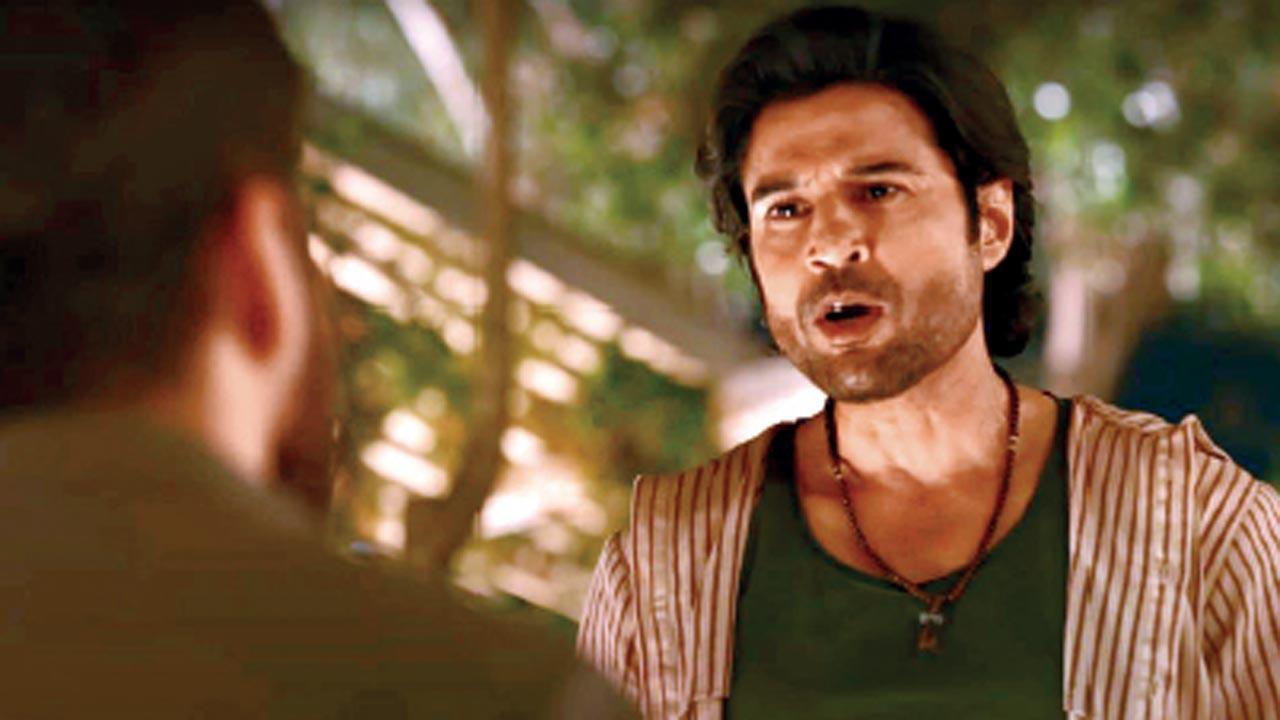
Playing a movie icon in Showtime, Rajeev says TV artistes make themselves appear ‘smaller to the world’, thus encouraging film industry’s bias
Priyanka Sharma (MID-DAY; March 6, 2024)
When Showtime directors Mihir Desai and Archit Kumar offered the role of a larger-than-life movie star to Rajeev Khandelwal, he instantly rejected it. His reason was simple—he leans towards realistic roles. But the directors then took him through the series that delves into the film industry’s working, power struggles and scandals, showing him the role’s uniqueness.
“There was something that I thought wasn’t realistic about the character. Mihir [admitted] there were people who would be obvious choices for this role, but he felt I could give it a different touch. I too wondered whether I was saying no because I feared I wouldn’t be able to do justice to it,” he recounts.
Today, Khandelwal is glad that he changed his mind about the Disney+ Hotstar series, as it not only offered him an interesting character, but also earned him fruitful collaborations—from co-star Emraan Hashmi to producer Karan Johar. He stills remembers his first meeting with Johar almost 20 years ago that told him of his graciousness.
“I met him at an event where most of the film industry was performing, and I was the only one from television. So, I was made to feel a certain way. I missed a step while performing. When I was cursing myself backstage for it, Karan and Shah Rukh [Khan] walked up to me and introduced themselves. Karan said, ‘My mother [Hiroo Johar] finds you adorable,’ while Shah Rukh spoke about girls liking me. Then they both blessed me.”
Khandelwal was among the first actors to transition from TV to movies. Even as many more are taking the plunge today, there exists a bias against small-screen actors. For this, he partly blames television actors.
“TV actors make themselves appear smaller to the world. When they are performing on a reality show and someone, who hasn’t even proved his mettle, is sitting as a judge, why do [TV artistes] make it look like the judges are big and they are small in stature? Why do TV actors suck up to the most frivolous of stars? Take pride in who you are and [the movie industry] will look at you with respect.”
Plea against web series Scoop: No relief for Chhota Rajan
8:14 AM
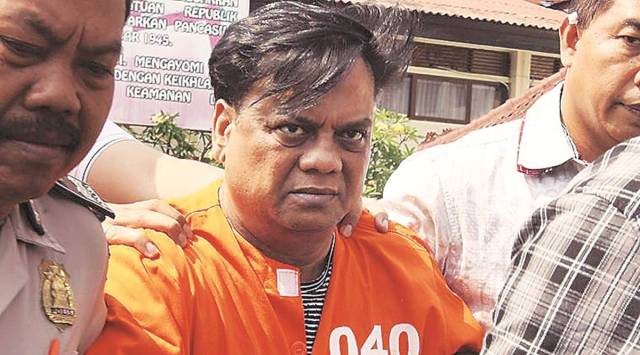
Rosy Sequeira (THE TIMES OF INDIA; June 3, 2023)
Mumbai: Jailed underworld gangster Chhota Rajan on Friday got no interim relief from Bombay High Court after it refused to direct OTT platform Netflix to take down its web series ‘Scoop’.
“They have published (sic) it. We’ll see on the next date,” said Justice Shivkumar Dige when senior advocate Mihir Desai, for Rajendra Nikalje alias Chhota Rajan, urged that the series that was released early Friday be pulled down.
The web series is inspired by the book ‘Behind Bars In Byculla: My Days In Prison’ by former journalist Jigna Vora who was acquitted in the 2011 killing of fellow crime reporter J Dey. Rajan and 9 others were convicted in the case. Rajan moved HC to stay the release of the series.
Senior advocate Ravi Kadam, for Netflix, said all 6 episodes are released. Desai said he will show it is a matter of intellectual property rights and that Rajan has a copyright to his image.
“The basic issue is that everybody else’s name and image are changed except mine. My image is shown as if I carried out the murder. It is true I have been convicted and my appeal is pending…Can you show me as guilty to the whole world in this manner?” he asked.
Desai also said, “Lakhs of people will be watching” and “it will create a lot of problems” for Rajan.
Kadam said Rajan’s conviction and judgment are in public domain and can be referred to in books, newspapers and in a web series.
To Justice Dige’s query, what if Rajan is acquitted, Kadam replied that till the appeal is pending the conviction stands. Justice Dige posted the hearing on Wednesday allowing Rajan’s suit to be amended and the defendants to file their replies.
Karan Johar ropes in rank outsider, Mahima Makwana, to lead Showtime with Emraan Hashmi
8:28 AM
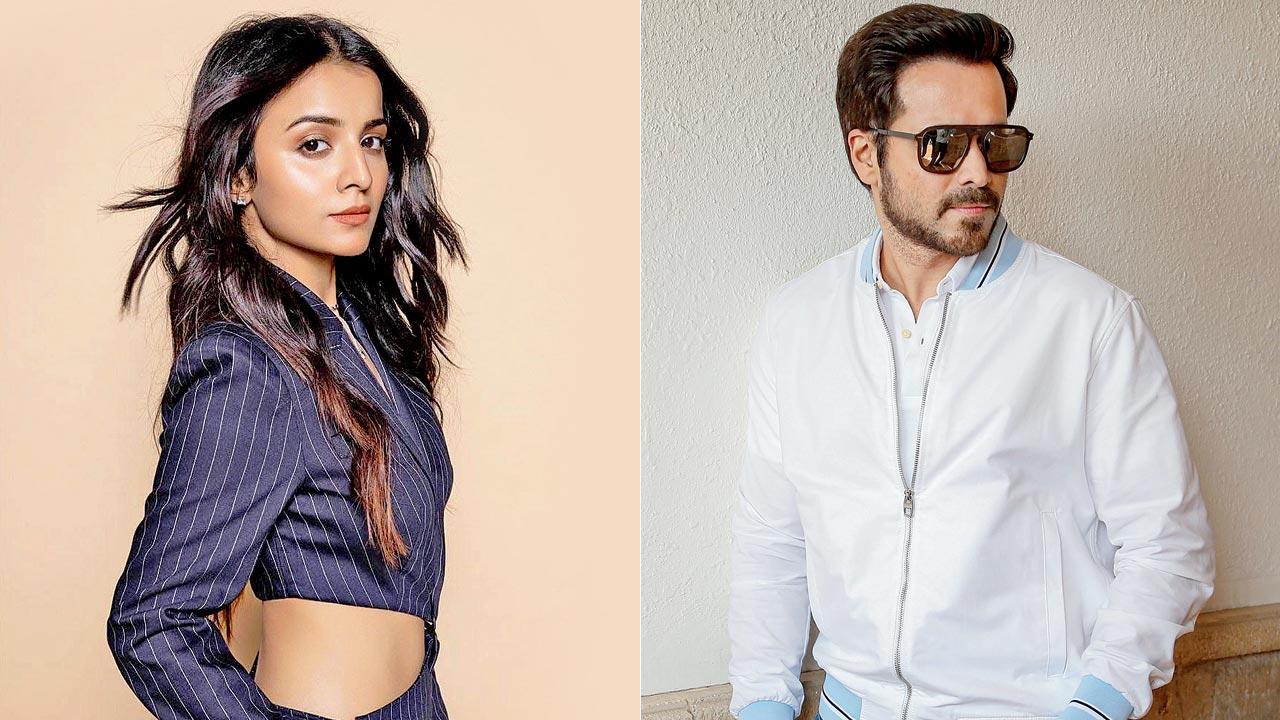
Ready to tell the nepotism-vs-merit story with Showtime, Karan Johar ropes in rank outsider, TV actor Mahima, to lead series with Emraan Hashmi
Mohar Basu (MID-DAY; September 15, 2022)
Last week, Karan Johar caught the attention of many when Dharmatic Entertainment, his production house’s web wing, announced Showtime. The Disney+ Hotstar offering is touted to be an insider’s look into the entertainment business, examining the practice of nepotism and the struggles of outsiders viewed through the lens of a leading studio. That it is coming from the filmmaker who faced the heat in the nepotism debate makes it all the more intriguing.
While it was announced that Emraan Hashmi will headline the series, mid-day has learnt that the makers have zeroed in on television actor Mahima Makwana for the female lead.
For a studio that has launched many star kids in the recent past, the casting can be viewed as an interesting move to subvert its public perception. A source reveals that Makwana — who has done a string of popular television shows, including Sapne Suhane Ladakpan Ke, Adhuri Kahaani Hamari and Mariam Khan: Reporting Live — was brought on board after several rounds of auditions.
“After doing two Telugu movies, she made her Bollywood debut with Salman Khan-starrer Antim: The Final Truth last year. She was one of the many contenders for Showtime, and did multiple screen tests over four months before being finalised. Besides the web series, she has shot for Ashwiny Iyer and Nitesh Tiwari’s next, Bas Karo Aunty,” says the source.
It was a conscious call on the makers’ part to hire a relatively fresh face for the series, given the nature of its story.
If things go as planned, the team will take the project on floors by November. “It will be directed by Mihir Desai, who recently helmed Masoom, and Archit Kumar of Dr Arora fame. The ensemble cast is currently being locked,” adds the source.
The series will be primarily shot in Mumbai, with the first schedule planned as a four-month stint.
Tandav row: Writers decide to self-regulate; stay away from politically and religiously sensitive references
8:29 AM

After multiple FIRs and extreme pushback to political drama Tandav, lawyers are likely to vet web show scripts at inception. What does that mean for streaming regulation, and where does this leave the writer?
Aastha Atray Banan (MID-DAY; January 31, 2021)
A director like Hansal Mehta knows how to deal with, and digest censorship. His 2017 film Omerta told the story of Ahmed Omar Saeed Sheikh, a British terrorist of Pakistani origin, who was behind the 1994 kidnapping of tourists in India. In 1999, he was released and found himself safely in Afghanistan backed by the Taliban in exchange for the release of Indian passengers aboard an Indian Airlines hijacked flight. When the film went to the Censor Board, two scenes proved contentious: Omar relieving himself as the national anthem played, and the protagonist having violent sex preceding a terror operation. “I had expected that it would be problematic, but you [the filmmaker] can try. My argument was that it’s the character who is disregarding the national anthem, not me!” Mehta argues.
His argument would certainly not hold true today.
The last few weeks have been defining for freedom of expression for the entertainment industry in India. After Saif Ali Khan-headlined political drama Tandav, directed by top Bollywood maker Ali Abbas Zafar, premiered on Amazon Prime Video, dissenting voices said Hindu religion had been disrespected through scenes in the first episode. The first was a stage play where college students playing Shiva and Narada wonder how they can improve the former’s social media popularity, while another was seen as a casteist slur where Tigmanshu Dhulia, who plays Prime Minister Devki Nandan Singh mocks a Dalit politician. After the trolling, BJP MLA Ram Kadam filed a complaint at Ghatkopar police station on January 20, and an FIR was registered in Mumbai. On January 18, a FIR was filed against the director, producer and the writer of the web series, along with Amazon Prime Video’s India head of original content at the Hazratganj police station of Lucknow. Another one at Greater Noida, then Jabalpur, followed by a complaint in Patiala House, New Delhi. Even the Confederation of All India Traders wrote a letter to Prakash Javadekar, Union Information Broadcasting Minister, on January 19, asking to stop the streaming. Zafar apologised unconditionally, and the makers responded by deleting the scenes. Last week, the Supreme Court declined to grant interim protection to Zafar, actor Mohd Zeeshan Ayyub and others facing multiple FIRs, and remarked that an actor “cannot take up a role without reading the script”.
For Mehta, the brouhaha is unreasonable, because “Tandav is just a pot boiler”. But he suggests we don’t let despair take over.
“I get that people are depressed with what’s unfolding, but I also believe that this government is business conscious. The OTT ecosystem rakes in a lot of business. Perhaps we should keep away from religious and political content for a while.”
Mehta’s suggestion may be prudent but this means the end, or at least partial suspension, of freedom of expression that defined web shows in India. Last November, the government brought video streaming over-the-top (OTT) platforms under the I&B Ministry’s ambit instead of the Ministry of Electronics and Information Technology. While the government has demanded a list of what constitutes prohibited content and more muscle to the complaints mechanism, the industry had responded with what’s called an Implementation Toolkit. Following the scale of this recent protest, it could very well mean that makers and writers self-regulate, choosing to stay away from politically and religiously sensitive references.
It’s then the first officers of creation—the writers—who have the most rewiring to do, whether it’s with their beliefs or process. Mayank Tewari, writer of the critically acclaimed political satire Newton, and behind the dialogues for Ragini MMS, is currently working for a Netflix show. “Let’s see how things pan out. It’s curtailment for sure. Can we now show a policeman or judge as corrupt? I don’t know. The good part is that once the content is made, you can have a problem with it, but it will find its audience anyway, even if through WhatsApp. That’s the beauty of living in these times.”
But he also admits that because making a show or film takes a whole lot of money, energy and time, the investment is huge. “No one wants their time and money to go down the drain. So we will be told, ‘you are an entertainer, not an activist’. And when writers start second guessing, it’s not good. The trouble is that today anything can cause a problem — if you look at Kalidas’s poetry, it’s erotica about Shiva and Parvati. If we reference that, even that will cause a problem. We are a nation addicted to outrage, and anything can offend,” he says, adding that platforms and creators are now looking for legal backing, with lawyers likely to vet the script.
For Atika Chohan, who wrote Meghna Gulzar’s Chhapaak, which got into trouble as lead actress Deepika Padukone, visited JNU in her personal capacity to show solidarity with the anti-CAA protesters, auto editing creative thoughts is a reality. The idea of having legal vet a series is making writers doubt their ability and scope. “I read somewhere this crazy word called ‘cinema jihad’. Didn’t writers have enough of a struggle to put up while pitching their stories, that we now have to make sure no one gets offended. India is not an exciting place to be, the creative possibilities are shrinking,” says Chohan.
So, what’s the solution? Resourceful thinking. “History has taught us that in times like these, creatives find ways to say what they want—tiered narratives, metaphors, layers. In Iran, when creators were censored, they still told stories of social divide, but by using children as protagonists. Maybe, we need to do that, but right now I am angst ridden and worried.”
Sidharth Jain is the founder of the Story Ink, a platform that seeks film or dramatisation rights to books written by Indian authors. He says he isn’t surprised b the developments because in India, some things we don’t talk about. He is currently working on a book deal that concerns a fiction title. “And yet [after the Tandav episode], I told the writer, let’s go over it all over again. Fighting legal battles is expensive. Writers and creators can’t be expected to seek legal help in early stages [of creation]. For now, it’s best to stick to finding family comedies, where everyone is happy.”
Some argue that even in the absence of a censor body, the freedom to approach a court of law exists and can be used to stifle expression. Mihir Desai, senior advocate, Bombay High Court, explains that anyone can set criminal law in motion, and it’s harsh. Multiple complaints can be made against a single party across locations, complicating the matter. The police, of course, has the power to review the complaint and judge if an FIR should be registered. “Usually, complaints seem to get converted into FIRs in states where a particular ideology has political backing, and so the consequences are harsh.”
The irony lies in the fact, says a writer who didn’t wish to be identified for the story because he is pursuing a legal suit, that OTT platforms want cutting edge stories. But when the environment isn’t conducive, they have no choice but to take note. For an international player like Netflix, this means having to ascribe to multiple rulebooks, a different one for every market. An article published in The Hollywood Reporter in 2019 said: Until very recently, Netflix has always taken a “move fast and break things” approach typical of Silicon Valley startups, with most criticism of its shows either ignored or dismissed.”
After having a presence in over 190 countries, not anymore. In the past, the platform has got into trouble for smoking scenes in Stranger Things, for depiction of Palestinian terrorists in Fauda, and for kissing scenes in their Arabic original Jinn. Amazon Prime Video, which had admitted to self- censorship as early as in 2016, had said: “Amazon is a responsible company and we are here to entertain the Indian customer with award-winning content from the US along with blockbusters from Indian and regional makers. We will keep Indian cultural sensitivities in mind while offering this content to customers.”
Rangita Pritish Nandy, who created the racy Four More Shots Please!, for Amazon Prime, says nobody really starts out with the idea of offending. “The arts are a reflection of the times we live in, always have been. What we, as creators and producers, bring to cinema and streaming, finds its seeds in the world around us. I don’t really see that changing. What may change is the way we choose to say it. Blatant calling out will stop and intelligent profiling and writing will be celebrated. Streaming has shrunk the world. When the world is your audience, it makes you brave.”
Vishal Watwani, writer and producer for Helllo Jee, a show about phone conversations between call centre employees and men who need to be “entertained”, for ALT Balaji, says while we cannot expect to be free to say anything we like, censorship in India seems more about appeasing the powerful than reviewing content in the interest of audience good. He echoes the words of the senior counsel representing Amazon Video Prime in the Tandav case. Senior advocate Mukul Rohatgi, authorised counsel for Amazon India, had told mid-day last week, “People are entitled to make a political satire. If you don’t need to watch it, don’t; no one is forcing individuals to watch the collection. According to me, these circumstances are not about hurting individuals’s non-secular sentiments, however of individuals looking for publicity.”
Sumeet Vyas, who played dodgy politician Yudi in last year’s show Dark 7 White on ALT Balaji, says he is reminded of George Orwell’s 1984. “Whatever you say, think, write, or perform will be monitored. It’s not just harmful for actors, but for society. My argument is simple—if you think what actors perform has a negative impact on society, then what about all the stories [we perform] where good wins over evil? Then credit us and us alone also for all the good that has happened in this country.”
Women in Mirzapur are as tough as men-Gurmmeet Singh
8:01 AM

Women in Mirzapur are as tough as men, says director Gurmmeet Singh
Uma Ramasubramanian (MID-DAY; November 2, 2020)
In a move that was telling of the patriarchal society it was set in, women had precious little to do as goons, guns and gore took centre-stage in the first season of Mirzapur. The second edition brings a necessary change in that regard — where Rasika Dugal's Beena takes charge of her life, Shweta Tripathi Sharma's Golu trades her books for guns to avenge her sister and boyfriend's deaths. Isha Talwar's Madhuri Yadav too unapologetically harbours political ambitions.
Point out to director Gurmmeet Singh how the female characters, at last, have agency, and he credits creator-writer Puneet Krishna for the development. "Puneet doesn't analyse if he is writing for a male or female character. For him, every character is a hero. Women in Mirzapur are equally tough because they have to surive there. It was not a conscious call to empower the women."
Krishna admits that the female characters didn't enjoy much screen presence in the opening season. "They have more screen time in this outing, but we had not planned it; we went with the flow. They are equally prominent because they [pull the strings] and the dynamics are driven by the story."
It's common for the prime players to be written off, thus adding to the show's plot twists. Singh exclaims, "I am scared that if I begin liking a character, Puneet will kill him in the next episode! We are not scared of killing the important players because we can have fun with those alive."
While the series is criticized for its excessive violence, director Mihir Desai asserts they practise self-censorship. "If a scene doesn't call for violence, we don't show it unnecessarily. This time, the characters have matured after their loss."
Makers Issue Apology
On October 30, author Surender Mohan Pathak told mid-day how he was enraged that the second season of Mirzapur had wrongly depicted his book Dhabba as an erotica (below). On Saturday, the makers issued an apology to Pathak on social media. The apology, signed by Krishna, stated that within three weeks, either the "unrelated voiceover" will be removed or the book cover will be blurred.

Puneet Krishna, Gurmmeet Singh and Mihir Desai
Subscribe to:
Posts (Atom)