Showing posts with label Meena Kumari. Show all posts
Showing posts with label Meena Kumari. Show all posts
Kamal Aur Meena is based on their 2000 letters and notes-Siddharth P Malhotra
9:43 AM

Siddharth P Malhotra shares how his Meena Kumari biopic has been shaped by the legend and Kamal Amrohi’s “own words”; says cast not finalised amid rumours of Kiara Advani fronting it
Mohar Basu (MID-DAY; June 25, 2026)
Imagine Meena Kumari’s life story being told in her own words. That’s what filmmaker Siddharth P Malhotra is promising with the late cinema icon’s biopic, reportedly titled Kamal Aur Meena, which was announced in 2025. Talking to mid-day, the director revealed that the scripting of his long-awaited biopic is complete, and it has been built from an archive of personal letters and diary entries left behind by the actor and her filmmaker-husband Kamal Amrohi.
“Luckily, we have their handwritten love letters and diaries. So, our film is based on their 2000 letters and diary notes. In a way, they have told us what to write, in their own words,” said the director.
Kamal Aur Meena is said to explore the tragic relationship between Kumari and Amrohi, with a strong focus being on their movie Pakeezah (1972). Bhavani Iyer and Kausar Munir have scripted the love story. Malhotra shared, “We have finished the scripting and are working towards the casting. The project will hopefully roll by the year-end.”
There has been a lot of buzz around the casting, with rumours repeatedly suggesting that Kiara Advani may portray the late actor. So, what’s the final word? No actor has been finalized, maintained the director, adding, “Till it’s not locked, it’s not locked. It’s [how] the business is. It’s not only the actor; it’s the overall cost of the thing [that is a determinant].”
I’m not a trained singer and I’m a bad actor-Lucky Ali
8:23 AM

Toshiro Agarwal (BOMBAY TIMES; May 25, 2026)
Lucky Ali has remained one of Indian music’s most emotionally resonant voices, a singer who made vulnerability sound timeless. Lucky inherited fame early but spent much of his life quietly walking away from it. From briefly dabbling in acting to redefining India’s indie-pop landscape with Sunoh, his journey has always been guided less by ambition and more by instinct. In a conversation with us, the singer reflects on fame, silence, authenticity, and why music, for him, still feels like growth. Excerpts:
You briefly explored acting before finally settling as a musician. Was acting something you genuinely wanted for yourself, or was it a path shaped more by circumstance and family expectations? And if the right opportunity came your way today, would you consider returning to acting?
I’m not a trained singer, and I’m a bad actor. Acting was more my father’s (late actor Mehmood) wish. I wanted to please him, so I did a few films — some bad ones. But I also got to work with directors like Shyam Benegal and Sanjay Gupta. But I would only act again if something genuinely touched my heart. Music feels different to me. It feels like growth. On stage, you can keep discovering things you couldn’t do before — that’s the beauty of it.
At a time when pop music was becoming more polished and commercial, your songs felt unusually raw and personal. Was that natural or did it come from feeling disconnected from the mainstream music industry?
The industry was what it was, and I never found the comfort of making music from within that system. Honestly, the music we made had a lot of mistakes — musically, even lyrically sometimes. But whatever happened, happened naturally. It made me feel good, and I believed it would make others feel good too.
You’ve said before that you don’t like being forced to make music for trends. In today’s algorithm-driven industry, how difficult is it to protect authenticity?
Not difficult at all. I just do my music when I feel like doing it. I’m not dictated to by the system, and I don’t follow it either. I’ve always worked with people who are independent in their thinking and music. For me, music has to be heartfelt. It shouldn’t be too prolonged or repetitive.
You’ve often spoken about impermanence and not getting too attached to fame. Did that understanding come from personal experience, or from closely observing the entertainment industry over the years?
You see it everywhere, not just in the entertainment industry. There’s always a rise, and then there’s a point where things slow down. That’s natural. Age plays an important factor, and there comes a time when certain phases stop. So, fame is a difficult thing because after a point, you’re not entirely your own person anymore. It’s different when we’re performing because that comes from the heart. But it becomes difficult to move around normally because people surround you. I deal with it by taking long breaks before coming back to it again.
While most artistes try to move closer to the spotlight, you often walked away from it. Looking back, was protecting your personal life more important to you than protecting your career?
There was already so much fame within the family — my father, my aunt (Meena Kumari) — and I had seen that closely. It never really appealed to me. For many people, fame is something they want to achieve, but for me, it was just something that was thrust upon me. My intentions were always different. I never even thought of myself as a musician who would last this long. I simply wanted to do what I had set out to do, which was to make that album. I had applied myself to music far more than acting or anything else.
There are divided opinions within the music industry about bringing deceased artistes back through holograms and AI. Is there someone you would have wanted to share a stage with in that form?
I always wanted to bring my father back on stage in some form. We had even discussed the idea of performing his songs with him appearing on stage alongside us. But something like that takes a lot of time, effort and money, and I never really pursued it further. The idea still exists though. Maybe I’ll do it, maybe I won’t. I don’t really want to go beyond my father when it comes to that.
-------------------------------------------------
On Sunoh resonating with the audience till date... Lucky says, “What I felt at that time, I wrote. And whoever listened to it carried those feelings within them. Now those people have grown up, and somehow the music has stayed with them. I don’t know why I got the opportunity to do what I’ve done. It’s not something you can plan. It’s just how the time was, and how things happened.”
-------------------------------------------------
“If people are still listening to the music, then clearly the feelings haven’t become old. Their realities may be different now, but the emotions are still the same. My music evolves, and so do I with it”
-------------------------------------------------
“For me, music and singing were the only forms of expression that truly made sense because they came more naturally to me than theatrics or other forms of expression”
Being a child actor wasn’t something I chose-Honey Irani
10:37 AM

As child actors, Honey Irani (left) and her sister Daisy were household names in the 1950s and ’60s
Forced to go before cameras while never having the chance to go to school or play with other children: former child actor and acclaimed screenwriter and director Honey Irani recalls her difficult childhood in this extract from a new book, Behind the Big Screen
MID-DAY (February 1, 2026)
The world of cinema has a way of pulling you in, even before you realise what’s happening, and overpowering you. For Honey Irani, it began when she was just two and a half years old. She remembers it vividly. ‘I was a tiny bundle of curiosity, scampering around our modest home in Bandra, Mumbai, when a man named Dulal Guha walked into our lives. He was a film producer, there to sign my older sister Daisy for a role in his movie, Ek Gaon Ki Kahani (1957). I was just a bystander, or so I thought, playing nearby as he spoke with my mother.
As he removed his hat, he revealed a bald head, I couldn’t help myself. “Mama, yeh toh takla [bald] hai!” I blurted out, pointing at him. The room froze. My mother’s face turned crimson, and before I could blink, her hand met my cheek with a sharp slap. “You don’t speak like that!” she scolded. But Guha, instead of being offended, chuckled. He looked at me, his eyes twinkling with interest. “How old is she?” he asked my mother. “Two and a half,” she replied, still flustered. He paused, then said, “If you don’t mind, can I sign her instead of Daisy? I did need someone younger actually.”’
And just like that, her life changed. ‘My mother, always quick to seize an opportunity, agreed. I was too young to understand what it meant,’ says Honey. And so she was suddenly a child actor, thrust into the dazzling, chaotic world of Indian cinema.
From that moment, right up until she was about twelve, her life revolved around film sets. Within this period, she acted in some seventy films including Chirag Kahan Roshni Kahan (1959), Zameen Ke Tare (1960) and Pyaar Ki Pyaas (1961). Irani also appeared in numerous Tamil, Telugu and Marathi films, each one a whirlwind of lights, cameras and endless takes. Hers was nothing like a typical childhood. There were no lazy afternoons playing with friends, no regular drone of school days, no carefree summers. Instead, her days were filled with call sheets, costumes and the hum of studio life.
‘Schooling was a patchwork affair. I attended Hillview School briefly, then Mount Mary’s Convent on Bandstand, but I was never there long enough to settle in. The demands of shooting were relentless, and schools in those days were strict about attendance. A few months here, a few there and then a long gap for filming. Eventually, my mother arranged for home tutors, or sometimes someone would teach me on set between takes. I scraped through fifth standard, but that was the extent of my formal education. Looking back, I don’t resent it entirely — it was the price of the life we lived — but I did miss the normalcy of school, the chatter of classmates, the rhythm of a classroom,’ says Honey.
‘Being a child actor wasn’t something I chose; it was something that happened to me. I hated the studio gates. The sight of them would make me wail, “I don’t want to go!” My mother, ever resourceful, would bribe me with promises of ice cream or a movie, only to deliver me to the set. But once I was there, something shifted. The actors I worked with — legends like Meena Kumari, Dilip Kumar and Nargis — became my surrogate family. They transformed the intimidating world of filmmaking into a place of warmth and comfort.
Meena Kumari, in particular, was her haven. She was more than a co-star; she was a mother figure who enveloped her in love. Honey would ride home with her in her car, stay at her house and fall asleep to her soothing voice. ‘She’d bathe me, feed me with her own hands and tuck me in. One memory stands out. During the filming of Chirag Kahan Roshni Kahan (where she played a boy), we were shooting a scene where I needed to cry. I wasn’t getting it right, and the days were dragging on. In a moment of desperation, Meena pinched me — hard. I burst into tears, shocked, and the cameras rolled. Afterwards, she was inconsolable, hugging me and apologizing profusely. “I’m so sorry, my bacha,” she kept saying, kissing my forehead. That was Meena — professional to a fault, but with a heart that overflowed with care.’
Her mother was the driving force behind her career. She was ambitious, fiercely so, and saw in both Daisy and Honey a chance to live out dreams she’d never realized herself. Daisy, older and more aware, bore the brunt of that ambition. ‘Daisy was protective of me, always keeping an eye out, but her own experiences as a child actor left her with scars I was spared. While I escaped the worst of it, I can’t deny that home wasn’t always a sanctuary. There were tensions, moments I’d rather not revisit, that made the studio feel like a safer place. I’d rather be on set, surrounded by the camaraderie of actors and crew, than face whatever waited at home.
‘I don’t dwell on those memories. They’re part of who I am, but I’ve chosen to focus on the positive. The hardships taught me compassion, resilience and an ability to connect with people. They made me a better mother to my own children, a better person. I’m not bitter about my past — I can’t change it, so why let it weigh me down? Instead, I carry forward the lessons and the love I found along the way.’
The sets thus became her playground. They were filled with moments of joy and fatigue, and Honey learnt to welcome both. ‘I remember shooting Pyaar Ki Pyaas [one of my favourites] when I was about seven or eight. I was exhausted, barely able to keep my eyes open and the crew kept promising “one last shot”. Fed up, I pulled out my false tooth — a replacement for a lost milk tooth — and tossed it into a pond. Without it, they couldn’t shoot. The crew scrambled, and I got my rest. It was a small act of rebellion, but it felt like a victory.’
Then there were other lighter moments, like the lunch breaks during which Dilip Kumar and other actors would fly kites or play cricket. ‘I’d hold the firki [spool] for their kites or cheer as they bowled underarm to us kids. Other child actors became my companions. We’d laugh, share stories and navigate the strange world of fame together. I worked with Babloo and a girl called Purnima. I knew Raja, who played boys’ roles despite being a girl, [and she] somehow left a lasting impression. Years later, I ran into her at an airport, where she worked. It was a bittersweet reunion, a reminder of how time scatters us.’
Extracted with permission from Behind the Big Screen by Sunanda Mehta and Suchitra Iyer, published by Bloomsbury Publishing India
The Dharmendra-Hema Malini love story outlasted gossip, glare and distance
10:11 AM

Mohua Das (THE TIMES OF INDIA; November 25, 2025)
The first time Hema Malini saw Dharmendra wasn’t on a set lit for romance but during the interval of a K A Abbas film premiere. She was still the new, luminous face everyone was talking about. He was already the kind of man who made other men glance twice in the mirror before entering a room. Broad shoulders, movie-star jawline, and the kind of old-school manners that could make you forget what you were about to say. When he laid eyes on her, she overheard him tell Shashi Kapoor in Punjabi, “Kudi badi changi hai” (The girl is quite pretty).
Their first meeting on set came soon after. In 1970, when they were cast together in Tum Haseen Main Jawan, Dharmendra’s interest became impossible to miss. By her own admission, she turned him down more times than she could count and each time he came back, a little more charming, a little more insistent. The pursuit was relentless. Dharmendra had a reputation.
Before Hema entered the frame, Dharmendra’s name had already floated through the gossip columns, mostly with Meena Kumari. In the early phase of his career, he was rumoured to share more than just screen chemistry with the legendary actress. Their closeness became a talking point during a difficult period in Meena Kumari’s personal life.
Dharmendra, however, always downplayed it: “I was not in love with Meena Kumari. She was a huge star and I was her fan. If you call the relationship between a fan and a star as love, then consider it as love.” Their first film Phool Aur Patthar turned him into a star.
But this was different. This was the Dream Girl. Through the ’70s, they became an unbeatable on-screen pair. Seeta Aur Geeta, Jugnu, Raja Rani, Sholay, Azad… each film added to the idea of Dharam and Hema. The more the rumours of an off-screen romance swirled, the more their on-screen draw seemed to grow and more the gossip pages feasted on it.
For Hema, it wasn’t an easy love story to step into. Her mother, Jaya Chakravarthy, kept a close watch on her — from film sets to public appearances — and Hema never questioned it. Until Dharmendra came along. The otherwise compliant Hema was suddenly ready to fight the world for a man who, in her words, made her happy “I just knew that he made me happy. And all I wanted was happiness,” she said in the biography, Hema Malini: Beyond The Dream Girl.
In May 1980, the curtain lifted. The two were married away from the flashbulbs without the press getting wind. But it wasn’t the beginning of a fairy-tale domestic life. Dharmendra was already married to Prakash Kaur, with four children Sunny, Bobby, Vijeeta, and Ajeeta. Divorce was not on the cards. But all sides remained tightlipped on how the arrangement was arrived at.
What followed was one of Hindi cinema’s most unconventional marriages. Hema moved into her own home, while Dharmendra stayed with his first family and even now, she lives in the house across the road from him in Juhu. Through it all, she was labelled the “other woman”, yet she stood her ground, faced the scrutiny, and refused to be defined by it.
As she put it in an old Lehren interview: “Nobody desires to live apart from their spouse, but sometimes circumstances force such situations, and one has to accept them. I am happy with myself. I have my two children, and I have brought them up very well. Of course, he (Dharmendra) was always there, always. Everywhere.”
With Hema, he would have two more daughters — Esha in 1981 and Ahana in 1985 — and remain deeply involved in their lives. Despite the complexity, it was a blended family that baffled outsiders but somehow found its own balance.
Though they were paired romantically in 28 films, the Dharam-Hema post-wedding screen story never took off. Razia Sultan (1983), their first release after marriage, underperformed. Scripts for the pair dried up. Individually, they kept working but Bollywood had moved on, pairing these reigning stars with newer faces. The last time they’d been on screen together was that same year.
For Dharam and Hema, the hyphen between their names now belonged more to life than to cinema. Yet the partnership endured. Despite the early drama — from parental disapproval to headlines picking apart their relationship — they stayed together.
Bollywood hits the rewind button, turning the lens on its legends
9:40 AM

Artistes’ popularity, lower costs make the genre promising bet for producers
Rajesh N Naidu (THE ECONOMIC TIMES; October 6, 2025)
Mumbai: Producers are turning to biopics on celebrated film personalities, drawn by their emotional depth, lower marketing costs, safer returns and audiences' growing fondness for real, inspiring stories from the world of cinema, writers and trade insiders told ET.
Over the next two years, Bollywood producers are set to release a wave of biopics on film legends such as Dadasaheb Phalke, Meena Kumari, Kishore Kumar, Parveen Babi, Madhubala and Ilaiyaraaja, as the industry increasingly turns the camera inward amid a broader boom in biographical films across politics, history, science, sports and mythology.
"These biopics have an advantage. Largely, audiences are inquisitive about the personal lives of their favourite film artists," said Girish Johar, producer and film business expert. "But for those who are not admirers or fans of these artists, the merit of these biopics will be tested only on how their stories are told," he added.
A key concern among directors and writers about biopics on film artists is the authenticity of their portrayal, a nuance that many past films failed to capture.
"I am keen on watching a biopic about the actress Meena Kumari given her body of work, personality and the enigma around her. But a key question remains: Will the film on Meena Kumari deal with the critical aspects of her life or just one prominent aspect of her life?," said veteran writer-director Nilaskhi Sengupta. "Ultimately, it is the authentic portrayal of such artists which will decide how well they will be received," she added.
In recent years, creative works based on the film industry and artists have received high critical acclaim. In India, the web series Jubilee, which showed the 1940s era of the Hindi film industry received favourable response from the audience.
Lastly, costs also play a role in this trend. "Indian audiences have an immediate connection with biopics on film artists. For producers, who are under-confident in backing original stories due to polarized responses to films, a biopic on a film artist reduces at least the marketing and promotion costs," said Ameya Naik, founder of Fantasy Films, an event management company.
Siddharth P Malhotra reacts to the news about Kiara Advani playing Meena Kumari in the biopic
9:12 AM

Onkar Kulkarni (BOMBAY TIMES; June 25, 2026)
There’s a buzz doing the rounds that actress Kiara Advani has been approached to portray the iconic Meena Kumari in an upcoming biopic. Reports claimed that director Siddharth P Malhotra saw Kiara as the perfect choice for the role of the legendary actress, and had already narrated the script to her. According to sources, Kiara who is currently pregnant and recently made waves with her debut at the Met Gala, is said to have loved the story and may soon give it a green light.
However, when we reached out to Malhotra, he clarified the rumours, and said, “This is all a hypothesis. I am in New York now and I will be back in Mumbai by the end of July, and only then will I start with my narration. I am going to lock Kamal Amrohi’s casting first. Until then, I won’t move on to casting for Meena Kumari ji’s role.”
Director Siddharth P Malhotra, known for films like Hichki and Maharaj, acknowledged that rumours around the biopic’s casting continue to circulate. “Every now & then, rumours surface of a certain Bollywood actress being approached for the biopic. I don’t think before September we can officially announce Kamal Amrohi & Meena ji’s casting,” he said.
When asked if Kiara had been in discussions with him for the role at any point, Malhotra said, “We have had conversations about possibly doing it. She is pregnant & will deliver in some time. Now in the last few months before delivery, it is unrealistic to discuss this.”
Malhotra has officially secured the rights for the film, which aims to bring to life the epic real-life love story between celebrated actress Meena Kumari & legendary director-screenwriter Kamal Amrohi.
Court tells Pali Hill society to vacate land leased from Kamal Amrohi, Meena Kumari in 1959
8:36 AM

Nauzer Bharucha (THE TIMES OF INDIA; May 26, 2025)
Mumbai: The legacy of a yesteryear Bollywood power couple, long deceased, has come back to haunt 162 families of a posh Pali Hill housing society, who were recently directed to vacate their premises within six months by a local court.
In 1959, legendary actor Meena Kumari and her husband, film director Kamal Amrohi, jointly purchased a 2.5-acre Pali Hill plot for a reported Rs 5 lakh and leased it to a developer, who constructed five buildings named Cozihom Cooperative Housing Society.
The dispute arose in the early 1970s when the late Kamal Amrohi accused the society of not paying full rent for the leased land (Rs 8,835 per month). The society then said it decided to pay less because part of the land did not belong to the landowner.
In 1991, Kamal Amrohi filed a suit for eviction and possession of the land because of arrears of rent amounting to Rs 66,060. He died two years later, and his children continued the legal battle. Last month, the small causes court, Bandra, on April 23, 2025, ruled in favour of Tajdar Amrohi, son of Kamal Amrohi, and a builder, Arham Land Developers. "We won the case. The society has been asked to vacate within six months," he told TOI.
Cozihom residents said the society will move the Bombay High Court next month to challenge the eviction order, which will displace 162 families, mostly senior citizens, who bought apartments here more than 50 years ago. "The society has already cleared all the pending rent dues with interest and has been depositing the amount in an escrow account for the past two decades," they said. "The entire case only pertained to the land, not the buildings built on it. We will be pointing this out in our appeal before the high court,'' they added.
"The defendant did not pay the rent as per the agreed rate of Rs 8,835 for 1 April 1971 to February 1972. It is admitted that thereafter, the defendant paid rent at Rs 7,000. It is admitted that the plaintiff served notice dated 30 November 1990, but the defendant did not comply with the notice and failed to avail the benefit available under Section 12(2) of the Bombay Rent Act," said the court.
The court also referred to the covenant of indenture of lease clause 14(a): "If at any time during the said term hereby created the lessees dispute or challenge the lessor's right to recover the agreed rent of Rs 8,355 under any law or on any ground, the lessors shall be entitled by notice in writing to forthwith terminate this lease. In which case, the lessors shall be entitled to re-enter and take possession of the demised land together with the building and structures standing thereon, and this demise shall stand forfeited and this lease shall stand surrendered and dissolved, and the lessees shall not be entitled to any compensation whatsoever."
"It is unambiguous that upon the determination of the lease, the lessor is entitled to possession of the land together with the building and structure. The suit land was given with specific covenants for the construction of buildings. The duties and objections of lessor and lessee were agreed upon by the parties. The defendant failed to pay the contractual rent regularly," said the court, which refused the society's plea to stay the order.
"We are of the considered opinion that there is no need to grant a stay. At present, there are no immediate dire consequences from the judgment and decree. The reasonable and sufficient period of six months has already been granted to the defendant. Meanwhile, the parties can approach the competent court by way of a proper proceeding. Hence, we do not think it proper and justified to grant a stay to the judgment and decree passed today. Hence, the request is rejected," said the appellate bench of the small causes court, Bandra.
Meanwhile, the builder, Arham Land Developers, contended that it purchased the land from Tajdar Amrohi for Rs 5 crore and acquired rights and benefits in the 9,849 sq m land together with three buildings by a registered Deed of Conveyance dated 19 May 2010. Property consultant Ashok Narang said the value of the Pali Hill plot is in excess of Rs 1,000 crore.
Kiara Advani or Kriti Sanon - who will play Meena Kumari in Siddharth P Malhotra's film?
9:50 AM
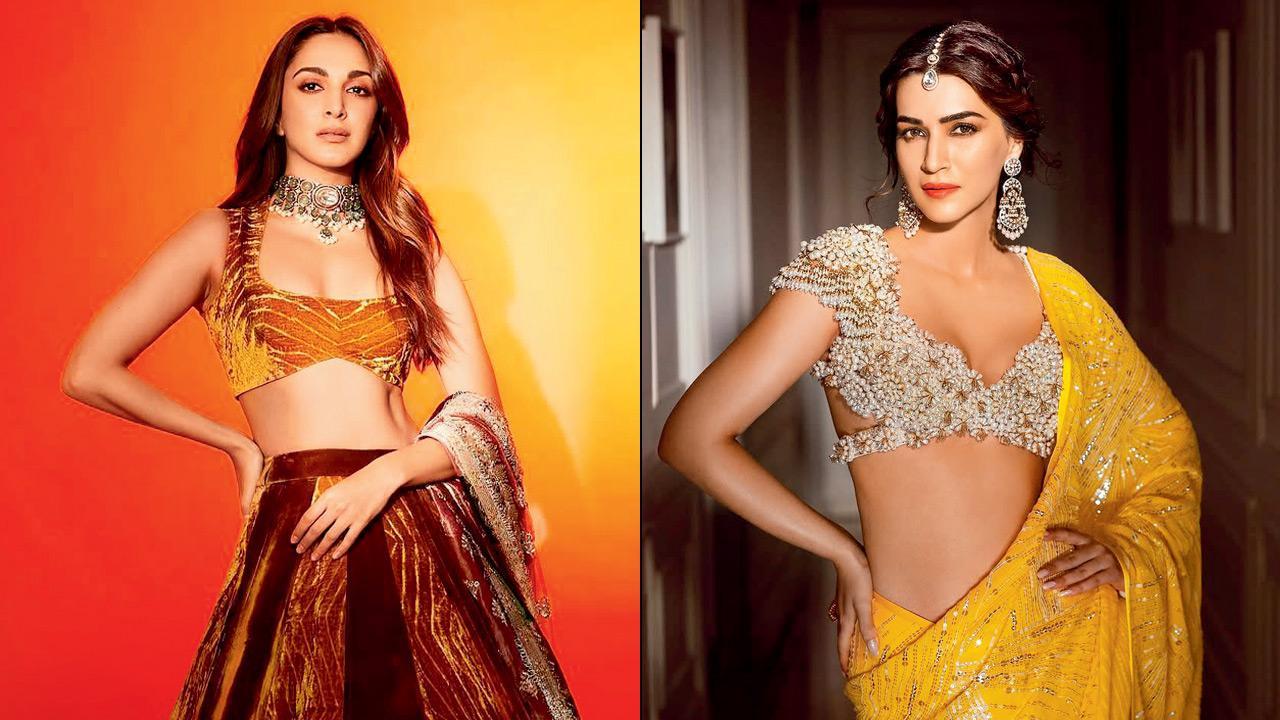
While rumours suggest that Kiara Advani and Kriti Sanon are frontrunners to play the female lead in Kamal Aur Meena, director Siddharth P Malhotra says casting hasn’t begun
Mohar Basu (MID-DAY; January 31, 2025)
Meena Kumari’s life story will finally find its place on the silver screen. It may be recalled that earlier, couturier-turned-producer Manish Malhotra had planned to back and direct a biopic on the late actor, but he shelved the Kriti Sanon-starrer last year (‘I am not doing Meena Kumari’s biopic’, Nov 26). Now, director Siddharth P Malhotra has set the wheels in motion for Kamal Aur Meena, which chronicles the stormy relationship between Kumari and her filmmaker-husband Kamal Amrohi.
Rumours are rife that Sanon is a strong contender for this ambitious project as well, while some sources suggest that Kiara Advani is the first choice.
The film is in its early stages of pre-production, with lyricist-writer Kausar Munir expected to deliver the screenplay and the final dialogue draft by February-end. A source reveals, “Kamal Aur Meena is an emotionally charged story. Casting will be locked in March. It’s not just about looking the part; the lead actor needs to portray Meena’s poetry, pain, and resilience. The film will roll only by summer because it will take time to create the on-screen world and costumes required for the period drama.”
It remains to be seen who between Sanon and Advani bags the Bilal Amrohi production that will play out over two decades, with the focus on how the actor-filmmaker duo made Pakeezah (1972). When mid-day reached out to Malhotra, he said, “We have not met any actors, male or female, so far.”
I am no longer doing Meena Kumari’s biopic-Manish Malhotra
8:19 AM
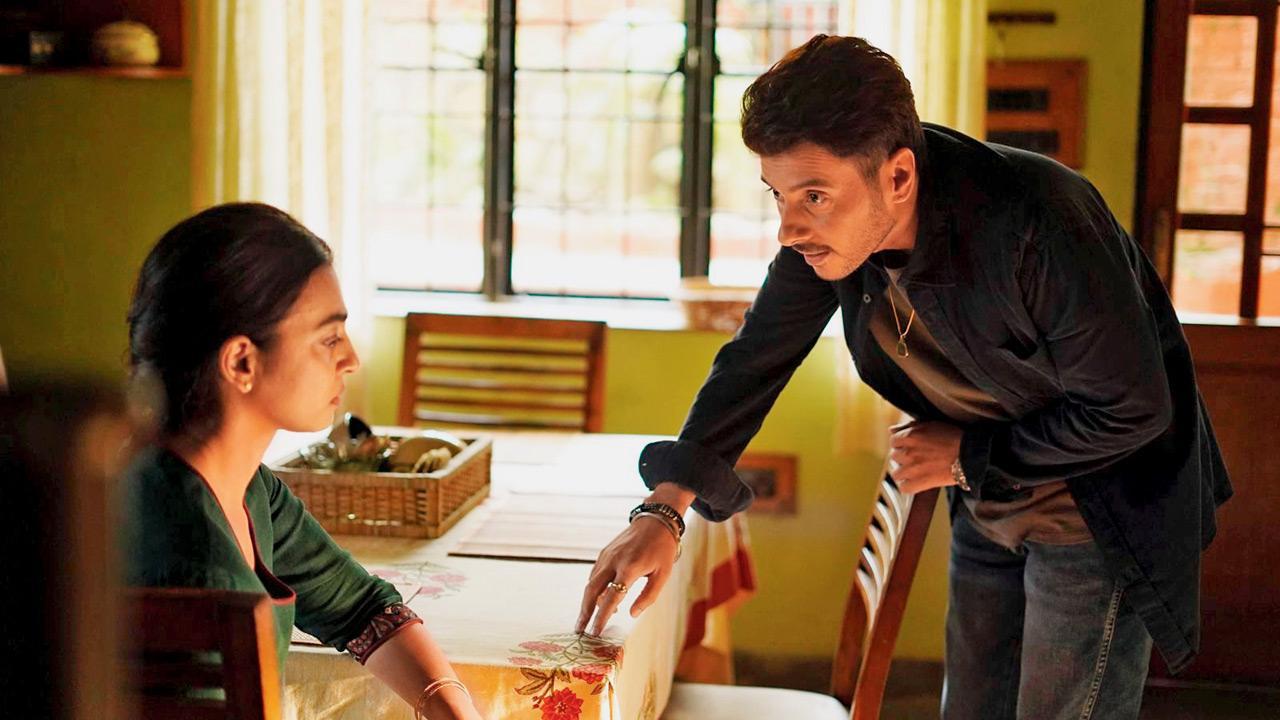
Even as his maiden production Saali Mohabbat premières at International Film Festival of India, designer Manish Malhotra says his plan of directing Kriti-led biopic shelved
Priyanka Sharma (MID-DAY; November 26, 2024)
Glamour and style are the first things that come to mind when one thinks of Manish Malhotra. But after over three decades of creating fashion statements for movies, the couturier has acquired a new identity—of a filmmaker. As his maiden production, Saali Mohabbat, premièred at the 55th International Film Festival of India (IFFI) on November 22, it was easy to see that his bent of storytelling is far removed from his work as a designer.
“My dream with Stage 5 was to start a different narrative from what’s expected out of me. [People expected] my films to star Kareena [Kapoor Khan] or the young girls, with lots of glamour. But this is not an extension of my brand. I can do glamorous storytelling tomorrow itself. But the most important thing is the script,” emphasises the new producer.
The story takes centre-stage in Saali Mohabbat, starring Radhika Apte, Divyenndu and Anurag Kashyap, and helmed by Tisca Chopra. The thriller revolves around a homemaker who is telling a story of infidelity and deceit to a group of people. Backing a middle-of-the-road film is not easy. Did Malhotra seek advice from his industry friends, especially filmmaker Karan Johar?
“When I told Karan about Saali Mohabbat, he was surprised. But he also knows if I’ve said yes to something, I will do it. I didn’t ask anyone anything. I just wanted it to be mine, be it good, bad or ugly. Friends are always protective about you and will say, ‘Make something else.’ But this had to be my voice.” Have Kareena Kapoor Khan, Janhvi Kapoor or other actor-friends asked him to make movies with them too? “I think when they see my work, they may say this,” he chuckles.
It’s not every day that a fashion designer turns filmmaker. But filmmaking was a natural step for him. “All fashion designers don’t have a film sense, but some do. With me, it was organic because I was in love with films since childhood, watching Mughal-E-Azam [1960] or the works of Raj Kapoor and Guru Dutt. I love the ’70s, their songs and costumes. I am steeped in films. That’s why I get how it works,” says Malhotra, who also has Bun Tikki and Ul Jalool Ishq in the pipeline.
At the end of our chat, we ask him for an update on the Meena Kumar biopic that he was to direct with Kriti Sanon playing the late actor. He says, “I’m no longer doing the biopic. I’ll direct something else. Directing is one dream that remains unfulfilled.”
Sachin Pilgaonkar on 60 years in cinema: "I have reached the interval stage"
8:16 AM

Natasha Coutinho (BOMBAY TIMES; November 13, 2024)
Sachin Pilgaonkar (67) completes 60 years in films this year. The actor, director and producer started acting as a child at the age of five and went on to feature in over 65 films before starring in films like Sholay and Satte Pe Satta as a grown-up. The veteran actor says there’s much more to come and he has only reached the “interval stage” of his career.
‘I was the first child artiste to win the President’s Award’
Talking about his early days as a child artiste, Sachin fondly recalls, “I received the National Award for Best Child Artiste at the age of five (for Marathi film Ha Maza Marg Ekla), from the hands of Dr Sarvepalli Radhakrishnan the second president of India, in the presence of Pandit Jawaharlal Nehru. Back then, it was known as President’s Awards and the child artiste category did not exist, so I was the first to win it. My mother had stitched a sherwani with mojri for the event and as I was leaving after receiving my award, Pandit ji called me, made me sit on his lap, took the rose from his coat and placed it on my sherwani. My mother was keen that I have a 9 to 5 job, but this event changed her thought process. Eventually, I went on to work in more than 65 films as a child.”
‘I learnt self-love from Dev Anand’
Sachin cherishes the close association that he shared with Dev Anand. He says, “Dev Anand with whom I worked a lot, loved himself and would address himself by his name Dev, while explaining a scene. The first time it happened, I asked him, 'Who is playing Dev?' He looked at me for a few seconds before announcing he was referring to himself and I apologized. He told me that I reminded him of his younger brother Goldie, who he was very close to. I played his younger brother in his debut directorial Prem Pujari. Apart from working with Dev saab, I feel fortunate to have been part of cult films like Sholay, Satte Pe Satta, Nadiya Ke Paar, Geet Gaata Chal and more.”
‘As a director, I treat my actors the way I wanted to be treated on set as a young actor’
Talking about the life lessons that he has learnt in all these years, he says, “At 24, I became a director in Marathi cinema. Today, my actors receive their cheque from me (not my managers) even before they have taken off their makeup on the final day of shoot. The reason is, that’s how I wanted to be treated when I was younger, but it wouldn’t happen. I celebrate the birthdays of my crew - from the light man to the actors because no one celebrated my birthday on the sets."
‘Shriya was our lucky charm since day one’
“The day Shriya was born, I was shooting for my Marathi directorial Atmavishwas, in Mumbai’s Shivaji Park. The previous night the doctor informed us Supriya would have to deliver the baby the next evening because of some complications. Co-incidentally, the hospital was on the same street as my shooting location. I was arranging the shot in the afternoon when a friend informed me that I’ve become father to a baby girl and I rushed to the hospital. The same evening, we received the news that I had received the Maharashtra State Award for Best Director for Ashi Hi Banwa Banwi and Supriya had won the award for Best Actress for Maza Pati Karodpati. Today, Shriya has made her own space in the industry and I am proud of her. As a family, we are very tight and they have always been my pillar of strength.”
‘Meena Kumari introduced me to Urdu’
The actor, who shared screen space with Meena Kumari in the film Majhli Didi, says, “Meena aapa imbibed Urdu into my life and today, it is part of my system. Having command over a language gives you immense confidence, it changes your body language and approach to your work. I couldn’t speak English back then, but a friend helped me by conversing and that’s how I learnt the language. Today, I visit colleges to give lectures on career building, but I consider myself a student. My pseudonym is Shafaq, and I write and recite Urdu poetry, and have shared the stage with the likes of Wasim Barelvi and Javed Akhtar.”
Winning Nach Baliye with Surpiya at the age of 48
Supriya (Pilgaonkar) and I are total opposites, but I never tried to change her because I married her for what she is. We were approached for Nach Baliye (2005) because the channel needed a senior couple and they didn’t even know if we could dance. The intention was not to win. We would be happy even if we survived six episodes, but we ended up winning the show. Choreographer Saroj Khan, who was a judge on the show, used to say, “No matter what, the Shammi Kapoor within you will never leave your body.”
"Zameen aasman ka fark hai": Meena Kumari’s stepson Tajdar Amrohi on Sharmin Segal’s comments
8:27 AM
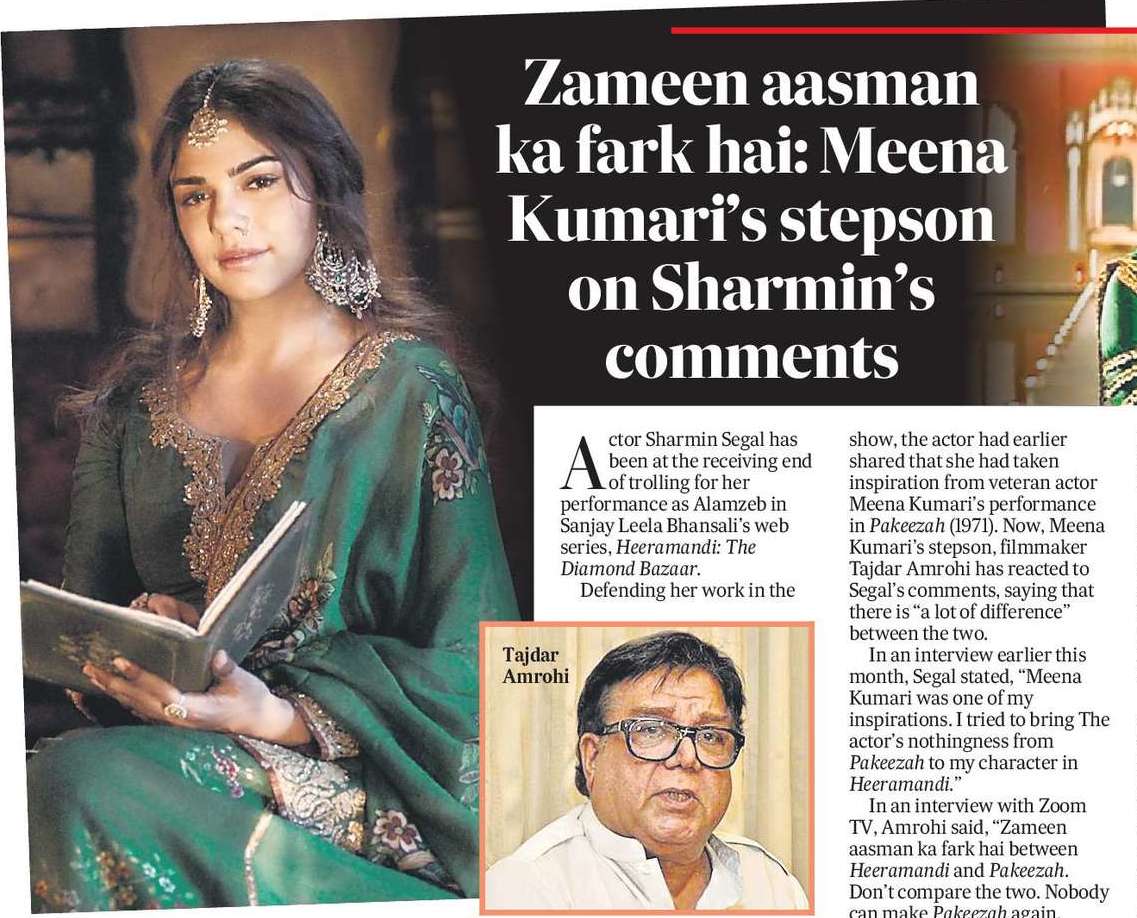
HINDUSTAN TIMES (June 12, 2024)
Actor Sharmin Segal has been at the receiving end of trolling for her performance as Alamzeb in Sanjay Leela Bhansali’s web series, Heeramandi: The Diamond Bazaar.
Defending her work in the show, the actor had earlier shared that she had taken inspiration from veteran actor Meena Kumari’s performance in Pakeezah (1971). Now, Meena Kumari’s stepson, filmmaker Tajdar Amrohi has reacted to Segal’s comments, saying that there is “a lot of difference” between the two.
In an interview earlier this month, Segal stated, “Meena Kumari was one of my inspirations. I tried to bring The actor’s nothingness from Pakeezah to my character in Heeramandi.”
In an interview with Zoom TV, Amrohi said, “Zameen aasman ka fark hai between Heeramandi and Pakeezah. Don’t compare the two. Nobody can make Pakeezah again. Neither Meena Kumari nor Kamal Amrohi (filmmaker, his father) can ever be born again.”
He continued, “I don’t know Sharmin. But no, I can’t relate to her statement on nothingness. I must say here, that each one of us has individual tastes. There might be people who have liked Heeramandi more than Pakeezah.”
Amrohi then went on to elaborate on Bhansali’s admiration for his father. The filmmaker added, “Once, Bhansali had come to Kamalistan Studio and asked where my dad used to sit, where he walked. Out of great respect, he touched the ground. That was 15 years ago and I never met him again.”
If people learn smoking, vulgarity from films, then why don’t they learn when a film is telling good things?-Vidya Balan
2:24 PM

Niharika Lal (BOMBAY TIMES; December 4, 2023)
During a recent discussion on initiating change and becoming the poster girl for substantial films with women in lead roles, Vidya Balan said that it was never a conscious choice to play certain kinds of characters. “I didn’t see the glass ceiling, I saw the sky,” she said.
‘WOMEN ARE NO LONGER DEFINED BY THEIR RELATIONSHIPS WITH MEN, SO THAT’S WHAT WE ARE SEEING IN CINEMA ALSO’
Discussing how films like Bandini (1963) and Sujata (1959) had women in lead roles, and why female-led movies suddenly disappeared from the big screen, Vidya said, “Because women were not seen in society. It is as simple as that, so they were not visible in films. Society is not a mirror of films, but our films mirror society. It is as simple as that.”
Vidya added that now that women are taking centre stage in their lives, they want to see that reflected on screen. “We don’t want to see women (on screen) as sacrificial mothers, the wife who puts up with everything for her husband or a daughter who is pious. We are not defined by relationships with the men in our lives anymore. We are our own people and because we are our own people that’s what we are seeing in cinema. That’s why we are willing to go and buy tickets and watch those films,” she said.
‘I USED TO WONDER WHY CAN’T WOMEN DOING LEAD ROLES BE THE MAINSTAY’
“For me, it was never a conscious decision to break the glass ceiling. I didn’t see the glass ceiling; I just saw the sky. We had Meena Kumari, Rekha, Jaya Bahaduri, Sridevi, Hema Malini, Smita Patil, Tabu – Invariably, every female actor had one or two of those (lead) films in their entire career, spanning decades. I wondered, ‘Why can’t it be the mainstay? Why can’t women be just doing substantial films? Why can’t women be doing not just serious and intense but comedy roles too?’… I think maybe the world was moving in that direction, and that’s why I had the desire in me too. It all aligned. The universe responded with great opportunities. And today, we have a situation that is far better for women.”
‘FILMS DON’T HAVE THE POWER TO INFLUENCE SOCIETY, SOCIETY INFLUENCES FILMS’
Responding to a question on doing films with a social message, Vidya said, “Sandesh dene ka kaam politicians ka hai aur hum yahaan keval manoranjan karne baithe hain. If along with that we can compel you to think about any particular issue, then that’s a win for us. Like audience, we are also a part of the society. Yes it’s said that people learn smoking, drinking, vulgarity from the films, but then why don’t they learn when a film is telling good things? I don’t think films have the power to influence society; society influences films.”
Meena Kumari told my parents to allow me to visit her home four days a week to learn Urdu-Sachin Pilgaonkar
8:52 AM

Mohammed Wajihuddin (THE TIMES OF INDIA; September 10, 2023)
You ring the doorbell and a maid ushers you into an aesthetically decorated room. A few minutes of surveying the antique furniture, sepiatoned photographs, awards and shields jostling for space on a pedestal later, you are greeted with warm ‘adaab’.
As soon as actor-director Sachin Pilgaonkar breezes in and occupies a small wooden chair, the smiling actor leaves you in no doubt that he is “in love with Urdu.” Known mostly by his screen name Sachin, he gets down to conversing in chaste Urdu. Words like “deeda-o-danishta” (intentionally), “khushgawar” (congenial), “jafa” (tyranny of the beloved) and “wafa” (trust) punctuate the conversation.
A pucca Maharashtrian whose mother tongue is Marathi, Sachin has just won the Mohsin-e-Urdu (Ambassador of Urdu) award from the citybased socio-cultural organisation Urdu Markaz for his “true love for Urdu.” “I have yet to come across a Maharashtrian whose mother tongue is Marathi but speaks Urdu so fluently. He is Urdu’s ambassador because he lives, speaks and bats for it,” explains Urdu Markaz’s director Zubair Azmi. Azmi adds that Byculla-based Burhani College too will be awarded the Mohsin-e-Urdu.
Before Independence, Urdu was spoken widely across north India, leaving a deep influence on films, literature and culture. Post-partition, it became synonymous with the minority community, a reminder of the event that divided the subcontinent. However, even today many legends in Hindi cinema, including Gulzar and Dharmendra continue to use Urdu extensively.
“A language has no religion. It is wrong to say Urdu is a language of Muslims alone. It belongs to India and has added to our literary and cultural heritage,” declares Sachin, who was all of 9 when he acted in Sharat Chandra Chattopadhyay-penned, Hrishikesh Mukherjee-directed ‘Majhli Didi’ (1967) with Meena Kumari and Dharmendra in the lead. Meena Kumari grew very fond of the boy; one day she asked him about the language he spoke at home. “Marathi,” replied the then child actor. The legendary Meena Kumari whom Sachin called “Meena Apa’’ while she addressed him as “Sachu Baba”, asked him to bring his parents to the sets.
“Meena Apa told my parents to allow me to visit her home four days a week to learn Urdu. She said she saw a bright future for me in the industry provided I learnt the nuances and diction of the language and spoke it well,” recalls Sachin.
Thus began his intense tutoring in Urdu from the actress whose original name was Mahjabeen Bano. Bollywood’s tragedy queen, she also wrote poetry with Naaz as her takhalus (pen name). Having worked in 65 films as child artiste, he graduated and went on to act and direct a number of Hindi, Marathi, Kannada and Bhojpuri films and television serials. If films like ‘Geet Gaata Chal’ (1975), ‘Balika Badhu’ (1976), ‘Ankhiyon Ke Jharokhon Se’ (1978), ‘Sholay’ (1975) and ‘Satte Pe Satta’ (1982) made him a household name, the serial ‘Tu Tu Main Main’ (2000) established him as a known face on the small screen.
How much has Urdu helped him as an actor? “Oh, I would have remained adhura (incomplete) if Urdu had not come into my life. Why only acting, I would not have been the confident person I am today if I had not learned how to speak this beautiful language,” says the boy who grew up in a 1BHK flat in Dadar. Sachin later moved to Juhu, and then to Lokhandwala.
“I also enjoyed going to Meena Apa’s big house at Janki Kutir in Juhu because she would send a big car to pick me up from Dadar. For one hour, Meena Apa played table tennis with me while another hour was devoted to Urdu.”
After her demise, says Sachin, he was fortunate to have been taught by veteran poet-lyricist Majrooh Sultanpuri, his neighbour in Juhu. Like other kids, Sachin addressed him as “Abba”. On one Eid, all the children lined up in Abba’s room to receive a 10-rupee note each as Eidi (gift). “Instead of money, he gave me a ghazal which he wrote in Devnagri before me,” he recalls. “It was my best award.”
If you have to make Meena Kumari biopic, you cannot disregard the biggest factor in it, my grandfather-Bilal Amrohi
9:05 AM
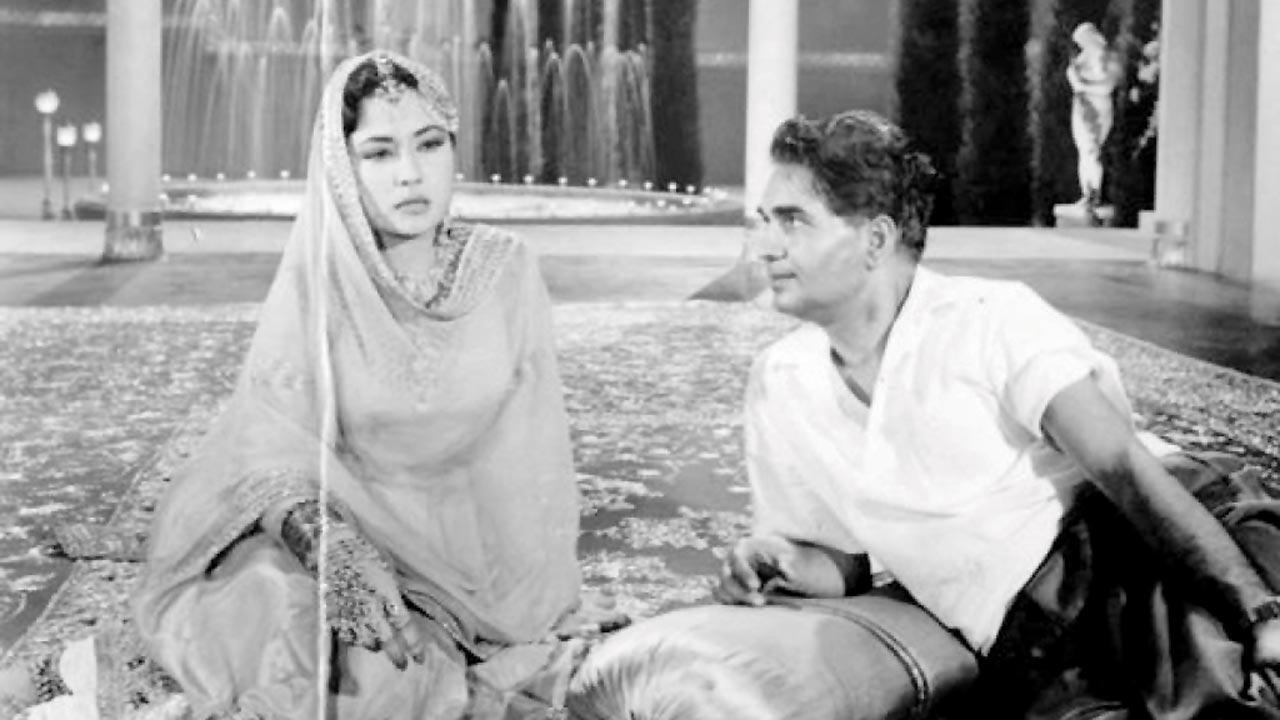
Noting that Manish hasn’t contacted Kamal Amrohi’s family for his Meena Kumari biopic, filmmaker’s grandson says his project on same subject borrows from the couple’s letters
Upala KBR (MID-DAY; August 21, 2023)
Meena Kumari’s rich career and tragic personal life made her one of Hindi cinema’s enigmas. So, it’s not surprising that two filmmakers have found their muse in the late actor. While Kriti Sanon is set to play her in a biopic helmed by Manish Malhotra (My months with Meena Kumari, Aug 19), mid-day had reported in February that Kamal Amrohi’s grandson Bilal was developing a project that would trace Kumari’s love story with her filmmaker-husband as they set out to make Pakeezah (The heartbreak behind the magnum opus, Feb 10).
Bilal is unfazed that Malhotra is making a film on the celebrated actor. The couturier-turned-director’s biopic is reportedly referenced from many books written on Kumari. Bilal says, “I’m sure Manish will be a brilliant director. But I am not sure about the validity of that project, in terms of its reference point. I have Meena-ji and Kamal saab’s words to tell their story; they are going by someone’s else’s words.”
Bilal says neither Malhotra nor the production house has contacted his family regarding the biopic. “How will they use Kamal Amrohi’s name without the family’s permission? If you have to make a movie about Meena-ji’s life, you cannot disregard the biggest factor in it — my grandfather,” he asserts.
What Bilal is designing is an intimate look into the actor-filmmaker couple’s romance that began in 1951 and culminated in marriage in 1952. Guiding him in this project are the letters that Kumari and Amrohi apparently wrote to each other.
“I have my grandparents’ diaries, and the letters they exchanged for the years that they were said to be apart (1964-1972). There were rumours about them getting a [divorce], but there was nothing of the sort. Meena-ji was a married woman when she passed away. For the past 40 years, people have [showcased] their love story in every light possible. My bua [aunt] Rukhsar has vehemently spoken against them. [Some authors] wrote about Kamal saab hitting her! It’s sad because they couldn’t defend themselves as these books were written after they passed away. The dead cannot defend themselves. The letters that my bua has, are a testimony of their love. They were romancing each other even though the world thought they were apart.”
Bilal adds that he will initiate talks with actors only after the bible is ready.
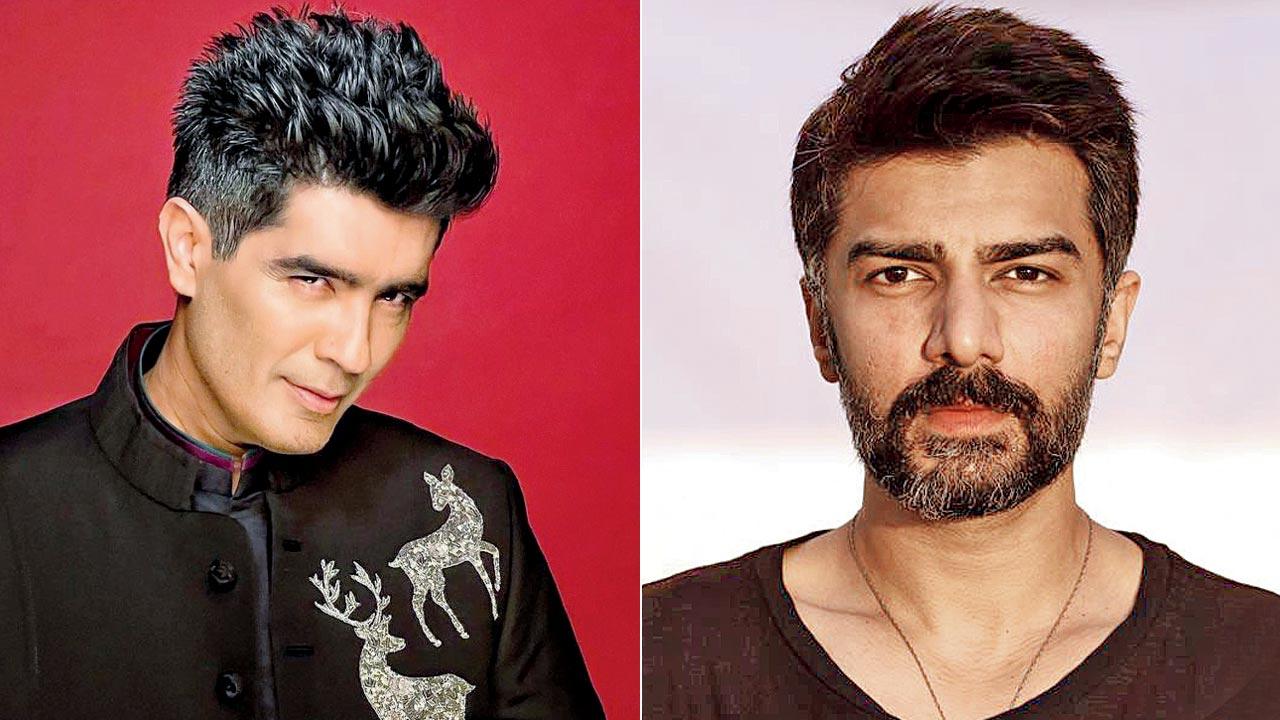
Manish Malhotra and Bilal Amrohi
Kriti Sanon watches old movies and interviews of Meena Kumari as part of biopic prep
3:30 PM
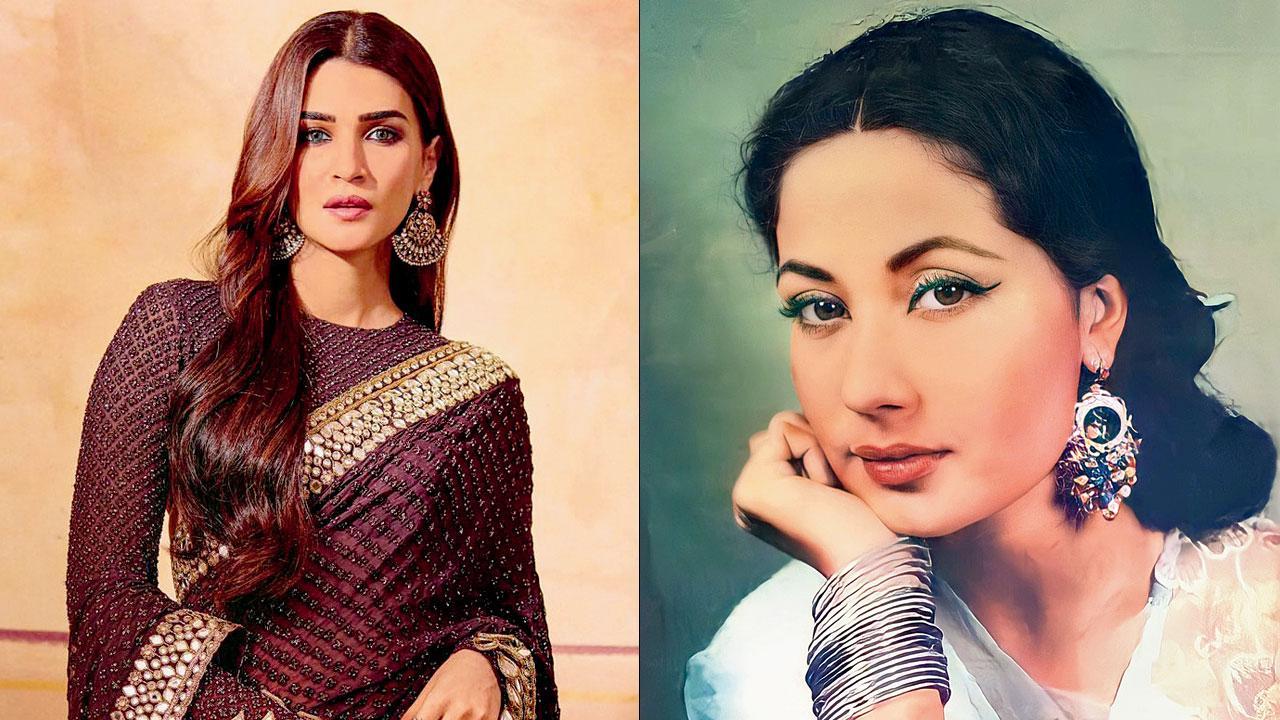
As part of prep for Meena Kumari biopic, Kriti devours iconic actor’s films and biographies; to follow it up with table reads next month
Mohar Basu (MID-DAY; August 19, 2023)
The Meena Kumari biopic is significant for multiple reasons. Not only will it mark Kriti Sanon’s first biopic, but will also see popular couturier Manish Malhotra turn director. But above all else, it will delve into the life of one of Indian cinema’s finest actors, who, in a career of 33 years, gave Bollywood some of its most memorable films. The responsibility of playing Kumari is not lost on Sanon, who has begun prepping for the project.
Sources say that Sanon is watching the acting legend’s movies. “Even as she is shooting for Do Patti with Kajol, Kriti is watching Meena Kumari’s notable films, including Baiju Bawra [1952], Sahib Bibi Aur Ghulam [1962] and Pakeezah [1972]. She is studying her performances and mannerisms to internalise the nuances that made her an icon. Considering the actor’s off-screen life will be an important part of the retelling, Kriti has extensively read her old interviews and biographies, gaining insight into her struggles. They have given her a profound understanding of her personality. This soft prep will continue till mid-September, after which the hard prep, including table reads and workshops, will begin,” says a source.
The shoot is expected to kick off by the first week of October. The writing team is currently giving finishing touches to the script, after which the remaining cast will be finalized.
HT City Exclusive: Manish Malhotra to direct Meena Kumari biopic, starring Kriti Sanon
8:29 AM

HINDUSTAN TIMES (July 14, 2023)
It can’t get bigger than this for fans of Indian cinema! Legendary actor Meena Kumari’s biopic is in the works, and will mark the directorial debut of designer Manish Malhotra.
Essaying the role of Meena Kumari in the film that celebrates her fascinating life, will be the stunner Kriti Sanon.
The film, to be produced by Bhushan Kumar, is in the scripting stage. Malhotra has often expressed that recreating the magic that Meena Kumari was, has been his long cherished dream. We say, bring it on.
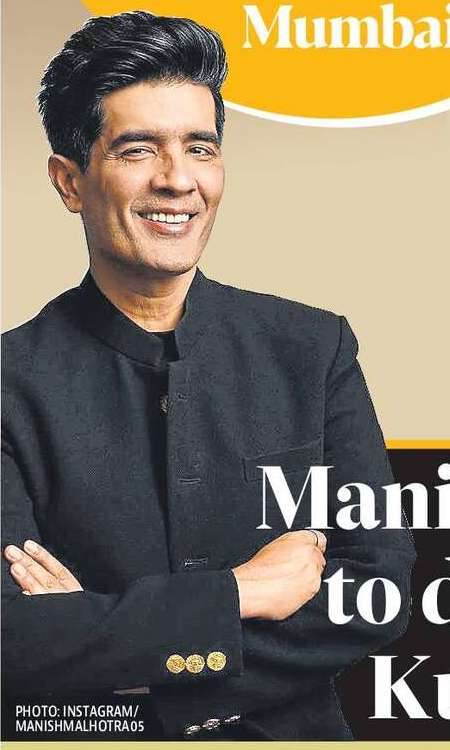
Meena Kumari is iconic & represents older period in cinema; Kajol symbolizes 20th century-Maithili Rao
8:11 AM
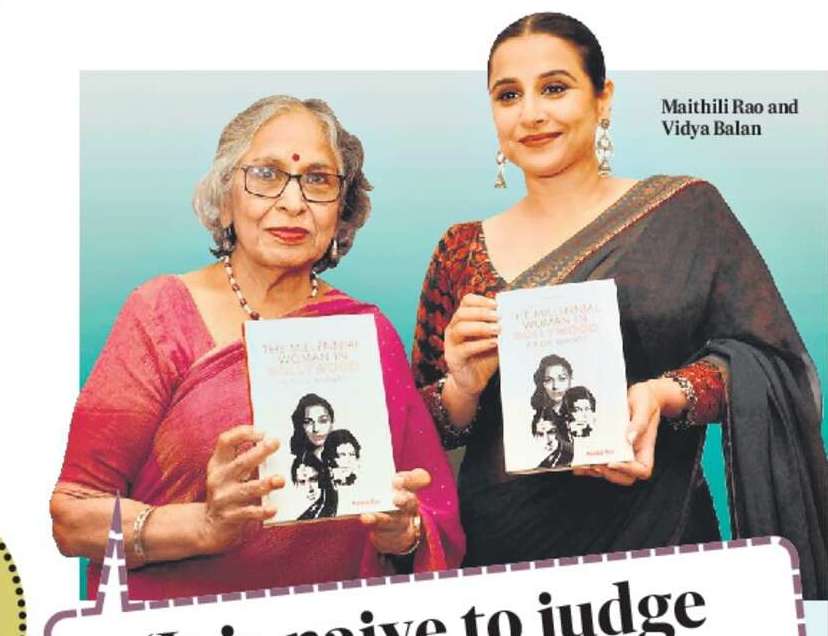
Abigail Banerji (HINDUSTAN TIMES; March 1, 2023)
“I must have watched at least 100 or more Bollywood films when I was writing the book,” says author Maithili Rao. Her third book, The Millennial Woman In Bollywood: A New ‘Brand’? was launched by actor Vidya Balan in Mumbai recently. The duo engaged in an animated discussion on the role of women in cinema. In her book, Rao explores the nature of female characters and the change they have undergone.
She first started writing the book in 2019 and had a draft ready by 2020. “But I lost two chapters and I had to rewrite them as I am not very tech-savvy,” she laughs.
Talking about the book, she says, “This idea has been with me since 2015 after I wrote my book on (late actor) Smita Patil. I didn’t want to focus on any one actor (male or female) or filmmaker.” Out of all the chapters she wrote, Rao reveals she enjoyed writing about the subversives — Devdas (2002), Dev D (2005) and Saheb Biwi Aur Gangster (2011). “It was fun to write. The characters were positive and took charge of their lives.”
During her travels to the US, she was exposed to the idea of millennial women. The curiosity behind this phenomenon in India made her want to further explore it in her writing. “Millennial women are independent, don’t get involved in politics and are a part of the I, Me, Mine generation,” she adds.
Understanding and writing about female-centric characters was always her priority. The 80-year-old writer says, “My work made me consciously look at and deconstruct how women have been portrayed in cinema. It is naive to judge every female character based on whether they are feminist enough or at all. It is more interesting to create complex characters that engage with you.”
While the book looks at films from the 2000s, Rao says, “You can’t just write about the last 20 years without looking at the films that came before. I write about the idea of an archetypal Indian mother which has changed over the years. She is now younger, no longer desexualized and sitting and making aloo parathas for her laadla beta,” she explains.
The cover of the book features three female actors from different time periods — late Meena Kumari, Kajol Devgn and Vidya Balan. Ask her about it and she explains, “Meena Kumari is iconic and represents the older period in cinema, while Kajol symbolizes the 20th century. For me, in the current period, it had to be Vidya as her films show the evolution (of female roles).”
Pakeezah: Bilal Amrohi traces back the heartbreak behind the magnum opus
8:23 AM
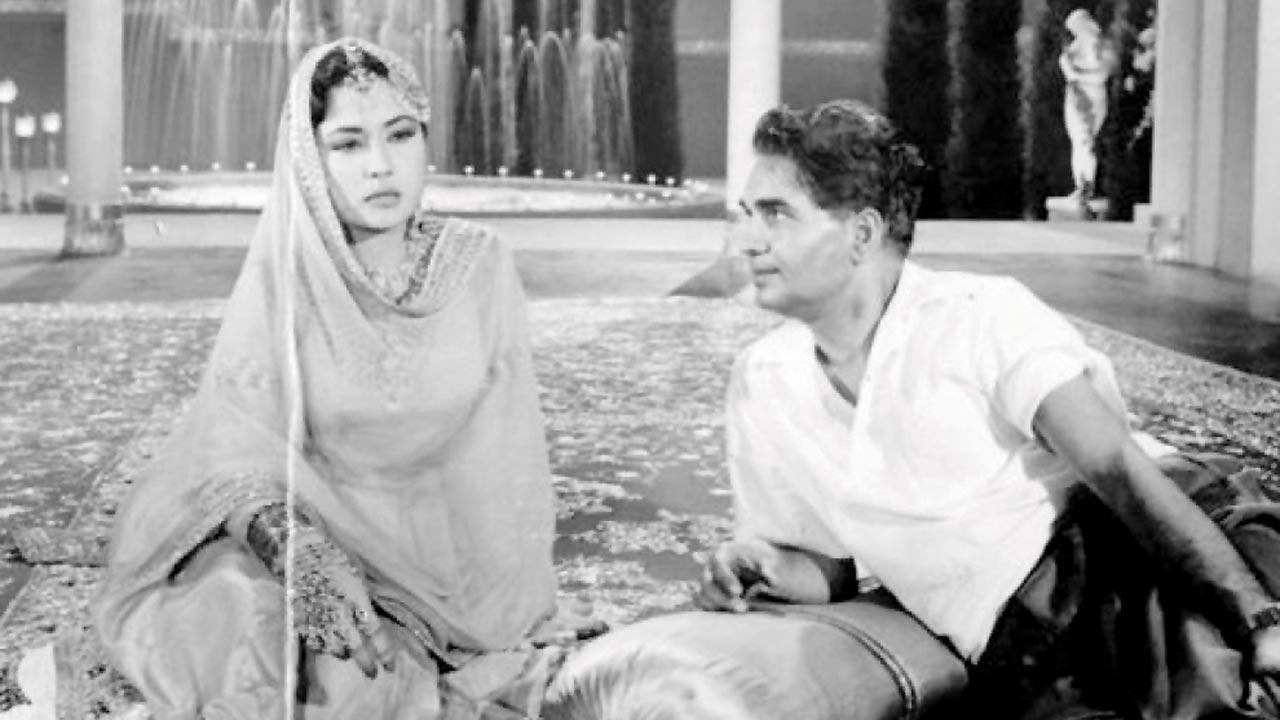
After announcing series based on Pakeezah’s making, Amrohi’s grandson undecided on format; says it will tell Meena Kumari-director’s love story
Upala KBR (MID-DAY; February 10, 2023)
Pakeezah (1972) may be a grand, sweeping romantic drama that caught the country’s attention on its release. But the making of the classic is a far richer story. Filmmaker Kamal Amrohi dedicated 16 years to make his labour of love that, in one of fate’s cruel twists, became his actor-wife Meena Kumari’s swansong.
In early 2022, Amrohi’s grandson Bilal had announced a web series that would trace the making of the Kumari, Ashok Kumar and Raaj Kumar-starrer. A year on, as the team is neck-deep in research, we hear Bilal and Yoodlee Films are now contemplating turning the material into a feature film.
Kausar Munir is said to be attached as a writer on the project that is being envisioned as the tragic story of two lovers. A source says, “Through this project, Bilal wants to showcase the love story of Meena Kumari and Amrohi, who set out to make a magnum opus together in 1956. Even though their marriage turned sour during Pakeezah’s making, many know that Amrohi had conceptualized the film as a tribute to his actor-wife. The story will dive deep into the pressures of making the movie, how it took a toll on Amrohi, and why the couple went their separate ways in 1964 before resuming their professional collaboration in 1969.”
The offering will also revisit the classic songs. The source adds, “After the research is complete, Bilal and Siddharth Anand Kumar of Yoodlee Films will take a call on whether it should be made into a movie or a web series.”
To Bilal, who serves as the producer, the offering is his tribute to his grandfather. He says, “I’ve planned it as an ode to my grandfather’s efforts. It would be a [retelling] of what it took for one man and the lady, who stood beside him, to make something as iconic as Pakeezah. My father Taajdaar and his sister Rukhsar possess the sole rights to [the 1972 movie].”
Asked whether they will take the long-format storytelling route, Kumar says, “It is too early to tell if this will be a film or series. A lot will depend on the director and cast.”
When Lata Mangeshkar failed to recognize Kishore Kumar and feared he's following her
8:37 AM

As Lata Mangeshkar turns 91, author Nasreen Munni Kabir remembers her conversations with the legendary singer
MUMBAI MIRROR (October 4, 2020)
It is entirely thanks to Sanjeev Kohli, Madan Mohan’s son, who is very close to Lata ji, that I came to make the six-part series Lata In Her Own Voice for Channel 4 TV in the UK in 1990. When we met for the first time, her gracious presence and impeccable manners stood out. When she spoke in her most familiar voice, I was struck by how softly spoken she was and how quickly she put me at my ease.
Eight years after the TV series was made, I was delighted when she agreed for us to use those filmed interviews as the starting point for a book of conversations. When we began writing, I was in London and she was in Mumbai, so we decided to speak on the phone for two hours twice a month, and did so for over a year (this was before WhatsApp and Skype).
A year later we met and read through the manuscript and, with the help of her niece, Rachana Shah, we selected photographs from her vast archive. In 1990, the book Lata Mangeshkar in Her Own Voice was published by Niyogi Books. Lata ji spoke in great detail of her childhood, of the days when her father, Deenanath Mangeshkar, taught her music from the age of five. Composer Sajjad Hussain once described her as a musical genius and these signs were evident from the start. One day when her father had stepped out of the room where he taught music, she heard his young student singing the notes of a raga wrongly. She promptly went to the boy, sang the notes to him, saying “Aisa nahin, aise...” [Not like that, like this...] It was also clear that her musical training didn’t stop her enjoying being the leader of a group of children: her own siblings, cousins and neighbours. Together they staged plays in the evenings and during the day young Lata ji climbed trees and rolled down the street sitting in the centre of a tyre. She admitted she was headstrong, fearless and immeasurably proud to be her father’s daughter.
Long years of struggle began after her father passed away when Lata ji was only 12. She immediately took on the responsibility of helping her family make ends meet and, as a teenager, she acted in a few Marathi films — but facing the camera or the need for wearing make-up was not something she enjoyed. She remembered coming home in tears one day after the director had insisted her eyebrows be trimmed because he felt they were too close to one another.
Instead of being bruised by life’s many struggles, I could sense her every experience was lived as a learning curve. We talked at length about her work and friendship with the many composers, lyricists, filmmakers, co-singers and actresses she had met over the years. Recalling her relationship with Pandit Narendra Sharma, the poet and lyricist, whom she called ‘papa’ and, regarded as a father figure, made her very emotional. He had died in 1989, and she continued to miss his wise counsel, adding: “We can sometimes be overwhelmed by problems and get upset. Listening to him gave me such peace of mind. I ended up feeling that I was worrying needlessly. The truth is one should not shy away from problems. One must face them. This is what I learned from Pandit ji.”
An amazing storyteller, Lata ji’s brilliant memory and powers of observation made every incident come alive. When she was working with Khemchand Prakash on Ziddi, she recalled with great amusement the first time she met Kishore Kumar on her way to the studio: “I would take the train from Grant Road to Malad and one day Kishore da got on at the next stop. I thought he looked very familiar and wondered who he was. We both got off at Malad. Bombay Talkies studio was a long way from the station and that day I decided to take a taanga. And Kishore da hired one too. We rode along and finally we both entered the studio. I thought to myself, ‘something strange is going on here. This fellow is following me.’ I asked Khemchand ji: ‘Uncle, who is this boy? He’s following me.’ He laughed and said: ‘He’s Kishore. Ashok Kumar’s brother.’ That day we recorded our first duet ‘Ye Kaun Aya Re Karke Sola Singar.’”
One of her answers that stood out for me was when I asked what aspect of her personality was most present in her singing. She became quiet and then said: “My concentration. I give full attention to a song. When I sing I forget everything else. I apply my mind to making it better.”
It wasn’t just her vocal abilities but her intelligent mind in understanding the emotions of the words and the intention of the scene, while not forgetting it was going to be mimed by an actress on screen — natural and multiple talents like these have made those songs immortal. Meena Kumari once said: “If Lata is singing, we don’t have to act.”
Lata Mangeshkar’s contribution to music is immeasurable, and despite the fact she must be one of the most famous Indians of our time, she wears her success lightly. A proof of true talent and humility. Perhaps I should have started this piece by admitting a complete bias when it comes to Lata ji. Sometimes when I’m working at home and one of her songs, “Chandni Raatein, Pyaar Ki Baatein”, “Tera Mera Pyaar Amar” or “Aap Ki Nazaron Ne Samjha” plays on the radio, I miss those special, privileged hours I spent in her company. While we were working on the book, and this sounds very obvious, but the way she expressed herself had a musicality to it and, in her gentle speaking voice, she was not just recounting slices of history but huge chunks of it.

Pakeezah was the Taj Mahal that my father built for Meena Kumari aka his Mumtaz-Tajdar Amrohi
8:24 AM

Roshmila Bhattacharya (MUMBAI MIRROR; April 2, 2020)
“Chalo Dildaar Chalo, Chand Ke Paar Chalo…” Tajdar Amrohi’s caller tune takes me back to my childhood, when I had listened to this song from Pakeezah on a LP record in our living room. “It’s been 48 years since the film’s release, but even today, this romantic duet, in fact, every song from this timeless album, is instantly associated with Pakeezah and Meena ji (leading lady Meena Kumari),” points out the son of the film’s writer-producer-director Kamal Amrohi.
Tajdar saab goes on to inform that while shots of the boat sailing were taken in Goa, those featuring Meena ji and Raaj Kumar saab were canned indoors because the actress was battling cirrhosis of the liver by then and too unwell to go on location. “While many berated him for making an ailing chhoti ammi shoot unnecessary songs, daddy promised he’d take good care of her and had a maid, doctor and nurse stationed on the set. Then, without the aid of blue and green screen technology (chroma keying), he brought the stars into the studio for her even as the moon played hide-and-seek with the clouds. My father was a master craftsman who arranged the lights and camera himself, planned long shots with his stars in a way that their romance would look ethereal on screen even as they disappeared behind the boat’s sail,” he reminisces.
Pakeezah started on July 16, 1956, as a black-and-white film, and was re-shot in colour and then, in cinemascope. They were still shooting when, in 1964, Kamal saab and Meena ji separated following mutual differences. When shooting resumed in 1969, “Mausam Hai Aashiqana” was the first song to be shot, with an ailing Meena ji as the mujrewali Sahibjaan being whisked away from the kotha by one of her patrons. However, the night of his dreams is ruined when they are attacked by elephants and Sahibjaan sails away down the river in the splintered boat. She emerges from the water, enters the tent of forest ranger Salim, set up by the riverside, changes out of her wet clothes into his lungi and shirt and flipping through his diary, comes face to face with the man who’d teased her imagination with his lines rhapsodising over her “pure” feet.
“No actress had worn a lungi, which back then, was seen as a male attire, before this on screen. But, daddy reasoned that, in the context of the setting and situation, it would not look out of place on her and being loose and flowing, like the gharara in 'Chalo Dildar Chalo', would camouflage the bloating her illness had brought on.
“After the film’s release, the lungi became a fashion trend, like Pakeezah bangles, dupattas and sandals. Chhoti ammi herself was wowed by how beautifully my father had picturised these songs, which she’d insisted he retain despite her failing health, like everything else in the script,” says Tajdar saab, pointing out that Meena ji herself was a poetess who often scribbled down her meandering thoughts and read them aloud to his father, who’d react with an appreciative nod, sometimes changing a word or two, even telling her how best to recite them to enhance the beauty of the verses. Does he remember any, you wonder, and without a moment’s hesitation, he rattles off a couplet of his chhoti ammi’s poetry... “Raha Yunhi Na Mukammal, Gham-e-Ishq Ka Fasana, Kabhi Mujhko Neend Aayi, Kabhi So Gaya Zamana”.
The simplicity of the words and their sensitivity leave me awed, in the same way that the film had overwhelmed Meena ji when she saw it at the premiere in Maratha Mandir, on February 3, 1972, seated beside Chandan (that’s what she called Kamal Amrohi) and her darling Tajdar. “As the story of Salim and Sahibjaan unfolded, her nails dug deep into my father’s wrist and she clutched his hand tightly, leaving imprints on the tender skin. But not for a minute did a flicker of pain or irritation cross his features. Instead a tender smile played on his lips, which widened when, resting her head on his shoulder, she asked him to promise he’d not make another film after Pakeezah, making me a witness,” Tajdar saab recounts.
He reasons that since his father survived Meena ji, who passed away on March 31, 1972, by 21 years, it was difficult for him to keep this promise. “But Pakeezah was the Taj Mahal that he built for his Mumtaz and will forever be chhoti ammi’s most memorable film,” asserts Tajdar saab, adding that today his father and chhoti ammi lie side by side in the kabrastan, reunited in death. “And I can imagine him holding out his hand to her, inviting, ‘Chalo dildar chalo chand ke paar chalo…’ and her fingers entwining with his as she replies, ‘Hum hain taiyaar chalo…’, the two of them walking away into a technicolour sunset towards a beautiful world.”

Subscribe to:
Posts (Atom)