Showing posts with label Masaan. Show all posts
Showing posts with label Masaan. Show all posts
I’ve realized that Cannes is often misunderstood as a place of screenings, red carpets, and parties-Guneet Monga
9:44 AM
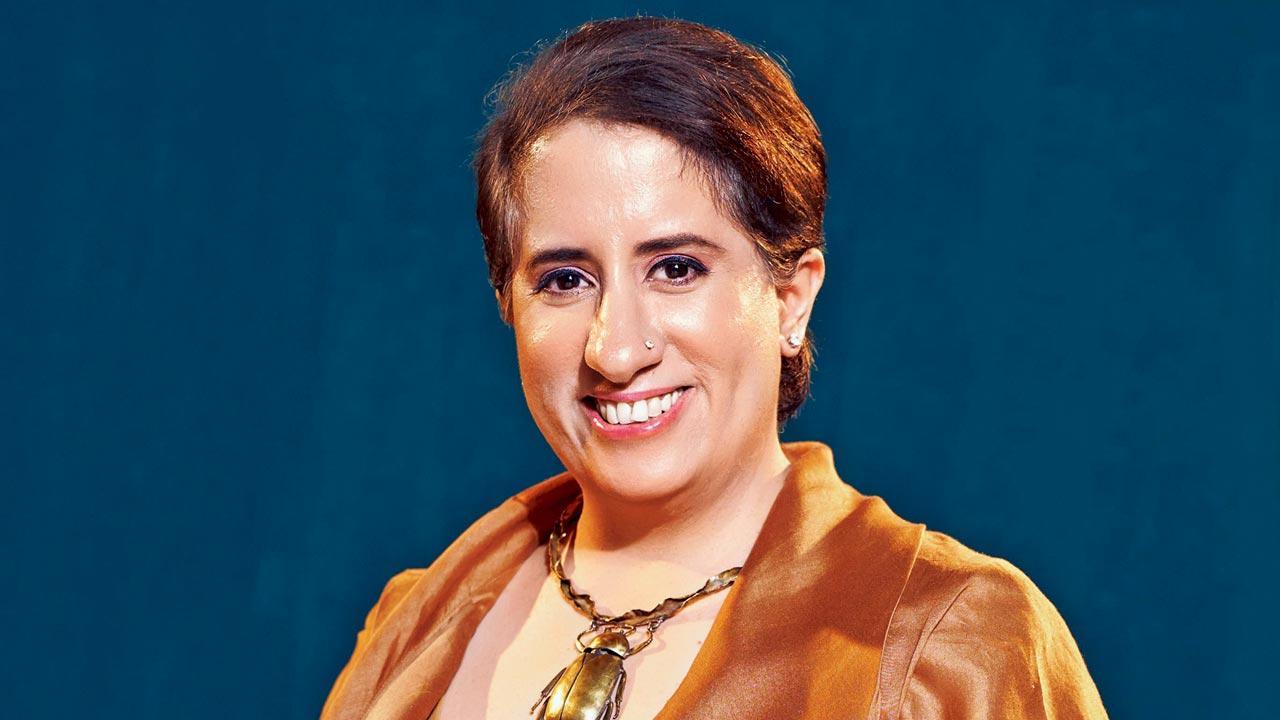
Guneet Monga (BOMBAY TIMES; June 12, 2026)
For those who’ve never been to Cannes, let me paint a picture with a familiar reference from home. Imagine a road by the beach in Juhu or Versova, Mumbai, a long stretch buzzing with activity. Now imagine that same road transformed into the epicentre of the global film industry for ten days. At Cannes, you walk constantly, between screenings, meetings, markets, and events. It’s a fitting metaphor for the journey itself: you walk for years, building relationships and credibility, so that one day your films can run.
That’s Cannes. It’s a place where filmmakers, producers, distributors, sales agents, festival programmers, financiers, and industry stalwarts from across the world converge in one compact space. You’re not just there to pitch your project; you’re there to shape its future, finding collaborators, planning its festival journey, discovering opportunities, and building connections that can last a lifetime.
Few places bring together so much cinematic ambition, talent, and possibility under one roof, or rather, along one strip of land.
This year marked my 15th year attending Cannes. As I walked through the city, I found myself revisiting the places that have defined my journey there, the cafes where deals were first discussed, the meeting spots that led to lasting collaborations, and the theatres that hosted premieres of films that went on to become milestones in Indian cinema, including The Lunchbox, Gangs Of Wasseypur, and Masaan.
For almost two decades in the film industry, I’ve lived by instinct, courage, and a lot of hustle. Finding my way through spaces I had once only dreamed of entering, and slowly realizing that sometimes the most powerful thing you can do is stop waiting for a seat at the table and build your own. That idea stayed with me for years. I’ve learned that talent was never the problem for women in cinema. Access was. Networks were. Exposure was.
Perhaps the most meaningful shift has been moving from navigating these rooms myself to helping others enter them. Through Women in Film India, we’ve been building bridges between Indian women filmmakers and the global film ecosystem, supporting three women at Cannes last year and four this year, creating opportunities for the kind of access and networks that can change the trajectory of a career.
This year, for the first time, two Indian women, out of just ten participants selected globally, were chosen to attend the impACT Lab at the Marché du Film in Cannes. Through a nationwide search conducted by Women in Film India, we were proud to support their journey to Cannes. In addition, two more Indian women producers were selected to participate in the prestigious Producers Network programme, further strengthening the presence of Indian women filmmakers and producers on one of the world’s most influential film industry platforms.
Not as guests, and definitely not as plus-ones. They walked in as scholars, selected through a national open call, evaluated by an industry jury, and sent there with the specific purpose of learning how the global film market actually works. They sat in rooms alongside filmmakers from across the world, participating in conversations that most Indian filmmakers never get access to at all.
That is the Cannes I come to every year. The one in the photographs is a different place entirely.
Over the years, I’ve realized that Cannes is often misunderstood as a place of screenings, red carpets, and parties. While all of that exists, the real value of Cannes lies elsewhere. It lies in the possibility of a conversation.
It is one of the few places in the world where every stakeholder in the film ecosystem comes together in one concentrated space. What matters is having the courage to walk up to someone, introduce yourself, share an idea, and begin a conversation. A single meeting can lead to a co-production partner, a festival strategy, financing support, international distribution, or a creative collaborator who stays with your project for years.
For independent filmmakers, especially, Cannes opens doors that may otherwise remain inaccessible. It is a place where films find advocates, where international partnerships are formed, and where entire futures can be shaped through a chance introduction. The connections you make there often outlast the festival itself and continue to influence your work for years to come.
The festival may command the headlines, but the market is where possibilities are created and where films truly begin their journey into the world.
India makes more films than almost any other country on earth, and yet our presence in these rooms remains disproportionately small. The reason is structural. Cannes operates on relationships built over years, on institutional backing, and on a deep understanding of how the global film ecosystem functions.
Think about what it takes to build that kind of presence. France has spent decades negotiating bilateral co-production treaties, funding international distribution, and maintaining a permanent infrastructure at Cannes that works on behalf of its filmmakers every single year.
If India is serious about strengthening its place in these global conversations, there is much to learn from countries that have approached international markets strategically. South Korea offers the clearest example. At this year’s Cannes, the Korean Film Council’s KO-PICK programme placed Korean producers directly within the Producers Network, backed by government funding, structured market access, and long-term international relationships. This is the result of decades of strategic investment, not just in producing films, but in ensuring those films have pathways to travel, find partners, and compete globally.
The lesson is not that India should replicate Korea’s model exactly, but that global success is rarely accidental. It is built through sustained participation, institutional support, and a commitment to creating opportunities for filmmakers beyond national borders. India’s support for independent cinema on the international stage is still evolving, but if we want our stories to travel further, we must invest not only in making films but also in building the networks, partnerships, and market presence that allow them to thrive internationally.
Co-productions fundamentally expand what is possible for a film. They unlock access to international financing, public funds, distribution networks, and long-term partnerships that are often unavailable to purely domestic productions. For a country with extraordinary stories and filmmaking talent, India’s next challenge is building the infrastructure around that talent, the market relationships, institutional support, and global presence that enable films to travel. Every producer who enters spaces like the impACT Lab or the Producers Network contributes to building that ecosystem, one conversation, partnership, and opportunity at a time.
The future of Indian cinema on the global stage will require filmmakers and producers to view Cannes not as a destination, but as an ongoing investment in their work. It means saving up to be there year after year, preparing months in advance, setting up meetings before boarding a flight, attending networking events with purpose, following up relentlessly, and understanding what international partners, programmers, and financiers are looking for rather than simply asking them to look at our projects. The opportunity is already there. The stories are certainly there. The talent has never been in question. What remains is our willingness as an industry to engage with the global ecosystem strategically, patiently, and collectively. If we do that consistently, the next decade of Indian cinema will not just be about taking films to the world, it will be about helping shape the future of world cinema itself.
And then there is the magic of Cannes that no schedule can account for. One of our scholars casually ran into Pedro Almodóvar. I found myself crossing paths with Pan Nalin, whom I had interned with nearly twenty years ago. That’s the thing about Cannes: every step of the way, you run into people you’ve admired for years, and people who may become part of your journey in the years ahead. The distance between a chance encounter and a life-changing opportunity can sometimes be just a few steps. At Cannes, you never really know what might happen next, and that’s precisely what keeps people coming back.
Emmanuel Macron was actively thinking of solutions to the problems being raised-Richa Chadha
8:34 AM

Vishakha Pandit (HINDUSTAN TIMES; February 19, 2026)
French President Emmanuel Macron on his three-day India tour ahead of inaugurating the India-France Year of Innovation 2026, met several Bollywood biggies on Tuesday, including actors Richa Chadha, Shabana Azmi, Anil Kapoor, and Manoj Bajpayee for a conversation on cinema and cultural collaborations. For Richa, it was “as thrilling as it gets”.
The 39-year-old tells us that the exchange focused on paving the way for many more successful Indo-French productions, citing her film Masaan (2015) as an example. “I hope these synergies between the two democracies continue. Strengthening these collaborations can open doors for richer storytelling and a wider global reach for independent cinema,” she shares.
She also included Girls Will Be Girls (2024) and All We Imagine As Light (2024) as examples of what sustained partnerships can achieve: “France and India have a very good relationship in terms of producing films together. The discussion was about how to strengthen those ties.”
Gushing about “the youngest President” Richa appreciated how Macron was more focused on solving issues than just listening to problems. “He wasn’t passively listening. He was actively thinking of solutions to the problems being raised,” she says.
Speaking about the challenges faced by Kanu Behl’s Indo-French co-production Agra, she noted that despite premiering at Cannes, it secured only a limited release in India. “Globally, traditional theatre-going has dropped, but cinema attendance has risen in interesting ways. There needs to be an adaptive distribution model.”
I bet people are envious that Martin Scorsese presented Neeraj Ghaywan's film-Richa Chadha
10:08 AM
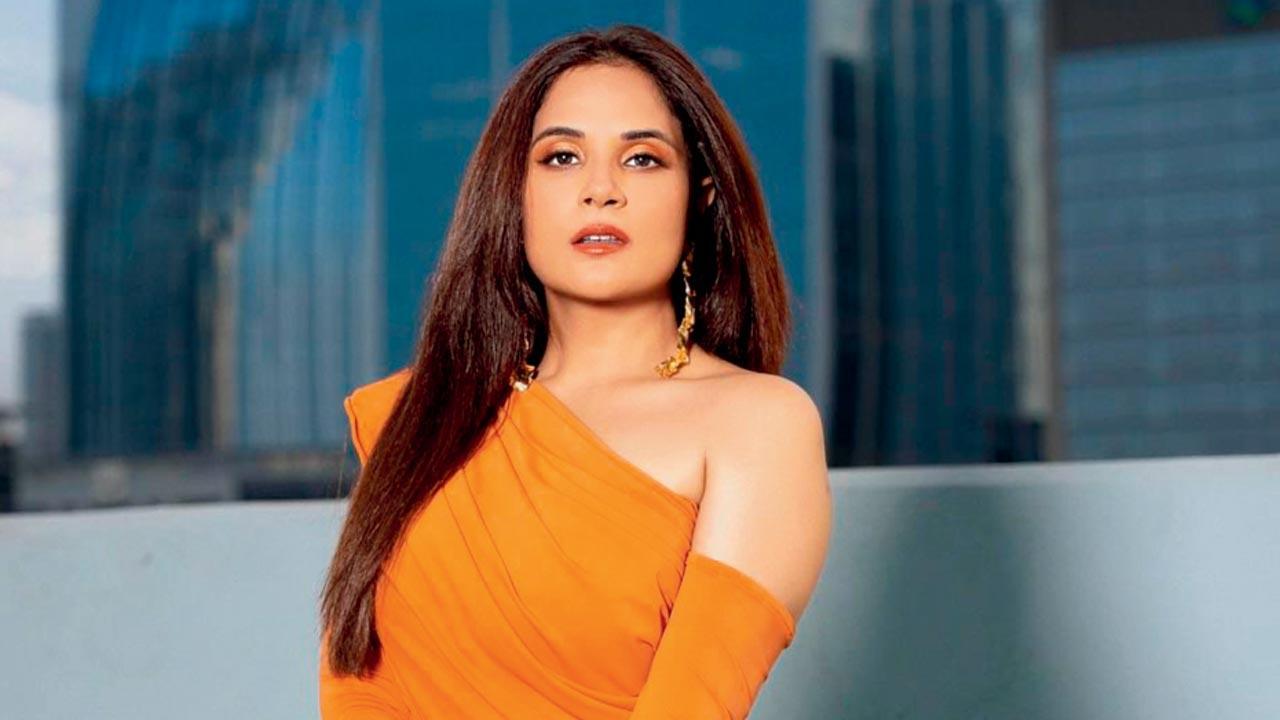
Renuka Vyavahare (BOMBAY TIMES; October 4, 2025)
In July this year, Masaan celebrated a decade since its release. Richa Chadha reflects on one of her most defining roles and shares insights into what makes the film still so poignant and relevant. Masaan also marked the powerful directorial debut of Neeraj Ghaywan and beyond Richa, featured compelling performances by Shweta Tripathi & Vicky Kaushal. Excerpts from a chat with Richa…
Masaan was a landmark film of your career. What does this film mean to you, personally and professionally?
Even though Gangs Of Wasseypur gave me a breakthrough, it was Masaan that opened my eyes to the world. It gave me credibility. A film is forever. And I am so grateful that I have this in my filmography as early work. Also, it was the time of great innocence because I met Neeraj as the script supervisor on Gangs of Wasseypur. Varun Grover was the lyricist for Oye Lucky! Lucky Oye!. I knew these creators would become conscience keepers of the film business. But so sweet that we all began this way.
Neeraj Ghaywan’s stories often dig deeper and work as a social commentary on societal disparities. What was it like to work with him?
Neeraj is self-aware, conscientious, honest and compassionate. Every day on the film was a new learning. I wish I had the wisdom then that I have today, but even friendship with Neeraj is something that leaves you richer with more meaning, like an education of some kind. Look at Homebound (India’s official entry for the Best International Feature Film category at the Academy Awards). I bet people are envious that Martin Scorsese presented his film! Wow!
Vicky Kaushal started his career in a way with this film, what were your first thoughts on himas a co-actor?
I remember Vicky not just as a co-actor, but also as an assistant director on Gangs Of Wasseypur. He was always charming, very driven and hardworking.
There’s a lot of talk on how AI can be used to alter endings of movies while re-releasing them. It happened with Raanjhanaa. Varun Grover shared a funny video on how some believed the ending of Masaan could be happier. What are your thoughts on this?
I think Masaan was as happy as it could be. We are living in a world where we rush to repress our natural instincts and feelings. So, what if the ending of a film makes you feel sad? Are you hoping to go through life without feeling sad, angry, hopeless or frustrated ever? Sorry, I am not delusional. I think using AI to alter ends or beginnings is how some businesspeople think they are proving that they’ve become savvy with tech.
What makes Masaan so relevant even today?
Masaan is still relevant because it reflects the hypocrisy of a system that seeks to delegitimize and shame the youth for healthy curiosity about coitus, in the most populous country of the world. It showcases the hypocrisy of a society that hates a majority of its own people, based on their assumptions about a belief system from thousands of years ago.
Shahid Kapoor is feeling bad that everyone, except him, has seen Homebound-Ishaan Khatter
8:43 AM

Ishaan Khatter expresses his excitement over Homebound being India’s official entry to the Oscars 2026
Upala KBR (MID-DAY; October 7, 2025)
Unexpected is how Ishaan Khatter describes Homebound’s selection as India’s official entry to the Academy Awards 2026. When the announcement was made on September 19, the actor was miles away, flying from the US to India.
“I got the news on the flight WiFi. Immediately, messages started popping up on my phone. It was the first time in two years that Neeraj [Ghaywan, director] gave me gaalis because I was not answering my phone,” he laughs, before adding, “When I landed, the first person I called was him and then my mom [Neelima Azim].”
Ghaywan’s directorial venture, also starring Vishal Jethwa and Janhvi Kapoor, tells the story of a deep friendship between two men from marginalized communities against the backdrop of the COVID-19 pandemic. As has become the norm almost every year, this year’s selection for the Oscar entry too has sparked debate. Shutting out the noise, Khatter stands strong behind his movie.
“The film talks of unity, empathy, compassion, and that message coming from India is beautiful because we find unity in diversity. That is the idea of India I subscribe to. We aren’t telling stories of the hinterland, which forms 90 per cent of our population. The idea of making this film was to humanize these people whom we often see as statistics or overlook. Also, I’ve seen its universal appeal in the way audiences reacted to it at Cannes Film Festival and TIFF [Toronto International Film Festival].”
It’s noteworthy how the actor went from playing a prince in The Royals earlier this year to a labourer from an Uttar Pradesh village in Homebound. Though Khatter comes from a privileged background, he says he could connect with his character because of his wide exposure.
“As a middle-class Indian, you’re exposed to different cultural and social elements; you are able to expand your worldview as you fraternise with all classes of society. So when I played Mohammed Shoaib Ali, it wasn’t a culture shock. We all saw the migrant crisis during the pandemic and we all did what we could to help, but there is an urban apathy.”
While Homebound has received an outpouring of love from the world over, Khatter reveals that his half-brother Shahid Kapoor hasn’t caught it yet. “Shahid is shooting in Sicily. He is feeling bad that everyone, except him, has seen the film. I told him not to discuss the film with anybody till he watches it. He is very proud [of the Oscar entry].”
A telling sign of the movie’s merit perhaps was when Martin Scorsese came on board as its executive producer. Ishaan Khatter is understandably overwhelmed to have the legend associated with ‘Homebound’.
“I didn’t have the fortune to meet Mr Martin Scorsese, Neeraj [Ghaywan] interacted with him. He is arguably the greatest living filmmaker. That he came on board speaks of his deep passion for cinema. He was an admirer of Neeraj’s ‘Masaan’ [2015] and ‘Geeli Pucchi’ [2021]. He wanted to present ‘Masaan’, so that circle is complete with ‘Homebound’,” says Khatter.
The world wants to see how India lives, moves and dances-Guneet Monga
9:20 AM
Shreya Varanasi (BOMBAY TIMES; July 31, 2025)
When The Elephant Whisperers made history at the Oscars 2023, it wasn’t just a proud moment for Guneet Monga — it was a milestone for Indian storytelling. Sharing the spotlight with Naatu Naatu’s big win that same night, Guneet remembers being awed by the impact of Telugu cinema on the global stage.
In a chat with Hyderabad Times, the producer, who was in town for the ‘Golden Lens’ symposium hosted by YFLO, opened up about her journey, the growing resonance of local stories, and her admiration for Tollywood. “I’m a big fan and would love to produce a Telugu film someday, if the stars align,” she said. “I’m always thinking about how I can add value to a project, and if there’s a meaningful way to contribute, I’d be more than happy to be involved.”
‘RRR is one of the best examples of how local stories resonate globally’
For Guneet, the success of Indian films on the world stage boils down to authenticity. “RRR is one of the best examples of how a deeply local story can have global resonance. Whether it’s Baahubali or RRR, our culture, language, and music captivate audiences around the world.”
It’s not just the big, grand spectacles that travel well. Films like The Lunchbox, Masaan, and The Elephant Whisperers also struck a chord globally because they’re rooted, real, and unmistakably Indian, she reckons. “These are the stories the world wants. People may not travel here, but they’re deeply curious about India, our culture, our people, and even our dances.”
‘My memories of Hyderabad are all about great food and vibrant places’
Guneet finds something enchanting about Hyderabad every time she visits. “My memories of Hyderabad are all about great food and vibrant places. And what really fascinates me is the number of lehenga stores! I always find myself looking at those big wedding wear storefronts, they’re everywhere.” There’s one Hyderabad staple she’s looking to discover more of though. “A really good biryani! I don’t have a go-to spot yet, but I’d love to try one.”
‘Many films have left an impact on me’
Whether it’s the timeless charm of Bollywood or the quiet brilliance of international indies, Guneet draws inspiration from across the spectrum. “My first memory of cinema was watching Dilwale Dulhania Le Jayenge. I was completely obsessed with the love story and the romance,” she recalls, adding, “And then I remember watching Boyhood on a flight, it completely blew my mind. I couldn’t stop thinking about how someone could film for so many years (the film was shot across 12 years from 2002–2013) and piece it together. That kind of ambitious storytelling inspires me.”
‘Portrayal of women is something I deeply care about’
Known for championing strong women-centric narratives, Guneet believes the strength of a woman’s portrayal lies in thoughtful writing, not just lead roles. “One of the films I’m proud to have produced is Soorarai Pottru. Though it was Suriya sir’s film, Aparna Balamurali’s character sparked meaningful conversation,” she says, adding, “In The Elephant Whisperers, Bellie stood out so beautifully, just like Huma Qureshi did in Gangs Of Wasseypur.”
For her, what matters most is depth. “Even submissive characters must have redemption. The portrayal of women is something I deeply care about as a producer.”
‘I fall in love with scripts that move or challenge me’
Reflecting on her journey post-Oscar, Guneet said the recognition has opened doors and pushed her to dream bigger. “It expanded what’s possible for me as a filmmaker,” she said. But for her, it’s never about chasing a trend. “I fall in love with scripts that move or challenge me,” she added. Among the stories she’s hoping to bring to the screen someday is a full-fledged female-led action film. “I think we’re ready for that, and I’d love to be part of making it happen.”
‘We’re building a space for women in cinema to connect, be heard & create change’
At the ‘Golden Lens’ symposium hosted by YFLO, Guneet struck a chord with an audience of over 200 with a nearly two-hour-long conversation as candidly she spoke about the highs and heartbreaks of her journey. “Life gave me 10 ‘Nos’ before a single ‘Yes’, but I chose to celebrate every ‘No.’ Because each one took me a step closer,” she said, drawing applause.
She also spoke passionately about the Women in Film – India Chapter, part of the global WIF network. “Less than 10% of Indian film directors are women. That reality deeply concerns me,” she said, adding, “Through this chapter, we want to build a space where women in cinema can connect, be heard, and create lasting change.”
Shweta Tripathi launches her production house Bandarful
9:35 AM

Mohar Basu (MID-DAY; July 26, 2025)
Ten years ago, as Shweta Tripathi starred in Masaan (2015), she saw how the film propelled the careers of many, including that of director Neeraj Ghaywan, actors Vicky Kaushal, Richa Chadha, and her. As the acclaimed film completed a decade on July 24, Tripathi felt ready to launch her own production house, Bandarful. It’s more than a business move; she says the decision comes from the desire to create a space where talent meets opportunity.
“Right from the beginning, I’ve had support from people like Guneet Monga [Kapoor], Anurag Kashyap, and Karan Johar. I never felt like an outsider. I’m happy that filmmakers took a chance on me. They saw beyond the stereotypes and noticed the talent in me. Now, I want to see that in others and give them a platform,” says the new producer.
Often, we wait for others to drive change, notes the actor. By launching the production house, she wanted to take the lead in ushering in new talent. “There are so many talented people. If I have the resources, at least I will be able to provide them with an opportunity. It’s easy to point fingers at others for not supporting such talents, but we first need to ask ourselves: What am I doing for them? That was the original thought behind launching this venture.”
Bandarful’s first film, featuring Tillotama Shome, is in pre-production. Revealing that she has begun casting for her next, Tripathi says she wants to tell stories with like-minded people. “It’s about collaborating with people who care about art and about making a difference.”
It always feels patriotic to do a film that goes to a prestigious festival-Neeraj Ghaywan
9:07 AM
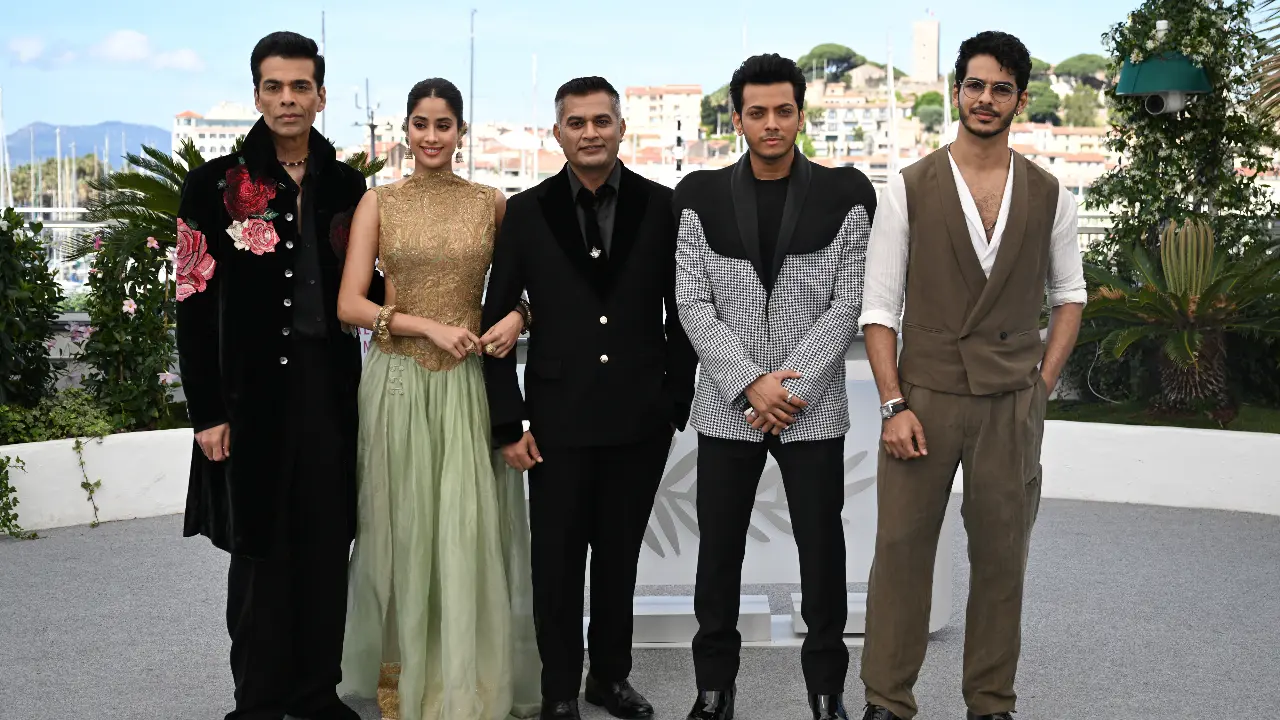
Niharika Lal (BOMBAY TIMES; May 22, 2025)
When Neeraj Ghaywan first attended Cannes, it was in 2015 for his directorial debut Masaan. The film was selected in the Un Certain Regard and won two awards – FIPRESCI Award and the Prix de l’Avenir Prometteu. A decade later, he’s back at the fest with Homebound (2025), another human story, but this time with a little help from some very big names including Martin Scorsese and Karan Johar.
As Ghaywan’s new film made the screening in the Un Certain Regard section this year, the filmmaker was joined by the team at the red carpet, the makers discussed Homebound at the Bharat Pavillion at Cannes.
‘WE SEE URBAN STORIES IN FILMS, AND THEN THERE IS A GAZE THAT IS TOWARDS SMALL-TOWN INDIA’
“The story that I wanted to say was about these two friends,” Neeraj said during a discussion at the India Pavilion at Cannes ahead of Homebound’s screening. He added, “What I also feel is that more than 60 per cent of our economy, our people, live in villages, and in our films, we don’t see villages anymore. We see urban stories in films, and then there is a gaze that is towards small-town India. But where are we talking about the stories from the heartland? That was one of the motivators for Homebound.”
The filmmaker continued, “Whenever we talk about films across the world, say, people of colour, creed, they’re all spoken of in numbers. They are part of the statistics. And when you say that, it’s like you’re trying to persuade your urban guilt – like hiding your apathy by showing false sympathy. I felt, what if we pick one person out of that statistic and see what happens in their life and how they arrive at this point? That will make for some great story, and will truly represent the kindness, empathy – that has been my intent so far.”
I feel this collaboration is quasi-disruptive in a way: Neeraj Ghaywan
Talking about collaborating with Karan, Neeraj said, “I’ve been wanting to work with Karan. (He also directed Geeli Pucchi, a part of the Ajeeb Daastaans anthology in 2021). I feel this collaboration is quasi-disruptive in a way. Independent filmmakers are always trying to figure out how to go about it.
Either we’re doing co-productions or seeking government funding, which comes with a lot of paperwork. But here, if Karan is producing my film, then it’s a different thing altogether – it paves the way for different kinds of possibilities. Our default perception is: go to a co-production, make it happen. But for me, this is a new model.”
NEERAJ AND I WANT TO TELL EMPATHETIC, HUMAN STORIES: KARAN JOHAR
“Neeraj Ghaywan and I come from two different schools of cinematic syntax,” Karan Johar said, “but I think one thing that lies common in both our belief systems is that we want to tell empathetic, sensitive human stories. That is common in both our cinemas. And it has nothing to do with syntax – it has to do with the heart the film offers.”
He explained, “I think when you see Masaan and when you see Homebound, you realize that interpersonal relationships, the handling of the emotional aspects of both the movies, and the spectrum of emotions they cover are the same.”
Karan said that’s what he tries to do in his films too. “My syntax is more theatrical, more opulent, a little more on-the-nose, because that is the kind of filmmaking I love and what I grew up watching. But even when I was eight or nine years old, while I loved the glory of Yash Chopra and the social drama with the opulence of Raj Kapoor, I also loved the empathy of Guru Dutt and the deep-rooted messaging of Bimal Roy. I could enjoy the brilliance of Satyajit Ray and dance to a song from a Raj Kapoor film in the same breath,” he said.
‘We’re beaming with pride that we have this kind of representation’
About Indian cinema finding global resonance, Karan said, “One important thing for me is: how to take our cinema to the world, apart from catering to our domestic audience. Last year, we had Payal Kapadia shine at Cannes with All We Imagine As Light (2024), and now she is on the Cannes jury.
This makes my heart so full. We are all beaming with pride.”
He added, “And the very next year, we have Homebound – this means we really are on the global map. I know these are baby steps. Every year, we have to make sure our stories continue to travel.”
‘Being at Cannes is proof that I’m not a one-film wonder’
“When Neeraj Ghaywan sir told me our film was selected, I was happy but didn’t grasp how big it was. After reading up, I understood its value – and it boosted my confidence as an actor,” says Vishal Jethwa, who made his Cannes debut this year.
“My dream was as simple as standing outside the Yash Raj Films (YRF) gate just to see what it looked like. Today, I’m part of a Karan Johar film directed by someone as brilliant as Neeraj sir. Attending Cannes with Homebound is a massive moment in my life. My debut (Mardaani 2) was successful, but some of my later films didn’t perform well at the box office. This film, however, has taken me to an international platform. It feels like proof that I’m not a one-film wonder – that I’m here to stay and meant for good things.”
Check out Vicky Kaushal with Amitabh Bachchan on the sets of Kaun Banega Crorepati
7:36 AM

In conversation with Vicky on KBC, Amitabh Bachchan walks down memory lane, discusses time spent with Kaushal’s father, Sham Kaushal
Upala KBR (MID-DAY; September 15, 2023)
Sharing screen space with megastar Amitabh Bachchan on his long-running show, Kaun Banega Crorepati is a defining moment for every young actor. However, for Vicky Kaushal, the chance to sit opposite Bachchan on the hot seat was special for another reason—Bachchan and Kaushal’s father, ace action stunt coordinator Sham Kaushal’s association goes back 40 years.
“Few know that the legendary actor had written a beautiful note to Sham praising Vicky’s performance in his debut film, Masaan, the night after its release,” says a source, adding, “After Vicky’s marriage, when Big B spotted Sham at Mehboob Studio, he was excited. He yelled, ‘Badhai ho’, from a distance, and hugged Sham.”
Kaushal senior and Bachchan have worked on films like Mard (1985), Bhoothnath (2008), and Ribhu Dasgupta’s series, Yudh (2014).
On the Sony TV show, Bachchan and Vicky discussed their love for cricket. “They discussed playing the sport with the crew on set, when shoots would get postponed. Bachchan also revealed that he would play cricket with Sham during outdoor shoots in the picturesque locales of Kashmir. Vicky told Bachchan that gully cricket had been an important part of his life. He also shared that in his society, the sport is played throughout the night on the eve of January 26.”
Vicky turned up on the show with his The Great Indian Family co-star Manushi Chhillar. His film follows an Indian family, and celebrates the diversity of our country.
Forget actors, I’m the only one in the Hindi film industry who acknowledged his Dalit identity-Neeraj Ghaywan
8:30 AM
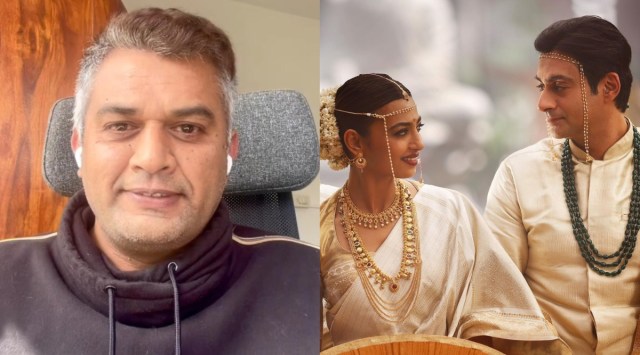
Renuka Vyavahare (BOMBAY TIMES; August 28, 2023)
Directed by Neeraj Ghaywan, one of the episodes of Made In Heaven (MIH) season 2, titled 'The Heart Skipped A Beat', featuring a Buddhist wedding, went on to become the series’ most acclaimed short. However, along with the appreciation came the credit crisis. While Neeraj thanked various people who inspired his episode in an Instagram post including activist and author Yashica Dutt, soon after, the latter questioned why she wasn’t given a formal credit on the show. She claimed the episode’s central character Pallavi Menke (played by Radhika Apte) was based on her life. Neeraj, known for his courageous vision and acclaimed films like Masaan, Geeli Pucchi (a short film where Konkona Sen Sharma plays a Dalit queer character) and Juice (a short on patriarchy starring Shefali Shah), for the first time, addresses the controversy, representation of Dalit characters in mainstream cinema and why pushing this narrative is so important. Excerpts...
Yashica has appreciated your work even before, and in a recent interview with us (after the series dropped) she said, “Neeraj Ghaywan’s work is important, but this is my life. I wasn’t acknowledged.” What is your reaction to that?
I have also championed Yashica’s work earlier. In the story, Pallavi Menke is a Maharashtrian Dalit from the Vidarbha region. She then goes to Columbia University (USA) and becomes an Ivy League professor. The episode is about her getting married to a man belonging to another caste, and how his family has issues with her (Buddhist) wedding ceremony. They are not in complete acceptance of her. They like her academic accolades but want to erase her caste identity. The episode handles this conflict. I don’t know how this is a homage to any one person. Even if you claim ownership to the term ‘coming out’, can you claim ownership to the act? So many people have hidden and then finally proclaimed their identities due to the fear of being judged. I hid my identity for 35 years, then suddenly spoke about it. People who never shied away from their identity and took the hate head on, their struggles were bigger. Look at (filmmaker) Nagraj Manjule, he inspires me. A part of me is Yashica, Nagraj, Bezwada… and so many people who don’t want to be named. Pallavi Menke is a sum of all of us, our pain and anguish. She is a symbol of the cumulative experience of all of us, so no one person can claim to be her.
So, your personal experiences and struggle with your identity is what translates on to your work?
Making this episode (MIH) for me has been a very personal journey. Zoya Akhtar, Reema Kagti and Alankrita Shrivastava are the writers of the show. They had this idea. Someone who’s accomplished from the Dalit community realizes that they may have come a long way, but it doesn’t insulate them from the ugly face of casteism. We chatted the whole day and I talked about how I proclaimed my Dalit identity on Twitter, and you had broken that story. (A story by the same author featured in BOMBAY TIMES; January 7, 2018, titled, Neeraj Ghaywan: There was always this fear of my work being attributed to my identity as a Dalit).
Before that happened, I hid my own identity in school, during my Engineering college, MBA days and even in my corporate life, because I have seen how people treat you when you come from a quota. My name was Neeraj Kumar and it’s still that on my passport. Now it’s become my middle name. (Pallavi Menke in the episode refers to caste neutral surnames like these). If you tell people your full name, they will scrutinize your last name, where are you from, which region, where are your parents from, etc. We know what they are getting at, and this kind of scrutiny scars you. I reclaimed my identity by going back to my surname and so does Pallavi.
What were your own battles after you proclaimed your Dalit identity?
After I spoke to Bombay Times in 2018, my extended family who hadn’t proclaimed their identity and were earlier proud of my work as a director, were also exposed. It was a bit complex for me because they weren’t happy about it. We used this track in the story, where Pallavi’s brother isn’t happy about her coming out. I opened up a lot about myself through this episode. I touched upon manual scavenging. Every achiever from the caste will have a story where their previous generations cleaned the toilets. I have heard these experiences from so many people including activist Bezwada Wilson, who is a pioneer in abolishing this practice. At some places, it has still not changed.
Go on…
I must tell you this. When my house help of ten years saw your piece in Bombay Times (2018), she picked up the newspaper and asked me, Dada, hey kaay aahe? (What has been written?) I was scared to tell her what it meant. It took me 2-3 days to muster up the courage to tell her that I am a Dalit. She reacted, “Aap Jai Bhim wale ho? Mujhe fark nahi padta.” Same with my driver. It’s scary because you have been putting up a different picture for the world for years. Since the time you broke that piece, I haven’t spoken to anyone. Not even my school or office friends. I stopped going to my college reunion because no one reached out to me after knowing what I have been through. All this fear and trepidation came out when I spoke to the show creators, and all of this went into that episode.
Your decision to choose Konkona, a straight woman to essay gay character and Radhika Apte, a Brahmin woman to play a Dalit character was a topic of discussion. There's an argument that on one hand you push for representation and on the other, actors from the community don’t find a place in these stories. What would you say to that?
My responsibility as a filmmaker is not just to be inclusive. The inclusion needs to make drama sense. The character must resonate with people and that needs a solid performance. I knew no one could play Konkona’s character in Geeli Pucchi better than her or Radhika’s character in MIH. Should I tell my stories efficiently or compromise on the casting to sound right and make a middling drama that no one will watch? Forget actors, I am the only artiste in the Hindi film industry who has acknowledged his Dalit identity. A lot of people don’t want to proclaim their identities. It’s their choice. If I do find newcomers who are open about their sexuality or caste, do they fit the part? You also need great actors to pull it off as these are complex characters.
You never shy away from making a political statement, through your feisty Dalit characters, who seek equality and not sympathy...
We all are political beings, especially the ones belonging to the marginalized communities. It could be Dalits, women, LGBTQIA+, specially abled people or minorities, I am not talking about electoral politics but our relationship with the world and society and how it’s all connected. Their rights which have been denied are linked to the state. Their mere existence is a political statement.
‘The film industry is not casteist. They are caste ignorant’
The way it is structured, it is very local centric. Caste is not what is shown in Hindi movies of the 80’s, where someone says, “Tu paani waha se pina.” It is way different than that. It is a reality that exists even today in Mumbai, where all of us get public holidays, but not the safaai karmacharis (sweepers and garbage collectors). Have you ever seen your building trash not being taken? They don’t have a choice. There are filmmakers who are now addressing this, but there is a problem with the gaze. It exudes a saviour complex. When filmmakers who are not from the community tell (Dalit) stories, they have a patronizing undertone. “Humne tumhara uddhar kar diya tum pe film banake. Praise me.” These films are not about the Dalit point of view. Dalit people become subjects here and not full-bodied characters with assertion, who can do other things beyond their caste markers. Patriarchy also exists in our community which needs to be called out. This conscience is slowly changing.
‘Calling it a Dalit wedding was wrong. It should have been called a ‘Buddhist wedding’’
When the response to MIH came in, something inside me changed. I got heartfelt reactions from people who thought they were finally seen and heard. Their trauma was acknowledged. The one thing that I want to humbly acknowledge is that we called it a Dalit wedding. That was wrong. It should have been called a ‘Buddhist wedding’.
‘I don’t want people to appreciate my work because it’s about a social cause’
People welcomed me with open arms once I revealed my identity. No one saw me differently, but this happened after Masaan. When I was making it, I didn’t tell anyone about it. I couldn’t even confide in Varun Grover, who was the film’s writer, I only told him later. Once I came through, people did not change their opinion of me. They only see my work and that’s how I want it to be. I don’t want people to appreciate my work because it’s about a social cause. I shouldn’t have to rely on the crutches of something political or marginalized characters to win brownie points. “Isne important topic pe picture banaya, so appreciate karo.” I don’t want that. A film should be judged solely for its art, clear narrative, and great storytelling. I don’t want any tokenism.
I don’t overanalyze the fate of my films-Vicky Kaushal
8:35 AM

Neha Maheshwri (BOMBAY TIMES; July 27, 2023)
Vicky Kaushal’s josh is currently high – he has tasted box office success, is excited about his upcoming projects and is enjoying his married life, which, in his own words, has helped him evolve.
Vicky says, “I knew I didn’t fit the quintessential hero archetype. Initially, I just wanted opportunities to showcase my love for acting and my ability to act. It’s not that I had 10 scripts to choose from. I didn’t choose a Masaan or a Zubaan, they chose me. ”
In a conversation with us, the actor talks about how he confronted his insecurities, the way he views success, and about staying true to his core.
Talking about how he spent years finetuning his craft, Vicky says, “I was never in a rush to be in front of the camera or be a hero. I always had a realistic picture of the industry because of my father (action director Sham Kaushal). I observed the harsh reality and realized that there are no second chances. At the end of the day, it is showbiz, where people are putting money on you. You must make them believe that you know your work and are passionate about it. I spent around six years training myself in the craft and worked as an assistant director trying to understand the process.”
‘WHILE AUDITIONING, I HAD TO CONFRONT MY OWN INFERIORITY COMPLEXES’
The actor admits that, in the beginning, he would he would be overcome by inferiority complex “for not being a gora chitta, with a typical hero kind of body”. He recalls, “I was exactly the opposite of that. In the beginning, when I would tell people, ki mujhe acting karni hai toh unke face par ek question mark hota tha. Honestly, when I started auditioning for films, I had to confront my own inferiority complexes. I knew I didn’t fit the quintessential hero archetype, who would get a typical launch. Initially, I just wanted opportunities to showcase my love for acting and my ability to act. It’s not that I had 10 scripts to select from. I didn’t choose a Masaan or a Zubaan, they chose me.”
‘BOX-OFFICE IS IMPORTANT BUT NOT AT THE COST OF THE PURITY OF THE ART FORM’
Over the years, Vicky’s career trajectory boasts of films that are both content-driven and commercially viable.
Ask him how much the box office matters, and he says, “Box-office success is crucial because filmmaking is also a form of business with art as its steering wheel and money being the engine that helps to produce that art. While the box-office collection is important for reasons like being able to tell more stories, in the end, I feel the ecosystem of making films has to also focus on the purity of the art form.”
‘MATERIALISTIC THINGS WILL KEEP CHANGING, BUT YOUR CORE DOESN’T CHANGE’
Vicky admits to being overwhelmed by the response to Zara Hatke Zara Bachke, but while he enjoys success, the actor says that the change happens on the outside, and deep down, nothing much has really changed. “When you evaluate change at just the surface, then it is that you have moved into a bigger house or driven a bigger vehicle. However, these are materialistic things that will keep changing. At the core, I don’t think anything has changed.”
He added, “What I try to keep doing is be honest with my work and who I am at my core. The story of Zara Hatke Zara Bachke and the character of Kapil was close to my middle-class upbringing, and it struck a chord with the audience.”
-----------------------------------
I COULDN’T HAVE ASKED FOR A BETTER COMPANION THAN KATRINA KAIF: VICKY
Talking about changes that marriage bought in his life, Vicky says, “I have evolved beautifully. Living with someone is a learning experience. I have come to realise that when two people come together, they create a common ground of understanding and meet halfway, and embark on a beautiful journey together. It’s an incredibly exciting and enriching experience. I have been married for over a year and a half now, and I have learnt that it is not just about my perspectives, opinions, or schedules but about the union of two individuals. The truth is that I couldn’t have asked for a better companion than Katrina to live this journey.”
The only difference was Vicky's first film Masaan became a hit, while mine didn’t-Sunny Kaushal
8:17 AM

With Chor Nikal Ke Bhaga grabbing eyeballs, Sunny discusses building his career independent of actor-brother Vicky
Priyanka Sharma (MID-DAY; March 30, 2023)
Sunny Kaushal remembers being initially apprehensive when he read the script of Chor Nikal Ke Bhaga. After all, it isn’t easy to humanise a character who is purely motivated by greed. But the actor’s gamble has paid off. The Netflix film, which also stars Yami Gautam and revolves around a couple whose heist plan goes awry when their plane is hijacked, has grabbed eyeballs since its release.
“It was supposed to be an out-and-out entertainer, without any social message, and people have reacted exactly that way to it. Ankit [his character] had scared me because he is so far removed from who I am. He is motivated by greed, and doesn’t stop at anything. So, I was scared how I would pull it off. But it feels great that people have praised my work,” says Sunny.
The actor, who forayed into entertainment with Sunshine Music Tours and Travels (2016), got his breakthrough only four years later with The Forgotten Army (2020). Even as he builds an interesting slate, he has to sometimes face comparisons with elder brother Vicky Kaushal. But Sunny laughs them off.
“We began our careers around the same time. While he assisted on Gangs Of Wasseypur [2012], I did on Gunday [2014]. We’d go for acting auditions. The only difference was his first film, Masaan [2015], became a hit, while mine didn’t. When people say that my entry in films was easier because my brother was already working, I tell them that he was new at that time. Today, people have realised that we have different journeys.”
If the audience says an actor is trying too hard, that’s the worst feedback-Vicky Kaushal
8:29 AM
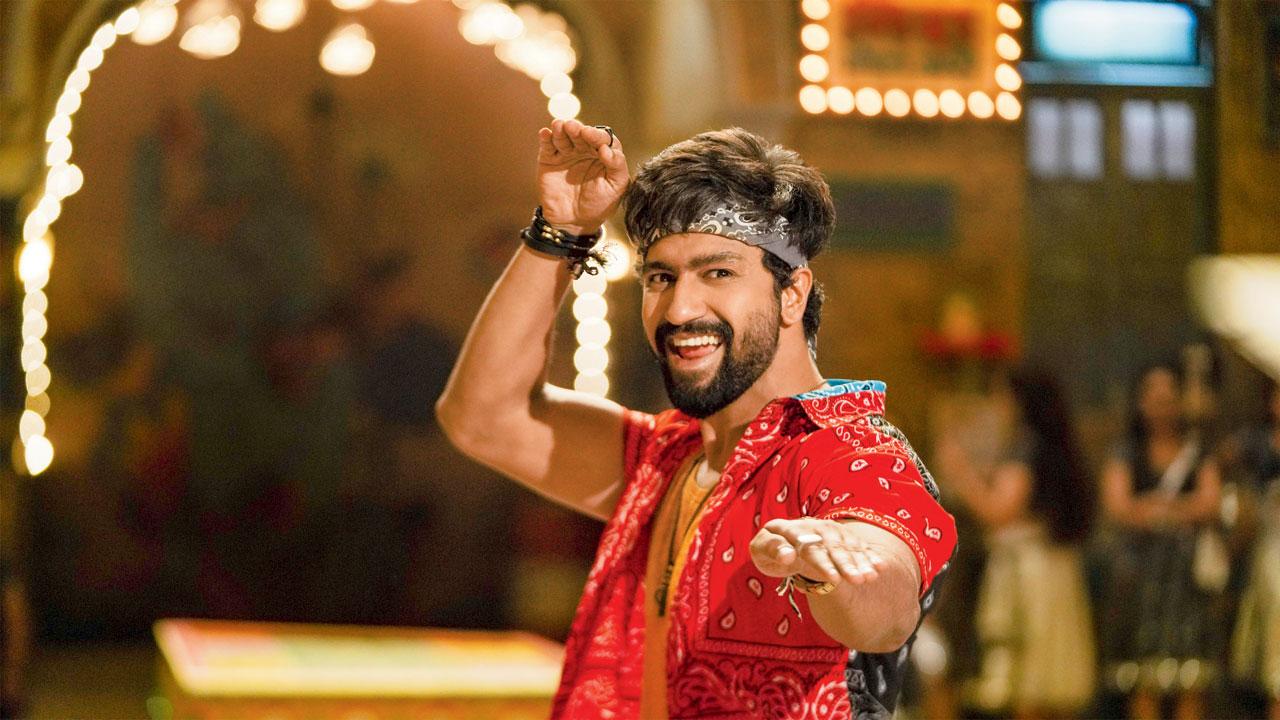
A decade after he featured in his first film, Kaushal stars in his first comedy; actor talks about navigating the genre
Hiren Kotwani (MID-DAY; December 5, 2022)
While Varun Dhawan, Sidharth Malhotra, Ayushmann Khurrana, and Vicky Kaushal have all kicked off their careers in Bollywood a decade ago, one crucial aspect separates Kaushal’s journey from that of the rest — unlike the trio, he was not the face of his debut film, Luv Shuv Tey Chicken Khurana, which was front-lined by Kunal Kapoor.
Evidently then, Kaushal’s journey to becoming one of the most sought-after actor’s of the industry even in the absence of a competitive head start, is noteworthy. “It feels surreal. I’m extremely grateful,” says the actor ahead of the release of his next, Govinda Naam Mera.
In this journey that was fraught with obstacles, he recalls his time spent auditioning for roles, questioning his chances of bagging “a film if I couldn’t even crack a small ad”? When offers came his way, he admits he wasn’t afforded the luxury of choice.
“When I got the role of young Omi [in my debut film], I was asked to join the shoot in two days. When Anurag sir [Kasyap] told me about a role in Bombay Velvet, I didn’t ask him any questions. If you want to make a career as an actor in Bollywood, [taking up roles without a second thought] could be a suicidal decision. But, I didn’t think that way,” says the actor, who grew to prominence following his act in Masaan (2015).
Govinda Naam Mera sits appropriately between a bunch of intense dramas like the previously released Uri: The Surgical Strike, and Sardar Udham, and the soon to release Sam Bahadur. “It balances things out,” he says, adding, “I felt the hunger to do something light-hearted. Even though [I wanted] a break from intense roles, when I was offered Govinda Naam Mera, I tried to decipher if the subject was one that would entertain me, if I was the viewer. [Only] if I enjoy it will I be able to think about ways to bring something new to the table.”
Shashank Khaitan’s directorial venture marks Kaushal’s first attempt at a fully-fledged comedy, a genre that he says actors “either nab, or just don’t”. “If the audience says an actor is trying too hard, that’s the worst feedback. Attempting the genre while carrying the pressure of making people laugh is [not appropriate]. So, comedy is indeed a serious business.”
Apart from Khaitan’s guidance, he sought the advice of co-actors Renuka Shahane, Sayaji Shinde, Amey Wagh, and Viraj Ghelani. “They came together to create the needed vibe. On set, we would be joking around, pulling each other’s leg. That energy translated to the screen.”
Never in my wildest dream did I expect that someday I will be the face of a project-Sanjay Mishra
8:15 AM

Deep Saxena (HINDUSTAN TIMES; February 12, 2022)
After his National School of Drama course, when actor Sanjay Mishra took up acting in early ‘90s, his only quest was to do impactful roles.
“My aim was just one — film chahe jaise bhi ho, people must say ‘Aap bahut acche thhe’, be it a comedy any other genre. Never in my wildest dream did I expect that someday I will be the face of a project. But, Ankhon Dekhi (2014) changed the game, followed by Masaan, Dum Laga Ke Haisha (both 2015) and Kadvi Hawa (2017). Thankfully, ab toh kamaal ka kaam aa raha hai,” he says while shooting in Lucknow.
He continues, “It’s rare that makers look at actors like us as a leading face of a project. Mukhya patra ke roop main log dekhte jaroor hain but himmat bahut kam log karte hain. But slowly, now it has started to happen. Drift has happened and the taste of audience has changed too. Hero, heroine ke alawa bhi ab kahaniyaan hain… due to which, now big productions houses see us as a leading face!”
Mishra further adds, “The best thing that happened to me is that so-called success came to me slowly but surely — warna log pagla jate hain (laughs). Climbing step-by-step, I kept my feet on the ground. And, that’s the reason I enjoy doing short films exploring deeper characters. The hunger to do new things keeps me going.”
The 58-year-old has an interesting mix of projects in his kitty. “I have shot for Rohit Shetty’s Cirkus, Anees Bazmee’s Bhool Bhulaiyaa 2, Colour Blind, Woh Teen Din... I shot a lovely film in Leh-Laddakh besides Teachers Day and Fugitive in Dehradun. Some more projects have happened but aajkal woh non-disclosure sign karwa lete hain sab…” he shares.
Last seen in 36 Farmhouse, Mishra laments that with the overflow of work, often he doesn’t have time to meet his family, “and my kids are solely dependent on their mother as I cannot give them time.”
Like Udham Singh, there’s a revolutionary in everyone-Shoojit Sircar
8:18 AM

Renuka Vyavahare (BOMBAY TIMES; October 11, 2021)
Shoojit Sircar’s upcoming film Sardar Udham pays tribute to an unsung hero — Sardar Udham Singh, an Indian revolutionary, who assassinated Michael O’Dwyer in London (1940), to avenge the Jallianwala Bagh massacre (1919). The former British colonial official was the Lieutenant Governor of Punjab (British India) at the time.
O’Dwyer had said the killing of hundreds of protesters during a demonstration at Jallianwala Bagh in the city of Amritsar, Punjab, was justified. Actor Vicky Kaushal portrays Sardar Udham in the film that premieres on Amazon Prime Video on October 16. In an interview with Bombay Times, Shoojit Sircar opens up on his much-awaited film that he has been meaning to make for the past 21 years!
Were you surprised to discover that not many people know of Sardar Udham Singh, let alone his ideology?
I first visited Jallianwala Bagh in 1999. I was brutally affected. Shaheed Udham Singh ko itnay kam log kyun jaante hai? He was a courageous man, who travelled the world to get to London. I came to Mumbai in 2000 to make this film. I didn’t have money, and no actors knew me. Like Udham Singh, I waited for 21 years to realise my goal of making this film and it was shocking to know that people are unaware of him. That’s the problem of modern times. We are ignorant of who we are in this free world. We tend to forget about our past. Ronnie (Producer Ronnie Lahiri) and I made sure to add that thought in the trailer itself. The world should not forget Udham’s message. It’s unfortunate and sad that he is forgotten, but I hope I am able to bring forth his courageous act.
Devastating humanitarian crisis like the Holocaust, 1971 genocide in Bangladesh (then East Pakistan), terror attacks of 26/11, are events that can trigger and reopen old wounds. It’s like ripping off a band aid. How did you as a filmmaker manage to revisit the Jallianwala Bagh massacre without resurrecting the pain?
You are absolutely right. Sometimes, revisiting an incident is bound to reopen old wounds. My idea of making this film was for people to know that Udham was an ordinary person, a normal human being. We should not forget that there’s a revolutionary in everyone. As a filmmaker, your integrity and take on an issue is extremely important. First and foremost, are you a responsible citizen? The viewers by now know my sensibility and treatment. It all depends on who is making the film and why. I never compromise on my cinematic narrative.
How do you dig into or portray a person like Udham Singh, who hasn’t been well documented?
It was difficult. I went to various libraries, met many historians, writers, professors and referred to the statements of the Jallianwala Bagh survivors.
I was moved by their pain and sacrifices to the extent that I had to tell their story. Those statements were with the Hunter commission and the Congress report. The information is there, but it’s scattered.
What made you zero in on Vicky Kaushal to play Sardar Udham Singh?
My first choice was Irrfan Khan for playing Sardar Udham. Both of us wanted to make this film for a very long time. It’s not easy to cast someone when you have lived with the thought of Irrfan doing the film. Vicky came into the picture much later. I had seen only one film of Vicky and that was Neeraj Ghaywan’s Masaan. It was beautifully made and Vicky was able to convey the innocence and turbulence in his mind calmly. I needed someone who could do that. He has integrity. Being a Punjabi, he’s closer to the sentiment, language and pain of the character and knows what Punjab has gone through. All these factors led me to him and also the fact that he could play all ages — 20, 30 and 39 convincingly. He managed it quite well.
Your prep for the actors is unique. For this film, you made Vicky listen to a particular music. Take us through your process.
When I am conceiving a film and the writing part is on, you are constantly evolving. I have a habit of picking theme music or anything that transports me to that world.
Music gives me food for thought. That could be anything. In this case, I shared the music with Vicky. I do it to acclimatize actors to my world and way of thinking. That’s me sharing my emotion behind making the film with them. There’s no fixed routine as such, but I try to take my actors through the emotional journey that I underwent.
Contrary to popular opinion, Karan Johar has a fine creative sensibility-Neeraj Ghaywan
8:10 AM
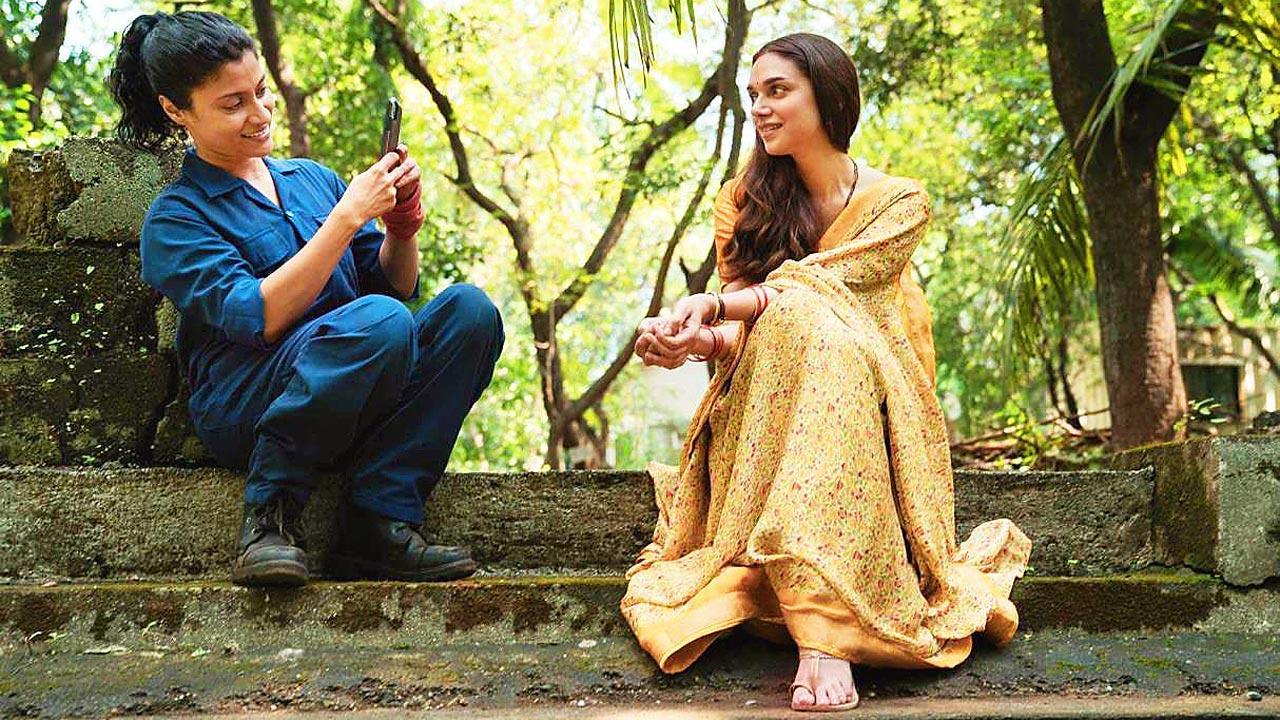
Highlighting caste divide in his story in Ajeeb Daastaans, director Neeraj Ghaywan says film mirrors prejudices seen in offices, other walks of life
Uma Ramasubramanian (MID-DAY; April 19, 2021)
Rarely has a steel tea-cup been used to such great effect. Or for that matter, a glass cabin, as Konkona Sensharma stands outside, looking in at the world she’ll probably never be a part of. With her character at the centre, director Neeraj Ghaywan has woven a delectable tale of queer love, gender, and caste conflict, showing how one influences the other — sometimes subtly, and at other times, brazenly — in Ajeeb Daastaans.
Ghaywan’s first feature film, Masaan (2015), too explored the rampant caste divide in our society. Asked if the country has come a long way since then, he says, “I feel things are the same since Masaan. My idea was not to address a particular subaltern, but to look at everything in the context of intersectionality. In Geeli Pucchi [his short film], you also see patriarchy, gender, caste and class.”
Geeli Pucchi revolves around Sensharma’s Bharti Mandal, a Dalit factory woman who vies for the position of a data manager, which is conveniently given to Aditi Rao Hydari’s Brahmin character, despite her lacking the skill set. “Sometimes, there is preferential treatment [meted out] if you belong to a certain section of the society. Konkona’s character is smarter and more experienced, but she is denied the opportunity. We see this bias in our workplaces, and it is essential to speak about it.”
Interestingly, the idea of a woman factory worker had been with Ghaywan since the past six years. “I had seen a Malayalam woman factory worker when I was developing Masaan. I thought of this story then, but felt it was too radical for the universe of that film. So, I let it brew in my head for several years, and [finally] wrote the story about two women from completely different backgrounds.”
Most would believe that the universes of Karan Johar and Ghaywan’s films have little in common. But having closely worked with the producer on the Netflix anthology, Ghaywan begs to differ. “Contrary to popular opinion, Karan has a fine [creative] sensibility. There were certain things that he suggested in the script, and I thought, ‘What an opinion! He has a good take on the film.’”
The minute a niche film doesn’t do well, dinosaurs say, ‘dekha, aisi filmein nahi chalti’-Richa Chadha
8:35 AM

Rishabh Suri (HINDUSTAN TIMES; April 1, 2021)
Whether true talent or art is recognised in the film industry over just money has for long been a debate. Big films, which are regular masala potboilers, rake in the numbers, while small but thought-provoking ones often miss at the box office. Richa Chadha has had a mix of both, but doesn’t feel good content gets its due only if recognised internationally. Masaan (2015), for instance, was critically acclaimed both in India and abroad, but didn’t rake in the moolah.
“I don’t think that is the case. We tend to believe Indians do not (appreciate content), but look at the content they’re liking on OTT. When a film like Sir (2020), headlined by Tillotama Shome and Vivek Gomber is trending, it makes me feel Indians are hungry for good content,” she says.
The need for good marketing is paramount today, she adds. “As you grow, you realise how important it is to have a good distributor. Masaan had gone to Busan, and it was heartbreaking for me and the director (Neeraj Ghaywan) to see yahaan pe shows hi nahi hain. If someone in Musoorie wanted to watch it, they had to drive down to Nainital, someone in Baroda had to go to Ahmedabad,” says the 34-year-old, recently seen in Madam Chief Minister.
Chadha adds it is crucial for them to perform at the box office too. “The minute niche films like these don’t do well, the old dinosaurs that control this field, say ‘dekha, aisi filmein nahi chalti’. It’s not like ‘logon ko yahi dekhna hai’. In the current crisis, what do you know about logon ko kya dekhna hai,” she concludes.
Releasing a film in 5000 screen is bigger, but that’s not my driving force-Shweta Tripathi
8:09 AM

Shweta Tripathi Sharma finds joy in living life via characters that she plays and with rise of OTTs, she feels we have to be responsible for what we put out
Kavita Awaasthi (HINDUSTAN TIMES; February 13, 2021)
With four shows last year, actor Shweta Tripathi Sharma was on a roll. Her demure character in Raat Akeli Hai, curious one in Cargo, fiery in Mirzapur season 2 and protective in The Gone Game Season 1, got her much love from the audience. With four projects lined up for 2021, the actor is clear about her career choices — passion over money. Excerpts from an interview:
With the kind of projects you have done and love that you’ve received, what do you think of your career progression?
I’m not a part of any race. I’m here for the joy of acting, which makes me happiest. Ten years ago, when I started my career, my yardstick to take up a project was, does it excite me? And even today, it’s the same. For me, the team, the experience, matter the most. Be it Masaan (2015) or Haramkhor (2017), there were ek se badkar ek log, who’re driven by passion. More than the budget of the film, the people are important.
While starting off as an actor, what were your struggles?
I shot Haraamkhor first but Masaan released before that. Even today, my struggles are the same. There are times when one feels frustrated that why am I not working? Being on the set is my happy place. I want to do projects which have a story worth telling. I don’t want to be driven by labels that money, commercial cinema or appeal is more important but I’m driven by passion. Releasing a film in 5000 screen is bigger, but that’s not my driving force.
With every project, your brand has scaled up, does it help or hinder your choices?
Usually, once I finish a project, I move on. But with Mirzapur season 2, for the first time, I had a lot of expectations. Pankaj Tripathi (actor) had told me that, ek actor ka kaam set pe khatam ho jata hai. We experience emotions and live life via different characters. That is my joy and what I want to practice. With every project, I want the characters to be unlike what I’d played before. Soon, I realised I need to research, meet more people and know more stories. This year, my agenda is to be more of a student. I’m focusing on my health, learning ballet and contemporary dance as I want to learn and grow.
With most web shows getting many seasons, how do you work around playing the same characters repeatedly?
When we took on web series, we didn’t realise that there would be seasons. Pehle yeh samajh nahin thi. Now, there is a better understanding about series and one has to ensure quality as a series is long term investment, in terms of emotion, availability and money.
Your views on the rise of OTT?
Audience today is spoilt for choice but also what is important is that we’ve freedom of speech and expression. So, we’ve to be responsible for what we put out. We’ve to take ownership of our content. Most content few years ago was about violence and sex. Today, it’s much more than that. I’m playing a “happy” character in one of my upcoming shows and I’m glad as I’ve played too many dramatic ones and wanted a break.
The time of only one actor ruling for decades is gone-Paresh Rawal
8:18 AM

Juhi Chakraborty (HINDUSTAN TIMES; January 7, 2021)
The biggest highlight in the entertainment industry in the last 10 months has been the growing popularity of OTT platforms. Acknowledging the same, actor Paresh Rawal feels that the web has broadened the playing field for actors.
“Now Pratik Gandhi (who starred in Scam 1992) is an overnight star — this is a new type of stardom, which the OTT platforms have ushered. It’s not like we used to have in Hindi films that one actor becomes a star and rules for decades. That time has gone. OTT has shifted gears. We don’t know how, but it’s definitely changing. You can see the turbulence already,” notes Rawal.
The actor himself got to dabble in the OTT medium in 2020 with Tamil film Soorarai Pottru and the Hindi film Coolie No 1.
Talking about whether the equal chance factor for everyone was missing in the Hindi film industry before OTT came into the picture, the 65-year-old says, “Tanashahi thi ya nahi main uski baat nahi kar raha hoon. But everyone is now getting a chance. There’s a level playing field now.” Rawal adds talent is finally getting its due. “It’s like come and showcase your story, your acting, and if people enjoy it then you win,” he adds.
The actor shares that beyond the web, there’s a change in general in Bollywood and its seed was planted some years back. “Changes have been happening with films like The Lunchbox (2013), Masaan (2015). Good films are being made for some time now. OTT ke aane ke baad maidaan khula hai, jwalamukhi fata hai. For a creative mind, there isn’t a better space than this,” he concludes.
These are tough times but this birthday is going to be special-Vicky Kaushal
8:31 AM

Vicky Kaushal plans to spend the day with his family, hopes to give them more time post-lockdown
Titas Chowdhury (HINDUSTAN TIMES; May 16, 2020)
“I have been working on most of my birthdays over the last few years. I try and make that happen. These are tough times but this birthday is going to be special,” says Vicky Kaushal who turns 32 today.
Talking about having a low-key celebration at home, he shares, “It’s going to be different this time because it’ll be a quiet one. It is going to be all about spending time with family. I’ll also be catching up with my friends over video calls.”
The actor says that the pandemic has made him realise the value of family and being there for each other. “From this point on, it’ll be a conscious effort to give more time to them. When the Coronavirus lockdown is lifted, I’ll make sure that no matter how busy I get in life, I’ll spend ample time with them, have meals with them and talk to them rather than blaming the fast-paced life for not being there with my family,” he says.
Kaushal gets nostalgic, fondly remembering his birthday celebrations from his school days and one of his main complaints. “I used to be very upset because my birthday would fall during the summer vacations. I couldn’t wear regular clothes to school on my birthdays and distribute chocolates to the entire class. But what I remember are the sweet parties at home where I would cut cakes surrounded by my friends. That was the time when technology hadn’t advanced so much and nobody was aware of the concepts of video calls and selfies. Those celebrations felt so real because we wouldn’t be busy clicking photos for social media,” he shares.
He says that a lot has changed since his birthday in 2018. His first big hit, Raazi, recently marked two years. With gratitude, the actor says, “By God’s grace, things only got better from that point on. Raazi came out after Masaan (2015), Zubaan, Raman Raghav 2.0 (both 2016) and Love Per Square Foot (2018). Raazi presented me to a wider audience and the way it was received and the love we got was too special. It was my first experience with the mainstream and things began changing post that.”
Shweta Tripathi, Dhruv Sehgal, Neeraj Madhav talk about shining in roles not traditionally associated with them
8:09 AM

As voting lines close today, and in the run-up to the mid-day and Radio City Hitlist Web Awards, nominees in acting categories Neeraj, Dhruv and Shweta on shining in roles not traditionally associated with them
Uma Ramasubramanian (MID-DAY; March 9, 2020)
In an era where the top brass of Bollywood enjoys their reign over specific genres, their counterparts on the web platform are punching above their weight to ensure they are cast against type. Having shone in a spate of comedy films in South Indian cinema in the past, Neeraj Madhav's turn as a cold-blooded terrorist in Manoj Bajpayee-led The Family Man, has been equally laudable.
Sharing the couch with Dhruv Sehgal and Shweta Tripathi in the second edition of the Sit With Hitlist Huddle — that brings together nominees in the acting categories of the upcoming mid-day and Radio City Hitlist Web Awards on March 19 — Madhav's trajectory isn't far distanced from that of Tripathi. However, while Madhav was offered the role upfront when he accepted a "call from a random number", that turned out to be that of casting director Mukesh Chhabra, Tripathi admits that she had to work a little harder to bag roles that appeased her heart. "Before Masaan, everybody felt I was up-market, and would not fit into the role of a middle-class [person]. As actors, we need to keep breaking stereotypes," she says of her part in Amazon Prime Video's Laakhon Mein Ek.
Little Things writer-actor Dhruv Sehgal decided to take matters into his own hands after he was told to generate his own material, if he wanted to be part of roles he wasn't deemed fit for. "When you are 21 [years of age], you will always be limited, because you will always be at the mercy of someone else. Even now, I am called to audition for the part of a young father. When they say 'young', I tell them please make me old."
Uninhibited about having their acting chops tested over the long format of a web series, the trio, in fact, celebrates the fact that the extended narrative gives them scope and "space" to showcase their prowess. "On the OTT platform, one can live with the character for a longer period of time. The primary character's graph is juicier, [which means we are] spoiled. In feature films, even if one is the protagonist, how many lines and songs will s/he have when compared to a web series? On the OTT platform, even the primary characters grow, as the story progresses," says Tripathi, nominated for her act of a doctor in the final year of training.
Citing an instance of how the length of the project doesn't play spoilsport on the web platform, Madhav says, "In a commercial movie, if one takes a long pause, it gets edited. But, in a web series, one can dive into the character [by doing so]. Hence, an actor gets to explore the character better."
Having pulled of performances as nuanced as they are evidently implies that the trio has a trick or two that they employ to comprehend the psyche of characters. "The home work that I do [for a role] is find a person who is similar to my character. For Moosa, I couldn't do so, since I obviously don't know any terrorists," laughs Madhav, adding that in the absence of a role model, he trained his attention towards comprehending the character's emotional quotient. "There were many layers [to Moosa], so I worked on that and [held on] to particular moments."
Tripathi finds her inroad into understanding her character via external stimuli. "My costume is important, as is my playlist. I can get into a zone by listening to [a certain kind of] music. While shooting for Mirzapur, I had a playlist for Golu [her character]. For Massan, my playlist included songs from Guru and Qayamat Se Qayamat Tak."
Hitlist Web Awards Timeline
- Voting lines close on March 9, at midnight.
- There are 14 categories you can vote in. Log on to www.hitlistwebawards.com to cast your vote.
- You can also vote via SMS. Send HITLIST <space> category name <space> your choice (a/b/c/d as on the website) to 57575.
- The awards will be held on March 19, in Mumbai.
- Watch the full Sit With Hitlist huddle with actors on the website, www.hitlistweb awards.com


Subscribe to:
Posts (Atom)