Showing posts with label Marlon Brando. Show all posts
Showing posts with label Marlon Brando. Show all posts
Dilip Kumar was the first method actor in world cinema-Javed Akhtar
8:21 AM
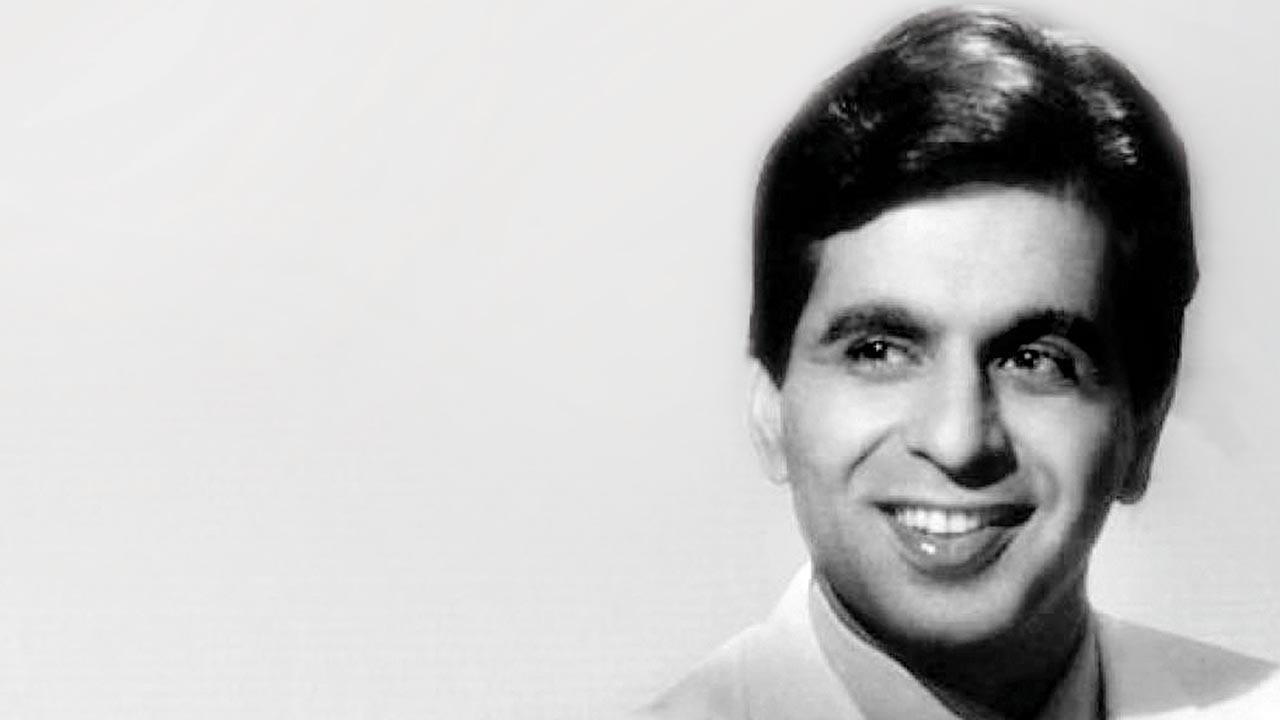
Acclaimed writer, who credits the thespian for his most memorable films, recalls how Kumar introduced melodramatic Bollywood to immersive acting
As told to Upala KBR (MID-DAY; July 8, 2021)
I first saw Dilip saab on screen when I was six or seven years old. My family was pleased that I had made it to the prestigious St Mary’s School in Lucknow, and wanted to treat me. They asked whether I would like to go to the zoo or watch a film, and I chose the latter. That led me to Aan [1952], the first movie I remember watching. Since then, Dilip saab was my favourite as I went on to devour Devdas [1955], Madhumati [1958], Gunga Jumna [1961], and many more films.
Decades later, when I was asked to speak at the release of his autobiography [The Substance And The Shadow], I said that each of us have our mental dictionary, where we conjure our own meanings. To me, the meaning of dignity has always been Dilip saab. He epitomised sophistication and refinement.
He brought new sensibilities [to Indian cinema]; that’s what makes him unforgettable. He found a new language and style — method acting. We know that Russian theatre director-actor Konstantin Stanislavski had invented method acting. I have no idea whether Dilip saab had read about his form of acting, or developed his own style, but [the superstar] was cinema’s first method actor in the world. While Marlon Brando is credited for [introducing] the form, he was six years junior to Dilip saab, in terms of his career. Dilip saab has gone unsung on this count.
Since Salim [Khan, writer] and I began our career in 1971, we were keen to write a film for Dilip saab. Our dream materialised with Ramesh Sippy’s Shakti [1982]. After that, we went on to work with him on Manoj Kumar’s Kranti [1981], Duniya [1984] and Mashaal [1984].
The distinguishing factor about him was that he knew that if the dialogues were powerful, an actor’s portrayal should be understated. [Conversely], in a scene in Paigham [1959], he is telling Vyjayanthimala’s character how he will move cities, regardless of whether he lands a job or not. The dialogues were prosaic, but his delivery made it sound as beautiful as a romantic scene. He would always go beyond the lines and make the scene his own. Also, unlike most actors whose five takes look identical, no two takes of Dilip saab would be similar.
Nobody can romance like him on screen. Most actors are so deeply in love with themselves that even when they look at their heroines, they want to see how they are looking. But when he looked at his heroines, he admired and appreciated them. In that moment, he surrendered [himself] to her, making it look so romantic.
Over the past decades, many actors have followed his style [of method acting]. They have no idea where it has come from. Only a few artistes today have the gravitas and dignity that he did. With [the passing of Dilip saab], an era of sensitivity and culture has ended.
Actors have won Oscars for such roles in Hollywood-Neelima Azeem on son Shahid Kapoor's Kabir Singh
8:51 AM

Citing grey roles like Ledger's Joker and Brando's Godfather, Neelima defends son Shahid Kapoor's Kabir Singh that is drawing flak for glorifying misogyny
Upala KBR (MID-DAY; June 28, 2019)
 Its box-office numbers may tell a different story, but Shahid Kapoor's Kabir Singh has reignited the discussion of how cinema needs to be more responsible in its storytelling. The Shahid Kapoor starrer has been criticised by several critics and audiences alike for glorifying toxic masculinity. Coming to her son's defense, mother Neelima Azim says that the Sandeep Reddy Vanga film is "an intelligent remake".
"Actors have the freedom to play morally controversial characters because they make for meaty roles. Tomorrow, if you play a psychopathic serial killer, will everybody watching the movie become one? Dilip [Kumar] saab and Rajesh Khanna played grey roles in Amar and Red Rose. Are you suggesting that every grey role be scrapped? In Hollywood, actors have won Oscars for characters like these. If we can't make such movies, then we will have to scrap films like Marlon Brando's A Streetcar Named Desire, Godfather and Heath Ledger's Joker [The Dark Knight]. One needs to understand that it is a story and not a lecture on morality."
While the audience has been welcoming grey roles, the problem with Kabir Singh lies in the treatment of its central character. Point out to her how the movie celebrates his misogynistic attitude instead of condemning it, and she argues, "It is a hard-hitting film, and shows [the protagonist's] arc — he changes from the [brash] student at the university to the one who returns home after his grandmother's demise. He suffers because of his attitude. The film is not glorifying the character. Instead, it warns you against becoming like Kabir Singh."
It is not easy to dismiss the violence shown against women. A case in point being the sequence where Kapoor's character is about to rape a woman at knifepoint. "He is about to [rape her] in the dark. As soon as the light comes on, he realises [his folly] and throws the knife away. It's symbolic in that sense," says Azim.
Upkar: Manoj Kumar reveals how Asha Parekh refused to meet Marlon Brando
7:39 AM

Roshmila Bhattacharya (MUMBAI MIRROR; October 5, 2017)
On October 2, Asha Parekh turned 75, and Manoj Kumar, who worked with her in four films — Apna Bana Ke Dekho (1962), Do Badan (1966), Upkar 1967) and Saajan (1969) — informs that back in ’57–’58, they were part of a group called ‘Stars of Tomorrow’, being promoted by the then Filmfare editor L P Rao, J C Jain, general manager of the Times of India, and Gulshan Ewing, editor of Femina. They would meet at functions and photo sessions.
Asha got the hit she was looking for with Nasir Hussain’s ’59 romcom, Dil Deke Dekho. She consolidated her position with Ghunghat, Jab Pyaar Kisi Se Hota Hai, Gharana and Chaya, while Manoj Kumar continued to struggle for his big break till producer Jagdish Nirula, who considered Asha his sister, came to him with Apna Bana Ke Dekho. “I got the film on her recommendation and remain obliged to her,” admits Manoj, who five years later, went to her with the role of Dr Kavita in Upkar, his first official directorial, which was inspired by Prime Minister Lal Bahadur Shastri’s, ‘Jai Jawan, Jai Kisan’.
“I went to her residence with my wife, Shashi. She was packing for Kashmir, for the shoot of Jawan Mohabbat, and immediately gave her consent even though it wasn’t her usual singing– dancing kind of role. I’m not sure if she enjoyed doing the film. She certainly didn’t understand my need to drive 25–30 km to catch a sunrise. I never saw the shadow of a frown between her brows but I’ve never heard her speak about Upkar. She didn’t attend the premiere despite repeated requests. Maybe, as she said, she was busy. Once she made a commitment, Asha never went back on it,” he muses.
He recalls, when they were filming in Delhi, Marlon Brando had come to India and was staying at a five-star hotel close by. He called Brandon and they had a long chat during which Manoj Kumar invited the legendary Hollywood actor to his shoot. Brando had a meeting with Prime Minister Indira Gandhi the next day and did not know when he’d be called for it. But he promised Manoj that he’d drop by the day after.
“I requested Asha that instead of shooting the following day as planned we continue the day after, in the presence of our special guest. She refused, saying she had already committed to a dance performance on that day and flew off to Mumbai. We missed Brando but I appreciate that she doesn’t go back on a commitment, for anyone,” he says.
There are no hard feelings, only warmth, the Dadasaheb Phalke awardee insists, as working with a professional like Asha was always a pleasure. “She was the only one who called to wish me on the night of my wedding in Delhi and invited Shashi and me for lunch back in Mumbai. My wife and she continue to be friends and she’s like family,” the actor– filmmaker says, recalling their vigil at Nanavati Hospital years ago. “My father was unwell and her mother was ailing. She’d walk the corridors anxiously through the night. Her parents were always very warm and we met for lunch three to four times. During Upkar, I remember she was raising money for the Asha Parekh Hospital,” Manoj says.
The Asha Parekh Hospital bid ‘Sayonara’ on September 30. But buzz is, Asha has plans to start it again. Till then, it’s cheers from Mr Bharat on a platinum jubilee to a woman who heralded spring with him in the song “Aayi Jhoom Ke Basant” in his iconic patriotic drama, Upkar.
Actors fake it when they say that they got depressed after doing a role-Akshay Kumar
8:04 AM

Akshay Kumar on why he won’t chase festival release dates, but will continue to chase people pooping outside his house....
Sarita A Tanwar (DNA; February 6, 2015)
I have known Akshay Kumar for two decades now. And I
have never heard him complain once. About anything. His rivals, the
weather, busy schedule backache, headache, or life in general. Worse, he
won’t let you complain about anything or gossip about anyone. He makes
light of most things and laughs off everything from rumours to
speculation. He is the most disciplined man I have ever met. A star who
works four times as hard as his contemporaries, and still finds time for
everything he wants. From his fitness regime, to his endorsements and
social commitments. From live performances to annual month-long family
holiday. I often marvel at how he makes time for everything but then he
does wake up at 4 am! And is notorious for having 6 am meetings.
Luckily, my appointment is at his office, one floor above his home, at
3.30 in the afternoon. But on my way there, I am directed to his home,
where he is having his lunch. He informs me that it is his dinner. His
wife Twinkle is sitting by his side in a pink kaftan, with son Aarav
walking in and out of the room, seconds later his mother-in-law Dimple
Kapadia walks in. I begin to feel like an intruder in this family scene
and we soon head to another room (his kids’ play room, where he proudly
points to a beautiful wall painted by his 11-year-old) and we settle
down to chat about his latest release Baby, how he is now veering
towards meaningful films and why he thinks actors are faking with
method acting.
You are the man of the moment. Baby is holding steady even in the second week. How does it feel?
It feels good. First of all, it was a honour to work with Neeraj Pandey again. He makes very good movies. He extracts stories from reality and puts them together. He is not the kind of director who watches Hollywood DVDs and makes films. He is one of the very few original writers who pens a script from his mind and makes the film. He doesn’t believe in taking inspiration from other films. His films always have a message. He is a very honest director and I feel lucky that I got a chance to work with him.
As Ajay Singh Rathore, you didn’t step out of the character even once. Knowing that you love to improvise on the sets, was this tough? Did you have to work hard on that or did you just follow Neeraj’s vision?
I just followed him. There are some movies which need improvisation like a Housefull. Even a Hera Pheri, it needs improvisation. There are some films like these where it happens... Or like when I played a cop’s role in Rowdy Rathore, then I get to improvise. But not in a film like Baby, which revolves around a sensitive and a real incident. You cannot go out of your character. I am lucky enough to work with different kinds of directors.
You have suddenly started being part of what is considered good cinema. Apart from still being part of hardcore commercial films. What’s the thought behind that?
That’s what I have done all my life. I did Special 26, 8X10 Tasveer, OMG! Oh My God...What happens is with my career, I always try to do different kinds of subjects. I don’t want to be having just one image, like after this I am doing Housefull. I think it started with Sangharsh. I used to do commercial films before because I didn’t have the mindset to do any other kind of cinema. I couldn’t relate to that, plus at that time, I just wanted to earn money and that would come only with commercial cinema. But now I am in a position where I can take risks. I can cut my price into half and do a small film with the subject of my liking, which will give me critical acclaim because it all depends on me. I am doing a film called Airlift. It’s a very serious film and I can do it now. To me nothing else matters if I like a script, I just do it. I experiment a lot with myself.
You have never had a Diwali or a Eid release. Deliberate?
I have three to four releases in a year. I am not going to wait for a Diwali release, have those big releases... I want to release my films whenever they are ready. It does matter with those kind of dates. There are too many people aiming for those festival dates, so I don’t hanker after them.
But big festival holidays ensure big bucks. Why would you not want your films to release then?
They should. But it all depends on my producers, when my films are ready and what date they want to release it. Fortunately, or unfortunately, I finish my films very fast and it doesn’t make sense for my producers to wait till the festival season at the end of the year to release their films. Like, I just started Brothers and it’s almost done. I am exactly 10 days away to finishing it. I finished Main Gabbar in August, 2014. Finshed means there is no shooting left. We decided to make Brothers somewhere around September last year and we are through with it.
Was Baby the most physically exhausting film you have done?
No, Baby was not exhausting. Brothers is exhausting. It has been the most physically exhausting film I have ever worked on. The action was tough and I reharsed a lot because it was a different kind of action. Also, I had to lose a lot of weight for this role. It’s a very physical part, not emotionally draining.
Which role left you emotionally drained?
No, I am not that kind of an actor who gets into the character so much. I just don’t get too deep into a role to affect me once I leave the set. I personally feel that actors fake it when they say that they got depressed after doing a role. I don’t know what actors mean when they say ‘Arey yaar, main character ke andar itna ghoos gaya hoon that I cannot come out. It’s taken me three months to come out of the character.’ I can understand if they say they were affected for a day or two perhaps... I remember reading about this scene between Robert De Niro and Al Pacino. They had a scene together where Pacino had to pant as if he had come running and deliver his lines to De Niro. So, Pacino went a long distance, ran and came running but when he reached his spot, he forgot his lines. Again he went back and ran a kilometre and he messed up his line. So then he was about to go behind and De Niro caught his hand, and said “Listen now can you try acting?’’ My approach is the same. Act like you have run and come. You don’t have to actually run. So don’t get into the part to the point it spills into your life. It’s called acting. So just act!
So you are saying no role has ever affected you that much?
I have played many disturbing characters whether it’s Sangharsh or Janwaar... and nothing affected me more than a day. If you see Marlon Brando, all these big actors, the so-called kings of acting, you will never hear them talking like this. It’s okay I can understand if you say that I am still feeling that character for a day... but after that, chal na, abhi khatam ho gaya.
You’ve spent over 20 years and done over 130 films — does the release of a new film still bring the butterflies?
Yes it does. And if it doesn’t work, then I am sad but only till Monday night. After that I have to carry on. I remember talking to Mr. Amitabh Bachchan about this long back, I don’t know whether he would remember it. But I said to him, ‘Sir, kabhi kabhi films nahi chalti, how does one deal with that?’ He said ‘Akshay, no problem, look straight, carry on ahead, work for your next film. Don’t take it too seriously.” When an actor of that caliber says: Don’t take it to your heart, otherwise you won’t be able to work for your next movie. You’ll destroy the next person’s film and points out that there is nothing you can do. It didn’t work, it didn’t work; you have to go ahead.
You’re the only actor from your generation to sport a salt-and-pepper look on and off-screen.
Why should I hide it? I have been working for the last 25 years. I am in my 40s. I have salt and pepper hair and stubble. Why should I hide it? I am even ready to age on screen. People should stop asking actors these questions. Why is this thinking only here? Why is it a problem? Everyone follows the west, so why not when it comes to this? Tom Cruise plays a old man in Tropic Thunder, he plays a old, fat, bald Jewish guy. I loved that. Why can’t we have that here?
Also, while most other actors of your generation shy away from working with younger heroes, you’re the first one to take the plunge with Brothers, where you share screen with Sidharth Malhotra.
Again, look in Hollywood, no one questions this aspect. You see the biggest of actors does one-minute roles in films. If a guy is making a film and if there is a small three-minute role also, the biggest of actors do it. I want to change that thought. And I can try and change it with my actions. So I am doing Brothers and am open to doing more such films. The role has to be good. Who else is in the film, how big is his role should not matter.
Over the last few years, you’ve had three-four releases a year. Are you planning to continue doing that?
I will continue to do all kinds of films. So I will balance serious films with a Housefull 3. Because if all I do are serious films, I will become a very depressed person. I can’t do that. I need my Sajid-Farhad and I need to laugh, I need my Riteish Deshmukh... But yes, to answer your question, I will continue making three-four releases a year. I have been doing that from the beginning of my career. It’s not a new thing.
Even SRK, Aamir and Salman did that at the beginning of their careers, but not once they became superstars.
Yes, that’s changing now. And it will change more.
You think they’ll do more films every year now?
Let’s not get into that.
I regret changing my name from Ramon Estévez-Martin Sheen
7:47 AM

Martin Sheen talks about his Hispanic roots, sons Charlie and Emilio, and playing Union Carbide CEO Warren Anderson
Smriti Kiran (MUMBAI MIRROR; October 29, 2014)

I don't think you have done a single interview post-1979 where you haven't been asked about Apocalypse Now...
(Laughs) It sounds very familiar. It was a big career start and I am happy that I did it. But if you said again, “You can have this part but this is going to happen“, I'd say “Pass, no thanks, all the best.“
An unforgettable memory of the shoot...
The company of the players, I just adored them. I got close to Marlon (Brando), one of my heroes, one of the great actors, if not the greatest actor, of all time.
Everybody in your family is in show biz. What is dinner like in your household?
It's a bit lonely now because we don't have them living at home. We have grandchildren and one great grandchild, so it's a large extended family. It's hard to get everyone together at the same time, but we do, particularly on holidays and birthdays. It's gratifying for me as a father and an actor to work with them. I did The Way with my older son Emilio (Estevez) a few years about the Spanish pilgrimage, Santiago de Compostela, which he wrote for me. That's the best thing I've ever done.
When you shifted to New York to become an actor, you changed your name from Ramon Estévez to Martin Sheen to avoid ethnic typecasting. If you were debuting today, would you still do that?
Not today, no. I still deeply regret that I did. But I never changed my name officially; I just started using a screen name. It was difficult getting employment as Ramon Estévez, and not just in show business. Although I didn't look like the typical Hispanic or Latino, the name tagged me. When Emilio became interested in being an actor he said: “I am going to change my name.“ And I begged him to not make the same mistake I did. Charlie has changed his name officially though. It's a matter of choice. I still love my original name; it's there on my passport and marriage certificate. I'll always be Ramon.
What challenge did a film like Bhopal: A Prayer For Rain offer?
Well, I only feature in the Hyderabad segment, I wasn't in London, Mumbai or Bhopal. So, I had a very limited par ticipation but it was an important one because I play Warren Anderson, the American CEO of Union Carbide at the time. I think he's still living but hasn't uttered a single public statement about the tragedy, his involvement in it, accepted any responsibility or even apologised. We were however not interested in making him a villain. We gave him every opportunity to give us some inputs but he never surfaced. He hasn't been heard of since he fled India shortly after the tragedy in 1984. So we couldn't be too factual about his character but we had enough information to present an honest portrayal.
What excites you now?
Everything--my life, family, career, waking up and knowing I made it into another day. I embrace old age. I'm the luckiest man I know.
(Laughs) It sounds very familiar. It was a big career start and I am happy that I did it. But if you said again, “You can have this part but this is going to happen“, I'd say “Pass, no thanks, all the best.“
An unforgettable memory of the shoot...
The company of the players, I just adored them. I got close to Marlon (Brando), one of my heroes, one of the great actors, if not the greatest actor, of all time.
Everybody in your family is in show biz. What is dinner like in your household?
It's a bit lonely now because we don't have them living at home. We have grandchildren and one great grandchild, so it's a large extended family. It's hard to get everyone together at the same time, but we do, particularly on holidays and birthdays. It's gratifying for me as a father and an actor to work with them. I did The Way with my older son Emilio (Estevez) a few years about the Spanish pilgrimage, Santiago de Compostela, which he wrote for me. That's the best thing I've ever done.
When you shifted to New York to become an actor, you changed your name from Ramon Estévez to Martin Sheen to avoid ethnic typecasting. If you were debuting today, would you still do that?
Not today, no. I still deeply regret that I did. But I never changed my name officially; I just started using a screen name. It was difficult getting employment as Ramon Estévez, and not just in show business. Although I didn't look like the typical Hispanic or Latino, the name tagged me. When Emilio became interested in being an actor he said: “I am going to change my name.“ And I begged him to not make the same mistake I did. Charlie has changed his name officially though. It's a matter of choice. I still love my original name; it's there on my passport and marriage certificate. I'll always be Ramon.
What challenge did a film like Bhopal: A Prayer For Rain offer?
Well, I only feature in the Hyderabad segment, I wasn't in London, Mumbai or Bhopal. So, I had a very limited par ticipation but it was an important one because I play Warren Anderson, the American CEO of Union Carbide at the time. I think he's still living but hasn't uttered a single public statement about the tragedy, his involvement in it, accepted any responsibility or even apologised. We were however not interested in making him a villain. We gave him every opportunity to give us some inputs but he never surfaced. He hasn't been heard of since he fled India shortly after the tragedy in 1984. So we couldn't be too factual about his character but we had enough information to present an honest portrayal.
What excites you now?
Everything--my life, family, career, waking up and knowing I made it into another day. I embrace old age. I'm the luckiest man I know.
Subscribe to:
Posts (Atom)