Showing posts with label Manto. Show all posts
Showing posts with label Manto. Show all posts
Playing Musharraf brought me hate and love-Manu Rishi Chadha
10:33 AM

Deep Saxena (HINDUSTAN TIMES; August 17, 2026)
Actor Manu Rishi Chadha, who plays former Pakistani president General Pervez Musharraf in Operation Safed Sagar, says the role has brought him both hate and appreciation.
“My social media DMs are flooded. Someone wrote that he wants to slap me for the act and hug me for my work. I was like… please don’t slap, as if others too feel the same, it will be too much (laughs). I feel the hate is also love which means the work was appreciated,” he tells us. Chadha says he expected strong reactions to his portrayal of Musharraf during the 1999 Kargil War. “There is one common message I am getting: Manu bhai jitni nafrat thi (Musharraf) woh double ho gaya par aapse pyar ho gaya! I want ki woh nafrat bani rahe.”
For the role, he deliberately stayed away from too many archival references: “I just saw 1-2 videos, but then I decided not to; otherwise it would become caricaturish. My first question was, ‘How do I look like him?’ Also, hero ki duniya mein villain banna, and that too a real person, was a challenge.”
A chat with Nawazuddin Siddiqui helped him find his approach. “I asked him how he played (Saadat Hasan) Manto in the film and he was like, there was no reference of him except his photo and work. So, he created and worked on his human side — right or wrong! So, I decided that I will just follow my director and creators’ vision.”
Chadha says the challenge was to inhabit the character without slipping into mimicry. “Kahin mimic na ho jaye — yeh darr bhi rakha aur jimmedari bhi rakhi! As an Indian, I can hate him but as an actor, I can’t!” he ends.
The hero in Hindi films has no crisis, no troubles in life-Nawazuddin Siddiqui
8:32 AM

Niharika Lal (BOMBAY TIMES; March 1, 2025)
Nawazuddin Siddiqui has long been praised by critics, for slipping seamlessly into intense, serious, complex roles. But as he stood at the stage of the National School of Drama, he spoke of a time when serious roles weren’t even in the picture.
“There was a moment here, when I realized that maybe I could work on making serious roles my base," he recalled. Until then, he was only into comic roles. A Russian director visiting NSD saw something sharper in him. “He cast me in a serious role based only on my eyes,” Nawaz said.
He said that even now, after decades in the industry, and after playing characters that have shaken him to his core, the hunger remains. “Artist ki jo bhookh hoti hai woh kabhi khatam nahi hoti,” he said.
During a conversation with NSD director Chittaranjan Tripathy, Nawaz recalled his campus days:
'I was cast in a serious role based only on my eyes'
Nawaz recalled that when he was at NSD, a Russian theatre director visited the campus and said, "His casting process was unique. He didn’t meet any of the students from my batch. Instead, he looked at our photos and focused only on the eyes. He decided to cast us based on that. That was the first time I was given a serious role in a play. Until then, I had only done comedy at NSD. That was the moment I found a certain tone in my acting. It was the first time I realised I could make that my base and build on it."
'Aisa lagta hai abhi toh shuruat hai'
Nawazuddin Siddiqui said that in terms of characters, he still feels that it's just the beginning. He recalled, "When we used to do drama during our NSD days, even then, we would search for layers within the characters to perform them differently - kuch alag sa ho, cliched na ho, absurd na ho, unpredictable ho. We constantly tried to avoid what came naturally to the character; we didn't want to do what felt easy. It is important to play characters differently, and I believe absurdity exists somewhere inside us. Bringing that out while performing is essential. Aaj bhi main usi ko le kar pareshan hoon. Characters have their own mistakes, their own shades, and I like doing such characters. Woh characters jinki har cheez achhi hai, mujhe nafrat hai aise characters se."
Giving an example of the hero in Hindi films, he said, "He has no crisis, no troubles in life. He looks good, talks nicely. Khoobsurat ladki uss par marti bhi hai. 12-15 logon ko maar bhi deta hai woh. Mujhe aise characters chahiye jismein kharabiyan bhi ho, achhaiyan bhi ho. Ab aap decide kariye kaisa hai woh? Main usi ko le kar pareshan rehta hoon ki kaash hamare yahan aise kirdar likhe jayein jo cliches ko break karein. Kahaniyaan ek se achhi hai hamare yahan, lekin kirdar waise likhe nahi ja rahe. A lot of people ask me, 'Are you doing a good story?' I don't want a good story; I want a nuanced character."
Nawaz said that we are surrounded by absurd stories, adding, "Lekin hum log samaj se bandhe hain aur woh stories mar jati hain phir. Mujhe shauq hai waise kirdar karne ka. Main uske liye aaj bhi bhookha hoon."
'Manto was a character that shook me'
Talking about the characters that left an impression on him, he said, "The most difficult character for me so far has been Balasaheb Thackeray because I didn’t want it to feel like mimicry. I wanted to look like both myself and him at the same time. I studied method acting at NSD, so all of that training helped. Apart from Balasaheb Thackeray, Manto was a character that shook me up internally. Usne mere body mein hulchul kar di. It even brought changes in my life. For a few years, I started speaking the truth too often, and that created some problems for me. Maine jhela sach bol ke, usse seekha maine sach bolo lekin jagah aur time dekh ke bolo."
Our cinema shouldn’t be filtered like social media-Rajshri Deshpande
8:27 AM
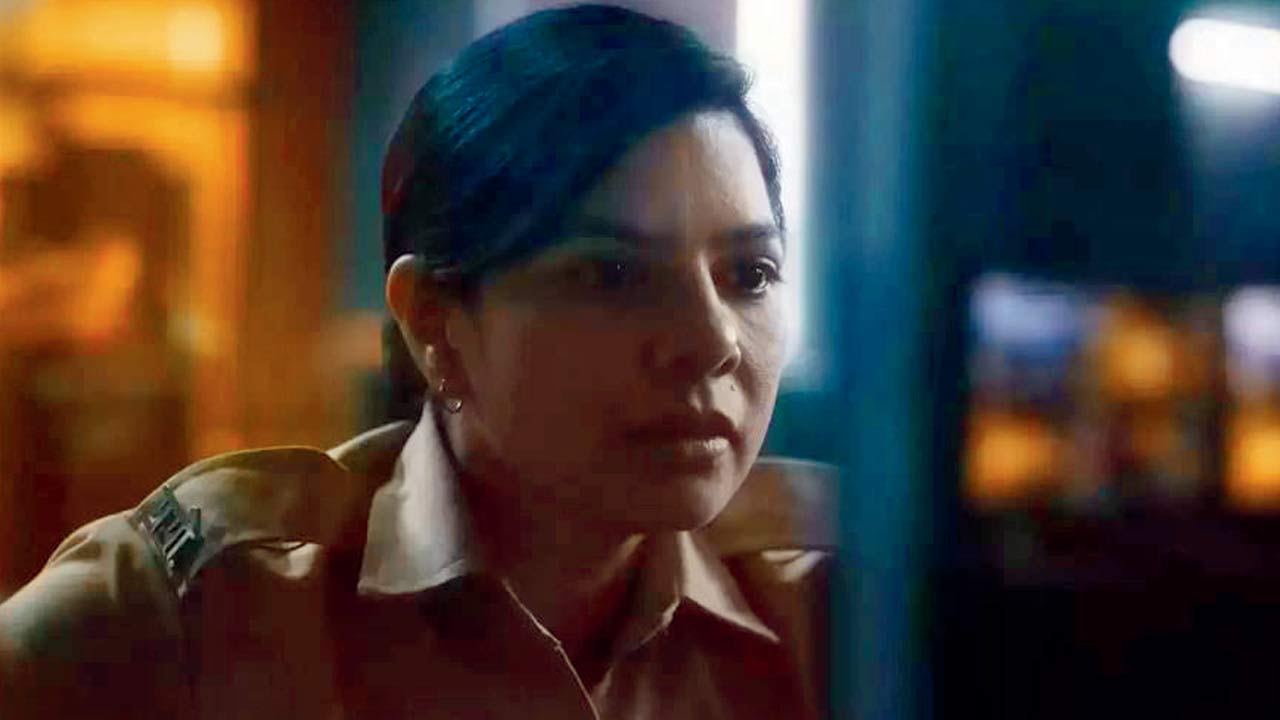
In Privacy, Deshpande plays the role of a Mumbai surveillance command and control centre operator
Heading to Bucheon International Fantastic Film Festival for the première of her film, Privacy, Rajshri on what gives her creative satisfaction
Mohar Basu (MID-DAY; July 2, 2023)
One look at the teaser of Rajshri Deshpande’s new film Privacy, which comes six months after her much-acclaimed Netflix offering Trial By Fire, and you would think that the actor is drawn to dystopia as a genre. “Isn’t dystopia a reality?” she says thoughtfully, as we sit down to chat about the film that will première at South Korea’s Bucheon International Fantastic Film Festival (BiFan).
Sudeep Kanwal’s directorial offering is a social thriller that explores themes of voyeurism and mental health. The film’s intention to depict the harsh reality drew the actor to it. “This is a genre-breaking film that wasn’t easy to get off the ground,” she says, gearing up to go to South Korea next week.
“I’m not seeking entertainment that’s always happy and shiny. Some are trying to show the world something escapist, while some like me choose shows and movies that depict the real picture. From being Ismat Chughtai in Manto [2018] to Neelam Krishnamurthy in Trial By Fire, I want to depict what we all are going through. When people see me, they see an actor who is able to strip their vanity off and be the character.”
Over the past decade, Deshpande has consistently chosen roles rooted in reality—from Angry Indian Goddesses (2015) to Sacred Games. She isn’t interested in fantasy characters, she asserts. “I don’t want to play women who have the perfect figure. Our cinema shouldn’t be filtered like social media. Not everyone is thin and has clear skin. We have to normalize all bodies and skin colours. I want to be raw, natural, and find work that echoes. It takes time. I am happy to do less, but gratifying work. I am fine not jumping on board the next big-ticket series or movie.”
After Trial By Fire, she has been inundated with congratulatory calls as well as offers. How did she navigate the noise to remain grounded? “Praise and appreciation are the real gratitude. I am still waiting for great characters post Trial By Fire. I don’t believe in parties and networking. I want to work well, and be immersed in a story as an artiste.”
We had several acting workshops with Naseeruddin Shah; you will not find this process in any book-Rasika Dugal
7:57 AM
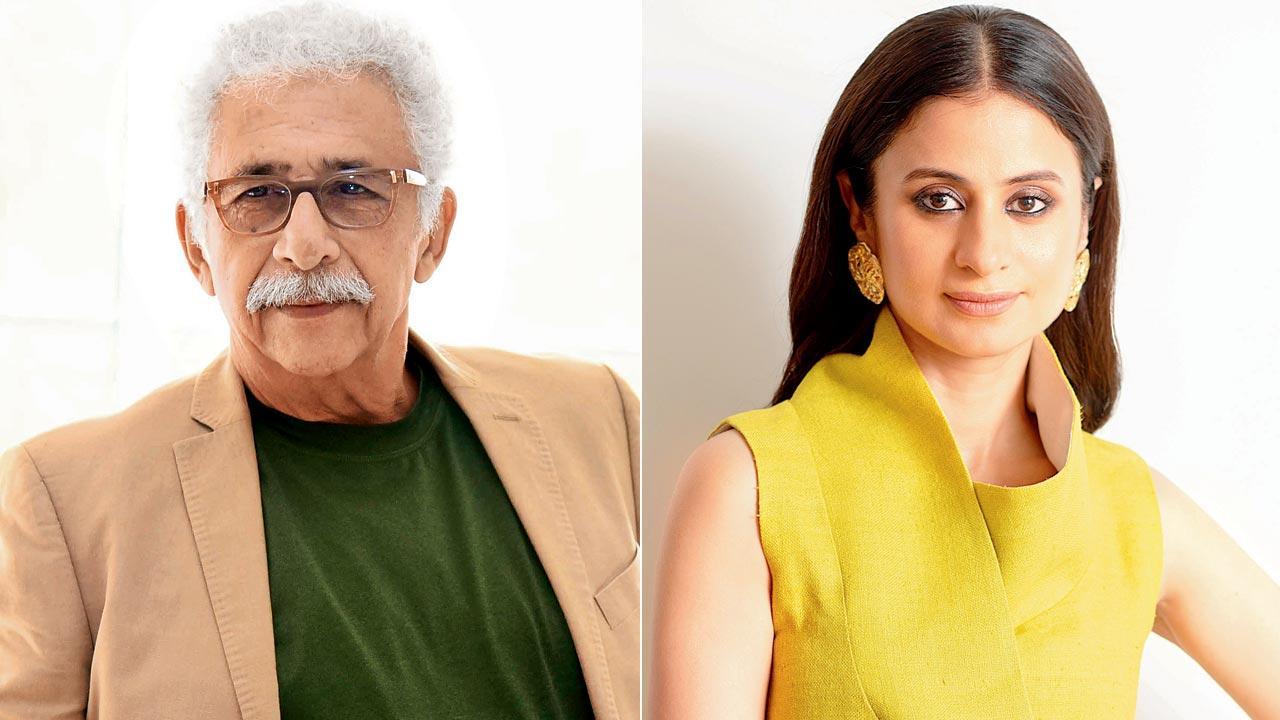
The actress recounts her student days at the FTII and the impact of Naseeruddin Shah on her as a teacher
Renuka Vyavahare (BOMBAY TIMES; September 6, 2021)
Naseer sahab was part of the visiting faculty when Rasika Dugal studied at the Film and Television Institute of India (FTII). While the world knows of his acting prowess, through some very interesting anecdotes, Rasika gives us an insight into Naseeruddin Shah, the teacher. In conversation with Bombay Times on Teachers’ Day yesterday, the actress shared the valuable lessons she learnt from her famous teacher.
The actress remembered, “We were thrilled that Naseer sahab was able to take the time out and come teach us. It is rare for a working actor to make time for teaching. What I found unique about him is the fact that he is as good a teacher as he is as an actor, which is rare. Acting and teaching are two very different muscles, but he is able to navigate them. A great actor and a very focused teacher.”
The actress shared his teaching process and the impact it had on her as a student. She explained, “He has a set process that he would follow with us. We had several workshops with him that went on for 15 days each throughout the year. This pattern is what he had devised. You will not find this process in any book. Every student was nervous in front of him and we all wanted to maximize our time with him to grasp as much as we could.”
Citing examples, Rasika added, “The few things that I learnt from those sessions are fundamental to my craft. To give you an example, I learnt from him that you should never instruct your co-actor. You receive whatever they have to offer. Suppose a co-actor changes a line or says it differently, you don’t stop him and say, ‘Hey, you’ve said the wrong line’. You accept what they give to that scene. When someone throws something new at you and you adapt to it, that’s the actual give and take. And it’s not yours, but a director’s job to control a scene. You just need to be alert and be there for your co-star. It’s easy to say these things, but he taught us to execute them.”
After a brief pause, she elaborated, “Naseer sahab once said in class, that if you want to truly listen to your co-star in a scripted scene, then you must learn the other person’s lines also. At the time he gave this instruction I found it weird. But when I started working, I understood the meaning of it. I shot a short film called The Miniaturist Of Junagadh with him, which was my first professional interaction with him in Mumbai after the FTII. What happened on set was interesting. He asked me, 'Tumko lines yaad hai, na?' I said, 'Sir, aapki bhi yaad hai (smiles).' He laughed because he himself taught us that. He is enthusiastic about learning things and constantly updating his knowledge. He reads stuff in several languages and finds references that can lend meaning to lacklustre writing of a character he may enact, it’s very inspiring. This is what being detailed means.”
Beyond being a fine actor, Naseeruddin Shah is a socially aware artiste, who always speaks his mind. And that’s most inspiring about him believes the actress. Listing it as one of her life lessons, she said, “He always speaks his mind. There is no pretence and I feel that’s a great quality to have. The other person who has this quality is Nandita Das and I had the opportunity to work with her as well in Manto. They don’t believe in hierarchies. They treat everyone as equal and so the honesty.”
I have been working constantly since 2010; I don’t mind disappearing for a while-Nawazuddin Siddiqui
8:08 AM

The actor, who has had a packed work diary in the past few years, says that come 2022, he will slow down and pursue other interests
Onkar Kulkarni (BOMBAY TIMES; February 3, 2021)
Be it commercial films, content-driven cinema, or even web shows — when it comes to author-backed roles or parts that need a powerhouse performer, Nawazuddin Siddiqui’s name is among the top forces. Each year he is seen in multiple projects, which results in erratic work schedules. In the year gone by, Nawaz got an opportunity to slow down. He took a breather, spent a lot of time in his hometown in Uttar Pradesh, and caught up on what he believes are precious moments of his life. Talking about it, the actor tells BT, “Due to the long break last year, 2021 kuch zyaada hi packed rehne wala hai. I am happy that I will be shooting for projects across multiple genres. However, in 2022, I have decided that I will slow down. 2020 bahut kuch sikha ke gaya. It was tough for the whole world, but I am happy that it opened my eyes.”
So, as he plans to go easy on his projects, we ask the prolific actor what will he focus on? “The time I dedicated to myself last year, ab uski aadat pad chuki hai. So, I am going to take up something that I always wanted to do — travel the world. Yes, of course, as an actor I have travelled the length and breadth of the world, but that has been primarily for work — like film shoots, promotions or film festivals. Last year around this time, I was in the USA and earlier I had visited Rome for a film shoot. Now, I want to take up travelling as a hobby. That experience is totally different, and maybe, it will help me as an artiste,” he explains.
Nawazuddin says, “Frankly, I don’t mind disappearing for a while. Abhi highway par hai iska yeh matlab nahi ki bas bhaagte hi rehna chahiye. I have been working constantly since 2010. It feels like a trap to me now. Bhai, meri bhi toh marzi honi chahiye!”
The actor says that the variety of roles that are offered to him is what keeps him alive and kicking in Bollywood. “As an actor, I am happy that I am picking up different characters jisse jeene ka ek sabab seekh paata hoon. This is exactly the reason that I chose this field, otherwise, ek hi type ka role thodi na karna hai. From Thackeray (2019) to Manto (2018), and thrillers to romance, I have explored different facets of cinema, yet, I still feel that I have just started, and I have a long way to go.”
The silver lining is that March feels pushed to October-Tahir Raj Bhasin
8:28 AM

Mohar Basu (MID-DAY; January 3, 2021)
"The months between March and September felt never-ending," says Tahir Raj Bhasin as we catch-up for a chat. For the last few weeks, the actor has been shooting Looop Lapeta at Madh Island, post which the crew will move to Goa later this month. He says he utilised the Coronavirus lockdown time for self-reflection. "I took the time to pause and appreciate how far life has come. To merely step out of those Zoom windows and be on a set full of human contact is invigorating."
The year 2019 saw Bhasin shine in Nitesh Tiwari's Chhichhore, a film that created wonders at the box office and earned rave reviews. He would've kicked off 2020 with Kabir Khan's '83 if the pandemic had not played spoilsport. However, he now owns the leading man's space in the Taapsee Pannu-starrer—Looop Lapeta—a remake of German hit film Run Lola Run. "I started 2020 brimming with hope. The silver lining is that March feels pushed to October. As an actor, I play every part with a single-minded focus. My design to work doesn't change when I am playing a hero [or otherwise]. For me, when Derek [character he played in Chhichhore] walked in, he was the leader of the pack. Outside of the craft, as trajectory, I see this as the progression that's come hard earned. I feel stimulated and consciously abstain from doing similar parts. Producers are noticing that [my character in] Manto is nothing like Chhichhore, which is starkly different from Mardaani."
Consciously aware of the responsibility that lies on him and working in that direction every day, Bhasin says the opportunity feels like a dream come true. "Taapsee and I are working on creating chemistry. The film is a remake of a German cult movie, so we need to take extra efforts to make the film palatable to the Indian audience who may or may not have seen it. I had seen the film when I was in college and never in my wildest dreams had I imagined that I will play a lead in its remake."
Coming up next, Bhasin has a Mahesh Bhatt series that marks the veteran director's digital debut. "The studio is looking [to release the series] by the first quarter of 2021."
Haan, maine paison ke liye films kari hain, aur aage bhi karunga-Nawazuddin Siddiqui
8:12 AM

Nawazuddin Siddiqui shares why he has no qualms about taking up the occasional masala potboiler
Rishabh Suri (HINDUSTAN TIMES; December 1, 2020)
Actor Nawazuddin Siddiqui has tried his hand at quite a lot of variety — be it playing a tough inspector in Kahaani (2012), a menacing antagonist in Kick (2014), or even biopics such as Manto (2018) and Thackeray (2019). He hasn’t shied away from doing masala potboilers either, and he says he is not at all apprehensive about doing more of them.
“There’s nothing like I won’t do them. The thing is, when I was in National School of Drama (NSD), we would do plays of every kind — in Sanskrit, with Parsi songs, dialogue deliveries which were long and required us to shout, Shakespeare, Anton Chekhov and realistic ones, too. That’s an actor’s job — to do roles of every kind,” Siddiqui shares.
This is why he doesn’t like any actor to be labelled according to the platform or medium they perform on the most, for example, as a TV or film actor. He adds, “Acting toh acting hoti hai, chaahe ped pe chadh ke karo, street pe nukkad natak ya stage pe. A good actor will be good everywhere. Baat acting ki karo, categorise karna theek nahin hai. Har style ki film ya theatre karna chahiye. Yeh nahi ki particular ek hi cheez… that’s why I like acting. I get a chance to re-invent and discover with every film, what can be better than that?”
In a career spanning over two decades, Siddiqui has done more than 30 films. And his journey in itself has been an inspiration, from blink-and-miss appearances to leading roles on the big screen. But have there been any films that he regretted doing afterwards? The 46-year-old actor confesses that he has indeed done some films only for the money he was being offered.
“Haan, maine paison ke liye films kari hain, aur aage bhi karunga. I do such films where I get a lot of money, so that I can do good cinema where I don’t get money, or which I can do for free. I won’t do [films] for free, but I did it for Manto, I didn’t take any [money]. But for that three-four months’ process, I have to either do a film for money before or after it for a balance. It’s only then you can do a Manto for free,” he admits.
There is no reason to fear freedom-Nandita Das
8:07 AM

Nandita Das on the dangers of censorship, taking the Manto journey forward, why acting was never a career for her and plans to return with her next directorial soon
Avinash Lohana (MUMBAI MIRROR; February 17, 2020)
 While your last directorial Manto was critically acclaimed, it didn’t work commercially. In retrospect, what do you think went wrong with this passion project?
Independent cinema is tough to make and tougher to market. It suffers because of inadequate or misdirected marketing and distribution strategies, and the perception that ‘festival films can’t do well at the box-office’. There is a smaller audience for niche films, but in absolute numbers there are still many. However, the films don’t reach them because of few screens, inconvenient timings and minimal marketing. This is by no means a rant against anybody in particular. I realise that the tussle between a director’s passion and the reality of business is eternal. Thankfully, Manto has been streaming on a digital platform and the response from varied people across the world has been overwhelming. I’m grateful for all that I’ve learnt, even from our failings.
Years of research went into the film and much of the material sourced could not have reached the screen. Was that a reason for the book, Manto And I?
While research took the longest, it is only a small part of the book. Spending time with Manto, the man and the writer, and the film for six years, there were so many fascinating stories that I felt compelled to write this book. In many ways, it is as much about me as it is about the film. In fact, I came up with this title even before I wrote the first word.
Personally, I’ve always enjoyed being privy to an artiste’s journey, their process. I used to watch my father paint and I was in awe of how his brush and charcoal made lines flow into forms. I think there might be people who are interested in reading about a filmmaker’s journey. It chronicles not just my creative, but also my socio-political and emotional journey. It is a candid sharing and more than just a catharsis.
There was a 10-year gap between Firaaq and Manto. Can we hope that the next directorial will be sooner?
I am looking at various scripts that are pouring in. So much work is happening these days, but I am in no hurry. I am developing a couple of projects—feature, short and even non-fiction. But as I never wanted to become a director, I only made films when I felt compelled to tell the story. So even though there are more projects now, I know I will immerse myself in the same way I did with Firaaq or Manto. Though the subject and treatment of the next film is going to be very different.
What’s your next acting turn?
Acting was never a career for me and remains a means to an end. I want to be part of good stories, well told. So again, while there is more work coming my way, I want to only do stories that speak to me. Maybe the lack of ambition frees me from any pressure. I have done the first schedule of a Telugu film called Virata Parvam, with Sai Pallavi. I leave soon for the second, which is largely with Rana Daggubati, the male lead. I play a college professor. It’s more of a guest appearance, so thankfully, is not taking too much of my time. I just want to spend the next few months writing.
The anti-colourism campaign, Dark Is Beautiful, which you support clocked a decade last year. What’s the plan now?
When I offered my support to the campaign, I didn’t realise it would go viral. Over the years, many have shared their stories of discrimination and feel validated through this campaign. On its 10th anniversary, the organisation that started it, asked me to create a small video. Many actors and technicians lent their support to it. The response to the video has been overwhelming. I felt calling it ‘India’s Got Colour’ will celebrate the diversity which is currently under threat. We are more than 1.3 billion people and have that many shades of skin tones. But changing a mindset is a slow and long process. Increasingly, most actors are becoming lighter and lighter with every film and so by default, I have become the face of the campaign. It is only through conversations and bringing these issues into focus, that deep rooted prejudices are challenged. The awareness about the issue, over the years, has grown and in time, will make a difference.
You’ve been critical of the Modi government and some of its policies. The Goa government recently announced that they will scrutinise movie scripts before giving permission to shoot in the state. Does it feel like a restrictive atmosphere for a creative person?
I have always been against censorship. How can a few people decide what is good or bad for the entire nation! Censorship by the state is not new in India, but it is time we question its arbitrary nature. Increasingly, the self-proclaimed custodians of culture have taken it upon themselves to tell us what we should read, eat and watch. We don’t realise that our silence validates the moral police.
Voltaire said, “I disapprove of what you say, but I will defend to the death your right to say it.” I agree with that. I feel strongly about freedom of expression and the dangers of censorship. At a time when the internet gives us access to most things; good, bad and ugly, censoring films is a farce. As artistes, writers, journalists, we have to debate, give different perspectives and find ways to make people become more discerning. There is no reason to fear freedom, as eventually, only the ‘good’ will survive and will outlive the ‘bad’. It always has. It is a slow process but freedom breeds discernment, both in the creator and the viewer.
It feels good to know that people from other countries are also appreciating my work-Nawazuddin Siddiqui
2:26 PM

Renuka Vyavahare (BOMBAY TIMES; November 27, 2019)
One of Bollywood’s finest actors, Nawazuddin Siddiqui’s work has been getting global acclaim for a while now. In fact, he was felicitated at various international film festivals recently. In a chat with BT from New York, Nawaz spoke about crossing borders, overcoming language barriers and what he thinks he needs to work on at this stage of his career. Read on...
You were conferred the prestigious Lesley Ho Asian Film Talent Award at the Singapore International Film Festival recently, for your contribution to International cinema (for International Emmy-nominated original series Sacred Games).You were also honoured with the Golden Dragon Award at the Cardiff International Film Festival for excellence in cinema in the international market. And your British show McMafia won the Best Drama Series at International Emmys. Are you now aware of how popular your work is globally?
People abroad have seen my films, but the mass connect and reach of Sacred Games was perhaps higher. Unko Ganesh Gaitonde ka kirdar mazedaar laga. Initially, I wasn’t aware of the reach it had globally. Dheere dheere mujhe pata chala that people have seen it across the world and they have liked my character. Even Paulo Coelho wrote to me about it. Being appreciated by him was most special to me. I admire his writing a lot. I remember when we shot the show’s second season in Nairobi, there was a lot of frenzy around it. Even when I shot for Roam Rome Mein in Italy, people would come to me and talk about that show. It feels good to know that people from other countries are also appreciating my work. Sacred Games was nominated and my British gangster series McMafia won the Best Drama Series at International Emmys. This feels great.
What is it about your characters that you think appeals to the global audience and filmmakers?
Many people, and a lot of young filmmakers, want to see experimental cinema. All good films may not work at the box office, but they give you worldwide recognition. A well-made film never dies, and good work never goes unnoticed. Kabhi Kabhi toh lagta hai ki apun hi Bhagwan hai — people make me say this dialogue (from Sacred Games) a lot, so much that I am bored of it now. Jo bolne mein mazaa nahi aaya, wohi popular ho jaata hain. Maine woh dialogue bola bhi kharab tha. I could have said it better, with more thehrav, but people loved it. On the contrary, I loved my dialogues and the writing in Manto, but shaayad logon ne woh samjha hi nahi, ya phir difficult dialogue logon se boley nahi jaate. It is possible that those Urdu lines weren’t easy to emulate, and so, didn’t get as popular. But all of us still remember Dilip Kumar saab’s lines from Mughal-E-Azam. There was a lot of Urdu in that, too, so you can’t predict what people will or won’t like.
Cinema has no boundaries or language barriers per se, but it is always challenging for an actor to get the language or accent right when he/she does foreign language shows or films, isn’t it?
My upcoming international film, No Land’s Man is in English. Roam Rome Mein was predominantly an English film, too. English mein acting karna aasan hai. Om Puri wasn’t very fluent in English either. He was a hardcore Punjabi, but he has perhaps done maximum international films and his work was appreciated because he was a good actor. For one, the problem occurs when you try and copy their accent.
You recently said, ‘I only take criticism from people of my standard.’ It’s too strong a statement to make...
Aaj kal social media par har koi critic ban jaata hai. Let the film critics do their job. You need a certain understanding of cinema to be able to analyse a film, and that comes with certain years of experience and knowledge of cinema. I am always open to criticism, but you need to earn that right. Anyone can’t pass an opinion as a review and say, ‘I give this film 2 stars.’ It reminds me of my Sacred Games dialogue, ‘Har koi Bhagwaan banke baitha hai’ (laughs!).

Shooting for a lead role is exhausting, especially in a web show-Rasika Dugal
7:52 AM

After her last few hit web shows, Rasika Dugal is thrilled to be playing a lead in a new project, says she would be physical exhausted on certain days
Kavita Awaasthi (HINDUSTAN TIMES; November 26, 2019)
In the last one-and-a-half years Rasika Dugal has appeared in diverse web shows including Mirzapur, Delhi Crime, and Humoursly Yours, among others. Currently working on Mirzapur 2, Delhi Crime 2, A Suitable Boy and other projects, the actor explains why the high of playing the lead in a project is unparalleled. She also talks about the time she didn’t have good roles but was busy nevertheless. Excerpts:
After noteworthy character roles in various web shows and films, was it a high to play a lead in your latest web show?
Years ago, I played the lead in Kshay (2011), which was a character-driven role. It was a true blue indie film as we shot it when we had money, or on weekends, and we hoped that one day, our stories would make for good conversations. I thought my role in Qissa (2015) was a lead part as I never thought it was a supporting role. But if we are talking about a story that revolves around a character then after Kshay, my first lead role would be in this new web show.
How was the experience of shooting the series?
In the last one-and-a-half years, I was thrilled to have had exciting roles in some varied and interesting projects. But I also wanted to sink my teeth into a role that drives the narrative. So, when this web show came, the actor me felt satisfied. You relate to some characters instantly, and my role in Manto (2018) was one such role. Playing the lead in this show was exciting and challenging, but also rigourous work as I was in almost every scene. Shooting for a lead role is exhausting, especially in a web show. I shot for 50 days out of the 53 days of total shoot. Due to extreme physical exhaustion on certain days, I had to rely on my instincts while acting.
Though you started acting in 2007, your career seems to have taken off in the last two years. It must have been tough to wait for roles that showcased your talent?
I was always busy doing something or the other in Mumbai, so it never felt that way. I did a lot of theatre including The Vagina Monologues for nine years, and also did work that was not well-recognised at that point. The gap between film and theatre roles was trying at times. Like the gap between Kshay, Qissa and Manto was tough, and I was dying to do more work though I did many small roles in many films in the beginning of my career even though people advised me against it. They felt people won’t give me better roles if I didn’t do short roles, but I felt acting is the only way to show people what I can do. I did TV shows like Powder and Kismat, too.
Visiting the Partition Museum was a disturbing and moving experience-Nandita Das
8:25 AM

Rachana Dubey (BOMBAY TIMES; August 10, 2019)
During a recent visit to Amritsar to attend an event, Nandita Das took the opportunity to visit the Partition Museum in the city. The museum aims to become a repository of information and stories of the Partition. The collection on display at the museum includes photographs, newspaper clippings, and personal items by people who had witnessed the tragic moment and lived through it.
Talking about the experience, Nandita said, “I was in Amritsar for an event organised by the FICCI FLO (all India organisation for women), where I was part of a discussion, along with Suchitra Pillai and a bunch of local women from different walks of life, to deliberate on the pressures women feel to look a certain way. I took this opportunity to visit the Partition Museum. It was something that I had been wanting to do for a long time. It is located in the beautiful town hall building. Interestingly, it not only focusses on how Punjab was divided, but also on the trauma the people of Bengal went through. The killings, displacement, violence, both physical and psychological, was depicted through video installations, art and some objects from that time. Working on my film, Manto, often made me feel like I was living through the tragedy of Partition. Visiting the museum was a reminder that we have learnt too little from it all. It was a disturbing and moving experience."
Why were 1,845 Indian films rejected at the Cannes Film Festival this year
8:30 AM

File photo of Amitabh Bachchan breezing through the French Riviera, 2002
While Bollywood glamour has been flashing on the Cannes red carpet, concluding today, as many as 1,845 Indian films were rejected this year by the festival’s decision-makers
Khalid Mohamed (MUMBAI MIRROR; May 25, 2019)
Sipping on a fruit smoothie, offseason on the French Riviera’s Croisette, Amitabh Bachchan had asked seriously, “So what does it take to get one of our films to compete at Cannes?”
“A serious theme and plenty of marketing,” an aide had replied succinctly, Bachchan had nodded, non-committally, and had completed his breakfast with a croissant.
This was circa 2002. Bachchan was travelling through Paris-Nice-Cannes-Monte Carlo in connection with the release of a fragrance named after him. Whether the superstar ever followed up the Cannes reverie, is doubtful – since no film of his has ever competed for the award of awards, the Palme D’Or.
Along with his The Great Gatsby co-star Leonardo DiCaprio, he did announce the opening of the event in 2013.
Despite constant grouses by trackers of the world’s most in profile international film festival, the Cannes bosses have still not opened the floodgates of its Palais des Festivals for Indian cinema.
In fact, this year – the 72nd edition of the event which ends today — marked a new low. A sizeable number of 1,845 films were submitted for consideration. None made the cut, except for the short film Afternoon Clouds directed by the Pune Film Institute graduate Payal Kapadia.
Neither was any filmmaker or actor included on the jury unlike Chetan Anand, Mrinal Sen, Shekhar Kapur, Mira Nair, Sharmila Tagore, Aishwarya Rai Bachchan, Nandita Das and Vidya Balan in earlier years.
Mira Nair, whose debut-making Salaam Bombay! way back in 1988 had bagged the Camera D’Or as well as the Audience Award, lately remarked in an interview, “The tastes and agendas of the selection committee and that of Indian cinema don’t necessarily align.” Quite.
Perhaps the usually feisty director was being polite. Without a doubt, she was left chagrined when her widely-hosannaed films Monsoon Wedding (2001) and The Namesake (2006) had been rejected. Ironically, Monsoon Wedding picked up the Golden Lion at the Venice festival.
Indefatigably, the late New Delhi critic, radio broadcaster and government civil servant, Indra Mohan Sahai, had addressed the festival’s then-President, Gilles Jacob, time and again about “the all to apparent prejudice” against Indian entries. To a degree, Jacob and the current President Pierre Lescure, did attempt to remedy this criticism but in fits and starts.
Suddenly Sanjay Leela Bhansali’s Devdas (2002) was showcased to mixed response among the Cannes cognoscenti. Steadily the Bollywood set, among them Shah Rukh Khan, Sanjay Leela Bhansali, Karan Johar and Preity Zinta, began fetching up for photo-ops at the Cannes famed Carlton Hotel.
Last year, Nandita Das’ Manto in the Un Certain Regard section and Rohena Gera’s Sir in the Critics’ Week had at the very least, stirred the attention of the festival goers.
Meanwhile over time, in lieu of Indian films, high-profile Bollywood heroines have been making a splash on the red carpet, merci beaucoup to top global beauty product conglomerates and fashion houses.
Cannes, then, in the public mind, is associated with the haute couture cool displayed most notably by Aishwarya Rai Bachchan and Sonam Kapoor. Ditto Priyanka Chopra. This time around, Kangana Ranaut, Deepika Padukone, Hina Khan, Huma Qureshi and the irrepressible Mallika Sherawat received their share of the paparazzi’s flash bulbs on the red carpet.
Director Anurag Kashyap and his team gained their share of the Riviera limelight with the screening of Gangs Of Wasseypur (2012). Four years ago, Neeraj Ghaywan’s Masaan, became an exception to the Cannes rule, by being laureled in the Un Certain Regard section besides bagging the FIPRESCI award, adjudged by the International Film Federation of Film Critics.
Yet, there’s no gainsaying that Cannes hasn’t opened up hidden masterworks by indie and rising auteurs of Indian cinema. Shyam Benegal flanked by his Nishant (1975) stars Shabana Azmi and Smita Patil, had made an impact. But were many of Benegal’s subsequent films screened there? No.
Ray’s Ghare Baire (1984) and Mrinal Sen’s Genesis (1986) did compete for the Palme D’Or, in vain.
Indian films which have aced Cannes are few and far between. Besides Masaan and Salaam Bombay!, count Ritesh Batra’s The Lunchbox (2013) declared as the Critics’ Week Viewers Choice, Murali Nair’s short film Marana Simhasanam (1999) lavished with the Camera D’Or for a debut director and Mrinal Sen’s Kharij (1982) presented the Special Jury prize.
Ray’s Pather Panchali (1956) was recognised as the Best Human Document, Bimal Roy’s Do Bigha Zameen (1954) was saluted with the Prix Internationale, V. Shantaram’s Amar Bhopali (1951) was thumbed up for Excellence in Sound Recording, and Chetan Anand’s Neecha Nagar was garlanded with the Grand Prix du Internationale du Film (the earlier name for Palme D’Or).
How many milestones of our cinema, in the last seven decades, have gone cavalierly ignored at Cannes is another story.
Perhaps the key reason for this rebuff is the fact that the nation’s meaningful cinema has been hardly marketed and promoted if at all. The National Film Development Corporation does set up a stall — complete with free cups of teas and samosas — at the Marche du Film. But do the spends of the ever-enlargening delegations fructify in monetary deals? Debatable.
To conclude on a positive note, here’s wishing Cannes unconditionally embraces the best of our quality cinema — and there’s plenty of that, I can assure you, compared to the best of Hollywood or any Wood.
And then who knows? Mr Bachchan will no longer have to ask, “What does it take to compete at Cannes?”

Richa Chadha, Neeraj Ghaywan, Shweta Tripathi and Vicky Kaushal at Cannes where their film Masaan premiered on May 19, 2015

Shyam Benegal with his Nishant actors Shabana Azmi and Smita Patil
I am doing many pyaar-mohabbat and shaadi-byaah films for box office-Nawazuddin Siddiqui
7:40 AM

Having wrapped up romantic thriller Raat Akeli Hai, poster boy of off-beat cinema Nawazuddin Siddiqui on how he is actively attempting mainstream fare
Sonil Dedhia (MID-DAY; May 2, 2019)
For an artiste who is widely celebrated for his gritty films, it is interesting to see Nawazuddin Siddiqui switching gears with his upcoming offerings. The actor has recently wrapped up Honey Trehan's Raat Akeli Hai, which marks his second love story after the Athiya Shetty-starrer Motichoor Chaknachoor. Next up is the romance drama, Bole Chudiyan, that features Mouni Roy and will be directed by brother Shamas Siddiqui.
"I have always been unpredictable when it comes to choosing scripts. After doing Thackeray and Manto [2018], I thought it would be interesting to give something new to the audience," says the actor, aware that the romance genre is far removed from the world of films that he has been a part of, so far. In an industry that thrives on love stories, Siddiqui acknowledges that his next few projects are a calculated move. "It's a conscious decision to take up these films and experiment as I don't want to be typecast. I am doing many pyaar-mohabbat and shaadi-byaah films for box-office. I don't have any qualms in admitting that I'm doing them for commercial reasons. Such films are the flavour of the season."
The actor says that the trick is to maintain a fine balance between masala movies and content-driven ones. "I am also working on No Man's Land and Dusty To Meet Rusty for my creative satisfaction. But my priority is to like my character irrespective of the genre the film belongs to." His movie commitments aside, Siddiqui is also set to return as Ganesh Gaitonde, the iconic crime overlord, in the second season of Sacred Games. "This season is going to be trippy," he says enthusiastically. Point out how the instalment comes with high expectations riding on it, and he says confidently, "Now that we have shot for it, I can tell you it will be bigger and better than the first one."
I do have men in my life. I go on dates and meet interesting men-Divya Dutta
2:31 PM

Itishree Misra (BOMBAY TIMES; March 15, 2019)
National Award winning actress Divya Dutta has just returned from a work cum vacation in London. Talking about it, the Manto actress told us, “I had gone to London for the United Nations screening of the Malala Yousafzai film Gul Makai. And I met Malala’s family there who watched the film with us. I play Malala’s mother in the film. So that was a huge thing as the film was widely premiered there. Bahut mazaa aaya, Malala se baat bhi ki. It was a very different experience. Her family was so happy with my portrayal of her mother so that was an added bonus.”
With six films up for release this year, Divya says she’s truly on the roll. “I have a film Music Teacher with Manav Kaul, then Gul Makai, then there’s a thriller with Arshad Warsi and Juhi Chawla. So I have my kitty and my hands full. The good thing is that in this Arshad wali film, I’m playing a vulnerable woman. This is a huge change because aise roles ab koi deta hi nahi hai mujhe. (laughs) It’s a huge relief from all the '’strong women’ I’ve been playing since so many years. This is like a soft woman totally dependent on her husband and it’s a beautiful role. So when it was offered to me, I thought let me do this for a change.”
Her calendar choc-a-bloc with work, Divya says she’s taking things a bit easy now work wise. “Yes, I have slowed down and am doing things which I now enjoy. I’m taking a lot of me-time which is fun. I’m doing my yoga, I’m pampering myself, just relaxing and chilling out. I’m no longer rushing into things professionally. Taking it easy and doing patakha kind of work is what I’m treating myself to,” she said.
When the topic touched upon her single status, Divya says she is in no hurry to get married and make compromises in her personal life. “Honestly, I don’t think about marriage but yes, I do think about having a companion. I do have men in my life, I go on dates and meet interesting men. But not anyone I want to marry right now. You know people ask me who’s you right kind of man and I was thinking that there’s no right or wrong guy. It just has to be somebody who makes you feel good about yourself, that is the right guy for you. If you feel comfortable being with him, if he makes you feel happy, then he’s the one for you. I’m in no hurry to get married too because hurry kar ke kuchh nahi hone wala. Jab hona hota hai toh ho hi jaata hai. I’ve left it to fate now. I have a complete family with my brother, his wife and their kid. Abhi usmein khush hoon. It’s not as if I lead a boring life (laughs). I have a very happening one, in fact. I have some very attractive men as friends and I go out with them often.”
Happy to have garnered praise for her role in the film Manto, Divya said she wasn’t sure of her role initially. “Pehle I was a bit skeptical about this story because it was rather difficult and the role, quite bold. Everyone’s been so appreciative of my role in the film. Best was when Manto sahab’s daughter called me from Pakistan to congratulate me about my role. She took my number from Nandita Das and called me from Pakistan. She said to me ‘bhai tumhare saath film dekhni thi mujhe’. And when she praised me it was total validation for me,” she said.
We make a bharta of biopics in India-Nawazuddin Siddiqui
8:28 AM

Nawazuddin Siddiqui on why he prefers working with debutant directors and what he’s learnt from Wong Kar-wai films
Kunal Guha (MUMBAI MIRROR; January 28, 2019)
 If one reviews Nawazuddin Siddiqui’s erratic career graph, it would resemble an ECG report. But that barely says much about the actor’s appetite to experiment. In fact, this year, he seems determined to jump into unchartered territories. Beginning the year with his Tamil debut in Rajinikanth-starrer Petta and the recently-released Thackeray, his next, Ritesh Batra’s Photograph has already made it to Sundance’s Premieres section. Later this year, he will also be seen in Tannishtha Chatterjee’s debut romcom Roam Rome Mein (opposite Italian actress Valentina Corti) and Debamitra Hasan’s family comedy Motichoor Chaknachoor (opposite Athiya Shetty). But for an actor known for this unconventional character choices — essaying a serial killer to a controversial author on the big screen — the multiple romcoms this year signals a turn in favour of convention. “Even in those romcoms, my characters will be relatable. The heroes in our films barely resemble anyone we know in real life, but I ensure that I pick characters that seem like they exist in your shehar or mohalla.”
About his last release, Thackeray, Siddiqui admits feeling grateful for getting to essay the controversial politician in the film. “I used to read about Balasaheb even before I came to Mumbai. But when I came here, I saw ambulances, flyovers and other public infrastructure projects that were credited to him.” He adds that while each person has a different opinion of the prominent Maharastrian figure, “the overarching image was that of a man who worked for the upliftment of those marginalised”. “When the mills shut down in Mumbai, he was there to encourage the workers to find an alternate means of income,” says the actor who watched over a 100 interviews of the Shiv Sena founder to pick up finer nuances of the leader’s body language. “I didn’t want to mimic him, but only offer my impression of him, much like a painting. If you mimic someone, it becomes a caricature.”
He backs his theory by citing the example of memorable biopics such as Lincoln, Mandela: Long Walk to Freedom and Gandhi. “Ben Kingsley’s voice didn’t match Gandhi’s and even his English had a British twang which was retained in his performance in Gandhi. He just picked up Gandhi’s signature walk and stance and that was enough. We make a bharta of biopics in India,” he says, revealing how he translated his character’s research into his performance. “When he [Bal Thackeray] spoke during his speeches, people felt he was speaking directly to them. He had a booming voice and yet, an accessible manner. But when he was at home, he spoke so softly — one had to actually focus to understand what he was saying. I’ve tried to closely follow these mannerisms.”
Today, Siddiqui’s selects a project “depending on how much the character allows to be internalised”. “I have watched Tony Leung’s performance in several Wong Kar-wai films (In The Mood For Love, Happy Together, Chungking Express) and I was blown. He doesn’t reveal anything about his character in his demeanour or even through his eyes. But one can still read what’s going through his character’s mind.” A world cinema buff, Siddiqui counts The Hunt (2012) and Amour (2012) among films where “the lead was able to sink into his character with complete immersion”. “I also look for characters which have both, a good side and a negative side — because human beings are never one-dimensional. I have never come across someone who only has negative or positive traits,” says the actor, adding that even the avatars in his upcoming romcoms “will have certain kamiyan.”
While his co-actors have often marvelled at his commitment towards his craft, Siddiqui feels that he has learnt a lot from them as well. He reflects on the time when he worked with children who were non-actors in a film called Patang (2009). “We had got a real shoeshine boy to play one onscreen, then there was a child who reprised his profession of making kites for a living in the film. So, when the camera rolled, they did what they did naturally; there was no ‘performance’. The minute you become conscious of where the camera is placed, corruption aa jata hain,” he says, adding that the film offered a tremendous learning experience. But sometimes, too much knowledge can be a bad thing as well, he says, referring to his experience of working in The Photograph. Siddiqui recalls how Batra got him to perform each scene multiple times, till the most casual take could be captured. “In the first take, one tries to act, but by the 11th take, you are so tired that you forget to act and just says the line casually and that’s what Ritesh [Batra] wanted,” says the actor of his experience of working with The Lunchbox director after a gap of five years.
A common thread in Siddiqui’s filmography is his penchant for working with debutant directors — from Talaash (Reema Kagti) to Peepli Live (Anusha Rizvi) to Liar’s Dice (Geetu Mohandas) to Firaaq (Nandita Das), and even his forthcoming releases, Roam Rome Mein (Tannishtha Chatterjee) and Motichoor Chaknachoor (Debamitra Hasan). He backs his choice with the theory that “they always come with fresh insights which break away from the norm”. “Also, since it’s their first film, they will work hard on it and put all their energies to make it work. There’s an honesty in their approach which gets lost after they make a few films and find their comfort zone. Once a filmmaker finds his/her space, they only stick to making only certain kind of films.”
A regular at Cannes, Berlin and Sundance Film Festival, Siddiqui shares that the only consistent trend he has noticed in recent years is that Indian films screened there are unable to parlay their critical acclaim to commercial success India. “Except The Lunchbox and Gangs of Wasseypur, none of the festival films have had done well in India.” But this doesn’t seem to affect Siddiqui’s film choices. “I even do films which I know won’t do well,” he says, referring to Nandita Das’ Manto, his last biopic on the author and playwright which failed at the box office. “It was received well at Cannes and even won an Asia-Pacific award but no one watched it in theatres in India. But ever since the film has been picked up by a digital streaming platform, many have watched and appreciated it.”
Having achieved scattered success in films, Siddiqui feels one can’t really define it. But he’s certain that he doesn’t want to rest on his past laurels. “The day I tell myself that I am successful, it will be the end. I don’t want to live in an illusion. I like to be a part of the process and I am fascinated by it too. And that is what has always driven me since my theatre days,” he says.
I had first contemplated Irrfan Khan for Balasaheb Thackeray's part-casting director Rohan Mapuskar
2:48 PM

Thackeray casting director on how a discussion with producer Sanjay Raut had them realise Nawazuddin Siddiqui would be better suited for titular role
Sonia Lulla (MID-DAY; January 25, 2019)
The stark resemblance that he bears with his muse, coupled with his nuanced act, as is evident in the film's trailer, is reason to believe that few could have played the role of the late politico Balasaheb Thackeray, better than Nawazuddin Siddiqui. Yet, casting director Rohan Mapuskar reveals that it was, in fact, Irrfan Khan who was the first choice for the part.
"Director Abhijit Panse, Sanjay Raut and I were brainstorming on who we'd like to cast and were contemplating [roping in] Irrfan. We had [superimposed] his image to see if it matched that of Mr Thackeray, and were convinced," says Mapuskar, who had to opt for another name, given the actor's unavailability. "Irrfan, who was busy with another film, said he could only consider it after two to three months."
A casual conversation with Raut, Mapuskar reveals, had them convinced that Siddiqui would be a better selection for the part. "He told us that during certain pandals [rallies], Mr Thackeray would be seated with the karyakartas on the floor. Following a subsequent discussion, we felt that Nawaz would be a better choice for the depiction of such scenes when compared to Irrfan. Zeroing in on him was a consensual decision."
The selection of Amrita Rao as Meena Thackeray too, he states, was made after they decided against casting "first choice" Rasika Dugal. Given that the latter had already featured with Siddiqui in Manto, Mapuskar wanted a fresh, and relevant actor to play wife to his protagonist. "We had arrived a day prior than scheduled to meet Amrita for the film, despite which she re-organised her meetings to talk to us, instead of [turning us away]. This act reminded me of how maasaheb [Meena] would treat her workers, ensuring that she fed them, no matter when they arrived to meet her."

Nandita Das spotted with HP global alliances head Jean-Pierre Le Calvez?
2:10 PM

The actress-filmmaker has been spotted with the suave global head of a tech company and buzz is that the two are more than just friends
Avinash Lohana (MUMBAI MIRROR; January 25, 2019)
Nandita Das unveiled her second directorial, the Manto biopic, last year on September 21. The critically acclaimed film continues to grab headlines with Pakistan recently banning it despite Saadat Hasan Manto being one of the most celebrated writers of the subcontinent who continues to strike a chord six-decades after his untimely demise. The actress-filmmaker is currently on a well-deserved break before she finalises her next project. Meanwhile, Nandita has been spotted around town with a suave stranger. They were seen shopping at Bandra’s Farmer’s Market, as well as at several events, and looked happy to be in each other’s company.
Enquiries revealed that the gentleman in question is Jean-Pierre Le Calvez, Global head of alliances and partnerships in a technology company. According to a source in the know, while the two have been acquaintances for more than a decade, it is only very recently, after Nandita parted ways with estranged husband Subodh Maskara after seven years of marriage, that they have drawn closer.
“They met at the Cannes Film Festival during her several visits to the French Riviera as participant, jury member and with the Manto biopic recently. Jean-Pierre was a part of the company that invested in Manto. He is French but comes to Mumbai regularly. Right now, they are simply enjoying their time together,” added the source.
When Mirror reached out to Nandita, all she had to say on the subject was, “I like to keep my personal life private.”
Beyond borders, the fight for freedom of expression is the same-Nandita Das
7:17 AM

‘Manto had to fight for his freedom of expression 70 years ago and many of us are having to do the same, today. Censorship anywhere, and in all forms, is dangerous as it silences voices that need to be heard. It is only when we hear multiple voices that we grow as people and as a society’
Lasyapriya Sundaram (BOMBAY TIMES; January 18, 2019)
Recently, there were reports about writers and activists in Pakistan raising their voice to revoke the ban on Manto, a biopic on the famous Urdu author Saadat Hasan Manto, which has been written and directed by Nandita Das. In a quick chat with BT, Nandita talks about how the story of Manto is relevant both to India and Pakistan and enumerates the reasons why the Pakistan Censor Board didn’t give her film a clean chit. Excerpts...
Manto was banned in Pakistan, but earlier this week, writers and activists carried out a peaceful protest for the release of the film. Your thoughts...
A censored Manto in his times was censored again. He fought for freedom of expression then, and now, we fight to tell his story. I am truly overwhelmed by the responses that have poured in. But nothing could have prepared me for the spontaneous, widespread support the protest against the ban on the film in Pakistan has garnered. It is very moving to see that so many writers, artists, activists; concerned citizens have taken it upon themselves to fight the battle. My team and I can take zero credit for this. Such protests are seldom undertaken without the filmmakers’ initiative. Rarely do people take it upon themselves to fight for lifting the ban on a film, and that too, from another country. This shows me that beyond borders, the fight for freedom of expression is the same. Through social media, I have been sharing my gratitude to all those who have taken to the streets. I told them I was there with them in spirit, and I am sure so is the entire Manto team.
The film was not cleared by the Pakistan Censor Board. What do you think were the reasons?
I have always said that Manto belongs equally to India and Pakistan. To divide him along lines of nationality or religion would be doing a great disservice to him and his legacy. That is why, from the beginning, I have been very keen for the film to simultaneously release in India and Pakistan. I even found one of the best distributors in Pakistan, but soon realised that it was easier said than done. Even as Bollywood films are popular across Pakistan, I was surprised to know that India and Pakistan could not have direct business dealings. The relationship is so fragile that both countries are often banning each other’s art or artists. So, after much back and forth with the distributors, we just got the news that Manto has not passed the censor board. The reasons cited are that it has an ‘anti-Partition narrative theme and explicit scenes’, which is against the norms of the Pakistani society.’ These kinds of verdicts are not unknown to us in India either. I personally have had to face Censor Board committees for both Firaaq and Manto. After several hours of negotiations, I managed to get minimal audio cuts and no visual ones. Unfortunately, I won’t get the opportunity to present my case to the Pakistani Censor Board. But I feel I owe an explanation to the audience, who suffer the most. In the last six years that I have been working on Manto, many in Lahore and Karachi have shared their interest and been waiting anxiously to see it on the big screen. So, this explanation is really for them. To call a film ‘Anti-Partition’ is actually stating a fact. With 2 million dead and 14 million displaced, Partition has changed our narrative with long-lasting and far-reaching consequences. From my first visit to Pakistan in 1996, I was sensitised to the fact that what we call Partition, is in fact seen as Independence. And understandably so. But the pain that it has caused should not be undermined. It is the pain felt by many on both sides of the border. While the birth of a nation is much cause for celebration, one cannot separate it from the pain of Partition. Similarly, it was no surprise that the Jury of the 2018 Edition of the International Film Festival of India (IFFI) chose not to take Manto. I hear this was largely because they thought it was an ‘Anti-India’ film. I am sure the irony is not lost on any one! Therefore, I speak not as an Indian, but as an artiste, who simply wants to tell the story that needs to be told.
Manto’s times were no different and maybe that’s why he chose to tell personal stories that would humanise the “other”. I, too, have kept my lens intimate, so as not to distract viewers with the popular narrative of identity politics. The film by no means points fingers at anybody except showing us a mirror as to what we, as human beings, are capable of doing. Manto always believed that the best of us have shadows and the worst can be redeemed. And it’s that grey area that the film attempts to show. About their point of ‘explicit scenes’, all I can say is that it is a relative term. I am not sure how a film that has no nudity at all and has got a U/A certificate in India can be called ‘explicit’.
It is a well-known fact that for a long time, Manto was read behind closed doors primarily due to the “explicit” nature of his stories. He was seen as a writer of “obscene” stories, the same ones that we are celebrating today. It was only in 2012, his centenary year, that he was finally embraced and posthumously conferred the highest civilian award by the Pakistan government, the Nishan-e-Imtiaz. How can a writer be so honoured while his work is still being considered inappropriate? Manto had to fight for his freedom of expression 70 years ago and many of us are having to do the same, today. Censorship anywhere, and in all forms, is dangerous as it silences voices that need to be heard. It is only when we hear multiple voices that we grow as people and as a society.
Is freedom of expression only in theory and not in practice when it comes to any country, be it India or Pakistan?
Freedom of expression is one of the most important pillars of democracy. While it may seem an intangible goal, it affects each of our lives. Our Constitution gives us those rights but in reality, if we are attacked, we must all speak up. Bol ke lab azad hain tere, the song I end the film with, is what I want to leave the audience with. We have to speak up against injustice and in defence of freedom.
Writers in Pakistan protest against Manto ban
8:01 AM

IANS (BOMBAY TIMES; January 16, 2019)
 Writers, activists and journalists in Pakistan held a nationwide protest on Monday against the ban on Hindi film Manto, which is based on the life of the late Urdu writer Saadat Hasan Manto, in their country. Director Nandita Das tweeted, thanking everyone who were protesting against the ban.
“Beyond borders, the fight for freedom of expression is the same. Thanks to all those in Pakistan, who are working to free Manto. Thanks to everyone who has taken to the streets to protest against the ban on Manto in Pakistan. I am there with you in spirit, and so is the entire Manto team,” Nandita tweeted, adding, “Amazing to see people out on the streets to protest. Respect and gratitude.”
Saeed Ahmed, a journalist and playwright, had initially started an online petition, urging the Imran Khan government to allow the film’s release. In collaboration with the Manto Memorial Society, peaceful protests were held in Lahore, Karachi, Peshawar and Multan.
Nandita had earlier expressed her gratitude to Ahmed. “I’m overwhelmed by the spontaneous support it has garnered from so many around the world. It is very moving to see that so many writers, artists, activists, concerned citizens have taken it upon themselves to fight the battle to screen Manto in Pakistan,” she had said.
In December 2018, Pakistan’s Information and Broadcasting Minister Fawad Chaudhry had extended help to Nandita. In a message to her via Twitter, Chaudhry had said, “I am trying to pursue importers to bring this movie to Pakistan. I hope someone will definitely take risk of showing a less commercial film to the viewers.”
Actor Nawazuddin Siddiqui had brought the character of Manto to life in the film, which follows the tumultuous years in the life of the writer and those of India and Pakistan, which Manto inhabited and chronicled.
Danyal Gilani, Chairman, Pakistan’s Central Board of Film Censors (CBFC), had earlier said that Manto wasn’t cleared by the board as the members found it in violation of the censorship code.
CBFC has to balance cinematic sensibilities & social sensitivities-Prasoon Joshi
8:24 AM

Anshul Chaturvedi (BOMBAY TIMES; November 3, 2018)
The news space for the past few months has been lacking the almost default quota of stories about censorship vs free expression, and the theatrics of leaked stories, inexplicable cuts, appeals and tribunals. In that rare noncombative space, the CBFC and its chairperson Prasoon Joshi have been doing other things, such as a recent workshop that was attended by both the CBFC’s board members and representatives of Hindi and regional film associations. Prasoon explains why such dialogue is both unprecedented and essential, and why, while very few films are facing restrictions, collective viewing through the medium of cinema cannot yet be treated on the even more liberal benchmarks as individual viewing experiences. Excerpts:
How effective have been the recent efforts of the CBFC to engage with the cinematic community? You have held a meeting and workshop with industry representatives recently.
Filmmakers talk of sensitising the panel’s members. And we, the panel, need to get filmmakers on board, so we can both understand how people are looking at cinema with changing times. So, activities like that workshop was very important. They had their own queries in their head. It was a kind of a Q&A which I had with them to make them sort of familiar with what we are trying to do. I keep telling them it’s not about censoring, the spelling has to change to sensor. You know, if it comes from sensitivity and sensorial, then it should be sensor, not censor.
The idea is to keep talking to the film industry, taking feedback, and making sure that the staff and the people who work every day are sensitised to that feedback. That sensitisation has reflected in the kinds of films that are coming through, where people sometimes wonder how they came out without any cuts — films like Mukkabaaz or a Raazi or Padmaavat or a Mulk or recently, the documentary The Argumentative Indian, where I personally sat with the filmmaker. Or Manto.
Also, there’s more to it than clearing movies. We have digitised the entire process. We are going back to as much as our old record is, to digitise every certificate, so that if people want to get their certificate — if people have lost it and if the third generation of people want to obtain the certificate, you know — they can get it. Lakhs of them have already been done, and the process is on. We are also introducing a more contemporary design of film certificates which will also have a QR code.
Do digital processes translate into quicker turnaround time for movies?
Some filmmakers want their movies sorted very urgently. Sometimes I feel a filmmaker also needs to understand that no matter how digitised we’ve made the process, still, a film reviewing process is a human process — people have to sit, watch a three-hour film, discuss it, go through the Cinematograph Act, and offer their advice. That’s a human process. That cannot be shortened, that cannot be digitised. No computer can certify your film. It has to be understood ki yeh nahi hai ki aap aaj apply kar rahe ho aur kal aapko certificate dega... they have to give a minimum of three weeks. The process gives us many much more time — 68 days — but we don’t take that much of time, we usually take much less time, try to do it as fast as possible. But sometimes people don’t understand the volumes being handled. This year we have issued 20,000 certificates already.
By that benchmark, in 2018, the ‘CBFC vs filmmaker’ headlines haven’t been frequent.
See, those stories, when I consider them even as a marketing person, I feel it’s a very dirty way of marketing. People trying to portray as if they are resisting pressure and saying that CBFC has done this, has done that. That doesn’t do justice to the people. If you come and see the people who are working in the CBFC, they are working day and night. On Saturdays also they are working, trying to clear the backlog of films because staffing has not gone up so much as the number of films over the years. The amount of films we are producing every year has been increasing, and so has the workload.
As far as sensibility is concerned, I have worked really hard in terms of communicating that. You can talk to the CBFC people and they can tell you that films don’t face unnecessary deletions. Most of the times, in fact, people are going for voluntary cuts and voluntary changes.
Like Manmarziyaan? We’ve often had headlines saying that the CBFC buckled under a community’s pressure — this time they did not, but the filmmakers still opted to take cuts.
Yes. So, I have said that we are trying to do as much — as sensibly as possible towards the filmmaker. And being an artist I understand that, but there is also what needs to be understood is that the job of CBFC is to strike a balance. A fine balance between cinematic sensibilities and social sensitivities. It’s a tough job. And I think the industry has appreciated that.
Our interaction with the industry was a first of sorts. The industry has, in the recent past, no memory of interacting with the CBFC and tabling their issues. They felt that we are doing mostly certification, not censoring. There is nothing like that ‘the CBFC is trying to resist our creative work’. They were very appreciative, and at the same time I could communicate to them that how difficult the job is – and in terms of a fine line and in terms of striking the balance. Main hamesha kehta raha hoon — vivaad se zyada vichar-vimarsh se kaam hota hai. Vivaad se nahi hota hai. Vivaad, you know, makes everybody’s life difficult. There is nothing that comes out of it. By talking, by sitting across the table, you can resolve difficult questions.
Many filmmakers, when speaking about projects they have made for the online/streaming space recently, say ‘Here we don’t have to factor in about what certification we will get. We make it and we screen it.’
That’s their choice. What can I say about that?
When people in the censor system come with their questions and their clarifications, what are the areas where you find gaps that need to be addressed?
In terms of sensibility or in terms of process?
Sensibility...
What I ask them to understand is that ki intent kya hai. Don’t see things in suspension. Out of context aap koi cheez dekhenge, usske maayne apni tarah se aap nikalenge. But the intent of the storyteller is very important while holistically seeing the film. The camera’s intent could be objectification or portrayal. You can clearly see that, and you know when your intent is just to objectify. I will give you an example of a girl who is a police officer, and the camera is constantly, you know, caressing her body or portraying her body in a way which only reduces her to a body. It is gross disrespect to a woman in India —imagine, who fights so much to get education, then fights to get into a service like police, and is in a dignified uniform. If even then if you only see her as an object —that’s something which concerns me.
And these are things which are very fine. It can’t be communicated over one talk. You constantly interact with the people, this whole workshop thing which we are doing, and which we will be doing again, and we plan these workshops in various other regions —in Chennai, in Kolkata, in Hyderabad, in Trivandrum. We are planning to do this, more interaction with the board members because see, on one hand you have got regular staff of the CBFC, and on the other hand you have the board which has more of people who are from the world of art and cinema. So, it’s important that they spend time and understand each other’s point of view. Art is constantly evolving, sensibilities are also constantly evolving.
The judiciary has been on a liberal trajectory, with the verdicts on adultery, on Section 377, on Sabarimala. As a country, we have been opening up on at least some questions that we are not comfortable with earlier. On the other hand, something as simple as a WhatsApp video forward has caused much stress, sometimes violence and sometimes deaths. How do filmmakers, and certifiers, balance the line between ‘anything goes’ and the fallout of controversial content?
Society has a collective conscience. Things don’t change overnight. I feel ye kehna ki jaise hum kehte thay ki kya cinema samaaj ka darpan matr hai? Is it only a reflection of the society? Or is it also shaping the society? It’s both — it reflects the society and also shapes the society. You can’t just say it is purely reflecting the society. And also, sometimes cinema goes a step or two ahead and makes certain points. And also starts the debate in people’s head. It’s a two-way process. It’s constantly shaping. In every sphere, what is acceptable for society’s collective conscience is not easy to decide.
The thing is that you push it when you feel that your society is not ready to accept it because eventually you understand there’s commerce is related to it. When commerce is related, especially to cinema, you cannot just say that I want your share of wallet, but I don’t like your share of voice. With the share of wallet, the share of voice will come —you’ll have to respect that. Because it’s a commercial world, you are seeking the share of wallet, so you’ll have to respect the share of voice as well.
Would you say that the trust level between the CBFC and the filmmakers has increased in the past year or so?
I would say that. I would believe that. That’s for the filmmakers, for them to say, but I feel it being part of the industry as well, I feel, yes. I feel that they want to listen, and I want to listen. I feel that there was a dialogue.
Well, at least fewer cases seem to be going to the FCAT in the last few months.
Yes, that’s true.
How relevant is certification/censorship for cinema at a point of time when the content you can watch online is close to completely uncensored?
If you understand human psychology — you would know that collective viewing is a very different experience, a very different experience from personal viewing. And that is the reason there are certain things you might not find that offensive individually, but in collective viewing, you start finding them offensive because the person sitting next to you is not comfortable. These are the things which need to be understood. It’s not easy to take a broad stroke and say, everything should go, this is a free world. That kind of thinking —it’s not nuanced. I think it’s layered in every country’s culture, especially India. India is a very unique country- so many languages, so many intricacies of cultures. And they all cross-fertilise, intermingle.
At a personal level, are any of your equations in the industry impacted by you having to work with the industry as an adjudicator?
I have not been brought up in the industry in any case, waise bhi main aa gaya industry mein bhatakte hue. Ab aisa nahi ki mera ki main yahin pala badha hoon. I know people and they respect my work. You know, I think the fundamental thing is that I came to the industry because of my work. They know that he has a job to do. My reputation is of that kind —I have always been very professional in my projects. I have never ever missed a deadline. I have always tried to go beyond my job description to make sure that I deliver to the best interests of the film that I was working on. Now, I am playing a role where I have to strike a balance, and I think most of the people who have experience of working with me, have respect for me, would know that I will try to do this also sincerely.

‘CBFC-film industry meeting was iconic and a constructive beginning’
Divya Kaushik (BOMBAY TIMES; November 3, 2018)
In September, a two-day meeting and workshop, held under the guidance of CBFC chairperson Prasoon Joshi, was attended by CBFC board members and representatives of Hindi and regional film associations like Indian Motion Pictures Producers’ Association, Indian Film and Television Producers Council and South Indian Film Chamber of Commerce.
It was apparently after 25 years that the CBFC chairperson had held such a meeting. CBFC member Vani Tripathi Tikoo tells us, “Apparently, the last time such a round table discussion happened was when Vijay Anand was the CBFC chief and he had met representatives of film associations. But even then, it was only Vijay Anand who had met them and not the board. This meeting was a two-day affair, we had a board meeting and we had a workshop with the panel members, the actual people who form the examining and revising committee for films, to understand their point of view and to have deliberations on what sensitivity we should keep in mind while certifying film and how the changing narrative of Indian cinema should be kept in mind. Meeting the representatives from the film industry was iconic. This is good and a very constructive beginning to bring them on board because you can’t just meet for one hour and expect them to understand what the board feels. Even when we talk about the board, there are various segments, zones involved and we all got to meet together.” She added that mainstreaming the discourse with the film industry was the biggest USP of such a meet. “We are very happy and it is a welcome decision on the part of chairperson. This is an iconic moment for the CBFC that we sat across the table and started the dialogue. It is a constructive one.”
Talking about how an initiative like this will help in strengthening the relationship between the board and the film industry, Vani said, “I think this is going to be a game changer. At the end of the day, both parties need to be on the same page. Certifying has always remained an issue and we met representatives from different film bodies to understand that there are various levels of sensitivity involved when you are making a film, whether it is socio-political or rights of various communities, including the minorities. They had a lot of observations and inputs to give us, which was of great value to us and we also had some things to say to them because there is a deeper level of understanding which needs to come. Most people don’t understand that we certify more than 18,000 films in a year. It’s not a joke, and this process is also human resource related.”
One point that Vani feels should be a part of such meetings is the objectification of women in cinema. “One thing which I always speak about is objectification of women. Filmmakers will have to realise that it is non-negotiable as far as the CBFC is concerned. There is a great responsibility on the part of the board to decide that we will not negotiate on women objectification, we never have, we never will, at least this board won’t, and that is how it is,” said Vani.
Subscribe to:
Posts (Atom)