Showing posts with label Mansur Ali Khan Pataudi. Show all posts
Showing posts with label Mansur Ali Khan Pataudi. Show all posts
I loved Haribhai to death but he had one very irritating habit. He just couldn’t make it to shoots on time-Sharmila Tagore
8:55 AM
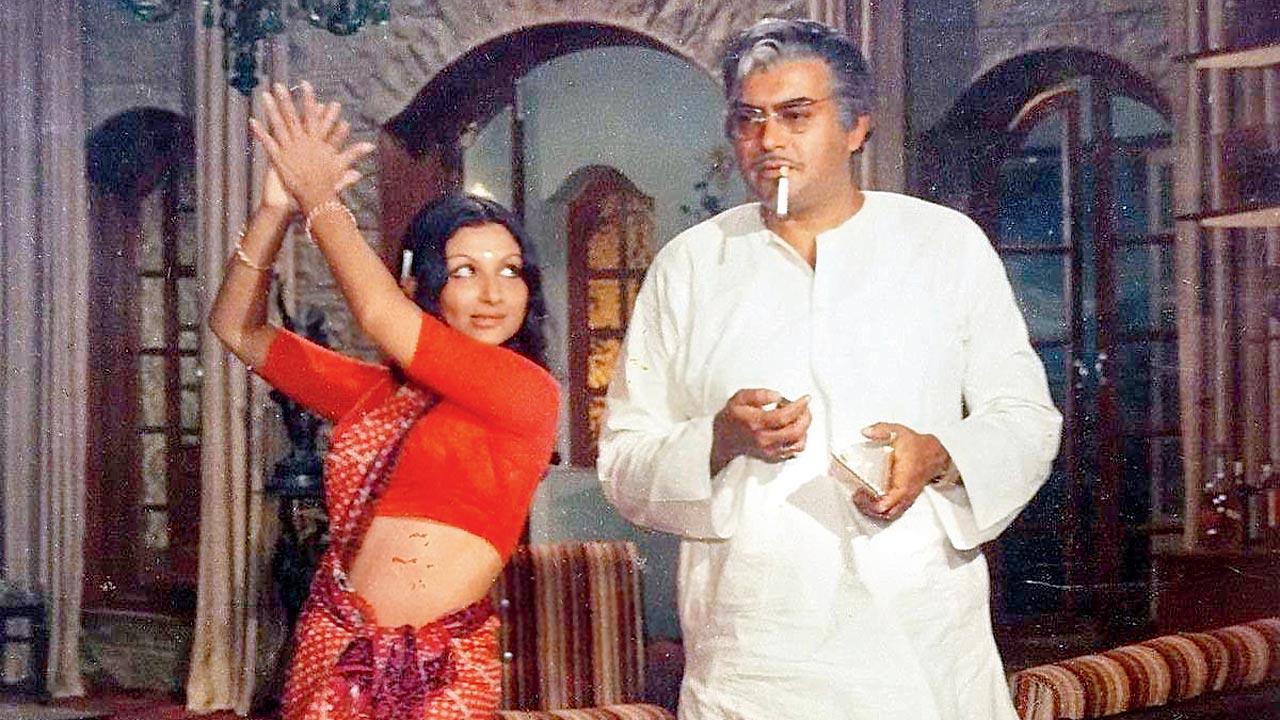
Sanjeev Kumar and Sharmila Tagore in a scene from Mausam (1975)
In a new biography on Hairbhai Jariwala aka Sanjeev Kumar, co-actor Sharmila Tagore remembers a stellar actor who drove her up the wall
MID-DAY (June 19, 2022)
I don't quite remember when I first met Haribhai. It was probably on the sets of Shandaar. He was already a big star. Our working equation began on a note of mutual respect and friendship. Shaandar was shot in 1974 in Chennai. The film industry there is extremely disciplined and strict about the language. Since Hindi is not their native tongue, they are very hesitant about changing even a single word of the dialogue that is sent from Bombay.
In one of the scenes, I had to say, “Mera dil huk uthega.” This to me sounded overly dramatic. I couldn’t identify with its sentiment. I got into a vehement argument. The director and the assistants tried to convince me that I had to say that line, but I wouldn’t listen. In those days there were no mobile phones, so they couldn’t get in touch with the dialogue writer in Bombay to suggest an alternative. Being a Bengali, I couldn’t come up with better suggestions either. This stalemate continued for a couple of hours at least.
Finally, Haribhai came up to me and whispered, “Rinku, [my nickname] do you want to stay here all night? It doesn’t matter, whatever the dialogue is, if you say it with the right emotion, I am sure you will sound convincing, and the scene will also work.”
I understood the wisdom of his words and did just that. That day I learnt an important lesson from him—that to make a scene work, one needs to cooperate. As long as you deliver your dialogue sincerely, the audience will also believe it.
Although I loved Haribhai to death, he had one very irritating habit—he just couldn’t make it to shoots on time. At one time, I was doing a double shift, Faraar in the morning and Mausam in the evening. In both the films, Haribhai was my co-star.
Those of you who have seen Mausam would know that I played a double role in the film. On my first day’s shooting as Kajri, I was extremely excited, and all keyed up. I was portraying this kind of a character for the first time and was really looking forward to the day’s shoot. I was ready with my make-up and dialogues by 2 pm, and guess at what time Haribhai came? 8 pm. I had been waiting for about six hours, and by the time we went to the set, I was exhausted and livid. I was so angry that I had a meltdown and said very nasty things to him, which had absolutely no effect on him. He remained totally calm, and that made me more angry.
Finally, Gulzar sahab, in a very conciliatory tone, said, “Can we at least take one shot?” Haribhai had no problem doing the scene. He did his part perfectly, and I, on the other hand, kept giving retakes after retakes. I don’t remember how the day ended, but again I learnt a valuable lesson—that you shouldn’t allow your temper to get in the way of your performance. We continued to work together for 14 hours a day, for Faraar in the morning and Mausam in the evening, but I refused to talk to him. I was still very angry.
Ten days went by, and I went to see Aandhi. I loved the film, and particularly Haribhai’s performance. The next day, when we were shooting for Faraar, I went and knocked on his dressing room door and told him, “You really are an awful person and very irritating but because you are such a brilliant actor I would like to shake hands and make up. Just one request, if you’re going to be late, please let me know so that I can adjust my time as well.”
He heard what I had to say calmly. If he felt anything, he didn’t show that, and of course, he didn’t apologize. But he had a twinkle in his eyes. I think our friendship became stronger from that day on. I had accepted him the way he was.
Once I visited his home. When I went to his room, I was so taken aback. It didn’t look like a ‘star’s’ room at all. Every inch of his bed, every chair was stacked with either his clothes or his papers; there was no place for me to sit. Finally, I asked, “Haribhai, where do you want me to sit? On the floor?”
So he transferred some clothes from one chair to another and made some space for me. This was his lifestyle. He was comfortable anywhere, whether in a crammed room or working with an annoyed co-star. Puffing away on his cigarette, which couldn’t have done him any good because there was a genetic cardiac problem in the family, he always managed to stay at peace with himself.
On many occasions, he came to our house. Tiger [Mansur Ali Khan Pataudi, husband] liked him very much. They would drink and chat, and sometimes Haribhai would have one too many. I remember that, on one occasion, Haribhai had to hold one hand with the other to ensure that the spoon of food actually landed inside his mouth. He loved his alcohol. But he would ring up the next day to ask if he had misbehaved in any way. And I would tell him, ‘You only wiped your hands on the curtain. But not to worry, I will send you the laundry bill.’
On another occasion, I forgot his birthday. The next day at a shoot, I apologized to him for my lapse and wished him a belated happy birthday. One of our co-stars made a snide remark, “This is a very convenient excuse.”
But Haribhai instantly checked her and spoke in my defence, ‘If Rinku says it, she means it. She doesn’t make up stories like you.’ Which still makes me smile. I knew then that he really liked me.
He was extremely devoted to his family, and his mother meant the world to him. In between shots, among other things, he would discuss his marriage plans with me. His mother was looking for a bride for him, but he didn’t agree with his mother’s choice. He wanted someone who was beautiful and dignified and would understand and appreciate his work. In that context, he mentioned a couple of co-stars, but nothing ever came of them.
Excerpted with permission from Sanjeev Kumar: The Actor We All Loved by Reeta Ramamurthy Gupta and Uday Jariwala, published by HarperCollins India
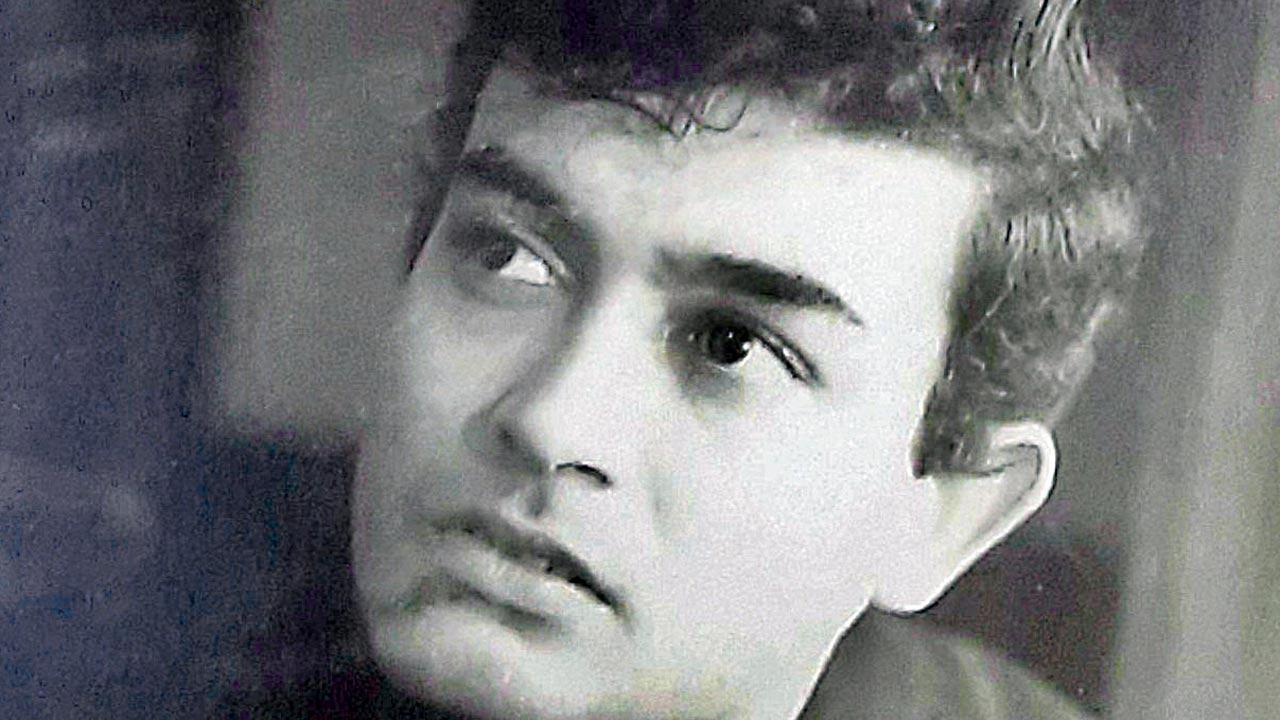
A pensive Hari. According to Paresh Rawal, he had the ideal actor’s face: plenty of space for expression and an excellent sense of proportion. PICS COURTESY/Sanjeev Kumar: The Actor We All Loved, HarperCollins India
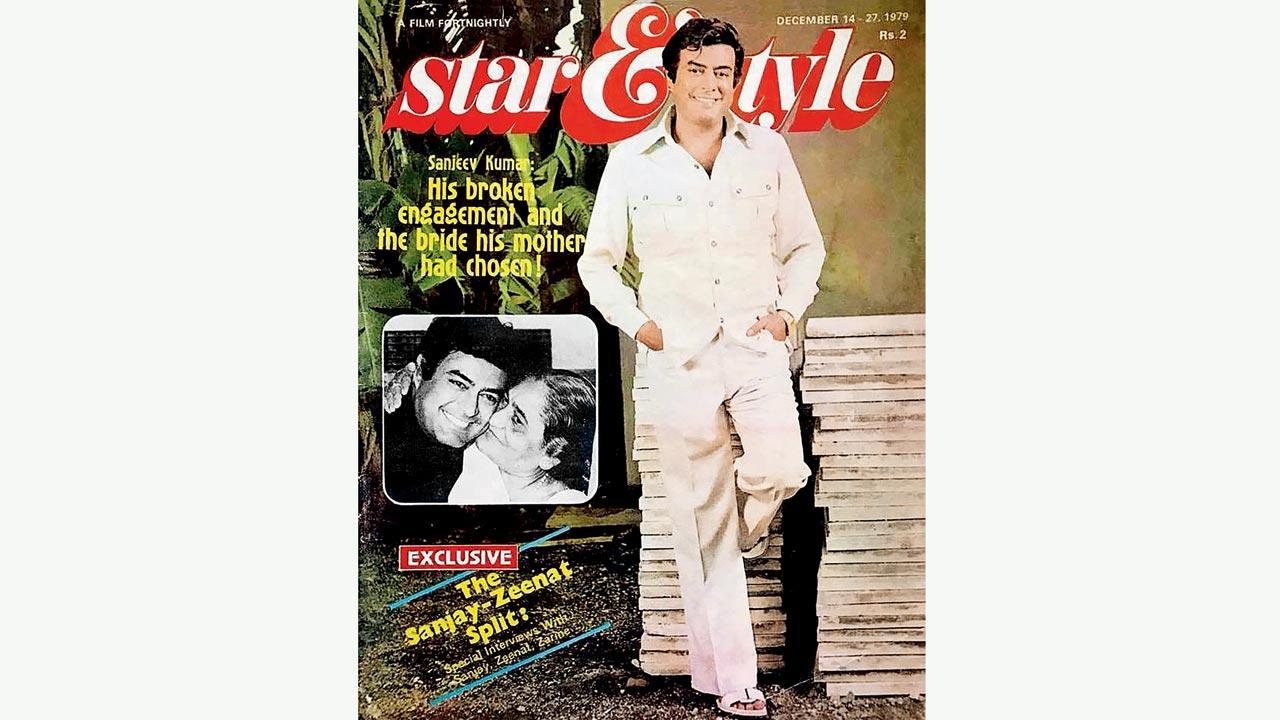
The great obsession of media, in those days, was to get Hari married. His relationships, marriage plans, Baa’s preferences, etc. were a hot selling point for the press. Courtesy/RJ Anirudh Chawla
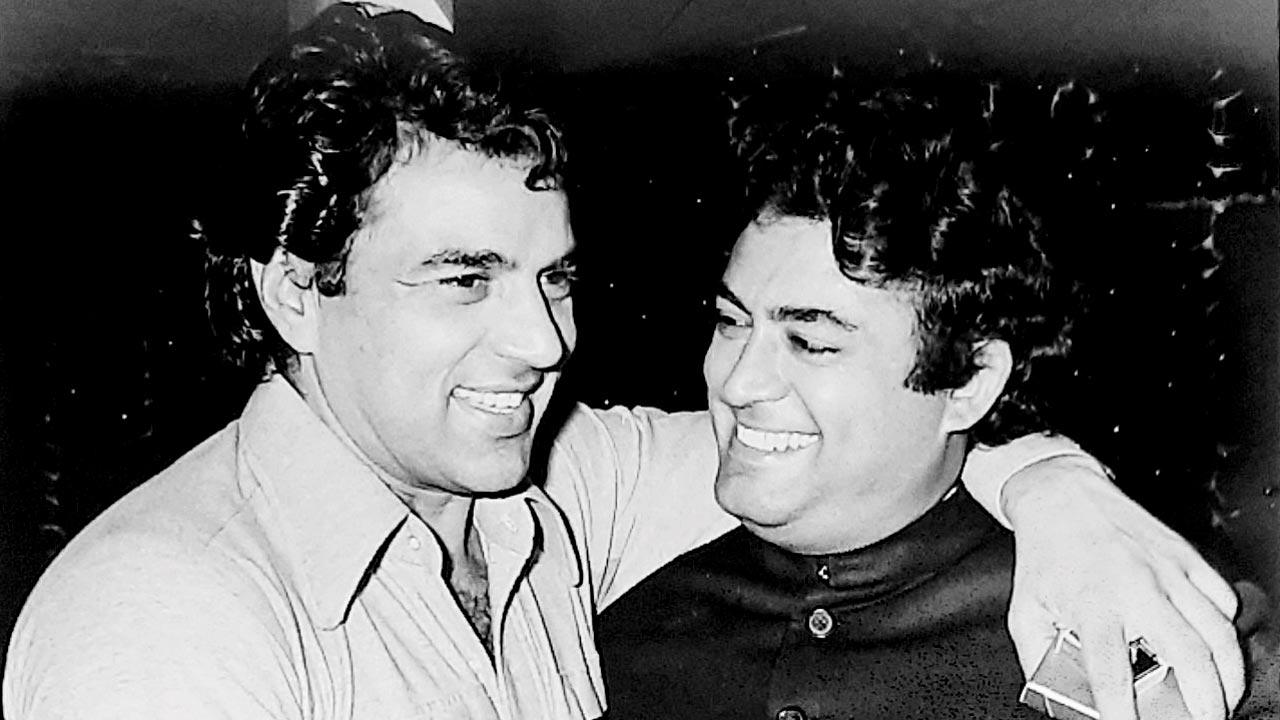
Hari seen here bonding with Dharmendra
To play a sport well, you need to be naturally gifted, and I think my gifts lie more in cinema-Saif Ali Khan
8:36 AM

Renuka Vyavahare (BOMBAY TIMES; October 17, 2021)
The late cricketer Mansur Ali Khan Pataudi instituted the Bhopal Pataudi Cup (polo) in 1966. Saif Ali Khan hosts the tournament every year in memory of his father. While he won’t be able to attend the event this year, he gets nostalgic about his family’s association with sports and how they shaped his life. Excerpts from a chat:
Your family has had a close association with sports across generations, be it in cricket or polo. You have spoken about wanting to be a cricketer as well. Did sports play an integral part in your upbringing and thinking as an individual?
Growing up, the family philosophy has always been derived from sport — fair play and sportsmanship are values we have been brought up with. My father always thought of himself as a sportsman even when he was seventy! In his last moments at the hospital, he was slouching, and my mother told him, “Don’t slouch, Tiger!”, to which he said, “Rinku, all batsmen slouch!” (laughs!)
Take us through your early memories of watching your father play cricket.
Sadly, I never saw my grandfather play polo because he died when my father was young. It’s something we have only seen photographs of or heard conversations about. It’s been all around us when we have grown up. My father stopped playing when I was four or five years old. I do remember him having a bandage on his chin. That was when Andy Roberts’ bouncer hit him on the chin, and he needed a lot of stitches. And I remember thinking that cricket is quite a violent game (laughs!).
Your father instituted the Bhopal Pataudi Cup in 1966. How would you like to take it forward?
My mother will be there. I won’t be able to go this year because I’m shooting, but I’m happy that my management is taking care of it. We will try and be there next year and every year thereon. North India is a big part of my life and my father's life. I would like to spend some time there with my family. Let’s see how we can best use our energy to make it more of an event and create more awareness for both social causes and the sport. We wish to make it more holistic.
What was it like for you as an actor to grow up in a family that’s highly accomplished in sports?
There was a fair amount of pressure to play sport, but luckily, they were such nice and wise people that they never pressured us to do any of it. Working hard and applying yourself is one thing, but to play any sport well, you need to be naturally gifted. And I think my gifts lie more in cinema.
Your family comprises of many strong women. Do you wish them to be actively involved in this sporting tradition as well?
My mother has a strong presence when it comes to polo. In addition, Soha is very good at sports. She plays badminton and has a bit of the Pataudi blood in that respect. My grandmother and a lot of the ladies in the family have been strong and independent women, so we don’t know any other kind of women in our family. We have grown up with a healthy respect and understanding of what an equal relationship is and are quite aware of the fact that nine times out of 10, a woman is more organised and smarter than a man.

Subscribe to:
Posts (Atom)