Showing posts with label Manoj Pahwa interview. Show all posts
Showing posts with label Manoj Pahwa interview. Show all posts
We’re happy, industry ne ma baap ki izzat rakh li-Manoj Pahwa & Seema Pahwa
8:06 AM
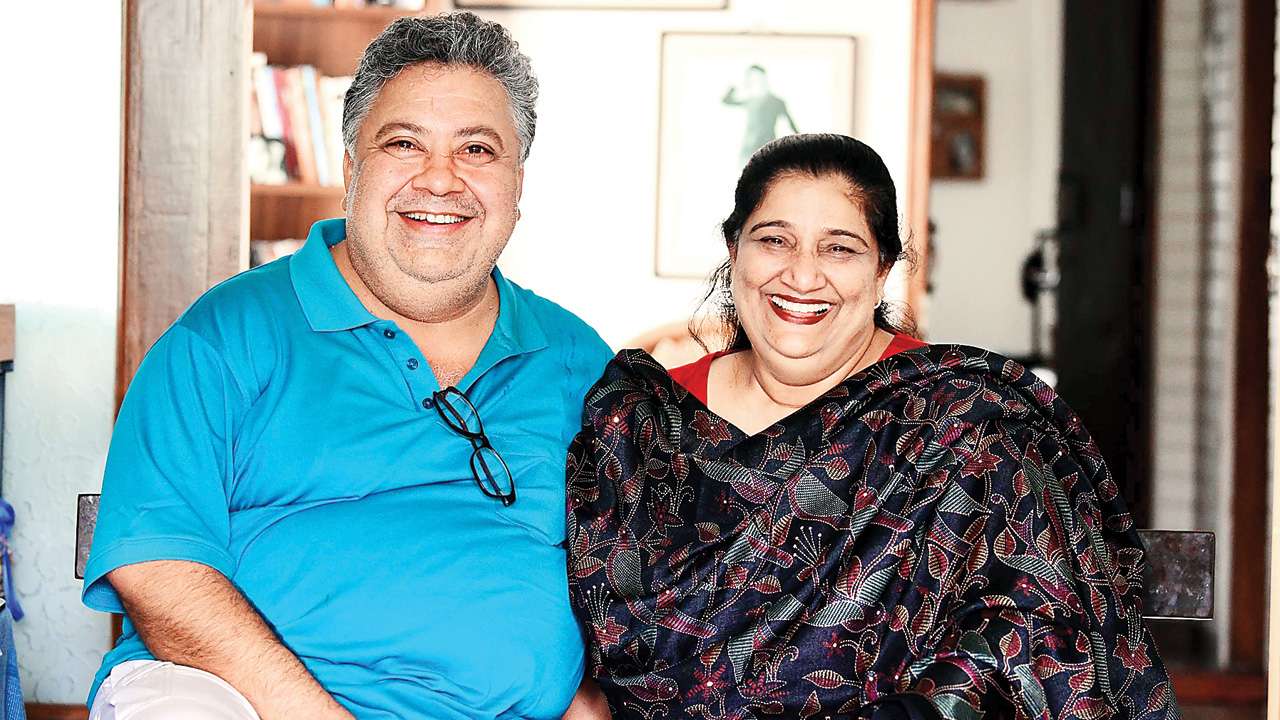
Manoj Pahwa and Seema Pahwa get candid about the appreciation they are receiving for their work
Deepali Singh (DNA; July 22, 2019)
She was a delight to watch as the mother who is obsessed with her daughter’s wedding in 2017’s Bareilly Ki Barfi as well as Shubh Mangal Saavdhan. He was talked about for the poignant portrayal of a Muslim man accused of terrorism, in last year’s Mulk and as a police officer with a dark side in Article 15. But ask Seema Pahwa and Manoj Pahwa if they were pleasantly surprised by the appreciation from the industry and they reply, almost in unison, that they would have, had they not been prepared for it. “Iski taiyyari toh bohot saalon se ho rahi thi,” says Seema with a smile.
The couple met each other in Delhi, where they were part of the same theatre group. While Seema became a household name with her role as Badki in 1985’s popular soap Hum Log, her husband was noted for playing Bhatia in 2001’s comedy show Office Office. Post marriage and two kids, the couple moved to Mumbai in 1994 to continue their work in television, films and theatre. Like Seema says, more than three decades of work has brought them to this juncture.
CONTENT IS KING
The couple attributes their recognition to the kind of films being made now. “Content has become hero now, and when the story takes precedence, then the characters become important,” believes Manoj. The result then is the casting of good actors for those roles. “Ab vaisa daur chal raha hai. In content-driven films, characters ubhar ke aate hain. That’s why films like Bareilly Ki Barfi, Shubh Mangal Saavdhan, Mulk and Article 15 are appreciated,” he states.
While it may not have been a big deal for the Pahwas, Seema is glad that her son Mayank and daughter Manukriti — both National School of Drama grads — saw the appreciation coming their parents’ way. “For years, they had been seeing us work, but nothing much was happening. We’re happy, industry ne ma-baap ki izzat rakh li!” she laughs.
ROLE REVERSAL
Manoj’s last two films saw him in serious and intense roles, while Seema’s recent movies have explored her lighter side. Ironically, such roles were exactly what they were not known for. Seema’s image as the serious Badki was so impactful that once a director turned away from her while narrating a comedy script to her husband! “But we are theatre actors and we have done so many different kinds of roles on stage. It’s just that we got typecast in films that were being made earlier,” reasons Manoj, who has usually been the one making the audience laugh.
The role reversal of sorts has been a pleasant change for them. Of late, directors are approaching them with different kinds of roles. “Now, I am being offered characters that were actually meant for him!” exclaims Seema, citing films like Ferrari Ki Sawaari and Ek Ladki Ko Dekha Toh Aisa Laga, where the roles were originally written as male characters and offered to Manoj. “As long as the money is coming to our house, it’s fine!” Manoj laughs.
SUPPORT FOR EACH OTHER
Over the years, the couple has been each other’s support through thick and thin. What about criticism? “Oh, yes, we don’t share the kind of relationship where you only have to say good things about each other. We discuss each other’s work and if need be, criticise it as well,” shares Seema. “There are some films of mine that neither my wife nor my children are interested in. That’s criticism without even saying a word! There are some that even I don’t tell them about. Bolke gaali thodi khaani hai!” Manoj guffaws.
With both their children into the performing arts too, there are often some healthy discussions over dinner. “They learn from our experience and we also get updated about what appeals to the youth of today. That check is good for us and our experience is valuable for them. God has blessed us with this combination of young artistes and senior actors,” says the doting mother.
The actress is now ready with her directorial debut, Pind Daan, which she has written as well. The cast reads like a who’s who of talent, including Naseeruddin Shah, Konkona Sen Sharma, Vinay Pathak, Supriya Pathak and Vikrant Massey among others. Is Manoj in it as well? “Of course, inko kaise jaane deti!” Seema grins, as Manoj cuts in jokingly, “Maine toh bhaagne ki poori koshish ki thi!”
HONING THEIR CRAFT
Over the years, the couple has also kept its relationship with theatre alive and can often be seen in plays by Naseeruddin Shah’s Motley theatre group. For Manoj, theatre is like a paathshaala, which keeps them refreshed and raring to go, while for Seema, it’s the instant response she gets from the audience which makes being on stage so special for her. Working with a stalwart like Naseer, too, has been a blessing for them. “Where else would we find someone who still corrects us, who can tell us even today that we’re not doing it right? There is still so much to learn and it’s a wonderful process that keeps you on your toes as an actor,” Manoj adds.
While Seema and Manoj are acting in a couple of plays in the ongoing Motleyana Festival at Prithvi Theatre, next Sunday is a Pahwa Special as all four of them are involved in story-readings. Seema will read a story by Ismat Chughtai, Manoj, one by Saadat Hasan Manto and their daughter Manukriti is reading a story written by their son Mayank. “When the brochure came out, I sent my son a picture of the same (Mayank is learning filmmaking in London) and told him he should feel proud of himself. After all, Naseer saab liked the story so much that he’s put it in the same bracket as Ismat and Manto,” says the beaming father.
The Pahwas certainly seem to be enjoying their share of success. And rightly so!
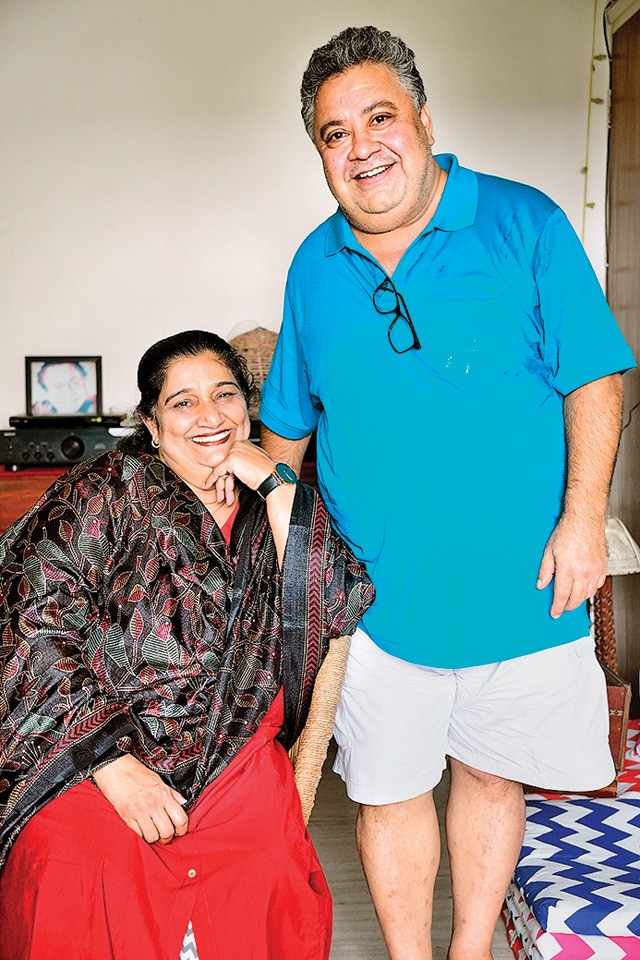
People have typecast me as a fat, happy go lucky actor-Manoj Pahwa
7:54 AM

Reza Noorani (BOMBAY TIMES; May 17, 2018)
From acting in iconic television shows like Hum Log to being relegated as the portly happy-go-lucky guy in films, Manoj Pahwa has seen it all. Despite being typecast as the ‘father of the bride’ or the ‘jolly boss’ in Bollywood, he has made the most of the roles offered to him. The actor will now be seen playing a pivotal character in the upcoming family comedy, Khajoor Pe Atke, written and directed by Harsh Chhaya. Manoj talks to BT about the middle-class mentality of his character in the film, the reason why he has been stereotyped and the experience of acting alongside his wife, Seema Pahwa, on the big screen for the first time.
What were your concerns while working with a debutant director in Khajoor Pe Atke?
I have known Harsh both professionally and as a friend for many years. When he told me that he is making a film, the first thing that I wanted to do was listen to the script. The reason I did the film was because it is written so well, but I did not know how Harsh would turn out as a director. There’s always an apprehension when an actor wants to be a director, because one has not seen him work in that capacity. Also, when an actor turns into a filmmaker, the ‘actor’ side of his personality is more dominant than the ‘filmmaker’ side and that can become a problem. Thankfully, we never had that issue.
You play the eldest brother in a dysfunctional middle-class family and your character is emotional and hyper. Do you relate to the character?
Khajoor Pe Atke revolves around a typical middle-class family. Just like in the film, I am the eldest in my family, too. The thing with elder siblings is that we become mature ahead of our time. Parents keep telling the older child, ‘You are the eldest. If you act childish, what will the younger siblings do?’ But parents forget that the eldest is also a kid at the end of the day. He is coaxed into feeling so grown-up that he actually grows up. He learns to dole out unnecessary advice. I have been the elder kid in real life, so I did not have a problem identifying with my character. We have all seen such people, mostly at weddings, where there is always that one guy who feels upset because the family did not ‘formally’ ask him to eat!
In the past, you have done some memorable work on TV in the ‘80s serial Hum Log and later, Office Office. Do you plan to return to the small screen?
Quality has overtaken quantity on Indian television. The reason is that one has to make 25 episodes in a month. If the ratings are good, then you have to keep churning out new material. Be it writers, directors or actors, you cannot bring in so much fresh material in such less time, which is why the quality suffers. Also, the working conditions on TV are odd. CINTAA (Cine & TV Artists Association) has now made a rule of 12-hour work days, but even then, actors end up working for 14 to 15 hours. The content, too, is the same — saas-bahu and naagin shows. That’s why, after Office Office, I did not feel like working on television. I have done TV for 15 years and back then, the subjects were good and the shows were aired once every week. If you had one weekly show where you played the main character, you could work for 10 days in a month and truly give it your best. I can’t do a hectic 25-days-a-month schedule.
Do you think that you’ve been typecast as a jolly character in most of your films?
Yes, people have typecast me as a fat, happy-go-lucky actor. But I also understand the way things work from the perspective of a producer or a director. If a filmmaker wants a funny character in an out-and-out commercial film, he will not experiment and cast an actor like Nawazuddin Siddiqui. He will cast an actor like me. I understand that. So, when I get the same type of roles — the father of the bride or the hero or a jolly boss — as an actor, I can at least approach it differently. I know that from the seven billion people on earth, there may be a few thousands who resemble me physically. But still, no two people are the same. So, I try to think and act in a certain manner that befits the character. My aim is to play a character that allows me to break my image and step out of my comfort zone, but there are not as many opportunities. Also, you have to survive in an expensive city like Mumbai. So, an actor can’t say, ‘Now that I have played the role of a cop, I will refuse similar roles’. From the seven films offered to me, I can select the two that I love and give it my all.
Though you have worked with your wife Seema Pahwa on TV and in theatre, this is the first time you are working together in a film. How was the experience?
We have travelled the length of the country while working together in plays. We used to travel in trains because there was no money in theatre. Jo dosti gareebi mein hoti hai na, woh lambi chalti hai. Humney toh shaadi bhi karli (laughs!) Our association goes back a long way. We didn’t get to work in films together because when we shifted to Mumbai, she was not offered any good roles. The reason was that she was already known as Badki in Hum Log and she had such a strong image of the character, that people typecast her. After 17 to 18 years, when she worked in Aankhon Dekhi (2013) and Ferrari Ki Sawaari (2012), that image finally shattered. People got to know that Badki was still alive. After that, she did award-winning films like Shubh Mangal Saavdhan (2017) and Bareilly Ki Barfi (2017). While casting for my character’s wife in Khajoor Pe Atke, Harsh thought that she’d be a natural in the role. Performing with her didn’t feel like a new thing because we have acted together for so many years.
Naseeruddin Shah says film actors are the laziest lot around-Manoj Pahwa
1:58 PM

Hum Log's Badki and House Full's Banta Singh rope in their theatre-possessed kids to pay a tribute to Bhisham Sahni. Chandrima Pal crashes breakfast at the Pahwas to eat-sleep-talk theatre
Chandrima Pal (MID-DAY; August 9, 2015)
It was during one of the shows for critically acclaimed play Mahabhoj based on Mannu Bhandari’s Hindi novel. There were 11 members in the cast, and only seven in the audience. One of the actors cracked a joke about how their fate was worse than that of prostitutes, with more service providers in their midst than clients.
Television and cinema’s favourite character actor, Manoj Pahwa’s deadpan delivery of this rather mature and brutally honest anecdote has his wife clicking her tongue in good-natured disapproval. Their kids in the room — daughter Manukriti and son Mayank — are having a laugh at what is evidently one of the family’s in-jokes. “That’s theatre for you,” says Manukriti, who has for the last one year been giving shape to the Pahwa family theatre group, Kopal. “Because there is no money in what we do, it helps us stay grounded.”
We are in the green-thumbed Versova residence of the family of actors and writers — Seema, a television and theatre veteran who earned her stripes with Delhi’s Sambhav Theatre, later, the seminal Hum Log mega TV series and more recently, Rajat Kapoor’s well-received Ankhon Dekhi; her husband Manoj and their children — grabbing a few precious minutes from their grand rehearsal the day before Bhishmotsav. It’s a tribute to late writer and playwright Bhisham Sahni on his birth centenary that falls on August 8. The production features a stage adaptation of his stories and snatches from his life, with veterans Naseeruddin and Ratna Pathak Shah, Yashpal Sharma and Heeba Shah taking stage, besides the Pahwas, who will perform solo acts.
“I have been an actor for 45 years, but this is the first time I have mustered the courage to direct,” says Seema. The legendary author has been an important part of her education. “In Bombay and the rest of the country, most people aren’t aware of his works, other than Tamas, perhaps. Bhisham’s elder brother and actor Balraj Sahni was always better known. Delhi, where I was born and raised, has some idea of his work. It is unfortunate that a stalwart of Hindi literature is almost forgotten,” says Seema, who speaks of her wish to pique audience curiosity about Sahni’s rich and unexplored body of work. Maybe, she says, after watching Oob, Dholak, Yaadein and Samadhi Bhai Ramsingh, people will be drawn to his repertoire. “The works are as relevant today as they were when he wrote them. The human condition has not changed. Emotions, experiences haven’t either. Perhaps technology has brought in some change.”
The production sees each member of the family take up different roles: Seema as director, Manoj, as financer/producer, Mayank, as creative force and Manukriti as the livewire captain of the ship.
“There are no arguments, but disagreements, yes,” say the siblings, insisting that the dining table is sacred space, where their intense work as actor, director, producer and writer is easily forgotten and differences amicably resolved.
This production is ambitious, admits Seema, who created a stir last year with her take on Sahni’s Saag Meat, a satire on the middle-class. She chose to discuss meat for the privileged vs humble palak for the poor by cooking the dish live on stage everywhere she performed. “With actors like Naseeruddin and Ratna, and picking just five from a vast treasure of stories and plays, staging this was a task in itself,” she says. This is also a test case for Kopal, which intends to get on the road with this production before branching out into documentary filmmaking.
“The idea of Kopal was seeded by my mother once we were back from graduating in dramatics from Baroda,” says Manukriti. Adds her father, “Instead of trying to look for work outside, we thought why not do our own thing?” The arrangement seems to be working fine so far. “Seema is the director, both, at home and on stage,” laughs Manoj. The kids say they are simply driven by the passion for theatre.
“It is an experiment,” says Manoj. “The kids have just graduated and may pursue a Masters in Dramatics. But there can be no better training than a practical one. We consider this the best education we can give our children.” The siblings nod in agreement, getting wide eyed at the mention of the stalwarts who they are observing up close, and simply “listening” to them “express” as opposed to “perform.”
While Seema has been an old hand on stage, Manoj says Naseeruddin Shah nudged him towards theatre. “We were at a party for Being Cyrus (Homi Adajania’s film where they shared screen space). And I was telling him how, despite having made money as a TV and film actor, I was not having fun. He said, ‘get into theatre.’”
Manoj took his advice seriously. “Naseer says film actors are the laziest lot around. Classical musicians start their day with riyaaz. For actors, who take their craft seriously, theatre is the only way to practice their craft.”
The chat winds up with the family huddling at the low dining table one last time before leaving for Dadar, where they begin their mammoth nine-hour drill. Manoj has clearly not shaved in days; Seema smiles nervously while the kids look eager, raring to go. “For the first time in my life, I get to take the final call,” says Seema. “I just hope I am able to do justice to both, the actors and the stories.”

Subscribe to:
Posts (Atom)