Showing posts with label Manmohan Desai. Show all posts
Showing posts with label Manmohan Desai. Show all posts
If marrying Javed Akhtar would make me Shabana Azmi, I would marry him-Vidya Balan
8:16 AM

Neha Maheshwri (BOMBAY TIMES; October 22, 2024)
The masterclass with veteran actress Shabana Azmi moderated by Vidya Balan, at the MAMI Mumbai Film Festival 2024, left the audience inspired. The two acclaimed actresses shared their journeys, offering insightful perspectives on the craft of acting, the evolving landscape of Indian cinema, and the key to staying relevant.
‘Theatre isn’t my first medium, I find it incredibly challenging’
During their conversation about the diverse mediums in today’s entertainment landscape, Vidya asked Shabana about her love for theatre, given her unforgettable performances in plays like Tumhari Amrita and Broken Images.
“I still see myself as a film actor,” Shabana responded, elaborating, “I’m trained in cinema and understand the medium much better. However, I believe the ideal situation for an actor is to work in both mediums.”
Shabana said, “While theatre isn’t my first medium, I find it incredibly challenging. The thrill of performing live on stage is unmatched. However, I wouldn’t say it’s the most satisfying because a film performance lasts forever, whereas theatre is ephemeral.”
Vidya added, “I’ve been offered a few plays, but I haven’t had the courage to say yes. The idea of performing in front of a live audience is extremely intimidating.”
‘Hindi cinema used to operate in an alternative reality’
Vidya brought up the fact that Shabana has starred in a diverse range of films, from arthouse cinema to mainstream escapist hits. When asked about the contrasting impact and reception of her vast body of work, she replied, “I just have a ball. I surrender myself to the director. For example, if I were to ask someone like Manmohan Desai, ‘What does this mean?’ He’d reply, ‘Iska kuchh matlab nahi hai. Main bol raha hoon yeh hai iska matlab. Yeh Satyajit Ray ki picture nahi hai’(laughs!). And you are happy to surrender to someone who directs with such conviction.”
‘The lack of attention to detail in mainstream cinema drove me crazy’
Elaborating on her experience of working in mainstream and offbeat cinema, she said, “It’s actually easier for actors to perform in arthouse cinema because it is realistic. Hindi cinema used to operate in an alternative reality; it didn’t matter if you were playing a policeman or a businessman – their homes looked no different from one another. The lack of attention to detail drove me crazy. It was left to art films to capture those finer nuances. I feel there was a design behind it though – Hindi cinema aimed to cater to the lowest common denominator and wanted to be all India. This focus on mass appeal made it more challenging to create credibility in such a stereotypical world.”
‘I lament the loss of songs & lip-syncing in our films’
Shabana expressed her disappointment over the decline of lip-synced songs in Hindi cinema, saying, “I lament the loss of songs being sung in sync because, in Hindi films, we tell our stories through songs. These songs were like little philosophies that captured life’s moments. We had a song for every situation, creating a nostalgic connection. However, in the effort to be modern, we’re replacing the song with something no one is paying attention to.”
Vidya agreed, adding, “I absolutely miss lip-syncing to songs; they have now been relegated to the background. I also feel that the urge to be universal is robbing the Hindi film industry of its unique essence.”
‘Actors who start playing meaningful roles have a longer career span’
When asked how she has managed to stay relevant over the decades, Shabana shared, “I’ve never been someone to rest on past achievements because I constantly seek new challenges. So, staying relevant is important to me. Even after 50 years, I am still learning. I adapt to changes, like working with green screens (chroma) where I react to nothing.”
On the topic of ageing and the kind of roles that women get offered, Shabana concluded, “Ageing has never been a problem for me, I embrace it as a natural part of life. I don’t try to look younger than I am because there’s nothing more beautiful than ageing gracefully. Even in my 30s, I wasn’t doing only naachne-gaane ke roles; I was playing substantial characters. Actors who start playing meaningful roles have a longer career span. There’s always more space for characters than just leading men and women.”
‘My entire family supported my decision to do Fire’
When I was working with women living in slums, I was concerned that if I accepted the role (in Fire), it could be used against me, making it difficult for those women to continue working with me. Zoya (Akhtar), who was only 18 then, asked, ‘If you like the script, what’s the big deal?’ Farhan, even younger, liked the script but was concerned about the ending — my character was meant to die in the fire. He argued it would suggest the character did something wrong, insisting she needed to survive. I shared his feedback with Deepa (Mehta). Ultimately, my entire family supported my decision
---------------------------------------------------
If marrying Javed Akhtar would make me Shabana Azmi, I would marry him – Vidya Balan
---------------------------------------------------
I really enjoyed working on Rocky Aur Rani Kii Prem Kahaani. In the very first scene, I had my hair down on one side, wearing a silk sari while cooking macchi curry. I asked Karan (Johar), ‘Which Bengali woman cooks in a silk sari with her hair open?’ He said, ‘In a Karan Johar film, she does, just go with it’. I’m glad I trusted his vision because it turned out beautifully – Shabana Azmi
You name the director, and I think I have worked with them all, and I feel grateful for that-Varun Dhawan
8:34 AM

Onkar Kulkarni (BOMBAY TIMES; January 1, 2024)
Varun Dhawan is all excited to step into 2024. The actor whose film Bawaal released on an OTT platform in 2023, says that he is looking forward to being back in the theatres this year. In a chat with us, he talks about his many firsts in the year to come and the goals he has set for himself. Excerpts:
In 2023, you started working on a quintessential massy actioner (VD 18), a genre which is the flavour of the season, along with your first web series (Citadel). Were both the experiences drastically different?
Shooting for VD 18 has been very exhausting because there’s a lot of action, which I have never done on this scale before. Yes, this film will introduce me in a different light, so I am excited and scared at the same time. I have grown up watching these kinds of films. My favourite action entertainers have been Hum and the many Manmohan Desai films, which also boasted of family values. I have loved watching Salman Khan and Ajay Devgn actioners. With this genre, true human emotions reflect through your characters and maybe that strikes a chord with the audience. About the web series, it was really interesting to work in this format, which is longer, and I feel that way, you get so much more time to set the world and establish your character.
Shooting for VD 18 has been very exhausting because there’s a lot of action, which I have never done on this scale before. Yes, this film will introduce me in a different light, so I am excited and scared at the same time. I have grown up watching these kinds of films. My favourite action entertainers have been Hum and the many Manmohan Desai films, which also boasted of family values. I have loved watching Salman Khan and Ajay Devgn actioners. With this genre, true human emotions reflect through your characters and maybe that strikes a chord with the audience. About the web series, it was really interesting to work in this format, which is longer, and I feel that way, you get so much more time to set the world and establish your character.
While a lot is in store for you this year, you didn’t have a theatrical release last year. How would you describe the year gone by?
2023 was more of a working year for me. I wanted to concentrate on making films. The idea was to not let go of the craft and try to get better at it. I was shooting non-stop and it was a lot of work. Everything that I shot for will release in 2024. Sometimes, when you are trying to push the scale of your film, it is not easy. I had to try and do it differently. I have not had the biggest films mounted with me in them, and now I want to try to make my movies look bigger to get people more excited and get them to the theatres. When you make big films, it takes longer! But overall, I didn’t have a release in theatres last year. I am excited about returning with a film in theatres in 2024.
2023 was more of a working year for me. I wanted to concentrate on making films. The idea was to not let go of the craft and try to get better at it. I was shooting non-stop and it was a lot of work. Everything that I shot for will release in 2024. Sometimes, when you are trying to push the scale of your film, it is not easy. I had to try and do it differently. I have not had the biggest films mounted with me in them, and now I want to try to make my movies look bigger to get people more excited and get them to the theatres. When you make big films, it takes longer! But overall, I didn’t have a release in theatres last year. I am excited about returning with a film in theatres in 2024.
Your OTT film Bawaal created some amount of bawaal after its release. Will that experience discourage you from experimenting with films and subjects, something that you like to do from time to time?
I have never been scared of taking risks. Imagine, I have played a wolf in a film! This (such experiments) keeps you alive as an actor. But I missed doing mass genre for a long time, so that is what I have returned to at the moment. So, is 2024 a year of experiments? Not really! It is just a year of action for me. Bawaal was a very special experience. I loved shooting for it and putting it out. We got a lot of love on OTT, which is great. I would love to do one more film with Nitesh Tiwari (director of the film). He’s an amazing filmmaker. I also feel that the audience resonates more with my funny side, so I plan to do two comedy films soon.
You have spent more than a decade in Bollywood, and have done a range of roles – from out and out commercial films to experimental ones. Do you feel a lot of your potential is still untapped?
I think everyone feels that, but I am not the kind of person to cry foul. I believe that you have to be very happy with what happens in life and create your own opportunities. I think that’s what being an actor is all about. There are many opportunities for all actors. So, underutilized? No, I think I have had the opportunity to work with such great filmmakers. I have worked with Shoojit Sircar, Nitesh Tiwari, Sriram Raghavan, David Dhawan, Karan Johar… you name the director, and I think I have worked with them all, and I feel grateful for that.
I think everyone feels that, but I am not the kind of person to cry foul. I believe that you have to be very happy with what happens in life and create your own opportunities. I think that’s what being an actor is all about. There are many opportunities for all actors. So, underutilized? No, I think I have had the opportunity to work with such great filmmakers. I have worked with Shoojit Sircar, Nitesh Tiwari, Sriram Raghavan, David Dhawan, Karan Johar… you name the director, and I think I have worked with them all, and I feel grateful for that.
There is a vacuum created by Hindi cinema with exceptions of filmmakers like Rohit Shetty-Vivek Oberoi
8:25 AM
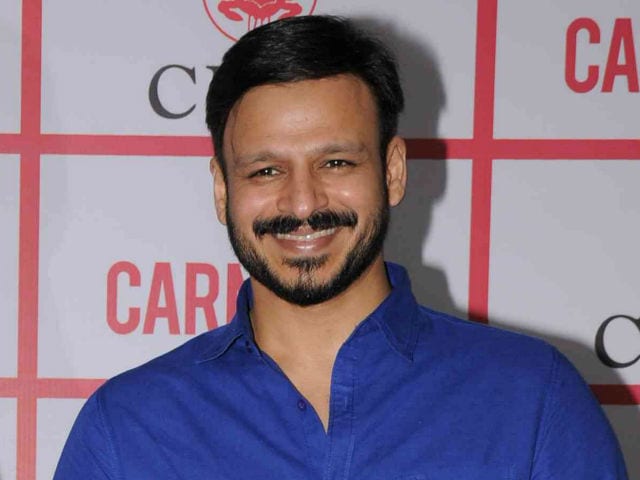
Rachana Dubey (BOMBAY TIMES; April 5, 2022)
While Vivek Oberoi has done a variety of films in his career in the Hindi film industry, he has occasionally picked up projects from the South, too, to push his boundaries. While Rakta Charitra (2010) marked his debut in Telugu cinema, more recently, he has been seen in films like Vivegam (Tamil), Lucifer (Malayalam) and Rustum (Kannada). His next outing is the Malayalam actioner Kaduva, which is set in the 1990s and will see him locking horns with Prithviraj Sukumaran.
“As an actor, it’s important for me to understand the milieu in which the film is set,” he says, adding, “Irrespective of whether it’s an out-and-out commercial film or a content-driven project, I create a backstory for my character and understand the motives which drive his actions. Whether I play the good guy or the bad guy, I approach every role with the same level of sincerity and aim to make it as genuine as possible.”
Elaborating about working in the south film industry, Vivek who has shared screen space with renowned actors like Ajith and Ram Charan, shares, “It takes a very different approach, especially Malayalam cinema. Clubbing them under one bracket is not has its own identity, peculiarities and specialities. What I like about Malayalam cinema is their innovation in storytelling and the intricacy with which they write their screenplays. Malayalam cinema never had enough money to make big scale films. The size of their content has grown considerably. Lucifer was big budget-wise and so is Kaduva.”
Vivek says, “Even with big budgets, it’s now part of their DNA to work with detailed storytelling and engage people, sometimes even without a visual spectacle.”
Talking about Tamil and Telugu cinema, the actor adds, “Tamil and Telugu cinema have been bigger in terms of financial play and in recent times, their films are engaging audiences all over the country, and registering great box office collections. There is a vacuum created by Hindi cinema with exceptions of filmmakers like Rohit Shetty. We have stopped the Manmohan Desai and Prakash Mehra entertainers and veered towards more urban stories. We went into the zone of calling family entertainers, formula films, something that all of India responds to. While it has its benefits, it leaves behind the ability to entertain an all-India audience. South Indian filmmakers are fulfilling that in great style — they’re able to do it with newness, visual appeal and storytelling. Initially, our films would be remade in the south and it is a kind of a role reversal now. We are constantly remaking films from their narratives. There is a connect on a story level with their content. The south film industry takes a very different approach, which is incredible.”
“The reason I love working in the South Indian film industries is because I have built wonderful relationships across industries. Working there is like working with friends. They have innovative ideas and there is a strong potential to bring them to the Hindi speaking audience. The other thing is the commercial success, which the south has been able to provide well,” he signs off.
I’m the one who brought John Abraham to this world of masala heroism-Milap Zaveri
7:49 AM

Renuka Vyavahare (BOMBAY TIMES; November 23, 2021)
Writer-director Milap Milan Zaveri talks about the longevity of masala potboilers in an age of critic-friendly OTT platforms, creative conflict with John Abraham, why ’70s cinema influences him a lot and his upcoming film Satyameva Jayate 2. Excerpts:
John Abraham plays a triple role in Satyameva Jayate 2. It’s clearly an ambitious project for you. One sees the return of ’70s melodrama in it with lines like ‘Chappan inch ka jigra’, isn’t it?
Satyameva Jayate 2 is a film that wages war against corruption. It’s my tribute to filmmakers Manmohan Desai ji, Prakash Mehra, Subhash Ghai, Rakesh Roshan and Mukul Anand. It’s a tribute to these directors, the films they made and that era when cinema was larger than life and heroes had all the good qualities. They preached harmony, secularism, fought evil and corruption and protected women. They did it all while entertaining you. They sang, danced, cracked jokes and beat up the bad guys. That is the kind of cinema that I grew up on. I would go to Gaiety-Galaxy (chain of single-screen theatres) with whatever little pocket money I had and I would watch these films. Look at Rohit Shetty’s films today, for that matter. I don’t make films on a scale as big as his, but he inspires me to offer over the top entertainment. Someone might say, how can anyone rip a tyre apart? But a common man has an alter ego. He wants to display that kind of strength. They want to see a kind of heroism that gives them an adrenalin rush. I want them to feel for that moment that hum bhi hero ban sakte hai.
Did John’s sensibility match yours, or did you have to convince him to play along?
I had to convince him. John has a physique that looks like he can lift a bike. It looks believable. He asked me, ‘Milap, how can I tear a tyre or lift a bike?’ In Force, he picked a bike, I told him this time, you lift the bike with the rider (laughs!). I remember this was trolled a lot on Twitter.
John asked me, “Milap, are you sure!” He has often said that I am his cheat day. He generally follows a healthy diet otherwise, in terms of his film choices, and then there’s me. He gets to indulge in some masala entertainment with me. By nature, he leans towards something like a Parmanu: The Story Of Pokhran, Batla House or Madras Cafe. I am the one who has brought him to this world of masala heroism. Nikkhil (Advani) often teases me by saying, “Yaar, thode kam punch line likh.”
Theatres have reopened, and things have started to look up for the film industry. How do you weigh the two scenarios — comfort of OTT at home versus the movie-going experience?
Cinemas are ten thousand times more comfortable than sitting at home. This whole notion of how cinemas are over, and OTT is the way ahead, is absolute gibberish. The day a big film like Sooryavanshi was released, you couldn’t stop people from going to the cinemas. We saw that happening. Even Eternals! The box office was on fire that weekend. People want to see big-budget action extravaganzas and commercial films on the big screen. You cannot enjoy those on TV without a crowd whistling and cheering around you. Cinemas are back in a huge way; I would say bigger than before. It took a Rohit Shetty who waited for two years to give us the courage to hold on to our films, too. People are bound to come in big numbers as they want to get out. Everyone was in their homes for almost two years! OTT can never replace the big screen. Aap chaahe jitna bhi ghar ka khaana khaalo, aap restaurant jaoge.
So, would you say that co-existing is the way ahead?
I agree. Both offer unique experiences. They said radio will kill cinemas, TV will kill cinemas, VCR will kill cinemas, and now, OTT will kill cinemas, but no one has to die for the other to survive. Everyone can live and co-exist. I feel going forward, content that is critic-friendly may find its way into the OTT more. They will be appreciated more on that platform. Big budget extravaganzas will need the big screens. Look at the south market. They have never lost sight of the mass audience. Commercial entertainment rules there, so heroes are revered. The escapism that these films offer will never be obsolete. You want to get away from your day-to-day problems. Of course, I want to see realistic, gritty content as well, but I want some guilty pleasure, too. I want to be taken over by masala entertainment with its claps, whistle inducing dialoguebaazi and action.

Manoj Kumar's films have become textbooks for aspiring actors and filmmakers for his innovations-Prem Chopra
8:40 AM

Roshmila Bhattacharya (MUMBAI MIRROR; July 23, 2020)
August 15, 1947, is a red-letter day for us as it marks the birth of independent India. Almost a decade earlier, on July 24, 1937, another Bharat was born, in Abbottabad, a small town in the North-Western Frontier Province, then, a part of this country, now in neighbouring Pakistan. The boy who entered the world with a lusty cry was christened Harikrishna Goswami by his aunt, the name chosen because it carried a little of both parents, Harbans Lal and Krishna Kumari. Today, however, it’s Manoj Kumar rather than Harikrishna Goswami that rings a bell. In fact, thanks to his blockbuster patriotic dramas, the actor-writer-filmmaker has come to be known as Mr Bharat.
Prem Chopra, who worked with him in 13 films, including Shaheed, Upkar, Purab Aur Pachhim and Kranti, remembers Manoj Kumar saab as an all-rounder, who not only played the hero to perfection but also wrote, produced and directed his own films. “He could even operate the camera and edit, with the result that his films have become textbooks for aspiring actors and filmmakers for the innovations he introduced, like one-scene-one-shot at a time when there were no visual effects, and technical gimmickry was limited to trolley and zoom shots. Over the years, he’s become an institution in himself,” he asserts.
While Manoj Kumar saab officially made his debut as a director with Upkar, Prem Chopra saab reveals that even though S Ram Sharma is credited as the director of Shaheed, it was their Bhagat Singh who was taking all the calls, including insisting that none of the ‘prisoners’ could shave. “So, all through the making of the film, 75 per cent of which was filmed at the Ludhiana Central Jail, I sported a beard,” narrates the actor, who played Sukhdev in the desh bhakti film and admits he actually felt like one of the nationalists when marching towards the gallows.
The film premiered in 1965 and Prem Chopra saab remembers that the then Prime Minister Lal Bahadur Shastri, who was the special guest, had warned that he wouldn’t stay longer than 10 minutes. “But he was so mesmerised and moved, he sat right through the film, without even an interval break. Upkar was made on his slogan ‘Jai Jawan, Jai Kisan,’” recounts the actor who played Manoj Kumar saab’s younger brother, Puran, a role with grey shades, which, after the success of the film, brought along a flood of offers. As a result, he could finally give up his job in the circulation department of The Times Of India and become a full-time actor. More than half a century later, he’s still going strong.
Shatrughan Sinha, who played a fiery freedom fighter, Kareem Khan, in another of Manoj Kumar saab’s patriotic drama, Kranti, agrees with Prem Chopra saab that he is a “genius” and not just as an actor, producer, writer and director, he also has a terrific ear for music. “He is a complete artiste, and as a person, always serene. I have never heard him raise his voice at anyone on the set, not even on me even though I was notorious for coming late,” Shatru ji reminisces with a laugh.
Irrespective of when he arrived, Manoj saab would smile amicably at his Bihari Babu and tell him to let him know when he was ready to shoot before going back to his corner to work on his lines and those of others too. Instantly, you are reminded of Shatru ji’s evergreen dialogue from the film, “Apni laashon se hum tarikh ko aabad rakhen, woh ladaai ho ki angrez jise yaad rakhe” that still resonates.
So does Prem Chopra saab’s equally popular line, “Shambhu ka dimaag do dhaari talwar hai.” The actor remembers that back then filmmaking was a group activity and the whole team would sit together to discuss and design. “A character like Shambhu Singh was conceived by Manoj saab, but he gave me complete creative liberty to flesh him out,” he recounts.
Shatru ji remembers the actor-filmmaker, who turns 83 on Friday, approaching him for the role of Kareem Khan and telling him that it wasn’t much in terms of footage, but promising that it would make an impact. And sure enough, he reveals, when late producer-director Manmohan Desai saw Kranti, he called Shatru ji to tell him that he was the best. “It taught me a lesson I will remember all my life, that it’s not the length of the role, but the strength of the role that matters,” he signs off with his signature flourish.

Shaheed team with the then PM; Prem Chopra & Manoj Kumar in Upkar; Shatrughan Sinha in Kranti
I watched Amitabh Bachchan give 14 perfect takes of that famous drunken scene-Shabana Azmi
7:58 AM

Roshmila Bhattacharya (MUMBAI MIRROR; May 30, 2020)
 He was one of the wizards of Wonderland who made me believe in miracles. I grew up convinced that Sai Baba could restore eyesight, that blood transfusions from three different donors simultaneously could save a life and that Anthony Gonsalves lived in Roop Nagar, Prem Galli, Kholi No 420. If you haven’t yet guessed that I’m speaking about Manmohan Desai’s now-iconic 1977 action-comedy, Amar Akbar Anthony, then, excuse me please, you are not a Bollywood buff.
Forty-three years later, when I asked Shabana Azmi, who’d played one-time crook Lakshmi who wins the heart of cop Amar, about the film, she revealed that she had almost completed Parvarish and they had a blast. One day, Manmohan Desai came to Ranjit Studio, where she was shooting. He told her in his usual candid manner, “Shabbo, I’m producing a film, usmein there is no khaas role for you, magar woh Vinod Khanna meri jaan kha jayega ki ‘why is there no heroine opposite me when both Amitabh and Rishi have’. Toh you please do the film for me!” The National Award-winning actress almost fell down laughing and said “yes” immediately.
Shabana goes on to inform that Neetu Singh, Vinod, Amitabh Bachchan and she were simultaneously shooting Parvarish and Amar Akbar Anthony on two different floors of the R K Studio. “MD and AB would flit from one floor to the other! In fact, I watched AB give 14 perfect takes of that famous drunken scene where he puts bandage on his reflection in the mirror. He got it right each time, but it was difficult for the camera because it was complicated. AB didn’t express his frustration even once. Then, both of them hopped over to the next floor to the Parvarish set, where the climax was being filmed. If you narrate this to a Hollywood star, he would faint!” she points out.
Kiran Kumar, whose father Jeevan played the role of the crime don Robert/Albert, saw the film, “a total masala entertainer with fantastic performances”, recently during the lockdown and loved it again. “Manmohan Desai’s power of conviction could make anhoni ko honi and honi ko anhoni. Daddy loved to shoot with him because Pran uncle and he were his friends. Whenever they shot in Mumbai, khana hamare ghar se jaata tha,” he reveals. His mother excelled in Kashmiri cuisine, and a huge tiffin carrier with a meal for not just Jeevan saab and Manji, but all the actors who relished her koftas and paaya, was dispatched to the studio at lunchtime.
Kiran ji’s sister, Nikki, the youngest of the kids and a self-confessed brat, remembers going to Pune for the film’s climax shoot. She was around eight and when she learnt that her daddy would be gone for 20-22 days, afraid ki ab bahut maar padegi for her pranks without him around, she went sobbing to him, asking to be taken along since Man ji was the only person from the film industry, the girls were allowed to interact with.
Nikki ji was studying at St Joseph’s Convent and initially, her principal was aghast when Jeevan saab asked for permission, but when he pointed out that he hadn’t produced a fake medical certificate, the nun, who was fond of him, granted her leave. And she landed up at Hotel Blue Diamond, where Man ji’s son, Ketan, was also around. He instructed everyone that the bachchi should get everything she wanted and Nikki ji had a blast ordering room service. Also, once the chivalrous Mr Bachchan learnt that they shared the same birth date, October 11, she got chocolates and wafers from him.
Vinod Khanna was associated with Osho Rajneesh back then, and looking at the glow on his face, Nikki ji would wonder whether to approach him and he would flash her a lovely smile. She remembers Rishi Kapoor as a livewire and the leading ladies as “so beautiful”. She got friendly with Parveen Babi “who wouldn’t eat as she had to get into a tight yellow maxi and run through the sugarcane fields”. The shoot was a picnic, and on her return, Nikki ji was a star in school when she boasted to the kids, their parents and the teachers, that she’d met ‘the’ Amitabh Bachchan. The only irritant was that after the film’s release, due to scenes like the one where Jeevan saab spills whisky on his shoes and asks Pran saab to wipe it with his sleeve, the kids would wonder if her daddy was as bad even in real life. “When I went crying to him, he told me, ‘Bachcha, ask your friends, if anybody knows their daddies like they know me.’ That was all the answer I needed,” chortles Nikki ji, who went on to become a teacher while Kiran ji followed in their father’s footsteps.
Four decades on, “Humko Tumse Ho Gaya Hai Pyaar Kya Karen” still resonates. The song created cinematic history, bringing together four legends, Lata Mangeshkar, Mukesh, Kishore Kumar and Mohd Rafi. Pyarelal (Sharma), who scored the music with Laxmikant, persuaded Man ji to change the name of Mr Bachchan’s character from Anthony Fernandes to Anthony Gonsalves so the film’s other chartbuster, “My Name Is Anthony Gonsalves”, could be a tribute to his guru, Anthony Prabhu Gonsalves, a music arranger, composer and teacher from Goa who taught him to play the violin.
While this is well-known, literary critic, writer, editor and historian Saquib Salim shared another little-known trivia in a tweet on May 27: The film’s opening line, “sophisticated rhetorician intoxicated by the exuberance of your own verbosity”, spoken by Anthony when he emerges from the Easter egg, is from a speech in the British Parliament by Prime Minister Benjamin Disraeli in 1878. And to think that there are some who describe this lost-and-found tale of three brothers, propagating communal harmony, as a nonsensical comedy.
My father was a chain smoker and one day, he quit overnight-Pran's son Sunil Sikand
8:58 AM

Roshmila Bhattacharya (MUMBAI MIRROR; February 12, 2020)
 Today, Pran saab would have turned 100 and even though he took his final curtain call seven years ago, at the age of 93, he remains unforgettable. I remember, as a young girl, I had been fascinated by the perfect smoke rings he blew on screen. The first time he did it was back in 1949 in the teary melodrama, Bari Behen, which featured Suraiya and Geeta Bali as sisters. It went on to become his trademark.
A couple of days ago, when I asked his son how he did it, Sunil Sikand appeared surprised by the query. “He was doing it even at home, when we were kids. My father was a chain-smoker and at one time had smoked 100-120 cigarettes a day. Then, one day, when he was 57, he quit, overnight. I never saw him smoke again. He was usually an easy-going, amiable man, but he could be strong-willed when he wanted, and that showed in his work too. He was dedicated to his craft, asking for the song on a cassette and listening to it several times, even learning the words, before he went for the shoot,” he recounts.
Sunil adds that when he started assisting Manmohan Desai (he worked with the director in Amar Akbar Anthony, Parvarish, Dharam Veer and Suhaag), his father told him that the best AD is one who, when he is not around, makes his director feel his absence.
His favourite films from his father’s repertoire are Halaku and Shaheed , a picture in contrasts. The former was a 1956 period drama with Pran saab in the title role, as the imperious Mongol invader, grandson of Chengiz Khan, whose obsession with a Persian beauty in love with another man, makes him wilful and vengeful, but cannot completely erase his sense of honour. Manoj Kumar’s Shaheed was a smaller role, of a death row convict, daku Kehar Singh, who meets Bhagat Singh at Lahore Central Jail. He goes to the gallows wondering why a dacoit and a freedom fighter should be meted the same punishment.
“My father enjoyed doing both these films, along with others like Jis Desh Mein Ganga Behti Hai and Upkar. But he never watched any of his films, apart from the scenes featuring him during dubbing. He accidentally stumbled upon Zanjeer one afternoon on television, 20 years after its release, and called up Amitabh (Bachchan) to tell him he had liked his performance,” smiles the younger Sikand.
Interestingly, Sunil directed Amitabh and his father in a reincarnation drama titled Karishmaa. “It also featured Shashi Kapoor, Sharmila Tagore, Parveen Babi and Danny Denzongpa, but since I had known Amitabh for a long time, I decided to take the first shot on my father and him,” he informs. The film flagged off in 1978 but for some reason, was shelved.
Long before mothers began using the spectre of Gabbar Singh to instilterror and put their little ones to sleep, Pran saab would make them cower, clap their hands over their eyes, as soon as he appeared on screen. They would return to the film only after he was gone. Did the dreaded khalnayak of the movies keep to himself even in real life, you wonder, and Sunil exclaims, “On the contrary, he was a man who enjoyed the company of his friends, even our friends.” Dilip Kumar, whom his father opposed in films like Azaad, Devdas, Madhumati, Dil Diya Dard Liya and Ram Aur Shyam, lived in bungalow close by and Sunil remembers that when he was around 14-15 years, Dilip saab, sometimes alone, sometimes accompanied by his sisters, would drop by for a game of dumb charades with the Sikand family.
“Despite his intense roles, my dad was a light-hearted man. Even his villainy in later years had a touch of comedy, in films like Kashmir Ki Kali and Khandan. In the latter, his character Naurangi Lal, was a spoof on Hitler, complete with a toothbrush moustache,” says Sunil who went on to direct Pran saab in two other films, Farishta and Lakshmanrekha.
In Lakshmanrekha, he played Naseeruddin Shah’s father who is killed by Danny and puts his son on the road to revenge. It had Jackie Shroff as a cop. Farishta, which came in ‘84, was written and directed by Sunil, with Pran saab in a small role of Khan chacha. “My father insisted on getting contact lenses and painting them over, so he’d looked convincing as a blind man,” reveals Sunil. And that’s what made him a visionary in B-town.
Biswajeet turns 80; to perform in a concert in Mumbai on December 19
7:19 AM

The actor, who turned 80 on December 14, is bringing back his evergreen melodies
Labonita Ghosh (MUMBAI MIRROR; December 16, 2019)
“In the beginning, they called me a ‘suspense hero’, because of my first Hindi film, Bees Saal Baad. Later, when I started doing romantic roles, I became a ‘musical hero’,” says actor Biswajeet Chatterjee, best known only by his first name. The only thing the industry hasn’t labelled him as—even though that’s what he actually is—is a ‘singing hero’. Few know that the actor, who turned 80 on December 14, is actually a good singer as well, and has released several singles in his home state of West Bengal, including collaborations with music directors like Salil Chowdhury and Amol Mukherjee, singer Hemant Kumar’s younger brother.
Interestingly, the actor admits he’s never had any formal training in music. But, after he made it big in Bollywood, he was often invited to go on concerts with established singers. “I’ve toured all over the world,” Biswajeet informs, with understandable pride. “I’ve performed with Lata Mangeshkar, Asha Bhosle, Ghulam Ali and many others. In the ’70s, when these tours were organised abroad, stars like Shammi Kapoor would also join in, but they would get on stage to just say a few words, perhaps introduce a song. Only Biswajeet would actually sing.” He was so good that during one concert in Singapore Shashi Kapoor, who, was in the audience, turned to his wife Ira and asked in surprise: “Is that really Biswajeet singing?”
Despite his proven singing chops, the actor wasn’t keen on singing in Hindi films even though directors and producers constantly requested him to and that’s why he would never agree to concerts in the Maximum City. “Once Manmohan Desai, who was being quite persistent, asked me, ‘Why won’t you do it, Dada? You sing so well.’ That got me thinking,” Biswajeet reminisces. The actor, it seems, had a well-thought-out career plan. “I didn’t come to Mumbai to become a playback singer,” he says. “I came here to be a Bollywood hero. That had always been my ambition, and I didn’t want to get distracted. Besides, I realised that if singers like Mohd. Rafi or Hemant Kumar lent their voice to me, they would do an infinitely better job, and there was a good chance the songs would become superhits. Who do you think would benefit the most from that?” he asks, with a smile. Luckily for him, that’s actually what happened.
The only playback Biswajeet has done is a song from his film with Rekha, titled Do Shikaari. “The crew of Mehmaan had organised a birthday party for me,” he recalls. “By popular demand, I was asked to sing. Everyone was in high spirits, as was I, when producer Kuljit Pal — who later made Do Shikaari — extracted a promise from me that I would give playback for his next film. He insisted it was my birthday gift to him, so I couldn’t refuse.” The song, “Ae Dil Meri Jaan”, plays in the background all through the film.
Thanks to his love for music, R D Burman was a good friend, as was actor Mehmood. “He may have been a comedian, but Mehmood had an excellent ear for music and rhythm. It was he who gave Pancham his first break in a film called Chhote Nawab,” the actor points out.
The octogenarian, today, has become a singer too, and has a concert coming up on Thursday, December 19, in Mumbai, as part of his birthday celebrations. “Besides chartbusters from my films, I also sing songs from the films of others. I usually include six or seven songs in every concert,” says Biswajeet, who, last month had a successful concert in Rajkot which went on till 1 am, and in the audience was Gujarat Chief Minister Vijay Rupani’s wife, Anjali. Among the songs he likes to sing on stage today are some of his greatest hits like “Pukarta Chala Hoon Main” (from Mere Sanam), “Yeh Nayan Dare Dare” Kohraa), “Bequarar Karke Hamen” (Bees Saal Baad) and “Oh My Love, Nazar Na Lag Jaye” (Night in London). “If I had to sing only the hits from my films, we would need two or three backto-back concerts,” he says with a chuckle.
In Housefull 4, I enjoyed playing a comic version of Dharam Veer-Bobby Deol
8:41 AM

Bobby Deol talks about recreating father Dharmendra's iconic avatar in Housefull 4
Sonil Dedhia (MID-DAY; October 19, 2019)
 Thrilled to join the comedy franchise, Bobby Deol says Housefull 4 holds a special place in his filmography for a reason — the Diwali release, in its typical cheeky humour, sees him play Dharam Putra, a character inspired by father Dharmendra's iconic part in Dharam Veer (1977).
"My character resembles my father's [part] in terms of the outfit and the character's name but the intention was not to emulate or copy him. The franchise is known to pay tribute to many memorable characters. Here, I enjoyed playing a comic version of Dharam Veer," says Deol.
Coincidentally, the actor made his first on-screen appearance in the 1977 actioner — he played the young Dharmendra. "I was five when the film was being shot. My father wanted a child actor who looked like him. He casually asked me if I'd like to play the part, and I immediately agreed. I had only one scene, but even today, I feel proud to have worked with Manmohan Desai [director]."
The ensemble comedy sees him reunite with friend and frequent collaborator Akshay Kumar after eight years. "Akshay and Riteish [Deshmukh] have brilliant comic timing that elevates the film."
I don’t look down upon commercial masala films because they have given me all that I have today-Boman Irani
8:34 AM

Rachana Dubey (BOMBAY TIMES; October 12, 2019)
He was one of the front-runners in the ‘supporting actor’ category in the early 2000s. But he gradually reduced his outings on screen and decided to pursue his childhood dream and make more time for personal milestones. Boman Irani, at the cusp of becoming a director himself, spoke to BT about his upcoming film Made In China, what he seeks in cinema today and becoming a student of the medium at the age of 60. Excerpts:
After being a part of almost every big project in the mid-2000s, you became so selective with your movies that now, we see you only in one or two films a year. Why?
I had been working non-stop for 15 years, and time flew! Why am I not in every second film? Well, because I have a problem with that. I needed a breather for myself and my family. It was okay to be caught up with work when the kids were in college, but with my grandson’s arrival, I realised that I was cut-off from everything happening in my family. I was missing out on many important things, and so, I decided to take it easy. My grandson became a great excuse to take some time off. The second reason to slow down was my childhood desire to make a movie.
So, is that childhood dream finally coming true?
Yes, I realised that I needed a good script, which is very hard to find. So, I wrote something, which I thought was a nice story. It travelled to a few tables, but didn’t make the cut. That’s when I realised that I need to become a student again. It’s foolish to think that if you can write, you are a writer. It’s like saying that if you can fill petrol in a car, you’re an engineer. To be a writer, you have to know the craft. I studied acting by reading books and attending workshops for years. Unfortunately, I couldn’t go to an institute. Creativity goes hand-in-hand with science; in fact, it comes after science. It’s taken me some time to understand the craft of writing films. I travelled to the US, spent time with my mentor and attended workshops there. I know that in the next decade, I can do 60 or even 100 more films, but what after that? Learning something new can keep the excitement levels high. At my age, I am happy to make my debut once again, this time as a filmmaker, who is also a grand daddy.
Now that you are about to make your foray into direction, is there anything you fear?
I do feel a little scared; I don’t know how my film will turn out and how many people will see it, but I’m happy about learning a new craft. I have my fingers crossed.
In the middle of fine-tuning your directorial debut, you also decided to take up the part of a sexologist in Made In China. It seems Dr Mahinder Watsa was an inspiration behind the role...
(Smiles) I wanted to play this character in a matter-of-fact manner. For every part of human anatomy, there’s a specialised branch of medicine. Then why not sex? Sexology is about psychology and science — how it can affect personal equations, family structures and even lead to misconceptions and angst in people. We’ve tried to explain some of these things in a manner that people can understand. Having said that, the film is not about sex. It’s about the journey of a businessman, who wants to impress his wife and family. My character helps him do that.
Recently, while talking to us, writer-turned-director Tushar Hiranandani, who wrote films like Masti (2004), said that your film is a dignified sex comedy. How do you react to that?
I agree with him. While there are a few double entendre jokes in the film, we’ve approached the subject with old-world wisdom. Talking about sex or related problems should not be a taboo.
Over the last few years, the number of films using sex as a storytelling trope has shot up. Why do you think there’s a sudden surge in the demand and supply of such content, especially in mainstream cinema?
The number shot up after Vicky Donor (2012) succeeded. Why do we have this surge now more than ever before? The film will also answer this question. Like I said, it’s common sense to seek medical help whenever you need it. People are okay to go under the scalpel for a wrinkle, but not to a doctor for sex-related problems. It affects the mind, self-esteem and can lead to so much negativity. The film in parts talks about dealing with it. We’ve used humour to address the issue. Films like this have entertainment value with a take-away, and it need not be about sex alone. Every sensible film has a layer beneath the surface. To me, the Hollywood film Rocky (1976) is about a guy who realises that if he can add some spark to a shy girl’s life, he will be happy. 3 Idiots was not simply about education, and every character in that film serviced an underlying message or a thought for the audience.
Today, the way the audience consumes content has changed a lot. Do you think that has compelled filmmakers to push the envelope?
Now, we are judging our films in the first 10 minutes. People send out tweets! What the hell, ya! Watching films used to be such a joy at one time. I remember going to theatres and enjoying my time there. People used to watch three films in a day without really judging the content. Today, the audience has become far too knowledgeable and judgemental about films. They say, ‘First half kharaab tha! Maloom kyun?’ I mean, they have solutions for it also??? Everyone has become an expert. That is why it’s important to learn enough before you say things. In fact, when I launched my company, instead of hosting a party, I invited writers and flew in an Academy Award-winning writer for a workshop. There’s a need for all of us to structure our films well. Even with grand scales, our films often go nowhere. We need to get that right; otherwise no budget, scale or special effects can save it. People who think that a commercial, masala film doesn’t need a structure, need to watch what Manmohan Desai, Yash Chopra and Hrishikesh Mukherjee made. They knew the art of creating a structure for even the most commercial films. We need to sit back and learn a few lessons.
After working in about 93 films, have your parameters for choosing projects changed?
No, I still think that a film must tell you something more than the obvious, it should identify with people. A film like Ben-Hur (1959) has so many themes within that one story. The underlying idea is about fighting oppression by putting your differences aside. It took people from different races to fight it. As a Jew, Ben-Hur rode a chariot rode which had Arab horses. See the message there? While this is one kind of cinema that I seek, I also like to work in films that are designed for people who seek full-on entertainment — which is the reason I will take up something like Total Dhamaal. I don’t look down upon commercial masala films because they have given me all that I have today. I am not a prude. I love commercial cinema as much as I love any other kind of cinema. As an actor, I also look for films that remain with me and ask me questions. I like it when a director tells me upfront about the kind of film he’s making. Inder Kumar for instance, was clear about the space Total Dhamaal came from. I don’t like filmmakers who come to me and pretend that they’re offering me a deep-rooted, heavy, dramatic film. People have tried giving me that churan. Often, I can see through that.
You are one of the best supporting actors in Bollywood and these days, Hindi films are increasingly relying on supporting actors to shoulder a film’s narrative. At such a time, shouldn’t you be focusing more on acting?
I can, but I don’t know if I should. I am very happy that actors are getting lots of work these days, but my reasons to do less work are very clear. It’s not necessary to do every single film. In the last few years, I learnt a great craft. If the movie I’m making doesn’t work, I will be back to doing every second film, like I did years ago. Who knows?

People are scared to make big musicals now-Farah Khan
8:16 AM

MUMBAI MIRROR (August 28, 2019)
Farah Khan, on Tuesday, said that she and Rohit Shetty are perhaps the last set of directors in Bollywood who continue to make big musicals—a genre which is slowly fading. She added that she tried making films on a smaller scale, but things never moved forward. “I feel people get scared to make these big musicals because right now the situation is such that it’s said, ‘Don’t do this, critics will cut it. Don’t do that, that will happen.’ Maybe Rohit and I are the last two who want to make the movies that we used to watch as kids and the ones that we still remember, the ones that were happy films,” said the filmmaker.
Farah said she loves watching different kinds of films but may not necessarily want to make them. “A lot of directors enjoy my movies but they may not want to make those films. Love for cinema cannot be for only a certain type of film. I am a foodie for cinema. I watch all kinds of movies, from Polish, Swedish to French and they’re absolutely fantastic. My sensibilities are such that I make pan-Indian films which would run from B centre to A plus (tiers). That’s a difficult thing to do because you have to please one billion people. It’s easy to make a film that pleases 10,000 people,” she added.
“Rohit makes films that are enjoyable. They have a social message, they’re not vulgar. The same goes for me. It’s just that we like to make larger-than-life films, the trend of which is fading away slowly. My attempt has always been to make films that have repeat value like that of Manmohan Desai and Nasir Hussain,” she said.
Nanda wondered briefly if she would be able to pull off a role meant for Meena Kumari-Mohan Churiwala
8:13 AM

Besties, Waheeda Rehman and Nanda
Roshmila Bhattacharya (MUMBAI MIRROR; March 30, 2019)
Their friendship started on the wrong footing. Waheeda Rehman was shooting Guru Dutt’s Kaagaz Ke Phool at the now defunct Central Studio and on another floor Nanda was filming Naya Sansar. They bumped into each other on the staircase. Nanda ji who had loved her performance in Pyaasa , paused with a friendly greeting but lost in her thoughts, Waheeda ji passed by without even a smile in acknowledgment. Later, in Filmfare, Waheeda ji clarifed she hadn’t heard her, but Nanda ji at the time perceived it as a snub and was deeply hurt.
Cut to the first day of Kala Bazar which featured both actresses. When writer-director Vijay Anand was introducing them, Waheeda ji responded with spontaneous warmth, but her usually affable co-star was more reserved remembering the earlier slight. It took a few days for the ice to thaw, but soon, both actresses were turning up on the set an hour before call time just so they could chat. And over many conversations and shared secrets, a lifelong friendship was cemented.
Kala Bazar had Waheeda ji as Dev Anand’s leading lady and Nanda ji as his younger sister. And while she carried off the role with effortless ease, by then Nanda ji, who had started her career as a child artiste, was tired of playing the baby and sister. Mohan Churiwala, a close associate of Dev saab, recalls that when the actor-filmaker approached her to play Sapna in his 1960 production, she sighed, “You are also giving me behen roles.” With her words echoing in his ears, the following year, in Hum Dono, he cast her as one of his leading ladies, along with Sadhana.
Nanda ji played Ruma, Major Verma’s wife who has a heart ailment and so cannot undergo any kind of emotional shock, which is why when he goes missing in action and is presumed dead, his lookalike Captain Anand is forced to masquerade as him. “The film had been planned with Meena Kumari and Mala Sinha and when he offered her the role, she wondered briefly if she would be able to pull off a role meant for Meena Kumari. It was a flawless performance,” raves Churiwala, pointing out that even in Kala Bazar for the scene in which the police come to arrest Dev saab, she cried without glycerine and the tears continued long after the shot was over.
Dev saab then cast her as one of his teen devian in the ’65 musical romance, flirting with her, crooning “Aise To Na Dekho” and eventually choosing to marry her simple typist over his genteel, moneyed benefactor Simi and the glamorous but lonely actress Kalpana. While on marriage, Nanda had made a pact with her bestie Waheeda that they’d marry on the same day and would continue with their dosti ever after. “And it won’t be an arranged marriage for us… Say some kind of a love marriage,” she had giggled.
Waheeda ji tied the knot with her Shagoon co-star Kamaljeet aka Shashi Rekhi on April 27, 1974. Nanda ji found love with filmmaker Manmohan Desai. The couple even got engaged, but after his untimely demise she never married and lived alone till her death on March 25, 2014.
She had gone on a self-imposed hibernation in the ’70s, returning to the screen in ’81 with Ahista Ahista, followed by Prem Rog and Mazdoor. “I’m fortunate that I featured in all her three comeback films. Nanda tai was a fabulous actress and the scene in Prem Rog where she berates me for not admitting that I’m in love with Dev (Rishi Kapoor) just before the song 'Meri Kismat Mein Tu Nahin Shayad' still gives me gooseflesh. And unlike many senior actors, she never offered advice, simply enhancing your performance with hers,” says Padmini Kolhapure.
Waheeda ji has fond memories of how her friend would burst into loud laughter without provocation but only in the company of people she liked. Padmini, too, remembers her as a warm woman, fun to be with. “Those days there were no vanity vans so between shots, I’d stroll into her make-up room. While I sat, she, once she was in costume, could never sit still. She’d stroll around the room, chatting animatedly. Nanda tai, Shashikala ji, Ashalata Wabgaonkar ji and I had all grown up in typical Maharashtrian families and when we were together, we only spoke in Marathi and found lots of things we had in common,” she smiles.
After Mazdoor in ’83, Nanda ji was rarely seen even in public, choosing to stay out of the limelight. But even today, those who knew her well remember not just her shy smiles but also her sense of fun. For me, she’s as much the weepy sister of Toofan Aur Deeya and the wheelchair bound romantic of Aaj Aur Kal as she is glam queen of Jab Jab Phool Khile and the cold-blooded murderess of Ittefaq who can kill with a look or an ice pack.

Nanda with Dev Anand in Hum Dono; with Padmini Kolhapure in Prem Rog
RIP Kader Khan - the comedian who once taught civil engineering
8:10 AM

The life of actor-writer Kader Khan, a well-read man of high learning who took the Bollywood route of the hyper-escapist kind, is a classic story of rags-to-Bollywood-fame
Khalid Mohamed (MUMBAI MIRROR; January 2, 2019)
For months, a mammoth movie hoarding of Coolie No. 1, close to the overbridge of Mumbai’s Grant Road railway station, featured him solo. His beaming face was captioned with a typically aspirational quote, “Bungle mein rahenge, gaadi mein ghumenge, noton pe soenge” (“We will live in a bungalow, zoom around in a car and sleep on a bed of currency notes”).
Commuters on the overbridge would stop in their tracks, read the line out aloud and chuckle. If only wishes were an Alibaba’s cave of riches.
The dream-spinner Kader Khan —who passed away at the age of 81 at a Toronto hospital—was one of the major selling points of the 1995 wacko Govinda-Karisma Kapoor comedy Coolie No. 1 in which he had doubled up—he usually did — as an actor and writer.
Oftentimes you’d flinch at his rhythmic metaphorical word-play. Alternatively you’d wonder where some of his lines of dialogue popped up from. Example: “Inki zindagi ke lifaafe par, upar jaane ka ticket toh laga hi dena” (Billoo Badshah, 1989). Now, where could you find such a ticket to hell but in the realm of Kader Khan’s imagination?
Here was an unusual suspect indeed. Born in Kabul, as a child he moved to Mumbai with his parents. Three of his brothers had died out of abject poverty. The family found it equally tough going in Mumbai’s Kamathipura mohalla, an area of darkness identified with sex and hooch joints and assorted chisellers. The boy would spend his days at a nearby graveyard, people watching, imitating their argot and body language. When the parents divorced and the mother remarried, he had recalled that he was subjected to rough treatment by his step-father.
Clearing his school and college examinations, thanks considerably to his tenacity and native intelligence, Kader Khan went on to teach civil engineering at Byculla’s M.H. Saboo Siddik College of Engineering. Maxim Gorky, Anton Chekhov, Fyodr Dostoevsky and Saadat Hasan Manto, were among his favourite authors. Meanwhile, the plays on campus stage which he would write and act in had already sparked a buzz. An apocryphal story goes that he was talent scouted by Dilip Kumar at one such show and promised a film career.
This wasn’t ever corroborated by the writer-actor. On record, he would express his gratitude to Manmohan Desai, who had offered him the then-princely amount of over Rs 1 lakh to pen the dialogue of the Rajesh Khanna drama Roti (1974). His first job as a co-writer was for producer Ramesh Behl’s Jaya Bhadhuri-Randhir Kapoor youth romance Jawani Diwani (1972). Quite clearly, his classic story of rags-to-Bollywood-fame is so fraught with luck-by-chance plot twists, that it could make for a fascinating biography.
Admittedly the erudite side of the Khan wasn’t ever perceived by the audience which associated him essentially with the blockbuster films of Rajesh Khanna, Amitabh Bachchan, Jeetendra and Govinda. Since there was a boom in Hindi film production in south India during the 1980s, he would be jetting between Mumbai, Chennai and Hyderabad. The boy from one of the most derelict neighbourhoods of the city had become the most wanted components of the fantasy factory.
A passion book project on the poetry of Ghalib, Iqbal and Kabir, lingered in the margins. Moreoever, the only film, Shama (1981) which he produced, is barely remembered. Featuring Shabana Azmi and Girish Karnad, it was thumbed down, perhaps because it belonged to the onoxygen genre of Muslim socials.
Paradoxically refined and streetraffish, Kader Khan’s most famous writing milestones, of as many as 300 endeavours, proved to be Manmohan Desai’s Amar Akbar Anthony (1977) and Prakash Mehra’s Muqaddar Ka Sikandar (1978). This was at a juncture when Salim-Javed were rated to be the prime script maestros.
In the South, the Jeetendra-Sridevi blockbuster Himmatwala (1983) made him dip into double entendres, a device which was to be carried to the hilt in the several collaborations with David Dhawan. That Kader Khan’s dialogue and gags catered unabashedy to titillating the masses, were viewed as a compromise—justly or unfairly depending on your taste.
If Khan was embarrassed by the dumbing-down of his potential as a writer of Urdu-Hindi dialogue, he neither bristled nor justified his integration with the formulaic order. Shunning attention, he’d strive to blend in the woodwork as I evidenced on two occasions. At the now defunct Handloom House retail outlet in Fort, he avoided autograph-seekers by saying they were mistaken, he wasn’t Kader Khan but his judwaa—a real-life escape into those incredible double roles.
And when I approached him for a conversation at the shoot of Sharaabi (1984), he said, “I’m sure you’ve come to meet Mr Bachchan, not me.” He was right. Plus, I could sense he didn’t want to be harangued for his caeseless stock of double entendres. Interviews would pull him down, he surmised probably.
That was my loss entirely. It would have been insightful to know what made a well-read man of high learning take the Bollywood route of the hyperescapist kind. Later on, he was chary of explaining why he had taken on a Canadian citizenship.
As an actor, starting with the part of a prosecuting attorney in Yash Chopra’s Daag (1973), he had a lithe screen presence. The audience relished his gung-ho spirit, especially when it came to comic timing in the company of Shakti Kapoor. The two had become a yin and yang of sorts. In the more restrained of his dramatic roles, there was a trace of Dilip Kumar’s calibrated dialogue delivery and the employment of wounded eyes.
Inevitably, with time and age, Kader Khan slowed down. The steady takeover during the 1990s of Euro-romances affected his market distinctly, coercing him to switch to the medium of TV serials. He was last seen in the inconsequential films Ho Gaya Dimaagh ka Dahi (2015) as an eccentric patriarch, Aman ke Farishtey (2016) as a colonel and Masti Nahin Sasti as an ‘uncle’ (2017).
A litany of his dialogue is quoted to date, ranging from the punny “Main crorepati, tu arabpati, baaki sab chai ki patti” (“I’m a millionaire, you’re a gazillionaire, the rest are all tea leaves”, Hulchul, 1995) to the overtly socialist, “Hosh mein aa zaalim gareeb jaagne waala hai.. tayaar raho bhaiyo ab yeh khujane waala hai” (“Get real you cruel man, the poor are about to wake up and scratch the life out of you,” Hum, 1991).
Today, the hoarding close to the Grant Road overbridge, displays mega-stars, cooking ranges and cell phones. No one stops in their tracks to chuckle anymore.

With sons Shahnawaaz and Sarfaraaz
I do not take any credit for Varun’s success-David Dhawan
8:28 AM

Varun and David Dhawan got up, close and personal in an entertaining masterclass at the 49th edition of IFFI
Flexcia Dsouza (BOMBAY TIMES; November 26, 2018)
Father-son duo, David and Varun Dhawan came together for a masterclass at the on-going International Film Festival of India (IFFI) in Goa yesterday. Looking dapper in a white tee and jacket ensemble, Varun was welcomed by a swarm of fans waiting for him at the Kala Academy. They even queued up for selfies, while the song, ‘Tera Hero Idhar Hai’ (Main Tera Hero, 2014) blarred in the background.
The young actor later began the masterclass by apologising for rescheduling the session to accommodate the shooting of Kalank. The session brought out the camaraderie Varun shares with his filmmaker father, David at home and on sets. In an hour-long chat, they spilled out secrets about each other, and entertained the packed house.
Recalling the beginning of his journey as a filmmaker, David said, “Saaransh, Naam, Love Story — I have worked with so many different filmmakers as an editor. Overall, I must have edited 65 films or more in my career. Editing helps you handle stars well. It has been a great job, which gave me the confidence to become a director as I could direct my actors accordingly. Sometimes, I could let actors do what they wanted because I knew which portions had to be snipped. This tool comes in handy even while writing the screenplay. My guru was Manmohan Desai and I have made films for him. He had once told me, ‘Chalti gaadi ka bonnet nahi kholna kabhi.’ I continued to make films that worked in my favour.”
While his father started out being an editor, Varun wanted to own a channel as a kid, host a talk show, and be a standup comedian. He told the audience, “I was obsessed with people like Jim Carrey, Eddie Murphy, Robin Williams, Govinda and Mehmood saab, who could do spot improvisations and pull off comedy instantly. I would find people like them very talented. I would also find similar people in groups of regular friends who could entertain, make others laugh. I wanted to be that person jo group ki jaan bane, sab ko hansaye…”
David admitted that his son, a reigning star, had never told him that he harboured the dream to face the camera. The director said, “He shocked me. We had thought we will get him a job in a bank. His mother was also okay with the idea. All of a sudden he became an assistant director. He didn’t tell me about that either. He had auditioned for Dhobi Ghat. I didn’t want him to start off with a film like that. I screamed at him. Eventually, Karan Johar decided to cast him in Student Of The Year. I told Varun, ‘Bas badhiya hai yeh. Kandhe pe pair rakh aur kood jaa.’ I directed him in the second film he did. Today, I don’t take any credit for my son’s success. He has been a one-man-show.”
Varun added that although he has worked in commercial films and was even launched with one, his mind always leaned to realistic cinema. He summed up, “I was into films like Black Friday and Sriram Raghavan’s films. I would have given an arm to be launched by Anurag Kashyap, but no one was taking me seriously. I didn’t even get the part in Dhobi Ghat. My father loved Badlapur, but he was worried about me when I took up the film. He wasn’t too keen that I take up that film, but today, he thinks differently.”
After the masterclass, the father-duo were spotted at a Goan speciality restaurant in Panjim. They had company in his Badlapur director Sriram Raghavan and writer Rumi Jaffery. The quartet feasted on lobster and a red snapper, before indulging in an exquisite seafood platter.
I couldn’t recollect Shah Rukh Khan's face till he entered a restaurant at Connaught Place-Guddu Dhanoa
8:14 AM

Roshmila Bhattacharya (MUMBAI MIRROR; June 28, 2018)
 On Sunday, Shah Rukh Khan revealed that the following day would be
exactly half a lifetime of being ‘others’. “Of expressing love,
happiness, sadness, dancing, falling and flying...” The tweet ended with
the hope that he had touched small bits of our hearts and would
continue to do so through his lifetime, rhapsodising, “Roshni meri bahot
door tak jayegi, par shart yeh hai ki saleeke se jalao mujhko.” His
first mainstream film, Deewana, opened on June 25, 1992 and kickstarted
his star trek. But producer Guddu Dhanoa reveals that SRK stepped in to
play Raja, who woos and weds a widowed Kaajal (Divya Bharti) with her
mother-in-law’s blessings only after Armaan Kohli’s exit. “Armaan had
differences with Shabnam Kapoor on another film, Insaaf Ki Devi.
Shabnam’s husband Sweety (Lalit Kapoor) and Raju Kothari were
co-producing Deewana with me and his dad, Rajkumar Kohli, called to say Armaan would either do both films or neither,” Guddu reminisces.
On Sunday, Shah Rukh Khan revealed that the following day would be
exactly half a lifetime of being ‘others’. “Of expressing love,
happiness, sadness, dancing, falling and flying...” The tweet ended with
the hope that he had touched small bits of our hearts and would
continue to do so through his lifetime, rhapsodising, “Roshni meri bahot
door tak jayegi, par shart yeh hai ki saleeke se jalao mujhko.” His
first mainstream film, Deewana, opened on June 25, 1992 and kickstarted
his star trek. But producer Guddu Dhanoa reveals that SRK stepped in to
play Raja, who woos and weds a widowed Kaajal (Divya Bharti) with her
mother-in-law’s blessings only after Armaan Kohli’s exit. “Armaan had
differences with Shabnam Kapoor on another film, Insaaf Ki Devi.
Shabnam’s husband Sweety (Lalit Kapoor) and Raju Kothari were
co-producing Deewana with me and his dad, Rajkumar Kohli, called to say Armaan would either do both films or neither,” Guddu reminisces.
The maker was simultaneously working on the prep of Bobby Deol’s debut and Dharmendra, his first cousin, had deputed him to coordinate with Champion’s scriptwriter Javed Akhtar and director Shekhar Kapur. En route to Chennai to see the special effects of Mani Ratnam’s Anjali, Guddu confided to Shekhar that he’d lost his ‘hero’, who instantly recommended Shah Rukh Khan who’d impressed in his TV shows, Fauji and Circus. “I couldn’t recollect his face till he entered a restaurant at Connaught Place and then, knew instantly that he was my Raja,” narrates Guddu.
SRK, juggling five films — Raju Ban Gaya Gentleman, King Uncle, Chamatkar, Kabhi Haan Kabhi Naa and Dil Aashna Hai — had no dates but agreed to a narration at his home the next day. After a barren first half, when Raja is nowhere in the picture, he suggested they break for lunch. “When we resumed, the story grabbed his interest and at the end of the narration, he told me, ‘Guddu, I’m doing your film. But I can shoot only if another maker cancels his dates. I paid him a signing amount of Rs 11,000 and returned,” says Guddu.
After a month, he got a call from the actor whose Raju Ban Gaya Gentleman schedule had got cancelled. He had 20 days off. ‘When can you shoot?” he asked and Guddu replied, “Tomorrow.” They started a day later, and the film he had no dates for, was the first to release.
“God up there writes our screenplays, we are just actors playing out roles,” philosophises Guddu, remembering how they’d take the ferry to Madh Island for the shoot at Poonawala bungalow. “One day, I told him some industry people were saying Shah Rukh was a good actor but didn’t look good in songs. He shot back, saying, ‘Meri filmein chalin toh main rahunga, else I’ll return home to Delhi.’ After a beat, he added, ‘Par main chaloonga.’ I liked his confidence,” Guddu smiles at the memory.
He himself was confident of Deewana working after the music, released a month before the film, topped the charts. “Aisi Deewangi” was playing in cabs and hotels while we were shooting in Shimla. It was the first song to be recorded. “Payaliya”, “Teri Umeed Tera Intezaar”, “Sochenge Tumhe Pyaar” and “Koi Na Koi Chahiye” were equally popular. Sameer bagged the Filmfare Award for Best Lyricist (“Teri Umeed”), Best Male Playback went to Kumar Sanu for “Sochenge Tumhe” and Nadeem–Shravan were Best Music Directors.
“I came across Nadeem-Shravan when scouting for a heroine for Bobby in Champion. I’d picked up a reel of Dil Hai Ke Manta Nahin so we could take a look at Pooja Bhatt. Everyone ended up loving the title track and Nadeem-Shravan were signed. It’s another thing that Champion never got made and their compositions were used in Barsaat with which Bobby eventually made a beginning. While ferrying them for music sittings at Sunny Super Sound, I told them about my film, and they agreed to score for it too,” he says.
After the film was complete, Guddu had some sleepless nights following rumours that SRK wouldn’t dub for Deewana as the makers of his solo release wanted to come out first. But he assured them the film that was done wouldn’t be stopped and kept his word. “Manmohan Desai who’d taken the Delhi–UP territories for distribution had a problem with Kaajal staying with Raja at the end and insisted she returns to her first husband, Ravi. Since he was an experienced maker while we were newcomers, many suggested we listen to him. But we refused and listened to our hearts and our love story had a happy ending,” says Guddu who ended a two-year dry spell with the film.
Has Rohit Shetty shelved his plans to remake Angoor with Shah Rukh Khan?
8:05 AM

 Hiren Kotwani (BOMBAY TIMES; December 11, 2017)
Long before Rohit Shetty’s first collaboration with Shah Rukh Khan, Chennai Express (2013), the two were reportedly keen on remaking Gulzar’s cult comedy Angoor (1982) and had even acquired the rights for it. The idea of recreating the classic took a back seat again, when SRK and Rohit worked together on the action-romance Dilwale in 2015. Recently, when we met with the filmmaker, post the success of his last film Golmaal Returns, we asked him whether recreating Angoor with Shah Rukh Khan was still on his mind. He said, “If you give SRK (a film like) Angoor, he will make it into a watermelon! It’s a very sweet story. But when we try to make a simple film bigger, its essence and sweetness diminishes and it goes into another zone. I can go to a hill station, and make a film like Angoor in two months and come back. But I’m still wondering if I want to make a film on that scale or not.” His reasoning is not misplaced, because generally, when a filmmaker like Rohit teams up with an actor like SRK, the audience expects the film to be made on a mega canvas.
Talking about what inspires him to make films that are larger than life, Rohit said, “When we were kids, we looked up to filmmakers like Vijay Anand and Manmohan Desai. Later, when we worked as assistant directors, we were inspired by filmmakers like Mukul Anand. Back then, they didn’t have big budgets but even then they made grand films. Now we have the budgets and technical advantage, but strangely, fewer grand films. My schooling in movies comes from films of those days. So for me, cinema is 70mm, larger than life. When someone sees a film in theaters, it should be a big cinematic experience.”
Some time ago, there were also talks of Rohit remaking Ram Lakhan (1989), but that doesn’t seem to be on the cards either.
I related to Shashi Kapoor on a different level-Saif Ali Khan
7:56 AM

Meena Iyer (DNA; December 11, 2017)
Like most of us, Saif Ali Khan was also deeply affected by Shashi Kapoor’s death. The actor, who knew the Indian cinema legend for nearly four decades, says, “Even as a child, the first thing that struck me about Shashi uncle were his good looks. Boy, how handsome was he! I also remember watching Manmohan Desai’s Suhaag when I was around nine years old. Though I cannot recall the exact scene, I knew I was disturbed when he was attacked by Amitabh Bachchan with a knife. When I realised it was a fake one, I heaved a sigh of relief.”
He recalls another incident when Shashi was shooting with Sharmila Tagore for Paap Aur Punya. “I was barely three and I had accompanied Amma to the shoot. On the sets, I saw the villain whipping him and no one was coming forward to help him. Every time the whip cracked, I winced. Then, very bravely, I went and bit the villain on his bum. Everyone including Shashi uncle was aghast. Later, he explained to me that everything I saw was make-believe and it was just a film’s shoot. So, there was no reason for me to be angry.”
He still has vivid memories of the late actor visiting the Pataudis at their Carmichael Road residence and recollects their conversations about King Lear. What also impressed the Nawab of Pataudi was the fact that his father, Mansoor Ali Khan Pataudi, was extremely fond of Shashi. “My father had a lot of great friends, but very few from the film industry. However, he liked Shashi uncle a lot. And the feeling was mutual,’’ states Saif.
The actor recalls Shashi borrowing a bandhgala from his father and how it fit him like a glove. Sighing, Saif adds, “So many other memories come flooding in. Shashi uncle had such a warm and charming presence. Unlike other heroes, I related to him on a different level. I enjoyed talking to him. He would come to dinner and I liked having a drink with him. It wasn’t like that with Amma’s other heroes. With Shashi uncle it was different.’’
He reveals how the legendary actor-producer was very earnest. “One day, he called our landline. And I answered the phone. He asked for my Amma, but I told him that he could leave a message with me. So he said that he had borrowed a lakh of rupees from her and he wanted to return the loan. I was impressed, especially because you do not get too many calls from people who owe you money,’’ reminisces Saif.
Today, he is very close to Shashi’s elder son Kunal. “I have photographs with Kunal and Karan and we meet quite often. Kunal even remembers me being a bit of a terror in my childhood,” he laughs.
Ram Gopal Varma has the quality of an honest man, and nobody wants to appreciate that-Amitabh Bachchan
8:23 AM

Madhureeta Mukherjee (BOMBAY TIMES; May 11, 2017)
His deep baritone spills on
to our pages, flowing into reams of stories and anecdotes, that often go
on to become 'quotables' for ever. Such is the power of his impeccable
voice and his unfettered memory. He has that supreme quality of keeping
you riveted in the movies, and stirring up a conversation on the couch
with as much passion. At 74, AB is cooler than the millenials of the day. He's a champ on social media - taking the good, the bad and the
trollers in his stride. Yes, he plays it safe with words, but his words
are seemingly unstoppable. At the same time, he's never lost the
emotional connect with the people or the 'golden' phase of cinema that
roots him to his beginnings. Long before he turned into a megastar. As
the third instalment of Sarkar, directed by Ram Gopal Varma (RGV),
awaits release, in a long-winding chat, he talks about trolls, timeless
classics of Bollywood, legends of yore and the superstars of the future.
Read on...
Ram Gopal Varma says that if you hadn't agreed to play Sarkar on screen, he wouldn't have made the film. He has also said, 'The Godfather can be made without Marlon Brando, but Sarkar cannot be made without Amitabh Bachchan.' Your reaction?
He is being too generous. Sarkar (2005) was my first film with Ramu, but even before it was made, I was always appreciative of his work. It was Abhishek who initiated the idea for Sarkar 3. Ramu and I kept meeting over the years and talking about it. We would discuss various aspects of life and movies and I would chat with him about palace politics. For instance, even in a king's home, there must be disturbances and domestic problems. We always wondered that if the king was emotionally upset about his personal issues and he had to make a decision that would impact the lives of others, would his choices be ridden by his emotional conflict. Would he carry the same vein of disappointment when he had to make a statement that would probably change the lives of millions?
That was one aspect. The other interesting aspect we explored was the several rings of power points around every powerful individual, be it a king, president, prime minister or any celebrity. Isn't it possible that each ring inadvertently becomes a power centre and has its individual influence? We thought of building a story which incorporates all of this. From Sarkar to Sarkar Raj (2008) and now Sarkar 3, the story has progressed. The main protagonist is being played by the same actor, unlike in The Godfather (1974). Marlon Brando finishes in one, and then Al Pacino takes over for the remaining two.
Talking about The Godfather, what impression did it leave on you when you first watched the film?
Who wasn't impacted by The Godfather? The whole world of mafia has been very intriguing, exciting and interesting... just to understand how it works, who are these people, what are their lives are and what is their thought process.
As part of Sarkar 3 promotions, you were interviewed for the first time ever by your director and that too, by someone like RGV who doesn't mince words...
I talk to all my directors about my movies and other films, which often leads to a healthy debate. For the first time, I was interviewed by my director (RGV) and it was filmed. I think a general interview makes for good reading, but there isn't any kind of documentation of facts and stories that go beyond the actor. I lament that and I feel that we are not leaving anything for posterity. I would love to know what went through Dilip (Kumar) saab's mind when he was doing Devdas (1955), how he prepared himself to say those lines in the way he did. What was Guru Dutt thinking when he was making Kaagaz Ke Phool (1959), which, according to me, is his most brilliant work... I would love to know why he used a certain kind of lighting or why he used a crane for a certain scene. Why did Raj Kapoor think of making Awaara (1951), and how did Mehboob saab conceive the idea of Mother India (1957)? It is sad that nobody talks about all this. So many greats have gone by and we have no documentation of these facts. After understanding those scenes, maybe you would want to go and watch the film again; it makes it so much more interesting. Somebody has to provoke actors to be able to do that. They do it in the West all the time, and not just with their own films. A friend of mine who was studying in a college in London, told me that she admired my films and wanted to meet me. When I was visiting London, she took me to SOAS (School of Asian Studies), and I went to a class where British students were watching one of my films, and the teacher (also a Brit), was decimating frame to frame. That is how they were being initiated to Hindi cinema. I am sure Indian institutes that have courses in film studies do that too, but it would be wonderful if such material reached more people. Our audiences are intelligent; it would only make them more aware if we have an archive or library where they can go and see and read all this.
In an interview, Ramu had said that while filming Sarkar, there was a scene that you wanted to shoot differently. You called him up at night and discussed it and there was a creative difference. The scene was reshot, but eventually, you retained the first cut. Do you often find it tough to detach from the character you are playing after you are done shooting for it?
Sometimes, after you finish your day's work, you go home and think about a particular scene or shot. Yes, there have been many times when I have called up directors in the middle of the night and asked them whether we should change a scene or do it better. Hrishida (Hrishikesh Mukherjee) would almost slap you and say, 'Rubbish! If you want a retake, you better pay for it'. As an actor, this is my personal attitude and I am fortunate that my directors often gave me the chance to reshoot a scene and improvise. Well, there were also times when I suggested something and it completely failed. It would happen with Manmohan Desai. I would tell him, 'Man...isko ek baar aur kar dete hai'. He would say, 'Ja, ja...sab theek hai'. I would request again and he would let us reshoot the scene. And once the shot was done, he would say, 'Pehle wala take rakhna, yeh bakwaas kiya hai isne' (laughs!). So, these are special moments we actors share with our directors.
Ramu is the kind of person who says what he feels. He is expressive, sometimes even politically incorrect, but he stands by what he says. How do you react to the flattering comments he makes about you on social media - in his own style (at times abusive, too)?
I think Ramu has the quality of an honest man, and nobody wants to appreciate that. He says what he feels, and there are very few who can express themselves. He is open-minded and he can tell you on your face that 'This is rubbish, I don't like what you are saying. I don't like what you are doing. How can you be working on this film? You have praised this film, but I think it is rubbish.' How wonderful it is to have someone who can be upfront and tell you what he is really thinking. That's his temperament and attitude and I don't think that there is anything wrong with it.
In an interview, Yami Gautam (your co-star in Sarkar 3) said that the name Amitabh Bachchan in itself is intimidating. Every time you work with actors from the younger generation, there is a process where they have to first get over their 'awe moment' and then move on to give the shot...
These are aspects in the mind of the media. We are all artistes and professionals who come on the set and act. Why should someone be intimidated by me?
Well, they would be nervous and conscious, at least?
No. In fact, I feel nervous around younger actors, because they are so well developed in their craft that I have great admiration for them. I see the ease with which the younger generation of actors work, that's the kind of ease that I never had in all these 48 years. I ask them how they are so comfortable doing what they are doing. It is quite amazing, really. I always tell Ranbir Kapoor that his face is God-gifted. He doesn't have to move his face or change his expressions much, he can just stand there and whatever he has to say is conveyed. For an actor, it is the most difficult thing to do. In Bajirao Mastani, Ranveer Singh was incredibly perfect. For someone who is not a Maharashtrian, the way he pulled off the role was impeccable. In Highway, there is a scene where Randeep Hooda is depressed and Alia Bhatt holds him close and consoles him. I cannot forget her expression in that scene. And then you see her in Dear Zindagi where she is unbelievably different. I see films of these actors and I learn a lot from them.
Lately, trolling has become a huge point of discussion and a growing concern, too. You have a massive following on social media and you are a prolific user of that platform. What are your views on it? Have you also become overcautious about what you write, tweet and blog, fearing how it will be interpreted?
I think initially, it was great fun to be able to express yourself, and more enjoyable when someone reacted to it. Then gradually, as I wrote certain things, I could see that there were people who were reading between the lines and making their own interpretations, and it appeared as though I was offending someone. I didn't want to do that. At the same time, I don't want to stop tweeting and I am not going to stop anyone from abusing me, but yes, I think I need to be a little cautious about what I say on social media and how I say it, because there could be people who could misinterpret it and perhaps, in a peculiar way, I could be responsible for either intimidating or insulting them. Sometimes, you have to be cautious about what you write. In the world that we live in today, where everything is open, known, spoken, heard and read, this has become an obvious issue. There are some who don't care about it and I admire them as they have the guts and the strength to express themselves and eventually face whatever happens. I feel that I don't want to insult anyone; therefore, I make an effort to check what I am saying and analyse it so that it doesn't offend someone.
Recently, the Harvard University Press came up with a book on your film Amar Akbar Anthony. Your thoughts?
Even around the time that it was being made (1977), there was an American author who had come down to Mumbai where I was shooting for Suhaag, and she had expressed her keenness in writing a book on Amar Akbar Anthony. There was an interest particularly in that film and many other films made by Manmohan Desai around that time. In this book, they have analysed the entire film and put it in the context of what India is today and what it means.
Do you think their perspective of the movie is very different from ours?
I don't know, I guess they would be able to say that better. I think that we make some very good cinema and when some people ask me, 'When are we going to make films like Hollywood?' I turn around and ask them, 'When is Hollywood going to make films like us?' Hai ki nahi, aisa films banake dikhao...
Ram Gopal Varma says that if you hadn't agreed to play Sarkar on screen, he wouldn't have made the film. He has also said, 'The Godfather can be made without Marlon Brando, but Sarkar cannot be made without Amitabh Bachchan.' Your reaction?
He is being too generous. Sarkar (2005) was my first film with Ramu, but even before it was made, I was always appreciative of his work. It was Abhishek who initiated the idea for Sarkar 3. Ramu and I kept meeting over the years and talking about it. We would discuss various aspects of life and movies and I would chat with him about palace politics. For instance, even in a king's home, there must be disturbances and domestic problems. We always wondered that if the king was emotionally upset about his personal issues and he had to make a decision that would impact the lives of others, would his choices be ridden by his emotional conflict. Would he carry the same vein of disappointment when he had to make a statement that would probably change the lives of millions?
That was one aspect. The other interesting aspect we explored was the several rings of power points around every powerful individual, be it a king, president, prime minister or any celebrity. Isn't it possible that each ring inadvertently becomes a power centre and has its individual influence? We thought of building a story which incorporates all of this. From Sarkar to Sarkar Raj (2008) and now Sarkar 3, the story has progressed. The main protagonist is being played by the same actor, unlike in The Godfather (1974). Marlon Brando finishes in one, and then Al Pacino takes over for the remaining two.
Talking about The Godfather, what impression did it leave on you when you first watched the film?
Who wasn't impacted by The Godfather? The whole world of mafia has been very intriguing, exciting and interesting... just to understand how it works, who are these people, what are their lives are and what is their thought process.
As part of Sarkar 3 promotions, you were interviewed for the first time ever by your director and that too, by someone like RGV who doesn't mince words...
I talk to all my directors about my movies and other films, which often leads to a healthy debate. For the first time, I was interviewed by my director (RGV) and it was filmed. I think a general interview makes for good reading, but there isn't any kind of documentation of facts and stories that go beyond the actor. I lament that and I feel that we are not leaving anything for posterity. I would love to know what went through Dilip (Kumar) saab's mind when he was doing Devdas (1955), how he prepared himself to say those lines in the way he did. What was Guru Dutt thinking when he was making Kaagaz Ke Phool (1959), which, according to me, is his most brilliant work... I would love to know why he used a certain kind of lighting or why he used a crane for a certain scene. Why did Raj Kapoor think of making Awaara (1951), and how did Mehboob saab conceive the idea of Mother India (1957)? It is sad that nobody talks about all this. So many greats have gone by and we have no documentation of these facts. After understanding those scenes, maybe you would want to go and watch the film again; it makes it so much more interesting. Somebody has to provoke actors to be able to do that. They do it in the West all the time, and not just with their own films. A friend of mine who was studying in a college in London, told me that she admired my films and wanted to meet me. When I was visiting London, she took me to SOAS (School of Asian Studies), and I went to a class where British students were watching one of my films, and the teacher (also a Brit), was decimating frame to frame. That is how they were being initiated to Hindi cinema. I am sure Indian institutes that have courses in film studies do that too, but it would be wonderful if such material reached more people. Our audiences are intelligent; it would only make them more aware if we have an archive or library where they can go and see and read all this.
In an interview, Ramu had said that while filming Sarkar, there was a scene that you wanted to shoot differently. You called him up at night and discussed it and there was a creative difference. The scene was reshot, but eventually, you retained the first cut. Do you often find it tough to detach from the character you are playing after you are done shooting for it?
Sometimes, after you finish your day's work, you go home and think about a particular scene or shot. Yes, there have been many times when I have called up directors in the middle of the night and asked them whether we should change a scene or do it better. Hrishida (Hrishikesh Mukherjee) would almost slap you and say, 'Rubbish! If you want a retake, you better pay for it'. As an actor, this is my personal attitude and I am fortunate that my directors often gave me the chance to reshoot a scene and improvise. Well, there were also times when I suggested something and it completely failed. It would happen with Manmohan Desai. I would tell him, 'Man...isko ek baar aur kar dete hai'. He would say, 'Ja, ja...sab theek hai'. I would request again and he would let us reshoot the scene. And once the shot was done, he would say, 'Pehle wala take rakhna, yeh bakwaas kiya hai isne' (laughs!). So, these are special moments we actors share with our directors.
Ramu is the kind of person who says what he feels. He is expressive, sometimes even politically incorrect, but he stands by what he says. How do you react to the flattering comments he makes about you on social media - in his own style (at times abusive, too)?
I think Ramu has the quality of an honest man, and nobody wants to appreciate that. He says what he feels, and there are very few who can express themselves. He is open-minded and he can tell you on your face that 'This is rubbish, I don't like what you are saying. I don't like what you are doing. How can you be working on this film? You have praised this film, but I think it is rubbish.' How wonderful it is to have someone who can be upfront and tell you what he is really thinking. That's his temperament and attitude and I don't think that there is anything wrong with it.
In an interview, Yami Gautam (your co-star in Sarkar 3) said that the name Amitabh Bachchan in itself is intimidating. Every time you work with actors from the younger generation, there is a process where they have to first get over their 'awe moment' and then move on to give the shot...
These are aspects in the mind of the media. We are all artistes and professionals who come on the set and act. Why should someone be intimidated by me?
Well, they would be nervous and conscious, at least?
No. In fact, I feel nervous around younger actors, because they are so well developed in their craft that I have great admiration for them. I see the ease with which the younger generation of actors work, that's the kind of ease that I never had in all these 48 years. I ask them how they are so comfortable doing what they are doing. It is quite amazing, really. I always tell Ranbir Kapoor that his face is God-gifted. He doesn't have to move his face or change his expressions much, he can just stand there and whatever he has to say is conveyed. For an actor, it is the most difficult thing to do. In Bajirao Mastani, Ranveer Singh was incredibly perfect. For someone who is not a Maharashtrian, the way he pulled off the role was impeccable. In Highway, there is a scene where Randeep Hooda is depressed and Alia Bhatt holds him close and consoles him. I cannot forget her expression in that scene. And then you see her in Dear Zindagi where she is unbelievably different. I see films of these actors and I learn a lot from them.
Lately, trolling has become a huge point of discussion and a growing concern, too. You have a massive following on social media and you are a prolific user of that platform. What are your views on it? Have you also become overcautious about what you write, tweet and blog, fearing how it will be interpreted?
I think initially, it was great fun to be able to express yourself, and more enjoyable when someone reacted to it. Then gradually, as I wrote certain things, I could see that there were people who were reading between the lines and making their own interpretations, and it appeared as though I was offending someone. I didn't want to do that. At the same time, I don't want to stop tweeting and I am not going to stop anyone from abusing me, but yes, I think I need to be a little cautious about what I say on social media and how I say it, because there could be people who could misinterpret it and perhaps, in a peculiar way, I could be responsible for either intimidating or insulting them. Sometimes, you have to be cautious about what you write. In the world that we live in today, where everything is open, known, spoken, heard and read, this has become an obvious issue. There are some who don't care about it and I admire them as they have the guts and the strength to express themselves and eventually face whatever happens. I feel that I don't want to insult anyone; therefore, I make an effort to check what I am saying and analyse it so that it doesn't offend someone.
Recently, the Harvard University Press came up with a book on your film Amar Akbar Anthony. Your thoughts?
Even around the time that it was being made (1977), there was an American author who had come down to Mumbai where I was shooting for Suhaag, and she had expressed her keenness in writing a book on Amar Akbar Anthony. There was an interest particularly in that film and many other films made by Manmohan Desai around that time. In this book, they have analysed the entire film and put it in the context of what India is today and what it means.
Do you think their perspective of the movie is very different from ours?
I don't know, I guess they would be able to say that better. I think that we make some very good cinema and when some people ask me, 'When are we going to make films like Hollywood?' I turn around and ask them, 'When is Hollywood going to make films like us?' Hai ki nahi, aisa films banake dikhao...

This is just the interval-Anupam Kher on his 500th film
8:03 AM

Anupam Kher on his 500th film, Hollywood production The Big Sick, which is set to premiere at Sundance
Roshmila Bhattacharya (MUMBAI MIRROR; December 24, 2016)
Five hundred may just be a number but when it’s the 500th film for any actor it’s a milestone. The Michael Showalter-directed The Big Sick, an upcoming American romcom, is inspired by the real-life story of comedian Kumail Nanjiani and his wife Emily V Gordan who’ve written the screenplay. Besides Kumail, the film also features Holly Hunter, Oscar and Golden Globe winner for The Piano, Emmy Award (Everybody Loves Raymond) winner Ray Romano, Zoe Kazan as Emilyand Anupam as the patriarch of the dysfunctional Nanjiani family. It will premiere at the prestigious Sundance Film Festival on January 20.
While it’s a story of the trials and tribulations of an American immigrant family and a father-son conflict, Anupam insists it’s not heavyduty serious and his is not a stock Caucasiun character. On his suggestion, he was turned into a mystery novel writer seeking his son’s approval with the recurrent query, “Have you read the manuscript?”
“For the first time I’m playing a comic-comic role in an international production. Michael did not stick to a fixed script but let us improvise on the set,” says the actor, revealing that he almost lost out on the role because there were issues over his work permit so he’d return to his hotel everyday without shooting. Finally. unable to wait any longer, he makers set a deadline. “They told me that if the work permit didn’t arrive the next day by 2 pm, they’d have to replace me. An hour before the deadline expired, I finally got my permit,”Anupam recalls, speaking to Mirror from London.
In 2017, he has three other international projects, including Tabrez Noorani’s film about sex trafficking, Love Sonia, the American-Australian thriller, Hotel Mumbai on the 2008 terror attacks, and a third project he can’t talk about yet. Quiz him on numbers, 500 in particular, and he says he was lucky to come into the industry in the 1980-’90s when a lot of work was happening, admitting that one year, he was shuttling between 27 films.
Not all the roles were memorable but he’d been told by maker Manmohan Desai that it is better to keep your diary full because people came to you more if you were not available and he took the advice to heart. “I was a gold medallist, from NSD, yet I was jobless for three years. I was hungry and humiliated so when the offers started coming, I was loathe to turn anyone away,” reminisces the actor who hates tags like ‘legend’ and ‘thespian’ because in India that would mean a Lifetime Achievement Award and retirement. “I’ve only reached the interval.”
Today, he agrees, things have changed but he’d still work in a Chinese film for the joy of being directed by Ang Lee and give the nod to a Robert De Niro or Clint Eastwood film even if it is a onescene appearance. But India is now a large market and he when touring the US, he was so delighted to see Priyanka Chopra’s solo billboards that he’d get out of my car and clickpictures. He’s equally proud of Deepika Padikone who trained at my acting school.
What keeps him going? “I like to challenge myself and still fear failure but now I am more relaxed and have started enjoying my work,” he says.
His debut film, Saraansh, is being remade. His take? “I don’t want to sound arrogant but Saaransh would work only if I return as BV Pradhan and Bhattsaab (Mahesh Bhatt) as director. It was not just a film, it was life’s philosophy created from the depths of passion, hunger and desperation. How do you replicate that?” he asks.

Subscribe to:
Posts (Atom)