Showing posts with label Manasi Parekh. Show all posts
Showing posts with label Manasi Parekh. Show all posts
Alia Bhatt to return to Cannes Film Festival; Ammy Virk to make his debut
10:42 AM

Abhimanyu Mathur (HINDUSTAN TIMES; May 6, 2026)
The 79th Cannes Film Festival, set to run from May 12 to 23 in France, will see a strong Indian presence this year, spanning Bollywood representatives as well as regional voices.
Actor Alia Bhatt, who made her debut at the festival last year, is set to return. She will be joined by actor Aishwarya Rai Bachchan. Filmmaker Karan Johar will also be there, along with actor Tara Sutaria, who is making her Cannes debut. Actors Mouni Roy and Pooja Batra will also be present.
India’s official delegation will be represented by filmmaker Ashutosh Gowariker as the newly appointed director of the International Film Festival of India (IFFI).
Punjabi cinema will make its debut with singer-actor Ammy Virk and actor Roopi Gill. From Marathi cinema, veteran actor Ashok Saraf and his wife, actor Nivedita Saraf, will attend the festival. Gujarati cinema will be represented by actor-producer Manasi Parekh, while from the Malayalam film industry, filmmaker Chidambaram will present his film Balan: The Boy at the Cannes market.
You can be strict, but you cannot yell at a woman-Manasi Parekh
11:15 PM
Kanksha Vasavada (BOMBAY TIMES; March 12, 2026)
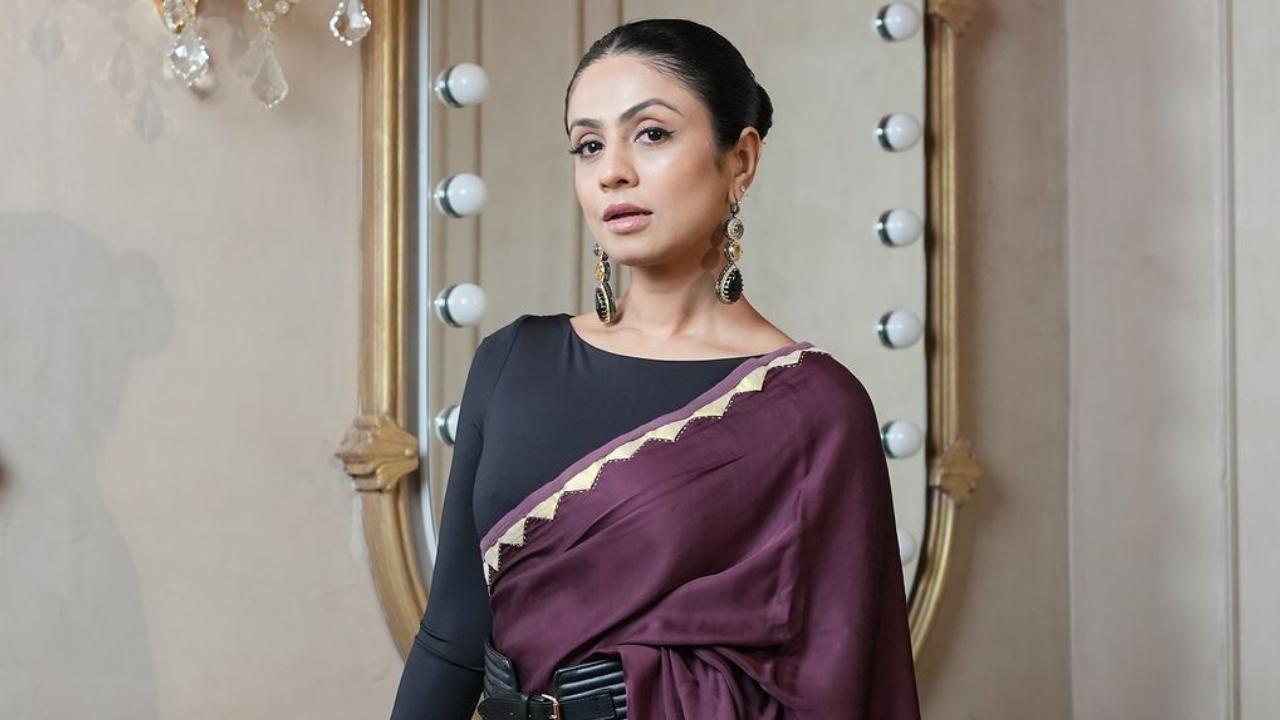
“For me, women’s safety isn’t a debate—it’s the bare minimum,” says actor-producer Manasi Parekh recently on the occasion of International Women’s Day.
Speaking about her experiences on film sets, she points out that basic facilities for women technicians are still often overlooked during outdoor shoots. During the filming of Kutch Express, the team consciously hired women for key roles such as director of photography, production designer and costume designer. “But representation is only half the battle,” says Manasi.
“Infrastructure is equally important. Providing separate, private toilets and safe spaces for women, especially during their periods, is a fundamental necessity that should never be up for debate,” she adds.
Manasi believes the issue runs deeper than logistics. “We face a deep-seated cultural challenge regarding authority. When a man gives instructions, they are accepted without hesitation. But when a woman is in charge, she is far more likely to be questioned,” she says, adding that many technicians and labourers are simply not used to female leadership.
To address this, Manasi ensures the tone is set early. “I hold briefing calls with the entire crew to establish clear boundaries and a zero-tolerance policy for disrespect,” she says.
At her office, there is also a firm rule about conduct. “You can be strict, but you cannot yell at a woman. When leadership sets the example, the rest of the unit follows,” she says.
--------------------------------------------------
‘Women are judged for everything’
Beyond the workplace, Manasi says women today are navigating a new challenge — constant online scrutiny. “Women are judged for everything, from their walk to their age,” she says. Reflecting on women’s enduring role in society, Manasi says, “When women are given the power to express themselves, they make the world better.”
Led by Aattam, South Indian cinema walks away with top honours at National Awards
9:10 AM

Best Director Award For Barjatya Marks Bollywood’s Presence
Manash Gohain (THE TIMES OF INDIA; August 17, 2024)
New Delhi: Southern cinema grabbed centerstage winning a clutch of major awards in the 70th National Film Awards. The best feature film award went to the Malayalam movie “Aattam: The Play”, while Rishabh Shetty received the best actor award for the Kannada hit “Kantara.” Best actress prize was shared by Nithya Menen for the Tamil film “Thiruchitrambalam” and Manasi Parekh for the Gujarati movie “Kutch Express”.
Sooraj R Barjatya (Hum Aapke Hain Koun) seized the best director award for “Uunchai”, marking Bollywood’s presence among the top categories. Nina Gupta received the best supporting award for the same film while Pavan Malhotra, known for his riveting performances in films such as Salim Langde Pe Mat Ro and Bagh Bahadur, earned the supporting actor award for Haryanvi film, Fouja.
The jury members presented the list of winners for 2022 to Union I&B minister Ashwini Vaishnaw on Friday.
Malayalam cinema led the charge, winning eight awards, including for best child actor, best screenplay, and best editing. Overall, 20 south Indian films bagged awards a cross various categories in the feature film segment. In the feature film category, out of the 24 awards, excluding the sub-category of best feature film in each language, 20 awards were shared by Malayalam, Haryanvi, Kannada, Gujarati, Tamil, and Bengali movies. Only six awards were bagged by three Hindi films, with two being shared with other regional language movies.
“Fouja” won two other awards: best debut film by a director for Pramod Kumar and best lyrics by Naushad Sadar Khan.
The award for Best Popular Film Providing Wholesome Entertainment also went to a non-Bollywood film, the Kannada blockbuster “Kantara”, which explores the intricate connection between humanity and nature through its folklore-based storytelling. Rishabh Shetty played the dual roles of a father and son in this film.
The top honour, the best feature film “Aattam: The Play”, directed by Anand Ekarshi, revolves around a theatre troupe and the changing dynamics after its only woman member alleges she has been groped by one of the men.
The best female playback singer award went to Padma Shri awardee “Bombay” Jayashri Ramnath, a champion of Indian Carnatic music, for the track “Chaayum Veyil” from the Malayalam film “Saudi Vellaka CC 225/2009” (Saudi Baby Coconut CC.225/2009), which also won the best Malayalam film award.
A R Rahman won the National Film Award for best music director (background music) for his work in Mani Ratnam's ‘Ponniyin Selvan-Part 1’, which was also named the best Tamil film. Pritam got the award for best music director (songs) for ‘Brahmastra-Part 1’.
------------------------------------------
Rishabh Suri, Mugdha Kapoor, Soumya Vajpayee, Yashika Mathur, Akash Bhatnagar (HINDUSTAN TIMES; August 17, 2024)
I was not expecting it: Manoj
It’s Manoj Bajpayee’s fourth National Award and this time it’s a Special Mention for the actor for the film Gulmohar (2023). We break the news to him, and he exclaims, “Wow! Best Hindi film too! I must call my director (Rahul V Chittella) right away. I was not even expecting an honour. He is deserving of it, as he made such a beautiful film.” Bajpayee feels grateful that his work is getting recognised now: “There have been performances and films that went unrecognised.”
I am still processing it: Manas
Manasi Parekh, who bagged the Best Actress award for Kutch Express (2023), says, “I am shooting for my new film, and got a message from (actor-filmmaker) Anand Tiwari: ‘Congratulations on the National Award’. I exclaimed, ‘What!’ I am still processing it, I can’t believe it.” The actor looks at the award as a vindication for her hard work: “I love what I do. What makes this win sweeter is that my husband and I produced Kutch Express. I want to do the best work and make the best of films.”
Kantara is a tribute to our land: Rishab Shetty
Rishab Shetty, who won Best Actor for Kantara (2022), with the film also winning the Best Film Providing Wholesome Entertainment award, tells us exclusively, “The win feels overwhelming. I wanted to bring authenticity and a raw portrayal of our heritage. The film is a tribute to our land and the deep-rooted stories that have been part of our cultural fabric for many years, true to the essence of the Kannada culture. I’m thankful to the Daiva for their divine blessings and dedicate this award to the Daiva Nartakas.”
This feels so special: Pritam
Pritam Chakraborty, who won the Best Music Director award for Brahmāstra: Part One – Shiva (2022), says, “This feels so special. I am really grateful to the jury. I want to thank the makers and everyone who was associated with the movie for their support and trust in me. But, most importantly, a big thank you to the audience for their love to our music.”
’This is such an auspicious day’
“I didn’t know that the National Awards were going to be announced today!” says director Chandoo Mondeti, whose film Karthikeya 2 won the National Award in the Best Telugu film category. Mondeti also tells us how he heard of the win after a friend called to congratulate him. “It is such a happy day for us. Karthikeya 2 is a very special film. This is such an auspicious day,” the filmmaker beams, adding that celebrations will follow right away: “It is such great news for me and everyone associated with the film.” This is Mondeti’s first ever National Award.
Like a pat on the back, says Pavan Raj Malhotra
Actor Pavan Raj Malhotra, who won the National Film Award for Best Supporting Actor in the Haryanvi film Fouja, says, “This is my second award, and it feels really good. I remember the first time around, there used to be a rehearsal before the main ceremony without the President and I was wondering how to greet him. Suddenly, I uttered the words ‘Jai Hind’ and it was perfect. This kind of recognition is what every artiste works for. It’s like a pat on the back and as far as I know, these awards are not manipulated. Fouja is actually close to my heart as it is about the desire to join the army; it is a great honour to be a part of the Indian Army. I don’t know how much of an impact this might have, but I have been working for 40 years now. If you keep working and doing what you like, these awards just make you feel appreciated.”
All the romantic scenes have been enacted in front of a tree and not with Manasi Parekh; I was blushing-Viraj Ghelani
8:06 AM
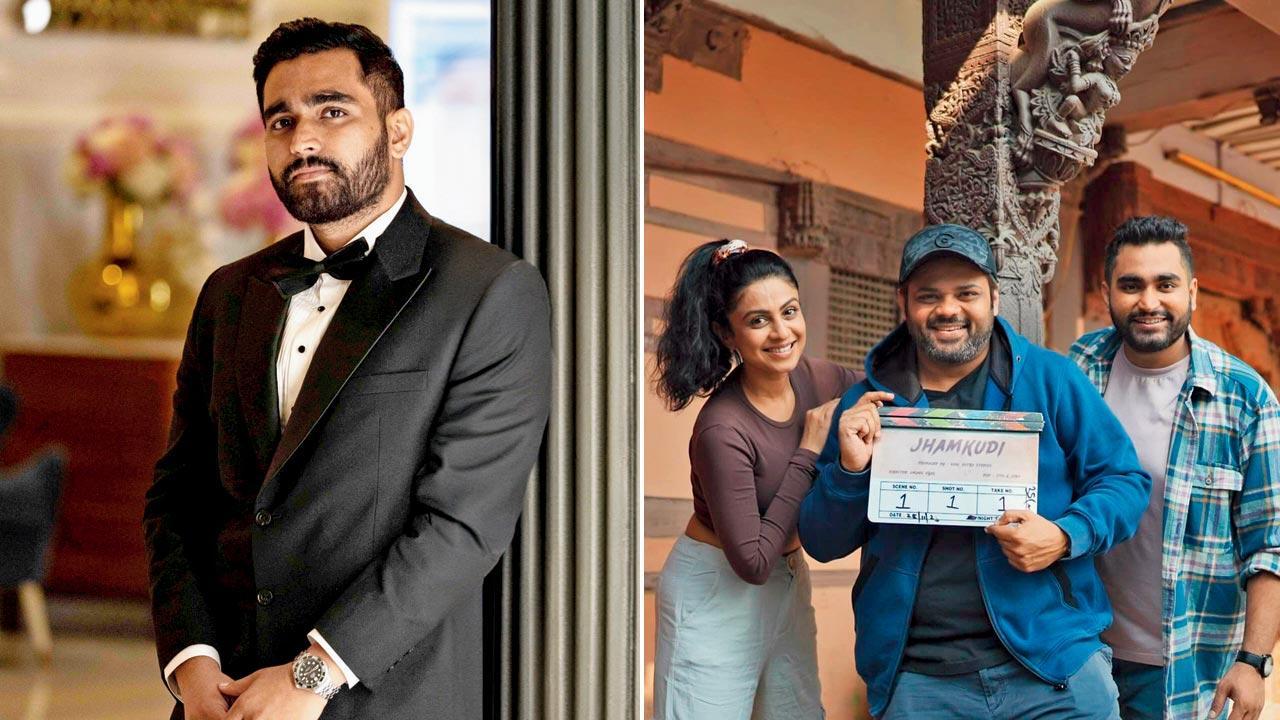
Viraj Ghelani; (right) With co-star Mansi Parekh and director Umang Vyas on the set of the film
Digital creator-turned-actor Viraj Ghelani’s latest Gujarati film is seeing sold-out shows. What about this debutant is drawing crowds to theatres?
Junisha Dama (MID-DAY; June 9, 2024)
A record-breaking, Rs 2.42-crore opening weekend. Jhamkudi, a comedy-horror has seen one of the biggest openings for a Gujarati film. With 100 shows in Mumbai and more being added, we are asking, what’s pulling crowds to theatre halls in the city?
Is it Viraj Ghelani’s comic timing and his ‘ame to aava j chie’ (we are like that only) attitude that Gujaratis stereotypically tend to have? Perhaps, it’s the sheer authenticity he brings on screen.
But Jhamkudi is not Ghelani’s first appearance on screen. He first played a part in Vicky Kaushal’s Govinda Naam Mera (2022) and later shared the screen with Sanjay Dutt in Jawan (2023). But for even longer, he has been a YouTube creator starring in Dice Media’s videos, many of which were viral. After quitting the media company, he continued creating content on his Instagram and YouTube channels.
Recently, Ghelani was at the Cannes Film Festival. For him, it was about watching films, networking, and talking to producers, directors, and content creators. What the audience saw on his Instagram was very real. It was all about fan-boying over Chris Hemsworth, getting a shoe bite, and enjoying thepla while abroad.
“As a creator, I was aware that I would get a lot of hate. I was aware that if I am not real on social media, I will be flagged off. So, I made sure I put up real-life stories. And, I made sure I carry my thepla and talk about it,” he says.
On his Instagram bio, he proudly writes that he is from SoBo, meaning South Borivali. He’s always a cutie around his nani and features her in several reels. And, at times, is found comically complaining about the traffic in Mira-Bhayender.
Jhamkudi is Ghelani’s debut in a lead role. And for him, “it’s a dream. I had no idea something like this would come into my life. Imagine, one lakh people are watching your film and praising it. I don’t want to wake up!” Although, he says it has ben hard personally for him to watch himself on screen.
In the film, Ghelani plays Baablo, a real estate agent from Ahmedabad who is called to the village of Raniwada to overcome a curse spun by the witch Jhamkudi. It’s the romantic scenes that he foud most challenging to pull off with Manasi Parekh, a seasoned Hindi television and Gujarati film actor.
Ghelani could not stop blushing. “All the romantic scenes have been enacted in front of a tree and not with her; I was blushing. I kept saying, ‘I can’t do this’,” he says.
But how did Ghelani rise to bag the role? He says the producers were not looking to cast a well-known face. Any doubts Ghelani had about being right for the part were put at rest. “They said this is what we wanted. The character is a chubby boy who comes from Ahmedabad. He had to be relatable.”
The challenge for him, despite being Gujarati, was speaking in the tongue. Mumbai’s Gujarati population tends to pepper it with Hindi, Marathi or English words. The result is a bastardised language that is easy to understand and speak but not suitable for a film.
“In Mumbai Gujarati, we say loka [people]. There is no word like that, it’s loko. There were so many things which I mixed up. I thought, ‘Oh my God, my Gujarati is pathetic’.”
Although at times, he could keep the language casual in the film, as the director wanted it to be relatable to the youth. Ghelani did not take formal coaching, and instead, spent time with Sanjay Goradia, a well-known theatre actor, Ojas Rawal and Nisarg Trivedi.
“I made sure that I sat with them, talked to them, listened to them, got their feedback about my art, my acting and performance. So, for me, whatever they said, I blindly trusted. I was the baby on set. These guys said, ‘Don’t worry, you are doing this or that right…’ So, for me, they were confidence boosters.” What the film has done is made him a new appreciator of the language.
Moving from acting for the phone screen to a cinema hall also meant that he was learning new facets of the craft, including not flinching the eye when a scene is intense. “On Instagram, I have a second; if you don’t attract them [the audience] in a second, they’ll scroll up. Here, the responsibility is bigger, spanning two and a half hours. The audience cannot feel like I have left the character.”
Earlier this year, he even tried his hand at stand-up comedy in Gujarati and the tickets to the show were sold out. It’s not a route many digital creators typically take. “I always wanted to do stand up, but I was shying away. Then I realized that with the movie coming, this is a good way to promote it. Second, I wanted to check what the ROI of my audience is if I put up a show, will they come, buy tickets and watch the film? It’s a good way to tell brands that there are people who will pay and come,” he says.
Ghelani has tried it all: podcasting, acting in films, creating reels, sketches on YouTube, and stand-up comedy. Where does this spirit to keep trying new things come from? “It’s because I dropped out of engineering,” he jokes.
Today, pan Indian films are our big attempt. Everything cannot be pan India-Ratna Pathak Shah
8:15 AM

Onkar Kulkarni (BOMBAY TIMES; May 8, 2023)
At the recently concluded FICCI Frames 2023 Ratna Pathak Shah, Renuka Shahane, Swwapnil Joshi and Manasi Parekh shared their thoughts on how regional cinema needs to hold its own amidst the current pan-India cinema wave during the session ‘One Nation: Many Cinematic Voices’. As they spoke about the survival of films from various languages across India, Renuka stressed on the constant competition Marathi cinema has faced over the years.
She said, “We have yet not really cracked the code of competition with Hindi or Hollywood films, which are released in Maharashtra. I think as an industry, we have not been able to crack the viability code because if we have to dream any further, then we have to crack that within our own state first before we experiment with audiences all over India.”
‘WE NEED A PARADIGM SHIFT IN THE WAY WE EXHIBIT AND DISTRIBUTE FILMS’
Marathi films, too, have excelled at the box office and made noise, but Renuka pointed out that the pace has been quite sluggish. The actress feels that Marathi cinema faces a lot of competition and the industry should come together to find a solution.
She elaborated, “Films like Me Shivajiraje Bhosale Boltoy broke records, and Sairat did exceedingly well. But these are exceptions, how do we make these exceptions a rule is a question. The industry must come together and find a solution for it. I think we need a paradigm shift in the way we exhibit and distribute films because there has to be space for experimentation, which is not in direct competition with the rates of commercial Hindi, Telugu or Tamil films, otherwise, our films are never going to cross that barrier. If we are constantly faced with that competition of viability, we just do not have the theatres where our films will be released or subsidized over a period.”
‘TODAY, THERE’S A NEW AUDIENCE WHICH WANTS MORE OF THEIR OWN LIVES REFLECTED IN WHAT THEY SEE’
We have ample and diverse stories to tell from across the length and breadth of our country. In such a scenario, Ratna believes that there’s no need to focus only on pan-Indian films. Sharing her, she said, “Today, kids in their teens pick up a camera and make something. So, there’s that enormous change in the accessibility to resources. There are cheaper resources available to make any kind of content on social media. All these things have led to different kinds of content being acceptable to different audiences. Our mistake is that we keep imagining that everything should be acceptable to everyone. Today, pan-Indian films are our big attempt. Everything cannot be pan-India!”
She added, “There’s a new audience now, which wants more of their own lives reflected in what they see. I think that’s the big difference. The audience doesn’t want only fantasy. They know that life is tough, and they want to see some reflection of that, so I think that is another big change. We are becoming aware that India is more than just a small band of people and a small band of ideas. That wonderful diversity of India, which I am so proud of and which we have read about in school books forever, is something we have genuinely managed to preserve over 5,000 years of civilization. We have kept our differences, isn’t that wonderful? But today, we are busy trying to homogenize and movies have played a part in that.”
Alia Bhatt episode is proof that paps are ready to do anything to get up, close and personal with stars-Manasi Parekh
8:21 AM
Sugandha Rawal (HINDUSTAN TIMES; March 2, 2023)
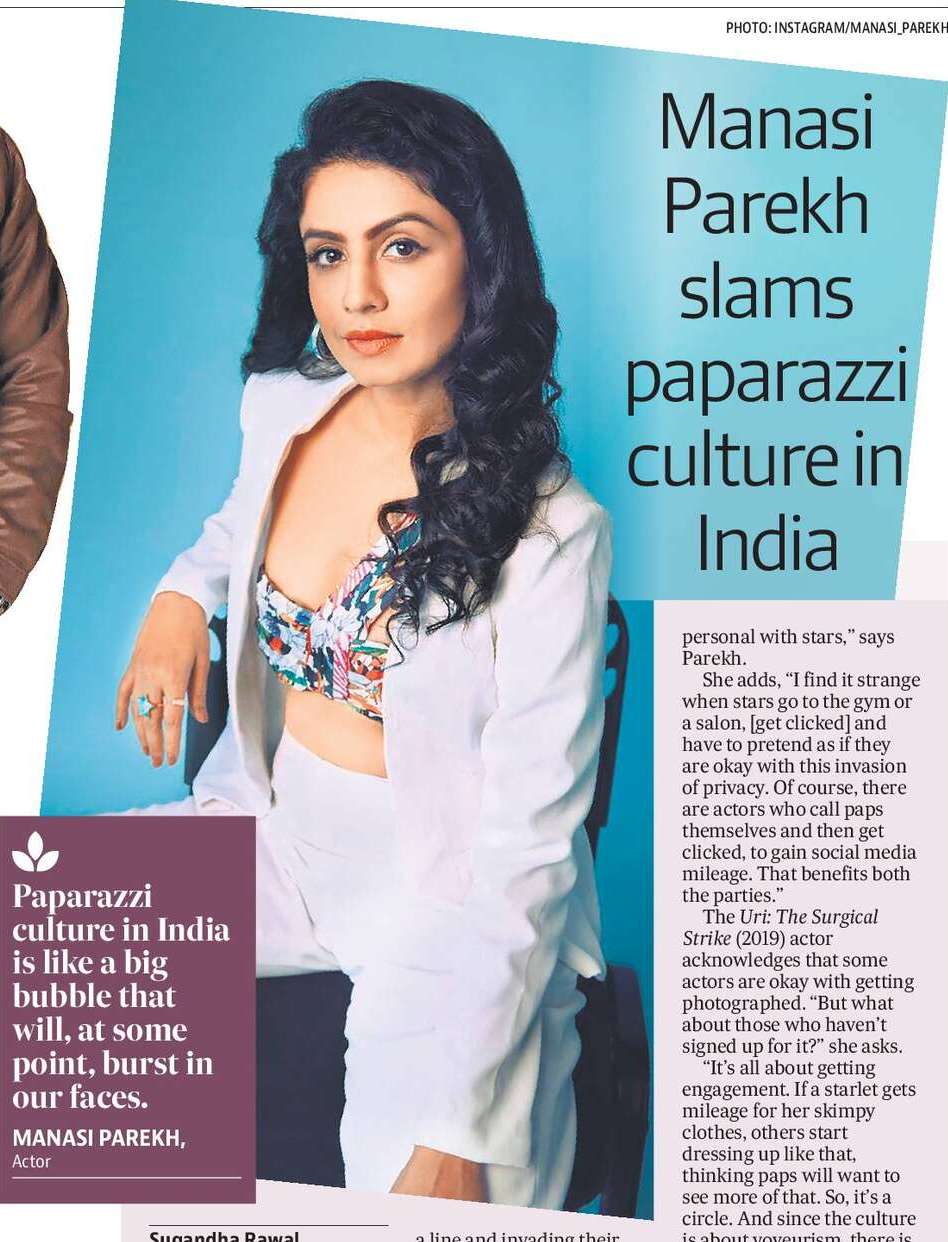
Manasi Parekh is worried about the blurring lines of privacy with the growing paparazzi culture in India. The actor’s concern comes in the backdrop of the increase in cases of public figures slamming photographers for crossing a line and invading their personal space — the most recent example of this being actor Alia Bhatt.
“Paparazzi culture in India is becoming like a big bubble that will, at some point, burst in our faces. This recent example of Alia Bhatt is proof of the fact that paps today are ready to do anything to get up, close and personal with stars,” says Parekh.
She adds, “I find it strange when stars go to the gym or a salon, [get clicked] and have to pretend as if they are okay with this invasion of privacy. Of course, there are actors who call paps themselves and then get clicked, to gain social media mileage. That benefits both the parties.”
The Uri: The Surgical Strike (2019) actor acknowledges that some actors are okay with getting photographed. “But what about those who haven’t signed up for it?” she asks.
“It’s all about getting engagement. If a starlet gets mileage for her skimpy clothes, others start dressing up like that, thinking paps will want to see more of that. So, it’s a circle. And since the culture is about voyeurism, there is no end to it,” she rues.
Having said that, Parekh hopes there is a way to bring this ongoing culture under control. “I really wish that with time, people are able to draw a line regarding the invasion of privacy and treat actors like humans, irrespective of their profession,” she concludes.
Ratna Pathak Shah has poor tolerance to false notes while performing. She won’t let you lag in a scene-Viraf Patell
8:06 AM
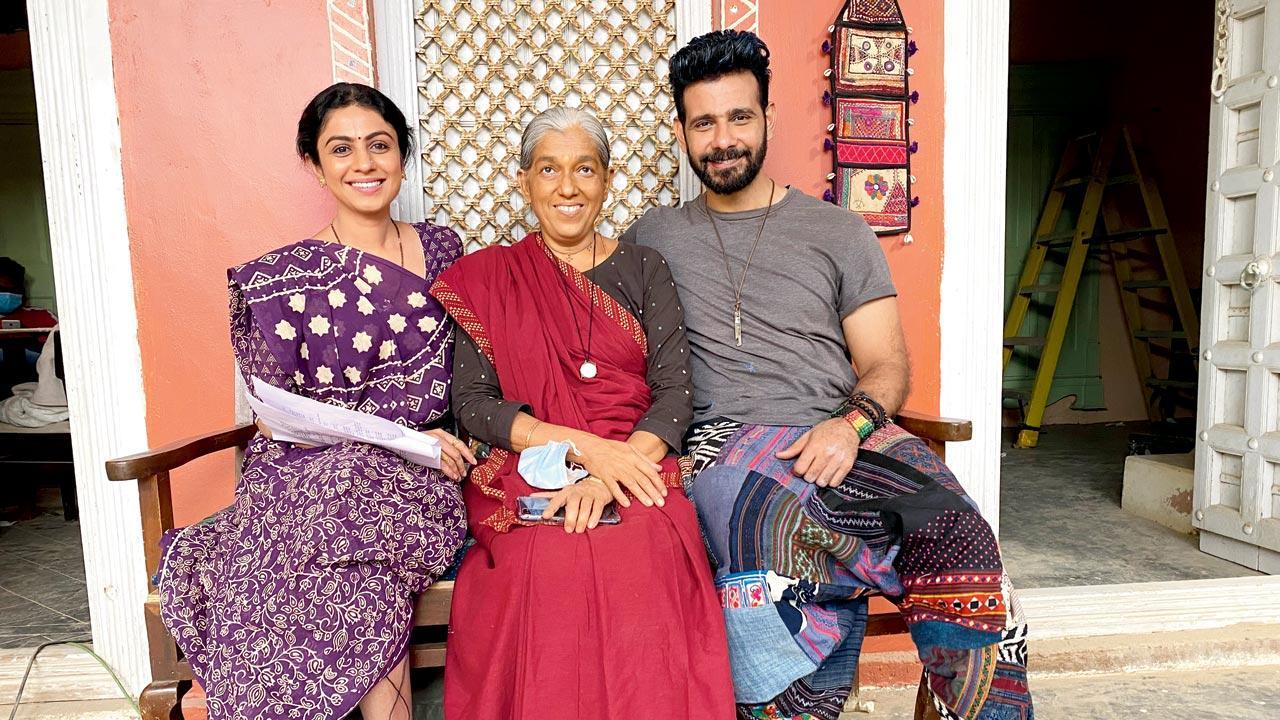
Penning film that marks Ratna Pathak’s Gujarati debut, Viraf Patell says actor made his job easy
Hiren Kotwani (MID-DAY; December 31, 2022)
Following a 12-year journey in front of the camera, The Verdict — The State vs Nanavati and Bestsellers actor Viraf Patell is expanding his horizons as a writer. His maiden Gujarati film, Kutch Express, marks the first venture in the language that actor Ratna Pathak Shah will be part of. It also features Manasi Parekh in a woman-centric drama that sees the female protagonists tackle patriarchy.
It is owing to Parekh — who is co-producing the film with her husband — that Patel made his foray into Gujarati cinema with this venture that releases on January 6. “She asked me to test for it as an actor, and they eventually got me on board. Only when we had a reading session with all the actors did I get a sense of the whole script.”
When shoots were suspended due to the pandemic, he had the chance to mull over the screenplay. “We put in several hours over Zoom, and came up with a revised draft. Kutch Express is about being courageous.”
Referring to Pathak as the master on the set who was “a source of wisdom and joy,” Patell says, “Ratna ben has poor tolerance to false notes while performing. She won’t let you lag in a scene. The most important thing I learnt from her was that it is not enough to be good in a scene. The scene works if your co-actor also performs magically. Her interest lies in getting the entire scene right, not her performance alone.”
Every actor worth their salt would consider it a privilege to work with the talented Paresh Rawal-Manasi Parekh
8:08 AM

Actor Manasi Parekh credits writers for meaty roles and change in audiences tastes
Kavita Awaasthi (HINDUSTAN TIMES; March 22, 2022)
She is on cloud nine with the reception of her recent Gujarati film, Dear Father. Calling the experience “incredible”, actor Manasi Parekh remarks, “Every actor worth their salt would consider it a privilege to work with the talented Paresh Rawal sir (actor), who has done over 150 films. It was great to have a substantial role that gives takkar to his character in the film.” Though the team knew the film would work, they were surprised with its response.
Parekh has been an actor since 2004, with a number of hit TV shows, including Kitni Mast Hai Zindagi, Gulaal and Sumit Sambhal Lega to her credit. Later, she debuted in Hindi films with Uri: The Surgical Strike (2019). “I am at an interesting juncture in my career. My Hindi film career is a few years old that started with Uri, which I was happy to be part of. The usual trend is that actresses in their 20s do many Hindi films and in their 30s, things would peter out, but that is not the case anymore. In fact, now there are so many interesting roles out there for my age group,” says the 35-year-old.
Parekh gives credit to the writers and audiences who have accepted actors “who are not playing a quintessential, good-looking actress”. “I always had wonderfully etched out roles in the TV shows I did. But back then, I didn’t get film offers and maybe koi specify requirement hogi. And after Uri, people have been offering good roles. Moreover, my experience, marriage, and motherhood have added value to my performances. Earlier, actresses were told if you want a career, you can’t marry or become a mother. But my career surged post marriage,” says the actor, who will be seen in Jab Khuli Kitaab, co-starring Aparshakti Khurana.
Having starred in some acclaimed Gujarati films, Parekh is thrilled with the growth of Gujarati cinema. “There is an overarching trend of audiences and their tastes changing. The lockdown and pandemic, too, have amplified things. Today, people are ready to watch films in any language. Pehle Bollywood zyada dekhte the, but now they have become more open to different languages,” says Parekh.
She adds, “There are many exciting things happening in Gujarati cinema. After doing Gol Keri (2020) and Dear Father, I am now shooting a film with (actor) Sharman Joshi and another Gujarati film with (actor) Ratna Pathak Shah. Suddenly, a number of mainstream Hindi actors are stepping into Gujarati films. While the south industry is established, Gujarati is still growing. It is exciting to be part of this growing industry. That is a telling sign of changing times.”
Is Bollywood still tough for TV stars?
8:47 AM

Does the small-screen tag still weigh down actors keen to make a transition to the big screen?
Juhi Chakraborty (HINDUSTAN TIMES; June 20, 2020)
 Sushant Singh Rajput was the biggest TV-to-film success story in recent times. And his death has indeed brought a pall of gloom in the TV industry, especially to many who looked up to the actor’s phenomenal journey.
Actor Radhika Madan recalled how, when she was transitioning from television to movies, people always said, ‘Don’t do it’. “And I remember always giving them Sushant’s example. He made it look.. achievable. He inspired many actors like me,” she posted recently. Actors such as Mohit Raina and Karan Kundrra, too, shared how Rajput inspired many small-screen actors eyeing the big screen. But his death has raised questions on whether TV actors are whole-heartedly accepted in the film industry, despite the precedent of a certain Shah Rukh Khan.
Actor Hiten Tejwani, who has dabbled in both TV and films, with his last big-screen appearance in Kalank (2019), says in Bollywood, unlike in the West, some still believe in the demarcation of a TV actor and film actor. “But it is slowly going away. Casting TV actors does get a bit difficult as people have the thing of TV actors being over-exposed,” he says.
 TV actor Manasi Parekh (below), who made her Bollywood debut with Uri: The Surgical Strike (2019), feels stigmas around TV actors are long gone. “Whatever struggles he [Rajput] had, what he could or could not do, is his journey. We all loved him as an actor, he was extremely talented. It is unfortunate what happened. But we should let it be, not speculate,” she says.
Film trade analyst Atul Mohan feels talent is what matters at the end of the day and, in the recent past, there has been “a healthy influx of actors from the television world in films”.
Actor Rohan Mehra, who starred in the TV shows Bade Achhe Lagte Hain and Yeh Rishta Kya Kehlata Hai, besides a few films, says, “He [Rajput] was an inspiration; his death is a demotivation for sure. If your inspiration does this after achieving so much, what are we going to do?”
And actor Ragini Khanna, star of several hit TV projects and films such as Teen Thay Bhai (2011) and Gurgaon (2017), observes every industry is tough. “Films are not a step up and TV is not a step down. We should not look at it like that. As an actor when you are out there, who are you seeking acceptance from? The only acceptance an actor needs is from the audience,” she shares.

When I posted pictures with Vicky Kaushal, friends said, ‘We are so jealous of you for working with him!’-Manasi Parekh Gohil
8:11 AM
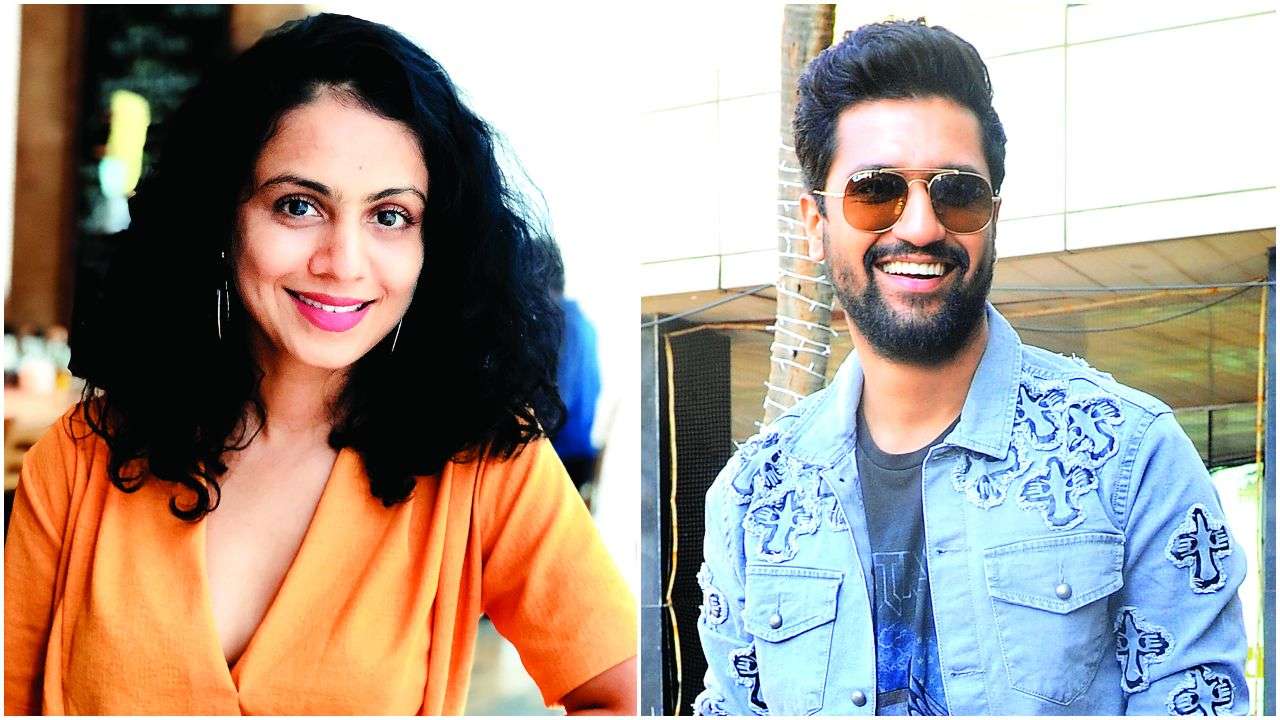
Chaya Unnikrishnan (DNA; January 30, 2019)
Manasi Parekh Gohil, who has serials like India Calling, Sapna Babul Ka Bidaai and Sumeet Sambhal Lega to her credit, made her big screen debut with Uri: The Surgical Strike, which has raked in over Rs 150 crores already at the box office. Understandably, the actress is excited. “I’m overwhelmed with not only the kind of response the film has got, but also my performance. A lot of people didn’t know I was in the movie because I didn’t talk about it before. Now, through word-of-mouth they are discovering that I have a strong and powerful character and are appreciating my performance,” says Manasi, who plays Vicky Kaushal’s sister in the film.
The scene where she breaks down after her husband, an army officer played by Mohit Raina, dies, is one of the most poignant ones in the film. Manasi shares that the scene was nailed in one take! “Two things that helped me draw the emotions were the fact she is pregnant when her husband dies. She is mourning for him and the unborn child, who will not have a father. Being a mother myself, I knew how sensitive the situation can be. One gets so sensitive during pregnancy and something like this can create havoc. I had auditioned for the same scene and the director had loved it. So, when it came to the shoot, he told me he wanted it to be performed in the same manner,” says the actress.
Ask her how it was working with Vicky, the man-of-the-moment and she gushes, “Vicky is lambi race ka ghoda. He is challenging himself with new roles and performances. It was fabulous working with him. He is absolutely generous as a co-actor and has no starry airs. All my friends love Vicky. When I posted pictures with him, they said, ‘We are so jealous of you for working with him!’”
Manasi Parekh makes her film debut with Uri
7:55 AM

Actress with Vicky Kaushal, Swaroop Sampat, Mohit Raina and Reva, who plays her on-screen daughter in the film
Television actress making her film debut with Aditya Dhar’s next
Natasha Coutinho (MUMBAI MIRROR; September 4, 2018)
Manasi Parekh who has worked in popular shows like Zindagi Ka Har Rang… Gulaal, Star Ya Rockstar and Sumit Sambhal Lega, is making her film debut with the Vicky Kaushal, Yami Gautam and Mohit Raina-starrer Uri. She joined the team recently during a shoot at a Chembur studio.
Manasi plays the wife of Mohit Raina and the sister of Vicky Kaushal, both army officers. “There are really intense dramatic scenes between Vicky and her,” informed a source from the set.
The actress, when contacted, told Mirror, “My role will showcase what the wives of officers go through when they are fighting for the country. Sharing the screen with Vicky, Mohit and Swaroop Sampat is really exciting for me after going on a maternity break in November 2016. I’ve been doing ads and shows since my daughter Nirvi was three months old but a good role in a Hindi film is the perfect comeback.”
Subscribe to:
Posts (Atom)