Showing posts with label Mammotty. Show all posts
Showing posts with label Mammotty. Show all posts
Sonam Kapoor has a bigger fan base, more people will watch the film-Dulquer Salmaan
8:06 AM
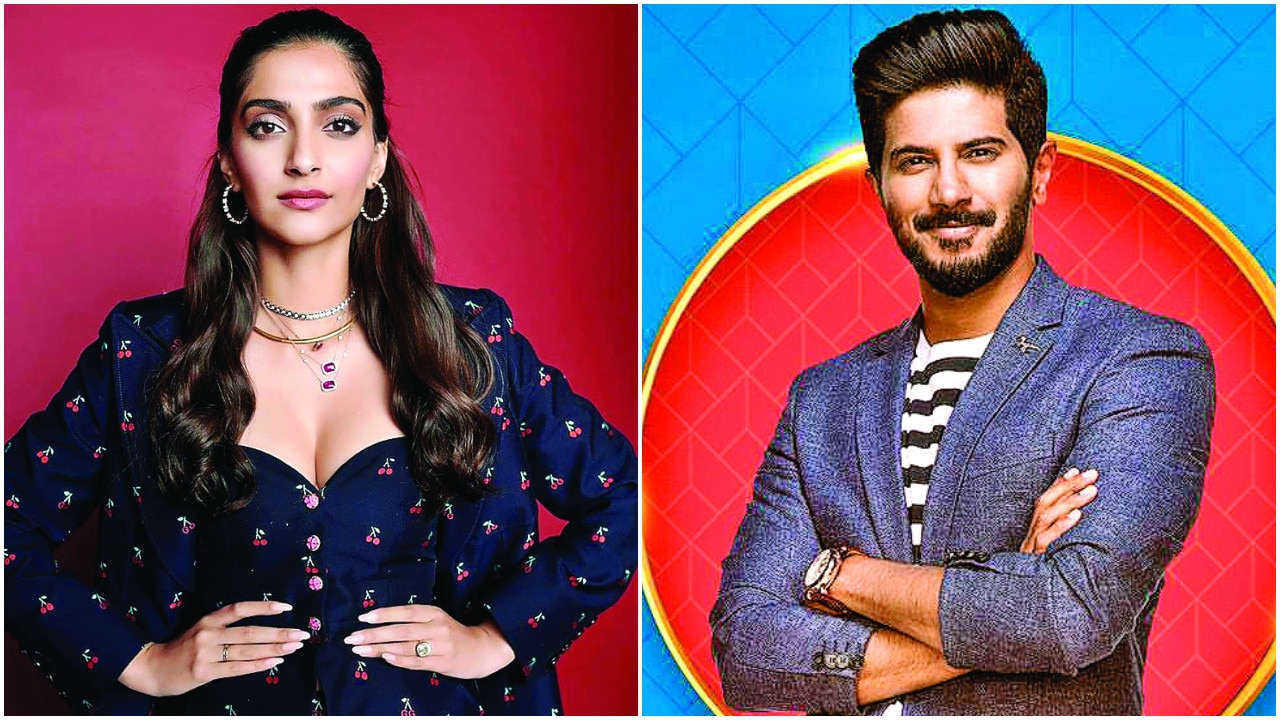
Chaya Unnikrishnan (DNA; September 10, 2019)
He made his Bollywood debut with Karwaan alongside Irrfan last year. While the movie was critically acclaimed, it did not exactly fare well at the box office. Now, Malayalam superstar Dulquer Salmaan, who got rave reviews for his maiden Hindi outing, is gearing up for his next, The Zoya Factor. Based on Anuja Chauhan’s book by the same name, the movie will see him play a cricket captain. The day we met the actor, he had come straight from the airport, having flown in from Kerala. The 33-year-old opened up about his role in the film, how the market since the time his superstar father Mammootty did Hindi movies has changed for South actors, and why he has no qualms being part of a project that revolves around the female lead.
You made your Bollywood debut with Karwaan, which was not a mainstream commercial film...
(Cuts in) Yes, but, I have done stuff like that in other languages, too. When I hear different ideas, I gauge how much I like the script and the concept. I don’t particularly think how big or commercially viable the film is. If there is honesty in an idea, I like to do it. I wasn’t planning on entering any industry in that sense. Even OK Kanmani (2015) for Mani Ratnam was a small Tamil film. I look at content. The Zoya Factor has great content, which is also commercial. Even in Malayalam, some films are small and not mainstream, while the others are. I try to balance it out. I go by gut instinct. I don’t think too much about a debut film. If it’s good and people like it, they will like you. If they don’t like the movie, they won’t like the performance either.
Was it disappointing when Karwaan didn’t work at the box office?
No, we were not pitching it like a big film. It was a small sweet idea and we never expected it to do commercial film numbers. But, it was received well, and critically liked. It did decent numbers, we were all happy — not shocked or surprised. It has got a lot more love now when it released on a digital platform recently.
In The Zoya Factor, you are opposite Sonam Kapoor aka Sonam K Ahuja, who is a big name in Bollywood. Didn’t you have apprehensions that the film would be more about her than you?
No, I don’t mind. I did Mahanati (Telugu) with Keerthy Suresh, which is the biopic of South actress Savitri. The film is only about the girl, but I loved that my character had so much to do. He was kind of grey, almost negative in some scenes. Sometimes, I look at how good the project, as well as my role, are. Finally, the movie is the hero. If it does well, viewers will watch it and in turn, I will be seen. Sonam has a bigger fan base, so more people will watch the movie and I will be introduced to more audiences. So, I don’t take it negatively. I think it’s a plus.
What prompted you to sign the movie, to begin with?
I liked my character. I felt there was lot of scope for me to perform. I’ve never done a sports film before, it’s the first time I’m playing an athlete of any kind, so that was interesting. There’s a nice graph to it. Sonam’s and my character are opposites — she believes in luck and he believes in hard work. I liked all that. I felt it’s different from what I’ve done.
Did you read the book before signing the film?
No, I hadn’t, though I had it in my bookshelf. When they signed me, they said if you haven’t read the book, don’t. Because we want you to hear the screen adaptation. So, I read it after hearing the script initially. It is more detailed. It’s good that I didn’t read it before.
How interested are you in cricket?
You can’t ignore it in India. I have grown up around it. Street cricket is happening everywhere. I shifted from Kochi to Chennai when I was seven and the first thing I saw was kids playing cricket all the time. I made a lot of friends in the neighbourhood like that. And even in school, the sport was big. I went to college in America and there were a lot of Indians, Pakistanis and Bangladeshis. It was nice to get together, watch cricket and support different teams.
Is your role fashioned on any cricketer?
No, we have not based it on any cricketer, but in Anuja’s writing there are some glimpses of MS Dhoni and Virat Kohli. My character’s got qualities of the best captains. The production got me a lovely coach and I would train with him when I was in Mumbai. Even when I would go to Kochi for my Malayalam film’s shoot, the coach would come down there and we would practise.
Several South superstars, including your father Mammotty, have forayed into Bollywood, but they haven’t been able to sustain. What do you think is the reason?
What happens with us is all of us come from a core market — I am established in Malayalam and somewhat in Tamil. So, it’s about how you weigh your options. If you have better scripts there, you do them. It all depends on what comes your way.
And sometimes, it’s difficult to say no to the progress you’ve made there. You can’t ignore that. Even now, if I take a long gap from Malayalam films, that can affect the progress I’ve made for so many years. So, that priority has to be there. When I do a film from another language, I try to find a movie that can be shot in two months. I don’t know who to compare myself with because I don’t know other actors who are juggling many industries.
Besides, the market has changed a bit now. It has become bigger, the number of screens has increased, there is OTT platform, worldwide markets, so it has helped us grow in terms of size, budget and viewership. You can push the film around the country even if it’s subtitled. We released Bangalore Days (his superhit Malayalam film) with subtitles across South and some stations in Mumbai and Delhi. It got that viewership. That is possible now. There are a lot of Malayalis everywhere, which was not the case earlier.
Prabhas has just made his Bollywood debut with Saaho...
Yeah, but that’s a bilingual movie, so, he’s not losing his focus there. It’s when you completely step away that it gets tricky. But I am trying to balance it.
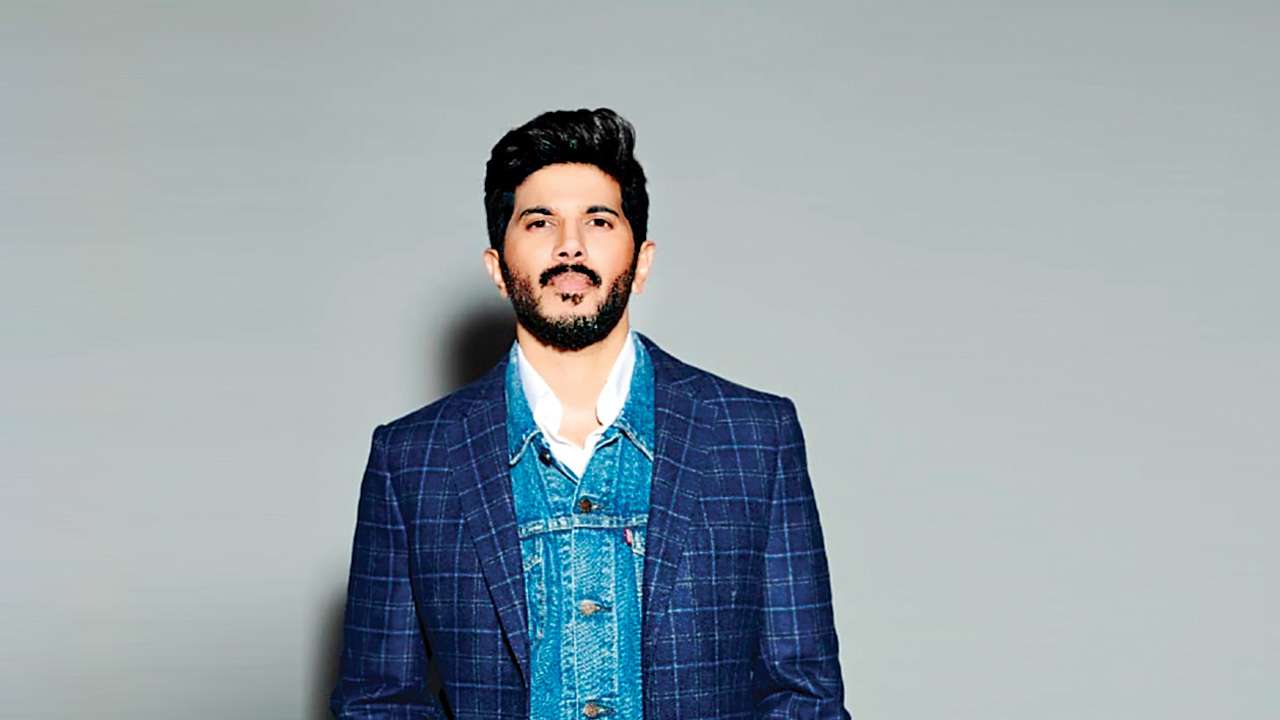
The fact that I was going to share screen space with Irrfan was reason enough to be scared-Dulquer Salmaan
8:00 AM

In a freewheeling chat with BT, South actor Dulquer Salmaan, Malayalam superstar Mammootty’s son, talks about his upcoming Bollywood debut and more...
Lasyapriya Sundaram (BOMBAY TIMES; July 31, 2018)
Dulquer Salmaan, known for his acting chops in Malayalam and Tamil films, is all set to make his debut in Bollywood with Karwaan. Also known as DQ, the actor who made his Malayalam cinema debut with Second Show (2012), has established himself as a star with films like Bangalore Days (2014), O Kadhal Kanmani (2015) and Kammatipaadam (2016) to name a few. The actor talks about not being affected by stardom, his need to be constantly challenged by roles and how he plans to strike a balance between Malayalam, Tamil and Hindi films. Excerpts...
Do people always mispronounce your name?
In school, when there was a new teacher who would go through the roll call register, as soon as she would come to my name, she would stop. I would usually stand up and say my name (laughs!). All the kids would wait for a bad pronunciation. When I was studying in America, it was a joke. People have stolen my name tags when I was working. It’s a great icebreaker though. I think the correct pronunciation of my name is slowly registering.
You are a huge star in Malayalam cinema, where mainstream films are content-driven.For you,is Karwaan an ideal film to make a debut in Bollywood?
Whether it was Tamil or Hindi cinema, I have never looked at it as making a debut. Even when I did my first Malayalam film, I didn’t look at it as a launch. Being a part of memorable movies has always been the goal. Karwaan is a film driven by good content and it’s honest. It wasn’t like anything I had heard before. When opportunities come my way, the only thing that’s important is whether there is an intent to make good cinema.
You had once said that you don’t like doing work that seems easy. Can you elaborate?
When you just coast through work and don’t feel inspired, I feel you are lying to yourself. I don’t want to do acting as a chore or a job. I feel that it has to scare me. Fear works for me.
What scared you about Karwaan?
I am not fluent in Hindi. I know the language, but it’s not something that I can improvise. If I want to add something during the take, it’s not easy for me. I would ask the director for help. So, that was challenging. And the fact that I was going to share screen space with Irrfan was reason enough to be scared (laughs!). I didn’t want to waste his time or disappoint him. I would prep well enough to deliver. In my head, I am never good enough as an actor. But Irrfan sir is amazing. Everyone will watch the film because he is in it and as a result of that, people will watch me, too. He is the kind of actor who can take the film a few notches higher than the script. I am lucky that my debut, in that sense, is happening in a film with him. The film is Avinash’s (his character in the film) story and Irrfan sir didn’t have to do the role that he has. But I think he is an actor who sees the script as the hero.
You don’t mind doing a role that perhaps is not the main lead, but is important as far as the narrative is concerned. Case in point being your Malayalam films like Bangalore Days (2014) and Kammatipaadam (2016). How do you choose your films?
You are quoting the film and that means I was part of a memorable film. As an actor in Malayalam cinema, you get a lot of opportunities to play the lead. A film like Solo (2017) was four different stories with me as the common factor. Beyond that, I can’t be greedy. I want to be part of the best movies of the year.
Stardom has clearly not affected you...
No and I hope it never does. I can never say that I have a fan following. I keep referring to them as the viewers of my film. I can’t come to terms with stardom or see myself as a star. Superstars or stars are the ones I grew up admiring. All the superstars of Malayalam cinema have the attributes of a star. I am just a movie buff who acts in movies.
 How do you plan to strike a balance between Malayalam, Tamil and Hindi cinema? Kamal Haasan has famously said in the past that in the 1980s, the time taken to make a Hindi film was way longer than South films.
Earlier, when I was doing films in just one language, it was easier to meet everyone who came to narrate a story. But with me dabbling in other language films increasingly, I think I am lagging behind. Some people are getting upset because of that. They perceive that to be my disinterest. Striking a balance then is tricky. It’s not easy to please everyone. Sometimes, there are big names and stars involved and that space becomes a little difficult to navigate. Also, I don’t like overcommitting. The movies need to be fresh and if I commit to a movie today that might get made three years later, then it will appear dated. Coming to the second part of the question, in the 1980s, things were very different. Technically, Karwaan was shot in 34 days, which is quicker than my average Malayalam film. Today, a Malayalam film takes at least 50 days. The younger filmmakers are indulgent and they want to take their time. The senior directors follow the old school of filmmaking, where they keep the cost component of shooting for many days in mind and want to wrap up things within a stipulated period. Today, it is possible to do films in different industries.
Nepotism is a word that’s been bandied about in Bollywood for a while now. You are the legendary Malayalam actor Mammootty’s son, however, nepotism has never really been a problem in the Malayalam industry, isn’t it ?
Traditionally, there have never been second generation actors in Malayalam cinema. When I was growing up, acting was not even an option. My mother told me that my dad had won a lottery and it’s highly unlikely that I will ever make it. Prem Nazir’s son didn’t make it. In fact, other star kids who have tried in the past haven’t made it. As parents, they were protective. My dad told me that it wasn’t an easy place to be in. In fact, I didn’t even relate to the kind of films that were made in the 1990s in the Malayalam industry. There used to be long dialogues and that’s not the way people speak. I could never imagine myself being part of those movies. My generation just got lucky. Young directors brought in a different manner of storytelling. So, nepotism is not something that people have to contend with in the South film industries. In Malayalam films, star kids are a minority. Stardom can be fickle. Growing up, we were never led to believe that my father would enjoy stardom all his life. For them, sending me to college in America was a big deal. They told me that I should make it count. In fact, people ask my sister and me why we are so down to earth. But we don’t know any other way to be.
You are also doing The Zoya Factor next opposite Sonam Kapoor. You will be playing the Indian cricket captain. Are you taking any tips from MS Dhoni or Virat Kohli to essay the role?
A film on Dhoni has already been made. Like I played Gemini Ganesan in Mahanati (2018), I am going to do this role in my own way.
The Malayalam film industry has been in the news because of actor Dileep’s arrest last year in connection to an actress’ abduction case. And recently, there was a controversy over his reinstatement into the Association of Malayalam Movie Artists (AMMA). Considering the fact that you belong to the new generation of actors, what are the changes that you want to see in the industry today?
I don’t see myself as someone who is going to bring about change. I have always had a good time working in the Malayalam film industry. I love the attitude everybody has. With the younger generation, there is a lot more awareness about everything. Everybody is equal. I have never really faced an issue. It’s been genuinely wonderful for me, whether I am collaborating with members who belong to the older generation or the younger lot. I wish I could talk about the issues I have faced but I haven’t.

These sassy showbiz women are being heard, not just seen
8:11 AM

The new generation of female stars refuses to play meek and nice. Whether it’s Swara Bhasker writing about vaginas or Parvathy taking on misogyny in Malayalam cinema, they’re speaking up, and how
Amulya Gopalakrishnan (THE TIMES OF INDIA; February 4, 2018)
Swara Bhasker could not have imagined the chaos she would unleash with her critique of Sanjay Leela Bhansali’s Padmaavat. It was her use of the word ‘vagina’ rather than her argument about jauhar that got her critics all hot and bothered. Trolled, maligned, misunderstood and patronized, Bhasker stays cool, and stands her ground. “If people don’t agree with me, it’s alright. It’s a democratic country,” she has said.
Swara is not your garden variety movie star — the daughter of a film studies professor, she is avowedly progressive, schooled in feminist politics. But she is one of a generation of female actors who are done with being sugar and spice and everything nice. They don’t want to just to be constructs of other people’s desires, or cultivate a starry mystique — they speak up for what they believe. Their positions are not timed to a movie release, or even to polish their personal brands.
Think of Renuka Shahane, whose clear and free voice was a discovery to many fans. Or Raveena Tandon, who isn’t afraid to offend anyone, Deepika Padukone, who holds her space with dignity, or Kangana Ranaut, who refuses to be squashed. Look beyond Bollywood, and there are mainstream Malayali actors like Manju Warrier and Parvathy, who are upturning the sexist norms of their industry. Parvathy hit the headlines when she questioned veteran star Mammootty for misogynist lines in a movie — when he, as a loutish police officer tells his female boss this: “I will f**k you so hard that you will find it difficult to walk. I will hurt you so badly that your menstrual cycle will go for a toss.” She was attacked for being a chit of a girl who dared to speak as a peer to a pillar of the establishment. She remains unfazed by the rape and death threats — literally giving the finger to her abusers on Twitter.
It is this new cohort of articulate women that is making up for the movie industry’s sorry record of appeasing power. For decades now, our biggest filmmakers and actors have meekly given in to street bullies, sought patronage and protection from politicians, rather than stating their own beliefs, or even sticking up for each other.
We often complain about the wussiness of our stars — but the movie business only reflects the larger ethos. In the 1940s and 50s, its spirit was consciously progressive, as were its actors, writers and directors. In the confusing, contradictory 70s and 80s, there was a parallel strand of arty, activisty public figures, and the last couple of decades have reflected the cheerfully sold-out, risk-averse logic of our times. By and large, we do get the celebrities we deserve.
So what has changed, and why are these women now speaking up with such force and clarity? Because sometimes, a threshold is reached. Going along is suddenly understood as more painful, more demeaning, than asserting oneself, as the MeToo contagion in Hollywood shows. This is also what the Kerala movie business is now dealing with.
For the first time, women in the Kerala film industry, from highest-profile actors to behind-the-scenes technicians, have come together to form a collective. They press for a better working environment, higher pay, and institutional recourse against sexual harassment. It was galvanised when a fellow actor was sexually abused to show her her place, but the movement is pulling up older norms by the root.
The Women in Cinema Collective is not just about saying sassy things, though, it is about actively expanding opportunities for its workers. It is not the glib girl power that our ads and films use to sell stuff or go viral, it is a feminist solidarity born out of bitter experience. As the feminist scholar Tara S Nair writes, this “could go down in Indian film history as a landmark event”, an “eloquent challenge” to the patriarchal status quo, and it has everything to do with a generational shift.
We don’t have enough movies where women convey their own realities — where they are just ordinarily human, no more, no less, living in a world not of their making. Even our ‘feminist’ movies are made by men, for an Aamir Khan or Amitabh Bachchan or Shah Rukh Khan to showboat in, and ‘empower’ women from above. There’s a clear difference when the movie is made by women, whether it is the erotic revolutionaries of Lipstick Under My Burkha or even the home-truths of a Zoya Akhtar movie.
Movie stars matter, because the movies matter greatly. The Kerala activism is significant, not just because it gets women in the movie industry a better deal, but because they make a public argument for another way of being. Bhasker’s unpopular opinion might nudge someone to consider the politics of where the camera lingers, what it excludes. Cinema doesn’t just mirror our attitudes, it also moulds our minds. If female actors refuse to be routinely diminished, that could make for better, truer cinema, and help young people grow up with less stifling straitjackets.
Subscribe to:
Posts (Atom)