Showing posts with label Makarand Deshpande interview. Show all posts
Showing posts with label Makarand Deshpande interview. Show all posts
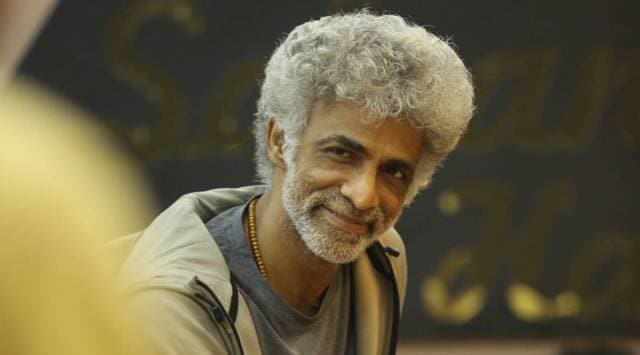
I take up films and TV projects to fund my love for theatre-Makarand Deshpande
8:06 AM
Neha Maheshwri (BOMBAY TIMES; July 16, 2024)
Known for his unique literary perspective and ability to transform life experiences into compelling stage performances, Makarand Deshpande captivates theatre enthusiasts, drawing them in large numbers to witness his vision come to life on stage. Currently, he has a busy week; he is set to stage seven plays (‘Patni’, ‘Sir Premacha Kai Karaicha’, ‘Manushya’, ‘Qatl’, ‘Time Boy’, ‘Ram’ and ‘Sir Sir Sarla’) as part of his group Ansh Manch festival at Prithvi Theatre.
‘I wanted to pursue something from which I didn’t have to retire’
Makarand was deeply involved in sports, particularly cricket, during his younger days. However, one day, while playing on the field, he was struck by a sobering thought about the longevity of his career: he would eventually have to retire. That realization sparked his love for acting.
He shares, “I just couldn’t bear the thought of retiring from cricket and wanted to pursue a career that wouldn’t require me to stop. I was cast in a play during college and enjoyed the process immensely. That was the beginning of my journey in theatre. I have spent more time on stage than on TV and film sets.”
‘Theatre is my existence now’
For Makarand, theatre is not a job, it is not even a passion. In fact, he says, it’s not even his love, it is his life. “When something becomes your way of life, you stop seeking validation,” he says, explaining why comments about the industry not giving him his due do not bother him.
“I think this transformation happened around seven years ago. Theatre is my life. Main isse jeeta aaya hoon aur karta aaya hoon aur usme se seekhta bhi aaya hoon. I am not a formally trained playwright or theatre person; I learnt on the job and from life. Mujhe zindagi ne jo jo sawaal diye uske jawaab mere naatak mein mile,” he shares.
‘As a writer and director, I feel more in sync with theatre’
As the conversation shifts to his preferred art form, he reminisces how he has always chosen theatre over big-screen recognition. “In the past, I wouldn’t dedicate more than 10 days to any film project. I would request small roles so I could complete the schedule and get back to writing plays. When my friend Ashu (Ashutosh Gowariker) was making ‘Lagaan’, he offered me a role and I was required to be on the set for six months. He even offered me a writing table because he knew about my love for theatre. However, I didn’t want to devote that kind of time to a film set. As a writer and director, I feel more in sync with theatre as it is connected to life, which is always moving. There is no alternative to living life. I take up films and TV projects to fund my love for theatre.”
The thought that theatre ek gareeb medium hai should change now-Makarand Deshpande, Lillete Dubey, Pratik Gandhi
9:43 AM

On World Theatre Day, Makarand Deshpande, Lillete Dubey & Pratik Gandhi talk about the joy of performing live on stage & its long-lasting connect with the audience
Debarati S Sen (BOMBAY TIMES; March 27, 2024)
As curtains rise and lights dim, audiences are transported into worlds of imagination, laughter, and reflection, reminding us of the enduring power of live performance to inspire, provoke, and unite communities. This ability of theatre to transcend boundaries, languages, and ideologies, getting people together from diverse backgrounds in a shared experience, is being celebrated today (March 27).
World Theatre Day reminds us of the universal human need for storytelling, empathy, and connection, emphasizing the enduring relevance of live performance in an increasingly digital world. We got together actor-theatre director Lillette Dubey, actor-director-playwright Makarand Deshpande, and actor Pratik Gandhi over to Prithvi Theatre, for a candid conversation all about stagecraft.
What are your earliest and fondest memories of theatre?
Lillette: I started staging plays when I was in school, and was reminded of that by my old neighbour, whom I met on a plane recently. She told me that I’d hold these solo shows, with music et al, when I was 9 or 10! Our house in Delhi’s South Extension had a big terrace, where I’d call neighbourhood children to watch. This lady also told me that I used to take 10 paisa or 20 paisa fee (laughing!) for the show. I’d make my siblings hold a white sheet like a curtain. I was a clever producer-actor (laughs!) even as a kid!
Makarand: As a young boy I remember watching my brother on stage. It was a folk musical and when it would come to an end, mujhe lagta thaa ki yeh kabhie khatam nahi hona chahiye! I loved it. As a child, theatre was full of happy memories, when I grew up and saw theatre is about tragedies, I was shocked!
Pratik: My first ever memory of theatre was when I stepped on stage in school, in the 4th -5th standard. Once a month, the whole school would meet at the auditorium, and you were supposed to perform. I made a skit of five minutes and the moment I performed; people laughed at the right places where I was wanting them to. And that was magic for me. Maine kisi to bola nahi tha kahan hasna hai. That was my first strongest memory – theatre is magic. And ever since that day, I always wanted to be on stage.
When it comes to the stage, the feedback with the live audience is instant, whether you’re good or not. Has this aspect of the form ever intimidated or made you feel nervous all these years?
Lillette: I’ve done theatre now for, even though it makes me sound like a fossil, more than 50 years. I’ve learned to strike back and not get thrown off by extremes – whether there is extreme laughter, extreme responses, extreme chatting, or extreme silence by a detached audience. I’ve learnt to deal with them. But even the most experienced actor would be lying if he said that audience response means nothing to them. I may not react to it and may have learned to override it with experience, but audience response does make a difference. Without an audience there is no theatre. Since it is a shared experience, the energy interflow is crucial. Only an actor on stage will know what it is and why is it so heady. It is also the reason why some of us mad people still keep doing theatre despite the limitations!
Makarand: It's deceptive. A 6 o’clock show gets a standing ovation, but the 9 o’clock show, with the same everything, gets nothing. And then the doubt comes in, ‘Am I not performing well?’ So yes, audience response definitely affects your performance immediately. Priming the audience can help to get better responses, so I talk to them before I begin. There are also some audiences who behave in a particular manner. You will get guffaws in Mumbai, but a Pune audience might just smirk at the same lines.
Pratik: In cinema, the teaser, trailer, poster does all the work of priming the audience, but theatre doesn’t have that. It is one place where the constant reaction of the audience helps you to overcome your own ego. I thought I’d get audience laughter here, I got it for 25 shows, why didn’t I get that for this show? Theatre over a period of time teaches you to overcome your ego. It is about playing second by second. If an accident of one second lingers on, you can ruin the whole play. That discipline, the ego fight is what you deal with on stage. Over the years, audience reaction stops bothering you too much as you learn how to gauge them.
What is your fondest memory of staging a play in Mumbai?
Makarand: My guru late Mahendra Joshi contributed immensely to Gujarati theatre. And when I started directing, he came for my first show. He saw that my lightman wasn’t there and offered to do them. I was overwhelmed. During the show he saw us improvising on stage and said, ‘Mac, improvise karega na toh main blackout kar doonga’. Only he could say that, and he actually did it! I feel so good remembering him. Once Gulzar saab came searching for me backstage and just gave me a long hug. That was enough.
Lillette: Making Jaya! I revived it after 26 years, a rock musical on the Mahabharat, with kathak and kalarippayattu. It’s a fond memory because it is one of my most difficult and challenging plays. Secondly, I was scared because Mahabharat toh sab jaante hai. But one of the biggest compliments I received for it came from people who knew the Mahabharat. They said, “Wow. This is such a different way of looking at it because it's contemporary, English, and has a rock band.”
When you are live on stage, what is the one recurring thought you have?
Pratik: I tend to think objectively about my performance, and I become my own audience. The continuous thought in my mind is that whatever I am performing is it reaching my audience, in what best possible way should I reach out to them with this line or dialogue. I know that the one word I said, I will get a pay off in 15 minutes. Dimag mein yeh chalta hain ki yeh audience ko clearly pata chale. At that point there are two people inside me – the character I am playing and me. On stage though it is all one unit.
Lillette: Everyone’s nightmare is only one – what if I forget my lines and go blank, what will I do? At such times, you need experience to find a way to come back. The other nightmare is your co-actor also forgetting his lines. People have forgotten their lines and gone to Act 2 in the middle of a scene of Act 1. The whole play of the first half is gone. That again has to do with the craziness of that theatre - the live aspect of it. It is one of the scariest live performing arts mediums.
Makarand: I feel that going blank on stage is not as scary as going off-timing. Theatre is not like stand up comedy, here you have situations, and the timing is crucial.
With the world celebrating World Theatre Day today, what does that mean to you?
Lillette: A lot! Not just as a fraternity, but because theatre is still acknowledged as an important part of our cultural landscape, especially with the emergence of multiple forms of entertainment and storytelling around us. It is still valued as one of the most important parts of the performing arts. Days like this highlight the fact that theatre is an integral part of our culture, about our being, the need to tell stories and share experiences. It is a huge part of being human. Togetherness is the foundation of it. Theatre brings joy, it sometimes reveals things we have not thought about. The most beautiful thing about theatre is the collective experience. And by celebrating World Theatre Day, you are putting the spotlight on the significance of theatre in our lives. And it is very important to us that the world acknowledges this.
Pratik: The thought that theatre ek gareeb medium hai should change. I feel that in this world of technology, the value of the real world will increase. If you are buying a 500 rs ka ticket for a film today, mujhe nahi lagta hai ki who din door hai jab aap 2500 ki ticket deke, live theatre dekhne aaoge. When you buy an artisanal chocolate, you pay hundreds more – theatre has to be that exclusive because only theatre and this live medium can give you that exclusive experience. In films everything is virtual, there is AI. Watching theatre once a week can be way more enriching.
Makarand: One day is not enough. Every week we should have one theatre day. The valuation of this real, live performance has to go up.
Television and films are considered to be a director’s medium where the actor has little control over the end result. All of you have worked in all mediums. Do you feel that actors have more control over their craft on stage than other mediums?
Lillette: In cinema, the director's vision is clear only to the director. It's not democratic. We don't sit and discuss. Nowadays, we do have readings, but only the director knows the tone of the film, the sur, the look of it, the sensibility of it. And you are just one part of the project, unaware of the whole picture. That is why even good actors sometimes don’t perform well in a film. Because they don't know and can't judge the entire picture.
Makarand: In cinema, the actor has no control. You are probably giving the best performance of your life when you hear a ‘cut’ from the director because maybe the camera angle was wrong or a picture in the background was not straight! In cinema the actor only gets to see the married print (audio and video is together). But in theatre there is a grand rehearsal where the actor knows when the music beings, when the light switches off and when another actor comes in. In cinema you don’t know anything when shooting. We are totally in the hands of too many processes. I feel a theatre actor is far more literate than anyone. Theatre and cinema cannot be compared. Theatre is thousands of years old and cinema is too young a medium to compete. Yes, the technology can compete but not the essence of theatre.
Pratik: A theatre actor can stand at a place and say this is England and people will believe it. Theatre make-belief ka sabse strongest medium hai. As actors, we don’t have much control when it comes to films and TV. Theatre with all the kind of freedom it gives an artiste, it also makes you ready, for that responsibility. I know that I have no one to stop me once I am on stage, but I should know when to stop, know how much to do. Bahut taaliya mil rahi hai par mujhe behna nahi hai. Script ka daayra manna hai. If any actor gets this discipline, he can add a lot of value to all other mediums. Even if I am performing the same play for the 25th time, the freshness, the punch, should remain intact, theoretically.

Main aisa aadmi hoon ki main theatre pe depend nahi karta-Makarand Deshpande
8:38 AM

Debarati S Sen (BOMBAY TIMES; January 26, 2023)
Actor, director and a playwright – many artistes can wear multiple hats, but very few can do it with as much of élan as Makarand Deshpande. In an exclusive chat with us, Makarand talks about the relevance of theatre, why it is difficult to survive on just theatre and more. Excerpts:
‘PEOPLE NEED TO FOCUS ON THE VIABILITY OF THEATRE NOW’
After over three decades in the industry, Makarand feels that despite the many challenges that theatre constantly faces, it will always go on. Makarand says, “Theatre toh chalta hi rahega. People need to focus on the viability of theatre now, as everything, including the rent for a theatre space, is becoming expensive. To make a living entirely on theatre is not possible today. But, no matter what happens, there will always be an audience for theatre.”
‘COMMERCIAL THEATRE AFFECTS CREATIVITY’
In the last few years, there has been a marked rise in commercial theatre and large-scale musicals that are backed by sponsors. We ask him if that can affect the creativity of thespians. “Commercial theatre does affect the creativity of thespians. But, given how difficult it is to make a living just on theatre, many thespians choose to take up commercial theatrical projects to sustain themselves,” shares Makarand.
‘THEATRE KE PAISON SE MERA GHAR NAHI CHALTA
In addition to those who are only In addition to those who are only dependent on theatre for their livelihood, there are people for whom creativity and art remain a priority. Makarand explains, “For me, theatre is not the only means of income. Main aisa aadmi hoon ki main theatre pe depend nahi karta for my livelihood. Theatre ke paison se mera ghar nahi chalta, so I keep doing the kind of work that I want to do. If you are dependent on theatre, someday you will have to bend and choose projects out of financial obligations. I have always believed that art prospers when you have everything under your control – your marzi – or when you feel the need to create. But, when you are forced to survive only on this, your craft will suffer.”
Older people and school kids have also started calling me 'Daddy'-Makarand Deshpande
8:20 AM

Having played don Arun Gawli in a recent film, Makarand Deshpande is finding escape in theatre
Reema Gehi (MUMBAI MIRROR; October 25, 2015)
An hour before the rehearsal of his forthcoming play, Maa In Transit, thespian Makarand Deshpande settles down for a chat at the patio of his favourite haunt, the Prithvi Theatre in Juhu. Written and directed by the 49-year-old, the play explores the journey of a son (played by Deshpande) who meets his mother in between the time of her death and her journey to heaven. The production opens on November 8 at the drama hub's annual festival. "I have told Kunal (Kapoor, managing trustee of PT)," laughs Deshpande, "to put my name on the Prithvi property, or to check if it already exists."
Given his association with the theatre bastion, that's perhaps not too outlandish a request to put forth. "I got formed at Prithvi," he smiles, sipping on his cutting chai. "During my early acting days, whenever I was on a film set, I always felt the need to run away, and where could I want to run away to, but Prithvi?" In fact, there came a point when Deshpande would often ask his film directors to give him only smaller roles and cameos, "just so that I could pursue theatre."
Last year, Deshpande made a rare exception. He donned the hat of a protagonist for the first time in a film. In the recently released Marathi movie, Daagdi Chaawl, Deshpande plays the Mumbai don Arun Gawli. Hair cropped short, dressed in a dhoti with the cap tilted on the side, Deshpande does share an uncanny resemblance with Gawli, popularly known as 'Daddy'. "Another character I seem to look like is Veerappan," he chuckles, before adding, "A film is so much about looking the part."
To understand Gawli better, Deshpande watched a lengthy television interview of the once-upon-a-time gangster-turned-politician with journalist Shekhar Gupta, "and the one thing that struck me was Daddy's gaze and I studied that closely and applied it in the film," says Deshpande. "Once, when I was on the set, there was a boy who had known the real Daddy and when he saw me, he almost came to touch my feet. I knew then that the getup had worked."
Living in Mumbai in the late 1980s and early 1990s, Deshpande says that one was always aware of the characteristic moniker, 'D ka aadmi'. "I had this habit of walking at night and talking to people. And I often encountered gangsters and gundas," he shares. "Then in the early 1990s, I was shooting for a film, Salim Langde Pe Mat Ro, during the midnight hours in Dongri. Whenever the dukanwallas would ask us when the film would be complete, we'd say six to eight months. They would then turn around and tell us we don't know if we'll be alive to watch it. But news about the Daagdi Chawl was the most deadly. And I was always intrigued by this one question — Why is the ganglord not called bhai? Why is he called 'Daddy'?"
Chandrakant Kanse's Daagdi Chaawl is a testimony of Gawli's popularity. "Older people and school kids have also started calling me 'Daddy'," he says. "The other day I went to my dentist whose receptionist quoted a line from the film, 'chukila mafi nahi' (if you commit a mistake, no one can forgive you). There are WhatsApp jokes about that line."
According to Deshpande, the reason why a film like Daagdi Chaawl resonates with Marathi cinema is because it remains close to "our cultural ethos." "We are not trying to make a film about a hero who is back from Canada," he reasons. "That kind of film won't work. In my next film, To Yeto, I play a father whose son has fallen prey to a leopard at Aarey Colony. In regional cinema, you have to make films that are our stories."
But, films are too literal, he says. Theatre, on the other hand, is about interpretation. "One is my understanding of a subject and the other is the audience's. The moment the breath is one, you know the play has worked."
In the same breath, he continues, "I know I am not a classic playwright, but I try and live life through theatre. Whether it has been a joyous occasion, or a confusion in my head or questions that I am saddled with, I address them in my plays. It is a cathartic experience."
To him, one of the biggest compliments was when actor Naseeruddin Shah, after watching one of his plays, said, 'kuch samajme nahi aaya, par bada mazaa aaya.' "And the day he understood my play (Sir, Sir, Sarla!), he got angry," chuckles Deshpande. "Theatre, for me, is madness and people come to watch my madness and the feeling that I am trying to portray. And Prithvi has been my playground."
People don't watch my plays for the story; they watch them for my madness-Makarand Deshpande
9:05 AM

Purvaja Sawant (BOMBAY TIMES; April 5, 2015)
With over 40 plays to his
credit, writer-director-actor Makarand Deshpande's devotion to theatre
is unmatched. For the first time ever, he is staging 10 of his most
revered plays at the Ansh theatre festival being presented by Bombay
Times, starting April 11. In an exclusive tête-à-tête, he talks about
the inspiration behind his theatre group and why he loves doing abstract
plays.
You've worked in theatre for more than two decades. What was the idea behind starting your own group?
I began doing plays way back in 1986 at Prithvi and would park myself outside the theatre all day long. I formed an informal drama troupe called Head's Together, where we only did platform performances. It was like street theatre. I did plays in Hindi, English, Marathi, Gujarati and even Sanskrit! Actors from all over India - from Kolkata to National School of Drama - would join me and we used to write plays together and work on them. Anybody and everybody who visited Prithvi would work with me. One day, I spotted actor Kay Kay Menon, who was performing a platform act, and decided he should work with me. In him, I found a pillar for the theatre group that I wanted to start. We worked on a biopic of saint Sadhu Vaswani; that was when Ansh was officially formed. I wanted to contribute something to the legacy of Indian theatre. Ansh is my contribution. At that point in time, we started churning out plays like a factory! In a year, we would come out with at least four original plays. I became a writer, director, actor, producer... everything. I would work in movies and TV and put that money in my plays, because it was in theatre that I found my calling and true focus. Theatre had a calming effect on me. Today, I have staged more than 40 plays.
This is the first time in 21 years you are staging a festival of your plays... why did you wait for so long?
For the last 10 years, people have been telling me to host a festival of my plays. But my mentality was that a fest means reviving old plays, and I didn't want to do that; I wanted to only work on new plays. Eventually, I decided to look at my old plays from a fresh perspective, cast new actors and add nostalgia. So, for the festival, I am calling my original actors like Anurag Kashyap, Sonali Kulkarni, Kay Kay Menon and Ratna Pathak Shah who have acted in these plays. Some of them will introduce the new cast. We will begin with Sir Sir Sarla, which was originally nine hours long! I am reviving plays like Ek Kadam Aage, Kasturi and Grihalaxmi that haven't been staged for years. There will also be new plays like Krishna Kidding and The Doll.
Your work has often been termed abstract and incomprehensible.
Yes. Actually, I was a rebel when I began doing theatre. I didn't want to showcase bedroom, kitchen or bus stop conversations on stage. Those are stories that should be captured on camera. Theatre is a medium that should explore what's inside your mind. It should give you an adrenaline rush. It should not be slice of life. There is nothing realistic about my plays. I belong to the world of magic realism. Ansh was formed because of my passion for this kind of theatre. People don't watch my plays for the story; they watch them for my madness. Anurag Basu had once told me, 'Your plays are open to interpretations'. In fact, when people criticised me, I decided to write Sir Sir Sarla, a story they could understand. I became instantly popular! But I am no here to make hit plays. That's why don't work on remakes, classics adaptations.
Why do you think you've survived so long in theatre?
I am lucky that many people have worked with me purely on good faith. For example, Vishal Bhardwaj com posed the original music for my play Kasturi, because he loved the story. Satyadev Dubeyji (playwright) would always tell me, 'You exist only because of your madness.' I got a lot of support from my mother too, who allowed me to take creative liberties and let me do whatever I wanted. She never asked me, 'When are you getting married?' or 'Why are you refusing films?' I think I have survived theatre for all these years only because I don't have any ambitions or dreams. I never wanted to become a renowned playwright, actor or director. I work and live in the moment.
Subscribe to:
Posts (Atom)