Showing posts with label Main Prem Ki Diwani Hoon. Show all posts
Showing posts with label Main Prem Ki Diwani Hoon. Show all posts
Prem Ratan Dhan Payo did well but when I look at it now, I don’t like to see the climax-Sooraj Barjatya
3:07 PM

One of Bollywood’s top blockbuster directors, Rajshri bossman, Sooraj Barjatya, 61, dives deep into his film journey as he switches into web-series with Bada Naam Karenge
Mayank Shekhar (MID-DAY; March 22, 2025)
Before I sit down with Sooraj Barjatya, 61 — the director rightly deemed the father of the great Indian family drama, ever since the blockbuster success of his Hum Aapke Hain Koun..! (HAHK, 1994) — I entertain an unusual thought in my head.
For decades, the gentle, reticent Sooraj has maintained a stoic, quiet public image. What if the actual man behind those conservative movies, dipped in shudh desi ghee, espousing love for mamaji, chachiji, samdhan, devar, is actually a wayward chiller, himself—given to slasher flicks at home, for his private pastime!
I playfully poke him with these fantasies, for this profile—asking him what he does for fun. He’s sweetly measured, as usual. For his hobby, he says, “I am right now into Puranas, reading the Gita, [Tulsidas’s] Ramcharitmanas; that’s my time for fun, when I am actually by myself.”
With Sooraj, what you see is what you get. There is no fakeness. We can see that. In fact, back circa 2001, he recalls, he had once gone over to Fire ‘n’ Ice, a popular nightclub in Mumbai’s Lower Parel. Director Farah Khan spotted him there. She instantly called up Karan Johar, wholly shocked: “Look, who’s here!”
Sooraj was with his wife, Vineeta. They retreated to a nightclub corner, where another partygoer simply asked him to please leave, bellowing: “Yeh [jagah] hum paapi logon ke liye hai [This place is for sinners],” Sooraj laughs.
The filmmaker was actually at a discotheque, in a sense, researching for his forthcoming film then, Main Prem Ki Diwani Hoon (MPKDH, 2003).
Which he wished to make, feeling the need to reflect something more trendy/hip. This is soon after Hum Saath Saath Hain (1999), an adaptation of the Ramayan, set in an Indian joint family.
Sooraj was in his “early thirties”, looking for a reset. He sacked his traditional music composer, Raam Laxman; brought onboard Anu Malik. For the lead cast, he had Hrithik Roshan, Abhishek Bachchan, Kareena Kapoor, instantly ready for the roster.
He says, “I feel so guilty towards all of them. Because they gave me everything. But while making that film, I realized, I am not there. This is not me. I was asking others, if they’d like what I’m making!”
A big feedback came to him from Bollywood’s resident pop-philosopher, actor Govinda. Sooraj says, “Govinda Ji sweetly met me [after MPKDH] to say that hits, flops come to everyone. That’s not the point.
“But, he told me, everyone has a purpose—ghode ka apna kaam hota hai, sheep ka apna kaam hota hai, sabka apna kaam hota hai. These words of wisdom stayed with me so much, that I then made Vivah [2006]. From that film onwards, I stopped wanting to be someone else. Then I can go to a night club to observe, and that’s good enough—but not try and become that person. It’s a liberating thought.”
MPKDH bombed in the theatres. Vivah had a “silver-jubilee [25-week] run in 125 cinemas, across the country.” Perhaps the last such film. To the point that the term ‘silver jubilee’ itself may be lost on the present generation of filmgoers.
But that’s how family films work—Sooraj, who’s also the bossman of Rajshri Pictures, the fountainhead of desi family entertainers, for over 75-plus years, explains its footfall math.
For one, he confesses, his core audience are women. They’re the ones who bring the family into theatres, in the first place. Sooraj says he’s deeply conscious of their tastes—even literally.
For instance, “Observe the food in our films. I make it a point that they’re carefully shot like advertising. In Maine Pyar Kiya [MPK, 1989], when Laxmikant Berde has to carry a tokri of puris, we kept reshooting it, because the puris had to be properly full-blown, on every take.”
Secondly, Sooraj distinguishes the mainstream family film, from a massy actioner. The latter gets the excited audiences right from Day One, for the first dib.
For example, “One would go to see a Dhoom 2, first. Which is what happened at Jaipur’s Raj Mandir theatre, where it replaced Vivah. But after eight weeks [once the audiences had seen Dhoom 2], Vivah was back for a 35-week run. People keep telling [others, about a family entertainer], and people coming, slowly, slowly...”
That’s the Rajshri experience. Sooraj recalls, “I’m going back to 1969. Two films released that year. One was Jigri Dost and the other, Jeene Ki Raah, from LV Prasad Ji’s banner. Both were with Jeetu Ji [Jeetendra], who was a big star. Jigri Dost had a house-full, whereas Jeene Ki Raah barely had collections in its fourth week.”
“L V Prasad Ji called up my grandfather [Tarachand Barjatya] to ask, ‘Where did I go wrong?’ He calmed him down, ‘You did no wrong. That’s Jigri Dost, and people will watch it first; it’s glamorous. Yours is Jeene Ki Raah, that audiences will visit, aaram se [in due course of time].’ That’s exactly what happened.”
The analogy Sooraj uses sort of settles the debate: “One is the new McDonald’s [in your neighbourhood]. But then, you have to come down to Maharaja Bhog [eventually].”
This is the theatrical thumb-rule, from those who’ve known them better. I suspect the same theory might apply to content on OTT platforms as well.
Wherein a new, flashy movie/show on a streamer catches full-on attention as the talking point on the first weekend. As if it’ll disappear after. Only, that sustainable content stays to be discovered, or rediscovered, forever.
Consider the Gen Z/Young Adult family (romantic) drama, Bada Naam Karenge (BNK), on SonyLIV. That’s the web series that Sooraj has turned show-runner with.
It bears the Rajshri stamp, like nothing you’ve watched on a streamer so far—large network of families, a sense of innocence among the young, flavour of small towns Ratlam, Ujjain, Indore…
Shailesh Kapoor, from the content tracking agency Ormax, I noticed, called the series a potential “game-changer” for the home-viewing ecosystem. I can see why. For years, the Rajshris weren’t entertained in the OTT scene; as Sooraj recalls, “They were looking for something edgier.”
BNK is a family series, quite separate from the over-the-top, overlong, swish-pan saas-bahu serials of Star Plus, that dominated Indian TV, 2000 onwards. It’s about subtle, real, young love, in the times of Corona.
What I was struck by is its unpretentious simplicity. It’s possible that you haven’t seen the series. It’s more possible that families will chance upon it at some point, while the word spreads.
The show features two lovely, debuting lead actors, Ayesha Kaduskar, Ritik Ghanshani—part of families that are loving, but conservative. And as it happens with the latter, extra-possessive of their young.
Their transgression is that they once lived together in a big city, out of a circumstance, given COVID-19. Their graver transgression, to me, for a Rajshri product, is they even drink at a party together!
Sooraj laughs, “Well, there is only one party-scene. And even there, I kept telling [director] Palash [Vaswani], if we can set it during Holi, and therefore thandai being passed around.”
It’s a world that Sooraj knows, because he spent a lot of time at his maternal grandparents’ home in Agra, growing up. Also, he says, his own Mumbai home mirrors that same joint family set-up/culture, including the youngest generations.
In the sense, more particularly, of the Marwari community, that the protagonists of BNK belong to. As does Sooraj.
Who, I find to be a fascinating lot—originally from a 50-odd kilometre radius in Rajasthan; spread across the country, broadening their business empires locally, retaining their filial and commercial connections globally.
Sooraj argues, “[Marwaris] are an amalgamation of the entire Bharat. We love to have a lot of money. But there are very few of us in the film business. Because we want to be safe. Before we invest anything, we must know how much we are going to get back. This is very difficult in this profession. Especially, creativity doesn’t come first to us. We know how to make money, out of money. But I think [Barjatyas] had to be here. And we had to tell some stories.”
Before there was fake news, there were quiz masters, who made up facts for questions at inter-school/college competitions. And since Internet hadn’t deepened enough to verify the supposedly right answer, we just won/lost points, from our guesses, and moved on.
One such question asked to my team, I remember, was the visual of a female actor in a song, perhaps from Janwar (1965), ‘Tum se accha kaun hai’.
Question: Who’s the actor, and what’s her relevance to Bollywood history? Answer: Rajshree, V Shantaram’s daughter, on whom Rajshri Pictures is named. This was during college/school. Although I won’t find that phony quiz-master again, it’s taken me years to prove this as fake fact/news.
Sooraj tells me Rajshri Productions is named after his paternal aunt, Rajshri Saraogi (nee Barjatya), who was born the same year the film company was founded by his grandfather, Tarachand. That date being August 15, 1947—making Rajshri exactly as old as independent India!
The company was founded in Kolkata, which is where young Tarachand moved to, from “Kuchaman, a small estate in Rajasthan.”
The only thing Tarachand ever wanted, Sooraj says, was to earn well for his mother: “She came from a poor background, she couldn’t eat well in her sasural. And he wanted to provide for her. That ambition drew him to Calcutta.”
Tarachand found a job as a manager in a Bengali film company, Chamaria Pictures, where he performed rather well. Except, as his family grew, he wished to expand, and go his own.
The company allowed him to pursue his side-gigs, alongside. Which is how Tarachand started a small arm, distributing films for Central Provinces-Berar, a tiny province of British India. But what films could he start with?
Sooraj says, “My grandfather would get tears in his eyes, when he’d tell me about Gemini Pictures, and Shri S S Vasan, in Madras.”
Basically, Vasan/Gemini Pictures had made a huge blockbuster, Chandralekha (1948). Tarachand urged them to dub it in Hindi. Vasan was unsure—who would watch a non-star cast pic across India?
Tarachand persuaded him nonetheless, including shooting portions of the film, with actors originally mouthing some lines in Hindi. Once done, Vasan offered “all India distribution rights of Chandralekha” to Tarachand.
It’s something the young entrepreneur couldn’t believe. “Chandralekha was the Baahubali of its times, or what Pushpa would be today,” Sooraj recalls. Such is how Rajshri entered the big league, subsequently setting up distribution offices across North India.
Similarly acquiring films from the South, for nation-wide releases, with Hindi dubs. Essentially, what’s now called the pan-India release.
And then, of course, they combined it with distributing popular Hindi titles, having established a deep trade-network.
Rajshri entered film production, only in the early 1960s. That’s the business Sooraj’s father, Raj Kumar Barjatya, oversaw. Their breakthrough was Dosti (1964), starring two unknown male leads, Sudhir Kumar, Sushil Kumar, with a phenomenal soundtrack, that continues to resonate.
Sooraj says, “Dosti took everyone by surprise. People first said, who would watch? It’s a black and white film. Langde andhe ki picture hai [it’s about a blind and lame man]. But my grandfather was spiritually inclined, and he was convinced.”
Throughout his career, Tarachand would visit The Mother at her ashram in Pondicherry with his film ideas. She had decreed that he only make films that “elevate the consciousness of humans/society.”
Dosti was one of them. He never looked back after. Sooraj remembers, “As a child, I’d be on story sessions with my grandfather, listening to all the top commercial pictures, and he’d say, ‘It’s a superhit film, but of no use to us.’ I used to wonder, if it’s super-hit, why is it of no use to us? So, then, he took me over to our company emblem, that is [Goddess] Saraswati. And he told me, ‘Jo yahan banega usmein Saraswati ka vaas hona zaroori hai [Saraswati must reside in whatever gets made here]’.”
The script of Rajshri mainly drew from Indian literature. The directors were relatively lesser known. Also, since, as Sooraj puts it, the celebrated ones would want to produce their own films.
But, more importantly, as he says, the lead actors in those films couldn’t be the popular hero-heroines of the times. The subjects were such. The superstars could simply not slip in.
He says, “For example, if you see Uphaar [1971]. There’s a crazy girl. Now, you can’t just put any star in there. You need someone without a screen image. Or a film like Geet Gaata Chal [1975], about a teenager. How can you put ‘Shah Rukh Khan’ in a teenage role? It has to be a newcomer. Those were the subjects we picked.”
For instance, Amitabh Bachchan did star in a Rajshri film, Saudagar (1973). But this is right before Zanjeer (1973). Which made his ‘angry young man’ stardom too big to fit into a Barjatya vehicle.
It took Bachchan almost 50 years to feature again in a Rajshri production, aged 79, with Uunchai (2022), directed by Sooraj; about friends, who are family.
What Rajshri mastered was essentially “the non-star film” that, in turn, gave debutants breaks into an industry that has perennially faced the insider-outsider divide.
As Sooraj says, “I can go on listing the breaks from Rajshri: first film of Sanjay Khan, Jaya Bachchan Ji, Rakhee Ji… We can go down to Mithun [Chakraborty] Da’s first commercial picture; Raj Babbar Ji’s first film was signed with us. Naseeruddin [Shah] sir’s first commercial film…”
It’s astounding alright. What’s equally astounding about Rajshri that I had heard, years ago, is they’ve had a rather precise rule-book of sorts, detailing stuff you can/can’t do in a Rajshri film. This is besides that the whole family should be able to watch the film together.
For instance, Commandment #1: You can’t have a villain in a Rajshri film. The ‘circumstance’ is the villain! Commandment #2: There should be no action. And if there is a required action sequence, the number of punches cannot exceed 14!
Not 13, not 15; 14, to be sure. No, wait, is this really true? Guess what, Sooraj says, “Yes, it is,” and asks me how I know. Actually, I have no clue how I know!
Sooraj smiles, “My grandfather and father’s point was that since the villain is a must—it’s best if it can be a circumstance. We don’t need to have too much of violence, hence.
“HAHK: Bhabhi (Renuka Shahane) dies. That’s all there is to it. She slips. It’s a circumstance. MPK: Currency notes get destroyed by water. Poor boy, so that is a circumstance. Now, Uunchai: The heroes want to climb up [a mountain]. There, age is the circumstance [for an antagonist]. As for 14 punches in an action sequence—that was told to me while making MPK, because I was a young man, and the action director can go on, with a fight sequence [if you don’t put a cap to it]. So, 14 punches. That’s it.”
And it’s not that the rules have always been followed, though. Sooraj admits, “Whenever we have deviated, it hasn’t quite gone down well.”
I bring up his last film with Salman Khan, Prem Ratan Dhan Payo (2015), for instance. He says, “Salman and I can see through each other. The first draft [of Prem Ratan] that I took to him, he said, why are we complicating things; go for simple. Yet, I put some action into it, because I wanted to [serve his audience]. I tried to play it safe. I should have just made a straight emotional affair. The film did well. But when I look at it now, I don’t like to see the climax.”
While Rajshri has been around since 1947, Sooraj was the first member from his family firm to actually direct films. His late father, Raj—better known as Raj Babu in film-industry circles—he says, “had modelled himself on Irving Thalberg of MGM Studios.”
But he had the eye/ear for great stories. And what Raj Babu left behind for Sooraj is actually a detailed file, with plot-points from movies he’s liked—whether from Rajshri or other productions.
Knowing his son’s natural inclinations as director, Raj Babu felt the file would serve as the North Star for subjects to pick. One of the notings, for instance, is where Uunchai came from.
I never got a chance to interact with Raj Babu. I do remember observing him once, from a distance, at a talk by Hollywood’s top screenwriting guru, Syd Field. Everybody was listening. I noticed Raj Babu, sitting down like a student, taking copious notes, instead. Which is ironic, only for the fact that if Syd Field, a stickler for the three-act screenplay structure, ever watched Raj Babu’s idea for Sooraj, HAHK—he could still flip in his grave. Now, that’s a film, without a conflict, up until its final 30 minutes, that defied all logic of screenwriting.
Sooraj says, “The [HAHK] structure originally belongs to [Rajshri’s] Nadiya Ke Paar [1982]. We owe it to K P Mishra’s novel, Kohbar Ki Shart. Which was a textbook in Agra University. My father had read the book. And if you relate the novel to HAHK, Madhuri [Dixit’s character] gets married to Mohnish [Bahl’s character]. What follows is a massive drought in the village, where everyone dies. That’s the third act. My father didn’t like that [final] part of the story.”
So, technically, HAHK was without a third act. Hardly ever has a film been loved more. Madhuri Dixit was its superstar. Incidentally, she had also debuted in a Rajshri production, Abodh (1984), where Sooraj was an assistant.
Back then, Sooraj was given the charge of counting Madhuri’s bangles on the sets of Abodh. Which is when his mother had come to visit.
She was dead against him turning into a director, which she felt was a financially unsafe pursuit. She would’ve liked him to own/run studio-floors instead.
Back home, she admonished Sooraj, “Is this what you’re going to do in life—count bangles?” Sooraj’s dad, with a filmmaking bone of his own, fully betted on his son.
This was at a time when Rajshri were at their financial lowest. Mad actioners had taken over Indian screens. Middle-class audience stayed in to watch films on video players, that made for a more comfortable home entertainment. It was a novelty.
The 1980s, being no different from 2025, with the cycle repeating. And people hitting theatres, only for spectacle as cinema, and bingeing on OTT platforms, at home, for everything else. It’s a phase, of course.
That said, Raj Babu and Sooraj could see the revival of musicals with Saturday Night Fever and Grease, and the like, in Hollywood. That’s the genre Sooraj picked for his first film, a young romance, while he’d only just turned 20.
MPK became a sensation. It revived Rajshri. A condition that Sooraj’s mother had laid before him turning director was that he must get married first.
Which is what he did at 21. HAHK followed. I wonder if he put all that he saw at his own wedding into HAHK! Sooraj says, “That, and so many other family weddings I had been to.”
HAHK is packed with songs and anecdotes, as in kissa, as against story, or kahaani. The beauty of the film is, of course, the space it accords the ensemble cast.
You have Salman [back from MPK] standing in a corner of scenes, while the samdhi, samdhan, mama, chacha, etc, take centre-stage! And this can only happen, because the new superstar had already trusted the director Sooraj’s conviction once.
They first met, because a model, Shabana Dutt, who had also tested for a role in MPK, didn’t land the part, but recommended Salman.
Sooraj recalls, “Salman thought he’d be given dhoti and bansuri for his role, because those are the films Rajshri used to make. He heard the script slouched on his seat, and straightened up only once he heard the ‘Kabootar jaa’ segment. But his auditions didn’t go well. His voice had no throw.”
Choreographer Farah Khan, Salman’s friend, came over to help him with the dance auditions. That bombed too. It’s just that once Sooraj got him to pose to the Rishi Kapoor romantic song ‘Oh hansini’, he could see a debutant heartthrob.
Only, that Salman was already appearing as a second-lead in a mid-tier film [Biwi Ho To Aisi]. Newcomer lead was a must. All this while, Salman kept sending Sooraj pictures of his friends he could cast instead.
Even when Sooraj went over to an ad shoot to finally express regret to Salman for MPK, the actor continued to introduce blokes on the set that he should have for the film!
Sooraj says he was floored by the “genuineness of a human being, first.” It had to be Salman. The rest is history.
Which, I realize, actually goes back to one more generation! Sooraj says, “Salim [Khan] Saab [Salman’s father] tells me he owes his move to Bombay, also to Rajshri Productions. He lived in Indore. That’s where the wedding of my tauji/uncle [Kamal Kumar Barjatya] was being held. Salim Saab said he was a ‘struggler’ then. He knew there would be lots of film dignitaries at the wedding. So, he came to see [having gate-crashed]. There, he met producer, Mr. K Amarnath, who told him, ‘Hero banega? Aaja Bombay!”
And he came to Bombay.
Family values will always be important-Sooraj Barjatya
8:35 AM
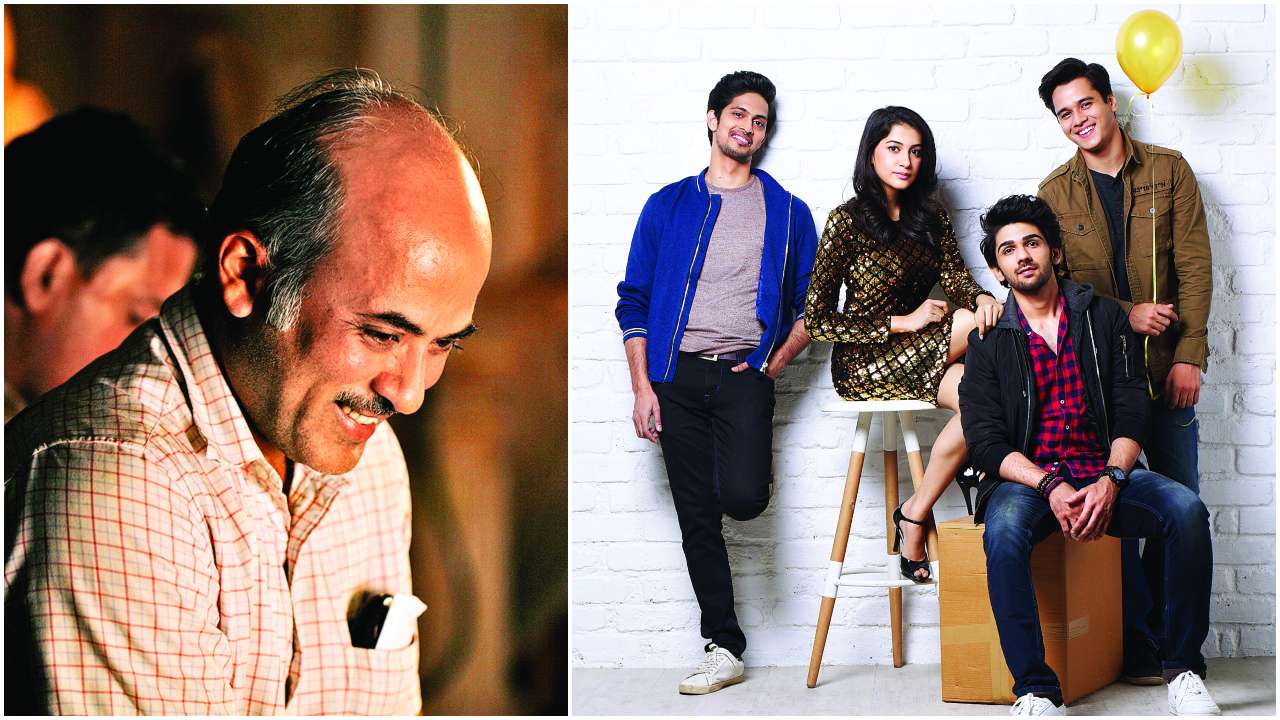
Meena Iyer (DNA; February 9, 2019)
With his quiet demeanour and soft-spoken nature, Sooraj Barjatya in a way epitomises the values that his movies espouse. The filmmaker, who has given cinegoers blockbusters like Maine Pyar Kiya (1989), Hum Aapke Hain Koun..! (1994), Hum Saath-Saath Hain (1999), Vivah (2006) and Prem Ratan Dhan Payo (2015), is known for making clean, family entertainers that cater to audiences of all ages. The 54-year-old, who has played an instrumental role in taking Rajshri Productions to the masses and classes alike, talks to us about being a creative producer for Hum Chaar, mentoring his younger son, Avnish, who will soon make his directorial debut and helming movies that he believes in...
Hum Chaar is a different take on friendship
My last production was Prem Ratan Dhan Payo (PRDP) in 2015. My films are family fare and I know my audience is 35-plus. For a while, I was thinking about making a movie where we could talk a bit about our values. But the language had to be different from mine.
Abhishek Dixit, who has been a creative director in marketing, came to me with the concept about how today, friends are more like family. These are the people who come in to stand by you. I asked him what made him think so. He wondered how many people spend time with their parents on birthdays, anniversaries… Not many of them. We’re at work and indifferent, so we celebrate by ourselves… Then he explained that in his family too, he can’t call up anyone anytime to discuss his problems or share something. If his bhabhi is busy, he has to ask her to make time for him… There is aupcharikta (a certain formality) now.
Also, when I look at my kids and nephews jo Gwalior se Mumbai aaye hain... Their parents are worried, ki inke dost kaise hain, whether they are drinking and partying. So, they are judging... but these boys say, when we lose our mobiles, these are the guys (our pals) who come with us to the police station. So, if we are not judging chacha, chachi, etc, why are you judging our friends? When you see this, you feel this is a nice subject to make a movie on. Abhishek has done it in his own way. I’m looking forward to this film.
It’s a story of pure friendship, but told in a different way. I was involved as a creative producer throughout, because I wanted the correct launch for Abhishek and the actors. Also, I was keen that I wanted one film that doesn’t have my trademark style. I was certain that the director should not follow my way. He wanted some of the old songs, but I asked him to retain his own language.
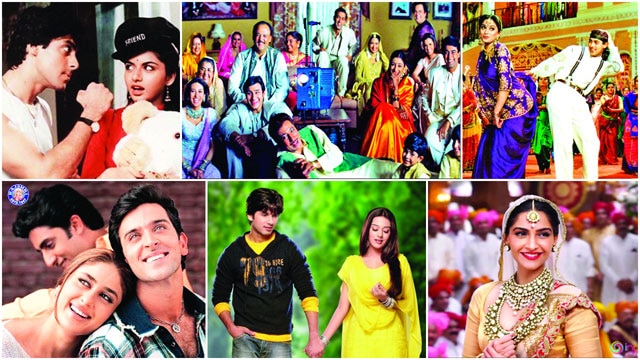
Maine Pyar Kiya; Hum Saath-Saath Hain; Hum Aapke Hain Koun..!; Prem Ratan Dhan Payo; Vivah; Main Prem Ki Diwani Hoon
Taking the tradition forward
I was supposed to start my film with Salman (Khan) and I had spoken to him, too. But my younger son Avnish, who wanted to pursue CA (chartered accountancy), gave it up. He told me he wanted to become a filmmaker and assisted me on Prem Ratan Dhan Payo (PRDP). Since the last one year, he has been working on the script and this month, we’ll lock it.
The love story is a bit complicated; that’s his zone, it’s his choice. Like my father allowed me to make films my way, I’m guiding Avnish, in case he requires anything from me, I’m always there for him.
I’m happy that both Avnish and Abhishek have kept the sur of Rajshri Productions because anyone going to see our film will be satisfied with it, that’s important for us.
I told Salman that once it’s done, I will start working on our film. That’s why there’s been some delay. But, it’s also after 30 years that we have another director from our family. So, it’s a big moment for me, for us.
I just realised that I’m more nervous this time than when I was starting my journey.
‘I must make what I believe in’
The family values remain the same, they will always be important. I made Main Prem Ki Diwani Hoon (2003), where I tried to do something different. Then I realised that you should make what you are, irrespective of what the market says. You create your film, ussi sur mein you experiment. You don’t need to ask anyone else what to make and how to do it. That’s for the next generation. I must make what I believe in and I will find my audience.
For example, PRDP is a huge hit in the Hindi belt and even on TV as it represents Bharat. In fact, all my films cater more to Bharat than India (the metros). So, I’m happy in my zone and I must be at peace. With age, I feel more responsible about how to tell these stories in an entertaining way because it’s important.
When our film releases, people say ki dadi ko dikhana hai, dada ko dikhana hai etc... The younger generation comes with that idea because they feel that they must show it to their grandparents. Even with PRDP, it felt nice to see old people coming to watch a movie, trusting that it’s a family film. It had its core values.
I told Avnish that this should be there in his film too, in his own way and space.
Hum Chaar caters to Bharat’s youth
I hope this film reaches everywhere. It’s a youthful Bharat because the director has stayed in Lucknow, Kanpur and Noida. I told him to make this film the way he led his life because that is what I trust. I told him not to worry about what works or sells but to keep the humour because he has a good sense of humour and he, himself, is a writer. If it caters to India, it is good; but, otherwise, it will surely cater to the youth of Bharat.
These are not the times to aim for certain things like how we did during Hum Aapke Hain Koun..! (HAHK, 1994) when it was like let’s make a number one hit. Having said that, I didn’t make it thinking like that, but it did become a huge hit. It’s going to be 25 years since HAHK, but I haven’t planned anything yet.
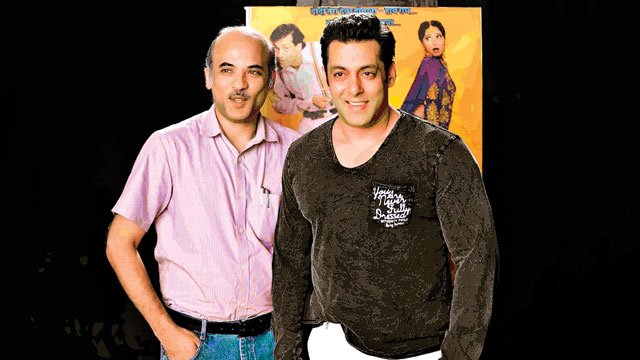
I took a sabbatical because I wanted to re-evaluate what I was doing & how I was doing it-Abhishek Bachchan
8:11 AM

Rachana Dubey (BOMBAY TIMES; September 12, 2018)
His two-year hiatus from films was marked by more appearances at football and kabaddi matches, and a stoic silence on the work front, until his next film came up for release. Abhishek Bachchan chose to stay away from the spotlight for two years only to strategise the road ahead. On the eve of the release of his next, Anurag Kashyap’s Manmarziyaan, the actor speaks to BT about what kept him away from the big screen, the changing definition of romance, the evolving audience tastes and more. Excerpts…

Yes, this gap was actually planned. I took a sabbatical because I needed to stop doing what I was doing. I wanted to re-evaluate what I was doing and how I was doing it. It took me two years to put a plan in place and make it work. It took me that much time to resume being an actor. I was thinking over this for long. I felt complacent and it took me a while to re-energise, reassess myself and get back.
Today, taking a step back is a huge risk for anyone in show business. Also, the industry is far more calculated and aggressive in its approach...
I calculated the risk I was going to run and I was convinced that it was one worth taking. I was also sure that I would make it work for me. You have to be able to do your work better. I wanted to change the way I worked. I wanted to be more focussed and create a new set of goals. You know something? I never had a plan in my career. I was just happy acting and doing the best of what came my way. I realised that if it’s a career, it needs to be planned. When I set out to do that two years ago, I wanted to challenge myself and feel uncomfortable about the roles I was doing. I just had to ignite that fire in myself again. There’s no shame in asking questions to yourself, and if answers don’t satisfy you, then you can kick into a different mode and do things differently.
Your father Amitabh Bachchan’s career has been through almost everything an actor can experience in one lifetime. Did you model your journey’s 2.0 version on what he did when he decided to reinvent himself as an artiste?
No, I didn’t. My career path is nothing like my father’s and it never will be. Don’t even think about it. For once, I thought selfishly and decided to do things my way. It’s not like ‘if someone could do this, so can I’. It was about how I wanted things to be. Your circumstances are completely different from anyone else’s. I was very sure that Manmarziyaan was the right decision for me in that direction.
In the 17 years that you’ve been around as an actor, a lot has changed. For instance, the number of stories that have a stronger female voice are on the rise. From writing a compulsory part for an A-list male actor in a female story, to letting a heroine take centre stage with two strong male stars, don’t you think the industry has come a long way?
I don’t think that is a change; it was always that way. We don’t acknowledge the fact that this is a business, a creative one related to an art form. Films are patronised on the basis of the business that they generate. That dictates everything from casting to costing and everything beyond. You can’t get too caught up with that as an actor. I’ve been a part of many films where a love story is centred around the woman. Paa was like that. Main Prem Ki Deewani Hoon was about a dilemma that Kareena Kapoor Khan’s character faces while choosing her man. These kind of films have always been around.
I’m talking about the kind of films that are now getting made in every genre, which, right at the core are different from films of the 1990s and 2000s.
That change is dictated by commerce. A lot of these masala action films are made because they do business. The reason particular actors get the billing they do is because they work at the box office. If they don’t, they won’t get a job again. It doesn’t matter if it’s a man or a woman. I agree there has been a lot of discussion about this. Having been a producer and as someone who grew up in this industry, I’ve realised that at the end of the day, how you fare at the box office is what matters. If you’re doing well, no power on earth can shake that. I have seen the mightiest of the mighty go through a bad patch and that’s it; they are forgotten. They are cast aside. It has happened with me as well. One year, I was there, hitting the ball out of the park. Two-three films don’t work and people stop calling you. They don’t care because this is a business. It’s harsh. The difference in the industry lies in the variety of subjects that people are willing to consume today along with what they already like. The audience is seeing and accepting a lot more. It’s safe to say that 20 years ago, getting a director like Anurag Kashyap to give his interpretation on a love story like Manmarziyaan would not have happened. It’s possible today because the audience is open to a different voice.
Also, a decade ago, Abhishek Bachchan and Anurag Kashyap, with their distinct body of work, would also not have teamed up for a film (except for a project like Yuva, whose dialogues were written by him).
We don’t say Anurag Kashyap and a love story in the same breath, do we? I think Anurag has also had to change a lot of stuff around him. He is at a stage where he wants a challenge and this film is just that. He was open to trying something like Manmarziyaan and that attracted me to know his take on a love story. We joke with Anurag that when we watched the trailer, we were waiting to see the serial murder pop out of the screen and spread blood on the floor. Anurag, too, is in a phase where he wants to reinvent himself.
In recent years, the idea of a formulaic love story has changed. Today, the focus is on the depiction of a man and woman’s equation in a more realistic set-up.
That’s because your audience and the generation has changed so much. Today’s generation is far more all-encompassing and non-judgemental, and I am not saying that in a good way or bad way. Even the idea of romance has changed. During my parents’ time, when they were courting, their parents probably would have said that ‘If you are going to bring a girl home, you better commit to marriage’. During my time, it wasn’t like, ‘Oh you’re marrying her’. It was okay; parents could come to terms with their children having a girlfriend or boyfriend. The current generation of youngsters is borderline frivolous about relationships. It’s normal and acceptable to have a girlfriend or boyfriend, it’s no biggie. No one is going to put you under pressure to marry the one you’re dating. I don’t know if marriage is an institution anymore that the millennials think is worthwhile. God knows, years down the line it may not even exist. I have always believed art is a reflection of real life. That’s the way movies are also moving forward. Romance has changed since the 1950s. It’s the genius of Aanand L Rai to get Anurag to direct a love story because he can give it a contemporary twist and make it palatable for the current generation. At some level, today’s youth will connect with the characters.
Do you think you will find takers for this film right at home – your nephew Agastya and niece Navya Naveli are from the generation you’re talking about…?
Absolutely, they will relate to the film. You know it’s a privilege that I get to see and understand their lingo and thoughts very well from close quarters. I get to witness what their generation thinks. I also get a chance to understand a lot about the generation after them, which is the one Aaradhya belongs to.
In the last two years, one word that seems to have had drawn opinions across the industry is nepotism. While there’s talk about your niece Navya Naveli joining films, the debate continues on whether being an industry kid gives you an edge. What’s your take on that?
Is being an industry kid beneficial? Yeah, it is, but it’s not always beneficial. It only helps till your first film. I remember Yash uncle (late Yash Chopra) told me at the premiere of my first film, Refugee, ‘Your father has got you up to the premiere night of your film. It’s your journey from the next morning’. His words ring in my ears even now. You have to prove yourself. No one in this industry has had an easy journey. If you are not talented, hard-working and humble, no one will give you work. It doesn’t matter whose kid you are. Initially, is it easier? Of course, it is. But it’s so in every field. At the end of the day, if you are gifted and meticulous, you will sail. Look around you, and you will find way more examples of people who have made it big in the industry without being industry kids. I don’t see what the debate is about because it’s a reality that everyone is aware of. No one seems to talk about other professions because it’s not really an issue over there. We are privileged to be born here, and the people who enjoy the privilege, as far as I know, don’t take it for granted. If they do, they’re not getting their next job.

I cried when I saw Salman Khan go into jail in Jodhpur-Sooraj Barjatya
8:07 AM

Priya Gupta (BOMBAY TIMES; November 10, 2015)
Sooraj Barjatya, 50, has
unconditional love for everyone and he can cry seeing goodness.He is
honest, soft-spoken, pure and spiritual. In today's film world, where a
single successful film corrupts a director, he has managed to believe
and invest in his kind of cinema over 27 years. Ahead of his Diwali
family entertainer Prem Ratan Dhan Payo, he talks to Bombay Times about
his love for his father Rajkumar Barjatya, his learnings from
his failure and what makes Salman Khan the best person he knows.
Excerpts:
How did you become a filmmaker?
We are a conservative Marwari family with origins from Kuchaman in Rajasthan, but I am born and brought up in Mumbai. My grandfather Tarachand Barjatya started as a distributor of films even before 1947 and then turned producer in the 60s that my father took up. I have two uncles (my father's older and younger brothers) and so I had the luxury of being brought up by three fathers. I remember going to school in Prep for the first time and being asked, 'What is your father's name?' I didn't know who to name because for me, all three of them were my fathers. And that's the security that comes out in my films. I saw my father as a producer struggle with his directors, who would not be able to give him the passion he wanted as a filmmaker, and I wanted to give him that one film that he could be proud of as a producer. It was my good fortune that I worked as assistant to Mr Mahesh Bhatt in Saaransh when I was 19 and that taught me filmmaking. He told me, 'If you want to make a film, start writing', and that's when I started writing my films. While Rajshri Productions had made hit films in the past, this was a low phase as video tapes had come in, that badly affected the business of family-oriented films as families would sit at home and watch them on video. I then made my first film Maine Pyar Kiya in which we put all the money we had and that became a big hit.
Who do you love the most in the world?
My father and me are not expressive to each other and hardly speak about our feelings, but I love him the most in the world. I know that he is always there for me despite my failures. He gives me all my stories and despite that, he allows me to take credit for all that he does also. The only story amongst the ones I directed that I chose myself was Main Prem Ki Diwani Hoon, which didn't do well. He knows as a filmmaker what I can do best. He always wanted to become a director himself, but he was too shy, so possibly what he likes the most about me is that I am able to write. He always respects the writer in me more than the director in me. He has a temper, so he likes the fact that I don't lose my temper and am patient. I think though he would like me to be a little more selfish and to think a little more about myself and less about others.
Have you faced failure?
I have been very fortunate to always have had the luxury of emotional security and good wealth but my lowest phase, that was also my biggest learning, was at the time of failure of Main Prem Ki Diwani Hoon. That's the only film I made keeping in mind what works but it failed. M F Husain sahab had seen Hum Aapke Hain Koun 75 times and he saw Main Prem Ki Diwani Hoon and said, 'What have you made?' and that's when I realised that I had failed. That's also what made me learn that you have to have the courage to make what you want to and what you believe in as against what you should and I made Vivah, whose success is now taking me beyond.
Who was your emotional anchor?
My father and my wife. We spoke about it and there were regrets but we believed that you have to bounce back. My family supported me, did not blame me for it and gave me the wisdom to make what I wanted to. I took time off and started producing TV.
Why did you think of such a desi name like 'Prem' for Salman Khan?
My father, Raam Laxmanji (music directors of Maine Pyar Kiya) and Salman were thinking of what name to give the hero. That time, there was a big hit called Dulhan Wahi Jo Piya Man Bhaaye and the hero in that was called Prem, so we thought of naming our hero also Prem, hoping that out film would also work. But after putting the name Prem, we got a lot of negative feedback as people would associate it with Prem Chopra and Prem Nath. But we kept it, it worked and it's still going t on. For Salman and me, it now represents our yaadein.
One can make out that you are extremely attached to Salman.
Yes. He is always there for me and he too, knows that I am also there for him. I feel very protective about him but he is also someone who I can actually go and confess to if I have done something wrong. There is no better natural actor and person than him.
We have never seen you at filmi parties.
I don't socialise much. All my time is spent in observing families.
What is it about families that attracts you?
Family is such a beautiful thing. What's the use if you go back home and there is no one there? Having and bonding in a family is like a fairy tale. What comes across in my films is always like a dream for me. I feel life may in reality not be like that but I feel it should be like that. For those 3-4 years that I make my film, I live in that life and I feel so happy about creating it.
There must sometimes fights in your family, too.
Yes, but it's dealt with.
You are a generous producer when it comes to investing in your films.
There is always a sound professional calculation before we make a film, but it's never about itna laga ke, itna kamaayenge. Making a film is a passion for me. The day as a filmmaker you start calculating how much money you can make, then you are doing business and you should open a shop instead.
Are your dreams fulfilled with Prem Ratan Dhan Payo?
Yes, but I want to make 2-3 more films with Salman.
Will you work with another hero in your film?
When I have Salman, I don't need anyone else. I want to do so much for him in my zone. As an entertainer, he would get better directors and make bigger films, but I want to get his platform of bringing back values of humanity.
You don't party, he parties, you go off to sleep by 11pm and wake up at 6am whereas there could be times when Salman could be sleeping close to the time you get up. Looking at Salman and you, it's difficult to imagine how you can be friends.
We both are the eldest in our families, we both love our families, we both feel responsible for our family, we both have the love of our parents and having worked in these films together, we have become like one. Yes, we may be living different lifestyles, but our core is the same.
So what would you do when you spend time together, say three hours together.
One hour goes in remembering the old days, another one hour will go in me lecturing him about many things and the last one hour will go in how we can make better films in the future.
Have you cried for Salman?
Yes, when I saw him go into jail in Jodhpur.
Salman's Bajrangi Bhaijaan has received a lot of love from his audience. Which is your favourite Salman Khan film?
Prem Ratan Dhan Payo.
Only directors like Raju Hirani and you, who have remained pure to their kind of cinema without corrupting it, are consistently successful today. Is there a formula for being a good director?
I feel in any film, an actor and director must have one vision. From day one, when I went to Salman commercialising the script of PRDP basis his mega image, he said, 'Sooraj babu, for what?' I said, 'We are then going back 27 years' and he immediately said, 'Yes, that's what we should do.' I have learnt that you have to believe in what you want to say and what you want to make as against what works.
What would you like to change about yourself?
My biggest victory is that I have got over judging people. I have worked on myself to achieve that through my spirituality and today, it has made me totally at peace with myself. But I am still not able to deal with any kind of negative energy as it affects me. I am not able to say a 'No' to people. I could easily learn to be a little more assertive.
How did you become a filmmaker?
We are a conservative Marwari family with origins from Kuchaman in Rajasthan, but I am born and brought up in Mumbai. My grandfather Tarachand Barjatya started as a distributor of films even before 1947 and then turned producer in the 60s that my father took up. I have two uncles (my father's older and younger brothers) and so I had the luxury of being brought up by three fathers. I remember going to school in Prep for the first time and being asked, 'What is your father's name?' I didn't know who to name because for me, all three of them were my fathers. And that's the security that comes out in my films. I saw my father as a producer struggle with his directors, who would not be able to give him the passion he wanted as a filmmaker, and I wanted to give him that one film that he could be proud of as a producer. It was my good fortune that I worked as assistant to Mr Mahesh Bhatt in Saaransh when I was 19 and that taught me filmmaking. He told me, 'If you want to make a film, start writing', and that's when I started writing my films. While Rajshri Productions had made hit films in the past, this was a low phase as video tapes had come in, that badly affected the business of family-oriented films as families would sit at home and watch them on video. I then made my first film Maine Pyar Kiya in which we put all the money we had and that became a big hit.
Who do you love the most in the world?
My father and me are not expressive to each other and hardly speak about our feelings, but I love him the most in the world. I know that he is always there for me despite my failures. He gives me all my stories and despite that, he allows me to take credit for all that he does also. The only story amongst the ones I directed that I chose myself was Main Prem Ki Diwani Hoon, which didn't do well. He knows as a filmmaker what I can do best. He always wanted to become a director himself, but he was too shy, so possibly what he likes the most about me is that I am able to write. He always respects the writer in me more than the director in me. He has a temper, so he likes the fact that I don't lose my temper and am patient. I think though he would like me to be a little more selfish and to think a little more about myself and less about others.
Have you faced failure?
I have been very fortunate to always have had the luxury of emotional security and good wealth but my lowest phase, that was also my biggest learning, was at the time of failure of Main Prem Ki Diwani Hoon. That's the only film I made keeping in mind what works but it failed. M F Husain sahab had seen Hum Aapke Hain Koun 75 times and he saw Main Prem Ki Diwani Hoon and said, 'What have you made?' and that's when I realised that I had failed. That's also what made me learn that you have to have the courage to make what you want to and what you believe in as against what you should and I made Vivah, whose success is now taking me beyond.
Who was your emotional anchor?
My father and my wife. We spoke about it and there were regrets but we believed that you have to bounce back. My family supported me, did not blame me for it and gave me the wisdom to make what I wanted to. I took time off and started producing TV.
Why did you think of such a desi name like 'Prem' for Salman Khan?
My father, Raam Laxmanji (music directors of Maine Pyar Kiya) and Salman were thinking of what name to give the hero. That time, there was a big hit called Dulhan Wahi Jo Piya Man Bhaaye and the hero in that was called Prem, so we thought of naming our hero also Prem, hoping that out film would also work. But after putting the name Prem, we got a lot of negative feedback as people would associate it with Prem Chopra and Prem Nath. But we kept it, it worked and it's still going t on. For Salman and me, it now represents our yaadein.
One can make out that you are extremely attached to Salman.
Yes. He is always there for me and he too, knows that I am also there for him. I feel very protective about him but he is also someone who I can actually go and confess to if I have done something wrong. There is no better natural actor and person than him.
We have never seen you at filmi parties.
I don't socialise much. All my time is spent in observing families.
What is it about families that attracts you?
Family is such a beautiful thing. What's the use if you go back home and there is no one there? Having and bonding in a family is like a fairy tale. What comes across in my films is always like a dream for me. I feel life may in reality not be like that but I feel it should be like that. For those 3-4 years that I make my film, I live in that life and I feel so happy about creating it.
There must sometimes fights in your family, too.
Yes, but it's dealt with.
You are a generous producer when it comes to investing in your films.
There is always a sound professional calculation before we make a film, but it's never about itna laga ke, itna kamaayenge. Making a film is a passion for me. The day as a filmmaker you start calculating how much money you can make, then you are doing business and you should open a shop instead.
Are your dreams fulfilled with Prem Ratan Dhan Payo?
Yes, but I want to make 2-3 more films with Salman.
Will you work with another hero in your film?
When I have Salman, I don't need anyone else. I want to do so much for him in my zone. As an entertainer, he would get better directors and make bigger films, but I want to get his platform of bringing back values of humanity.
You don't party, he parties, you go off to sleep by 11pm and wake up at 6am whereas there could be times when Salman could be sleeping close to the time you get up. Looking at Salman and you, it's difficult to imagine how you can be friends.
We both are the eldest in our families, we both love our families, we both feel responsible for our family, we both have the love of our parents and having worked in these films together, we have become like one. Yes, we may be living different lifestyles, but our core is the same.
So what would you do when you spend time together, say three hours together.
One hour goes in remembering the old days, another one hour will go in me lecturing him about many things and the last one hour will go in how we can make better films in the future.
Have you cried for Salman?
Yes, when I saw him go into jail in Jodhpur.
Salman's Bajrangi Bhaijaan has received a lot of love from his audience. Which is your favourite Salman Khan film?
Prem Ratan Dhan Payo.
Only directors like Raju Hirani and you, who have remained pure to their kind of cinema without corrupting it, are consistently successful today. Is there a formula for being a good director?
I feel in any film, an actor and director must have one vision. From day one, when I went to Salman commercialising the script of PRDP basis his mega image, he said, 'Sooraj babu, for what?' I said, 'We are then going back 27 years' and he immediately said, 'Yes, that's what we should do.' I have learnt that you have to believe in what you want to say and what you want to make as against what works.
What would you like to change about yourself?
My biggest victory is that I have got over judging people. I have worked on myself to achieve that through my spirituality and today, it has made me totally at peace with myself. But I am still not able to deal with any kind of negative energy as it affects me. I am not able to say a 'No' to people. I could easily learn to be a little more assertive.

Shahid Kapoor-Amrita Rao were like bewildered kids; didn't understand the dialogue-Sooraj Barjatya
7:55 AM

Roshmila Bhattacharya (MUMBAI MIRROR; November 10, 2015)
Disappointed after Main Prem Ki Diwani Hoon, his Hrithik Roshan-Kareena Kapoor-Abhishek Bachchan love triangle, failed to strike a chord with the audience, Sooraj Barjatya turned to his father for a subject for his next film. "He had always chosen my subjects for me. Main Prem Ki Diwani Hoon was the only time I picked the subject myself and it didn't work," the filmmaker says candidly.
Rajkumar Barjatya handed him a newspaper cutting he'd had with him for 20 years, saying, "I'm giving you a subject that only you can make." It was a story of a man from Meerut who had married his burnt bride-to-be on her hospital bed with the nurses as the delighted baraatis.
Two films made earlier by none other than the legendary Raj Kapoor, Aag and Satyam Shivam Sundaram, both revolving around burnt brides, had not fared well and Sooraj remembers that there was a huge debate about whether they should go ahead with the 'taboo' topic. Eventually, they decided to risk it and started Vivah, around a young couple, Prem and Poonam, who agree to an arranged match. But two days before the wedding, a fire breaks out in Poonam's home. She runs out in time but dashes back into the flames after realising that her cousin, Rajni, is trapped inside. She is badly burnt and everyone believes the wedding will be called off. But Prem turns up at the hospital with doctors from Delhi and marries Poonam informally before the surgery. A month-and-a-half later, they return home to take the pheras and start their life together.
For Sooraj, the biggest challenge was the suhaag raat in the climax. His writers had conceived a regular, happily-ever-after end but he didn't feel it was right and chatted up a doctor-friend, a burn specialist who was a consultant on the project. "He told me how they counselled hero husbands, telling them that they would have to live with pus-filled blisters, scars and the stench of burnt flesh for a long time before they healed. It was also pointed out that the girl's self confidence was at its lowest. I rewrote the climax. Prem's line to Poonam, "We won't need a nurse anymore," could have gone against the film. We took a chance, for me Vivah wasn't about aag but how this couple zindagi ke aag ko saath mein jhelte hain. Fortunately, it worked for us," reminisces a relieved Sooraj.
The fire during the shoot was for real, with Alok Nath, Amrita Rao and the other actors along with the many technicians and Sooraj himself rushing around, trying to avoid the flames. "We had fire brigades waiting outside. Luckily, there were no injuries and in the post-production, the flames were enhanced through special effects," he says.
He recalls how, on Amrita's insistence, they had visited burn wards at Sion Hospital and a few others. "It's one thing to write a script and another to see it for real. Amrita would clutch my hand tightly as we did the rounds and learnt that this was the only ward where the girl would be screaming inside in agony, and sometimes, there was no one from either her maika or sasural waiting outside."
The director had himself gone through an arranged marriage at the age of 22 with Vineeta, a girl from a business family in Gwalior, so he instantly connected with the story. But, he remembers that for his hero, Shahid Kapoor, and leading lady, Amrita, who had not grown up on this kind of cinema, it was an alien world.
"They were like bewildered kids who didn't even understand the dialogue they were speaking and certain plot points in the screenplay. There was a scene when Prem comes to see the girl and her uncle keeps talking to him for a long time. Shahid asked me why we couldn't hurry up and introduce him to the girl," laughs Sooraj, adding that for that scene Shahid had turned up in jeans and couldn't understand why he had to change out of them. "He also threw a fit about the pagdi. When I told him he couldn't get married without one, he promised he wouldn't wear a padgi when he got married for real. I reminded him of that recently."
The film released on November 10, 2006, and was one of the biggest hits of the year.
Subscribe to:
Posts (Atom)