Showing posts with label Maharani. Show all posts
Showing posts with label Maharani. Show all posts
I don’t believe in ‘angry’ feminism-Huma Qureshi
10:54 PM

Ancela Jamindar (BOMBAY TIMES; May 1, 2026)
An actress who consistently prioritises substance over stereotypes, Huma Qureshi is as compelling in conversation as she is on screen. From redefining feminine archetypes to championing authentic empowerment, her perspective serves as a mirror to the evolving consciousness of the modern woman. During a recent visit to Ahmedabad for an event, Huma spoke at length about the complexities of womanhood, the fallacy of "angry" feminism, and why she refuses to be pigeonholed.
‘To do the tried and tested (on screen) is boring’
Huma’s career trajectory has been defined by a refusal to follow the "tried and tested" path, which she dismisses as "dead and boring". People are always ready to put you in a box. I always say, ‘Give me something you think I haven’t done, and I’m going to do the character differently and prove you wrong.”
Huma says, “Today, audiences are very smart, and we must respect their intelligence by giving them something they can truly engage with. As an actor, I would get bored doing the same thing repeatedly. My pact with my audience is to bring them something new every single time.”
Huma, who’s played layered, complex titular characters on OTT, admits that “Essaying intense roles like Rani Bharti in Maharani, Juhi Adhikari in Mithya, or dark, manipulative antagonists Badi Didi in Delhi Crime 3and Monica Machado in Monica O My Darling, which resonated with the audience, were deeply satisfying and enriching experiences. These shows also let me experiment with intense, dark and morally ambivalent characters who were not just cardboard cutouts as leads or even the antagonist.”
She adds, “Maharani really challenged me as a performer, and I want to bring the success I’ve had with Maharani on OTT to single-screen theatres as well. I want to be part of the kind of work that brings audiences back to cinemas.” Ask Huma what else lies ahead professionally, a genre she has yet to conquer, her answer is immediate: “Action.”
‘Morally grey female characters are accepted’
Reflecting on the industry's shift, Huma admits that she’s “excited” about the “acceptance of morally grey and complex female characters, probably because they are more real and relatable. There is space for far more nuanced portrayals and an audience as well”.
She says that the "damsel in distress or the one-dimensional vamp are relics of a time when cinema failed to represent real women. Audiences were always ready for layered stories," she says, adding, “The fault was simply that we weren’t consistently representing the reality of women on screen.”
'I am not an angry feminist; we need to move beyond constant comparisons'
Huma feels there’s an invisible weight often placed on women’s shoulders, and societal expectations can be a heavy mantle to carry. “It’s exhausting that women are often made to feel responsible for everything—the family’s honour, its dignity, and so much more,” she says.
For Huma, feminism isn't a battle of the sexes. “I don’t believe in ‘angry’ feminism," she says. "The idea is not to be against men; the real issue is patriarchy—a system sustained by men and women. We need to move beyond constant comparison."
She credits her own confidence to the secure men in her life, specifically her father and brother, saying that their “support allowed her the freedom to own her journey, mistakes and all. I believe that behind every successful woman, there are also secure and supportive men."
On her connection with Ahmedabad
Huma’s connection with Ahmedabad runs deep, fuelled by film shoots and a close circle of friends and not just promotional tours.
She says, “I love Ahmedabad. I think it's the best city ever. I get so much love here. I've visited Ahmedabad not just for promotional tours; I have shot movies here, and I have a lot of friends here. My connection with this city is beautiful. I haven’t been able to travel around much, though I have been here many times, but someday I would really like to explore it as a tourist.”
Huma Qureshi opens up about her dance number in Maalik: "Why should I not express my sensual side as a woman?"
9:08 AM
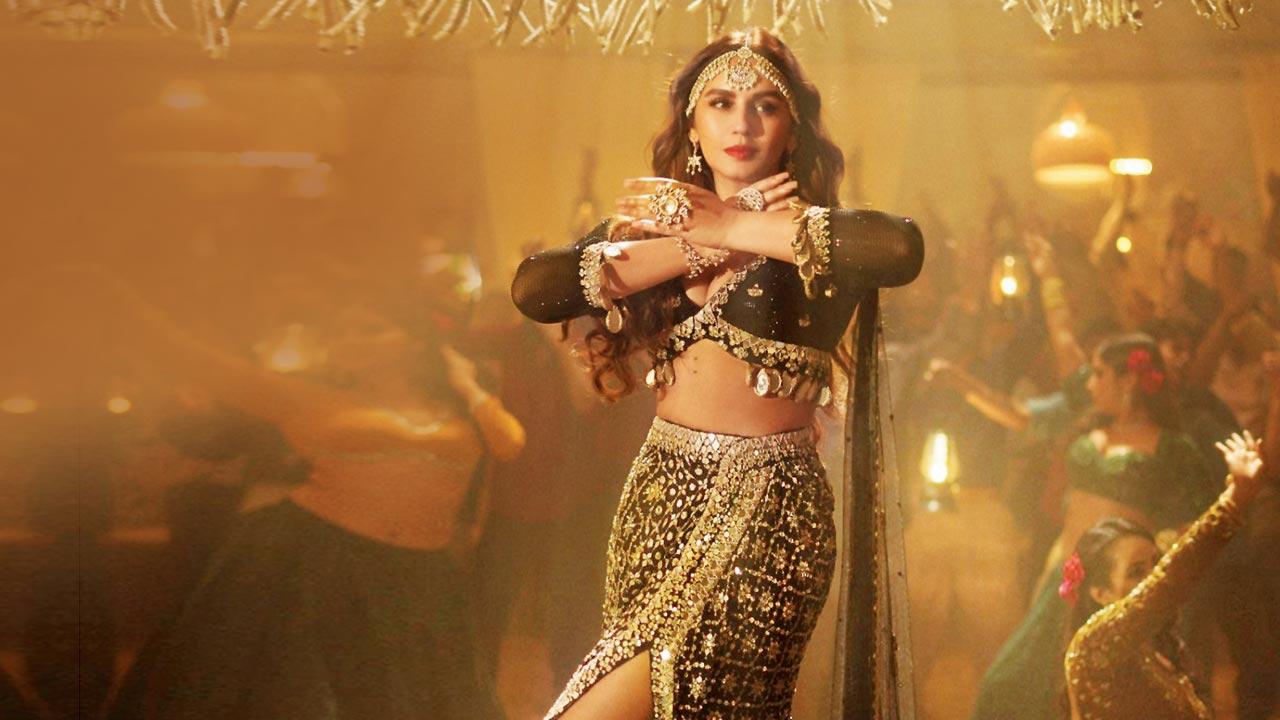
Sharing an exclusive look of her dance number from Maalik, Huma Qureshi says dance numbers don’t just cater to the male gaze today, but celebrate a woman’s sexuality
Mohar Basu (MID-DAY; June 20, 2025)
Rajkummar Rao and director Pulkit have built a world of grit and grime with their upcoming film, Maalik. Bringing a dose of glam into the actioner is Huma Qureshi, who features in the song, Maalik ki mehfil mein mallika ka swagat. Sharing the song’s first look with mid-day, ahead of its release today, the actor reveals that her love for spectacles made it an easy yes to front the dance number.
“I enjoy spectacle! I enjoy Indian films that have elaborate songs. I’ve grown up dancing on Beedi from Omkara [2006]. So, this felt like a perfect song to show who I am,” she says, before adding, “Until your song plays at a party, have you even made it?”
Featuring in dance numbers seems at odds with Huma Qureshi, who is known to headline powerful female stories in Maharani, Tarla (2023), and the upcoming season of Delhi Crime. Mention this, and she says it’s the perfect way to strike a balance.
“I always approach everything as a performer. I want to balance my work as an artiste. People ask me if dance numbers dilute my image, but I don’t want to have a set image. Just because I can do an acclaimed show like Maharani or Delhi Crime, doesn’t mean I can’t do this. I refuse to get myself boxed. No one can tell me what I can or cannot do!”
We’re in an age where ‘item numbers’ are being reimagined as empowering cameos. The actor says she fully trusted the director’s vision as she shook a leg to the Sachin-Jigar composition that is choreographed by Vijay Ganguly.
“In 2025, we women are aware of these songs’ intentions. Earlier, such songs were made for the male gaze, but now there is a shift of perception. Now, it is about celebrating female sensuality, form, and sexuality. It’s an important differentiation. When a filmmaker like Pulkit decides to do a song like this, you know you’re in safe hands. His movie Bhakshak [2024] was one of the most powerful stories of recent years. When we approached this song, I felt empowered. The people, who want to present you, are doing so with the right idea. Moreover, why should I feel shy as a woman and not express my sensual side?”
Sometimes nudity, foul language are needed sometimes-Huma Qureshi
8:37 AM

Actor Huma Qureshi believes bold content may be necessary for narrative impact, but she cautions against gratuitous depictions
Rishabh Suri (HINDUSTAN TIMES; April 20, 2024)
Huma Qureshi has experimented with a variety of genres in both film and OTT platforms. She’s appeared in a lot of films lately, including the dark comedy Monica O My Darling (2022), the suspenseful thriller Mithya, the biographical drama Tarla (2023), and the politically charged series Maharani, whose third season debuted last month and for which the actor has been receiving plaudits. However, amid the plethora of options available to viewers today, Qureshi acknowledges the challenge of standing out.
When we ask about the difficulty of making a project distinguish itself in the competitive OTT landscape, the 37-year-old responds, “That’s a very marketing related question. I don’t think it comes from a place of honesty. You make a good film or series when you are just trying to make it with the right intention. It will travel. You don’t think about marketing and then make a project around it.”
SELF-CENSORSHIP
Despite the creative freedom afforded by OTT platforms, Qureshi acknowledges the responsibility to self-censor content. “I feel OTT has often been blamed for showing too much nudity and foul language. I feel some of it is needed in the script sometimes, for shock value. Sometimes it is zabardasti. Dikhane ki zaroorat nahin hai,” she reasons.
Queen’s journey
Her portrayal of Rani Bharti in Maharani has particularly resonated with audiences, evident from the show’s success and the renewal for multiple seasons. Qureshi describes Rani’s journey as a classic “hero’s journey”, highlighting her evolution from naivety to courage amid political turmoil. “She is somebody who was naive in the beginning, she doesn’t know anything about politics, and she is thrust into a position of peers along the way. She meets people and realizes her husband is a bad guy. How she finds inner morality and courage is what has evolved over the different seasons. I am amazed to see the response and respect the show has received,” says the actor.
‘TARLA WAS SCARY’
Reflecting on her role in the direct to OTT biopic, portraying the late cooking legend Tarla Dalal, Qureshi admits it was her most challenging yet rewarding experience. Mastering the “dialect and portraying the iconic figure with authenticity” were paramount for her, as she “aimed to avoid caricaturing the character”. “I am a hard-core North Indian; Gujarati and Marathi sounds are alien to me. I had to work hard to get the dialect right. ” she ends.
We are expected to look nice but be replaceable as actresses-Huma Qureshi
8:18 AM

Niharika Lal (BOMBAY TIMES; April 5, 2024)
From glam to girl-next-door, Huma Qureshi has portrayed a wide range of characters over the years. However, for the portrayal of Rani Bharti in Maharani, Huma went completely deglam – from no makeup to wearing polyester saris and rubber chappals. In conversation with us, Huma talks about why actresses are expected to look a certain way and how growing up in Delhi helped her prepare for her roles in Maharani and Gangs Of Wasseypur.
‘Deglamourizing yourself is seen as problematic’
On expectation from actresses to look glamorous, Huma says, “One thing I did for Maharani was not letting my vanity get in the way of playing this character. There is often a notion that when you’re playing a deglam character – you’re aging yourself, you’re deglamourizing yourself. It’s almost seen as problematic. I think collectively, we are all responsible for considering deglamourization problematic. Once during an interview, a male journalist asked me about deglamourizing, and I told him that it comes from patriarchy. As women (actors), we are only supposed to look nice, pretty, and delicate, hence replaceable. So many male actors play deglamourized parts, but they are never asked, arey aap toh deglam ho gaye. Tab toh bolte hain waah aapne kya achha kaam kiya hai. So, as women, we are always seen from a particular lens.”
Huma adds, “I also feel ladkiyon ko ye sikhaya jata hai ki aapko glam role play karna chahiye toh aapki fan following badhegi. But I think actually, aap jitna relatable hote hain utna aapki fan following badhti hai.”
‘Growing up in Delhi helped me get the Bihari accent right’
One of Huma’s most memorable roles was Mohsina in Gangs of Wasseypur for which she adopted a strong Bihari accent. The actress shares with us that she was able to get the Bihari accent right because she grew up in Delhi, a melting pot of the entire country.
“I was Mohsina in Gangs Of Wasseypur, and no one knew who I was and where I was from. In an interview after the film a journalist told me, ‘Arey aap toh badi achhi angrezi mein baat karti hain.’ And I was like I’m happy that you think that I’m possibly a girl from Bihar, but I’m not. Dilli mein itna melting pot hai pure desh ka toh aap bachpan se itni north ki awaazein sunte hue bade hote hain.”
Huma adds, “The character got so much love that people forget Huma, who is a cosmopolitan girl from south Delhi. My whole life has been like in a 5km radius of central Delhi. I went to south Delhi school, south Delhi college – Gargi – and we grew up in a very Hinglish surrounding.”
‘Rani’s character in Maharani has that quiet strength’
Who does Huma think Rani Bharti is? She says, “I think she is the penultimate common woman as they say. She represents India for me, in that sense. I think she is strong, she is brave, and she is someone who is unafraid to ask questions. She has that quiet strength that doesn’t demand attention, but she just is. And she is able to navigate all spaces in the public sphere when she has been thrust into it almost against her will. In that sense, we all have that fantasy, ‘humko ek din raaj karne ka mauka mile toh? Ek din CM ban jaye ya PM ban jaye toh kya hoga?’ In that sense, she fulfills common person’s fantasy in that sense. I think which is why people see a lot of themselves in Rani Bharti.”
I have been told, ‘Actresses shouldn’t sound like Miss Know-it-all,’ says Huma Qureshi
8:17 PM
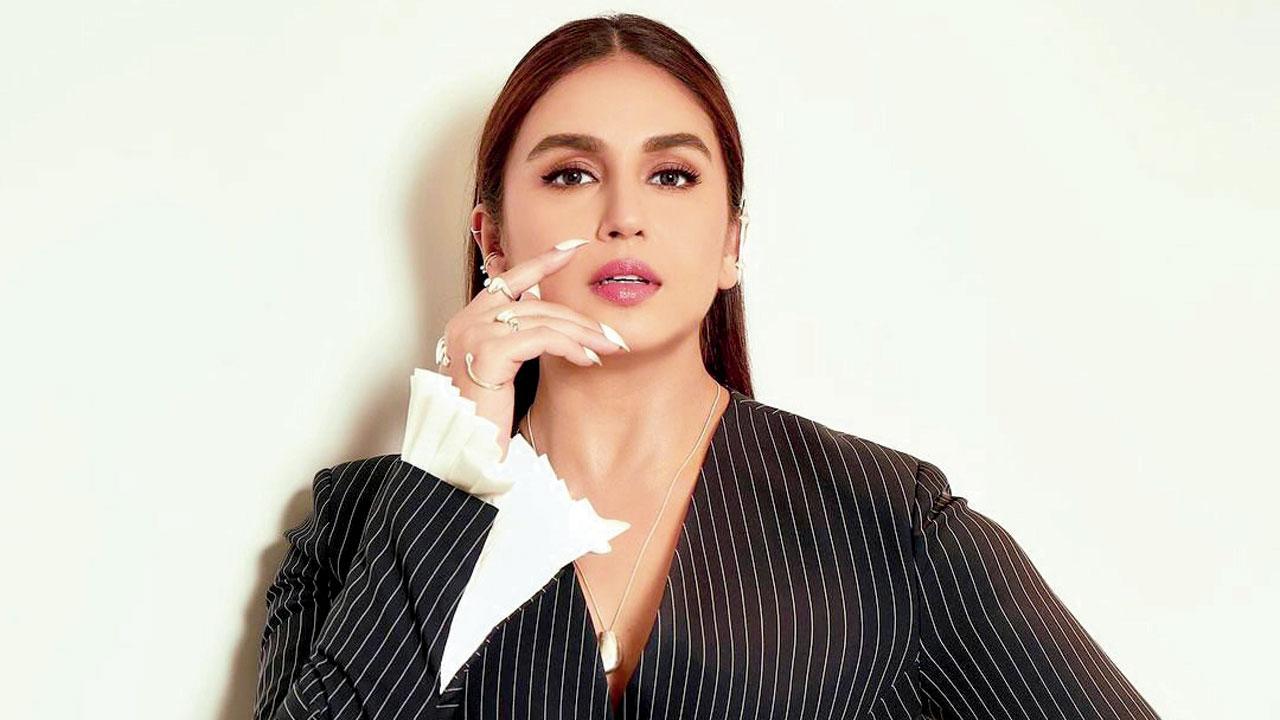
Playing a woman breaking into male bastion of politics in Maharani, Huma on battling sexist notions within and outside industry
Priyanka Sharma (MID-DAY; March 7, 2024)
On the surface, Huma Qureshi’s character in Maharani has little in common with her. But the actor identifies with the homemaker-turned-chief minister who has to fight not only the opposition party, but also sexist notions to claim power. After all, the actor too has battled sexism in the movie industry. She recalls, “[Initially], I was told, ‘You can’t be an actress.’ My reaction was, ‘Why not? Now, I only want to be an actress.’ I have also been told, ‘Actresses shouldn’t sound like Miss Know-it-all.’”
Qureshi believes the only way to fight patriarchy is to prove the naysayers wrong. The actor is happy to observe that women are defying gender roles and chasing their dreams. “On the set of Maharani, we had two women working in the camera department, which was viewed as a male bastion. I told them to keep doing it because it was lovely to see them pick up equipment and lug it around. Whenever they tell you that you can’t do something, that’s exactly what you should do. We, as artistes, [also] have a responsibility to talk about it. For instance, I often [point out to] journalists when their question has a [gender] bias.”
The issue of gender disparity isn’t restricted to the movies alone. She points out that women have borne the brunt of it for centuries. “Noor Jahan, over the years, has been painted as a woman who didn’t let her husband focus on ruling the country. But in reality, she was the only Mughal queen who was called the Empress of India. But because she had such an important position in the court, she was often maligned.”
Maharani is non-glamorous and a mother of three kids, which is used almost like a slur for an actress-Huma Qureshi
8:40 AM
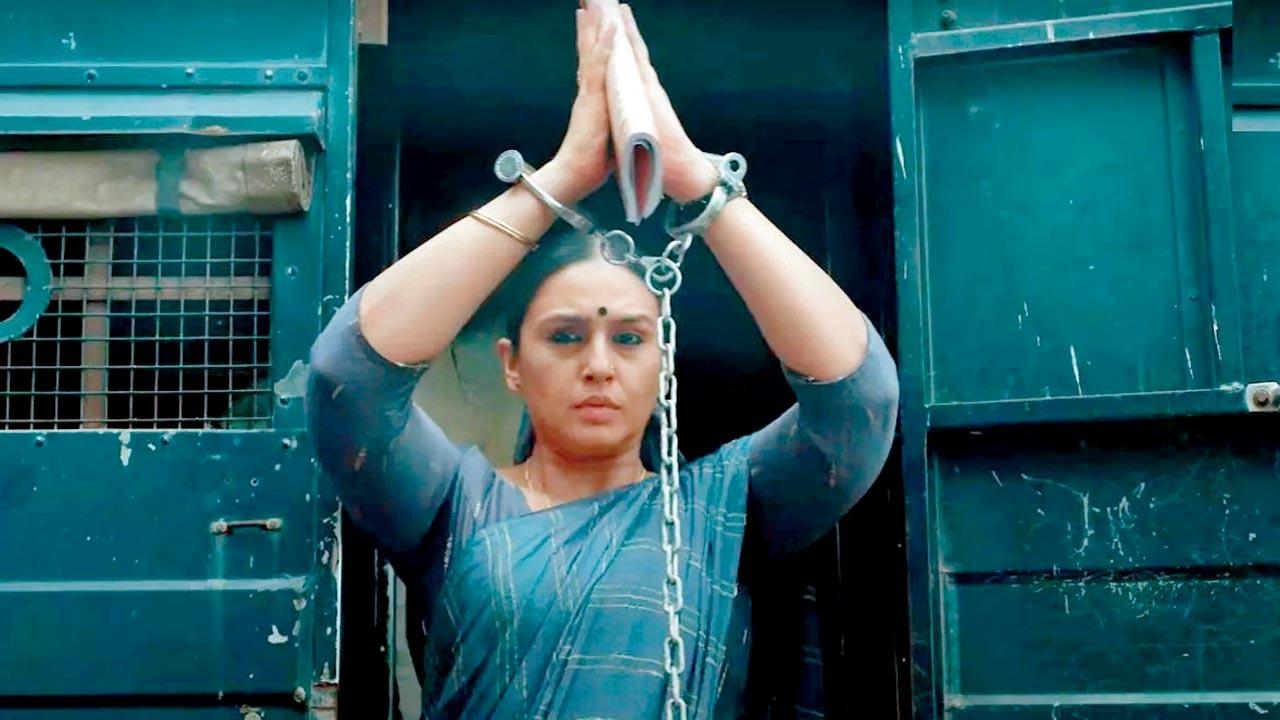
Huma, who plays a middle-aged politician in Maharani 3, on challenging industry’s sexist notion that heroines should stick to young and glamorous roles
Priyanka Sharma (MID-DAY; March 3, 2024)
It doesn’t matter how much time Huma Qureshi spends away from her character Rani Bharti in Maharani. Two seasons on, she knows the part so intimately that all she needs is to drape a saree to become her again. “Once I am in that saree, my walk changes. Our foundation for the show has been so solid that now it’s about making a taller, shinier building on it,” smiles the actor.
In the Sony LIV series, Qureshi plays a homemaker, who is forced into politics and soon rises to become Bihar’s chief minister. For the actor, who is gearing up for the third season’s release, the role is special as it resonates not only with girls for its message of women empowerment, but also with boys.
“I get so many messages from girls and guys, who feel connected to my character. I met a man in Darjeeling, who told me, ‘You have played a fantastic character. You will never die.’”
This love serves as a validation for the actor’s creative choices. In an industry that discourages female stars from playing older characters lest they get stereotyped, Qureshi has not shied away from playing a mother in Maharani, or a middle-aged homemaker finding her calling in cooking in Tarla (2023). She says it’s important to shut out the noise and follow one’s heart.
“I am told all the time, ‘Don’t increase your screen age. Don’t play a mother.’ When Maharani came to me, I was thinking whether I should play this character because she is non-glamorous and a mother of three kids, which is used almost like a slur for an actress. So, I was scared. But the material was so beautiful that I thought I would be a fool if I let go of such an iconic part for some preconceived idea of what a heroine should be doing.”
She asserts that female actors should shatter these notions. “It’s unfortunate that women—and I count myself too—are made to feel that we can’t do roles because it will slot us in some way. We don’t need to always look a certain kind. If Vicky Kaushal can do a Sam Bahadur [2023] or Allu Arjun can do a non-glamorous part like Pushpa and not get slotted, why do we only expect women to pretend to look 19?”
Why is there pressure on women to always look 19?-Huma Qureshi
8:26 AM

Renuka Vyavahare (BOMBAY TIMES; September 3, 2023)
Monica O My Darling, Maharani, Double XL and Tarla – Huma Qureshi’s film choices are anything but predictable. The actress tells us that she is unafraid of experimenting and out of the box is what she wants to be with every role that she plays. In a conversation with us, she talks about this and much more. Excerpts…
‘The notion of what works and what doesn’t has changed’
I am enjoying the work I am doing and taking each day as it comes. The film industry has opened up because of OTT platforms. People are consuming more content and are open to newer ideas. Female-centric stories are doing well. The notion of what works and what doesn’t has changed.
‘Playing myself in movies would be boring’
People asked me why would you do a Tarla after doing a role like Monica? The truth is, I want to challenge myself as an artiste. My biggest high is that no one can say that I can do only a certain kind of role. I have a skill set as an actor that I want to explore to the fullest. I want to experiment with different genres. I loved recreating what Helen ma’am or Parveen Babi did back in the day in Monica O My Darling. I loved watching Tarla Dalal’s old videos and observing her mannerisms, style of talking, and cooking. Playing myself in movies would be boring. I live with myself all the time anyway.
‘I didn’t want to wear a fat suit to play an overweight person’
When the trailer of Double XL came out, people asked me if that was my real arm (in the scene where I am seen with cricketer Shikhar Dhawan). I was told by people, ‘Yeh kya pagalpan hai? What have you done to yourself and how much weight have you put on!’ I told them this was a story where if I didn’t put on 20 kilos, it wouldn’t look real. Just wearing a fat suit or padded clothes wouldn’t be honest. I didn’t want girls to look at me and say, ‘They are actresses, what do they know about being fat-shamed or feeling insecure about their looks? What do they know about being overweight?’ I decided to go the whole hog. That’s the only way the film could have touched people. Mazaa useeka hai. I get inspired when I see actors who transform themselves for roles. After working for 10 years, I don’t want my audience to feel fatigued when they look at my face. It’s good when people don’t know what to expect from you.
‘I want filmmakers to write out-of-the-box roles for me’
I am a non-controversial person, who loves to focus on her work. I just speak my truth as any person should. If that makes a statement, so be it. I am not trying to be sensational. I remember being asked, ‘Why would you do a Tarla at this point in your career when you are at your prime?’ That’s when I said, why is there pressure on women to always look 19! I am at a stage in my life where I can play someone in her 20s, 30s, 40s and even 50s if need be. I want filmmakers to look at me and feel that ‘Let me write something for her’… crazy or out of the box.
‘I am not interested in playing safe parts’
I don’t want to be remembered as just a pretty face. I want to be known for my body of work. I feel happy when someone says, ‘Look at the wide range of characters she has played.’ That’s all I have got. My next films are completely different and clutter-breaking. If I am afraid of experimenting and I stick to playing safe parts, then I am not doing justice to my own dream. As a little girl, I loved dressing up and playing different roles. This is to honour that little girl.
Huma Qureshi to start filming for third season of Maharani
8:05 AM

Priyanka Sharma (MID-DAY; July 31, 2023)
Huma Qureshi is set to return to her throne for the third time! After her last release, Tarla, the actor confirms that she is set to film the third edition of Sony LIV’s Maharani, which originally released in 2021.
“I will start shooting for season three in a week, and we are set to shoot multiple seasons of the show,” she says of the series that marked her streaming debut in 2021. Subhash Kapoor’s political drama features Qureshi as a homemaker, whose life changes when her husband announces her as his successor for the post of Bihar’s chief minister.
Meanwhile, Qureshi has the human drama Pooja Meri Jaan in her kitty. It’s a far cry from her past projects, and also telling of the vast genres she has dabbled in.
Ask her if there’s a genre she is still keen to explore and she says, “I would like to do an out-and-out comedy, like Andaz Apna Apna. I am waiting for someone to offer a comedy to me. I’d love to have a character like Crime Master Gogo as my partner in crime,” she signs off.
After Monica O My Darling, people asked me why had I not danced on screen before?-Huma Qureshi
8:33 AM
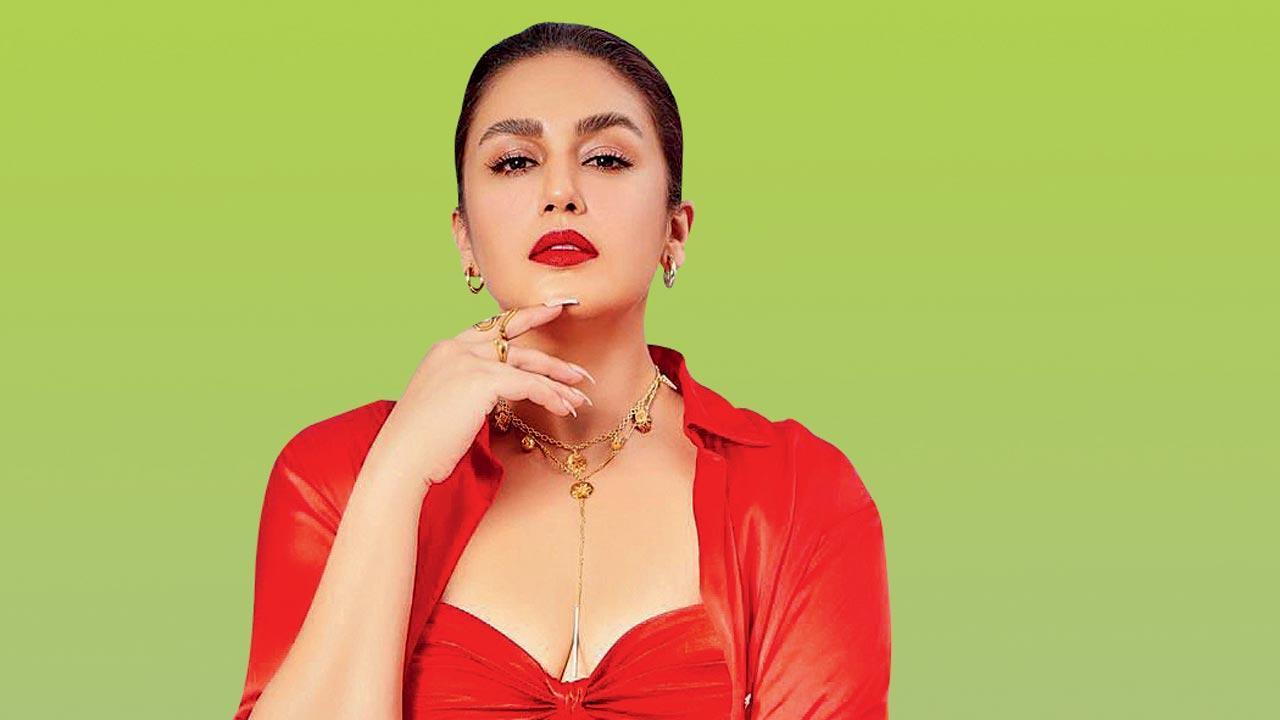
Post Monica O My Darling, Huma Qureshi on carving her space and realizing her potential on screen
Priyanka Sharma (MID-DAY; December 11, 2022)
It takes some people a lifetime to discover themselves and be comfortable in their skin. For Huma Qureshi, who has had an eventful year with a striking cameo in Sanjay Leela Bhansali’s 'Gangubai' and a marvellous act in Vasan Bala’s 'Monica O My Darling', the road to this realisation took almost a decade, which invariably delayed her growth in the industry.
“I feel when you change from within, your reality mirrors it. Today, when I feel sure about myself, it reflects in the kind of work that I am getting and delivering,” says the actor, who made her Bollywood debut with gangster drama Gangs Of Wasseypur (2012). While she hoped to achieve big and better projects post her debut, the actor couldn’t exploit her potential barring a couple of outings including Sriram Raghavan’s Badlapur (2015).
Qureshi shares that she had little confidence in her capabilities as an actor, and it took some introspection during the pandemic to finally come into her own. “A lot of times I refused scripts because I felt scared and under prepared. I was constantly trying to find myself. Now, I am not [scared] because I know myself,” says the actor who has realized that to make a character stand out, she needs to put her own stamp on it.
What also helps Qureshi is being self-assured in her strengths. “If you bring me the role of a seductress, I will play her the way I know. Today, when I am getting the opportunities to express myself, the least I want to do is be honest to myself and the audience,” she says.
In an industry that is too quick to typecast an actor, Qureshi shares that she steers clear from repeating her character type, irrespective of its popularity. “Post Maharani, I was offered Bihari roles in several films and shows. I refused good banners and scripts because I had nothing new to offer the character. After Monica O My Darling, people were surprised, and asked me why had I not danced on screen before? So, the only thing that I am looking at right now is to take up projects that I’ve not attempted before.”
Before finding her voice in the industry, Qureshi was led to believe that to make it big in the movies, women need to be of a certain body type. “The society is to be blamed for telling women to be only one way to be worthy of the big screen or magazine covers. For me, playing a hot girl is like playing Tarla Dalal. It’s a character, not my identity as a human being,” says Qureshi, who is looking forward to her 2023 slate that has the biopic of late chef and food writer Tarla Dalal and thriller Pooja Meri Jaan.
After doing Maharani, I knew what I should not do as Brajesh Bhaan in Jamtara 2-Amit Sial
8:32 AM
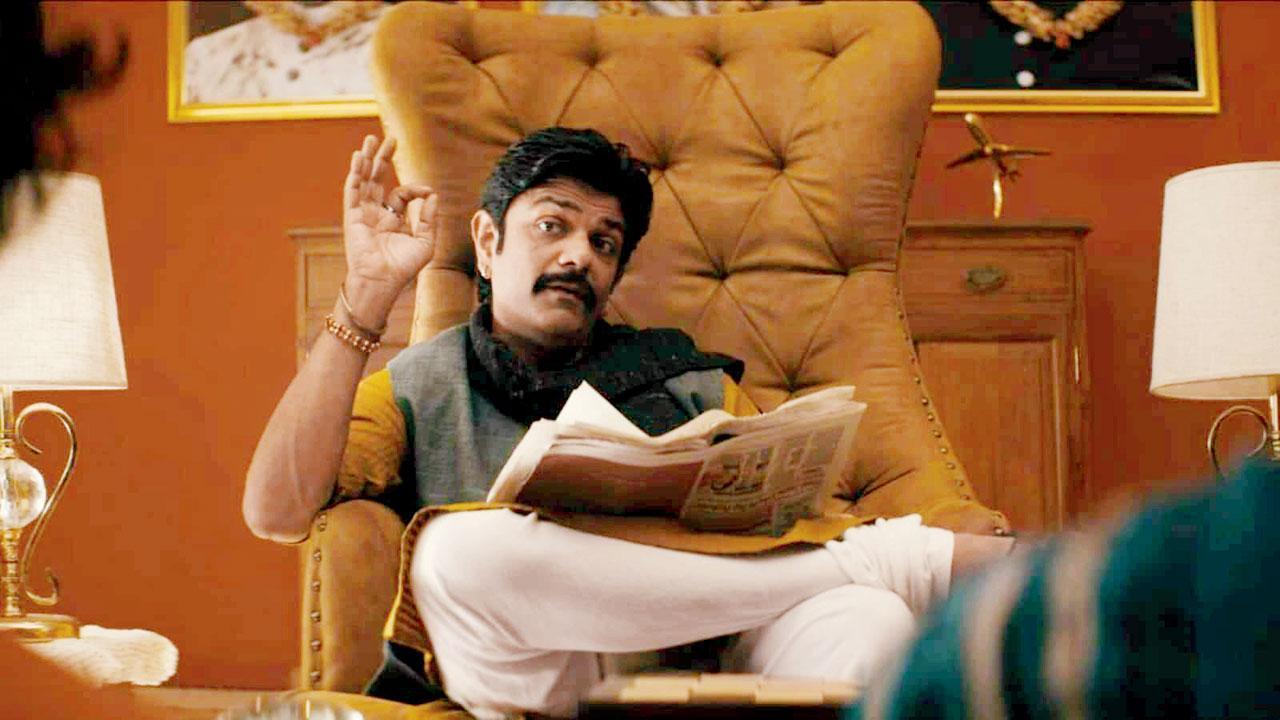
Despite playing a politico in both Jamtara and Maharani, Amit Sial on trying to not get typecast
Letty Mariam Abraham (MID-DAY; October 4, 2022)
It’s not uncommon to see actors play similar characters across projects, but only a few manage to steer clear of getting stereotyped. Amit Sial, who plays a politician in Maharani and Jamtara — the second edition of which aired recently — says that both characters were starkly different from each other.
“I am not playing two separate politicians who behave like one. I am playing two separate people who happen to be politicians.”
Sial took up Maharani much after shooting for Jamtara. “It was an advantage that I did Jamtara before. My characters in [the shows] were so well-etched out. After doing Maharani, I knew what I should not do as Brajesh Bhaan in Jamtara 2. Once you have that objectivity, and it is hammered inside your mind, you will know what to do,” explains Sial, who accepts that while he is aware of how to keep his characters distinct, it doesn’t stop the industry from typecasting him.
“They do slot me. I have had hundreds of offers to play a politician or an antagonist similar to what I have played before,” he says, adding that it is the “actor’s responsibility to rightly turn them down and explore diverse roles.”
Following a successful season, with another is often stressful, but Sial believes that he is “never one to take the pressure”. “I believe the pressure is more on the writers and Netflix. As an actor, I don’t get stressed about anything.”
We have received complaints against Maharani and The Family Man 2-Vikram Sahay
8:10 AM
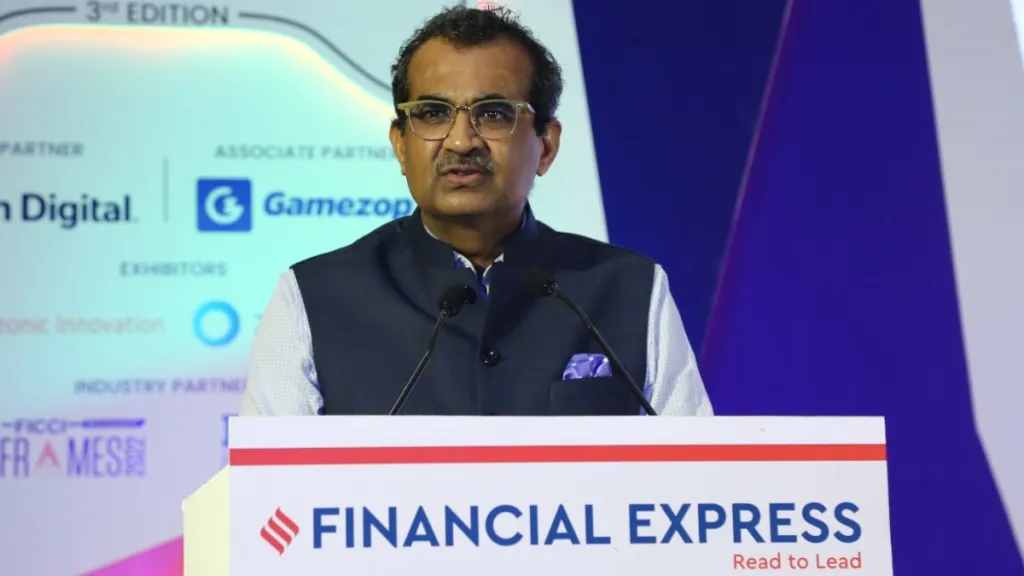
At FICCI Frames 2022 in Mumbai, Vikram Sahay, Joint Secretary, I&B spoke about why self-certification is a better model of regulation on OTT platforms
Niharika Lal (BOMBAY TIMES; October 1, 2022)
During a discussion titled ‘The Magic Of Online Curated Content’ at FICCI Frames 2022 in Mumbai, the panellists – that included Vikram Sahay, Joint Secretary, I&B – spoke about regulation of content on OTT platforms. Unlike films released in theatres, web series and films on OTT do not require CBFC certification. Sahay spoke about the ministry’s more liberal approach to online content, and why self-regulation is the way ahead on these platforms.
He said at the session, “Initially, certain people said that even on OTT, films should need certification. However, we in the ministry disagreed. These (theatre and OTT) are two very different platforms, and the nuances are very different. Unlike with the big screen, OTT content is viewed from the privacy of your home or on your laptop or mobile, it is a one-on-one (channel) between the content and the consumer. Hence, we felt that there has to be self-certification and self-discipline instead.”
Currently, there’s a three-level grievance redressal mechanism for OTT content, where platforms are required to have a Grievance Redressal Officer and self-regulatory bodies, while the I&B ministry has an inter-departmental committee for hearing grievances.
-----------------------------
‘WE HAVE RECEIVED COMPLAINTS AGAINST MAHARANI AND THE FAMILY MAN 2’
Talking about the type of complaints received so far through the grievance redressal system, Sahay shared, “One of the first grievances that came to our knowledge was from a person from Rajasthan against the series Maharani. The complainant was unhappy with some remarks against a community in an episode. I then watched the series and also sent the grievance to Sony LIV. I told them, ‘Iska ek achcha jawab bana dijyega aur inko de dijyega. The platform sent back a one-and-half-page reply, and after that there were no more concerns (from the complainant).”
He added, “The point I am trying to make is that most people in this country are happy when their grievances are heard. Citizen ka grievance jo hota hai, usko agar aap jawab de dein, toh woh khush ho jaate hain – chahe woh hum (I&B ministry) de, producer de, ya OTT de. We haven’t had any OTT platform tell us that they feel overburdened in replying to these grievances. It is not a burden at all on OTT platforms.”
The Joint Secretary cited another case, where two days before the release of The Family Man 2, they received a request to not allow its release. “Just before the launch of The Family Man season 2, there was a request received by the ministry from an elected representative to not allow the release of the series because it hurt Tamil sentiments. It was a Saturday, and on Sunday I did a video call with Manoj Bajpayee, the Amazon team and the producer. I asked them – ‘please help me understand why people are complaining?’ In that one-and-a-half-hour session with them, I told Manoj ji – ‘You are a person with high credibility, so obviously, you will not want to do something that will affect your image.’ And they assured us that nothing of that sort is in the series (which could hurt sentiments). And the series was released. We in the ministry are not here to distort or suppress (content).”
In my head, Bhima is not negative; he simply functions differently. In my eyes, he is a hero-Sohum Shah
8:38 AM
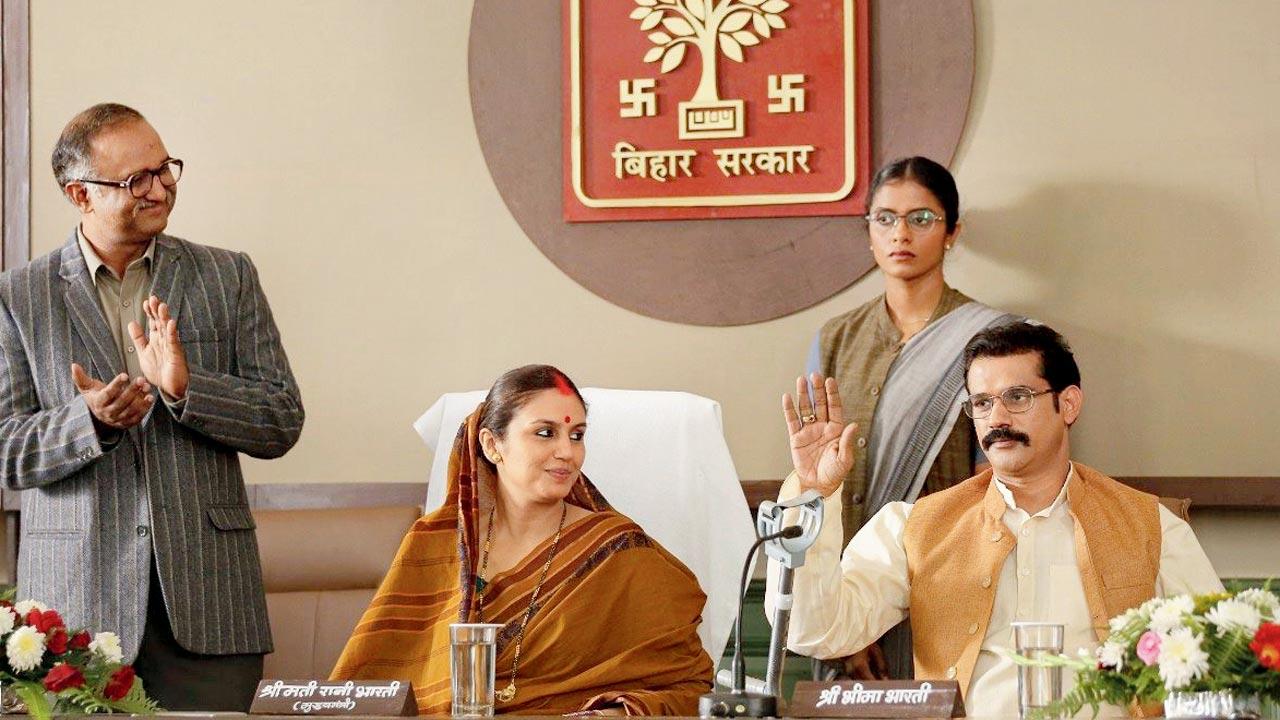
Sohum, who essays a politician locking horns with his chief minister-wife in Maharani, on how he wasn’t skeptical about playing a grey character
Uma Ramasubramanian (MID-DAY; August 14, 2022)
The first season of Maharani focused squarely on Huma Qureshi’s Rani Bharti, a home-maker who is thrust into the seat of power after her chief minister-husband Bhima Bharti—essayed by Sohum Shah—takes ill. In the second edition, Shah promises the audience will see much more of him as his character returns to reclaim his position.
“In season one, they have just shown Bhima, but in the second instalment, you will get to see his several emotions. He was uni-dimensional in season one. But now, he is more complex and layered. As an actor, it’s an opportunity of a lifetime to portray a role like this,” says the actor.
Through the journey of Qureshi’s central character, the Sony LIV offering will look at how the odds are stacked against women who try to rise to a position of power. That the protagonist will have to face more than a few rivals is evident in the teaser that depicts Shah’s character delivering a powerful speech to an assembled crowd as he pledges vengeance on his wife. Did he have apprehensions about playing a grey role?
“I was never skeptical about playing a grey shade. As an actor, it’s your job to believe in your character and understand the story. I had several conversations with the writers. So, in my head, Bhima is not negative; he simply functions differently. In my eyes, he is a hero.”
While the show is helmed by Karan Sharma, Subhash Kapoor serves as the creative director. For Shah, it’s a joy to collaborate with Kapoor. “I did this show because I wanted to work with him. I have enjoyed watching his films. When Ship Of Theseus [2013] and Jolly LLB [2013] bagged National Awards, we met and instantly connected. Since then, we have been friends. He is a director who likes to listen to his actors.”
We can hustle because we had women before us do that-Huma Qureshi
8:28 AM
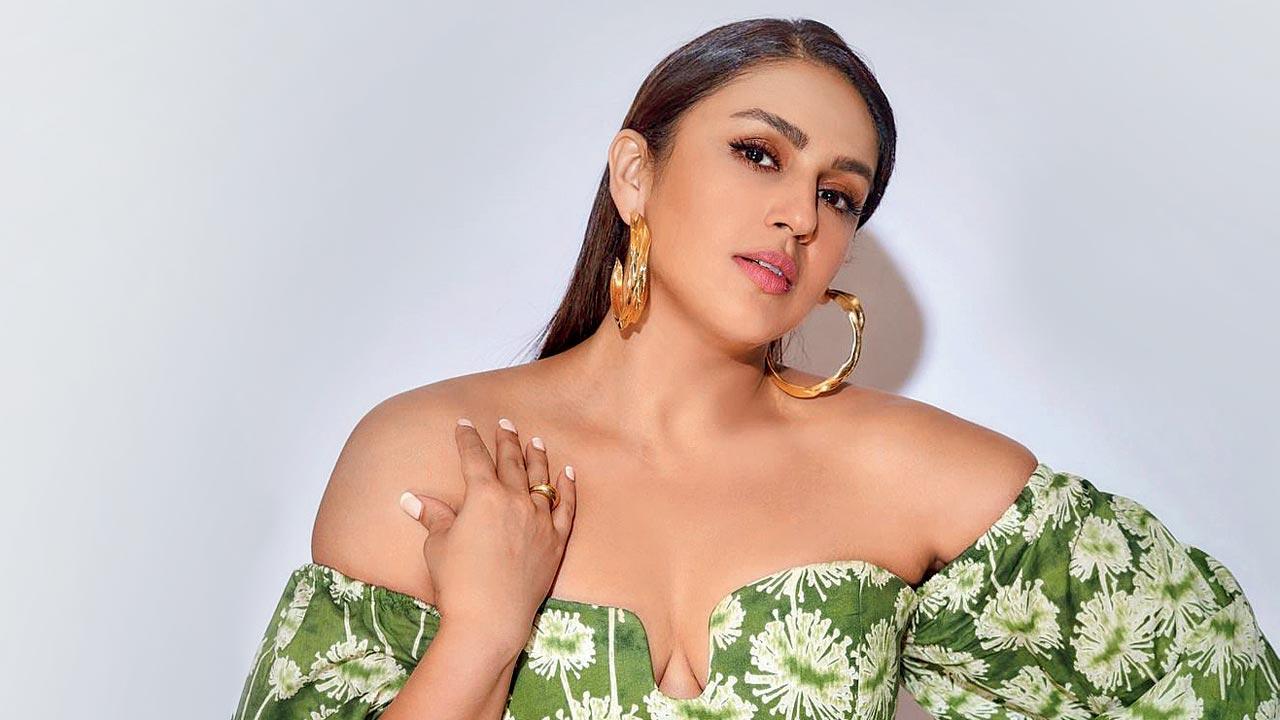
With Maharani 2 depicting how society discourages women in power, Huma Qureshi says every generation has to do its bit in the fight for gender equality
Uma Ramasubramanian (MID-DAY; August 12, 2022)
Huma Qureshi remembers the first Zoom narration she had for Maharani in 2020. She went into it blind, only to log out of the meeting later with a wide grin on her face. “I fell in love with the script. Here was a character for which I would have to unlearn so much,” recalls the actor. Two years on, she is ready with the second season of the political drama that sees her as Rani Bharti, a home-maker who is thrust into politics.
The upcoming edition sees Rani confidently take on political rivals. “She is no longer as lost as she was in the first season. People connected with Rani because they saw themselves in her. She is slightly savvier now, but she is still a woman in a man’s world.”
Becoming Rani for the Sony LIV series has taught her more than a few things, says the actor. “It has empowered me as a woman. If she doesn’t know something, she is able to articulate that. As women, when we don’t know something, we keep quiet instead of asking questions. But Rani gave me her sense of curiosity. Just because I don’t know something, doesn’t mean I am stupid. I didn’t have that confidence [earlier].”
It’s not easy for a woman to be in a position of power in a patriarchal society. The web series depicts how the protagonist has to lock horns with several rivals, including her husband, essayed by Sohum Shah. Qureshi admits that women at the top have to battle society’s judgments. “It’s an unequal world, but our hustle is to push for equality. We can hustle because we had women before us do that. We are standing on their shoulders, and we will [play that role] for the future generation. I feel if you make a small change in your life, you will end up changing things around. Also, one shouldn’t look at a person in power through the lens of gender.”
I didn’t come here to play a doll. I came here to be an actor-Huma Qureshi
8:08 AM

Rachana Dubey (BOMBAY TIMES; July 1, 2022)
Huma Qureshi recently clocked a decade in Bollywood. She had stepped into the industry with Gangs of Wasseypur – Part 1, which had released in June 2012. Today, even as she’s busy completing movies and shows at breakneck speed, she believes she has learned to strike the perfect work-life balance. In a conversation with BT, she talks about working non-stop and how the narrative for women and women-led stories has changed in the industry in the decade that she has been a part of this field. Excerpts:
The last two years have turned out to be interesting for you career-wise. At a time when there was so much uncertainty around us, you shot for a couple of projects between the two lockdowns. You were seen in Bellbottom and Zac Snyder’s Army Of The Dead and were appreciated for your performance in the web show Maharani. How do you plan to sustain that momentum for the rest of this year?
Opportunities and hopes come at the most unlikely times and from the most unheard of places. The two years, 2020 and 2021, were the pandemic years in public memory. Theatrical releases had virtually stopped and content on the OTT platforms was dictating the entertainment space. In that phase, I was clear that I won’t let this bog me down. I wanted to go out there and put out something great for people to see. When Bellbottom came to me, I eagerly took it up because it was the first film that went on floors post the global slowdown. The part was great, and it was an experience worth the risk we took. Subhash Kapoor’s narration for his web show (Maharani) had blown me away. I was certain that I wanted to do it. We shot it between two lockdowns amid so much uncertainty. What if this was my last piece of work? That thought ignited an entirely different passion in me. It liberated me in so many ways. And that is the thought with which I have surged into 2022. I’m trying out newer things, playing characters that are completely different from who I am.
You recently completed a decade in Bollywood. In these years, you have seldom played the conventional heroine — something that wasn’t the norm when you started out. What do you think helped you get this far?
I just do things that I naturally gravitate towards. At the outset, I didn’t have the luxury of choosing projects, neither was I launched on a grand scale nor have directors chasing me. I went through an entirely different journey where I auditioned to get work, I got replaced on numerous occasions and went through a grind, something that I wear like a badge of honour. I am proud of everything I endured to get this far. All that I have today has been earned with a lot of hard work and patience. It didn’t come to me. If you find my repertoire full of unconventional projects, it’s also because those were the choices I made from all that came my way. It was about choosing a role where I could not really see myself easily. I have never tried playing myself. The greatest compliment for me was to be told that I played an uneducated Bihari housewife like I belonged there, although I am a South Delhi girl. That is the fun of being an actor. I didn’t come here to play a doll. I came here to be an actor. I will do what it takes to play a part effectively. In the last year alone, I have worked with different directors and in content across various genres. Do I love songs and dances? Yes, I do, but I don’t want to do just that. I have a lot more to offer that goes beyond it. I don’t know what the new conventional norms are, but with our choices, if we have been able to redefine how a woman should be seen in a movie, we’re getting somewhere and exploring so many of her other facets.
A decade ago, it was a big deal for a heroine to shoulder a film on her own. Today, plenty of leading ladies, including yourself, are carrying films as well as web shows on their own. That’s a huge transition, don’t you think?
Yes, and it hasn’t come in easily. I can talk for myself. After I worked with Deepa Mehta on the show Leila, my perspective changed in a big way. It was such a turning point. Khoon chakh liya maine! The joy of leading a project is scary and empowering in the same breath. And she gave me that. Deepa made me believe that I can carry an entire show and be in every frame without boring the audience. She made me believe that I had it in me. When an opportunity presents itself, you rise to the occasion. The show opened doors for me to work with Hollywood bigwigs like Zack Snyder. It got me several good projects. Maharani was one of them. I am now leading a lot of stories which have a female perspective. This is Huma Qureshi 2.0. I want to call it that without sounding vain about it. I am not the same person I was back in the day. I am trying to do things differently. As an actor, the more fearless you get, the more this industry and the audience rewards you. I like reading and watching content. A few years ago, people had an issue with the phrase, web-series. I had seen that not only was it brimming with international talent, but it was also gearing up to take India by storm. The writing and the production standards were superlative. These are opportunities that have to be grabbed when they come to you. Doing my first show has hence, been a big turning point. Sometimes, merely doing things you like can have a domino effect on your life. It benefitted me in a big way.
Lastly, the film industry in India is gradually moving towards becoming one cohesive workspace that ropes in talent from film industries across the country. As someone who has worked in two films down South, do you find a change in the manner in which people now perceive actors who work across industries?
I think the change here is phenomenal. People have realised that there is a lot to learn from them. Industries like Tamil and Telugu are not talking down to their audience. In fact, they are pushing their boundaries. The stories are contextual, they pride themselves in the cultural references, they are deeply personal, nuanced and have a massive scale. The southern industries have done this repeatedly. The way things are going, multilingual projects are the in thing. For every actor and talent involved, the audience base increases. I feel thrilled that I did my second Tamil film, Valimai. I have learned so much by sharing screen space with Thala Ajith and Rajinikanth sir. Not just as an actor, but also as an audience member, I am excited about these big pan-India films. Why should we have so many boundaries within our country anyway? We need to shake things up a bit in these seminal times.
Brahmastra & other Bollywood shoots come to standstill in Uttar Pradesh amid Coronavirus wave
8:21 AM

Iti Shree Misra (BOMBAY TIMES; February 1, 2022)
Despite the pandemic and subsequent lockdowns, 2021 turned out to be quite a star-studded year for Uttar Pradesh in terms of film, web and TV serial shoots. From Saif Ali Khan to Kangana Ranaut, A-listers have been shooting in the state at different times during the year, especially from May onwards. However, recently, owing to the rising Coronavirus cases in the state, most shoots have either been cancelled or postponed. Line producers say the night curfew is also making producers shy away from coming to UP to shoot.
Last year, films, television and web series were shot across the state. This year, too, seemed to hold a lot of promise with several big projects lined up to be shot in the state. Among the actors who were expected in UP were Ranbir Kapoor, Alia Bhatt, Shahid Kapoor, Huma Qureshi, Kunal Kemmu and Shivin Narang.
The shooting of Huma Qureshi-starrer web series, Maharani (below), which was supposed to begin from the first week of January has been put on hold for now. Aroon Singh Dicky, a line producer in Lucknow, says, “The shoot was supposed to go on floors on January 6 in Lucknow, but we are now hearing that the team is wrapping up shoot in Bhopal itself.”
“In Varanasi also, the shoot of three web series and the film Hari Up was to begin in the coming days, but all of them have either cancelled or postponed their plans,” informs Rati Shankar Tripathi, an actor and line producer.
NIGHT CURFEW IS DISCOURAGING
Other reasons why filmmakers are shying away from shooting in UP at the moment is the night curfew and the upcoming Assembly elections. “Recently, we had to wrap up the shooting by 10:30pm,” Dicky informs.
According to Rati Shankar Tripathi, “The remaining part of the Ranbir Kapoor and Alia Bhatt-starrer Brahmastra was slated to be filmed in Varanasi in December last year, but it was shifted to January due to the rising cases in Mumbai. And now, the shooting has been indefinitely postponed.”
In Kanpur, too, several projects were lined up for the year, but they have been put on hold for now. Line producer Shaan Khan, who was preparing for the shoot of film Akbar in Kanpur, informs, “Ikram Akhtar’s film Akbar, which is the sequel of film Baabarr was supposed to be shot in January this year. The film features actor Ashmit Patel, Shahbaz Khan and Ankita Srivastava, but due to rising cases, the producers have postponed the shoot.”
Mohammad Rizwaan, another line producer from Kanpur, tells us, “The increase in COVID cases has affected the shoot schedule of film, TV and web series in Kanpur. There was an unnamed film of Shahid Kapoor and Shraddha Kapoor that was supposed to be shot at IIT Kanpur from January 17, but has now been postponed.”
NOIDA, GHAZIABAD BEAR THE BRUNT
Similarly in Noida and Agra also, film and web series projects that were supposed to take off this month, have been put on the backburner. Arvind Rajpurohit, a line producer in Mumbai, says, “A few web series which were slated to begin shoot in UP in Noida, Ghaziabad and Agra this month have been postponed to March now.”
— With inputs from Meera Vohra and Sumit Jha
SHOOTS POSTPONED OR CANCELLED IN UP
- Ranbir-Alia film Brahmastra
- An untitled Shahid Kapoor and Shraddha Kapoor starrer
- A film of Sonakshi Sinha
- Sunny Deol’s Gadar 2
- Hari Up
- Web series Maharani 2

Huma Qureshi turns producer with Double XL
8:33 AM
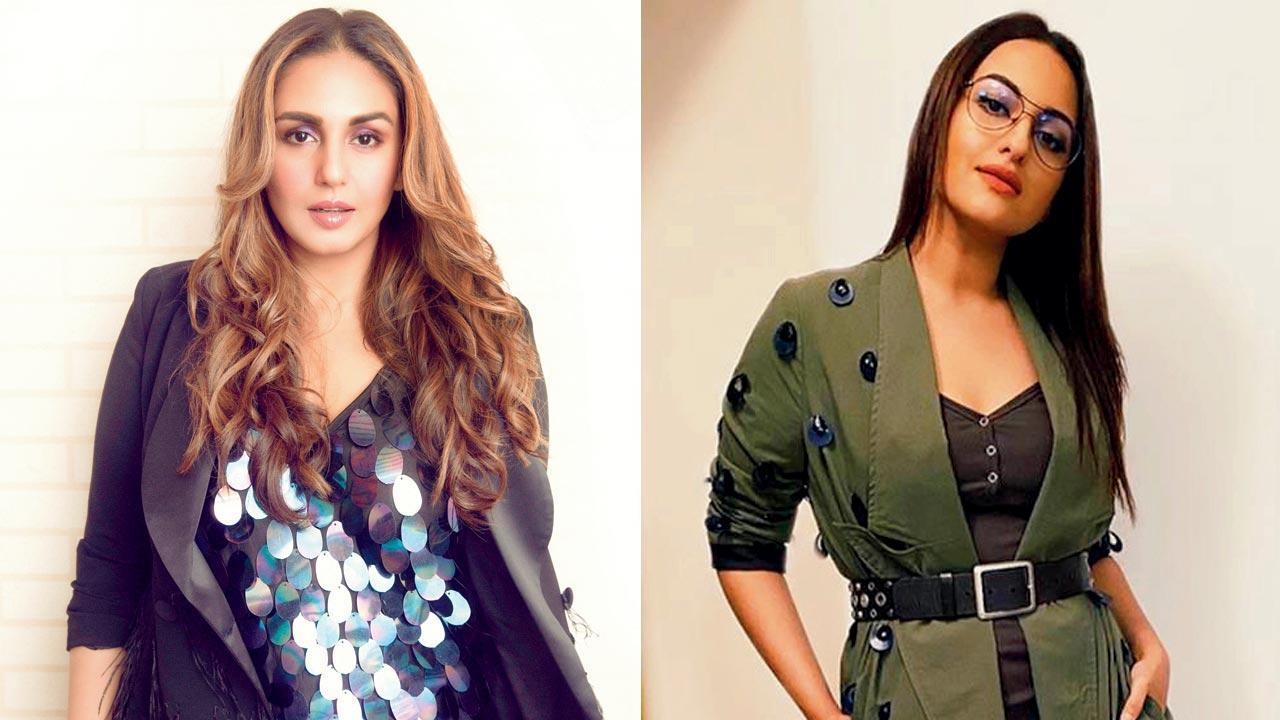
Huma Qureshi on why her body shaming-inspired production Double XL is more a necessity than a response to the trolling she has faced
Mohar Basu (MID-DAY; January 8, 2022)
2021 was a reassuring year for Huma Qureshi. Riding high on the success of her digital outing, Maharani — which won her both awards and accolades — Qureshi is ready to make bold choices, including calling the shots as producer for her next, Double XL.
With a film that tackles the mental agony that results from being body-shamed, Qureshi is addressing a subject that hits closer to home. “This is a film that I, just like a lot of other girls, identify with. It could be deemed brave, but it is really just the need of the hour. There is a lot of conversation around body-image issues. As aritstes, it is our responsibility to put out stories like these. Above all, it is essentially a funny, light-hearted entertainer that attempts to make a social change,” says the actor, aptly roping in none other than Sonakshi Sinha for the part of the protagonist.
Evidently Sinha, who has also spent a fair share of her time in Bollywood fielding comments on her figure, could connect with the script. “Her association with the film has taken its energy to new levels”.
Given that discussion around Qureshi’s weight has gained as much attention as her professional laurels, one would assume that the subject leaves her with a bitter taste. However, she says that it was director Mudassar Aziz’s humorous take on the matter that drew her to the film. “I backed this because it was entertaining. If change has to be made, it can be done [by exploiting] popular culture. While it stands for strong female voices, it is a fun movie.”
Meanwhile, she also returns before the camera for the second season of Maharani. “After the first few months of the pandemic, we had to decide whether we wanted to wait, or go ahead and continue working. I decided to go out and do the best work I could. It found its audience and this risk has paid off. In these difficult times, I am lucky that I got the opportunity to entertain people with this show.”
Huma Qureshi’s political drama Maharani greenlit for second season; to roll next month in Bhopal
7:33 AM
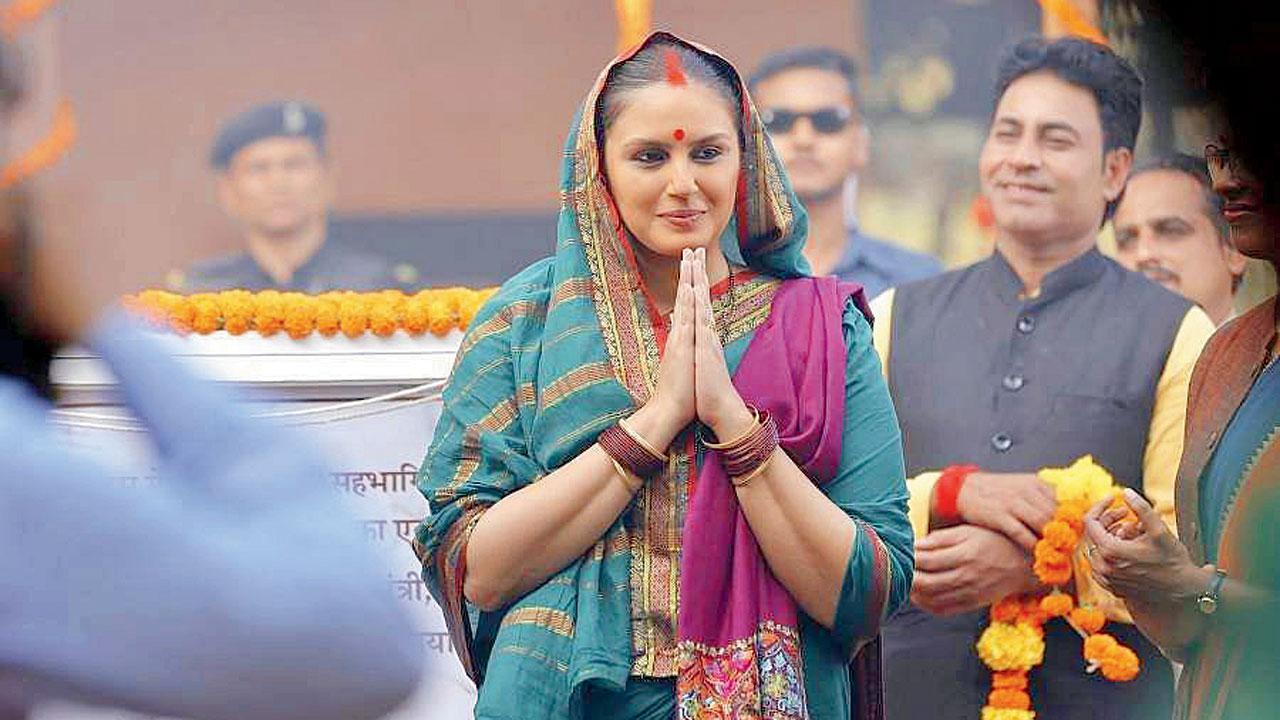
Mohar Basu (MID-DAY; November 26, 2021)
It’s time for Huma Qureshi to shed the glamour and step into the shoes of Rani Bharti, an uneducated but clever politician, again. Encouraged by the praise Maharani earned on its release earlier this year, the suits at SonyLIV have greenlit its second season. The team, led by director Karan Sharma, will begin shooting in the first week of December.
“The love and appreciation I got for my role was overwhelming,” says Qureshi, who will be Bhopal-bound soon. With the political drama set in Bihar, it is heard that the unit will recreate parts of the state in Bhopal.
The series, written by Nandan Singh and Uma Shankar Singh, is said to be loosely inspired by Rabri Devi’s journey who was thrust into politics in 1997 after her husband and then Bihar chief minister Lalu Prasad Yadav was under scrutiny for corruption charges in the Fodder Scam.
While the first instalment saw Rani learn the ropes of politicking, with a few highs and some missteps along the way, the second edition will focus on her rise to power. As someone driving the narrative ahead, the actor knows she will have to up her game in the forthcoming season. “It will be quite challenging as I have to work hard and make sure to surpass the first season’s success. It is a huge responsibility to do better than that. Walking in the steps of Rani Bharti will always be an empowering experience.”
The month-long Bhopal stint will be followed by schedules in Mumbai and parts of Bihar.
Political plots rule OTT, woo audience
8:19 AM

Many shows themed around political incidents or real-life political figures have been popping up on digital platforms
Juhi Chakraborty (HINDUSTAN TIMES; June 19, 2021)
Variety is the spice on the OTT platforms and there is no dearth of content from all possible genres. However, lately the digital space is increasingly exploring plots and stories around the political spectrum, some of which seem inspired by real-life political figures and incidents too.
Most recently, shows such as Maharani, which loosely resembles the real-life political drama of Bihar in 1990s, is garnering much praise from the audience and critics alike. Actor Huma S Qureshi, who plays the titular role in the series, tells us, “Maharani is a political show for sure, but also a very hopeful show. It’s not something that leaves you without hope... It’s almost like a fantasy that everybody harbours that if, ‘I’d be the chief minister or Prime Minister, I’d do this and that’. It’s a common man’s dream.”
Qureshi cites an example of Anil Kapoor-starrer Nayak (2001). “It plays into that fantasy. But when done in a realistic political setting, most people connect with that,” she adds.
Even Ramya Krishnan-starrer Queen, which chronicles the life of Shakti Seshadri — a character that bears an uncanny resemblance to late Tamil Nadu chief minister J Jayalalithaa — has been loved by audiences.
There are multiple reasons that make political dramas an audience favourite, feels Gautam Talwar, chief content officer of the OTT platform that screens Queen. “Firstly, these larger than life personalities who’re tasked with running the government, tend to garner heightened attention and curiosity from viewers. Secondly, their personal lives — be it what motivated them to join politics, their childhood, their lives as young adults, among others, make for compelling storytelling, and the common man loves to know the back story about the leaders,” he explains.
Among other web shows based on political themes is the Telugu web series Chadarangam, which revolves around the life of Sr NTR, Modi - Journey Of A Common Man based on Prime Minister Narendra Modi’s life, and City Of Dreams, that explores themes of crime, politics and family conflicts. There’s also a biopic series planned on the life of actor-turned-politician, Sumalatha.
Talwar says that as a storyteller, what interests him the most about political genre is the fact that they’re able to recreate certain parts of history with a nuanced POV, that makes for an interesting watch. “What really appeals is the journey of these characters from very humble, modest beginnings, to them achieving the epitome of power in their respective field,” he adds.
Amit Sial, who stars in Maharani, opines that the shows based on, or inspired by, political figures give the audience a deep sense of satisfaction, as well as a hope. Talking about the show, he shares, “It’s a well etched out script, so I mostly relied on what was written. Subhash Kapoor (creator of the show) is an ex political journalist, so he has deep knowledge and good understanding of the subject. I think the audiences really like complex, political stories, and politics is the in thing right now.”
Actor Rajeev Siddhartha, who stars in Aashram, that has a plotline exposing godmen-politican nexus, feels that such stories can be explored in a bigger way on OTT platforms. “Web space allows to add more complexities, more layers and more information about the incident and characters. I feel that even the audiences like that. In the coming time, we’ll see more of these,” he concludes.


I barely understand politics and wish to stay that way-Huma Qureshi
8:01 AM
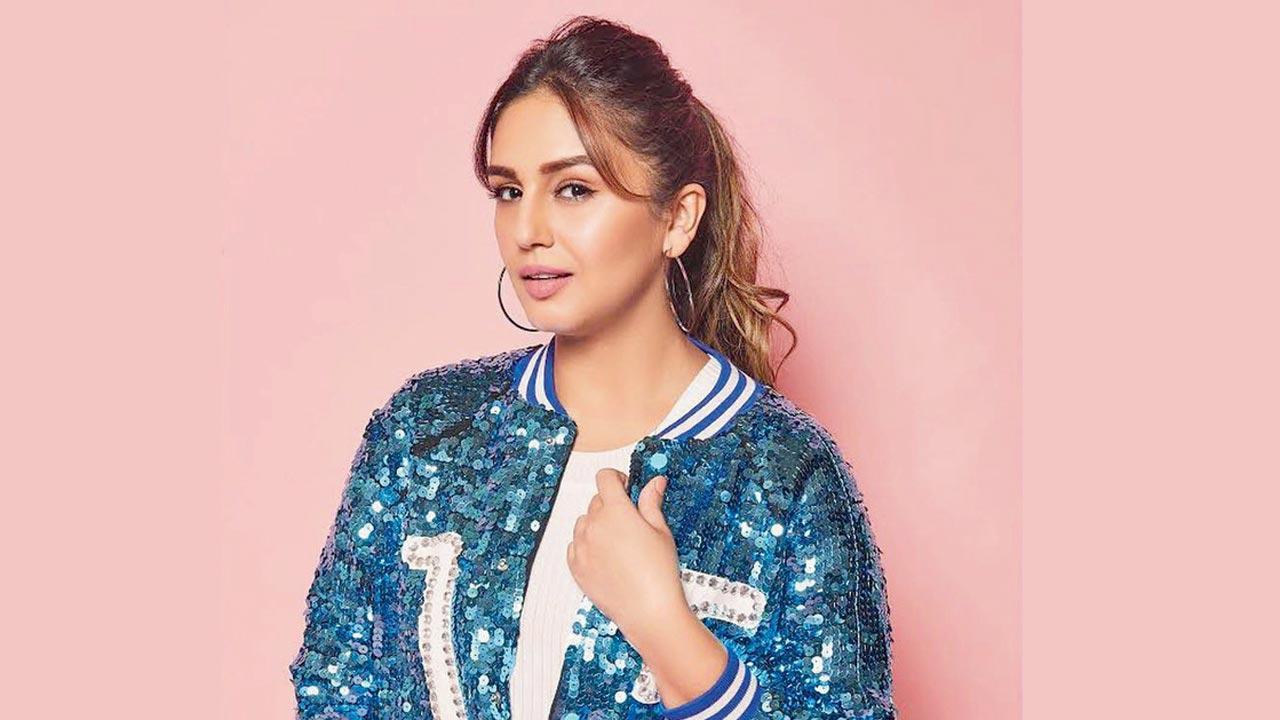
Huma Qureshi discusses portraying a chief minister in Maharani with aplomb despite her lack of interest in politics
Letty Mariam Abraham (MID-DAY; June 1, 2021)
Like her web debut Leila, Huma Qureshi’s latest offering, Maharani, has her leading from the front. And boy, does she grab your attention from the get-go. From an illiterate homemaker who is content running her kitchen to running the state, Qureshi lends at once a sensitive air and steely nerve to her Rani Bharti in the SonyLIV series. In a chat with mid-day, the actor talks about “delivering ignorance” with her eyes and why she will take “10 years to understand politics”.
Edited excerpts from the interview.
There has been a lot of talk about Maharani being based on Rabri Devi’s life.
There is no similarity at all. It is a work of fiction. The germ of the idea may have come from there, but the story is completely different. Before [people jump to conclusions], they should watch the series.
What was your first thought when the series was offered to you?
We made the series between the two lockdowns. When the first lockdown happened, Subhash sir [Kapoor, creator] told me about the show. It was one of the first Zoom narrations of my life. I loved the story, the world [it is set in], and the character’s graph.
How did the role challenge you?
Our society has restrictions on what women should and shouldn’t do. Rani [her character] is an illiterate homemaker. For such a woman to become a chief minister and wield power is an inspiration. We all have stories where we’ve been told ‘You cannot do it’ or ‘This is not for you’. Many people thought I couldn’t be an actor or move to Mumbai. But I figured it out, like most women. When I was reading the script, they had written that she was a strong woman. I had an objection to the word ‘strong’. In my life, I have never met a woman who is not strong.
As a character, Rani Bharti is so different from me. I have never lived in a village, I have had the luxury of a good, educated life and I am not married. To become that character was a challenge. If you know something, how do you bring that ignorance into your eyes? Intelligence is such a giveaway.
How well-versed are you with Indian politics?
I barely understand politics and wish to stay that way. I am an actor; delivering lines is my priority. But Subhash sir, writers Singh Nandan, Uma Shankar Singh are well-versed in politics as they have a background in journalism. By the time I figure out [politics], 10 years would go by. I’d rather just focus on acting.
Having worked in Hollywood, are there any changes you would like incorporated in Bollywood? The way #MeToo brought about a change internationally, perhaps?
Post #MeToo India, people aware that if one has [an issue] on a film set, it can be addressed and put an end to. The comfort of knowing the legal rights on a film set, whether you are in front or behind the camera, is important. One thing I’d like to borrow from a Hollywood set is the silence. Here, everyone is talking when a shot is about to start, which is irritating. There, it’s complete silence, and helps an artiste to get into the zone.
Are you satisfied with your Hollywood debut?
I debuted in Bollywood with Gangs Of Wasseypur [2012], where I was launched with 200 other actors. I have never been afraid of ensemble films. The whole conversation about the length of the scene is silly. It is about the impact I am creating. The opportunity to be part of a Zack Snyder film [Army Of The Dead] and its cinematic value is unparalleled.
I think censorship on OTT will help the makers-Sohum Shah
8:11 AM
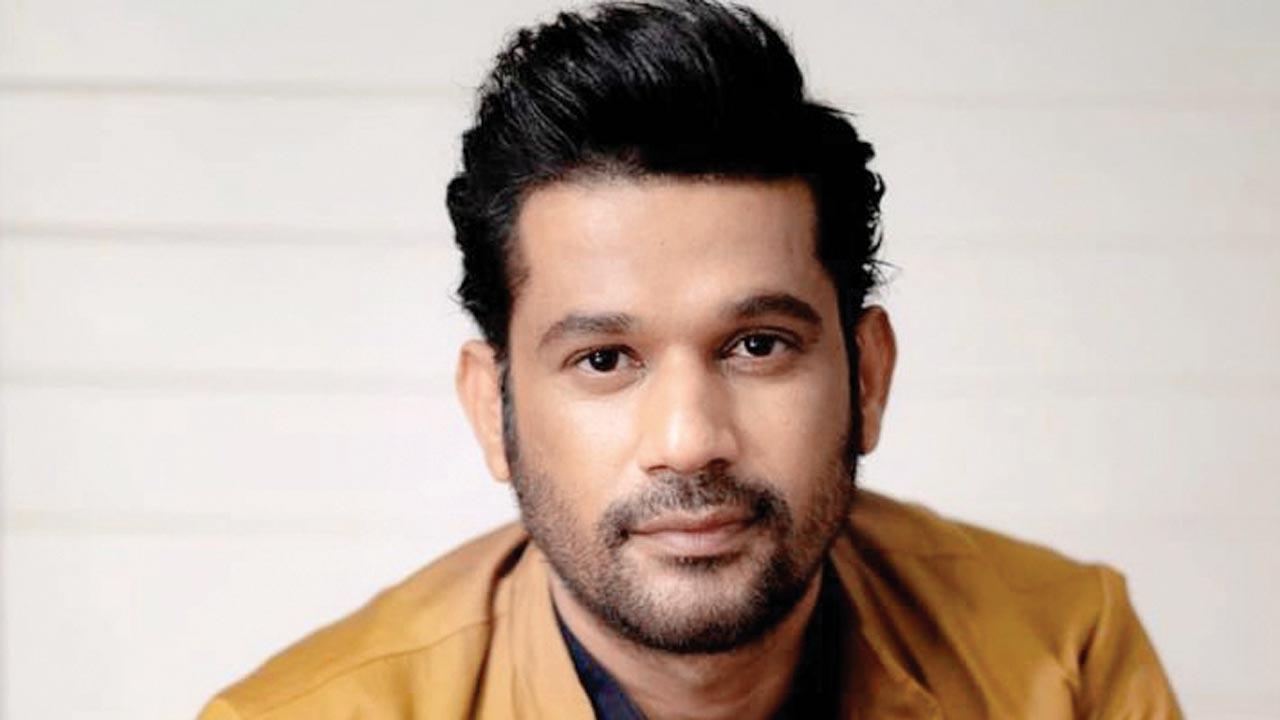
Ahead of Maharani’s release, Sohum says government’s regulations for streaming platforms to benefit makers
Uma Ramasubramanian (MID-DAY; May 25, 2021)
If the trailer of Maharani is anything to go by, the Huma Qureshi-starrer appears to be inspired by the 1997 appointment of Rabri Devi as the Bihar chief minister. After then-chief minister Lalu Prasad Yadav had to resign from the post due to his alleged involvement in the fodder scam, many believed he retained control of the state by making his wife the ceremonial head. Sohum Shah, who plays a chief minister adopting a similar strategy in the Sony LIV original, however, insists that the show is a work of fiction.
“I play a Bihari politician, but not any real person in particular. When I was given the narration, I realised the script and my character were powerful. My character has his own political agenda [in making his wife the chief minister]. He has shades of grey, but instead of judging him from a distance, I read more about the character and understood his thought process,” says the actor.
Set in the murky world of politics, the Subhash Kapoor-created series also underlines the caste divide in India. “Casteism exists in our country, which shouldn’t be the case. There should be equality, and the show touches on these aspects.”
After the release of Tandav sparked a huge controversy earlier this year, content creators are walking on eggshells whenever developing a political thriller. The episode led to the Information & Broadcasting Ministry calling for age-based classification of content and a three-tier regulatory mechanism. Shah backs the move, believing that it’s in the best interest of makers. “I think censorship will help [the makers]. Otherwise, anybody files a case against OTT platforms, knowing that they are vulnerable. Like films, OTT offerings too need a [regulatory] committee.”
Subscribe to:
Posts (Atom)