Showing posts with label Madhubala. Show all posts
Showing posts with label Madhubala. Show all posts
After Meena Kumari and Madhubala, Guru Dutt’s biopic in works
10:06 AM

Meena Kumari, Guru Dutt, Madhubala. Pics/mid-day archives, YouTube
Mohar Basu (MID-DAY; September 11, 2026)
The fascination with the lives of Hindi cinema’s legendary stars shows no signs of slowing down. While Madhubala and Meena Kumari’s biopics are in the making, mid-day has now learnt that late Guru Dutt’s life and legacy will be brought to the screen. Manish Goswami’s production house Siddhant Cinevision has acquired the adaptation rights of ‘Bichde Sabhi Baari Baari’, Dutt’s biography by novelist Bimal Mitra, with plans to develop it as a multi-part series.
Mitra shared a close personal and professional association with Dutt, which began when the latter adapted his acclaimed Bengali novel, ‘Saheb Bibi Golam’.
A source shared, “The author spent considerable time with Dutt at his Mumbai home and Lonavala farmhouse, working on scripts and having long conversations with him. Those interactions became the foundation for the memoir. ‘Bichde Sabhi Baari Baari’ also shone a light on Dutt’s troubled marriage to singer Geeta Dutt, his bond with Waheeda Rehman, and the actor-filmmaker’s anxieties and vulnerabilities.”
mid-day contacted Goswami, who said, “It’s premature to discuss the details.”
Bollywood hits the rewind button, turning the lens on its legends
9:40 AM

Artistes’ popularity, lower costs make the genre promising bet for producers
Rajesh N Naidu (THE ECONOMIC TIMES; October 6, 2025)
Mumbai: Producers are turning to biopics on celebrated film personalities, drawn by their emotional depth, lower marketing costs, safer returns and audiences' growing fondness for real, inspiring stories from the world of cinema, writers and trade insiders told ET.
Over the next two years, Bollywood producers are set to release a wave of biopics on film legends such as Dadasaheb Phalke, Meena Kumari, Kishore Kumar, Parveen Babi, Madhubala and Ilaiyaraaja, as the industry increasingly turns the camera inward amid a broader boom in biographical films across politics, history, science, sports and mythology.
"These biopics have an advantage. Largely, audiences are inquisitive about the personal lives of their favourite film artists," said Girish Johar, producer and film business expert. "But for those who are not admirers or fans of these artists, the merit of these biopics will be tested only on how their stories are told," he added.
A key concern among directors and writers about biopics on film artists is the authenticity of their portrayal, a nuance that many past films failed to capture.
"I am keen on watching a biopic about the actress Meena Kumari given her body of work, personality and the enigma around her. But a key question remains: Will the film on Meena Kumari deal with the critical aspects of her life or just one prominent aspect of her life?," said veteran writer-director Nilaskhi Sengupta. "Ultimately, it is the authentic portrayal of such artists which will decide how well they will be received," she added.
In recent years, creative works based on the film industry and artists have received high critical acclaim. In India, the web series Jubilee, which showed the 1940s era of the Hindi film industry received favourable response from the audience.
Lastly, costs also play a role in this trend. "Indian audiences have an immediate connection with biopics on film artists. For producers, who are under-confident in backing original stories due to polarized responses to films, a biopic on a film artist reduces at least the marketing and promotion costs," said Ameya Naik, founder of Fantasy Films, an event management company.
Biopic on yesteryear star Madhubala paused, budget to get a makeover
9:27 AM

Producers rework the financials of movie icon Madhubala biopic despite script and filmmaker Jasmeet K Reen being ready
Mohar Basu (MID-DAY; June 22, 2025)
The director is ready, the script is ready, but the producers have hit pause on the long-anticipated biopic on legendary screen icon Madhubala. Reason: a budgetary rethink. Sources close to the project informed mid-day that while director Jasmeet K Reen of Alia Bhatt’s Darlings (2022) fame is all set to go, the producers are reassessing the financial blueprint of the film, which is being produced by Sony, along with Brewing Thoughts and Madhubala Pictures.
Initially envisioned as a lavish period production with an estimated budget of Rs. 80 to Rs. 100 crore, the makers now hope for a more commercially viable model.
“The period detailing, elaborate costumes, and set designs had ballooned the budget to a point where the recovery math didn’t add up. The team is now actively working to find a middle path that does justice to Madhubala’s grandeur without compromising the project’s sustainability,” reveals an insider.
The biopic, in the news for years, gained momentum when Reen came on board. Her approach to female-led narratives made her a natural choice for the project.
“The script is a beautiful tribute, which is emotional and rich in detail. No one wants a project that bleeds money. So, the budget has been slashed to half,” adds the source. Conversations with leading female actors remain on hold until finances are locked in.
“The film deserves to be made. The hope is to take the project on floors by the second quarter of this year,” says the insider.
Nitanshi Goel on paying homage to Bollywood icons with Cannes 2025 outfit: "These women walked so we could run"
9:48 AM

Laapataa Ladies actor Nitanshi Goel pays homage to Madhubala, Waheeda Rehman, Rekha, and Hema Malini, among others at her debut Cannes appearance
Priyanka Sharma (MID-DAY; May 21, 2025)
Actors usually put their best fashion foot forward to walk the red carpet, especially when it is for the Cannes Film Festival. Nitanshi Goel combined fashion with emotion as she made her debut at the festival with an homage to Madhubala, Rekha, Sridevi, and Hema Malini, among others. Goel, who rose to fame with her debut film Laapataa Ladies (2024), was seen sporting a pearl hair accessory (parandi) with frames of veteran actors created by jewellery brand BeAbhika.
Speaking to mid-day about the inspiration behind this gesture, she says the idea was to pay an homage that “felt personal yet celebratory”. “It came from love for the icons who’ve defined grace, strength, and cinematic brilliance in Indian cinema. Their presence has always felt timeless, and I wanted to carry their spirit with me to Cannes. These women walked so we could run,” beams Goel, who was part of the newly-inaugurated Bharat Pavilion — the government-backed platform at Cannes — aimed at promoting Indian cinema.
By representing India at the festival, her dream became a reality. She says, “I was there to celebrate our culture, stories, and the women who’ve shaped it so beautifully. The experience was filled with inspiration, heartfelt conversations, and warmth from people all over the world. I’ve returned with a heart full of gratitude.”
Still basking in the acclaim and accolades for Laapataa Ladies, Goel shares that the film’s glory is reflected in the offers she gets now. “The parts coming my way now are more layered and diverse. I feel ready to dive into stories that challenge me,” she says.
An advice from Rekha
Nitanshi Goel holds her meeting with Rekha close to her heart. She shares that the yesteryear actor once told her, “Be patient with the journey, and protect your truth.”
Kareena Kapoor will portray Madhubala well, says her siter Madhur Bhushan
5:22 PM

On Madhubala’s 92nd birth anniversary, her sister Madhur Bhushan says the biopic’s scripting is on; picks Kareena Kapoor, Deepika Padukone or Alia Bhatt to play the actor
Mohar Basu (MID-DAY; February 14, 2025)
Madhubala would’ve turned 92 today. Her loss has been felt by many over the past 55 years, most of all by her youngest sister, Madhur Bhushan. Last year, Bhushan, along with Sony Pictures International Productions, announced a biopic on the late actor. The anticipation around the project is understandable considering her legacy has lived on for decades.
“People talk about her beauty, but she was a woman of incredible warmth and courage, a dedicated artiste, and for us, she was almost like a mother,” recalls Bhushan. She reiterates that there can’t be another Madhubala, purely because of her courage.
The actor—who ruled Bollywood through the 1950s and early ’60s, featuring in Mr & Mrs 55 (1955), Howrah Bridge (1958), and Chalti Ka Naam Gaadi (1958)—passed away of a congenital heart condition at 36. “Her doctors in London told her she’d live for one more year. But she came back and worked. It’s only because of her spirit that she lived for eight years after that.”
Bhushan hopes this spirit shines through in the biopic, which will be helmed by Darlings (2022) director Jasmeet K Reen. “What I love about Jasmeet’s process is that she is loyal to the story while giving it a contemporary gaze. She has clarity of vision. [Among Madhubala’s movies], I love Mughal-e-Azam [1960], and Tarana [1951]. I hope they are in the film. Eventually, it’s a story of courage and resilience.”
Is the film at the casting stage? Not yet, Bhushan says, but she has a few actors in mind for the role. “When Kareena Kapoor Khan joined the industry, I was a huge fan of hers. I still am. I always thought she’ll play her well. Deepika Padukone and Alia Bhatt are beautiful, sincere actors. But the decision is the director’s and she’ll choose whoever is most suited for the role.”
Blake Lively vs Justin Baldoni: Decoding the effect of a smear campaign on a celebrity's social currency
8:32 AM

In the wake of the Blake Lively-Justin Baldoni lawsuit and very public online smear campaign, we ask Bollywood publicists, managers, entertainment editors and trade gurus about just how much can a smear campaign affect a celebrity’s social currency
Mohar Basu (MID-DAY; January 12, 2025)
It all started with conspiracy theories as to why Hollywood actors and stars of the 2024 movies, It Ends with Us, Blake Lively and Justin Baldoni, were unable to get along during the shoot of the said movie. “Creative disagreement” was the popular term used for it, but what lay underneath was slander, and an effort to put down the other. Soon, social media was rife with conspiracy theories—some experts reading body language of the two stars—some just pondering on why they were both not seen together during promotions of the movie. It was declared: the two couldn’t stand each other.
There was some truth to the fire, as in the past two week, both Lively and Baldoni have filed lawsuits against each other. Lively’s account, where she accuses Baldoni of sexual harassment, was also reported in the New York Times by Megan Twohey (who has reported on the Harvey Weinstein case) with the headline: “We Can Bury Anyone: Inside A Hollywood Smear Machine”. What took centrestage: the use of social media and the Internet to create a narrative (true or not) of the other.
But how is Bollywood viewing this? A celebrity manager, on condition of anonymity, says the best way to attack a star is to attack their “image”. “They care for nothing as much as their image. And creative disagreements and celebrity fall-outs are rampant in this industry. For instance, Salman Khan walked out of Sanjay Leela Bhansali’s film after announcing it. Of course, that couldn’t have been pleasant. But what separates that from the Baldoni-Lively case is that neither party went out of their way to pull the other one down. A classic case of a Bollywood smear campaign is what happened to Kangana.”
Actress Kangana Ranaut has publicly admitted to being at the receiving end of the industry’s inability to stomach her. In 2021, she said, “Just last week, I lost more than five lakh followers on Instagram. They gang up on you, boycott you, and if that leaves you happy and content, they ruin your image and brand. That’s how they killed Sushant [Singh Rajput]. That’s how they harass outsiders who don’t need them for work. There are paid smear campaigns happening on Instagram as well… Many derogatory memes and fake information about me are spread. Instagram is also paid as my followers numbers automatically drop, fans who unfollow don’t even realize it... There is a proper investment of troll army, creative budget to make memes, to write lies to spread smear campaigns, movie mafia + political mafia + jaded actors who are rejected lovers, you are jealous of even a fruit bowl...”
These observations were following an incident when Ranaut posted a picture of herself having breakfast, and got trolled.
A former publicist of Ranaut’s, who worked with her for a year, told us, “This whole impression that Kangana is difficult and a loose cannon, has been created. She is very professional and believes in doing her work and going home. She has a certain political leaning and believes in it strongly, but who isn’t leaning towards the establishment today. Why should she be vilified? Then it all boils down to—is she good at her work? Oh yes, she is. It’s a good question to ask then—why is she not getting films? Some part of the answer is that she has managed to offend her directors. She has wanted creative control and I personally believe, directors allow men the creative control, when women ask for it, there’s an issue. There has been a systematic smear campaign on Kangana—where videos of her using a fake horse have been leaked when every actor does that for period films. Money has been spent on bringing her down. If one wishes to study a smear campaign, they should go through Kangana’s career post 2015.”
The problem happens when a one-off dispute shifts from professional disagreements to personal attacks, with media outlets amplifying unverified claims from anonymous insiders. This pattern is a textbook example of how celebrity feuds are orchestrated and sustained in the digital age. Earlier this week, a slanderous article on Triptii Dimri appeared on a website, which claimed that she was removed from Aashiqui 3 because makers weren’t comfortable with her bold avatar in Animal. In Triptii’s case, the story may be planted by professional rivals who want to cost her an opportunity/or envious of the fact that she is currently shooting for Vishal Bhardwaj’s film with Shahid Kapoor.
But it could be a reach to say this only happens to the women in the industry. An industry veteran pointed out that in 2014, Aamir Khan met Mumbai Police to complain about “false and malicious messages” that were being circulated in social networking sites Facebook, Twitter and WhatsApp to damage his image and reputation of his issue-based show Satyamev Jayate.
“Aamir Khan complained to us about some objectionable messages getting circulated (against him),” a police official had told the press then.
But how do the smear campaigns work, and more importantly, do they succeed in today’s media landscape? Let’s take a closer look at Bollywood’s modus operandi.
Tushar Joshi, entertainment editor of India Today, tells us, “These smear campaigns are age-old in the industry. Sometimes they are direct and sometimes they are proxy. But what is going on in Hollywood is something actors in Bollywood have faced. These campaigns happen via publicists, production houses, actors and colleagues and friends who have agendas different from their rivals. Maybe emails, voice calls haven’t been made public. They might have been exchanged in private to sway the minds of the opinion makers. The only difference is most of what happens in Bollywood happens behind closed doors. With the Baldoni-Lively case out in the open now, new norms are being set.”
Smear campaigns are rarely explicit. They are carefully orchestrated efforts that exploit the vulnerabilities of digital ecosystems. A lot of the battle has moved to Redditt.
In an email interview, the Reddit account, Bollywood, tells us, “We frequently get requests to post leaks and we do so. So far, we haven’t got commercial deals but it’s only a matter of time until we get there. We list it under unverified goss. We have noticed a lot of gossip on Kartik Aaryan, Akshay Kumar, Ranbir Kapoor, Ranveer Singh and the things that we get told are juicy. Clearly, someone wants to feed these stories to the public. The tabloids have stopped carrying gossip, so we have to. A post can look organic, but it’s often the first step in a much-larger campaign.”
A Bollywood publicist tells us, “Earlier, the approach was subtle. Journalists were given insider tidbits—sometimes, stories were planted by mentioning them in passing. The goal is to create a seed of doubt in their audience’s mind. But now, it has become all about money. Influencers with followers ranging from 5,000 to 50,000 are often paid to post seemingly neutral content that’s actually part of a coordinated campaign. A simple Instagram story about a '“troubling blind item' can snowball into a full-blown scandal.”
“Smear campaigns work because they tap into our collective love for drama. Controversy sells, and people are quick to believe what aligns with their existing biases. It’s classic voyeurism,” says a Bollywood podcaster. But at the same time, a smear campaign has little correlation to a film. There is plenty of hate against Ranbir Kapoor but his film, Animal, made nearly Rs 1,000 crores.
Veteran director Anurag Kashyap had said before that a smear campaign might work for a weekend, but it can’t sustain itself if the audience connects with the work of an actor. At the end of the day, content is king.
In the end, none of the bitterness matters, says trade analyst Taran Adarsh. “The goal is that a film must work. Smear campaigns pique curiosity and fuels the news cycle. But the audience wants a movie, they want to be entertained. Often films have gone through political controversies and personal issues and have powered through because the film is good. Also none of this affects an actor’s brand value. It is a he said/she said story until someone goes to the cinema hall and says ‘oh what a film’. I have to quote a story here. B R Chopra and Madhubala went into a famous trial over a film. She was replaced by Vyjayanthimala and the film did very well despite this controversy. Collections remained unaffected. I had asked Chopra sa’ab, ‘Aapko laga nahi negativity aajayegi’ and he had said, ‘Kaam karma hota hai. Acha kaam kariye and the audience will reward you’. The interpersonal dynamics may be shaken, but cinema will last forever.”

I have seen people getting projects because they are friends with those who are influential-Khushi Dubey
9:51 AM

While television thrives on long-running soaps, Jubilee Talkies actor Khushi makes the case for finite serials as they have crisp storylines
Letty Mariam Abraham (MID-DAY; July 16, 2024)
Remember the child actor from Dil Dhadakne Do (2015), who delivered some of the best lines with a poker face? Today, at 24, Khushi Dubey is a far cry from that. But her ease in front of the camera remains unchanged. After fronting Aashiqana, the actor is now basking in the popularity of Jubilee Talkies, a sweeping love story set against the backdrop of the film industry. In conversation with mid-day, Dubey discusses how Jubilee Talkies stands out in the TV world where overacting sells, and starting from square one in the industry despite being a child actor before.
Edited excerpts from the interview.
How do you see your journey from a child actor to re-entering the industry as an adult?
The most important thing is that you have to be a good actor. It is possible to gain the same stardom that one got in his childhood as an adult. Things might get tougher, but ultimately it depends on your acting [prowess]. In 2016, I quit everything to focus on studies for four years. Then I had to start from square one with Aashiqana.
Do you find it easy to navigate Bollywood to get a role?
It is a little [tough], although now people directly approach me for a role. However, I still have to audition for the bigger projects. I’m not the kind of person who socializes to get roles. In fact, I am bad at making contacts. I have seen people getting projects because they are friends with [those who are influential], but I never felt like making friends for a project.
When you took up Jubilee Talkies, did you have any apprehensions that it could go off air soon?
I don’t stress about it. The show could [be pulled off air] for any reason, and I can only focus on acting. If I start thinking about [the longevity] of the show, [my performance] may go for a toss. No one person can be blamed for a show not working. While I want it to run for a long time, I have never insisted that it run for a year. Even if it’s a six-month show, it’s fine by me. The beauty of finite shows is that they have a fixed and crisp storyline. Stories are not dragged for TRPs.
In television, the longer a show runs, the more success it garners. How do you approach a show in such an environment?
I try to gauge if I am happy with what I am doing. Am I happy doing a saas-bahu drama? Is it giving me creative satisfaction? I ask myself these questions. I liked Jubilee Talkies because it was unconventional compared to other TV shows. I know the storyline until the end, and it is not dragging or monotonous. Even when Saurabh Tewari [producer] was narrating the story to me, at a lot of high points, I was quite surprised. If you cannot predict the story, that means it is intriguing. Seeing an ordinary woman enter a superstar’s life [may seem] simple, but the execution is larger-than-life.
Madhubala was about a superstar’s love-and-hate relationship with a common woman. Would you still call it unique?
I have seen bits of Madhubala and Jubilee Talkies, their storylines have nothing in common, except that the protagonist is playing a star. Deepak Chauhan sir’s direction and treatment are different. We want to show the workings of the glamour and film industry.
Do you feel restricted as an actor on television?
A bit. Sometimes the script is such where you cannot perform naturally, [the acting] might get over dramatic. But here, I have lots to do. My director has given me the freedom to let me act naturally and not go over-the-top.
Do you find TV regressive otherwise?
That happens because they have to televise episodes every day. So, the storyline [gets muddled], people put anything [senseless] in the storyline when a certain plot point raises TRPs, and that plot goes on for six months. That’s why having a finite show [is better], it doesn’t experience this treatment.
It’s difficult to connect you with the Dil Dhadakne Do girl, who had some of the best dialogues in the film. How different are the worlds of films and television?
It is 180 degrees different, from work culture to acting. Movies are about being subtle, especially Zoya ma’am [Akhtar, director]. She has a [clear] vision and thought process. She’d tell me that my character is deadpan, so whatever she says, it has to come off right. You get a lot of time in movies to build your character. The work culture in TV is hectic and there is too much on the plate.
Radio is far from dying-Shaan
10:21 AM
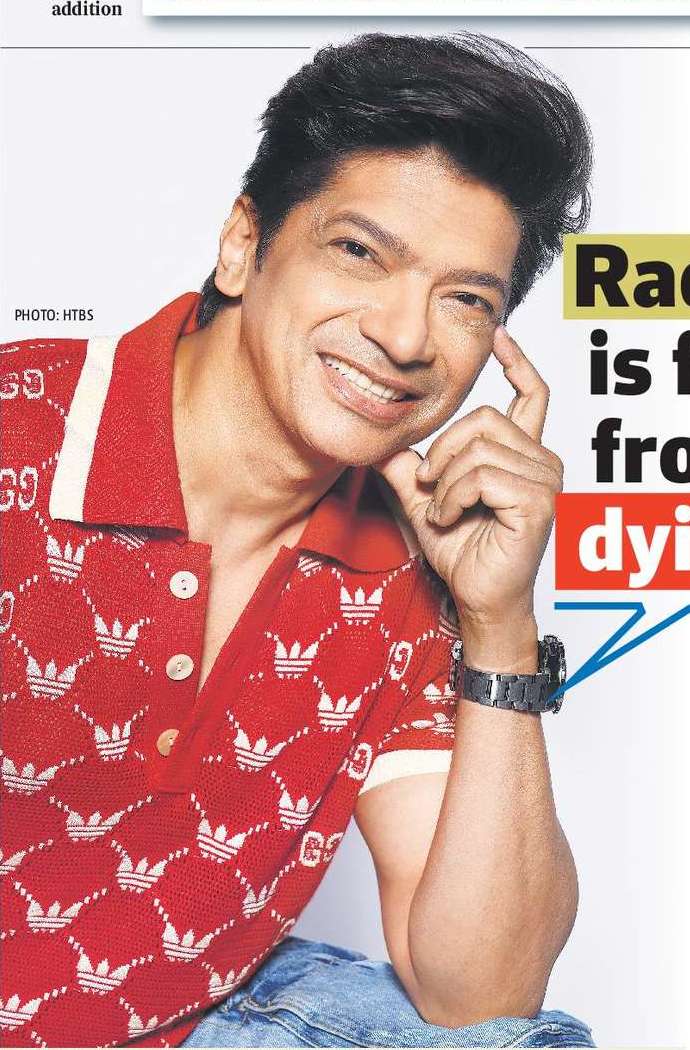
Akash Bhatnagar (HINDUSTAN TIMES; March 10, 2024)
In his illustrious career of over two decades, Shaan has time and again proven his mettle across fields — be it singing, composing, writing or hosting. Adding another feather to his cap, he is now turning RJ with Fever FM’s Crazy For Kishore.
“It’s a blessing that people approach me to try new things and I get these opportunities. If I had just stuck to playback, I would probably have retired or quit,” he tells us.
By trying his hand at a medium that is often misunderstood as outdated, the 51-year-old is proving this label is far from true: “On the contrary, the consumption of audio has gone up in a big way. People today want to use all their senses and multitask. The wonderful thing that radio brings is a sense of surprise, and no other medium can give you that. So, radio is far from dying.”
The singer is glad that through his show, he is getting the chance to honour the legendary Kishore Kumar. When asked how “crazy” he truly was for the late singer growing up, he responds, “Were? I still am and will always be. My connection with him is getting stronger with this show, as I got to know many stories about him that I didn’t before.”
When prodded to dish out one such Kishore da anecdote, Shaan reveals, “When he was very young and Ashok Kumar (late director) sahab was shooting with Madhubala ji (late actor), he hid on the set with a mask on to scare her. She came out screaming from there, and this was their first encounter. Later, they became man and wife.”
I would love to act in a biopic of Madhubala, Zeenat Aman, Waheeda Rehman or Rekha-Ananya Panday
8:34 AM

Ananya, who has cyber thriller Control and Call Me Bae in the offing, keen to widen her range as an artiste with a biopic
Upala KBR (MID-DAY; February 3, 2024)
You can’t blame Ananya Panday for being greedy as an artiste. She has tasted blood with Kho Gaye Hum Kahan (2023), and now she wants more. The actor has a promising line-up that includes Vikramaditya Motwane’s Control, Collin D’Cunha’s Call Me Bae and the yet-untitled film with Akshay Kumar. But she is eyeing a new goal—headlining a biopic.
The actor recently watched The Crown, and Elizabeth Debicki’s performance as Princess Diana seeded the desire. “I loved how she completely became the character and yet brought so much of herself to it. I would love to do a biopic, transforming myself into someone who already existed,” shares Panday.
She has a wishlist, though she admits to being unsure whether she can do them justice. “I would love to act in a biopic of Madhubala ji, Zeenat Aman ji, Waheeda [Rehman] ji or Rekha ji.”
For now, Panday is being moulded as an actor by some fine directors. Having wrapped up Motwane’s cyber thriller, she says, “Vikramaditya is a dream director. [While shooting], you don’t realize what you are learning. But later, when you do something [in front of the camera], you realize you had learnt it from him. He wants everyone to grow with him.”
Being directed by D’Cunha on her maiden web series has been a fun ride. “I’d make Colin enact scenes and he’d bring his own funny twists.”
Why Bollywood stopped romancing the rain
8:06 AM

Music maker Shantanu Moitra looks back at era-defining rain songs, and wonders if the lost art of ‘Bollywood & baarish’ can still be reclaimed
Shantanu Moitra (THE TIMES OF INDIA; July 18, 2021)

I was 16 when I first heard ‘O Sajana, Barkha Bahaar Aayi’ from the film Parakh. We didn’t have a TV at home so I had only heard it on radio until I watched the song unfurl as a visual at my neighbour’s house during Chitrahaar. I stood there transfixed that a black-and-white visual could be so colourful. Also that the rains could serve as a metaphor for a woman’s emotions. The sense of reverence, hope and childlike joy in Sadhana with her hands cupped catching rain drops — a classic Bimal Roy shot with hands resembling a womb and water drops symbolic of elixir — remains embedded in my mind as one of the most enchanting rain song moments on screen. Rain songs are usually known to be vibrant, sensuous and outward but this was an example of how subtle and inward a song about the rains could be.
The hottest woman to appear on screen for me has to be Smita Patil in ‘Aaj Rapat Jaye’ in the film Namak Halaal. An incredible song that shattered the myth of Smita Patil as the czarina of alternate cinema. The uninhibited and abashed chemistry between Amitabh Bachchan and Smita Patil — an unlikely couple to frolic in the rain — was simply joyous.
The mad kinky expressions of Kishore Kumar at his flirtatious best in ‘Ek Ladki Bheegi Bhaagi Si’ with a rain-soaked Madhubala out alone on a rainy night, remind you of all kinds of mischief that rains inspire. The rhythm of the song and the idea of having a good time without a care, sums up the beauty, wit and romance of a classic Bollywood and baarish number. Then there’s everyone’s favourite antakshari song — R for ‘Rimjhim Gire Saawan’ where you see the beautiful Mumbai landscape when the city was much emptier with two characters walking down drenched streets.
The song that changed my life was ‘Ab Ke Sawan Aise Barse’, my first ever album. I was a Delhiite at the time. The realisation of what nature and music together could do came to me on a Sunday evening at India Gate. I was out with friends when it suddenly started to pour. People stepped out of their cars to dance to ‘Ab Ke Sawan’ blaring from their car stereos. The fact that I could capture the euphoria of rain through a piece of music triggered in me a sense of responsibility to create music, not just for entertainment but to make a difference.
I heard ‘Bhaage Re Mann’ from Chameli when I had just arrived in Mumbai from Delhi. While watching the song being shot, it was almost like feeling the rain, the shivers and the earthy scent. A song brimming with hope, innocence and fresh starts. Life came full circle when the same Kareena Kapoor brought that playful energy to ‘Zoobi Doobi’, a rain song I made for 3 Idiots.
These songs are just a fraction of the kind of magic realism and fantastical moments that Indian cinema has sparked over the years thanks to the rain. The art of picturising a rain song — in all its gay abandon, innocence and sensuousness — was due to screenplay writers and directors who lived in very different times with very different associations with the rain. What romance would a young filmmaker living in Mumbai today find in the rains when you are surrounded by potholes and construction sites?
When you look out of the window, the changing urban landscape with waterlogging and traffic congestion would naturally disallow the natural thought of rain as a background for two people falling in love under an umbrella. It’s a sad tragedy of our times that I can’t recall the last time a beautiful rain song got made because psychologically everyone’s like ‘who wants to get out in the rain?’ Rampant urbanisation has robbed the cities of their rainy romance and we see its effect in music and movies too. Also, the cinematic technique has changed where filmmakers are committing less and less to songs, especially lip-syncs. Therefore a rain song on its own is a luxury and what we saw in ‘O Sajana’ with rain in the foreground is now a distant backdrop 60 years later.
How I wish that a director would use his cinematic artistry to recreate a musical Singing In The Rain moment today — with a leap here and a splash there on wet streets and puddles — and I am certain the rain song will be back. If it worked then, it will work now. There’s nothing more unifying than the feeling of breaking away, letting go and being cleansed by the rain.
— As told to Mohua Das
Dilip Kumar's realism and brooding screen presence had a seminal influence on generations of actors to come
8:02 AM

Avijit Ghosh (THE TIMES OF INDIA; July 8, 2021)
Dilip Kumar’s best encapsulated the finest in popular cinema. Secure in his craft, he acted only in 60-odd films in a career spanning more than five decades. Kumar, whose real name was Yusuf Khan, even refused the part that made Omar Sharif a Hollywood star in David Lean’s Lawrence Of Arabia.
His brooding intensity and comic flair influenced Bollywood A-listers such as Rajendra Kumar, Manoj Kumar and Amitabh Bachchan. An obsessive perfectionist, he learnt to play the sitar for a song sequence in Kohinoor. Kumar was so immersed in the self-destructive protagonist of Devdas (1955) that he had to undergo psychiatric counselling. The doctor advised comedies as therapy. And he excelled in them too.
In the pre-independence era, Pramathesh Barua and K L Saigal had swayed a million hearts as Devdas. Yet a generation later Dilip Kumar made the part his own. He induced intensity into loving and losing in a way that pain became indistinguishable from pleasure.
His most-remembered performances had distinct tragic undertones. As a conflicted prince who rebels against his father, the emperor, for the woman he loves, Kumar was starch-perfect with his diction in Mughal-e-Azam. A scene with Madhubala, where he fondles her face with a peacock feather, is iconic for its eroticism.
A notable moment in his career came with Ganga Jumna (1961) where he conveyed the despair of the innocent villager forced to become an outlaw. “To me, it was his ultimate performance,” Amitabh Bachchan told TOI in 1990. Ironically, the Censor Board recommended major cuts to it on grounds of vulgarity and violence. The film was released following Prime Minister Jawaharlal Nehru’s intervention. But the struggle to get it exhibited took its toll on him. He never produced a film again.
Like Raj Kapoor, and Shah Rukh Khan, Kumar’s roots were in Peshawar where his father was a fruit merchant. The family shifted to Deolali near Nasik, and Bombay, in late 1920s.
He loved watching movies. Kumar once said he had watched For Whom the Bell Tolls, starring Ingrid Bergman, 21 times in seven days. Among others, he was influenced by the 1930s Hollywood star, Paul Muni.
A chance meeting in Nainital with Devika Rani, a top star of the 1930s who co-owned Bombay Talkies, led to his debut in Jwar Bhata (1944). He picked the screen name from three options -- Vasudev and Jahangir being the others -- provided by renowned Hindi writer Bhagwati Charan Verma, then associated with the film studio, revealed film historian Sanjit Narwekar in Kumar’s biography, The Last Emperor.
After watching it, Baburao Patel, the much-feared editor of Filmindia, whose reviews could make or mar a film those days, wrote, “Dilip Kumar, the new hero of Bombay Talkies, is an anaemic addition…He looks gaunt and famished and strikes one as a long ill-treated convict who has escaped from a jail…His acting efforts in this picture amount to nil.”
But Kumar improved in Nitin Bose’s Milan (1946), a profitable adaptation of Rabindranath Tagore’s Nouka Doobi. Kumar once said, “I learnt from Nitin Bose the value of silence,” as evident in his signature pauses in later films. His first superhit was the tragic Jugnu (1947), with Noorjehan as leading lady.
Historian Ashok Raj describes the years between Jugnu and Ganga Jumna (1961) as “the classical period” of his career, ranging from tragic love stories (Andaz, Devdas), swashbuckling costume dramas (Azad, Kohinoor) and semi-socialist yarns (Naya Daur, Paigham) to the romantic supernatural (Madhumati), the experimental (Musafir), where he sang his only film song (Laagi nahi chhute), and even a Left-leaning project (Footpath), a proto-Deewar.
After Ganga Jumna, Kumar took a break, acting in only two flops in the next five years. His marriage to Saira Banu in November 1966 -- he was 44, she was 22 -- proved lucky for him. Kumar’s double-role venture, Ram Aur Shyam, celebrated its golden jubilee. But by then middle-age had crawled onto his appearance. In the 1970s, Kumar was largely reduced to a yesteryear star.
The thespian made a stirring return in Kranti (1981) and Shakti (1981).The new Kumar was occasionally over the top. But superhits such as Vidhaata, Karma and Saudagar introduced him to a new generation of film buffs. A secret marriage and divorce to a Hyderabadi socialite, Asma, became fodder for gossip magazines during the same phase. There were other unpleasant memories too when he was targeted for his efforts to bridge ties between India and Pakistan.
Now he is gone. But in every movie rerun, Dilip Kumar will continue to astound and enrich us with his gift to lift a scene with silence and soul.
---------------------------

SUHANA SAFAR
- Born as Yusuf Khan on December 11, 1922. He was born in the same month as Raj Kapoor and in the same place, Peshawar, but was two years elder. Yusuf Khan's father was a fruit merchant
- Before joining films, Yusuf Khan worked in a military canteen at Poona; set up a fruit stall next to it with his employer's permission
- He was interviewed for a film career by Devika Rani, wife of Bombay Talkies boss Himanshu Rai. She asked four questions: "Have you ever acted on the stage?"; 'No madam" was his reply; "Would you like to act in films?"; "Yes madam" he said; "Do you smoke?"; "No madam"; "Can you speak Urdu fluently?" "Yes madam"
- He lost his parents and his disabled brother Ayub Khan in rapid succession. This is believed to have deeply affected him in his youth
- The phase from Devdas to Mughal-e-Azam is considered to be the best in his work
- In 1961, he turned producer with Ganga Jumna
- In 1962, he was offered Lawrence Of Arabia, which he turned down. The role was done by Omar Sharif
- In 1970s, his career took a dip with films like Gopi, Sagina and Bairaag failing at the box office. He took a break for six years and returned with Manoj Kumar’s Kranti in 1981
---------------------------

FAMOUS LINES
- Devdas Kaun kambakth hai jo bardasht karne ke liye peeta hai. Main toh peeta hoon ke bas saans le sakoon
- Saudagar Haq hamesha sar jhukake nahin... sar uthake maanga jaata hain
- Mughal-e-Azam Mera dil bhi aapka koi Hindustan nahi ... jispar aap hukumat karein Shakti Joh log sacchai ki tarafdari ki kasam khate hain... zindagi unke bade kathin imtihaan leti hain
- Vidhaata Jagawar agar zindagi mein bada banna hain... toh chhoti harkate chhod do
- Daag Din mein iski zaroorat hoti hai zaalim raat toh khud ek sharab hoti hai
- Aadmi Zindagi bhar doosron ka boj uthataa raha hoon aur aaj khud ek boj ban gaya hoon
---------------------------
FAMOUS SONGS
- Yahaan badla wafa ka bewafai ke siva kya hai Noorjehan-Rafi duet, composed by Firoz Nizami, was from 1947 hit Jugnu
- Gaaye ja geet milan ke Mela (1948) had great songs by Naushad. This one, sung by Mukesh, was memorable
- Meri kahani bhoolnewale Deedar reinforced the tragedy king image. This Naushad tune was sung by Rafi
- Yeh hawa yeh raat yeh chandni Talat Mehmood’s voice suited the thespian; this one by Sajjad Hussain is a classic from Sangdil (1952)
- Aye mere dil kahin aur chal From Daag (1952), composed by Shankar-Jaikishen and sung by Talat Mehmood
- Hum aaj kahin dil kho baithe Naushad’s score and Mukesh’s sonorous voice from Andaz (1949)
- Suhana safar aur yeh mausam haseen One of Dilip Kumar’s personal favourites, from Madhumati (1958), rendered by Mukesh, scored by Salil Chowdhury
- Nain lad jai hain Dilip Kumar did a fast-paced folk dance for this Ganga Jumna (1961) number. Naushad-Rafi combination again

Rajkumar Keswani reveals in his book on Mughal-E-Azam how Madhubala was considered a distraction by K Asif
9:27 AM

Author, poet and journalist Rajkumar Keswani shares lesser-known stories about Indian cinema’s most iconic film, which turns 60 this year
Kunal Guha (MUMBAI MIRROR; September 6, 2020)
When Madhubala first arrived on the sets of Mughal-e-Azam to essay her career-defining role of Anarkali, she brought her usual cheerful personality to work. Known to light up many a room, and to always leave her co-stars and crew rolling on the floor laughing, it dawned on her much later that not everyone was charmed by her ebullience. In fact, filmmaker K Asif found her a bit of a distraction. Soon enough, Madhubala’s shots began getting postponed and she went without shooting for several days. The actor was a little taken aback when, one day, Asif’s assistant Sultan Ahmed informed her that the filmmaker didn’t appreciate her behaviour and expected the cast “to take their job seriously”. The superstar accepted the feedback graciously, submitting to the filmmaker’s approach, and soon, the shoot commenced as planned.
It is anecdotes such as these that feature in plenty in poet, writer and journalist Rajkumar Keswani’s Daastan-e-Mughal-e-Azam, a literary tribute to the iconic film about unrequited love, which clocks 60 this year. Considered a milestone in Indian filmmaking, K Asif’s magnum opus took over 10 years to create. Keswani, who was 10 when it was released, remembers watching the film in Bhopal’s Bharat Talkies. “Those three hours in the theatre changed my life forever,” he says, adding that he was so charmed that he had memorised most of the film’s dialogues.
When he embarked on this project, Keswani’s passion for the film also drew him to follow the life of its director. Music director Naushad told him how Asif had started out as a tailor before going on to weave stories on celluloid when nudged in that direction by his brother-in-law and actor Nazir. In fact, the filmmaker also had a tailoring shop in Dadar’s Khodadad Circle at the time. “Famous heroes of the 1940s, Prem Adib and Jeevan [Narad of the screen], ran a restaurant in partnership in the same locality,” says Keswani about the neighbourhood, which was synonymous with tinseltown dreams at the time.
Most fans will know that development of the feature film began in 1944, but hit a roadblock during the time of Independence, only to commence again with a new cast in 1951. But few know about Asif’s struggle in casting for Anarkali’s role, after Nargis, his original choice, turned it down. Newspapers ads were published across the country, inviting women between the age of 16 and 22 to apply with photographs and biodata. Many actors approached the filmmaker for the role and Dilip Kumar, who was already cast as Salim, recommended the popular actor Vijaylaxmi. But the filmmaker didn’t find anyone suitable.
Asif had tried casting Madhubala for an earlier film, but her father Ataula Khan had set terms that weren’t agreeable with the director. “‘Keep your daughter in a showcase’, is what K Asif told him then,” says Keswani. He adds that the actor was cast as Anarkali only after she reached out to the filmmaker and agreed to work on his terms. “She arrived in her car and the meeting took place in the car itself. She asked him to forget his interaction with her father, and agreed to cooperate with him, because she really wanted to work with him.”
Maratha Mandir theatre, which had planned its gala launch with the release of Mughal-e-Azam had to launch with B R Chopra’s Sadhna (1958) since Asif’s film wasn’t completed by then. The theatre’s leasee owner Seth Mehtabchand Golcha set a clause for every filmmaker who wanted to screen his movie there: When Asif decides to release Mughal-e-Azam, their film would be replaced without notice. And when it did release, it even got travellers from Pakistan who would come only to watch the film. “In fact, Golcha had made special provisions for his Pakistani audience — they wouldn’t have to stand in queue to buy their tickets and could pick it up from inside the theatre itself,” says Keswani, adding that the theatre’s patrons also included filmmaker and actor Guru Dutt and Feroz Khan, who would turn up at Maratha Mandir to watch Mughal-e-Azam every week in the initial months.
“Shapoorji Mistry, the film’s financier, and who famously had several disagreements with Asif over his extravagant production, was no less in love with the director and the movie,” says Keswani. “Shapoorji seth was so obsessed with the dialogues that he would say them aloud as if in an elocution contest.”
Keswani’s book also includes 25 paintings by M F Husain, which were dedicated to Asif and his magnum opus. “Hussain made these paintings during his stay in London, as a guest of K Asif’s son Akbar Asif,” says Keswani of the works, which the renowned artist had gifted to Akbar’s daughter Haya Asif on her birthday.
It took Keswani 15 years to compile his research into a book, but stumbling upon gems about the film made the effort worthwhile. “I didn’t work like a scientist while writing and editing the book. I worked like a passionate lover,” he says.
60 years of Mughal-E-Azam: Why Prithviraj Kapoor’s name preceded Dilip Kumar and Madhubala’s in the credits
8:13 AM

Roshmila Bhattacharya (MUMBAI MIRROR; August 5, 2020)
 The story goes back to 1945. While the Quit India movement was escalating, K Asif was filming Anarkali at Minerva Movietone Studio with Sapru and Nargis as Prince Salim and the courtesan Anarkali, and Chandramohan as Akbar, intent on separating the lovers. The filmmaker had flagged off what was planned as Hindi cinema’s epic extravaganza the previous year in a peaceful India. But following the Partition, Shiraz Ali, who was bankrolling the film, decided to relocate to Pakistan. Before leaving, he set up a meeting between Asif and construction magnate Shapoorji Pallonji Mistry, having decided to settle the latter’s dues against the rights of the underproduction film.
“Shapoorji was a huge fan of Prithviraj Kapoor and would often go to the Royal Opera House to watch his plays. Since they were not ticketed, he would stand outside after the performance, with a jhola for patrons to donate what they wished and Shapoorji would rain money into it,” recounts Deepesh Salgia, CEO and Director of a company in the Shapoorji Pallonji Group.
K Asif was around 25 then, with just one directorial, Phool, behind him. A charmer, he convinced Shapoorji, who had little interest in showbiz, to come on board. There were casting changes, with a more saleable Dilip Kumar replacing Sapru and Ajit Khan coming in for Himalaywallah as his trusted lieutenant, Durjan Singh. Dilip Kumar’s entry led to Nargis’s exit, and Madhubala, a virtual nobody, became an unforgettable Anarkali. “Shapoorji was very close to her father, which is how he convinced Ataullah Khan to let Madhubala continue shooting for the film even though he was irked about her closeness to Dilip Kumar and later his betrayal when he gave evidence against her in court in the Naya Daur case,” informs Deepesh.
Akbar’s big shoes had to be filled too, after Chandramohan suffered a fatal heart attack in 1946. Both Shapoorji and Asif were convinced only Prithviraj Kapoor, impressive as Sohrab Modi’s Sikander, could play the emperor. He lived the role, walking barefoot, in May, for the scene where he goes to Salim Chisti’s dargah to pray for a son.
Shooting resumed in 1951. The film was completed in 500 shooting days, used 1 million feet of negative, and was unveiled nine years later, on August 5, 1960. It made Shapoorji poorer by 3 million USD (Rs 1.5 crore).
The Sheesh Mahal set on which “Pyar Kiya To Darna Kya” was filmed, alone cost him Rs 15 lakh, taking two years to build with glass imported from Belgium.
A 100 dancers were used in the song “Ae Mohabbat Zindabad”, one of 20 recorded, of which 10 were unheard, including “Husn Ki Baaraat Chali”. For the war scenes, 2000 camels, 4000 horses and 8000 jawans from the Indian army were hired. By 1956-’57, the budget had quadrupled and there were times Shapoorji despaired over the escalating costs. But Asif couldn’t be reined in.
When technicolour arrived in India in ’57, he shot one reel in colour in ’58. Impressed with the results, Asif shot three more reels the following year and would have re-shot the full film in colour had the distributors not put their foot down. Mughal-E-Azam released in 15 per cent colour, then, was re-released on November 12, 2004, in full colour with Dolby Digital sound.
Once, when Asif came to him for another Rs 15 lakh, Shapoorji insisted he’d get only Rs 3 lakh. The director immediately screened some rushes for him, deliberately picking scenes featuring Akbar. Every time his producer wah-wahed, he reminded him creative excellence costs money. He got his Rs 15 lakh and left for Jaipur to shoot more war scenes.
Deepesh, whose favourite scene is the one where Akbar comes across the lovers romancing, the drama playing out without dialogue, explains why the title changed from Anarkali to Mughal-E-Azam and Prithviraj Kapoor’s name preceded Dilip Kumar and Madhubala’s in the credits. “While Bina Rai was the protagonist of S Mukherjee’s Anarkali, Mughal-E-Azam showcased the conflict between Akbar’s love for his son and his duty as an emperor. He was livid when the heir to the throne falls in love with a dancing girl and goes through the charade of walling her up, with Salim unaware that she has been safely escorted out through an underground tunnel. Today, the film may well be remembered for Dilip Kumar and Madhubala’s tragic romance, but for Shapoorji, the real heroes were always Prithviraj Kapoor and Akbar,” says Deepesh, asserting that even after 60 years, Mughal-E-Azam’s magic hasn’t dimmed. The film has come back restored and colourised, as a stage play and in the form of books. “Shapoorji would be a happy man today.”
I won’t give up on my dream of making a biopic on Madhubala-Madhur Bhushan
7:56 AM

Madhur Bhushan, Madhubala’s youngest sibling, gives us an insight into the iconic star’s life and talks about her passion project – a biopic on her sister
Neha Maheshwri (BOMBAY TIMES; March 3, 2020)
 Paeans have been written about her ethereal beauty and stardom, and odes dedicated to her spirit and passion for life. And yet, destiny was such that her beautiful life was laced with tragedy. At 36, after a nine-year battle with illness, she succumbed to death. Days after her 52nd death anniversary (February 23), Madhur Bhushan (originally Zahida), reminisces moments from her sister’s far too short life, and talks about why Madhubala’s story needs to be told.
She says, “Though she is remembered for her classic beauty, there was so much more to her than her beauty. I want to do something for her before I die. She continues to rule millions of hearts and her story needs to be told.”
However, Madhur’s dream of making this biopic hit a roadblock after her other siblings raised an objection over it. Reportedly, filmmaker Imtiaz Ali who had procured the rights from her for the biopic earlier, recently terminated the contract because of the same reason. But Madhur is not ready to give up on it, yet. “As of now, the biopic has come to a halt because my sisters have objected to it. I find it strange that they don’t want this to materialise…humne uska (Madhubala) namak khaaya hai. Usne apne behnon ko paala hain,” she says, adding, “With the help of my spiritual guru, Arvind Kumar Malviya, who’s idea this was, I want to make this biopic.” Madhur also plans to write a biography on her sister and title it ‘Nine Years of Madhubala’.
‘SHE ALWAYS TOLD OUR DAD, ‘ABBA, MUJHE FILMON MEIN JAANA HAI’
‘It was written in her fate...becoming an actress,’ says Madhur, recounting the turn of events that made a nine-year-old Mumtaz Jehan Begum Dehlavi land in Bollywood. From Baby Mumtaz to Madhubala, her journey could only be described as that of a dance of destiny. She made her acting debut as a child artiste at the age of nine with Basant (1942) and her first appearance as a lead actress was at 13, when she starred opposite Raj Kapoor in Neel Kamal (1947). It wasn’t long before, she became a star and a sensation. Madhur continues, “Madhu aapa was a cute little girl. She would sing, and dance in front of the mirror. She always told our dad (Ataullah Khan), ‘Abba, mujhe filmon mein jaana hai’. However, our father was averse to it because of his conservative background and the belief that girls should not join the industry. But life had plans of its own. Our father lost his job, and eventually, we had to move to Mumbai to survive. At one point, he relented to her wishes and started doing the rounds of studios with her. However, he never dreamt that she would become such a big star.”
With Mahal (1949), she caught the imagination of Bollywood. She became a star, overnight. She was around 16 then. So, did things change at home with this newfound stardom? “Never,” Madhur is quick to point out, adding, “We often felt, ‘Oh my God, she is so beautiful. How can we sit next to her?’ She would put us at ease by saying things like, ‘Main toh actress hoon na, isliye log mujhe mudd mudd kar dekhte hain. Tum actress bann jaoge toh tumhe bhi log mudkar mudkar dekhenge’. She never made us feel any less. She was such a loving daughter and an equally good sister. Unfortunate are those people who ill-treated her or left her to be by herself.”
‘SHE NEVER FELT THAT SHE WAS A STAR AND SHE DIDN’T BEHAVE LIKE ONE’
To the outside world she was an enigma, a mystery. People even said that she was a recluse, but what was the eternal beauty like in real life? Madhur gets nostalgic while taking us on a trip down memory lane. “Hum logon ke saath toh bohot hi masti karti thi — kabhi baal kaat diya, kabhi kuchh kar diya. She loved to have ice-cream and enjoyed listening to music. She would even go to theatres to watch movies wearing a burkha. If you would have met her, aapko aisa lagta hi nahi ki yeh actress hain. She never felt that she was a star and she didn’t behave like one. She wouldn’t wear any make-up; she didn’t need to because she was so pretty. She would only dress in whites and tie her hair up in a simple bun when not shooting. Madhu aapa didn’t need to get dolled up, as my father didn’t allow her to attend parties. He had told her, ‘Maine izzat bohot mushkil se kamaayi hai, Madhu. Court cases jeeta hoon tum bachhiyon ki izzat ke liye. Mere baad koi tum par unlgi nahi utha sakta saying that they were dhandhewali chokris and their father exploited them.’ My sister always abided by him. She was a gharelu ladki,” says Madhur.
‘IT WAS VERY EASY TO LINK HER WITH MEN BECAUSE SHE WAS SO BEAUTIFUL’
With beauty and fame came rumours of her linkups, controversies and heartbreaks. Following a courtship of nine years with Dilip Kumar, the couple endured an ugly breakup and Madhubala finally married Kishore Kumar in 1960. Madhur says, “People have written about her affair with Kamal Amrohi. Baahar jaane ko milta nahin toh affair kaise hoga? Woh toh Dilip Kumar sahab ke saath itni films mein kaam kiya, waise mulaqaat hui aur pyaar ho gaya. She worked with Kishore Kumar sahab in Chalti Ka Naam Gaadi (1958) and Half Ticket (1962), toh pyaar hua. It was very easy to link her with men because she was so beautiful. Prem Nath wanted to marry her, but she told him that our father wouldn’t allow it, because we were Pathans. She was not the kind to have frivolous relationships.”

THE LEGENDARY ROMANCE WITH DILIP KUMAR
However, the highlight of her love life remains her relationship with Dilip Kumar, which made headlines then and continues to pique eveyone’s interest to date.
Most believed that the two of them would tie the knot, but sadly, it was not to be. Was it a misunderstanding, a clash of egos or love gone sour? In the Bollywood thespian, Dilip Kumar’s autobiography, which was published in 2014, it has been stated that things soured between them during the making of Mughal-E-Azam. He stated, “I sensed, Asif (filmmaker) was seriously trying to mend the situation for her when matters began to sour between us, thanks to her father’s attempt to make the proposed marriage a business venture.”
Talking about their bitter-sweet love saga, Madhur recalls, “Dilip sahab and Madhu aapa were shooting for Naya Daur (1957, Vyjayanthimala was cast in her place ultimately). The makers had scheduled an outdoor shoot (the location was where a previous shoot was attacked by dacoits), and our father was not willing to allow her to shoot at that location. He feared for my sister’s safety. He asked them to zero in on an alternate location, but B R Chopra (producer) sahab didn’t budge. That’s when Dilip sahab got involved. His only mistake was that he stood by the producer. Finally, B R Chopra filed a case against my father, which went on for four months, jiske dauraan we heard people say ulti-seedhi cheezein about my father. They called him a dictator and that he wanted to dominate my sister. Finally, the case was resolved, and later, Dilip sahab came home and told Madhu aapa to complete the film, and post that, they could get married. But my sister wanted him to apologise to our father. He flatly refused. We have nothing against him. Had he apologised to my father, aapa would have been Mrs Dilip Kumar. She had immense gratitude for our father, and she couldn’t just let it go.”
‘IMAGINE A 27-YEAR-OLD GIRL BEING TOLD THAT SHE HAD JUST TWO YEARS TO LIVE. WE WERE ALL IN SHOCK!’
It was in 1960, while shooting for a film in South, that Madhubala spat blood. She flew to London the next day, along with her husband, Kishore Kumar. “We were not aware that she had a hole in her heart. When the doctor said that she had a hole in her heat and the operation won’t be successful, we were all in shock! Imagine a young girl of 27 being told that she had just two years to live. She consulted several doctors in India and they confirmed her worst fears. She was advised to take a break, but she had films lined up. She completed a song and a few scenes in Mughal-E-Azam (1960) in that condition. It took about nine years to complete the film and that was the phase when she was suffering. In all those years, she rarely met anybody from the industry, barring Geeta Dutt and Waheeda Rehman. She didn’t want anyone to see her in that state. I was with her through the last few years of her life. I would sleep in the same bed with her.”
‘SHE LOVED THE SONG RULA KE GAYA SAPNA MERA. SHE FELT THAT IT ENCAPSULATED HER LIFE’
It was a life too beautiful, cut too short. Madhur reveals, “You know…She loved the song Rula Ke Gaya Sapna Mera (Jewel Thief, 1967). She felt that it encapsulated her life. She would wait every day for the doctors to tell her that they had discovered a cure for her. She wanted to live. I believe that love heals. Yes, we can’t change destiny, but if she had received more love from the people who she loved so much, then I think she would have had more strength to fight her battle for life, longer.”
Did Madhubala get a chance to interact with Dilip Kumar during the last days of her life? Madhur says, “He once went to see her at the hospital. She sent him a message through someone that she wanted to see him, and he came over to see her. This was before his marriage. Later, he came for the funeral. He immediately flew down from Madras (where he was shooting) when learnt that Madhubala was very critical. But he was late by two hours...she was buried by then.”

‘I WON’T GIVE UP ON MY DREAM TO MAKE A BIOPIC ON HER’
Though she is remembered for her classic beauty, Madhur says that there was so much more to Madhubala than her beauty. She believes that the story of her undying zest for life, fierce loyalty towards her family and quiet courage in matters of the heart, needs to be told to a nation that hailed her the Venus of Bollywood. However, Madhur’s dream has not taken off because her other siblings are not willing to give their consent. But she is not ready to give up on it, yet. She says, “With the help of my spiritual guru, Arvind Kumar Malviya, I am keen to make the biopic, as it was his idea.” Along with her guru, she also plans to set up an old-age home and a school for young girls in Jodhpur. “Madhu aapa would always tell my father, ‘Abba, jab hamare paas bahut paisa aayega na, toh hum log school banaayenge chhoti ladkiyon ke liye.’ She didn’t get formal education herself and this was her dream.

Pandhari Juker complimented me, ‘you have such a pretty face, you don’t need makeup’-Juhi Chawla
8:13 AM

Kavita Awaasthi (HINDUSTAN TIMES; February 22, 2020)
 Hindi cinema’s veteran makeup artiste Pandhari Juker passed away on Monday at the age of 88. In his long career, he worked with many actors including Meena Kumari, Madhubala, Madhuri Dixit Nene, and Juhi Chawla.
Juhi, who worked with Juker very early on in her career for a film called Kaafila (1990), fondly remembers Pandhari Dada, his work ethics, and his skills. She feels that he was the “master of all makeup artistes, a jolly, easy going person who was always hustling between studios to do makeup for other artistes”. “I was lucky to work with him so early in my career, though I didn’t know then that we would end up doing so many films together,” says Juhi, adding, “I have seen so many makeup artistes of the industry learn from him. He would do your makeup in minutes and never used brushes or too many palettes. Instead he used his fingers. His touch was so soft. He was a storyteller, and would share anecdotes of his experiences of working with Meena Kumari and Madhubala and how makeup was done for black and white films with brown and blue eye-shadow and purple lips to make it look a certain way.”
While Juhi enjoyed having him as her makeup artiste for films, she recalls compliments from him. She shares, “Pandhari Dada would make me look pretty and once he complimented me saying, ‘you already have such a pretty face, you don’t need makeup’. Dada would tell us that one day he’s going to retire and settle down at his Karjat farmhouse. We used to laugh at him because we knew he was never going on a break and sure enough, he continued working. I remember presenting him with a Lifetime Achievement Award at an awards function. He was loved and respected by one and all in the industry. I will miss him. It feels like a big part of my life has gone by, with certain lovely people I worked with, going away,” she concludes.
Imtiaz Ali terminated the contract, says Madhubala's sister on her biopic
2:36 PM

On Madhubala's birth anniversary, citing a lack of approval from all members of Madhubala's family, Imtiaz Ali steps back from helming biopic on the veteran actor, her sister Madhur Brij Bhushan reveals
Upala KBR (MID-DAY; February 14, 2020)
 There was palpable excitement among cinephiles when reports of the Madhubala biopic landing in Imtiaz Ali's able hands hit headlines. The announcement was to be made today on Valentine's Day, which also coincides with the Mughal-e-Azam actor's birth anniversary. But even the most earnest efforts made by the veteran's sister Madhur Brij Bhushan couldn't persuade her siblings to give their nod. Bhushan told mid-day that she faced strong opposition from their sister Kaneez Balsara. "
[Imtiaz and Reliance Entertainment] asked my sisters for an NOC [no-objection certificate], [but] they said they wouldn't permit a biopic on [Madhubala] to be made," Bhushan says, adding that despite reiterating that their stories would not be part of the film, she couldn't get them on the same page. "Kaneez's kids didn't allow her to talk to me. I requested them to read the agreement exchanged, but they sent notices to me and the makers. Imtiaz terminated the contract citing the misunderstanding. He was to announce it on Madhubala's birthday, which also coincides with the release of his next, Love Aaj Kal," says Bhushan, adding that at least one more sister requested her to not entertain the makers.
Ali's interest in the yesteryear actor had appealed to Bhushan. "It hurts to have lost out on a golden opportunity. I still want the biopic to be made." Bhushan says she planned to make a home for the elderly with the money generated from the development. "I, along with my guruji, Arvind Malviya, who was also backing this project, also wanted to open a school which would provide free education to poor girls." Ali did not respond to our texts till the time of going to press.
"Madhubala's ceaseless laughter became an ideal balm for Dilip Kumar's bruised heart..."
8:23 AM

Dilip Kumar and Madhubala had a near, perfect romance, until her interfering father got in the way. A new illustrated biography on the veteran actor, challenges some myths around the famed love story
MID-DAY (October 27, 2019)
After a somewhat tentative debut in Jwar Bhata and Pratima, the actor came of age in Milan, which was followed by the super-duper hit Jugnu opposite none other than Noor Jehan. Dilip Kumar had now hit the purple patch of his career and three mega hits followed in quick succession —Shaheed, Shabnam and Nadiya Ke Paar. The leading lady of all these hits was the comely Kamini Kaushal—reportedly Dilip Kumar's first flame and also his first serious heartbreak.
Kamini Kaushal's real name was Uma Kashyap. She was the daughter of Rai Bahadur S R Kashyap, a renowned Botanist, president of Indian Science Congress and dean of the pre-partition Punjab University. She was one of his five children which included three brothers and two sisters. She was very well-educated and had studied at Lady MacLagan School and Emily Kinnaird College of Lahore. She was also a champion swimmer. When her elder sister, who was married to B S Sood, a high ranking official of Bombay Port Trust, died in a car crash leaving behind two small kids, Uma married him and moved to Mumbai. It was here that legendary director Chetan Anand discovered her talent and cast her in his award-winning Neecha Nagar as Kamini Kaushal. As an actress, she quickly ascended to stardom with films like Jail Yatra, Aag (opposite Raj Kapoor), Do Bhai, etc. Soon, Filmistan's S Mukerji signed her opposite Dilip Kumar in his Shaheed (1948) which was a box-office success.
Famous Kathak exponent and actress Sitara Devi (who starred with Dilip in Hulchul and shared a sister-brother relationship with him) and producer director P N Arora of All India Pictures (in whose super hit Pugree Kamini Kaushal starred) have been on-record authenticating the Dilip Kumar–Kamini Kaushal romance. It is said that Sitara Devi ji had met the rumoured couple huddled together and travelling aimlessly in the first-class compartment of Mumbai's local trains. P N Arora has said, on-record, that Dilip Kumar often visited Kamini Kaushal on the sets of Pugree and once Kamini's military-man brother strode on the film's sets, brandishing a pistol, threatening to kill Kamini if she did not call off her clandestine romance with Dilip Kumar. He also threatened to kill Dilip Kumar. Around that time, Shahi Latif–Ismat Chugtai's Aarzoo, in which Dilip–Kamini featured for the last time, was in the making. Ismat Aapa had reportedly warned Dilip Saheb against the futility of the said romance. The hot-headed brother of Kamini Kaushal reportedly shot himself, having failed to end the Dilip–Kamini romance. This came as a blow to Kamini Kaushal and Dilip Kumar and they put a stop to their romance.
Kamini exuded urbane sophistication and bonded very well at an intellectual level with Dilip. On the other hand, both Madhubala and Dilip being Pathans shared a commonality of ethnic and cultural background. Thus, a vivacious Madhubala's ceaseless laughter became an ideal balm for Dilip Kumar's bruised heart. Madhubala's real name was Mumtaz Jehan Begum Dehlavi. She was third born among the seven daughters (Kaneez, Fatima, Altaf, Chanchal, Zahida and Shahida being others) of a handsome Pathan Attaullah Khan and his beautiful Iranian wife. Her father was a headstrong, stubborn and egoistic man, and a harsh disciplinarian. Her mother was simple, illiterate and a homely woman. Attaullah Khan apparently had lost his job with the Imperial Tobacco Company, Delhi due to his arrogant, hot-tempered behaviour and attitude. He moved to Mumbai with his family but could not fend for them. He made his daughter work in films to make ends meet.
The legendary Dilip Kumar–Madhubala romance is said to have took off on the sets of this film, as the duo hit the ground running, enacting the dulcet duet, 'Nain mile nai huey baware'. One has to revisit Tarana to fathom the chemistry between Dr Motilal (Dilip Kumar) and Tarana (Madhubala) which even after six decades floors you with its innocent charm. Prior to being romantically drawn to Dilip Kumar, Madhubala was reportedly dating the leading man of her hit film Badal, the handsome Prem Nath. Grapevine has it that there was some time when Madhu was dating Dilip and Prem Nath simultaneously. Reportedly, when Prem Nath came to know that his friend Dilip was seriously involved with Madhubala and that she was drawn to him as well, he withdrew and married Bina Rai, his charming co-star of Aurat.
On his part, Dilip Kumar never missed any opportunity to recommend Madhubala for a role opposite himself. The iconic Amar originally had Meena Kumari in the female lead, but she fell off with its renowned maker Mehboob Khan after the latter's squabble with her husband writer-director Kamaal Amrohi. Dilip Kumar promptly persuaded Mehboob Saheb to take in Madhubala. Similarly, when Nargis opted out of Mughal-E-Azam, Dilip Kumar convinced K Asif to let Madhubala play Anarkali which ultimately became her best ever performance. The mahurat announcement of the celebrated classic Daag also had Madhubala's name as the leading lady but something went wrong and Nimmi played the part.
However, the perfect romance of this well-matched perfect couple did not culminate into marriage. Many were of the opinion that it was Madhubala's father Attaullah Khan who stood in the way of their marriage for the fear of losing the breadwinner for the large family. The truth lies somewhere around this premise. As the Dilip Kumar–Madhubala romance was peaking, Attaullah Khan once asked Dilip Kumar to star as the hero of a film he wanted to produce under his own banner and also had his daughter Madhubala in it. We believe that the moment Attaullah did that, he encroached upon Dilip Sahab's professional side via his personal life. Yusuf Saheb never wanted Dilip Kumar to be exploited for somebody's gain.
As is widely believed, Attaullah Khan was not opposed to the Dilip Kumar–Madhubala marriage but had his own axe to grind in the whole affair. He wanted the superstar of the era to work exclusively and on priority for his own home productions. On the other hand, Dilip Kumar, who had been positively considering marriage to Madhubala, was unwilling to tolerate any interference in his professional endeavours. Dilip Saheb reportedly laid down two conditions for getting married to Madhubala. One, he would financially support the Khan's family but Madhubala would have nothing to do with her father after wedding; and second, she would stop working in films. This was a clever killing-two-birds-with-one-stone strategy—if Madhubala agreed to quit films, her father's hold on her would automatically diminish. Both Dilip Saheb and Attaullah hardened their positions in the ensuing tug of war to the point that Madhu had Dilip's ultimatum to choose between him and her father. She opted for her father ending the fairy-tale romance.
Excerpted with permission from Dilip Kumar: Peerless Icon Inspiring Generations by Trinetra Bajpai and Anshula Bajpai, published by Bloomsbury India

The actor with Kamini Kaushal, his first love and also his first serious heartbreak

Dilip Kumar with Madhubala. Pics/Dilip Kumar: Peerless Icon Inspiring Generations, Bloomsbury India
On screen, I was Guru Dutt’s girl, but off it, everyone knew I was Fali Mistry’s girl-Shyama
8:23 AM

Roshmila Bhattacharya (MUMBAI MIRROR; June 15, 2019)
She had already taken the curtain call by the time we met but Shyama ji was still a star, conducting the interview from her four-poster bed, surrounded by four wardrobes which, she admitted, were full of clothes none of which had been worn more than once and many not even once, while the cosmetics strewn across the dressing table had been flown in from Dubai. But what caught my eye were the photographs on the wall, many of them clicked by her late husband, cinematographer Fali Mistry, which were pointers to their beautiful life together.
“Have you seen any of my movies?” she asked, flashing that maar-dala smile.
Nodding shyly, I muttered, “Aar Paar (above), you were Guru Dutt’s sweetheart Nikki and your 'Yeh Lo Main Haari Piya' ranks amongst my all-time favourites.”
She responded with peals of laughter, “Yes, on screen, I was Guru Dutt’s girl, but off it, everyone knew I was Fali’s girl and our cinematographer V K Murthy who had been his assistant, kept a hawk’s eye on me on the set, ensuring I wasn’t out of line with our hero.”
Not that there was any chance of that ever happening because as Shyama ji went on to reveal, she had accepted the film only on Guru Dutt’s singer-wife Geeta’s request. “Geeta didi came home to convince me to do Aar Paar, how could I say no? I told her I would not even charge my price, she could give me whatever she wanted,” she recounted more than four decades later.
The whiff of a real romance was tantalizing and I pressed her for details. Her eyes dancing, she recalled how her Fali had once reduced her to tears on the sets of Sazaa, a 1951 family-drama directed by him. “Why?” I wondered. “Because he insisted on chopping off my beautiful tresses and giving me a cascade of fashionable curls,” she replied with a twinkle, adding that she had been absolutely aghast when the hairdresser, Mrs Green, had strolled in wielding a pair of scissors. “If this was my sazaa for becoming a heroine, I told Fali and her, I didn’t want to be one, I’d rather save my hair. Of course, neither of them listened to me.”
In time she came to fall in love with the debonair Parsi boy who courted her for two years despite her parents’ outraged protests. Then, one morning, she slipped away to tie the knot with him before reporting for shoot only to be told that she was getting married on camera too.
Born Khurshid Akhtar in Lahore, Shyama ji, like Alice, had entered wonderland by accident, when she had come to Prakash Studio with a bunch of her friends to see her idol, Noor Jehan, in action. Zeenat was being filmed and the film’s director and the leading lady’s husband, Shaukat Rizvi, suddenly caught sight of the young girls and wondered if they would like to feature in a qawwali being shot. While the others were too surprised to react, Khurshid instantly nodded, “Hum karenge, we will do it.” And that’s how two years before the Partition which took Shaukat Rizvi and Noor Jehan across the border to the newly-formed Pakistan, the girl with the sparkling smile made her debut with a song.
From the chorus, she graduated to become a child star with Parwana. Interestingly, it was because she shared her name with one of Meena Kumari’s siblings, along with a popular vamp, that Khurshid was rechristened Shyama by Vijay Bhatt. “I liked my new name. There were other Khursheeds but no Shyama in Hindi movies, neither then, nor in later years, which made me unique,” she pointed out, her laughter tinkling like ice cubes in a glass.
 Among her films as a heroine, beside Aar Paar, she is also remembered for Barsaat Ki Raat (right), which featured some of the best qawwalis, including “Mujhe Mil Gaya Bahana Teri Deed Ka, Kaisi Khushi Le Ke Aaya Chand Eid Ka”. This song was to be picturised on Madhubala but I read somewhere that she wasn’t too impressed with Sahir Ludhianvi’s lyrics and refused to shoot for it. Since Roshan had already set it to tune, it went to Shyama ji on the rebound.
When I quizzed her on it, she told me simply that Madhubala wasn’t keeping well, so the director (P L Santoshi) decided to film it on her because she too is in love with Bharat Bhushan in the film. Interestingly, Ratna, Bharat Bhushan’s wife in real life, is also seen matching her, step for step, swing for swing, in the qawwali sequence.
On November 14, 2017, Shyama ji passed into the ages to join her Fali and continue with their love story. But her songs live on, as does the memory of that tinkling laughter, even though we never met again.
Madhubala served as the reference for my look and persona for First Class-Kiara Advani
8:35 AM

Upala KBR (MID-DAY; March 29, 2019)
 In the days since Kalank’s latest song First Class dropped online, Kiara Advani has been appreciated for her graceful moves. While the actor has previously featured in a few dance numbers, the Abhishek Varman-directed venture gave her the opportunity to explore classical dance for the first time. A self-confessed fan of Madhubala, Advani turned to the legendary actor — celebrated as much for her poise as for her nimble feet — for inspiration.
“Madhubala is one of the iconic actresses of Indian cinema. When I was offered to do this special song, she served as the reference for my look and persona,” gushes Advani. What followed was a series of discussions with fashion designer Manish Malhotra as they curated a look that was an homage to the late star. “I also watched many of her songs to pick up her nuances,” she adds.
The track, also featuring Varun Dhawan, has been choreographed by Remo D’Souza with the stars being trained by his assistants, Shazia Samji and Piyush Bhagat. Samji tells mid-day that the youngster trained with her for several weeks before joining Dhawan on the set. “Kiara had already perfected the adaa before she started our rehearsals. She also watched many videos of Madhubala, including Jab Pyaar Kiya Toh Darna Kya and Mohe Panghat Pe [Mughal-E-Azam] .”
I watched Madhubala's old films to pick up her mannerisms-Patralekhaa
7:32 AM

Patralekhaa on drawing references from the late actor for her next
Mohar Basu (MID-DAY; November 16, 2018)
 “One of the wishes from my bucket list has been ticked off, ” beams Patralekhaa who recently wrapped up the Pradeep Sarkar-directed venture, Arranged Marriage. Her first collaboration with the auteur sees her play a married Bengali woman living in Kolkata. Interestingly, the actor, who plays a “docile” girl in the Ali Fazal starrer, found the perfect muse in the late Madhubala, who had essayed similar roles in Chalti Ka Naam Gaadi (1958) and Tarana (1951).
“My character is a timid girl and I couldn’t think of a better reference point than Madhubala. I watched her old films to pick up her mannerisms,” says Patralekhaa. Given that the veteran actor was famed as much for her beauty as for her style, it is no surprise that Patralekhaa also borrowed from her sartorial sensibilities.
Though she refuses to divulge too many details about the relationship drama set in the City of Joy, the actor states that working under the vision of Sarkar was sheer joy. “Dada [as Sarkar is fondly called] would record us as we did our readings. It’s an interesting process because so many scenes are developed as we walk through the sequences. The traits of the characters became more pronounced that way.”
Subscribe to:
Posts (Atom)