Showing posts with label MAMI Mumbai Film Festival 2024. Show all posts
Showing posts with label MAMI Mumbai Film Festival 2024. Show all posts
India's women directors bring the female gaze to film festivals
8:15 AM
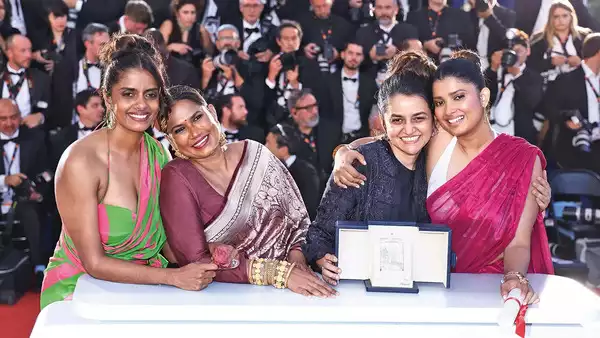
Akshita Vohra (BOMBAY TIMES; January 11, 2025)
2024 was a standout year for India’s female directors in the film festival circuit. The highlight of the past year was All We Imagine As Light’s two Golden Globe nominations – while the film didn’t win, it came very close to making history. However, despite better representation and support, women directors say there’s still a long way to go when it comes to celebrating the female gaze in the film festival space.
‘Women filmmakers are finally finding the recognition and support they deserve’
Deepti Dcunha, artistic director MAMI Mumbai Film Festival, says, “MAMI has had a great ratio of female filmmakers over the years, and in 2024 specially. When we are programming or constituting our selection committee, we ensure that we do have a conversation about giving a platform to directors who are otherwise discriminated against. But at the same time, it is not that a director is only selected because she is a woman.”
In 2023, the percentage of films directed by female filmmakers in the fest was 2%, which changed to around 25% in 2024. Out of 45 feature films screened at the Dharamshala International Film Festival (DIFF), 24 were directed by women.
Festival co-founder Ritu Sarin tells us, “All films are selected on merit, which is why the fact that 24 out of 45 feature films were directed by women is an incredible milestone. It demonstrates that women filmmakers have always been capable of making high quality cinema but are finally finding the recognition and support they deserve.”
Talking about providing this support and recognition at one of the biggest film festivals in India, International Film Festival of India’s Associate Film Programmer, Kanika Katyal, says, ‘‘The programming was done in such a way that we ensured gender parity in the curation, especially in the competition. A broad range of films were offered to the selection committee to choose from which were directed by women filmmakers. This would ensure that enough films from female filmmakers and also other diverse options made it to the competition.”
About the change in numbers at IFFI 2024, she adds, “We have had nine female directed films out of 15 in the main Golden Peacock Award. That comes to 60%, which is a rare occurrence. How often do you see that happen in a film festival?”
‘It’s not easy to go into a room full of men & try to sell your film’
Even after these recognitions at the film festivals, taking a female directed film for distribution, release in the male dominant space is still a challenge.
Vaidaangi Sharma, whose film Chhat was screened at MAMI, says, “I am just waiting for the day when there are more women in the distributor room. It’s not easy to go into a room full of men and try to sell your film. What has happened with All We Imagine As Light is difficult to happen with a purely independent regional film made here in India. Distribution for a festival film is very small, specially for a female directors’ film.”
Adding to this insensitivity that sometimes female filmmakers have to go through in this country, Prachee Bajania tells us, “At my panel at MAMI, a man walked up to me and said if everyone is going to talk about women now then who is going to talk about men, and I told him that there has been so much conversation around men that I don’t know why it should even be a concern now. We have seen this happen a lot in popular media in India. Thankfully the audience at the festivals is niche so it changes the dynamics there.”
‘Important to tell stories from the female gaze’
Prachee Bajania, whose film Umbro won Best Documentary at Beijing International Film Festival and was screened at DIFF, says, “Seeing festivals prioritize female-directed films not just for representation or tokenism but for the unique narratives women bring to the screen is encouraging. It’s not just about these being films made by female filmmakers — it’s also about the importance of the stories they tell, which might be why they are being selected.”
Talking about these stories bringing a female gaze to the film festivals, Farha Khatun, a two-time National Award-winning filmmaker and jury member at Kolkata International Film Festival, feels, “I saw Payal’s film and you can notice that when a female director tells a story, it’s a very different perspective. But because we are so used to seeing a man’s perspective in cinema, it is taking us time to accept this. And now I feel these nuances are finally being picked up with the selection of more such films at Indian film festivals.”
Nidhi Saxena, who was the first female filmmaker from India to win the prestigious Asian Cinema Fund 2024 and had her film screened at DIFF in 2024, says, “It was interesting to see people watch the film from a female gaze and have so many women appreciate and relate to it. I felt it was a newfound sisterhood at these festivals for me this year. Women filmmakers today are trying to not just find new stories but also new form and narrative for their stories.”
‘When we see the west being more inclusive, it trickles down’
Over the past year, female directed films like Payal Kapadia’s All We Imagine As Light, Shuchi Talati’s Girls Will Be Girls, and Kiran Rao’s Laapataa Ladies have earned nominations and awards at prestigious events such as Cannes and Sundance. While some female filmmakers feel this progress is insufficient to bring lasting change to Indian film festivals, others view it as a ray of hope.
DIFF co-founder Ritu Sarin says, “Over the past few years, there has been a growing awareness in the global film industry that women filmmakers were being discriminated against, and consequently, a conscious push to redress this imbalance. Although this signals a shift in perception, the film industry is still largely a male-dominated one, and systemic change will take time.”
Deepti Dcunha, Artistic Director MAMI, also resonates with the sentiment as she says, “We are still looking at what the west is validating as a good film, when it comes to programming. When we see them make a conscious decision of being more inclusive, with women directors, women jury members, it trickles down here as well, leading to a better representation.”
If marrying Javed Akhtar would make me Shabana Azmi, I would marry him-Vidya Balan
8:16 AM

Neha Maheshwri (BOMBAY TIMES; October 22, 2024)
The masterclass with veteran actress Shabana Azmi moderated by Vidya Balan, at the MAMI Mumbai Film Festival 2024, left the audience inspired. The two acclaimed actresses shared their journeys, offering insightful perspectives on the craft of acting, the evolving landscape of Indian cinema, and the key to staying relevant.
‘Theatre isn’t my first medium, I find it incredibly challenging’
During their conversation about the diverse mediums in today’s entertainment landscape, Vidya asked Shabana about her love for theatre, given her unforgettable performances in plays like Tumhari Amrita and Broken Images.
“I still see myself as a film actor,” Shabana responded, elaborating, “I’m trained in cinema and understand the medium much better. However, I believe the ideal situation for an actor is to work in both mediums.”
Shabana said, “While theatre isn’t my first medium, I find it incredibly challenging. The thrill of performing live on stage is unmatched. However, I wouldn’t say it’s the most satisfying because a film performance lasts forever, whereas theatre is ephemeral.”
Vidya added, “I’ve been offered a few plays, but I haven’t had the courage to say yes. The idea of performing in front of a live audience is extremely intimidating.”
‘Hindi cinema used to operate in an alternative reality’
Vidya brought up the fact that Shabana has starred in a diverse range of films, from arthouse cinema to mainstream escapist hits. When asked about the contrasting impact and reception of her vast body of work, she replied, “I just have a ball. I surrender myself to the director. For example, if I were to ask someone like Manmohan Desai, ‘What does this mean?’ He’d reply, ‘Iska kuchh matlab nahi hai. Main bol raha hoon yeh hai iska matlab. Yeh Satyajit Ray ki picture nahi hai’(laughs!). And you are happy to surrender to someone who directs with such conviction.”
‘The lack of attention to detail in mainstream cinema drove me crazy’
Elaborating on her experience of working in mainstream and offbeat cinema, she said, “It’s actually easier for actors to perform in arthouse cinema because it is realistic. Hindi cinema used to operate in an alternative reality; it didn’t matter if you were playing a policeman or a businessman – their homes looked no different from one another. The lack of attention to detail drove me crazy. It was left to art films to capture those finer nuances. I feel there was a design behind it though – Hindi cinema aimed to cater to the lowest common denominator and wanted to be all India. This focus on mass appeal made it more challenging to create credibility in such a stereotypical world.”
‘I lament the loss of songs & lip-syncing in our films’
Shabana expressed her disappointment over the decline of lip-synced songs in Hindi cinema, saying, “I lament the loss of songs being sung in sync because, in Hindi films, we tell our stories through songs. These songs were like little philosophies that captured life’s moments. We had a song for every situation, creating a nostalgic connection. However, in the effort to be modern, we’re replacing the song with something no one is paying attention to.”
Vidya agreed, adding, “I absolutely miss lip-syncing to songs; they have now been relegated to the background. I also feel that the urge to be universal is robbing the Hindi film industry of its unique essence.”
‘Actors who start playing meaningful roles have a longer career span’
When asked how she has managed to stay relevant over the decades, Shabana shared, “I’ve never been someone to rest on past achievements because I constantly seek new challenges. So, staying relevant is important to me. Even after 50 years, I am still learning. I adapt to changes, like working with green screens (chroma) where I react to nothing.”
On the topic of ageing and the kind of roles that women get offered, Shabana concluded, “Ageing has never been a problem for me, I embrace it as a natural part of life. I don’t try to look younger than I am because there’s nothing more beautiful than ageing gracefully. Even in my 30s, I wasn’t doing only naachne-gaane ke roles; I was playing substantial characters. Actors who start playing meaningful roles have a longer career span. There’s always more space for characters than just leading men and women.”
‘My entire family supported my decision to do Fire’
When I was working with women living in slums, I was concerned that if I accepted the role (in Fire), it could be used against me, making it difficult for those women to continue working with me. Zoya (Akhtar), who was only 18 then, asked, ‘If you like the script, what’s the big deal?’ Farhan, even younger, liked the script but was concerned about the ending — my character was meant to die in the fire. He argued it would suggest the character did something wrong, insisting she needed to survive. I shared his feedback with Deepa (Mehta). Ultimately, my entire family supported my decision
---------------------------------------------------
If marrying Javed Akhtar would make me Shabana Azmi, I would marry him – Vidya Balan
---------------------------------------------------
I really enjoyed working on Rocky Aur Rani Kii Prem Kahaani. In the very first scene, I had my hair down on one side, wearing a silk sari while cooking macchi curry. I asked Karan (Johar), ‘Which Bengali woman cooks in a silk sari with her hair open?’ He said, ‘In a Karan Johar film, she does, just go with it’. I’m glad I trusted his vision because it turned out beautifully – Shabana Azmi
If event films are just a circus, eventually the audience will reject them-Kanu Behl
8:12 AM
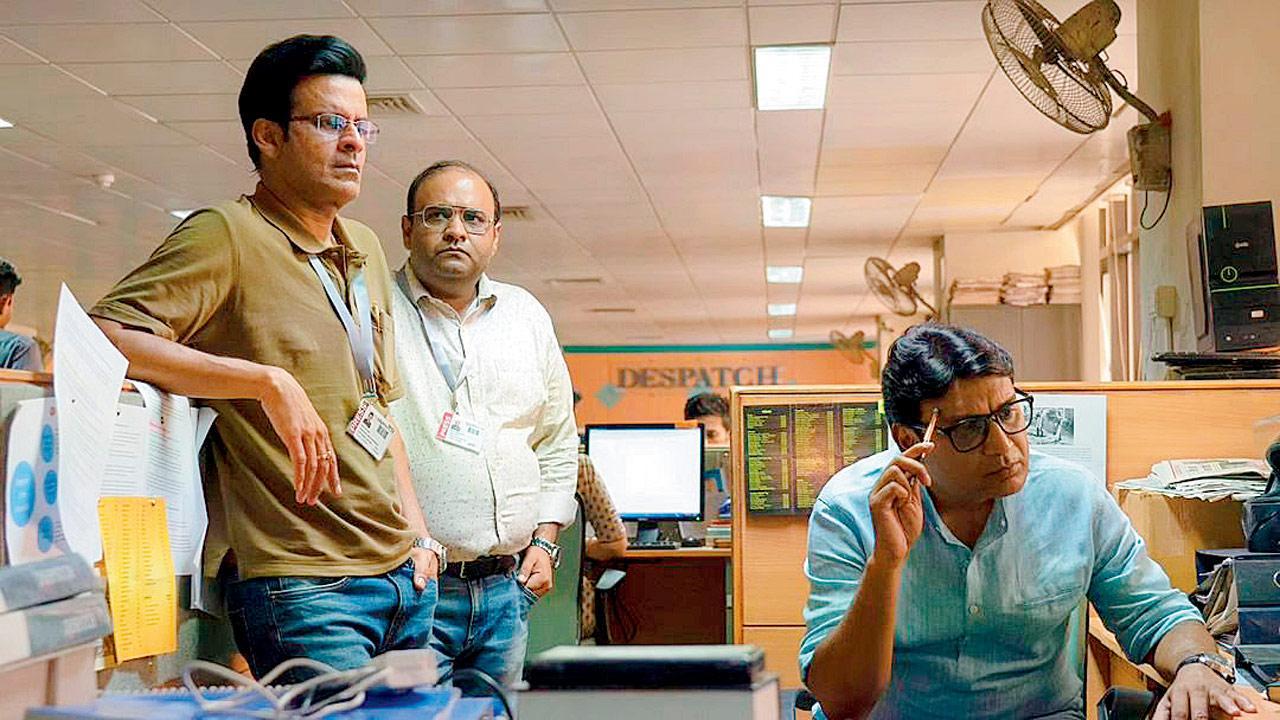
As Despatch premieres at MAMI Film Festival, director Behl on researching the murders of Gauri Lankesh and several journalists for the crime thriller
Priyanka Sharma (MID-DAY; October 21, 2024)
On Saturday, director Kanu Behl’s Despatch had its Indian première at the MAMI Mumbai Film Festival. But the filmmaker’s journey of the Manoj Bajpayee-starrer began in 2016 as he, with co-writer Ishani Banerjee, set out to explore the world of journalism.
“Stories about journalism often end up being one-dimensional—there are God-like protagonists fighting to break a story. I always felt that a better understanding of how the world looked from the inside was missing. I had been toying with the idea, and it criss-crossed with so much violence happening with journalists, starting with Gauri Lankesh. The world around us was changing so much. So, I decided to do a Faustian piece about a journalist, who is breaking a story, but not only with an altruistic purpose. Ishani and I dove into eight-nine months of research, looking into several cases of journalists getting [killed].”
While writing the protagonist, Behl didn’t have Bajpayee in mind. But after the script was complete, the actor became his first choice. “Manoj was the first person I went to. As a director, you are always looking for collaborators who are in love with cinema. Manoj is in love with the art of filmmaking. It’s amazing that he has had a trailblazing career, and yet he approaches every film with that impulse.”
Months ago, Bajpayee had told mid-day that working with Behl was challenging (Kanu is a difficult and tedious director, Aug 20).
Mention this to the director and he laughs, “As a director, it’s my job to push the actor in a new territory. Often, films feel staccato because they are done from a pedestal where the filmmaker [operates from]. The moment you accept that you don’t know everything as a director, it gives the film freedom. Some days, you don’t know what you are doing, nor does the actor. My job is to make myself and my actors feel a little lost once in a while. It’s only from there that something new emerges.”
Since his first film, Titli (2015), Behl has championed indie cinema. Even though event films are dominating the scene, he is unfazed. “If you see the films that have re-released now like Tumbbad [2018] and Khosla Ka Ghosla [2006], they might not have done box-office numbers at that time. The audience only sees the emotion of a film. Post COVID, the world has changed so much. Cinema is being turned into more of an event, but I have faith in the audience. If event films are just a circus, eventually the audience will reject them and ask for something that [moves] them.”

Hope we will have state support next year, says MAMI Mumbai Film Festival director Shivendra Singh Dungarpur
8:17 AM
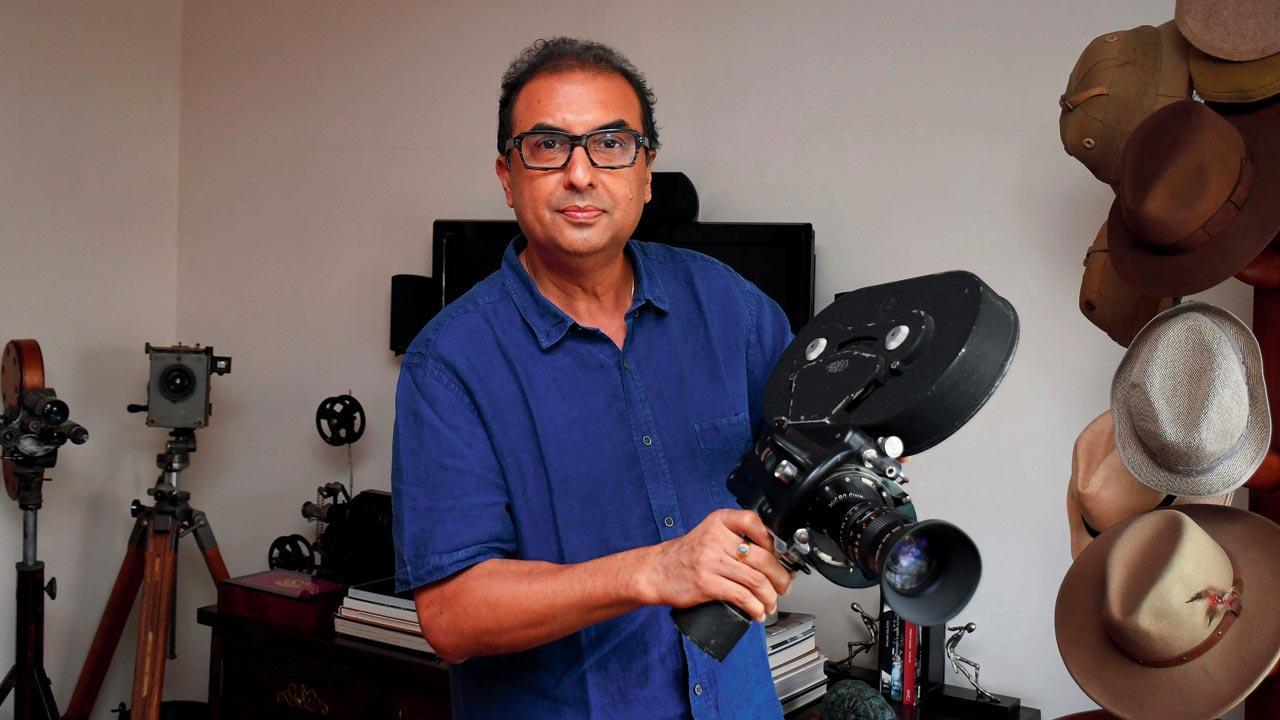
Before MAMI Mumbai Film Festival kicks off tomorrow, festival director Dungarpur confident that funding from the govt can make it a global cinematic event à la Cannes
Mohar Basu (MID-DAY; October 18, 2024)
The MAMI Mumbai Film Festival, over the years, has become a symbol of the city’s love for the movies. As the prestigious film gala sees a change of leadership this year, with film archivist Shivendra Singh Dungarpur taking on the role of the festival director, he says the idea is to bring independent cinema to the forefront. The festival, which opens tomorrow, aims to celebrate both emerging and established voices.
“This year, we are in a phase of transition. One [change] is that it’s just MAMI. No festival in the world has a tagline. We have come back to the original name,” starts Dungarpur, addressing head-on that Jio, the long-standing festival sponsor, has pulled out this time.
“The second important thing is that [over time], we didn’t feel like a festival. It has to be made into a celebration. We shouldn’t be spread out so massively that a guy from Juhu cannot meet a director, who is presenting [his film] in Goregaon. In film festivals, you should have to make little effort to go and experience the whole thing. Even with limited funding, we have got great programming this time—there is the South Asian competition, novel competition, we’ve got classics and the best of world cinema. But what was essential for me was to have an opening film that is truly Indian.”
This pursuit led him to Payal Kapadia’s Cannes Grand Prix-winning film, All We Imagine as Light. Dungarpur says the drama stands for two things that the festival stands for—the city of Mumbai, and rooting for indie filmmakers.
“A young filmmaker finds it difficult to raise funds, then she makes a film, and then he is able to take it to the world. Payal’s film will be an inspiration because it has reached the goal of the Grand Prix. We want to make sure that this festival is not about big films, it’s about independent films. We want it to be a people’s festival.”
Kapadia started her career with Dungarpur at Film Heritage Foundation, and to have his mentee’s work open the festival is a moment of great pride for him. “I have a special relationship with her. I told her that All We Imagine as Light should be the opening film for MAMI because it reflects the city. It’s rare to find a film that reflects everyone’s struggle in this city; a city where people come from different parts of the country and make a home. Usually foreign movies are chosen as the opening film. But to me, Payal’s film was the correct catalyst. There is so much buzz around this movie. Our phones have not stopped ringing; people want to come and see it. It’s wonderful to see this kind of response for an independent film. India doesn’t have the concept of a grant. It’s very tough for an independent filmmaker. That’s why you see so many sources of funding in Payal’s movie.”
Dungarpur believes MAMI has the potential to be on par with international film festivals like Venice and Cannes. He notes that the lack of state support holds India back from making a festival of that scale.
“If a movie goes to Cannes or Venice, then it goes everywhere else. I want to make Mumbai [one such destination for cinema]. We are hoping that by next year, we will have support from the state because the festival represents the city and its spirit. We want the state to be involved. You will see the reflection of state’s support of what the coming days and the next six years are going to be like.”
Mumbai’s date with MAMI
- Over six days, the festival will showcase 110-plus films from over 45 countries. These include Demi Moore’s The Substance, Emilia Perez that is France’s official entry to the 2025 Oscars, and Manoj Bajpayee’s Despatch.
- To attend screenings and events, one needs to register for a delegate badge on the MAMI website. There are badges for the press, industry delegates, cinephiles as well as for senior citizens.
- Screenings and events will be spread across prominent venues in Mumbai, including Regal Cinema and PVR Juhu. Soho House Mumbai will host the Industry Programme from October 21 to 23.

Payal Kapadia’s All We Imagine As Light to open MAMI film festival
8:19 AM
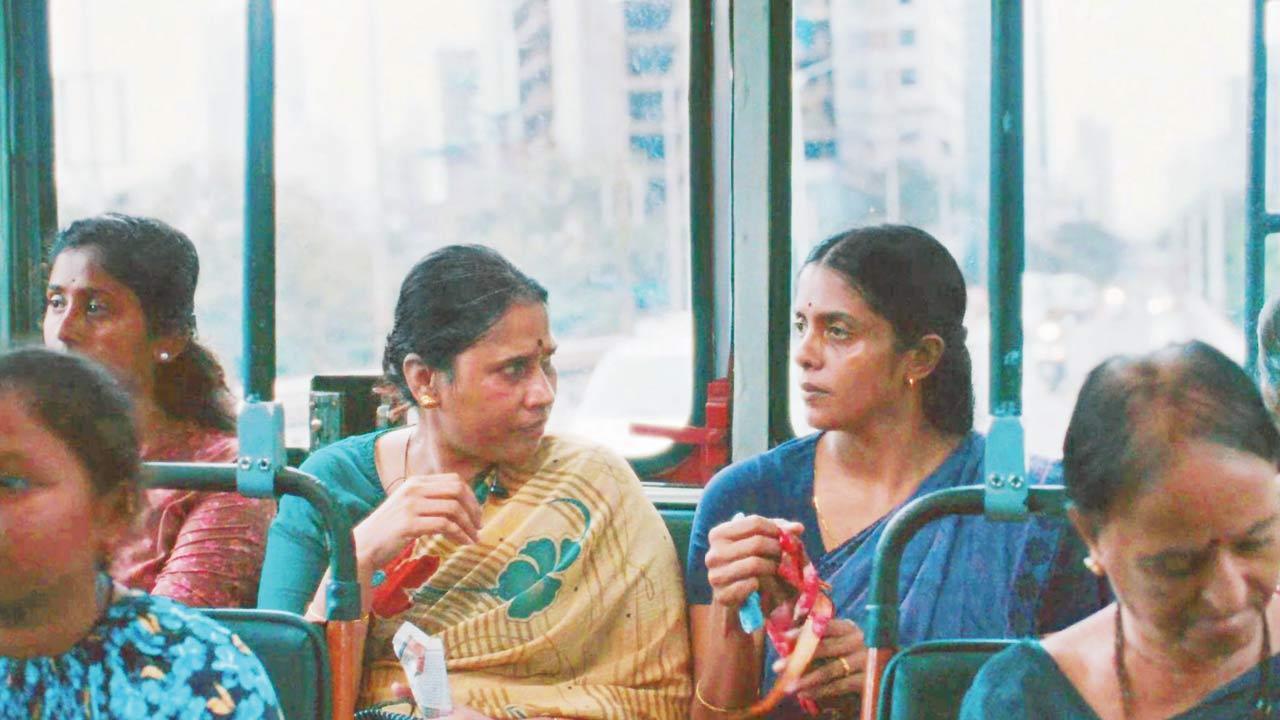
All We Imagine As Light to open MAMI Film Festival; director Payal Kapadia thrilled that Mumbai audiences will be first in India to see her Cannes Grand Prix-winning work
Mohar Basu (MID-DAY; October 9, 2024)
Payal Kapadia has fond memories of her film student days when she would attend screenings held by the MAMI (Mumbai Academy of the Moving Image) Mumbai Film Festival. Today, life has come full circle as her directorial venture, All We Imagine As Light, has been chosen as the opening film of the festival’s 2024 edition. The Kani Kusruti, Divya Prabha and Chhaya Kadam-starrer will première at the film gala on October 18.
Kapadia, whose movie made history by becoming the first Indian film to win the Cannes Grand Prix, considers it a “tremendous honour” to showcase the drama on the stage that shaped her love for cinema.
“When I was a student in Mumbai, I got a glimpse into world cinema, and cinema from other parts of the country, because of MAMI. I am happy that people in Mumbai will be able to see the film here first,” she said.
Set in Mumbai, All We Imagine As Light follows three women, who take a trip to Ratnagiri that allows them the space to reflect upon their life choices. For Shivendra Singh Dungarpur, interim festival director, hosting its India première stands for something bigger.
He said, “All We Imagine As Light will always be remembered as a film that won the Grand Prix at Cannes, but it is also an independent film that faced many challenges, especially in finding funding, before it won accolades all over the world. As we begin a new phase in MAMI, this film embodies the kind of cinema that we would like to showcase and provide a platform that will celebrate independent cinema.”
Subscribe to:
Posts (Atom)