Showing posts with label Leslee Lewis. Show all posts
Showing posts with label Leslee Lewis. Show all posts
Asha Bhosle simply told me, ‘Music is not for everyone. Focus on your studies’-Leslee Lewis
10:39 AM
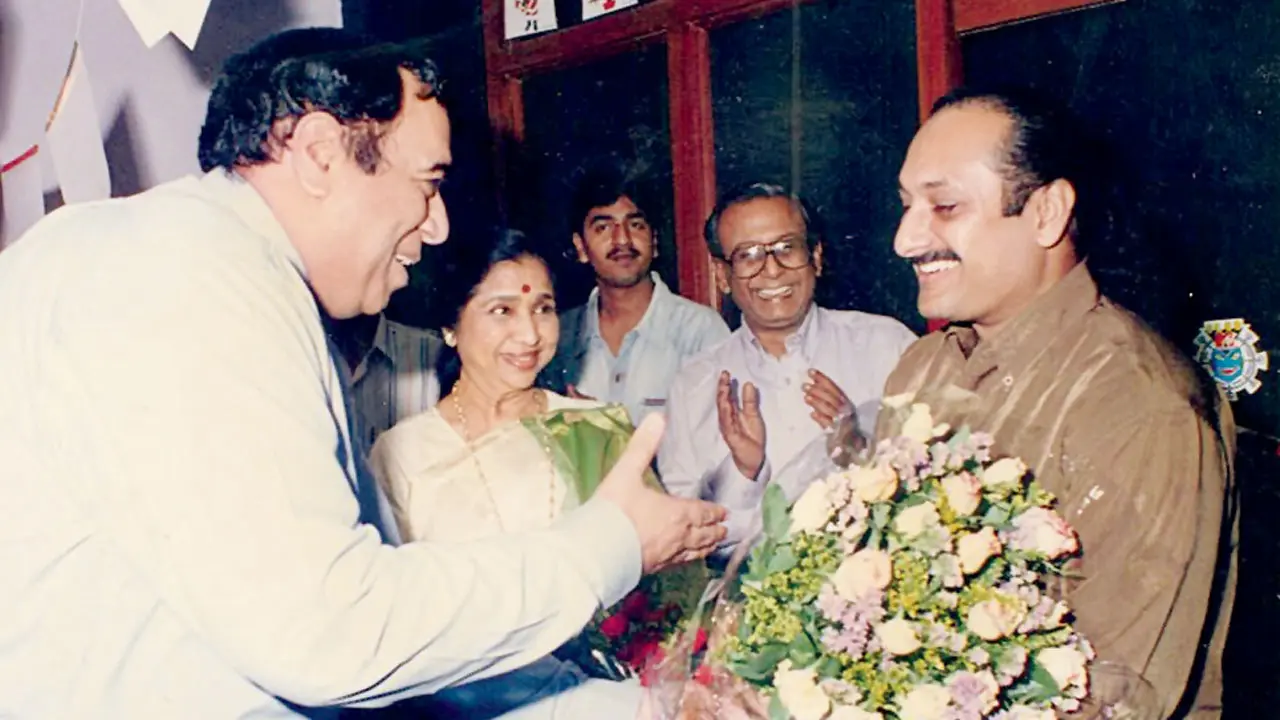
Leslee Lewis, who introduced Asha Bhosle’s songs to the ’90s listeners with ‘Rahul & I’, recalls how the singer’s versatility across the decades was a benchmark for every musician
As told to Mohar Basu (MID-DAY; April 13, 2026)
Some voices are heard, and some, felt. Asha Bhosle was always felt. She had that rare gift of turning every song into a lived emotion. For all of us in music, she was a benchmark we measured ourselves against. Not just for her range or versatility, but for her courage. She never allowed herself to be defined by one sound or era. She kept pushing boundaries.
She and Pancham da [R D Burman] were close to my father, PL Raj. I still remember the first time I met her — this was at Duke’s Retreat in Khandala. When my father told her I liked playing the guitar, she didn’t indulge me with polite praise. She simply said, ‘Music is not for everyone. Focus on your studies.’
Years later, I was approached to work on a project with Asha ji. Initially, I was hesitant, but I was told that R D Burman had wanted to recreate his old songs in a new style with me. That’s how the remix project, Rahul & I, began. The brief was simple: introduce Asha ji to a new generation.
Working with her wasn’t easy at first. She was used to a different recording style, where the voice dominated and the arrangement followed. I was [using] tighter grooves, modern production, and a new sonic space. Initially, she resisted. She even walked out at one point, saying, ‘This is not how I sing’.
To her credit, she came back. She gave it a chance. Slowly, she began to understand that the sound was fresh and exciting.
When the album released, suddenly, Asha ji was ‘young’ again in the eyes of a new audience.
Working with Asha tai was like going to school every day. Legends like her understand the composer’s thought, and then gently elevate it without ever overpowering it.
Today, there is a sense of loss. But her music will never pause. It will keep inspiring generations. Because artistes like Asha ji don’t belong to a time — they become time itself.
Tu Hi Re has become my Aadhar card-Hariharan
11:17 PM

Debarati S Sen (BOMBAY TIMES; April 10, 2026)
Few voices in Indian music carry the emotional depth and versatility of Hariharan. From timeless film melodies like Tu Hi Re (Bombay), Roja Jaaneman, Ay Hairathe and Bahon Ke Darmiyan to his work in ghazals, the singer has been an inspiration to many. As he celebrates 50 years of ghazal singing with his new album Jaan Meri, the legendary vocalist reflects on iconic songs, creative droughts, the revival of ghazals and the explosive growth of India’s concert culture. Excerpts from a conversation with him during his visit to the Bombay Times office.
You’ve lent your voice to many unforgettable Bollywood melodies. Which songs remain closest to your heart?
There are quite a few. Jhonka Hawa was a song that told a story, and I enjoyed the way it unfolded musically. Pachai Nirame in Tamil is another favourite. And there’s an A R Rahman song, Tum Ho Meri Nigahon Pe from Kabhi Na Kabhi, written by Javed Akhtar. I always feel it didn’t get the recognition it deserved. It has a beautiful symphonic quality.
Your song Tu Hi Re remains one of the most-loved romantic tracks in Indian cinema.
(Cuts in)… Tu Hi Re has become my Aadhaar card (laughs). Wherever I go, people immediately connect me with that song. It has travelled across generations and still holds that emotional power.
There was a phase between 2008 and 2012 when you were less visible in the music space. How do you look back at that period?
That wasn’t a great phase for me creatively. During that period, I released only one album, Waqt Par Bolna. I was touring a lot with Rahman then, and we would record songs with musicians wherever we travelled around the world. Another reason I didn’t record much was that I didn’t have my own studio. The moment I opened my studio in 2012, I suddenly had so many tunes in my head waiting to be recorded. I had already sung so much for films, and there was also Colonial Cousins, my band with Leslee Lewis. Sometimes the best thing is to remain silent and just let the phase pass. Creative droughts happen to every artiste.
You recently released the album, Jaan Meri, which celebrates your 50 years of ghazal singing. You have also been doing ghazal concerts recently. Do you think that the genre is seeing a revival?
Absolutely. There is a clear resurgence. Many youngsters are listening to ghazals and even singing them. The beauty of a ghazal is that it sits right in the middle of the road as a form. It is pure poetry, with a matla, sher and maqta. Each couplet can talk about a different subject. One verse might be romantic, while another might reflect on society. Because the poetry is so lyrical, it lends itself easily to composition.
You come from a musical family. How did that environment shape your journey?
I was born in Matunga into a family of classical musicians. My father was the principal of Shanmukhananda Sabha. My mother has taught more than 1,500 students Carnatic music. People often ask me why I don’t teach music, but teaching requires incredible patience. I don’t think I have that. We lived near Ruia College, and I went to Don Bosco School, Wadala, where I began singing rock music. I even had a school band and sang songs like It’s Been A Hard Day’s Night. For me, singing Western or Indian music was never a big transition, I was simply a singer who loved to sing in any language.
The live music scene in India has exploded in recent years. How do you view this concert boom?
It has grown tremendously. In my entire life, I have never done so many concerts as I do now — not just me, but everyone. It’s almost four times more than earlier. People want to go out and enjoy music. It’s a healthy thing. Music heals; it intoxicates you without side effects. All of us have rhythm — after all, we have a beating heart. When audiences come to concerts and immerse themselves in music, it’s a beautiful experience.
With such rapid growth in the concert circuit, do you think there’s a risk of saturation?
Maybe. Maybe after I retire from music (laughs).
If I have to tell you what happened in my life and why I wrote this song, it’s odd-Leslee Lewis
9:05 AM

Having released his song Tere Bina Main, Leslee Lewis slams today’s generation of singer-songwriters who rely on backstories to make their tracks popular
Priyanka Sharma (MID-DAY; January 19, 2026)
A composer, singer, and producer across independent and film music, Leslee Lewis has been wearing many hats for over three decades. And he is no mood to rest. A few weeks ago, he released Tere Bina Main, a romantic song with a contemporary, loud rock sound, which completed his album, Phir Se Rock and Roll. In a chat with mid-day, Lewis talks about his latest creation and his grouse with the current lot of songwriters. Excerpts from the interview.
After decades of music-making, do you still feel nervous before a song’s release or are you habituated to it?
No! If it becomes a habit, I won’t release [songs] because then it’s boring. Artistes are childlike. They want to show you, almost as if saying, ‘See, I did this!’
What was the thought behind Tere Bina Main?
You find so many people in long-distance relationships now. When you both are in the same city, it’s fun. But if your partner gets transferred elsewhere, he says, ‘I love you, but how do you expect that love to continue when you are not with me?’ This song talks about the practical issues of being in a long-distance relationship. We wouldn’t talk about such things 10 years ago. But today’s generation asks these questions.
Your music, in that sense, has always reflected the mood of the youth.
I’m blessed because what you’re saying is true. I am the same guy who did Piya Tu Ab Toh Aaja [remix] with Asha Bhosle; I am the guy who started indie pop with Paree Hoon Main and Yaaron, who started Colonial Cousins [with Hariharan]. I believe music is a frequency. When I did Paree Hoon Main, today’s parents were the youth then. They resonated with those frequencies. Today, their kids are resonating with these frequencies. Both [age groups] are my fans. What I am bringing with my music is positivity and hope.
There’s also timelessness to your music. Even today, when students are leaving colleges, Yaaron is played.
There is certain quality to the creation of these songs. That’s why they have lasted. They weren’t put together for the sake of it. Not just the old songs, even Tere Bina Main or my album Phir Se Rock and Roll [have that quality]. From the writing to the compositions, it’s quite complicated, but it’s simplified for the outside world.
Now, with social media, a lot of indie musicians are able to put their music out and earn recognition. How do you view this evolution?
In India, singer-songwriters have become a fad. They [tell] the audience, ‘Look, I went through a bad time. So, I wrote this.’ Don’t tell me stories. Just sing the song. If the song has a story in it, it will connect with the listener. If you can’t connect [naturally] and I have to tell you a story about what happened in my life and why I wrote this song, it’s odd. People should get drawn to the song. As an artiste, you first need to have songs that connect with the audience.
I have been approached to recreate my cult classics, I am not too keen-Leslee Lewis
10:25 AM
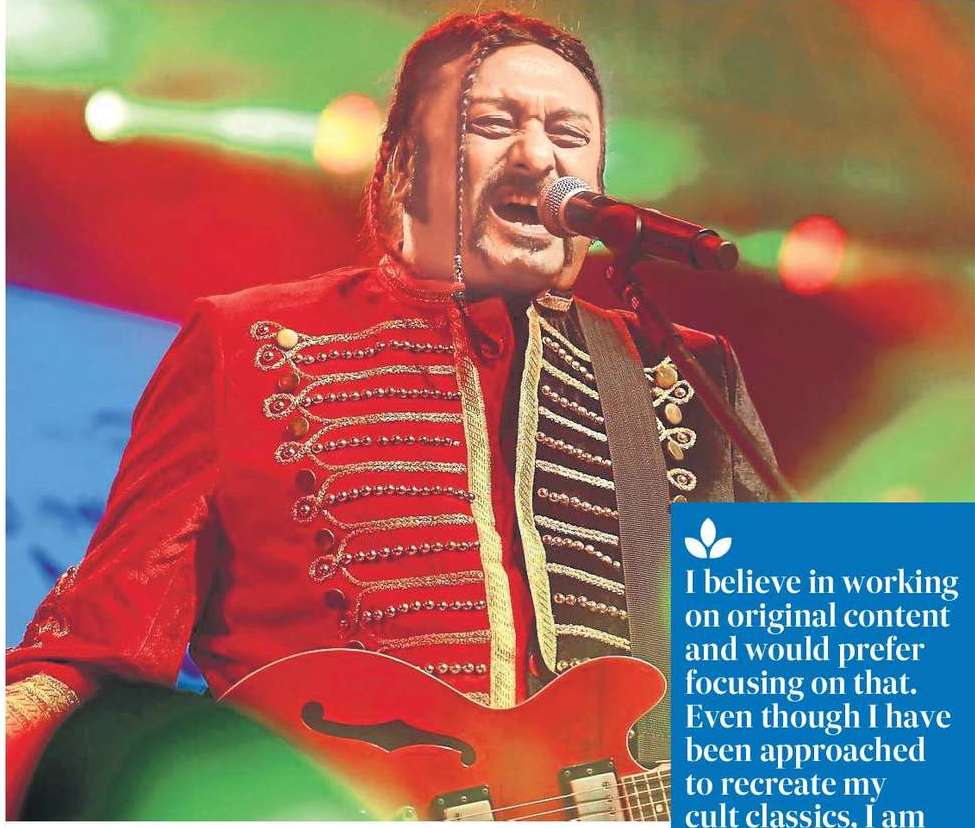
Vishakha Pandit (HINDUSTAN TIMES; June 2, 2025)
Leslee Lewis, the composer of cult classics such as Paree Hoon Main and one half of the iconic music duo Colonial Cousins, has been an independent musician all his life. But his new single, Meheki Khushboo, is special as he has “composed it, sung it, recorded it, and released it myself”. The idea behind it?
“I’m as independent as it gets. I wanted people to ask, ‘Did you really write this?’ That was the desperation — to reach the youth,” shares the 64-year-old musician.
To adapt to the changing times and stay relevant in the music landscape, Leslee claims to have reinvented himself.
He explains, “There are so many independent artistes these days. While I understood my audience, I knew I couldn’t sing the way I always have. It was a conscious decision to sing in my own language — Hindi — to reach the masses. Today’s youth is my target audience. I believe in reforming things for me. Change is very important, and if AI can bring that change, what’s the harm? It’s a great tool — like a computer. But you have to be the master. If the machine starts making creative decisions, you’ve lost control.”
While many chase trends with remixes, he likes to make fresh content. Would he ever want to recreate any of his cult classics such as Bombay Girl sung by Alisha Chinai, Meri Neend sung by sung by A Band of Boys or Paree Hoon Main sung by Suneeta Rao?
“Why recreate when I can create? I believe in working on original content and would prefer focusing on that. Even though I have been approached to recreate my cult classics, I am not too keen,” he says.
The musician feels that the current music landscape is dominated by arrangements, not strong compositions. “There’s a scarcity of good songs that truly stay with you. There is no depth in the lyrics or composition in the music that’s being created. Going viral has become as easy as it can get. A good composition is like natural beauty. Arrangement is just the styling,” he says.
Hariharan and Leslee Lewis reveal how they came up with the name Colonial Cousins
9:00 AM
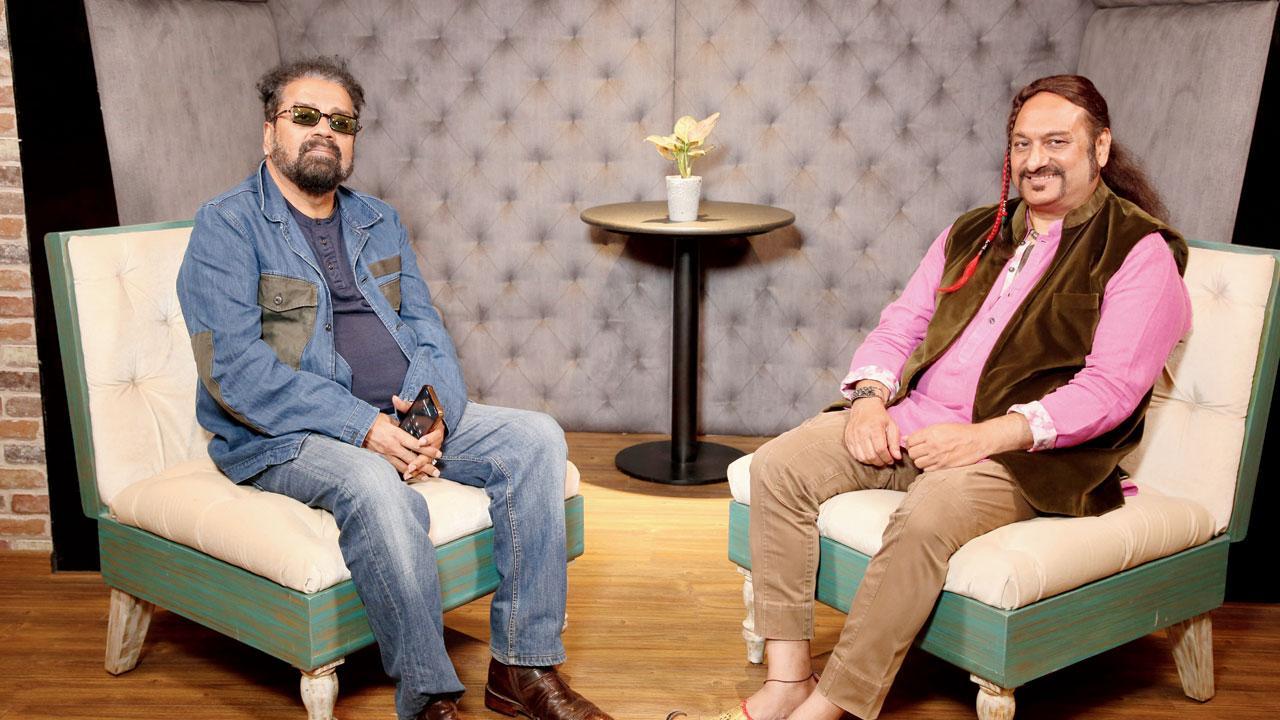
Having delivered a throwback to the ’90s at the Kala Ghoda Arts Festival yesterday, Colonial Cousins Leslee and Hariharan look back at their journey as a duo
Sonia Lulla (MID-DAY; February 13, 2023)
There may have been umpteen occasions on which this reporter has interacted with Hariharan and Leslee Lewis in the last few years, none of which, however, brought them together to discuss their work as the Colonial Cousins. “We do a lot of our own stuff,” says Lewis, who has spent a fair share of time reinventing his style of music, of late. Hariharan too, has been investing time in the studio, working on different sounds. The Kala Ghoda Arts Festival festival, however, brought them together yesterday. Days ahead of their performance, they turned up at the mid-day office to walk down memory lane.
Edited excerpts from the interview.
Hariharan: Leslee, you and I are set to perform at the Kala Ghoda festival this year. Do you want to tell the readers how this materialized?
Leslee: Well, the Colonial Cousins are colonial, and so is the Kala Ghoda Arts Festival festival, which is all about art and music. Also, we’ve not played in Mumbai.
Hariharan: Mumbai’s crowd is different. At a festival like KG, there are no tickets [for our show], so people will walk in, and will stay to watch us, if they are interested. We’ll relive the time capsule of the ’90s.
Leslee: Why do you think we haven’t performed in so many years?
Hariharan: We did perform abroad, and did online shows during [the lockdown], but we were not together. You were busy with your album, The White Album, which is a great one. During COVID, I also recorded three albums, two of which centred around ghazals. In the last two years, things have been [good], in the studio.
Leslee: I think that people think we have split. They believe Colonial Cousins is no longer active. That’s a perception people have.
Hariharan: Colonial Cousins is popular, but we have a particular set of listeners [who like our music]. People who like classical music appreciate our sounds. The Indian elements of our music are traditional. But [our] songs are a bit more funky. So, this is a niche.
Leslee: I remember, I was in Manhattan, New York, and walked into a record store to see if our albums were available. The person at the counter came up to me and asked me if I was Leslee Lewis. When I asked him how he identified me, he said ours was the most sold album in the world music space, and hence, my face was familiar.
Hariharan: We also have good sales in Germany.
Leslee: Yes, we do. A lot of them were pirated too. But you need certain sponsors or brands willing to promote this music.
Hariharan: Since you have a good memory, do you remember how we met?
Leslee: You were working on a jingle. I was composing it, and you were singing it. I recall, I started jamming, and you joined in. Most classical singers sing in one scale. So I stuck to one scale and kept hearing you sing. But then, I decided to change it and use jazz. And instead of stopping, you continued to sing along to the music. Then, I used country and western music, and you kept going with the flow. If you remember, each person in the studio dropped what they were doing and sat on the floor to listen to us. In a way, that was our first performance. Eventually we resumed working on the jingle, but you told me that we should do something about our [collaboration].
Leslee: Do you remember how we came up with the name, Colonial Cousins?
Hariharan: We had been considering a lot of Sanskrit names, and also [those from the] Ramayan. We even thought of Gayatri. But, none of them fit the bill, because we also had fun songs that we were working on. I was in London meeting someone who told me that his British friends called each other colonial cousins. And the first thing I thought was how well this fit.
Leslee: I remember, when you told me the name, I was so upset that you got it, and I didn’t.
Hariharan: What are the most memorable moments you have [from our journey]?
Leslee: There are commercial moments, like being on MTV Unplugged in London, and singing Krishna at the Billboard [Awards] and watching the reactions to it. Getting the MTV Viewers’ Choice Award at Radio City in New York was also special. But, artistically too, we have had great moments. I remember, we were performing Indian rain, and you wanted to sing the entire song, and, I thought I should sing the English portions. But you [were adamant], so, I agreed. When you sang it, that was an amazing moment for me, because I realized that [we should] always favour the music.
Hariharan: In my case, I think it is the wonderful people we met during our time in London. We were connected with Adrian, who is a [prominent] producer, and he had great musicians and recordists [working at his studio], which he made available to us. That’s why we call [the song] Adrian’s Angel. Some of the biggest musicians and backing [vocalists], who were singing for the top UK acts, [were accessible to us]. To get that sound for our first album was great. It was a blessing.
Leslee: I also remember being in the first-class lounge in London, and being approached by an elderly man who recognized us. And when we asked him if he consumed our work, he said, ‘Yea, Elton and I love your music.’ When we asked him who he was referring to, he said, ‘Yea, I am Elton John’s manager.’
Leslee: I know you dislike a lot of things about the changing music trends.
Hariharan: My philosophy about creating music is that the artiste should create what [he] wants to. You are the giver, and you need to have the conviction. You don’t need to become the receiver. Be popular, sure, but you need to become an artiste, in the true sense. A lot of people concentrate on [creating] versions [of songs], but you have to create your own sounds, and your own song. While creating music, whether involving vocals or instruments, your soul is trying to say something, and you are transmitting energy. If you don’t do this, where’s your soul? I know views are important, but if you create good music, you’ll get all of that anyway.
What advice would you give to young composers hoping to join the industry as a duo, like you?
Hariharan: It’s easier to be alone. It’s tricky to be together. You have to be in sync with the other person, both, in the way you think, and also from your heart and soul. Your likings, musicality, temperaments, they all need to match. You can have dissimilarities, but they should be to a lesser extent. I’d say, hang out with each other for a few months, write things together, and do a project. Then, if you feel good, consider collaborating. You need to be compatible.
Leslee: If you don’t have a liking for each other, then there will be trouble. When we began, we were already [established] names. When we came together, we did it for fun. Sometimes, we do our own thing. You have to be together, because it is like a marriage. Today Hariharan is my brother. We are not at each other’s homes all the time, but we are together. In him, I found someone who became my guide and friend. We teach each other different things.
Once it rained during our concert; people were drenched, but wanted to continue listening to us perform-Hariharan and Leslee Lewis
8:11 AM

The Colonial Cousins duo, Hariharan and Leslee Lewis are enthused about their first concert in Mumbai after 10 years at the Kala Ghoda Arts Festival
Debarati S Sen (BOMBAY TIMES; February 10, 2023)
Five album releases in the last 27 years, and yet, this stylish musician duo continue to have a strong fan following and the ’90s music-loving kids fondly remember listening to their songs on cassettes. Singer Hariharan and singer-composer Leslee Lewis of the Colonial Cousins, who are all set to perform live this Sunday at the Kala Ghoda Arts Festival (KGAF) 2023 after almost a decade, talk to Bombay Times about their soulful bond, the magic their music creates and recall some of their special performances together. Excerpts:
‘PERFORMING IN MUMBAI IS ALWAYS EXCITING’
“This is a great festival for music lovers and people are here just for the love of good music. We are excited and happy to be performing at the KGAF this year. I had a concert at many Kala Ghoda years ago and I really enjoyed the crowd. Actually, performing in Mumbai is always exciting,” says Hariharan. Leslee adds, “Performing at Kala Ghoda is like performing in our colonial space. It is a zone that looks and sounds like colonial cousins, so what better than to perform there!”
‘WE ARE BOTH MUMBAI BOYS AND THE CITY HAS GIVEN US THE MUSICAL BACKGROUND THAT WE HAVE TODAY’
While the duo performed a lot during the pandemic, it was all completely online, and only later that they did some private gigs in some cities in South India and Dubai, among other places. “The KGAF show will be our first public concert together in Mumbai after almost 10 years,” says Hariharan. Leslee chips in, “It is crazy that we are doing a public concert in Mumbai after so many years because we are both Mumbai boys. We were born and brought up here and the city has given us the musical background that we have today and the best spot to give it back is this artistic space called the Kala Ghoda Arts Festival.”
‘WE WERE DESTINED TO CREATE MUSIC TOGETHER’
In 1994 they recorded their first album, which was released in 1996 and lauded by music lovers. They got so much adulation and love that they didn’t know what had hit them. It has been “magical” says the duo when they talk about their almost three-decade-long journey. “All I can say is that we are very blessed, and we were destined to do this. Even today, we both coincidentally wore the same colour jackets for this shoot! We still have that connection and when we get together and perform, that magic always pops up for both of us and then people get to experience that,” shares Leslee.
‘THERE IS A SOULFUL CONNECT BETWEEN US THAT PEOPLE LIKE’
So many bands have emerged in our country over the years, but not all of them have such a strong bond and deep connect as Colonial Cousins. And this, despite the band members pursuing their individual musical careers. Leslee feels that the fact that people love them is because of something more than just music. “There is a soulful connect between us that people like.”
‘ONCE AT A CONCERT, WE HAD OUR CLOTHES TORN OFF BY WOMEN’
The singer-composer duo has many fond memories of working and performing together. Talking about their concerts Leslee recalls, “In 1996, around 15000-20,000 people attended our concert at St Xavier’s College, Kolkata, and we literally got our clothes torn off.”
Recalling one of their most memorable concerts in Mumbai, Hariharan shares, “It was at the Mahalaxmi Racecourse. Suddenly, it started raining heavily. It was an open-air concert so we thought we would have to cancel the show. But the crowd just stood on the ground, nobody left! They were drenched, but wanted to continue listening to us perform. But eventually, we had to stop, else we would have been electrocuted!”
Leslee Lewis recreates Yaaron with KK’s children Nakul and Taamara
8:13 AM

The late singer’s family is also organizing a concert in his memory on his birthday later this month
Debarati S Sen (BOMBAY TIMES; August 7, 2022)
KK’s song Yaaron has been among the most iconic songs on friendship. The evergreen track composed by Leslee Lewis has been on the top of the music list of most of the singer’s fans for over two decades now. Music lovers around the world were shocked and devastated by the singer’s sudden demise on May 31. Now, Leslee has recreated the song with KK’s children, Nakul Krishna Kunnath and Taamara Kunnath, as a tribute to him.
In an exclusive chat, Leslee tells Bombay Times, “More than two decades after we composed the song, I have recreated it with KK’s children Nakul Krishna, Taamara and his band. What made this experience special was that we recorded the song at the same studio, Purple Haze in Bandra, where KK and I had first recorded the original 23 years ago.”
The musician gets emotional as he shares, “Years ago, the day Nakul was born was when I gave KK his first jingle. It was a special moment and a great experience for me to record Yaaron in the same studio with KK’s children. I saw the awe in their eyes as they reminisced all that their father had told them about recording this track, which was his first song with me. I have technically got his children to sing with him because I have retained KK’s lines and made Nakul and Taamara sing along with his voice. It was a magical moment. After KK’s sudden demise, this was the first time that his children came out to record a song.”
Nakul shares, “Recording dad’s song with Leslee uncle meant so much to Taamara and me. Standing there, in that studio, we felt like dad was there with us and that he was watching us. It was a surreal experience for my sister, my mother (Jyothy Krishna) and me.”
On August 23, the family will be organising a special concert in memory of the singer on the occasion of his birthday. “My sister and I wanted to do something special for his birthday, and so we will be singing a few of dad’s songs at this #NeverEndingTribute concert,” shares Nakul. Singers like Shaan, Papon, Benny Dayal, along with Leslee and others will also perform at the concert.
Elaborating on the concert, Nakul says, “We are very excited about the concert and have been rehearsing a lot with dad’s band. This will be a special event where prominent musicians will sing dad’s songs and also share anecdotes and memories of my father. It will be more than just a music concert. We want everyone to know the camaraderie that dad shared with all his colleagues so that everyone remembers him in a positive light.”
KK was famous for his voice, not marketing skills-Leslee Lewis
7:53 AM
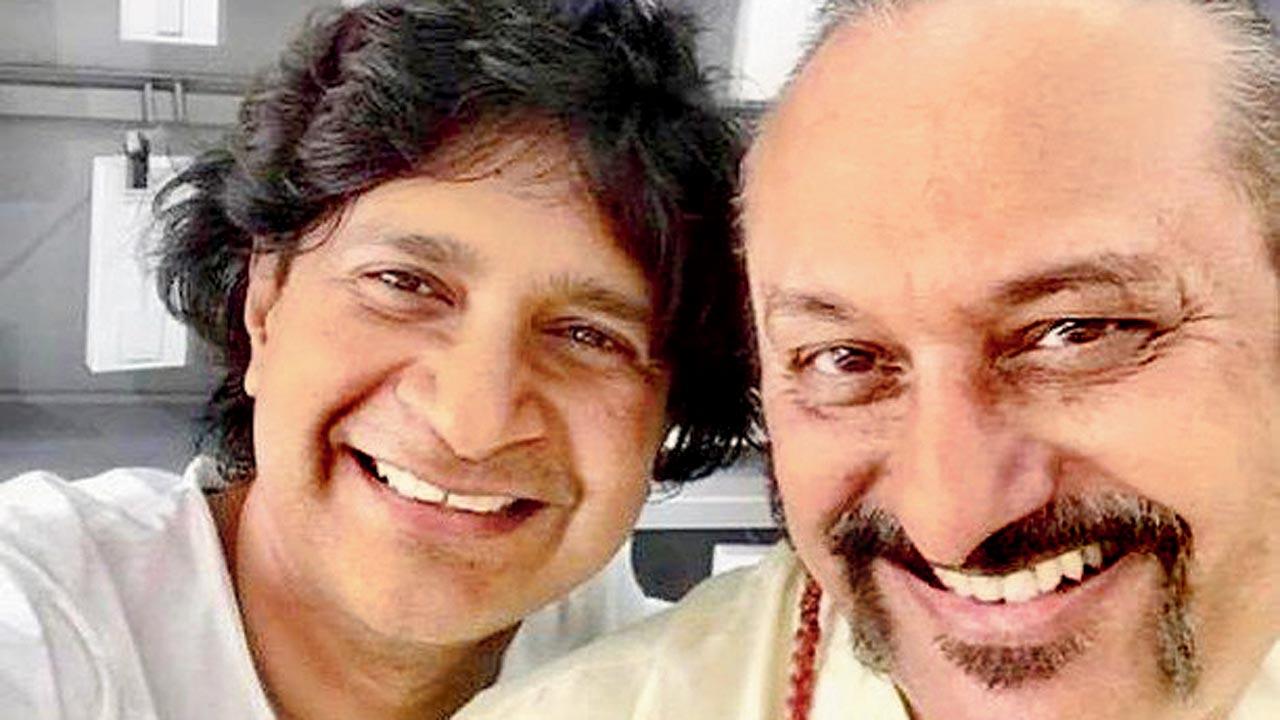
Pal and Yaaron composer, Leslee Lewis, whom KK considered his mentor, traces the singer’s early years in the industry as they created evergreen tracks
As told to Sonia Lulla (MID-DAY; June 2, 2022)
It all began with a call from Hariharan. He had called me to say that there was a [good] singer from Delhi, and asked if he could send him to me. I told him to do so. This young boy had a great persona and voice, and was in awe of me. He’d often say that he dreamt about the fact that I would make his debut album. I would tell him [it was impossible] as I was busy doing jingles at the time, and albums then were not [given importance]. Soon, I started to call him [to record] the jingles I was working on. That’s how people heard of KK.
One day, I collated his jingles and took them to Sony, [suggesting] that they consider signing him on. They liked his voice, and asked me to compose his album. Initially, I refused, but they said that if I wouldn’t [compose] it, they were not sure of getting him on board. So, I decided to go ahead, and that’s how Pal (1999) was made.
I loved the way he sang. I knew his voice, and hence, was able to compose something that would make him sound great. It was my job to compose a piece that he could sing effortlessly, and make him shine. He would come home, and I’d tell him how to render the song so as to evoke the right emotions. He owned the song, and how!
KK was a complete package — a young guy with a lovely smile, long hair, and great voice. More than anything, he had passion. He stuck around for so long, even though his album wasn’t getting made.
I remember, once a smaller label offered him the chance to cut an album, and he sought my advice. When I told him to hold on, he took my word for it. He had that kind of faith in me. If he had signed a smaller label, we would definitely not have had Pal and Yaaron Dosti. When the album [was released], he reminded me, ‘It was my dream to have you compose my first album.’ I saw him dream that dream, and fulfill it.
He would often promise me that he’d feed me dosa, because that’s something he prided himself on. He never kept that promise. Maybe one day, I’ll meet him and we’ll have that dosa.
I was his mentor, so when he’d come over, we used to talk about life. He was easy to get on with. He was famous for his voice, not his marketing skills. He was called [for recordings] because he sounded good. I’d expose him to things he didn’t know about. He eventually became busy, but our equation never changed. He had become popular in the commercial world, but he always respected me, and considered me his mentor. I find it ironic that he made his debut with Pal. That was the song that brought him to you, and also the song that took him away from you, because it’s the last one he sang at that show.
-----------------------------------
As told to Rishabh Suri (HINDUSTAN TIMES (June 2, 2022)
KK was a phenomenal singer. He was the sweetest and most humble guy. You wouldn’t find him jumping around. He was always at home, chilling, doing things he loved. He was never a public man.
I still remember how our first album Pal came together in 1999. He had come to me saying, ‘I always wanted my album to be made by you.’ I said, ‘Theek hai, but you are young. If not an album, we will do something else.’ He hung around, so I called him for jingles. He then got singing offers from smaller companies and asked me what he should do. I told him to not do it: ‘You will get lost in the mix, keep waiting.’
So he waited for a long time. When I took his jingles to a big label and said they should cut an album with him, they said, ‘Wow, okay you compose it.’ I told them I am working on Asha (Bhosle) ji’s album and I didn’t have time. They said if I didn’t do it, they won’t make the album. I wanted to help KK, as he was a great guy and amazing singer. That’s how Pal happened. I still remember him rehearsing the lines, Hum rahein ya na rahein kal.
We stayed in touch over the years, but it had been quite some time since we spoke. We bumped into each other at a store [a few months ago]. He didn’t receive many awards [in his career], but I don’t think he was award centric. He just wanted to sing and get his songs out there.
Indians need mithaas. Rock, for them, is distortion, something abrasive-Leslee Lewis
9:52 AM

Rishabh Suri (HINDUSTAN TIMES; September 1, 2021)
Singer Leslee Lewis grew up with Bollywood around him, as he likes to put it, but he admits he always wanted to dabble in western music, too. Recently, he came out with an English song, Entourage, in collaboration with rapper-singer Omar Gooding.
Leslee feels that a large section of people in India didn’t embrace western music back in the day. “Nobody got it in the ’80s, when I did it here. People said, ‘English mein samajh nahi aata, do lines ke aage kya gaa rahe ho, kya bol rahe ho’,” he recounts, adding, “I would listen to English and Hindi, both. My dad (late P L Raj) was a popular choreographer; he had worked in films such as Sholay (1975) and Don (1978). I grew up with Helen aunty and Laxmikant-Pyarelal. I wanted to do other things. People weren’t getting western music in 80s, so I had to simplify it.”
The 61-year-old, known for the hit number Yaaron and his debut album, Colonial Cousins, with Hariharan, believes that people in India prefer sweetness in music. “Indians need mithaas. Rock, for them, is distortion, something abrasive. By the time I got down to Aapki Dua in my album Pal, it was a sweet rock kind of thing,” says Lewis.
Talking about Entourage, he says that he is “probably the only Indian” singing in Hollywood, in English. Lewis is happy that his music is being embraced across the world. “I have started my own label, which is all about global music in Hindi. I released a song in June called Chhoda Tune, which did well. It made to three playlists in India, Brazil and Argentina,” he says.
Janam Samjha Karo became such a hit that a movie was made by the same name-Leslee Lewis
8:14 AM
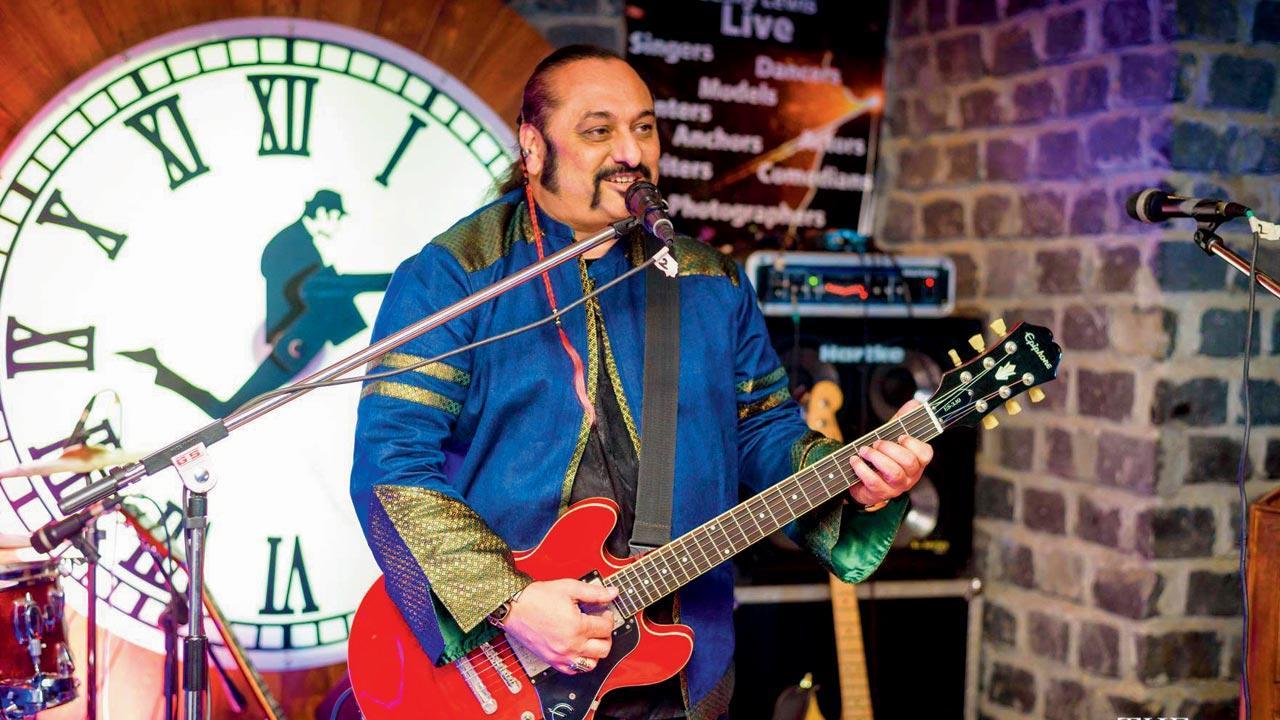
Discussing his Hollywood debut, Entourage, Leslee Lewis on how his music sensibilities developed with the aim of making western tunes appeal to desi masses
Sonia Lulla (MID-DAY; August 2, 2021)
When Leslee Lewis was approached for Omar Gooding’s track, Entourage, the musician, who has so far been credited for his compositions, was delighted to mark his Hollywood debut collaboration with an offering that exploited his singing skills. He calls this new chapter an attempt at investing in himself, and honing skills that he has, until now, put on the back-burner, to work on his compositions.
“I’m giving wings to Leslee Lewis, the artiste,” he opens the conversation. “[Director] Ricky Burchell gave me an idea of how the track would appear, and when it was sent to me, Omar had already laid his vocals. The way he has rapped in it is beautiful, and I was excited to be part of it.”
Lewis is certain that he was an apt choice for Entourage, which is a fusion of rap and pop. Citing his three decade-long career, he says he has attempted to create a repertoire comprising scores that bridge the gap between Indian and western music. Terming it as his attempt to cater to the “Hindi guy with an angrezi attitude”, he points to how his music sensibilities were shaped in childhood. “When I was in school, I would listen to artistes like The Beatles, and Jimi Hendrix, apart from Bollywood music. They were two distinct styles. But my [friends who’d converse in Hindi] would listen to Bollywoood alone. Even though we now have Ed Sheeran on our billboards, implying that he is someone whose work is consumed by the masses, [majority of listeners] listen to only a few lines, because they don’t understand the language. With my music, I have tried to make western tunes, and English, consumable for the Indian audiences. You will notice such influences in a major chunk of my work,” he says, adding that by employing Hindi against a blues, rock or jazz score, he is crafting music that’s distinct from the kind that the masses have enjoyed, so far.
In what may be considered his attempt to shine in the “indie-pop space in 2021”, Lewis has been consistently releasing music every month. “If you like one song, great. If you don’t, no problem. Move on and listen to the next one,” he says, aptly describing the use-and-throw attitude of a generation that’s fixated to social media, and exposed to a barrage of disposable content. It’s a distinct approach for a musician who successfully established his name during the indie-pop scene of the ’90s. “When Pari Hoon Main, and Janam Samjha Karo released is when [people started noticing my work]. The latter became such a hit that a movie was made by the same name. Like it is done in the west, an independent song like Yaaron Dosti, was picked for a film (Rockford), instead of being made for one. But, in the ’90s, only the songs for which videos were made, became popular, [because they were repeatedly aired on TV]. There was a bunch of other great music made without videos, which eventually got lost. Now, with the growth of audio-streaming platforms, that can be avoided. It’s great to keep creating stuff and putting it out there.”
Subscribe to:
Posts (Atom)