Showing posts with label Leo. Show all posts
Showing posts with label Leo. Show all posts
Samyuktha reveals characters from Lokesh Cinematic Universe will be seen in Benz
10:02 AM

With Benz marking the fourth instalment in Lokesh Cinematic Universe, actor Samyuktha reveals characters from Kaithi, Vikram, and Le’ will appear in key roles
Priyanka Sharma (MID-DAY; March 26, 2026)
Being part of Lokesh Kanagaraj’s Cinematic Universe (LCU) is a big deal for any actor. But when Samyuktha was offered Benz, the fourth instalment in LCU, she reacted to the film not as an actor, but as a fan. “I thought that if I took the narration, I would be the first person to know what happens next,” she laughed.
The actor is currently shooting the Tamil action drama that stars Raghava Lawrence and Nivin Pauly. An LCU offering is known as much for its star presence as for its action, and Benz is no different. If anything, it may only up the ante in terms of the star presence.
Samyuktha teased that popular characters from LCU’s previous films — Karthi’s Kaithi (2019), Kamal Haasan’s Vikram (2022), and Vijay’s Leo (2023) — will make appearances in Benz.
She shared, “The makers developed [new] characters around the other popular characters of previous films. You will get excited about [how they are all] connected. The makers have brought the popular characters from the previous films here, and not as cameos. I don’t want to name names and say what exactly is happening. Similarly, the characters introduced in Benz will be seen in the next parts.”
The actor also described Benz as a story that the audience won’t be “expecting”. “It’s a rooted and stylish universe. It’s our very own Avengers, and fans are seeing all their favourite actors in one place.”
Mere saath dhokha ho gaya, says Raqueeb Alam on Sarke Chunar Teri Sarke controversy
8:43 AM

Debarati S Sen (BOMBAY TIMES; March 19, 2026)
The recently released track Sarke Chunar Teri Sarke, featuring Nora Fatehi and Sanjay Dutt, has triggered widespread backlash online over its lyrics, with much of the criticism directed at lyricist Raqueeb Alam. The track, part of the upcoming pan-India film KD - The Devil, was originally written in Kannada by the film’s director, Prem. Alam’s role, he says, was limited to translating the lyrics into Hindi.
‘I was told to just translate the Kannada song word for word’
As criticism over the song continues to escalate, Alam spoke to Bombay Times, alleging he was wrongly credited with the song’s lyrics. Opening up about the sequence of events, Alam claimed he had refused to write the track when he was approached by Prem.
He says, “Koi bhi lyricist aisa nahi likhega. Mujhe jab Prem ne likhne bola toh maine mana kar diya. I told him yeh theek nahi hai. Then I was told to just translate the Kannada song (composed by Arjun Janya) word for word – like ‘This is my book’ to ‘Yeh meri kitab hai’. So, I translated it and gave it to him. Prem told me, ‘Main dekhta hoon, main manage karoonga isko’. He then adjusted it with the meter and recorded it.”
‘I had told the director not to credit me as a lyricist for this song’
Alam further alleged that he had explicitly asked not to be credited for the song. He says, “When I gave him the translation, I had told him not to credit me as a lyricist for this song. After that, maine ek baar bhi woh Hindi translated song nahi suna. Kisne gaya, kahan record kiya, kuch bhi pata nahi tha mujhe. Only after the song was released did I find out that he had given my name in the credits, and I called him immediately. Maine uspe bahut chillaya, and I told him to remove my name and put his own or pull the song down completely.”
According to Alam, the director later agreed to take the song down. “Prem said that he would remove the song, and that eventually he did it, but by then the damage was done,” he said.
'Main aise song ke saath kaise associate ho sakta hoon?'
Calling the episode a "betrayal", Alam said, "Mere saath dhoka hua hai. This wasn't right. Mere bhi bacche hain, family hai. Main aise song ke saath kaise associate ho sakta hoon? Kal mere bachche mujhse puchenge ke aapne apne zindagi mein iss tarah ke gaane likhein? Toh mein kya jawab doonga?”
The lyricist, who has previously translated songs like Srivalli for Pushpa: The Rise - Part 01 and its sequel, as well as for films like Master, Jailer, Leo, and Varisu, among others, also underlined that he has consistently spoken out against vulgar content in music.
He said, “I have been someone who has spoken against vulgar songs in the past. Main khud bahut aware rehta hoon ki mujh se aise alfazon ka chayan nahi ho jisse hamare samaj pe, bacchon pe bura asar pade.”
------------------------------------------
"Once you sign a contract for a film, you are bound to fulfil its requirements. I refused to be part of this track once I read the Kannada lyrics, but I was asked to translate them into Hindi, and I had to fulfil my role as per the contract. I had told the director (Prem) not to credit me as a lyricist for this song"
-- Raqueeb Alam
------------------------------------------
Rishabh Suri (HINDUSTAN TIMES; March 18, 2026)
The track Sarke Chunar Teri Sarke, featuring Nora Fatehi and Sanjay Dutt, from the upcoming film KD: The Devil, has been drawing social media outrage for its vulgar lyrics ever since its release on Sunday.
When we reached out to its lyricist Raqueeb Alam, he outrightly denied it as his own creation: “Yeh lyrics maine nahin likhe hain, they were written by the film’s director, Prem, in Kannada. When I was asked to write all this, I refused, saying such songs will be censored. They told me to only literally translate and give it to them. Words like ‘choosega’, ‘chaatega’ are all there in the original version. Mujhe kya zaroorat hai aise gaane likhne ki? I am feeling humiliated.”
The official song version had been taken down by the makers from YouTube at the time of this article going to press. To this, Raqueeb adds, “They called me on Monday and requested that I write a fresh version with clean lyrics. They were planning to release the new version along with an apology note.”
People from within the industry have expressed shock. Singer Armaan Malik tweeted, “Sad to see commercial songwriting hit a new low.” Filmmaker Onir wrote, “...Strange country we are becoming... opposing Valentines Day celebration, interfaith marriage/ celebration, while ok with this rubbish.” Actor-politician Kangana Ranaut commented, “Bollywood has crossed all limits with vulgarity, tactics and attention-seeking.”
Indian films big on style, find bigger global connect
10:04 AM

Overseas mop-up rises 30% between 2022 & 2024; ‘universal’ content, availability on streaming platforms enhance appeal
Rajesh N Naidu (THE ECONOMIC TIMES; March 31, 2025)
Mumbai: Indian films are showing higher growth in collections abroad than at home, with overseas box-office mop-up surging nearly 30% to $323 million ('2,760.6 crore) between 2022 and 2024, even as domestic growth crawled at 7.2%, according to the FICCI-EY Media and Entertainment 2025 report.
Between 2022 and 2024, domestic box-office revenue for Indian films increased a modest 7.2% to Rs. 11,800 crore, it said.
"Recently, Indian films have been telling stories which have universal emotions and global appeal. These films score well on the parameter of visual presentation of stories. Consequently, Indian films have been crossing language and geographical barriers," said Adi Tiwary, creative director and partner, Stuart Entertainment, an Australia-based boutique distributor and producer specialising in global content licensing, production and strategic partnerships.
Indian films such as 'Pushpa 2 – The Rule' (2024), 'Kalki 2898 AD' (2024), 'Pathaan' (2023), 'Jawan' (2023), 'Animal' (2023), 'Leo' (2023), 'Jailer' (2023), 'KGF - Chapter 2' (2022) and 'RRR' (2022) collected Rs. 200-500 crore each in overseas markets.
Experts said these films connected with people around the world because they use some of the same styles and techniques seen in popular Hollywood movies, and they discuss ideas and feelings that people of different ages can relate to.
For instance, 'Kalki 2898 AD' is fast-paced and uses several languages. Its style is similar to Marvel superhero movies and action films like 'Mad Max: Fury Road'. On the other hand, 'RRR' appealed to many international viewers by telling a story that felt deeply Indian and rooted in its culture.
The mix of global style and Indian storytelling has played a big role in the success of these movies overseas. It's also helped attract more non-Indian audiences to Indian films, according to industry executives and experts.
Rajat Agrawal, COO, Ultra Media & Entertainment Group, said, "Indian films have been gaining popularity even among non-Indians in overseas markets. Given the universal themes of love, family and friendship in Indian films, they have resonated with non-Indian audiences."
Producer and film business expert Girish Johar concurred, saying, "Apart from stories, Indian films are finding patronage even among non-Indian audiences because of the improved scale and quality of filmmaking."
Another factor aiding the acceptance of Indian films in overseas markets is their easy availability on global streaming platforms.
Ameya Naik, producer and founder of Fantasy Films, said, "Global streamers have played a key role in familiarizing Indian content to overseas audiences. Better subtitles and superior dubbing of Indian films on these global streamers have removed language barriers and provided overseas audiences anytime access to Indian films."
In addition to global streamers, growing online distribution, social media discussions, targeted marketing and prestigious awards at international film festivals have piqued overseas audiences' interest in Indian films. In addition, following the Covid-19 pandemic, Indian films rose to prominence as a result of the lull in Hollywood productions caused by the writers' strike.
In the overseas markets, the success of Indian films relies more on the Indian diaspora settled abroad. But there is demand for Indian films from audiences in non-traditional markets such as the Gulf (the UAE, Saudi Arabia and Qatar), North America (the US and Canada), the UK and Europe (Germany, France and the Netherlands) and Southeast Asia (Malaysia, Singapore and Indonesia). Despite such a wide overseas market, industry experts believe revenue from the Chinese markets will make a material difference to Indian films' collection given its size.
A testimony to this is the success of the Tamil film 'Maharaja' in China. Of its total worldwide collection of over Rs. 200 crore, it collected Rs. 91.6 crore from China alone, showing the potential of that market.
India's box-office collections reach an all-time high of Rs 12,226 crore in 2023
8:21 AM

Hindi film industry bounces back with Rs. 5,380-cr mop-up last year: Ormax
Javed Farooqui (THE ECONOMIC TIMES; January 22, 2024)
Box office collection in India reached an all-time high of Rs 12,226 crore in 2023, exceeding the previous record of Rs 10,948 crore in 2019, and growing at a healthy 15% over 2022, according to the Ormax Box Office Report 2023.
This was the first time that box office collection surpassed Rs 12,000 crore, indicating a recovery in the Indian film industry, which had been battling a post-pandemic slump in business. Box office collections in 2022 were Rs 10,637 crore, just short of breaking the previous record set in 2019.
"One of the key drivers for the success of box office in 2023 is the industry’s ability to deliver event films that are a ‘theatre-worthy experience'—a must for the film to emerge as a theatrical success," said Ormax Media Head of Business Development (Theatrical) Sanket Kulkarni.
According to the report, cinema footfalls rose 6% in 2023 to 943 million, though it lagged the pre-pandemic high of 1.03 billion in 2019.
Kulkarni said footfalls have remained below pre-pandemic levels as audiences have turned selective in their theatrical choices because of post-pandemic inertia and the rise of video streaming platforms.
The average ticket price (ATP) increased by 9% over 2022, from Rs 119 to Rs 130, owing to a growth in box office contribution from Hindi cinema, which has a higher ATP compared to South-language films.
After a lacklustre performance in the post-pandemic phase, Hindi films had a record year in 2023, with gross box office collection of Rs 5,380 crore, crossing the Rs 5,000 crore mark for the first time.
According to the report, Hindi cinema's box office share hit a pre-pandemic high of 44%, from 33% in 2022. Tamil and Telugu cinemas maintained their 2022 share with a box office collection of Rs 2,265 crore and Rs 1,961 crore, respectively in 2023.
Meanwhile, the share of Hollywood movies fell by 3 percentage points in 2022 due to the absence of a Rs 200-crore grossing film, with overall collection at Rs 1,139 crore.
Kannada cinema shed its box office share by 5% points to finish the year at Rs 312 crore due to the absence of big-ticket films.
Box office collections are getting increasingly skewed in favour of big-ticket films, with the top 10 films contributing 40% of the total box office receipts of Rs 12,226 crore.
Kulkarni said audiences are more likely to watch a film in a theatre if there is a compelling reason to do so. He added that franchise films are gaining traction and engagement across languages, accounting for 45% of theatrical box office collection, up from 17% in 2019.
Over 1,000 films were released in 2023; however, only five films crossed the gross box office of Rs 500 crore.
Shah Rukh Khan's Jawan was the highest-grossing film of 2023, making Rs 734 crore, followed by Ranbir Kapoor's Animal (Rs 645 crore), Shah Rukh Khan's Pathaan (Rs 636 crore), Sunny Deol's Gadar 2 (Rs 619 crore), and Prabhas' Salaar: Part 1 – Ceasefire (Rs 512 crore).
Interestingly, the top four films of 2023 are all original Hindi-language films. In comparison, South Indian films dominated the top ten list in 2022, with KGF - Chapter 2, RRR and Kantara collecting Rs 970 crore, Rs 869 crore, and Rs 362 crore, respectively.
Salaar: Part 1 – Ceasefire, Rajnikanth's Jailer, and Vijay's Leo were the three South Indian films that grossed more than Rs 400 crore at the Indian box office in 2023.
Ormax noted it sourced the box office data from credible industry sources, including producers, distributors, exhibitors, and trade analysts.
Indian collects 12,400 cr from films in cinemas in 2023; is the third biggest market in the world
10:49 AM

Box Office India Trade Network
India saw the third highest box office collection worldwide in 2023 with around $1.5 billion (12,400 cr) behind only US/Canada and China. The business was almost 20% up from 2022 but there was much higher growth in Hindi cinema due to some huge blockbusters.
Last year had seen the overall business driven by films from the South but this year it was Hindi cinema which will form around 43% of the all India business when it was only 30% (this is taking out the dubbed films from South) in 2022. It is still well short of the 60-65% business Hindi cinema had before the advent of video but those days will never come back. Also, 40% plus is a huge market share in terms of business today though it will be hard to maintain.
The share was around 45% before the pandemic in 2019 also. So, we can say the status was back to normal in 2023 but as mentioned above, the issue is maintaining this and if Hindi cinema can be around 40% of the all India market share, it will mean it is a healthy state as far as the box office goes.
The top fifteen collecting nations across the world in 2023 were as follows.
1. US/Canada - $9.07 billion (75,300 cr)
2. China - $7.71 billion (64,000 cr)
3. India - $1.50 billion (12,400 cr)
4. Japan - $1.48 billion (12,275 cr)
5. UK/Ireland - $1.36 billion (11,290 cr)
6. France - $1.35 billion (11,200 cr)
7. Germany - $1.01 billion (8400 cr)
8. South Korea - $0.97 (8050 cr)
9. Mexico - $0.94 billion (7800 cr)
10. Australia - $0.67 billion (5550 cr)
11. Italy - $0.55 billion (4550 cr)
12. Spain - $0.54 billion (4475 cr)
13. Brazil - 0.47 billion (3900 Cr)
14. Netherlands - $0.36 billion (3000 cr)
15. Russia - $0.33 billion (2750 cr)
The top ten films in India (all formats and versions) were as below and these films gave 38% of the all India collections as they gave a combined total of 4750 crore apprx with JAWAN leading the way the with a GBOC of 733 crore on all versions and formats..
1. Jawan
2. Animal
3. Pathaan
4. Gadar 2
5. Salaar
6. Jailer
7. Leo
8. Tiger 3
9. Dunki
10. Ponniyin Selvan - Part 2
It's raining men: Why alpha males are in cine spotlight
2:44 PM

Macho action movies dominated the box office this year while female-led films have been releasing only on OTT
Shruti Sonal (THE TIMES OF INDIA; December 10, 2023)
Men in thick, flowing beards. Shotguns that seemingly come with infinite shells. Fights on top of helipads, trucks, bridges. A background score that drowns out everything else. And, a box office register that doesn’t stop ringing for angry young bros.
This roughly sums up the year’s blockbusters. Of course, nothing matches the misogyny of Sandeep Reddy Vanga’s A-rated ‘Animal’. It has the male character cracking jokes around menstruation, gratuitous violence and even the hero asking a woman to lick his shoes to prove her love for him.
“Like revenge tourism, 2023 was the year for revenge movie-watching in India,” says Girish Johar, Mumbai-based producer and film business expert. “Action has always been a safe bet. However, after the pandemic, filmmakers and producers know they need big-scale, larger-than-life films to pull audiences out of their homes. Other types of films, they prefer to watch on OTT,” he adds.
The statistics bear this out. The top seven grossers in 2023 all belonged to the action genre, including ‘Jawan’, ‘Pathaan’, ‘Gadar 2’, ‘Jailer’, ‘Leo’, ‘Animal’ and ‘Tiger 3’. ‘Rocky Aur Rani Kii Prem Kahaani’, which took the eighth spot, stood out as one of the only rom-coms that emerged a hit. There were several female-led films such as Kareena Kapoor Khan-starrer ‘Jaane Jaan’, Tabu-led ‘Khufiya’ etc but they did not hit the theatres and were directly released on OTT platforms.
ADRENALINE RUSH
Through the years, Hindi cinema’s male protagonists have shown several shades. The 1950s showed a tempered masculinity, gentled by the trauma of independence and partition, hopeful about the future. Think of Guru Dutt’s romantic artist — philosophical and doubting. Raj Kapoor’s tramp is bewildered by industrial modernity, Dev Anand is a louche charmer. None of them is particularly muscular, some even have an androgynous quality. In these early movies, there was a resistance to social norms, a questioning and conflict around tradition, even as many films implicitly reaffirmed gender conventions.
Of course, the straitjackets of virtue and good-girlism confined women. They were usually props and symbols, whether as deified mothers and bhabhis, vamps and ‘items’, or even ‘heroines’: love interests with no independent character arcs or complexity. But the men had range.
The ’70s moved from Rajesh Khanna singing about lost love, to Amitabh Bachchan’s smouldering rage at unfulfilled promises to the working classes. In the ’80s, this subaltern male anger turned into a darker thing, with lawlessness and vigilantism as central themes. It was pretty much standard to show stalking and harassment as a prelude to love. The movies lingered over rape, showing it as a titillating spectacle, and as a method to teach other men a lesson, as a loot of izzat.
The post-liberalization era saw themes of love and rebellion emerge, with romantic heroes grabbing the spotlight. However, a 2002 study of Hindi movies from the late ’90s said moderate sexual violence against female characters was “depicted as fun, enjoyable, and a normal expression of romantic love”. Now, a new hype masculine ideal has gathered strength.
While the depiction of violence in films isn’t new, the present surge marks a ‘shift’ in the use of it, says Geetanjali Chadha, professor of gender and cinema at Ashoka University. “During the ‘angry young man’ era, the violence had a purpose. It was more about the difference between the rich and the poor, and made the audience root for the underdog. Today, it’s closely tied to nationalism, strength, and glamour. The women too are no longer passive, often playing a key role in accepting it,” she says.
Economics plays a role too, points out Shrayana Bhattacharya, economist and author of ‘Desperately Seeking Shah Rukh’, which analyzed the moviegoing experience in India through the lens of gender and class. “Because men hold 82% of the country’s income, movies that depict strong men may do better at the box office than those that depict more vulnerable men or stronger female parts,” she explains.
SHRINKING SPACE
However, while the action genre means good business, it has also raised questions about the shrinking space for women moviegoers and women’s stories. Paridhi, a 22-year old from Delhi, says the rise of such ‘alpha male’ characters, shrinks her options. “The problem is not with violence, but the glorification of it. I also went to watch ‘Pathaan’ and ‘Jawan’ in the theatres, but with ‘Animal’, the clips really made me uncomfortable. Looking at its collections, other male actors will definitely gravitate towards this genre too.”
However, Nikhil Taneja, co-founder of youth-centred media organization Yuvaa, and host of the podcast ‘Be A Man, Yaar’, says he isn’t convinced that hypermasculinity is the only thing that works. “There’s a space for alternative conversations, even in action films. In ‘Pathaan’, for instance, Shah Rukh Khan has a female boss, and is saved by a female spy. In ‘Jawan’, he has an army full of young women,” he points out.
However, he adds that it’s important to understand why many young males today are tilting towards ‘alpha male’ content, espoused not only by films like ‘Animal’ and ‘Kabir Singh’, but also podcasters such as Andrew Tate. “I have interacted with over 15,000 students across campuses in the last four years for research work. While women dealing with various forms of patriarchy are often able to find sisterhood and community, men have told me they lack positive communities to talk about loneliness, which leads to bitterness, anger, and violence,” he says.
In a scenario like this, they often turn to characters they can relate to, or those who vindicate their emotions, he says, adding that therefore, filmmakers should have a certain degree of accountability of what they’re putting out there.
“Toxic characters should be represented on screen, but they have to be self-aware and have context. For instance, in films like ‘Darr’ and ‘Anjaam’, everyone knew SRK was the bad guy and he met his fate in the end. However, in some films being made today, if the directors put a cool background track as the character commits violence, they make it a character worth aspiring for. Men look at it and think it’s cool.”
Jasmeet K Reen,, writer of the critically acclaimed ‘Darlings’, feels that artistic freedom is paramount, and the audience can be the only judge. Her Alia Bhatt-starrer depicted a woman breaking free of a marriage filled with physical and psychological abuse. Some scenes were graphic, and the writer grappled with how to depict them.
“Every filmmaker has their own ideology which, whether they like it or not, reflects in their films. If I’m making ‘Darlings’, what I feel, what my ethics are, what I feel about sexism, what I feel about gender, what I feel about violence, it will show in the film. It also means that everybody has a distinct voice and I cannot control how other people should tell their stories,” she says.
Fenil's Bollywood Talk # 800
9:19 AM

WILL THE NEW HINDI RELEASES MANAGE TO WORK DESPITE MINIMAL HYPE?
The Dussehra week is here and it’ll see the release of countless films across the country in all languages. Two major films will release in Hindi and sadly, both will have a tough time, at least on the opening day.
The biggest of the two is Ganapath - A Hero Is Born. It stars Tiger Shroff, Kriti Sanon and Amitabh Bachchan and is set in the future, in the year 2070 AD. The idea of the film is interesting and the VFX-heavy shots seem quite good. Shockingly, the awareness of the film is very limited. Usually, the makers go all out to promote a film which is made in more than Rs. 100 crores. Here, the makers have barely promoted Ganapath - A Hero Is Born. Hence, many are not even aware that it’s being released. Many industry insiders and fans are shocked as it’s produced by Pooja Entertainment who are known for their creative marketing skills. And this is their second film after Mission Raniganj which is suffering from poor promotion.
As a result, Ganapath - A Hero Is Born is expected to open in the range of Rs. 4-5 crores. Hopefully, it’ll go higher as Tiger has a following among the masses. If the film clicks, it can see a jump on Saturday and it’ll also benefit on Dussehra holiday, on Tuesday, October 24.
The other release of the week is Yaariyan 2. Divya Khosla Kumar had directed the first part but in the sequel, she’ll be seen as an actor. The other actors in the film are Meezan Jafri, Pearl V Puri, Yash Dasgupta, Warina Hussain, Priya Prakash Varrier and Anaswara Rajan. Unlike Ganapath - A Hero Is Born, T-Series, the makers of Yaariyan 2 have gone all out and have promoted the film extensively across the country. The trailers promise that it’ll be a film which will be lapped up by the youth.
However, despite the marketing, Yaariyan 2’s buzz is minimal. Yaariyan benefited largely due to a superb music score. That is missing in Yaariyan 2. Yaariyan opened at a huge Rs. 5.48 crores that too almost 10 years ago. Yaariyan 2, however, will open at around Rs. 2 crores. If the word of mouth is positive, expect the footfalls to increase from Friday evening.
Meanwhile, the Tamil film Leo, starring Thalapathy Vijay, was released today and has taken an earth-shattering opening. Even in Hindi, it has managed to have huge ticket sales. Its release is limited as the national chains haven’t released it since Leo will be out on OTT in 4 weeks. Yet, it can put up a decent lifetime, especially if reports are positive.
The Dussehra week is here and it’ll see the release of countless films across the country in all languages. Two major films will release in Hindi and sadly, both will have a tough time, at least on the opening day.
The biggest of the two is Ganapath - A Hero Is Born. It stars Tiger Shroff, Kriti Sanon and Amitabh Bachchan and is set in the future, in the year 2070 AD. The idea of the film is interesting and the VFX-heavy shots seem quite good. Shockingly, the awareness of the film is very limited. Usually, the makers go all out to promote a film which is made in more than Rs. 100 crores. Here, the makers have barely promoted Ganapath - A Hero Is Born. Hence, many are not even aware that it’s being released. Many industry insiders and fans are shocked as it’s produced by Pooja Entertainment who are known for their creative marketing skills. And this is their second film after Mission Raniganj which is suffering from poor promotion.
As a result, Ganapath - A Hero Is Born is expected to open in the range of Rs. 4-5 crores. Hopefully, it’ll go higher as Tiger has a following among the masses. If the film clicks, it can see a jump on Saturday and it’ll also benefit on Dussehra holiday, on Tuesday, October 24.
The other release of the week is Yaariyan 2. Divya Khosla Kumar had directed the first part but in the sequel, she’ll be seen as an actor. The other actors in the film are Meezan Jafri, Pearl V Puri, Yash Dasgupta, Warina Hussain, Priya Prakash Varrier and Anaswara Rajan. Unlike Ganapath - A Hero Is Born, T-Series, the makers of Yaariyan 2 have gone all out and have promoted the film extensively across the country. The trailers promise that it’ll be a film which will be lapped up by the youth.
However, despite the marketing, Yaariyan 2’s buzz is minimal. Yaariyan benefited largely due to a superb music score. That is missing in Yaariyan 2. Yaariyan opened at a huge Rs. 5.48 crores that too almost 10 years ago. Yaariyan 2, however, will open at around Rs. 2 crores. If the word of mouth is positive, expect the footfalls to increase from Friday evening.
Meanwhile, the Tamil film Leo, starring Thalapathy Vijay, was released today and has taken an earth-shattering opening. Even in Hindi, it has managed to have huge ticket sales. Its release is limited as the national chains haven’t released it since Leo will be out on OTT in 4 weeks. Yet, it can put up a decent lifetime, especially if reports are positive.
The way the younger generation is scripting stories, masala films will only get bigger and better-Sanjay Dutt
8:21 AM
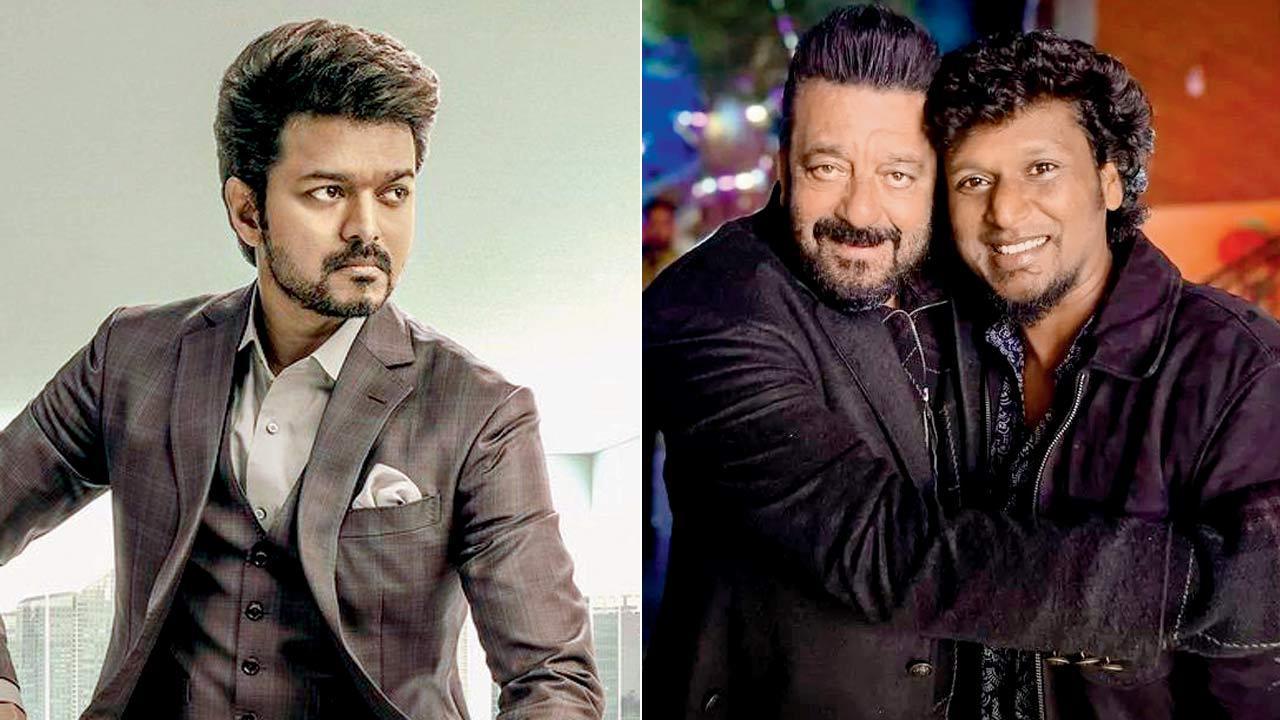
Sanjay, who plays key role in Kanagaraj’s ambitious film Leo, says technology is influencing the evolution of potboiler films
Mohar Basu (MID-DAY; June 28, 2023)
Sanjay Dutt knows the world of commercial potboilers inside out, having fronted them for over four decades. So when he says that he has noticed a shift in the genre, you sit up and listen. The senior actor, who recently shot for director Lokesh Kanagaraj’s multi-lingual offering Leo, states that new-age filmmakers are revamping mainstream cinema.
“I am excited by the stories being made today. The way the younger generation is scripting stories, masala films will only get bigger and better. Lokesh Kanagaraj is a dynamic filmmaker who has his finger on the pulse of the audience. Personally, he is like a son to me,” shares Dutt.
Filmmakers’ sensibilities alone are not driving the change. Technological advancement is enabling directors to turn their larger-than-life vision into reality. Dutt cites the example of his Kannada blockbuster KGF - Chapter 2 (2022) to highlight how VFX enhances films. Leo, which sees him alongside Tamil star Thalapathy Vijay, too is said to be mounted on a grand canvas, with action set-pieces and special effects.
Dutt says, “The advancements in technology have given filmmakers the tools to create awe-inspiring visual effects, larger-than-life sets, and captivating action sequences. These technical marvels, combined with the fresh narratives, promise to make masala films even more spectacular.”
Subscribe to:
Posts (Atom)