Showing posts with label Leila. Show all posts
Showing posts with label Leila. Show all posts
Be it Sonakshi Sinha, Mrunal Thakur or I, we stand here to service the story and tell it right-Huma Qureshi
8:11 AM
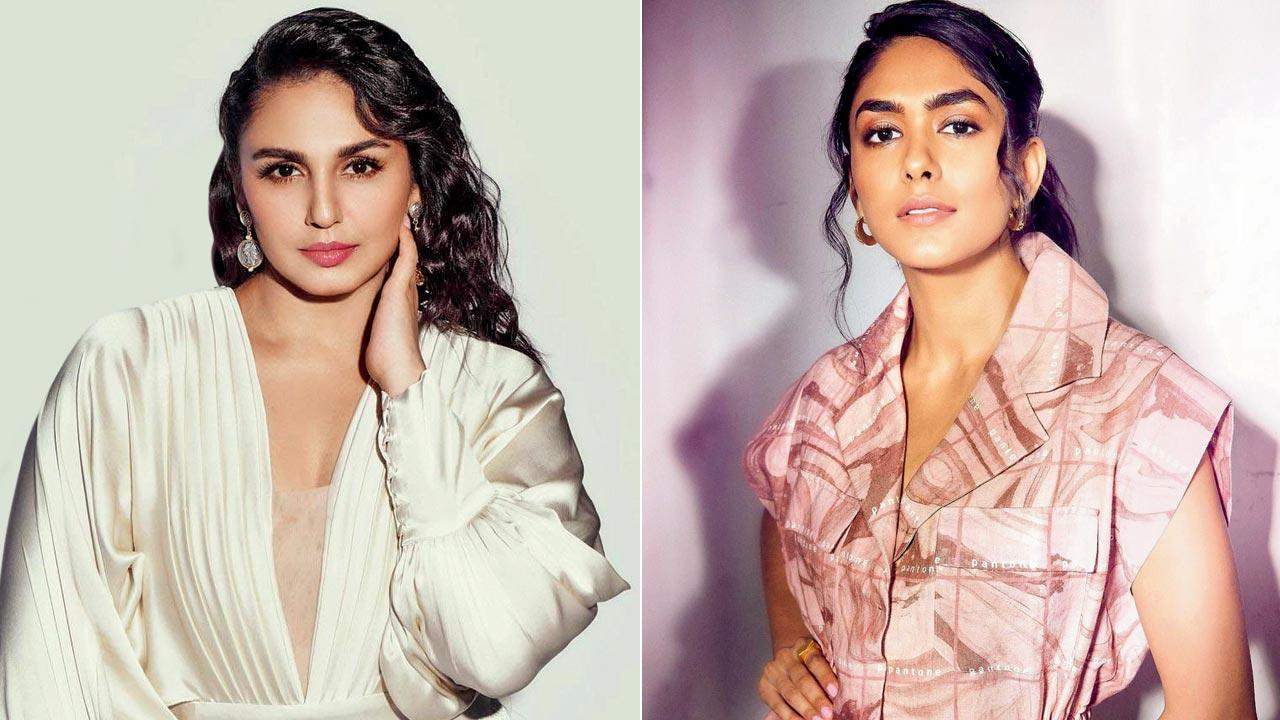
Doing two-heroine projects in Pooja Meri Jaan and Double XL, Huma says she is a secure artiste who doesn’t want to be limited by industry’s trappings
Mohar Basu (MID-DAY; August 3, 2022)
It has been a busy week for Huma Qureshi. While she began the promotional run for the second season of Maharani, her next Pooja Meri Jaan was also announced. With its teaser that shows the threatening side of a romantic proposal, the makers have built much intrigue around the Navjot Gulati-directed movie. “It is a relevant conversation, which [piqued] my interest in the film,” begins Qureshi, who is joined by Mrunal Thakur and Vijay Raaz in the Dinesh Vijan production.
“I have worked with Dinoo on Badlapur [2015] before. This film is also produced by Amar Kaushik who is one of the best directors we have in the country today. When he told me he is creatively producing the film, I was kicked about it. Navjot’s script is so hard-hitting, highlighting an important conversation we need to have.”
It is equally relevant to discuss how Qureshi, while headlining solo outings like Maharani and the Tarla Dalal biopic, is unafraid to give her nod to two-heroine projects. If Pooja Meri Jaan sees her share the frame with Thakur, Double XL has her teaming up with Sonakshi Sinha.
Happy to front stories told from women’s perspective, she says, “I am operating from a place where content matters the most. I am a secure actor who is assured of her space. If I like the film and the intentions of those making it, [I will go ahead]. Be it Sonakshi, Mrunal or I, we stand here to service the story and tell it right. As artistes, we should not let ourselves get limited too easily and too soon.”
From her performances to her choice of projects, it is evident that Qureshi has matured as an artiste. The new line of thinking, she says, comes from director Deepa Mehta, with whom she collaborated on Leila. “She has empowered me as a performer. I talk to her every week. She is my mentor in a way. She is the first director who shot me in a way where the camera was [focused] on my eyeball. I was petrified, but she gave me the confidence that I can shoulder a project.”
I didn’t come here to play a doll. I came here to be an actor-Huma Qureshi
8:08 AM

Rachana Dubey (BOMBAY TIMES; July 1, 2022)
Huma Qureshi recently clocked a decade in Bollywood. She had stepped into the industry with Gangs of Wasseypur – Part 1, which had released in June 2012. Today, even as she’s busy completing movies and shows at breakneck speed, she believes she has learned to strike the perfect work-life balance. In a conversation with BT, she talks about working non-stop and how the narrative for women and women-led stories has changed in the industry in the decade that she has been a part of this field. Excerpts:
The last two years have turned out to be interesting for you career-wise. At a time when there was so much uncertainty around us, you shot for a couple of projects between the two lockdowns. You were seen in Bellbottom and Zac Snyder’s Army Of The Dead and were appreciated for your performance in the web show Maharani. How do you plan to sustain that momentum for the rest of this year?
Opportunities and hopes come at the most unlikely times and from the most unheard of places. The two years, 2020 and 2021, were the pandemic years in public memory. Theatrical releases had virtually stopped and content on the OTT platforms was dictating the entertainment space. In that phase, I was clear that I won’t let this bog me down. I wanted to go out there and put out something great for people to see. When Bellbottom came to me, I eagerly took it up because it was the first film that went on floors post the global slowdown. The part was great, and it was an experience worth the risk we took. Subhash Kapoor’s narration for his web show (Maharani) had blown me away. I was certain that I wanted to do it. We shot it between two lockdowns amid so much uncertainty. What if this was my last piece of work? That thought ignited an entirely different passion in me. It liberated me in so many ways. And that is the thought with which I have surged into 2022. I’m trying out newer things, playing characters that are completely different from who I am.
You recently completed a decade in Bollywood. In these years, you have seldom played the conventional heroine — something that wasn’t the norm when you started out. What do you think helped you get this far?
I just do things that I naturally gravitate towards. At the outset, I didn’t have the luxury of choosing projects, neither was I launched on a grand scale nor have directors chasing me. I went through an entirely different journey where I auditioned to get work, I got replaced on numerous occasions and went through a grind, something that I wear like a badge of honour. I am proud of everything I endured to get this far. All that I have today has been earned with a lot of hard work and patience. It didn’t come to me. If you find my repertoire full of unconventional projects, it’s also because those were the choices I made from all that came my way. It was about choosing a role where I could not really see myself easily. I have never tried playing myself. The greatest compliment for me was to be told that I played an uneducated Bihari housewife like I belonged there, although I am a South Delhi girl. That is the fun of being an actor. I didn’t come here to play a doll. I came here to be an actor. I will do what it takes to play a part effectively. In the last year alone, I have worked with different directors and in content across various genres. Do I love songs and dances? Yes, I do, but I don’t want to do just that. I have a lot more to offer that goes beyond it. I don’t know what the new conventional norms are, but with our choices, if we have been able to redefine how a woman should be seen in a movie, we’re getting somewhere and exploring so many of her other facets.
A decade ago, it was a big deal for a heroine to shoulder a film on her own. Today, plenty of leading ladies, including yourself, are carrying films as well as web shows on their own. That’s a huge transition, don’t you think?
Yes, and it hasn’t come in easily. I can talk for myself. After I worked with Deepa Mehta on the show Leila, my perspective changed in a big way. It was such a turning point. Khoon chakh liya maine! The joy of leading a project is scary and empowering in the same breath. And she gave me that. Deepa made me believe that I can carry an entire show and be in every frame without boring the audience. She made me believe that I had it in me. When an opportunity presents itself, you rise to the occasion. The show opened doors for me to work with Hollywood bigwigs like Zack Snyder. It got me several good projects. Maharani was one of them. I am now leading a lot of stories which have a female perspective. This is Huma Qureshi 2.0. I want to call it that without sounding vain about it. I am not the same person I was back in the day. I am trying to do things differently. As an actor, the more fearless you get, the more this industry and the audience rewards you. I like reading and watching content. A few years ago, people had an issue with the phrase, web-series. I had seen that not only was it brimming with international talent, but it was also gearing up to take India by storm. The writing and the production standards were superlative. These are opportunities that have to be grabbed when they come to you. Doing my first show has hence, been a big turning point. Sometimes, merely doing things you like can have a domino effect on your life. It benefitted me in a big way.
Lastly, the film industry in India is gradually moving towards becoming one cohesive workspace that ropes in talent from film industries across the country. As someone who has worked in two films down South, do you find a change in the manner in which people now perceive actors who work across industries?
I think the change here is phenomenal. People have realised that there is a lot to learn from them. Industries like Tamil and Telugu are not talking down to their audience. In fact, they are pushing their boundaries. The stories are contextual, they pride themselves in the cultural references, they are deeply personal, nuanced and have a massive scale. The southern industries have done this repeatedly. The way things are going, multilingual projects are the in thing. For every actor and talent involved, the audience base increases. I feel thrilled that I did my second Tamil film, Valimai. I have learned so much by sharing screen space with Thala Ajith and Rajinikanth sir. Not just as an actor, but also as an audience member, I am excited about these big pan-India films. Why should we have so many boundaries within our country anyway? We need to shake things up a bit in these seminal times.
Democratization of content is very liberating and satisfying-Huma Qureshi
7:46 AM
Radhika Bhirani (HINDUSTAN TIMES; December 26, 2019)
The year 2019 turned out to be a double dhamaka for actor Huma Qureshi and that’s not an exaggeration. She not only captivated the audience with her subtle, measured performance in Deepa Mehta’s dark dystopian series Leila, but also landed a role in Hollywood filmmaker Zack Snyder’s Army Of The Dead, slated for a web release.
And, what’s more? The 33-year-old even bagged a spot in a list of New Wave Actors in the US. “It has been a game changer. I feel excited and blessed to have got this opportunity, and be recognised for my work,” says Huma about Leila, a web series which gave her a rare platform to depict a range of emotions.
The web medium, she avers, has driven the changes in the tone and tenor of content, as well as opened up unprecedented opportunities for artistes to collaborate with people across the globe.“With new players entering the market (in the OTT space), it changes the entire dynamics. And that, as an actor, is exciting. You’re thinking of creativity in a whole different way, and you’re not dictated by conventional theatrical wisdom and constraints. That’s very liberating and satisfying,” says Huma.
The actor admits that the global recognition that she received after Leila’s success brought her the opportunity to work with Snyder. She says, “I think, I wouldn’t have got an opportunity to work with a director as big as Zack Snyder — who I have been such a huge fan of — had it not been for Leila. I feel like this is going to throw up opportunities for many, and it is happening in a democratic way. I call it the democratization of content globally.”
Huma was excited and pleasantly surprised when she featured in the New Wave Actors list by Film Independent. “It was quite surprising because we’re doing films in India and humko lagta hai ki hamaari duniya yahin hai... But it makes you realise that people are watching your work, and they are interested in what you’re doing. Whether it is Sacred Games or Delhi Crime, today, with the kind of shows we are doing, they’re being counted among all international shows, and we are making good quality stuff for the global audience,” she says.
However, the versatile actor is tight-lipped about her upcoming projects. Keeping the curiosity alive, she says, “Let the producers make an announcement.”
Huma Qureshi earns a place in New Wave Actors' list by Los Angeles-based Film Independent for Leila
8:29 AM

Mohar Basu (MID-DAY; October 12, 2019)
Her stellar act in Leila has earned Huma Qureshi a place in the New Wave Actors' list, an annual curation by Film Independent that recognises diverse performances across the world. The actor finds herself among distinguished company that includes Asante Blackk of When They See Us and Olivia Cheng of Warrior, among others. The artistes will come together at the Museum Of Contemporary Art in Los Angeles on October 20 for a discussion on global cinema.
Elated at the honour, Qureshi says, "I feel humbled to be recognised by Film Independent, a body that I have always admired for their encouragement of distinctive work in entertainment around the world. I am grateful for Deepa's [Mehta, Leila director] belief in me and Netflix's belief in diverse stories. As an actor, I always strive to be able to communicate with people around the world [through my work], and this is testament to that."
It's been 20 years for me in the movies, with a Rs. 100 crore movie that too-Sanjay Suri
8:04 AM
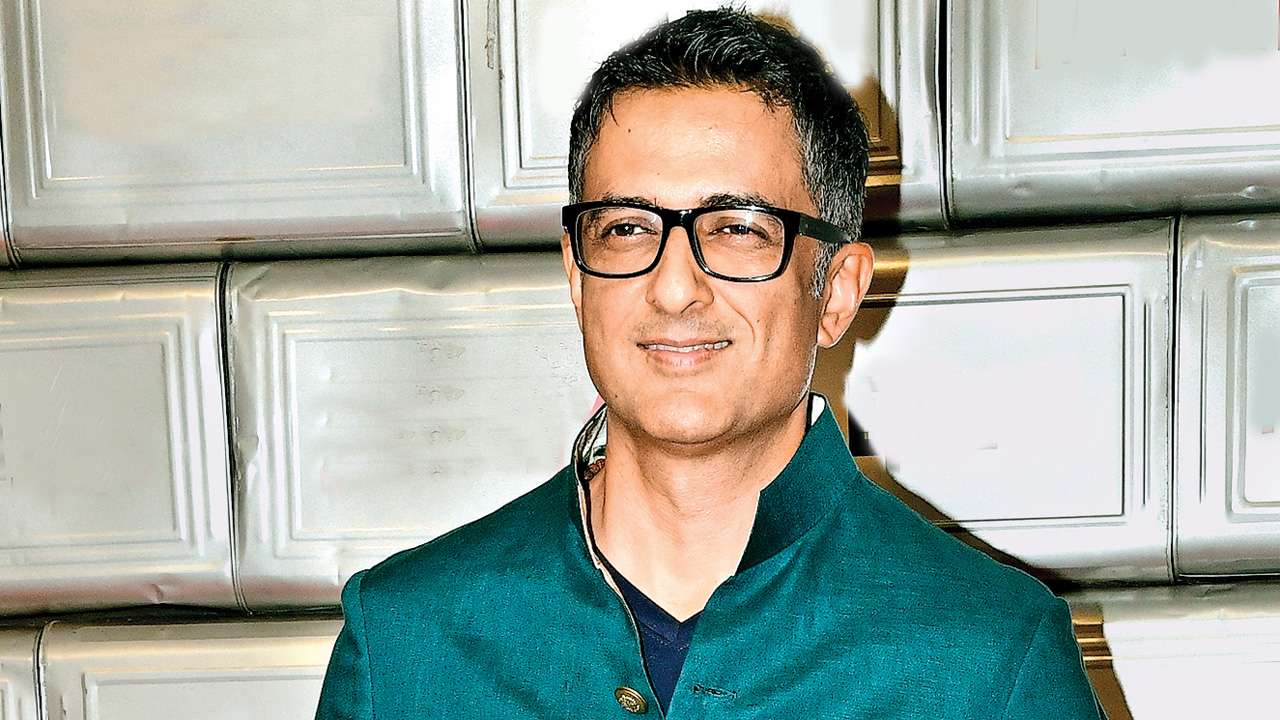
Deepali Singh (DNA; July 29, 2019)
Last year, Sanjay Suri presented the Cannes Palme d’Or winner, Japanese film, Shoplifters, to the Indian audiences. Now, the actor and producer is back with celebrated Chinese director and screenwriter Jia Zhangke’s film Ash Is Purest White, starring Zhao Tao and Liao Fan. Set in contemporary China, it’s a love story with an intriguing plot. Sanjay tells After Hrs that he is excited about bringing world cinema to India. Excerpts…
What’s the thought behind the title, Ash Is Purest White?
Ash is created with fire and purity only comes at a high temperature. It doesn’t remain mediocre anymore. The title is relevant to the film and theme. It’s about the deep love that goes beyond mediocre love. It’s a Chinese film and we are distributing it here. It’s a theme that one can relate to. Characters, sometimes, undergo challenges and emerge victorious. Here, it’s in the context of love, about a woman standing up for a man she loves. It’s about loyalty and patience.
What appealed to you about the movie?
It works at various levels. The characters and the situations they go through. The whole treatment works at a sub-conscious level. It has travelled to festivals and was selected to compete for the prestigious Palme d’Or at the 2018 Cannes Film Festival. The protagonist is in love with a gangster but she stands up for him and sacrifices everything for him. So, it’s not about good or bad. It’s about acceptance. We liked the film and there was an opportunity to release it in India. It’s set in contemporary China and it’s a window to another culture. While a lot of Indian films are being released in China, a festival gem from there is being released here. Last year, we did something similar with the Japanese film Shoplifters.
With world cinema being brought to our doors, do you think the Indian audience wants to see stories that go beyond their culture and country?
I’ll tell you something. It’s not now. When I was growing up, one could watch regional cinema on Doordarshan. In the early ’80s, I have seen Malayalam films, Bengali movies, etc. With the privatisation of channels and dependence on advertising and branding, it just became more populist. Then we were literally starved of even Indian cinema, forget world cinema. So, the audience is always ready. You switch on any radio station now, it’s only Bollywood. There is nothing wrong with that, but what about the diversity? I have made independent films; it’s a challenge to put these films out.
Do you plan to continue bringing films from other cultures to Indian theatres?
Yes, the idea is to have continuity. Next year, it will be an Egyptian film and we hope to bring more. What we are lacking is a destination for these films. Where do we go and watch them? Now, with OTT platforms, one can see them there but the experience is something else in the theatre.
Everyone keeps talking about how these days, content is king…
(Cuts in) But distribution is God (laughs)! Smaller films don’t have budgets. Ticket prices are the same. People have to navigate through traffic and find parking space to go and watch a film in a theatre. It’s a challenge but people are doing it and continue to do it, which is heartening.
On the acting front, you have been more active on the OTT platform rather than movies.
Yes, I did a couple of web shows, with the last one being Leila. I think actors like me, who have done alternate films, are finding it quite comforting to work on OTT platforms. There is a diversity of stories and also characters. In films, it still comes down to box-office decisions. In the digital space, there is still democratisation of numbers. Everyone loves a Narcos and Pablo Escobar but half the people don’t know the actor’s real name. In a way, it’s the characters that work, which is great.
Pyaar Mein Kabhi Kabhi released in 1999. It’s been 20 years for you in the movies…
Without a Rs 100 crore movie! Thirty-eight films, eight as a producer, one National Award. I’m not complaining!
You’re often named among the most underrated actors in the industry. Do you feel you’ve not received your due?
Initially, that was a thought. Once I started producing, I realised that casting is often economics based. You do need talent but economics also comes into play. I’m sure the right opportunities will come my way. I’m quite happy doing what I do. But yes, I would love to do more.
I have never been eager to work with stars-Huma Qureshi
8:01 AM
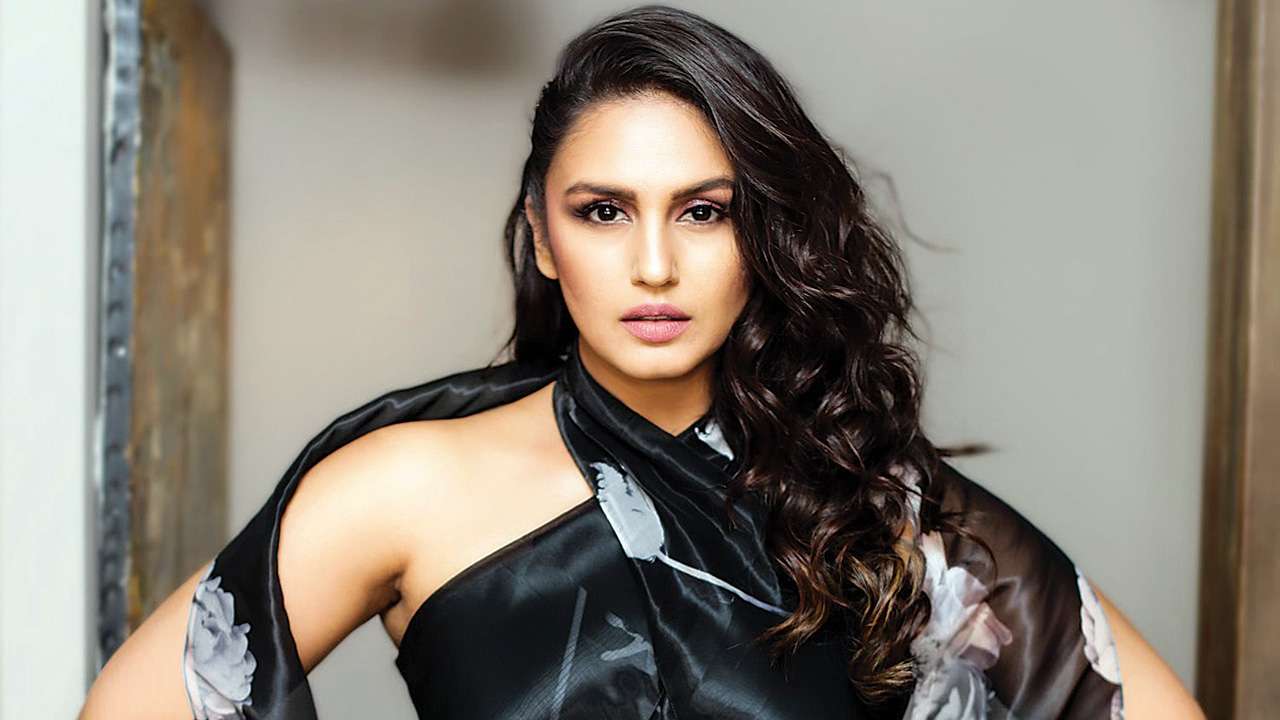
Deepali Singh (DNA; May 23, 2019)
Just a day after Huma Qureshi took off for the Cannes Film Festival, the trailer of her dystopian series Leila was released. While the actress was tight-lipped about the Netflix series directed by Deepa Mehta, which also stars Rahul Khanna and South actor Siddharth, she did mention, “I can only say I’m very excited. I can’t wait for people to watch the show!”
Calling Deepa a mentor, a guide and now, a friend, the Kaala actress exulted, “I love her! I have said this earlier, but I feel she’s really opened another chapter of my life for me as a performer and as an actor.” Observing that it’s easy for an actor to sometimes get lost and be affected by things around them, she added that Deepa has pushed her to be a better artiste and connect with her craft all over again. “She took me back to my authentic place as a performer,” she said.
While her previous film, Jolly LLB 2 (2017) was a hit, Huma admitted that she can’t take any credit for it. “It’s just that, as an actor, I took a conscious decision to do more meaningful work. And that kind of work is less and hard to come by,” she opined. It’s been a while since we saw the actress on the silver screen and the reason for that, she informed, is that she wanted to take a break to understand what she was doing.
“I want to do the right kind of stuff and that takes time, which is okay. I will sit at home and work on myself as an actor, as opposed to having two-three releases a year. I didn’t join the film business because I wanted to be famous, but because I enjoy acting. If I’m not enjoying my craft, and doing it because I’m getting money or I’m insecure, then I don’t want to do it,” added the 32-year-old.In her free time, Huma travels, reads and writes. “I have a lot of other interests which take my time, but as far as film work is concerned, it’s a sacred space for me. It’s always like ‘I want to work with this director or I want to do this kind of role.’ I’ve never been eager to work with stars. I always chase scripts and directors,” she concluded.
Subscribe to:
Posts (Atom)