Showing posts with label Leena Yadav. Show all posts
Showing posts with label Leena Yadav. Show all posts
We’ve used our experiences, Tannishtha Chatterjee’s as a cancer survivor and my experience of caregiving-Sharib Hashmi
9:23 AM
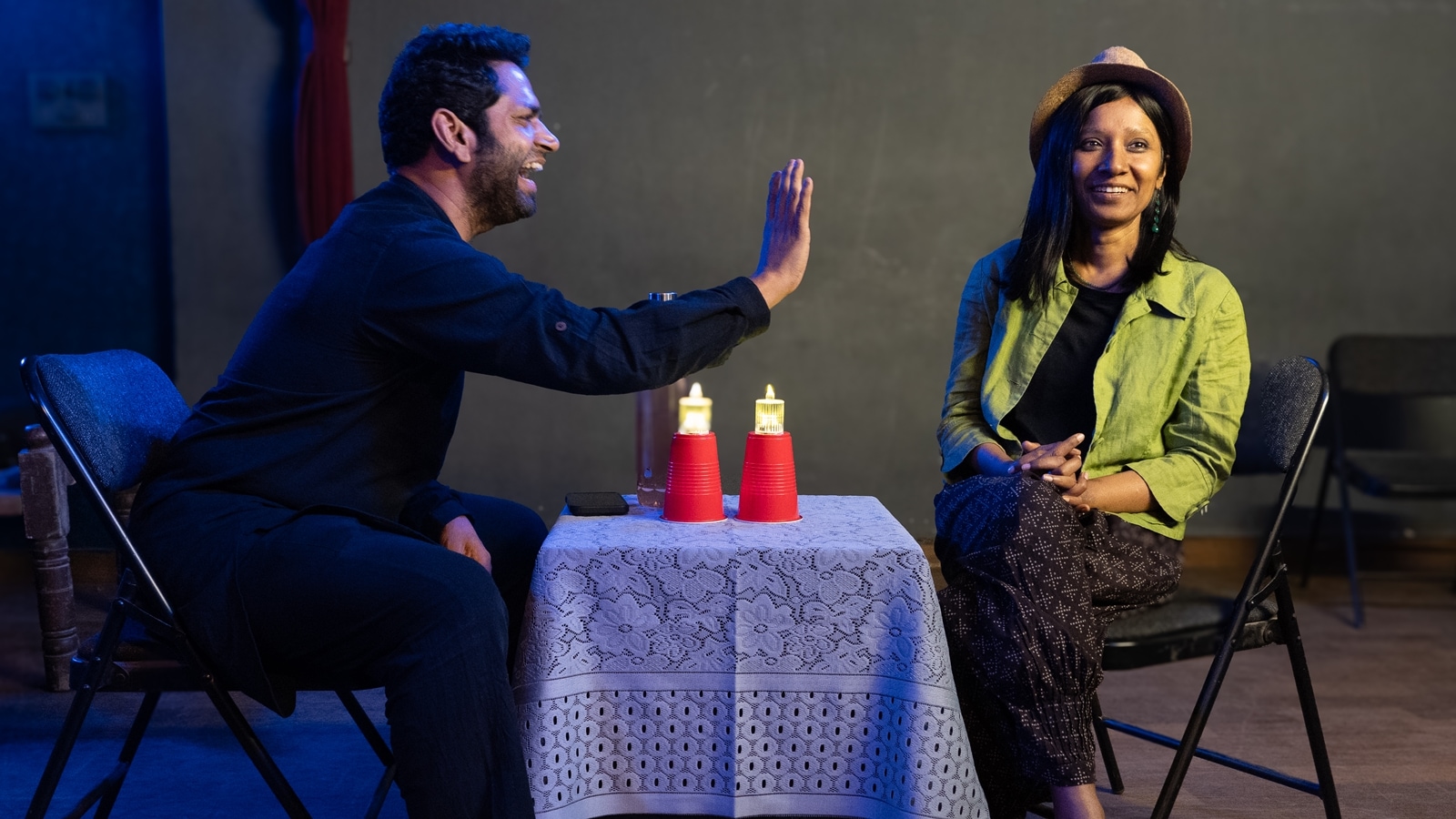
Tannishtha Chatterjee and Sharib Hashmi turn Stage 4 diagnoses and caregiving into a musical comedy that will not let pain have the last word. Laughter, for them, is now a lifeline
Pallabi Dey Purkayastha (MUMBAI MIRROR; January 21, 2026)
There’s something audacious about making people laugh while your body is at war with itself. Tannishtha Chatterjee knows this intimately. Midway through chemotherapy infusions last year, she’d ring up friends - musicians, actors, stand-up comedians - and turn the IV drip sessions into impromptu comedy hours. The laughter didn’t cure the cancer, but it made survival feel less like endurance and more like defiance.
Now, that instinct has crystallized into Breast Of Luck, a musical comedy playing at Mumbai’s G5A on 29 and 30 January. Written and performed by Tannishtha and Sharib Hashmi, directed by Leena Yadav, the play mines the darkest corridors of illness and emerges with something unexpected: joy.
Tannishtha, who revealed her Stage 4 oligometastatic cancer diagnosis in mid-2025, and Hashmi, whose wife Nasreen has survived oral cancer five times, have turned their lived experience into theatre. And it’s not grief theatre. Or brave-face theatre. It’s comedy.
Friends as medicine
“I just wanted relief from the physical pain and also the emotional distress—the insecurity, the fears,” Tannishtha says. “I used to call my friends during the infusions. They were all musicians, actors, stand-up comedians. And we’d kid around about different aspects of it all.” The laughter, she says, wasn’t escapism, but survival architecture.
“I just felt that my treatment and that entire process became easier because we were laughing. The instinct, really, was to make something that eased the weight for us as artists, instead of adding to it. I have never done anything so personal. Actors always hide behind characters,” she admits.
“Here, also, I am playing a character. But it comes from a deeply personal space. And I had to allow myself to be vulnerable in front of audiences.”
The play, she’s quick to clarify, isn’t a sob story with a punchline. “It’s a more universal language of how love heals and how love and companionship can make you go through the toughest times of your lives.”
She pauses, then adds with quiet force: “The overwhelming support from my friends and family is the reason I am standing here today; less than a year later, singing, dancing, and even laughing at my own journey. Ultimately, this is more than just my experience—it is a universal love story.”
Caregivers take the stage
Hashmi, who co-wrote the play, knows the terrain from a different vantage point. Years of caregiving have taught him that tragedy and comedy aren’t opposites—they’re neighbours. “On stage, everything both can be equally difficult,” he says. The play braids experiences together.
“We’ve used both of our experiences—Tannishtha’s as a cancer survivor and my experience of caregiving. So we’ve lent all our personal experiences into the story.”
Theatre, with its unforgiving immediacy, raises the stakes. “If you’re performing badly, then you’ll see the results immediately,” he says. “I think telling the story on stage is going to be really, really exciting and amazing for both of us. And at the same time, it’s very challenging as well. And I hope we succeed in conveying what we want to.”
Normalising the narrative
Director Leena Yadav speaks with the kind of admiration reserved for people who’ve earned it the hard way. “Both these actors are super brave for sharing and bringing this kind of honesty to the work. I think it takes a lot of courage to do that. And then to present it with a sense of humour — that takes something truly special.”
Does humour trivialize pain though? Yadav doesn’t think so. “It’s written by them, right? It is represented by them. It’s lived by them. It can’t be trivialized.” Comedy, she argues, does something practical. “One of the aims of doing this is also to normalize cancer conversations. And I think humour is something that makes everything so much easier to listen to, and to take in.”
What the play ultimately underlines, Yadav says, isn’t illness at all. “It underscores the value of people who stand by you, of the people who make situations easier to bear simply by being with you in the truest sense.”
In 90% of our commercial cinema, the depiction of fully developed female characters is lacking-Leena Yadav
9:03 AM

Niharika Lal (BOMBAY TIMES; March 10, 2024)
Leena Yadav, who directed the 2015 drama Parched – the film revolves around three women living in seclusion in their village, who decide to take charge of their lives – tells us that depiction of female desire on screen has increased, which is a step forward because it sparks conversation.
She says, “Female desire is shown from a lot of perspectives, and many of them are not to my liking, but it's fine as long as it's there (on screen) and there is a conversation about it. I think we still have a long way to go. We need to normalize depiction of the female desire. It is still the case that one film on such a subject will come out, there will be some conversation around it, and then no other project on similar lines will follow. In a love story or any portrayal of a relationship, a depiction of a woman’s needs should be normalized. It should be the most normal thing to explore, like we have been exploring the male desire for years and years.”
She adds, “Actors should not have a problem with portraying female desires on screen, but they do, which is fine. After one gets past that, there is society. The societal framework is important to navigate. I remember some sex scenes from Parched were leaked online. That is how suppressed and starved we are for sexuality as a society. At that time, there was another (short) film that Anurag Kashyap had done with Radhika Apte; those scenes were also leaked. I think there needs to be a change at the societal level. Just putting some content out is not enough. We have to create enough awareness and normalize it in society to really progress further."
Addressing the same depravity in society, when Radhika Apte’s scenes had leaked from the Anurag Kashyap short, the director had said, “You try to take a step forward as a filmmaker, they take you five steps back."
‘Depiction of female desire should be normalized; we’ve been exploring male desire for years’
'There are even a few films that pose as feminist films but actually are a male fantasy of feminism'
Leena Yadav says, “To be honest, the depiction of sexuality on screen is a distant goal right now. I am appalled at the content now, where one sees such underdeveloped female characters, at times. If the conversation has progressed to discussing sexuality, let’s at least see female characters being portrayed properly. But we still come across sloppy writing of female characters. Within the setup of any blockbuster, there’s nothing preventing filmmakers from better defining the female characters – it wouldn’t make the film less commercial. But, in 90% of our commercial cinema, the depiction of fully developed female characters is lacking. Therefore, a decent portrayal of female sexuality remains a distant destination."
She adds, "We have to create enough awareness about the female desires and normalize it in society to progress further.”
Kausar Munir, lyricist who has written songs like Doobe Doobe for Gehraiyaan and Main Pareshaan for Ishaqzaade says, "When one thinks of songs portraying female desires in films, the first song that comes to mind is 'Na jao saiyaan' from Sahib Bibi Aur Ghulam which had pathos, longing, and oppression, capturing the beauty of the scene. But that song was more about a woman who is wronged and oppressed. Many of Gulzar Saheb's songs, such as 'Aaj kal paon zameen par nahi parte mere,' when looked at from a woman's perspective, are songs about female desire. In fact, 'mera kuch samaan' is tinged with longing, desire, and loss. Gulzar saheb comes out as a champion of (writing) female desires in songs. Even a song like Kajra Re, which is kind of a club song with the line 'aankhein bhi kamaal karti hain, personal se sawaal karti hain', is the ultimate flirtatious line, layered with context where she is asking -'what's next? where do you want to take it now?' Many of Kaifi Azmi's songs have also expressed female desire. One of the best songs on female desires is Jaan Nisar Akhtar's 'Ae-dil-e-nadaan,' with the second line 'Aarzoo Kya Hai, Zustajoo Kya Hai,' beautifully depicts desire."
She adds, "When people, and by people I mean mostly men, think of an item song, it's often very different from what female desire actually encompasses—it's much more varied."
Talking about her songs, she says,"'Gehraiyaan' is particularly fascinating; it goes into forbidden desires. But it is for both men and women. I was asked to capture the film's essence in the song. I coined the word 'besafar' for the song, which many people thought was an actual word. Similarly, I created the word 'Ishaqzaade,' which, in fact, is not a real word. Reflecting on it now, 'Main Pareshaan Pareshan Pareshan' from Ishaqzaade is also about female desire. What else would she be pareshaan about?"
It’s amazing how Jacqueline Fernandez surrendered herself as an actor-Leena Yadav
8:23 AM

Director Leena Yadav flanked by Anjali Lama and Jacqueline Fernandez
With Jacqueline and transgender model Lama fronting her short film in Tell It Like A Woman, director Yadav hopes to change women’s depiction in cinema
Upala KBR (MID-DAY; July 6, 2022)
It was an easy yes for Leena Yadav when she was approached by producer Carol Polakoff in 2020 to be a part of Tell It Like A Woman. The anthology, backed by non-profit film production company We Do It Together, attempts to subvert the way women have been depicted in cinema. From Eva Longoria to Taraji P Henson, from Cara Delevingne to Anne Watanabe, stars from across the globe have joined forces for the endeavour, bringing seven short films helmed by female directors to the fore.
Yadav’s short, titled Sharing A Ride and shot in Mumbai, features Jacqueline Fernandez and Nepal’s first transgender model Anjali Lama. “My segment sees Jacqueline as a cosmetologist who is obsessed with beauty and perfection. When she shares a rickshaw on a rainy day with a traffic cop, played by Anjali, she is initially repulsed by the transgender. But finally, the transgender heals the cisgender,” says the director.
Roping in the right actors was crucial for such a sensitive story. “I was clear that I wanted to cast a transgender. There is something honest and powerful about Anjali, and how she has owned her sexuality. Jacqueline met me within 48 hours of my approaching her. It’s amazing how she surrendered herself as an actor.”
Yadav, who in the past helmed the women-led Parched (2016), says the anthology is another step towards fighting for gender equality. “By using cinema and breaking stereotypes of women, [we] aim to create change in people. The movies change the narrative where women are the subject rather than [being objectified]. It’s inclusive of every gender.”
A R Rahman sir’s music has given House Of Secrets not just a mood, but also an emotional depth-Leena Yadav
8:11 AM
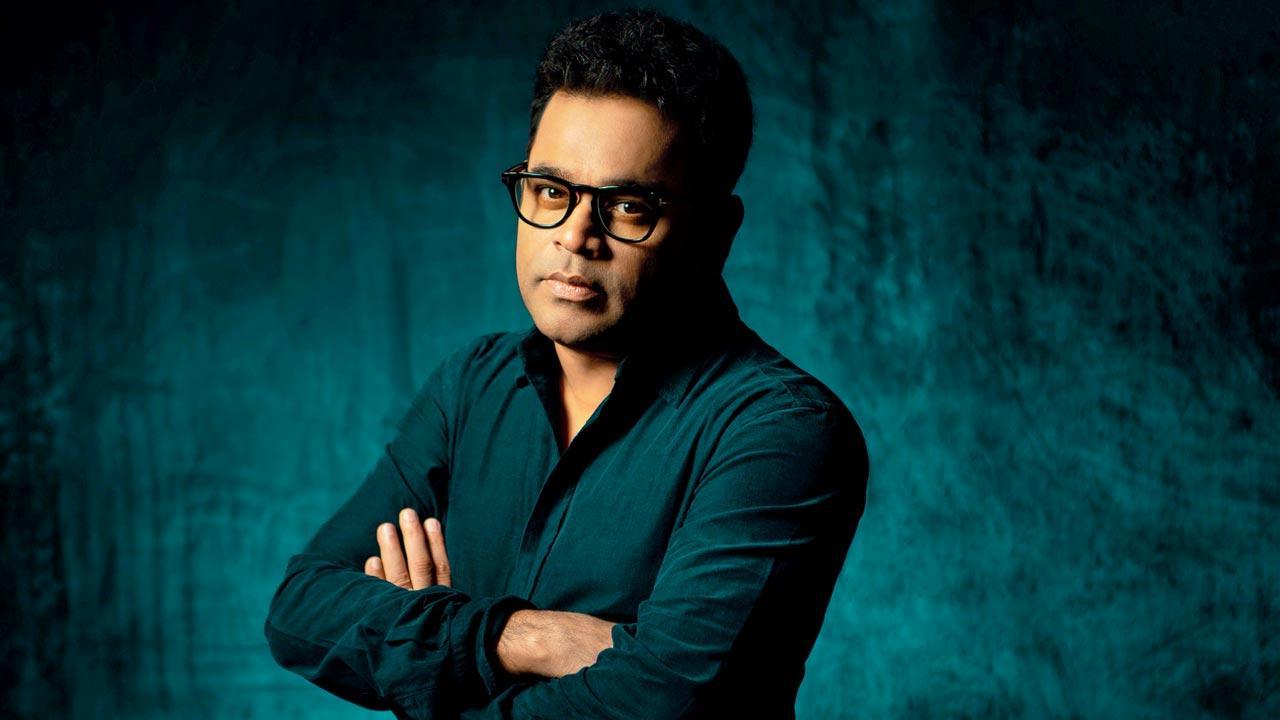
Rahman on how his music style had to be altered as he created score for his first docu House Of Secrets, based on the Burari deaths
Uma Ramasubramanian (MID-DAY; October 4, 2021)
Leena Yadav knew two things for certain when she decided to helm House Of Secrets: The Burari Deaths — that she wouldn’t adopt a sensationalist gaze to the infamous Burari deaths that had shocked the country. And, that only A R Rahman could bring the “emotional depth” required for such a project. The offering marks the maestro’s first attempt at scoring music for a documentary.
It is understandable when Rahman says that despite his almost-30 years of churning out melodies, working on House Of Secrets was a unique experience. “Since the docu-series concerns a sensitive and complex issue, it required a distinct, nuanced musical approach — [the score had to be] enigmatic yet gripping. I am glad to have worked on such a project, which so far was an unexplored territory for me,” says the musician.
The Netflix offering examines the 2018 case where 11 members across three generations of the Chundawat family died under strange circumstances in their Delhi house. It was speculated that the deaths were the result of an occult practice gone wrong.
Through the documentary, Yadav takes viewers through the different stages of the investigation. “A R Rahman coming on board was like an endorsement to the relevance and urgency of exploring this case,” says the director. “Rahman sir’s music has given the series not just a mood, but also an emotional depth. I find it difficult to be articulate about music, yet he would understand and translate [my feelings] into stirring soundscapes.”
Giving shape to the project was not easy. The creator-director says the documentary is the result of two years of intensive research, 400 hours of interviews and the quest for the truth. “This case brought to the surface some unfathomable truths of society that need to be confronted. It threw up many pertinent questions and revelations about the times that we live in. I look forward to presenting a case that is more about ‘us’ [the society] than ‘them’ [the family].”
Yadav, who has interviewed members of the Chundawat family, adds that it has been her most “emotionally draining” endeavour. “I must admit they were difficult conversations [to have]. But one of them thanked me, saying that this was like therapy for him. That is when I felt as if we’re doing the right thing.”
Filmmaker’s all-woman collective taps hidden talent in industry
8:03 AM

First meeting of Mansi Jain’s all-women group on the lines of Hollywood’s Film Fatales saw 40 talented artistes and technicians in attendance
Ekta Mohita (MID-DAY; February 20, 2019)
A collective launched by short filmmaker Mansi Jain (below) is bringing together a group of women artistes and technicians from the industry to source untapped talent, and to ‘give access to each other’s connections, help and experience’. The inspiration for the collective, says Jain, is the all-women group Film Fatales in Hollywood that includes film technicians who ‘meet regularly to mentor each other, share resources, collaborate on projects and build a supportive community in which to make their films’.
“Film Fatales has indie filmmakers to big filmmakers [as members],” says Mansi, who has a masters in screenwriting and directing from Columbia School of the Arts in New York. “They help each other. That’s what I wanted here. I started at an intimate level by sending a voice note to 15 people in my phone book [on February 7]: Women I respect as filmmakers and technicians. I asked them if they would like to be a part of it. All of them were like, ‘let’s do it’. I formed the group, and Jyoti [Kapur Das, creative head, Gangs of Wasseypur and Queen], who is a powerhouse, added a lot more people. Within the first four hours, we had 92 members.”
Being mutual assets
The collective, unnamed so far, includes producers Guneet Monga and Elahe Hiptoola, filmmakers Leena Yadav, Nupur Asthana and Ashima Chibber, cinematographer Neha Parti Matiyani, editors Geeta Singh and Antara Lahiri, singer Jasleen Royal and actors Sandhya Mridul, Divya Dutta, Sayani Gupta, Rasika Dugal and Seema Pahwa. The first meet-up on February 9 was held at Monga’s office, with about 40 women in attendance.
Jain says, “Why were we able to have a huge first meet within the first three days? There’s a hunger in women. There’s so much untapped talent when it comes to female filmmakers and technicians. Bringing them all under one roof and giving them access to each other’s connections, help and experience is the purpose of it. We spoke to each other about the projects we were working on, and saw how we could be an asset to each other.”
Pahwa, who’s been an actor in the industry for 35 years and is making her directorial debut with Pind Daan, says, “I have not seen that much of a distinction [between male technicians and female technicians], but definitely, women have had to struggle more to establish themselves: in all the fields and not just ours. We have not made this group to stage a revolution. A lot of our members are already established and have a body of work behind them. The collective is to create awareness that there are so many [women technicians]. On my next project, I definitely know that there are many names I could approach directly.”
Taking it forward
The collective will meet once a month, at somebody’s house or a cafe. At Monga’s office, while there was an “amazing spread,” there was also a potluck. “Everybody was requested to bring something so that the host didn’t get overwhelmed with the responsibility,” says Jain.
“But, we don’t want it to become like a kitty party. That’s not the point of this. This is a very professional group. We work together and are interested in each other’s careers and talents. The idea is to take each other by the hand and go a little forward.”

"Where are all the women?": PM Narendra Modi and film fraternity's meet draws flak
8:12 AM

This is the second time a Bollywood contingent met the PM in two months to discuss issues related to the industry
Rachana Dubey (BOMBAY TIMES; December 20, 2018)
 On Tuesday evening, a team of Bollywood producers and actors met PM Narendra Modi in Mumbai on his one-day visit to Maharashtra and discussed some of the key issues being faced by the film industry in India at large. Producers Karan Johar, Ritesh Sidhwani, Siddharth Roy Kapur (also the President of the Film Producers Guild), Rakesh Roshan, Ronnie Screwvala, and lyricist-poet Prasoon Joshi (the Chairman of the Central Board of Film Certification) were a part of the contingent, along with actor-producers Akshay Kumar and Ajay Devgn. Talking about the meeting, Prasoon Joshi told us, “It was a good and constructive interaction and I think it’s really reassuring for the film fraternity that the PM took out time and gave his full attention to industry issues relating to the business and that of the future of the entertainment industry, among other things.”
Rakesh Roshan added, “Although I couldn’t be a part of the entire meeting, what I did understand was that Mr Modi is extremely receptive towards the film industry’s needs and he acknowledges our contribution to India’s multi-dimensional growth. He has assured us that he will look into our needs and address them as soon as possible, which is extremely relieving for us.”
A similar Bollywood contingent met the PM two months ago on October 24 in Delhi. The group was led by Ritesh Sidhwani. In the previous meeting, they had urged the PM to acknowledge cinema’s contribution to India’s financial growth and in promoting bilateral ties with other nations. According to Siddharth Roy Kapur, who had attended the previous meeting, the PM had admitted that delegates from all over the world had been discussing Indian cinema with him.
While talking to us at the recently-concluded NFDC Film Bazaar in Goa, Siddharth had said, “Our October 24 meeting with the PM was very encouraging. Our objective was to discuss how the soft power of the Hindi film industry could be leveraged to take the story of India around the world and to also highlight how the impediments in the industry’s growth can be removed. We had even discussed how markets like China have grown. We were all on the same page.” Siddharth also highlighted that in the previous meeting with the PM, the contingent had discussed Hindi cinema’s demand to be officially granted an industry status from the government. He shared, “We can’t be cynical here; we have to hope that our endeavours will be awarded some day. There are obstacles in our growth. The screen density in India is very low, although we are a film crazy nation. We want our industry to be pulled out of the ‘sin’ products-and-services category. There have been many GST council meetings and various other industries have benefited from that, but cinema continues to be in the sin category and it also bears the mar of double taxation, which it doesn’t deserve. It’s important for us to be able to shoot in our own country and for that, we need easier clearances. Other nations lay out a red carpet for us to come and film there. We want that back home, so we don’t have to travel elsewhere. It generates employment.”
After the recent meeting, Modi tweeted, “Had an extensive and fruitful interaction with a delegation from the film and entertainment industry. The delegation spoke about the studies being made by the film and entertainment industry, and gave valuable inputs relating to GST for their sector.”
-----------------------------
MUMBAI MIRROR (December 20, 2018)
The meeting of a delegation of the Hindi film industry with Prime Minister Narendra Modi came under fire on Wednesday for its exclusion of female representation with some activists and filmmakers pointing out that it was 2018 and asking, “Where are the women?”
On Tuesday, an 18-member panel, including Karan Johar, Ajay Devgn, Siddharth Roy Kapur, Akshay Kumar, Ritesh Sidhwani and CBFC chief Prasoon Joshi, met the prime minister to discuss how to take the entertainment industry to the next stage.
No woman was part of the “manel” (a term used for all-male panels) representing an industry where women play a pivotal role not just as actors but also as directors, producers and writers, a female producer said. It was a year when skewed gender politics in the workplace, including in the entertainment industry, became a topic of heated debate with India being hit by its own #MeToo tsunami that swept away some big names, she said, asking not to be named.
“Where are the women of the industry?” tweeted #MeToo India’s Twitter handle. Director Leena Yadav said it is sad that female voices are being ignored, especially when the ticket window has been tremendously responsive to women directors. “They are ignoring what is happening at the box office vis-a-vis women directors and their films and ignoring them is sad and it is not only sad but being very unaware in today’s world and regressive in today’s world. So that is really sad,” Yadav was quoted as saying.
But the filmmaker, who has earlier made Shabd and Parched, said she refuses to feel sorry for herself or sidelined. “I can feel offended by it but it doesn’t affect me to that level as it does not wipe out my existence. I feel sorry for them rather than for myself,” she said.
Alankrita Shrivastava of Lipstick Under My Burkha, which was well received by critics and audiences, also spoke out. “Would be great to have female representation in these delegations. It is 2018,” she wrote on Twitter.
Producer Guneet Monga, whose short film Period. End of Sentence has made it to Oscar 2019’s list of 10 films, said it would have been wonderful to see some women on the panel.
“It is great that they have met the PM and I am sure it is going to advance the industry. But it would have been wonderful if there were women (in the meeting),” Monga said.
“I don’t know when this was planned. I don’t feel sad about it, I feel great that industry people met PM. I hope GST reform happens and I hope it all benefits the industry. It will be great to have women representation (though),” she said.
Another woman producer said on condition of anonymity that it would have been nice to have women but the meeting was initiated by the government and the all-male representation was an accident, not choice.
“It is not that they put together a forum that did not include women... rather lot of women today are active in the decision making and the growth of the industry in the Producers’ Guild. It would have been nice to have female representation. I am hoping there is another time when women will be represented,” she added.
Another delegation, which met the PM on October 24, had no women either. Ritesh, who had led an earlier panel for a meeting with the Prime Minister in October, said it was for the first time that a PM of India had “interacted with a delegation of the film industry”. “Heartfelt thank you to the honorable Prime Minister @narendramodi ji for taking out time to hear us at length...,” Akshay said.
The insecurity of sacrificing everything to pursue acting did play on my mind-Anirudh Tanwar
8:03 AM

Lasyapriya Sundaram (BOMBAY TIMES; November 26, 2018)
He is a commercial pilot-turned-actor, who quit the aviation industry to pursue a career in the movies. Hailing from Jaipur, actor Anirudh Tanwar struggled for almost five years before he landed a role in the upcoming film Rajma Chawal, directed by Leena Yadav. In a candid chat with BT, he shares how he wants his journey as an actor to continue. Anirudh also admits that he wants to be known as a good actor and is not gunning for stardom. Excerpts...
Did you harbour dreams of being an actor since childhood?
I am born and raised in Jaipur. When I was in school, my father asked me what I wanted to be when I grew up and I said I wanted to be an actor. He didn’t discourage me. But growing up in Rajasthan, I realised that nobody really looked forward to somebody becoming an actor and also, there weren’t many avenues to pursue the same. Then, I became a pilot and started working, but I was keen on taking that leap of faith to pursue acting. I eventually quit everything and decided to shift base to Mumbai in 2012. Since then, I have been trying to get a break. I assisted on films and also managed production work. I joined Barry John’s acting classes. I did workshops with graduates from the National School of Drama. I pursued street theatre in Banaras and also went to Lee Strasberg in New York to train. There was a film, which was supposed to happen, but it did not and I returned to Mumbai.
Since 2013 till the time Rajma Chawal was shot and completed, as an actor, it was a tough period for me. The insecurity of having sacrificed everything in order to pursue a career in the movies did play on my mind. Now that my film is complete and is releasing, I feel that period was not tough, but a rite of passage. Also, as a child, I was painfully shy, but when I would act on stage, I would come alive. I was also charmed by cinema. In fact, when I shifted to Mumbai and would watch stage plays, I was keen on being an actor on stage as well. Acting for me is a liberating experience.
After struggling to find a foothold in the industry, you finally landed the lead role in Rajma Chawal. How did that happen?
I assisted filmmaker Leena Yadav as part of the production team for the film Parched. She was also aware that I wanted to be an actor. After wrapping up the film, she called me a few months later and told me about Rajma Chawal and how it revolved around the relationship between a father and son. She told me that the film is not a typical launch pad, but that I would be perfect for the role. I was skeptical about Rishi (Kapoor) sir agreeing to act alongside a newcomer, but those were my own insecurities. He came on board because he liked the script a lot.
What, according to you, is the ideal launch pad? Even though Leena Yadav told you that Rajma Chawal is not a typical film that is designed for a Bollywood launch, did you believe otherwise?
Frankly, I think Rajma Chawal is the ideal launch pad for me. For many others, this film might not come across as a launch vehicle because it doesn’t have a larger-than-life quality about it, which is almost a prerequisite for a debut in Bollywood. I relate to cinema that is real. This film is a drama that addresses concepts like family values. Also, I was thrilled that I got to share screen space with Rishi Kapoor.
Every year, the industry witnesses new actors trying to make a mark. However, only a few manage to make an impact and also sustain a career. Isn’t it difficult to break through the clutter?
I think it’s a huge challenge, but what I do hope is that my journey as an actor continues. When an actor ventures into the industry, the first challenge is to simply get work. I want to first grow as an actor. I will be happy even if only 10 people recognise me, but I want them to appreciate me as a good actor. I aspire to be an actor more than being a star. I will die of embarrassment if somebody were to say that I am a star, but I don’t know how to act.
Your father is also one of the producers of the film. Didn’t you want to be in a film which didn’t have your father backing it?
My father started producing films after I moved to Mumbai. In fact, I was constantly asked if he is producing films, why isn’t he producing mine. My father was the opinion that I need to find my own way and that he wouldn’t want to bankroll a film for me. We had different producers when the film was kicked off. However, at that time it was a small film. But when my father heard the story from Leena, both of them wanted to take it to the next level. That’s when he agreed to come on board as one of the co-producers.

#MeToo: Should actors give an official consent before shooting intimate scenes?
8:43 AM

Rachana Dubey (BOMBAY TIMES; October 25, 2018)
With the #MeToo movement gaining prominence in India, many of our filmmakers and actors have woken up to the need for a safer working environment. Recently, actor Dalip Tahil took a written and visual consent from his female co-star before shooting a rape scene for a web show. Reportedly, Emraan Hashmi, too, has insisted on including a sexual harassment clause in his contracts, as well as that of his film’s crew.
The heightened sense of awareness around women’s safety on film sets has also sparked new conversations in Bollywood. Filmmakers have decided to modify the way Hindi films are made and how women are treated on the sets. Directors like Konkona Sen Sharma, Alankrita Shrivastava, Gauri Shinde, Kiran Rao, Zoya Akhtar, Reema Kagti, Meghna Gulzar, Shonali Bose, Nitya Mehra, Nandita Das and Ruchi Narain recently formed a collective to take a stand against sexual harassment. Their male counterparts have also pledged support to the cause. As the #MeToo storm rages on, BT reached out to filmmakers and actors to gauge the measures they want to take while shooting scenes (especially ones that are intimate), and understand, whether a recorded consent by people involved in the shoot is the need of the hour. Here’s what they had to say:
We have to find ways and means of building a safe and secure environment. Over the years, we have been conditioned to work in a patriarchal set-up. The change in mindset will come with some sort of regulatory mechanism in place. So, it is important to have checks and controls. We shouldn’t be flippant about it and have a knee-jerk reaction. We need to have a clearly documented way forward. First, we need to understand what constitutes harassment, violation and how to escalate any instance or address a grievance.

It is a process of education, because for too many years, men have had it easy. We have to build a framework in the next few months. Hollywood does that, because they shoot scenes that are explicit in nature. Workshops are held to train actors to shoot a scene in the nude. I think we need to understand from other industries as to how they address these issues. Also, it does not apply only to the world of cinema, but it is about ensuring that all working environments are safe. – Hansal Mehta, filmmaker (directed films like Omerta)

I have shot such scenes before. It is done like a job and with a lot of mutual respect. I am anyway very sensitive about these things. My actors talk to me about it the moment they experience any discomfort, as that’s the kind of equation we share. My actors generally know everything regarding their role in the film and how things are going to be depicted. But if actors want a recorded consent for themselves, I wouldn’t mind it. We must respect the personal boundaries that we all have. – Leena Yadav, filmmaker (directed films like Parched…)

I feel that a central code of conduct must be put into place with regards to certain representation of women in films and their involvement in films, especially in case of scripts with such sensitive scenes. Collectively, it helps when a centrally accepted rule is put into place instead of sporadic selfthought actions, as that creates a sense of disorganisation, which only beats the purpose. – Yami Gautam, actress

From Satyameva Jayate, I have chosen a path where I will not have such scenes in my films. Having said that, it’s very important that everyone acts professionally and responsibly about these things. Everyone should know what they are signing up for. There should be no confusion. Even in the past, when I have shot intimate scenes, it has been with the artiste’s consent, and were shot aesthetically. I have stuck to what everyone was comfortable with. It’s better to make it clear in the script and if someone wants it written in black and white in their contracts too, it’s fine. It’s better if they know and agree to abide by what they are consenting to. – Milap Milan Zaveri, filmmaker (directed films like Satyameva Jayate)

I can understand the fear that Dalip Tahil must have felt and hence, he did what he did, but I will not do that with an actor. In fact, I would not even do such a scene if I don’t trust my co-actor. I don’t believe in written and video proofs, because I have a great rapport with my co-actors — male and female. For me, acting is a process of understanding life and it’s sacred. So, I wouldn’t do anything to make it look or feel incorrect to me or to anyone else. I will perform all my scenes as an artistic representation of what has been written in the script, and not for any other purpose, whatsoever. – Adil Hussain, actor

Personally, I will take legal counselling and follow guidelines set by the studio and the production house in this regard. Eventually, what has come out of this is that, like there are guidelines in corporate structures, there will be some in films, too. The #MeToo campaign has made everyone aware and more sensitive. I am sure everyone was in sync with what Dalip Tahil did. Everyone needs to be aware of what is being done and we must follow all the necessary steps to ensure work goes on smoothly with everyone’s consent. – Suresh Triveni, filmmaker (directed Tumhari Sulu)
 I have never felt the need to shoot anyone’s consent so far. I mean, I started out in the movies with a film like Dushman that had some really challenging scenes. With the #MeToo campaign, you need to be careful. If someone feels the need to take some precaution like Dalip has taken, I don’t see any harm in that. He’s only taking precaution. Shooting any scene requires mutual trust. Every actor knows every scene they have to shoot in absolute details. We go as per the script and the demand of our characters. Sahejta barkarar rakhna zaroori hai and for that, to make yourself feel secure, it’s perfectly alright to seek your co-star’s consent in writing or on camera. – Ashutosh Rana, actor
 The thought of shooting a consent before and after a rape scene or an intimate one, never occurred to actors of my generation. We were more worried about giving the right shots and the right expressions. Rape scenes are played up on expressions and camera angles. It’s unnecessary to ask a co-star for her feedback and her consent, because when we are narrated scripts, everything is mentioned in it. If it’s required and actors are comfortable, they will do it. There are so many people around on a set; how can anyone go beyond a set parameter for shooting a scene? I just think that in today’s scenario in particular, an actor, male or female, should complain immediately if he/she is feeling uneasy about doing a scene. It’s more important to have a safe environment in the work space, which includes film sets. No scene is shot without an actor’s consent anyway. – Prem Chopra, actor
 What Dalip Tahil did only goes on to show that everyone is wary of what is happening today. It stems from the fact that some people are using the #MeToo campaign for wrong reasons. There’s a reason why so many influencers have come forth and said that the campaign should be used in the right direction and should not involve any personal agendas. We should not let the campaign lose steam. At the same time, there is a lot of speculation among the actors and they’re just trying to be safe than being sorry later. The industry is at the cusp of change — it will go through corrections, changes and dents. Eventually, policies that will come out of these will be in everyone’s interest. No actor will then feel scared about any situation or filming any scene. Social campaigns are for social change and that takes a while. Instances like Dalip Tahil’s throw us off a bit, but this is part of the push and pull that happens in the process of a social change. – Abhinay Deo, filmmaker (directed films like Blackmail, Delhi Belly)
What Dalip is doing makes sense, but all these areas are covered contractually. And why not? Maybe this is a way to go about it. Whenever we shoot an intimate scene, first and foremost we ensure that the actors are comfortable. It’s also done in a closed environment where there are fewer number of unit hands, except for the DOP, the director and maybe the sound person. I discuss all my scenes threadbare with my actors and go ahead with the shoot only when they are comfortable. – Sriram Raghavan, filmmaker (directed films like AndhaDhun)
– With inputs by Lasyapriya Sundaram and Renuka Vyavahare

Rishi Kapoor is the most unfiltered actor I’ve met-Leena Yadav
7:58 AM

Leena Yadav on working with the actor on a father-son story and developing four-fi ve international projects, among them the biopic of the first woman to join the LTTE
Roshmila Bhattacharya (MUMBAI MIRROR; July 17, 2018)
Who came up with the intriguing title of Rajma Chawal?
Rishi Kapoor did. It plays a crucial part in the father-son relationship. He suggested the title during the narration. And I admit we ate a lot of rice and beans, along with other local delicacies found in Delhi’s Chandni Chowk, during the shoot which Aseem (Bajaj, her producer-DoP husband) would get for us. Rishi would wave them away, saying he’d get fat, then stop Aseem, saying, “Wait, let me take a bite.” We feasted and laughed our way through the film.

Not just him but every man on the sets. Every son craves for his dad’s approval which is often hard to express in words. Even though we are three daughters in my family, this relationship has long fascinated me as I wondered if the dynamics might have been changed with a male sibling around. It’s the basis of five-six half-baked scripts lying around.
This story is Vivek Anchalia’s and I was instantly drawn to it as whenever we’re at a restaurant, I find every member of a family on the phone with no time for personal interaction. Aseem and I make sure the cell phone is never between us. We don’t even have a TV at home. Besides conversation, the only other thing we do is read. Even when we are working together, we have different lives and there’s so much to share.
Would you say your last film Parched, which won awards and accolades worldwide, has changed you as a filmmaker?
It has. I was hungry to make a film the way I wanted and when I was not able to do so, I told Aseem I was giving up. He wouldn’t let me quit and told me he’d produce Parched even though it was a difficult film to raise finance for. It was run down by everyone till Ajay (Devgn) came on board as producer. That gave us credibility, he also gave us the money to start the film. Without him Parched wouldn’t have been possible and working with a foreign DoP (Russell Carpenter) and editor (Kevin Tent) made me realise artistes have no boundaries. I learnt from them and their takeaway was that music is not just a distraction but can help tell a story. Shabd’s rejection had stunned me, Parched liberated me as a filmmaker and Rajma Chawal has grown out of that space.
After Parched you could have got your pick of actors, why settle for a newcomer, Aniruddh Tanwar?
I never write with actors in mind but take actors who fit the part. The role is bigger than all else.
Is Rishi Kapoor is a difficult actor to direct?
He’s the most unfiltered actor I have ever met and rather than get offended, I appreciate this quality. This collaboration has been most enriching because he comes with years of experience and an innate curiosity that makes him ask, “Why do you need a scene like this?” or “Why are we spending so much time on this when it’ll be edited out?”
You’ve travelled the world with Parched. Do you see yourself becoming a global filmmaker now rather than remaining an Indian director?
Absolutely, I’m already doing 4-5 international projects. One is an Australian production set in Sri Lanka, a biopic of one of the first women who joined the LTTE movement. I’m also doing two hardcore American films. I’ve spoken to Ajay about an international film that I hope will feature him. I’m grateful I’m getting to interact with such amazing minds.
Rajma Chawal: On Father's Day, Rishi Kapoor introduces his reel son Anirudh Tanwar
7:55 AM

BOMBAY TIMES (June 17, 2018)
Director Leena Yadav’s next, Rajma Chawal, looks at a very contemporary issue — social media and its impact on our relationships. The story revolves around the quirky equation a father and son share in the virtual world. While Rishi Kapoor plays the father, the son’s character is essayed by debutant Anirudh Tanwar.
So, it’s only apt that this Father’s Day, the senior actor is eager to introduce his reel son, all set to take baby steps in the industry, to the world.
Rishi Kapoor says, “I have played all generations in reel and real life — grandson, son, father and grandfather — and each relationship has taught me something. This Father’s Day, I am introducing the main member from my Rajma Chawal family — my onscreen son, Anirudh Tanwar. This film has been an interesting journey for all of us and we had a blast cooking it. I hope that the audience, too, enjoys consuming it. The story is relevant, as it talks about bringing a father-son together using social media in the most unique, fun and colourful manner. This film also will take you on a beautiful ride through the amazing Chandni Chowk, bringing new flavours to your palette.”
Needless to say, Leena Yadav is excited about the camaraderie her on-screen papa-beta share. She says, “As a director, watching Rishi sir mentor Anirudh was a great experience for me. I would often observe him generously teaching Anirudh the tricks of the trade, and that enriched their on-screen chemistry. I could not have asked for a better father-son duo for our film, which explores a complex relationship through a funny and heartwarming lens.”
While the movie is quintessentially a dad-son story, it also has Amyra Dastur in a pivotal role.
Rajma Chawal, presented by SaarthiE and produced by Capt Gulab Singh Tanwar, Leena Yadav and Aseem Bajaj, releases on August 31.
Rishi Kapoor plays a rookie learning ways of the internet in Leena Yadav's Rajma Chawal
8:07 AM

Natasha Coutinho (MUMBAI MIRROR; June 9, 2018)
Rishi Kapoor may be one of the most prolific celebrity tweeters with a staggering figure of three million followers but for his next, the 65-year-old actor had to unlearn all the tech tricks acquired over the years. Mirror has learnt that in Leena Yadav’s next, Rajma Chawal, he plays a patriarch who, with the help of his son (played by Anirudh Tanwar), is trying to catch up with technology.
According to Leena, despite the contrast between him and the character, Rishi identified with it. “We’re facing this with all our parents — they have either become overactive on the social media or want to be as they have now realised that communication has shifted in this direction and that’s the only way to bridge the generation gap. When Rishi ji heard the story of a father and son who don’t talk much, he said, ‘I was a similar father, who finds it difficult to share his thoughts with his son.’ Food is also an integral part of the story so for many reasons there couldn’t be a better choice than Rishi ji for the part,” Leena says. Sharing memories from the shoot, the filmmaker adds, “We had lots of fun shooting at Chandni Chowk; food became a big part of our lives. Rishi ji had informed us on the first day itself that he instead of riding a bike through the narrow lanes he’d prefer walking. He would stop at every shop and inquire what they were cooking. By the second day it had become normal for the locals to watch Rishi Kapoor walk by.”
Speaking of how the character came about, Leena reveals that it is a sum of the film’s three writers’ experiences with their parents. “That’s also how we landed up with the film’s title — it cuts across generations and is timeless,” she explains. On the father-son dynamic, she says, “They look like they’re always on the brink of a war, but all the son wants is his father’s approval. In this film, the father learns to get on the internet and ways to communicate with his son who is always looking into his mobile.”
Dragon tattoo turns barcode for Amyra Dastur in Rajma Chawal
8:31 AM

Dastur's look in Rajma Chawal is inspired by Rooney Mara's get up from acclaimed Hollywood film
Mohar Basu (MID-DAY; April 21, 2018)
After having Radhika Apte slip into traditional Rajasthani attire to depict the social evils in the state's villages in Parched (2015), director Leena Yadav has opted for an entirely distinct and edgy look for the leading lady of her next. Amyra Dastur's appearance from Rishi Kapoor-starrer Rajma Chawal bears similarities to Rooney Mara's get-up from David Fincher's mystery drama, The Girl With The Dragon Tattoo (2011).
 mid-day has it that the look underwent 50 iterations before the unit of Rajma Chawal could be satisfied. A source says, "The film will see Amyra sporting a badass look, which is similar to that of Rooney from The Girl With The Dragon Tattoo. In one of the stills, she is seen sporting an undercut with chevrons on the side. She will also have a number of tattoos on her body, with one on her neck [of a barcode] being distinctive." Dastur shaved one side of her head for an edgier look, it is learnt.
The drama revolves around a boy who falls in love with a girl. She is more rebellious than religious. Production insiders say, "The unit brainstormed for days to decide how the lead actor should appear. There were all certain that the look should be something that Amyra hasn't sported before, and distinct from the rest of the cast. They started with a sharp pixie haircut and rough curls, and after improvising on it, zeroed in on this one." Instead of fretting over the damage done to her locks, Dastur was apparently excited to "go completely wild". "She even suggested that she should go bald, but we knew that wouldn't fit the part as well as this one did." The film, also starring Anirudh Tanwar as Kapoor's son, will roll in November. It will explore the father and son's strained relationship.
Debutant Anirudh Tanwar to play Rishi Kapoor's son in Leena Yadav's Rajma Chawal
7:43 AM

Natasha Coutinho (MUMBAI MIRROR; October 27, 2017)
Leena Yadav’s next, Rajma Chawal, with Rishi Kapoor in the lead, rolls on November 7 in Delhi. Scheduled to be shot across the city in a start-to-finish schedule, the story of a father-son duo is expected to wrap up by December-end and deals with generation gap-related conflicts. Debutant actor Anirudh Tanwar plays Kapoor’s son.
“The idea behind the film is to illustrate how everything happens over the mobile today. People would rather catch up over a chat than have a proper conversation and this affects parent-children relationships. Parents are struggling to cope with technological advancements and Rishi Kapoor portrays the many shades of a father, from funny to intense. Anirudh has trained at Lee Strasberg theatre and film institute and is a perfect fit. I’ve wanted to work with him since a long time,” Leena informed.
Amyra Dastur helps the father-son overcome their differences and rajma-chawal plays an important part in the narrative as Indians are emotionally connected with food. “Whenever I talk about rajma-chawal, it evokes a smile as people are reminded of home. There couldn’t have been a more perfect title for a father-son relationship.”
Today, it’s not practical to build studios but we would like to do it for emotional reasons-Rishi Kapoor
7:43 AM

Rishi Kapoor on the burnt down RK Studio, his upcoming film that reunites him with a ‘courageous’ Taapsee Pannu and why she stands apart from other actresses
Natasha Coutinho (MUMBAI MIRROR; October 19, 2017)
Rishi Kapoor, who has been juggling between Umesh Shukla’s 102 Not Out and Anubhav Sinha’s Mulk, is back in Mumbai from a five-day Lucknow schedule of the latter, in time for Diwali. But after a four-day break, it will get even busier, the actor tells Mirror at an Andheri studio where he is shooting for the last day of Shukla’s film. “We were to wrap up on Monday, but the unseasonal rains played spoilsport, resulting in early pack-up. I return to Lucknow for a 20-day shoot of Mulk, after which I start work on Leena Yadav’s Rajma Chawal,” he says.
Rishi recently took his followers by surprise when he shared his Mulk look online. “The look was my conception but Preetisheel Singh’s (make-up artist) team brought it to life with special effects makeup. For someone like me, who enjoys doing different characters, it’s important to find the right team,” he explains, clarifying that contrary to reports, he is playing a positive character. “It’s like the saying, ‘All terrorists are Muslims but all Muslims are not terrorists’. I play a retired lawyer, a serious, devout Muslim, who takes up a case for justice.”
Mulk marks his reunion with Taapsee Pannu, with whom he had featured in David Dhawan’s 2013 comedy, Chashme Baddoor. “She is a spirited actor and has been part of some successful films. No young heroine ever says, ‘I’m working in a film with a senior, has-been actor like Rishi Kapoor.’ I loved the fact that Taapsee said that she is working in Anubhav Sinha’s film with me. Any other heroine would like to say I’m working with Hrithik Roshan or my son, Ranbir Kapoor,” he beams, adding that Taapsee’s contemporaries could use a cue from her. “You know she’s got guts when she says, ‘My role and the story are important, not the actor’. I commend her for that.”
He goes on to admit that he’s a character actor today though he has the main role in a film which has other good actors like Rajat Kapoor, Manoj Pahwa, Ashutosh Rana, Neena Gupta and Prachi Shah. “A star like, maybe Alia (Bhatt) or another actress may find it uncool but Taapsee is so level-headed; she wants to work in films where she is not just a bimbo. To work in a good film, it’s not necessary to have a big hero; you just need a good part. Deepika (Padukone) or Priyanka (Chopra) can take risks because they have graduated to being huge stars but a newcomer like Taapsee taking on a film like this is courageous,” he reiterates.
The 65-year-old actor is gung-ho about 102 Not Out, in which he shares screen space with Amitabh Bachchan. “We are trying for a January 20 release so I have to complete the dubbing too. We are working together after 27 years, it’s fun,” he says.
Ask him on the future of R K Studios, which was gutted in a fire recently, and Kapoor says there’s a while before the family decides how to reconstruct it. “It’s been a month since the fire and we are still looking into the insurance and things. We will eventually rebuild the studio but we don’t know how and when. Today, it’s not practical to build studios but we would like to do it for emotional reasons. Whatever my father built is all burnt down. All the memories, even publicity material; everything lays gutted. But we brothers, want to reclaim the spirit of the studio,” he says.
We move on to his son, Ranbir, who will next be seen as Sanjay Dutt on screen. “I’m using his van so I can’t say anything wrong about him,” he says, adding that his van is still in Lucknow. “Everybody has been praising his film. Knowing Ranbir, the actor, he has hopefully done well,” papa says.
Rishi Kapoor in Leena Yadav's father-son comedy-drama
7:46 AM

Actor to headline Leena Yadav’s upcoming project, a comedy-drama revolving around a father and son duo that kicks off in November
Avinash Lohana (MUMBAI MIRROR; September 20, 2017)
After the Ajay Devgn-produced social drama Parched, which premiered at the 2015 Toronto International Film Festival, Leena Yadav is now gearing up for a comedy-drama revolving around a 55-year-old father, to be played by Rishi Kapoor, and his young son, a role which will be enacted by a newcomer. The film is expected to roll in November-December in Delhi.
“Vivek Anchalia came up with the story idea and then Vivek, Manu Rishi Chadha and I started working on it together after I wrapped up Parched. It’s about the generation gap and how technology has changed the mode of communication. It will have several interesting characters each of whom has something to say,” informs Leena.
The filmmaker is gung-ho about getting the nod from Rishi, who found it easy to relate to the story and had many inputs of his own to share. “What an amazing variety of roles he is playing right now,” exults Leena, 46. The veteran actor also features in Umesh Shukla’s 102 Not Out in which he plays the 75-year-old son of 102-year-old Amitabh Bachchan. Leena is quick to clarify that that’s where’s the similarity between the two films ends. “There are many father-son stories but what we have to say is different from everything else. Even if two directors work with the same script, they will still make two different films.”
Quiz her on whether she toyed with the idea of casting Ranbir Kapoor as the son and Leena says, “Ranbir is a brilliant actor, but for this character I had a boy in mind already.” She refuses to divulge any more names, simply saying that she likes to do a lot of prep with her actors before the film goes on the floors and is gearing up for some readings and workshops.
Parched director Leena Yadav’s debut international project is a gay love story set in Iran
7:54 AM

Mohar Basu (MID-DAY; November 10, 2016)
Leena Yadav’s directorial debut, Parched, starring Tannishtha Chatterjee, Radhika Apte and Surveen Chawla, which brought the director several accolades, has paved her way into international borders. The 45-year-old filmmaker is set to direct Carol Polakoff and Daniel Dreifuss’ Hollywood project, Secret Sky.
Speaking about her new venture, Yadav tells hitlist, “I couldn’t say no to this heart wrenching love story. It follows two teenage boys in Iran, where homosexuality is considered a criminal offense, which can amount to death penalty. When the two reveal their true selves, they are imprisoned. The story follows a female lawyer who struggles to earn them freedom.”
Inspired by true events, the drama, which is currently in the scripting stage, will be written by Micah Schraft and Abdi Nazemian. “The casting process will begin in a few weeks. We are looking at starting the film in the first quarter of 2017,” Yadav says.
Adil Hussain told me, 'Sorry if I get a hard-on & sorry if I don't'-Radhika Apte
8:12 AM

Radhika Apte reveals why her lovemaking scene in Parched was hilarious
Mohar Basu (MID-DAY; October 3, 2016)
Radhika Apte’s lovemaking scenes from her latest release, Parched, are being marketed as porn, but she would rather not dwell on the negative buzz around the critically-acclaimed film. She terms her experience of filming the under-the-sheets action with Adil Hussain as a ‘hilarious’ affair, adding that the biggest challenge on set was not going nude, but finding a flesh-tint sock that covered Hussain’s modesty.
“We kept cracking up all through. Your body is the last thing you are conscious about when shooting a sex scene. It was inside a cave and had we not found the sock, the shooting would have been delayed. The unit thought an erotic dance sequence was being shot,” she says, giggling at the memory.
The dirty talking that preceded the scene was funnier, she says, adding, “Adil even blurted out, ‘I am sorry if I get a hard-on and I am sorry if I don’t’.” The film’s director, Leena Yadav, along with choreographer Ashley Lobo executed the scene, Radhika says.
Why hadn’t she discussed the ‘fun’ part of the ‘controversial’ scene earlier? She quips, “Those who raising eyebrows and rolling eyes would have never got the humour in this. People look at things as black and white. Unfortunately, everyone saw it from a unilinear perspective. They were either angry or sympathetic. Ask us, we have laughed throughout. It will be the most memorable scene ever for the amount we have laughed and for what we take away from it. I have been criticised and praised equally, but films are a learning process and that scene will be a milestone.”

Colors channel apologises to Tannishtha Chatterjee, director Leena Yadav blames self
2:51 PM

'Parched' director Leena Yadav owns up for taking Tannishtha Chatterjee to Krushna Abhishek's show 'Comedy Nights Bachao Taaza', where she was allegedly humiliated
Mohar Basu and Letty Mariam Abraham (MID-DAY; September 29, 2016)
 After Tannishtha Chatterjee spoke up against her roast on Krushna Abhishek's show, 'Comedy Nights Bachao Taaza', director Leena Yadav has said "it isn't one person's fault".
Speaking to hitlist, Leena said, "Clearly, there was nothing else to talk about other than the colour of her skin. Tannishtha can blame Krushna, and he can say she did it for publicity, but I know she is not speaking up for this one issue; she is against the mentality. It is my fault that I took my actors to a show I have never watched before. If our sensibilities were not in sync with that of the show, we shouldn't have gone."
She mentions the problem also rests with film promotions. "It has a set pattern. On one hand, there is such good content and on the other, all we want to do is to fill spaces. It is a trap within a trap and there is no one person to be blamed. It is not as trivial where one man's word is pitted against the other. There is a larger issue. I am terribly disturbed about this," she says.
In her open letter on Facebook, Tannishtha wrote about facing humiliation on the show for her complexion. As it went viral, the channel posted an apology online: "It is rather unfortunate that what you had expected to be a fun and novel experience turned out to be traumatic for you. It was never our intention, nor a practice for us or the makers of the show to offend anyone at all with the jokes. We have taken this up seriously with the creative team and the production house to ensure that the show is produced in line with the vision of the channel. Please accept our apologies for any hurt that was unwittingly caused."
Krushna, however, is not apologetic. "I am shocked. Tannishtha met me first when she entered the venue. Ours is a popular show and we assumed they have seen it before. They shouldn't have come to the show if they weren't familiar with our format," he says.
The stand-up comic adds that Tannishtha's humour is "classy and British", but his is desi. "Yesterday, she didn't object, why is she talking today? She was not enjoying. Radhika Apte and Leena Yadav were enjoying. The ladies danced with me. Hamare idhar yehi chalta hai. You can't expect pasta on Mohammed Ali Road," Krushna says.

Tannishtha Chatterjee is doing this for publicity-Krushna Abhishek
8:30 AM

Krushna Abhishek reacts to the actress being upset at the remarks made on Comedy Nights Bachao Taaza and storming off the sets
Chaya Unnikrishnan (DNA; September 29, 2016)
 There were reports about Tannishtha Chatterjee being
upset over certain comments made by the hosts of Comedy Nights Bachao
Tazaa. And, that she stormed off from the sets. She said that the hosts
made fun of her dusky complexion calling her “kaali kalooti” and asking
her “aap ko jamun bahut pasand hoga zaroor, kitna jamun khaya aapne
bachpan se?”
There were reports about Tannishtha Chatterjee being
upset over certain comments made by the hosts of Comedy Nights Bachao
Tazaa. And, that she stormed off from the sets. She said that the hosts
made fun of her dusky complexion calling her “kaali kalooti” and asking
her “aap ko jamun bahut pasand hoga zaroor, kitna jamun khaya aapne
bachpan se?”We spoke to Krushna Abhishek who is one of the hosts of the show to ask what went wrong. “Tannishtha is going overboard. She is doing this for publicity. We always meet the actors before they come on the show. I had asked her if she had seen the show before and if she was familiar with our (roast) concept. She said she hadn’t seen the show. She hadn’t watched even AIB Roast. If she didn’t know what it was, she shouldn’t have come on the show. But she came with Radhika Apte and Leena Yadav to promote Parched. We gave more importance to Radhika who is a bigger star. That must have been a problem for Tannishtha, who is known for her festival films.”
But didn’t they make comments on her complexion? “I didn’t say anything and I don’t know who said it. In any case, it is a roast format aur hamne wahi masti ki jo hamesha karte hai. In fact, we have toned it down from what it was earlier. Initially, she was enjoying it, but after a while she told us she doesn’t like this kind of mass humour. However, neither Radhika nor Leena had any problems with our comments. In fact, they were laughing and while going both Radhika and Leena hugged me and danced with me.”
As for her walking away from the show, that’s not true, says Krushna. “After three acts, we realised that she was not enjoying the show at all. We thought she will spoil the show, so it was mine and director Nikul Desai’s decision that we will send them because we had finished doing their film’s (Parched) integration with the show.”
My husband is getting threat calls-Parched director Leena Yadav
9:45 AM

'Parched' director Leena Yadav files police complaint as Gujarat's Rabari community raises pitch for ban on film
Shaheen Parkar (MID-DAY; September 27, 2016)

The callers apparently claim that the costumes in Parched are similar to what the Rabari women wear and that the film shows them in poor light and is defamatory to their community. Parched stars Radhika Apte, Surveen Chawla, Adil Hussain and Tannishta Chatterjee.
Says Leena, "It is a scary scenario. My husband is getting threat calls. I do not know how they got his number, but since the film released on Friday, he has been getting calls from different numbers. They are hurling expletives and have told him that the Rabaris are a six-million-strong community, so he should be wary. He has been flooded with nasty messages on WhatsApp as well."
As a precautionary measure, the makers have lodged a complaint with the Oshiwara police. "The cops have asked for the numbers from which the calls have been coming," informs the director.
Leena says her film does not make any mention of the Rabari community. "I have not named any community, caste or religion. There is a disclaimer about resemblances too. They are reacting to the costumes. I have used a mix of Gujarati and Rajasthani costumes. But, they feel it looks like theirs. If I wear a costume from Thailand, I do not become a Thai. Our identity is not made by the clothes we wear," she explains.
She adds that they initially tried to engage them in conversation, but they were in no mood to settle for anything less than a ban. Last Thursday, the Gujarat High Court issued notices to the Central government, the Central Board of Film Certification and Leena acting on a PIL seeking ban on the film's release. The petitioner, Masarubhai Rinabhai Rabari, had demanded the ban claiming that the film is against the sentiments of his community.
The matter will come up for hearing today (September 27).
Subscribe to:
Posts (Atom)