Showing posts with label Le Musk. Show all posts
Showing posts with label Le Musk. Show all posts
I hate telling a contestant you are bad-A R Rahman
8:28 AM
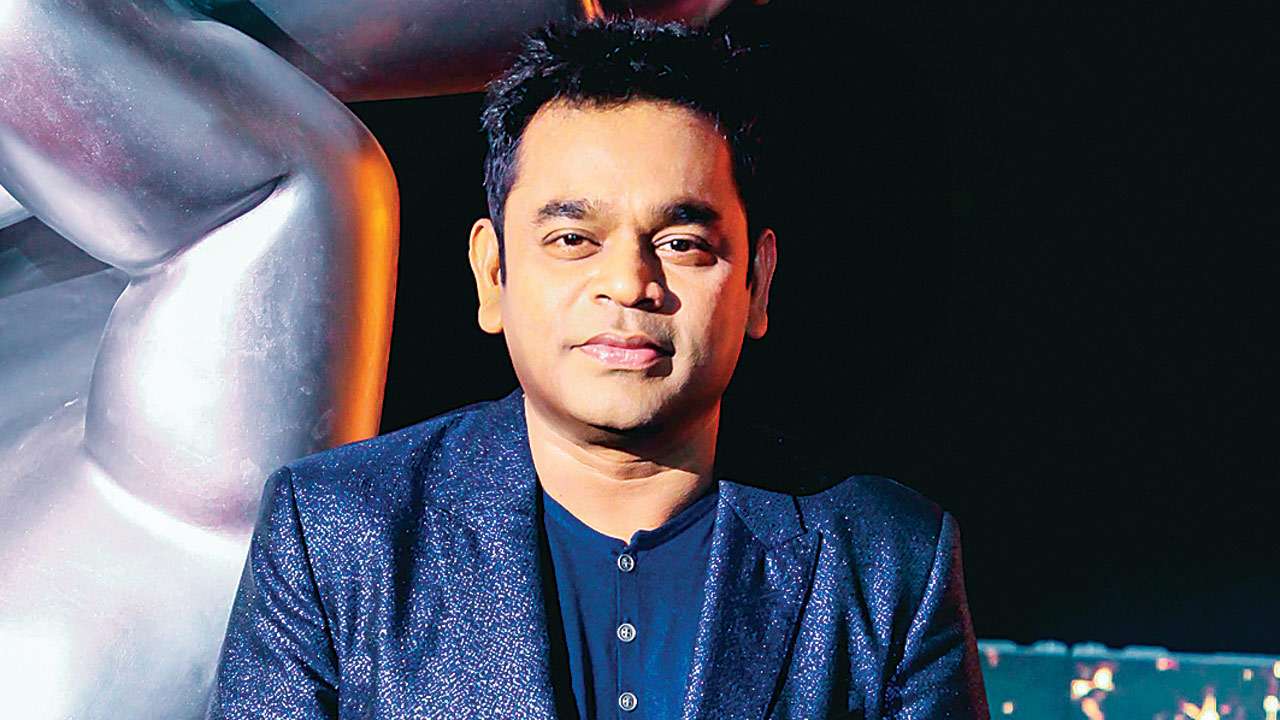
Chaya Unnikrishnan (DNA; January 15, 2019)
After exploring the digital platform with his shows ARRived, a singing talent hunt and Harmony, which has him travelling across the country and getting into the roots of our musical heritage, AR Rahman is now moving to TV. The music maestro will be judging The Voice that is adapted from the hit international format by the same name. Here, the Oscar-winning composer tells us why he has taken up the show, what he is looking for in the contestants and his take on remixes.
You have your own music talent hunt show ARRived on YouTube. So, what prompted you to move to TV?
The YouTube show is done by my company, so I had to judge the show (laughs). But, in a way, it kind of opened up a new platform as it was beautifully received. However, there are people who are not YouTubers yet, and for them, TV is an accessible medium as it has a wider reach. The Voice is an international concept where you hear the voice and don’t need to see how the person (who is singing) looks, though it adds something extra. This is what I believe in and I was surprised to see that the show is also like that.
Moreover, they are giving me a special role where I don’t have to eliminate contestants -- I hate saying you are bad, or that you should get out. Here I will only be a mentor (smiles).
What will you look for in the contestants?
I am open to watching all the contestants, I get inspired by a couple of people. I don’t have any formulas, the heart does not have any formula. It could be the way they pronounce certain words or the way they emote or express. Each of us has something special and the personality comes out. Many singers have probably sung just one song and gone, but they are popular. With that one song, they have created their identity and become immortalised. So, as I said, it could be the way somebody is singing or interpreting a song.
Will you be giving a break to any of contestants?
Yes, it is inevitable, as I am always looking our for new talent.
Recently, you celebrated your birthday, what is it that you are planning to achieve this year?
My biggest test will be the films 99 Songs that I am producing and Le Musk, which I am directing. It’s a little step but huge, so I want to do it right. I have written, produced and scored the music for 99 Songs, but it doesn’t have 99 songs (laughs). It should release in a couple of months. Le Musk is a a virtual reality film. It’s a very tough movie, but very rewarding. Those who have seen it have been kind and encouraging. This won’t release in theatres, it will be an installation and a viewing experience.
Of late you haven’t been composing the music for Bollywood films. What is the reason?
I was not doing the music for Bollywood films because I was concentrating on my movies. Also, the directors like Rakeysh (Omprakash Mehra) and Imtiaz (Ali) whom I am comfortable working with probably didn’t do any movies... though Imtiaz did one with Shah Rukh Khan (Jab Harry Met Sejal). Some of the movies I was to do the music for didn’t take off like Rhea Kapoor’s film. But yes, I am doing the music of Kizie Aur Manny. I did one song for The Fakir Of Venice which was out recently. I saw the movie two years back and was bowled over, and decided I want to do the music.
These days every other movie has a couple of remixes. What is your take on the trend?
Anybody who has the patience, the love and the time will definitely do a soundtrack, which is completely new and have a sense of pride. It is they don’t have the time and want a hit song, they do a remix. Either they don’t believe in the composer or maybe are superstitious that this is how the trend is and by having it the movie will be a hit!
Sridevi ji told me, I want to work with you. It seems prophetic now-A R Rahman
8:31 AM

Lasyapriya Sundaram (BOMBAY TIMES; April 15, 2018)
A R Rahman is a man of few words. That’s because he lets his music do all the talking. After winning the National Award in the the Best Music Direction and the Best Background Score categories for Kaatru Veliyidai and Mom respectively, the music maestro, in an exclusive conversation with BT, spoke about why winning the National Award is still special though he has seduced music lovers across the world with his compositions. Excerpts...
This is your first National Film Award in the Best Background Score category and the fifth for Best Music Direction. What are your first thoughts on winning not one, but two awards?
I am really happy. I want to thank Mani Ratnam ji (director of Kaatru Veliyidai) and the team of Mom — Srideviji, Boney Kapoorji (producer) and Ravi Udyawar (director).
You have scored the background music for Mom. How do you go about composing it, vis-a-vis creating the soundtrack of a film? Give us an insight into your process...
A film like Mom needed to be driven by music. Ravi and I had collaborated on a commercial long time ago and that too, had won a lot of awards. He knew exactly what he wanted for Mom, but left it to me for my interpretation. I got the the idea to compose a song like Muafi Mushkil after I saw the film. In some films, background music is like wallpaper and in others, it is a character. It needs to say things, which the film is not saying or wants to say. I have worked with Boney ji and we wanted to collaborate again. In fact, Sridevi ji flew down from Mumbai to Chennai and told me that I have to do Mom’s BGM. She also said, ‘I want to work with you’. It seems prophetic now. The BGM of Mom is also my wife’s favourite. When I was in Hollywood last month, she asked my agent there to listen to it. I was surprised, because she is not somebody who says or does anything like this. She screamed with joy when she heard that I had won the award for Mom.
Having won innumerable awards and accolades over the years, does the National Award still hold a special place in your heart?
The National Award is definitely special because it is awarded by our Government. The jury is credible and they select films, which have been sidelined by other awards. In a way, it feels good that the National Awards jury has recognized the hard work that went into Mom. It requires more exposure for the vision it comes with.
You have won the National Award for Best Music Direction for Roja (1992), Minsara Kanavu (1997), Lagaan(2001) and Kannathil Muthamittal (2002). What are your memories of composing for Kaatru Veliyidai for which you have won your fifth National Award?
Whenever I work with Mani ji, I feel grateful to him for introducing me to cinema. But, it also means that I am shouldering a huge responsibility. I give it a lot of energy. Mani ji is open to unconventional ideas and has an open mind. Not everyone is like that. People want tried and tested things, but he encourages something unique. He also has an amazing sensibility as far as music for movies is concerned. He is a reservoir of ideas. You can throw any wild one at him and he will make it organic and usable. He is a great teammate and mentor for me. In his next, Chekka Chivantha Vaanam (Tamil), he has yet again surprised us, and we have just finished composing the fifth song for the film.
Your fans and bloggers feel that Kaatru Veliyidai is the quintessential ARR OST. It boasts of varied genres like Acapella, Rap, Folk, Tango and also ambient melody. Do you agree?
I don’t see it like that (laughs). It’s not intended in that manner, but if it happens, that’s good. The film required that kind of a soundscape. The story revolved around an Indian Air Force officer and I have not done such a film before. I have seen a bit of that life when I was perhaps 12 or 13; I would visit the army quarters and play music, as I was part of a show called Wonder Balloon on Doordarshan. So, it was nice to revisit my childhood. They are special people, because they fight for our country.
This film marked your 15th collaboration with Mani Ratnam. Do you reserve your best for him?
That would be belittling everybody else. I did Rockstar (2011) with Imtiaz Ali. I have had big hits with directors Shankar and Rajiv Menon as well. Each director gets something new out of me. It depends on what tunes of mine they accept. Having said that, there is no sense of insecurity when I work with Mani ji. He doesn’t judge or gauge a person based on his success or failure. Others might not want to associate with you if three of your films flop, but he is not like that. He judges people on the basis of the importance they give to the art. That’s what I have learnt from him.
What’s next, especially in Hindi films?
I have been working on the soundtrack of 99 Songs for almost four-five years. The final cut is almost ready and it will have close to 14-15 tracks. We have collaborated with international artistes as well for the soundtrack. There is also Le Musk. Both these films are making good progress.
You also have Shankar's 2.0 starring Rajinikanth in your kitty. What can your fans look forward to in that film as far as your score is concerned?
BGM plays a huge role in that film, every reel is packed with music. It will be a one-of-a-kind experience. We are trying to do some unique and new things with regard to the 3D visuals being combined with sound.

I want to explore a completely new India and find ways to include it in our movies-A R Rahman
7:36 AM

Renuka Vyavahare (BOMBAY TIMES; January 12, 2018)
India’s global music icon and winner of two Academy Awards (in 2009 for Slumdog Millionaire), A R Rahman needs no introduction and yet, he humbly introduces himself as ‘AR’ in a conversation. Even after being in the limelight for so many years, the musical maestro continues to be a man of few words. Recently, he spoke to Bombay Times about his new challenges, his concerts sparking the North-South debate and why he is so critical of himself as a singer. Excerpts…
You will be debuting as a scriptwriter-producer soon with your ambitious project, 99 Songs. What drew you towards writing a film?
Every person’s journey is unique. We go through different ups and downs and discover things that other people don’t. I have experienced so much in life through my journey, so it’s interesting to put it in a movie and present it to people. Over the years, I have seen beauty, struggle, redemption and love. This is what the movie is all about. We started shooting last year and the shoot is complete. The film is in post-production now, as the CG work is pending. There are a lot of songs, so I need to plan on releasing them one by one, as I want people to be introduced to the songs much before the release of the film.
How different was it for you to write a script vis-à-vis composing music?
The story-writing started seven years ago. Before that, I knew I wanted to tell stories but didn’t know how to, so I took lessons. I attended scriptwriting workshops. Also, your mind starts to work on its own when you are inclined towards something. There have been so many long flights I’ve taken, which also gave me a lot of time to think.
Will we see you directing a full-fledged feature film soon?
Not really. I have directed a VR (virtual reality) movie called Le Musk, but 2D feature films require undivided attention. Like my son said, ‘Daddy, I don’t think you should direct anything anymore, as I am seeing more and more grey hair by the day’. Also, we already have great filmmakers and visionaries who are better at it. I can just relax and watch a movie instead (smiles). VR was a different ball game — that space was empty, so I jumped at it.
While you are loved as a singer, you are not too happy with yourself when it comes to singing. Why?
The composer in me is not very accepting of the vocalist in me. It happens when you play two roles — that of a singer and a composer. As a composer, you are always sitting on the other side and telling singers how to sing. When you are singing, the same person (me) starts telling you, how much more you can do. That’s challenging.
Your concerts often run into the North India-South India debate, with some fans complaining about how South songs often outnumber the Hindi ones. Hence, you agreeing to be the brand ambassador of a Northeastern state, Sikkim, was like making a statement that music doesn’t belong to one state or region; it has the power to surpass boundaries.
Sikkim is a non-controversial state, and is one with nature. The people of Sikkim are extremely nice and they are an example of co-existence. There are so many beautiful qualities about the state and so, I felt it’s the right thing to do. This part of the country (Northeast) has always fascinated me, but I hadn’t been here before. Recently, I visited Shillong and only after going there I realised what India is all about. I believe India is not just Mumbai, Chennai or Kerala. Each part of the country makes you feel like you are being born again and you still have so much more to discover.
You’ve enjoyed a 25-year-long illustrious journey in the world of movies and entertainment. What’s next?
I want to do a lot of interesting things that I haven’t done before. I want to find new ways to face challenges and explore places that I haven’t seen before, like I am doing at the moment in Sikkim. I want to explore a completely new India and find ways to include it in our movies.
Unfortunately, our theatres are not ready for my short film-A R Rahman
8:00 AM

Sonil Dedhia (MID-DAY; January 11, 2018)
When A R Rahman announced his directorial debut last year, many expected the project to be a musical for obvious reasons. However, the maestro threw a curveball by stating that Le Musk (below) would be a virtual reality (VR) film, which would use smell for an enhanced immersive experience. The composer, who is currently working on the post- production of the film, is well-aware that releasing it in India will be a challenge since theatres don’t support the virtual reality technology.

“For a short film like Le Musk, I thought VR was the perfect medium. Unfortunately, our theatres are not ready. We don’t have theatres that provide the head-mounted devices required for VR. Being one of the first few to make this kind of cinema comes with its own challenges,” says Rahman.
But he is hopeful that cinema screens will soon offer such an experience. “PVR has opened a VR lounge in Noida, so things are moving in that direction,” he points out. Shot in Rome, the short film features foreign actors like Nora Arnezeder, Guy Burnet and Marian Zohrabyan, and follows the journey of an orphaned heiress and part-time musician, Juliet.
Rahman says that despite the issues, he was convinced about making the film in this format as it is “the next level of cinema.” “I knew about the infrastructure limitations, but certain things require you to just jump in. I faced a similar challenge when I worked on Roja [1992] — I was working in stereo mode when the theatres still had a mono audio system. But things changed after Roja. So, I couldn’t have waited for VR to come to India and then made a film on it. My film will be more like an art installation rather than a regular release.”
After Le Musk, Rahman, who has been appointed the brand ambassador of Sikkim, is keen to helm a film on different Indian classical dance forms. “I’m passionate about that project, but right now, I’m focussed on this.”
Subscribe to:
Posts (Atom)