Showing posts with label Lal Bahadur Shastri. Show all posts
Showing posts with label Lal Bahadur Shastri. Show all posts
What we need right now is for all politicians to shut up for five years-Vivek Agnihotri
3:33 PM
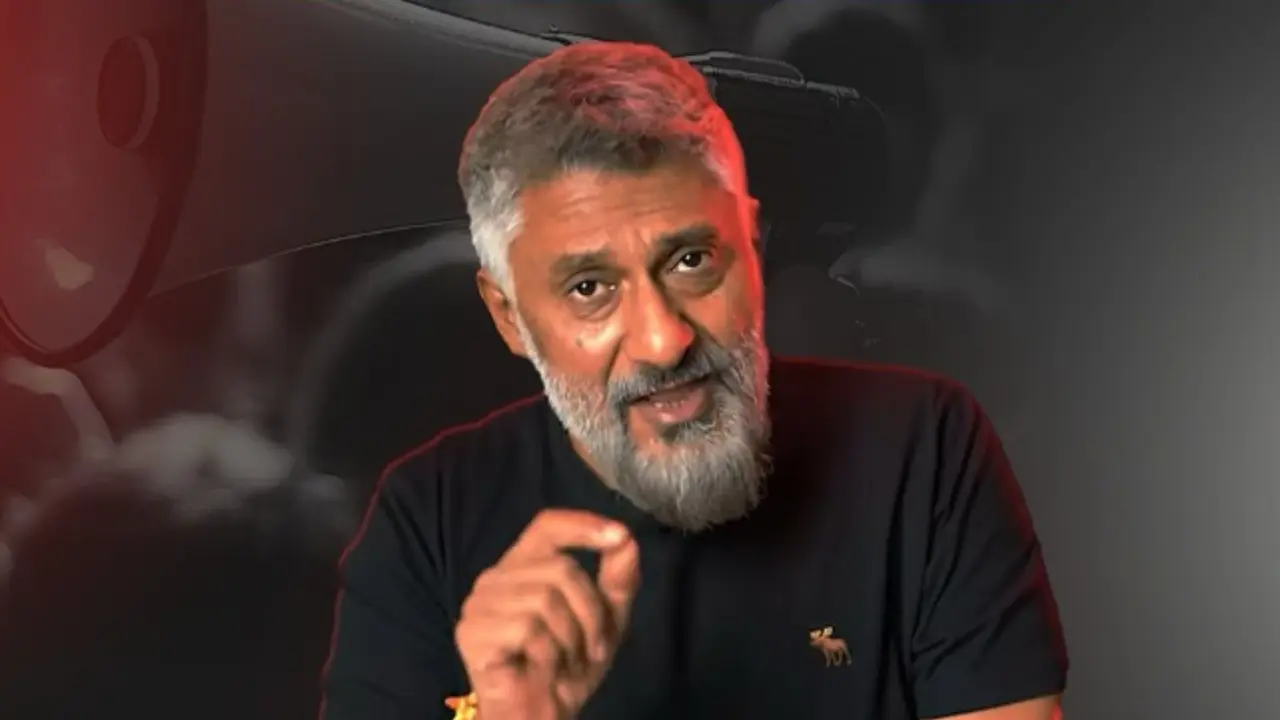
Chandrima Pal (BOMBAY TIMES; September 4, 2025)
Vivek Ranjan Agnihotri likes to make all the right—pun intended—moves. Ahead of the release of The Bengal Files, the third instalment of his Files series, he picks a Bengali-themed restaurant in suburban Mumbai for an interview, tells us that he likes Kishore Kumar’s Bengali songs and settles down for a Bengali meal with shukto and fish paturi . Excerpts from the conversation.
Let us imagine you had zero opposition to The Bengal Files, which releases in theatres tomorrow. That you had no political outfit, entity or individual to name and blame in your interviews. How would you promote your film?
I would have felt suffocated. I would have failed. My idea was to pick up taboo subjects, and in my mind the problem was that even after 78 years of Independence, we are still fighting with the same problems that led to the Partition. Unless you acknowledge there is a problem there can be no healing, no solutions. The purpose, the whole objective of my movies is to start a conversation. Since the trailer has launched, everybody is writing about Direct Action Day or Gandhi’s role, they are dissecting the film. Many Bengali Hindus are now admitting that their parents or grandparents had spoken about Direct Action Day and the Partition trauma. This, I believe, marks the beginning of healing from a generational wound.
No other place has sacrificed as much as Bengal: it was the cradle of the Renaissance, the wellspring of nationalism in all its shades—Congress, communist, centrist—with both Vande Mataram and Jana Gana Mana emerging from here. Bengal gave India its cultural crown, from cuisine and poetry to cinema, the Bengal School of Art shaped by Abanindranath Tagore. For me, Bengal is India’s lighthouse. My purpose was to shock people into realising how much we’ve lost.
How can you connect Bengal’s loss of cultural and intellectual capital directly to the Hindu– Muslim conflict at the heart of your storytelling? Isn’t it too much of an oversimplification?
That’s a very deep question. Which other state in the world has been divided three times? Without Direct Action Day or the Noakhali genocide, there would not have been Partition. Gandhi himself spent seven months in Noakhali, yet afterwards Bengalis were told not to speak of their pain—silenced by political forces that wanted to take India on a different path.
Later, communist ideology took deep root in Bengal, but it viewed everything only through oppressor versus oppressed. That western lens does not fit India, where the so-called majority was ruled and persecuted by minorities for 1,200 years—our literature, music, architecture, everything was distorted. That is why, I argue, Bengal’s decline cannot be seen separately from communal fault lines.
Films have been made on the Holocaust, Hiroshima, slavery— always with a core of humanism, empathy. Many feel your films don’t address that.
First, let’s be clear—which lot of people? Viewers? Critics? I am very research-oriented. And why should I force closure when history itself has none? Lal Bahadur Shastri’s death has no closure. Kashmir still has no closure—people were killed in Pahalgam just recently. But this film does have closure. What I believe should be done, that’s the closure.
Suppose this film triggers unrest. Would your role as a filmmaker end with reopening certain chapters in history?
Look at The Kashmir Files. People warned it would cause unrest. Nothing happened. Instead, I received thousands of emails from Kashmiri Pandits saying the film began their healing process. I can guarantee Bengali Hindus will say the same after this film; they already are, across screenings in the US.
Both communities suffered losses. Isn’t everyone part of the healing process?
Of course. Healing belongs to everyone. But not everyone had the luxury of moving on. Many were forced. Did we really move on? Germany and Poland confronted their past—they outlawed Nazi glorification, built museums, preserved Auschwitz.
Should India simply say “move on”? Or acknowledge that we have a genuine Hindu–Muslim faultline—Partition, Bombay blasts, Pahalgam killings, constant election rhetoric. If America could confront slavery through films, articles, debate, why are we in India told to stay silent about our own history?
Some of the cast members of your film — Saswata Chatterjee and Sourav Das — are facing backlash for being part of the film.
What backlash? Sourav and I had lunch recently. He never distanced himself. A journalist twisted his words, and he immediately asked, “Show me my tweet, quote me if I said that.” Same with Saswata. He never disowned the film.
Saswata did say he wasn’t told the full context.
That’s media manipulation. Do you think an actor of his calibre would sign without reading the script? He has to say things to survive in Bengal. I even spoke to his family—they shrugged it off. Look, he speaks Bengali throughout, eats paturi maach, plays a Murshidabad MLA. He knew what he was doing. After Nana Patekar in Parinda, we have not had such a cold-hearted villain in our cinema.
You say there will be closure at the end of the movie. What kind of closure?
Cinematic closure. But let’s be real—I cannot close the Hindu– Muslim conflict in Bengal or India. Who am I?
You often say you listen to your audience, pick stories that people want told. There are so many other stories that need to be told.
Honestly, what India needs right now is silence. All politicians should shut up for five years. Dalit leaders, Brahmin leaders, Muslim leaders, TV anchors— everyone. Just shut down the noise. And focus only on eradicating corruption. Solve that and 90% of India’s problems vanish.
Do you have political ambitions?
I’d rather die than join politics. But yes, I understand politics deeply. My father was a freedom fighter, I’ve debated politics since childhood. That’s why I can say what I say; most filmmakers can’t.
Many filmmakers, despite festival acclaim and dealing with socially relevant issues, can’t get theatrical releases. You always manage to make controversial films and take them to your audiences. What’s your secret?
Conviction. A filmmaker must guard their work like a mother rabbit protecting her babies from vultures. Most filmmakers lack that instinct. I don’t. I fight till the end.
But is it right to say they do not have the conviction to fight for their creative freedom?
Look, if you make a film on caste, someone’s offended. On women’s persecution, men are offended. On Muslims, Hindus are offended. Everyone is offended. But cinema cannot be hostage to sentiment. Honestly, I do not understand Muslim trauma or pain. Maybe if I am born as a Muslim in my next life, I would. But I still have the right to tell stories drawn from history and testimony.
And when films like Santosh don’t make it to audiences?
Then I fight for them. I don’t know why they don’t come to me, I would be happy to fight for them. Even my ideological enemies, I defend their freedom of speech. I fought for comedians like Kunal Kamra and Samay Raina.
Would you speak up for Umar Khalid?
He’s in jail, it’s sub judice, so I won’t comment.
Gopal Mukherjee aka Gopal Patha is a complex character. North Kolkata always remembered him as one of those powerful, street-cred strongmen—like Fata Keshto.
Yes, yes. They were the fiercest. Part of the akharas, too.
Utpal Dutt wrote in Towards a Revolutionary Theatre that after Direct Action Day, leaders used people like Gopal Patha to settle political scores—a muscleman on hire. He ran a family meat business, he ate meat, he spoke Bengali, he was no saint. You have said that after this film, kids will see him as a hero. Given the ideology to which you are aligned, are you okay with glorifying a figure like that?
Why? Bengalis eat meat. What’s wrong with that? Hindus in Kerala eat beef, Kashmiri Pandits ate meat too. India is not a vegetarian country; 73% of Indians eat non-veg. To reduce Gopal to food habits or language is just superficial politics. I believe in total freedom of food, speech, lifestyle.
----------------------------------
‘I hate disclaimers. They assume audiences are stupid’
Trailers don’t need disclaimers. The film will have one, because the law demands it. I hate disclaimers. They assume audiences are stupid. Does a painting carry a disclaimer? Cinema is art. My disclaimer will be the usual: “based on true incidents, survivor accounts, historical texts… intention not to hurt anyone.” Plus the silly statutory warnings—smoking kills, animals unharmed, etc. But because Jinnah was a chain-smoker, I was forced to add two extra minutes of anti-smoking ads.
----------------------------------
‘I am a storyteller, not a social scientist’
I am nobody to find answers. I am not the Prime Minister, not a social scientist. I am a storyteller. My job is to observe and narrate, not to prescribe solutions. People expect too much from filmmakers. Journalists often ask me — why don’t you rehabilitate Kashmiri Pandits? I tell them, I am not a politician. It’s like asking Satyajit Ray after Pather Panchali to eradicate poverty. That’s not how art works.
Manoj Kumar and his wife's hospitality reflected their roots and show business of that time-Bhawana Somaaya
3:15 PM

Renowned film journalist and author Bhawana Somaaya bids farewell to the actor and filmmaker, whose love for movies and the country brought forth a new cinematic language
Bhawana Somaaya (MID-DAY; April 5, 2025)
It was a sunny afternoon, sometime in the 1980s, when I was visiting Manoj Kumar for an interview at his Juhu residence. The filmmaker and actor was narrating stories related to his movies, when it suddenly started raining. Kumar got up to shut the windows and said, “Aise mausam mein pakode khaane ko jee karta hai”.
A while later, the house-help entered with a tray of fragrant tea and hot pakodas. Kumar smiled and said, “My wife always knows what I’m thinking”. The attendant skilfully served us tea and snacks, and added, “Bhabhi ji ne kaha hai ke pakode ghar par bane hai, zaroor khaiyega”. It was the sweetest line any homemaker had addressed to a guest, and I was touched. Their hospitality reflected their roots and show business of that time.
Kumar loved cinema, was passionate about homoeopathy and was an engaging speaker, which explains why journalists frequently sought him. He had a traumatic childhood and the wounds reflected in his characters. During the 1947 riots, he saw his baby brother collapse in his mother’s arms on a hospital bed when the hospital staff deserted all the patients and ran away. Kumar was only 10 years old and unable to help his mother!
His family migrated from Pakistan to Delhi, India, and for a long time lived in the refugee camp. Kumar was always interested in movies, and rushed to the cinema halls whenever he had a few coins in his pocket. His friends encouraged him to travel to Bombay and try his luck in movies, so he strolled inside a suburban studio seeking work. Initially, he did odd jobs like moving camera trolleys, and sometimes sweeping the set floor, till one day, he was asked to stand in for a missing actor. That’s when the cameraman declared that the 20-year-old had something in him!
Kumar’s debut film Fashion [1957] led to eight more movies, but none of them succeeded till Hariyali Aur Rasta [1962] launched him as a star. The magic truly started with Woh Kaun Thi? [1964], followed by two more murder mysteries Gumnaam [1965] and Anita [1966].
Playing a patriot in Shaheed [1965] impacted him deeply. It is said that our then Prime Minister, Lal Bahadur Shastri, invited him to Delhi and asked him to make a film promoting the slogan, Jai Jawan Jai Kisaan. “Do it fast before the climate changes,” Shastri ji is supposed to have told him. Kumar had never written or directed a film earlier. He didn’t wish to work in isolation, and came up with a unique plan of writing the script. He booked himself on a Rajdhani train to Delhi and finished writing the film’s first half from Bombay to Delhi. The second half, he completed from Delhi to Bombay.
Upkar [1967] won two National Awards, but the person for whom Kumar made the film was no more. Shastri ji died on January 11, 1966, in Tashkent. The film was a turning point in his career, and made him a multi-hyphenate as he wrote, directed and acted in all his films—Purab Aur Paschim [1970], Shor [1972], Roti Kapda Aur Makaan [1974], and more.
His acting assignments continued simultaneously, and he was overjoyed when Raj Kapoor cast him in Mera Naam Joker [1970]. When the film bombed, a heartbroken Kumar watched it again and again to understand what went wrong. When he arrived at the answer, he phoned Kapoor to share that had he switched the second and the third story, the audience may have been more receptive. Kapoor agreed, but by then it was too late.
In 1980, he fulfilled his dream of working with his idol Dilip Kumar in Kranti. The film was a grosser, but by the end of the decade, he was losing interest in movies. A personal tragedy where his father died under unusual circumstances put him in depression. Slowly, he stopped meeting people. The only one he stayed connected to was his heartbeat, Sai Baba. Wherever he went, he carried a picture of the deity with him.
Rest in peace, Pandit ji [as his friends called him], and walk into the clouds with your deity.
Manoj Kumar passed away at the age of 87 in Mumbai
3:10 PM
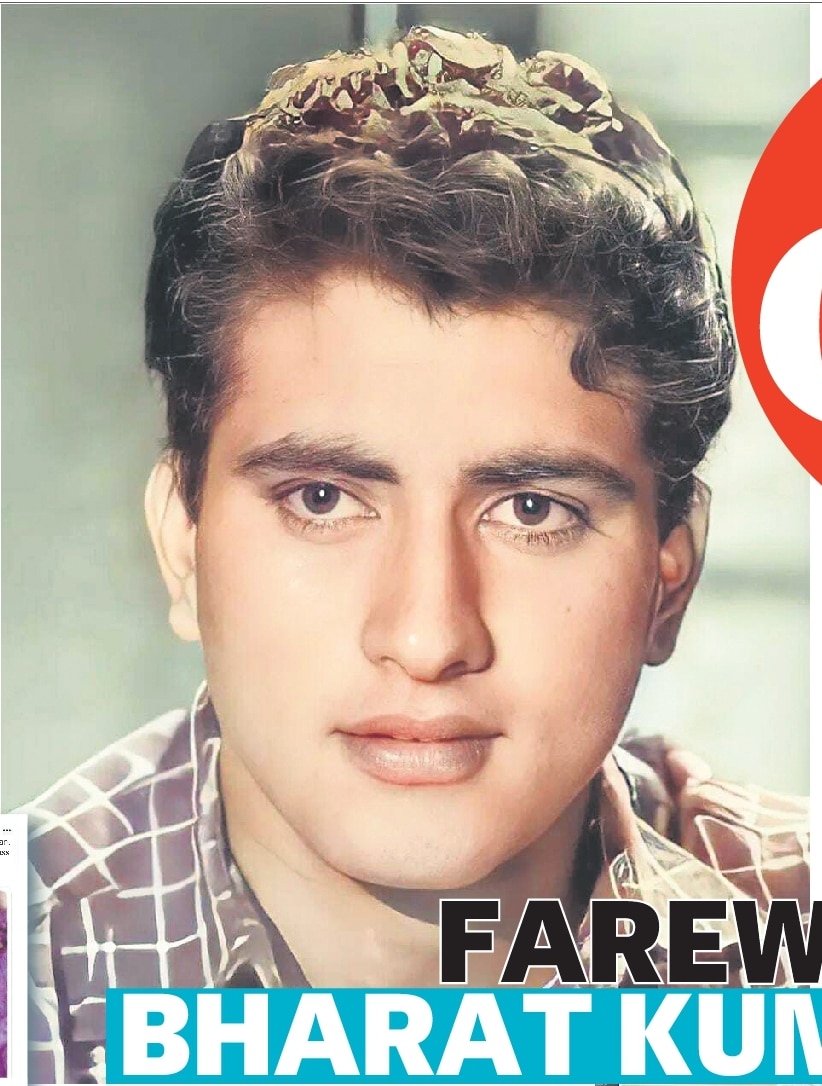
Avijit Ghosh (THE TIMES OF INDIA; April 5, 2025)
Manoj Kumar, who constructed and embodied Hindi cinema's ultimate nation-loving hero, Bharat, in blockbusters such as ‘Upkar' (1967), ‘Roti Kapada Aur Makaan' (1974) and ‘Kranti' (1981), passed away early Friday. He was 87. The actor was bedridden for the last few years battling health issues, his son Kunal Goswami told PTI. He was admitted to hospital for pneumonia some weeks ago.
A recipient of the Dadasaheb Phalke award in 2016, Kumar also starred in a bunch of stylish whodunits, notably ‘Woh Kaun Thi' (1964) and ‘Gumnam' (1965) and successful crime dramas such as ‘Sanyasi' (1975) and ‘Dus Numbri (1976)'. But it was Bharat — the screen name he often took in the films he produced and directed — that defined his image.
Bharat's idea of patriotism evolved over time. He was a nation builder in ‘Upkar' ploughing the fields, battling the enemy outside and personifying Prime Minister Lal Bahadur Shastri's slogan, ‘Jai Jawan, Jai Kisan'. In ‘Purab Aur Paschim' (1970), he was a cultural nationalist defending ‘Bharatiya sanskriti' from the ‘polluting' West while insisting that sari is better than skirt. Bharat rarely touched his heroine even though the movies weren't exactly shy in displaying the female anatomy.
Manoj Kumar constructed Hindi cinema's ultimate nation-loving hero, Bharat— the screen name he often took in the films he produced and directed.
In the 1970s when corruption and joblessness took centre-stage, the unemployed Bharat took on the enemy within, the black marketeers, in ‘Roti Kapada Aur Makaan' (1974), a film that started the multi-starrer trend in Hindi cinema. And in ‘Kranti', he time-travelled to the 19th century to fight brutish colonial masters.
Over the decades, the name, Bharat, blended Kumar's celluloid and private identities, looming large in public consciousness. "Is naam ka bahut bojh hai mujhpe. Zaroorat se zyada zimmedariyan dalta hai (The name burdens me. It puts added pressure and responsibility)," he once said in an interview.
Kumar's personal life was remarkably free from the controversies that gossip mags hungrily fed on in the 1970s and 1980s. Born in 1937 in Abbottabad, a town in north Pakistan, Kumar lost his uncle to Partition violence. At 10, he arrived in the capital, growing up in the refugee colonies of Kingsway Camp and Hudson Line in Delhi. His infant brother, Kuku, too died in the same period. "Bahut rota hua bachpan tha (I had a very sad childhood)," he said in Guftagoo, a Rajya Sabha TV show.
Recalling a moment in Delhi's Tis Hazari hospital during the Partition riots, he said, "When the sirens blared, the doctors and nurses would take shelter in the basement. My mother screamed. Kuku had died. I was angry. I took a lathi, beat up doctors and nurses. Later we immersed him in the Yamuna. As the body sank, I felt I was sinking. My father made me promise that night I will never fight again." The boy kept his word. His father was a poet who was given the pen name "khizr" (the knowledgeable) by eminent poet Allama Iqbal, he said.
Kumar got interested in movies after watching Dilip Kumar in ‘Jugnu' (1947). He even took his celluloid name, Manoj Kumar, after the character played by Dilip Kumar in ‘Shabnam' (1949), an actor who was to influence his style. His real name was Harikrishan Goswami.
A graduate from Delhi's Hindu College, Kumar arrived in Bombay in 1956. In TV shows, he recounted facing abuse, sleeping on railway platforms and getting beaten by cops before making his debut in a small role in director and relative Lekhraj Bhakri's ‘Fashion' (1957). He made his leading man debut in H S Rawail's ‘Kaanch Ki Gudiya' (1961) and survived a series of flops before striking gold in Vijay Bhatt's social drama, ‘Hariyali Aur Raasta' (1962).
Tall, fair and handsome, Kumar became a reliable box-office brand, delivering hits such as ‘Himalaya Ki God Mein' (1965), ‘Sawan Ki Ghata' (1966) and ‘Neel Kamal' (1968), a reincarnation yarn. The engagement with nationalism started with ‘Shaheed' (1965), where he played revolutionary Bhagat Singh. The film received National Award for Best Feature film in Hindi. Made at the request of then PM Shastri, his directorial debut ‘Upkar' (1967), partly shot in a village on the outskirts of Delhi, became a super hit. No song encapsulates rural India's idealized image better than lyricist Gulshan Bawra's ‘Mere desh ki dharti...'
As Kumar's career progressed, he developed a drawl for dialogue delivery; a signature hand movement across the face became more pronounced. Critics scoffed at the mannerisms but fans didn't mind. He also graduated to writing, editing, producing and directing his movies. In the 1980s, he even wrote songs, making him an accomplished all-round talent.
Manoj Kumar's multi-starrer historical ‘Kranti' (1981) was his biggest box-office hit. But thereafter the winners dried up. His final appearance as a leading man was in the vastly outdated ‘Clerk' (1989) which showcased Pakistani stars, the Rampur-born Mohammad Ali and Zeba Ali.
Kumar was married to Shashi, whose mother Savita Behen was a Congress politician of Delhi, who was nominated to Rajya Sabha, recalls Vivek Shukla, a chronicler of the capital. Initially a Congress supporter, Kumar joined the BJP in 2004.
His death on Friday was mourned widely. "He was an icon of Indian cinema, who was particularly remembered for his patriotic zeal, which was also reflected in his films. Manoj-ji's works ignited a spirit of national pride and will continue to inspire generations," posted Prime Minister Narendra Modi on X.
-----------------------------------------
HINDUSTAN TIMES (April 5, 2025)
Legendary actor-filmmaker Manoj Kumar breathed his last on Friday at Kokilaben Dhirubhai Ambani Hospital in Mumbai. He was 87. Manoj was affectionately known as Bharat Kumar for his portrayal of patriotic characters in films such as Shaheed (1965), Upkar (1967) and Purab Aur Paschim (1970). He is survived by his wife Shashi Goswami, and sons Kunal Goswami and Vishal Goswami.
Manoj died due to cardiogenic shock following acute myocardial infarction (heart attack). He was also struggling with decompensated liver cirrhosis for several months, according to PTI.
Born Harikrishan Goswami on July 24, 1937, in Abbottabad (now in Pakistan), Manoj began his career in the late 1950s. He emerged as one of Bollywood’s biggest stars in the 1960s and ’70s .
Apart from his patriotic films, he also has hits such as Hariyali Aur Rasta (1962), Gumnaam (1965), and Do Badan (1966) to his credit.
Manoj was known for his bold stance as an artiste. He sued and won a case against some of the laws imposed by then Prime Minister Indira Gandhi during the Emergency in 1975.
Over the course of his illustrious career, Manoj has received several awards and honours, including the Padma Shri, Dadasaheb Phalke Award, and National Film Award.
Actor Saira Banu, who acted with Manoj in films such as Purab Aur Paschim (1970), says, “He was unwell for a very long time. He was such a dedicated man... In later years, Manoj ji remained very close to us. We were both people of very few words, but we worked comfortably together.”
‘Was at peace with his loved ones’
Manoj’s son Kunal Goswami told ANI, “He was unwell for a long time, but he overcame everything with great intensity. It is God’s grace that he passed away peacefully. He was very happy, though a little unwell due to his age.”
Kunal also confirmed that Manoj’s last rites will be performed at 11 am today at the Pawan Hans crematorium in Vile Parle (Mumbai).
-----------------------------------------
“Veteran actor Shri Manoj Kumarji passed away peacefully early this morning around 3.30, due to age-related health issues. He had been hospitalized for the past few weeks.”
- Dr Santosh Shetty, CEO and Executive Director, Kokilaben Dhirubhai Ambani Hospital
Manoj Kumar's films have become textbooks for aspiring actors and filmmakers for his innovations-Prem Chopra
8:40 AM

Roshmila Bhattacharya (MUMBAI MIRROR; July 23, 2020)
August 15, 1947, is a red-letter day for us as it marks the birth of independent India. Almost a decade earlier, on July 24, 1937, another Bharat was born, in Abbottabad, a small town in the North-Western Frontier Province, then, a part of this country, now in neighbouring Pakistan. The boy who entered the world with a lusty cry was christened Harikrishna Goswami by his aunt, the name chosen because it carried a little of both parents, Harbans Lal and Krishna Kumari. Today, however, it’s Manoj Kumar rather than Harikrishna Goswami that rings a bell. In fact, thanks to his blockbuster patriotic dramas, the actor-writer-filmmaker has come to be known as Mr Bharat.
Prem Chopra, who worked with him in 13 films, including Shaheed, Upkar, Purab Aur Pachhim and Kranti, remembers Manoj Kumar saab as an all-rounder, who not only played the hero to perfection but also wrote, produced and directed his own films. “He could even operate the camera and edit, with the result that his films have become textbooks for aspiring actors and filmmakers for the innovations he introduced, like one-scene-one-shot at a time when there were no visual effects, and technical gimmickry was limited to trolley and zoom shots. Over the years, he’s become an institution in himself,” he asserts.
While Manoj Kumar saab officially made his debut as a director with Upkar, Prem Chopra saab reveals that even though S Ram Sharma is credited as the director of Shaheed, it was their Bhagat Singh who was taking all the calls, including insisting that none of the ‘prisoners’ could shave. “So, all through the making of the film, 75 per cent of which was filmed at the Ludhiana Central Jail, I sported a beard,” narrates the actor, who played Sukhdev in the desh bhakti film and admits he actually felt like one of the nationalists when marching towards the gallows.
The film premiered in 1965 and Prem Chopra saab remembers that the then Prime Minister Lal Bahadur Shastri, who was the special guest, had warned that he wouldn’t stay longer than 10 minutes. “But he was so mesmerised and moved, he sat right through the film, without even an interval break. Upkar was made on his slogan ‘Jai Jawan, Jai Kisan,’” recounts the actor who played Manoj Kumar saab’s younger brother, Puran, a role with grey shades, which, after the success of the film, brought along a flood of offers. As a result, he could finally give up his job in the circulation department of The Times Of India and become a full-time actor. More than half a century later, he’s still going strong.
Shatrughan Sinha, who played a fiery freedom fighter, Kareem Khan, in another of Manoj Kumar saab’s patriotic drama, Kranti, agrees with Prem Chopra saab that he is a “genius” and not just as an actor, producer, writer and director, he also has a terrific ear for music. “He is a complete artiste, and as a person, always serene. I have never heard him raise his voice at anyone on the set, not even on me even though I was notorious for coming late,” Shatru ji reminisces with a laugh.
Irrespective of when he arrived, Manoj saab would smile amicably at his Bihari Babu and tell him to let him know when he was ready to shoot before going back to his corner to work on his lines and those of others too. Instantly, you are reminded of Shatru ji’s evergreen dialogue from the film, “Apni laashon se hum tarikh ko aabad rakhen, woh ladaai ho ki angrez jise yaad rakhe” that still resonates.
So does Prem Chopra saab’s equally popular line, “Shambhu ka dimaag do dhaari talwar hai.” The actor remembers that back then filmmaking was a group activity and the whole team would sit together to discuss and design. “A character like Shambhu Singh was conceived by Manoj saab, but he gave me complete creative liberty to flesh him out,” he recounts.
Shatru ji remembers the actor-filmmaker, who turns 83 on Friday, approaching him for the role of Kareem Khan and telling him that it wasn’t much in terms of footage, but promising that it would make an impact. And sure enough, he reveals, when late producer-director Manmohan Desai saw Kranti, he called Shatru ji to tell him that he was the best. “It taught me a lesson I will remember all my life, that it’s not the length of the role, but the strength of the role that matters,” he signs off with his signature flourish.

Shaheed team with the then PM; Prem Chopra & Manoj Kumar in Upkar; Shatrughan Sinha in Kranti
The Tashkent Files should've been India's entry to Oscars-Vivek Agnihotri
7:11 AM
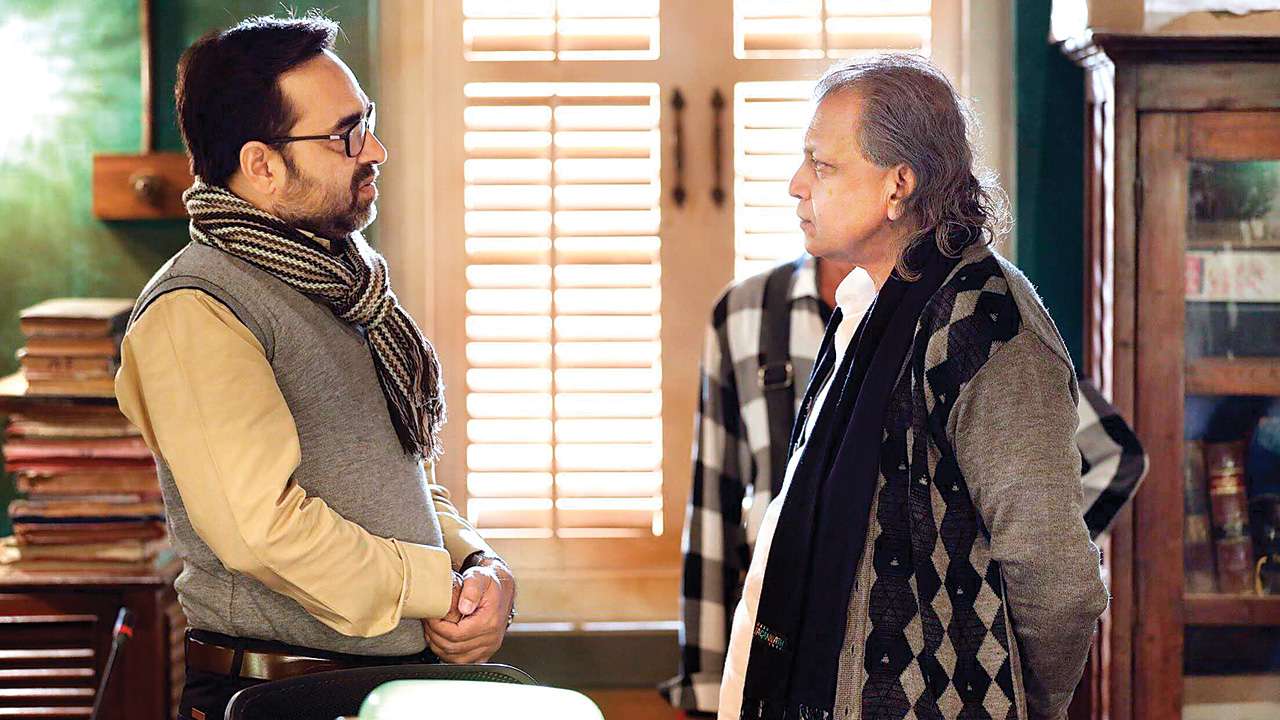
Shalabh Anand Bajpai (DNA; October 2, 2019)
Not only Mahatma Gandhi, October 2 is also freedom fighter and former Prime Minister Lal Bahadur Shastri’s birth anniversary. To celebrate it, &pictures is all set to premier The Tashkent Files, which is based on the life and the circumstances surrounding the mysterious death of the nation’s second PM. “I’m happy that for the first time in the history of India, apart from Gandhi ji’s films, something different will be premiered on television. Watching this movie will also give facts that haven’t been clear to the new gen. Shastri ji’s life is what the youth should watch. They will know what type of India he wanted,” says director Vivek Agnihotri.
Ask him what prompted him to make a film on Shastri and he says, “I wanted a subject that was not touched by anyone. Moreover, it was a topic no one had explored because of the controversy surrounding his death. When a country’s government is involved in something, no filmmaker tries to make a film on it. It took me four years to make this movie, we filed a RTI, and also went through all the CIA, KGB and parliamentarian records. I wanted to make an honest film.”
Vivek feels The Tashkent Files should have been India’s Oscar entry. “It truly deserves to be one of the top runners but due to politics, it couldn’t make it,” says he.
About his upcoming projects, he stated he’s making another film that’s controversial. “The Kashmir Files is based on the mass exodus of Kashmiri pandits from the valley in 1989-90 due to militancy. I am also working on a web-series, based on controversial Supreme Court cases. I am penning a book called India For Sale,” shares the filmmaker.
The Tashkent Files will premiere on &pictures today at 12 pm.
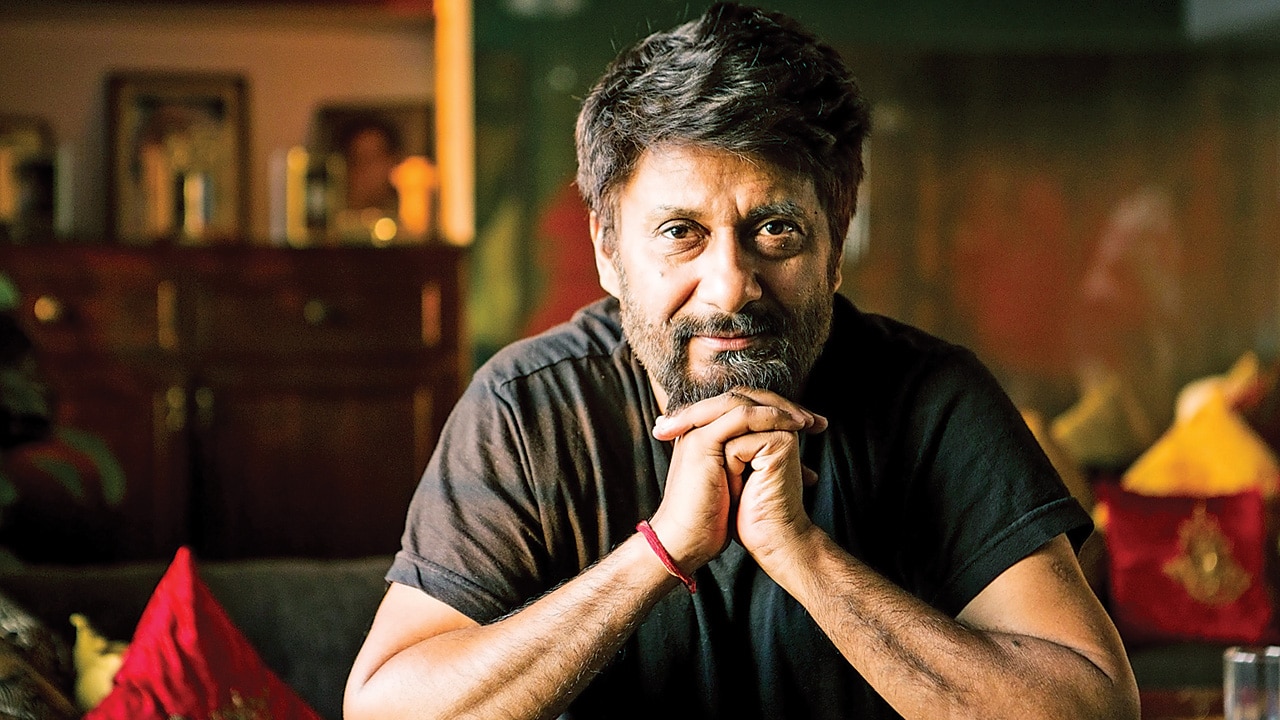
It takes an idiot or someone guilty to call The Tashkent Files propaganda-Vivek Agnihotri
10:47 PM

Vivek Agnihotri, whose directorial The Tashkent Files featuring Naseeruddin Shah and Mithun Chakraborty is releasing today, discusses the genesis of the film
MUMBAI MIRROR (April 5, 2019)
How did you research the subject of your film, which revolves around the death of former prime minister, Lal Bahadur Shastri?
The idea was conceived when I expressed my frustration about the fact that October 2 is known only as Mahatma Gandhi’s birthday, when it is also Lal Bahadur Shastri’s birthday. People reached out to me and asked me to make a film on the Shastri ji’s mysterious death. After I started researching, I realised the most authentic way to dig deeper would be to ask the government and I decided to become a whistle-blower. For almost a year, I filed around two dozen RTIs with the Ministry of Home Affairs, the Foreign Ministry, the PMO with the Parliament and national archives. To my surprise, nobody could furnish any information on Shastri ji’s death.
I was aghast. How could we not have documents or information on India’s second prime minister, who went to the USSR immediately after winning a war with Pakistan. That’s when I decided that I must make the film and crowd-source the research, asking anyone who knew anything on the subject to share it with me. Thousands and thousands of people sent me links, books, ideas, articles, context and I started getting connected from one person to the next.
Did you speak to the Shastri family as well?
Yes, they have been involved in the process right from the beginning. His sons, grandchildren and a whole lot of other people who knew him were consulted, including veteran journalist Kuldeep Nayyar, who passed away recently and was present when Shastri ji died. I also got a lot of inputs from people who had worked closely with Shastri ji or knew somebody who had worked closely with him. So, in a way, I had access to the entire close ecosystem.
People are saying this is a propaganda film that attempts to portray the Congress party in a bad light...
I haven’t met anyone from the general public who thinks it’s a propaganda film; people don’t look at films like that. Yes, some people from the media and politics are claiming so. But then the media people who are saying this are doing propaganda for somebody else. So, it doesn’t matter. It takes an idiot or someone guilty to call it propaganda, because let’s not forget, Shastri was a Congress prime minister. If there’s any party which is going to benefit by revealing the truth of Shastri ji, it is going be the party he belonged to, unless they are guilty. It’s like you have a senior citizen in your family—your grandfather or somebody—they die mysteriously and 53 years later somebody comes and tells you the truth behind his death. Would it be against you or in your favour? I think this kind of talk can come only from people who are guilty or idiots.
No one can play Narendra Modi better than me-Paresh Rawal
11:14 PM

Paresh Rawal on contesting against Vivek Oberoi as two biopics on Indian PM Narendra Modi hit the floors simultaneously
Sonia Lulla (MID-DAY; January 8, 2019)
A mere two hours before the first look of Vivek Anand Oberoi as Narendra Modi from an upcoming biopic on the Indian PM, titled PM Narendra Modi, was unveiled yesterday, Paresh Rawal sat before us reiterating a statement he made six months ago: "No one can pull off the role better [than me]." While the senior actor had announced his film early last year, he is yet to zero in on a director for the project.
Undeterred by Oberoi's film on the same subject that will be helmed by Omung Kumar, Rawal says that Modi's life has sufficient fodder for multiple filmmakers to explore. The biopic that he will reportedly produce will take inspiration from the attention that the politician commands, courtesy his honesty. "When I was nine years old, my mother told me that we would avoid eating rice on Mondays, since the then PM Lal Bahadur Shastri - who was allotting ration for the Army men in our war-struck country - had requested the citizens to do so. The demand was honoured by many because it had been made by an honest man. Similarly, when Modi told citizens to give up their [cooking gas] subsidies, people paid heed, because the request was made by an honest man."
The veteran says his biopic will also highlight how a man with limited experience first managed Gujarat, and then the entire country. "He's not an armchair [prime minister], but a passionate countryman who has visited abundant villages [to study problems] firsthand. These factors will be the driving forces of our biopic." Ask him if he will ever play the leader of an opposing party, and he says, "I'll do it. I'm an actor, after all."
As a wave of political films - including The Accidental Prime Minister (on Dr Manmohan Singh) and Nawazuddin Siddiqui's film based on Balasaheb Thackeray - are on the anvil, Rawal says one can expect a flood of controversies. "There are a lot of stories that will unfold, and many controversies [will arise]. However, makers should have a sense of authenticity when portraying them. Only then will the experience be fun."
Before he can breathe life into his idol, he is looking forward to his Friday release, Uri. Rawal plays former intelligence officer Ajit Doval, who apparently supervised the 2016 surgical strikes. "I had met him in the PMO, and am fascinated by him. His reading of the political scene and understanding of the neighbourhood is noteworthy. Even Americans are taking his advice."

What's common between Manoj Kumar-starrer Shaheed and Ajay Devgn-starrer The Legend Of Bhagat Singh
7:52 AM

Roshmila Bhattacharya (MUMBAI MIRROR; March 22, 2018)
His first role made Ghulu a hero in his mohalla but through endless rehearsals and costume trials, no one realized that the little boy was suffering from acute stage fright and was dreading his turn in the spotlight.
D-day dawned shimmering with excitement. His family took their place and the curtains parted. All the actors were in place on the makeshift stage, except one. Realization was collective: Where was Ghulu? Where was their Bhagat Singh? There was a mad scramble to find the star player who’d jumped over the wall and melted away into the darkness. His no-show meant that the show had to be eventually cancelled. No one ever let him forget it. Surprisingly, Ghulu grew up to be an actor who christened himself Manoj Kumar and at 22, picked up the pen to immortalize his childhood hero.
On March 23, 1931, Bhagat Singh had been hanged for the assassination of a British police officer, John Saunders. Manoj Kumar had grown up on stories of the martyr but when he asked his leading lady about him, she shocked him by saying blithely, “Of course, he’s a famous dacoit.”
Determined to set the record straight, the actor took four years to complete his script only to discover that after two disastrous, Bhagat Singh biopics, Shaheed-E-Azam Bhagat Singh and Shaheed Bhagat Singh, no one was interested in a third. It was only after Hariyali Aur Rasta had turned him into a star, that his publicist-friend, Kewal P Kashyap, offered to produce Shaheed with him in the lead.
Interestingly, Shaheed was also the title of Dilip Kumar and Kamini Kaushal’s 1948 tragic love story which Manoj Kumar had seen as a boy of 10. Kamini played Bhagat Singh’s mother in his Shaheed. The actress had been incredulous to learn that he wanted her to play his mother. “I don’t want you to play just anyone’s mother but Bhagat Singh’s mother,” he’d explained and she had come out of retirement to shoot for the film when seven months pregnant, radiating the glow of impending motherhood.
Shaheed premiered in 1965 with then Prime Minister Lal Bahadur Shastri among the guests. Thirty-seven years later, Rajkumar Santoshi’s 2002 biopic, The Legend Of Bhagat Singh, with Ajay Devgn, opened, as did Dharmendra’s 23rd March 1931: Shaheed with Bobby Deol as the 23-year-old patriot and elder brother Sunny playing Chandrashekhar Azad. It was a Bhagat Singh festival that year with a few more films, including Shaheed-E-Azam with Sonu Sood. But it was Ajay’s act that remains unforgettable. Ramesh Taurani had once confided that when Santoshi came for a narration, he refused to reveal which actor he had in mind for the lead but while he was outlining his story, the producer could only visualize Ajay in the role. When he told the director this, Santoshi admitted Ajay was his choice as well.
Ajay bagged the National Award for Best Actor for his performance, The Legend Of Bhagat Singh was also adjudged Best Film. Earlier, Shaheed had bagged Manoj Kumar three National Awards. The martyr’s real mother whom the actor fondly called Chaiji, was seated beside him at the Rashtrapati Bhavan during the ceremony and joined him on stage as the whole auditorium rose to its feet to give them a 10-minute standing ovation.
However, for Manoj Kumar the bigger reward came after the film’s release when during a shoot of Amaanat in Goa, he went to a government tea house for a cup of tea. When he asked for a bill, he was told it was already paid for by the sweeper who’d bought him his chai. The old man confided he had never heard of Bhagat Singh till he saw Shaheed and learnt of his sacrifice. “The least I can do is to offer you a cup of tea,” he said quietly.
Naseeruddin Shah, Mithun Chakraborty to feature in a film on Lal Bahadur Shastri’s mysterious death
8:03 AM

Sonil Dedhia (MID-DAY; January 11, 2018)
 In January last year on the occasion of Lal Bahadur Shastri’s death
anniversary, filmmaker Vivek Agnihotri had announced that his next
revolved around India’s second Prime Minister. mid-day has now learnt
that the filmmaker has roped in veteran actors Naseeruddin Shah and
Mithun Chakraborty for The Tashkent Files, a film, which aims to investigate the “mysterious death” of the leader.
Shastri passed away in 1966 in Uzbekistan after signing the Tashkent declaration with Pakistan.
Confirming the development, Agnihotri says, “Shastri ji’s death has been a big mystery and there have been a lot of theories around it. There are two narratives to any controversy. I wanted to narrate the two sides of the story to the audience, and thought who better than Naseer ji and Mithun ji?”
In an industry obsessed with stars, the director believes that his film, given its central theme, required “credible actors.” “I have done my casting on merit. I was sure that I didn’t want to rope in a star for commercial reasons.”
At the very onset, Agnihotri had initiated crowdsourcing of ideas on the subject and says that he is delighted with the response. “I received a lot of emails, which helped me do thorough research on the project. The film is almost a citizen investigation report.”
Ask him whether he expects any kind of backlash and he says, “ I believe this is the most researched work on Shastri ji. This is the most apolitical film about a political leader.”
The director is scouting for an actor to play the former Prime Minister before the film goes on floors next week.
Subscribe to:
Posts (Atom)