Showing posts with label Labour Of Love. Show all posts
Showing posts with label Labour Of Love. Show all posts
Shoebite comes up at each meeting with Mr Amitabh Bachchan-Shoojit Sircar
8:12 AM
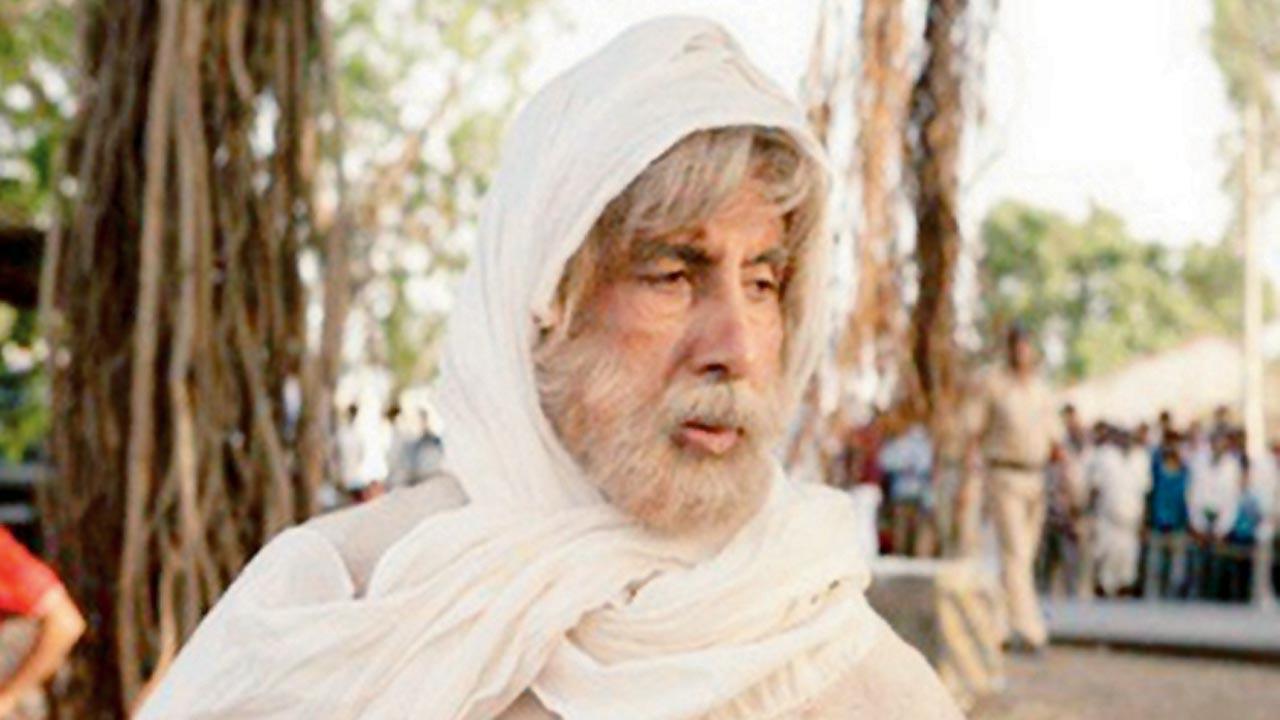
With Shoebite ready since 2009, director Sircar laments how Bachchan-starrer has been in limbo as it awaits NOCs from LA collaborators; says open to OTT release
Upala KBR (MID-DAY; October 19, 2021)
Shoojit Sircar has added another rich film to his résumé with Sardar Udham. While the filmmaker has given the audience diverse offerings — some light-hearted, others melancholic — in the past, he is saddened that Shoebite has yet to see the light of day. The film, headlined by Amitabh Bachchan, has been stuck in the cans since 2009.
Explaining the reason for the inordinate delay, Sircar says, “There were issues regarding the rights between the different partners [on the] film — Disney, Fox [Star Studios], some writers and collaborators in Los Angeles. Their NOCs and permissions are required.”
Shoebite is apparently based on Manoj Night Shyamalan’s story, Labour Of Love. In 1994, Shyamalan was said to have sold the rights to 20th Century Fox Studios. Years later, it was picked up by UTV Motion Pictures. However, later, the Hollywood filmmaker and Fox reportedly asked UTV to not release the film until he made the screen adaptation of the story in the US.
The director breaks it down further, “Earlier, [Shoebite’s rights] were with UTV; now, they rest with Disney [the parent company of Fox and erstwhile UTV]. But the last time Disney officials spoke to us, they said the Hollywood partners were wondering whether the Hindi movie should be released.” He elaborates that the concern stemmed from the fact that Shoebite was originally supposed to be an English offering.
On social media, Bachchan often expresses how he wants the film — also featuring Nawazuddin Siddiqui and Sarika — to reach his fans. “Shoebite comes up at each meeting with Mr Bachchan. He puts his heart and soul into every movie, but this one is special. Whenever I talk about the film, it makes me sad. There was a child in the cast who has now become a young woman,” emphasises the director, before adding, “Only post-production work is left on the project. Disney and Fox should do something about its release.”
Is he open to an OTT premiere, should the matter be resolved? “At this moment, I am so deep into the film that any form of release is okay by me — whatever the [producers] want. I just want Shoebite to be released.”
Why are Bengali films conspicuous by their absence on OTT platforms?
8:03 AM

Superstar Jisshu Sengupta feels that collaboration is the need of the hour
Once hailed as cinema for the thinking viewer, Bengali films are conspicuous by their absence on OTT platforms. Is it creative drought or failure to market? Or the classic Bengali priggishness?
Mohar Basu (MID-DAY; August 1, 2021)
In the same week that Aditya Vikram Sengupta’s third movie, Once Upon A Time In Calcutta, was selected in the Orizzonti (Horizons) section of the 78th Venice International Film Festival, journalist Rituparna Sengupta tweeted, “Are good Bengali films not being made or are they not being acquired by OTT platforms? Because I see the same things on Netflix and Prime for months and months.”
Despite Srijit Mukherji’s 2020 film Gumnaami earning a National Award recently and Sengupta wooing the international fans with his cinema, it’s fair to say that Bengali cinema hasn’t managed to attract the attention of the OTT audience in India to the degree that Malyalam, Tamil and Telugu movies have.
We pick Aditya Vikram Sengupta’s brain for what the reason could be—creative bankruptcy or an inability to connect with the masses? He ponders a bit before answering. “Are we making good enough cinema? Whether it’s a Malayalam or Telugu film, at the end of the day, the film speaks for itself. If my film is at Venice, it’s because the film fared well. Here’s my analogy — an IIT degree can give us a head start but after that, it boils down to the person [to succeed professionally]. There are no frills needed for a film to work, other than that it has to be a good film.”
He is speaking from experience. Sengupta’s debut film, Labour Of Love, won the FEDEORA award for the best debut at the Festival’s Venice Days section in 2014 and was subsequently acquired by Amazon Prime Video. “Film distribution was the easiest part of my job. Inox gave us a big release and it ran full house for eight weeks. Abhay Deol distributed the film and eventually it went to Prime. The next film, Jonaki, got picked up by Netflix. It got picked up two years after its release, and they said they chose it because they really liked it.”
That said, Sengupta has consciously followed a different monetary model for his films, which doesn’t involve working with traditional production houses of the industry. “My language of work is Bengali but I don’t work in the Bengali film industry. Shooting in Calcutta comes with its challenges. I have realised filmmaking is not just about the money but collaborating with someone who shares your creative vision. Say, SVF [Shree Venkatesh Films] wants to give the money, but what they wish to do with a film is very different from the process I would like to follow.”
A fair chunk of films in the Bengali industry are helmed by SVF, one of the industry’s biggest producers and distributors, who also control and maintain Hoichoi, an exclusive app for Bengali content, that has both originals and acquisitions. This, say some, has created the classic market monopoly problem.
But Shiboprosad Mukherjee, a well-known filmmaker from Bengal, says that this is not quite the hindrance. “SVF are solid producers, distributors, have their own theatrical chain and OTT platform, so, a large number of films made go straight to their platform. In Bengali films, satellite and digital rights are bought in combination. That is the industry model. We, as producers, will sell to whoever gives us the best deal. I don’t feel our content lacks the sting to make it big. The Malayalam industry is buying rights to my films, too. My film Kantho is being remade in Malayalam. Viacom has bought my films Belasheshe and Posto, which is only possible because the films have fared well commercially and have piqued audience interest. Most of my films are on Hotstar and the rest are on Hoichoi. What we probably suffer from is a slack attitude when it comes to wider publicity. None of us are actively seeking the Hindi film audience or fame. The more regional you are, the more global you will be.”
Thankfully, Anindo Banerjee, head of originals at Hoichoi, has a less lofty approach to the challenge. He says that what is viewed as market monopoly is a culturally symbiotic equation. “SVF has been in the business for 25 years and culturally, cinema in Bengal is synonymous with SVF. As far as our app is concerned, it is created for the diaspora and enjoys great reach, both locally and internationally. But we are now, trying to reach the non-Bengali diaspora, and have elaborate plans to achieve this.”
Srijit Mukherji, whose Gumnaami has won him two National Awards, looks at it slightly differently. “If we give content to OTT players, they will market it well. But we, as filmmakers, need to deliver genre-bending, clutter-breaking movies which can capture audience attention across 170 countries. Malayalam films are going through a renaissance where a lot of great filmmakers are making one brilliant film after the other. That’s not happening in Bengali cinema for sure. The Malayalam new wave has people addicted right now. Actors like Fahadh Faasil, Parvathy are creating a following which is hard to replicate,” he says.
Mukherji, fresh after wrapping up Netflix anthology Ray, is now helming Shabaash Mithu, a biopic on star woman cricketer Mithali Raj, starring Taapsee Pannu. “Bengali films are doing well in festivals, and on the awards circuit. But it’s true that OTT platforms don’t acquire a lot of Bengali films. Both Gumnaami and Vinci Da did brilliantly on Amazon Prime. In fact, after the Amazon release of Vinci Da, I was able to sell the rights in Tamil, Telugu, Hindi and Malayalam. But overall, there are lesser Bengali movies on OTT platforms, and perhaps it has to do with the price they offer, which is prohibitive. Hoichoi mops up all Bengali releases and its reach is great in the diaspora, but not enough outside it. Gumnaami’s success is also an aberration. I think the OTT players are waiting for us to prove our universal appeal, before investing in the Bengali film market.”
While Netflix India and Amazon Prime Video declined to comment officially, a member from the acquisition team of the latter told mid-day, “The platform doesn’t have a strong presence in Bengali. In terms of demography, Bengal is not a strong point for the platform. We are still making plans to scale up.”
Another official at Hotstar, however, says that over the last year they have seen a marked rise in viewing of Bengali films on the platform. “We have good pre-existing relations with well-known makers from the region. We will be investing more actively in Bengali content over the days to come. Over and above that, the television serials in Bengali have been widely viewed by people from the diaspora over the last few months since lockdown. Internet viewing has gathered strength.”
Bengali superstar Jisshu Sengupta, who starred in Shakuntala Devi, Thalaivi, and Antim, and acts across Bengali, Hindi and Telugu films, says it’s a misconception that people don’t watch Bengali cinema. “Right now, the Bengali film market is still healing from the pandemic. The last two years have hit us hard and market players like Amazon, Netflix and Hotstar are not coming up with enough content for this language. I think a lack of interest is creating a lack of output. We, as artistes, need to push our boundaries, which artistes like Paoli Dam, Swastika Mukherjee, Parambrata Chattopadhyay and I are trying to do. But wanting to watch Bengali content is eventually the audience’s call.”
Abhay Deol turns distributor, acquires 3 festival favourites which he will release online
7:51 AM

Natasha Coutinho (MUMBAI MIRROR; November 22, 2016)
After turning producer with
his 2014 romcom One By Two, Abhay Deol is now foraying into
distribution. His banner, Abhay Deol Presents, will now release
independent films online. The 40-year-old
actor has acquired three films from the ongoing National Film
Development Corporation of India (NFDC) Film Bazaar in Goa - Aditya
Vikram Sengupta's Venice Film Festival and National Award-winning Labour
Of Love,
Payal Sethi's Leeches, a UN Women Selection, and Brahmanand Singh's
documentary on Jagjit Singh, Kaagaz Ki Kashti. The films will go
straight from festival screening to a digital release.
“I was blown away by Aditya's sensibilities and his ability to spin a
story without any spoken dialogues. Payal's Leeches has beautifully
woven a compelling story around an issue that is anathema to our social
fibre and well-being. Kaagaz Ki Kashti succeeds in powerfully bringing a
legend back to life. I want to ensure that audiences across the world get
to watch these films,“ Abhay told Mirror.
He went on to inform that he had decided to distribute indie films because they are for a niche audience and he can explore opportunities in an emerging market like the digital platform. “The number of single screens is diminishing and smaller films don't get a release along side the biggies and sales is restricted too. The economics to engage in theatrical releases don't make sense because even the minimum P&A (Promotion and Advertising) budgets required to secure a decent release adds unhealthy weight on a small film. What we need now is to adopt alternate avenues of distribution,“ he asserted.
Will he market big-budget commercial films as well? “Mainstream films don't need this kind of a push. What can I add there?“ he argued. What about acting in indie films? “I'm taking one step at a time. I'm already an actor and would like to balance mainstream and niche cinema.“
On the subject of piracy he maintained that it stems primarily from unavailability of content on legitimate digital platforms. “If your film is made available at the right time, I believe the audiences would pay and watch it on a platform legally. Moreover, monetisation through digital distribution is increasingly resulting in a positive return on investment. Licensing platforms are offering fair payouts and paving the way for audiences around the world to watch and appreciate South-Asian content,“ said Abhay who was to attend the Film Bazaar in Goa but had to cancel his plans after he fell ill.
Subscribe to:
Posts (Atom)