Showing posts with label Laapataa Ladies. Show all posts
Showing posts with label Laapataa Ladies. Show all posts
What is No. 1? There’s always going to be someone better than you-Varun Dhawan
8:57 AM

Madhureeta Mukherjee (BOMBAY TIMES; June 6, 2026)
Charming and full of energy, Varun Dhawan brings his infectious sense of humour to the latest episode of the Bombay Times Lounge driven by Jeep. But beyond the laughs, the actor — whose latest release, Hai Jawani Toh Ishq Hona Hai, directed by David Dhawan, hit theatres on Friday — reveals a more reflective side as he opens up about the dangers of chasing perceptions, the pressures of fame, and why staying true to yourself matters more than ever. A conversation that’s equal parts entertaining and insightful — much like Varun himself. Watch the full episode on the Bombay Times YouTube channel.
Your father, David Dhawan, created a certain grammar of mainstream Hindi entertainment in the 90s. But today’s audiences consume content, including comedy differently. When you are making a comedy like Hai Jawani Toh Ishq Hona Hai, how do you stay true to the heart and soul of those classic entertainers?
My dad always told us, ‘I never went in to make comedy films. Main entertainer bana raha tha. Main logon ko entertain karna chahta tha. Usme romance tha, emotion tha, drama bhi tha, thoda sa action bhi tha. Aur uss mein logon ko hasaa bhi raha tha. But unn emotions ke bagair, those films would not be what they were. People and maybe critics back then, labelled them as comedy, but actually they were wholesome entertainers’.
Recently, at the David Dhawan Film Festival, where they showcased Aankhen, so many of us sat together and watched the film on the big screen — it was still so entertaining and magical. The comedy is not forced, it’s not gaggy... ki yaar, yeh trend mein hai, bolenge toh yeh chalega. It’s very close to real things that happen around us. I believe comedy is basically about capturing the nuances of real life and maybe magnifying them a little bit.
You did Main Tera Hero (2014) after your debut Student Of The Year (2012). I believe during the initial years of your career, you were advised not to do a comedy & even told that it was a wrong choice.
Yes, I was told by a very popular director back then that, ‘I wanted to cast you in a film, but I feel the kind of cinema you’re doing, you can only do that. But you should not do such cinema.’
And here we are…
Yes!
Your father recently said that Hai Jawani Toh Ishq Hona Hai could be his last film as a director. Knowing that, did the journey feel more emotional for you — not just as an actor, but as a son who has grown up watching him live and breathe cinema?
At one point, we thought that he wouldn’t direct a film again because his health was down. So, Rohit (brother), my mom and I, felt he should not direct a film. He was going through a very low phase, and I remember Anil Kapoor, telling me, ‘You have to let your father get back on the sets. He has spent more time on the set than he has spent at home. His home is the set and behind the camera. We are built differently, Varun. Humne bahut kaam kiya hai, so unko khushi agar usme mil rahi hai, let him do it and as a son support him.’ Anil uncle has a similar work ethic, so I understood what he said and that made me think about it a lot. Rohit was a little bit more hesitant to let him direct again, but we knew we had to support him.
Some actors come into the industry and then along the way they figure out the dynamics of this place. You’re someone who’s grown up within this machinery. Do you think you were far more prepared to embrace fame, success and failure because you’ve seen it from close quarters?
I think no one comes prepared to deal with the ups and downs in their life. I’ve had my share of ups and downs and my moments of weakness. But what I have learnt is — you have to move on and take the next step. You can dwell over it and feel bad for yourself. You can play victim, but how long will you play victim? This is something that my dad always tells me — move on, take the next step, you have to take the next step. There’s no point sitting and blaming people for your sorrows and think…ki I’m here because usne mere saath yeh kiya, ya yeh hua mere saath. Arre bhai, tumhari bhi thodi galti toh hogi na? So, introspect, take the learnings and move on. Blaming anyone is not going to get you anywhere.
In an earlier conversation with us, you had spoken about how much of our life is spent chasing perceptions — of success, relevance, being number one. But there comes a point when that chase can feel exhausting. Have you reached a stage where you’re more at peace with yourself than with how you’re perceived?
What is number one? It means you’re better than someone. There’s always going to be someone better than you. Someone will come along and something will change. My idea is to just do my work in the best way possible and enjoy the journey. There was a time when we were all being brought up in that very individualistic mindset. I myself have moved away from it a little bit. I was running too fast and sometimes when you do that, you forget which direction you are running in.
What do you think is the most dangerous thing about fame?
It’s addictive.
There’s a pressure that comes with being an actor and a star that people often overlook. What’s the part of stardom that the audience doesn’t see?
The lonely moments that you spend with yourself. When you’re all alone in your van, when you’re all alone in your house — those are the lonely moments. Actors’ lives are very lonely, and this is something which I always discuss. I would say most actors are lonely.
That’s interesting because from the outside, an actor’s life seems anything but lonely. You’re constantly surrounded by people. Is there a danger of losing yourself in the image that others have of you?
Luckily, from the beginning, I kind of dropped the façade. I am what you see. I can’t keep pretending, because I feel my mental health will go for a toss and I will burst somewhere. I mean, if you see my earlier interviews, I was even more moohfat. Abhi thoda sa conscious ho rahe hain log because of social media and all that. But kya hi hone wala hai? Kya hi kar denge? Cancel kar denge? After a point, you’ve just got to be yourself, whether it’s good or bad — at least you’re yourself. Otherwise after some time, you won’t even know who you are.
As someone who understands the economics of cinema as much as the craft, in today’s landscape, what do you think is tougher — making a film or bringing people to buy a ticket and come to the theatre?
I feel that bringing people to come and buy the ticket is tough today. You can make a good film, and many good films are being made, but not all of them make money. It’s not like we are not making good films. I saw Superboys Of Malegaon aur mujhe bahut acchi lagi. I loved Laapataa Ladies and 12th Fail; the movie was also a hit, but it could have made even more money given that it was such a good film. Then there is a film like Dhurandhar, which is an entertaining film, it has stars and everything comes together and it does well. So, it’s possible, but not easy. It was never easy.
Driven by: Jeep
Location courtesy: Luuma House
I waited for 34 years for this phase in my career-Ravi Kishan
9:58 AM

Neha Maheshwri (MUMBAI MIRROR; February 3, 2026)
Ravi Kishan is enjoying a rewarding phase in his career after earning acclaim for Laapataa Ladies and the web series Maamla Legal Hai. He is currently seen in Bhabiji Ghar Par Hain: Fun on the Run, the film adaptation of the popular sitcom, by Binaiferr and Sanjay Kohli.
Talking about coming on board the project, he says, “I have always been a fan of the show. The story, the director, and my role all played a big part in my decision. I enjoy making people laugh with a poker face. The character is someone who loves deeply but one-sidedly, and that really excited me. I meet such people almost every day in Bihar and Uttar Pradesh.”
Though Ravi has been part of Hindi cinema for decades, wider recognition has come his way only recently. Reflecting on this shift, he says, “I waited patiently for 34 years. At one point, people assumed I had been boxed into a Bhojpuri image, that I had become a politician, grown old, and would now quietly fade away. But sometimes, by God’s grace, just when people think you are finished, a filmmaker like Kiran Rao comes along with a script like Laapataa Ladies, followed by Maamla Legal Hai. Last year showed what I can do when filmmakers believe in me and give me strong material. Meri journey strugglers ke liye ek misaal hai.”
Recounting the phase when meaningful opportunities in Bollywood felt elusive, he says, “After Tere Naam with Salman Khan, I felt exhausted because of the lack of opportunities. I thought yahaan bohot bheed hai, main iss race ka hissa nahi bann paunga, aur koi response nahi dega. Of course, there was frustration and anger, but I channelled that anger into building my own space in the Bhojpuri industry. But I never blamed Bollywood. Hindi cinema ne mujhe pehchaan di hai and taught me everything I later applied to Bhojpuri films.”
Reflecting on delayed success, he adds, “Yeh ugte sooraj ka khel hai, and that is the truth across professions. But there is also a lot of affection coming my way now, and I am grateful for that.”
Kartik Aaryan's Naagzilla makers considering Laapataa Ladies actor Pratibha Ranta to play the lead
8:27 AM

Mohar Basu (MID-DAY; November 8, 2025)
Pratibha Ranta, who made a splash with her debut film ‘Laapataa Ladies’ (2024), is now said to be the frontrunner to play the female lead in Kartik Aaryan’s ‘Naagzilla: Naag Lok Ka Pehla Kaand’. Director Mrigdeep Singh Lamba’s creature comedy went on floors this week, even as the makers are simultaneously finalizing the female lead.
A source reveals, “Sanya Malhotra was the makers’ first choice and everyone on the team had assumed she would be signed long ago. But recent developments suggest that the team has widened their search and is now considering Pratibha.”
‘Naagzilla’, said to be the first instalment in the serpent trilogy, is produced by Dharma Productions and Mahaveer Jain Films. Considering Ranta recently wrapped up Anubhuti Kashyap’s directorial venture that is produced under Karan Johar’s banner, she has caught the attention of the makers for their next as well.
Insiders say that the only possible hitch may be her dates. The source adds, “Pratibha has a movie lined up with Maddock Films, which is expected to roll in early 2026. If there are no date clashes, she will headline ‘Naagzilla’ opposite Kartik. Mrighdeep and the makers are keen to have her on board as they feel she isn’t over-exposed on screen yet.”
‘Nepo kids’ coming into the industry have baggage they cannot avoid-Kiran Rao
8:14 AM

The filmmaker opens up on entourage costs, nepo kids in Bollywood, and death of the star system
Akash Bhatnagar (HINDUSTAN TIMES; October 24, 2025)
The rising entourage costs are still a hot topic in the Hindi film industry, and filmmaker Kiran Rao says that the high cost of teams is one of the reasons that push her to work with newcomers.
“Even if the budgets have grown from Dhobi Ghat (2011, debut) to Laapataa Ladies (2024), my filmmaking is very independent. We believe in making things as tightly as possible, with fewer resources and trying not to be wasteful. Fresh actors are much easier following those rules,” she tells us.
The 51-year-old launched three actors — Nitanshi Goel, Pratibha Ranta, and Sparsh Shrivastava — and has also seen ex-husband, actor Aamir Khan’s son Junaid debut around the same time. She notes, “When you have a ‘nepo kid’ coming into the industry, they have baggage they cannot avoid. They’re looked at through the lens of privilege. But in most cases, I’ve seen how hard and equally difficult their journey is.”
She insists that star kids face “the obstacles of perception”, adding that it’s easier for an outsider to make a mark in the industry today: “I agree with it. I also feel that in today’s world, people want to discover talent. They have a curiosity about stars and their kids, but in order to make a person a star, they feel a responsibility.”
Highlighting “the death of the star system”, Kiran says, “Stars are now found in different ways. They could come from a Reel, a series, a film, or could even be a director. Those are the new stars, whose work is being followed more closely. Everybody has their own echo chambers and following. That’s the new world now, the idea of stardom has changed.”
Mujhe kabhi nahi laga ki Laapataa Ladies keval ladies ki film hai-Sparsh Shrivastava
9:09 AM
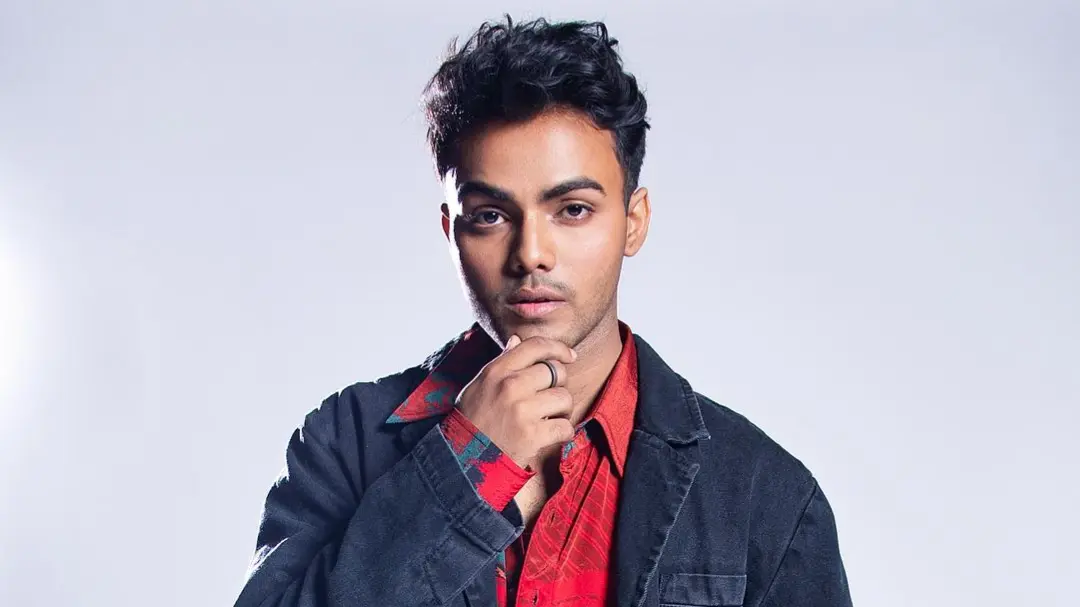
Niharika Lal (BOMBAY TIMES; July 24, 2025)
When Sparsh Shrivastava first read the script of Laapataa Ladies, he didn’t see Deepak just as a boy who loses his wife on a train. He saw someone carrying the entire film. “Deepak ka jo character hai, woh shuru mein apni wife ko leke chalta hai, then he loses his wife, and in the entire film, he’s only searching for her. That’s the whole character,” he says, adding, “There was nothing much. Pata nahi kyun, mujhe kabhi laga hi nahi ki yeh keval ladies ki film hai. Mujhe hamesha laga yeh utni hi meri bhi film hai.”
In a recent chat with us, he recalled his Agra and Delhi days and spoke about finding footing in the industry.
‘JITNA ZYADA AAP APNE CHARACTER KE SAATH TIME BITANE LAGTE HO, WOH AAPKE ACTING MEIN AANE LAGTA HAI’
Sparsh says the honesty of his character Deepak was in the eyes. “Jitna zyada aap apne character ke saath time bitane lagte ho, woh aapke acting mein aane lagta hai. Meri honesty uss character ko leke, zara sa bhi corrupt nahi hui. Mujhe hamesha laga yeh utni hi meri bhi film hai jitni makers ki.” At a meeting at Aamir Khan’s house after the film finished, he remembers, “Aamir sir ne bola, ‘You’ve brought the character above the paper.’”
‘MAKERS ARE LOOKING FOR ACTORS, NOT NAMES’
Sparsh isn’t naive about the way the industry treats people differently. “People say there’s no balance in the industry and different people get treated differently. But aaj bahut badal gaya hai. Makers are looking for actors, not names. Having worked with directors like Kiran Rao, Soumendra Padhi, and Sonam Nair, I’ve seen them treat the spot boy with as much warmth as someone coming in to shoot for just an hour.”
‘AB JAB AGRA JATA HOON, TOH TOURIST KI FEELING KE SAATH JATA HOON’
Sparsh says the joy of working still colours his memories – whether it was 17-hour rehearsals as a child or shuttling between Agra and Delhi for dance classes, and between Agra and Mumbai for work. At 8 or 9, he’d travel to Delhi for classes at Shiamak Davar’s institute. And even now, he finds himself caught between the cities. “Jab main Mumbai mein hota hoon, toh sabse zyada Agra ki language miss karta hoon. Aur jab Agra jata hoon, toh tourist ki feeling ke saath jata hoon,” he laughs.
‘I’m a really good dancer’
Sparsh says what matters more than dialogue is silence. He says, “I love playing parts where I don’t have to say much and I could emote through my body, eyes, movements.” “The reason might be simple – ‘I’m a really good dancer,’” he admits, grinning. “To be a good dancer, you have to express a lot.” At 11, he won Chak Dhoom Dhoom, a reality dance show, after hours of daily rehearsals.
In the web show Dupahiya, Sparsh did danced to the Photua song in a ghaghra-choli. “Ganesh Master ji (Ganesh Acharya) choreographed it. Sabko ghaghra-choli pehnake perform karwaya. Earlier we thought the back dancers would be girls, but it was his idea to keep everyone – even the background dancers – as men. It’s really unusual to see a song like that in a web show,” he says.
Nitanshi Goel on paying homage to Bollywood icons with Cannes 2025 outfit: "These women walked so we could run"
9:48 AM

Laapataa Ladies actor Nitanshi Goel pays homage to Madhubala, Waheeda Rehman, Rekha, and Hema Malini, among others at her debut Cannes appearance
Priyanka Sharma (MID-DAY; May 21, 2025)
Actors usually put their best fashion foot forward to walk the red carpet, especially when it is for the Cannes Film Festival. Nitanshi Goel combined fashion with emotion as she made her debut at the festival with an homage to Madhubala, Rekha, Sridevi, and Hema Malini, among others. Goel, who rose to fame with her debut film Laapataa Ladies (2024), was seen sporting a pearl hair accessory (parandi) with frames of veteran actors created by jewellery brand BeAbhika.
Speaking to mid-day about the inspiration behind this gesture, she says the idea was to pay an homage that “felt personal yet celebratory”. “It came from love for the icons who’ve defined grace, strength, and cinematic brilliance in Indian cinema. Their presence has always felt timeless, and I wanted to carry their spirit with me to Cannes. These women walked so we could run,” beams Goel, who was part of the newly-inaugurated Bharat Pavilion — the government-backed platform at Cannes — aimed at promoting Indian cinema.
By representing India at the festival, her dream became a reality. She says, “I was there to celebrate our culture, stories, and the women who’ve shaped it so beautifully. The experience was filled with inspiration, heartfelt conversations, and warmth from people all over the world. I’ve returned with a heart full of gratitude.”
Still basking in the acclaim and accolades for Laapataa Ladies, Goel shares that the film’s glory is reflected in the offers she gets now. “The parts coming my way now are more layered and diverse. I feel ready to dive into stories that challenge me,” she says.
An advice from Rekha
Nitanshi Goel holds her meeting with Rekha close to her heart. She shares that the yesteryear actor once told her, “Be patient with the journey, and protect your truth.”
Talented newcomers ke paas PR machinery nahin hoti-Pankaj Tripathi
10:11 AM
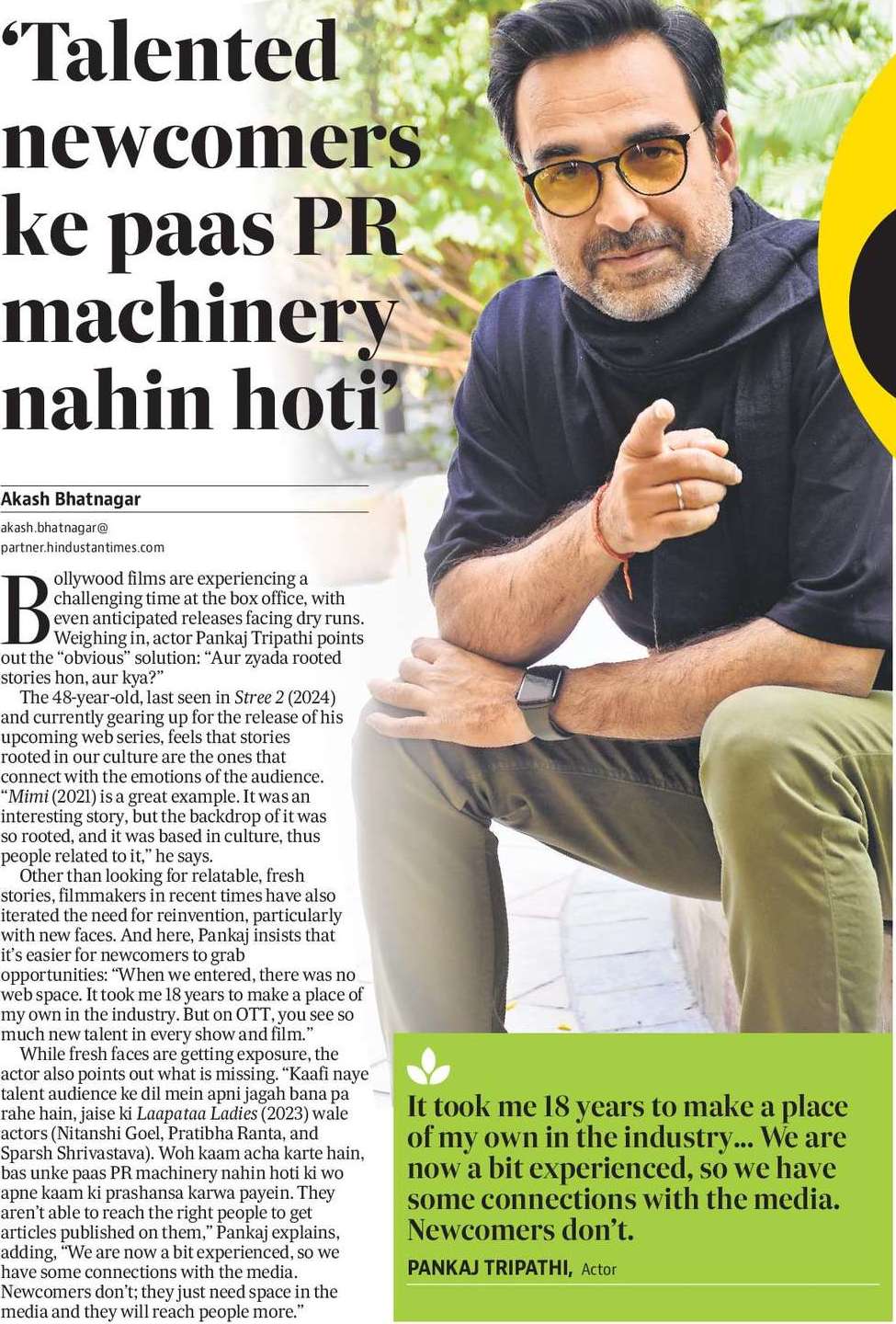
Akash Bhatnagar (HINDUSTAN TIMES; May 15, 2025)
Bollywood films are experiencing a challenging time at the box office, with even anticipated releases facing dry runs. Weighing in, actor Pankaj Tripathi points out the “obvious” solution: “Aur zyada rooted stories hon, aur kya?”
The 48-year-old, last seen in Stree 2 (2024) and currently gearing up for the release of his upcoming web series, feels that stories rooted in our culture are the ones that connect with the emotions of the audience. “Mimi (2021) is a great example. It was an interesting story, but the backdrop of it was so rooted, and it was based in culture, thus people related to it,” he says.
Other than looking for relatable, fresh stories, filmmakers in recent times have also iterated the need for reinvention, particularly with new faces. And here, Pankaj insists that it’s easier for newcomers to grab opportunities: “When we entered, there was no web space. It took me 18 years to make a place of my own in the industry. But on OTT, you see so much new talent in every show and film.”
While fresh faces are getting exposure, the actor also points out what is missing. “Kaafi naye talent audience ke dil mein apni jagah bana pa rahe hain, jaise ki Laapataa Ladies (2024) wale actors (Nitanshi Goel, Pratibha Ranta, and Sparsh Shrivastava). Woh kaam acha karte hain, bas unke paas PR machinery nahin hoti ki wo apne kaam ki prashansa karwa payein. They aren’t able to reach the right people to get articles published on them,” Pankaj explains, adding, “We are now a bit experienced, so we have some connections with the media. Newcomers don’t; they just need space in the media and they will reach people more.”
Sparsh Shrivastava collaborates with Preeti Panigrahi for debut single, 'Ji Huzoor'
8:26 AM

Laapataa Ladies’ find Sparsh Shrivastava teams up with Girls Will Be Girls’ debutant Preeti Panigrahi for his first single, Ji Huzoor
Mohar Basu (MID-DAY; April 15, 2025)
It’s a joy to see two of last year’s standout debutant actors come together. Laapataa Ladies’ (2024) find Sparsh Shrivastava and Preeti Panigrahi of Girls Will Be Girls (2024) fame have teamed up for Ji huzoor, a single that marks Shrivastava’s debut as singer, songwriter and composer. The actor-singer says that he has dabbled in songwriting for the past few years. “Music began as a way to escape the chaos we all go through, during different phases of life. Songwriting became my me-time,” says Shrivastava.
After years of creating music for himself, the actor now feels confident to share his work with the world. Considering Ji Huzoor is his first single, Shrivastava admits it comes with immense pressure. “Firsts are special, and with that comes the pressure of wanting everything to be right. That inner conflict and the pressure to create something honest is a challenge I often face. But hopefully, the love and intention we’ve put into Ji Huzoor will resonate with people. My first single reflects how I experience love. When I fall in love, the person becomes my entire world, and everything else fades into the background,” he shares.
Shrivastava was only too happy to work with Panigrahi as they told the story of a young couple heady in love. “I’ve been Preeti’s fan since I watched Girls Will Be Girls. When the team suggested her name, I was immediately convinced. We didn’t get much time to get to know each other before the shoot, but we connected naturally, and that ease translated on camera. We helped each other through the scenes, and the mutual trust made the process more fulfilling.”
---------------------------------------
Actor Sparsh Shrivastava talks about his journey into music, desire to do playback and mix his love of acting, dancing and singing on screen
Deep Saxena (HINDUSTAN TIMES; April 15, 2025)
He might have won acclaim for his performance in Laapataa Ladies (2023), but along with acting, Sparsh Shrivastava’s heart beats for dance and music as well. In fact, not many know that he started off his career in the entertainment industry as the winner of a dance reality show.
“Acting, dance and music are a perfect combination, and it has shaped up in the most beautiful way I could have thought of,” says the Jamtara — Sabka Number Ayega (2020) and Collar Bomb (2021) actor, who is all set to release his debut single on his YouTube channel.
Along with singing, the 25-year-old has also written and composed the track, titled Ji Huzoor. He shares, “I started working on my songs over eight years ago, but it’s only now that I have found maturity in my writing and compositions.”
Sparsh says that he’d like to focus on music and dance as well, in the future. He already has more songs lined up for release: “Once I establish my musical talent, I will showcase more of my dancing skills. I am looking forward to collaborations and even playback singing. It will be wonderful to hear my voice on other actors.”
He says that his talents are all inborn. “I am not a trained dancer, though I have learnt a lot from my mother. For acting and music, too, I did not receive any formal training,” he signs off.
My script of Laapataa Ladies was registered in 2018; painful to be accused of plagiarizing-Biplab Goswami
8:50 AM

BOMBAY TIMES (April 7, 2025)
Following claims that Kiran Rao’s Laapataa Ladies bore similarities to the Arabic short film Burqa City (2019), writer Biplab Goswami issued a statement dismissing the plagiarism allegations. Meanwhile, Burqa City director Fabrice Bracq, in an interview to IFP World, expressed shock over the similarities between the two films, citing several overlapping scenes and character dynamics.
Surprised to see the similarities: Burqa City director Fabrice Bracq, director of the 2019 Arabic short film Burqa City, recently spoke to IFP World and detailed his observations on the similarities. “First of all, even before watching the film, I was surprised by how closely the pitch matched that of my short film. Notably – and this is by no means an exhaustive list – the kind, loving, naive husband who loses his wife, contrasted with the other husband who is violent and despicable. The scene with the police officer is also striking: a corrupt, violent, and intimidating policeman surrounded by two sidekicks. Of course, there’s the moment with the photo of the veiled woman,” Fabrice said.
He added, “The scene where the kind husband searches for his wife in various shops is particularly revealing – he shows the shopkeepers a photo of his veiled wife, just like in the short film, and then the shopkeeper’s wife comes out wearing a burqa, almost like a nod to Burqa City. There’s also the similarity in the plot twist at the end, where we learn that the woman deliberately chose to run away from her abusive husband.”
‘SURPRISED WITH SIMILARITIES’
Fabrice Bracq, director of the 2019 Arabic short film Burqa City, said, “I watched the film, and I was both surprised and shocked to see that, although the story had been adapted to Indian culture, many aspects of my short were clearly present.” He added that the short was written in 2017 and was also shown at two festivals in India in Dec 2019 and Jan 2020. Bracq says that he found out about Laapataa Ladies after being contacted by journalists for comment
First registered the story in 2014: Laapataa... writer
In a statement, Laapataa Ladies writer Biplab Goswami said, “I first registered the film’s detailed synopsis, outlining the entire story with the working title Two Brides, with the Screenwriters Association (SWA) on July 3, 2014. Even within this registered synopsis, there is a scene that clearly describes the groom bringing home the wrong bride and being shocked and stricken upon realising his mistake because of the veil, along with the rest of his family. This is where the story takes off. I had also clearly written about the scene of the worried groom going to the police station and showing the only photograph he had of his missing bride to the police officer, but the bride’s face was covered with a veil, resulting in a comedic moment. On June 30, 2018, I registered the feature-length script Two Brides with the SWA. This script won the runner-up award at the Cinestaan Storytellers Competition in 2018. Again, in this screenplay, I had the scene of the policeman amused by the photograph of the veiled bride.”
He added, “Our story, characters, and dialogues are 100% original. Any allegations of plagiarism are completely untrue.”
-----------------------------------------
Rishabh Suri (HINDUSTAN TIMES; April 7, 2025)
Biplab Goswami, who wrote the original story of Laapataa Ladies (2024), is unhappy with the plagiarism allegations levelled against his work. He took to Instagram and X on Saturday, calling the accusations untrue. Trouble started recently, when social media users pointed out similarities between the Kiran Rao-directorial and Arabic film Burqa City (2019), directed by Fabrice Bracq.
Speaking to us, Biplab rues: “I got my story registered with the Screenwriters Association (SWA) in 2014 and the full script was registered in 2018. Koi poocha bhi nahin mujhse (about the controversy). I didn’t know it was being compared with Burqa City until Saturday.”
He adds, “The Laapataa Ladies team had a chat about these allegations, everyone was concerned. As a writer, one’s credibility gets affected when something like this happens. Kharab lagta hain, aur dukh iss baat pe hota hai ki koi pooch toh leta ek baar. It’s very painful. I worked on my story for 10 years. the film’s team worked on it so much.”
This isn’t the first time Laapataa Ladies is accused of being ‘inspired’. Actor-filmmaker Ananth Mahadevan had earlier raised concerns about its resemblance to his 1999 movie, Ghoonghat Ke Pat Khol. Addressing the allegation, Biplab says, “Honestly, (Laapataa Ladies) meri khud ki kahaani hai, it has no connection with any other story or novel. There is no basis to these allegations.”
‘Surprised and shocked’
Meanwhile, in an interview to IFP, Fabrice said that he wrote his short film in 2017, shot it in 2018 and presented it the following year. He claimed, “Even before watching the film (Laapataa Ladies), I was surprised by how closely the pitch matched that of my short film. Then I watched the film, and I was both surprised and shocked to see that, although the story had been adapted to Indian culture, many aspects of my short were clearly present... Of course, there’s the moment with the photo of the veiled woman.” However, in the proof shared by Biplab, the same scene existed in the story registered with the SWA in 2014.
We reached out to Fabrice for a response on the timeline of his film, but there was no response till the time of going to press.
Laapataa Ladies accused of copying Arabic film Burqa City
8:27 AM

HINDUSTAN TIMES (April 3, 2025)
Director Kiran Rao’s Laapataa Ladies (2024), which was India’s official entry to the Oscars 2025, has found itself at the centre of a plagiarism controversy yet again. After being accused of copying the 1999 film, Ghoonghat Ke Pat Khol, several social media users are now pointing out striking similarities between Laapataa Ladies and a 2019 Arabic film called Burqa City, after the latter’s video clips went viral recently.
Burqa City, a 19-minute satirical short film, tells the story of a newlywed man who frantically searches for his wife after she is mistakenly swapped with another woman wearing an identical burqa. The film delivers a critique of patriarchal societies and the erasure of women’s identities. Its similarity with the plot of Laapataa Ladies has not gone unnoticed by social media users.
One wrote on X, “Kiran Rao’s Lapata Ladies, India’s official entry to the Oscars and projected as an original work, actually seems heavily inspired by a 2019 short film titled Burqa City.... Kiran Rao made Lapata Ladies, with the same theme, replacing burqas with ghoonghats (sic).”
Another user wrote, “There is nothing Original about Bollywood anymore (sic).” A post read: “This is embarrassing....the creators were enjoying the success as if they had made something original (sic).” Kiran is yet to respond to the controversy.
Golden age is over, OTT in India has seen a bubble burst-Kiran Rao
9:47 AM
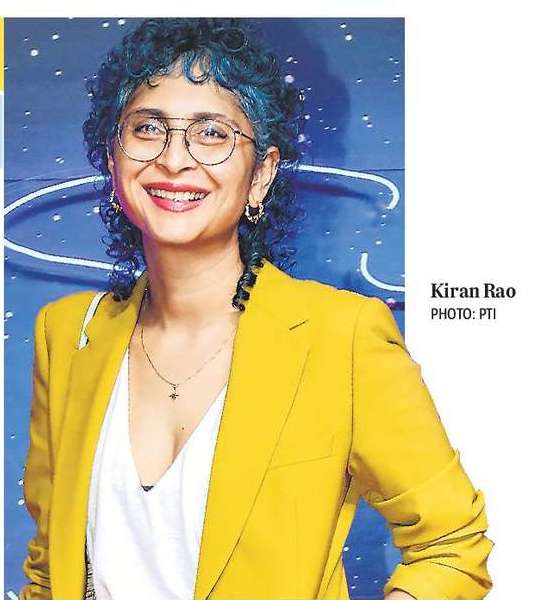
HINDUSTAN TIMES (February 17, 2025)
Filmmaker Kiran Rao feels that the “golden age” of streaming platforms in India is over. Speaking at the 7th edition of the Indian Screenwriters Conference (ISC), hosted by the Screenwriters Association of India (SWA), the director said, “OTT was this golden egg; everyone could do everything that they dreamt of, and it had to come full circle. There is a lot of promise there, a lot of stories to be told, I just don’t know how many people are commissioning them and (if) the economics allows one to do. Like everything, there was a golden age, but I am not sure where it goes from here. We still have some great writing on OTT in India, but there is a lot more to be done.”
She was in conversation with moderator-writer Mitesh Shah, known for penning Tumbbad (2018), for a masterclass session at the event. Kiran also noted that there was hardly any difference between the content on OTT and films today: “Now, more and more, you see the kind of things that are so-called ‘working’ or big on OTT in India are usually stuff which isn’t vastly different from what we would see in films. So, the promise of world-building and doing other stuff may not have been (fulfilled). That’s also because I think there has been a bit of a bubble burst.”
Kiran’s directorial Laapataa Ladies was well received when it dropped on a streaming platform. When asked if she plans to start another OTT project, she said, “I have a couple of series ideas, including a mini-series, but I don’t know where to go with what I am doing. I feel like taking the ideas that I wrote for my series and making them into films!”
India's women directors bring the female gaze to film festivals
8:15 AM
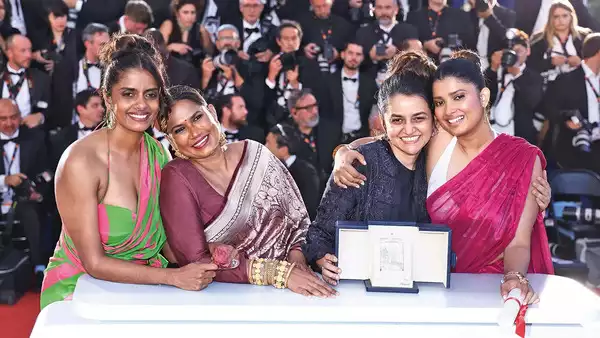
Akshita Vohra (BOMBAY TIMES; January 11, 2025)
2024 was a standout year for India’s female directors in the film festival circuit. The highlight of the past year was All We Imagine As Light’s two Golden Globe nominations – while the film didn’t win, it came very close to making history. However, despite better representation and support, women directors say there’s still a long way to go when it comes to celebrating the female gaze in the film festival space.
‘Women filmmakers are finally finding the recognition and support they deserve’
Deepti Dcunha, artistic director MAMI Mumbai Film Festival, says, “MAMI has had a great ratio of female filmmakers over the years, and in 2024 specially. When we are programming or constituting our selection committee, we ensure that we do have a conversation about giving a platform to directors who are otherwise discriminated against. But at the same time, it is not that a director is only selected because she is a woman.”
In 2023, the percentage of films directed by female filmmakers in the fest was 2%, which changed to around 25% in 2024. Out of 45 feature films screened at the Dharamshala International Film Festival (DIFF), 24 were directed by women.
Festival co-founder Ritu Sarin tells us, “All films are selected on merit, which is why the fact that 24 out of 45 feature films were directed by women is an incredible milestone. It demonstrates that women filmmakers have always been capable of making high quality cinema but are finally finding the recognition and support they deserve.”
Talking about providing this support and recognition at one of the biggest film festivals in India, International Film Festival of India’s Associate Film Programmer, Kanika Katyal, says, ‘‘The programming was done in such a way that we ensured gender parity in the curation, especially in the competition. A broad range of films were offered to the selection committee to choose from which were directed by women filmmakers. This would ensure that enough films from female filmmakers and also other diverse options made it to the competition.”
About the change in numbers at IFFI 2024, she adds, “We have had nine female directed films out of 15 in the main Golden Peacock Award. That comes to 60%, which is a rare occurrence. How often do you see that happen in a film festival?”
‘It’s not easy to go into a room full of men & try to sell your film’
Even after these recognitions at the film festivals, taking a female directed film for distribution, release in the male dominant space is still a challenge.
Vaidaangi Sharma, whose film Chhat was screened at MAMI, says, “I am just waiting for the day when there are more women in the distributor room. It’s not easy to go into a room full of men and try to sell your film. What has happened with All We Imagine As Light is difficult to happen with a purely independent regional film made here in India. Distribution for a festival film is very small, specially for a female directors’ film.”
Adding to this insensitivity that sometimes female filmmakers have to go through in this country, Prachee Bajania tells us, “At my panel at MAMI, a man walked up to me and said if everyone is going to talk about women now then who is going to talk about men, and I told him that there has been so much conversation around men that I don’t know why it should even be a concern now. We have seen this happen a lot in popular media in India. Thankfully the audience at the festivals is niche so it changes the dynamics there.”
‘Important to tell stories from the female gaze’
Prachee Bajania, whose film Umbro won Best Documentary at Beijing International Film Festival and was screened at DIFF, says, “Seeing festivals prioritize female-directed films not just for representation or tokenism but for the unique narratives women bring to the screen is encouraging. It’s not just about these being films made by female filmmakers — it’s also about the importance of the stories they tell, which might be why they are being selected.”
Talking about these stories bringing a female gaze to the film festivals, Farha Khatun, a two-time National Award-winning filmmaker and jury member at Kolkata International Film Festival, feels, “I saw Payal’s film and you can notice that when a female director tells a story, it’s a very different perspective. But because we are so used to seeing a man’s perspective in cinema, it is taking us time to accept this. And now I feel these nuances are finally being picked up with the selection of more such films at Indian film festivals.”
Nidhi Saxena, who was the first female filmmaker from India to win the prestigious Asian Cinema Fund 2024 and had her film screened at DIFF in 2024, says, “It was interesting to see people watch the film from a female gaze and have so many women appreciate and relate to it. I felt it was a newfound sisterhood at these festivals for me this year. Women filmmakers today are trying to not just find new stories but also new form and narrative for their stories.”
‘When we see the west being more inclusive, it trickles down’
Over the past year, female directed films like Payal Kapadia’s All We Imagine As Light, Shuchi Talati’s Girls Will Be Girls, and Kiran Rao’s Laapataa Ladies have earned nominations and awards at prestigious events such as Cannes and Sundance. While some female filmmakers feel this progress is insufficient to bring lasting change to Indian film festivals, others view it as a ray of hope.
DIFF co-founder Ritu Sarin says, “Over the past few years, there has been a growing awareness in the global film industry that women filmmakers were being discriminated against, and consequently, a conscious push to redress this imbalance. Although this signals a shift in perception, the film industry is still largely a male-dominated one, and systemic change will take time.”
Deepti Dcunha, Artistic Director MAMI, also resonates with the sentiment as she says, “We are still looking at what the west is validating as a good film, when it comes to programming. When we see them make a conscious decision of being more inclusive, with women directors, women jury members, it trickles down here as well, leading to a better representation.”
Bollywood in 2024 saw a mix of scares, sequels and surprises
8:53 AM

Bollywood’s 2024 saw a mix of scares, sequels and surprises, with horror hits and small-budget triumphs outshining big-budget disappointments
Rishabh Suri (HINDUSTAN TIMES; December 31, 2024)
If 2023 marked Bollywood’s comeback year with a blockbuster revival, 2024 has been a “semi-hit” year, unanimously state trade experts. “The year started with a whimper,” rues trade analyst Taran Adarsh, adding, “Fighter (first release of this year starring Hritik Roshan-Deepika Padukone) didn’t meet expectations, especially with (filmmaker) Siddharth Anand riding high after Pathaan. It ended similarly with Baby John, which crashed on day two. Between these films, it’s been a case of kabhi kabhi khushi, kabhi bahut saara gham. Last year, we had four Rs. 500-crore grossers — Pathaan, Jawan, Gadar 2 and Animal. This year, big-budget films like Bade Miyan Chote Miyan and Maidaan tanked, and even Singham Again fell short of expectations.”
‘SCARY’ NEW SUCCESS
Surprisingly, horror turned out to be Bollywood’s lucky charm this year. Films like Munjya, Shaitaan, Stree 2: Sarkate Ka Aatank and Bhool Bhulaiyaa 3 broke genre barriers. Trade expert Atul Mohan observes, “Horror has been a hit-or-miss genre for our industry. These films changed that narrative.”
RE-RELEASES RULE
Old films found new love in 2024. The Avinash Tiwary-Triptii Dimri-starrer Laila Majnu (2018) became a sensation during its re-release. Similarly, Rockstar (2011), starring Ranbir Kapoor, saw renewed love. Movies such as Rehnaa Hai Tere Dil Mein (2001) and Veer-Zaara (2004) also pulled crowds to theatres. This trend shows no signs of slowing, with Yeh Jawaani Hai Deewani (2013) gearing up for a return.
SMALL TO MID-BUDGET FILMS
A major conversation this year revolved around escalating production costs and actor fees. Consequently, films made on controlled budgets stood out. Munjya, made on Rs. 30 crore, tripled its investment. Its director, Aditya Sarpotdar, says, “Even we didn’t anticipate these numbers, because it starred newcomers, was local in its flavour, had a CGI character.”
Yami Gautam’s Article 370 and Prasanth Varma’s HanuMan were other winners, with HanuMan delivering an impressive 241% ROI on a Rs. 25-crore budget.
Another triumph of controlled budgets was Laapataa Ladies. Sarpotdar credits its success to producer support: “Aamir Khan backing the movie further elevated its success. Even small profits matter when you consider the economics.”
FRANCHISE FACTOR
Franchise films continued to wield power this year, with Pushpa 2 – The Rule raking in massive numbers, especially from its Hindi-dubbed version. Other sequels like Stree 2 and Bhool Bhulaiyaa 3 (BB3) also performed exceptionally well.
Anees Bazmee, director of BB3, says, “Sequels enjoy goodwill, but you must deliver a good film. If one part fails, it’s not just the film that suffers; the entire franchise collapses.”
BIG HITS BUDGET BOX OFFICE
STREE 2
Budget: Rs. 60 crore
Box Office: Rs. 579 crore
PUSHPA 2 - THE RULE
Budget: Rs. 450 crore
Box Office: Rs. 700 crore
MUNJYA
Budget: Rs. 30 crore
Box Office: Rs. 107 crore
SHAITAAN
Budget: Rs. 60 crore
Box Office: Rs. 148 crore
BHOOL BHULAIYAA 3
Budget: Rs. 150 crore
Box Office: Rs. 245 crore
KALKI 2898AD
Budget: Rs. 600 crore
Box Office: Rs. 285 crore
ARTICLE 370
Budget: Rs. 20 crore
Rs. 77 crore
BIG MISSES
BADE MIYAN CHOTE MIYAN
Budget: Rs. 350 crore
Box Office: Rs. 59 crore
FIGHTER
Budget: Rs. 250 crore
Box Office: Rs. 200 crore
BABY JOHN
Budget: Rs. 160 crore
Box Office: Rs. 19 crore
MAIDAAN
Budget: Rs. 250 crore
Box Office: Rs. 51 crore
JIGRA
Budget: Rs. 80 crore
Box Office: Rs. 31 crore
Why do we have only men in the FFI jury?-Richa Chadha
8:34 AM
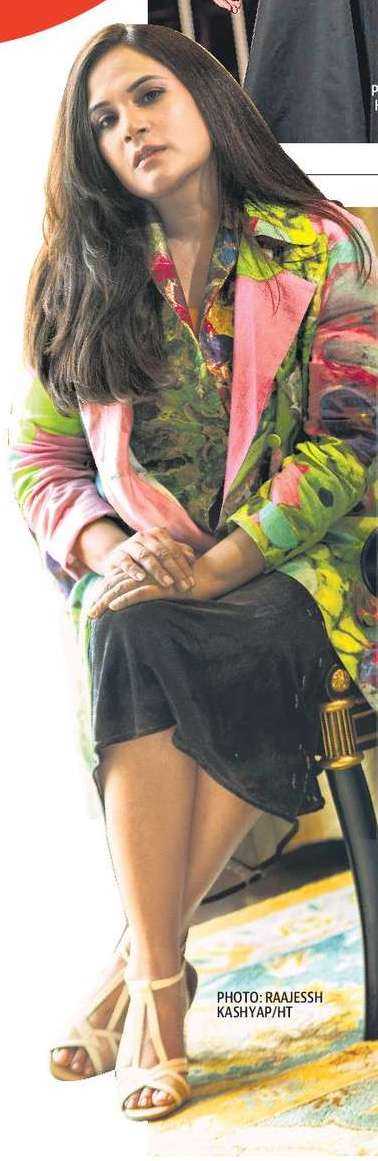
Yashika Mathur (HINDUSTAN TIMES; December 28, 2024)
Actor Richa Chadha has never been one to mince her words. In the wake of Laapataa Ladies failing to make it to the Oscar shortlist, Chadha asserts the need for women’s representation in the Film Federation of India’s (FFI) 13-member jury, which selects India’s official entry to the Academy Awards.
“It has been a great year. Santosh (directed by Sandhya Suri) has entered (Oscar shortlist in the International Feature Film category) from the UK. While that’s great, it also means that we have a responsibility to look at our stories. Whether it is Santosh, or Anuja (produced by Guneet Monga Kapoor), we have to acknowledge ki ye bhi kahaaniyan hai,” says Chadha, who has turned producer with the coming-of-age drama, Girls Will Be Girls.
Pointing out the lack of female representation in the FFI jury, she adds, “In a year when there are so many feminist films, like Laapataa Ladies and All We Imagine As Light, why do we have only men in the selection committee? Women need to have a representation.”
Earlier, the FFI had created an uproar with the choice of words used in the citation that announced Laapataa Ladies as India’s official entry to the Oscars. In it, they had referred to Indian women as a mix of “domination and submission”. “Laapataa Ladies is a great film, but the citation was funny. As a woman, I remember it,” she signs off.
Bigger movies like Kalki 2898 AD is attracting audience, but I like smaller movies like Laapataa Ladies-Sharmila Tagore
10:31 PM
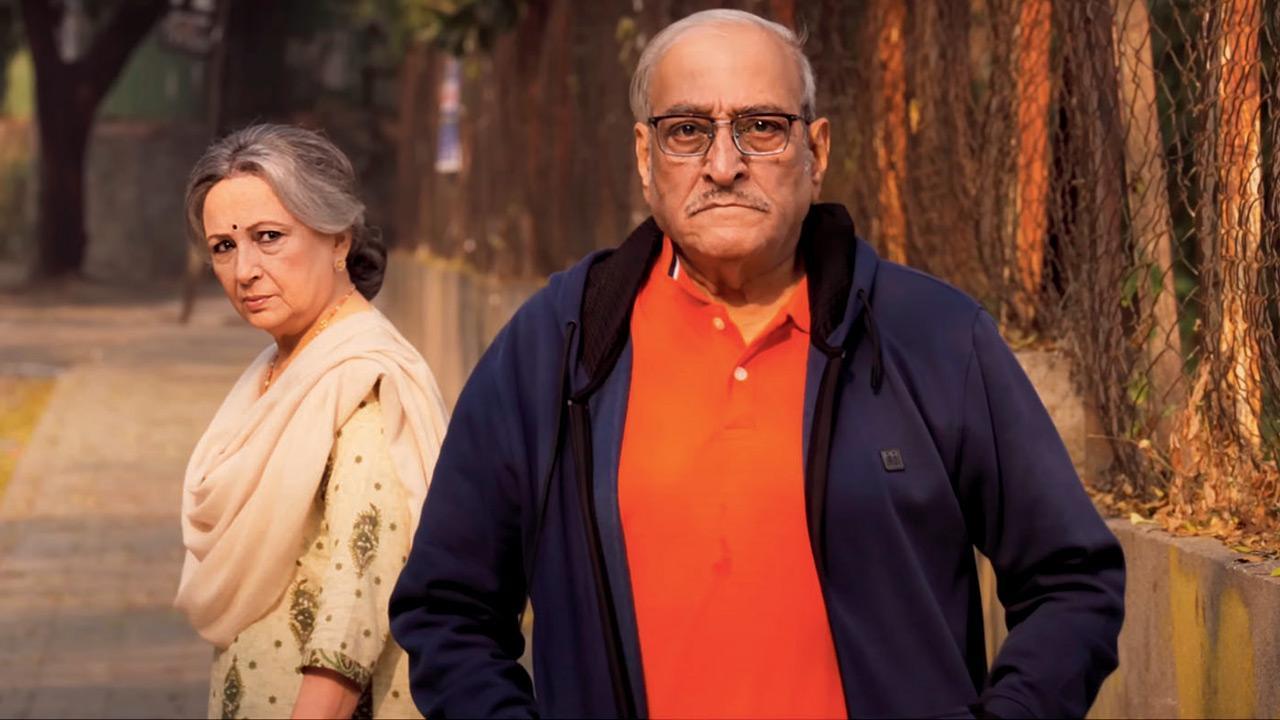
Noting that violent actioners are dominating the box office today, veteran actors Sharmila Tagore and Mohan Agashe say their feel-good film Outhouse serves as a ‘detox’
Upala KBR (MID-DAY; December 21, 2024)
Gulmohar (2023) reminded us how much we had missed seeing Sharmila Tagore on screen. Over a year later, the veteran actor has faced the camera again for Outhouse, teaming up with her Mississippi Masala (1991) co-star Dr Mohan Agashe. In Sunil Sukthankar’s directorial venture, Tagore plays a successful illustrator, who develops an unlikely friendship with an elderly neighbour while babysitting her grandson over a weekend. It was the director’s sensitive gaze towards the plight of senior citizens that drew her to Outhouse.
“The film brings forth the different needs of old age, and how the intergenerational gaps can be filled by communicating, with some humour and understanding,” starts Tagore.
The film, which hit the screens yesterday, marks Agashe’s last collaboration with writer Sumitra Bhave, who passed away in 2021. Having worked together in notable Marathi films, including Kaasav (2017) and Dithee (2019), the senior actor wanted Bhave to explore how the lives of elderly people are impacted by the breakdown of traditional family dynamics and a change in the caregiving system. But Agashe had a caveat—it should not be a tear-jerker.
Remembering Bhave, he says, “After I read the script, Sumitra asked me, ‘Do you think Sharmila would act in this?’ I told Sumitra that I would ask her. Fortunately, Sharmila liked the script.”
At a time of big-scale entertainers, the slice-of-life film comes as a fresh breath of air. Tagore believes it is a much-needed departure from the actioners that are currently dominating the box office.
“A lot of violent films have done well. I don’t mind violent films. If it has a theme or there is a reason for that violence, I’m open to seeing it. I can’t stomach films that are violent for the sake of violence. At the moment, films are going through a rough time. The actors are charging so much money. From what I hear, bigger films like Kalki 2898 AD and Brahmāstra: Part One—Shiva [2022] attract the audience. But personally, I like smaller movies like Laapataa Ladies,” she smiles.
Agashe echoes her sentiment, adding that “the world of movies is becoming a bit toxic”. “There is a lot of violence and sex in today’s films. When it hits a certain threshold of toxicity, it needs a good detox. I preferred this film because there is no sex, violence, killings or religious propaganda. It’s about the pure friendship between a child and a puppy, and the lives of two elderly singles.”
'Ghunghat Ke Pat Khol' director Ananth Mahadevan: "I tell people one of my films is going to Oscars"
9:51 AM

As Ghunghat Ke Pat Khol is acquired by an OTT platform, director Ananth Mahadevan says the movie will reach a wider audience; insists it inspired India’s Oscar entry Laapataa Ladies
Upala KBR (MID-DAY; December 12, 2024)
Ananth Mahadevan’s first feature film, Ghunghat Ke Pat Khol (1999), is getting a new lease of life. In May, the Joy Sengupta and Sucheta Khanna-starrer came into focus when Mahadevan claimed that Kiran Rao’s acclaimed work, Laapataa Ladies, borrowed heavily from it (‘Mix-up in train and station straight from my film’, May 10). Now, the digital rights of Ghunghat Ke Pat Khol have been bought by Shemaroo, and the movie will stream on ShemarooMe from January.
Mahadevan says there has been renewed interest in the film ever since he pointed out that Laapataa Ladies—which revolves around two brides getting switched mistakenly, owing to their veiled faces—was inspired from his movie that had the same premise.
“It’s a pity that Ghunghat… had a two-time telecast on Doordarshan in 1999. As soon as [the officials at Doordarshan] got to know that Laapataa Ladies was similar to Ghunghat, they immediately called me and took rights for a three-time telecast. Now, [the OTT release] will ensure a wider reach,” says the director.
Laapataa Ladies has been selected as India’s official entry to the 2025 Oscars. As Rao takes the Sparsh Shrivastava, Pratibha Ranta, Nitanshi Goel and Ravi Kishen-starrer to the global stage, Mahadevan says, “Nobody will ever admit to it or prove that Laapataa Ladies was inspired. Though nothing can be done about it, the coincidences are too strong. When people call and tell me that it has been selected as India’s entry for the Oscars, I tell them, ‘That’s great. It’s the first time one of my films is going to the Academy Awards.’”
Meanwhile, Ketan Maroo, who bought the digital rights of Ghunghat Ke Pat Khol, is confident that the 25-year-old film has an eager audience. “People are saying that another movie is inspired by it, so there will be curiosity,” he states.
I sang and showed Payal Kapadia how people from Ratnagiri dance-Chhaya Kadam
10:50 AM

Determined to bag the role in All We Imagine As Light, actor Chhaya Kadam on how she listed out many similarities between her and the Ratnagiri-bred character to director Kapadia
Priyanka Sharma (MID-DAY; November 15, 2024)
Once in a while, an actor comes across a role that resonates so strongly with them that they almost become possessive about it. For Chhaya Kadam, director Payal Kapadia’s All We Imagine As Light gave her that role. The actor was so enamoured by the character of Parvaty that she pitched hard for it.
“At one point, I thought the role shouldn’t go to any other actor. So, I started listing out similarities between the character and me. I told Payal, ‘I am also from Ratnagiri. My father was a mill worker. We used to live in a MHADA building and now we live in a tower. Everything is the same between us.’ I even sang and showed her how people from Ratnagiri dance,” she laughs.
In the Cannes Grand Prix-winning film, Kadam plays a hospital staff member, who strikes an unlikely friendship with two nurses. She had complete faith in the story and in Kapadia’s vision. That it was the director’s maiden feature did not deter her.
She reasons, “For me, the most important part is my character, then the story. I started my career with Nagraj Manjule’s Fandry [2013], which was his debut. I feel first-time directors work very hard on their film.”
This may just be Kadam’s year. She began 2024 with Laapataa Ladies that saw her as the wise Manju mai, followed it up with Madgaon Express, and then had the Cannes win for All We Imagine As Light. The one thing common in all her outings is her characters’ feminist streak.
She reflects, “I always liked characters that felt like one of us. I enjoyed films that saw the hero defeating the goons with one punch, but they never felt real. I was drawn to Smita Patil and Shabana Azmi’s brand of cinema. Now, it has become a habit to do work that I enjoy, and if we can give a social message, then nothing like it.”
Laapataa Ladies is still running in Japan, and I’ve been receiving wonderful DMs-Kiran Rao
8:21 AM

Niharika Lal (BOMBAY TIMES; November 11, 2024)
After Laapataa Ladies was selected as India’s Oscar entry, director Kiran Rao has been busy with the film’s Oscar campaign. In a chat with us, the filmmaker spoke about the film’s Oscar campaign and how it’s heartening to see its global recognition.
‘THE FILM IS SPARKING CONVERSATIONS ON GENDER PARITY’
Ask her how the campaign is going so far, and Kiran shares, “We’re just taking one step at a time, and I am grateful for both the opportunity, as well as the fact that the film is able to spark conversations around womanhood, gender parity and the need for self discovery.”
For Kiran Rao, the Oscar campaign has been a truly exciting journey so far. “We’re trying to share the film with as many people as possible and connect with a diverse audience. There’s a lot of work that goes into it behind the scenes, but it’s been heartening to see the kind of interest and appreciation the film is getting on the global stage,” she says.
‘IT’S BEEN A GREAT LEARNING EXPERIENCE’
More than recognition, the joy of sharing the film with a wider audience matters to Kiran. She says, “At this point, I think the journey is a blend of strategy, belief, hard work, and a whole lot of magic. For me, it’s been a great learning experience. I’ve met so many incredible people and been part of some very insightful conversations. While this is my first, I am grateful to have Aamir (Khan) by my side who has done this multiple times earlier.”
Talking about the reactions to the film, she says, “Laapataa Ladies is still running in Japan, and I’ve been receiving wonderful DMs and emails, with audience reactions. It is overwhelming and very humbling. Audiences are really connecting with the story, which feels so personal, yet universal.”
‘A FILM ON STREAMING PLATFORM BREAKS BARRIERS IN TERMS OF GEOGRAPHY’
For any film selected as an official entry for Oscars having a presence on streaming platforms is an added advantage.
Kiran says, “In a world where content is available on phones and tablets, I think, a film’s presence on streaming platforms is absolutely crucial. These platforms provide wonderful reach and accessibility, allowing people all over the world to watch a film at their own convenience. They break down barriers in terms of geography and allow films to reach audiences that might not have had the chance to see them otherwise. For an Oscar campaign, this is incredibly valuable.”
This Diwali, I am praying a little extra for an Oscar-Pratibha Ranta
8:18 AM

The actor opens up about how important the festival of lights is for her and says this year feels ‘extra special’ with Laapataa Ladies’ selection for the 2025 Academy Awards
Akash Bhatnagar (HINDUSTAN TIMES; October 25, 2024)
With Diwali right around the corner, actor Pratibha Ranta is excited for the festivities, especially after the year she has had with Laapataa Ladies and Heeramandi: The Diamond Bazaar. “This year is quite special; I have also been the busiest, so I have missed a number of festivals. Thus, I am going to celebrate Diwali well, because that’s something I have grown up doing. It’s how I keep myself grounded,” she says.
Reflecting on how important the festival is for her, the 23-year-old muses, “My grandparents practice spirituality and taught me the policy of ‘No crackers’ when I was about four. So for me, Diwali is about exchanging gifts, dressing up and of course, puja.”
With Laapataa Ladies being selected as India’s official entry for the 2025 Oscars, this festive season is even more special for the actor. “This Diwali, I am praying a little extra for an Oscar. Par woh prayer toh meri roz bhi chalti rehti hai,” she gushes, adding, “I’m now waiting for the day when we go [to the Oscars]. I really want to experience that moment; every time I think about it, I get goosebumps.”
Ranta was supposed to be shooting this Diwali, but a sudden change of plans has meant she will be celebrating the festival in Mumbai instead. In fact, she informs us that she hasn’t spent Diwali in her hometown Shimla (Himachal Pradesh), since she moved to Maximum City five years ago.
“I’d decided that I would go home for Diwali when I’d have achieved something. Now, I want my family to come celebrate with me. I am already manifesting that I get to celebrate Diwali with my grandparents next year,” she ends.
The primary reason for Laapataa Ladies getting picked is Aamir Khan’s previous record with Lagaan-Varun Grover
3:04 PM

Getting nominated for an Oscar is not just about having a universal story, but also about having the funds to campaign for it
Mohar Basu (MID-DAY; September 29, 2024)
In a year filled with heavyweights, it was Kiran Rao’s Laapataa Ladies that emerged as India’s official entry to the 2025 Oscars. Unfolding in the heart of rural India, this film is a commentary on patriarchy, which juxtaposes humour with deep societal critique. With a backdrop of dusty Madhya Pradesh villages and real-life locales, the film captures the essence of a lost India, where women disappear—figuratively and literally—amid the chaos of cultural expectations.
When the Film Federation Of India revealed that Laapataa Ladies would carry the nation’s hopes at the Academy Awards, cinephiles cheered—but not everyone was convinced. Selected from 29 films, including Animal, Kalki 2898 AD, and All We Imagine As Light (AWIAL), the victory was both sweet and surprising. While many celebrated Rao’s comeback and the film’s understated brilliance, others couldn’t help but voice their discontent over what they saw as missed opportunities. Fans of All We Imagine As Light, a Cannes sensation, took to social media in droves. The Payal Kapadia-starrer is considered to be one that has a real shot at Oscars. Their argument? That Laapataa Ladies, while charming, lacks the international appeal of its more polished competitors.
Celebrated writer Varun Grover tweeted, “I mean it was expected that the chaaploos mandali (who can’t even write a citation with any attention to detail or meaning) will never select a film by someone who has questioned their authority. And, it’s still heartbreaking. We rarely get such a strong contender as AWIAL. At the same time, happy for Kiran Rao and her team. They made a sensitive, progressive, rooted film told beautifully through a new set of actors (and a hate-speecher)—and totally deserve a shot at glory. Best wishes to them. Jai Ho!”
While Grover didn’t wish to elaborate on the subject beyond this tweet, an indie favourite filmmaker tells us: “It’s undeniable that AWIAL was a stronger contender and should have been picked. The primary reason for this getting picked is Aamir Khan’s previous record with Lagaan. His ability to get visibility increases his chances of actually bringing home the Oscar.”
Laapataa Ladies was a unanimous decision, Jahnu Barua, the head of the Federation, told us. He told mid-day, “The film resonated deeply with us because it brings forward global social issues that are rarely explored on screen. As jurors, we want to select a film that has the best chance of making it into the Oscar nominations. The jury did deliberate over the AWIAL. It’s a significant work that deserves attention, especially since there were high expectations surrounding it. However, we felt that there were technical aspects that could have been stronger. When selecting a film for the Oscars, many factors come into play. While the subject was undeniably powerful, and Payal has crafted it beautifully, we ultimately had to make a tough choice. We wish we could have chosen both.”
So what is one looking for while choosing India’s entry to the Oscars? We asked Pan Nalin about his film Last Film Show (also known as Chhello Show) which beat RRR to get chosen as India’s official entry, much to the horror of fans.
Nalin said, “In our case, it was a complete surprise. You know, we were not even sure that we would ever get selected. The buzz in India was of very big, popular films. But when it comes to Oscars, it’s not really about popularity, but the film which will speak to the members of the academy in the US. So, from that point of view, I guess they must have voted for us. And once we become an entry, it’s a big work, you know, we need to do as a producer and director. It’s really huge work. You know, you need to mount a massive campaign in Hollywood. You need to organize quite a lot of screening for the members of the Academy. So, in our time, there were, for example, 102 films from 102 different countries. And the first round of voting leaves 15 film shortlist nominations. So, we were shortlisted. Voting is done purely by the Academy. India has no role to play there. All the academy members have to watch the film in order to vote. When we got shortlisted, you know, it was after a 21-year gap. Before that, the film which got shortlisted was Lagaan and went on to get the nomination. Our journey stopped there. And we also realized a couple of things while we were doing the campaign. Because we had no idea, we were learning as we were running the campaign for India. When the Oscar shortlist is announced, it’s actually the map of each country shown in the Academy screen. So, it’s neither the director nor the film. It’s actually you who is representing a country. You are representing a flag when you go there. The film was luckily very heavily appreciated. We were invited at the Academy to do multiple screenings. But where we lacked is time and money. Because you do need a lot of funds, you know, to mark the campaign. And advertising in international media and the US media is really expensive. The billboards alone are costly and you need to really have a great campaign. In the past five years, the publicity campaign has become aggressive and expensive. It’s very much like an election. You have to really make sure that every vote is earned. And the only way to earn a vote is maximum people have to see your film, who are the members of the academy.”
Nalin says the jury is looking for a universal story. “It is important because we were already acquired by an American distributor called Samuel Goldwyn Films. The fact that it speaks to an international audience is a plus. It is a gamble that must speak to international jury and voting committee members of the academy. The film has to be universal to start with because most of the Academy members are American, you know, I would say almost 85 per cent of them. Since the past 15 years, it has been very inclusive. Lots of foreign country members are being invited who are in the Academy. Now, I am a voting member as well. We know that if we had the right amount of funds and time, we would have gone much further in the campaign. But we had no example to fall upon. We had no master class to learn something from other examples. Because none of the films from India had made it up to that in 20 years, since Lagaan. It makes sense that Aamir Khan has a shot at this again. Laapataa has a chance to make it.”
The one element connecting the two films is Chhaya Kadam—who appears as Manju Mai in Rao’s film and is currently in France for the premiere of AWIAL.
She told us, “I’m absolutely thrilled and overjoyed! It’s such a proud moment for me to see Laapataa Ladies chosen as India’s official Oscar entry. At the same time, I’m in Paris for the premiere of All We Imagine As Light, which has been shortlisted by France as a possible submission for the 2025 Oscars. It’s truly exciting to have both films recognized on an international stage.” Is there a chance for AWIAL still? “I would have wanted to see them both at the Oscars. It might still happen,” she said optimistically.
Nandini Ramnath, film critic, Scroll.in, tells us choosing the best pick is a tough choice regardless, because of the diversity of the films being made.
“A few factors work in the favour of Laapataa Ladies: it has Aamir Khan as one of three producers; he has had previous experience with Lagaan; Laapataa Ladies is easily available to the Academy voters by virtue of already being on Netflix all over the world. I have watched both films. They are very different. Laapataa Ladies is a sweet modern-day fairy tale told in a realistic manner. All We Imagine As Light is a textured exploration of the shades of feminine desire and a quest for meaning. Given the current tendency of the Oscars to be more receptive to all kinds of storytelling styles from around the world, rather than just a certain kind of global-local international film, Payal Kapadia’s feature debut would have been an excellent contender too, especially given its Cannes award. Movies speak differently to different sets of viewers. What works at a film festival often doesn’t work for the Oscar voters. In general, films that can communicate their themes well and have layers in their plotting, performances and filmmaking language can travel to any corner of the world, regardless of the theme.”
When we asked her how she thinks politics and personal biases play into the selection process for India’s Oscar entries, Ramnath has the last word, “I think it fair to say that the Film Federation of India, for all its drawbacks, has been trying to keep away from political choices. If that were the case, the jury would have picked a propaganda film.”
Subscribe to:
Posts (Atom)