Showing posts with label LOC Kargil. Show all posts
Showing posts with label LOC Kargil. Show all posts
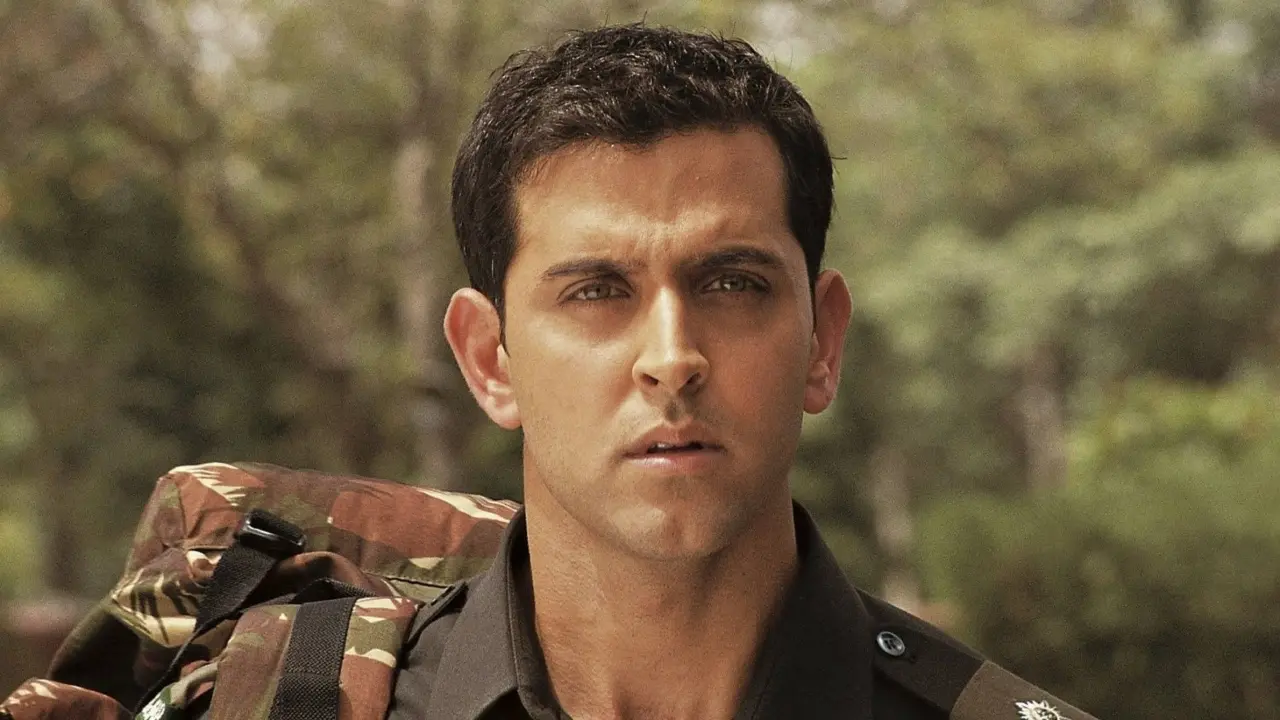
"Lakshya was an accurate depiction of army life; Hrithik Roshan’s haircut was exactly how it is in the forces"
8:38 AM
Niharika Lal (BOMBAY TIMES; July 26, 2025)
For 26 years, July 26 has been observed as Kargil Vijay Diwas, commemorating India’s victory in the Kargil War. In 1999, TV brought the war into the living room with 24 hour news cycles. At the time, realtime footage left little room for films to fill in the blanks. With time, filmmakers began exploring the Kargil narrative. The early 2000s saw a number of films – LOC Kargil (2003), Dhoop (2003) and Lakshya (2004). In recent years, Gunjan Saxena: The Kargil Girl (2020) and Shershaah (2021) attempted to show the war on screen. If TV captured Kargil as it happened, cinema stepped in to memorialize it, say cinema experts.
“That emotional connection created by films is very real,” says Major Sandeep Sangwan (Retd). “They help citizens understand and appreciate what the Army does, especially those who may never see it firsthand.”
‘Emotional storytelling is key for war films’
A film distributor recalls that when LOC Kargil and Lakshya had released, these films inspired many young people to join the forces. He says, “It’s not important to have 200 films (on the subject). What’s important is to have authentic films that tell the story of the Kargil war and inspire youngsters.”
Retired Major Sandeep Sangwan believes realism alone doesn’t move people. “If a film only talks about an operation without showing what the soldiers are feeling, it won’t stay with the audience. Emotional storytelling is key. That’s why you’ll always notice a personal angle in good war films – the family waiting back home, the camaraderie among soldiers.”
‘LOC, Lakshya, and Shershaah left a mark’
Major (Retd) Sandeep Sangwan, who now consults on military operations for films, names three films when it comes to cinematic depictions of the Kargil War – LOC Kargil (2003), Lakshya (2004), and Shershaah (2021). “Most of the war heroes were part of LOC Kargil, whether it’s Lt Balwan Singh (now Colonel), Capt Sachin Nimbalkar (now Colonel), or Capt Vikram Batra, who of course became known as Shershaah – the Tiger of Kargil. Since 8-10 operations were packed into one film, it became hard for audiences to register everything, but it is one of the most remarkable films on Kargil war,” he says.
Written by Javed Akhtar, Lakshya zeroed in on one officer’s journey. “It followed one operation, and one officer – right from his Academy days to getting selected, and eventually leading the operation. That’s why Lakshya stayed in people’s memory. It was focused and emotionally engaging,” says the Army veteran.
As director Farhan Akhtar, recalled on the film’s 20th anniversary, “Javed Akhtar had mentioned that he was working on a story about a young boy who joins the Army – not just in terms of calling, but also finding a true calling in life and truly understanding who he is through that process. That was the core of the film.”
‘Stories of officers who made sacrifices during Operation Safed Sagar need to be told’
Brigadier Gautam Ganguly, SM, VSM (Retd) says that stories from Operation Safed Sagar – the Indian Air Force’s (IAF) codename for its air operations during the Kargil War – should also be turned into cinematic projects.
“The Indian Air Force didn’t get as much recognition for its operations, which it conducted during the Kargil War. The stories of the officers who made immense sacrifices and displayed acts of bravery need to be told. Our younger generation must know these stories. After Operation Sindoor, people became more aware of the IAF’s operations – but back then, when the Indian Air Force didn’t even have precision-guided ammunition, the way they carried out their missions is an untold story of courage.”
I think OTT platforms are ideal for Kargil war stories: Gautam Chintamani
Film historian Gautam Chintamani feels sometimes when you’re too close to history, you don’t know how to chronicle it. He says, “That’s been the challenge with depicting the Kargil War. It was India’s first war in the age of 24/7 media – broadcast live into our homes. But strangely, despite its gravity, the seriousness of the Kargil war was often diluted in how it was reported and remembered. I still remember how bizarre it felt – India was playing a cricket series against Pakistan, while the same news channels were reporting sensitive details about troop movements during the war. In some ways, people didn’t fully register what we were fighting for.”
He continues, “Now, 25 years have passed. And a huge percentage of India’s population is under 25 – which means for them, Kargil is history. For those of us who lived through it, it was current affairs. So now is the right time to re-examine and retell these stories. The first big film on Kargil was J P Dutta’s LOC Kargil. Initially, J P saab wasn’t keen on making a film so soon after Border (1997), especially since the war was so fresh. But he met many families, widows and parents who’d lost sons – and that moved him deeply. That’s when he decided to make the film. But I’ve always felt that LOC... would’ve worked better as a series. A two-hour or-four-part miniseries would have allowed the individual stories of courage to breathe. In the film, because of its length and scale, many heroes ended up being unintentionally sidelined. I think OTT platforms are ideal for Kargil war stories. Now, with the benefit of time and long-form storytelling, we have a chance to do justice to Kargil in a more layered, meaningful way.”
Real soldiers were cast in Lakshya
On the 20th anniversary of Lakshya, Farhan had said, “There is a simple thing that anybody who is not from the Indian Army doesn’t know – soldiers do not kneel. Getting down on your knees is not considered right – they either lie down or stand. These kinds of things were learning for us.”
The production team even collaborated with the Army to include real soldiers in the film. “As far as weapons were concerned, the Indian Army did provide us weapons, which were then modified to fire blanks. This was handled by production and leads from the Army,” Farhan said.
‘There’s a surge of interest for such films now’
Mohommed Ali Shah, a former Army Major, who has acted in films like Haider (2014) and Bajrangi Bhaijaan (2015), believes there could be more films on Kargil war. He says. “There’s already been a surge of interest in the last few years with films like Gunjan Saxena and Shershaah. Lakshya stood out for its realism. To a huge extent, it was an accurate depiction of Army life – even Hrithik Roshan’s haircut was exactly how it is in the forces... Whether we fully agree with it or not, films leave an impact. And indeed, for a number of people, these films are how they remember Kargil War.”
Why films on the Kargil war didn’t connect with audiences
8:27 AM

On Kargil Vijay Diwas, we look at how Bollywood captured the Kargil war, and why most of these films didn’t make an impact
Niharika Lal (BOMBAY TIMES; July 26, 2020)
This Kargil Vijay Diwas marks 21 years since the Kargil war. While Bollywood made films on the war in the early 2000s, there hasn’t been any film on it recently, till Shershaah (starring Sidharth Malhotra), based on Kargil war hero Captain Vikram Batra, and Gunjan Saxena: The Kargil Girl (starring Janhvi Kapoor), based on Flight Lieutenant Gunjan Saxena, the first woman Indian Air Force officer to enter a war zone. However, the earlier films didn’t do very well at the box office. Experts say that the reason behind this is that the Kargil war was the first televised war in India, and its memories were too strong back then, which those films failed to capture.
‘KARGIL MEMORY WAS TOO FRESH IN EARLY 2000S, WHICH FILMS COULDN’T CAPTURE’
Gautam Chintamani, a film historian, says, “There was more ‘drama’ in the real-life stories than what was translated on screen. People saw Kargil stories in a 24-hour news cycle. Films such as L.O.C Kargil (2003) had too many sub-plots, which failed to find takers. After the film didn’t do well, not many Bollywood producers took up a Kargil war story.”
After films like LOC Kargil (2003), Stumped (2003), Dhoop (2003) and Lakshya (2004), not many films on the war were made. Gautam says, “The real-life stories that inspired Lakshya had far too much drama. The film lacked suspense. Before the interval, Hrithik’s character goes through a transformation, and you know the story that will follow. The same thing happened with Stumped – which has the backdrop of an India-Pakistan cricket match around the time of the war. That drama also failed to translate on screen.” Gautam adds, “Somewhere, producers must have felt the war’s memories were still fresh. Twenty years later, there’s more interest in the stories. However, Gunjan Saxena’s story might have worked even then.”
One of the major Kargil-based films was J P Dutta’s 4-hour-15-minute multi-starrer L.O.C. Kargil, which didn’t do too well. In an interview, Dutta said that one reason could be that India wasn’t ready for a docu-drama of that kind.
Dhoop, based on the aftermath of the war, was inspired by Captain Anuj Nayyar’s story. Ashwini Chaudhary, who directed the film, says, “India doesn’t have many war films because fortunately, India hasn’t seen many wars. I think the reason why there haven’t been many films on the Kargil war is also because the war’s memories were fresh back then. Two decades later, more films are releasing. Generally, Army ke log yeh sochte hain ki hum film wale unki stories ko commercially exploit karte hain. Also, for a filmmaker, it is dangerous in a way that his film on such a prominent war should not be used by those in power as a tool, so all these factors have been there while making these films.”
People got to know about 1967 Indo-China clashes after Paltan’s trailer released-J P Dutta
8:32 AM
Hiren Kotwani (DNA; September 5, 2018)
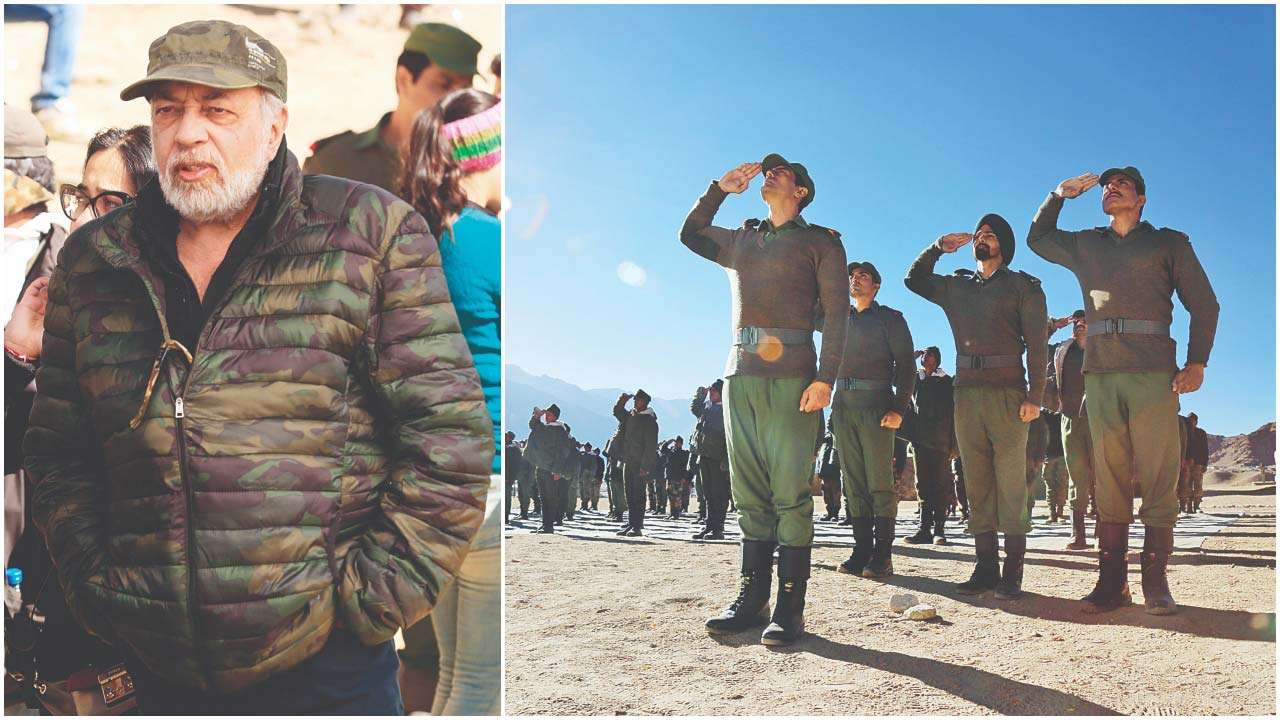
Despite making movies on varied subjects like the caste, feudal and zamindari systems, warring royalties, and the Umrao Jaan (2006) remake, JP Dutta is best known as Bollywood’s war movie specialist for making Border (1997) and LOC Kargil (2003). The National Award-winning filmmaker, whose career spans over three decades, has revisited the genre and has completed his war trilogy with Paltan, which is backed by Zee Studios.
In the film, Dutta tells the story of Indian forces that fought Chinese aggression in 1967 and forced them back in the clashes at Nathu La and Cho La in Sikkim. In this interview, he talks about his latest release (which comes 12 years after his last outing, Umrao Jaan) and the Indian armed forces. Read on...
Having made different kinds of films, why did you choose to make Paltan?
I had promised that I would make a war trilogy. This is the third part. I’ve kept my word.
What, according to you, makes the story of 1967 Indo-China clashes so important?
When you talk of Indo-China conflicts, people only remember the one in 1962. I believe that wasn’t a ‘war’ because when one takes place, you know the enemy. Back then, the enemy chanted ‘Hindi-Chini Bhai Bhai’, but they stabbed us in the back. The UN was refusing to make Communist China its member, but our then-Prime Minister, Pandit Jawaharlal Nehru, insisted on its inclusion. Keeping in mind that India was pressuring and strongly recommending China’s membership, he didn’t think they would attack us, but they did, that too without any warning.
The conflict took place 50 years ago, isn’t it a little late to tell this story now?
Not many people know about this episode. Only after Paltan’s trailer released that more Indians got to know that something like this had happened in 1967. No one spoke about it and there’s no mention of it in our history.
When you made Border and LOC Kargil, you shot at actual locations...
Since 1967, the infrastructure at Nathu La has changed. It’s a different terrain now. There’s a gate at the place where the clashes happened. So, it doesn’t match the story. But it wasn’t difficult to recreate the place in Ladakh. We share a 4000-kilometre border with China; it’s similar to how Nathu La was back then.
LOC Kargil showed how the Indo-Pak battle was fought at multiple points...
Even there, we didn’t have the advantages. The enemy was at higher points and we had to fight our way up to recapture our territory. In Paltan, the drama and emotions are almost like that in Border — of one battalion fighting the opposing army. And the clashes are eyeball-to-eyeball, like Doklam.
Even though you’ve made socially-relevant movies, your name is associated more with war films. What fascinates you about this genre?
Many such tales need to be told. People want to see all sorts of films with diverse subjects. The story of a soldier staying away from his family and sacrificing his life to guard us and so we can sit in an air-conditioned room and talk in peace makes it necessary and worth the while to tell others.
In recent years, people’s opinions about the armed forces have been on two extremes. What’s your take on this?
We don’t care about our army, unless there are floods or a natural disaster or until the enemy is at the gates. The fear comes in, we get scared and we wake up to the soldiers.
Why do you think people have this attitude?
I feel it’s because India has only experienced battles and not the two World Wars like the West has. They understand the value of a soldier, country, respect for the national flag, etc. Both the World Wars impacted the entire world, except India, though many of our people were fighting for the British Army. The attitude towards the army depends on the individual and the families. The four walls of your home are the biggest school you’ll go to. What your parents talk about, what you listen to and say as you grow up, plays a crucial role.
What are your views on the word ‘jingoism’ being used to describe patriotic films in Bollywood?
Whoever uses this word for India needs to look up the dictionary, understand its meaning and what our country is all about. Our nation is a liberator, not an aggressor. We’ve never attacked any country in our entire history, ours is the only country that has always tried to defend itself against foreign invaders. Jingoism is not the right word for our country.
We hear the Ministry of Defense has appreciated the film and would like you to make another war movie.
Well, the MoD has liked the film. They always wish that I do well. I get a lot of respect from them and I also respect them immensely. It’s mutual.
What are you planning after Paltan?
I don’t know what’s next. I’ve registered 21 titles and every title is for a different subject. Let’s see...
You could call me the filmmaker who shoots in naked places-J P Dutta
8:00 AM

J P Dutta on completing his trilogy of war dramas, why he is no longer interested in the Battle of Saragarhi, and his upcoming project
Roshmila Bhattacharya (MUMBAI MIRROR; July 23, 2018)
What was it like going back into the battle field 15 years after LOC Kargil?
I had made a commitment in the media that I’d make a trilogy of war films which I have completed with Border, LOC and now Paltan. And when I went back into the battle field, I felt like I’d never left. It was like two friends meeting after years and picking up from where they’d left off.
You selected a difficult location to pick up from, the first schedule being in Ladakh…
You could call me the filmmaker who shoots in naked places, from Rajasthan and the Rann of Kutch to Ladakh, I zero in on locations that are devoid of greenery. I don’t know why my journey takes me to these barren states but showcasing them on screen help them grow economically and give tourism a boost. I shot through the winter months of October, November and December when the temperature would sometimes drop to minus 20 degree but my producer-daughter Nidhi made sure my team and I were well taken care of.
Border was inspired by your late brother’s experiences as an Air Force pilot. What was the muse behind Paltan?
I have friends in armed forces and once when I was talking to a senior officer he mentioned this battle. It is a story which had got pushed under the carpet by the government of the day for whatever reason and I knew instantly that it had to be told. Like Arunachal Pradesh and Ladakh which the Chinese are waiting to grab, they had designs on Sikkim too and the reason Sikkim is a part of India today is because of three battalions--the Grenadiers, the Rajputs and the Gurkhas — who stood their ground when the People’s Liberation Army (PLA) attacked the border post of Nathu La in the early of September 11, 1967. We are awe-struck by China’s might today but we gave this powerful country a bloody nose in this battle.
Have you recreated the battles of both Nathu La and Cho La?
No, only Nathu La or else the distributors and exhibitors would crib that I had made another four-hour LOC.
Today, given the strained Indo-China relations, do you expect any objections?
When you are true to your country’s history no one can take objection. I’ve met men who fought in the battle. Their inputs have been woven into the script. It’s a realistic picture. Anyone can make a war film but it’s important to be aware of the ethos of the armed forces to do justice to them. My family— uncles, cousins and brother — were in the armed forces so I know it like the back of my hand.
Is the film on the Battle of Saragarhi still on?
Too many people have jumped into that battle. My film would have played it on an international platform because there are many foreigners involved. Right now, it’s not on my mind because I’m not happy with the way Hollywood works. You reach a stage and age when you don’t need to be told what to do and what not. Hollywood works in a different way and it makes me uncomfortable.
What is happening to Nidhi’s acting debut with Nafisa Ali’s son Ajit Sodhi?
The film, Jee Bhar Ke Jee Le, is ready and we are in talks with people to release it. It should see the light of the day soon. Meanwhile she’s shaped up into a brilliant producer.
So, with a producer in the house are there plans to make another film soon?
I am planning a historical and have a couple of options in mind. It’ll also be a true story.

The other day Rahul Nanda also asked me why I keep making these epic films. “Why can’t you make a small film?” he wondered and Nidhi butted in, saying, “Rahul uncle, papa can’t think small.” When we were doing Paltan, Javed (Akhtar) saab, Anu Malik and I were conscious that after the music we had made together, in particular Border (right), we would have to raise the bar with this one. These challenges excite you as a filmmaker.
So, when you look back on Paltan five years from now what will you remember?
(Laughing) That it was the easiest film I’ve made.
When will Bollywood gets its blockbuster war film?
7:47 AM

Aarushi Nigam (BOMBAY TIMES; December 8, 2017)
We love our movies. And we love our armed forces. But the powers of association alone are not enough to make us love our movies on the armed forces. While almost every major actor has played a soldier at least once, and a few others have made it a career regular, only a small percentage of those films is actually about the forces (and not a plot device to complicate a love story), and even a smaller percentage has clicked with audiences. Where is our blockbuster war film? Or one that swept away the National Awards and the box office? While tributes pour in for our men and women in uniform from all quarters including the film industry today, the best kind of tribute to our forces from the film industry – a defining, universally-appreciated war drama – is still missing. And as an audience, while the service and sacrifice of our uniformed forces might ignite our collective passions, the same can’t be said of consuming that topic on the big screen.
THE POST-WAR YEARS AND CINEMA
The conflicts of 1962, 1965 and 1971 inspired several films that rode the wave of nationalistic sentiment sweeping through the country at the time. Haqeeqat (1964) and Border (1997), based on the Sino-Indian conflict and the 1971 war with Pakistan respectively, are perhaps our only two war films that can be unquestionably called successful, in terms of winning over both critics and audiences. Many others, like Hindustan Ki Kasam (1973) and Vijeta (1982), will find mention among the better films on the forces to be made, and are remembered till today even though they failed to pull in audiences at the time. The 2017 film The Ghazi Attack, about the mysterious sinking of the PNS Ghazi in the 1971 war, suffered its own mysterious sinking — it earned positive reviews, but not box office numbers. 1971 (2007) might have won the National Award for Best Hindi Feature Film, but mention it to most and you wouldn’t get an immediate recollection.
The Kargil War, the first to be fought in the 24-hour news cycle that brought the war to our living rooms and nationalistic fervour out on our streets, failed to inspire the same zeal on the silver screen. The long-winding and multi-heroed L.O.C. Kargil could keep neither the viewers nor the critics glued, even as real-life accounts from the war, retold in countless Facebook posts, news articles and books,continue to find takers till today.
FICTIONAL CONFLICTS ON THE SILVER SCREEN
There have been other films with fictional stories set in the backdrop of real conflicts, but most haven’t come even close to being successful. The most enduring image from the 2011 Mausam might be of Shahid Kapoor in his Air Force uniform, but the image is all that still remains in audience memory. Others, including Param Vir Chakra (1995), Agnipankh (2004), Deewaar – Let’s Bring Our Heroes Home (2004) and Ab Tumhare Hawale Watan Saathiyo (2004), haven’t survived the test of time barely gone by since they released.
Why would Salman Khan look up to me?-Sanjay Dutt
8:18 AM

Reluctant conversationalist Sanjay Dutt talks biopic, jail- term, drugs, and what he misses about Bollywood — certainly not the underworld
Mayank Shekhar (MID-DAY; April 23, 2017)
News of Vijay Mallya’s arrest is doing the rounds as we get on Sanjay Dutt’s Bhoomi film set, with Dutt chilling with his entourage under an open-air, makeshift tent on a hot Tuesday afternoon, while rehearsals are on for a courtroom scene inside the Basra studio-lot in Kandivali. “He’s not been arrested in Scotland, yaar. Scotland Yard in London has arrested him,” Dutt corrects his colleague. I ask him if he’d rather chat after he’s delivered a four-page monologue for a major pre-interval climax to be shot later in the evening. “Let’s get this over with first,” he says.
Omung Kumar’s Bhoomi is Dutt’s first film since he got out of jail over a year ago. Looking at him — thick beard, dressed in beige Pathani suit, playing an oldish father — what I find slightly surreal is, as we speak, there is another actor (Ranbir Kapoor) who’s walking, talking like exactly him, few minutes’ away at Kamalistan studio in Jogeshwari, where Dutt’s biopic is simultaneously being shot by director Rajkumar Hirani.
Amazing shots
Surreal, no? “Hmmm… Right,” Dutt mumbles. “It is really amazing. I’ve heard the script, and it is brilliant. I love the way it’s being shot.” Has Ranbir got the mannerisms right, though? “Yeah, he’s pretty much there, man. It’s unbelievable what he’s doing.” The last time Dutt visited his biopic’s set, he says, they were shooting a ‘radio-station’ jail sequence: “It was done so well. I feel Ranbir’s one of the best actors we have, and to top that, there’s Raju Hirani.”
Prodded to elaborate further on what a radio station scene in a jail could be about, Dutt recalls, “The DIG, IG, and the superintendent were kind enough to build the structure of an in-house radio station in (Yerwada) jail when I was there. We used to play music and have programmes. They put a few of us together. But out of 4,500 (inmates), we had to find out who were the good writers, engineers, and who could speak clearly. I was an anchor — I used to write, talk. The whole jail would listen. Every barrack had speakers connected. We’d play songs.” Did he play tracks from his films? “Farmaish hoti thi. Whatever farmaish used to come, we’d play.”
Give or take a few paroles, and furloughs — a word that entered popular lexicon in India, thanks to Dutt himself — the actor has cumulatively spent five years of his life in prison, which would be long enough, if you were to visit another city or country, to naturalise yourself as a local. What does being in jail do to you? Dutt has been to boarding school (in Sanawar), although that’s not even close to complete physical confinement with just a few people you can meet and second-class compartment of a running train that won’t stop for years! Just watching Bigg Boss for three months sends shivers down people’s spines. Does prison change you as a person? “Why should anything change you as a person?” Dutt shoots back. “In jail, there is too much frustration and negativity. And to change that into positive is very, very difficult. There is a lot of hope and expectations that you have to first eradicate from your life for that period. Which is again, very difficult.
But you’ve got to do it.”
Surely, the common experience shared among inmates creates a bond that’s hard to match; has he made some close friends. Is he in touch with them? “Yes, you do find a couple of people who matter a lot, and who you start idolising, actually, because of how they’ve conducted themselves through so many years. They’re there just for having made one mistake, and have to face 20 or 25 years (for it). To hear them speak about life. Or even about rules, regulations. To watch their behaviour, and respect for other people — it was shocking, and a lesson for me. I can’t take their names, and I would definitely like to be in touch with them.”
Given his profession, maybe Dutt could mine some of these stories to script characters worthy of film. An unverified information that I’ve heard for years relates to Bhiku Mhatre, inarguably Bollywood’s finest gangster, played by Manoj Bajpayee, in Ram Gopal Varma’s Satya (1998). The character, it is said, was based on a friend that Dutt had made during his prison term. Is that true? “Yes, there was (someone like Bhiku). And I told Ramu about him,” Dutt confirms. His name was Bhiku? “No.” Are you in touch with ‘Bhikhu Mhatre’? “He’s doing life (serving life sentence).”
Only a year after Satya, however, Dutt had immortalised himself as gangster Ramdev Shivalkar on screen in Mahesh Manjrekar’s Vaastav (1999). Did he know someone like Raghu as well? “Vaastav was totally Mahesh Manjrekar’s baby, based on some other person. That film had nothing to do with me. That was only, and absolutely Mahesh,” he says.
If you don’t know this about the actor already, Dutt is a severely restrained, reluctant conversationalist — his responses are rationed and measured, if not monosyllables, while he waits for your next question. Or maybe this is how he’s with reporters. Or ones he doesn’t know personally.
Dutt was arrested under TADA, which was repealed later, and for illegal possession of arms, after the 1993 Bombay blasts. To be fair, being under intense journalistic scrutiny over 23 years could make anyone cynical towards a profession, or its professionals. The last time I interviewed him, over a decade ago, my long questions were met with answers that went: “Yes.” “That’s right.” “No.” “Yes.” “Maybe.” Which is how we eventually ran that interview.
Once bitten, I went this time with no questions at all. My notes, which I didn’t bother opening either, simply read: “Films (something newsy, separate story). Jail. Drugs. Underworld.” Of these, my hunch is that option three will get Dutt to open up. I’m not mistaken.
I am the research
How long was he under the grip of drugs, I ask him. “Ten years or so…'79-'80's onwards,” Dutt says. Ever since he quit, he has been an active anti-drugs campaigner, speaking strongly on the cause. The argument he’s made about drug addiction is that an introduction to a drug in itself is invitation to a dark tunnel that you will inevitably keep going deeper into. This is in line with popular wisdom on the subject, which has, in fact, been challenged through researches lately, that now suggest that the key issue is not the substance — but personal circumstance. And that an individual once reconnected to a normal, satisfying life, would see himself weaning away from drug-addiction, with no external help.
Around 20 per cent of the US army in Vietnam, for instance, consumed heroin like chewing gum. About 95 per cent of them overcame that addiction automatically when they returned home —‘from a terrifying cage to a pleasant one’ — with very few of them having to go through any rehab. Dutt is visibly unimpressed: “These guys who do researches are never on the field. All you’re telling me is basically excuses for addiction. There was no Vietnam for me, and that’s why I did drugs. There is no this, or that. I knew I was doing heroin. I know this is cocaine. Why am I doing it? Because my mom is ill? What the f***. It’s because I want to do it. There is no ‘I wanted to connect, disconnect’. I’m bull-shi**ing myself. You’ve got to cut the bullsh** out. Drugs, or addiction, in any form, is wrong, whether it’s overeating, over-working, over-drinking — anything in excess is an addiction. These guys make excuses: 'Maine khana khaya itna, kyunki mere ko depression ho gaya'. You have to be counselled."
No excuse for addiction
Surely, there's got to be some good side to drugs, even if momentarily, for so many to voluntary be hooked to it at some phase or the other in their life? "No. What is so enjoyable about anything mood-altering, when you can get the biggest high, from life, family, or your work? There's something natural called adrenaline — there is no drug in the world that can replicate it. But that is the best high that anybody can get. Smoking marijuana, dope and all, is just mood-altering. I've heard guys say, 'Maine do joint maara, and what a performance I gave'. When your mind is altered, how are you going to make decisions?"
My feebly posed submission emanates from how recational drugs - and progressively more so alcohol - is either wholly demonised, celebrated. There is rarely middleground subject. “Here this,” Dutt argues: “Eight out of 10 people in this world are addicts (addictive personalities). So, only two out of 2 are not. A guy can say, ‘Okay, I’ll have a joint on Saturdays, and he sticks to it. Or I’ll have one drink a day, bas’. And he does it. I’ve seen many people like that. But that percentage is too small. I wish I could be like that — enjoy my two to three drinks, and feel, ‘Arrey mazaa aa gaya’. Woh hota nahin hai, bhai. Toh bandh hi kar do, better hai. Are you ready to take that chance, of being (among) that 20 per cent? No.”
It’s a strong point. Hard to argue against. Maybe we could talk about something more fun. A piece I’ve been meaning to write, I tell Dutt, is on Bandra in the ’80s/’90 s — the ‘bhaigiri’, the party scene, the pop-culture… “No pop-culture; it was rock culture,” Dutt cuts me off, having opened up now, and offering to extensively chat on this subject over a long evening soon.
The original Bandra boy
I’m not sure how much of this would get encapsulated in his biopic, but both filmy kids and his contemporaries who were around in Bandra in the late ’80s have regaled me with stories about Pali Hill’s Sanjay Dutt — long hair, motor-bike, leather jacket — as the posh neighbourhood’s patron saint of ultimate cool, that everyone, including Salman Khan, looked up to, in awe and reverence: “Salman? Why will he look up to me (sic),” Dutt dives into his characteristic sarcasm, admitting though that “there was an image that I had, and I wasn’t pretending. It was a different zone.”
Underworld also flourished within Bollywood during the same decade, something that did him in eventually. “But the best part is, I have never done a film where they were (involved). But yes, they used to be part (of the film industry), and the whole industry was scared (of them). You had to be,” he says.
What Dutt, 57, misses most from back in the day, is the bonhomie in Bollywood: “It’s become competitive, cut-throat. The bonding between people has died. There used to be a family atmosphere, which is gone. It’s pretty shocking, but that’s the way it is, and that’s the way it’s going to be. It was beautiful before — bonding, meeting once a month, being on the sets… Outdoor shoots were all so different. We’d all sit and hang together. The last time I can really think about (doing this) was on the sets of (J P Dutta’s) LOC (2003), where there were a whole bunch of artistes in one film, one hotel. How much we enjoyed — without any egos, doing dinners, drinks, going out together. It was unbelievable. There was no fighting. Where were these (vanity) vans before? Now, nobody steps out of their van. I’ve been here (on set) since you’ve come,” says Dutt, indicating that maybe he should go back to his friends waiting for him, sitting around in a circle at the other corner of the tent.
“Vijay Mallya’s got bail,” he announces at the end of the two-hour interview. That was quick.

With a history like this, Pakistan will ban anything based on reality
8:13 AM

The Pakistani establishment didn't need to watch Phantom before banning it. The film is based on 2611, after all, and which narrative of the terror strike will gel well with powers that side of the border? Given our history, it's no wonder that the real-life topics Bollywood explores -from war to terror -leave our neighbour jittery, irrespective of the movies' actual content
Anshul Chaturvedi & Aarushi Nigam (BOMBAY TIMES; September 1, 2015)
It's a globally-wanted
terrorist wanting Phantom to be banned today, it was a government agency
which didn't like Agent Vinod yesterday, it, it could be an outraged TV
host wanting to stop Indian movies altogether, or a pressure group
demanding a ban on another Bollywood release tomorrow. Whichever the
aggrieved party be, there is bound to be 'something' in every other
Bollywood film that has a Pakistan context which will irk someone in
that country. And perhaps that can't be helped. Think of the most
high visibility points which a filmmaker will have for reference if he
wants a real
life peg in Indo-Pak relations, and you think of Partition, the Kashmir
conflict, the 1965 war, the 1971 war, the 1999 Kargil conflict, and then
the 26/11 terror attacks. While the past few years have seen a far
higher proportion of cinema which does away with the anti-Pakistan pitch,
portrays the people (if not the government) in a friendly light, and
doesn't pander to hysteria or jingoism, there's an interesting footnote:
Almost all the films with a nicer, sweeter storyline to them are based
on fictitious stories, while almost all the ones that have an edgier,
likely-to-be-banned storyline are based in one way or another on the
half-a-dozen flashpoints in the not-so-friendly history that India and
Pakistan share. Since Phantom is,
post-ban, part of the latter group, here's a quick recap of how that
script has played out in Bollywood over the years:
THE JINGOISTIC POST-WAR YEARS, AND THE FULL-TIME BAN
Anti-Pakistan sentiment ran high after the wars of 1947-48, 1965 and 1971, and the prevailing distrust between the two countries in those years was mirrored by cinema. Hindustan Ki Kasam (1973), which was based on Operation Cactus Lily in the 1971 war, opens with the Pakistan Air Force raiding an IAF airbase and Raj Kumar swearing on the body of a dead crewman, “Jawaab dene aaunga, is jawan ki kasam, Hindustan ki kasam“.
The 'we will show them' sentiment continued through films like Aakraman (1975) and later in films like Vijeta (1982) and Border (1997). The multi-starrer Border which did pretty well at the box office, zoomed in on the Battle of Longewala, from the romantic back-stories of its leading officers to their detailed, gory deaths, to the final moments leading to India's victory. The Indian Army itself questioned some of the specifics, but for the public, the emotion was enough. And given that Pakistan had banned the screening of 'all' Indian movies after the 1965 war, no filmmaker had an incentive to paint a wider canvas that could appeal to audiences on both sides of the border. Even if you had a Pakistan-friendly tone to your movie, the neighbouring country wasn't going to let you screen it there anyway.

POST KARGIL: SUNNY PAAJI'S HANDPUMP AND THE L.O.C
India's first modern war, fought in the 24-hour news cycle, “rejuvenated nationalism“ in the words of one news anchor, and spawned several films on the war itself and on the Indo-Pak relationship - or, rather, the lack of one. Pictures and tales of bravery of young, martyred war heroes fired collective passions (who can forget Captain Vikram Batra and his war cry of 'yeh dil maange more'?), and also gave Bollywood a fail-safe formula. Gadar: Ek Prem Katha (2001) came when war wounds were fresh and though it was based not on Kargil but on the painful subject of the Partition, Sunny Deol single-handedly pummeling those Pakistanis who tried to keep away his wife from him and her from their son was irresistible, and a massive hit. LOC Kargil (2003) had a multi-star cast playing the real men who led the Kargil effort, bringing the dashing and the daredevilry of the likes of Captain Batra, Captain Vijayant Thapar, Captain Manoj Kumar Pandey, and Captain Anuj Nayyar alive to tug at thousands of heartstrings. It played wholeheartedly to the post-war gallery with its detailed scenes of major battles and main characters' deaths, copious exchanges of insults between the two sides during gunbattles, and showing Pakistani troops as complete villains - remember the apparently-true tale of one enemy soldier asking for Madhuri Dixit to end the war, and Abhishek Bachchan dousing the lot of them in bullets before responding with, 'from Madhuri, with love'?
It didn't end there. There was much Pak-bashing that followed the theme of Pakistan as a terrorist factory. Gadar director Anil Sharma's Ab Tumhare Hawale Watan Saathiyo (2004) was a mishmash of everything wrong that Pakistan could do, from war to capturing and torturing Indian soldiers to sponsoring a terror plot to bomb Amarnath, but perhaps as a sign of the gradually changing times, the film did an abrupt U-turn in the end as India and Pakistan shake hands and agree to fight terrorism together. Deewaar: Lets Bring Our Heroes Home (2004) was about a bunch of Indian POWs forgotten in a Pak jail for 33 years and their bid to escape, as was 1971, the movie for which Manoj Bajpayee got a National Award as best actor, but apparently, no one other than the jury actually watched the film. Zameen (2003) was based on the attack on the Indian Parliament and the IC 814 hijack. Neither Deewaar nor Zameen was exactly praised for being true-to-life, but both rode the jingoistic horse high. Sunny Deol's roaring act continued with Maa Tujhe Salaam (2002), and the film ended up being banned even in Britain as it offended the Pakistani diaspora.
BEYOND THE WAR ZONE, THE BAN REVERSAL, AND THE AGENTS
In more recent years, two things happened. One, the blanket ban on the screening of Indian movies in theatres was lifted by Pervez Musharraf in 2006, and so Indian filmmakers began to find a new market to tap, one that would perhaps subtly influence how films were structured. It may be a coincidence, but no further movies around an Indo-Pak military conflict have been made since then. Two, as the battle itself shifted from the borders to the more rarified world of intelligence and covert operations, we had a shift of scene: Instead of posters of soldiers with guns at the border, we now had a surplus of movies about intelligence agents. Now, while the RAW vs ISI game was as 'real' as Kargil, we don't really have live TV coverage of intelligence operations, and so the line between fact and fiction is difficult to place, giving filmmakers far greater creative licence than earlier movies on the more visible conflicts had. Given the popularity that the RAW enjoys in Pakistan, though, it is little surprise that movies like Agent Vinod and Ek Tha Tiger did not find a loving welcome and the Pakistani regime predictably opted to not have tales of flamboyant Indian agents getting the better of Pak intelligence played out on cinema screens. And so, given that tradition, Phantom now joins the illustrious list of movies that Pakistani authorities feel are better off not crossing the border, even though it's made by the same director who recently made Bajrangi Bhaijaan, a movie that some felt was the most Pakistan-friendly mainstream production to come out of India in decades.
Not that it means these 'banned' films have not been 'watched' in Pakistan, or that Phantom won't be. As the judge hearing the case filed by Hafiz Saeed in the Lahore High Court asked the counsel for the government, even if the movie is banned in cinemas, what can the government do to stop its CDs from being available in the market? What, indeed? Now that's one form of cross-border infiltration nobody's been able to check in all these years.
FOR DOSTI, THERE'S ALWAYS FICTION
"How could I make Bajrangi Bhaijaan if I was anti-Pakistan?“ was Kabir Khan's aggrieved response after Phantom got banned there. Perhaps he thought Bajrangi's saccharine-loaded tale was enough to buy him the trust of handling everything Pak-related with 'sensitivity' (this is the same guy who made Bajrangi, so this too must be coming from the same place. Never mind that it brands Pakistan as the brains behind a real-life terror plot and sends Indian agents on an assassin's quest). Umm, no. Sensitivity got nothing to do with it.
Bajrangi's goodwill isn't enough to make Phantom accepted in Pakistan, simply because its basic plot is the single most acrimonious point (okay, maybe not single) of difference between the two nations. So, it can be completely based on facts and not cooked-up lies about Pakistan, and may not demonise its entire population, but if the subject is enough to derail high-level talks between the neighbours several times, what chance does a mere film stand? Khan places too much faith in the power of reason.
If most Bollywood films based on the flashpoints of the Indo-Pak relationship aren't too loved by 'sarhad paar' headquarters no matter how nuanced, it's because those flashpoints are all of conflict. So what's a film got to do when it wants to be all about 'mulk, mohabbat and and dosti', aka Bajrangi? It needs to not draw inspiration from fact and reality (well, lots of Munnis emerged after BB so we don't know about that now). But an Indian smuggling a 'human' into Pakistan with no documents and at the mercy of strangers, and emerging not just in one piece but also much-loved - just how many planets would have to align to make even a fraction of this true? Fiction, when it comes to us and Pakistan, is what makes us realise how much we can love each other, because the newspapers can't. And makes us cry buckets at the cinema.
Whether it was Refugee's stateless baby born at (on?) the border that gave the message of peace, or Welcome 2 Karachi's bumbling idiots inadvertently exposing the futility of terrorism and war, Bollywood has had to be pretty creative to push its 'two-nations-ek-jaan' theory , because reality is no help at all. We exchange plenty of fire, insults and allegations but get equally misty-eyed when a Hindu Qaidi No 786 in Veer-Zaara asks, “Woh kehta hai yeh tera des nahi, phir kyun mere des jaisa lagta hai. Woh kehta hai main uss jaisa nahin, phir kyun mujh jaisa woh lagta hai?“ or when a Pakistani lawyer fights tooth and nail to reunite him with his long-lost Pakistani lover who has made India her home in his memory. We might watch most of Ek Tha Tiger's 'sleeping with the enemy' saga with bemusement, but still root for the agents-turned-lovers as their secret services try to gun them down. Tere Bin Laden satirises the mess that became America's war on terror in Pakistan and then gifts a happy ending to the protagonist who faked Osama's interview and precipitated an international crisis.
Fake or real, slowly, taali and seeti moments in cinema about Pakistan-bashing have been replaced by equivalent taali and seeti moments of loving thy neighbour. For the paisa-vasool brand of films, uprooting hand pumps and shouting death to Pakistan stopped being a formula for cheers years ago, only, whenever a film has to shout 'we love you Pakistan', it needs to create a story from scratch. But in this genre at least, masala Bollywood has shown it is capable of nuance Pakistan isn't the devil, people both sides of the border are, and aren't. And finally , who can hate such pretty faces as Katrina's and Munni's?
THE JINGOISTIC POST-WAR YEARS, AND THE FULL-TIME BAN
Anti-Pakistan sentiment ran high after the wars of 1947-48, 1965 and 1971, and the prevailing distrust between the two countries in those years was mirrored by cinema. Hindustan Ki Kasam (1973), which was based on Operation Cactus Lily in the 1971 war, opens with the Pakistan Air Force raiding an IAF airbase and Raj Kumar swearing on the body of a dead crewman, “Jawaab dene aaunga, is jawan ki kasam, Hindustan ki kasam“.
The 'we will show them' sentiment continued through films like Aakraman (1975) and later in films like Vijeta (1982) and Border (1997). The multi-starrer Border which did pretty well at the box office, zoomed in on the Battle of Longewala, from the romantic back-stories of its leading officers to their detailed, gory deaths, to the final moments leading to India's victory. The Indian Army itself questioned some of the specifics, but for the public, the emotion was enough. And given that Pakistan had banned the screening of 'all' Indian movies after the 1965 war, no filmmaker had an incentive to paint a wider canvas that could appeal to audiences on both sides of the border. Even if you had a Pakistan-friendly tone to your movie, the neighbouring country wasn't going to let you screen it there anyway.
POST KARGIL: SUNNY PAAJI'S HANDPUMP AND THE L.O.C
India's first modern war, fought in the 24-hour news cycle, “rejuvenated nationalism“ in the words of one news anchor, and spawned several films on the war itself and on the Indo-Pak relationship - or, rather, the lack of one. Pictures and tales of bravery of young, martyred war heroes fired collective passions (who can forget Captain Vikram Batra and his war cry of 'yeh dil maange more'?), and also gave Bollywood a fail-safe formula. Gadar: Ek Prem Katha (2001) came when war wounds were fresh and though it was based not on Kargil but on the painful subject of the Partition, Sunny Deol single-handedly pummeling those Pakistanis who tried to keep away his wife from him and her from their son was irresistible, and a massive hit. LOC Kargil (2003) had a multi-star cast playing the real men who led the Kargil effort, bringing the dashing and the daredevilry of the likes of Captain Batra, Captain Vijayant Thapar, Captain Manoj Kumar Pandey, and Captain Anuj Nayyar alive to tug at thousands of heartstrings. It played wholeheartedly to the post-war gallery with its detailed scenes of major battles and main characters' deaths, copious exchanges of insults between the two sides during gunbattles, and showing Pakistani troops as complete villains - remember the apparently-true tale of one enemy soldier asking for Madhuri Dixit to end the war, and Abhishek Bachchan dousing the lot of them in bullets before responding with, 'from Madhuri, with love'?
It didn't end there. There was much Pak-bashing that followed the theme of Pakistan as a terrorist factory. Gadar director Anil Sharma's Ab Tumhare Hawale Watan Saathiyo (2004) was a mishmash of everything wrong that Pakistan could do, from war to capturing and torturing Indian soldiers to sponsoring a terror plot to bomb Amarnath, but perhaps as a sign of the gradually changing times, the film did an abrupt U-turn in the end as India and Pakistan shake hands and agree to fight terrorism together. Deewaar: Lets Bring Our Heroes Home (2004) was about a bunch of Indian POWs forgotten in a Pak jail for 33 years and their bid to escape, as was 1971, the movie for which Manoj Bajpayee got a National Award as best actor, but apparently, no one other than the jury actually watched the film. Zameen (2003) was based on the attack on the Indian Parliament and the IC 814 hijack. Neither Deewaar nor Zameen was exactly praised for being true-to-life, but both rode the jingoistic horse high. Sunny Deol's roaring act continued with Maa Tujhe Salaam (2002), and the film ended up being banned even in Britain as it offended the Pakistani diaspora.
BEYOND THE WAR ZONE, THE BAN REVERSAL, AND THE AGENTS
In more recent years, two things happened. One, the blanket ban on the screening of Indian movies in theatres was lifted by Pervez Musharraf in 2006, and so Indian filmmakers began to find a new market to tap, one that would perhaps subtly influence how films were structured. It may be a coincidence, but no further movies around an Indo-Pak military conflict have been made since then. Two, as the battle itself shifted from the borders to the more rarified world of intelligence and covert operations, we had a shift of scene: Instead of posters of soldiers with guns at the border, we now had a surplus of movies about intelligence agents. Now, while the RAW vs ISI game was as 'real' as Kargil, we don't really have live TV coverage of intelligence operations, and so the line between fact and fiction is difficult to place, giving filmmakers far greater creative licence than earlier movies on the more visible conflicts had. Given the popularity that the RAW enjoys in Pakistan, though, it is little surprise that movies like Agent Vinod and Ek Tha Tiger did not find a loving welcome and the Pakistani regime predictably opted to not have tales of flamboyant Indian agents getting the better of Pak intelligence played out on cinema screens. And so, given that tradition, Phantom now joins the illustrious list of movies that Pakistani authorities feel are better off not crossing the border, even though it's made by the same director who recently made Bajrangi Bhaijaan, a movie that some felt was the most Pakistan-friendly mainstream production to come out of India in decades.
Not that it means these 'banned' films have not been 'watched' in Pakistan, or that Phantom won't be. As the judge hearing the case filed by Hafiz Saeed in the Lahore High Court asked the counsel for the government, even if the movie is banned in cinemas, what can the government do to stop its CDs from being available in the market? What, indeed? Now that's one form of cross-border infiltration nobody's been able to check in all these years.
FOR DOSTI, THERE'S ALWAYS FICTION
"How could I make Bajrangi Bhaijaan if I was anti-Pakistan?“ was Kabir Khan's aggrieved response after Phantom got banned there. Perhaps he thought Bajrangi's saccharine-loaded tale was enough to buy him the trust of handling everything Pak-related with 'sensitivity' (this is the same guy who made Bajrangi, so this too must be coming from the same place. Never mind that it brands Pakistan as the brains behind a real-life terror plot and sends Indian agents on an assassin's quest). Umm, no. Sensitivity got nothing to do with it.
Bajrangi's goodwill isn't enough to make Phantom accepted in Pakistan, simply because its basic plot is the single most acrimonious point (okay, maybe not single) of difference between the two nations. So, it can be completely based on facts and not cooked-up lies about Pakistan, and may not demonise its entire population, but if the subject is enough to derail high-level talks between the neighbours several times, what chance does a mere film stand? Khan places too much faith in the power of reason.
If most Bollywood films based on the flashpoints of the Indo-Pak relationship aren't too loved by 'sarhad paar' headquarters no matter how nuanced, it's because those flashpoints are all of conflict. So what's a film got to do when it wants to be all about 'mulk, mohabbat and and dosti', aka Bajrangi? It needs to not draw inspiration from fact and reality (well, lots of Munnis emerged after BB so we don't know about that now). But an Indian smuggling a 'human' into Pakistan with no documents and at the mercy of strangers, and emerging not just in one piece but also much-loved - just how many planets would have to align to make even a fraction of this true? Fiction, when it comes to us and Pakistan, is what makes us realise how much we can love each other, because the newspapers can't. And makes us cry buckets at the cinema.
Whether it was Refugee's stateless baby born at (on?) the border that gave the message of peace, or Welcome 2 Karachi's bumbling idiots inadvertently exposing the futility of terrorism and war, Bollywood has had to be pretty creative to push its 'two-nations-ek-jaan' theory , because reality is no help at all. We exchange plenty of fire, insults and allegations but get equally misty-eyed when a Hindu Qaidi No 786 in Veer-Zaara asks, “Woh kehta hai yeh tera des nahi, phir kyun mere des jaisa lagta hai. Woh kehta hai main uss jaisa nahin, phir kyun mujh jaisa woh lagta hai?“ or when a Pakistani lawyer fights tooth and nail to reunite him with his long-lost Pakistani lover who has made India her home in his memory. We might watch most of Ek Tha Tiger's 'sleeping with the enemy' saga with bemusement, but still root for the agents-turned-lovers as their secret services try to gun them down. Tere Bin Laden satirises the mess that became America's war on terror in Pakistan and then gifts a happy ending to the protagonist who faked Osama's interview and precipitated an international crisis.
Fake or real, slowly, taali and seeti moments in cinema about Pakistan-bashing have been replaced by equivalent taali and seeti moments of loving thy neighbour. For the paisa-vasool brand of films, uprooting hand pumps and shouting death to Pakistan stopped being a formula for cheers years ago, only, whenever a film has to shout 'we love you Pakistan', it needs to create a story from scratch. But in this genre at least, masala Bollywood has shown it is capable of nuance Pakistan isn't the devil, people both sides of the border are, and aren't. And finally , who can hate such pretty faces as Katrina's and Munni's?


Subscribe to:
Posts (Atom)