Showing posts with label L V Krishnan. Show all posts
Showing posts with label L V Krishnan. Show all posts
The South is eating OTT’s lunch; Bollywood isn’t the main course anymore
9:49 AM

Once built around a Bollywood-first script, India’s streaming economy now finds its biggest growth engines and creative bets firmly rooted in the southern states
Javed Farooqui (THE ECONOMIC TIMES; November 26, 2025)
Over the last decade the gravitational pull of India’s entertainment economy has shi fted unmistakably southward. What began as sporadic national curiosity, gradually swelled into a full-blown cultural crossover. When Naatu Naatu from the Ram Charan-NTR Jr starrer RRR lit up the Oscar stage, it signalled that southern cinema was no longer rising quietly; it was asserting itself at the centre of India’s mainstream imagination.
That momentum has now spilled decisively into the OTT universe. For years, India’s streaming landscape ran on a Bollywood-first operating system. Budgets, narratives, and viewer targeting were all sculpted around the Hindi-speaking market.
But the lockdown years changed viewing behaviour dramatically. Housebound and hungry for fresh stories, audiences began exploring Tamil, Telugu, Malayalam and Kannada films in unprecedented numbers. The runaway popularity of Pushpa: The Rise - Part 01, Kantara and RRR ensured that southern storytelling was no longer incidental, it was central.
Among the southern-language industries, Malayalam cinema has emerged as the most intriguing outlier. Despite being the smallest in scale, it has consistently punched above its weight. Films like Manjummel Boys and Aadujeevitham - The Goat Life have travelled across states, while titles such as 2018 and Premam have shown modest overseas draws. Its combination of creative discipline and financial prudence has strengthened the entire value chain, making Malayalam cinema an appealing proposition not just for theatres but also broadcasters and streaming platforms chasing quality content with dependable economics.
Battle for Eyeballs
Today, the fiercest battle for subscribers, originals and film rights is unfolding in southern India. Tamil Nadu, Telangana, Andhra Pradesh, Kerala and Karnataka have become high-growth markets. Every major platform is investing aggressively, drawn by more than 250 million people, deep digital penetration, mature entertainment habits and a willingness to pay.
L V Krishnan, chief executive officer of TAM Media Research, notes that southern audiences have historically shown about 50% higher content consumption. “With growing digital penetration and diverse storylines, content consumption is being further boosted by streaming platforms. Easy and cost-effective AI-driven dubbing has broadened the appeal of southern content to a global audience.”
India’s streaming ecosystem has exploded to 57 OTT platforms, spanning national giants and regional players like Aha, Sun NXT and ETV Win. Ormax Media estimates the country’s OTT audience will touch 600 million by year-end, powered by rising connected-TV usage expected to hit 129 million. With 562 million smartphones and nearly 50 million connected-TV screens, digital entertainment is now the default mode of consumption.
Content Counts
Content supply has kept pace —India churns out close to 200,000 hours of original programming a year—from over 1,600 films to more than 2,600 hours of premium OTT series, says a FICCI-EY report. Paid streaming is also expanding, with subscription video users projected to rise from 47 million in 2024 to about 65 million by 2027.
Although platforms do not reveal regional subscriber splits, executives say the South contributes disproportionately to paid users and viewing hours. The region’s 143 million OTT users nearly match North India’s 151 million despite its smaller population base, according to Ormax. Half the southern population already consumes OTT content, the highest penetration in India.
The investment momentum reflects this energy. Platforms are building larger content teams in Chennai and Hyderabad, experimenting with new pricing models and aggressively commissioning original series that reflect local culture rather than merely ticking regional boxes. The era of token presence is over; depth is the new strategy.
For Netflix, Prime Video and ZEE5, southern growth is fuelled by blockbuster films and originals. For JioHotstar and Sony LIV, sports strengthen their entertainment pipeline. Local giants such as JioHotstar and ZEE5 also benefit from steady daily TV content that reinforces platform stickiness.
“Streaming created a watershed moment for South cinema. During the pandemic, high quality subtitles and dubbing removed language barriers and audiences discovered stories they never had access to,” said Monika Shergill, VP content, Netflix India.
On a New Platform
In 2022, South content viewership grew 50% year-on-year, with South titles appearing in Netflix’s global non-English Top 10 list in about 17 countries the following year. This number has now risen to 26. Last year, Vijay Sethupathi’s Maharaja became Netflix’s most-watched Indian film globally.
“South storytelling is not just becoming bigger in India, it is becoming mainstream. A large part of our slate today consists of South movies, and we acquire the Hindi dubbing rights along with multiple subtitle and dubbing language rights. This allows these powerful films to travel across different audiences,” Shergill said.
Early OTT investment focused heavily on acquiring South Indian films. Titles such as Pushpa, Kantara, Kalki 2898 AD and KGF fetched some of the highest digital acquisition fees. Films still trigger subscriber spikes, but platforms are now investing more in long-form originals to build retention.
Netflix recently announced six new Tamil and Telugu originals, underscoring long-term commitment.
“We currently have about 26 shows in development, negotiation or production for the South. This is the largest pipeline of South Indian content we have ever had,” said Nikhil Madhok, director and head of originals, Prime Video India, adding that 60% of users watch content in multiple languages.
Sony LIV is developing 13 regional originals, 11 of them from the South. Sony LIV’s business head Danish Khan said the South’s strong legacy in films and television raises creative expectations. “Tamil and Telugu are large markets both within India and internationally. Malayalam has become a supplier of strong stories across India.”
Khan noted that consumption patterns in South India mirror national trends—sports, films and originals drive engagement. Sony LIV acquires only select Malayalam films for cost efficiency. The subscriber split is around 80:20 male to female and viewership is 70:30 in favour of men. “OTT penetration in South India is already high and content consumption per user is higher than the national average,” he said.
“We anticipate a substantial rise in the volume of OTT content originating from the South in the coming years.”
JioHotstar plans to triple its South slate to 1,500 hours of original and acquired programming over the next year. JioStar head of entertainment, South cluster, Krishnan Kutty said one-third of the platform’s viewers are from the South and account for a disproportionately high share of watch time.
“The Tamil and Telugu markets are the largest in terms of heft and creative ecosystem. Kerala punches far above its weight because it has a strong pool of storytellers. Some of our most successful movies and specials have come from Kerala. In Karnataka, we are at an early stage, but we are very excited about that market too,” Kutty said.
ZEE5 chief business officer Siju Prabhakaran said, “South contributes up to 45% of our total OTT watch time. Language packs contribute roughly 60-70% of our new subscribers. Each market has a business head who understands local culture and stories. For us, content is the hero.” ZEE5’s language packs are priced at Rs. 99 per month and Rs. 699 annually.
Plot in Story-telling
Executives say South Indian audiences are shaping a distinct OTT playbook. The region’s entrenched TV habits and strong cinema culture push platforms to create habit-forming content. Films remain the biggest subscription catalyst, with Prabhakaran estimating 50- 60% of new subscribers still coming from movies. Prime Video also notes the South’s affinity for films.
To build retention, platforms are adopting TV style storytelling. JioHotstar’s 80–100 episode series are “breaking conventional norms of digital content” as viewers return weekly. ZEE5’s OTT-first reality shows are among its biggest non-fiction subscription drivers.
The South is no longer a regional appendage to the national entertainment market. It has become the creative engine powering India’s soft-power ambitions. As language barriers fall and audiences embrace Indian stories, creators from Tamil Nadu, Telangana, Andhra Pradesh, Kerala and Karnataka are leading the charge. Streaming has not only expanded southern cinema’s audience; it has reshaped India’s entertainment economy and its cultural centre of gravity.
THE GREAT EXPANSION
- JioHotstar plans to triple its South slate to 1,500 hours over next year.
- Prime Video has 26 South-origin shows in the pipeline.
- SonyLIV has 13 regional originals, 11 of them from the South.
- ZEE5 says the South accounts for 45% of its OTT watch time, driven by aggressively priced language packs.
- Netflix has announced six new Tamil and Telugu originals; says views of South content grew 50% YoY in 2022.
TV broadcasters bank on relaunch of iconic shows to attract viewers
8:23 AM

Javed Farooqui (THE ECONOMIC TIMES; July 9, 2025)
Mumbai: Indian television is witnessing a powerful wave of nostalgia, with iconic shows like Kyunki Saas Bhi Kabhi Bahu Thi on Star Plus and CID and Bade Achhe Lagte Hain on Sony Entertainment Television returning in refreshed formats.
All three shows have returned or are returning after a significant gap: Kyunki Saas Bhi Kabhi Bahu Thi originally launched in 2000, Bade Achhe Lagte Hain premiered in 2011 and CID first aired in 1998.
Broadcasters such as JioStar and Sony Pictures Networks India are banking on these legacy titles to re-engage long-time fans while appealing to younger audiences raised on digital content, say industry experts.
However, experts note that while nostalgia can be an effective strategy, it doesn’t always translate to success—as seen with Kasautii Zindagii Kay, which fell short of expectations.
As OTT platforms grow in influence and viewing habits become increasingly fragmented, television networks are turning to familiar, time-tested content to stand out in an overcrowded media environment.
"The resurgence of classic television content in refreshed formats gained momentum in the post-Covid period and is poised to intensify further," said L V Krishnan, CEO of TAM Media. "This strategic revival offers broadcasters a pathway to mitigate the effects of screen fragmentation by fostering shared viewing experiences, particularly among families, while simultaneously enhancing engagement with younger demographics."
Krishnan also noted the strong recall value of these shows, which makes them easier to discover in today’s content-saturated landscape. “Their sustained popularity on digital platforms underscores the enduring audience appetite for familiar narratives,” he added.
“I anticipate this trend will persist, mirroring similar developments in international markets such as the US, where legacy television properties like Lucifer have been successfully reimagined for digital-first consumption.”
One of the most high-profile revivals is Kyunki Saas Bhi Kabhi Bahu Thi, a defining show of the early 2000s. Sumanta Bose, head of cluster, entertainment at JioStar (which includes Star Plus), underlined its lasting cultural relevance.
“In early 2000s, Kyunki Saas Bhi Kabhi Bahu Thi was more than just a show; it was a cultural phenomenon that brought families together, shaped social conversations and defined primetime for an entire generation on Star Plus,” Bose said.
“Now, 25 years later, as the meaning of family and relationships continues to evolve, we believe there is no better time to bring it back. In today’s fragmented world, its return is not just nostalgic but necessary.”
Both Kyunki Saas Bhi Kabhi Bahu Thi and Bade Achhe Lagte Hain are being produced by Balaji Telefilms, which remains confident in the future of the television business.
Balaji Telefilms CEO Sanjay Dwivedi said TV channels are reviving classic shows by updating their visuals, pace and themes while preserving their emotional appeal. Stronger female leads and modern relationships make the stories relatable, but the core of family drama and emotional depth remains unchanged, creating a blend of nostalgia and relevance.
"It's a fight for audience attention," he said. "Old shows bring comfort, but younger viewers want choice and speed. The best shows tap into universal emotions with clear characters and simple, engaging storytelling. We must create comfort and routine, but also keep things dramatic enough to stay interesting."
Beyond these titles, Balaji is also in discussions with JioStar’s Colors to revive another popular series, Naagin, Dwivedi said during a recent investors call.
According to a FICCI-EY report, general entertainment channels (GEC) and movies together account for 75% of television viewership in India, based on data from the Broadcast Audience Research Council (BARC). Despite stiff competition from OTT platforms, television remains resilient, recording a total of 1.5 trillion gross AMA (average minute audience). Notably, 81% of TV viewers were under the age of 50.
Kyunki Saas Bhi Kabhi Bahu Thi premieres on July 29, while Bade Achche Lagte Hain Season 4 debuted on June 16. CID returned in December 2024 with its second season on SET India and began streaming on Netflix in February 2025 through a Sony licensing deal.
Bollywood dips in the air as streaming goes seamless
12:45 PM

70% of TV movie consumption thrives on classics—proving old is gold, even now; With streaming contributing 80% of a film’s value, digital reigns as the new blockbuster king!
Javed Farooqui (THE ECONOMIC TIMES; January 3, 2025)
Mumbai: The once-lucrative market for satellite TV rights of Hindi films has seen a dramatic decline, with values plunging over 50% post pandemic due to streaming platforms replacing television channels as the second release window for films and mounting monetization challenges.
Films that once sold satellite TV rights for Rs 20 crore are now fetching closer to Rs 10 crore amid the shift towards digital platforms, industry insiders said.
Also, with changing audience preferences, the market has become so selective that only box-office successes and star-studded films are attracting buyers, leaving most Hindi films unsold on both streaming and TV, experts said.
Although satellite rights began declining with the rise of streaming platforms like Netflix, Amazon Prime Video and Disney+ Hotstar, the drop accelerated during the pandemic when filmmakers released films directly on streaming platforms to cut losses due to cinema closures.
“Producers, recognizing the immense financial opportunities and investments made by streaming giants, have increasingly turned their attention to these platforms as their primary avenue for selling film rights,” said Shariq Patel, former CEO of Zee Studios.
The shift of advertising revenue from TV to digital has also prompted broadcasters to reassess the return on investment (ROI) for acquiring movies.
According to industry estimates, broadcasters that previously allocated Rs 400–800 crore for satellite rights now face significant cuts, with many reducing their budgets substantially.
Veteran media executive Neeraj Vyas, formerly with Sony Pictures Networks India, observed that with major films appearing on OTT platforms within weeks of theatrical releases, audiences increasingly prefer streaming over traditional TV, impacting viewership and ratings.
The gap between theatrical and OTT releases is typically 8–10 weeks.
Vyas said films on TV previously attracted strong ratings over multiple airings, but now, even after just two or three broadcasts, viewership declines sharply.
The reallocation of ad budgets from TV to digital platforms has further impacted TV monetization for the film genre. “TV broadcasting is feeling the financial impact of this shift, as digital platforms and e-commerce continue to capture a growing share of ad revenues that once predominantly supported TV,” Vyas said.
Selective Deals
Hindi film producers are also finding it harder to secure on-demand streaming deals amid increasing selection and competition from across the country and the world.
As streaming services have matured, they have become more selective in their acquisitions, focusing on financially sustainable content aligned with their brand, Patel said.
“This selective approach has further intensified competition among producers, who now face the dual challenge of navigating lower satellite revenues and stricter streaming deals,” he said.
While satellite rights now account for only 20% of a film’s value, streaming contributes the remaining 80%.
To remain competitive, broadcasters are now looking to acquire both TV and digital rights of films to support their movie channels and streaming platforms.
Streaming platforms seek only digital rights.
Channels Stay Upbeat
Despite these challenges, Hindi movie channels still capture 25% of TV viewership, with 70% of movie consumption on TV coming from iconic catalogue titles, according to Ruchir Tiwari, chief cluster officer – Hindi movie channels at Zee Entertainment.
Growth in the free-to-air (FTA) space has expanded viewership, especially for older films, which continue to perform well on television despite also being available on YouTube, he noted.
While OTT offers a niche, premium experience, TV remains an accessible and affordable platform, ensuring sustained viewership for Hindi films and potential growth in revenues with realigned cost structures, Tiwari said.
Industry stakeholders, including filmmakers and platforms, are adjusting cost structures to foster a healthier ecosystem for Hindi cinema, he said.
“This dynamism makes me very optimistic about the growth of the Hindi film industry, which will provide an impetus for movie channels to increase their revenues with sustainable, realigned cost structures to reach healthy financial stability,” Tiwari said.
While agreeing with him that the movie genre remains a fundamentally strong content proposition, Vyas said the answer to the immediate situation could well be joint or co-licensing of certain large marquee titles, where broadcasters could enter into an agreement to mutually split the cost and divide the screenings of a title throughout the year.
“This approach would ensure that films continue to attract satellite buyers, and broadcasters can alleviate the pressure while monetizing the product effectively,” Vyas said.
Experts said TV has seen a shift in audience profile, now catering more to the 30-plus age group, as younger audiences increasingly move towards other platforms. This shift is accompanied by growing viewership in second- and third-tier towns, highlighting the continued reach and buoyancy of television across these areas.
“In terms of content, it’s not streaming that directly impacts viewership but rather the type of movies that resonate with these audiences. Evergreen films continue to perform well on television, indicating a strong connection with viewers,” said L V Krishnan, chief executive of TAM Media, leaders in television audience measurement in India.
“From a return on investment (ROI) perspective, rerunning classic or older films offers better value compared to acquiring new releases, as these reruns reach the right demographic at a lower cost, delivering stronger ROI for broadcasters,” Krishnan said.
He added that the broader ecosystem reflects this trend, with even cinemas re-releasing blockbuster films from past years to attract audiences back to theatres, similar to how television capitalizes on classics to draw viewership.
A case in point is PVR Inox holding the Kareena Kapoor Film Festival, celebrating the 25-year illustrious journey of the Bollywood star, re-releasing her popular films like Tumbbad, Laila Majnu, Rehnaa Hai Terre Dil Mein, and Veer Zaara. The festival contributed approximately 6% of overall PVR Inox admissions in the second quarter ended September.
Youth-centric brands thank Shah Rukh Khan for not smoking
8:26 PM
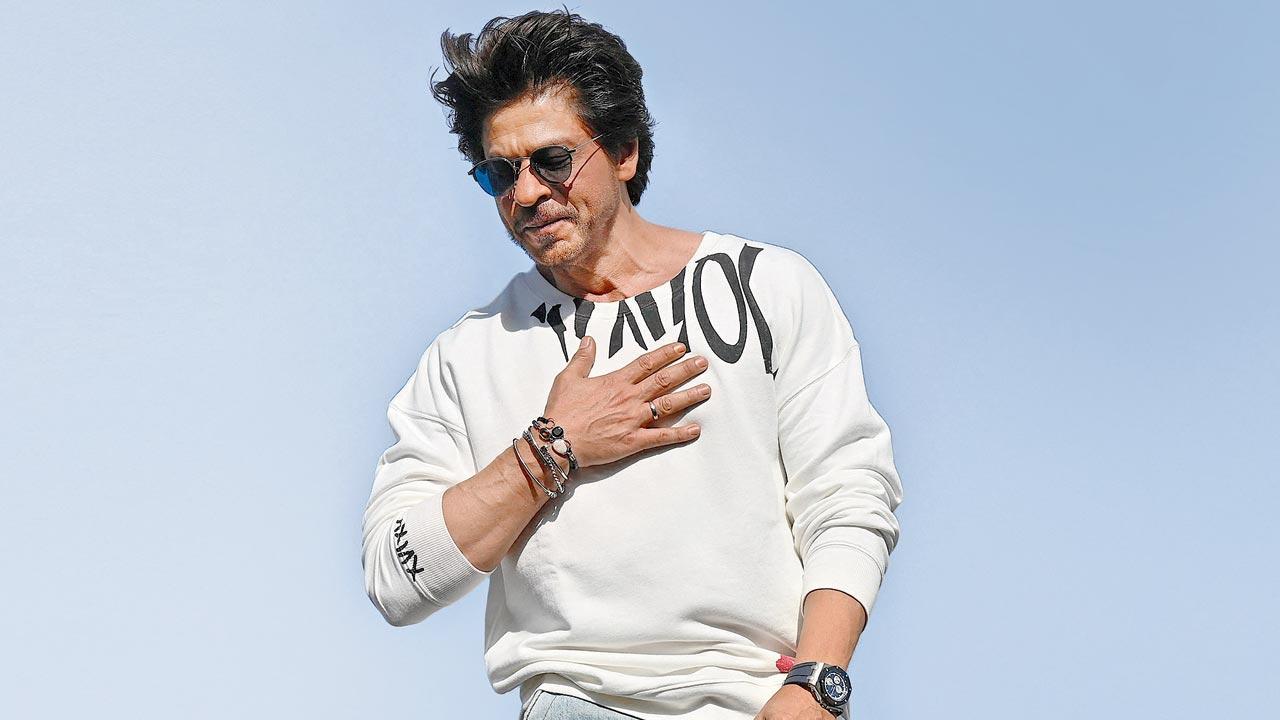
Ratna Bhushan (THE ECONOMIC TIMES; November 10, 2024)
New Delhi: Quitting smoking offers significant health benefits; for Shah Rukh Khan, it could also bring substantial wealth benefits as a lot more youth-centric brands may now line up to sign India's most popular actor, branding experts said.
Khan revealed that he has quit smoking on his 59th birthday on November 2.
"There are a lot of positive implications from a social level following his revelation," said L V Krishnan, chief executive of Tam Media Research. "Besides, many brands have internal clauses that they won't associate with celebrities who smoke; SRK revealing he's quit smoking automatically becomes an appealing element," he explained.
Brands that are already associated with him also said the revelation gives an even bigger boost to his popularity and image.
"Coming clean on smoking enhances our association with him a lot more; we are very relieved, since we are a youth-focused brand," the marketing chief of a global brand that Khan endorses said on condition of anonymity. "We have begun working on repositioning our ad strategy in subtle ways, which will convey the benefits of going clean," the person added.
Though he is India's highest paid and enjoys a brand value of $120.7 million, Khan trails younger celebrities Virat Kohli and Ranveer Singh in brand valuations as per Kroll's celebrity brand valuation report of 2023.
Based on his consecutive box office successes Jawaan and Pathaan, the actor's ranking, however, rose to third position last year after slipping to 10th the previous year, the financial and risk advisory solutions company said in the report.
Thums Up, Everest spices, Myntra, Castrol and Dubai Tourism are among the brands Khan currently endorses.
A self-confessed chain smoker who admitted to "smoking 100 cigarettes a day," Khan, during a 'meet-and-greet' event on his birthday said: "There's a good thing - I'm not smoking anymore, guys."
Videos capturing the event went viral on social platforms. Khan has a massive following on social platforms, with 44.1 million followers on X and 47.9 million followers on Instagram.
The owner of IPL team Kolkata Knight Riders (KKR), Khan was once even seen smoking during an IPL match between KKR and Sunrisers Hyderabad inside Eden Gardens.
According to Tam Media Research, a joint venture between consumer research firms NielsenIQ and Kantar, Khan was among India's most visible celebrities in ads in the first half of 2024.
Subscribe to:
Posts (Atom)