Showing posts with label Kumud Mishra interview. Show all posts
Showing posts with label Kumud Mishra interview. Show all posts
Art must challenge what we normalize-Kumud Mishra
10:43 AM
Amina Ashraf and Manas Mishra (THE TIMES OF INDIA; August 29, 2026)
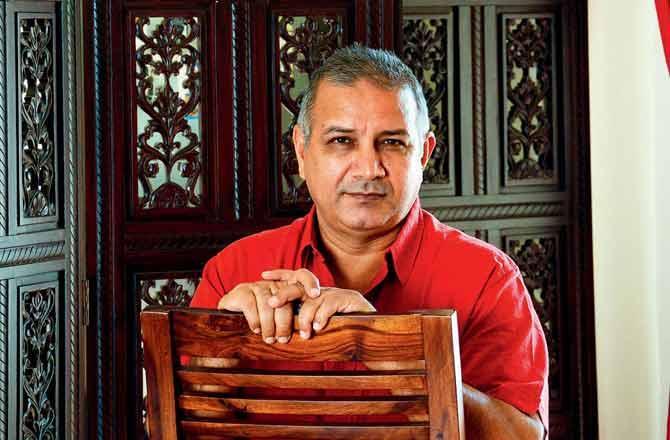
Kumud Mishra, known for roles in both commercial movies like Sultan and socially conscious films like Article 15, has carved a unique space in Hindi cinema. During a recent chat, the actor spoke to us about the changing landscape of Indian cinema and the responsibility of artistes today.
‘WE HAVE STOPPED LISTENING TO EACH OTHER’
When asked about the rise of socially driven films and what drives this shift in storytelling, the Article 15 actor replied, “We are becoming insensitive as a society. We are becoming intolerant. We have stopped listening. We have stopped talking to each other. The space for dialogue is ending. Only the space for monologue is going on. One person will speak a soliloquy and the other will listen. In such times, it becomes the responsibility of art to create an environment where the issues we are ignoring, the issues we are normalizing, should not be normalized. In life, whenever anything is normalized, it will be dangerous.”
He added, “I think it is important to have discussions and debates on socially relevant issues. We have started talking about them, but today, when something happens, we often react by saying, ‘Yes, this happened, we got the information,’ and move on. It has stopped affecting us in the same way. Does an incident have to be more horrific for us to take notice? When the Nirbhaya case happened, there was a huge uproar. For a moment, it felt like society still cared. But over time, we normalized such incidents. That is dangerous. As artistes, I believe it is our responsibility to talk about and engage with such issues.”
On theatre, commerce and the next generation
Discussing the commercialization of theatre and offering perspective for young theatre actors, Kumud said, “The complaint about theatre people not earning has always been there and will remain, but that is not a problem. I think theatre is doing quite well, and the commercial aspect, I think if any medium is giving you money, then it is a very good thing, it is necessary. Along with that, what do you do with it? What do you do with success? That is your responsibility. If you become a slave to that success and you adopt that same formula, then that is unfortunate. But if you are taking that and giving something new to your art, to your medium, then it becomes an interesting thing.”
For young theatre actors specifically, his advice is simple yet powerful. “I don’t have any advice because every generation comes with its own new challenges and new directions and they are fully capable, much smarter than us. The only thing is you’ll have to read a lot, work hard and keep doing it.”
Today, people discuss box office more than cinema-Kumud Mishra
9:47 AM

Kanksha Vasavada (BOMBAY TIMES; June 13, 2026)
Kumud Mishra has already carved a niche for himself across theatre, films, and OTT platforms, but the actor continues to explore new creative avenues. Making his Gujarati cinema debut with Dhabkaaro, he delivered a brief yet impactful performance, reaffirming his belief that “agar script achchi hai, toh medium ya language se koi farak nahi padta.” Kumud, who was in Vadodara for the play Dhumrapaan, talks about theatre, choosing scripts carefully, and more.
‘Theatre still values stories and craft over numbers’
Kumud believes the priorities of both creators and audiences have shifted. He says, “Today, every art form is judged by the number of people watching it. A few years ago, after watching a film, conversations revolved around cinema itself — whether the film was good, how the story was, the making, the production, and so on. But now, the discussion is only about how much money it will make or how it will perform at the box office, all in terms of crores. Unfortunately, even audiences today seem more focused on discussing everything around the work rather than the craft itself, which is sad.”
He adds, “However, theatre still has that unique space where discussions around the genre, the story, the challenges, and the creative process keep it exciting for me. Of course, there are economic considerations too, but our focus remains on creating plays that audiences genuinely enjoy while also being creatively fulfilling for us. I also enjoy the fact that new directors and actors continue to join the group.”
‘Theatre mein aap bina ghabraye fail ho sakte hain’
Working extensively across OTT platforms and films today, Kumud has continued to remain deeply rooted in theatre. He says, “I never left theatre, nor did I ever feel like leaving it. If you feel like you are holding on to something, it stops working—but theatre was never like that for me. It is a necessity in my life. It was there long before films, OTT, or any such ambitions even crossed my mind. Theatre has given me everything I have today as an actor, and it still offers me the freedom to experiment fearlessly. Theatre mein aap bina ghabraye fail ho sakte hain. The focus is on experimenting with the content, not on the money attached to it.”
‘I read scripts in one sitting before saying yes’
Asked about how he chooses projects, he says, “The truth is that mujhe bohot saara kaam offer hota nahi hai. Jo kuch hota hai, uss mein se I select. When I read a script, I finish it in one sitting and can clearly visualise that world unfolding before my eyes. Even if it’s a script for a web show, say, 300–400 pages, I will still read the entire thing. People may find it amusing, but I see it as part of my job. There can be other reasons as well, such as the desire to collaborate with a particular filmmaker, but the script remains the most important factor.”
Talking about adapting to characters, Kumud says, “I don’t merely portray the characters I’m given—I become them. Whether it’s a billionaire or a policeman, they are all real people to me. I don’t imitate them; I step into their lives. What truly makes a character stand out is their place within the story and the way they respond to the situations around them. I have always believed that an actor should look the part. So, I underwent a physical transformation for my character in Assi. The role required me to appear leaner. In theatre, that is not much of an issue because wahan aap 40 saal ke hoke bhi 17 saal ke ladke ka character kar sakte ho, and vice versa. But in films, you cannot betray the audience, which is why casting becomes extremely important.”
‘Hope to do more Gujarati films’
Talking about Dhabkaaro, he shares, “Abhishek (director) is a dear friend, and I also loved the script. Some scripts are so good that you simply want to be associated with them in any way possible. I also enjoyed the way this industry functions. It felt like being part of a family. Everyone worked with a lot of focus and dedication, which was touching. Also, while we have always seen (Devan) Bhojani doing comedy, seeing him playing such an intense character was quite an experience. We interacted a lot and had great fun.”
He adds, “I wish I had the opportunity to learn and speak more Gujarati, because as artistes, we always feel the need to fully understand a language and its nuances. I hope people appreciate my work and I get more opportunities to work in Gujarati films.”
‘Barodians are warm and welcoming’
Talking about Vadodara, he says, “My experience in Gujarat has always been wonderful. I’ve visited Ahmedabad several times, and we also perform regularly in Vadodara. This time in Vadodara, it was a unique experience because we were performing at a new venue, for an audience that was entirely new to us. Vadodara has long been known as a vibrant and thriving centre for the arts. I first visited the city many years ago when my brother was working there. He loved the city so much that he eventually bought a home there, which later became my base as well. The people are incredibly warm and welcoming, making you feel instantly at home, as though you’ve known them forever.”
Theatre audience comes for the play, not to fan over an actor. For that, there is cinema-Kumud Mishra
8:06 AM
Neha Maheshwri (BOMBAY TIMES; November 10, 2023)
Kumud Mishra was seen on stage after four years in a play titled ‘Purane Chawal’ at the Prithvi Theatre Festival. While the actor has deeply impressed the audience with his roles in movies, his passion for theatre and belief that this medium of performing arts will thrive is evident. Mishra, who did not take up any other project for a few months to focus entirely on this play, talks to us at length about the beauty of theatre, working with young actors, and more.
‘I feel there is a shortage of performing spaces’
Talking about the economics and commercial viability of this medium, Mishra explains, “There is a shortage of performing spaces. In that regard, Prithvi is a true blessing for us, it is a place where you can continuously nurture and hone your art. However, I have witnessed the emergence of new, albeit, smaller spaces where emerging actors are given an opportunity to perform. The key is that the economics of theatre should be sound.” However, he also adds that whatever the space or the format, “a good story is the only hero an actor needs”.
“Aapke pass kahaani hai kehne ke liye, toh log aayenge. That’s the beauty of theatre. As long as one person wants to tell the story and another is willing to hear it, theatre will thrive. So, I am not worried about the medium,” he says.
‘I enjoy working with young directors’
The ‘Thappad’ actor, who also produces plays, constantly encourages and collaborates with young talent. He explains, “I enjoy working with young directors. As you grow older, you tend to become rigid, both physically and mentally. A fresh perspective is essential to break that rigidity, and that can only be introduced by young people. Not every project will turn out perfectly, but my experience will keep getting enriched because every talent brings their unique grammar to a production.”
‘The medium shouldn’t be individual-centric’
“Theatre is primarily a director’s medium,” Mishra explains to us, on being asked if he expects his name to pull in more audience for the play. “I am fine with my name being used to promote the show, but I still find it uncomfortable. I am a purist in that regard. Naam se bada naatak. The theatre audience comes to enjoy the play, not to fan over a particular actor. For that, there is cinema and the associated stardom. Theatre, as a medium, is vast, and if we focus on individuals, we will not do justice to it. So, I don’t see myself at the centre of anything; the medium is at the centre of it all. Theatre is not an individual medium,” he signs off.
Even when Ayesha and I were dating, she walked out of my plays if she didn't like them-Kumud Mishra
8:14 AM

What an actor born in school theatre, raised on the Bhopal stage and trained at NSD can teach us about our approach to work
Gitanjali Chandrasekharan (MID-DAY; January 31, 2021)
"Pathare Sir, mein zindagi bhar theatre karoonga." Kumud Mishra recalls his parting words to one of the two teachers at the Military Academy in Belgaum, where he studied from Class VII to Class XII. It was at the academy, says Mishra now 53, that he was first introduced to theatre. A shy kid—he says he is still at discomfort in large gatherings—he found his place on stage. School productions headed by Pathare Sir and Janardhan Sir had him play a pandit once and a queen another time—it was an all boys' school. It was much later, that he discovered how good the quality of productions staged at school were.
Mishra, who brings a subtle excellence to all his roles, manages to both, blend into the canvas of the story with his roles and standout as an individual performer, making watching him a pleasure. Having spotted him again in Saif Ali Khan-headlined Amazon Prime web series Tandav as Gopal Das Munshi, a seasoned politician, one wonders what drives the excellence of Mishra's craft.
The first hint comes early into the interview when Mishra says he prefers to respond to the questions in Hindi. Later, as we wonder if we'll need to bring out our dictionary to transcribe this interview, he says, his grasp over the language isn't good. Mishra doesn't seem to strike a false note of modesty. Just that of someone who studies his craft so well—after bidding adieu to Pathare Sir, he headed to Bhopal where he did theatre under the likes of Alakh Nandan and Satyavrat Raut and later studied at the National School of Drama in Delhi—that he still feels he isn't good enough. He thinks, he has a far way to go even where acting is concerned.
Describing how conversations around acting go at home with wife Ayesha Raza, he laughs, "Ghar pe Vibhishan baitha hai." Raza, he says, is critical and vocal about his work. Even when they were dating, she walked out of his plays if she didn't like them. "She never feared that I'd be hurt. We were not even married then, it was quite risky," says Mishra.
Raza, he says, has even shut down one of his plays. A dream to take stage while speaking English, Mishra says, he was practicing the lines at home. After a few days, irritated by how the sound fell on her ears, she asked him why was he pursuing a play in English. "When a French actor can do a play in English, a German actor can do one, and an English actor can do a play in Hindi, why can't I do a play in English?" To which Raza responded, "You are spending all your energy in concentrating on the language. When will you perform?" He tried rehearsing for a few days and gave up. But, the dream isn't over yet. One day, he says, he will perform in English. On her own performances, Mishra says, Raza is so critical, she announces a ban on seeing a play or a role if embarrassed by it.
First introduced to Mishra on stage in the Manav Kaul directed Shakkar Ke Paanch Daane, where Mishra—who has trained in the Chau form of martial art/dance—plays Rajkumar, a villager telling the story of his life through the five people who stood out in his life, we wondered at the fluidity of Mishra's body. He jumps up on boxes and runs across the stage with an energy that belies assumptions. He credits the audience for half the success of a stage actor. "They bring their own imagination and creativity. If you say I am taking a round of the stage and reaching Hastinapur, when you complete the round, the audience will believe it. On the screen, you have to show the mountains for an audience to see mountains." On Shakkar, he says, the other part of the success is to be attributed to Kaul's text. "He has given me some good work, but Shakkar is the best. Is mein jo saralta hai… paani ki tarah behta hua text hai. If I perform Shakkar at 80 as well, the audience will negate the age. They will be able to see the child in the performer."
The first time he had performed Shakkar, he said, it had come with curiosity. To understand the subtext. Then, a time came, when he performed the text mechanically, knowing where the laughs would break the silence in the theatre and where the audience would cry. "But one day, the audience didn't do that. I realised I was performing mechanically and taking it for granted. The audience wants to share your experience and give you a hint of theirs."
When he shared this with Kaul, the playwright-director-actor said, "You are trying to relive the emotions of the original production. Instead, perform how you feel about the text today."
There's much to say about Mishra. How he chooses his film roles for example. He doesn't shy away from the pragmatism of it. Where he picks the script first, then the role, money is also an issue. We ask if he has ever negotiated for another role. "Just once," he admits. And even then, he says, he told the director to consider him only if the other person whom they had picked rejected the part. "And then too, I felt bad."
While he had a love for movies, it was never meant to be his medium. At school, they'd be shown Naseeruddin Shah's films. After watching Paar, he thought, "Baap re baap, aisa bhi hota hai" and wanted to be an actor. And yet, never in the movies—he came to Mumbai for a theatre audition with all intentions of return to Delhi, but, life had other plans.
After completing school, while the forgers headed for the National Defence Academy (NDA) or to the Combined Defence Services (CDS) Examination or the Officers' Training Academy, Mishra sat on a train back home and made a promise he isn't still quite sure why. "But, chipak gaya hai."
Theatre is worse off than cinema in this pandemic-Kumud Mishra
8:46 AM

Kavita Awaasthi (HINDUSTAN TIMES; October 4, 2020)
In the last few years, he has been appreciated for his performances in movies such as Thappad, Article 15 (2019), Mulk (2018), among others and actor Kumud Mishra feels it is the faith of filmmakers that worked. “As an actor, when a director can see you in different roles, your confidence increases. In the last 4-5 years, my career has grown well and that is due to the different kind of roles I played and the kind of cinema that is being made today,” says the actor.
In August, his film Ram Singh Charlie released online which featured him as the lead. But he says, he doesn’t look at roles as the lead or character. “Of course, when you play a lead role, your responsibility is much more. I have always enacted all roles as important characters and this was the same manner of approaching this role as well,” he says, adding that playing a role, where the character dressed up and acts like the well-known comedian Charlie Chaplin was exciting. “Main kharab copy karta hoon so I didn’t want to imitate him. I was concerned about playing the Chaplin part in the film convincingly,” he says.
Having being part of theatre and numerous plays, Mishra admits that he didn’t want to struggle in films so he stuck to theatre, in his career. “Initially, I wasn’t interested in television or films and loved theatre. Also I might have been scared of the struggle or of failure in films or didn’t think I was capable enough. I did a bit of TV to earn money. But it took me almost 10 years to start doing films regularly but here I am,” he explains.
While he can’t wait for the cinemas to open again as he misses the energy of cinema halls. His heart pains for the theatres and personnel who work in theatres. “Theatres don’t have sustaining power like films. Theatre is worse off than cinema in the Coronavirus pandemic. Live plays will take time and people are thinking of options. Backstage personnel and theatre actors are suffering,” he concludes.
We pretend that domestic violence isn’t happening, but it is-Kumud Mishra
7:52 AM

Kumud Mishra on why he decided to do a film on domestic violence, one of the toughest roles of his career, in his fourth collaboration with Anubhav Sinha
Avinash Lohana (MUMBAI MIRROR; February 25, 2020)
After the brooding judge Harish Madhok in Mulk, and the oppressed-turned-aware cop Kisan Jatav in Article 15, Kumud Mishra’s role in Anubhav Sinha’s upcoming drama, Thappad, as Taapsee Pannu’s father, seems like cakewalk. But the actor, who has also collaborated with the filmmaker on the yet-to-release Abhi Toh Party Shuru Hui Hai, insists that it is one of the toughest roles of his career. “There is no obvious drama in this character. So, it becomes more difficult for an actor to pull off,” he reasons.
So, what made him take up the film? “The brilliant script,” he exults, adding that it tackles the subject of domestic violence. It isn’t widely discussed so awareness is all the more necessary. “We pretend that it isn’t happening, but it is and unfortunately, is considered normal,” the veteran actor points out.
In Mulk, since he had joined the team only towards the end, he did not get a chance to share screen space with Taapsee. This time around, most of his scenes are with the actress and he is all praise for her. “She is instinctive; her acting process keeps changing with the moment, just like mine. She is a fantastic actress and I have never seen her in a role like this. Thappad is one of her finest works,” Kumud asserts.
Kumud shares a close bond with Anubhav but likes to maintain distance to allow space for dialogue. “For an actor, he is a wonderful director as he gives us creative freedom and is open to discussion,” he raves, adding, “Unka alag hi jadoo hai. I’d drop everything to take up a role if he made the offer,” he admits.
Kumud will next be seen in Sooryavanshi, which is directed by Rohit Shetty.
Subscribe to:
Posts (Atom)