Showing posts with label Kotwara. Show all posts
Showing posts with label Kotwara. Show all posts
Muzaffar Ali rues as his life’s work was damaged by Gurugram’s September floods
7:20 AM
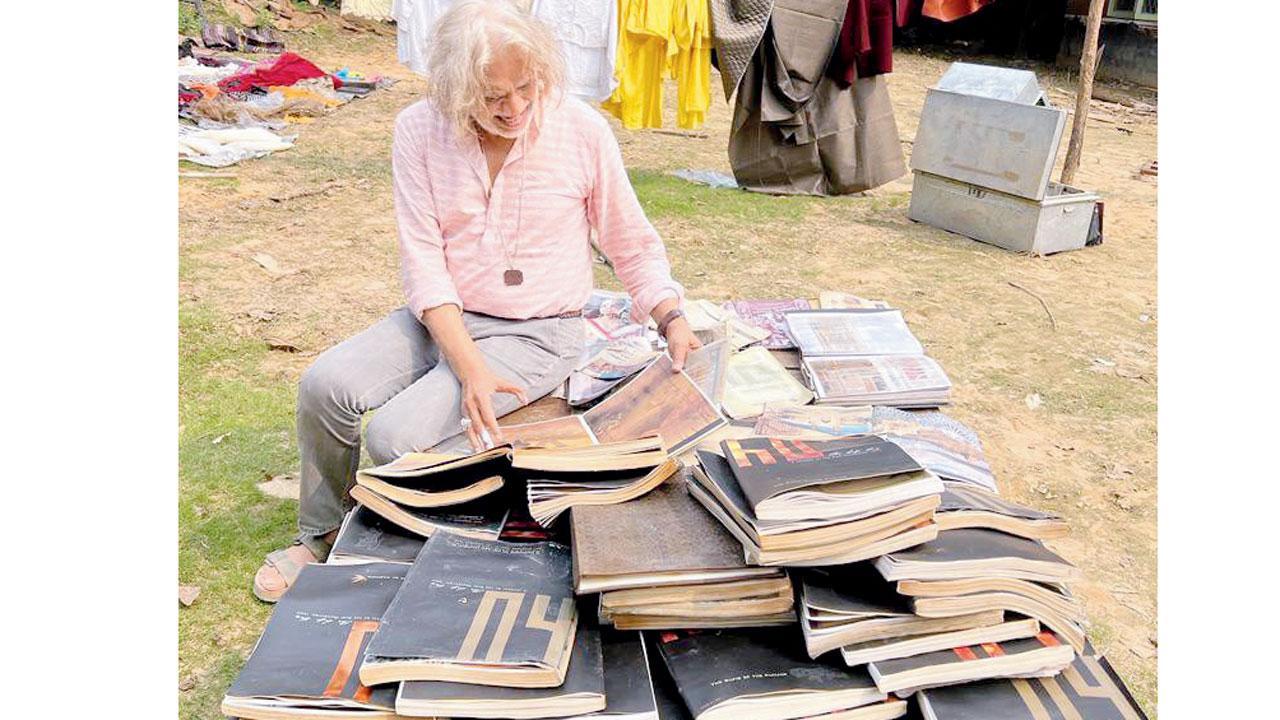
Amir Khusrau’s poem seems to have struck Khusrau festival founder and filmmaker Muzaffar Ali, quite literally, when his life’s work was damaged by Gurugram’s September floods
Yusra Husain (MID-DAY; October 9, 2022)
Arab ki Sarai at Delhi’s Humayun’s tomb was immaculately dressed up for the Jahan-e-Khusrau, an annual three-day Sufi music festival held to commemorate the death anniversary of Amir Khusrau. The year was 2001. Illustrious artistes joined the magnificent musical company of Pakistan’s Abida Parveen, Iran’s Rumi Group and Tunisia’s Lotfi Bouchnak, to regale an audience that sat in the open gardens under moonlight. Little did festival founder, filmmaker and Padma Shri awardee Muzaffar Ali know that 20 years later, just under 25 km away from this venue, a lifetime worth of work would see a “pani phir gaya” moment.
Kotwara Farm, Ali’s home in Gurugram’s Gwalpahari, sits in a nasheb (Urdu for slope) as he puts it, with the beautifully rugged Aravali mountain range in close proximity and a pond behind the residence. This beauty, Ali realised, now comes at a price since the area has seen a burgeoning urban township spring up. Ali says much of it has to do with ASF Infrastructure, a private firm, developing an Information Technology sector-specific Special Economic Zone (SEZ) in the area.
“There are high-rise buildings here now. Water from the pond and the storm water drainage that passes right next to our house, is blocked by new construction and the hillock made by TERI [The Energy and Resources Institute] in the name of a golf course,” Ali alleges.
Like always, the rainwater should have followed its course into the foothills of the Aravalis. As per the records at Delhi’s primary weather station, the Safdarjung Observatory, 16 per cent excess rainfall was recorded in Gurugram in just 24 hours, on September 23. Other weather stations at Palam, Lodhi Road, Ridge Ayanagar and Pusa also recorded heavier than normal rainfall during this period. The 36-hour rain spell made this September the second wettest in a decade.
Like with several other commercial and residential premises, Ali’s home saw water flood in. “In just about an hour, there was three feet of water in my home office. All the archival tapes of original music from the Jahane-e-Khusrau festival from 20 years ago, and master tapes of my films, were swimming in muddy water. Sab sarabor ho gaya hai; I don’t know what to do,” he says helplessly.
Not just the tapes, a number of costumes from the festival and his films, old newspaper cuttings that were stored in a trunk, issues of the coffee table journal by Rumi Foundation, HU-the Sufi way, which document the Sufis of Kashmir, Punjab, Awadh etc, exquisite durries made in his hometown of the erstwhile royal estate of Kotwara, and his personal curation of music, lie ruined. “These tapes also housed the sound tracks of Anjuman (1986) and Gaman (1978),” he says of his films, “The tapes contained the originals.”
Music for Anjuman was directed by Khayyam while Gaman won Jaidev the National Award for best music direction and the National Award for best playback singer female (Chhaya Ganguly).
The damaged lot includes quarter-inch tapes that are no longer in use; music cassettes that replaced these, and CDs that came after. “I am still trying to wrap my head around how much is lost, what can be redeemed and what will be history now,” Ali says, who together with architect-designer wife Meera Ali, has putting the material to sun every morning.
Ali has filed a complaint at Gwalpahari police station in Gurugram to report the loss of “rare and valuable archival records of my films and festivals” that have been destroyed. “Due to the criminal negligence of ASF and TERI, this water was let loose by ASF and not allowed to move out by TERI. This created a flooding situation resulting in huge financial loss and damage to life and property. From time to time, I have been warning the MCG [Municipal Corporation of Gurugram] about this.” Ali says he has not received any support from the film industry or the Haryana government. “I have credibility attached to my life and name and they [the administration] should understand the problems a person like me is facing. Why would people want to settle here?”
“On his complaint, we have asked the MCG to clear out the drains. TERI has also been reached out to and they say off-season rain has caused damage to them too. But we will keep Muzaffar Ali’s maan-samaan and resolve the issue soon. FIR can’t be lodged as this is a non-cognisable offence,” said Gwalpahari police station ASI Prem Chand.
Ali says he has shifted his archives between locations over the last few years—from Mumbai, a city long lashed by the rains, to Lucknow, and finally Delhi. “I still have a lot of original photographs and archives at my Lucknow residence. Artistes and filmmakers tend to have valuable documentation which needs to be preserved and shared. My father [erstwhile Raja of Kotwara] also kept records till his death in 1990, and I have tried to safeguard them. He gifted some of it to the Amir-ud-Daula public library in Lucknow, opposite our home. I am not sure if they will be interested in safekeeping my archives too,” he tells mid-day.
With climate change a reality, Ali wonders if there is merit in considering the setting aside of a budget for the creation of a dedicated space that can serve as an art and cultural archive that’s air-conditioned and moisture-free.
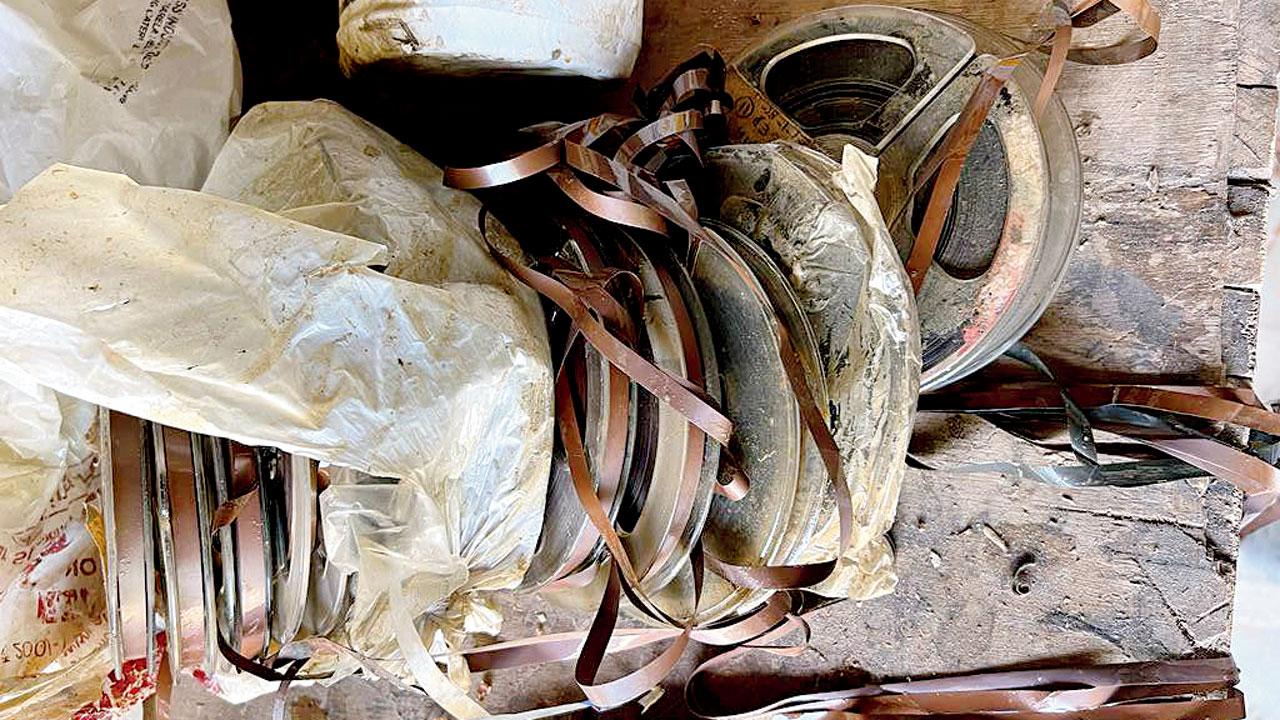

Out of fashion quarter-inch tapes, cassettes, CDs with original music from some of Ali’s best films lie in slush
Rekha, Smita Patil were ladies with a dream; Shabana Azmi is a woman with a cause-Muzaffar Ali
8:15 AM

Priya Gupta (BOMBAY TIMES; August 6, 2015)
Muzaffar Ali, 70, may be
soft-spoken with impeccable manners, but he is also
invisibly headstrong. He is fixated to his environment, be it his
paintings or his ambience, and wants to have a constant dialogue with
it. A painter from his childhood, he is romantic and today has learnt to
have a great sense of record. He needs his family and friends to
put him together, but he's also extremely clear on
exactly what he wants. He may have married thrice, but has been
consistent with his commitment to Kotwara. In 1981, he created Rekha as
Umrao Jaan. Over two decades later, he has made Jaanisaar. Over an
hour-long conversation with Bombay Times, he talks about his best
companion his wife Meera, his commitment to Kotwara and why Smita Patil
was his favourite muse. Excerpts:
Tell us about your family background?
I was born in Lucknow but my father, Raja Sajid Husain Ali, was the raja of Kotwara. He had become a raja at a very young age and thus, there was an attempt on his life due to which there was a danger to his life. He was packed off to Edinburgh to study. He returned to India as a man ready to take on the world in 1936. The British opened us up to a strange sense of democracy, which later became communalised just before independence and that finally drove us to becoming two countries, India and Pakistan. I was very young at the time of Partition, but remember lot of family friends being separated from us. I studied at La Martiniere Lucknow after which I did my BSc at Aligarh Muslim University, where I got exposed to poetry that became a very important part of my evolutionary process of waking up to the world. Right from my school, I always won the first prize for painting and was always a painter that till today has helped me in my films as I sketch each scene out before I shoot it. I always wanted to do something creative and so moved to Calcutta to join advertising. I worked as the account executive to Satyajit Ray, who was the art director of Clarion McCann. I was very close to him and would go to his house. I learnt from him how you can take your culture to people through your cinema. I then joined another ad agency ASP where I worked with Shyam Benegal and Aziz Mirza after which I joined Air India where I made a couple of films for them and then made my first film Gaman. I won my first Filmfare Award. It also gave me the strength to make Umrao Jaan.
All your films, be it Gaman or Umrao Jaan, had a central powerful woman character.
Yes, for me the lady has to be strong. She has to make a difference and that comes from my mother. My mother's father was the nawab of Moradabad, but while she too came from a princely background, she always put things in perspective for me in a humane and practical way. In Jaanisaar, there is a scene inspired by the real-life incident that took place with her father. Because he was a revolutionary, the prince of Rampur spied on him, got him arrested and the British tied his body to an elephant's feet and dragged him around Moradabad and that is a very hair-raising thought. I loved my mother the most, I lost her to cancer when I was studying at Aligarh. And I still have very strong memories of her.
Talk about working with Smita Patil in Gaman?
Smita was a dream to work with. Like me, she too was a Libran and we were very similar. She could see the aesthetics in everything one was trying to do and she would respond to a lot of things that normally people don't respond to, like music, people, clothes, dialogues. We had great fun together. Asha Bhosle's daughter was her companion and the whole night, we would sit on the terrace in Kotwara and laugh and people would think that some bhoot had come.
You created Rekha as the Umrao Jaan. What is she like?
She's also a Libran but she's just he opposite of Smita. While Smita surrendered more, Rekha was more reserved. Smita was more stimulating as a muse. She had a different kind of imaginaion. Rekha has a lot of grace. She has a mystery and a quaint sense of humour. She's an interesting person, but we had a very professional relationship. She was a bit temperamental and knew what she was getting into. She was positioned within the the environment, be it the people, the music and everything else that made her Umrao Jaan.
You also worked with Dimple Kapadia in Zooni and with Shabana Azmi in Anjuman.
Dimple has a very interesting sense of romance in her. If Rekha, Smita and Dimple were ladies with a dream, Shabana is a woman with a cause.
Farooq Sheikh was a part of most of your films.
He was my alter ego. He was a gem and what he did for me, I don't think anyone could do for me on screen. He was perceptive, vulnerable, encouraging and supporting.
You lived in Mumbai. What made you move back to Lucknow and Kotwara?
When my father died in 1990, that's the time I left Mumbai to go back to live in Lucknow. I had to take on the responsibility of sorting everything out. In his will, he had said that he did not want to see anyone hungry in Kotwara. He was a big father figure there. Everything fell in place for me and I too felt that why should they have to migrate for work like in my film Gaman? That was also the time I had married my third wife Meera. The first thing I told her at the time of marriage was, 'You are marrying me and Kotwara.' Kotwara has been an important cultural influence on me and I am deeply linked to the people out there. I have also shot most of my films there.
You fought the Lok Sabha elections several times. What made you do that?
I got into politics due to Ayodhya as for me it was a watershed moment and I felt I had to say something politically. I fought against Atal Bihari Vajpayee and lost but still got 2.5 lakhs votes. I have been fighting all my life. In a way, I am fighting even in Bollywood to make films on my own terms. Now I am not politically-aligned but I like Akhilesh Yadav. I am happy that I have managed to convince him to extend the film subsidy to shoot in UP. I am not only politically aligned anymore but am aligned to humanism and secularism that is why my film Jaanisaar is important for me as it can humanise people.
You have married thrice. Talk about your relationship with Subhashini Ali (mother of director Shaad Ali).
We never divorced and are just separated. She was too much into her politics and I was too much into my own madness and our lives were just not fitting in. The whole period of 1988-1990 was the toughest and lowest for me. Zooni had got held up, my younger brother who lived in Liverpool died, I lost my father. When Zooni was stopped, I lost not just all my money, but also faith in people and politics. After Zooni, when I walked out of Kashmir I didn't know where I would go. First I thought I would just stay in Kashmir only as I had fallen in love with the valley. I had been promised many things from the government as a guarantee for my money, but I lost all my money. I came to Delhi and had to literally stand on my own again. I was living out of a suit case in a small room of a friend. And that's when I met Meera. She came as a breath of fresh air and has since been my best companion and wife. That's also when I got into making clothes as I thought that if I could make Rekha look beautiful, then I could also make other women look beautiful.
What do you like the most about Meera?
That she is very loving and compassionate and very responsible. She likes my madness.
What made you make a film like Jaanisaar after so many years?
I always try and live a film. 1857 is an important period in Indian history. Hollywood has explored the holocaust threadbare, we have done nothing for our history. I made Jaanisaar as I felt that the period of history post 1857 needed to be exposed. There was not a tree left from where there were no bodies hanging and I owed it to my country to talk about the sacrifices that have got pushed under the carpet. And while I don't know the market, I do know what goes into people's bloodstream. I still meet people every evening who fill up my glass with Umrao Jaan. It could be a matter of time but I feel Jaanisaar too will get into people's mental cache.
What did your father like the most about you?
He liked my honesty and that I was straightforward. I didn't hide anything from him though he was not always sure about how responsible I could be as I did certain things in my life that reflected my being irresponsible. For instance, he had a very beautiful Italian Rolls-Royce car that he had brought from England, which I just sold. He had a beautiful stamp collection, which I just threw around. Now I have developed a sense of record and that is also helping me with my work.
Do you wish he was alive to see you like this?
He would not have given me full marks even now. But, I do know that he is marking me.
Tell us about your family background?
I was born in Lucknow but my father, Raja Sajid Husain Ali, was the raja of Kotwara. He had become a raja at a very young age and thus, there was an attempt on his life due to which there was a danger to his life. He was packed off to Edinburgh to study. He returned to India as a man ready to take on the world in 1936. The British opened us up to a strange sense of democracy, which later became communalised just before independence and that finally drove us to becoming two countries, India and Pakistan. I was very young at the time of Partition, but remember lot of family friends being separated from us. I studied at La Martiniere Lucknow after which I did my BSc at Aligarh Muslim University, where I got exposed to poetry that became a very important part of my evolutionary process of waking up to the world. Right from my school, I always won the first prize for painting and was always a painter that till today has helped me in my films as I sketch each scene out before I shoot it. I always wanted to do something creative and so moved to Calcutta to join advertising. I worked as the account executive to Satyajit Ray, who was the art director of Clarion McCann. I was very close to him and would go to his house. I learnt from him how you can take your culture to people through your cinema. I then joined another ad agency ASP where I worked with Shyam Benegal and Aziz Mirza after which I joined Air India where I made a couple of films for them and then made my first film Gaman. I won my first Filmfare Award. It also gave me the strength to make Umrao Jaan.
All your films, be it Gaman or Umrao Jaan, had a central powerful woman character.
Yes, for me the lady has to be strong. She has to make a difference and that comes from my mother. My mother's father was the nawab of Moradabad, but while she too came from a princely background, she always put things in perspective for me in a humane and practical way. In Jaanisaar, there is a scene inspired by the real-life incident that took place with her father. Because he was a revolutionary, the prince of Rampur spied on him, got him arrested and the British tied his body to an elephant's feet and dragged him around Moradabad and that is a very hair-raising thought. I loved my mother the most, I lost her to cancer when I was studying at Aligarh. And I still have very strong memories of her.
Talk about working with Smita Patil in Gaman?
Smita was a dream to work with. Like me, she too was a Libran and we were very similar. She could see the aesthetics in everything one was trying to do and she would respond to a lot of things that normally people don't respond to, like music, people, clothes, dialogues. We had great fun together. Asha Bhosle's daughter was her companion and the whole night, we would sit on the terrace in Kotwara and laugh and people would think that some bhoot had come.
You created Rekha as the Umrao Jaan. What is she like?
She's also a Libran but she's just he opposite of Smita. While Smita surrendered more, Rekha was more reserved. Smita was more stimulating as a muse. She had a different kind of imaginaion. Rekha has a lot of grace. She has a mystery and a quaint sense of humour. She's an interesting person, but we had a very professional relationship. She was a bit temperamental and knew what she was getting into. She was positioned within the the environment, be it the people, the music and everything else that made her Umrao Jaan.
You also worked with Dimple Kapadia in Zooni and with Shabana Azmi in Anjuman.
Dimple has a very interesting sense of romance in her. If Rekha, Smita and Dimple were ladies with a dream, Shabana is a woman with a cause.
Farooq Sheikh was a part of most of your films.
He was my alter ego. He was a gem and what he did for me, I don't think anyone could do for me on screen. He was perceptive, vulnerable, encouraging and supporting.
You lived in Mumbai. What made you move back to Lucknow and Kotwara?
When my father died in 1990, that's the time I left Mumbai to go back to live in Lucknow. I had to take on the responsibility of sorting everything out. In his will, he had said that he did not want to see anyone hungry in Kotwara. He was a big father figure there. Everything fell in place for me and I too felt that why should they have to migrate for work like in my film Gaman? That was also the time I had married my third wife Meera. The first thing I told her at the time of marriage was, 'You are marrying me and Kotwara.' Kotwara has been an important cultural influence on me and I am deeply linked to the people out there. I have also shot most of my films there.
You fought the Lok Sabha elections several times. What made you do that?
I got into politics due to Ayodhya as for me it was a watershed moment and I felt I had to say something politically. I fought against Atal Bihari Vajpayee and lost but still got 2.5 lakhs votes. I have been fighting all my life. In a way, I am fighting even in Bollywood to make films on my own terms. Now I am not politically-aligned but I like Akhilesh Yadav. I am happy that I have managed to convince him to extend the film subsidy to shoot in UP. I am not only politically aligned anymore but am aligned to humanism and secularism that is why my film Jaanisaar is important for me as it can humanise people.
You have married thrice. Talk about your relationship with Subhashini Ali (mother of director Shaad Ali).
We never divorced and are just separated. She was too much into her politics and I was too much into my own madness and our lives were just not fitting in. The whole period of 1988-1990 was the toughest and lowest for me. Zooni had got held up, my younger brother who lived in Liverpool died, I lost my father. When Zooni was stopped, I lost not just all my money, but also faith in people and politics. After Zooni, when I walked out of Kashmir I didn't know where I would go. First I thought I would just stay in Kashmir only as I had fallen in love with the valley. I had been promised many things from the government as a guarantee for my money, but I lost all my money. I came to Delhi and had to literally stand on my own again. I was living out of a suit case in a small room of a friend. And that's when I met Meera. She came as a breath of fresh air and has since been my best companion and wife. That's also when I got into making clothes as I thought that if I could make Rekha look beautiful, then I could also make other women look beautiful.
What do you like the most about Meera?
That she is very loving and compassionate and very responsible. She likes my madness.
What made you make a film like Jaanisaar after so many years?
I always try and live a film. 1857 is an important period in Indian history. Hollywood has explored the holocaust threadbare, we have done nothing for our history. I made Jaanisaar as I felt that the period of history post 1857 needed to be exposed. There was not a tree left from where there were no bodies hanging and I owed it to my country to talk about the sacrifices that have got pushed under the carpet. And while I don't know the market, I do know what goes into people's bloodstream. I still meet people every evening who fill up my glass with Umrao Jaan. It could be a matter of time but I feel Jaanisaar too will get into people's mental cache.
What did your father like the most about you?
He liked my honesty and that I was straightforward. I didn't hide anything from him though he was not always sure about how responsible I could be as I did certain things in my life that reflected my being irresponsible. For instance, he had a very beautiful Italian Rolls-Royce car that he had brought from England, which I just sold. He had a beautiful stamp collection, which I just threw around. Now I have developed a sense of record and that is also helping me with my work.
Do you wish he was alive to see you like this?
He would not have given me full marks even now. But, I do know that he is marking me.

Subscribe to:
Posts (Atom)