Showing posts with label Kota Factory. Show all posts
Showing posts with label Kota Factory. Show all posts
Stories of IITians earning Rs 1 cr trigger other kids-Varun Grover
10:44 AM
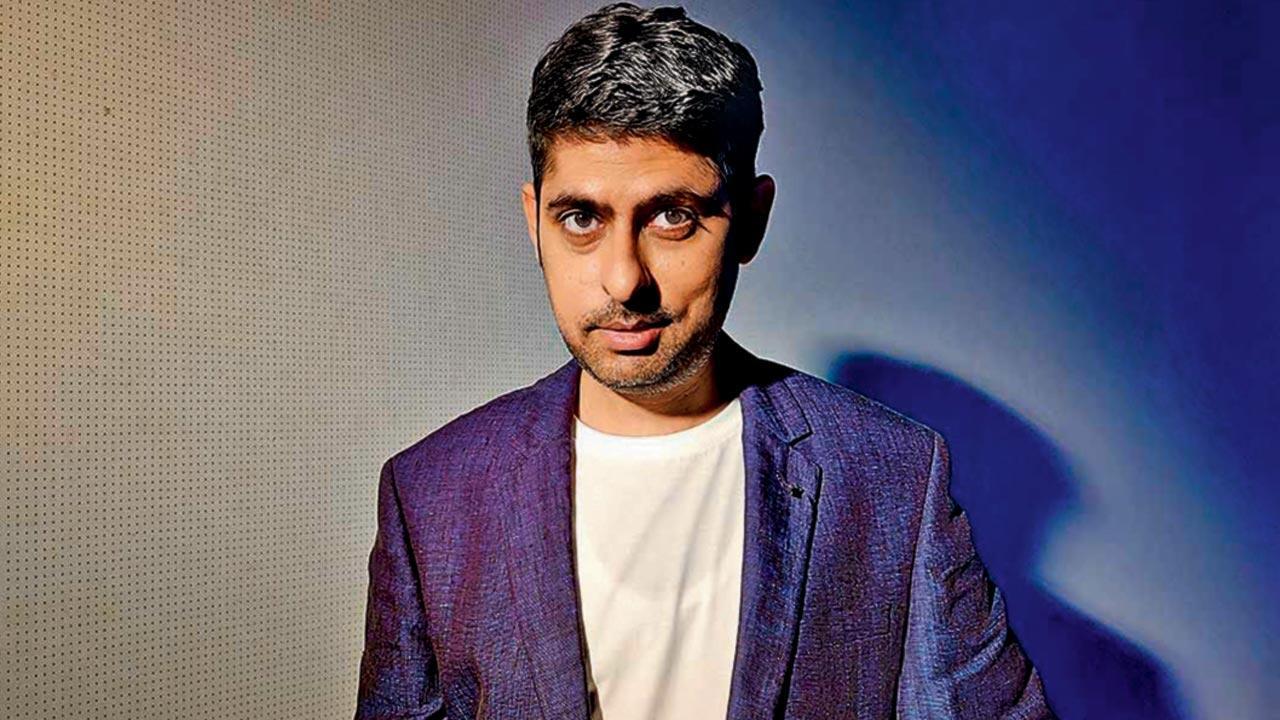
Debutant director Grover says he made All India Rank to show how education system, parents and myopic idea of success pressure teenage students
Mohar Basu (MID-DAY; February 13, 2024)
Two weeks ago, a suicide note by a Joint Entrance Examination (JEE) aspirant went viral online. It was the second suicide in a month in Kota, which is known for its coaching institutes that train students for engineering entrance exams. Incidentally, the next week, the trailer of All India Rank, which marks writer-lyricist-comic Varun Grover’s directorial debut, dropped online. When we sit down with Grover, our conversation naturally begins with the pressure that our education system thrusts on 17-year-olds. Imagine a world where a little girl feels it's easier to kill herself than go through with the JEE prep?
He says, "Kids feeling pushed to harm themselves is a symptom of a much deeper issue. The whole idea that someone who is not even 18 has only two years to decide what they want to be in their lives and if they don't they will be stuck in a tunnel that they are making through a mountain. That mindset has been there since forever. This pressure is created by a whole system. The parents, peers, teachers at school. There is a success industry validated by reports like IIT-ian getting into Google and making a salary of 1 crore. These success stories are actually triggers for other kids because it tells them either be this or be a nobody. This push to be successful in life at 16 is too much when you've just hit puberty and you are still figuring out your body, feelings, surroundings. When you mention that you want to study history or arts, you are seen as a lesser mortal."
The film talks about the sense of middle class mediocrity but for Grover it was an act that took him close to personal closure. "There is a false sense of being persecuted and JEE is seen as a gateway to stepping up and going to the next level. You'll be counted in a whole different bracket of success is what the film lays out for you. For me, what's very personal for me in the film is to try to make sense of who I am, very I come from, people in my locality in Lucknow. I wanted to reconnect with the 16 year old self. I loved physics and science but I didn't understand why it had to be monetized to become something. I wanted to be a writer and growing up in Lucknow, I couldn't have imagined it could be an actual profession for me. I had brushed off hopes of being a writer and as an option worth struggling for. Trying to become an IIT-ian sucked the joy of physics from within me. The confusion of that age is what I channeled into the film. I am stuck in that age emotionally and I am looking for closure. The recurring dreams I have are from that age; of being in that house in Lucknow, in my neighbourhood. I think I am also trying to understand how my life played out the way it did."
AIR in some ways is an exact antithesis of 12th Fail by Vidhu Vinod Chopra that emerged as a surprise hit last year. Grover admits he was wary of the fact that he has ended up making a poorer version of the same story until he watched the trailer of that movie.
"When the Restart song dropped, we were doing festival rounds. No one knew what the film was about. Imagine how stressed I was thinking Vidhu Vinod Chopra had made a movie on the same subject. Until the trailer came out, I was worried. It was an inspirational tale and my film is a counterpoint of the same idea. I was relieved. I loved 12th Fail as a movie. But 12th Fail is celebratory and feeds into the hysteria of success. 12th Fail was a specific real life story about a man who had to succeed; he didn't have a back up option. Like in America, there's a great American dream - a house, car, two kids, neighbourhood all are the metrics of success. In India you are telling a 16 year old to determine their dream. Our education system, families, societal expectations, government approach, educational policies all need to collectively be reassessed."
One of the primary worries of AIR could be its similarity to the Kota Factory. Was he worried about comparisons? "I am glad my film isn't similar to the Kota Factory either. I made my ADs watch that show. That show is about coaching which too is a symptom of a larger problem. I thought if AIR has too many parallels with that series, it is pointless to attempt this movie. Every single one of my ADs thought AIR is a different story entirely. One thing I was recommended to change was to reduce the element of coaching as a culprit. The internal politics of coaching and how students are poached which was a small track - we completely let that go. It was already sparsely added but we reduced it to zero. The film stays with the protagonist and is a story of what his surroundings do to him."
Kota Factory had all the ingredients of a flop show; it was B&W, slow, and 40 mins long. Yet it worked-Raghav Subbu
8:28 AM
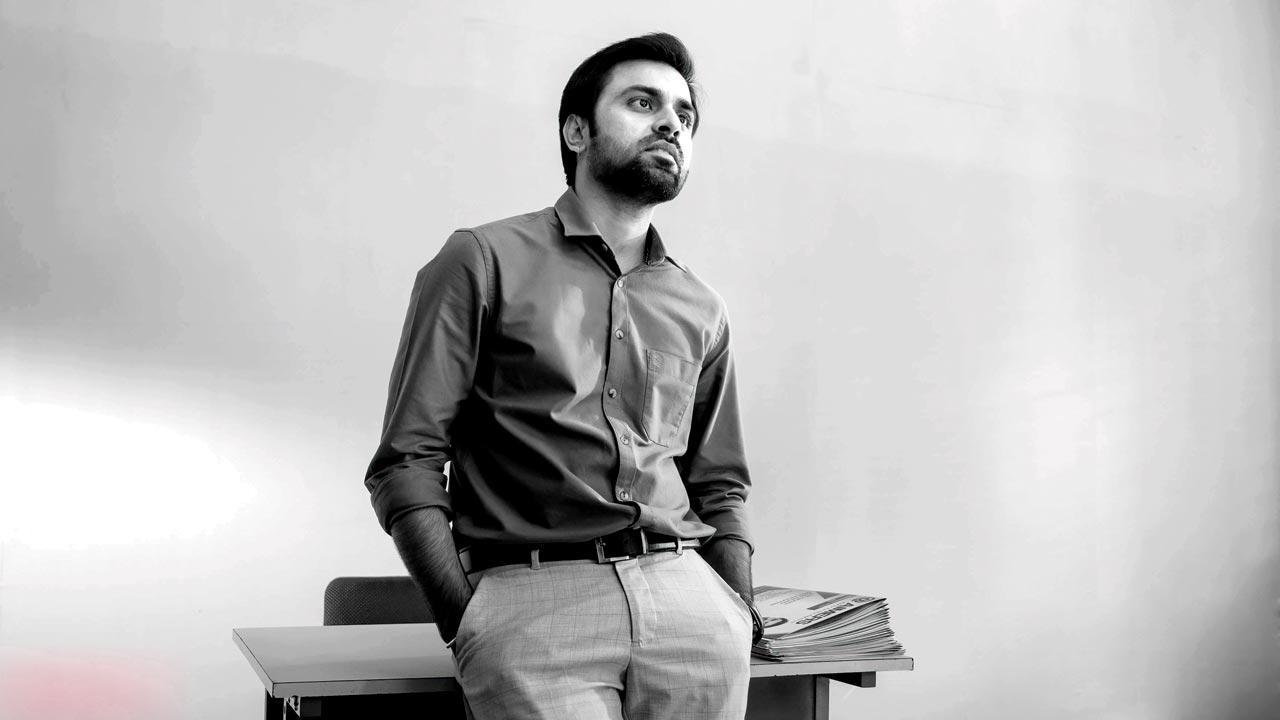
Actor Jitendra Kumar plays Jeetu Bhaiya, a mentor for the students
The director and lead of the hit Kota Factory tell you what the city, where IIT dreams are made, taught them
Aastha Atray Banan (MID-DAY; October 3, 2021)
“The Kota story actually began in the ’90s, when educationist VK Bansal started Bansal Classes. From that one classroom with a handful of students, the coaching scene in Kota has just taken off today. Students from all over the country come here to prepare for JEE or NEET examinations, which help them get into the IITs,” says Raghav Subbu, director of the Netflix show Kota Factory.
Bansal, who went to the Indian Institute of Technology (BHU) Varanasi, suffered from muscular dystrophy later in life and started coaching students in 1991. Thirty years later, Kota in Rajasthan, is an educational hub, with almost 1,50,000 students passing through it every year. The entrance coaching industry in Kota generates business of about Rs 40,000 million. As Subbu says, “We have met so many children who have lived the Kota life. The IIT life itself is so organic to the Indian fabric that somebody had to tell this story, and tell it well.”
Kota Factory was created by video on demand and OTT streaming service TVF, in 2019, and initially was only available on YouTube. Following its stupendous reception in its second season, Netflix came on board. It tells the story of 16-year-old Vaibhav (Mayur More), who hails from Itarsi in Madhya Pradesh, and other students, who arrive in the city. The show also stars Jitendra Kumar as Jeetu Bhaiya, a well-intentioned teacher. It’s stark, real, with a relaxed pace that comes with being set in a small town, and reflects the Indian obsession and passion for the IIT dream in a candid, and endearing way.
Kumar, who studied at Kota in 2006 himself, says that the internal brief he followed for his character was to not be like a teacher, but like the older brother at home, whom you seek out for advice. “The character sketch was quite detailed, and I added from my own experience. The teachers there have a certain manner about them. I wanted to be a bada bhai, like Jeetu,” he says.
The writer of the show, Abhishek Yadav, along with creators Arunabh Kumar and Saurabh Khanna of TVF, all went to IIT, and Subbu says that’s responsible for the tone of the show. “We didn’t even know it would become a show—it was supposed to be a comedy. But, the ground on which it stood had all the stories,” he says.
The team had to update themselves on the lives of teens now. Because even if the aspirations and vibe of the city has remained unchanged, the habits of the kids surely haven’t. “Instead of playing video games in cinema cafes, they were playing PUBG on their phones, and instead of eating the ’90s’ favourite patties, or the puff pastry, there is now a sub-culture of kachoris in the city. We had to update the whole experience of being in Kota,” adds Subbu, who says that he brought an “untouched” perspective to the show. “I have never been to an IIT, and I hate math. For me, it was all about recreating the world these children lived in.”
Its black-and-white world makes Kota Factory stand out in the Netflix world of glossy Korean shows, gory crime dramas and colour. “It’s a slow city — children come here and study. Like any small town, it has a relaxed vibe. That’s why the pacing of the show is slow. When we were on YouTube, it was almost like it had all the ingredients of a flop show—black-and-white, slow, and 40-minutes long. But it worked. It’s like Kota makes you embrace the monochrome life,” says Subbu.
Both Kumar and Subbu say that the show has made people more aware about what Kota is all about, and it’s not just about suicide. Kota has seen many student deaths year after year, owing to high pressure and fear of failure. According to the Kota district administration data in 2018, 58 students enrolled at private coaching centres in Kota committed suicide between 2013 and 2017. In 2017, there was a dip in suicides, which were down to seven compared to 17 in 2016 and 16 in 2015. There were over 20 deaths in 2019. “I think things are improving—kids are more open with their parents, and their expectations are more practical. But they are still very ambitious, and we wanted to highlight the good side as well,” says Subbu.
For Kumar, the show’s success and his own popularity points to why students need a good mentor. “It’s hard to find a person who can be honest with you, encourage you, but not show you false dreams. We lack good role models. The show in a way says it’s possible to find one.”
Kota Factory is one of those roles where I could use my real life experiences-Jitendra Kumar
8:23 AM
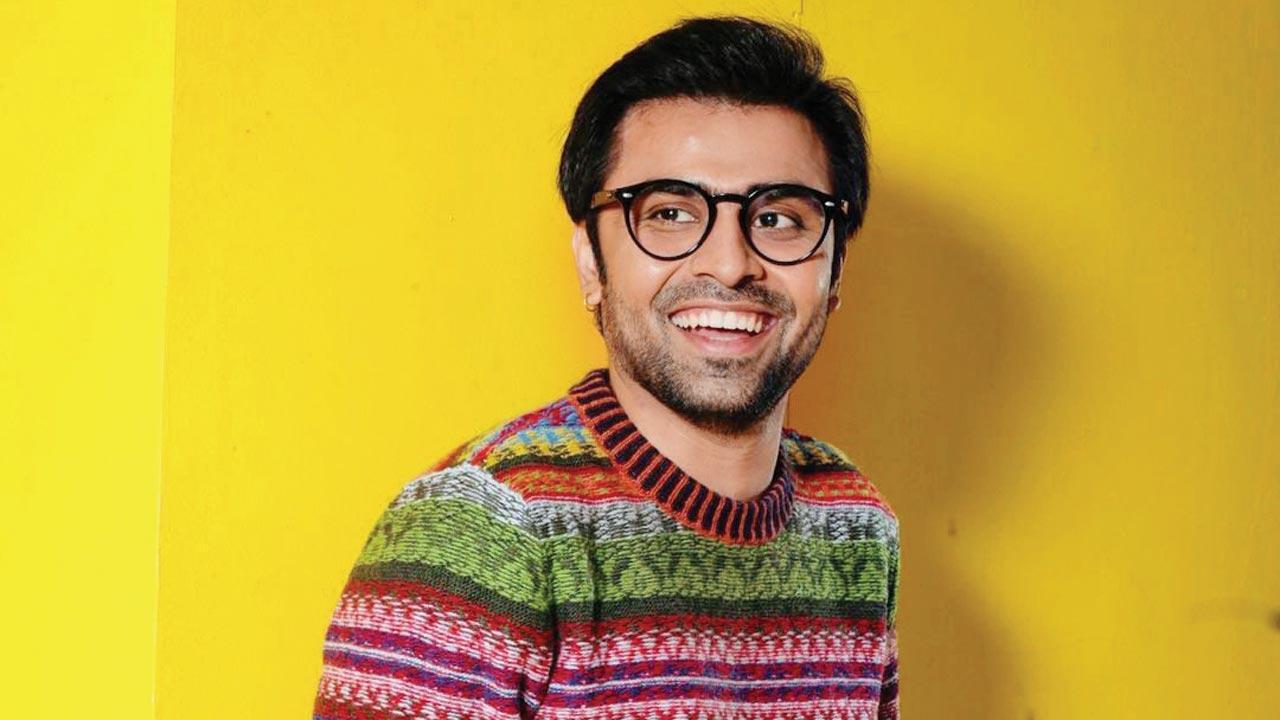
Internet star Jitendra, who reprises his Jeetu bhaiyya act for Kota Factory 2, says series helped him relive days of teaching IIT aspirants
Uma Ramasubramanian (MID-DAY; September 10, 2021)
Teaching physics at a coaching centre for IIT aspirants was a side-gig for Jitendra Kumar while he struggled to establish his acting career. Little did he know that years later, the experience would come in handy when shooting for Kota Factory. In a way, the web series and Kumar have grown together. From its humble beginnings on TVF, Kota Factory today has become a successful show, with Netflix India acquiring its second season. Similarly, Kumar — or Jeetu bhaiyya to his fans — is returning to the show as a bona fide OTT star with a hit film under his belt.
“Kota Factory has changed my life,” says the actor, who plays an assured teacher in the drama. “This is one of those roles where I could use my real-life experiences. I taught IIT aspirants, and have studied in Kota. I saw many teachers who had nuances like Jeetu bhaiyya. So, this character fills me with nostalgia.”
The second season will take ahead the story of teenager Vaibhav and his bond with his teacher. “My take-away from this show is that if you want to achieve something, keep working towards your goals. There will be people who will help you in your journey; you need to find them.”
The actor is surely attaining his goals, with or without support. The past year has been crackling for Kumar, who shone in Shubh Mangal Zyada Saavdhan and followed it up with Panchayat. How does he feel about the newfound stardom? “People love you for the characters you play, and I am grateful for that. I wish I could consider myself a star, but I still have to do grocery shopping for my kitchen.”
OTT platforms lean towards the linear way
8:11 AM

Instead of a season dump, a number of shows have been opting for weekly episode releases on OTT platforms lately. We delve deeper into this rising trend
Kavita Awaasthi (HINDUSTAN TIMES; May 29, 2021)
At a time when binge-watching shows has become the norm on streaming platforms, some players have been experimenting with the linear release format and opting for weekly episodes. This trend seems to be growing, especially since last year.
The popular Spanish series Money Heist is the latest to join the trend and release the final season in two volumes. Several web shows like Out Of Love season 2, Aspirants, WandaVision, and The Mandalorian also kept audiences on tenterhooks with weekly drops.

What clicks with the audience
Talking about why this trend is growing, the spokesperson of Disney+ Hotstar explains, “While binge-watching has its advocates who prefer a thrilling start-to-finish journey, weekly episodic releases keep the conversations around a show going for longer. It gives viewers a chance to discuss the story and its nuances, share theories and speculate about potential arcs. It becomes a ritual for the fans.” The platform’s latest release, Mare Of Easttown, created a stir with weekly episodes.
The spokesperson adds, “We like using both models as they work well. Our international shows like WandaVision and The Falcon And The Winter Soldier and original series Out Of Love (S2) benefited from a weekly drop, whereas others like Special Ops and November Story were binge-watched. We will continue to try new and innovative formats of dropping content.”
According to Vijay Koshy, president and business head, TVF, the success of either of the release models depends on a lot of factors. “Market maturity is a factor, as OTTs in developed markets regularly do weekly releases, like Game Of Thrones and Lupin. Studio name also matters. HBO, Disney, etc. have a cult following and their audience lap their releases either way. And lastly, genre. A thriller/crime content tends to have the binge approach. But in developing markets like ours, it’s critical for platforms to ensure the audience watches the show after sampling the initial episodes, so nine out of 10 opt for binge drop.”

Long-term feasibility?
Will the trend gain any momentum? Manish Kalra, chief business officer, ZEE5 India, admits that while they tried the episodic route with their hit Abhay starring Kunal Kemmu, fans kept pushing for all episodes at once. He adds, “Last year, given the pandemic, some shows were released weekly/fortnightly. While this is an interesting trend, it will probably not stay for long. They create intrigue, but might not satiate the consumer’s curiosity.”
Relish the slow burn
Actor Rasika Dugal, who starred in Out Of Love, reveals that weekly episodes made her peers and audiences impatient. She says, “My social media was flooded with comments saying ‘why weekly’, ‘where is the next episode’. But over the weeks, I think, some got used to it. Some friends and fans, however, refused to watch till all five episodes were out.”
Could weekly drops also be a tactic to spread the available content amid the Covid-era OTT boom? Koshy disagrees, “That strategy is unlikely to work on any subscription video on demand platform. Episodic releases in India, at best, work for shows that have a brand partner and YouTube as a platform, like the shows produced by TVF, such as Aspirants and Kota Factory. The two reasons here are the audience buildup and the brand requirement to sustain a long campaign.”

Key players of The Viral Fever resign
7:01 PM

Uncertainty reigns at India's leading digital content creation company after the exodus of key members; newly-appointed president asserts 14 projects on floors, including second seasons of Panchayat, Kota Factory
Mohar Basu (MID-DAY; August 12, 2020)
The Viral Fever (TVF) had a glorious run last year, with the success of Kota Factory, Tripling, Hostel Daze and the recent Panchayat (above) proving that they were the undisputed masters of quirky desi shows. However, the dream run came to an abrupt halt last week as the key players — Biswapati Sarkar, Nidhi Bisht, Amit Golani, Sameer Saxena, Dhawal Gusain, Karan Chaudhry and Saurabh Khanna — bowed out of the picture over alleged differences on the company's business approach.
 So, where does TVF — the true embodiment of homegrown digital entertainment in India — stand post the exodus, without its founders to steer it ahead? The exit of Saxena, head of TVF original content, has fuelled rumours that OTT bigwigs have lost faith in the company. After all, he had helmed the sophomore season of Tripling and the much loved Yeh Meri Family, and also served as the executive producer of Panchayat, the company's biggest hit this year. Insiders say that the upcoming seasons of the stable's popular series could be in limbo without his creative guidance. mid-day reached out to Saxena, who declined to comment.
Even as uncertainty looms large in the corridors of the company, Vijay Koshy (left; above) – who returned to TVF in July after a brief stint in Arre – has been appointed president. This is the second change of gears since 2017 when Arunabh Kumar stepped down as the CEO, following a series of sexual harassment charges, paving the way for Gusain to take charge.
 Despite the recent turn of events, Koshy asserts that 14 shows are set to go on floors. "Several OTT platforms are in talks with us for new shows. Some senior-level stupendous talent have moved on to pursue their own interests. But the writers and directors of Panchayat, Kota Factory (right), Permanent Roommates and Humorously Yours are still with us. The entire core team is still here. Besides Arunabh, Shreyansh Pandey [assistant vice president, content strategy & creative producer] and Akansh Gaur [content strategy head] are people who have been behind the scenes all along and will now shoulder larger responsibility. The second seasons of Panchayat, Hostel Daze and Kota Factory are in development. The same holds true for Flames season 3, Girls Hostel season 2 and Gullak season 2," he says, without refuting rumours of a brewing pandemonium within their workforce.
Quiz him on the future of the shows that were created by Saxena, and he explains, "Considering Yeh Hai Meri Family is a show based in the '90s, we are discussing whether we will take it forward. A story has yet to be locked for the third season of Tripling. When we get the right story, we will assign a director and take it ahead."
Mid-day reached out to Bisht, who declined to comment.

Sameer Saxena and Biswapati Sarkar
Subscribe to:
Posts (Atom)