Showing posts with label Komal Nahta. Show all posts
Showing posts with label Komal Nahta. Show all posts
Is a Hollywood 'Obsession' sidelining Hindi releases?
2:59 PM

After filmmaker Anurag Kashyap claimed that Hollywood films are getting priority over Hindi films in theatres, trade experts weigh in on the impact on Indian releases
Akash Bhatnagar (HINDUSTAN TIMES; June 17, 2026)
The global success of the Hollywood horror film Obsession, which has reportedly earned 330 times its budget, has become a case study in world cinema. However, it has sparked mixed reactions within the Hindi film industry.
Filmmaker Anurag Kashyap recently expressed concern on his Instagram Stories that theatre chains are prioritizing Obsession over Hindi releases, including his film Bandar (released on June 5) and recent Friday releases such as Main Vaapas Aaunga, Governor, and others.
Trade analyst Komal Nahta, however, believes international films aren’t an impediment. He shares, “Only bad content is coming in the industry. Bandar is not doing well even otherwise, so the number of shows isn’t going to make a difference,” adding, “If in two shows, they can’t get houseful, what will they get in 20 shows?”
Trade analyst Atul Mohan adds that multiplex programming is largely driven by audience response. He says, “In a way, Anurag is right. Business is ruthless. If a film doesn’t do well in the first two days, they reduce the shows drastically, which doesn’t give time for word of mouth to spread. Hindi films deserve that time to grow.”
Film exhibitor Akshaye Rathi echoes the sentiment and says that the audience makes the ultimate decision. “If Main Vaapas Aaunga or any other film have very good occupancy levels, cinemas across the country would increase the number of shows, like they did for Haunted – Echoes Of The Past in the same week. So, it’s not about the theatres but what the audience decides,” he shares.
--------------------------------------------------
These are business-oriented decisions. There is a policy for encouraging local produce, and there should also be a policy for encouraging local cinema. But there are arguments on both sides of the matter, and can’t be compared.
- IMTIAZ ALI, DIRECTOR OF MAIN VAAPAS AAUNGA
--------------------------------------------------
Nothing is coming in the industry except bad content. If Anurag thinks it is because of Obsession that Bandar is not doing well, he should see the collections. Critical acclaim is not the same as the box office, and when we talk about competition, we talk about box office. So, Obsession is not acting as an impediment to the running of Indian films at all.
- KOMAL NAHTA, TRADE ANALYST
--------------------------------------------------
‘FOR EVERY DHURANDHAR, THERE WILL BE FIVE EXPENSIVE FILMS THAT WILL BOMB’
Rishabh Suri (HINDUSTAN TIMES; June 17, 2026)
For Indian films to not get enough attention from theatres, despite having good reviews, does not go down well with Anurag.
He tells us, “Films like Bandar and Main Vaapas Aaunga should get proper shows so that people can watch them, allowing word of mouth to build up. Then another problem is that there’s an audience that is getting used to seeing such films on OTT. So you’re building an audience only for event movies. But such films are so expensive, and the hit-and-miss ratio is huge. For every Dhurandhar, there will be five expensive films that will bomb.”
He emphasizes strategic show timings for smaller films too. He adds, “Bandar’s night shows were full. But who’s going to go watch Bandar at 9 am, when it is going to upset you for the rest of the day? There’s human psychology also involved.”
After Bobby Deol in Animal, now Akshaye Khanna goes viral among Gen Z fans with Dhurandhar
9:49 AM

Actors Akshaye Khanna and Bobby Deol may have made successful comebacks with their recent films, but it’s their Gen Z fans who’ve truly propelled them into the spotlight, making both stars viral sensations like never before
Rishabh Suri (HINDUSTAN TIMES; December 10, 2025)
Everyone loves an underdog finally getting their moment in the spotlight and right now, it’s actors Akshaye Khanna (50) and Bobby Deol (56) stealing it. Gen Z can’t get enough of Akshaye, while Bobby has been crowned “Lord Bobby” online, with fans going all out for their favourites.
Akshaye’s recent performance in Dhurandhar has earned universal praise, especially after his dance to the film’s catchy Arabic number went viral. Earlier this year, Chhaava had also won him widespread admiration, proving his charm just keeps growing.
Similarly, Bobby, who had been away from the mainstream for a few years, is back in a big way. Animal (2023) reignited his career, with his entry song Jamal Kudu becoming an instant rage. And this year, The Ba***ds Of Bollywood further cemented his renewed fan base.
Trade analysts see this as a positive for the industry. Komal Nahta notes, “It’s all about getting that right role. Bobby had a small role in Animal but it created a tremendous impact. On social media, Gen Z has dubbed him as Lord Bobby for long.”
He adds that the social media love for both stars isn’t fleeting. “We need more good actors. Akshaye should keep signing more films and not retreat after Chhaava and now Dhurandhar,” Nahta says.
‘Happy to see Bobby make a huge comeback’
Ramesh Taurani, co-producer of Race 3 — Bobby’s comeback film in 2018 after a career slump — is thrilled with the actor’s return to the limelight. He says, “Bobby was a star even before his debut film… I can’t describe the craze people had for him even before he launched. He’s not only good-looking but now a solid actor too.”
’Akshaye deserves more success’
Director Priyadarshan, who has worked with Akshaye in multiple films, admits he wasn’t aware of the resurgence of Jeetu from Videocon, Akshaye’s now-cult character from the 2003 film Hungama.
He says, “It’s not just about Gen Z, people have always loved him. Earlier, PR and the media made an actor, but today, audiences form their own opinions. The fact that people are talking about him now shows he was always a genuinely favourite artiste.”
Laxman Utekar, who directed Akshaye in Chhaava, says, “The kind of performer he is, his physique… when we did his look test, it was magical. He deserves even more success.”
Meanwhile, director Farah Khan shared on social media that she often sends Akshaye all the viral reels of his funny scenes in Tees Maar Khan (2010).
AKSHAYE’S VIRAL DANCE
The song that Akshaye dances to in Dhurandar is Fa9la by Flipperachi, a Bahraini rap track currently ruling social media. The track has gone so viral that even BJP shared a reel on Tuesday highlighting PM Modi’s journey from childhood, set to this very song! The lines translate to: “Brother, dance hard, I’m ready for a good time...”
Ek Tha Tiger? Sikandar is the latest in the series of underwhelming Salman Khan movies
2:53 PM

Rajesh N Naidu (THE TIMES OF INDIA; April 3, 2025)
Mumbai: In director Billy Wilder's classic noir film Sunset Boulevard (1950), the character Norma Desmond, played so sensitively by Gloria Swanson, says: "I am big. It's the pictures that got small." Going by the performance of Hindi films, which rely more on stardom than scripts, it is clear that the audience is sending across an unambiguous message to the moviemakers: The pictures are bigger than the stars. The box-office performance of actor Salman Khan’s recent film Sikandar seems to underline this view.
Made on an estimated budget of more than Rs. 250 crores, the film’s opening day collection was Rs 26 crores, according to box office data research firm Sacnilk. This is considerably lower than the trade circuit's estimate of Rs. 45-50 crores. Also, in the past eight years, Sikandar has been Salman Khan's sixth film which has failed to draw crowds to theatres.
"Salman Khan's stardom is under a cloud. This is because he has been unable to select scripts wisely," said veteran trade analyst Komal Nahta. "The story of Sikandar is ridiculous. It does not make sense that a hero is protecting three people who have received his dead wife's organs in donation," he added.
Writers and trade analysts said the actor is taking his stardom for granted and heavily relying more on his star power than scripts.
"After Bajrangi Bhaijaan (2015) and Sultan (2016), it is evident that none of the films that Salman starred in were written with conviction. Some of the fault lies with the producers too who seem to have taken it for granted that if they have Salman on board and an Eid release plan, then the audience will accept anything that comes their way," said scriptwriter Jaidev Hemmady. This approach is counter-productive, especially at a time when audiences are giving higher importance to stories than stars, he said.
Besides this, industry veterans are of the view that the genre of mass entertainer is not taken seriously in Hindi film industry. This is especially true in the case of Salman Khan's films post the release of Sultan (2016).
"Hindi filmmakers have reduced mass entertainers to mindless, boring or cringe-inducing stories. A great deal of creativity is required to make mass entertainers,” said veteran producer, who wished to be unnamed. “Consider writer duo Salim-Javed's films. Even though they were template stories, they looked fresh and they hardly compromised on entertaining value. In the past eight years, Salman Khan's mass entertainers conspicuously lack these elements and rely more on his stardom."
Overexposure of the actor through the Big Boss serial and events has affected the brand Salman Khan, said Girish Wankhede, a movie trade analyst. “Besides overexposure, Khan does not seem to prepare for his roles in mass entertainers. One does not see much difference in the way Salman Khan looks in the film Sikandar and outside the film," he said.
"Also, where is the story in Sikandar? Have the makers of Sikandar considered showing their film to people outside their circle and get their feedback? I seriously doubt it. If you don't take your business seriously, why would the audience take your film seriously?"
Since its trailer release, the word-of-mouth communications for Sikandar have been unfavourable, which impacted its first day collection. Trade analysts said on the Eid day, some theatres in Mumbai cancelled shows of the film and increased shows of the mid-budget ‘The Diplomat’.
A trade analyst, who requested anonymity said: "There is not a single full house show in theatres in Mumbai. In some theatres, there are 20-30 people in theatres. This shows that word-of-mouth communications of Sikandar have been unfavourable and rapid."
According to the data from Sacnilk, in the past three days, Sikandar has collected Rs. 74.5 crore across languages in India. Given the weak response, the trade circuit estimates that Sikandar’s collection will barely cross Rs. 150 crore in the coming days.
Industry insiders talk about block booking and why it is so rampant
11:09 PM

Rishabh Suri (HINDUSTAN TIMES; February 13, 2025)
The terms ‘block bookings and ‘corporate bookings’ have created a lot of buzz recently. It began when trade analyst Komal Nahta accused the makers of actors Akshay Kumar and Veer Pahariya’s recent film Sky Force of resorting to booking out theatres in order to paint a rosy picture in the film’s box-office report.
Things took a turn after the same accusation was levelled against Vicky Kaushal and Rashmika Mandanna’s upcoming Chhaava, which is bankrolled by the same producers — Maddock Films. In light of these allegations, insiders worry that the industry’s credibility is at stake, considering anyone can manufacture numbers to favour their films.
‘An old practice’
According to trade analyst Taran Adarsh, big names in the film industry were fudging the numbers even in the 1970s and ’80s: “In those days, block bookings was called ‘feeding’. A top actor I spoke to would buy tickets at certain cinemas for houseful boards to create a certain perception. Films wouldn’t release simultaneously then — a film might premiere in Delhi today, Mumbai after a week and so on. But public sab jaanti hai.”
However, exhibitors do not complain since tickets are technically being sold. He adds, “Aaj kal toh bade level pe ho raha hai yeh sab. Exhibitors are happy, ab chaahe producer khud khareed raha hai ticket, ya actor, ya studio.”
So, is it all fake?
Also accused of using this tactic were the makers of Ram Charan and Kiara Advani-starrer Game Changer. The makers claimed that it grossed Rs. 186 crore worldwide on premiere day. But according to number crunchers Sacnilk and Box Office India, the actual worldwide gross was Rs. 80 crore.
With the growing buzz, filmmakers have begun adding their two cents to the debate. Recently, filmmaker Kunal Kohli called block bookings “rubbish”. In an interview with YouTuber Aleena Gandhi, Kohli said, “Matlab we make the film, we release the film and then we only buy tickets to watch the film? The reason you are doing [this] is ego, to pamper a star and not show him the reality, or to pamper that director, that producer.”
Shibasish Sarkar, the president of Producers Guild of India, asserts that this is fraud against the masses: “I think ultimately what is happening is bringing the credibility of the industry down. The only logic here is to create a perception about the demand.”
Tracking the numbers
As for fake numbers, Sarkar notes, “In developed markets worldwide, there are systems like Rentrak (to track the numbers). In India, unfortunately, that has not happened. While this isn’t new, things are happening on a scary proportion. So, even if you get a system to bust fake numbers, how would you see who is fraudulently booking the tickets in bulk? You cannot install CCTV cameras inside every theatre.”
We reached out to Dinesh Vijan, founder of Maddock Films, but received no response by the time of going to press.
After the makers of several tentpole films were accused of ‘block booking’, we ask industry insiders about the practice and why it is so rampant
What is corporate and block booking?
Trade expert Atul Mohan explains, “If an actor endorses 20 brands, they ask one brand to, for example, purchase 10,000 tickets for their latest film. In return, they waive off some fees, or shoot an ad for free. This means 10,000 tickets are legitimately being sold, even if the theatres turn out to be ultimately empty. Then there’s block booking, where a producer, actor, or studio pay for multiple seats out of their own pockets. In both cases, when you open booking apps, you see theatres are filling fast. That creates a positive perception around the film.”
Block bookings are on the rise as many films end as horror shows
4:11 PM

The practice creates a false sense of success, but many films with weak content fail to sustain momentum
Rajesh N Naidu (THE ECONOMIC TIMES; February 13, 2025)
Block booking of movie tickets by producers and stars has resurfaced as a major concern in the film trade, with its impact on opening collections of recent Hindi and pan-India films drawing scrutiny.
Industry insiders highlight two key issues in this growing trend: the scale of block bookings and their link to a film’s quality.
The practice pushes up first-weekend numbers, creating an illusion of success.
Among recent films, the multilingual Game Changer saw a higher share of block bookings than organic audience ticket purchases. According to data from box office tracking firm Sacnilk, out of Rs 2.5 crore in advance bookings, Rs 1.5 crore came from block bookings. However, the film failed to sustain momentum and grossed approximately Rs 155 crore on a budget of Rs 400-450 crore.
Veteran trade analyst Komal Nahta noted, “In the past, block booking was like salt in a well-cooked dish—never too much or too little, just adequate. However, for a recent film, the producers block-booked tickets worth Rs 40 crore (net collections) out of Rs 80 crore the film collected in a week's time. This shows how excessive block booking has become.”
Analysts say that when block bookings outpace organic audience demand, films often struggle at the box office. A higher reliance on block bookings, trade experts note, also signals weaker content and poor long-term performance.
"Audiences cannot be hoodwinked. If a viewer books a ticket and finds 90% of the auditorium empty, the film is doomed through word-of-mouth," Nahta added.
Block booking occurs in several ways. Producers buy tickets in bulk for their affiliates. Corporations—especially brands associated with film stars—purchase tickets as part of endorsement deals, with ticket values often counted as part of a star’s remuneration. Additionally, producers barter tickets in exchange for services.
A producer, speaking on condition of anonymity, said, “Producers typically set aside 2-10% of a film’s budget for block booking after gauging the response to its trailer. They consider this a marketing expense.”
Trade analysts argue that block booking is often used when producers lack confidence in their films’ ability to attract audiences. By artificially inflating opening weekend figures, they aim to negotiate better deals with streaming platforms.
Movie trade analyst Girish Wankhede remarked, “Allocating a film’s budget to boost its first three-day collection is a recent phenomenon, but it’s not an honest approach. The aim is clear—producers inflate box office numbers to secure higher prices for digital and satellite rights.”
A recent box office forecast by media and entertainment research firm Ormax Media found that corporate bookings do not translate into sustained footfalls. Initial spikes in collections fail to hold if the film does not meet audience expectations.
Ameya Naik, producer and founder of Fantasy Films, said, “If a film’s trailer is well received, audience footfalls will grow organically. Block booking reflects a lack of confidence in one’s own creation. And audiences are smart enough to recognize this tactic."
Like films, lower ticket price formula too flops
7:52 AM

Raises doubts over the strategy of offering cheap tickets to lure audiences to theatres
Rajesh N Naidu (THE ECONOMIC TIMES; January 23, 2025)
Mumbai: The poor performance of recently released Hindi films such as 'Emergency' and 'Azaad' even after lowering ticket prices to Rs. 99 due to Cinema Lovers Day has raised a question over the assumption in the industry that low ticket prices ensure high footfalls in theatres.
"The performance of both 'Azaad' and 'Emergency' at the box office has broken the myth in the industry that low ticket prices ensure high footfalls in theatres," said Ameya Naik, producer and founder of event management company Fantasy Films.
Exhibitors celebrated Cinema Lovers Day on January 17 and offered tickets at Rs. 99. On the same day, 'Emergency' and 'Azaad' were released. Despite the Cinema Lovers Day, 'Emergency' and 'Azaad' collected Rs. 2.5 crore and Rs. 1.5 crore, respectively. This shows that lower ticket prices do not translate into higher footfalls in theatres. Also, according to box office data research firm Sacnilk, the overall occupancy levels for 'Emergency' and 'Azaad' have been in the range of 5-7% since their release last Friday.
Komal Nahta, a veteran trade analyst, said, "There was a novelty factor when exhibitors launched the campaign of celebrating National Cinema Day by offering tickets at Rs. 99. But gradually, this campaign began to lose its charm. Reducing ticket prices is not enough. Audiences want a combination of entertaining and exciting content along with reasonable ticket pricing."
"Footfalls for new releases - Emergency and Azaad - even in cinemas where ticket price is Rs. 99 are so low that it seems that people are not interested in watching films even if the admission price is low," he added.
After the pandemic, exhibitors initiated a mood-changing campaign to woo audiences to theatres by offering tickets at Rs. 99 on any day. The rationale behind the campaign was to boost footfalls in theatres. The first National Cinema Day was first celebrated on September 20, 2022. But as films failed at box office, exhibitors stared at high fixed costs. To compensate for weak footfalls in theatres, exhibitors re-launched National Cinema Day with a different name and re-released well-accepted old films in theatres.
Re-releases walking a fine line between nostalgia and overkill in cinemas
9:12 AM

Re-releases are walking a fine line between nostalgia and overkill in cinemas today, with some experts questioning their long-term impact
Akash Bhatnagar (HINDUSTAN TIMES; September 22, 2024)
What started as a novel idea to evoke nostalgia in theatres, the trend of re-releasing films is quickly turning into an overload. Almost every other day, there’s news of a new re-release. While a film like Laila Majnu (2018) was brought back to theatres to offer the theatrical experience they missed during their original release, others like Taal (1999), Tum Bin and Rehnaa Hai Terre Dil Mein (both 2001) seem to be simply jumping on the bandwagon. But is this re-release overload becoming a buzzkill, or is it fuelling a growing trend?
THE OVERKILL OF RE-RELEASES
Trade analyst Komal Nahta believes it’s too much, too soon: “Definitely, it’s an overkill. It’s difficult to predict how long this will go on, but it won’t last forever. People will soon get tired of watching old films. Right now, they’re rushing to the theatres because it’s a novelty, but that won’t last.”
Varun Gupta, founder director at Max Marketing, agrees: “It’s a fad, not a trend. The reason some films are working is that very few people saw them in theatres during their original release. There’s no real nostalgia there. It’s more about people catching up on what they missed. But this doesn’t apply to all films... Hum Aapke Hain Koun...! (1994) re-released but didn’t pull in the numbers. The re-release culture isn’t a cash cow.”
A SYMBIOTIC RELATIONSHIP BETWEEN OTT AND THEATRES
Offering a fresh perspective, Kamal Gianchandani, CEO of PVR INOX Pictures, sees re-releases as part of a bigger trend. “These films gained more popularity on streaming platforms, and cinemas are giving audiences a differentiated experience,” he explains.
When asked if this trend will fade, he says, “Maybe. But people said the same about pan-India releases, and those are here to stay. Some films will do well, others won’t.”
THE BUSINESS SIDE
Devang Sampat, managing director at Cinepolis India, sheds light on the financial angle. “Re-releases have contributed positively to business, but new releases generally offer higher margins for theatres. The share percentage for new films is higher, but the affordability of re-releases attracts more footfall. Theatre business thrives on balancing the two.”
To avoid re-release fatigue, Sampat suggests focusing on “high-demand films and pairing them with strong promotional strategies”. “This way, theatres can keep the concept fresh and prevent it from losing its charm,” he ends.
Streaming rights sales may surpass box office collections in five years
8:09 AM

Rajesh N Naidu (THE ECONOMIC TIMES; August 9, 2024)
ET Intelligence Group: Revenues from the sale of digital or streaming rights of films are likely to show higher growth and fetch more revenue to film producers than from theatres in the next four years, as per a recent Media Partners Asia report.
Revenues from selling streaming rights of films are likely to grow at a CAGR of 8.2% to $1.1 billion (about Rs. 9,130 crore) by 2028 from $0.8 billion (about Rs. 6,640 crore) in 2024, the report estimated. In comparison, revenues from theatres are likely to grow at a CAGR of 4.6% to $0.6 billion (Rs. 4,980 crore) in 2028 from $0.5 billion (Rs. 4,150 crore) in 2024, it said.
“Premium video on demand revenues, both advertising and subscription, are outpacing traditional box office growth,” said Mihir Shah, vice president, Media Partners Asia.
“As the market expands, streaming majors will continue to invest heavily in local original content, particularly movies. In recent years, to deepen their market presence, established players have also focused on acquiring rights to successful regional movies, given the longer timelines involved in commissioning web series.”
At present, there are 59 streaming platforms in India. Analysts say that increasing competition among streamers to grab more and more content in creating bigger and more easily accessible libraries for subscribers will drive investments in acquiring films. According to Media Partners Asia, in the next five years, India’s online video industry has a potential to attract investments close to $17 billion. Between 2018 and 2023, investments in local entertainment increased to $5.8 billion from $3.3 billion, said the report.
Film trade analyst Komal Nahta said, “The growth in revenues from the sale of digital rights may be higher than the growth in revenues from theatrical in the coming years. This is a strong possibility. The habit or ritual of going to theatres every weekend is no longer the norm. A large section of the audience comes to theatres only when spectacular films like Kalki 2898 AD, Baahubali or RRR come to theatres.”
It is estimated that there are more than 200 unreleased Hindi films that producers are finding it difficult to release in theatres. The producers are said to be negotiating deals to get these films released directly on streaming platforms.
Regional films rule box office; Hindi lose the script chasing money
8:14 AM

Their share of total box office collection in past year up 56.8% from 40.3% previous year
Rajesh Naidu (THE ECONOMIC TIMES; July 8, 2024)
ET Intelligence Group: Has the domination of regional films on India's box office collections become near total - and predictable? Going by the numbers, that seems to be the script. The share of box office collections of regional films in India's total box office collection in the past one year has jumped to 56.8% in the June 2024 quarter from 40.3% in the June 2023 quarter.
According to domestic brokerage B&K, the total box office collection-Hindi, regional and Hollywood-increased to Rs. 1,798 crore in the June 2024 quarter from Rs. 1,796 crore in the June 2023 quarter. In the same period, the share of Hindi films in India's total box office collections has dropped to 35.1% from 41.3%.
Ameya Naik, head, Fantasy Films, an event management company said, "Today, Hindi film-makers focus only on business. There is no passion in telling a story. It seems that they have forgotten the art of stirring emotions in audiences. With a few exceptions of 12th Fail and Laapataa Ladies, I don't remember a Hindi film in the past year which stirred me emotionally."
He added, "Hindi film stars not only interfere with the vision of films but they make them economically unviable by charging obscenely high fees."
Komal Nahta, veteran trade analyst, pointed out, "A reason for sub-standard Hindi films could be the easy availability of money in the form of revenue from sale of streaming platforms and other rights in recent years. In most cases, well-known Hindi film banners recover 40-50% of their costs through the sales of these rights."
He added, "Regional film-makers are sincere and earnest in their vision. The vision of directors and writers down the south is sacrosanct and is followed by all. This is the reason why regional films are faring better than Hindi."
Naik of Fantasy Films said, "Today, audiences are interested only in engaging films irrespective of their language, budget or even whether they are headlined by stars. A prominent example is the noteworthy success of a small-budget Hindi film Munjya. I don't believe in this myth that audiences do not want to come out of their homes for entertainment. If they were glued to their personal screens, then how do you explain the massive crowd which greeted the victory parade of the Indian cricket team in South Mumbai? Audiences just want a compelling reason to watch a film, which Hindi film-makers are not providing."
Wild swings in Vashu Bhagnani stock raise eyebrows
8:20 AM
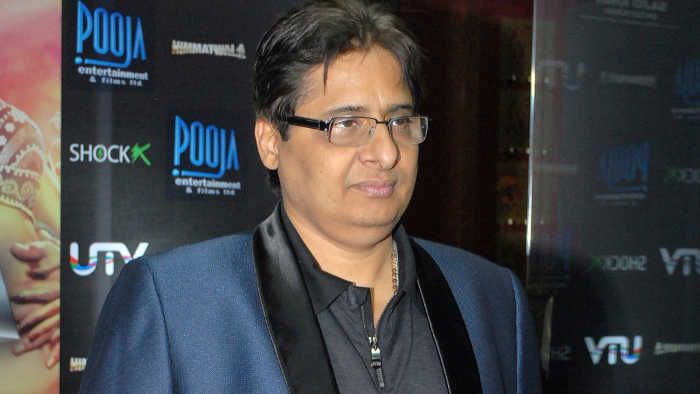
Shares tank 36% in a month after 1,168% gain in the past one year amid rumours of financial stress
Kairavi Lukka (HINDUSTAN TIMES; July 2, 2024)
The sharp swings in the share price of a Mumbai-based film production company in the past month has raised eyebrows on Dalal Street. In the previous six trading sessions, Vashu Bhagnani Industries, formerly known as Pooja Entertainment, has been locked in the daily lowest tradable limit on the BSE, declining nearly 36% in this period following news reports that the company was under financial stress.
Shares of the company, owned by veteran film producer Vashu Bhagnani, have rallied 1,168% in the past one year, and 355% so far in 2024, taking the company's market cap from Rs. 82 crore a year ago to over Rs. 1,000 crore now.
The stock closed at Rs. 298.85 on Monday, 5% lower - the lowest tradable limit in the trading session. The recent losing spree in the shares has continued even after the company, in a stock exchange disclosure, denied news reports that said the entity sold off its office building, laid off staff and is seeing delay in salary payments.
Before the news surfaced on June 24, shares of Vashu Bhagnani Industries had almost doubled in just one month, from Rs. 209 on May 24 to Rs. 410.
"Pooja Entertainment is a classic example of a share doing better than the market but without any fundamentals," said Arun Kejriwal, founder, KRIS, a Mumbai-based investment consultancy firm. "Such price movements make one believe that it is not natural but artificial."
The company's consolidated profit for FY24 stood at Rs. 8 crore as against Rs. 2.86 crore the previous year. Consolidated revenues were at Rs. 58.07 crore during the year as against Rs. 46.6 crore in the previous year.
Film trade analysts claim the company's recent movies have not been profitable. "We have not seen Pooja Entertainment's movies do well in the last 23 years. The production house's last hit movie was in 2001 named 'Mujhe Kuchh Kehna Hai'; and ever since then, all their movies have tanked," said Komal Nahata, a trade analyst.
"Recent releases like Bade Miyan Chotte Miyan, Mission Raniganj, and Bellbottom have also failed to break this streak and were box office flops."
Is Bollywood in panic mode after the failure of big-budget films?
8:39 AM

Astronomical star fees, lack of promotion or wrong timing of release – industry experts discuss what’s led to the recent box office disasters
Vinay MR Mishra (BOMBAY TIMES; May 8, 2024)
The dismal performance of the two big Eid releases has left the industry stunned once again. Akshay Kumar and Tiger Shroff-led Bade Miyan Chote Miyan (BMCM) and Ajay Devgn’s Maidaan were released on Eid. Maidaan’s budget was approximately Rs. 250 crore, while BMCM was mounted at Rs. 350 crore. So far, Maidaan’s collections stand at Rs. 48.85 crore and BMCM Rs. 64 crore (India nett).
Reportedly, G7, a popular theatre chain in Mumbai, was temporarily shut down for renovation due to poor footfalls. Even the medium-budget movies that were released post-Eid, Do Aur Do Pyaar and Love Sex Aur Dhokha 2, didn’t leave an impact at the box office.
In the first quarter of 2024, the total collection of all Hindi movies released was approximately Rs. 700 crore, with only the Hrithik Roshan-Deepika Padukone-led Fighter (Rs. 212 crore India nett) being the tentpole film that was released between January and March.
Distributor Anil Thadani says, “Everything was correct with BMCM, but we are yet to figure out what went wrong. We don’t know what will work. We are living in an unknown territory.”
According to industry experts, while the film business is largely unpredictable, there are certain measures that can be taken to help the current crisis.
Pump up promotions in the right direction
The industry is witnessing another trend of minimal promotions with the hope of maximum impact. It worked for Shah Rukh Khan during Pathaan and Jawan as the films went on to become huge successes. However, when other films adopted that policy, it didn’t quite work out.
“Publicity is very important for movies. Otherwise, your films won’t run. These days stars don’t do any promotions, they only stick to social media. Back in the days, people would do so many newspaper interviews,” says Manoj Desai, Executive director of G7 (Gaiety-Galaxy) and Maratha Mandir. For Crew, its promotional songs drew the audience’s interest, which other films could not achieve.
Trade analyst Komal Nahta adds, “Actors don’t do interviews, they don’t make appearances, they don’t go to the malls, and they have even stopped promoting their films on television. Many people watch television, and if they don’t see ads, the audience is not even aware that a film is releasing.”
Film exhibitor Akshaye Rathi shares, “More than lack of promotional activities, it’s the direction of the promotional activities that matters. We should not just make the audience aware, but also have them excited and compel them to buy tickets. For that, the vanilla template for marketing and PR that’s being followed needs to be reworked.”
Pick the right release window
“The critics and audiences praised Maidaan for its superior content. Despite its quality production and storyline, Maidaan encountered significant challenges in its marketing efforts. There was minimal ground-level marketing, and the film’s release was postponed multiple times, which is what probably diminished audience’s interest and anticipation. These marketing missteps contributed significantly to its disappointing box office returns,” says Amit Sharma, MD, Miraj Entertainment.
Taran adds, “Maidaan shouldn’t have been an Eid release. People want to watch a masala movie on such occasions and not something serious.”
‘Failure of BMCM and Maidaan has affected the trade badly’
Film trade analyst Komal Nahta explains, “The underperformance of both these films has been a shocker. The budgets were so high that their failure meant a major setback for the industry. Exhibitors are in panic mode.”
Renegotiate stars’ fees
According to a media report, Akshay Kumar charged Rs. 80 crores, while Tiger Shroff commanded a fee of Rs. 40-45 crores for Ali Abbas Zafar’s directorial BMCM. Komal Nahta says, “If the budget is going to be Rs. 350 crores, out of which Rs. 150 or 200 crores are paid to the actors, it is nonsense. People are eventually going to see the content. Yes, stars do add value, but if the content is not up to the mark and the films are costly, they will only take the movie down.”
Akshaye Rathi suggests a better pay model. He explains, “Given the uncertainty that the box office has thrown at all of us, irrespective of who the star is, what the size and scale and production values are, I think purely for the sake of sustainability and survival, stars need to work on a revenue sharing model.”
Taran Adarsh, adds, "The fees of actors and paraphernalia around them should be curtailed. Actors should do revenue sharing in today’s times. Tab maalum hoga how much pull the actor has, aur doodh ka doodh aur paani ka paani hoga."

Hum Aapke Hain Koun started with 32 screens, and everyone said that it was a suicide mission-Komal Nahta
10:47 PM
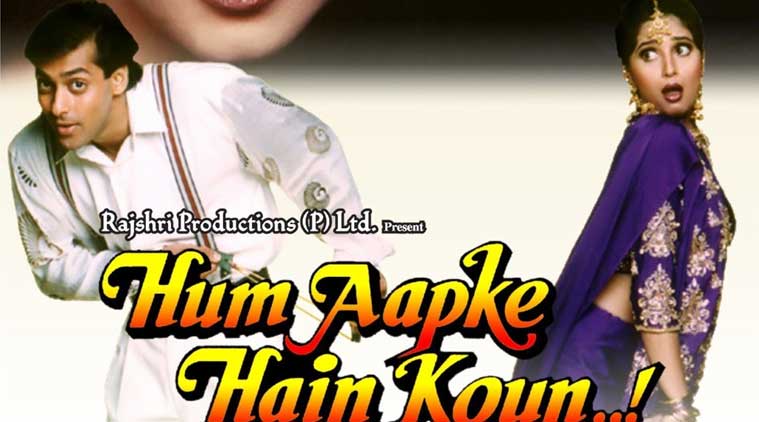
TOI Entertainment Desk (April 26, 2024)
In our exclusive Box Office Nostalgia section, we revisit iconic hits and cult classics which have shaped cinema over the years. This week, we decode the number game behind one of Salman Khan and Madhuri Dixit's biggest hits - Hum Aapke Hain Koun...!
Film: Hum Aapke Hain Koun...!
Release date: August 5, 1994
Star cast: Salman Khan, Madhuri Dixit, Mohnish Bahl, Renuka Shahane, Alok Nath, Reema Lagoo, Anupam Kher, Satish Shah and Himani Shivpuri among others.
Director: Sooraj Barjatya
Hum Aapke Hain Koun...! is unarguably amongst the most ambitious and a game changer film in Indian Cinema. And the film's stupendous success is testimony to its makers' daring courage of conviction. Amongst its many successes, a few notable highlights include changing the way cinema idioms are used, and suddenly, music is taking the film's story forward. The film also revolutionized the way music was recorded for a film. The unusual and innovative marketing and distribution strategy forced the distributors and exhibitors to renovate their theatres. And the film brought the Indians back to the cinema halls – globally - like never before. HAHK also made homely and decent cool once again. While doing all the above, the film also escaped the era's biggest menace – piracy!
Hum Aapke Hain Koun...! was released in cinemas on August 5, 1994, with only 26 prints, and it was stipulated it would be released in only one theatre per city. In Mumbai, the theatre was Liberty; in Delhi, it was Delite. Only those cinema halls across the country equipped with an 'optical stereo system' were allowed to play the film. Exhibitors could choose to upgrade or miss out on being able to screen the film.
Senior trade analyst Komal Nahta reminiscences, "After ages, somebody dared to release a film on limited screens. It started with 32 screens, and everyone said that it was a suicide mission and they would destroy themselves because piracy was at its peak. But Rajshri had faith in their vision. They asked the exhibitors to renovate their theatres, and only then would they give their films for exhibition. They told the theatre owners to create an atmosphere for people to enter the theatres. They had put on lights at Liberty Cinema that would go on when the 'Didi Tera Devar Deewana' song would play."
Liberty Cinema in Mumbai was decorated for the film's grand release and upgraded to become a high-end cinema hall with optical stereo sound to match the film. Film historian Dilip Thakur said, "Before Hum Aapke Hain Koun...!, Liberty used to screen B and C-grade films, and therefore, they needed to facelift the film to bring back the audience to the cinemas."
Director Sooraj Barjatya told Etimes, "We had the biggest premiere at Liberty Cinema. I was shocked because there was no reaction. People were walking out during songs. I was scared. Adi (Aditya Chopra) and Salim Sahab (Salim Khan) had told me that the two-and-a-half songs were my indulgences and that I should cut them. I cut those songs."
The film did not take a flying start, and the initial reaction was mixed. The film was too different from the rest of the fare. The musical format took a while for the public to adjust to, and in the first three weeks of the release, Hum Aapke Hain Kaun got tagged as Chaayageet, the popular music program on Doordarshan.
P S Ramanathan of Rajshri Productions said, "Till the first three weeks, the reception was shaky, and it was only after the 5th week the film's business picked up, and that's when we started releasing the film in mono cinemas also, and it reached about 582 cinemas."
Made on a budget of Rs 6 crore, the film earned around Rs 10 lakh on its opening day and the India Gross collection of the film stands at Rs 117 crore.
Nahta recalls going to the cinema to watch the film and his initial reaction: "After one or two weeks of the film's release, Rajshri Cinema was opened, and we had been invited to the opening. The cinema's manager came to pick us up. I asked him, "What has clicked in the film for the audience? Because people are calling it a wedding tape." He said, “Kaunsi shaadi mein Madhuri naachti hai? Iss mein Madhuri naachi na?"
The film's story moves through music, and the sound needs the highest quality. Until the advent of HAHK, composers recorded music in one sitting, with all musicians performing together. With the young Sooraj at the helm, the music recording method changed forever. Every instrument was recorded separately and mixed for the optical stereo system experience.
And the game changed.
Film historian Dilip Thakur recalled, "The video piracy in the 80s almost ruined the business of cinema, and it was more of action films that were working, and family audiences had stopped going to the cinema, but with Hum Aapke Hain Koun...!, the family returned in a big way."
The world has opened up to the globalization of cinema and began with this film in a big way. While there was reluctance and most action films were working overseas, Hum Aapke Hain Koun...! changed the game, bringing the family audience back into the domestic market. It opened up an Indian diaspora to watch family films, and this film set the trend. They latched on to a movie about Indian traditions and values and celebrated weddings grandly.
Some of the inadvertent results of the film are that weddings in India became larger than life. Sooraj tells us that he wrote what he saw at home. Indian weddings were no longer just ordinary but became big celebrations, and wedding budgets shot up and reflected what one saw in Hum Aapke Hain Koun...!.
The Merchandise business boomed…
After Bobby, which was released in 1972, Hum Aapke Hain Koun...! popularized and was highly successful in attracting the audience to buy merchandise of the film from Madhuri Dixit saree to Tuffy to other accessories and clothes of Salman Khan and posters of the film, Mugs, etc. The film's merchandise is still sold online.
Trade experts discuss as Ajay Devgn to have 3 releases in 1 1/2 months
10:00 AM

Amid a busy year with five movies, Ajay Devgn to have three back-to-back releases in one-and-a-half months; trade says films’ different genres may benefit him, while some bat for longer gaps
Upala KBR (MID-DAY; February 17, 2024)
It could well be the year of Ajay Devgn. After having only one release in Bholaa last year, the superstar has five movies lined up in 2024. Call it a coincidence or what you may, but three of them are set to release in quick succession over one-and-a-half months. While supernatural thriller Shaitaan hits the marquee on March 8, director Amit R Sharma’s sports drama Maidaan follows on Eid in April, before Devgn rounds off the month with the romantic drama, Auron Mein Kahan Dum Tha opposite Tabu. So, will Devgn’s hat-trick of movies affect one another?
Trade analyst Atul Mohan admits it’s a unique situation in the actor’s three-decade career. But he believes two factors work in Devgn’s favour. “Ajay is an intelligent actor and understands commercial cinema well. What works in his favour is that the three movies belong to different genres. Secondly, besides Ajay, we don’t have any big stars’ offerings this year, be it Shah Rukh Khan, Aamir Khan, Salman Khan, Ranbir Kapoor or Ranveer Singh [barring the extended cameo in Singham Again]. So, his films are something to look forward to,” explains Mohan.
Film distributor and multiplex owner Raj Bansal notes that actors are sometimes helpless at the producers’ decision regarding release dates. “No star would want his movies to come in close succession. But Maidaan was being deferred for the past two years, and now, it’s coming in April. A gap of 10-12 weeks between releases is necessary, but having said that, once a film is a hit, we’ll forget everything else.”
While trade analyst Komal Nahata echoes Bansal’s sentiment, he also points out that the scenario will hardly affect an actor of Devgn’s stature, one of the biggest stars of Hindi cinema currently. “Ideally, movies should be spaced out. But while the box-office performance of films may affect a star’s status, the release schedules do not.”
After a busy summer, Devgn will return to the big screen in August with Rohit Shetty’s Singham Again, before ending the year with Raid 2.
Exhibitor Akshaye Rathi reflects, “Surely, 2024 is the year of Ajay Devgn. I’m hoping that at least one movie will move to May or June. What affects every exhibitor is if the fatigue kicks in with the same actor coming up on screen, and in the worst-case scenario, it may result in the audience diminishing. If a superstar’s movie doesn’t do well, it’s a huge opportunity lost for all of us. That said, I’m not skeptical here—if the movies are solid, they will work. I hope all three turn out to be blockbusters.”
Trade talks about Taapsee Pannu's rise in showbiz: "Romancing Shah Rukh Khan means she has reached the top rung of ladder"
8:29 AM

Rishabh Suri (HINDUSTAN TIMES; December 11, 2023)
Taapsee Pannu’s rise in showbiz has been a steady one. Instead of going the traditional route by doing massy films, the actor took up hard-hitting projects like Badla (2019) and Thappad (2020). Now, she is preparing for the release of one of her biggest roles as yet — Manu in Dunki, opposite actor Shah Rukh Khan in a Rajkumar Hirani directorial. Interestingly, being a Khan heroine is a spot reserved for female actors who are at the peak of their careers like Kajol (Dilwale Dulhania Le Jayenge; 1995), Kareena Kapoor Khan (Ra.One; 2011) and Deepika Padukone (Pathaan). Dunki will propel the 36-year-old into the big leagues, and trade experts agree.
“It’s a big deal to be paired opposite not just the biggest superstar, but [also work with] a director like Hirani. Romancing Shah Rukh Khan means she has reached the top rung of the ladder,” says trade expert Atul Mohan.
Producer and trade analyst Girish Johar feels that the Haseen Dillruba (2021) actor has proved herself many times: “Taapsee has a spark of being a powerhouse performer, who can do a lot more. The audience wants to see more of her and Dunki is one of those films.”
An actor’s career isn’t just about their choices, but also the films offered to them and trade expert Komal Nahta says, “Taapsee got more [offers] for films like Badla, Pink (2016), so she went that way, till a filmmaker like Rajkumar Hirani thought she is ideal for this kind of cinema, too. Maybe this is her ticket to commercial cinema.”
Teaser and announcement clashes seem to have become the newest concern for makers
3:21 PM

Syeda Eba Fatima (HINDUSTAN TIMES; July 8, 2023)
The announcement of actor Ranveer Singh reportedly replacing actor Shah Rukh Khan in the Don franchise was supposed to coincide with Singh’s birthday (July 6). But, the teaser launch of actor Prabhas’ Salaar led Don 3 makers to push their plans. There has been no news of a new date yet. While box-office clashes are common, teaser and announcement clashes seem to have become the newest concern for makers.
“When two teasers are released simultaneously, the audience’s attention gets distributed,” says director Anees Bazmee. Producer Ramesh Taurani says while marketing a film, his team “tries to figure out what else is coming out the same day to avoid the clash” as this also helps them “avoid any comparisons”.
Director Mrigdeep Singh Lamba, who postponed the release of Fukrey 3 to avoid a clash with another big-banner film, says social media plays a huge role here: “Social media is too crowded, as there are a lot of fan-made teasers. Hence, we avoid releasing a teaser in such a situation.”
Calling the teaser clash “sheer foolishness”, trade analyst Komal Nahta says, “It’s just a one-minute video. If two of them come out on the same day, heavens won’t fall.”

Adipurush makers to change controversial dialogues; even in the past, scenes have been re-shot or removed
9:05 AM

Modifications post release aren’t common, but scenes have been re-shot or removed, and songs have been dropped, too, in the past
Niharika Lal (HINDUSTAN TIMES; June 20, 2023)
Adipurush dialogue writer Manoj Muntashir Shukla believes it’s a case of just five lines. “I wrote more than 4,000 lines as dialogues in Adipurush, some sentiments got hurt on five of those lines,” he wrote on social media.
The jury is still out on whether it’s five lines or more, but the fact remains that the dialogues of Adipurush have sparked caustic reactions from audiences, politicians and film critics alike ever since its release last weekend.
The film has been widely panned for showing divine characters – especially Hanuman – speak lines that the film’s makers call colloquial, but many film-watchers have found to be crass. Bowing to the pressure, the film’s team announced on Sunday that the dialogues would be altered, “valuing the input of the public and the audience”. The makers said that they are “revisiting the said dialogues, and the same will reflect in the theatres in the next few days.”
However, such moves of altering scenes and dialogues post a movie’s release are not unprecedented. Over the years, filmmakers from Guru Dutt and Bimal Roy to Sooraj Barjatya have sought post-release changes in dialogues and songs for various reasons.
ADIPURUSH DIALOGUES THAT HAVE DRAWN FLAK
“Jo hamari beheno ko haath lagayenge unki lanka laga denge”
“Teri bua ka bageecha hai kya jo hawa khane chala aaya?”
“Kapda tere baap ka, tel tere baap ka, aag bhi tere baap ki toh jalegi bhi tere baap ki”
“Aap apne kaal ke liye kaaleen bichha rahe hain”
“Mere ek sapole ne tumhare sheshnaag ko lamba kar diya, abhi toh pura pitara bhara para hai”
WE WILL REVISE SOME OF THE DIALOGUES: MANOJ MUNTASHIR
I wrote more than 4,000 lines as dialogues in Adipurush, some sentiments got hurt on five of those lines. In those hundreds of lines, where Shri Ram was glorified, Maa Sita’s chastity was described, I was hoping to receive praise for them, which I don’t know why I did not get. For me, there is nothing greater than your feelings. I can give countless arguments in favour of my dialogues, but this will not lessen your pain. I and the producer-director of the film have decided that we will revise some of the dialogues which are hurting you and they will be added to the film this week
– Manoj Muntashir Shukla, dialogue writer of Adipurush, on social media
WHY MAKERS CHANGE FILMS POST RELEASE
While there are no recent examples, films that saw post release changes include those that were banned in some states or where the makers have made fresh edits, voluntarily. For example, Prakash Jha agreed to some changes in his film Aarakshan on the eve of its release after Uttar Pradesh and Punjab banned it over controversial scenes and dialogues. Whenever a film makes any changes, it has to get the approval of the CBFC. Sometimes, these changes are also made for the film’s satellite or streaming rights.
NINE MINUTES OF DABANGG 3 (2019) WERE CUT
The makers of Dabangg 3 announced after the release of the film that they voluntarily removed certain scenes from the film’s title track, Hud Hud Dabangg. The film was trimmed by nine minutes. As per reports, about eight minutes were edited from the first half, which included a song, Awara, featuring Salman Khan and Saiee Manjrekar. Another song Naina Lade was also shortened. The film faced controversy when several groups objected to a sequence in the title song that featured saffron-clad sadhus dancing with guitars.
FILMMAKERS SOMETIMES VOLUNTARILY SEEK MODIFICATIONS AFTER CERTIFICATION: CBFC OFFICIAL
Elaborating on the topic, a CBFC official says, “It is not uncommon for filmmakers – especially in the case of well-known directors and big-budget films – to revise dialogues and scenes. Many filmmakers voluntarily seek modifications after certification. On an average, we receive eight to ten requests from filmmakers across languages. While the film retains the original certificate in the cinemas, any updated modifications are endorsed on back of the certificate.”
SONGS WERE CUT FROM HUM AAPKE HAI KOUN! (1994)
The initial reaction to Hum Aapke Hai Koun! after the industry screening was not very positive. The film, which has a running time of 3hr 26 mins, was even longer. In a recent documentary, the film’s maker, Sooraj Barjatya, said, “For Hum Aapke Hain Koun!, we had a screening and that show was a disaster. However, Adi (Aditya Chopra) told me, ‘Dhai gaane katoge toh nikal jayegi’. And honestly, it was on my mind for the last five months. He pinpointed the exact two-and-a-half songs, which I removed the next day (sic).”
GURU DUTT, BIMAL ROY ALSO CHANGED FILMS POST RELEASE
Film archivist and historian Shivendra Singh Dungarpur shares that it was quite common in the ’50s and ’70s for filmmakers like Guru Dutt and Bimal Roy to modify their films if they felt the audience was not connecting with the story. Dutt reportedly reshot scenes of Pyaasa after the release and also removed a song. When Dutt visited a cinema showing Sahib Biwi Aur Ghulam, he decided to reshoot the climax after seeing the disappointed audience but later changed his mind and didn’t change it. However, he did remove Meena Kumari’s song Sahil Ki Taraf and some dialogues. Similarly, Bimal Roy also changed some parts of Devdas post-release.
---------------------------------------
"Meghnad is reduced to look like a cheap WWE wrestler with tattoos all over his body and made to mouth chindi dialogues. 'Beta teri jali', how can these words ever fit Ramayan? Was he a tapori character?"
-Mukesh Khanna, who played Bhishma Pitamah in B R Chopra's Mahabharat
---------------------------------------
"In my understanding, the issue is not of VFX, but of characters'' representation. Mool bhawna ko barkarar rakhna chahiye tha"
- Arun Govil, who played the role of Ram in Ramanand Sagar's Ramayan
---------------------------------------
The controversy raises a larger question: How did a film that seemingly ridicules deities receive clearance from the Central Board of Film Certification (CBFC) without any objection?
Syeda Eba Fatima (HINDUSTAN TIMES; June 20, 2023)
The uproar surrounding Adipurush shows no signs of abating. From objectionable dialogue to problematic scenes and inappropriate character representations, audiences remain dissatisfied with the movie’s content. In a shocking turn of events, on Monday, the Kshatriya Karni Sena, during a press conference in Madhya Pradesh, gave death threats to writer Manoj Muntashir and director Om Raut. Amid outrage, Nepal banned all Hindi films in its capital Kathmandu and the tourist town of Pokhara.
INDUSTRY INSIDERS SPEAK
PAHLAJ NIHALANI
The producer and former chairman, CBFC, slams the censor board saying, “It’s filled with random officers, clearing movies without objections; chairman is not available to look after the operation. In the absence of a proper system, a film like this getting a certificate is obvious.”
KOMAL NAHTA
The trade expert calls it a “grave error” on the part of the writers, and he agrees that the censor also seems to have overlooked it. “Revising them now won’t change the fate of the film because there are more issues than just these few lines.”
TARAN ADARSH
The trade analyst says that while watching the film, he wondered how the censor could clear the movie considering the makers had made a clear mockery of religion. “However, CBFC comes into the picture much later. The onus is on the director and writer, and for me, they are to blame,” he adds.
APURVA ASRANI
The filmmaker says, “If you don’t like a film, don’t recommend it. If you don’t like its message, counter it with another story. But there are people keen to watch Adipurush. Also, if the makers are being threatened or pressured, we should stand by them in the name of free speech.”
ARUN GOVIL
The actor, who is famous for playing Lord Ram in TV show Ramayan, says, “Makers are revising the dialogue because they don’t want people to react further. Par jin logon ne film already dekh li hai, woh dobara dekhne toh jayenge nahin.”
DIPIKA CHIKHLIA TOPIWALA
“The damage is already done. How such a film was cleared by the censor board is surely something to think about,” says Chikhlia, who played Sita, in the same iconic TV show.
MUKESH KHANNA
“The problem is not only those five lines... What will you do about costumes, like Raavan made into Khilji or Hanuman made to look like a cartoon? Aur censor ko kya knowledge nahi hai hamare dharam ki?” questions Khanna, who shot to fame as Bhishma in the TV show, Mahabharat.
MAKERS ARE SAYING...
The makers of Adipurush, on Sunday, decided to change a few controversial dialogues (see box). Dialogue writer Manoj Muntashir said, “I can give countless arguments in favour of my dialogues, but this will not reduce [anyone’s] pain. I and the producer-director have decided that some of the dialogues which are hurting you, we’ll revise them. They’ll be added to the film this week.”
As the controversy continues to gain steam, Muntashir has sought protection from Mumbai Police. Meanwhile, in an interview with Zee News, he said that he trusted director Om Raut during the making of the film, and requested that any questions pertaining to the story and screenplay be directed to Raut.
“We have not shown the entire Ramayana; it is extracted from one corner of the epic, Yuddha Kand. The only questions that remain are about the dialogues. The producers and I have announced that those dialogues would be changed.”
Hollywood to rule screens this summer
8:33 AM

Rishabh Suri (HINDUSTAN TIMES; April 19, 2023)
This summer, Indian theatres will be dominated by Hollywood. Reason? There are as many as eight English biggies releasing in the next three months. April started on a good note, with The Pope’s Exorcist and the animated film The Super Mario Bros Movie finding takers. In fact, the former eclipsed the collections of the Aditya Roy Kapur and Mrunal Thakur-starrer Gumraah.
Devang Sampat, CEO, Cinepolis India, says that summer has been ruled by English films even in the past. “There are only about four-six Bollywood blockbusters in a year and summer has always belonged to Hollywood. They mostly release their big films around this time.”
However, this time around, the gap between Bollywood and Hollywood is glaring, with no Bollywood film releasing in May. Trade analyst Komal Nahta says, “Production was low last year. Films weren’t doing well, so people in Bollywood were not sure what was happening. They wanted to introspect.”
WILL BOLLYWOOD COPE?
Currently, all eyes are on the Salman Khan-starrer Kisi Ka Bhai Kisi Ki Jaan, which releases on April 21. After that, with big Hollywood titles such as Guardians Of The Galaxy Vol. 3, Fast X, The Little Mermaid, Spider-Man: Across The Spider Verse, Transformers: Rise Of The Beasts, The Flash and Indiana Jones And The Dial Of Destiny releasing, it’s sure to be international films shining all the way.
Later, (actors) Shah Rukh Khan’s Jawan, Ajay Devgn’s Maidaan, Prabhas’ Adipurush and Kartik Aaryan’s Satyaprem Ki Katha could help Bollywood shine again. “Everyone is looking forward to Bollywood releases in June. As of now, Jawan’s release date is confirmed for June 2,” shares Rajender Singh Jyala, chief programming officer, PVR Limited.
Trade expert Atul Mohan adds, “Hamare paas titles hi nahin hain abhi. So, there’s no competition between Bollywood and Hollywood.”
However, exhibitor Akshaye Rathi says franchises such as Spider-Man and Fast & Furious aren’t seen as outside films, because they have a huge following in India: “Tom Cruise and Dwayne Johnson are superstars in India too. Their films will have a solid impact, but I also have to give it (credit) to our industry for fighting tough times. We saw what happened with Pathaan and a bunch of films before that. It’s only a matter of time before we get back in a big way all over again.”
HOLLYWOOD FILMS
Guardians of the Galaxy Vol.3 — May 5
Fast X — May 19
The Little Mermaid — May 26
Spider Man: Across The Spider Verse — June 2
Transformers: Rise Of The Beasts — June 9
The Flash — June 16
Indiana Jones and the Dial of Destiny — June 30
BOLLYWOOD FILMS
Jawan — June 2
Adipurush — June 16
Maidaan — June 23
Satyaprem Ki Katha — June 29

Experts discuss as ‘Remove Farhad Samji from Hera Pheri’ cries get louder
8:14 AM
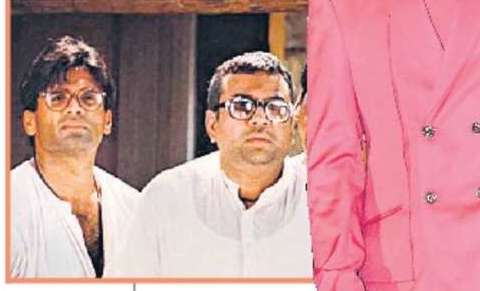
Monika Rawal Kukreja (HINDUSTAN TIMES; March 19, 2023)
The chatter around Hera Pheri 3 refuses to die down anytime soon. First, the makers were asked to get actor Akshay Kumar back for the third instalment, and now that he is, it appears that fans aren’t too pleased with filmmaker Farhad Samji helming the project. The first two films of the franchise were directed by Priyadarshan and Neeraj Vora, respectively. On Friday evening, Akkistan, a fanclub of Kumar’s on Twitter, urged movie buffs to unite and make ‘Remove Farhad Samji from Hera Pheri’ trend. And it is among the top trends on the platform.
Talking to us about the uproar, Neeraj Raut, owner of the fan club, says, “Starting from Entertainment (2014), Housefull 3 (2016) to Bachchhan Paandey (2022), none of Farhad’s films have helped Akshay sir at the box office or content-wise. It has caused more damage to his image.”
The demand for another director for Hera Pheri 3 grew after Samji’s recent directorial, the web series Pop Kaun? received negative reviews across sections. “We were against him from the first day, and now we’re absolutely sure he should not ruin a classic franchise. His content is becoming cringier with every project,” rues Raut, who penned an open letter for the actor.
While the Hera Pheri fans call for Samji’s removal, industry experts seem divided over the opinion. Trade expert Atul Mohan agrees with the fans’ sentiment, saying, “We should respect public opinion. Earlier, nobody cared who directed a film, but now, ardent fans want to have a say. Producers should reconsider getting someone sensible who can do justice to a popular franchise.”
While trade expert Taran Adarsh agrees “Twitter trends can influence”, he adds, “It will be the producer and the actors who will take the call.”
Trade analyst Komal Nahta, however, feels it’s too early to comment on whether a particular director should helm a project or not. “If they start deciding who should make a film, then why don’t they start make it? They have a right to comment once the film is available to the public,” he shares.

After Shehzada and Selfiee's debacle, experts debate on whether a fatigue is setting in due to remakes?
8:26 AM

Experts weigh in on whether the lack of luck for Hindi remakes of southern Indian-language films is indeed about fatigue
Syeda Eba Fatima (HINDUSTAN TIMES; March 12, 2023)
They once gave major fillips to many Bollywood stars’ careers, including Salman Khan (Wanted, 2009), Ajay Devgn (Singham, 2011) and Akshay Kumar (Rowdy Rathore, 2012). But lately, remakes of southern Indian-language films have been failing miserably. From Vikram Vedha, Jersey and Cuttputlli last year to Shehzada and Selfiee this year, the remakes have failed to stir up the audience’s excitement. This begs the question: is a fatigue setting in?
Trade expert Taran Adarsh advises against generalization. “If, in a span of 1.5 years, three remakes failed to perform, we also have examples like Drishyam 2 (2022) that clicked with the audience. It all boils down to how the remake is made. Selfiee and Shehzada were bad remakes. I have seen the originals — Driving Licence (2019) and Ala Vaikunthapurramuloo (2020) — and felt that both these remakes were shoddy,” explains Adarsh.
Trade expert Komal Nahta and producer Ashwin Varde opine that the originals being freely accessible on OTT takes away the excitement of watching a remake. “When people have excessively consumed the original already, why would they be interested in watching another version of it, that too, just a year later?” notes Warde. “Vikram Vedha did not work because everyone had seen the dubbed version on YouTube,” says Nahta.
According to trade expert Atul Mohan, viewers are averse to paying to watch the same story twice in theatres. “Going to theatres is an expensive affair, and after the pandemic, people want to spend money on films that would give them something new,” he points out.
The result will be positive, Varde assures, “When producers start to reinvent their choices, even in terms of choosing the right film to remake. The fatigue is in the minds of the producers. We have to add something unique to bring freshness. Frame-by-frame remakes are not going to work now.”
Producer Ramesh Taurani, too, cautions against copy-pasting indiscriminately. “Har film ko uski audience ke hisaab se banana padhta hai. You cannot copy paste everything and expect the film to work,” says Taurani.
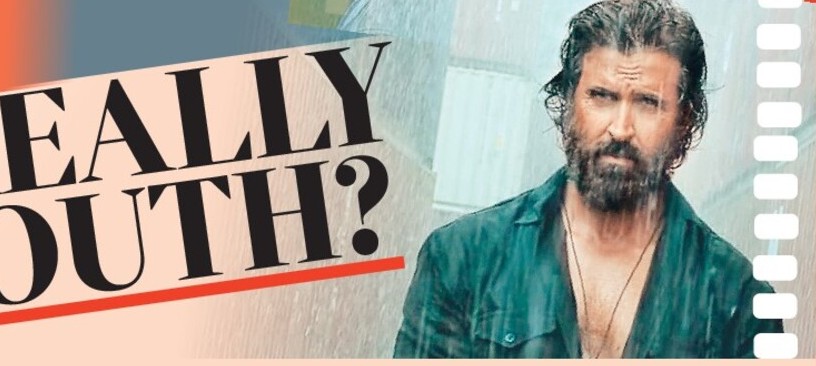
Box-office forecast: What 2023 has in store
8:51 AM

After Bollywood’s cautious recovery and shock and surprises in 2022, this year promises a smorgasbord of hotly anticipated projects. How will they fare?
Ashish Kumar Singh (HINDUSTAN TIMES; January 20, 2023)
In 2022, Bollywood came out of Covid crisis and tried to stand up on its feet with films such as Bhool Bhulaiyaa 2, Drishyam 2, Brahmastra, The Kashmir Files among others proving to be profitable. Even as the ‘Boycott Bollywood’ brigade marched on social media, pan-India projects including KGF 2, RRR, and Kantara roared at the box office. But will Bollywood be able to bounce back and come out even stronger in 2023?
While the year has an impressive line-up with movies such as Selfiee, Shehzada, Bholaa, Pathaan, Dunki, Sam Bahadur, Fighter and Animal already making noise for all the right reasons, it’ll be interesting to see how they fare at the box office.
Talking of what may or may not work, members of the fraternity feel that 2023 will majorly be about Shah Rukh Khan with his three projects - Pathaan, Jawan and Dunki lined up for release, even though Salman Khan has Tiger 3 and Kisi Ka Bhai Kisi Ki Jaan dropping back-to-back.
“All eyes will be on SRK. Pathaan is going to be a complete package, thanks to director Siddharth Anand. Also, rumours of cameos by Hrithik Roshan and Tiger Shroff have created a hype,” feels trade expert Atul Mohan, adding that Jawan is expected to succeed at the box office given the record of director Atlee down south.
Looking back, trade analyst Taran Adarsh says, “There were a lot of shocks and surprises last year. We are going to see the same in 2023, which is packed with films with very interesting stars and equally interesting subjects.”
After a long time, the year ahead will also see a slew of mainstream actors having multiple releases, from Akshay Kumar, Ranbir Kapoor to Kartik Aaryan and Sidharth Malhotra. “Kartik Aaryan and Ranbir Kapoor are in that phase of their careers where they are doing the movies they love. Kartik is definitely going to be in the top three actors this year in terms of popularity,” says Mohan.
As for Ranbir, given that he had a mixed 2022 with Shamshera and Brahmastra, 2023 could be crucial, with Animal and Luv Ranjan’s Tu Jhoothi Main Makkaar. “You can expect both to hopefully cross 100-crore mark each at the box-office,” says Adarsh.
Another actor the industry is placing all its bets on, is Akshay Kumar. “Selfiee and OMG 2! are commercial films and will see Akshay in an entertaining manner, something people love,” says director Milap Zaveri, adding that 2023 is going to be about masala entertainers.
“Kartik Aaryan’s Shehzada and Ajay Devgn’s Bholaa will hopefully set the box office on fire. Then, Prabhas and Kriti Sanon’s Adipurush is definitely going to be one of the biggest highlights of 2023. Despite the film facing flak, the movie is going to open big,” Zaveri says.
Actor Ajay Devgn, meanwhile, will follow up the success of Drishyam 2 with Maidaan and Bholaa, feels trade expert Komal Nahta. “Besides the big-budget releases, Fukrey 3 is also expected to draw audiences into theatres. Since it’s the third film in the franchise, so it’ll be bigger and more ambitious,” says Nahta.

Subscribe to:
Posts (Atom)