Propaganda movies such as The Kashmir Files and The Kerala Story are made tax free in India today-Amol Palekar
9:37 AM
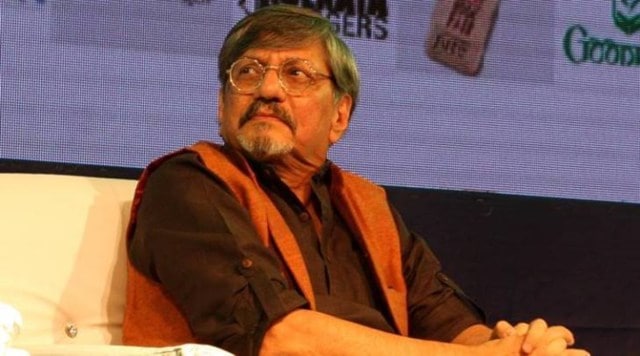
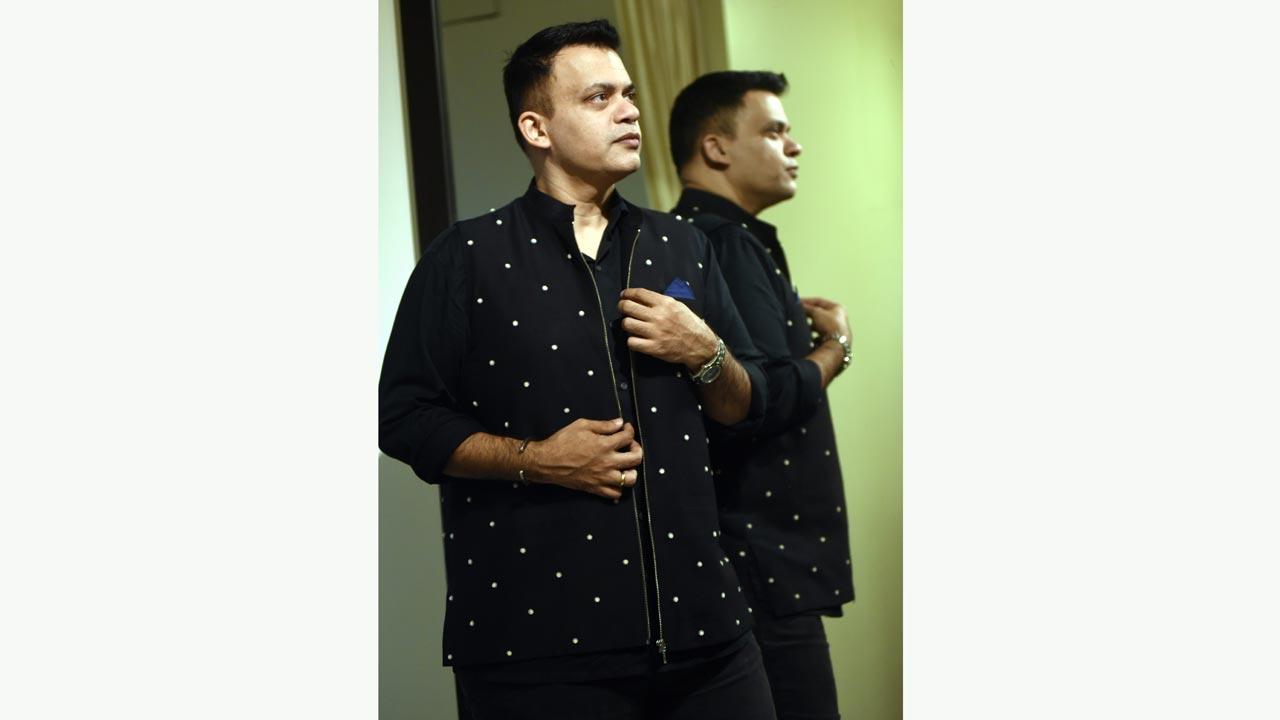
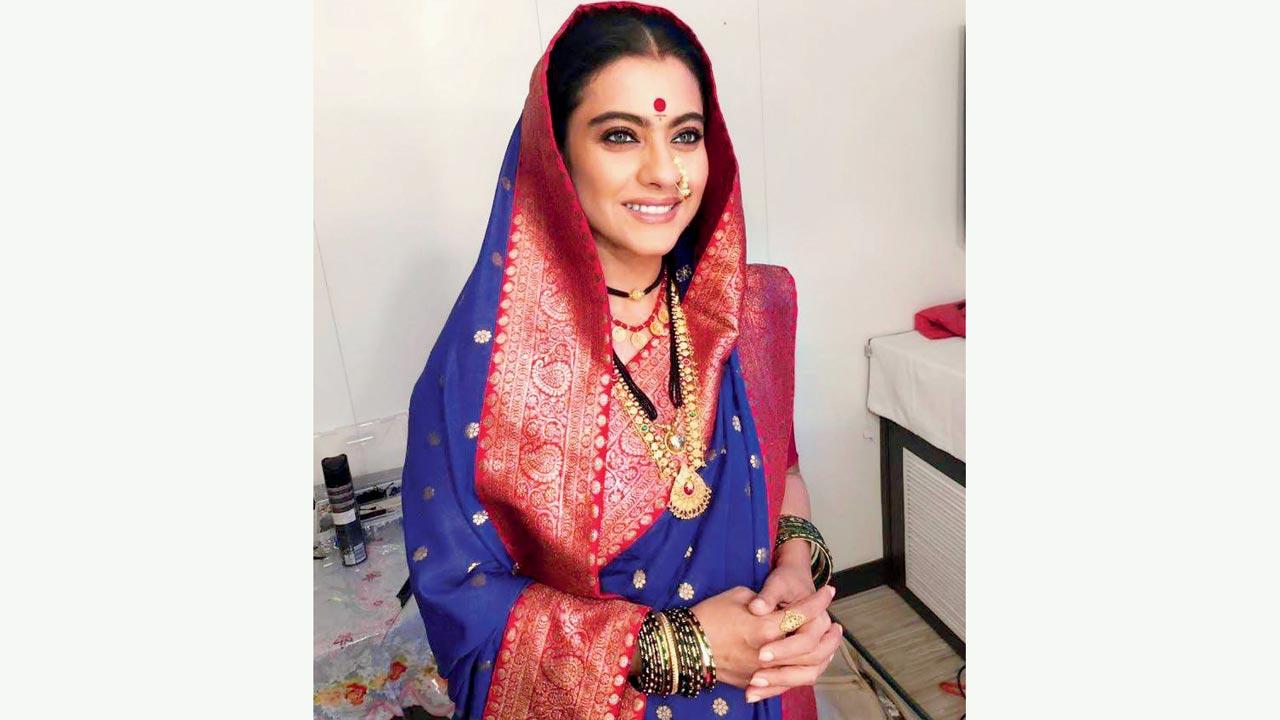
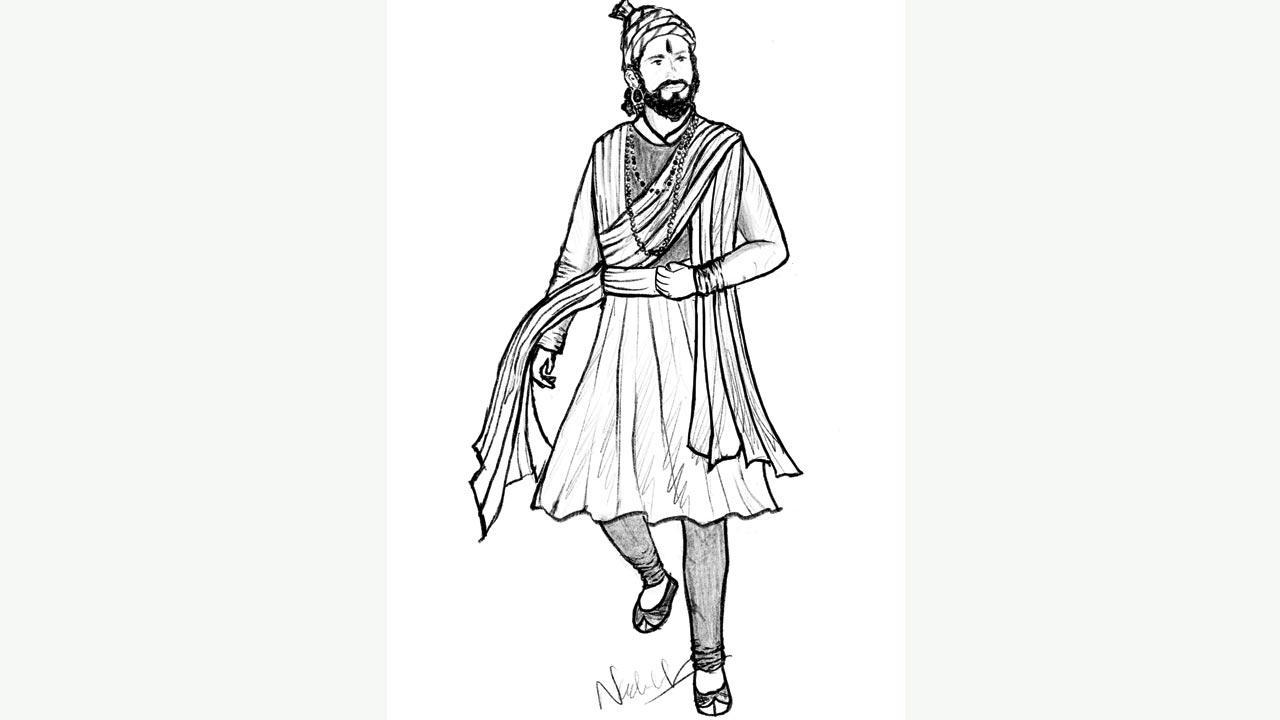
We hunted down an old jeweller in Kolhapur whose ancestors made jewellery for Shivaji Maharaj’s family-Nachiket Barve
8:32 AM
Ramesh Deo passes away at 93
8:02 AM

Samantar 2 receives overwhelming response with 56 million plus views on MX Player
8:24 PM

Repeating the response it received for its first season, the second season of Samantar has received more than 56 million views since its launch on MX Player. Post the success of Samantar season 1, the season 2 was released on MX Player on the July 1, 2021. Produced by leading content producing studio GSEAMS (Global Sports Entertainment And Media Solutions Private Limited) headed by Arjun Singgh Baran and Kartk D Nishandar, the web series has become talk of the town. Apart from talented actors like Nitish Bhardwaj, Swwapnil Joshi and Tejaswini Pandit who added quality to the series, the second season also features the talented silver screen sensation Sai Tamhankar.
“We were sure about the success of Samantar 2 as it is a perfect combination of everything. I am overwhelmed with the response the series has received in its second season as well. I am happy that the new experiments I have been doing in my career are working and people are giving it thumbs up. The credit of this success must go to producers Arjun and Kartk along with the director Sameer Vidwans for the efforts they have put in both creatively as well as ensuring the quality of the shoot,” said Swwapnil Joshi who plays the lead character of Kumar Mahajan.
Swwapnil also narrated how the entire team of actors and crew members were stuck in a hotel during the shooting of Samantar 1 due to the flooding. “Kolhapur and Sangli had witnessed downpour and flooding in August 2019 when we were shooting for Samantar 1. The downpour was so massive that the entire team was stuck for 13 days in a row in a hotel in Kolhapur. However, Arjun, Kartik and the team ensured that we were all taken care of very well. Those were some of the most unforgettable days and it still gives us goosebumps whenever the team members remember it during our shooting,” he said.
Speaking to us on Samatar 2, Arjun and Kartk said “Samantar is a fabulous story which we knew would appeal to a very large audience. We are extremely happy with the response that Samantar 2 has got and we intend to produce many more such series based on a variety of subjects and genres”.
The producers further elaborated on their decision over casting Swwapnil Joshi and Nitish Bhardwaj against each other. “Both of them are widely recognised as Krishna across the world for their memorable roles in two different serials. Samantar gives an opportunity to the audience to see both the stalwarts face to face. Similarly, when we chose Sai Tamhankar for the role of Sundara and Meera, we were suggested many names for this character. But we were determined to have her for the role as we firmly believed that only she could justify the character of Sundara,” Arjun and Kartik said.
GSEAMS has given us many memorable Marathi films like Mogara Phulaalaa, Bonus, Fugay, Tula Kalnaar Nahi, Ranangan and Vicky Velingkar. With the release of web series like Naxalbari on Zee5 and Samantar season 1 and 2 on MX player, GSEAMS has once again proved itself as a leading production studio which creates quality content.
When director David Lean told FTII: ‘Something’s wrong with your teaching’
8:12 AM

Mistaken for Rhea Chakraborty, Navi Mumbai man faces volley of abuse
7:27 PM

Actress’ phone number circulating online and flashed on TV news channel brings nightmare to clerk; The two phone numbers differ by just a digit; Sagar Surve says he has blocked 150 numbers and switched off his phone
Vallabh Ozarkar (MUMBAI MIRROR; August 12, 2020)
Mistaken for actress Rhea Chakraborty, a 32-year-old clerical staffer of an educational institute has been receiving harassing and abusive calls for a week. The confusion stems from their closely resembling phone numbers. Sagar Surve, a resident of Navi Mumbai, has blocked around 150 crank callers so far and had to even turn off his phone.
Chakraborty has been accused by late actor Sushant Singh Rajput’s family of cheating him of crores and pushing him to take his life. Surve said when the first calls came, “asking for Rhea”, he dismissed them as ‘wrong numbers’. It didn’t even occur to him that they were asking for the actress. But within a day, the frequency of the calls grew, with some callers turning abusive. “I started receiving messages, voice calls and video calls on WhatsApp. People asked me to send them a photograph of myself when I told them that they were mistaken. I tried to ignore the calls, but it only worsened over the next three days,” said Surve. As his confusion grew, a cousin of Surve alerted him that a news TV channel had recklessly flashed Chakraborty’s number while showing Rajput’s call records, and pointed out that her number differed from his by just a digit. That’s when Surve connected the dots, and even contemplated ditching the phone number he has had for a decade.
Around the same time, some of those who dropped him messages revealed that his number has also been circulating online as the actress’ contact number.
“I was completely traumatised and didn’t know what to do,” said Surve, who approached the police on Tuesday. Since he was unwilling to go through the hassle of filing a complaint, the police suggested that he use another phone number for a while. “They sympathised with my predicament and told me to get in touch with them when needed,” he said.
Surve, who is now intermittently using a friend’s phone number, said he has missed calls from his family in Kolhapur, his friends and the office. “I am fed up with this. When will this end?”

I like to tell untold stories-Ashutosh Gowariker
8:24 AM

Director Ashutosh Gowariker opens up on why he chooses the subjects he does and on being influenced by the women in his life
Anjali Shetty (HINDUSTAN TIMES; December 6, 2019)
Director Ashutosh Gowariker says he doesn’t let controversies affect him. His only thought is, “Why are people not patient?” He shares that he embraces the questions as people ask it out of concern. The Jodhaa Akbar (2008) director, says, “It is a given that there will be questions when you make a historical film. If I was a descendant of a great warrior, I would want to know what is being written about or presented about my family member. However, at the same time, people should wait and be patient. I like to go on the front foot and explain that everything is okay.”
Gowariker’s films have always had music as an integral and interactive part of the narration and the director admits to be involved in it. “It is important for a composer to know the story. I don’t want a song to just stand out on its own. It also needs to take the scene ahead and be a dramatic extension of the scene. So, the involvement helps the music director or it can be out of place,” he says.
On choosing the subject of Panipat, his forthcoming film, Ashutosh shares, “Pune and Kolhapur have been important associations, the latter being my home town. One has been a part of the Chhatratpati and the Peshwas rule. But never did I think of making a film on that. Yes, I may meet somebody who will say, ‘why don’t you make a film on Chhatrapati Shivaji Maharaj’. And I will do it. But no one told me to make a film on Sadashiv Rao Bhau. Somewhere I like to tell untold stories, to see if there is a learning curve or knowledge to impart from it. In this story, what happens is inevitable, and that astonishes me. I thought, if I am so intrigued by it, then I should tell the story.”
From Jodhaa (Jodhaa Akbar, 2008) and Chaani (Mohenjo Daro, 2010) to Parvatibai (Panipat), the women characters have always been strong, independent and fearless. And, he believes it has been a part of his films by default. “It could be because of the influences of my mom (Kishori), sister Ashlesha who is a lawyer and my wife, Sunita. It is something I may have drawn from them. Hence my existing women protagonists are always rooted, supportive and strong. And not in the simplistic way of ‘behind every successful man there is a woman’, but in a more complex manner with discussions, arguments and being straight forward.”
EXCLUSIVE: This GUJARATI film has created HISTORY and is running in cinemas since 8 MONTHS!
9:48 PM

In today’s times, when even completing 50 days in theatres for movies is a feat, a Gujarati film, Chaal Jeevi Laiye, has managed to do the unthinkable. Released on February 1, 2019, it is currently running in its 34th week in around 10 cinemas! What’s more, it’s still getting record occupancy, sometimes even more than that of latest releases!
To explain the madness, let us give you an instance of the film’s historic run in a theatre named Inox Raj Imperial in the city of Surat, Gujarat. In the previous weekend, the film had 42 admits and 57 admits on Friday September 13 and Saturday September 14 respectively, in a 75 seater screen. On Sunday September 15, it ran with full occupancy. On Sunday August 25, Chaal Jeevi Laiye was running with 4 shows a day in this Surat multiplex and the average occupancy was a mind-boggling 81%! During ‘dry weeks’, that is, when there were no major Hindi or English release, Chaal Jeevi Laiye was similarly allotted multiple shows and it did very well. Not just that, on May 17, the day the Ajay Devgn-starrer De De Pyaar De released, Chaal Jeevi Laiye was in its 16th week and the morning show occupancy in a 220-seater screen was nearly 68%, that is, more than that of the former! The nett collections of the film in Inox alone are a huge Rs. 6.40 crore.
However, lovers of Gujarati cinema are not aware of the monumental achievements of Chaal Jeevi Laiye. A chief reason is that producers never talked about it in the first place. Any other filmmaker would have promoted this fact but the producers of Chaal Jeevi Laiye – Coconut Motion Pictures – chose not to. Producer Rashmin Majithia explains, “We had pre-decided that we won’t boast about our film’s success by giving box office figures. Chaal Jeevi Laiye is an emotional film and its vibe would have been affected if we had gone all out by bragging about its record figures.”
That’s precisely the reason why the CEO of Coconut Motion Pictures, Ritesh Laalan, refused to share the exact all-India nett collections till date, to this writer. He however reveals, “The gross collections of the film are more than Rs. 50 crores. The film is in its 34th week and is running in more than 10 cinemas. Recently, our director Vipul Mehta was in Bhuj and he told us that the film was still running there.” He further adds, “In places like Surat this has not happened but in other centres, the exhibitors don’t give shows to Chaal Jeevi Laiye on Friday and Saturday due to multiple new releases. But from Sunday onwards, they cancel the shows of those films that are not doing well and replace it with that of Chaal Jeevi Laiye!”
A success of this sort must have been impossible to predict for most but Ritesh Laalan partly disagrees. He explains, “I used to tell people around me before the release that Chaal Jeevi Laiye would emerge as Gujarati cinema’s biggest film. But obviously, nobody believed me. Some of them used to even laugh at me and ask me ‘kitna kar lega’. When the film breached the Rs. 25 crore mark, I expected the collections to fall down rapidly. But the film crossed Rs. 35 crore mark. Again, I thought that this is it. However, I soon realized that people just want to see a good Gujarati film and this film is ideal in this regard. In the last six months, it’s only the repeat audience that’s coming to see the film as a well-made Gujarati film is missing.”
Rashmin Majithia adds here, “Moreover, we haven’t given the film on any OTT platform or on television. So the only option to see the movie is in cinemas. Viewers are going again to laugh and to cry with the characters. I believe that viewers are ready to accept Gujarati films with open arms but it has to be worth their time and money. And the way it has worked in urban and even semi-urban places like Bhuj shows that Chaal Jeevi Laiye has connected across various sections of audiences.”

What Ritesh Laalan and Rashmin Majithia were not able to pre-empt was how Chaal Jeevi Laiye would be received outside Gujarat. Rashmin exults, “In the first 20 weeks, Mumbai was dominating and was contributing to 25% of the film’s collections. Usually, Ahmedabad contributes 50% of a Gujarati film’s collections but for the first time, Mumbai outperformed. Ahmedabad did come up ultimately but still both cities were neck to neck. And that was unexpected since there’s a difference between Gujarati viewers in Mumbai, who are more inclined towards Bollywood, and that of Ahmedabad.” He then adds, “Chaal Jeevi Laiye ran for 26 weeks in Mumbai, in Carnival Moviestar and for around 22-23 weeks in Sangeeta Cineplex.”
What Rashmin Majithia shares next is surely impossible to believe. He tells, “In a city like Pune, it ran for more than 15 weeks, that is, it crossed 100 days. We couldn’t believe it. Not just that, it completed 8 weeks in Nashik and 4-5 weeks in Kolhapur. At a town near Kolhapur, it was there for around 3-4 weeks!” What about down South? “In cities like Bengaluru and Chennai, the film ran for only a week or two. After that, viewers would ask for special shows,” he says which also is an achievement for a Gujarati movie. Needless to say, Chaal Jeevi Laiye is the first Gujarati film to achieve these feats. “Even Chello Divas had a record run but not for such a long time in these centres,” says Rashmin Majithia.
Not just in India, but Chaal Jeevi Laiye made its mark overseas too where it released on March 15. As per Rentrak, it earned $130,000 in USA, $80,000 in United Kingdom, $50,000 in Australia, $15,000 in New Zealand and $25,000 in the rest of the world. So the total overseas collections of the film stands at $275,000, which is, Rs. 1.94 crore approx. Ritesh Laalan states, “Chaal Jeevi Laiye also released in Germany, Singapore, Canada and many countries of Africa and even there, it did very well.”
Even on weekdays and despite completing more than 30 weeks, Chaal Jeevi Laiye continues to get viewers. In the current week in Inox Raj Imperial, Surat, for instance, the film has been allotted two shows in Screen # 4 – one at 11:40 am and the other 5:05 pm. For the Monday September 23 5:05 pm show, already 4 tickets have been sold 2 and a half hour before.
The makers are not surprised however, at least not anymore! Rashmin Majithia says, “No show has run without any viewer. At Rajkot, on a Sunday, the film runs with 90% occupancy. We don’t disclose these numbers also because many people are not able to believe.” And it’s not just Gujaratis that are watching this film. Ritesh narrates, “Even Marwaris are coming out in large numbers. I was watching Chaal Jeevi Laiye in Mumbai and the entire auditorium was filled with them. I asked them whether they can understand Gujarati and they replied in the affirmative.” Mind you, there are no subtitles in this film either!
The Coconut Motion picture management’s next target is to reach the 50th week, which will happen on January 17, 2020. “We had done a celebration when the film completed 100 days, since we were not that confident about its run from thereon. But then it did silver jubilee and we celebrated that feat as well. Now I am sure very soon, we’ll be celebrating the 50th week completion of Chaal Jeevi Laiye too,” says Rashmin Majithia confidently.
To say that the producers are laughing all the way to the bank would be an incorrect statement. For they are donating the 100% of the share! Rashmin Majithia tells, “From 100th day onwards, we announced that whatever the film will earn, we’ll use it for the service of old people. Every week we publish an ad of the film in newspapers where we mention that if you are watching this film now, the proceeds are going to charity.”
Chaal Jeevi Laiye is the story of a workaholic son who takes his terminally ill father to a holiday in Uttarakhand to fulfil the latter’s last wish. On the way, they meet a girl named Ketki and the trio take an unexpected and most satisfying journey of their lives. Starring Siddharth Randeria, a superstar of Gujarati theatre and cinema along with Yash Soni and Aarohi Patel, it is directed by Vipul Mehta and has music by Sachin-Jigar, who has also made a mark in Bollywood. Even the Hindi film industry have noticed the film and praised it. Notable among them was Madhuri Dixit, who tweeted in praise of the film on May 22.
Chaal Jeevi Laiye was also one of the 28 films shortlisted by the Film Federation of India for official selection at the 92nd Academy Awards.
Just watched #ChaalJeeviLaiye & I must say what an endearing story with such a simple yet effective narration! Direction, cinematography, music... everything binds the film together. Kudos to #VipulMehta, @SachinJigarLive and the entire team on such a brilliant job 👏🙂— Madhuri Dixit Nene (@MadhuriDixit) May 22, 2019


Meet Chandrakant Sonawane, PM Narendra Modi's costume designer and who surprised Bhansali with his quick research
4:46 PM

Costume designer Chandrakant Sonawane, a farmer's son, on dressing up A-listers and his latest stint with the biopic, PM Narendra Modi
Prutha Bhosle (MID-DAY; April 7, 2019)
When director Sanjay Leela Bhansali announced his film Bajirao Mastani, one could assume the scale and grandeur of this project. And after the epic historical romance finally hit the screens in 2015, it was Anju Modi who mostly drew accolades for designing outfits of the lead cast, leaving a young man from Maharashtra's fringe village Bhagwan Nagar almost unnoticed. But, if it weren't for Chandrakant Sonawane's intricately created outfits donned by background dancers in the famous Pinga song and the Maratha warriors on the battlefield, the saga would have lost its true essence.
Four years later, the 36-year-old costume designer has added many feathers to his cap. After completing assignments as a secondary designer for Padmaavat and Bhoomi, and independently creating costumes for the legendary actor Madhuri Dixit in her Marathi debut film, Bucket List, Sonawane is here to stay. "Things weren't the same when I first started off. Forget becoming a fashion designer, chances of me completing elementary education even were bleak," he shares.
Born to a farmer's family in Jalna district, Sonawane was made to do odd jobs on the fields as a kid. He recalls, "Both my parents worked on the farms. As we were financially unstable, my father didn't want to fund my education. But my mother always wanted me to become something. So, she would send me to different boarding schools in Ahmednagar and Shirdi. By the time I completed my secondary education, I had changed around nine schools."
For a village where only farming is seen as a career option, Sonawane's sudden interest in fashion designing was frowned upon. "I came across a fashion article and was immediately drawn to the profession. At my farewell after completing Class X, I was asked about my ambitions. When I revealed mine, many eyebrows were raised. It was an alien subject to them," he adds, saying he took up the challenge nonetheless. "After completing my Class XII exam, I didn't know how to enroll myself for a fashion course. A friend, who was going to apply at International Institute of Fashion Design (INIFD), Pune, asked me to accompany her. There, we told the professors about my financial condition, and they were willing to reduce the fee. But even then, I had to cough up Rs 18,000 annually for three years. And for this, I needed to convince my parents."
When Sonawane recommended selling a portion of their land, his father hit the ceiling. "After a lot of arguments, he finally gave in. But the battle had just begun for me. I borrowed Rs 1 lakh from him. It would take my family 10 years to make that kind of money. I knew I had to fight against odds and prove myself. At the fashion institute in Pune, things weren't easy for me. Even the peons were dressed better," Sonawane shares.
But he managed to win hearts by proving his worth, and around 2009 after he graduated, he got his first break when a friend asked him to assist her in an Indo-Iranian movie. "Just when I was wrapping up here, I got a call from someone to design costumes for Marathi film, Guldasta. Then there was no looking back. I began earning about Rs 10,000 to Rs 15,000 per month; I even opened up a small boutique in Pune."
But the best was yet to come. He then got a call to assist a designer working for Bhansali's Ramleela. This was followed by an opportunity with Bajirao Mastani. "I was offered the role to assist, but since I had enough experience by now, I told Bhansali sir to make me the lead designer. He, however, refused. I was told to prepare a presentation on Kashi bai (played by Priyanka Chopra) instead. I remember travelling to Shaniwar Wada in Pune and Kelkar Museum to collect reference pictures of her. I also went to a small town in Kolhapur, known for making authentic silver jewellery. As I returned two days later, Bhansali sir was surprised. We sat for three hours discussing the crucial information I had got from rural parts of Maharashtra on the character," he adds.
Bhansali then offered Sonawane to design costumes of dancers in Padmaavat too. He also recently designed outfits for the PM Narendra Modi biopic set to release next week. "Today, I have built a bigger house for my parents in my village. They still don't know what my profession is really like, but are proud nonetheless of whatever I have become today."
Neeta Lulla goes on a Kolhapur excursion for Arjun Kapoor and Kriti Sanon's Panipat
8:09 AM

Neeta Lulla on her recent excursion to Kolhapur to source fabric and reference points for Arjun Kapoor and Kriti Sanon’s period-drama
Avinash Lohana (MUMBAI MIRROR; July 25, 2018)
Three and a half months after Ashutosh Gowariker announced his next period-drama, Panipat, featuring Arjun Kapoor, Kriti Sanon and Sanjay Dutt, Mirror has learnt that while the fi lmmaker is busy with preproduction, the fi lm goes on the fl oors in November. It also marks Ashutosh’s fi fth collaboration with fashion designer Neeta Lulla, who has earlier worked on his Jodhaa Akbar, What’s Your Raashee?, Khelein Hum Jee Jaan Sey, and Mohenjo Daro.
 As part of her prep for the film, which is based on the third battle
of Panipat, Neeta, along with Ashutosh’s producer-wife Sunita, visited
Kolhapur earlier this month to understand the reference points for
costumes and weaving of various fabrics. “We were there to procure
garments and fabric weaving to put together a look for the film with the
desired colour scheme. It was a fun trip, especially because of the
pleasant weather and some amazing Kolhapuri food. I am creating costumes
that are larger than life and stay true to the director’s vision. The
vendors and weavers we met there knew about Panipat and it was fun
interacting with them about it,” informs Neeta, who also visited
Ashutosh’s warehouse in Kolhapur that houses most of the props and
costumes from his past films.
As part of her prep for the film, which is based on the third battle
of Panipat, Neeta, along with Ashutosh’s producer-wife Sunita, visited
Kolhapur earlier this month to understand the reference points for
costumes and weaving of various fabrics. “We were there to procure
garments and fabric weaving to put together a look for the film with the
desired colour scheme. It was a fun trip, especially because of the
pleasant weather and some amazing Kolhapuri food. I am creating costumes
that are larger than life and stay true to the director’s vision. The
vendors and weavers we met there knew about Panipat and it was fun
interacting with them about it,” informs Neeta, who also visited
Ashutosh’s warehouse in Kolhapur that houses most of the props and
costumes from his past films.
“I was amazed with the care with which every item is stored and was particularly excited to see my Jodhaa Akbar costumes,” Neeta smiles. Arjun and Kriti have begun taking horse-riding lessons as part of their prep and Neeta recently started look tests. “It is both challenging and fun to recreate a bygone era. The actors are happy to mould into the characters and are cooperative during the costume trials. Our research also involved library visits, collecting data through books and images of the era and the battle. I have also studied the motifs and colours on the walls of Shaniwar Wada, and about the popularity, the origin of the Paithani saris,” the designer explains.
The film’s team started recreating the Shaniwar Wada at ND Studios in Karjat in April and Ashutosh rounded up composer duo Ajay-Atul recently to brainstorm on the music.
I have not seen any filmmaker in any part of the world go through this-Sanjay Leela Bhansali
4:13 PM

Anshul Chaturvedi (BOMBAY TIMES; February 20, 2018)
The Jaipur attack: ‘I HAVE NOT SEEN ANY FILMMAKER IN THE WORLD GO THROUGH THIS’
What was that moment of being actually attacked, slapped around,on Padmaavat’s set?
I am rehearsing a shot, where people have to say that ‘the enemy is in the fort’, and we come down, and we see the soldiers running to fight. ‘The enemy is in the fort’ — how prophetic is that? So we are rehearsing, and I was in a very good mood. We are sitting, and we started hearing these sounds. I said the crowd here is very conscientious! They are rehearsing the roars. I was like, ‘Damn cool, this never happens in Bombay!’ And suddenly, one of the union members came running in and said, ‘People are coming!’ And before I could say, ‘what people?’ there was an attack. They started throwing things, breaking things. They beat two girl assistants up, one whack came on me, my specs flew off.
(Silence) I never expected this. Even if you have a doubt and you wanted to protest, would you raise your hand? They could say, please talk to us, please stop shooting, or please leave the place. But a protest also has to have a certain dignity about what you are protesting, and I could say yes, you have a point.
This is extremely angering, it is extremely humiliating. And you sit back and wonder, could this have really happened? I have not seen any filmmaker in any part of the world go through this. Where is this coming from? So then you go to Kolhapur, because you realise it is not possible to shoot there (in Rajasthan). And then the set is burnt. I went back to Kolhapur and said, enough is enough, I am shooting exactly where I want to. I am not going back. Enough!
For that year, I went through all this trauma, where on one side you are saving and preserving what you are creating, and not allowing your anger and bitterness, depression, disturbance — nothing can reflect on the shot you are taking, the scene you are constructing or the way you are giving your everything to this film.
Not like, let’s just finish this off and get it out of the way fast. No! You have to pursue and keep searching for excellence and keep searching for mental peace. I am shooting in Film City in Mumbai, with 52 cops surrounding my set. I have never shot like that.
You just want to take a breather and think, and you have people following you, protecting you.
And protecting you from what? I never understood.
But I at least got that protection from the government — make your film peacefully, don’t go through the stress of not knowing what is going to happen.
Having said that, I am making such a big film — this is the biggest film of my life — how do you sustain it? How do you hold on to it? What is happening to your face, your health, your mental peace? You have to keep yourself upbeat because you can’t go in looking unnerved, because your unit, your actors pick your vibe. And yet, you don’t know what protest is going to happen tomorrow.
We complete the shooting, and the first trailer comes out, and again the reactions start coming in.
It was a life-changing experience according to me. In a good way, because I became stronger. I realised that I could not break so easily. I realised that I love my filmmaking to the point that I could have had a road roller run me over for my film.
Did you at any point think that it will not make it to the screens?
Yes. There were times when I got very nervous that it is taking some other route, it is getting too big, it is getting too misunderstood. It is getting to the place where I want that first ticket to be sold at the box office, it is very important. I want to see that ticket Number 1 being torn.
I, at one point, did feel that it may not happen because it was beyond our control, or beyond anyone’s control. It had reached bizarre proportions, where people were sitting on national television with swords in their hands, saying we will behead him, we will throw acid on Deepika’s face. All that, and much more... There were more things that I would rather not discuss.
Ghoomar & Rajasthan: ‘IT’S A CELEBRATION OF RAJASTHAN, WHY HAVE THEY TAKEN IT AWAY FROM THEMSELVES?’
How prolonged was the debate on the ghoomar song — to keep, to modify, to cut?
Ghoomar Rajasthan ki glory hai. Folk music ki. Every wedding, every part of the world, ghoomar is being played everywhere. I have revived ghoomar in so many ways. Why are we wanting to justify it? It’s a folk form. Even if they had taken Ghoomar away from my film, ghoomar cannot die. But today, ghoomar is revived, everybody’s discovered it, they understand that this taal and this laya means ghoomar, this is the rhythm pattern, and this is how we dance to it. A Punjabi or a Gujarati is also dancing to Ghoomar. But for that, I was told, ‘Woh, rani toh dance nahi karti ghoomar ka, yeh toh ho hi nahi sakta, woh toh karna nahi chahiye, midriff nahi dikhna chahiye’... history in so many ways is not one file you can take out from a shelf... it’s interpreted over the years, it’s told, it’s re-told. It’s changed according to convenience over the centuries. But how do you justify that? How do you say, historically, a rani didn’t dance? They would have danced in the zenana, they would have danced in the women’s chambers...
Ghoomar’s set had to wait for one-and-a-half months, because Deepika thought she was not ready to shoot that song, she needed to train more. Mehboob Studios waited, said, no issues. And I shot the song, and today people say it’s the best song I’ve shot.
It’s still not playing in Rajasthan’s halls.
Look at what this film’s going to do. Folk musicians are going to be called all over the world to perform, Rajasthani folk people. Every marriage is going to call them. Every marriage is going to have Padmaavat and Rajasthani influence. So look at what it’s going to do to the tourism, to the music, to the folk art... it’s huge for Rajasthan. It’s to celebrate Rajasthan in the right sense of the word. Why have they taken that away from themselves? Why have they deprived themselves of the glory when they should have actually said, ‘do the premiere here, under the fort, we will do a screening, we will release the film and say, this was our queen, this is our film, and it’s a chapter of our glory.’ Why did they not own a film which would actually celebrate what Rajasthan is? They took it away from us. They took it away from themselves. Every dance opportunity that anybody gets in a marriage or in a school performance or anywhere, is playing Ghoomar. Or a reality show, or anywhere. Aaj tak koi ghoomar... kitne saalon se Rajasthani music ka istemaal hua hai in Hindi cinema, when has ghoomar ever become so popular? So instead of celebrating it with me, and instead of expecting a little bit of, ‘ok fine, thank you for doing this for us’, you’re actually accusing and saying, ‘you’re doing something wrong’. And how will you survive this fact when you see the film and see there is nothing wrong in it? Ghoomar aapko cover karna tha, humne cover kar liya midriff. Nazar nazar mein farak hota hai. Agar zenana mein rani perform kar rahi hai aur aapki nazar khali unki midriff pe jaa rahi hai, toh dekhne waale ki nazar pe hai.
Government support: ‘WE GOT PROTECTION, THEATRES GOT PROTECTION, MY AUDIENCE GOT PROTECTION’
Every theatre in Maharashtra, UP, in every other state, first week, was given full police protection. So I’m very grateful to the Chief Minister of Maharashtra, or UP, or... First row — cops. Outside — vans, wireless vans. Full protection. The first two days people didn’t go in with that kind of conviction, ki kya hoga maloom nahi, uncertainty thi. But we got full support from there.
My actors got protection, I got protection, theatres got protection, my audience got protection. Every theatre in Mumbai had a wireless van and cops sitting in the theatre. I was like, amazed. And I heard that was the scene in the other states also where the film was released.
One year of drama: ‘MY FACE HAS CHANGED’
For one year — from January 27, 2017, when we were attacked in Jaipur, right up to January 26, 2018, when we released — exactly one year. I had to continue doing this while I was being pushed.
Some artistes are destined to go through chaos, trouble. It has been traumatic, and constantly being put in this state of confusion, you get battered, bruised, scarred.
But I still feel good saying I have gone through it all, and achieved it. And something extra comes from it, something special. Because it is a matter of survival. You start doubting that if I don’t survive this I will die as a filmmaker. And if I die as a filmmaker, then I don’t need to live as a human being. So you put in all that you have to cross that river. I have been growing through it. I think when you get the wish, you also get the power to fulfill that wish. That has to come from somewhere. For me, it comes at a cost, at a big cost.
All that I have gone through — how much has it changed my face? If I were to make my portrait, I have changed so much in the last one year. Which filmmaker has been attacked physically? Assaulted, with a whack given on the neck and the face? Nowhere in the world. Which filmmaker has been told that we are burning your set right in front of you?
Did your actors handle it as well as you did?
I never allowed anybody to be rattled. They were angry, they were upset, but they never let that anger show on the screen. It was always simmering behind, in their thoughts, in their minds. But they all gave wonderful performances. Any artist who is painting in a complete sense of distress or angst — that painting is something else. It goes to another zone, because energies flowing from the body out of anger for injustice, circumstances, chaos, are of another level.
As a consumer of your own art, what do you get from the movie?
Immense joy. Because what a lot of people did not want me to ever witness was unfolding in front of me on the screen. My first screening is always with my mother, and there is one empty chair in between for my father, who always wanted me to make films like this — Mughal-e-Azam and Pakeezah. And I saw the film, and turned around, and with all modesty, said, ‘Ma, I think I am a damn good filmmaker!’ And she just smiled and continued watching.
I wanted to just feel good about something. When I saw it, I didn’t think the film would reach the theatres. I didn’t know if the film would really get released because it was at the peak of its chaos. So I wanted to praise myself ! (laughs) I got a lot out of it in terms of what I wanted to tell — a story of a woman who fought the war after her husband died in the battle, to defeat a strong opponent like Alauddin Khilji. And I found that the whole jauhar, the power generating from the way I shot it, the way it fell into place, the way Deepika played it, the way we all got it right, I was very moved by it.
Because this was a dream, right from Nandini running on a bridge alone in a red sari in Hum Dil De Chuke Sanam, to 16,000 women running in red towards fire — for me there were so many images that had now magnified, or become bigger, or had its own connotation, it had its own language... so all that was coming to my mind as I was seeing, vis-à-vis my work, motifs that sometimes were getting repeated from my earlier work to now, or the new ones I was very fascinated by and said (clicks fingers), how the hell did I get that one? When did that come? And there were a lot of improvisations that I was doing through the film. It was all written, but it was not really storyboarded, it was not framed and formed and choked to with the paper, it was left, I would go there and react and respond and you do this and let’s do this and let’s do that, change that dialogue — I was living it at that moment.

‘I HAVE REVIVED GHOOMAR’
GhoomarRajasthan ki glory hai. Folk music ki. I have revived ghoomar in so many ways. Why are we wanting to justify it? Kitne saalon se Rajasthani music ka istemaal hua hai in Hindi cinema,when has ghoomar ever become so popular? ....(The film) is to celebrate Rajasthan in the right sense of the word. Why have they taken that away from themselves? Why have they deprived themselves of the glory when they should have actually said, ‘do the premiere here, under the fort, we will release the film and say, this was our queen, this is our film, and it’s a chapter of our glory’. Why did they not own up a film which would actually celebrate what Rajasthan is?
‘PRASOON JOSHI STOOD UP AND FOUGHT BEAUTIFULLY’
Prasoon Joshi — full marks to him for having gone through the kind of pressure he did, the kind of nonsense outside his office, the I&B Minister being abused and threatened — he stood up and gave the CBFC certificate the way it should be, with no cuts, except saying that make it Padmaavat, which I didn’t mind, because the original poem is called Padmavat.
Did he deserve the amount of flak he got for it?
Not at all! Consider the situation he was going through. He wanted to stand by a good film and stand by the intention of the film and the film fraternity, so that other filmmakers don’t go through this, where the fringe attacks you, the fringe dominates you and the fringe permits you. So, he really stood up and fought beautifully. I think he brought in a great amount of reassurance and belief that there are people who can take a stand. And when on January 24 we did the first prepaid show and the first ticket was sold, I said, nothing is going to stop the movie now.

Ranveer Singh camps out in Dahisar for Padmavati
8:15 AM

After sets were vandalised in Kolhapur in March, Sanjay Leela Bhansali is shooting the actor’s portions in Mumbai
Avinash Lohana (MUMBAI MIRROR; May 23, 2017)
Mirror (Mar 16, 2017) had earlier reported that after being roughed up by members of the Rajput Karni Sena on January 27 while filming his period romance, Padmavati, at Jaipur’s Jaigarh Fort, Sanjay Leela Bhansali had quietly moved to Kolhapur with a team of character artistes and started shooting battle sequences on the Mhasai Pathar plateau. But once again filming came to an abrupt halt when miscreants sneaked in and set some boxes containing costumes and jewellery of junior artistes on fire on March 15. This time SLB stayed put in Kolhapur and completed some portions before flying back home to flag off another schedule in early April in Mumbai’s Film City.
 While, the shoot in Film
City continues, Mirror has learnt that certain portions from the
Kolhapur schedule are simultaneously being filmed in a Dahisar studio.
Two days of shooting are over and a few more days’ work remain.
While, the shoot in Film
City continues, Mirror has learnt that certain portions from the
Kolhapur schedule are simultaneously being filmed in a Dahisar studio.
Two days of shooting are over and a few more days’ work remain. “In the sequence being shot currently in Dahisar, Alauddin Khilji, played by Ranveer Singh, sets up camp opposite the Chittor Fort. Ranveer was shooting here for two days and is juggling between Film City and Dahisar,” informs a source close to development, adding that there’s heavy security at both locations.
Padmavati is a dramatised account of the 1303 siege of the Chittor fort in Rajasthan. Alauddin Khilji lead the invasion, motivated by his desire to possess Rani Padmini, the wife of Raja Rawal Ratan Singh, the ruler of Mewar. She however opted for jauhar, jumping into the flames with the other women in waiting, after her husband and his soldiers were vanquished by the mighty Turk, instead of joining his harem.
Padmavati loses costumes and accessories which are irreplaceable
8:21 AM

Divya Kaushik (BOMBAY TIMES; March 18, 2017)
 Trouble for the makers of Padmavati doesn't seem to be getting over. After a fringe group vandalised the set of Sanjay Leela Bhansali's
Padmavati in Jaipur in January this year, the production team received
another rude shock and incurred further losses on Wednesday when the set
in Masaipathar area, on the outskirts of Panhala in Kolhapur, was
torched. Rimple and Harpreet Narula, who took months to create the
costumes for the period drama, rue that recreating the outfits will be a
time consuming process.
Trouble for the makers of Padmavati doesn't seem to be getting over. After a fringe group vandalised the set of Sanjay Leela Bhansali's
Padmavati in Jaipur in January this year, the production team received
another rude shock and incurred further losses on Wednesday when the set
in Masaipathar area, on the outskirts of Panhala in Kolhapur, was
torched. Rimple and Harpreet Narula, who took months to create the
costumes for the period drama, rue that recreating the outfits will be a
time consuming process.“We are yet to get all the details about the costumes and the actual damages suffered by the production team. A lot of hard work goes into making costumes for a period film. The outfits were very fragile and the textiles for some of them were antique, which are now irreplaceable. Embroidered costumes were revived through old techniques of weaving, so making all of them all over again will be difficult,“ sighs Rimple.
A majority of the costumes burnt were meant for the junior artistes who were expected to shoot a scene showing an army in the movie. “There were costumes for approximately 50 artistes. The production team told me that the set is damaged and nothing could be rescued since the fire brigade couldn't reach the location on time,“ Rimple adds.
In the meantime, Sanjay's team also issued an official statement, mentioning the losses incurred by the team. “The sets of Padmavati in Kolhapur in Maharashtra region witnessed an unfortunate incident last night at around 12.30 am, when certain miscreants attacked the film's set and set it on fire in an attempt to damage the property. A complaint has been filed to investigate this matter further, but we are grateful that there has been no loss of life or harm to anybody on the set. While thankfully, the incident occurred after we had wrapped our shoot for the day and all the artistes, cast and crew were safely away; unfortunately, around 70 to 80 per cent of the costumes and jewellery for the movie have been destroyed,“ the company spokesperson from Bhansali Productions was quoted as saying.

Padmavati set torched in Kolhapur; Sanjay Leela Bhansali refuses to file complaint?
8:12 AM

Mihir Bhanage, Anup Satphale and Anagha Pathak (BOMBAY TIMES; March 16, 2017)
 Sanjay Leela Bhansali's
period film Padmavati has run into controversy again. The film's set,
constructed at the Masai Pathar located around 35 km from Kolhapur, was
torched by a group of 25-30 unidentified people during the early hours
of Wednesday. Though the exact amount of loss is yet to be ascertained,
sources suggest that a lot of equipment, costumes and props were damaged and portions of the set were burnt to
ashes.
Sanjay Leela Bhansali's
period film Padmavati has run into controversy again. The film's set,
constructed at the Masai Pathar located around 35 km from Kolhapur, was
torched by a group of 25-30 unidentified people during the early hours
of Wednesday. Though the exact amount of loss is yet to be ascertained,
sources suggest that a lot of equipment, costumes and props were damaged and portions of the set were burnt to
ashes.The Padmavati team was supposed to shoot a huge procession scene on Wednesday and an additional 600 people had been called for the same, along with heavy drapery, props and horses. A driver from the film's crew first spotted the attackers and tried to stop them. But, sources inform that the attackers beat up the driver, who suffered severe injuries and has been taken to the hospital.
After the incident, Vishwas Nangre-Patil, Inspector General of Kolhapur, has promised to give complete security to the crew. He also informed that the dog squad has helped in finding evidence, including bottles used for making petrol bombs. MB Tambade, Superintendent of Police, Kolhapur, said, “Though the group of people or the motive behind this act is yet to be identified, we are doing our best to get to the depth of the matter.“
He adds, “The incident took place sometime around 1 am and after we received information, I visited the place and interacted with Bhansali. However, he was reluctant to lodge a complaint, making the further course of action difficult.“
Meanwhile, the shoot has been stalled for now but sources suggest that Bhansali will resume the schedule after a week. The director didn't reply to our text message, till the time of going of press.
----------------------

MUMBAI MIRROR (March 15, 2017)
After the set of Padmavati was vandalised and he was roughed up by members of the Rajput Karni Sena during the January schedule of the period drama at Jaipur’s Jaigarh Fort, Sanjay Leela Bhansali moved to Kolhapur early this month to quietly resume filming battle sequences on 50,000 sq ft of the scenic Mhasai Pathar plateau. Trouble struck at around 12.30 am on March 15.
“We don’t know yet who these people are as investigation is on. Boxes containing costumes and jewellery of junior artistes were burnt but no one was injured,” SLB Films CEO Shobha Sant informed Mirror.
According to an onlooker, 25 to 30 men descended on the site under the cover of darkness with petrol bombs. The stable was one of their targets. “The crew caught two of the vandals but their accomplices then attacked the film unit and together they fled the scene,” said Senior Inspector Dhanya Kumar Godse of Panhala police station.
Following the incident, Minister of State for Home, Deepak Kesarkar, stated that SLB had declined night security. “Earlier, we had deployed one officer and five constables during the day. It has now been upgraded to full time with one officer and 12 constables,” he said.
Meanwhile, designer duo Rimple and Harpreet Narula are in shock after the costumes they’d worked on for months were torched. “Something so unfortunate has happened because of illiteracy in our country. We will work day and night and make up for the damages,” Rimple said.
Sources reveal that Bhansali visited the site on Wednesday morning and then returned to the hotel. The shoot has been on for around eight-10 days with four-five days’ work pending. None of the film’s three leads—Ranveer Singh, Shahid Kapoor and Deepika Padukone— were a part of this schedule.
The spokesperson from Bhansali Productions said in a statement, “The sets of Padmavati set in Kolhapur in Maharashtra region witnessed an unfortunate incident last night at around 12.30 am, when certain miscreants attacked the film’s set and set it on fire in an attempt to damage the property. A complaint has been filed to investigate this matter further, but we are grateful that there has been no loss of life or harm to anybody on the set. While, thankfully the incident occurred after we had wrapped our shoot for the day and all the artistes, cast and crew were safely away; unfortunately, around 70–80 per cent of costumes and jewellery for the movie have been destroyed.”
At the time of going to press, sources said the makers are still undecided on whether to stay back and complete the shoot or return to Mumbai.

Aamir Khan to take on pehelwans in real akhara in Kolhapur; to also participate in milk drinking competition
8:11 AM

Sonil Dedhia (MID-DAY; December 17, 2016)
It's not for nothing that Aamir Khan is called Mr Perfectionist. The star went the whole hog to look like the quintessential Haryanvi wrestler in his next, Dangal, gaining weight and then getting back in ship shape.
Aamir’s dedication has not only left fans impressed, but the wrestling community too. Veteran wrestler Rustam-e-Hind Dadu Chougule, who heads Motibagh Akhara in Kolhapur, one of the oldest akharas in the country, will host the Aamir this Monday.
The invitation letter reads, “We are touched by the idea of getting kushti to mainstream through the movie and inspiring the young generation to indulge in the sport. We respect Aamir and want to honour him.”
Dadu’s son Vinod Chougule, also a pehlwaan, said, “The trailer of Dangal is really impressive. My father knows Mahavir Phogat [wrestling coach who Aamir will play on screen] and we have always been inspired by his work and admire him. Aamir has done a brilliant job and looks like an actual wrestler in the film.”
He adds that preparations to felicitate the actor are underway. “It is gracious of him to accept our invitation. Our pehlwaans are going to showcase their skills before him and we would love it if he joins us for a fun round of kushti. We also plan to challenge him to a milk drinking competition. So, we hope he is ready to face the test.” The actor’s spokesperson says, “It is a privilege for Aamir to be honoured by one of the most prestigious and traditional akharas of India.”

Check out Sonakshi Sinha being airlifted to Kolhapur
7:34 AM

The actress describes her adventurous helicopter ride from Mumbai to attend an event on Sunday
Avinash Lohana (MUMBAI MIRROR; March 1, 2016)
Helicopter rides seem to be the new 'it' thing for B-townies. Sonakshi Sinha recently took a chopper ride from Mumbai to Kolhapur on Sunday to participate in an event. "It was because of time constraints. I was supposed to attend an event in Kolhapur and be back on the same day, so I had to fly down," says Sonakshi, adding that wasn't her first ride in a helicopter.
"I have travelled to and fro to shoots from Wai during Dabangg and Tevar and for some events as well. It's always fun because it's something adventurous and the view is lovely from up there," reminisces the 28-year-old actress whose first ever chopper ride was while travelling to Wai with her mother Poonam Sinha and Salman Khan for Dabangg. "Instead of the usual drive that would take around 7-8 hours we would reach in an hour," points out Sonakshi. So did she also learn a few techniques of flying the machine? "No! I would rather be flown," she laughs.
Sonakshi, who will soon start shooting for Abhinay Deo's Force 2 will be seen doing a lot of action in the John Abraham starrer. Will she want to do more of it? "That would be quite exciting! There was a chopper sequence in my desi kalakaar video with Honey Singh and I think that looked great! It's obviously a very expensive ordeal but would be fantastic to have in a film," she adds.
