Showing posts with label Kiran Rao interview. Show all posts
Showing posts with label Kiran Rao interview. Show all posts
Korean actors in Lust Stories 3 are actually from Korea. One of them is in Bombay right now-Vikramaditya Motwane
4:49 PM

Mayank Shekhar (MID-DAY; September 23, 2026)
As with Shakun Batra, director Kiran Rao made her first short film, in her early 20s, at film school (Jamia, in Delhi) that, she recalls, was about a 31-year-old’s birthday gone south, because of a husband, who doesn’t care. Her short film debut in Netflix’s Lust Stories 3 — as with most shorts — would be hard to describe, without a spoiler, though.
Suffice it to state that it’s a play on Shakespeare’s Comedy of Errors, but rather serious. Shakun’s, on the other hand, with Ali Fazal, Radhikka Madan, felt to me as a running narrative on the addictive nature of ‘break-up sex’. Shakun disagrees, but adds, that could make for a fine elevator pitch!
Three of the four directors on the threequel of the Emmy-nominated Netflix franchise, competently produced by Ashi Dua, are men — while the anthology, looking at relationships through the prism of sex alone, for the most part, seems entirely from the women’s PoV.
Take Vikramaditya Motwane’s opening comedy (starring Radhika Apte, Konkona Sen Sharma) on couple-swap. The best bit that actor Vijay Varma gets in it is that his character experiences trauma from whisky + ghazal, because they remind him of his alcoholic dad. Hilarious!
The filmmakers, on the other roster, direct features, otherwise. Vishal Bhardwaj, who’s filmed several shorts in the past, says he finds the medium hugely liberating: “The commitment involved isn’t as long. And you have the opportunity to say something crisply, with design and craft.”
Which is precisely what Vishal does, transporting his plot to 1980s Hyderabad — about an anonymous, Urdu writer of smut (Aditi Rao Hydari), whose fantasies, chiefly imagining her husband (Siddharth) soar over her everyday married life.
What did you think of the said short films? My favourite was Vishal’s, while enough people have told me they loved Vikramaditya’s or Kiran’s more. An online survey on my social media handle rates Shakun’s, by far, the best. The comparisons are immaterial. What matters is, if the anthology works as a whole. It sure does.
Lust legacy
In ‘Lust Stories’ (2018), filmmakers Anurag Kashyap, Zoya Akhtar, Dibakar Banerjee, and Karan Johar came together to tell four distinct stories exploring desire and relationships. In ‘Lust Stories 2’ (2023), R Balki, Konkona Sen Sharma, Sujoy Ghosh, and Amit Ravindernath Sharma gave their takes on desire
Quick bytes with the directors...
Personally, how do you make a distinction between love and lust?
Kiran Rao: When you see someone, you’re attracted to, is that lust? The curiosity about a person you want to be with, or know more about, does that start from love, or something chemical? Lust can be the starting point. Could it be the ending point too?
Absolutely. Also, what makes a person sensually attractive, often, is the conversation, their humour. You [could] find a person sexy, because of their smile; not necessarily for how they look with their shirt off. It’s hard to distinguish. But I do think love comes after knowing a person, including their flaws.
Everyone must watch (Belgian psychotherapist) Esther Perel, when she talks about how to keep the spark in a marriage alive. One of the things missing, once you’ve been married for long, is you know the person too well.
Mystery’s gone. There’s no chase. Why is it that people are interested in extramarital affairs? Because there’s something unknown. There’s potential of knowing someone. Therefore, to keep lust alive in a marriage is always work.
Your film gets funnier, once you introduce Korean drama into the story, with the imaginary characters Jin and Min — did you dive deep into the popular TV genre to understand it better?
Vikramaditya Motwane: I didn’t do a deep-dive. My research was, I asked my ADs (assistant directors), do you follow K-dramas? Yes. So as long as they are K-drama fans, I’m gonna trust them to surprise me, and let me be.
Netflix did get me in touch with people in Korea. We had a couple of conversations, where I said this is what we are trying to do, and if it’s kosher. They kinda told me, where it would land in the Korean landscape, and what my title [sequence] should be. The actors are [actually] from Korea. One of them is in Bombay right now. The other is a professional actor living in Delhi!
Of all the lust stories, why are you looking at marriage, when you’ve never been married yourself, or is that the reason?
Shakun Batra: I was [actually] going through a relationship, when we weren’t able to communicate, and sex was filling up the gap. I started reading about how bodies tend to communicate. They’re very primitive. The body needs closure too.
Without giving away spoilers, these two people [in the film, Ali, Radhikka] haven’t addressed some of the grief part of their marriage. The sex then is still trying to keep them together, right? It happens with most relationships. Your heart and mind may say this relationship’s over. But bodies still, sometimes, tend to continue. And why’s that? For me, that is very exciting.
[Let alone Lust Stories] you’ve done Zubaan Pe Laga… Namak Ishq Ka (from Omkara) — the world’s lustiest song, ever; was that the intention?
Vishal Bhardwaj: Gulzar Saab is a master. Even Beedi Jalai Le, if you read minutely, is about adultery. When he says, Itni Sardi Hai Kisi Ka Lihaaf Lele, Ja Padosi Ke Chulhe Se Aag Lele — he means the neighbour’s wife. That was the theme for Omkara, so lusty; and that’s how involved he gets in the script. Namak Ishq Ka was originally written as the antara of Beedi Jalai Le.
I drifted from that metre, while composing the tune. But I usually have 50-60 chhilke (shells), or rejected lines of Gulzar Saab, lying around, which I saw in my notebook, when making the new song. I picked up this line, where he writes, Zubaan Pe Lage Namak Ishq Ka Toh Duniya Savaadi Lage… which became Balam Se Maanga Maanga Re, Namak Ishq Ka… and then the final version.
Post surgery, Kiran Rao’s still keen to complete the Dream Run at Mumbai Marathon
9:14 AM

Onkar Kulkarni (BOMBAY TIMES; January 16, 2026)
Filmmaker Kiran Rao was training hard to participate in the Mumbai Marathon this year. However, her preparations were unexpectedly interrupted when she had to undergo an appendectomy last month. But she will join thousands of Mumbaikars by walking in the marathon.
‘My appendectomy derailed my plans to run’
The Laapataa Ladies director, who was planning to participate in the Dream Run (6 km), says, “I had started training for the Dream Run to build endurance. Unfortunately, my appendectomy derailed my plans. My surgeon advised me not to exercise for a month post surgery. But I didn’t want to withdraw completely, so I decided to participate by walking instead. For me, it’s about showing up and being part of something meaningful. I plan to walk in the Dream Run, depending on how I feel on the day.”
She further adds, “The focus now is on recovery and gentle movement. I’m doing light walks, breathing exercises, and following a very cautious routine. It’s more about pacing myself, staying comfortable, and enjoying the experience rather than pushing any limits.” Kiran will participate alongside Aamir Khan and their son Azad. Ira and Junaid, along with Ira’s husband, Nupur Shikhare, will also join them.
‘There’s a lot of positive energy & excitement around the marathon’
Junaid will participate in the Open 10K category, while Aamir’s son-in-law, Nupur Shikhare, is set to run the gruelling 42K full marathon. “This has given us yet another reason to spend some time together, discuss our strategies to get fit and pretend to compete with each other. Everyone is very encouraging, and there’s a lot of positive energy, laughter, and shared excitement. All of them have been extremely supportive. They are the ones that keep reminding me that participation matters more than performance and that my health comes first,” Rao says.
‘What motivates me most is the spirit of the marathon’
Talking about why she decided to participate, she shares, “What motivates me most is the spirit of the marathon, the collective energy, the sense of purpose and the causes it supports. I also wanted to challenge myself physically and mentally. Most importantly, this time we as a family are running to support Paani Foundation, a non-profit that works in watershed management and sustainable agriculture in Maharashtra, as well as Agatsu Foundation, a non-profit for mental health.”
There’s a sense of diffidence that even the most vocal and liberal women have-Kiran Rao
10:13 AM

Anshul Chaturvedi (BOMBAY TIMES; March 9, 2025)
It was 2011 when Kiran Rao debuted as a director with Dhobi Ghat, a critically acclaimed project that made everyone sit up and take note of her. Thirteen years later, she gave the world Laapataa Ladies – which made waves internationally for its theme of women finding identity, empowerment and agency. While the film was a critical and box-office success, Kiran says that she often found herself in a loop of questioning and self-doubt - admitting that even the most liberal and vocal women are afflicted by a “sense of diffidence.” The filmmaker speaks about how millennia of conditioning and constant questioning of themselves have made generations of women underconfident in a room full of men. Excerpts.
‘Why has it been so long’ is the question so many viewers had after watching Laapataa Ladies. Where did Kiran go after Dhobi Ghat?
It wasn’t intentional. I have been working consistently since Dhobi Ghat. I was writing. In fact, I had an idea for a story – which hopefully will now get made – about a woman’s struggles to get pregnant. I have had many, many stories, sort of developing and swimming around in my head. But for multiple reasons, and reasons that are all in some way interconnected, I wasn’t able to arrive at a draft that I was happy to make. And I think that that happens with a lot of women who are juggling a lot of balls at the same time. In many cases it is family, work… sort of almost... I don’t know. It’s a kind of conditioning where women overthink, and men are much more confident to do whatever they do. And there’s a sense of perhaps diffidence that even the most vocal and the most so-called educated, liberal of us have.
Could you expand on that – why are women more diffident?
Because for millennia, women have been told to be seen and not heard. In fact, been encouraged not to speak. Encouraged to sort of just keep the heads down and do what it takes to keep a family together and running. I feel, for millennia, women have kind of not had... not been given the encouragement to speak up. We have seen this in many different cultures, and it was only till much later that women got suffrage.
Very few would correlate to the fact that Kiran Rao is not sure of herself. That’s not how it looks from the outside.
Yeah, it’s not that I am not sure of myself, in that sense every artiste has their self-doubt…
But isn’t this gender-specific – what you are saying right now?
It is. Perhaps it takes us longer to do what we do. And it comes from a place of perhaps constantly questioning ourselves. You find that in a room, men are much more confident to just say whatever they feel and what they think. That’s because from when they are young and from many, many generations, they have been taught to be confident and to go out and exercise their point of view.
Women, on the other hand, have been encouraged to make a good home, look beautiful and you know, not really included in the most important conversations. And I think that is something that, whether we like it or not, is part of conditioning of women from when they are very young. And perhaps, for me, I wouldn’t say it was under confidence, but more this loop of questioning what I was doing, whether it was good enough. You know, there’s this instinct almost to not do anything until it’s perfect. Until I’m super satisfied with it. Which is a trap. Because nothing ever is perfect. I think it was partly because I was so absorbed with being with Azad. I’ve had so much trouble having a child in the first place, so creatively and just emotionally, I was so satisfied that I wasn’t in a rush.
Other than that, I think it was that I was in the same sort of loop that many writers get into when they are writing alone – I would find it very hard to break certain logjams that I would reach and have now realized that I do work much better with a co-writer, or at least somebody that I can bounce the story. For many reasons, I was sort of struggling in my writing, but I had stories that, now when I look at them, were fairly good to go. Then, in 2018, the story of two brides came to me through Aamir, and I kind of became quite obsessed with that. And then we got the rights to make it in 2019 and then started working on it. So that’s the journey of the last 12-13 years.
Post-success acclaim is part of this industry as default. But the gap between this film succeeding and your last project – in that phase, did you face questions like is she a one-film wonder? Is she ever going to do anything else, or is she just known because of the bigger name in the background? Have people come with that tonality to you?
I feel like perhaps they had all these impressions of me, but I think I am a much bigger critic of myself than anyone else can be. So, I think I was putting myself through the ringer a lot more than anybody else could. I am sure people thought maybe I will only make one film. It’s wonderful actually to think that people really expected me to do more work. It’s a privilege to make films. So, it’s great that people were hoping I would make another, and I knew what I was doing. I was very involved with the world of film, even when I was not making a film myself.
This period between the 2 movies – was it a phase of emotional vulnerability, before you could finally prove yourself, so to say?
No, I kind of plot my life as pre-Azad and post-Azad. And post-Azad, my life has been emotionally very, very fulfilling and complete. I have been inordinately fortunate in having a child that I have a great relationship with and enjoy so immensely. So I have not been emotionally vulnerable. I was fulfilled in other ways.
Going back to what you said earlier – it takes so much longer for women to believe in themselves. When you said that my first thought was that then the paradox is you have to wait till you’re older to be fully confident, at which point the other insecurities that you will have, men won’t have.
Yes, for instance, it’s harder for mothers to come back to work. To return to the same level that they were working at after having had a child and taken leave and things like that. Or women who are empty nesters who want now to get back to work, it’s much harder for them to find a place for themselves. That’s the reality, you know?
I think it’s a function also of how women in some way internalized certain filters, certain checks on themselves and sometimes it is more convenient because you know that it is a patriarchal society. You could get into all kinds of danger if you express your thoughts too openly and in some of the more conservative parts of our society. And even in a more urban and liberal environment, women find that there is a glass ceiling on their growth even in say a corporate setup. Different women have had different journeys and certainly I have been very fortunate, but still… It took me time to find my own voice, to find out what I wanted, to make the kind of stories that I felt I could make.
When you look around in the space of pop culture you see so many more young women who take their place confidently in conversations, especially when these conversations have to do with their own lives. For too long, women have not had a say in how they can live their own lives. That’s how Indian conservative society has traditionally been, where women had to follow certain rules, and you had to get married, and you had to have children at a certain time. And once you had your first child, you expected to have your second. Things have been internalized by our earlier generations... Now when you look around, I feel it is definitely getting better.
How much of that did you internalize? How much of did you have to fight to find your own mental space and independence?
I did not consciously have to fight in that sense. I am very, very lucky to have had an education, been confident enough to live alone in a city by the time I was 18 and find my own work and make my own connections, drive my own career. I did feel that I wanted a family. I did feel that I kind of had the sense that I would like to have a child, but even that was a bit of a struggle for me. But it was not like consciously I felt… Like for me, it was not a sense of that I can’t do this because socially it’s not acceptable. That’s never been for me a consideration. Because I’ve done things... had an inter-religion marriage, had a surrogate child. So, there are many things, and, in many ways, I have lived life the way I wanted to.
Did it take time for people to recognize you for yourself, as opposed to the hyphenation with Aamir?
On some level, I would think that you would be able to answer it better than me, because I only have a sense of the people I am surrounded by. I have stayed away from social media and now of course it’s at another level, but let’s say 20 years ago, when I first started seeing Aamir – you know back then if there had been social media, I would have perhaps been very influenced by what people perceived me as. But I haven’t changed. Perhaps the only change I have seen has been post Laapataa Ladies. The film kind of gave me in some ways a distinctly personal identity as a filmmaking voice, as a filmmaker. And I am grateful for that, because people know what I am interested in, what kind of things I am capable of doing, so perhaps they view me differently also in this journey.
From when we started working on this film to the release of this film, Aamir and I got separated and then divorced. Quite naturally, by the end of it, when we were making the film, and also because Aamir as a producer is pretty hands off, I was pretty much helming the project, and I think people saw that… I am not just tag-on. You know how they say, ‘Produced by Aamir Khan and Kiran Rao’ and people naturally assume that your name is there because you are his wife or something. But then they got to see that okay, this is what she is on her own. The fact that they saw me separately with my actors – producing, directing, releasing the film, marketing the film – it sort of became easier to see me as a standalone human being, with my own personality and my own world view.
You spoke about looking at your life as pre-Azad and post-Azad. What did you see changing about yourself in that second phase?
I think the change really was this feeling that my life in some way was very complete. I felt immense gratitude, immense satisfaction being able to be part of his phases of growing up, of getting to know him as an individual, of sharing time with him. Except that I think a lot of parents will say… that this kind of overwhelming love sometimes is quite frightening. Because with all that great love you always worry that it’s almost too much happiness. It’s a double-edged sword. I think a lot of people feel it when they are in love - that you will lose it. I think that having Azad made me aware that such a… lose-yourself kind of love is possible. I don’t think other than that he changed me necessarily. He made me also much more aware of certain ways I look at myself or live my life because as they say, children do as you do, not do as you say. And so, it made me examine some things. In that sense, it did change, it made me more aware that I wanted to be a better person. I wanted to be living life the best I could for him, with him.
If you could write a note to your Jamia self, what would you say today?
I would say don’t be so hard on yourself. Don’t be afraid to explore and discover everything that life has to offer. There are lots of good things out there. There’s lots of good people, good ideas, good things to come. So… be free.
Are you still hard on yourself?
Yes! (laughs) So maybe it’s a note to myself continuously. Forever.
----------------------------------------------------------------------------
I had people sort of shake me and rail at me and tell me, ‘How can you not be making more films?’ and express their disappointment that I am not doing things. But that was nothing compared to what I was putting myself through
----------------------------------------------------------------------------
It took me time to find my own voice, to find out what I wanted, to make the kind of stories that I felt I could make, which is why there is such a stark difference maybe in scale or in the appeal between Dhobi Ghat and Laapataa Ladies
----------------------------------------------------------------------------
For me... I wouldn’t say it was under-confidence, but more this loop of questioning that I was doing, whether it was good enough... It’s a kind of conditioning where women overthink, and men are much more confident in whatever they do
Kiran Rao got to know Laapataa Ladies' Oscar selection news on family's WhatsApp group
8:47 AM
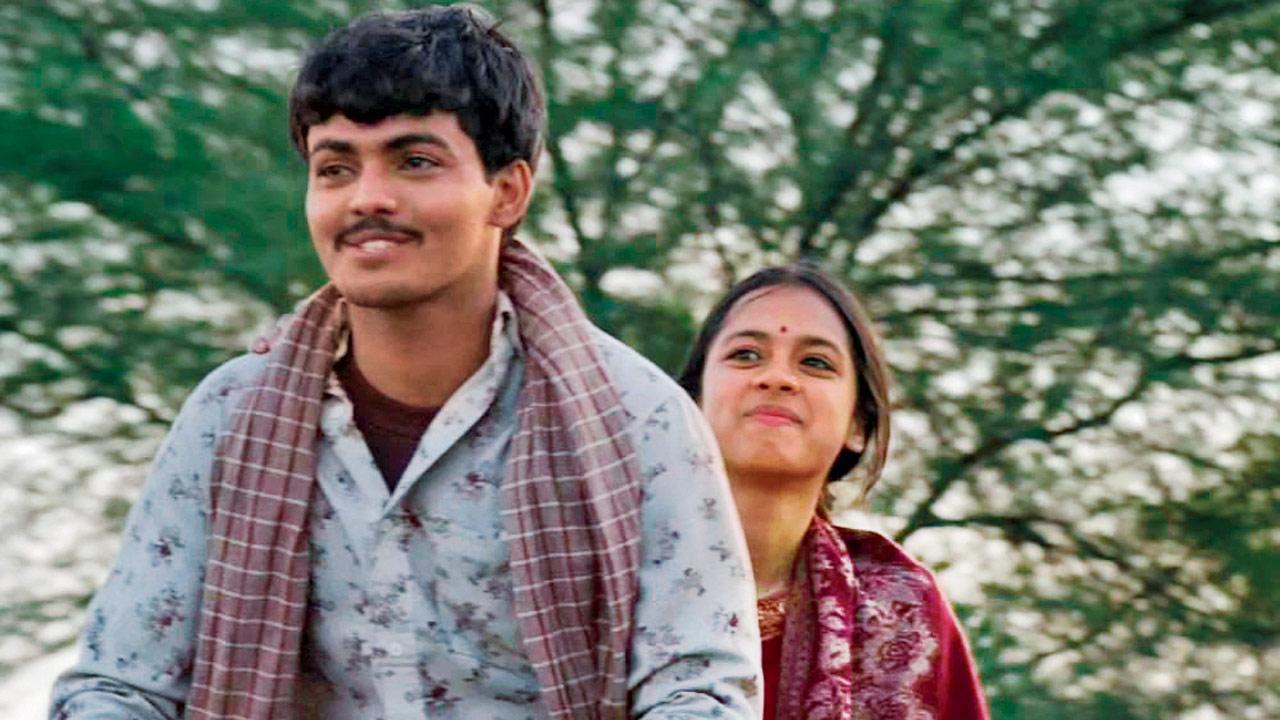
Days after her Laapataa Ladies is chosen as India’s entry to the Oscars, director Kiran Rao on travelling to Los Angeles soon for lobbying and banking on Aamir Khan’s Lagaan experience
Upala KBR (MID-DAY; September 28, 2024)
It has been a whirlwind week for Kiran Rao, whose film Laapataa Ladies, on September 23, was announced as India’s official entry to the Oscars 2025. What has life been like since then? All about congratulatory calls, messages and planning, says the proud director.
She begins, “I was in disbelief at first when my cousin Shiv [Aroor, journalist] posted the news on our family’s [WhatsApp] group. The first person I called was Aamir [Khan], of course. I would like to believe I informed Aamir, but the reality is that we got a hold of each other only about 30 minutes later because the calls and messages were pouring in. He was thrilled, and his first reaction was, ‘The journey ahead is very long and we must start planning.’”
From hosting screenings in the US to having press conferences, the next steps will be crucial in determining whether Laapataa Ladies—starring Pratibha Ranta, Nitanshi Goel, Sparsh Shrivastava and Ravi Kishan—makes the cut to the Best International Feature Film category or not. Fortunately, she has the perfect guide in Khan, whose Lagaan (2001) remains among the three Indian movies to have ever made it to the top five nominations in that category in the Oscars.
The director shares, “With Aamir having done this before, his knowledge, insight and experience are invaluable. When he heard the news, he immediately started brainstorming about the next steps. I know how meticulous he can be, and that is a huge strength.”
Rao’s plan is to follow in Khan and director Ashutosh Gowariker’s footsteps, who had created tremendous pre-Oscar buzz around Lagaan in 2002. She intends to fly to Los Angeles by the year-end and set the campaign into motion.
“Right now, it’s about building a strong strategy. From Shaunak Sen to Amit Masurkar and Ashutosh Gowariker, so many directors whose films were competing in previous years have offered advice and support. Not just me, the entire team will be travelling to present our film. Being there on ground will make it easier to be a part of key events and conversations. We want to give it our all.”
Had she imagined being Oscar-bound when the script first came to her? She recalls that Khan had brought the story to her from the Cinestaan India’s Storytellers Contest. She shares, “Aamir found this gem at a script writing competition and gave it to me to read. When he told me about it, I was instantly hooked. For me, as a filmmaker, it was a story that I believed needed telling.”
The theme of women running away and finding their happiness interests me a lot-Kiran Rao
8:10 AM

Niharika Lal (BOMBAY TIMES; May 9, 2024)
Kiran Rao’s Laapataa Ladies is about two women who get lost and ends with them finding their identities and selfworth. Critics have praised the film for its use of humour in the direst situations and its take on patriarchy without resorting to preaching. The filmmaker has spoken about how she used humour to give the narrative a fresh approach and to convey her ideas to the audience.
‘Women tend to put themselves second’
“I’m really interested in women running away and finding their own happiness and their lives. It’s a theme that appears in all the stories I have written, maybe not so consciously in Dhobi Ghat, but it’s one that interests me a lot – women just leaving behind the responsibilities that tie them – family, jobs, whatever it is. I’m sure it’s true as much for men and non-binary people. But I think women tend to put themselves second. I remember my mum never taking holidays, but my father would take a mandatory 15-day trekking holiday every year. The story of Laapataa Ladies interested me a lot because it had two girls going out and finding their lives. The possibilities were endless.”
Humour is the most effective vehicle for conveying ideas: Kiran
Laapataa Ladies slips in several jibes, whether it’s ‘sarkaar badli, gaaon ka naam bhi badla’ or its take on patriarchy – ‘Iss desh mein ladkiyon ke saath bahut saalon se fraud chal raha hai – bhale ghar ki bahu-beti’.
Talking about infusing humour in the film, Kiran said, “We converted it into a comedy, initially it was a much more serious film. We threw subtle truth bombs. I love comedy. I believe humour is a great way to disarm and charm people. When people are laughing, they are more open to new ideas. It was important to touch upon a bunch of things that we wanted to say through the story. Humour seems to be the most effective vehicle for conveying these ideas because you are making friends with people whom you are trying to convert.”
‘After Dhobi Ghat, I was confident that I’d make a film in two years’
Laapataa Ladies is Kiran’s second directorial, after Dhobi Ghat (2011). In this 13-year gap, she produced several films. “After Dhobi Ghat, I was confident that I would make a film in two years, but it doesn’t work like that. I was trying to write my own scripts, being a mother and doing a bunch of things that fulfilled me creatively. Perhaps, I was not in the right headspace when I was writing. So, it took me a while.”
About how Laapataa Ladies came along, she said, “In 2018, Aamir found the story while he was on the jury of a screenwriting competition. Biplab Goswami wrote the original story about two brides. Aamir told me the story in one line – a guy takes someone else’s bride home from the train. This is the kind of story where you need to know what happens next. I think these are the best kinds of stories.”
As Aamir Khan turns 51, the women in his life share some precious memories
8:22 AM

As Khan turns 51 today, the women in his life share some precious memories
Chaya Unnikrishnan (DNA; March 14, 2016)
Aamir Khan will ring in his 51st birthday today,
amidst his family and close friends. A perfect time to get to know
Aamir, the family man. Here his wife Kiran and sisters Farhat, Nikhat
and Nuzhat share their thoughts on the superstar and the real Aamir...
He is a die-hard romantic: Kiran Rao
Aamir at home and as a husband is exactly the way he is as a person in general — loving, honest and always giving as much of himself as he can. He’s a die-hard romantic, completely romance novel style! Sadly, for him I’m not, so he has to work doubly hard to make up for me! As a couple even during his shoots we try to steal time together, going on dinner dates and watching a movie together on the nights before a day off. But it’s hard to get enough time together, and we are often apart for months. He’s also incredibly loving, and what he did for my 40th birthday is any woman’s dream come true. He values his family above everything, and is always concerned for our happiness. He really enjoys being around the family and spending time with his kids, his mother and his siblings, and for him that’s when he’s most relaxed and happy.
He bossed me around: Farhat Datta
 We
had a regular brother-sister relationship. He was a big prankster and
bossed me around as I was the youngest. But he helped me with studies
coaching me in French and Math. He was an avid reader so I got inspired
to read. I don’t think he has changed much. He can still be as annoying a
brother as he used to be and as loving. His most endearing quality to
me is that he shows his emotions unabashedly.
 I was spared from his pranks: Nikhat Hegde
It is difficult to talk or write about your brother and when it happens to be a celebrity brother it gets even more difficult. Nevertheless, I will try. I am Aamir’s elder sister. Unlike my younger sister Farhat and brother Faisal, who Aamir bullied regularly by using the ‘I am elder’ line, I was spared of all that. I don’t know if it was solely due to me being elder, or because I was a very quiet, docile, and non-interfering.
Last year on his 50th birthday we were all together at Lonavala. Aamir had just begun dunking people into the swimming pool. Blissfully unaware of all this, ammi, Farhat and I decided to go and meet Aamir. We were told he is at the poolside. We were walking down, me holding ammi’s hand walking a little behind Farhat. What I saw was Aamir coming out of the pool. I assumed that he had seen ammi and was coming out to meet her. Farhat hugged him and wished him and the next thing I saw — Aamir was taking Farhat into the pool with him and she was saying, ‘Aamir no, I’m not going into the water.’ Before she knew it she was in the pool (I think she managed to kick off her shoes just in time). I laughed at what I saw and thought to myself, so much like the good old days, and ammi next to me was saying, ‘Dekho Aamir kya kar rahe hai! Tum nahi jana paani mein.’ Something told me that he will not do this to me. I guess it was my wishful thinking.
Ammi and I went and sat down under a tree close by, and we were laughing at what had just happened. Then we saw Aamir coming out of the pool again. He was walking towards us, and I thought he’s coming to wish ammi. He hugged her and then turned to me. I wished him, and he softly said, ‘Are you going to come in readily, or will I have to force you?’ With me it’s always been a little different.
Aamir has always had a playful, fun side to him, a good sense of humour. But he has always been very meticulous, always wanted his things, his drawer, his shoes etc to be neat and in order. While growing up, if we took a pen or paper from his drawer without asking him he didn’t like it at all, or his books (his prized possessions). Worse was when we didn’t put it back from where we took it or misplaced it. He is a stickler for certain things and very easy going with other things. I think for his personal values and principles, he is a stickler. But in other things, he is the most easy going person. Very open to reason and looking at things from your perspective before drawing conclusions. He is very forgiving too and will not hold things in his heart once he has seen sense. He will apologise easily if he feels he has made a mistake. He is very emotional, caring and generous.
I remember an incident where as a kid he gave all his savings to his French tuition teacher because he felt she was falling short of money. Once he was collecting money from all of us for a friend of his who needed to go abroad.
Though we had a very strict and protected upbringing, we grew up kind of rebellious. I knew I could confide in him and he will not betray my trust. Like once without letting my parents know, I agreed to do a small part as replacement for just one show in a play to be performed at Prithvi Theatre. I did not have the courage to tell my parents that I will be on stage as they would never have allowed it and I was dying to do it. I confided to Aamir and Faisal. We said we were going to see the play and I got permission to go with them. He never spilled the beans to my parents. Even when I went through a bad patch in my life, which happened a couple of times, Aamir stood like a solid rock behind me. He has been a great pillar of strength. I must say I have been very fortunate to have Aamir as my brother. Though I am older, he has been like an elder brother.
His being successful as an actor has of course been a great source of happiness for all of us. After his success, he was very elated, but always managed to be rooted. He did not get into partying, etc. He was comfortable with his old set of friends and his family and didn’t mix his work with his family. So he remained the same. His most endearing quality is his genuineness, his simplicity, his honesty and his passion for his work. I would love it if he could spend more time with us.
 May he always see the world as he does now: Nuzhat Khan
May he always have the strength to continue to work with the kind of love, passion and integrity he has always shown to whatever he has been involved with. May he always see the world as he does now. A good place worth fighting for. May he always have people who value that quality in him.
Me & Anupama got a chance to head MAMI because we can do the job & not due to gender-Kiran Rao
7:54 AM

Kiran Rao, the new chairperson of the Mumbai film festival, shares her plans and expectations
Roshmilla Bhattacharya (MUMBAI MIRROR; November 29, 2014)
In yesterday's Mirror, Shyam Benegal, former chairperson of MAMI, lamented about the lack of funds and is putting his faith on you to make it a cash rich fest.
I'm grateful to Shyam babu for investing so much trust in me. We've started our quest to get the right partners on board and we intend to scale up the scope of the festival.
Will you partner with Reliance, which pulled out at the nth hour this year, putting the festival in jeopardy?
Reliance has put their support behind the festival for five years. It's time to look for other options. But if they show interest, we are open to talks.
Some of the winners of the festival's competition section are yet to receive their cash prizes...
We'll make sure they get their prize. Earlier too, it was given in stages depending on when the pledged money came through. Raising funds was a real struggle this year.
This year, the audience was limited to members of the film fraternity and journalists, how do you intend to involve the aam janta?
MAMI was never restricted to an elite few. It's open to anyone interested in good cinema. This year, because of the uncertainty over the venue, issuing of passes to public started late. And that is why there were fewer footfalls. We'll rectify that.
How will you pacify SoBo regulars who are upset because the venue moved to the suburbs this year?
We have to increase screening venues and ensure that people across the city can enjoy the fest. This year, because of financial constraints, we had to stick to just three venues, all of which were in Andheri-Juhu. Eventually, we'd like one easily accessible hub, which will make the fest a 360-degree-experience. I want MAMI to move beyond cinema and theatre.
Are you looking to rope in big international names next year?
In the last 17 years, MAMI has roped in good international talents as filmmakers and jury members. That will continue. We want to make MAMI the most important festival for Indian filmmakers. We want to premiere and screen regional films from across the country.
Any lessons learnt from IFFI?
I only attended IFFI while studying in Delhi. It has an excellent film bazaar. There are 40-odd festivals in India and the bedrock of any fest is not the stars or the studios, but the quality of programming.
With you as chairperson and Anupama Chopra as festival director, its women power on show.
I don't believe we got this opportunity for our gender but because we can do the job. Women bring in their perspective to everything they do. We are looking for programmers and volunteers who have the right skill set, gender is hardly a factor.
Do you have a mentor's role planned for Mr Benegal?
He's a founding member, how can we do without him as an advisor and inspiration? It's because of him that I got involved last year. I'd warned him that with such a young child at home, I wouldn't be able to spare much time. But with the festival in choppy waters, I had to take on a bigger responsibility. I got my education in cinema from watching films at such festivals. We complain that we're not getting to see the kind of cinema we want to. It was time to put words into action. All of us are in this for our passion for cinema.
Ship of Theseus, which you presented, won awards and accolades globally. Will you collaborate with Anand Gandhi on his next?
I know what the film is about but I haven't read the script and we haven't spoken about any collaboration yet. I've seen a lot of good films this year but none have affected me enough to extend my support. Although Fandry (Marathi) was an exception. But by the time I saw it, it had released.
Buzz is, your next directorial will be set in Kolkata.
I have to first finish one of the many half-complete scripts lying around.
Is Azad interested in films?
No, the cinema bug hasn't bitten him yet. As of now he has to be content with a few cartoons. He spends most of his time outside with his friends.
Is the renovation on your old house complete?
There was talk about redevelopment; I'm clueless about what's happening. We are happy in our rented apartment.
Star can be bigger than film but they bring change by backing a project-Kiran Rao
7:44 AM

Yolande D'Mello (MUMBAI MIRROR; February 4, 2014)
The good people at Good Pitch 2 are in Mumbai to help six documentary filmmakers form alliances that will fund, distribute and promote their craft. Kiran Rao on coaching talented minds.
Was your decision to present Anand Gandhi’s Ship Of Theseus a way to cement your stand on promoting independent filmmakers.
It wasn’t a statement. That was the first time I decided to present a film because I was moved by it. Before that I didn’t believe that I could do much. But Aamir (Khan) and Anand believed in me and made me see that I could bring a certain appeal and take a film to the theatres and the audience.
How did you get involved with Good Pitch 2?
I love watching documentary films. Sophy Vsivaraman brought Good Pitch 2 to India. We met a couple of times to discuss the panelists. I bounced off some names and made some connections for the event.
How does it work?
Filmmakers apply for the event through the website. They have to upload a video of themselves. Once they are selected for a particular venue (previous sessions have been in New York, Chicago, Taipei), they invite panelists to sit in for a session. The films are at various stages of production. Some filmmaker who have put in their own money need funding partners to complete the shooting. Others need distribution channels. We hope to build these bridges through the pitch.
Who can be a panelist?
Amnesty International, Ernest and Young, Ford Foundation as well as independents make up the panel which changes for each film. There are panelists who have been invited because they have a direct connect to the cause mentioned in the documentary and some who are simply interested in good cinema. At previous Pitch meets, we had audience members walk up to the microphone and say "I’d like to share my contact with the filmmakers. Hope they help"
What was the biggest challenge you faced?
Public speaking, each filmmaker has seven minutes to sell his idea to the audience and the panellists. This includes playing the trailer. While filmmakers are able to communicate with a large audience through their films, speaking in front of 200 guests can be daunting. We met at my house for three days to finetune their ideas.
You called yourself a catalyst. What is your role?
In the case of Ship Of Theseus, the catalyst was an enabler. Here she is the pivot around which we can connect different spokes just by being involved. As a moderator, my job is to protect the filmmakers and suggest connections for him.
Are our audience ready for indie films?
Definitely! They are smaller in numbers but they exist and are proactive. The films are essentially human stories. A newspaper might report an incident but I only feel connected when I see a face or a name. That is what these documentaries offer. We need a space to access these films as well.
Could mainstream star power help?
Stars could become bigger than the film but they could bring about a change by backing the project.
Are multiplexes possible venues?
We need a cultural space that we can work in. Nandan used to be that space in Kolkata. Maybe have a café attached to the theatre because you should be able to meet and converse with the filmmaker. I wanted to catch Kamal Swaroop's Om Dar-Ba-Dar in the theatre but it was there for only a week in an afternoon show. Since I have a baby I missed it. Urban audiences spend a large chunk of their time commuting, sitting at work or at home near a computer. Pay Per View is catching on.
So you think we are moving online?
I don’t think we can ever replace a theatre. Every film aker dreams of a darkened theatre where the curtain draws and the credits roll. I would want to start 10 such culture centres. Let's look at Mumbai’s real estate realistically and move forward steadily.
SELLING CELLULOID
17 NOT REQUIRED INDIANS: (Soniya Kirpalani) 17 Indians were sentenced to death for murdering a man. They would have ended up as statistics, but for a family members and well wishers pressuring for a a fair trial
BORDER WITHIN BORDER: (Debanjan Sengupta and Subhadeep Ghosh) Both India and Bangladesh deny Kofur, an illiterate brickmaker the fundamental right of citizenship

LOVE COMMANDOS: (Miriam Lyons and John Stack) The Love Commandos rescue young women from being murdered by their families and help them marry the men they love
 FIREFLIES IN THE ABYSS: (Chandrasekhar
Reddy) Ten-year-old Sooraj, works in a ‘rat-hole’ mine, burrowing into
narrow tunnels to scratch coal out of hard rock
ROOTING FOR ROONA: (Pavitra Chalam, Akshay Shankar, Jyolsna Balakrishnan, Ananya Roy and Ashwin Chalam) Roona is a one-anda-half year-old girl in Tripura who suffers from Hydrocephalus, a birth defect caused by a build-up of fluid in the brain
Subscribe to:
Posts (Atom)