Showing posts with label Khufiya. Show all posts
Showing posts with label Khufiya. Show all posts
Every time Shah Rukh Khan and I meet, he repeats, we have to do a film together-Vishal Bhardwaj
9:02 AM
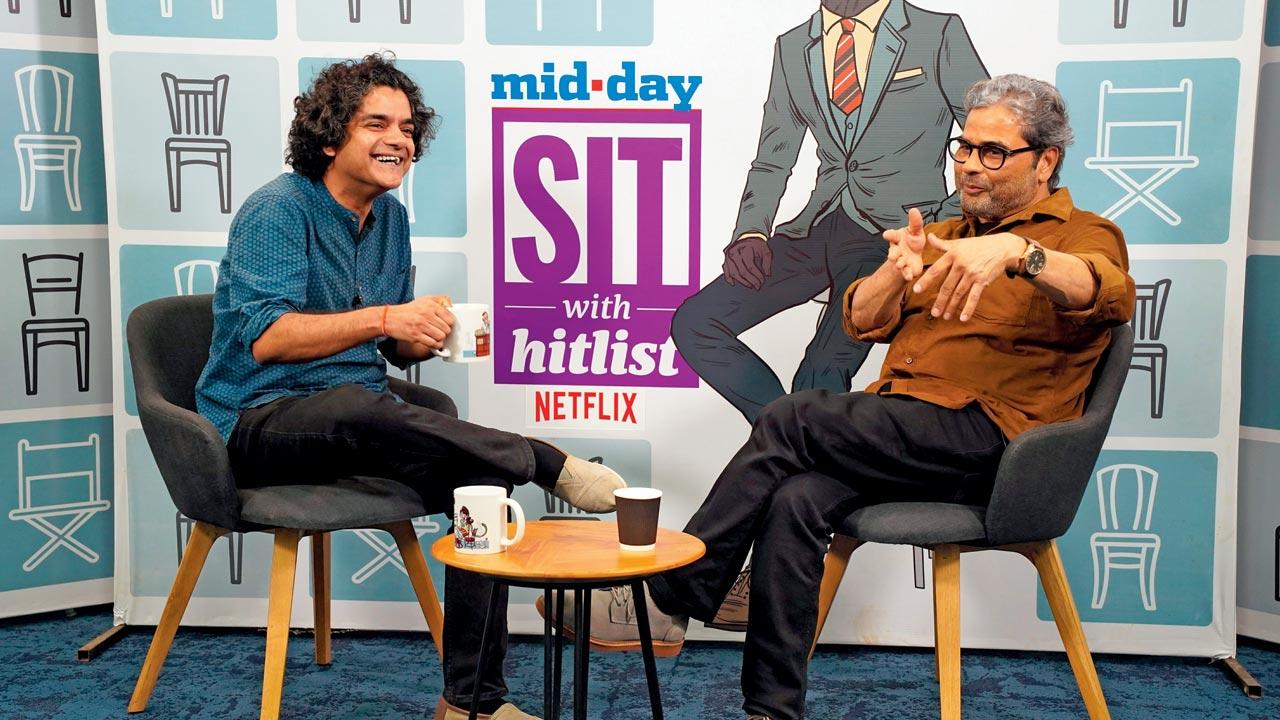
One of India’s greatest filmmaking talents ever, polymath Bhardwaj, opens up on the man behind the movies
Mayank Shekhar (MID-DAY; December 16, 2023)
Gulzar-Vishal Bhardwaj's musical combo is top of the charts’ stuff. But Vishal’s first mentor, from the world of poetry was, in fact Dr Bashir Badr, whom he calls the “greatest poet of the century, an asset to [his hometown] Meerut,” who had to flee Meerut, however, because of the riots in 1984.
Bashir Sahab had heard rumours of a likely attack on his house in Shastri Nagar. His home was indeed burnt down by a raging mob later.
In the rush that he fled for Bhopal, Bashir Sahab left behind his diary, with all his poetry, written over the past year. When he briefly revisited Meerut, he asked for two people—one, Mr Bhandari, who was 70 years old, and the other, Vishal, who was 19 then.
He asked both if they remembered the ghazals and his poetry from the destroyed diary. Bashir Sahab had gone into depression. Between the old man, Bhandari, and teenager, Vishal, they recalled all of the great poet’s works to him, word for word as he penned them back again: “This is how Bashir Sahab got out of depression.”
Vishal used to spend every evening, listening to Bashir Sahab’s words of the day. With poetry, he says he has a photographic memory: “At one point, I could recite the entire book of Gulzar.”
This Bashir Badr story I’d heard before, over drinks, with his former associates once. As is with such nights, I’d forgotten most of it the next morning.
Including details of the tragic events preceding Vishal’s father Ram Bhardwaj’s demise—which he recounted in detail, before a live audience, during this conversation. Only, a few weeks later, he sent in a word if that anecdote could be omitted. It’s about father and son. Too sensitive. We left it at that.
Earlier, he would cry, recalling the incident to do with his father’s death. But he says, “I found my catharsis in that scene in Haider [2014], when Shahid [Kapoor] returns to his home that’s burnt down, and he’s holding a cricket bat.”
The other story about Vishal that I have stored in my hazy memory, hanging with his former colleagues, is about how, as a kid in Meerut, he was caught in a crossfire, and he saw a dead gangster, right in front of him.
“Oh, those are actually two separate incidences,” Vishal says. “There was Tyagi Hostel in Meerut, where all these gangsters used to live. There was a wall, with a hole, between my school and the hostel. That’s the short-cut route we took to get to school. This is where the [chief] gangster used to live in the warden’s house. The warden used to live in the hostel!”
“On my way, I would see him lay out and dry his bullets, guns, grenade, in the sun. The gangster was very fond of me and other kids. He would offer us to hold his gun, tease us with pulling the trigger.”
“Once, during school exams, we heard gunshots fired. We went over to the gangster’s courtyard after. And he was lying dead, right there, with fresh blood, killed by cops, in a gang war! That’s the first time I saw a dead body. I was in Class VII, so must’ve been 12 or something.”
The other incident has to do with Hindu-Muslim riots, which Vishal says was common enough in Meerut: “But even then, the level of enmity [that we see now] didn’t exist.”
Vishal’s house was next to a Muslim family’s: “They had a large bungalow. The father was a learned gentleman. He had three daughters. My landlord was a police sub-inspector, with 10 children. Those kids decided ki hum Muslim kama lete hain, meaning score/kill Muslim people [during the riots]. That’s how it worked. I even heard them plan on going after one of the daughters.”
“There was word from the police station that these boys had an hour [to do whatever they liked]—kama lo toh kama lo. That’s before the police would charge in. This is also how it worked. I knew about these boys’ plans. They had bought country-made pistols. They intended to enter the house, and blast the gas cylinder.”
“The Muslim man inside had a Donali [double-barrelled gun] that he shot in the air. During what ensued, I got caught in the crossfire, and found my way out of it, into another house. My family got worried, because I had gone missing.”
This is when Vishal naturally pauses in the chat: “That’s the psyche of a mob. I have seen it. You ask an individual to kill another? They won’t. You get 50 people to do the same, without taking on guilt and moral responsibility? They will. This is why incidences like lynching and mob behaviour pain me. The support comes from the system.”
As with many great artistes, you only have to dig into Vishal’s past to figure what informs his life as a filmmaker and public figure too. Although pretty much all of his films, as a director, have been based on works of literature.
It might be fair to say, that’s only on paper. Consider his last feature, Khufiya (2023, on Netflix). It’s adapted from Amar Bhushan’s novel, An Escape To Nowhere.
I first read the book in 2013, basis a recommendation in Swapan Dasgupta’s column in The Times of India. Page for page, the film barely reflects the original text, which was more a survey of bureaucrats, fighting over foreign postings. Which is probably what R&AW really is, on a daily basis, anyway. Rather than Salman/SRK like James Bond agency, banging it in the killing fields.
Vishal says, “The book is a cold account of a surveillance operation. The detailing is so good. [Author] Amar Bhushan-ji was once the counter-espionage chief himself. Now, such a book is not even possible. Because the government has placed a ban. No officer can write such a book anymore.”
What about the leap of faith that he takes thereon from the book—surely, he had R&AW agents/officers vet the script, in case it seems too far-fetched? The original research, Vishal says, came from “seven to eight years spent”, working on a film based on the IC 814 hijacking (of 1999).
“I met Mr Ajit Doval [currently India’s national security adviser] several times. He had then retired [as the Intelligence Bureau chief]. Doval Sahab is a fascinating man, and a great storyteller! I also interacted extensively with ex-R&AW chiefs, Mr [A S] Dulat, Mr [C D] Sahay… Along with Mr [Vivek] Katju, the foreign secretary—these were the gentlemen chiefly negotiating with the hijackers. In any case, they really tell you what they want to. They might make you believe they’re answering your questions. But they’re not. It’s their point of view.”
Vishal’s film on the IC 814 hijack subsequently got shelved: “After the Tandav episode, Amazon Prime Video got paranoid. They pulled the plug on the project. They said they don’t want to touch anything political. The film actually had nothing to do with politics. The whole country was humiliated in that episode. It had nothing to do with a party. Now, Anubhav Sinha is making a series on it for Netflix.”
During the IC 814 homework, Vishal also met the IPS officer Arun Kumar, who was associated with the incident. In 2008, Arun became the first investigating officer from the CBI on the Aarushi-Hemraj Noida double-murder case (still unsolved, by the way).
Hence, Meghna Gulzar’s Talvar (2015), which Vishal produced and scripted, with precious/incisive details from Arun who, in turn, inspired late Irrfan’s character in the film.
Tabu, Vishal’s other muse, plays the lead in Khufiya, while the spy-thriller follows this R&AW sleuth’s story of love and loss with her Bangladeshi handler. None of which, of course, exists in the novel that the film is based on.
Citing his Shakespearean adaptations (Maqbool, Haider), to works of Ruskin Bond (The Blue Umbrella, Susanna’s Seven Husbands), Vishal says he’s essentially keen on the basic plot: “I have to know the drama I’m creating—and find a three-act structure, voice, characters, and my own politics and social environment in it.”
To illustrate this best, no better example than to go back to the aforementioned Tyagi Hostel, along with Meerut’s Kachehri Road, full of gangsters, Anand Shukla, Rampal Tyagi, et al. All of whom treated Vishal as their “blue-eyed boy.” Because he could sing and play cricket well. Watch them placed together in Omkara (2006), i.e. Othello. Shakespeare feels like an excuse.
One of the gangsters Vishal knew there was Langda Rathee, who got onscreen as Langda Tyagi. And that’s Saif Ali Khan, in what was easily the greatest casting-against-type for the decade. Vishal thanks Aamir Khan for this unusual choice.
Around the time, Aamir and him were zeroing in on a script, Mr Mehta & Mrs Singh, to work together: “Aamir was seeing the film a certain way. When we were close to the shoot of Mr Mehta & Mrs Singh, he was uncomfortable about how I was seeing the film. We are both headstrong people. We parted ways. But he’s great fun to spend time with, and during our chats, I told him about Langda Tyagi, the character I was writing.”
Aamir was fascinated by the world (of Omkara), and Langda Tyagi’s language, in particular, and wished to be considered for the part. He got busy with his next (Rang De Basanti).
Vishal was too eager to hit the set, rather than wait for Aamir, which would take long. But he realised, “Aamir is intelligent, and commercial. If this role can excite him, I’m sure it should excite another star.” Hence, Saif 2.0 (post Dil Chahta Hai).
There’s been was a similar hit-and-miss between Vishal and Shah Rukh Khan. They were to adapt Chetan Bhagat’s 2 States together (later filmed by Abhishek Varman on Arjun Kapoor, Alia Bhatt). What happened there?
Vishal says, “We had differences over the setting. I wanted to set the film in a bank like ICICI, and not in a college, or elsewhere, that Shah Rukh would’ve preferred. We felt the pain, though. I recently wished him for Jawan. Every time we meet, he repeats, we have to do a film together.”
While his sensibilities are innately artistic, it’s evidently clear, Vishal has throughout aimed for a spot in the mainstream, and achieved it, in his own right. He emphasizes, “Maqbool [2004] opened the doors for me!”
----------------------------------------------------
An apt way to introduce Vishal, as we did in this conversation, is as one of India’s greatest filmmaking talents, ever. There have been few polymaths with that many hyphenated top-end talents, within desi filmmaking—director, producer, music composer, singer, lyricist, writer of screenplays, and dialogues (often separate in Hindi cinema, because most don’t hold an equal command over language).
Vishal writes dialogues in pen on A4 sheets. But gets confused with his own handwriting later. One thing he misses his former associate Abhishek Chaubey (Ishqiya, Udta Punjab) for is deciphering what he’s written. Now, he has to figure it out himself. The instructions on the screenplay he keys directly into the computer.
The greatest polymath of all in Bombay was probably Kishore Kumar who, Vishal tells me, he shares his birthday with (August 4)!
But much before all of the above, Vishal was an “all-rounder” cricketer once—batter, and right-arm spinner—with an eye on international cricket. Former Test player Gursharan Singh spotted him in a match in Meerut, and suggested he move to Delhi. Which is the reason he did.
“I couldn’t have made it to the Indian team from UP. It was too big a state then [Uttarakhand hadn’t been bifurcated]. The facilities weren’t up to the mark. And the UP team barely made it up the chain in the Ranji Trophy. So, I would have never got noticed.”
In Delhi, he played with the likes of Manoj Prabhakar, Maninder Singh, Sunil Walson, Tilak Raj (who Ravi Shastri hit for six sixes), Chetan Sharma… Speaking of the latter, did Vishal whack Chetan out of the park, ever? “Yeah, I did.” That’s one thing he has in common with Javed Miandad!
Reminiscing those times is a lot like, as Vishal quotes Ghalib: “Yun hota toh kya hota!” Dealing in ‘counter-factuals’: “I came to Delhi. Right before the match, I broke my thumb. Couldn’t play the whole year. Next year, my father died. If cricket hadn’t left me, though—how would I have been in music, or the movies then? This world has no retirement age!”
“Since then, I’ve learnt that if something unlucky happens to me—a greater reward awaits. I feel bad, of course, when something happens. But I don’t get disappointed.” From an early age, Vishal used to dabble in musical instruments lying around. Music was internal to his home.
Although with a day-job, Vishal’s father Ram—“everyone called him Ram Sahab”—was a lyricist in Bollywood. He would often visit Bombay, from Meerut, with family.
This is when Vishal spent time with film/music folk in Bollywood. On one such evening, his dad mentioned to his friends about how Vishal, “around 18 then”, had composed a short tune over his father’s lyrics.
His dad’s friends were hugely impressed. They got composer Usha Khanna on the phone to hear it. Usha loved it enough to include it in the final composition.
“That someone like Usha-ji took my tune to expand into a whole song gave me my first validation. That validation gave me confidence.” The song, Khuda Dosti Ko Nazar Na Lage, is from the film, Yaar Kasam (1985). At 19, Vishal recorded his first composition. Asha Bhosle was on the microphone.
After college in Delhi, he moved to Bombay with a job at a music label to pursue music, professionally. Vishal also had a brother, Rajeev, seven years elder to him, in Bombay—struggling to make it in films as a producer: “He had no money. But he wanted to produce movies. How do you?”
Rajeev passed away early. Decades later, Vishal became a formidable producer in Bollywood. I wonder if he feels, in some ways, it’s the story of two siblings coming full circle? He just wishes his brother was around to see it.
Filmmaking itself was an invisible milestone in his head, he says. “I had no intentions. I had seen nothing. Manmohan Desai to Blue Lagoon [for the sex scenes] was the range of my film knowledge!”
It was during the making of Maachis (1996) that he was composing music for, Vishal recalls, “Gulzar Sahab told me, I’ll become a director in five years. He actually pushed me into it. I used to ask him too many questions during the filming, editing…” The children’s film Makdee (2002) marked Vishal’s directorial debut.
Given he was a musician first, isn’t it strange that he’s never attempted a proper musical in films? He reasons, “In my earlier movies like Omkara, Maqbool, I did have actors lip-sync to songs. Because I also wanted to retain my power as a composer. With time, the purity of cinema took over. How do you then justify lip-syncing? The background score is the director’s voice. Anyway, India has a long tradition of cinema and music. Even if I do a musical, it would have to be on a subject that is totally non-musical.”
By the looks of it, his current obsession may be mystery/thrillers. After Khufiya on Netflix, his series Charlie Chopra & The Mystery Of Solang Valley, based on Agatha Christie’s The Sittaford Mystery, dropped on Sony LIV. Which, he says, happened primarily because of the pandemic.
“The world was under lockdown. I was convinced we were in it for five to 10 years, or perhaps forever. How does one survive creatively for that long? Many years ago, I had been offered Agatha Christie’s entire library of Hercule Poirot and Miss Marple titles to adapt. Well, this is what we could do, I thought—shooting in constrained settings [during a pandemic]. I got back to the person, who had connected with me back then.”
What does he find in common between films and music, I ask Vishal. He says, “That they both work on the three-act structure, inspired from life, of course—bachpan, jawani, budhapa [childhood, youth, old age].
“Also, like with films, we don’t know what works in music. It cannot be calculatedly recreated, even though there are really seven notes.”
How about films and cricket—what does he find similar between the two: “Captainship. That you take along a team, especially when things aren’t going right. And they seldom do.
“Also, to accept defeat gracefully, and learn from the defeat.” Are there instances from his films that he’s learnt from, in terms of failure?
“It would be on the technical aspects. Take Rangoon [2017]. The release date was set. But we were not getting the VFX for the final scene right. I should have put my foot down. Held the release, like Sanjay Leela Bhansali does. I was making a Rs 70 crore film in a Rs. 35 crore budget. I had become overconfident from all that we had managed to achieve, even on the VFX front, coming from Haider.”
----------------------------------------------------
There is genuine integrity/sincerity that Vishal exudes during conversations, and in general too, as his former peers/associates always testify, when his name crops up.
At a recent concert in Mumbai with singer-wife Rekha Bhardwaj, their first time together—they met at Delhi’s Hindu College in the ’80s—she called him a “genius”. Which was one way to put it, as we watched Vishal go from soft ghazals to unexpectedly banging it with the vocals to Kaminey’s Dhan Te Nan on stage!
But along with the ‘shayrana’ mellow, there is also a hardcore side to his personality, I reckon. For instance, I point to him a tweet I came across long ago, where he made a political statement. A troll in the comments section taunted him, asking who did he thinks he was?
Normally, people ignore response, when none is merited. Scrolling down the screen, I noticed Vishal, 58, tell the troll: “Tera baap hoon [I’m your pop].”
He laughs, but declaims, in all seriousness: “There is a gangster in me. Maybe in retirement, the poet is taking over. But the spirit is there—against injustice, or if things aren’t going my way.” Consider this untold story of Maqbool (2004), his breakout film, that is on its 20th year.
One of the things I noticed about Maqbool, seeing it after long, is how little Bombay there is, in terms of live location, in a film about the Bombay underworld. Which can also be said for Mani Ratnam’s Nayakan (1987), upon re-watch.
Some of this is deliberate, Vishal says: “By 2002-03, the Bombay underworld scene had shifted to terrorism. We actually wanted to show a more old-world mafia with Maqbool.” He had knocked on every door to fund the film. Including the possible cast—for instance, Kamal Haasan was the original choice for the title role.
IDBI Bank had launched a scheme to finance films then. Vishal applied there as well. Producer Manmohan Shetty was on its script consultation committee. As was producer Bobby Bedi.
Manmohan had him over for a drink, simply to tell Vishal that he had saved his ass: “You have actors like Naseer, Om Puri, Pankaj Kapur… How would you’ve ever recovered a Rs 2.86 crore loan? I did you a favour, by rejecting it.”
Bobby, however, showed interest in the script, to come on board, with the funds. That’s how Maqbool kickstarted. How does one arrive at the old-world look?
Vishal says, “I had seen a haveli in Bhopal, which is exactly where we needed to shoot [Don Abbaji’s world]. So, 25 days in Bombay, 25 days in Bhopal. That was the shoot.”
“Only, that once we got to the Bhopal leg, Bobby said there was no budget for it. And that there is a mansion at the Films’ Division office [on Pedder Road in Mumbai]—it’s colloquially called the ‘Films Division haveli’—where we could shoot. I said I won’t. He said he won’t make the film then. I said, let’s not make the movie!”
It was a Friday evening, Vishal remembers. He got home, made himself a few stiff drinks, and switched off his phone for the next two days. Bobby came knocking at his door on Monday, asking why he’d gone incommunicado?
“I told him, what’s the point of meeting? My fees for the film, including music composition, direction, script, was Rs 30 lakh. Bobby suggested that the Bhopal shoot would cost Rs 60 lakh. And that he was willing to put in Rs. 30 lakh, and I could put in my Rs 30 lakh.
“I just said—if you had told me earlier, I wouldn’t have drunk so much on Friday! Even to this day, while I was the producer, I didn’t make a single penny from Maqbool. But how does it matter? Look at all that I earned!”
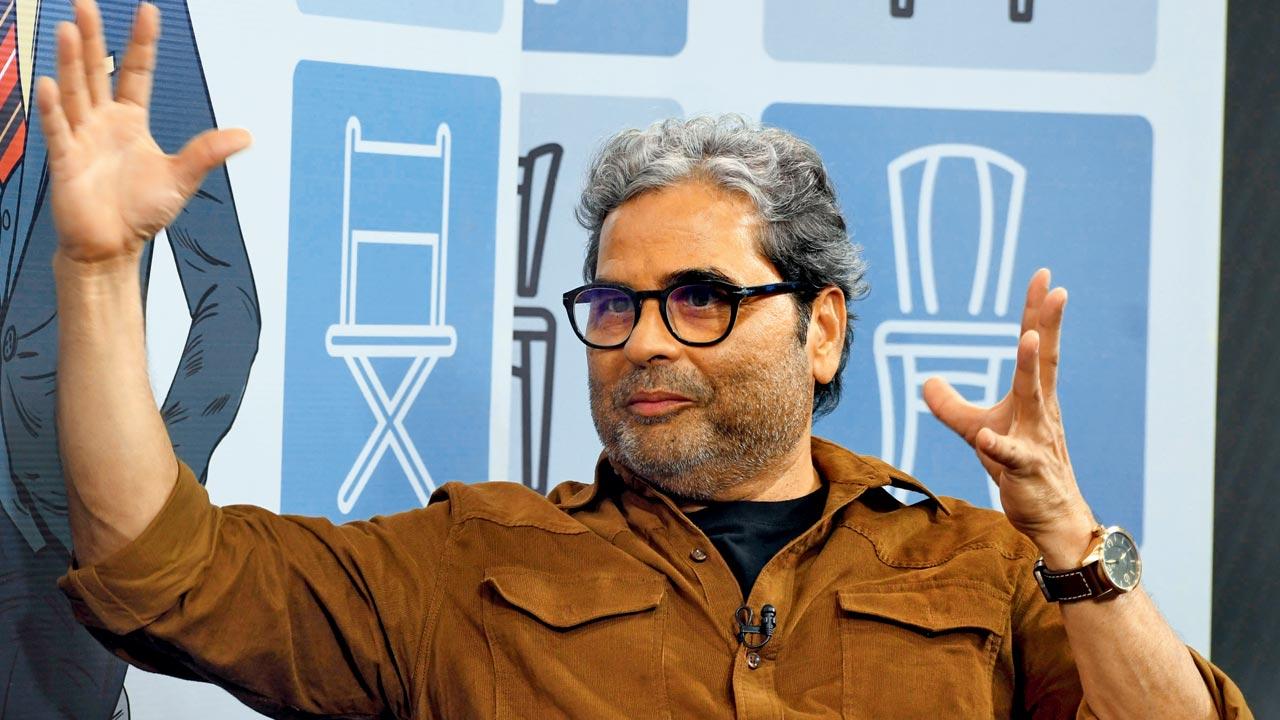
It's raining men: Why alpha males are in cine spotlight
2:44 PM

Macho action movies dominated the box office this year while female-led films have been releasing only on OTT
Shruti Sonal (THE TIMES OF INDIA; December 10, 2023)
Men in thick, flowing beards. Shotguns that seemingly come with infinite shells. Fights on top of helipads, trucks, bridges. A background score that drowns out everything else. And, a box office register that doesn’t stop ringing for angry young bros.
This roughly sums up the year’s blockbusters. Of course, nothing matches the misogyny of Sandeep Reddy Vanga’s A-rated ‘Animal’. It has the male character cracking jokes around menstruation, gratuitous violence and even the hero asking a woman to lick his shoes to prove her love for him.
“Like revenge tourism, 2023 was the year for revenge movie-watching in India,” says Girish Johar, Mumbai-based producer and film business expert. “Action has always been a safe bet. However, after the pandemic, filmmakers and producers know they need big-scale, larger-than-life films to pull audiences out of their homes. Other types of films, they prefer to watch on OTT,” he adds.
The statistics bear this out. The top seven grossers in 2023 all belonged to the action genre, including ‘Jawan’, ‘Pathaan’, ‘Gadar 2’, ‘Jailer’, ‘Leo’, ‘Animal’ and ‘Tiger 3’. ‘Rocky Aur Rani Kii Prem Kahaani’, which took the eighth spot, stood out as one of the only rom-coms that emerged a hit. There were several female-led films such as Kareena Kapoor Khan-starrer ‘Jaane Jaan’, Tabu-led ‘Khufiya’ etc but they did not hit the theatres and were directly released on OTT platforms.
ADRENALINE RUSH
Through the years, Hindi cinema’s male protagonists have shown several shades. The 1950s showed a tempered masculinity, gentled by the trauma of independence and partition, hopeful about the future. Think of Guru Dutt’s romantic artist — philosophical and doubting. Raj Kapoor’s tramp is bewildered by industrial modernity, Dev Anand is a louche charmer. None of them is particularly muscular, some even have an androgynous quality. In these early movies, there was a resistance to social norms, a questioning and conflict around tradition, even as many films implicitly reaffirmed gender conventions.
Of course, the straitjackets of virtue and good-girlism confined women. They were usually props and symbols, whether as deified mothers and bhabhis, vamps and ‘items’, or even ‘heroines’: love interests with no independent character arcs or complexity. But the men had range.
The ’70s moved from Rajesh Khanna singing about lost love, to Amitabh Bachchan’s smouldering rage at unfulfilled promises to the working classes. In the ’80s, this subaltern male anger turned into a darker thing, with lawlessness and vigilantism as central themes. It was pretty much standard to show stalking and harassment as a prelude to love. The movies lingered over rape, showing it as a titillating spectacle, and as a method to teach other men a lesson, as a loot of izzat.
The post-liberalization era saw themes of love and rebellion emerge, with romantic heroes grabbing the spotlight. However, a 2002 study of Hindi movies from the late ’90s said moderate sexual violence against female characters was “depicted as fun, enjoyable, and a normal expression of romantic love”. Now, a new hype masculine ideal has gathered strength.
While the depiction of violence in films isn’t new, the present surge marks a ‘shift’ in the use of it, says Geetanjali Chadha, professor of gender and cinema at Ashoka University. “During the ‘angry young man’ era, the violence had a purpose. It was more about the difference between the rich and the poor, and made the audience root for the underdog. Today, it’s closely tied to nationalism, strength, and glamour. The women too are no longer passive, often playing a key role in accepting it,” she says.
Economics plays a role too, points out Shrayana Bhattacharya, economist and author of ‘Desperately Seeking Shah Rukh’, which analyzed the moviegoing experience in India through the lens of gender and class. “Because men hold 82% of the country’s income, movies that depict strong men may do better at the box office than those that depict more vulnerable men or stronger female parts,” she explains.
SHRINKING SPACE
However, while the action genre means good business, it has also raised questions about the shrinking space for women moviegoers and women’s stories. Paridhi, a 22-year old from Delhi, says the rise of such ‘alpha male’ characters, shrinks her options. “The problem is not with violence, but the glorification of it. I also went to watch ‘Pathaan’ and ‘Jawan’ in the theatres, but with ‘Animal’, the clips really made me uncomfortable. Looking at its collections, other male actors will definitely gravitate towards this genre too.”
However, Nikhil Taneja, co-founder of youth-centred media organization Yuvaa, and host of the podcast ‘Be A Man, Yaar’, says he isn’t convinced that hypermasculinity is the only thing that works. “There’s a space for alternative conversations, even in action films. In ‘Pathaan’, for instance, Shah Rukh Khan has a female boss, and is saved by a female spy. In ‘Jawan’, he has an army full of young women,” he points out.
However, he adds that it’s important to understand why many young males today are tilting towards ‘alpha male’ content, espoused not only by films like ‘Animal’ and ‘Kabir Singh’, but also podcasters such as Andrew Tate. “I have interacted with over 15,000 students across campuses in the last four years for research work. While women dealing with various forms of patriarchy are often able to find sisterhood and community, men have told me they lack positive communities to talk about loneliness, which leads to bitterness, anger, and violence,” he says.
In a scenario like this, they often turn to characters they can relate to, or those who vindicate their emotions, he says, adding that therefore, filmmakers should have a certain degree of accountability of what they’re putting out there.
“Toxic characters should be represented on screen, but they have to be self-aware and have context. For instance, in films like ‘Darr’ and ‘Anjaam’, everyone knew SRK was the bad guy and he met his fate in the end. However, in some films being made today, if the directors put a cool background track as the character commits violence, they make it a character worth aspiring for. Men look at it and think it’s cool.”
Jasmeet K Reen,, writer of the critically acclaimed ‘Darlings’, feels that artistic freedom is paramount, and the audience can be the only judge. Her Alia Bhatt-starrer depicted a woman breaking free of a marriage filled with physical and psychological abuse. Some scenes were graphic, and the writer grappled with how to depict them.
“Every filmmaker has their own ideology which, whether they like it or not, reflects in their films. If I’m making ‘Darlings’, what I feel, what my ethics are, what I feel about sexism, what I feel about gender, what I feel about violence, it will show in the film. It also means that everybody has a distinct voice and I cannot control how other people should tell their stories,” she says.
Atlee sir’s trust in me has boosted my self belief-Wamiqa Gabbi
8:25 AM
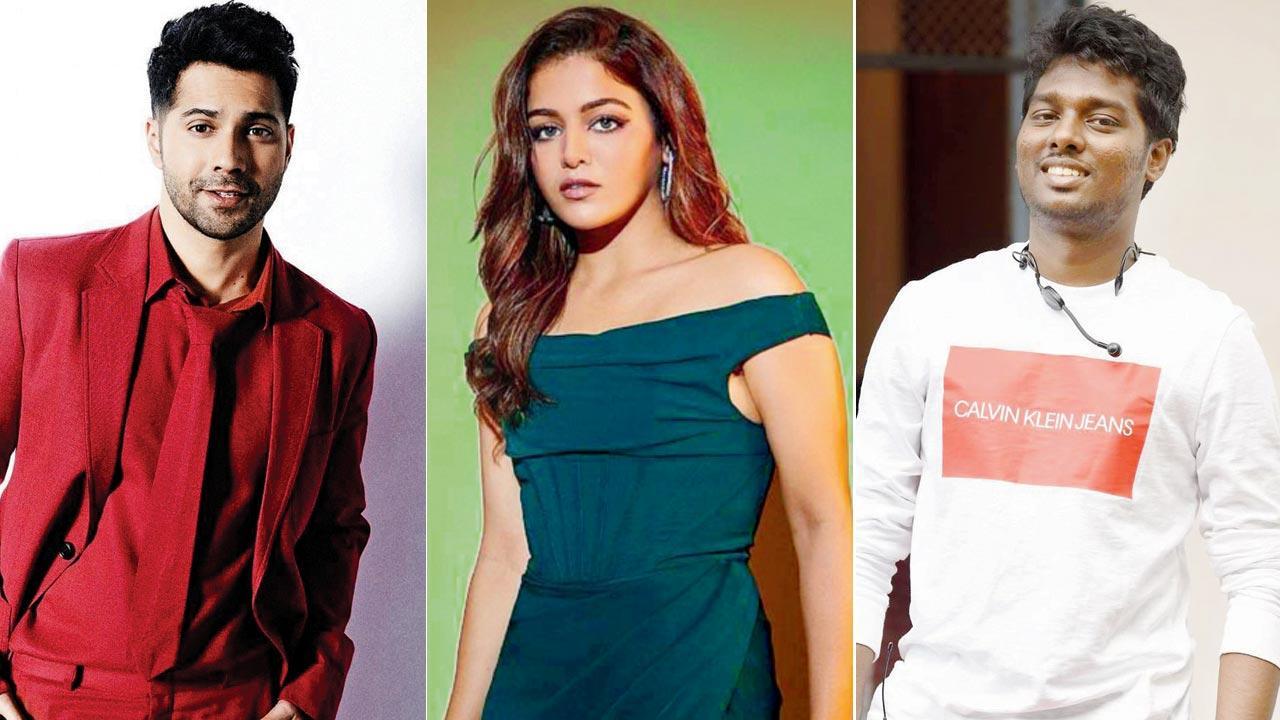
After a string of OTT successes, Wamiqa Gabbi says fronting Jawan director’s next is a conscious step to become a commercially viable star
Priyanka Sharma (MID-DAY; October 11, 2023)
You know you’ve cracked Bollywood when the maker of this year’s biggest blockbuster casts you in his next. Wamiqa Gabbi is in the enviable position of being a part of Atlee’s next Hindi production, led by Varun Dhawan. The yet-untitled film is the remake of Atlee’s Tamil hit, Theri (2016), and will be helmed by his former assistant director Kalees. Gabbi is naturally elated that the Jawan director showed faith in her.
“I feel lucky and excited to be able to explore opportunities across mediums. For Atlee sir, who just gave the industry the [year’s] biggest hit, to trust me with his next is huge! I am overwhelmed. His trust in me has boosted my self-belief. I hope to do action in the film,” says the actor, as she looks forward to the film rolling this month.
The big Bollywood action fare is Gabbi’s first step towards mainstream Hindi cinema. In a way, it’s natural progression for the actor who has struck gold this year with her OTT offerings—beginning with Vikramaditya Motwane’s Jubilee, and following it up with Vishal Bhardwaj’s Charlie Chopra & The Mystery Of Solang Valley, and Khufiya. A fine balance between commerce and creative satisfaction, she says, is the key to be the artiste that she aspires to be.
“Medium is a producer’s lookout. As an actor, I will still work on my character, go to the set and perform. I understand one thing: if I want to do my kind of work, I need to have that [draw]. Otherwise, people will say, ‘We can’t put money on her.’ So, I am making these choices. But even while doing so, I am cautious and not in a hurry. In the name of mainstream cinema, I don’t want to do projects that I won’t enjoy.”
Rising popularity has clearly brought more opportunities. On the flipside, it has also brought people’s opinions on how she should shape her career. But Gabbi, like many artistes, is guided by her heart.
“Many people tell me how to go about my career, and I do listen to them. But when it comes to making choices, I see whether a project touches my heart or not. I have said no to so many projects that people said would be good for my career.”
(Crisp) Movie Review: KHUFIYA by FENIL SETA
3:19 PM

Khufiya, which has released today on Netflix, is based in the early 2000s and is about a RAW officer who is spying on a mole in the agency. How it leads to madness in their lives and those around them, forms the rest of the film. The storyline is very different from the rest of the spy thrillers. Moreover, the film is peppered with such powerful and unexpected developments that one can't help but get involved in the goings-on. Hence, despite the run time of 167 minutes, it doesn't feel lengthy or dragging. On the flipside, some scenes are confusing. Also, the manner in which the agency is able to hoodwink everytime is difficult to believe. Tabu, as expected, rocks the show with not a single false note in her performance. Wamiqa Gabbi is outstanding, to say the least, and proves that she is one of the greatest actors of our times. Ali Fazal gets a bit overshadowed. Navnindra Behl (Lalita) is the surprise of the film. Shataf Figar (Brigadier Mirza) and Ashish Vidyarthi (Jeev) leave a mark. Atul Kulkarni is lovely in a cameo. The other actors who do well are Disney James (Kutty), Meet Vohra (Vikram; Krishna's son), Alexx O Nell (Dr David Langley) and Monica Rae (Langley's wife). Lastly, Rahul Ram is entertaining. All in all, Khufiya is one of the best films of the year.
My rating - **** out of 5!
My rating - **** out of 5!
Earlier, it was all about getting work; now, I can be choosy-Wamiqa Gabbi
8:33 AM

With back-to-back releases in Bhardwaj’s Charlie Chopra and Khufiya, Wamiqa discusses her steady rise after battling years of rejections
Priyanka Sharma (MID-DAY; October 4, 2023
It’s easy to get carried away when you’ve fronted two big shows, helmed by Vikramaditya Motwane and Vishal Bhardwaj no less, within months of each other. But Wamiqa Gabbi sounds more grounded than exhilarated.
“Before Jubilee came out, I had started to move towards spirituality. If this had happened four to five years ago, success might have gone to my head. But today, I just feel a lot of love,” she smiles.
So far, 2023 has been Gabbi’s year as she kicked it off with Bhardwaj’s short film, Fursat. Motwane’s acclaimed Jubilee, and Modern Love Chennai followed, before she reunited with Bhardwaj on his maiden series, Charlie Chopra & The Mystery Of Solang Valley. But all this didn’t come easy. The actor says she was ready to leave the world of cinema in 2019.
“I had auditioned for Vishal Bhardwaj’s Midnight’s Children. By then, I had decided to quit movies, do perhaps one or two films, earn whatever money I could, and travel the world to understand what I wanted to do in life. I had lost all interest in acting. I had been rejected so many times that I thought, ‘Why would Vishal Bhardwaj finalize me?’ But I got shortlisted, and we were sent on a workshop with Atul Mongia. Those three days changed my perspective on my career.”
While the filmmaker did sign her on for Midnight’s Children, it got shelved later. “But all good things started to happen after that,” she beams.
Now, the actor is only a day away from the release of Khufiya, her fourth collaboration with the director. The Netflix espionage thriller will see her share screen space with Tabu and Ali Fazal. In her kitty is the Theri (2016) remake featuring Varun Dhawan. “Today, I am in a position to make a choice. Earlier, it was all about getting work; now, I can be choosy.”
Bhardwaj has been instrumental in shaping her career, but Gabbi believes he has also influenced how she views the film industry.
“My sensibilities have changed because I have worked with Vishal sir, Vikram sir and Ranjan Chandel [Grahan director]. Vishal sir is like a friend now. Initially, when there were some date issues on Khufiya, I was intimidated to call him and tell him so. But he called and said, ‘I understood why you were inhibited to call me. But remember, one chat can save relationships and we need to put in extra effort to save them.’ Now, even when I have to say no to someone, I make sure I make that call to them.”
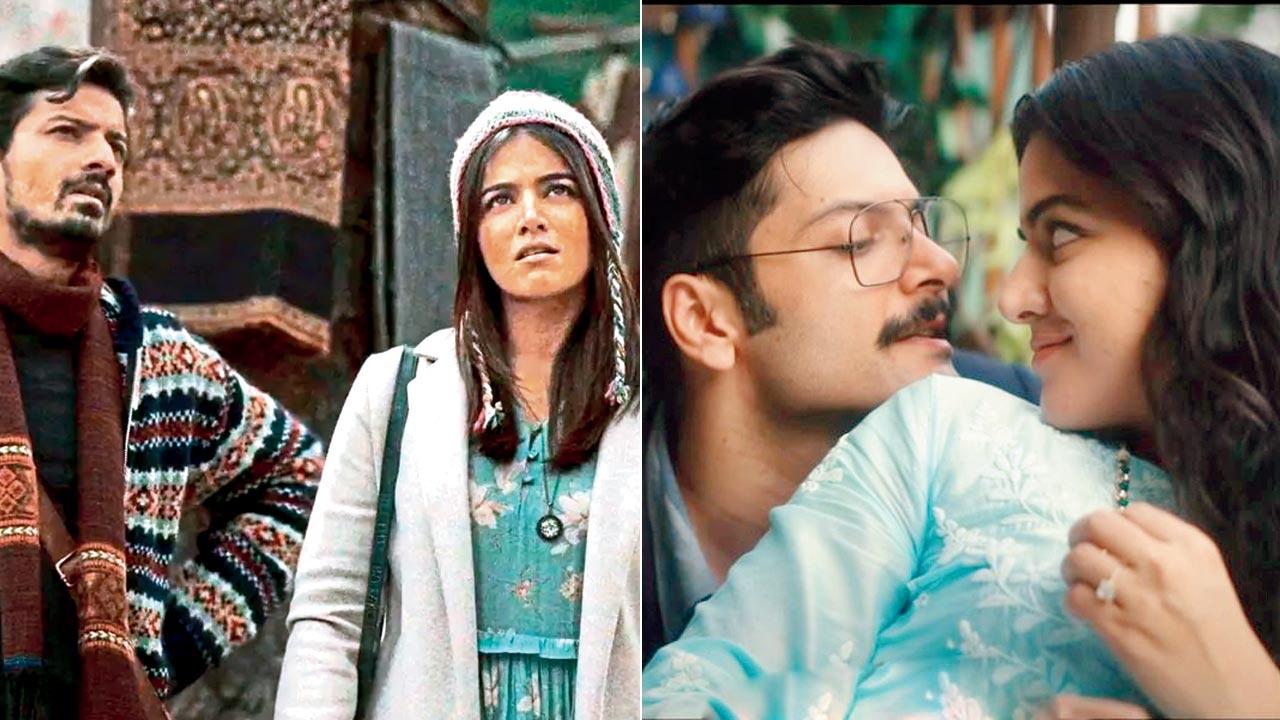
I worked with Vishal and Aasmaan Bhardwaj simultaneously. They are poles apart-Tabu
7:50 AM
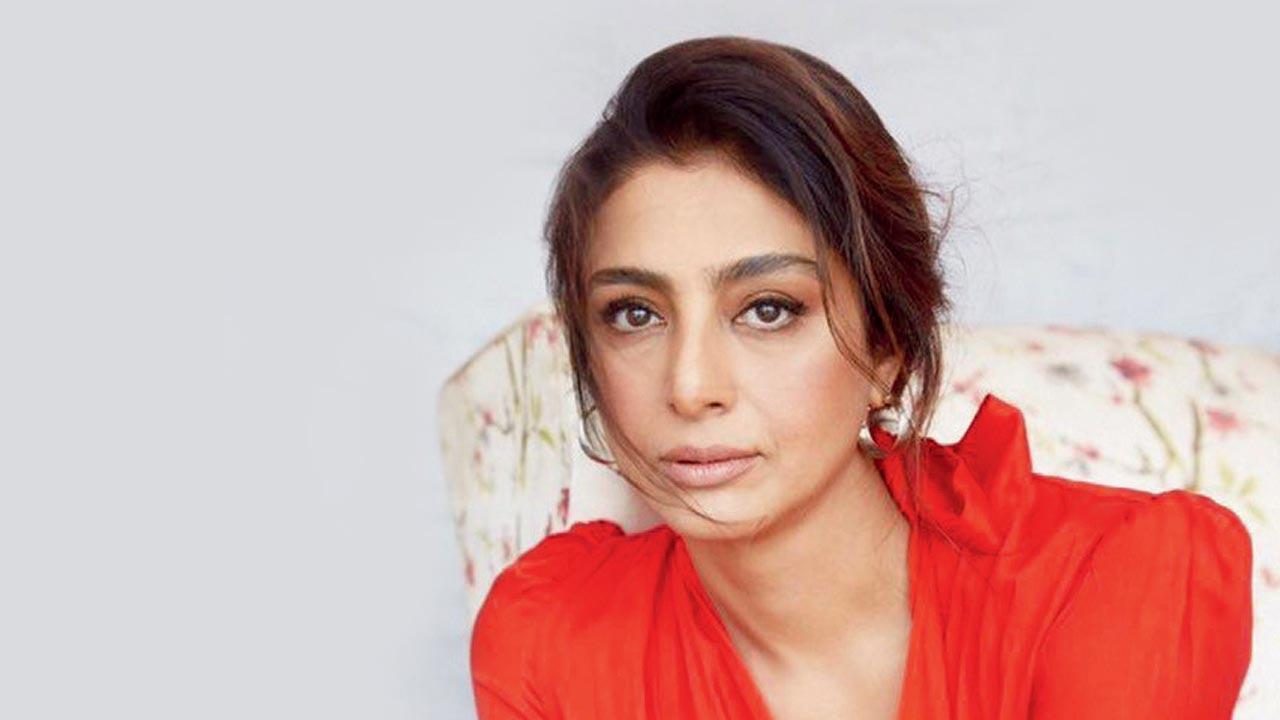
Having known Vishal’s son Aasmaan since he was a child, Tabu on forming an actor-filmmaker relationship with him as they teamed up on Kuttey
Uma Ramasubramanian (MID-DAY; June 17, 2022)
Can there be too much of a good thing? Not for Tabu. The actor, who has delivered some of her most nuanced performances in Vishal Bhardwaj’s films, has reunited with the director for Khufiya. But Vishal isn’t the only Bhardwaj on her résumé. It’s not surprising that when the filmmaker’s son Aasmaan Bhardwaj decided to turn director with Kuttey, he knocked on Tabu’s door. Having shot with the father-son duo on the two projects over the past few months, the actor says they are worlds apart.
“I worked with Vishal and Aasmaan simultaneously. They are poles apart. It’s outstanding to collaborate with Vishal again. You wish the film goes on to have a great destiny, but for me, the experience of working with him is more important. Khufiya is a classic Vishal film with his signature touch,” she says of the espionage thriller.
From Maqbool (2004) to Haider (2013), Tabu has become a familiar part of the filmmaker’s world. Walking into Aasmaan’s film, she was keen to see what the new blood would have to offer. The actor is impressed after having shot for the black comedy that also stars Naseeruddin Shah, Konkona Sen Sharma, Arjun Kapoor and Radhika Madan.
“I have seen Aasmaan as a child. But when he offered the script to me, he met me as a director. On the set, we have a director-actor relationship even though I have known his family for so many years. He allows me to [put forth] my point of view, and we discuss it. It’s nice to see his clarity of vision.”
To Tabu, Kuttey and Khufiya — though belonging to different genres — are an extension of the kind of movies she believes in. “I have always felt liberated [doing layered roles]. I want to experience different parts, without thinking about how they will [affect] my career. Now, characters have become more layered, but I have been playing such roles since the beginning.”
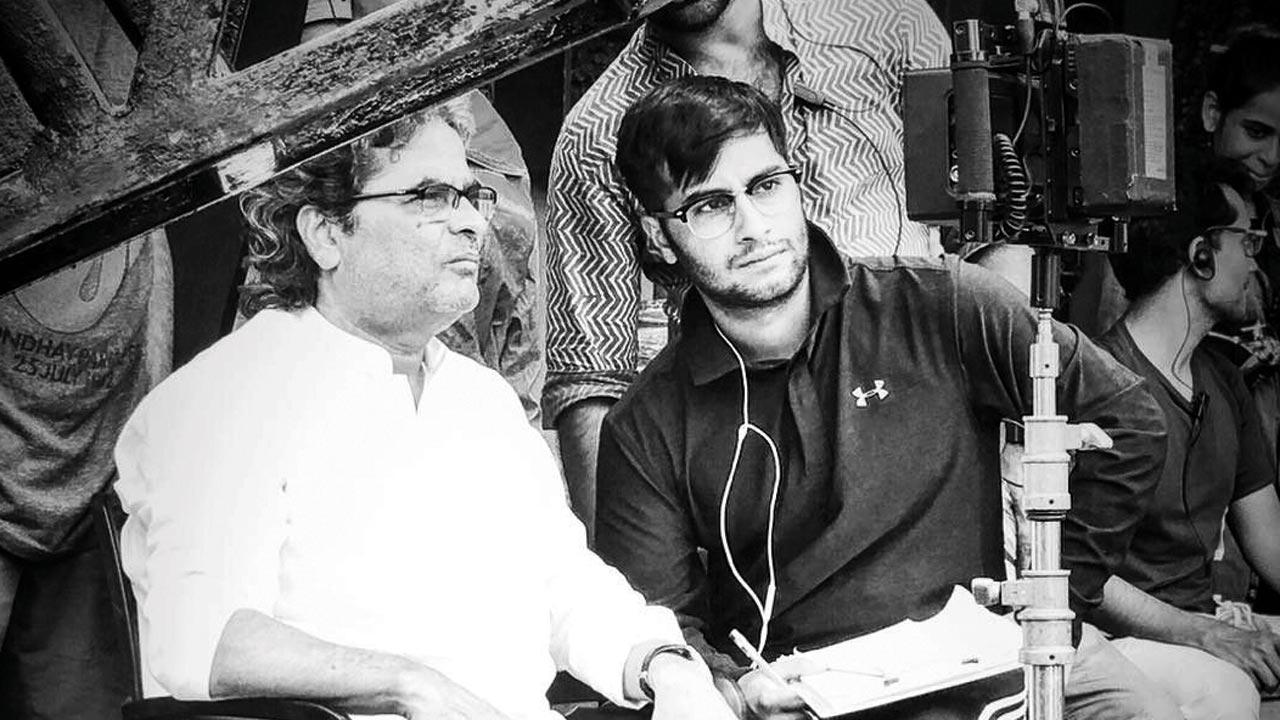
Everyone knows how Vishal Bhardwaj’s working style helps an actor hone their craft-Wamiqa Gabbi
8:22 AM
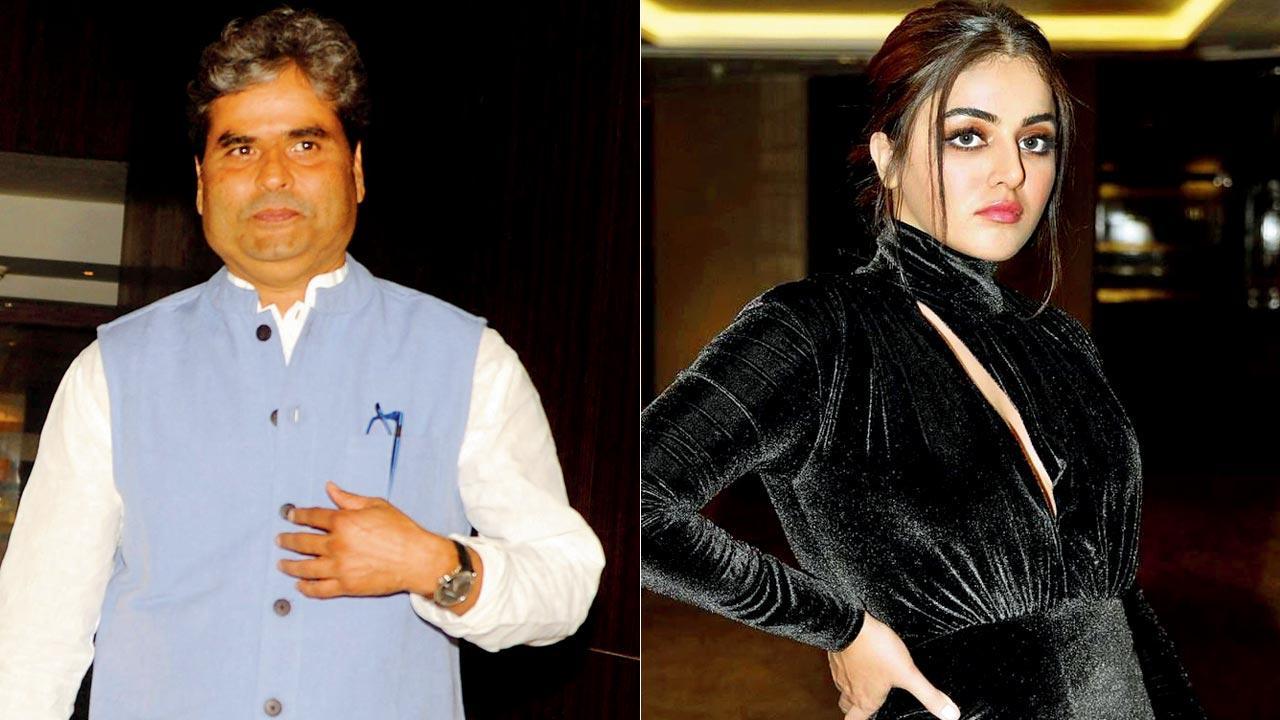
Wamiqa elated to be a Bhardwaj heroine twice in a year with Modern Love Mumbai and Khufiya
Mohar Basu (MID-DAY; May 14, 2022)
What is better than having a Vishal Bhardwaj film in your kitty? Having two of them. Ask Wamiqa Gabbi, who suddenly finds herself in the coveted position of being a Bhardwaj heroine. The actor, after a strong run with popular series Grahan (2021) and Mai, is now seen in the director’s short film in Modern Love Mumbai. Before the year winds to a close, she will share screen space with Tabu and Ali Fazal in his crime thriller Khufiya.
“I am half-way through 2022, and it’s turning out to be a fabulous year for me,” says Gabbi, gleefully. “I feel fortunate to have got the opportunity of working with an experienced and talented filmmaker like Vishal sir twice already, so early on in my career.”
With the Amazon Prime Video anthology telling six distinct love stories, Bhardwaj’s Mumbai Dragon revolves around a woman from the Indian-Chinese community who is disapproving of her son’s girlfriend. Gabbi says that the filmmaker offered her Modern Love during the shoot of Khufiya.
“He saw me as someone who can play another character in a new story. In Mumbai Dragon, I play a Gujarati character, which is a break from my Punjabi girl image. Everyone knows how Vishal sir’s working style helps an actor hone their craft. Working with sir has been an experience of a lifetime.”
Vishal Bhardwaj, Tabu and Ali Fazal go from countryside to Canada
8:12 AM
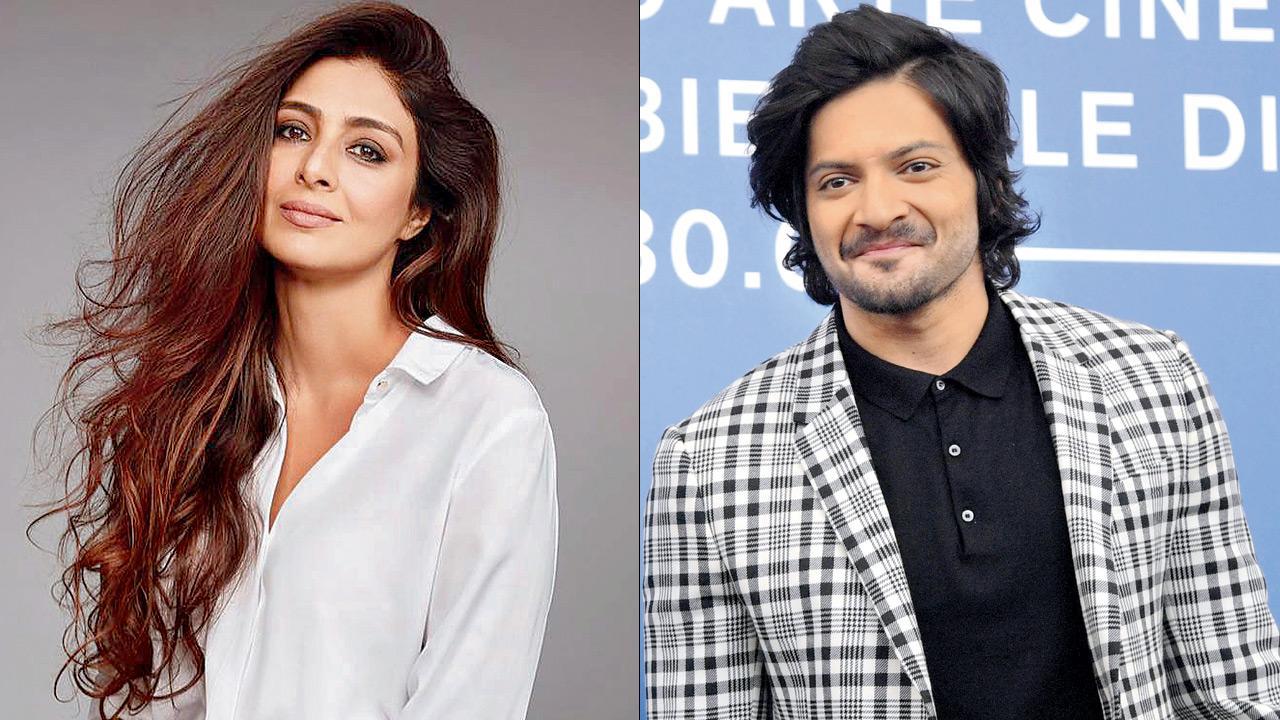
Vishal Bhardwaj heads to Calgary with Tabu and Ali Fazal to film the final schedule of the spy thriller, Khufiya
Mohar Basu (MID-DAY; March 31, 2022)
Vishal Bhardwaj’s Khufiya has piqued curiosity since its announcement last September. While leads Tabu and Ali Fazal shot a major chunk of the espionage thriller in Delhi and Mumbai over the past few months, one hears that the cast and crew have now headed to Canada for the final schedule of the Netflix film. From Maqbool (2003) to Haider (2014), most of Bhardwaj’s stories have been rooted in or adapted to the Indian milieu, thus leaving little scope to shoot in international locales. An exception was 7 Khoon Maaf (2011), a portion of which was shot in Russia. Khufiya, based on Amar Bhushan’s novel Escape To Nowhere, is among the director’s few foreign shoots.
A source close to the unit reveals that the final leg is set to commence soon. “Tabu and Ali left earlier this week for Canada. Vishal sir has lined up a three-week schedule, beginning with Calgary. The foreign leg was meant to happen earlier, but had to be deferred due to the third wave of the pandemic in January. Wamiqa Gabbi, who plays a key role, will also join them,” says the source.
The movie, revolving around an R&AW agent who is assigned to track down a mole selling India’s defence secrets, is expected to drop online by the year-end.
Ali Fazal drops out of Fukrey 3 due to date clash with Vishal Bhardwaj's Khufiya?
7:54 PM
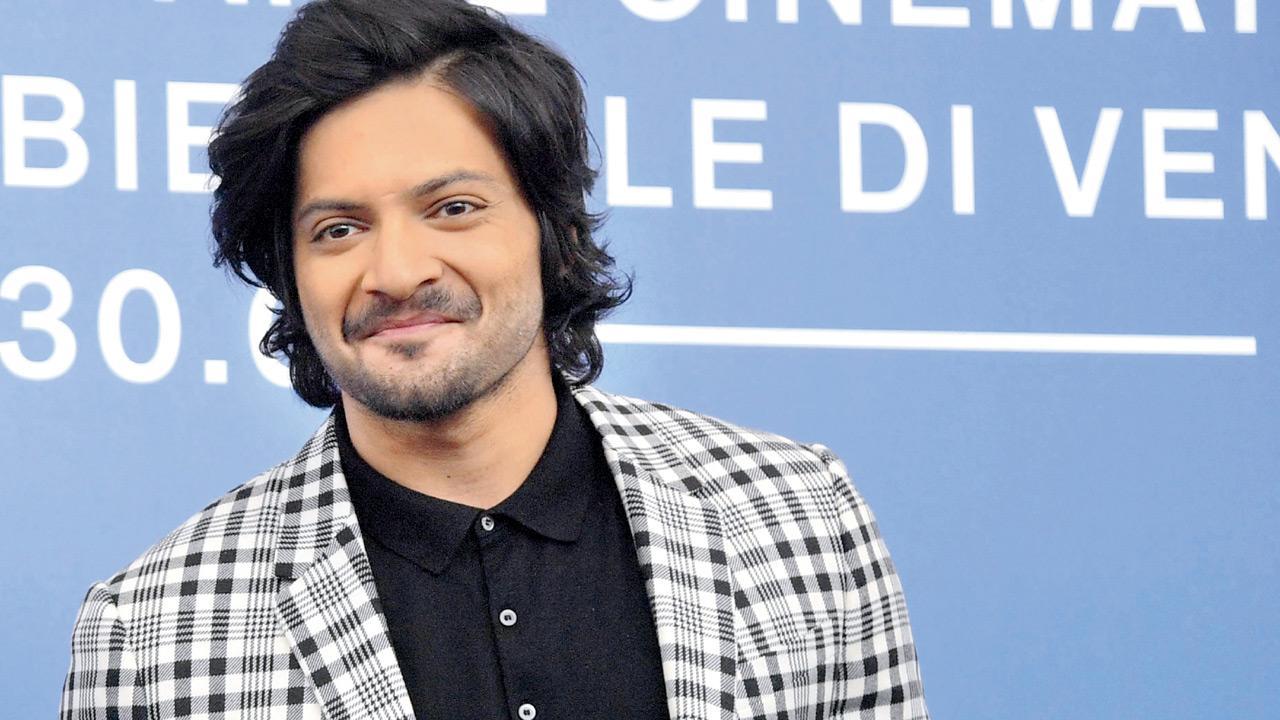
Mohar Basu (MID-DAY; March 4, 2022)
Fukrey is special to Ali Fazal for several reasons. While the comedy marked one of his first hits, it was on the film’s set that he had first met his now-fiancee Richa Chadha. Surely then, dropping out of the third instalment of Fukrey must be a tough decision for Fazal. Sources say that the actor, who is shooting for Vishal Bhardwaj’s Khufiya, is hard-pressed for time and has no option but to let go of Mrigdeep Singh Lamba’s directorial venture, which will go on floors next week.
The makers’ plans to kickstart the comedy — first in March 2020, then in February 2021 — were disrupted twice over by the pandemic. A source reveals, “Ali was busy till early February with the shoot of Kandahar, and promotions of Death On The Nile. Keeping his commitments in mind, Vishal sir lined up Khufiya for February. Meanwhile, Mrigdeep Singh Lamba got the combination dates of Richa, Pankaj Tripathi, Varun Sharma, Pulkit Samrat and Manjot Singh, and is eager to roll Fukrey 3. It’s an unfortunate turn of events, but Ali won’t be a part of it as he is busy with the thriller till March-end.”
We hear another actor won’t be roped in to play his character of Zafar. “The story will be tweaked to justify Ali’s absence. He won’t be replaced,” adds the source.
Somebody had to go out there and land these parts; that’s how we will get better stories out there-Ali Fazal
8:10 AM

As his murder mystery Death On The Nile hits screens, Ali Fazal discusses his role in paving the way for more South Asian actors to find a footing in the West
Mohar Basu (MID-DAY; February 11, 2022)
It could be deemed a special week for Indian artistes. After the documentary Writing with Fire was nominated for the Oscars, Ali Fazal’s international project Death On The Nile releases today. When we connect with him shortly after the film’s London premiere, we obviously begin our chat with the long wait to the marquee. The release of the Agatha Christie adaptation, shot in late 2019, was held off due to the pandemic.
“When you wait so long, you get worried if people don’t like the film. I have watched the film at the premiere; my biggest takeaway is that it’s shot on a film camera, and is a spectacle. Kenneth [Branagh, actor-director] has managed to create the 1930s in an interesting way. My part was tailor-made. My character Uncle Andrew has been made younger; now, I play cousin to Gal Gadot’s Lynette. The plot is 80 years old, so Agatha fans know how it ends. That said, I hope they still enjoy how it unravels,” says Fazal.
As an ardent Agatha Christie fan, this is a special film for him. It’s also his widest release till date, the actor says, almost with a hint of disbelief. “We are releasing a record number of screens. 3300 in the US. Some 10,000 screens in China. More in Europe and Australia.”
The London premiere was extra special for the team, says Fazal. The team partied at the Egypt section of the British Museum, catching up with each other. “It was really posh, may I say. Some of our key cast couldn’t make it due to prior commitments, but for all of us who were there, we really had a swell time. We were chatting about scripts, stories and Oscar nominations. And just the next morning, Kenneth’s Belfast has 6 nominations. We were all so excited for him and it’s a great time for him to return with a bang! We got all sorts of reactions after the premiere. I got a lot of reactions from Academy members and people very sweetly texted. We are expecting all sorts of reactions.”
The mystery thriller boasts a diverse cast, consisting of Branagh, Gadot, Fazal, Russell Brand and Letitia Wright, among others. It speaks volumes about Hollywood’s endeavour to become inclusive. How does he perceive his role in paving the way for more south Asian actors to get leading parts in international movies? “For the longest time, I did not pay attention to my own work, instead humbling my way through it. But I’m glad I am a part of this door opening for the rest of the clan. Somebody had to go out there and land these parts. It is important that we all champion each other. I would be happy if five other Indians bag five more leading parts. That’s how we will get better stories out there. These are the few genres like whodunits and superhero films that commit to a geography. In this film, I play an English man. We aren’t preaching our ethnicity; we are blending into the narrative.”
Over the years, Fazal has managed to balance his Bollywood and international commitments –where there’s Kandahar with Gerard Butler, there’s also Vishal Bhardwaj’s Khufiya and the next season of Mirzapur on home turf. “It really matters the kind of filmmakers you work with. For instance, Kandahar is helmed by Rick Roman Waugh who is known for his large scale films. He is all heart. He understands action so well. This movie is a global story. You know Kandahar from the name and with all the turmoil that the country is going through, it’s not one of those run-of-the-mill Uncle Sam saves the day kinda movies. I am so proud of it. Of course, it’s an action film that has all the adrenaline for the junkies but it has a strong narrative. I think with each story something shifts inside me. I see so much I want to tell as an actor. Time becomes a fight sometimes. When you have one in the West, you lose some work at home. But I want to balance this right. Humare ghar ki kitni kahaniya sunani hai. We are going through so much as a nation and as an artiste, I want to tell stories at a time like this. This tryst is what holds me back from pursuing Hollywood alone. There is a desire to do more and better. I am so excited to work with Vishal-ji again next week. They were really sweet to wait for Kandahar to get over. Vishal-ji is one director who pushed me out of my comfort zone. I like to be challenged, otherwise what’s predictable is also just as boring.”
This Old Delhi haveli is a favourite with filmmakers
4:21 PM

Niharika Lal (BOMBAY TIMES; December 14, 2021)
Old Delhi’s narrow lanes, old buildings, shops and traffic have often been used to add character to films and shows. While there are many places to shoot in the Walled City – if the crew can handle the crowd – there are some spots, particularly certain havelis, that have become a favourite with filmmakers and showrunners. One such haveli is the Mohsin House.
Recently, Kartik Aaryan shared a selfie from the haveli, where he is shooting, with the Jama Masjid visible in the background. It is also the same place where Priyanka Chopra Jonas and Farhan Akhtar shot The Sky Is Pink. Line producers tell us why old havelis of Chandni Chowk, especially Mohsin House, are so sought-after by film and TV crews.

MOHSIN HOUSE BECAME A POPULAR SHOOT SPOT POST THE SKY IS PINK
The owner of the haveli, Mohsin Babur Baghwala, tells us that a couple of films were shot there when he was a kid, but then the family stopped giving the haveli for film shoots. However, he knew Shonali Bose, the director of The Sky Is Pink, through a common friend and when she expressed an interest to shoot in his haveli, he decided to restart shoots there.
He says, “We are quite selective in giving permission to film shoots as we have to ensure that the haveli is taken care of. However, the teams that come from Mumbai are quite professional and they ensure that there is no damage to the haveli. When we have shoot dates, my family shifts to our other house. Sometimes, production houses offer hotel accommodation for those days too. Recently, Vishal Bhardwaj shot his film Khufiya at our haveli too.”

‘HAVELI SHOOTS ARE IN DEMAND’
Most films and shows that are shot in Delhi have a couple of scenes from Old Delhi too, either to give background to the characters or to create a sense of nostalgia. A line producer says, “If you want to show Delhi of ’70s and ’80s where will you shoot if not in Old Delhi? The USP of these havelis is that time seems stand still there. Shooting on the terraces of these old havelis helps filmmakers capture rich scenes that can’t be replicated.”
Line producers say that Mohsin House particularly has become popular because of its location in front of Jama Masjid. A line producer says, “From its terrace, you can see Jama Masjid and that is perfect for the Dilliwali feeling. But the most important reason for its popularity is that it is on the main road and not in an alley.”
Javed, another line producer, adds, “To take actors and crew to havelis in alleys becomes a task in itself. We also face difficulty in transporting large equipment, hence being on the main road gives this haveli an advantage.”
A crew member who recently shot at Mohsin House says, “We had no restrictions. The crew was able to do whatever they wanted to create the set without any interference from the occupants of the haveli. Some haveli owners give a long list of ‘what not to do’, but here we didn’t face any issue.”

-------------------
PROJECTS SHOT IN MOHSIN HOUSE
- The Sky Is Pink
- Khufiya
- Shehzada
- Made In Heaven 2
- Paatal Lok
Apart from these many ads and untitled projects have also been shot here. There are many more films lined up for shoot, including a film starring Saif Ali Khan in January.
-------------------
POPULAR HAVELIS OF OLD DELHI
- Rajiv House, where Queen, Jannat and PK were shot
- Jain House, where Bajrangi Bhaijaan and PK were filmed
- Kenamal Ki Haveli, the location for Dilli 6 and Julie
- Masjid Khajoor, where Rajma Chawal and several web series were shot
- Some other popular havelis are Chiku ki Haveli, Tipu House and Lachu Ram Ki Haveli.

Wamiqa Gabbi kickstarts Vishal Bhardwaj’s Khufiya while simultaneously prepping for Baahubali
8:30 AM

Wamiqa Gabbi of Grahan fame kickstarts Vishal Bhardwaj’s Khufiya while simultaneously prepping for Baahubali
Mohar Basu (MID-DAY; October 14, 2021)
After doing several blink-and-miss roles in films including Jab We Met (2007), Love Aaj Kal (2009), and Mausam (2011), Wamiqa Gabbi, who has often dabbled in Punjabi, Malayalam, and Tamil films, gained the spotlight in Hindi entertainment with her portrayal of the character Manu in Disney+ Hotstar’s Grahan. Basking in the golden period of her career, the actor is now dabbling in two big projects simultaneously — prepping for Netflix’s Baahubali series and shooting for Vishal Bhardwaj’s Khufiya.
“Wamiqa has no time to spare. She has started shooting for Khufiya in Delhi. [Since] she is playing the character of Sivagami in the prequel series to the Baahubali film franchise, Wamiqa is also training on her physical transformation and diction,” informed a source.
The Baahubali series, which originally featured Mrunal Thakur and Rahul Bose, has now been reworked. It is expected to go on floors in November, in Mumbai. “She is devoting her holidays to working on her agility and core strength. Wamiqa adheres to a strict workout regime, while also training in sword fighting,” says the source, adding that during filming the actor is keeping her sole focus on Khufiya. The detailed training for Sivagami will kick off once she finishes Bhardwaj’s film.
Uunchai, Rocky Aur Rani Ki Prem Kahani, Raksha Bandhan: Delhi-NCR a hot favourite for film, web shoots
8:34 AM

Capital’s lanes will be featured in a slew of upcoming projects — both in films and web shows — as makers set camp here
Rishabh Suri (HINDUSTAN TIMES; October 9, 2021)
Delhi is back to on the top places-to-be list for makers of films and web show. A series of projects have recently been or are being shot or are gearing up for filing at various locations across Delhi-NCR.
Bollywood star Akshay Kumar recently revealed that he is shooting for RakshaBandhan in the Capital as he shared a video of him running barefoot on the busy streets of Chandni Chowk. We have also learnt that the shoot of this Aanand L Rai-directed film will go on till October 15 and it will feature, Faridabad, Laxmi Bai Nagar, and Dilli Haat.
Another biggie, Uunchai featuring Amitabh Bachchan, Boman Irani, Anupam Kher and Parineeti Chopra, is ready to set camp in the city. The schedule will begin in November, and locations such as South Ex, Greater Kailash and Aerocity will set the background for the movie.
The digital medium, too, is not behind in locking Delhi as their shooting ground. Web film Khufiya, which will be directed by Vishal Bhardwaj, will be filmed in Delhi, too. Line producer Navmeet Singh says the unit will be here till October 20. The makers of Season 2 of Delhi Crime and season 3 of Breathe will also start shoot soon in the Capital.
Even the southern film industry is preferring Delhi now. Tamil actor Vijay shot for his Tamil film Beast here for five days in September. Line producer Ravi Sarin says it has become easier to shoot in the city now. “The situation is better than before, because of Delhi Police and Swati Sharma (Secretary- Tourism, Delhi Government). The restrictions have eased a little, and people can shoot now,” he tells us.
The shoot of the second season of the web show Made In Heaven is currently underway, while another web show Escape wrapped up its shoot. Filmmaker Luv Ranjan’s untitled next, with Ranbir Kapoor and Shraddha Kapoor also completed its shoot in the Capital.
Manoj Bajpayee’s web film Despatch got done with the Delhi schedule in September, and their locations included Paharganj and Bengali Market.

Vishal Bhardwaj to get Khufiya with Tabu, Ali Fazal
8:17 AM

Sugandha Rawal (HINDUSTAN TIMES; September 16, 2021)
Filmmaker Vishal Bhardwaj is gearing up to take on the digital world with Khufiya, his next project. “It is my first web project and I am very excited about it,” excitedly shares the director during an exclusive chat.
Based on a novel Escape To Nowhere by Amar Bhushan, it is based on a true story from the world of intelligence services, and Bhardwaj is teaming up with his “most favourite” actor Tabu and Ali Fazal. “Tabu is everyone’s favourite and my most favourite. My best work has been with her. I wrote this character keeping Tabu in mind. She plays the role of the protagonist, who is running the mission. I find Ali to be a very good actor, that’s why I chose to work with him,” he shares.
The Netflix film will go into production by the end of this month. He says, “Since it is based on a true event that happened in Delhi, around 70% of the film will be shot in the national capital and the rest of it in the USA.”
For Tabu, working with Bhardwaj comes with a great comfort level and creative freedom. “I have the best creative synergy with Vishal, and I can’t explain it in words. When he is bringing something to me, I can just close my eyes and say ‘chalo’. It has been a while since we wanted to collaborate with each other on the film, and it kept getting delayed because of the pandemic. I am so happy that it is finally happening,” says the actor.
The spy thriller will trace the story of a RAW operative, a mole and an estranged lover, and the director is aiming to release it in the second half of 2022.
“Amar Bhushan was the counter-intelligence unit head for a long time and has brought details of the surveillance operation where [it’s like] he makes you sit inside the RAW office (with his words),” shares Bhardwaj, adding, “Such detailing of intelligence services has never before been written in a book or even shown in a film.”

Subscribe to:
Posts (Atom)