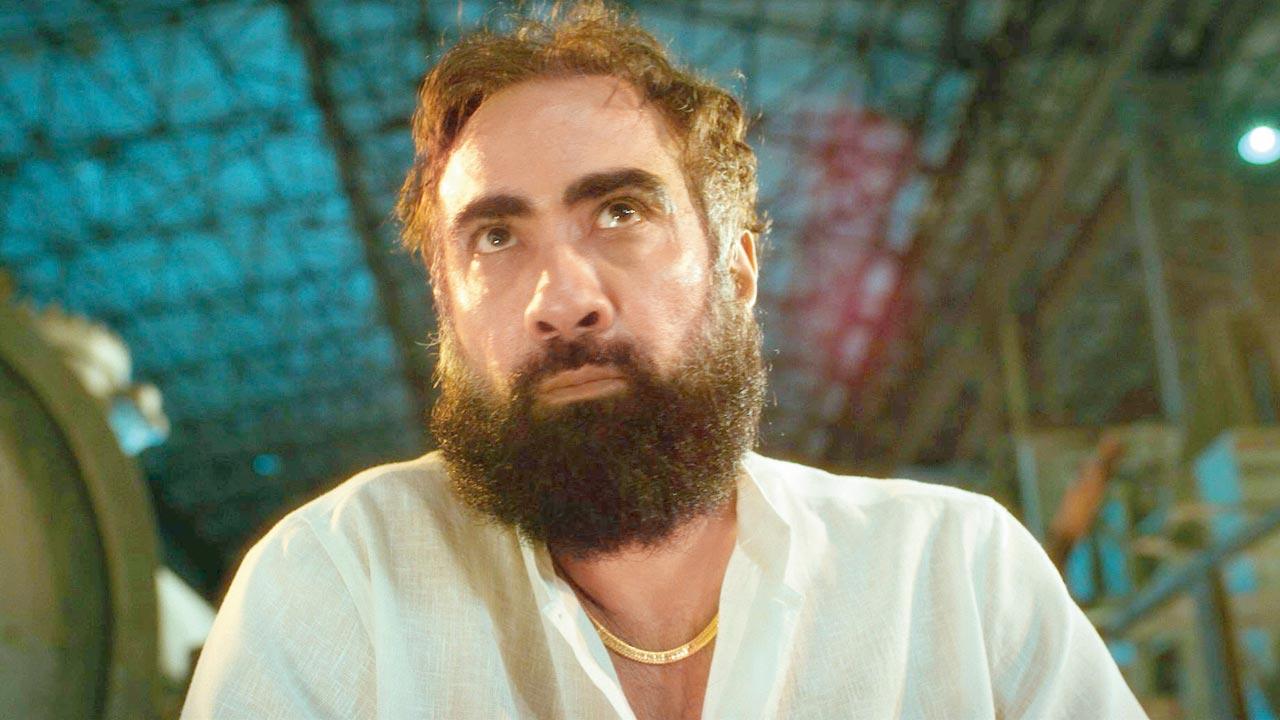
I didn't want to be the reason the Khosla family couldn't get back together-Ranvir Shorey
8:15 AM
Producer Savita Raj Hiremath reacts to the long gap in making Khosla Ka Ghosla 2: "Good things take time"
9:18 AM
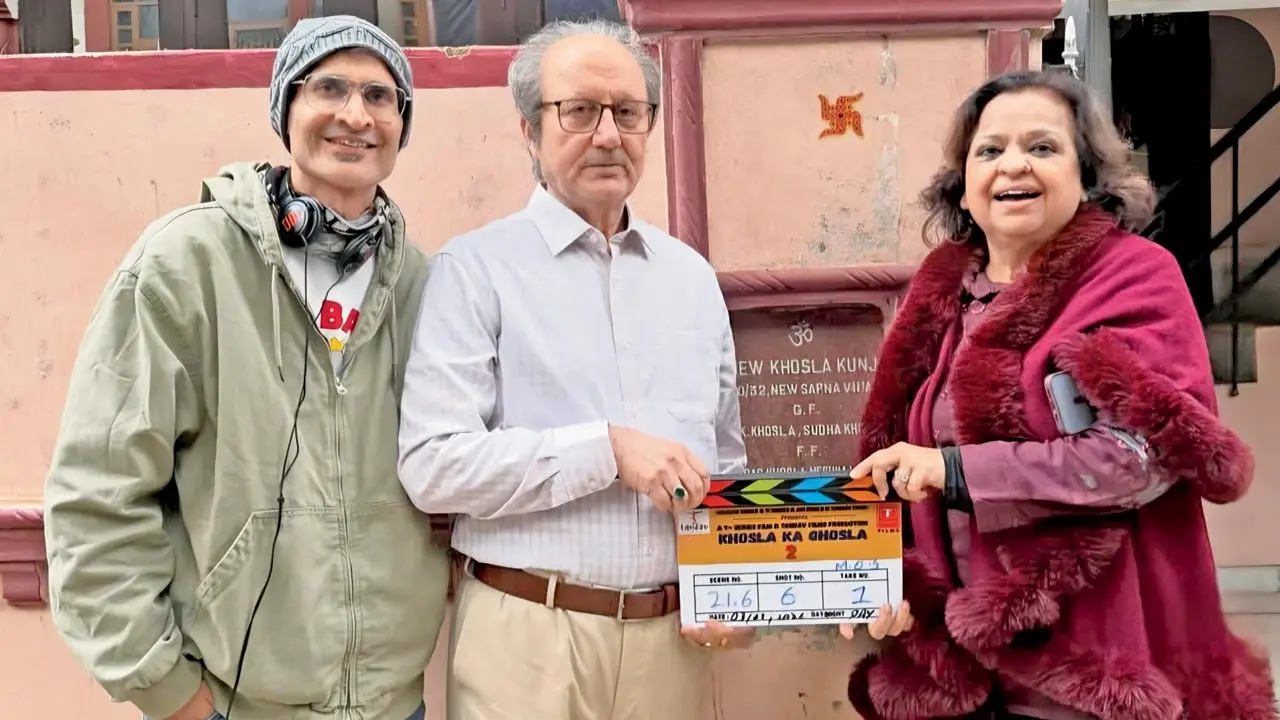
Khosla Ka Ghosla 2 to go on floors in December, original cast to reunite
9:13 AM
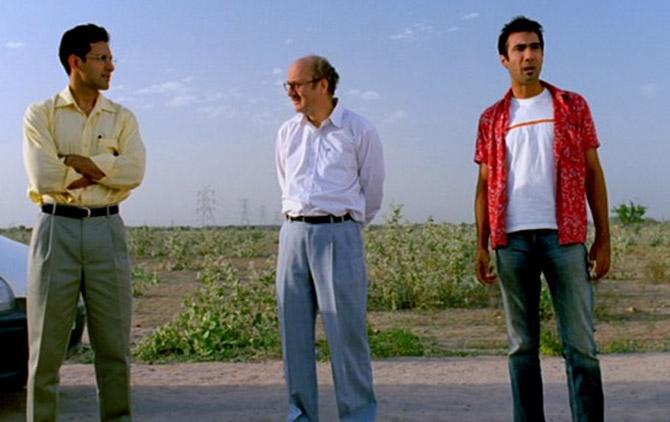
Tees is a film that is suppressed; it's like my Khosla Ka Ghosla experience being repeated-Dibakar Banerjee
8:46 AM
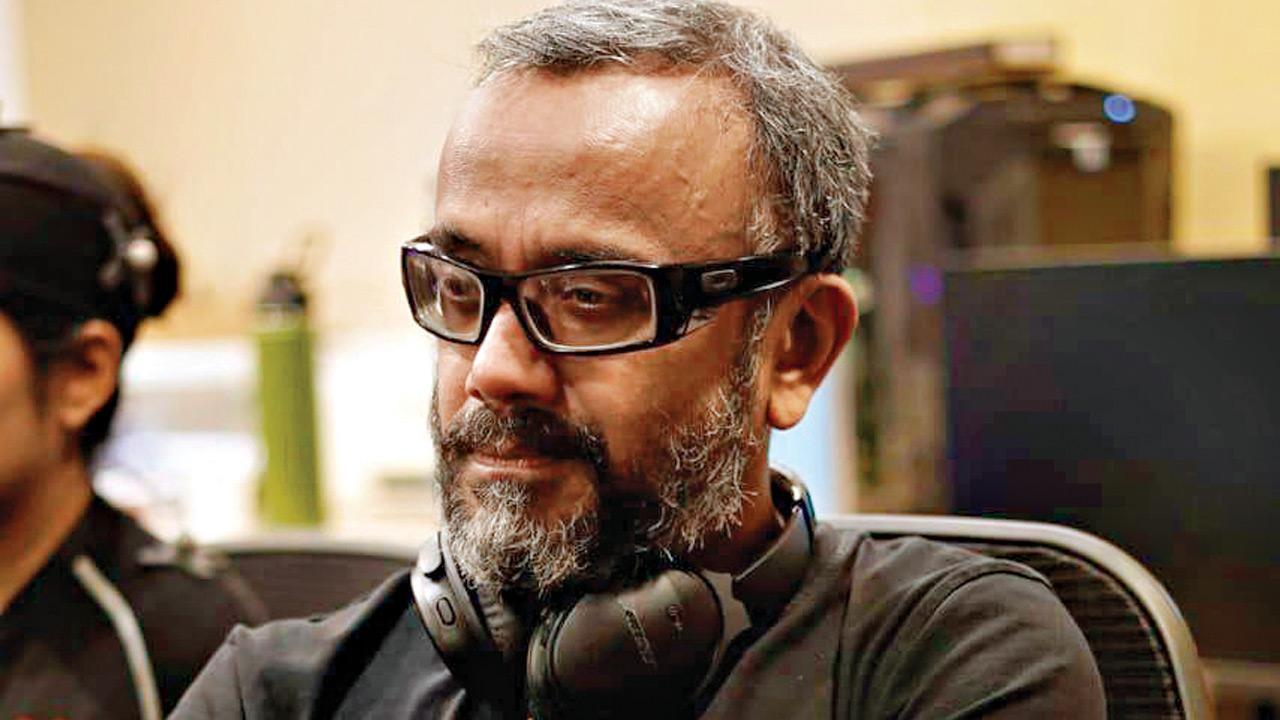
If event films are just a circus, eventually the audience will reject them-Kanu Behl
8:12 AM

Fenil's Bollywood Talk # 852
10:14 PM

DRY WEEK AHEAD AS LAST WEEK’S FILMS FLOP
A lot was expected from the Dussehra releases, namely Vicky Vidya Ka Woh Wala Video and Jigra. Sadly, both had a negative word of mouth. As predicted, Jigra opened at Rs. 4.50 crores and jumped to Rs. 6.50 crores on Saturday. But that was due to the Dussehra holiday and on Sunday, it dropped to Rs. 5.50 crores. It rang alarm bells as a Sunday drop is a very bad sign. Jigra is expected to collect around Rs. 22 crores in its first week and despite an open run, it’ll not even cross the Rs. 30 crores mark.
Vicky Vidya Ka Woh Wala Video was expected to open around Rs. 6-7 crores but it opened at just Rs. 5.50 crores. Just like Jigra, it saw a jump on Saturday (Rs. 6.75 crores) and then on dropped on Sunday (Rs. 5.75 crores). The reports were negative and surprisingly, it didn’t perform in certain mass belts though it is a mainstream comedy. The only plus for the film is that it did better than Jigra and would end up collecting around Rs. 35-37 crores.
This week was going to see the release of the classic animation film, Ramayana: The Legend Of Prince Rama. It would have got an audience but sadly, its release got postponed. The re-releases would once again take centre stage. The biggest of them is Singham followed by Khosla Ka Ghosla and Suraj Pe Mangal Bhari. The first two might get some audience. There are zero hopes from Suraj Pe Mangal Bhari. This is because there’s no recall value or popularity though it’s a lovely entertainer.
As for Hollywood, a film named The Apprentice, based on Donald Trump, was all set to be released. But its release got delayed after the makers refused to accept the Censor cuts. The biggest Hollywood film of the week is The Wild Robot. It was released in North America on October 4 and has received a humongous response. It now remains to be seen if it manages to bring some respite at the box office in India.
The other new releases from Bollywood and Hollywood are Aayushmati Geeta Matric Pass, Settlement and Goodrich. All these films will sink without a trace.
When we saw Khosla Ka Ghosla for the first time, Anupam Kher was excited about my entry, which was unbelievable-Boman Irani
8:40 AM


Manoj Bajpayee, Urmila Matondkar share memories of director Rajat Mukherjee who passed away yesterday
8:23 AM

Rachana Dubey (BOMBAY TIMES; July 20, 2020)
 Filmmaker Rajat Mukherjee, known for films like Pyaar Tune Kya Kiya (2001) and Road (2002), died on Sunday morning in Jaipur, due to multiple health issues. Actor Manoj Bajpayee, who had worked with him in Road, broke the news on social media. Members of the film fraternity, including actor Vivek Anand Oberoi and filmmakers Anubhav Sinha and Hansal Mehta paid tributes to him on social media. Rajat, who was a renowned ad filmmaker, was in his late fifties. Talking to BT, Urmila Matondkar, who worked with him in Pyaar Tune Kya Kiya and Manoj shared fond memories of working with the filmmaker.
MANOJ BAJPAYEE: HE WAS A GIFTED DIRECTOR, AND I FEEL SAD THAT HIS CAREER IN FEATURE FILMS WAS NOT A LONG ONE
My wife Neha was the bridge between Rajat and me. I got to know him through her as they had worked on some corporate ad films. Gradually, Rajat and I became friends and would often visit each other. I worked with him in Road, which is counted among my best works. He was gifted as a director. I feel sad that his career in feature films was not a long one, although it could have been, given the kind of work he had done, right from his first film. In fact, I had helped him to reach out to producers, but somehow, things didn’t materialise. But we never lost touch with each other. He had not been well in the past two-three years. I was aware of his health problems and I was always there for him. I lost my friend. His absence will always be felt.
 URMILA MATONDKAR: I WILL ALWAYS REMEMBER RAJAT AS A PASSIONATE FILMMAKER
I feel terrible that we had not been in touch for some time now. He could light up a room with his presence. Pyaar Tune Kya Kiya was his first film. My character in the film was path-breaking for an actress. Rajat and I shared great camaraderie as colleagues, which is reflected in the way the film has been shot and presented. I had also seen him help Fardeen Khan emulate his character brilliantly. I will remember Rajat as a passionate filmmaker. He belonged to the world of ad films, so his style of narrating a story had a lot to do with his prior experiences. It took me a while to register that I won’t have a chance to talk to him again.
---------------------------------
Manoj Bajpayee, Urmila Matondkar and other industry friends remember writer-director
Hiren Kotwani (MUMBAI MIRROR; July 20, 2020)
Producer Anish Ranjan, informed that Rajat Mukherjee had gone to Jaipur in March to spend Holi with his family and was stuck there after the Coronavirus-induced nationwide lockdown was announced. He developed breathing trouble over a month ago and had gone for a Covid-19 test. That’s when the doctors detected his “sodium-potassium levels” were imbalanced.
Manoj Bajpayee, who starred in his Road and had been friends with Rajat for 22 years, recalled him coming to Delhi from Jaipur and collaborating with his wife Shabana on some ads. They had stayed in touch even after the writer-director had fallen ill. “He was a fan of Clint Eastwood and Westerns and would make me watch the films he loved,” he shared.
Urmila Matondkar, who played the obsessed Rhea in Pyaar Tune Kya Kiya, remembers him as an extremely talented director, passionate about his work. “He was a livewire and a great cook. His vision and belief in a character like Rhea helped me translate it on camera. Pyaar Tune Kya Kiya remains a gem of a film that was ahead of its times.”
Producer Savita Raj Hiremath shared that like many in the capital’s advertising circle, Rajat wanted to make films and after Satya, moved to Mumbai and joined Ram Gopal Varma. “He introduced Jaideep Sahni to RGV and Company was written. I followed them and asked Jaideep to write a film for me and Khosla Ka Ghosla happened. Rajat was instrumental in inspiring all of us to move to Mumbai. He met me a few months ago, and was excited to do a project with me,” she says, ruing that they will never collaborate now.
I don’t see theatres opening till October-Ronnie Screwvala
8:48 AM

Ronnie Screwvala, who has 12 films in pipeline, predicts cinema halls won’t run to full capacity till there’s a vaccine; says industry looking at tough 18 months ahead
Himesh Mankad (MUMBAI MIRROR; June 19, 2020)
 Do you think the appetite for films will change in the post-Coronavirus era, with a clear demarcation between the big screen and small screen cinema?
I think it’s all about the storytelling and not screen size. At the moment, we’re battling the virus and 18 months away from the post-Covid era. For the next year or year-and-a-half, people will be wary of risking their health for a cinematic experience. But films will not go away and neither will theatres. It’s a strong window, but things will change and we will have to work 10 times harder on the creative content, storytelling and scale to bring the audience into the cinema halls again.
Does that mean smaller films will find it difficult to get screens?
No, if you have a gem of a story, it’s a big film already. People go to theatres because they don’t want to wait eight weeks. It has never been cinema v/s OTT as each one augments a market and grows.
When do you expect cinema halls to open and a constant flow of big releases?
Mumbai and Delhi, which account for 65 per cent of the box-office, are the worst-hit cities right now. Until they open up, nobody will want a release in only Pune, Nagpur and Kanpur. Makers of big films will wait to see if people are coming back to the cinemas. I don’t see some of them arriving this year. I don’t see theatres opening till October and even when they do, they won’t run to full capacity until the vaccine arrives. Entertainment will be the last priority for people. Next year, one will feel the pinch because there will be a drought of releases as few new films will roll for the next six-seven months, so there won’t be any more fights for the weekends. There aren’t too many films in the waiting, and you will see the gap over the next 18 months.
Do you think this is the right time to renegotiate on ticket rates, VPF (Virtual Print Fee) and other issues with theatre owners?
I have strong views on this, that’s why I got into the Competition Commission. Unfortunately, there is no unanimity.
 You have backed films like Rang De Basanti, Khosla Ka Ghosla, A Wednesday and Aamir which were way ahead of their time. What gave you the courage and conviction?
Rang De Basanti was one of the first films we made, it could have been before its time, but it was not. Jodhaa Akbar was an expensive film, but again it broke the mould. People thought Aamir, A Wednesday and Khosla Ka Ghosla were small, but they worked big time. Anurag Basu narrated just 40 lines of the Barfi! script to me, look how the film turned out to be. Of all our films, only Swades was before its time, but it was a gem of a film.
Next up: The Immortal Ashwatthama with Vicky Kaushal, a fantasy trilogy based on the Mahabharata. Tell us about that…
The way forward for the millennial audience is not in retelling history, but in the way it is told. You need to romanticise history, let imagination take flight and put it in the context of the future. Our problem is that we don’t think big. I am sick and tired of everyone saying this film earned Rs 100-Rs 200 crore over the last 10 years. They should now cross Rs 500 crore, otherwise there’s no reason to make films. Baahubali showed us the potential of our market. It was a scaled-up film, but at heart, it had a strong story.
 The Immortal Ashwatthama will reunite you with Uri: The Surgical Strike director Aditya Dhar and lead Vicky Kaushal. Any pressure?
We will have a blast. Aditya has such clarity of vision and Vicky is a stupendous, versatile actor. And I have the ability to look at things three years from now. The film is in prep now and will roll next year.
You also team up with Kangana Ranaut on Tejas, set against the backdrop of the Indian Air Force.
We wanted to make a film on the army so Uri happened. Tejas is not a sequel to Uri, because that was a true story and this isn’t. But it is on the same lines and on the same scale.
Will Taapsee Pannu’s sports drama, Rashmi Rocket, lose money due to the delay in production?
Prep cost is never a waste, we will be more ready when we start. Safety is the priority now.
Abhishek Chaubey is writing the biopic on hockey legend Dhyan Chand…
(Cuts in) We have 12 films in planning right now, we’ll discuss them at the right time.
Any change in your outlook as a producer in the post-Covid era?
I will be more aggressive now.
This is the time when it is wise to be apolitical and obviously, I am an idiot-Swara Bhasker
8:07 AM

Riya Sharma (BOMBAY TIMES; November 23, 2019)
On the last day of the 8th CII Big Picture Summit in Delhi, Swara Bhasker talked about the ‘Changing face of Indian cinema’. The actress discussed the factors that brought about the change, along with the films that are responsible for the change. Swara also talked about how social media has played a fundamental role in the way how stories are now being told.
CORPORATISATION OF THE INDUSTRY AND THE CHANGE IN FILM CONTENT
“If we talk about the changing phase of Indian cinema, and how it is changing, we should mark the moment when the government declared that the film industry will be an industry that can take loans. That marked the beginning of corporatisation of the film industry and the entry of studios. It was the first step in how content began to change,” said Swara.
Talking about the changing content, she said, “When a different film like Khosla Ka Ghosla! came out, we suddenly discovered that there is an audience for it. There was another interesting film, Bheja Fry, and with it, we again realised that if you give something new and good to the audience, they will consume it. Since then, I think that Hindi films have changed rapidly.”
The actress added, “For me, the two films that collapsed the idea of commercial and art films and also blurred the lines between these two were Peepli Live and Tanu Weds Manu. Nobody would have thought that Bollywood would tell the story of the struggles of Indian farmers, but that film collapsed the idea that meaningful cinema always makes losses and that it can never be profitable.”
Swara feels that the other film that marked a new phase in Bollywood was Tanu Weds Manu. “With this movie, we came back to the small towns of India and the movie also gave a new heroine to Bollywood, who was not your typical, self-sacrificing kind of girl. This was really a sort of badass, confused, angry, badly behaved heroine. It was something that the commercial Bollywood had not thought of, in terms of heroine. Also suddenly, you had these other characters who were not just side characters, but had something substantial and interesting of their own. The fact that both of these films worked at the box office were actually like sort of a a turning point for me,” said the actress.
‘CAN’T SHIELD OURSELVES FROM THE REAL REVIEWS OF THE AUDIENCE’
Another factor that changed films fundamentally, according to Swara, is social media. “Almost everybody has an account on various social media platforms. And, if you have an account, you are a reviewer yourself. You can tag the actor, director or the producer and you can be sure that we are reading it because we have a lot of time on our hands (laughs!). But there is no denying that the film was liked or disliked. We cannot shield ourselves from the real reviews of the audience and that has changed, in a very fundamental way, how stories are told. Even the biggest so-called masala films are looking for a story now,” she said.
As the conversation moved to her social media presence, Swara, who is known for giving it back to the trolls, said, “This is the time when it is wise to be apolitical and I am obviously an idiot. Artistes are also human beings and we are also citizens, we also vote, we pay taxes. Then why should we not be engaged in the world that we live in? I can understand being silent because you don’t want to be misunderstood, but I don’t believe that there is anything called being apolitical. It is the person that I am. I have to tell enough lies on screen, I spend all my time acting and sort of pretending, so I can’t pretend in real life.”
Navin Nischol would wonder why we were giving him so much izzat-Khosla Ka Ghosla producer Savita Raj Hiremath
10:58 AM

Roshmila Bhattacharya (MUMBAI MIRROR; March 23, 2019)
 Navin Nischol, the name today could well prompt the response, “Naam to suna hai, but what films did he do?” I knew him from Sawan Bhadon, Victoria No. 203, Haste Zakhm, Dhund and Parwana which I had watched on Doordarshan growing up and which were replaying on my mind when I landed up at a Juhu bungalow where he was shooting for a TV serial. The actor seemed disconnected from the hustle bustle around him and refused to start our interview till pack-up was announced close to noon. Then, he whisked me off to a resto-bar where, over a platter of kebabs, which went largely untouched, he reeled back to a cigarette commercial in the late sixties which had made him the campus heartthrob.
Soon after it came out, his father called filmmaker Mohan Segal who was an old school friend from their Lahore days, to grouse over the fact that his young son had suddenly lost interest in academics and wanted to become an actor. Navin, who was in Kolkata then, had got a Bengali photographer to shoot him and mailed those pictures with his application for the United Producers Talent Contest. He made the cut and after clearing the preliminary rounds in Delhi, arrived in Mumbai for the finals. He bumped into Segal who was favourably impressed and told Navin to forget about the contest and instead sent him to the Film and Television Institute of India for two years to train as an actor at his expense.
His protégé graduated first class, with a gold medal. “Many of the other examiners were rooting for Asha Chandra (who later went on to start her acting school) but Raj ji (Raj Kapoor) insisted I deserved it. Following the internal tussle, the results were delayed by two months, but eventually, Raj ji’s decision prevailed,” he informed me that afternoon in the restaurant.
Interestingly, Navin’s debut film opened in 1970, the same year as Raj Kapoor’s dream project, Mera Naam Joker, and while the latter bombed, Segal’s Sawan Bhadon celebrated a jubilee run in over 30 theatres across the country. The film is still remembered for Navin and Rekha’s evergreen hit, “Kaan mein jhumka, chaal mein thumka”and its pachasi jhatkes, but over time, RK’s golden boy was lost in a galaxy of stars.
In Khosla Ka Ghosla one saw glimpses of the talent that he was as he played Bapu/Sethi, the face of the con, to perfection. Savita Raj Hiremath who produced the film with Ronnie Screwvala, recalls that when they were looking for an actor for the role, her mind was stuck on Navin. Director Dibakar Banerjee and writer Jaideep Sahni agreed with her choice. “Since we were not from the film industry, we were looking for actors who fit the characters. He was a perfect match. Later, given his experience, we asked him to supervise rehearsals with the younger talent and he’d wonder why we were giving him so much izzat,” she recounts.
He never threw any starry tantrums and put up with family rather than at a five-star during the Delhi schedule which went of smoothly. “But after six-eight months, when we flew to Mumbai for the last leg of the shoot, I found that he had got increasingly dependent on alcohol and he admitted to me he couldn’t live without a drink,” she sighs. The last few years following his wife Geetanjali’s suicide had been traumatic for him. I recalled how he’d downed one drink too many during our interview but both of us agreed that Navin had been a gentleman and a brilliant actor.
He went away too soon, suffering a heart attack on his way to Pune on March 19, 2011. Savita reveals a few months before his untimely end, she’d told him that she wanted him in the Khosla Ka Ghosla sequel. “What role will you give me?” he laughed, but, she remembers, he was pleased to know that he’d continue to be a part of the Khosla family. That’s not likely to happen now, but Navin Nischol will always remain in our memories.
Directing? I am working towards it-Boman Irani
7:38 AM

Boman Irani is currently hosting a five-part weekly series on late director Bimal Roy
Chaya Unnikrishnan (DNA; February 1, 2016)
Tell me about hosting The Bimal Roy Festival?
There was a time during the Doordarshan days where even with limited air time — four hours of programming — we used to get to see one classic every week. Today, with 180 channels and round-the-clock programming on each channel we don’t get to see one single classic film. It’s a crime to not show what we have as treasure and legacy. And if this continues, it will be forgotten forever because nobody will go out and buy them. When I got to know that Zee Classic has taken the initiative, I wanted to be a part of it. Not only has the quality of Bimal Roy’s cinema been an inspiration for the filmmakers of that generation who went on to make good films, it will be a learning for today’s young filmmakers too, and that for me is the best thing.
Which among his films is your favourite?
All his films are great, but the first one I saw when I was a kid was Do Bigha Zamin. I was thoroughly moved by the film, and the performance of Balraj Sahni. Back in the fifties the director had recreated the era so authentically. We talk about how we have better actors today, but Balraj Sahni did it back then. He was highly educated, a sophisticated man who had returned from England, and he played a rickshaw puller with so much authenticity! It was a great inspiration for me. Besides Do Bigha Zamin, I love Madhumati and of course, his Devdas is a yardstick for all Devdas films and Dilip Kumar’s performance is the reference point. Bimal Roy’s Bandini and Sujata were reflective of the society in those times. It was controversial then and is probably even today. But he was brave enough to make them. What’s more, they were not limited to a specific audience, they were palatable to the masses and entertaining. That was really the mark of that man.
Which of the characters from his films would you like to play?
A classic is a classic. I would feel bad to answer that. It’s a scary thought. But yes, all his five movies (that will be shown on the channel) can be remade — they are great timeless stories. And if there’s one character I would love to play, it would be Balraj Sahni’s from Do Bigha Zamin. I want to live through the emotions, enjoy the pain and hard work of that character.
You will now be seen in the third installment of Housefull. Which kind of comedy film and role do you find more challenging — over-the-top humour or realistic?
All the roles have to be challenging. Even in a Housefull 3 I must be challenged in some way because I am creating a character. You just can’t land up on the sets and perform. I have been privileged to work with some great directors and do a variety of films — those which are realistic with social messages as well as out-and-out entertainers. If I say I want to do only socially relevant films, I will be sitting at home for the rest of the year. I am willing to do any kind of film provided there is a spectrum for me to perform, whether it is Jolly LLB or 3 Idiots. I can’t say I will do only relevant cinema because at heart I am an entertainer.
Of the characters you have played so far, which ones have the maximum recall value?
There are three characters that get most talked about - Asthana (Munnabhai MBBS), Khosla Ka Ghosla’s Khurana and Virus from 3 Idiots.
Which are you most fond of?
Khurana. What happened was early in my career I got to play several characters based in Mumbai. Khurana was the first one from outside Mumbai. It was an alien character to me. The film was based in Delhi and I had to make Khurana as acceptable to Dilliwalas as to anybody else. That was a challenge. And, when a Delhi guy came up to me and said you have lived the Dilliwala perfectly, I felt very proud and still do.
What do you look for when you are offered a role?
What is important to me is the story. If the story is good, the character automatically improves and if the story is not good, no matter what you do your character won’t be remembered. So, I would rather go for an interesting story than a character.
Any plans of turning director?
That has been the plan for a long time. I am working towards it, soon there should be an announcement.
How can Dibakar Banerjee return an award that was not his?-Khosla Ka Ghosla producer
12:40 PM

National award was for the film, not best director, says Savita Hiremath. Dibakar says he has returned his 'bit' of the award, and apologised to the film's producer
Roshmila Bhattacharya (MUMBAI MIRROR; November 4, 2015)
With a single tweet, the producer of Khosla Ka Ghosla, Savita Raj Hiremath raised a question on director Dibakar Banerjee's decision to return the national award that the film won in 2007.
 Returning the award late last month,
Dibakar had raised two issues - the appointment of Gajendra Chauhan as
the president of the Film and Television Institute of India, and the
prevailing atmosphere of intolerance in the country.
Returning the award late last month,
Dibakar had raised two issues - the appointment of Gajendra Chauhan as
the president of the Film and Television Institute of India, and the
prevailing atmosphere of intolerance in the country. In a letter addressed to the President of India and the prime minister 11 other artistes who had joined Dibakar in returning their awards, wrote: "It is not just artists and writers and filmmakers who are angry at what is going on; even the common people are disgusted and afraid at the sheer impunity of those who indulge in communal violence."
However, it now transpires that the national award won by Khosla Ka Ghosla was not Dibakar's to give away. The film won the 'Best Feature Film in Hindi award', and as such the honour went to the film's producer and not Dibakar.
Speaking to Mumbai Mirror on Tuesday, Hiremath said she was taken aback when she saw Dibakar with other filmmakers talking about returning their awards. "When I confronted him, he apologised," she said.
Making it clear that she treasures the national award Khosla Ka Ghosla won, Hiremath said: "People work for this honour all their lives, we were lucky to receive it for our first film. Why would I give up something so dear for a cause which seems politically motivated? I don't see anything having gone drastically wrong with the country in the last year-and-a-half. If anything, the protests by a particular group are only maligning India's image," she said.
Dibakar, meanwhile, maintained that he returned a medal and some cash he had received as part of the national award. "It is a personal act and has nothing to do with anyone else's contribution. I am merely returning my share, my credit, my name," he said.
Admitting that that he had apologised to Savita for the hurt he had caused her, Dibakar said: "Protests always bring pain, but that's not going to make me step back from a core issue."
Asked why did not return the national award he received for his other hit Oye Lucky, Lucky Oye, Dibakar said such "mathematical" questions had not crossed his mind. "I did not think -- 'why Khosla, why not Lucky' -- when I raised the issue," he said.
Hiremath, however, is not convinced. She believes that Dibakar made the choice because 'Oye Lucky, Lucky Oye' belonged to a bigger production house.
Hiremath said Dibakar used the opportunity to draw "media attention".
Dibakar retorted, "I am not on any social media. I have no political clout. I protested with the only weapon I have since the national award is linked to my reputation as a filmmaker. If I had tweeted or posted on Facebook, it would have reached some places. But by coming together with 11 other filmmakers returning their national awards, I drew the attention of the entire country. My conscience is clear."
Hiremath said she is in the process of announcing four new projects, including a sequel to Khosla Ka Ghosla. She said Dibakar would be her first choice to direct the sequel.
"Over the years, we have been speaking, off and on, about collaborating on another film. I do not doubt his creative capabilities, I'm simply questioning his way of protesting an issue close to his heart," she says.
CBFC chief Pahlaj Nihalani blasts award-returning filmmakers
3:47 PM

Subhash K Jha (DNA; November 3, 2015)
Lashing out at the filmmakers, Nihalani says, “Do they even know what they are doing? All these so-called champions of Indian cinema who make films first got recognised by the government for making films that portray India and Indians in a very poor light as a foul-mouthed, violent, abusive country. And now when these filmmakers are threatened with becoming bhoole-bisre geet, when their self-declared claim to being the champions of Indian cinema are fading away, they’re once again trying to get renewed recognition by returning the recognition that they got from the government.”
Nihalani finds the hypocrisy of the exercise nauseating. “The National award Dibakar returned for Khosla Ka Ghosla belongs to the producer of the film. The producer has gone on record to state the award is not being returned by her. So, basically Dibakar is protesting with a gesture over which he has no claim. By the way, what about the money that he got along with the award? Why didn’t he return it along with the trophy? Or if he has spent the money, he could’ve at least attached an ‘IOU’ note on the trophy?”
Nihalani has accused the filmmaker of using and misusing the government platform to stay in the news he also accuses them of misguiding the young. “These filmmakers who have not had a single success in recent times…in fact the only success Dibakar had was Khosla Ka Ghosla. All I want to tell these filmmakers is, please don’t try to stay in the news by attacking the very establishment that made you famous in the first place.”
Cinema is dear to me. Its teaching must be free of political agendas-Dibakar Banerjee
8:58 AM

Dibakar Banerjee is set to return the national award for his first film, Khosla Ka Ghosla, in solidarity with FTII students and to protest rising intolerance. The filmmaker tells Anahita Mukherji that his decision is not politically motivated and that the country needs the BJP as a viable and successful national alternative in order to function as a democracy
Anahita Mukherji (THE TIMES OF INDIA; November 1, 2015)
I think all of us - you, me and the average silent Joe on the street - are extremely afraid of what is going on in India today. I have heard sentiments of fear expressed by people irrespective of whether they voted for Congress or BJP. People who voted BJP in the hope of an alternative to the absolute inertia and corruption of the Congress are now expressing extreme anguish over the state of the economy, public safety and the manner in which any view is being expressed with extreme violence. A rightist has every right to disagree with leftists. But in a democracy nobody should be killed for their views. And if that happens, the government must be agile and act fast. That urgency and agility is not being seen. But I know there are people within the current government who want the situation to be different. Things can only change if the average Indian wants them to. If the situation persists, day by day it will become harder to effect change.
It is being alleged that the returning of awards was politically motivated and timed with the Bihar elections.
No. This has nothing to do with elections or parties. I deeply want BJP as a viable and successful national alternative. The more national alternatives we have, the better for democracy. I would want neither the Congress nor the BJP to be the only viable national party. My film Shanghai highlights the problems of Mumbai under successive Congress governments. I want all BJP supporters who are smart, aware and constructive not to look at this protest as politically motivated but one that is fundamentally about the education we impart to our students.
Anupam Kher's tweet says filmmakers returning awards insults the jury that selected them.
I know Anupamji very well and we are good friends. If there has been any insult to the jury, my apologies to them. But my conscience tells me I am not insulting the jury. I am trying to raise the level of consciousness of the writers and filmmakers that were part of the jury and the larger body of citizenry. If they find that someone to whom they had given a national award, and who has nothing personal against any of them, wants to return it, they will want to know why I am doing so. I am doing it because the education of what I hold dear is being governed not by merit but by political agendas.
Some say the FTII student stir is basically a left-wing rejection of a right-wing chairperson.
If BJP MP Paresh Rawal or party supporter Anupam Kher were made FTII chairperson, do you think these protests would have taken place at this level? Between Paresh Rawal and Gajendra Chauhan, who would one imagine, instinctively, as more qualified to head FTII? I do not care whether the chairperson is affiliated with the current party in power or the previous one. Students questioned whether Chauhan had a body of work to his credit that qualified him to head the institution. Students had also objected to four members appointed to the FTII panel whose very bio data shows that their work propagates a monochromatic view and pushes the political agenda of the party they support in a very violent and rabid manner. Individually, they have every right to do what they want to further a political ideology. But it is not their job to teach cinema or sit on the apex body of India's premiere film institute.
The religious Right usually cites Indian culture and tradition to back their cause. Yet you use the same argument to justify the FTII protest.
When it comes to imparting an education, we want it to be unbiased. This means all cultural thought is offered up equally. The tenets of the Indian education system were developed well before Left or Right came into existence. A teacher who spoke of one school or philosophy also spoke of another. Debates and arguments are part of India's culture. You see this in the Upanishads which are a series of arguments between the vaadi and vivaadi (opposing chords). The Gita is a series of questions between Arjun and Krishna, as friends. Whether Right or Left, one can easily see the need for unbiased teaching, for which a teacher must have a history of work that allows for a breadth of knowledge that gives the student a complete picture of the discipline. If this is absent, students will not respect the teacher and the education will not be valid.
12 filmmakers return their National Awards over 'rising intolerance'
8:00 AM

Avinash Lohana (MUMBAI MIRROR; October 29, 2015)
Twelve filmmakers including Dibakar Banerjee, Anand Patwardhan, Paresh Kamdar, Nishtha Jain and Kirti Nakhwa returned their National Awards on Wednesday to protest the ongoing FTII controversy and the 'growing intolerance' in the country.
"I want to appeal to students, teachers and parents of India to pay attention to what the FTII students are saying. If they do, they will know that their contention is far bigger than the institution they are fighting for. I appeal to the sane, fair and unbiased elements amidst the political, executive, legislative, judicial and legal constituents of the Indian society to give this protest a fair hearing and a fair solution," Dibakar Banerjee said.
Returning his National Award, which he won for his debut film Khosla Ka Ghosla, wasn't easy for him, the filmmaker admitted, adding, "It was my first film and for many, my most loved."
Nishtha Jain, who returned her National Award for her documentary Gulaabi Gang, said, "The letter that 200 eminent filmmakers sent to the President to bring his attention to the concerns of the striking students wasn't even acknowledged. It's time we treat the various episodes of violence and protests throughout the country not as isolated events but as various manifestation of a fascist state in the making," alluding to the recent incidents like the murder of scholar M M Kalburgi and the Dadri lynching.
"The government must reveal its commitment to protect freedom of expression," one of the filmmakers present at the press conference said.
Meanwhile, FTII students have called off the strike, which started four months ago in protest of Gajendra Chauhan's appointment as its chairman on June 9, making it clear at the same time that the protest will now take a different course, alumunus Surabhi Sharma revealed.