Showing posts with label Khamoshi. Show all posts
Showing posts with label Khamoshi. Show all posts
Whatever we had prepared for was scrapped by Sanjay Leela Bhansali on the day of Heeramandi's shoot-Sonakshi Sinha
7:58 AM
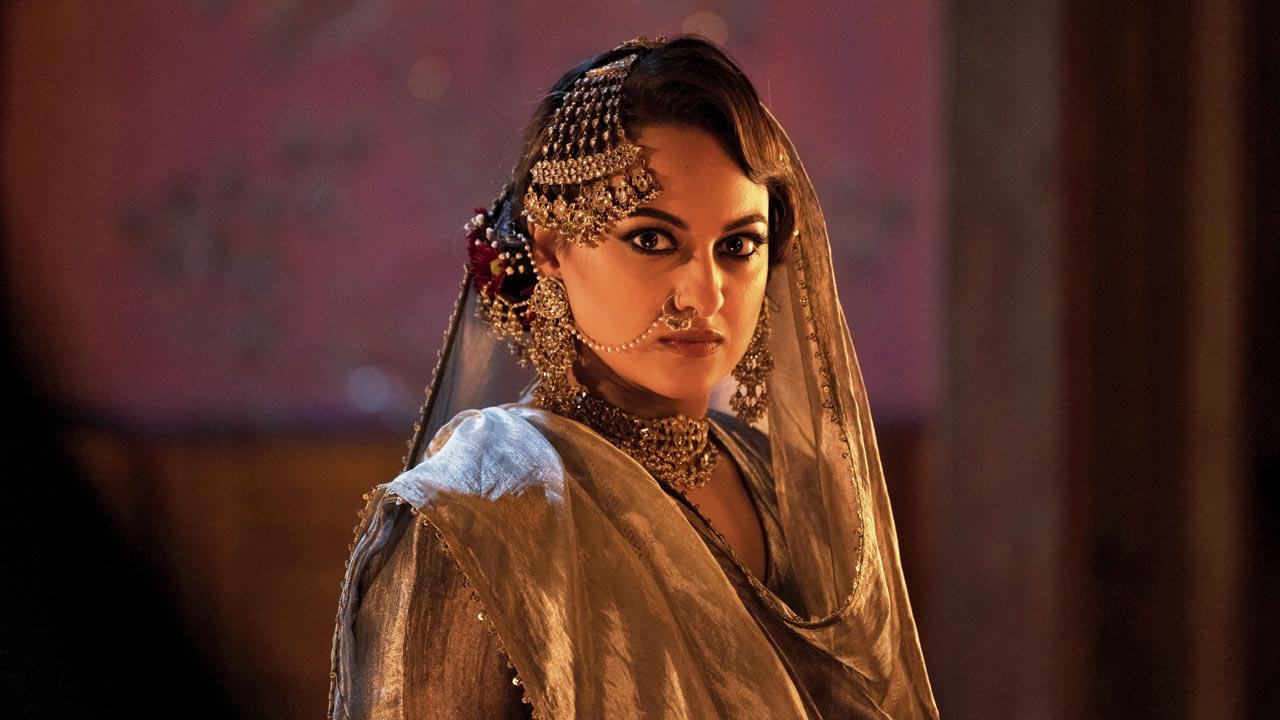
Sonakashi Sinha and Manisha Koirala discuss being sadistic, angry courtesans in Sanjay Leela Bhansali’s Heeramandi, confess that they questioned playing unhinged characters, and why they succumbed to the lure of the best roles of their life
Mohar Basu (MID-DAY; April 29, 2024)
When we join Manisha Koirala and Sonakshi Sinha on a fashion shoot, they are sharing a laugh at something somebody said. Koirala bids adieu to Sinha as she leaves for the online launch of her song Tilasmi Bahein.
It’s an hour before Sinha returns, ready to speak of her role in next week’s Netflix release, Heeramandi: The Diamond Bazaar. A period piece on Lahore’s most powerful women, the series centres around these two warring courtesans. But behind the scenes, they are fixing each other’s hair and tiaras. Where is the war we ask? That’s for the screen, they tell us.
Bhansali fashioned his series around a concept by journalist-writer Moin Beg, who has lived with the story for 15 years. Historically, Heeramandi was a bastion of the classical arts patronised by the tawaifs under Mughal rule but devolved into a centre of prostitution when the British consolidated their rule in undivided India. Through eight episodes, the story hurtles through turbulent times, weaving a narrative of love, betrayal, loss, and power.
Koirala, Bhansali’s first heroine (Khamoshi, 1996), is working with him after 28 years. “The first time Sanjay and I met was on the sets of 1942: A Love Story; he was working on the film’s songs. I was in the midst of filming the beautiful [song] Pyaar hua chupke se, and we instantly became friends. He wanted some feedback on his own script. I loved it and I am glad that I got to be his heroine. Now, I get to play Mallikajaan.”
The queen bee of Heeramandi, Koirala’s character decides what happens in the haveli and the neighbourhood, and unabashedly uses her charm to control the Nawabs. “I won’t lie,” she makes an honest admission, “I don’t think I connect with Mallikajaan. She is dark, complex, layered and extremely controlling. She is insecure, power-hungry and traumatized. But as an actor, when you step into a role like this, you must channelise every bit of your art. I had to know her from a place of empathy and ask questions about what makes her who she is. What does her trauma feel like to her? She is an emotionally intelligent woman. There is a certain grammar to how she conducts herself. Her body language is also a product of this world and her experiences.”
Koirala says she broke down her character’s conscious and subconscious mind. Because acting is more than just learning your lines and cracking the body language, she had to make sure she emoted with her eyes. “I don’t know if Heeramandi ever had a Mallikajaan. I have never met a person like her.”
As Fareedan, Sinha is Mallikajaan’s nemesis. The hatred that their characters harbour for the other is both, fearsome and valid. It is not easy to figure who is right and not. Sinha describes her character as angry.
“What defines Fareedan is her rage. Life hasn’t been pretty or pleasant. Her anger stems from the unfairness life has meted to her. I have never played someone who is constantly seething and undoing the wrong done to her. She is borderline sadistic, but also a good person. I was careful not to let Fareedan enter my life beyond the director’s, action!”
Both actors admit that their big challenge was that the story is set in a milieu and country that’s unfamiliar. Koirala shares that the research was cumbersome. “It was exhaustive. It started with reading the script multiple times. I had to request Sanjay to get me a diction coach since I have laborious dialogues. Sanjay’s research, Beg’s perspective and detailing—it all added a lot [of value]. At the end of the day, it is Sanjay’s call. He knows what he wants so when I would perform, he guides me. Ye nukhta zyada mat bolo, ye kam tha.”
Sinha agrees. “All my preparation came from listening to Sanjay sir talk about Fareedan. He is passionate about even the darkest of characters. He spoke to me about Fareedan like he knows her, narrated what has transpired in her life, her trauma. I am an observer and so these conversations permeated into my subconscious. I took it all in.”
Then there were books. Zahid Akasi’s detailed title, Heera Mandi (2005) includes a plethora of details about the neighbourhood and its genesis. During the Mughal era, it stood near a towering brick wall, 30 feet tall, encircling purana or old Lahore; safeguarding the city. Thirteen gates punctuated the ramparts, facilitating entry into the city. Positioned in the northwest corner of the old city, Heera Mandi was entered through Taksaali Gate. Named after Maharaja Heera Singh, son of Maharaja Dehan Singh, a prominent minister in Maharaja Ranjit Singh’s administration, the red light area earned a fitting moniker.
During emperor Aurangzeb’s reign, the construction of the Badshahi Masjid in the vicinity led to the area being referred to as Shahi Mohalla, or royal neighbourhood. The courtesans were not only skilled in classical dance like kathak and music but also well-versed in poetry, literature, and the arts. Koirala says that learning dance and music are the frills of any performance. The real drill is to capture the soul of the character.
“Dialogues don’t always do it for you. There are times when a character has no lines [in a scene], but is able to leave a mark. We all work hard to understand.”
Zahid traces the roots of numerous popular singers to this locality, including Madam Noor Jehan, Farida Khanum, Naseem Begum, Tasawar Khanum, Nahid Begum, and Surayya Khanum. The music for the series has been making waves since the launch, especially that surrounding the kathak pieces. Which is why Sinha’s performance in Tilasmi Bahein is unexpected, and filmed as a single shot. Sinha tells us it was all done impromptu, like most good things.
“Whatever we had prepared for was scrapped by Sanjay sir on the day of shoot. Four days were kept aside for the song, but when we reached the set, he decided that he didn’t want what was earlier planned. Instead, he said, ‘What if we do it in one shot?’ I had zero time to prepare. So, whatever he was saying, I was following in real time. I had to learn the lyrics right then...it was daunting. There was no running away from this. I shed all my inhibitions and became Fareedan. I almost forgot Sonakshi. It was unreal once the shoot was over. Sanjay sir gave me a standing ovation. It was the happiest moment for me as actor. He is not easy to please.”
Actors can mature, and so, directors can change too. Has Bhansali changed as filmmaker in 30 years? “Sanjay was always a beautiful director. Khamoshi was poetic, sensitive. It spoke about the insecurities of a deaf and mute couple. Their child sings beautifully and they want to exert their control over her. Sanjay has become a filmmaker who envisions larger-than-life stories. He has become better with time, and even more of a perfectionist. There is a reason why he is a genius.”
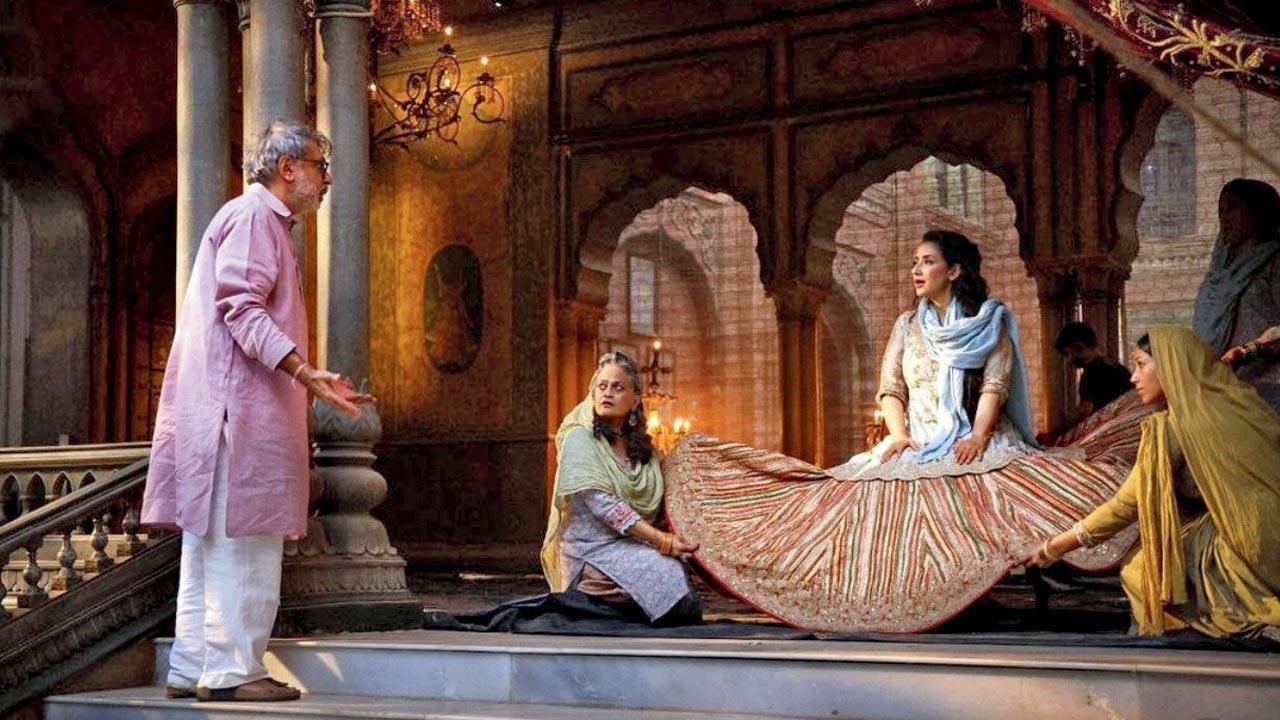
I miss good lyrics-Kavita Krishnamurti
8:29 AM

Soumya Vajpayee (HINDUSTAN TIMES; January 24, 2022)
Singer Kavita Krishnamurti has recorded over 50,000 songs in 46 languages in her five-decade-long career. Reminiscing about the phase she enjoyed the most, the singer says, “I’ve had the privilege of working with many composers, singers and lyricists. Every moment has been a part of my learning process. The songs I recorded in the mid-90s for films such as 1942: A Love Story (1994), Khamoshi: The Musical (1996) and Bombay (1995) were extra special.”
But as we go on to talk about the Hindi film music of today, the veteran has mixed views. “Some of the songs are splendid, I like the innovative approach and fusion style. But, there are quite a few that are not my taste. I miss good lyrics,” says Krishnamurti.
Ask her how the pandemic has been for her, and the Dola Re Dola (Devdas; 2002) and Mera Piya Ghar Aaya (Yaraana; 1995) singer says, “I enjoyed working on some projects with my husband, Dr L Subramaniam, at home, including songs like Vasudhaiva Kutumbakam and Vande Mataram.”
She was recently honoured with the Mohammed Rafi Award and holds it close to her heart: “I was delighted to receive the award. Rafi saab was one of the most iconic playback singers. My experience of recording two lines with him for a film called Ladies Tailor (1981) is a memory I’ll always treasure.”
She will be celebrating her 64th birthday tomorrow (January 25), “It will be a quiet one at home, with family,” she says, quipping, “I am young as long as I can sing or enjoy music.”
Even today when I set foot on a film set, I get goosebumps-Sanjay Leela Bhansali
9:01 AM
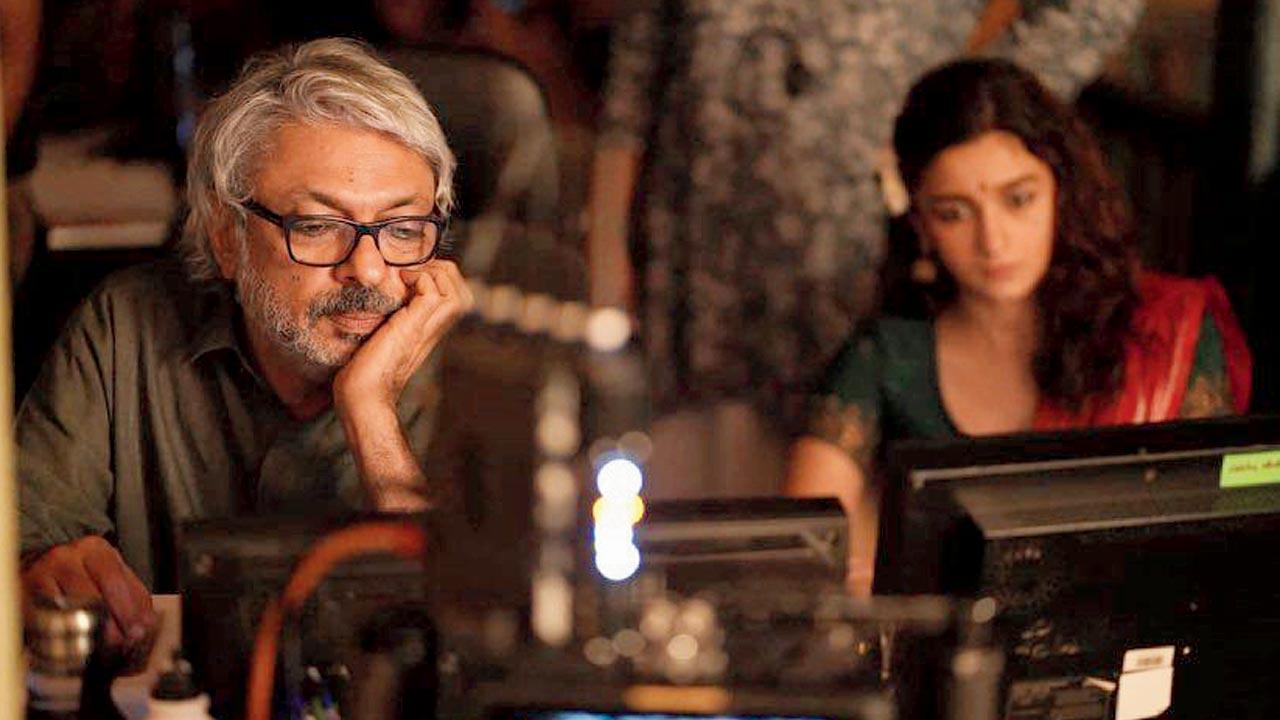
As Sanjay Leela Bhansali completes 25 years in cinema, he looks back at his illustrious journey in a chat with BT
Renuka Vyavahare (BOMBAY TIMES; August 10, 2021)
His movie canvas and splendour can transcend time. His characters exude uninhibited passion and desire. Sanjay Leela Bhansali doesn’t miss a beat when it comes to capturing human emotions and presenting them in the most visually enchanting manner. His debut film as a director — Khamoshi: The Musical, released 25 years ago on August 9 and thereon, it has been a daring dream run for the director, widely respected for his artistic vision and pursuit of excellence. In conversation with Bombay Times, he looks back at his fascinating journey and what lies ahead. Excerpts…
Khamoshi: The Musical released 25 years ago. A nuanced, heartfelt film that defined you as a filmmaker. Over the years, you redefined yourself through lavish portrayals of historicals, but what continues to lie at the heart of your storytelling?
It has been an incredible 25 years, indeed! In all the movies I have made so far, every moment has been heartfelt — the colours you see on the wall, the songs, the background, every thread on every costume, every dialogue, the lighting, every carving and architecture had a lot of thought that went into it. That is why I like to call them ‘handmade films’.
These handmade films would not have been possible without the effort of every person behind the movie who has put in their hard work. I have had the great fortune of working with wonderful people and fantastic talents. This journey would not have been the same without them and I would like to thank every technician, actor, artist, writer, producer and assistant director that has been with me through all the nine films I have made so far. They are the real backbone of my movies and it is this fabulous team of people who make the final product that you see on screen.
Talk us through your evolution as a filmmaker. What drives you to make films even today?
Till date, every single time I set foot on a film set, I get goosebumps. An empty studio to me is what a blank canvas is to a painter. I itch to paint it with my vision. More than anything else, it is this irreplaceable spark that keeps my filmmaking drive alive.
You are known as a taskmaster, and a passionate filmmaker who is okay parting ways with actors who find your process a tad exhausting, and you continue to stand by what you believe in. Being headstrong about your vision is often looked upon as a sign of rebellion. How do you look back at your celebrated, but tumultuous journey and brush with controversies?
I make my movies with all my heart and soul. I leave no stone unturned to bring to life exactly what I see in my mind’s eye. Till I am satisfied with what I want on the floor, I cannot go ahead and shoot my scene. It is mostly my passion that people misunderstand and give me the tag of a taskmaster. At the end of the day, it is their lens that they are looking through and I cannot control what they see through that lens; all I can do is satisfy my unending passion for filmmaking. I don’t take creative conflicts personally. When I am on the set, it is my sacred sanctuary and I treat it with the highest regard and expect the same from everyone who is working with me on that project.
Is there anything about yourself that you would like to change going forward? Any lesson learnt?
My biggest life lesson has been unabashed self-awareness. It is my awareness of my own limitations that can help me in overcoming them — both as a filmmaker and a person. Not only does it help me as a filmmaker to understand emotions on a deeper level, this self-awareness also makes me a better person.
A SLB heroine is unapologetic about her dreams, ambitions and sexuality. She can be demure and daring. Define the role of women in your life that has clearly rubbed onto the fierce and fearless female protagonists your films signify.
I love writing fierce women characters that are strong-headed, iron-willed and soft-hearted at the same time. I am greatly influenced by my mother when it comes to writing female characters. She had a certain devoted demeanour when it came to my father. She was vulnerable, but not naïve. In fact, vulnerability was her greatest strength. A dancer, she was fierce, yet graceful. I have magnified my image of her a billion-fold and projected her on to my canvas — not always, but sometimes. In some of my female characters, you will only see a glimpse of my mother, whereas characters like Leela in Ram-Leela are fully reminiscent of my mother.
Will we ever see SLB drifting to making a modest budgeted, simple, nonextravagant film that doesn’t go with your image?
To me, filmmaking is more about an art than the number game. I don’t project a budget on to my passion when I’m making a movie. When I’m on the floor, I’m often inspired to shift things around. In that moment, I’m motivated by my art. I don’t think about how much it will cost. How can I put a price on what I love?
You have directed nine movies in the past 25 years. What lies ahead?
Gangubai Kathiawadi (upcoming film starring Alia Bhatt) is a very special film to me. It has not been easy. We made it during the pandemic, and I have given it my all. I can’t wait to share it with everyone.
Fenil's Bollywood Talk # 573
9:11 AM

BHARAT IS GOOD BUT FALLS; HOLLYWOOD RELEASE MIGHT PROVIDE SOME RESPITE
The Salman Khan starrer Bharat released on Eid last week and embarked on a great start. The film was huge on Wednesday, the day it hit screens. There was a drop on Thursday and Friday but it wasn’t alarming. Saturday was quite good while on Sunday, it did fine despite the India vs Australia match. There were signs that the film hasn’t found universal appreciation but it isn’t bad as Salman’s last 2 Eid releases, Tubelight and Race 3. There were hopes that from Monday onwards, when all holiday effect will wear off, the film will hold but sadly it didn’t happen. Monday had a fall in collections and on Tuesday, there was another drop. The first week collections are expected to be in the range of Rs. 173-174 crore.
It has been noticed since last year that family films usually drop in the weekdays but then pick up drastically in the weekends. Trade expects Bharat’s collections to be quite huge on second Saturday. The collections on second Sunday ideally should have been great but it won’t happen. After all, it’s the day when the crucial India vs Pakistan match will take place. It’s like the most important match of the year and footfalls of all films will hence be affected, including that of Bharat. Hence, the lifetime of the film will be around Rs. 225-230 crore. Certainly, a lot more was expected from this flick.
With Bharat underperforming, the new releases might get some little more screens than expected. A couple of Hollywood and Bollywood films will release tomorrow. The biggest of them all is Men In Black: International. It is a part of the popular Men In Black franchise and it has worked a bit in India. The fourth part has Chris Hemsworth and Tessa Thompson in leading roles and the former has become a bit of a known face thanks to his portrayal of Thor in the Marvel Cinematic Universe. The Hindi version has been voiced by Gully Boy actor Siddhant Chaturvedi along with Sanya Malhotra. The film has been extensively promoted and it remains to be seen if it can really attract audiences. The opening can be anywhere between Rs. 3 to 5 crore. There will be competition between Men In Black: International and Bharat as to which film will collect more tomorrow.
The other releases of the film – Hollywood as well as Bollywood – are as follows:
1. THE SECRET LIFE OF PETS 2: It is the sequel of The Secret Life Of Pets which was a huge hit in Hollywood but not much in India. Also, this sequel released last week in the US and has got mixed reviews. The opening will be around Rs. 1 crore or even lesser.
2. GAME OVER: This is a Tamil and Telugu thriller and it’s also releasing in Hindi in dubbed version. It stars Taapsee Pannu in the lead role and looks quite interesting and well-made. The buzz sadly is quite less. The Hindi version would open at around Rs. 60-70 lakhs and if response is positive, the collections can even double on Saturday. Also, the weekday collections can be more than Friday but for that, the film has to be really worth it.
3. KHAMOSHI: This is a remake of the 2016 American film Hush and looks quite intriguing. It is simultaneously shot in Hindi with Tamannaah Bhatia (and Prabhudheva) and in Tamil with Nayanthara. The Tamil version is called Kolaiyuthir Kaalam. Talking of the Hindi version, the buzz and awareness both are negligible. The opening can be very bad and will be around Rs. 40-50 lakhs.
4. KISSEBAAZ: This looks like a rooted crime drama and stars Pankaj Tripathi, Anupriya Goenka, Rahul Bagga and Mouli Ganguly, Zakir Hussain and Rajesh Sharma. Sadly, the trailer focuses more on the character actors like Pankaj Tripathi, Zakir Hussain and Rajesh Sharma and they aren’t big enough to pull audiences to cinemas. There’s an item song as well, called Babli, featuring Evelyn Sharma, but it hasn’t generated excitement. The opening will be in the same range as Khamoshi, maybe even less, and it’ll only work in the single screens.
The final Hindi film of the week is Rescue but it seems pathetic and has no chance at all.
Prabhudheva and Tamannaah Bhatia-starrer Khamoshi to now release on June 14
7:51 AM

Prabhudheva and Tamannaah Bhatia push the release of Khamoshi to June 14 to avoid clashing with their South offering Devi 2
Sonil Dedhia (MID-DAY; May 24, 2019)
A week away from their original release date, the makers of Prabhudheva and Tamannaah-starrer Khamoshi have had a change of heart. The spook fest, which was to hit screens on May 31, has now been pushed to June 14.
The decision stems from the makers' desire to avoid a clash with the South film, Devi 2, which incidentally also features the two actors. Confirming the development, co-producer Saurabh Mishra says, "It was a collective decision by Prabhudheva, Tamannaah and the distribution team to move the film ahead."
The Chakri Toleti-directed thriller sees Tamannaah as a deaf and mute protagonist to Prabhudheva's antagonist. With the latest turn of events, the movie finds itself hitting theatres only 10 days after Salman Khan's magnum opus Bharat. Ask Mishra if Bharat might affect the business, and he says, "We're confident about our project. Also, the delay will give the actors enough time for promotions."
After Baahubali, I’ve been offered far more liberating roles in films-Tamannaah Bhatia
7:43 AM

Lasyapriya Sundaram (BOMBAY TIMES; March 6, 2018)
Tamannaah has a plethora of releases in 2018. While her Tamil film Sketch hit the screens in the beginning of the year, the actress is looking forward to three releases in Telugu, including Naa Nuvve, the remake of the Kangana Ranaut-starrer Queen and an untitled film directed by Kunal Kohli. Meanwhile, she also has a Hindi and Tamil film in her kitty. In a candid chat with BT, Tamannaah talks about how Baahubali helped her bag performance-oriented roles in movies and why the Telugu remake of Queen will be compared not just to the original, but also three of its other remakes. Excerpts...
Baahubali: The Beginning (2015) and Baahubali 2: The Conclusion (2017) gave you recognition on a pan-India level. Do you agree?
Ever since I did Baahubali, the kind of roles I have been offered are far more liberating and there is a lot for me to do in movies. I am happy to be part of an Indian film, which has had such a huge impact not just nationally, but internationally as well. I receive fan art from Japanese fans! So, it’s interesting for me to see how an Indian film has influenced people from countries whose culture is very different from ours. I feel empowered by this. Producers and directors come up to me now and say that they want a performer in the film. Today, there are strong roles written for women. A movie like Baahubali, which is essentially a war film, not just had great scope for actors to perform, but also for actresses to prove their mettle. It proved that having strong female characters in a film, which is male-centric, is beneficial for the business.
Did you land the Telugu remake of Queen because of your performance in Baahubali?
Queen was a project I was interested in ever since it released in Hindi. I suppose after Baahubali the producer felt that I would be ideal for the Telugu remake of Queen. I liked the original film and Kangana’s performance in it.
Are you apprehensive about being compared to Kangana Ranaut?
My performance will not just be compared to Kangana because the film is also being remade in three other languages — Tamil, Malayalam and Kannada — and three other actresses will the essaying the same role. Clearly, there is a queen in each of us and all of us perceive and interpret the meaning of being a queen differently.
Your next Hindi film is Chakri Toleti’s Khamoshi. What drew you to the project?
It’s a thriller and I play the role of a person who is deaf and mute. That’s clearly a first for me. In Indian cinema, horror and thriller are genres that haven’t been explored well. I have also wrapped up a Telugu film that’s been directed by filmmaker Kunal Kohli. It’s a female-centric film.
What’s the difference between the Hindi and South film industries?
The execution is pretty much the same. Essentially, the films reflect the culture of that place. In a Hindi film, Punjabi or Gujarati cultures get portrayed and sometimes, it’s not specific as it caters to a larger audience. In the South, they are particular about the nativity being kept intact. That’s the main difference.
In a career spanning more than a decade, what have been your biggest challenges?
One has to constantly upgrade oneself. You have to personally grow as an individual and constantly be able to create more interesting characters on screen. Today, it’s not just about being an actor, but about how we conduct ourselves on various social media platforms as well. That’s a challenging balance to strike.

Chakri Toleti graduates from 4k to 8k with his next film starring Prabhu Dheva & Tamannaah Bhatia
8:11 AM

Sanyukta Iyer (MUMBAI MIRROR; May 29, 2017)
 American-Indian filmmaker
Chakri Toleti, who, along with co producer Ronnie Screwvala, gave India
its first film shot entirely on 4K resolution (8.3 megapixels with
aspect ratio of 16:9) - the Kamal Haasan-starrer Telugu thriller, Eenadu,
which was the official remake of Neeraj Pandey's A Wednesday - is now
back with India's first film shot entirely in 8K (33.2 megapixels),
Khamoshi. Chakri is presently filming the trilingual with
Prabhu Dheva, and actiondirector Stephan Richter in London.
American-Indian filmmaker
Chakri Toleti, who, along with co producer Ronnie Screwvala, gave India
its first film shot entirely on 4K resolution (8.3 megapixels with
aspect ratio of 16:9) - the Kamal Haasan-starrer Telugu thriller, Eenadu,
which was the official remake of Neeraj Pandey's A Wednesday - is now
back with India's first film shot entirely in 8K (33.2 megapixels),
Khamoshi. Chakri is presently filming the trilingual with
Prabhu Dheva, and actiondirector Stephan Richter in London.While the Telugu version of the film, Kolaiyuthir Kaalam, has Nayanthara in the lead, Tamannaah Bhatia steps into the Hindi version. Chakri believes that it is the best time to widen the storytelling format in India, the largest producer and consumer of films and informs that it was his producer Vashu Bhagnani, who wanted to introduce the technique, despite the fact that with an 8K set-up, the cost of lenses shoots up. “Since the dynamic range of each image increases there's a special focus on the costume, make-up and detailing of sets. More effects can be played around with in post-production. Shooting at night becomes easier too,“ Chakri explains, reasoning that at the end of the day, no film is great without a good script and good actors. The filmmaker also contends, “Since filmmaking is an evolutionary process, I'm hoping the introduction of a better format helps India tell stories more effectively with world cinema appreciating our films. It's time to initiate the paradigm shift.“
While the first 8K cameras were only designed in 2013, and Hollywood embraced the technology instantly, the first 8K conversion had happened in 2007 in the West, when a film scanner was specifically built to re-scan to 8k the original 65 mm negative of the 1992 US documentary, Baraka. Pulitzer Prize-winning film critic Roger Ebert had then described the 8K release of the film as “the finest video disc I have ever viewed or ever imagined“.
Subscribe to:
Posts (Atom)