Showing posts with label Kersi Khambatta. Show all posts
Showing posts with label Kersi Khambatta. Show all posts
Those who express reservations about showing children in such light should Google ‘Delhi school scandals’-Ashim Ahluwalia
9:28 AM
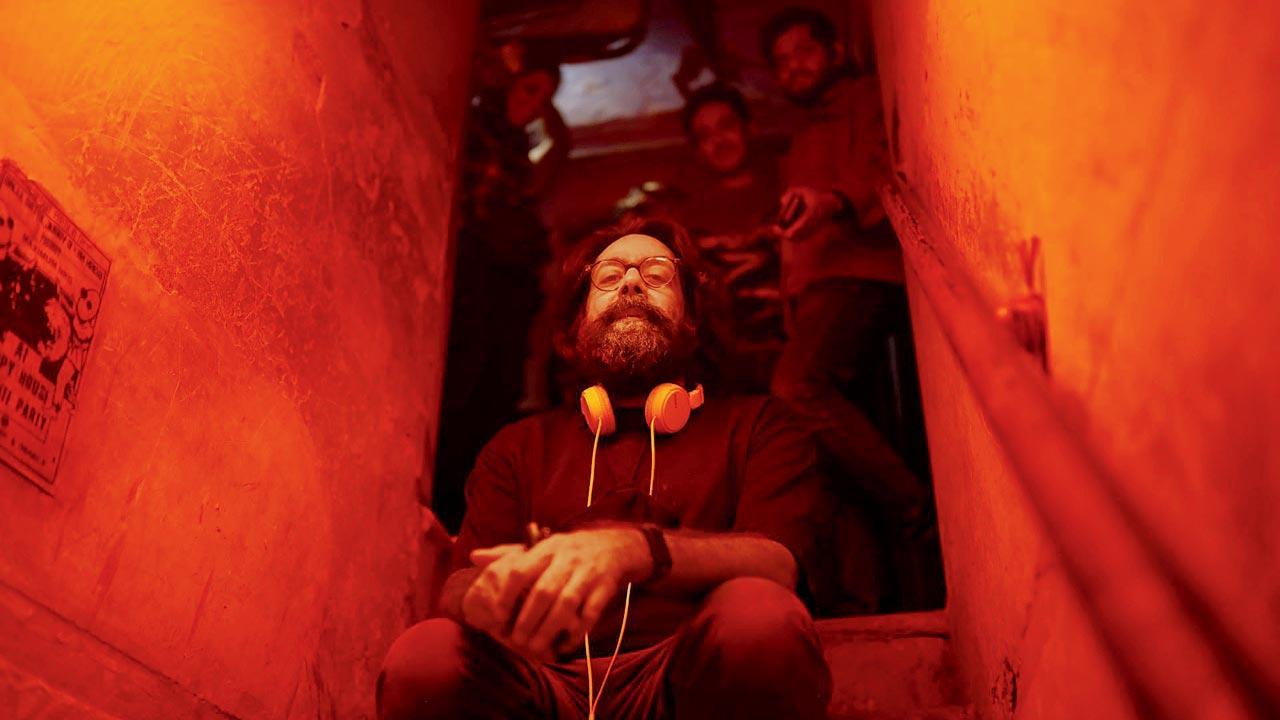
The makers of a new OTT offering—Ashim Ahluwalia and Kersi Khambatta—on how they manoeuver through the rugged and controversial terrain of caste and class through young eyes
Yusra Husain (MID-DAY; February 12, 2023)
Love it, like it, or find it overloaded with themes layered like Medusa’s tresses, but you cannot miss the new series on Netflix, Class.
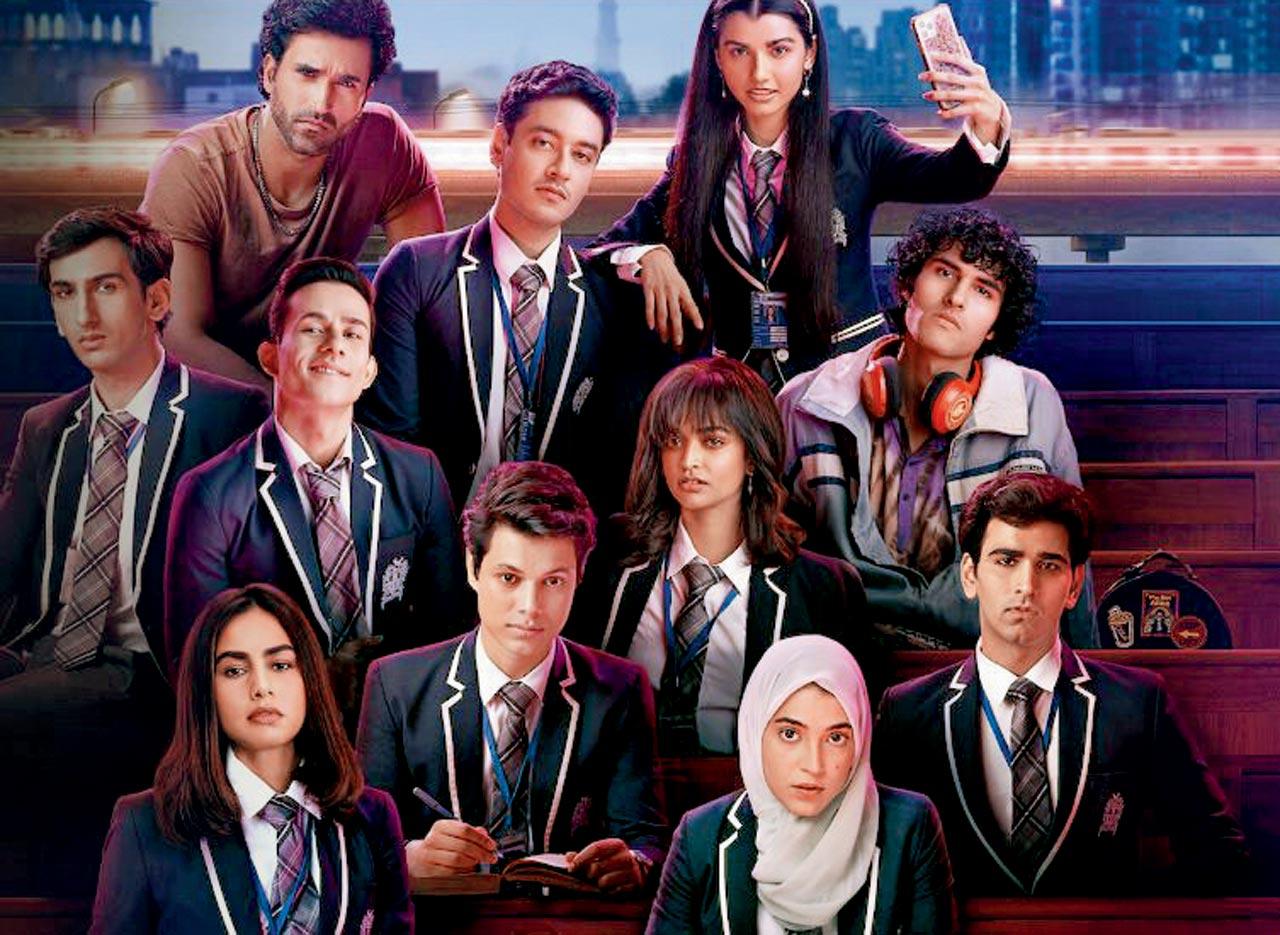
On a weekday, we sat down for a chat with showrunner Ashim Ahluwalia and screenplay writer Kersi Khambatta about the eight-episode murder mystery revolving around the lives of young adults in Delhi, and it smoothly transitioned into a conversation about caste nuances, class privilege and character representations. An adaptation of the Spanish show, Elite, Class is a story of three students from poor backgrounds, who get into an uber-rich school on scholarship, and their interaction with the other students.
Ahluwalia says he never set out to adapt Elite, nor had he watched it until requested to. “Class represents India right now. I was keen to make something around rebellious teenagers,” says the maker of Miss Lovely, “because I was one. Even though the Spanish original is glossier, I found the characters and situations intriguing and decided to stick with the plotline, almost like a novel source, and create a more realistic Indian version.” Peppered with his own childhood experiences in Mumbai, Ahluwalia says the screen depiction of rich kids and their parents is not far from reality.
“In a metropolis,” says the National award-winning director, “we all come across spoiled, wealthy children. Some people might express reservations about showing children in such light; I’d ask them to Google ‘Delhi school scandals’. Everything is out there—MMS scandals, brats running people over and getting away with it, even rape threats. Perhaps our version is softer.”
“There was no time for soft touch, over thinking, or over justification of character motives,” interjects Khambatta, “We wanted to hit hard, get the message across, keep the pace and all the fluff away.”
The message is quite clear, really. “Caste, class, religious and financial disparity is out there in the real world; there’s no denying it,” says Ahluwalia, adding, “We didn’t want to be preachy. You can be pro one community and anti another, pro gay or not, but our audience can have their own point of view. We are not telling anyone how to think, just showing a multilayered world that exists.”
Khambatta’s filmography includes Being Cyrus and Finding Fanny—both with friend Homi Adajania—with them alternating the roles of director and writer. “You open the newspaper and these issues [caste, religious and gender discrimination] are in there,” is his perspective, “It is what some Indians deal with every day, and while most shows have only skirted the issues in an effort to be politically correct, we wanted to hold up a mirror to society.”
Discarding the accepted pattern of a one-theme show, the makers say theirs isn’t about “homophobia, Islamophobia, Dalit rights etc, but just about a bunch of kids and what they deal with every day”. It’s the several Indias within one India.
And while Khambatta is less hopeful about change, Ahluwalia believes the good and bad co-exist. “The fact that we have such a show running,” he points out, “and that conversations around caste and religion can take place, is encouraging in itself. I don’t think this would have been possible 20 years ago.”
Joking about the realism of their characters, Ahluwalia says that a number of his acquaintances have wondered whether the characters or situations are based on them. He laughs it off. “The original show did not have the parent angle,” he says, “I introduced it considering that if the children are this wild, what would the parents be like? Many [viewers] have appreciated this aspect.”
Both makers are aware of the responsibility of how sex is shown on screen, and the role social media plays. “In India,” says Ahluwalia, “most works depicting sexuality are voyeuristic. The same goes for some western shows, where people fast forward to the scenes of nudity, sex and skin. We wanted to deal with sexuality through the eyes of the characters and the narrative. Teens experiment and grow through such acts into adults, but we didn’t want to exploit these [to grab eyeballs].”
Khambatta has the last word: “The younger generation is all about the Internet; their acceptance in society and insecurities are all driven online. The Internet has given people a voice beyond control. Social media explosion should reflect in every show now because it is a part of all our lives, and more so for teens, who practically live online for most of their waking hours.”
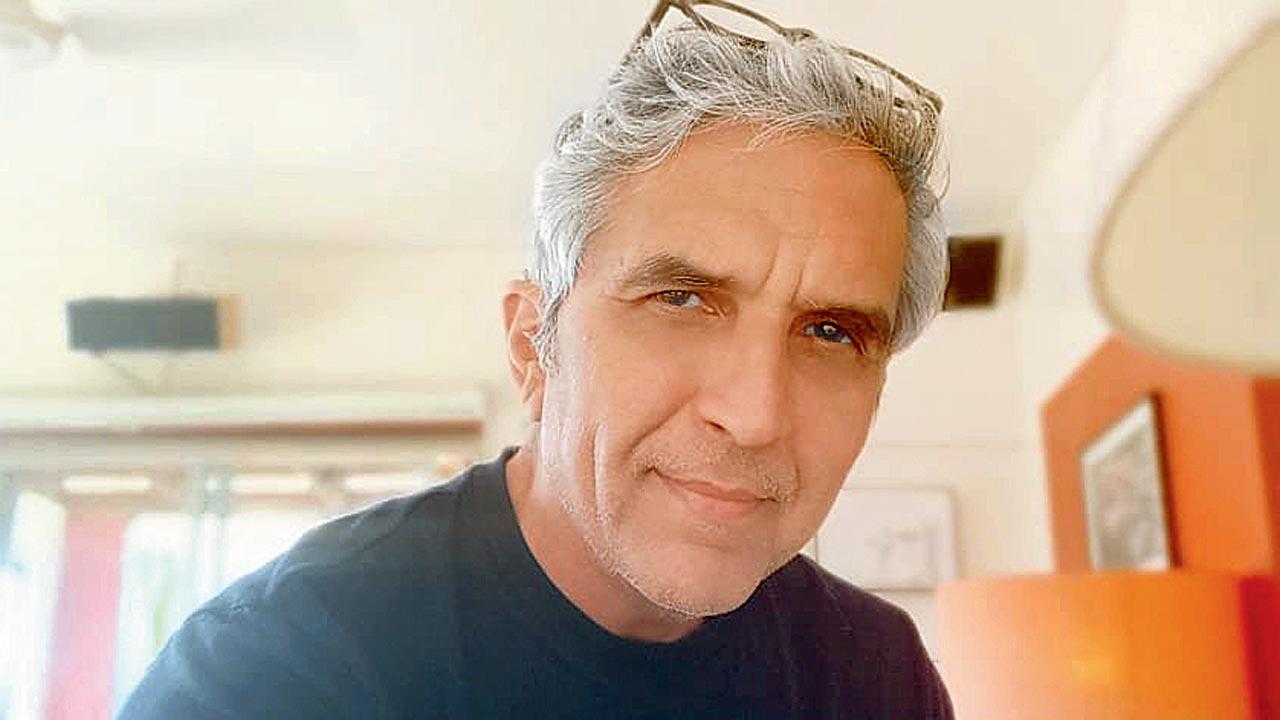
Kersi Khambatta, writer-director
A novel on the reel-life road trip Finding Fanny ready to hit the stores
7:31 AM

Roshmila Bhattacharya (MUMBAI MIRROR; February 22, 2016)
 A year-and-a-half after it
opened, Homi Adajania's 2014 zany road trip, Finding Fanny, is returning
as a book, The Village of Pointless Conversation. What is interesting
is that Kersi Khambatta's first novel was written along with Homi's
screenplay.
A year-and-a-half after it
opened, Homi Adajania's 2014 zany road trip, Finding Fanny, is returning
as a book, The Village of Pointless Conversation. What is interesting
is that Kersi Khambatta's first novel was written along with Homi's
screenplay.“Kersi wrote in the style of a novel, meandering through the minds of the characters and helping me set scenes with evocative word pictures. His writing evoked such brilliant imagery that it was a joy for me as a filmmaker to sink my teeth into it when converting it into a screenplay,“ says Homi, who after sketching out the story to him, would narrate a scene and Kersi would send it back to him as a chapter. “I would then dissect it and distill the film from the manuscript,“ By the time Homi finished his screenplay, Kersi was sitting on a manuscript and asked for his permission to publish it as a book. Homi gave the nod on the condition that it wouldn't come out before the film. “It took me nine months to write it and another two years to turn the verbal diarrhoea into something readable,“ admits Kersi, quick to add that the film and the book are two separate and completely different entities.
He points out that the village is more defined and the characters fleshed out more. The film was about a journey in a newly-restored vintage car with five dysfunctional people. There's Ferdie, the village postman, hoping to reunite with his lost love. At the wheel is the hot-headed Savio, the girl he lost to a friend, Angie, now a virginal widow squashed in the backseat with her corpulent main-law, Rosie, and Don Pedro, a painter who seeks his muse in her generous curves. In the course of their travels, secrets tumble out, ambitions, desires and bitterness come to a boil and redemption sought.
“Ferdie's redemption graph is very different in the book as he goes from a whining loser to a man of substance,“ Kersi informs, adding that his book begins with a bartender in a cabana in Goa narrating the most beautiful love story to two American tourists who stumble into the village of Pocolim, which is in the middle of nowhere, and have a part to play in the end.
Sitting in a boat in Alibaug, Homi, who hopes to go on the floors with his next in October, adds that even the ending is different. “As memories are stretched, they get coloured, so we have five different versions of what really happened,“ he points out, admitting that Naseeruddin Shah, who played Ferdie, was charmed by the book and agreed to read it at the launch on Tuesday, along with Tina, his Dimple 'Rosie' Kapadia's author daughter, telling him that he wished his screenplay had stuck to the letter of the book. “It's typical of Naseer to say that but the screenplay was Homi's call. I loved the movie, I hope people like my book too. It's two different takes on the same story.“

Subscribe to:
Posts (Atom)