Showing posts with label Kerala. Show all posts
Showing posts with label Kerala. Show all posts
Neha Dhupia on 52 Blue: "It took a filmmaker from Egypt to see me like this"
9:08 AM

Mohar Basu (MID-DAY; July 13, 2026)
A day after the London premiere of 52 Blue, Neha Dhupia is still processing what she experienced. The actor, who stars in Egyptian filmmaker Ali El Arabi's international feature, says the biggest change isn't what the film might do for her career, but how it has changed the way she sees herself. "I would've accepted everyone's congratulations until yesterday," she says with a laugh.
"But the difference between speaking to you yesterday and today is that I've now seen the film. I'm genuinely proud because it's one of those films that adds something to your body of work. Every film has its own fate, I don't know where this one will go, but there's a dialogue my character Lakshmi says: 'Everything you do and everyone you meet is pushing you in a direction you're meant to be in.' That's exactly how I feel about this film."
What drew her to 52 Blue wasn't the prospect of an international project, but the opportunity to play someone she hadn't been allowed to play for years. "When they first called and told me about this woman from Kerala who's carrying so much emotional weight and eventually ends up living on an island, I was convinced I wasn't going to get the part. You fight for roles like these at the beginning of your career, and then somewhere along the way you stop expecting them."
The irony, she admits, isn't lost on her. "It took a filmmaker from Egypt to notice that he could see me like this. At one point, even I had forgotten that I could see myself like this. You start believing you have range, but then you slowly surrender to the box people put you in. I had opened one side of that box through films like Mithya and A Thursday, but after a point the rules become the same. That's why it's so special when somebody else's belief in you helps you rediscover yourself."
Her first meeting with Ali El Arabi happened over Zoom, but the director's instinctive reading of her stayed with her long after. "He told me, 'When I look at you, I feel like you've been through a lot. Your eyes tell me you're strong, but somewhere you haven't given up'. That's not something people usually tell you the first time they meet you. He also felt becoming a mother had given me something this character needed. Honestly, if this film had come to me before I had children, I don't think I would've been able to play Lakshmi the same way."
Years ago, Dhupia says, she actively chased the idea of crossing over into international cinema. "When I was younger, I really craved that crossover. Now, if this film opens doors internationally, wonderful. But even if it simply leads to more interesting work here, I'll be equally happy."
The biggest validation, she says, came immediately after the London screening. "Prakash Jha was in the audience yesterday. After the film, he came up to me, patted me on the back and said something that stayed with me. Sometimes all you need is for filmmakers to suddenly notice something in you that they hadn't seen before. Even that is enough."
Watching herself on a giant screen also became an exercise in confronting vulnerability. "This film made me braver than I've ever been. There's no makeup, no vanity, nothing to hide behind. You're completely exposed. I didn't think I was brave enough to do something like this. If I can be this raw and still feel proud of what I've done, then I know I can do so much more. I've always wanted to do a sports biopic because I've always been athletic. Maybe I'm older now, but then again, not every sports story is about an athlete at their peak. Some of the most interesting stories happen afterwards."
Despite working across films, television, OTT and podcasts over two decades, Dhupia admits she still feels her versatility hasn't translated into the kind of opportunities she craves.
"I don't value my versatility enough myself," she says candidly. "Maybe after conversations like this I'll feel good for twenty minutes. Then someone will call to negotiate a fee and I'll go back to being an earnest worker who's grateful to have work. I've been in this industry for over two decades. I'm grateful that people know who I am wherever I go. But I genuinely wish my body of work was much wider than it already is. Sometimes I see a filmmaker's work and think, 'I'd love to do something like that.' Then later I hear they never even thought of me. That's the part that still hurts."
I didn’t come into films because I wanted a fan club-Nawazuddin Siddiqui
3:02 PM

Mohar Basu (MID-DAY; May 8, 2026)
Instinct, not commerce, guided Nawazuddin Siddiqui to Main Actor Nahin Hoon. Director Aditya Kripalani’s indie film about a depressed banker is in contrast to the big-ticket masala movies that dominate screens today. It’s also Siddiqui’s way of cutting out the noise and falling in love with the craft again.
“There is a lot of calculation now — how much a film will earn, how many people it will reach. But this film is not for financial benefit, it’s for the benefit of the actor in me. I didn’t come into films because I wanted a fan club. This is my personal journey. To satisfy the audience, you have to keep doing one kind of character. I can’t do that. If you love me, you will have to watch different characters,” said the actor in his trademark candour.
Choosing such off-beat stories has become harder today when the industry is making fewer movies. But it will always be stories over spectacle for the actor.
“Earlier, more films were being made, so people were taking more risks. Now, few films are being made, and because of that, actors suffer too. What has happened to our industry is pathetic. Everything has become about spectacle. It’s no longer about the story. There is no originality in the industry. One thing becomes successful, then everyone starts making the same thing.”
Is Siddiqui disappointed in the current system? Perhaps. But he is hopeful too. He reasoned, “Every era changes because of one film or one piece of art. Sometimes weak phases come, and then strong films change the era again. That cycle will continue.”
Nawazuddin Siddiqui’s daughter Shora is reportedly making her acting debut with Arijit Singh’s directorial venture. Did the actor have any tips for her? “I keep nudging her to do acting courses. The best way to be a good actor is to broaden your horizon. I send her different films to watch so that the scope of her worldview is much larger,” he said.
Take a cue from Kerala
According to Nawazuddin Siddiqui, Malayalam cinema is the perfect example of how stardom and content can be married. “In Kerala, intelligent films are being made on small budgets, and big stars are doing them because those films satisfy the actor in them,” he noted.
Actresses are public personalities, not public property to be made fun of-Gouri Kishan
9:47 AM

At a recent press conference to promote a film, a YouTube vlogger asked Tamil–Malayalam actor Gouri G Kishan’s co-star whether he had difficulty lifting her in romantic scenes “because of her weight”. An irate Gouri cut in: “How does my weight concern you? How is that relevant to the film? My weight is my choice — it does not define my talent.” Her poised pushback, delivered even as the vlogger began shouting, went viral. In this interview with Alka Dhupkar, she explains why she pushed back, and what led to this moment
Alka Dhupkar (THE TIMES OF INDIA; November 30, 2025)
Your firm response to the body shaming has won praise, but were you disappointed that nobody on the dais or the journalists came to your rescue?
I was disappointed, but not because I expected someone to rescue me. I think I proved that we’re all capable of speaking for ourselves. But having said that, we are a team. My encounter went on for 10-12 minutes. As human beings we have a certain threshold, a limit to how much we can take. In the eighth or ninth minute, the victim mindset did kick in: why is nobody speaking in my support? Am I saying something wrong? It makes you question things. If the director and actor had taken a firm stand, it wouldn’t have escalated the way it did. I did speak to them later and they regretted not speaking up. I’m not someone who carries a grudge. But I think it’s a lesson. Sometimes, it’s better not to expect anything from anybody.
Why did you speak out?
We’ve grown up hearing such comments and it has become normalized in society. In our homes, in our workplaces... Just because we are in this industry does not give anybody the right to comment on anything and everything. This must change because it affects the recipient’s mental health, self-esteem, and self-identity. I wanted to create awareness that this can’t go on casually.
Have you faced this kind of casual misogyny in the film industry?
It’s not just in this industry. In school, I was shamed because I wore a ponytail. Teachers casually said things like, “Oh, you’re trying to seduce the boys.” It leaves you feeling terrible because you’re not doing anything wrong. At 13 or 14, you just want to dress up and look good, but they put these ideas in your head. If you’re always scared of being judged, where is the space to be yourself? Once I entered the industry, I was body-shamed by directors and producers. If a director says you need to look a certain way for a role, that’s fair, and as actors we work hard. But something like your face shape can’t be changed. I have a round face. Asking me to lose the roundness is impossible. It takes a lot of courage to be in this industry where you’re always judged for how you look or what you’re wearing. My reaction that day was a build-up of facing this for many years.
It all becomes tiring sometimes, right?
It is definitely tiring. Everywhere you go, you’re commented on, made fun of, judged. In my case, the question was asked on such a public forum with so many cameras, and still he felt entitled enough to put me down. That’s why I said, ‘This is not okay.’ But having to retaliate to each and everything would take up so much of my time – time that I should spend focusing on my work.
Do you think women in the industry get blacklisted for being too vocal?
Yes, I think so. (Singer and voice artist) Chinmayi Sripada, who’s my friend, is an example. She has been blacklisted from the industry only because she spoke up about #MeToo. Another example: after the case in Kerala involving the AMMA Association, the actress was kicked out, but the perpetrator stayed, at least at that time. (Actor) Parvathy Thiruvothu is another example. She speaks openly about issues, and I’ve heard that some filmmakers have labelled her “problematic”.
Are you worried about consequences too?
If you come in with the attitude of, “Oh, she’s too problematic,” or “She’s a drama queen,” or “She’s too feminist”, then I feel like I’ve done myself a favour. These are people I wouldn’t want to work with anyway.
Would a male actor ever face these things?
Whether in South or the rest of India, there isn’t a conventional standard set for men. Of course, there’s the six-pack and the very fit look. But even then, many successful and older actors look just the way they are, and no one questions them. Having said that, my colleague Pradeep Ranganathan, during promotions for his movie ‘Dude’, was told he doesn’t conventionally look like a hero. So, I wouldn’t say only women go through this, but women face it far more. This, however, is not about man-woman. People should stop judging others for their appearances. We are public personalities, but we are not public property.
How do you feel when women are mocked for taking everything seriously and such questions are dismissed as “just for fun”?
Oh, they call it light-hearted. In my case, they even said maybe I didn’t understand the question because I’m from Kerala, but I was brought up in Chennai and I speak fluent Tamil. When you don’t have valid points, you say things like, ‘You didn’t understand because you’re not from here.’ This is gaslighting. At one point, the vlogger even said, “The question was not to you, why are you reacting? Just calm down.” It was so patronizing. In fact, I even asked him, ‘Would you ask the hero this question? You’re asking the hero about my weight and you’re angry that I am responding.’
You haven’t asked me anything about my work, my preparation, my character, the challenges, nothing. You only asked about my weight, and that too to someone else, while I am sitting right there.’ He then said something like, “We can’t ask you (questions) about Donald Trump and Narendra Modi and politics, right? We can only ask you these kinds of things.” And I was like, what do you mean? I might know more than you. They assume women don’t read current affairs, that we’re just arm candy meant to look pretty.
Saif Ali Khan, Akshay Kumar's Haiwaan to mark their reunion after 17 years onscreen; shoot begins in August
8:56 AM
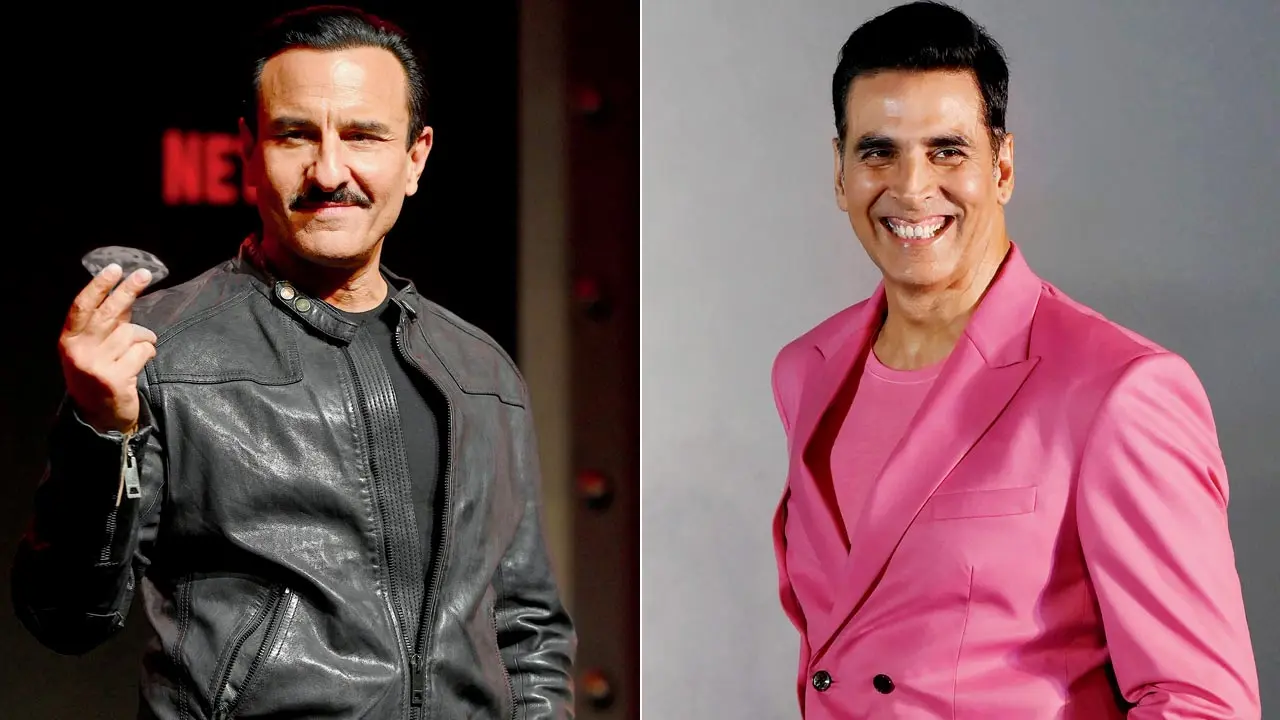
With Saif Ali Khan and Akshay Kumar reuniting after 17 years, director Priyadarshan’s Oppam remake, Haiwaan, is set to begin filming this August in Cochin
Upala KBR (MID-DAY; July 27, 2025)
In 2016, when the Malayalam film Oppam was released, director Priyadarshan was keen to adapt it for the Hindi audience. It has taken the filmmaker almost nine years to see that dream finally materialise. Saif Ali Khan and he were in talks for almost a year before it became official. In May, mid-day had reported that the film, the rights of which were acquired by Khan, was to go on floors by year-end (Round two of blind man’s bluff, May 3). For the role opposite Khan, the director initially had three contenders — Akshay Kumar, Akshaye Khanna, and Bobby Deol. However, Kumar clinched the deal with whom Priyadarshan also has Bhooth Bangla and Hera Pheri 3.
The remake, now titled Haiwaan, is finally set to go on floors next month in Cochin. “While Saif plays a visually challenged caretaker who is an expert in Kalaripayattu, Akshay, the antagonist, will be seen as a ruthless, cold-blooded killer out to avenge his family. While distinctive, both actors will sport a moustache and stubble to give off a raw, rugged, and real vibe. [Actors for the] characters of a retired Supreme Court chief justice and his daughter are yet to be cast,” informs a source
For the unversed, Oppam follows the story of Jayaraman (played by Mohanlal), a visually impaired man with an acute sense of smell, hearing, and touch. When a retired judge is killed by a man he had once wrongfully imprisoned, Jayaraman steps up to protect the judge’s daughter from the vengeful killer.
While the Malayalam movie was written by Govind Vijayan, Priyadarshan, who had then penned the screenplay, has adapted and written the Hindi version to give it a pan-India appeal. “He started work on the script and screenplay for its adaptation last year, and it is now ready. Given the high-octane action scenes, Akshay and Saif need a lot of time to prep for their roles, including hand-to-hand combat and martial scenes,” shares the insider.
Kumar is a well-trained martial artist with a black belt in Taekwondo, and has learnt Muay Thai and Karate. To match the intensity of his opponent, Khan is training extensively in Kalaripayattu.
“The shooting will kick off with Saif on August 23 in Cochin, after which Akshay will join the Haiwaan team. After a month, they will shift to Mount Abu [Rajasthan], Vagamon [a village in Kerala], and finally wind up in Mumbai. It’s basically a cat-and-mouse chase game between Saif and Akshay,” adds the source. Interestingly, Haiwaan marks Khan and Kumar’s reunion, 17 years after their last film, Tashan (2008), and Khan’s first collaboration with the filmmaker.
Did you know?
The film Oppam is reportedly based on Martin Scorsese’s Cape Fear (1991), which was a remake of the 1962 film, based on the 1957 novel The Executioners by John D MacDonald
CBFC seeks 17 cuts as Mohanlal starrer L2 Empuraan stirs Kerala storm
3:34 PM

Nijeesh Narayanan (THE TIMES OF INDIA; March 30, 2025)
Kochi: Central Board of Film Certification has ordered 17 changes to Malayalam movie "L2 Empuraan" starring superstar Mohanlal following backlash over its alleged portrayal of 2002 Gujarat riots.
The movie was released on March 27 and the filmmakers claimed it quickly crossed Rs 100 crore at box office. However, criticism from BJP and RSS members in Kerala erupted soon after its release.
RSS-affiliated publication Organiser accused the film of pushing a divisive narrative, alleging it was "purposefully designed to reinforce image of Hindus as primary aggressors during the 2002 riots".
The article also criticised Mohanlal, claiming that his participation in the project "betrays his loyal fan base".
CBFC's office in Kerala reviewed the film following intervention from central govt, according to sources. The board suggested edits and if the revised version is submitted by Monday, it is expected to be approved for screening in the following days.
The film's producers have agreed to the modifications. Producer Gokulam Gopalan said Saturday he had instructed director Prithviraj Sukumaran to make changes "if any scenes or dialogues in the movie had hurt anyone".
The controversy has sparked political reactions across party lines. Congress praised "Empuraan" for what they described as its depiction of the "reality behind Gujarat riots". Kerala unit of Congress wrote on X: "Like Grok, Empuraan has demolished the Sangh Varsity!"
While BJP state chief Rajeev Chandrasekhar initially wished success for the film on social media, several BJP and RSS functionaries later condemned it.
Sangh-linked organisations like Hindu Aikyavedi and Bharatiya Yuvamorcha criticised the Mohanlal-starrer. But BJP state secretary P Sudheer denied reports that the party's core committee discussed the controversy. Senior BJP politician M T Ramesh said: "Movies can be treated as films and there is no need for the party to oppose a movie".
Kerala’s adult movie industry broke norms by highlighting female desire-Darshana Sreedhar Mini
8:51 AM

In ‘Rated A: Soft-Porn Cinema and Mediations of Desire in India’, Darshana Sreedhar Mini studies Kerala’s once-bustling adult film industry. The assistant professor of film at the University of Wisconsin-Madison talks to Ketaki Desai about the labour behind this mini-industry and starlets like Shakeela who powered it
Ketaki Desai (THE TIMES OF INDIA; February 24, 2025)
What inspired you to study the soft porn boom of ’90s and 2000s Kerala?
While doing my MPhil, I was trying to understand how young boys or teens get to know about sex education. After much coaxing, they said they learnt about sexuality and intimacy (what a condom was, for instance) through soft porn films. That made me think about the genre, but there wasn’t much scholarship about it then. Everyone told me these movies were made in Kodambakkam, Chennai. So, I went there, to the streets everyone told me existed, but no one was there. That’s when I learnt about Kodambakkam’s fictitious, pseudonym-driven production culture that capitalised on the reserve pool of mainstream cinema. They were tapping into people waiting for a break that never came. I started spending time at film labs and, after five months of waiting, I was finally introduced to someone who worked in soft porn.
What led to its swift rise and fall?
Soft porn became a parallel industry in the 1990s and early 2000s primarily owing to the financial crisis mainstream cinema faced. Many films made by prominent directors, featuring A-list actors, failed miserably at the box office. Exhibitors and distributors were trying to figure out what would work, and the quickly produced, low-budget formula of soft porn made it viable. However, oversaturation led to its decline — films with similar storylines, the same cast and crew with maybe 10 or 15 women who acted in all these films. Shakeela, for instance, began to charge per day rather than per film at one point. She got Rs 1.5 lakh a day, but what she didn’t know was that one day’s footage was being used for multiple films.
Shakeela became synonymous with the industry. How did it impact her life?
Soft porn did become equivalent to Shakeela, but its fallout was that she never got to play a real character in Malayalam cinema. She tried directing a film, but everyone wanted to see her as the actress. Interestingly, for someone seen as the fantasy of heterosexual men, Shakeela was closely associated with the trans community and its causes. Now that she is gearing up for politics, I’m curious to know how she navigates the expectation of respectability.
How much control did starlets working on these projects have?
They didn’t have much control over what ended up at the editing table. They shared quasi-family relationships with directors and technicians, so it wasn’t direct exploitation. Some told me it was a way to get a foothold in the mainstream industry and make connections with directors. But once you’re a part of soft porn, your chances in the mainstream went down.
Were women able to watch these films?
Most cinema halls I went to in Kerala weren’t willing to have women in the audience, unless they were sex workers. But I spoke with many women who watched these films on cable television late at night. The female lead appeals to people because she’s sexually autonomous and doesn’t care about middle-class morality. Funnily, the men who acted in soft porn were more embarrassed to speak with me as their work was seen as demasculinizing. The strong female lead was the fulcrum of the narrative. She needs to have sex, and sometimes there are references to it not being fulfilling. The men take that personally, feeling like they were just an extra in a Shakeela film, rather than an actor.
These films portrayed unexplored forms of desire such as female orgasms and masturbation. Was it deliberate?
Female sexual pleasure is a big no-no in mainstream filmic depiction. Women as agents of pleasure was something impossible to imagine in dominant media. When I asked directors why they wanted to show female pleasure, they said they wanted to change the dynamics, where instead of a hero dictating things, it’s a woman. The female lead then stands in for the man and is allowed those desires.
Why Malayalam film industry needs a structural reset to thrive both artistically and commercially
8:34 AM

While Malayalam films are being celebrated, producers bemoan that critical adulation and social media love are not translating into money. The industry needs a structural reset to thrive both artistically and commercially
Nidheesh MK (THE ECONOMIC TIMES; February 23, 2025)
Every one loves Malayalam cinema. Just ask them. Critics gush. Film festivals swoon. North Indian cinephiles drop references to Aattam and Manjummel Boys at dinner parties to establish their impeccable taste. But in the immortal words of Jerry Maguire: “Show me the money!” If love paid bills, Malayalam producers wouldn’t be threatening a complete industry shutdown from June 1.
It’s a curious paradox: 2024 was a banner year for Malayalam cinema when the survival drama Manjummel Boys, with a Rs 20 crore budget and gross earnings of Rs 240+ crore, became the highest grossing Malayalam film ever, while Gen-Z romance Premalu, with a Rs 3 crore budget and Rs 136 crore in revenue, emerged as possibly India’s most profitable film of the year. There are plenty of others that left a lasting imprint on the cultural landscape.
Aavesham, an action film starring Fahadh Faasil, became a phenomenon, dominating social media with viral reels and memes. Aattam, a movie that deals with sexual harassment and brought to life by a cast of nine actors from theatre, clinched the National Award for Best Feature Film as Malayalam cinema swept eight awards at the 70th National Film Awards. The critic’s darling of Indian cinema was finally getting its due.
Meanwhile, in Kerala, producers stared at their balance sheets with such desperation that you would think they were mentally cataloguing their organs by market value.
The brutal economics of filmmaking has always involved risk—most businesses understand that failure is more common than success. But in Malayalam cinema, we are witnessing a particularly perverse form of capitalism: actors pocket 60% of production budgets and walk away unscathed when films tank, only to demand higher fees for their next project, according to G Suresh Kumar, vice-president of the Kerala Film Producers Association (KFPA). The producer alone bears the crushing weight of failure, he says.
Industry insiders point to the case of the Tovino Thomas-starrer Identity —produced at Rs 30 crore, it collected a mere Rs 6 crore in January, approximately equal to the actor’s paycheck. While Thomas reportedly offered another date to help the producer recoup losses, the fundamental question remains: if actors inflated their rates during the OTT boom, shouldn’t they settle for less money, now that the bubble has burst?
The cautionary tales are piling up faster than unpaid invoices. Take Sureshanteyum Sumalathayudeyum Hrudayahariyaya Pranayakadha, starring newcomer Rajesh Madhavan. It began with a budget of Rs 4 crore but ballooned to Rs 20 crore— a 500% increase, equivalent to the cost of a typical Mammootty film —with allegedly no cost-control efforts from director Ratheesh Balakrishnan, according to co-producer Ajith Thalappilly.
Thalappilly says he had to sell his Mercedes-Benz and teetered on the edge of bankruptcy, saved only by a last-minute intervention from a distributor. The director still collected his hefty paycheck, speculated to be Rs 1 crore, and demanded 30% profits from a film that spectacularly flopped, according to an industry insider who requested anonymity.
THE ANTICLIMAX
This isn’t the industry’s first financial crisis. Malayalam cinema has weathered storms before, but the scale has changed dramatically. Where losses once registered in lakhs of rupees, they now balloon into double-digit crores, creating recovery periods measured in decades rather than years.
What makes today’s predicament particularly treacherous is the aftermath of a false prosperity. The Covid-era OTT windfall had created a dangerous illusion. Streaming platforms were snapping up every Malayalam film, regardless of quality, paying premium prices that inflated everyone’s expectations. Actors doubled their fees overnight. Directors expanded budgets. Producers borrowed heavily, convinced that streaming rights would cover their investments.
Then reality hit with all the subtlety of a sledgehammer. OTT platforms “recalibrated” their approach, realizing that Malayalam cinema’s audience reach didn’t justify their splurge, says an industry insider requesting anonymity. The new playbook: wait to see which films succeed in theatres, then cherry-pick the winners. For most producers, this means no OTT deal at all.
“Actors were thinking, if Allu Arjun can rake in Rs 400 crore, why can’t we manage Rs 1.5 crore? But when the bubble burst, they were not reducing their fee,” says the person quoted above.
Even the lucky few who secure streaming contracts face brutal negotiations, delays designed to pressure desperate producers into accepting lower fees, and payment schedules stretched over months. By the time the money arrives, interest on production loans would have already eaten away any potential profit.
Most Malayalam producers borrow from just four or five private financiers at interest rates that would make loan sharks blush—20-25%. Many end up bankrupt, their artistic dreams sacrificed at the altar of compound interest.
In one way, Suresh Kumar and his peers are reaping what they have sown. Like today’s OTT bubble, satellite television created a similar windfall at the start of the millennium, delivering huge profits for makers, actors and producers. Kumar particularly scored big during this period as one of Mohanlal’s main producers, until the actor began producing films himself.
LORD OF ALL BUDGETS
These fault lines erupted recently when Suresh Kumar publicly revealed the budget of Empuraan, starring superstar Mohanlal and directed by Prithviraj—a staggering Rs 140 crore, making it the most expensive Malayalam film ever. Kumar suggested that Tamil Nadu-based Lyca Productions, which recently suffered massive losses from Rajinikanth and Kamal Haasan starrers, was being “duped” into the Kerala market with promises of returns that don’t exist.
This ignited a firestorm. Antony Perumbavoor, Mohanlal’s long-time producer and confidant, issued a detailed rebuttal that was later shared by both Prithviraj and Mohanlal. Despite Kumar and Mohanlal being schoolmates and former collaborators, the controversy revealed a deeper schism—not between old friends, but between competing visions for Malayalam cinema’s future.
ACTORS’ COMPANIES
“The fight is not among them, but between an old guard and a new guard,” says an industry insider. Filmmakers like Prithviraj are charting a new territory, creating big-budget spectacles with global ambitions. “Empuraan’s cinematography is conceived with a worldwide audience in mind. The director wasn’t afraid to hire helicopters for action sequences, while the average Malayalam producer thinks twice before renting a Range Rover,” says someone from the production team.
Interestingly, amid this financial carnage, some of the industry’s biggest hits recently were produced not by traditional studios but by actors and directors themselves. Manjummel Boys came from actor Soubin Shahir and his circle under Parava Films. Premalu (along with critics’ darlings like Kumbalangi Nights and Joji) emerged from the creative triumvirate of actor-director Dileesh Pothan, writer Syam Pushkaran and Faasil.
This shift reveals two simultaneous truths: established producers are becoming increasingly risk-averse toward experimental content, and creative talents are seeking autonomy over their artistic visions.
Superstar Mammootty’s production company exemplifies this evolution. Through Mammootty Kampany, the veteran actor has systematically shattered his macho image, portraying characters who cry, experience loss, engage in explicit sexuality, commit honour killings and even come out as gay. In films like Rorschach, Nanpakal Nerathu Mayakkam and Kaathal, Mammootty seems to be redefining what Malayalam cinema can explore.
Would traditional producers have green-lit these boundary-pushing projects? The evidence suggests otherwise. Other artist-led production companies also claim they are filling a creative void left by risk-averse legacy producers, even as they navigate the same treacherous financial landscape.
They believe this is an evolutionary phase of Malayalam cinema as it attempts to transform itself, reaching for audiences beyond Kerala’s borders. This ambition demands bigger stars, higher production values and technical crews of international calibre—all of which cost substantial sums that the traditional financing model cannot sustain. The legacy producers, the new guard believes, are not in sync with this new grammar of cinema trade and most have lost touch with ground reality both in terms of content and structure.
Beyond these creative tensions, the industry’s structural problems extend beyond Kerala’s borders. None of the mainstream OTT platforms have appointed decision-makers who can green-light Malayalam projects independently. Approval must come from Mumbai—a process that reveals either a fundamental lack of trust in local talent or a cynical assessment of the market’s importance. Either way, it creates additional hurdles for an already struggling industry.
What makes this situation particularly ironic is that all of this is happening in an industry that remains one of the most disorganized (most sets don’t even have a washroom for women), exploitative and poorly paying to writers, technicians and crew in India.
The fundamental problem, everybody agrees, is mathematical— Kerala’s cinematic brilliance is trapped in a population constraint. With just 3.5 crore people in the state and industry estimates suggesting only 50 lakh regular moviegoers, the numbers don’t add up. The theoretical best-case calculation is if every regular movie goer watches a film (indicating pan-state acclaim), at Rs 200 per ticket, the film might gross Rs 100 crore.
From that theoretical maximum, subtract 30% for taxes and 30-40% for distributors, and producers are left with Rs 20-25 crore before deducting marketing expenses. Now consider that most Rs 100 crore grossers require star power—actors now commanding fees in crores—along with top-tier directors, technicians and even screenwriters (at least one recently charged over Rs 1 crore for a script). Add production schedules stretching 60-90 days, and your budget easily exceeds Rs 20 crore.
Where exactly is the sustainable financial model here? Even in the best-case scenario, producers are barely breaking even. Most films achieve only a fraction of that theoretical maximum, guaranteeing financial disaster. In January 2025, out of 28 films released, only Asif Ali’s Rekhachithram turned a profit, with the industry losing Rs 110 crore in a month, as per KFPA. For 2024, the industry released 200 films with only 24 achieving financial success, resulting in losses of Rs 600-700 crore.
TIME FOR A RETAKE
This means for Malayalam cinema to endure this transition, it needs more than just critical adulation and festival laurels. It needs a structural reset. The unchecked rise of actor fees must be reevaluated, ensuring that the burden of failure isn’t shouldered by producers alone. Financial institutions need to step in with saner lending rates before private financiers choke the industry’s future.
OTT platforms, if they truly value Malayalam cinema’s storytelling prowess, must establish regional decision-making bodies rather than treat the industry as an afterthought in Mumbai’s corporate boardrooms. Most importantly, producers must recognize that the age-old financing models— where success relies solely on Kerala’s limited theatrical audience—are no longer viable.
At the heart of it, the industry must decide what it truly wants to be. Right now, it’s like a half-baked screenplay— beautifully shot, critically acclaimed but structurally unsound. And as any filmmaker knows, no amount of festival buzz can save a story with a broken third act. Does it aspire to remain a niche darling of cinephiles and award circuits, or does it have the vision—and the discipline—to build an ecosystem that thrives both artistically and commercially?
Because right now, nobody loves Malayalam cinema—if you ask the people who produce it.
The writer is a Kerala-based journalist
Randeep Hooda appalled at Kerala government’s suggestion of considering birth control measures for tigers
8:14 AM
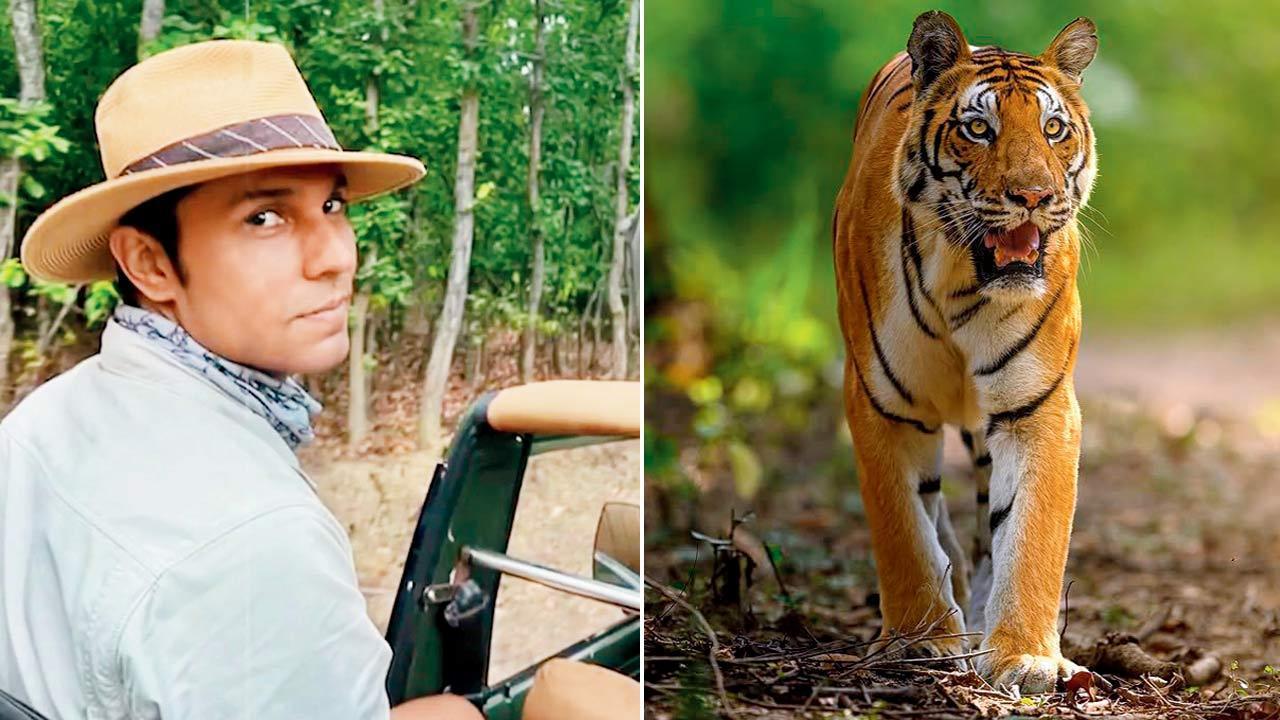
After Kerala Assembly suggests controlling tiger reproduction as part of its changes to the Wildlife Act, actor and animal activist Randeep Hooda to petition against the proposal
Mohar Basu (MID-DAY; January 30, 2025)
Last week, A K Saseendran, Kerala’s Minister for Forests and Wildlife Protection, and the Kerala Assembly reiterated the need for amendment to the Wildlife Protection Act, 1972, in the wake of increasing animal attacks and loss of human lives in the state. The proposed changes include allowing chief conservators of forests to grant permission to kill threatening wild animals, declare wild boars as ‘vermin’, and control wildlife reproduction.
Naturally, the proposal has sparked backlash, with many wildlife conservationists and animal rights activists arguing that the real issue of forest degradation remains unaddressed. Actor Randeep Hooda, who is an avid wildlife photographer, is appalled at the Kerala government’s suggestion of considering birth control measures for tigers.
Emphasizing that tigers are already classified as an endangered species and their numbers have risen after decades of conservation efforts, Hooda says, “The only population that needs control is humans, not tigers. It’s absurd to think about limiting the birth of a species already struggling for survival. Tigers are not just a symbol of our wildlife heritage; they are essential to maintaining the ecological balance. Any attempt to interfere with their natural reproduction process is a step in the wrong direction.”
The actor, who has often used his celebrity status to highlight the plight of animals, plans to petition the Kerala government against the proposal. He states that wildlife protection and coexistence should be the top priority.
“Instead of focusing on reducing the population of an endangered species, we should work towards creating a safer environment for them. Encroachment, poaching, and habitat destruction are the real threats that need action, not controlling their numbers,” he says.
Sidharth Malhotra begins shoot for Param Sundari in Navi Mumbai; Janhvi Kapoor to join later
3:38 PM

Sources say Sidharth Malhotra has begun shooting Param Sundari in Nerul; Janhvi Kapoor to join the rom-com in January
Mohar Basu (MID-DAY; December 7, 2024)
A spate of actioners later, Sidharth Malhotra is in the mood to explore romance again with his next, tentatively titled Param Sundari. We’ve heard the actor began shooting Tushar Jalota’s directorial venture in Nerul earlier this week. The first schedule will run for the next two weeks, with leading lady Janhvi Kapoor joining the shoot in early January.
Earlier, mid-day had reported that the love story sees Malhotra essay the role of a suave business tycoon hailing from Delhi to Kapoor’s free-spirited artist from Kerala (When north meets south, Oct 27). Sources tell us that in the ongoing leg, the director intends to shoot key scenes depicting the male lead’s emotional journey.
An insider reveals, “The Nerul shoot is crucial for setting up the protagonist’s backstory. Kharghar and Nerul will be the unit’s locations for the next few days, as Tushar cans emotional scenes featuring Sidharth. After Janhvi reports to the set in January, they will film the pair’s romantic sequences. Following the Mumbai stint, the director has lined up extensive schedules in Kerala and Delhi.”
The source adds that the rom-com, which marks the actors’ first collaboration, is part of a larger on-screen universe being developed by producer Dinesh Vijan, outside of his horror comedy universe.
Kani Kusruti recalls she was almost rejected for Payal Kapadia's All We Imagine As Light
7:58 AM
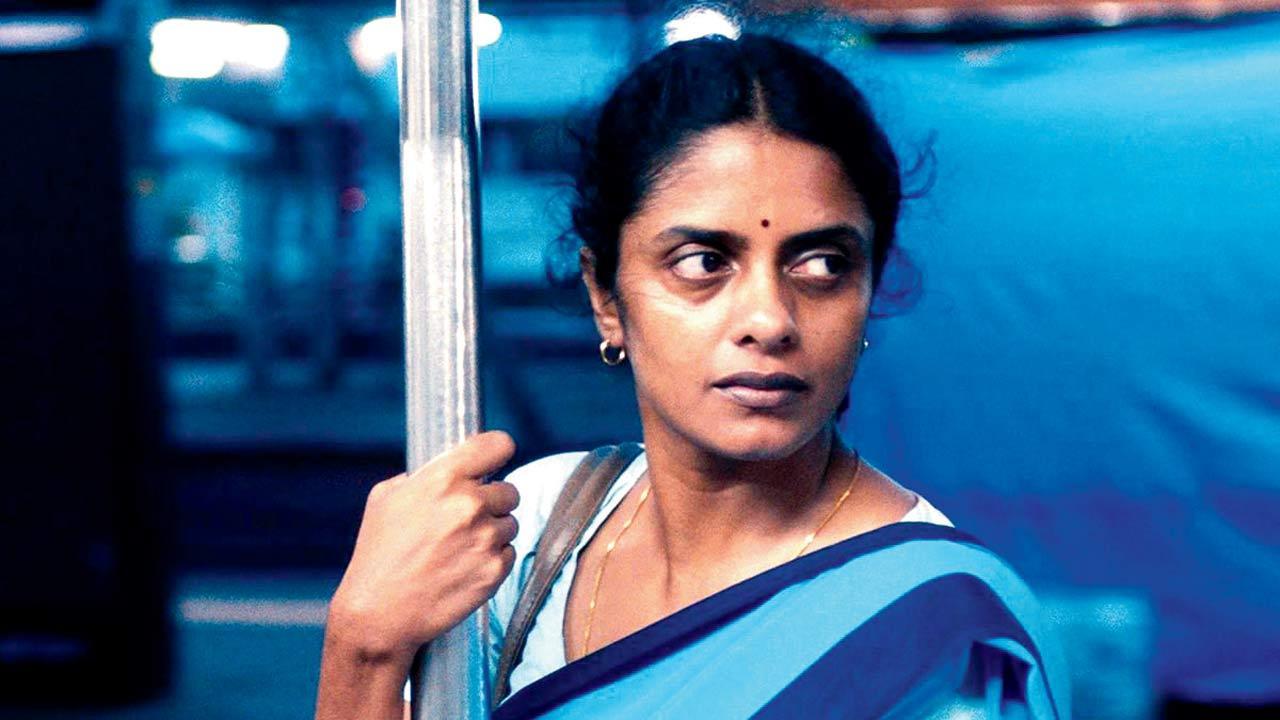
From initially being considered for another role to almost being rejected after a bad audition, Kani Kusruti reflects on her three-year journey with All We Imagine As Light
Priyanka Sharma (MID-DAY; November 22, 2024)
If movies are fated, All We Imagine As Light definitely was for Kani Kusruti. This, even before director Payal Kapadia had penned the story. Kusruti shares that the director, then a student at the Film & Television Institute of India, had reached out to her right after developing the idea.
“Payal said she was thinking of me while developing the protagonist. She had liked my work in a short film. I just wanted to be a part of her film,” she smiles.
In the Cannes Grand Prix-winning movie, Kusruti plays a nurse, Prabha, who develops an unlikely friendship with another nurse, Anu. She reveals that Kapadia had first chosen her for the role of Anu.
“Then years passed [without the film going on floors]. Since I had aged, I thought the chance was gone. Then Payal asked me if I wanted to audition for Prabha.”
While she jumped at the idea, there was a longer wait for Kusruti. Her first audition, held two years ago, didn’t quite go well, and Kapadia began auditioning other Malayali actors. The actor laughs that at one point, many actors she knew in Kerala were screen-testing for the film.
What’s more, she not only encouraged Divya Prabha to audition for the role of Anu, but also requested Kapadia if she could audition again. Lady luck smiled on her this time. Kusruti recounts, “After the second audition, when Payal asked me whether I’d like to be part of the film, I was in tears.”
All We Imagine As Light, which released today, is centred on three women’s friendship and their relationship with the city of Mumbai. Kusruti says the city is aspirational for people of Kerala. “When I was living here, a friend from Kerala visited me. She looked outside my beach-facing house and said, ‘Lovers, lovers everywhere. This is heaven.’ We discussed how you can just go out and sit. In Kerala, even that is difficult.”
Sidharth Malhotra-Janhvi Kapoor starrer Param Sundari to roll in December
7:59 AM
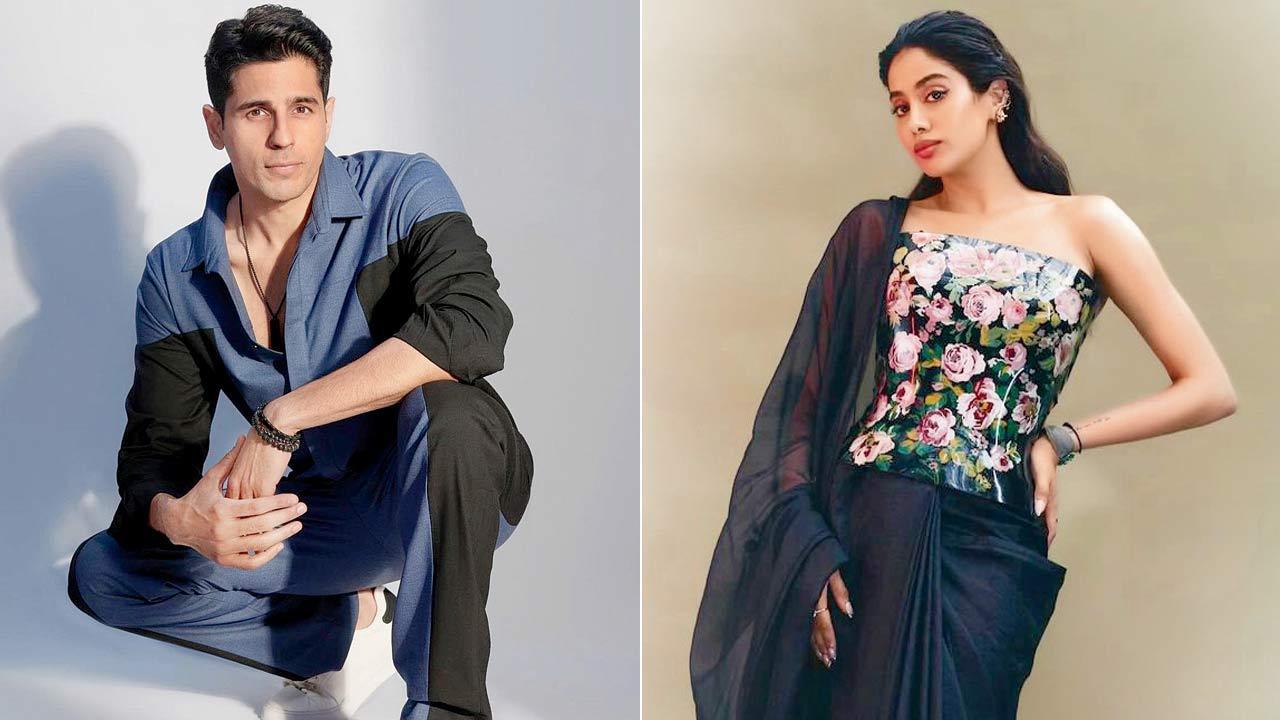
Param Sundari set to roll in December; sources say Sidharth plays Delhi business tycoon to Janhvi’s Kerala-based artist in a love story of contrasting personalities
Upala KBR (MID-DAY; October 27, 2024)
In his 12-year career so far, Sidharth Malhotra has done a handful of rom-coms, including Hasee Toh Phasee (2014) and Baar Baar Dekho (2016). It’s time for the actor to give romance another shot with his next, tentatively titled Param Sundari. Last week, mid-day reported that Malhotra and leading lady Janhvi Kapoor were to originally front a thriller, but had a change of heart and decided to team up for a rom-com instead (Thriller aborted, rom-com on, Oct 18). Now, a bit of digging has revealed that Tushar Jalota’s directorial venture is a classic story of opposites attract, with Malhotra’s character hailing from north India and Kapoor’s from Kerala.
Sources tell us that the leading man essays a suave and rich business tycoon from Delhi. “Janhvi plays a modern artist with strong views and value system. Her character is a south Indian woman from Kerala. The film chronicles how the two fall in love despite having such contrasting personalities,” says a source.
Pre-production on the love story, which marks the lead pair’s first collaboration, has begun. Jalota, who previously helmed the Abhishek Bachchan-led Dasvi (2022), is apparently planning to take Param Sundari on floors in December.
“The first schedule will kick off with Sidharth in Delhi. The team will then head for a stint in Kerala, following which the rest will be shot at specially constructed sets at a Mumbai studio. The production design team has been instructed to erect two elaborate sets in Mumbai, one reflecting a sprawling house as seen in Delhi and another reflecting the earthy interiors of traditional Kerala homes. If things go as planned, filming will wrap up by February 2025. Sheetal Sharma, who recently worked on Munjya and Stree 2, is serving as the costume designer on this project. The look tests of both actors were conducted recently.”
With the movie’s title having its roots in Kriti Sanon’s dance number from Mimi (2021), rumours are rife that she will have a cameo in the Dinesh Vijan production. The makers, however, are tight-lipped about it.
If they are saying that they haven’t seen it around or think it doesn’t exist, that’s just cruel-Parvathy Thiruvothu
8:28 AM
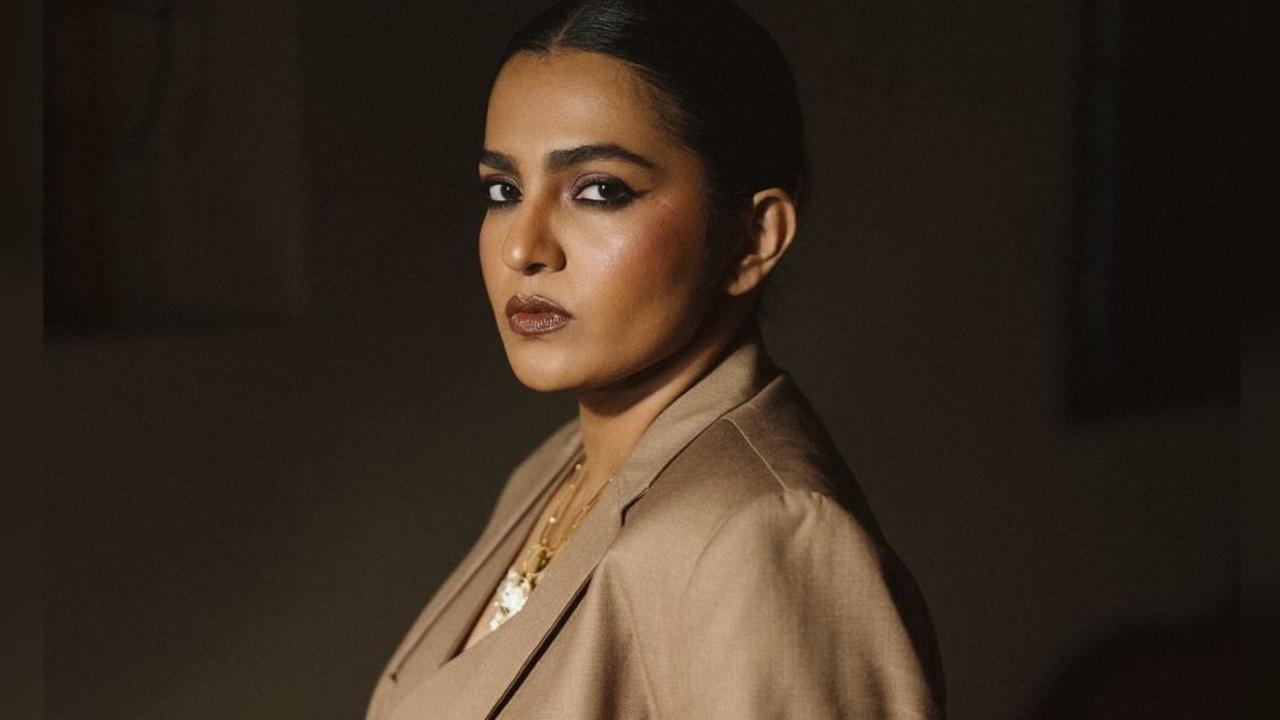
Renuka Vyavahare (BOMBAY TIMES; September 2, 2024)
The #MeToo movement in the Malayalam film industry gained momentum after the release of the much-delayed Hema Committee report on August 19. It revealed rampant sexual exploitation, gender inequality, lack of pay parity and misconduct in Mollywood. The entire executive committee of Association of Malayalam Movie Artists (AMMA) led by Mohanlal resigned on August 27 citing moral responsibility.
Actor and member of Kerala’s Women in Cinema Collective (WCC), Parvathy Thiruvothu, who has been vocal about the issue from the beginning, spoke to us about the situation and reforms needed in the industry.
While revelations continue to surface in the Malayalam film industry, there are some who claim they were unaware about what was going on, and many kept quiet about it. Do you believe that?
Anybody who is saying that they are not aware of what was happening is lying. There are possibilities that some of them weren’t affected by this system or this power structure. Maybe some of them haven’t been harassed sexually, but verbally, or even in terms of being given contracts or basic sanitation at the workplace. There are probably some who haven’t been deeply impacted like the rest. But if they are saying that they haven’t seen it around, haven’t heard about it, or think it doesn’t exist, that’s just cruel. I have faced it, which is what I disclosed to the HEMA committee in a confidentiality clause.
What are your thoughts on the mass resignation of Mohanlal-led AMMA, following the Hema Committee report? Both Mohanlal and Mammootty in the past two days have broken their silence and said they welcome the Hema Committee report, but they are not part of any ‘power group’. Mohanlal stated that the entire industry is answerable, so why crucify AMMA?
When the actor assault case was happening in 2017, the same AMMA executive committee did nothing to support or protect the survivor. One of the prime accused wasn’t suspended from AMMA, he voluntarily stepped away. They even invited the alleged perpetrator back into their fold while the survivor was forced to leave. She put out a statement saying that the same association that’s supposed to stand by her is inviting one of the prime accused back into their fold. At that time, they had no moral obligation to resign and start a new leadership? Today, when all these cases are coming up, they chose to resign. It is a blatant cop-out.
The committee submitted its report to the Kerala government in December 2019, but it was only made public on August 19, 2024. What’s your reaction to it?
This happened here because a survivor spoke up in 2017 and continues to fight her fight. This happened here because the collective (WCC) came together and we went to the Chief Minister. It has been seven long years since we have started the collective, and four and a half years of us repeatedly asking and never backing down and questioning why the report was not coming out.
They tried to sweep the report under the carpet, and we didn’t allow it. And it takes time and effort. Four and a half years of delay means women losing out on their careers. Everybody wants to hear about who did what, where and when, but nobody wants to talk about what will happen to the women once they come out. Who is going to take care of them?
Do you think in the coming days, more stakeholders from the industry, especially the male actors, should speak up?
When it comes to women’s safety, the onus is always on women to prove their innocence. The fact that they didn’t ask for it. Men are never held accountable. When everyone says this is our Malayalam film industry, the silence is deafening. We do expect more actors, directors and stakeholders to speak. If their involvement comes in at the right time, not later, this can benefit the film industry in a big way. This is not a situation where you can say it does not affect me, so I’ll just be quiet until the storm passes. The storm is here to stay. Too many of us have been impacted by the wrongful ways of the industry for more powerful people to be quiet.
Ram Gopal Varma tweeted that, ‘If Malayalam film industry has been exposed by the Hema Committee, which has been constituted only for the Malayalam industry, then unless committees are formed for each of the other language industries, how will one know what’s happening there’?
What is happening in the Malayalam film industry is phenomenal because there is a certain growth in allyship in our society, because we have a civic consciousness which keeps us accountable that way. We (Malayalam society) have a civic consciousness that dissents against our government and structures. So, it’s not surprising that this is happening in Kerala. But there is such deafening silence from other industries. If you think there are no cases happening in other film industries, you are living in a fool’s paradise. It’s such a welcome change that in Kolkata, Bengali women and filmmakers have asked for a similar panel study. This is not a Malayalam cinema centric issue. Yes, it’s happening here, and we are cleaning up our house. But look at your own houses. What’s happening there? Are we taking care of the women?
Like you rightly said, the larger point here is what are we collectively doing as a society to safeguard women’s rights?
We need to understand that it's not just an industry-based issue, it's the collective approach towards women. Do we even consider them as individuals and human beings? Or are they fitting into a narrative of patriarchal structure that benefits us to check boxes? We're trying to say that they treat us as human beings. Do not get scared when we ask for our rights, because us getting our rights does not mean you losing out on your freedom. But in case you're scared and you're opposing this, then in some way you're benefiting from this exploitation.
-----------------------------------------------------
On pay disparity being attributed to an actor’s market value and not the gender
“If the Hema committee has said that the pay disparity exists, there’s enough evidence to prove that. It’s easy for top-level actors to say that it’s about how you fill the theatres. Do these top-tier male actors take a pay cut for the producer if their next three films fail? From the time I have acted in Uyare (2019), I have not gotten a penny more because I have been told, ‘but market value’. For the first time in 18 years, a producer suggested profit sharing to me. When a movie does really well, male actors are always considered in the profit sharing. It’s unheard of to give that option to a female actor.”
‘Compromise’ and ‘adjust’: Mollywood’s sex code exposed by Justice Hema Committee Report
8:18 PM

The Explosive Justice Hema Committee Report Reveals How A ‘Mafia’ Comprising A Clutch Of Top Actors, Producers And Directors Exploit Women And Punish Those Who Dare To Say ‘No’
THE TIMES OF INDIA (August 25, 2024)
- The recent sexual assault of a leading actress has further reinforced the feeling that it [the Malayalam film industry] is not a dignified place to send daughters alone for work. That is why we have the unusual sight of some mothers or fathers accompanying daughters for shooting.
- The perception [about women] that many men in the film industry carry is another major reason for the low participation of women in cinema. Many witnesses stated that some men in the industry believe that women who chose to work in cinema are “available”... that such women are morally very loose.
- “Compromise” and “adjustment” are two terms that women are made familiar with as soon as they even attempt to enter the Malayalam film industry. The two terms have only one message - make yourself available for “sex on demand”.
- Now knowing how the Malayalam film industry runs and the consequences [for speaking up] that women in cinema may face, we are satisfied that women in cinema are justified in not disclosing their experiences.
The Justice Hema Committee report – which examined allegations of sexual harassment in the Malayalam film industry and the mafia-like grip a clutch of powerful men have over it – is 235 pages long. However, the four snapshots from it reproduced above paint a clear — and rather horrifying — picture of what women in Malayalam cinema have gone through over several decades.
The committee comprising Justice (Retd) K Hema, actress T Sarada and former IAS officer K B Valsala Kumari – formed after a leading actress was sexually assaulted in a moving car allegedly on the instructions of a leading actor – concludes that nothing but a new industry-specific tribunal can save women workers from the industry’s entrenched “mafia”.
The committee was convinced that anything less than hard-coded law – for instance, an Internal Complaints Committee under the Prevention of Sexual Harassment at Workplace Act of India (POSH) – will be manipulated by industry men to only punish and isolate women who dare to speak up.
The committee lists ‘17 issues’ that the women face in the industry. Many of these points overlap in scope and impact and can be clubbed under seven heads:
1. Sexual demands made as quid-pro-quo for work
2. Industry ganging up against women who don’t fall in line
3. Lack of workplace safety, whether it’s a set, outdoor site, hotels for crew or transport
4. Fan clubs as troll armies
5. Culture of ban that even men find intimidating
6. Non-execution of contracts
7. Absence of any legally constituted authority to redress grievances
ENTRY CODE — YOU MUST ‘COMPROMISE’ AND ‘ADJUST’
According to the women who deposed before the committee, the harassment starts with a woman’s first contact with the industry.
If a production controller – equivalent of a producer in any other film industry – offers a role to a woman, he will make it clear in the first meeting itself that she will have to make some “compromises” and “adjust” to certain demands that would be made of her.
“Compromise” and “adjust” is code for telling an aspiring actress that people who will give her work will demand “sexual favours” and she will have to submit to their demands.
In this first meeting, the newcomer is also generally told that all top actresses have reached where they are in their careers because they made these compromises and adjustments.
The committee said it has gathered enough anecdotal evidence on how a “general impression” has been created that women who want to be a part of the Malayalam film industry are only interested in money and fame and will “surrender anything” to achieve this.
The committee recorded that there is a widely held belief in the industry that women entering the industry would “sleep with anybody for money” and not just for roles and work.
IF A WOMAN DOES NOT FALL IN LINE, ENTIRE INDUSTRY WILL GANG UP AGAINST HER
The committee recorded that it found “entirely justifiable” the women’s reluctance to speak against the abuse. Only after the women were assured of complete confidentiality did some of them agree to be interviewed.
“Women in [Malayalam] cinema are most reluctant to speak about the sexual harassment they face. They are afraid that if they divulge this information to others, they would be banned from cinema and subjected to harassment,” says the report.
The report says it’s very clear that sexual abusers in the industry have a massive support system – fellow actors, producers, financers, heads of industry bodies, fan clubs – that gets activated when a woman raises her voice.
Some men who deposed before the committee tried to argue that women face sexual harassment in every industry and it would be wrong to single out the Malayalam film industry. However, many women interviewed by the committee said there is a striking difference between the sexual harassment seen in the film industry and that in other fields.
MIDNIGHT KNOCKS ON DOORS IN HOTELS
Witnesses said they felt the most vulnerable when staying in hotels during outdoor shoots. It is common, they said, to have men, mostly drunk, knocking on their doors in the night.
“The knocking will not be polite... they repeatedly bang on the door. Many women said they felt that the door would collapse and men would force their way into their room. So, unless women take somebody from the family when they go for work, they fear that they will not be safe,” says the report.
The committee noted that though evidence indicated several cases of sexual abuse which constituted offences under the Indian Penal Code and also fell under the definition of “sexual harassment of women at workplace”, the victims never approached the police because they were afraid of “the serious consequences”. Being “public figures” women in cinema face a greater threat in terms of retribution for speaking up.
The 295-page report has 65 pages redacted, concealing many incidents it had recorded. One such incident is, in fact, mentioned only in part in the report. It presumably refers to a male actor misbehaving with a female co-star, who apparently called him out, but was brow-beaten into submission and had to continue working with the man against her wishes. This is how the incident is detailed in the report:
“...same man and woman, as husband and wife, hugging each other. That was terrible. Because of what was done to her during the shooting, her resentment and hatred had reflected on her face. 17 retakes had to be taken for just one shot and the director criticized her for the situation.”
FAN CLUBS OR BULLY BANDS
A witness told the committee that the market value of heroes is propped up by the artificial creation of fan clubs.
It is common to have the same person running fan clubs for multiple stars. He/she can create a fan club for any star, provided enough money is paid. These fan clubs are often deployed to bully women if they raise their voice against a star or an industry favourite.
The committee noted how vicious online attacks have been launched against actresses just hours after they complained against a star. Morphed videos and pictures carrying obscene comments were uploaded and misleading stories about the star’s past conduct were circulated. What is scarier is that these fan clubs can also orchestrate physical attacks.
A CULTURE OF BAN THAT EVEN MEN FIND INTIMIDATORY
There is evidence to prove that about 10 to 15 individuals — all male, all very successful and very wealthy — control the Malayalam film industry, the report says.
This group can prevent anyone from working in the industry by imposing a “ban.” The ban will not be formal, but it will close all doors in the industry for the banned individual. It can even stall the release of films if the production house involved somebody the group did not approve of.
Some witnesses told the committee that even top actors have suffered because they “offended” a member of this group.
Members of ‘Women in Cinema Collective’, the association of women formed after the assault on a leading actress mentioned earlier in this report, have all been banned by this group.
NON-EXECUTION OF CONTRACTS
A witness stated that there was no system of executing a contract between a producer and an actor or a director in Malayalam cinema till 2000.
The Film Chamber of Commerce had received many complaints concerning contract disputes and when the Chamber leaned in favour of contracts, certain actors, who were used to having their way with every aspect of film-making, felt offended.
These actors, to convey their unhappiness with the proposal, left on a holiday abroad together, bringing the entire film industry to a standstill. When some rebellious directors managed to continue working by replacing the actors who had flown abroad, they were banned.
From then on, at least one famous director, who used to do three to four movies every year, could not direct a single film with any major actor.
One actress, while deposing before the committee, spoke about how in the absence of a contract, she was tricked into shooting scenes that involved levels of nudity and intimacy she was not comfortable with.
“She was asked to do many things, including a lip-lock, which was contrary to the understanding between the parties,” says the report.
JUNIOR ARTISTES TREATED LIKE SLAVES
Junior artistes are not recognized as artistes in the Malayalam film industry. They are not members of the Association of Malayalam Movie Artistes (AMMA) and thus the most vulnerable to abuse – both physical and financial.
The committee recorded how difficult it was to get junior artistes to depose. “We made efforts to get a few junior artists [to depose before the committee], but it appeared they were under some threat that if they stated anything before the committee, they would be barred from any opportunities in cinema,” says the report.
Dancers, who form the backdrop in song-and-dance sequences, were also reluctant to appear before the committee. And when they did, it appeared they were under pressure to not say anything that would hurt the industry’s image.
The report mentions the following points to drive home the pitiable status of junior artistes in Malayalam film industry:
- Not provided access to toilets, though they are made to spend, on an average, 14 to 19 hours on sets.
- Not provided any rest area.
- Never paid their wages in time nor in full.
- If the production house releases Rs 700 as a day’s wage, the junior artist gets only Rs 500.
- Denial of food and water is a major complaint.
Witnesses told the committee that women junior artistes are the most vulnerable to sexual exploitation because of their poor pay and working conditions. One witness spoke about contractors forming WhatsApp groups of junior artistes to push them into organized sex work.
Varun Dhawan to sport lungi and long hair to mark transition from young cop to doting father in Baby John
9:04 AM
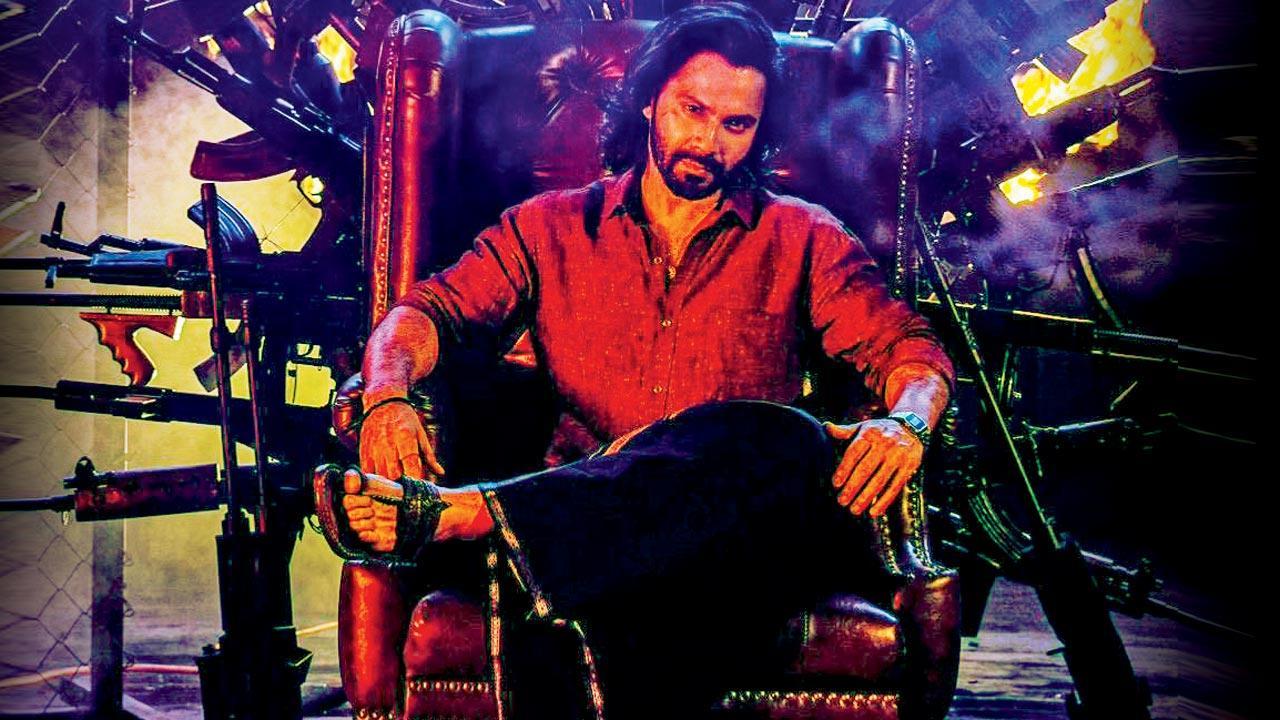
Varun to sport lungi and long hair to mark transition from young cop to doting father in Baby John; sources say actor shot massive fight sequence in the outfit
Upala KBR (MID-DAY; August 15, 2024)
Take one look at Baby John’s teaser, and it’s easy to gauge that it will be a bloody affair. On April 24, Varun Dhawan wrapped up the action fare that marks Tamil director Kalees’ Hindi film debut. Staying true to Atlee’s Tamil hit Theri (2016), the Hindi adaptation will see the protagonist as a fierce cop in his past, and a doting father in the present day. mid-day has learnt that Dhawan will sport two distinct looks—as a young cop, he will flaunt the khaki uniform and sunglasses, which will be his signature accessory, whereas he will sport long hair, a beard and a lungi for the father track.
Dhawan unveiled this avatar in the teaser itself. Sources say that the two looks have been designed in such a way that they reflect his character’s journey. “The young cop is dynamic, aggressive and stylish. Designer Sheetal Sharma has given him customized sunglasses that he will sport on his wrist like a wrist band. His wardrobe comprises chinos, linen shirts and polo T-shirts. Kalees wanted an intense look for the character after he goes through a personal tragedy and begins life anew with his daughter in Kerala. For this portion, Varun sports white lungis and silk shirts,” reveals a source.
While Keerthy Suresh essays the cop’s wife, Wamiqa Gabbi plays his romantic interest as he begins a new lease of life later.
The portions depicting the character’s present day were shot in Alleppey, Kochi, and the serene backwaters of Kerala. The unit conducted a 20-day schedule in March during which they not only filmed crucial scenes and a song, but also an elaborate fight sequence.
“To make Baby John a no-holds-barred actioner, producers Murad Khetani and Atlee roped in eight action directors. Varun spent three months prepping for the action blocks. One of the most crucial set-pieces was shot in the backwaters. In the sequence, the hero, who has left the police force and leads a peaceful life in Kerala, has to take up arms again when goons attack his five-year-old daughter. It has been designed as a high-octane scene, where Varun takes on 30 baddies single-handedly, performing kicks, punches and lunges in a lungi. Cinematographer Kiran Koushik has shot it as a larger-than-life sequence.”
Kerala University denies permission for Sunny Leone’s performance at engineering college
10:56 AM

BOMBAY TIMES (June 14, 2024)
Authorities at Kerala University have denied permission to conduct a stage show featuring Bollywood actress Sunny Leone citing possible crowd management issues for an event of such magnitude. The event, which was scheduled to be held at the engineering college in the university’s Kariavattom campus, located on the outskirts of Thiruvananthapuram city, according to authorities, violates the government guidelines for cultural programmes in campuses.
In November 2024, four students died and several others were injured after a stampede at a music concert headlined by singer Nikhita Gandhi in Kerala’s Cochin University. To avoid a repetition of a similar incident, the authorities had issued guidelines to conduct programmes in colleges.
Even though fresh guidelines were issued for future events, this particular show, according to authorities, does not comply with the set guidelines.
“We had secured permission to conduct the event, but did not inform the authorities who the guest performer would be, as we were still chalking out details at that time. We were about the get the remaining clearances from police, fire force etc., when we were informed that the authorities would not be giving us the permission to hold this particular event.
The authorities feel that a The authorities feel that a show featuring a popular actor like Sunny Leone will attract a larger crowd and that could cause security issues,” says a student member, who is part of the organising team.
-------------------------------
HINDUSTAN TIMES (June 14, 2024)
The vice-chancellor of Kerala University has refused to authorise a dance performance featuring actor Sunny Leone at the University College of Engineering campus in Thiruvananthapuram, Kerala, on July 5.
According to reports, vice-chancellor Dr Mohanan Kunnummal had directed the registrar to ensure Leone’s performance was excluded from the programme list.
This order follows a stampede that occurred last November during a concert at the Cochin University of Science and Technology in Ernakulam. It resulted in the death of four students and injured over 60 others.
Following the incident, the state government banned DJ nights and parties on college campuses. Reportedly, Kunnummal further stated that the college union had not sought the varsity’s approval for the show.
When I see my voice being featured on the Oscar-winning actor Ram Charan, my happiness knows no bounds-Daler Mehndi
8:05 AM
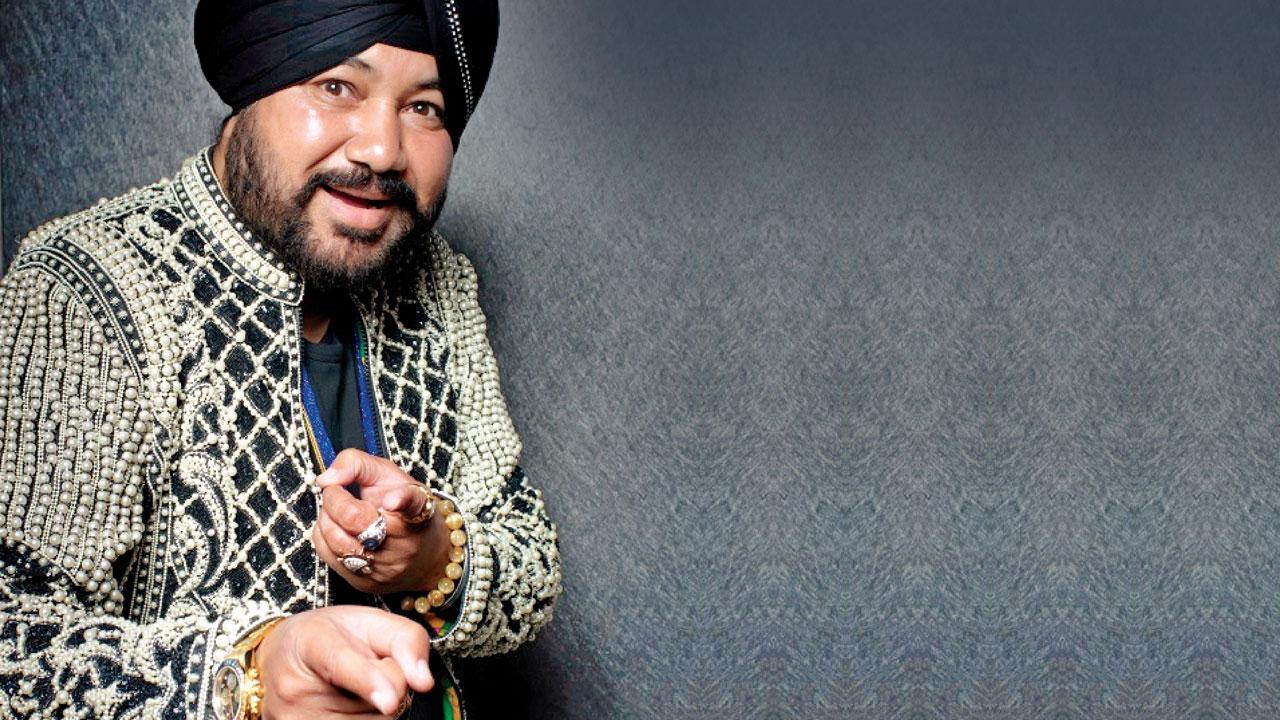
Even as his latest track picturised on Ram Charan is being lauded for blending Punjabi and south Indian music, Daler Mehndi says he has been bridging the cultural divide right from the onset of his career
Sonia Lulla (MID-DAY; April 1, 2024)
North meets south in the latest release of Game Changer as Punjabi music veteran Daler Mehndi renders a track for actor Ram Charan. Jaragandi, which translates to ‘let it happen’, is set against Punjabi beats, even as it boasts a south Indian flavour.
“The song was the vision of the music composer Thaman [S], with whom my last song, Banti Poola Janki, was created. He said he had a number that required my voice. I have sung both the Telugu and Hindi versions of this song. At the time of dubbing this number, I did not know who I was singing for, or even the film’s plot. I simply enjoyed the energetic composition, as I love Thaman’s work,” says Mehndi.
The singer believes that the track, also featuring Kiara Advani alongside Charan, appropriately blends its arresting visuals with the “vibrant composition”. “When I see [my voice being] featured on the Oscar-winning actor Ram Charan, my happiness knows no bounds,” he says of Charan, who starred in RRR (2022) that bagged an Academy Award in the music category.
Ask him if the boundaries between the music industries of the north and south are fading, and he says, “Music is universal and is not bound by language, cultures, faith, or physical boundaries. In time, every song gets its due audience. The cultural blend, in my musical journey, happened in 1995, and I want to thank myself, Daler Mehndi, for this amalgamation. Bolo Ta Ra Ra seeped into every nook and corner of the country—north, south, east, and west. In fact, in Kerala alone, it sold two lakh units on its release. I am honoured to have my music break these boundaries.”
It is during his dubbing session for the title track of an upcoming Punjabi film that Mehndi responds to our questions. With a slate of projects in his kitty, he says he has his eyes pinned on his acting stint in Welcome To The Jungle.
“I am thoroughly enjoying my debut in acting for Ahmed Khan and Feroz Nadiadwala’s film. This is new to me, and I am making the most of each day on the shooting sets. In April, I begin my concerts. Soon after, I will announce my new EP,” he signs off.
Imran Khan pushed me to revisit my hobby of modifying cars-Akshay Oberoi
8:05 AM

Onkar Kulkarni (BOMBAY TIMES; October 13, 2023)
A motor enthusiast, Akshay Oberoi loves to give his four-wheelers a makeover. It’s a hobby that he picked up while growing up in New Jersey, a city that he says is full of garages that modify cars. After he moved to Mumbai and got busy with a career in showbiz, he didn’t pursue his interest, until the lockdown happened. During those months, with ample time on hand, he revisited his hobby.
Talking about how it all started, Akshay says, “While growing up in the US, my parents wouldn’t dump old cars, instead they would just hand it down to my brother and me, which we would turn around and try our best to make them look new and swanky.”
Sharing his experience of modifying his sedan recently, the actor says, “My wife bought the car in 2010 when she first moved to India, and we used it extensively. Recently, we thought of buying a fancy car, but that would cost a bomb. So, that’s when I thought of modifying it and making it look brand new. I imported a body kit, changed the engine, and added a new suspension and bigger wheels. I also asked the mechanic to work on the car’s sound (so that the car roars every time it vrooms by).”
His actor buddy Imran Khan is the one who encouraged him to go back to his passion for revamping cars. “Imran, too, is a lot into modifying cars. I remember just before the lockdown, he got a new car. He started fiddling with it. We found a garage and did the modification. Otherwise, this hobby was dormant for all these years, as the last time I thought about doing something like this was in 2007 when I was in New York. After we worked on Imran’s car, I got kicked about working on mine. In Mumbai, I don’t see this modification culture too much. It’s in Kerala. I have always been a pro; I have modified three other cars of mine before this one. I have always been interested in design aesthetics in general,” he says.
Amidst the buzz about Imran making a comeback into movies as an actor, Akshay says that he has missed watching Imran on the big screen for so many years. He says, “With friends as close as Imran, who you understand so well, I would never want to force him to do anything that he doesn’t want to do. Of course, I would love to see him in a film again. I would love to act with him. I feel I found a place here (in the industry) because I have been working so consistently. It could have happened to him too if he would have been still working.”
A Bollywood actor’s car you would like to modify?
Saif Ali Khan has really cool cars. He has this beautiful car he showed up with during the shooting of our film Kaalakaandi. It’s a vehicle you can push to its maximum. It is already very fast and powerful, but you can do a lot with it. It is an American muscle car, and these cars have a lot of room for modifications.

Travelling will undoubtedly help Radha develop a plethora of skills and create lasting memories-Shriya Saran
8:35 AM

Madhupriti Mitra (HINDUSTAN TIMES; October 11, 2023)
From exploring enchanting international destinations to immersing herself in the diverse cultures of India, Shriya Saran has consistently set remarkable travel goals over the years. Recently, the actor celebrates her 40th birthday in Kerala along with her family, as she wanted her toddler to soak up the rich tapestry of Indian culture.
“I made the choice of visiting Kovallam with my daughter to let her experience the serene environment. Also, my husband, Andrei Koscheev, had a strong desire to visit Kerala. While we spent limited time there, it was an absolutely amazing experience,” she says, adding, “We were in awe of the caves and the beaches that surrounded us. We also made a thrilling road trip to Kabini, where we savoured the flavours of Karnataka cuisine. The place offered authentic delicacies that were different from our usual culinary experiences.”
The Drishyam 2 (2022) actor and her husband want their daughter Radha to explore as many wonders of India as possible.
“I want my two-year-old to visit the Ellora Caves (Maharashtra) and other remarkable places. We still have a plethora of unexplored destinations in the eastern part of India, such as Darjeeling (West Bengal) and Assam. And I’m eager to take my daughter and husband to Hampi (Karnataka) and show them the rich culture, food and temples of Chettinad as well,” Saran says.
The RRR (2022) actor took the initiative to introduce her daughter to travel at a very young age by visiting Russia when she was just seven months old.
“It breaks the monotony of being confined to the familiarity of home. Just like Radha developed a fondness for pasta during her time in Italy, she has also discovered her taste preferences through our adventures. While exploring different cuisines during our travels, she sometimes finds them delightful, while other times they fail to impress her,” Saran added.
She believes planning a vacation with kids needs careful planning, especially when choosing the right destination. “It should align with their interests and preferences. There’s no point in taking them to a place where they won’t enjoy or cherish the experiences, as those moments will fade away from their memories. However, if you introduce them to an intriguing place where they can revel in the joy of just being there, they will undoubtedly develop a plethora of skills and create lasting memories,” she concludes.
In my head, I don’t feel 40. In fact, I feel like I am 18-Shriya Saran
9:37 AM

Sugandha Rawal (HINDUSTAN TIMES; September 11, 2023)
Shriya Saran turns 40 today and doesn’t want to be hush-hush about it. She’s embracing her age as she believes it’s no longer a hindrance for female actors in the industry. “I’m entering the 40-year club today. While we need to be healthier and fitter, I don’t think age matters,” the actor says, adding, “In my head, I don’t feel 40. In fact, I feel like I am 18, because I have that kind of energy and also with [regard to] the work that I am getting to do nowadays”.
She credits this forward thinking to actors Kajol and Kareena Kapoor Khan, who have broken the glass ceiling for other female actors. “They have opened up things for us and we followed in their path. Kajol didn’t give a s**t about the world; she got married when she wanted to, had a kid and returned [to work] when she wanted to. Kareena worked all throughout her pregnancies. I didn’t have the guts [to do that] when I was pregnant. They’ve shown another level of confidence and I respect that,” says the Kabzaa actor.
While Saran is still big on birthday celebrations, becoming a mother has given her a new perspective: “I’ve realised my birthday is a day [of celebration for] my mother. I wanted to do something special for my parents, but since my father underwent knee surgery, I will do it later on.”
SHRIYA’S BIRTHDAY CELEBRATIONS
“I will be travelling a lot for my birthday. I will be going to Kovalam with my daughter Radha and husband Andrei Koscheev, who hasn’t been to Kerala. Later, I want to go to Maldives and Kashmir as well.”
Onam is one day in the year where I go all Malayali. I love dressing up-Malavika Mohanan
8:08 AM

Renuka Vyavahare (BOMBAY TIMES; August 29, 2023)
Malavika Mohanan’s gorgeous house in Mumbai is buzzing with activity for Onam. Spread over a period of 10 days, the actress takes us through the festivities at her home, fond memories and more.
Showing us the flower rangoli in her house, she says, “As a child, one of my favourite things about Onam was pookalam. On Diwali, you make rangoli with powder, on Onam we make pookalam, which is rangoli made with flowers. I remember my mom going to the market early in the morning to pick fresh flowers. My school friends would come over and we would together make the flower rangoli; it felt like an exciting craft project. As we got older, we started choosing designs, which flowers to buy, while mom got busy preparing Onam Sadhya (traditional feast for Onam).”
Having her roots in Kerala and raised in Mumbai, Malavika has had the best of both worlds. She elaborates, “Onam is essentially a harvest festival. It is one of the most celebrated festivals in Kerala. Extended 10-day festivities take place there with folk dance and performances. Temples are lit up and everything smells of flowers. I grew up in Mumbai, so I didn’t quite participate in all of this. Here, Onam is about reconnecting with your roots, Kerala silks and family lunch.”
This festival isn’t complete without the delicious Sadhya
Talking about it, Malavika explains, “Quintessential Onam Sadhya is served on a banana leaf and is purely vegetarian. It’s a very intricate process because you are cooking so many items. There are at least 10 items on the leaf. My mother is an amazing cook and makes everything from scratch. Her prep work starts two to three days in advance. If I were to name my favourite dish, it’s avial curry and pappadam.”
The traditional Kasavu sari is a hot favourite, too
The actress loves her saris and gold temple jewellery. She says, “I am a big lover and supporter of Indian textiles. We have such amazing variety. Every state has a distinctive style with Kerala having Kasavu. This is one day in the year where I go all Malayali. I love dressing up.”
Subscribe to:
Posts (Atom)