Showing posts with label Katy Mirza. Show all posts
Showing posts with label Katy Mirza. Show all posts
Stardust, the magazine that taught us paparazzi rules, turns 50. Shobhaa De goes down memory lane
8:08 AM
Jane Borges (MID-DAY; March 14, 2021)
Shobhaa De was all of 23, when she took up the reins of Stardust, the monthly film and gossip magazine, which launched in February 1971, literally with a bang. Its inaugural issue cheekily asked, “Is Rajesh Khanna secretly married?” sending the Hindi film industry in a tizzy. Turns out, this was the beginning of the magazine’s tryst with scoops and scandals. “Stardust was a toofan, a hurricane... it was like nothing else in the market. The idea was to shake up the film industry and make readers sit up!” says De, the founding editor of the magazine, which just turned 50. During her 11-year stint with the publication, De went on to become one of the most intrepid editors, daring to push the envelope of film journalism, issue after issue.
Until before Stardust, De says, “there were only tame, goody-goody players on news-stands”. “Film magazines ran sugar coated, PR stories about a star’s pet Pomeranian or a dull photo shoot featuring star couples posing decorously next to plastic flowers,” she remembers. Stardust, she says, smashed all the stereotypes, emerging as a powerful game changer—not just in the realm of movie fanzine journalism, but across the board. “It was witty, bold, irreverent and deliciously wicked. It went where no others wanted to go—scandals, affairs, exposes. What is showbiz without masala? Stardust presented a far more thrilling picture, without glossing over the gory bits. It was catering unashamedly to the voyeuristic interest that fans have in the private lives of their favourite screen idols. Nobody wants a recipe for chutney from a sizzling star. Give us the dirt! Spill the beans—that’s human psychology,” shares De of the reason for the “aggressive approach” adopted by the magazine.
De recalls the time when Raj Kapoor initiated a lawsuit against them. “We had filed a review of Satyam Shivam Sundaram [1978]—his magnum opus—and titled it Satyam Shivam Boredom.” Court cases, of which they had their fair share, didn’t pull the plug on their writing. They confronted them with a “bring it on” attitude. “Stardust did not depend on movie ads for revenue. We could afford to cock a snook at all the players—and thereby retain our independence.” There were also the big shockers, like the cover story in August 1975, which screamed, “Will the Bachchan Marriage Survive Inspite of Zeenat?” “Every scoop had some amount of salaciousness built into it.”
Most readers of Stardust will, however, remember the magazine for its easy-breezy writing style and catchy Hinglish. The colloquial lingo was born organically. “Essentially, it was street speak—what we call Bambaiya or tapori talk. It was a new, unbridled way of expression. At the time, readers said we used Hinglish because our English was weak. But, to play with language and manipulate it to create a fresh vocabulary requires risk, confidence and a certain mastery over words. Mighty dailies started to use Hinglish—political headlines sounded like Stardust cover stories! Our column, Neeta’s Natter was constantly quoted.”
At one point, the magazine was so popular that even film stars, who loved and hated it in equal measure, didn’t miss the opportunity of a feature. “Our approach was not just imaginative, but also innovative. We got top stars to pose for daring shots that had the potential to shatter their carefully constructed ‘wholesome’ image. But, they gamely went along with our out-of-the-box ideas because they realised the publicity value of those pioneering shoots. Even our gossip pages carried exclusive shots of stars partying—these pictures were the forerunners of the paparazzi culture that followed,” says De, who after Stardust, went on to launch Society and subsequently, Celebrity.
Having the “gutsy” Nari Hira as publisher to back their product, says De, helped take Stardust to new heights. “His tabloid style formula totally transformed film journalism. Nothing was sacred. Nobody was spared. We derived our spunk and daring from the boss. He backed all our stories robustly, even when it came to nasty and expensive court cases. He went where rivals feared to enter, and taught his team to swim with the sharks.”
De’s top 5 picks

December 1980
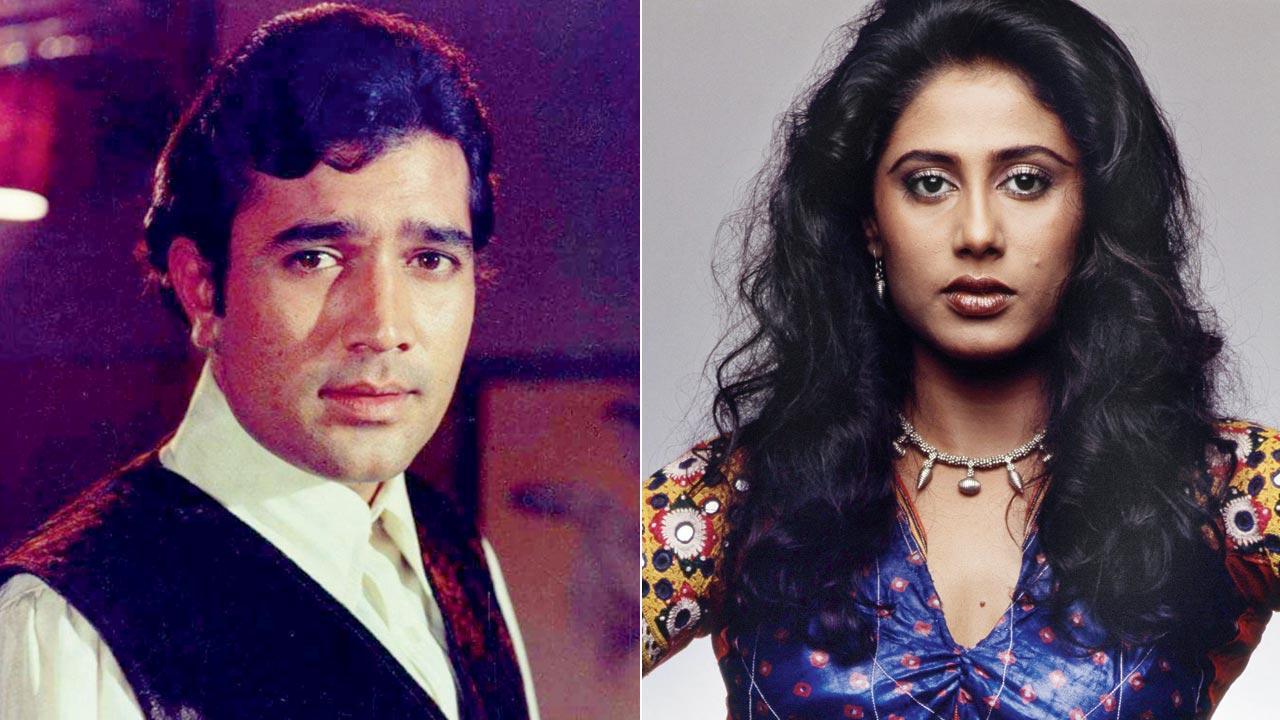
This was the quote we ran on the cover after interviewing Smita Patil’s wonderful, outspoken mother. Patil was a personal favourite of mine—I knew her quite well, and admired her talent, beauty and transparent nature.

November 1972
Here was an unconventional superhero like Vinod Khanna, unafraid to say it like it is. He was a good friend of Stardust, and got featured several times. We gave him the ‘Sexy Sanyasi’ tag when he joined the Rajneesh Ashram in Oregon and walked away from Bollywood.

February 1971
The cover image was notably ghastly! But the issue sold out! We doubled our print run from the next issue. The “scoop” was personally given to Nari Hira by Rajesh Khanna’s then girlfriend Anju Mahendru’s mother. It was Stardust that had dubbed him, “The Phenomenon”. Khanna still retains that title according to me. The madness around him has not been matched by any other star, the Khans included.

January 1972
Stardust had given Dharmendra the ‘Garam Dharam’ tag which he lived up to. The story detailed his many liaisons, and he didn’t have a problem with the reportage.

August 1974
This was declared by Katy Mirza, the lovely Parsi girl from Mumbai who went to London and became a Playboy Bunny. It was a candid story and she spoke freely about body-image at a time when nobody discussed such terms.
Katy Mirza passes away; Khalid Mohamed pays tribute to actress who also worked for Playboy
8:01 AM

Tracing the Playboy Bunnydom to Bollywood journey of the yesteryear sensation who succumbed to cancer at her central London home a week ago
(MUMBAI MIRROR; March 24, 2017)
No one cried for Katy Mirza, the pleasure principle of the soaring 1970s and ’80s. Not in Bollytown at least. She passed away in her central London home, close to Marble Arch, after warring with cancer, last Thursday.
Her cremation will be held today in the city which she had made her home for decades. A single mother, she doted on her son, Firoz.
Aapri Katy, according to most accounts, breathed her last at the age of 67. Towards her end days, she was far too incapacitated to keep in touch even on whatsapp with her friends in Mumbai. Actress Anju Mahendru and Rabiya Khan, mother of the late Jiah Khan, were among her besties.
 Born Katiya Mirza in Aden, hers was evidently a long and winding
journey. Moving from the port city of Yemen to London and then staying
on the more genteel side of the railway tracks on Mumbai’s Grant Road,
she went on to maintain an elegantly appointed apartment in Juhu close
to a school’s bustling compound.
“The Juhu house would remain locked except when Katy jetted in two or three times a year,” said a source — a source I call him since he didn’t wish to be named — adding, “She was a happy woman, with a booming laugh. Nothing would faze her, except whenever anyone mentioned the names of two senior film heroes. She had never forgiven them for treating her — how should I say it — as a sex object?”
Come to think of it in the pre-Twitter era, Ms Mirza was vulnerable to sexism unpunctuated. Today, Sunny Leone can fire back salvos on the networking sites, and correctly so. If a boorish TV anchor body-shames her, he will get a troll-punch back on his jaw. Not so the Grant Road girl, who became the target No. 1 for puns of the butt-and-bust kind.
Lore has it that the size of her breasts were surgically reduced by ten inches. She didn’t retaliate. Anyway what the hell, practically every magazine — the glossies as well as their country cousins — were tripping over themselves to feature her on the cover. Sold-out issues were guaranteed. And the lady didn’t ever segue into the coy mode or coin catchphrases to boost her sex appeal, no instaquotes on the lines of “jo dikhtahai woh bikta hai.”
The story of Katy Mirza, indeed, is the stuff that biopics are made of today. Snag: the pieces in the puzzle would have to be imagined or researched extensively. All that’s known categorically is that the daughter of an income-tax commissioner once studied graphic design in London. A U-turn next: a job at the city’s Hilton Hotel where she was spotted by the roving scouts of Playboy magazine, whose centrespreads were the prime source for X-rated entertainment in print.
The magazine’s Bossman Hugh Hefner, yesteryear’s closest version of Donald Trump, auditioned the Hilton employee. And a Playboy Bunny was born, posing for the centrespreads frequently reserved for winners of beauty pageants and top-of-the-line models.
It’s a swifter-than-a-blush stay in Bunnydom. Perhaps that impelled her to think Bollywood, or perhaps some filmmaker made her an offer she couldn’t refuse, only to realise that there are no free offers in any show town. Her contemporary, Persis Khambatta, couldn’t quite make whoopee at Bombay’s studios, and sought to ‘star trek’ to Hollywood. Still Katy wasn’t Persis, she followed her dream only to be ghettoised as a starlet. And believe this, she was described as, and I quote, “Every Indian man’s wet dream come true.”
Employed purely for the titillation quotient in A and B-grade movies — take the Amitabh Bachchan-Raakhee breezer Kasme Vaade, the politically controversial Kissa Kussi Ka, the Vinod Khanna-Reena Roy crime drama Jail Yatra and the seven-year-ol itchish Chadhi Jawani Budhe Nu in Punjabi — here was a stairway to no-exit. Chalo London again. Appearances in episodes of the TV series The Garland and The Magician of Samarkhand are cited.
The grapevine of those Bunny days suggest a “closeness” to Hussein bin Talal, the King of Jordan. Subsequently, she fell in love with a man of Pakistani origin, who runs The Lahore Kabab House in East London. They chose not to marry.
The Katy Mirza story wound to a quiet, undramatic end. Whether it was a happy one or a somewhere-in-her heart a disappointing one, I’ll never know.
By the way, unbeknownst to many she would model frequently and once late at night, travelled all alone in a bus from Bombay to Pune to shoot for a scooter ad.
In this context, that aforecited, diffident source, remarked,“If you ask me Katy was an asli braveheart. Only in those days, no one acknowledged her guts.”
I’d go with that totally. Rest in glory, Katy.
Subscribe to:
Posts (Atom)