Showing posts with label Kartick D Nishandar. Show all posts
Showing posts with label Kartick D Nishandar. Show all posts
The Maruti Story makers want the show to represent India at the Emmys: "Maruti is responsible for where Gurgaon is today"
10:12 AM
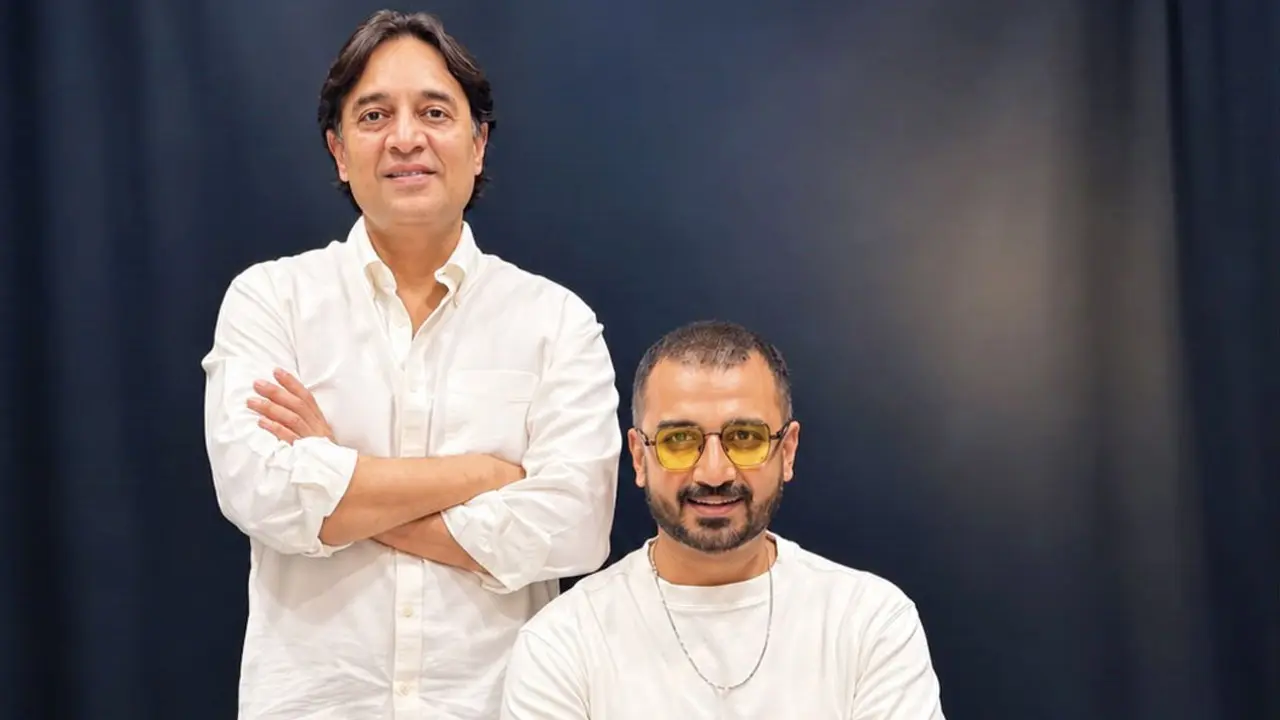
Producers Arjun Singgh Baran and Kartick Nishandar share their ambition as they adapt RC Bhargava’s book ‘The Maruti Story’; say the series will trace the car’s making in a changing India
Mohar Basu (MID-DAY; October 27, 2026)
Maruti’s story is about more than the car that put India on wheels. For Arjun Singgh Baran and Kartick D Nishandar, it is a story of the common man, the making of modern India and a dream that was once met with scepticism overseas. The duo, who are adapting The Maruti Story, based on the book by R C Bhargava, have secured the book rights as well as the life rights of Bhargava, the rights of Suzuki Motors and those of its late chairman Osamu Suzuki. Produced by Baran, Nishandar and Jyoti Deshpande of Jio Studios, the series is being developed as a character-driven drama and not a documentary chronicling the company’s milestones.
“We wanted to tell the story of India’s common man. What better than the Maruti story, around which the common man’s journey has grown? India has grown around it, and places like Gurgaon have grown around it. Maruti is responsible for where Gurgaon is today. It was a no-man’s land, and they built a housing complex there and brought in Delhi Public School, among other things, for the common man. We want to tell stories that impact the common man’s thought process and allow people to see themselves in the characters,” says Nishandar.
The makers acquired the book rights in 2022, but securing the material needed for a screen adaptation was a considerably longer exercise. The process involved negotiating the book rights, individual character rights and personality rights, which took eight to nine months. They had secured the rights around three-and-a-half to four years ago, says Nishandar, and have since spent considerable time developing the screenplay.
“Even if you take the book rights, it does not mean you have the right to tell everyone’s story or talk about every person in it. It is imperative to acquire the rights for the names you are going to use, unless they are in the public domain. The book rights, character rights and individual personality rights are all very important. You have to be convinced as makers before you put your money behind a subject. We were convinced that we wanted to tell the common man’s story, and that is what drove us. We got life rights of R C Bhargava, along with rights from Suzuki Motor Corporation and Osamu Suzuki,” Singgh says.
The series will explore the personal and family arcs surrounding the larger journey, while keeping the common man at its centre. The screenplay is complete, and the makers are moving towards the dialogue stage, with conversations underway with dialogue writers who have worked on leading shows. The ambition, Nishandar says, is to make the story travel beyond India.
“We don’t want to make a documentary or just document facts. We want to talk about characters. The journey of Maruti is a parallel universe, but if people cannot connect with the relatability and the thought processes of the characters, they will not believe the story. Writing is imperative when you are telling any story. If your writing lands correctly, it is your biggest hero. Then come your actors, your director and the ecosystem around it. We are extremely involved in the writing process, and we have finished the screenplay. We want this show to represent India at the Emmys and the Golden Globes. That is also why we took so much time to write it,” says Nishandar.
The production is expected to begin in the first quarter of 2027. The team plans to recreate several locations, including Tokyo, the European Motor Show and Delhi as it existed during the period being depicted. The makers are also preparing to use extensive graphics and visual effects to recreate the era, while ensuring that the production remains faithful to the subject.
At the heart of the story is the moment when Indian officials went looking for an international partner to help build a car that Indians could afford and drive on Indian roads. Nishandar recalls how the ambition was initially dismissed.
“When R C Bhargava and V Krishnamurthy went to Europe and said they wanted to collaborate with someone to make an Indian car that an Indian could afford and drive on Indian roads, they were laughed out of the room. They were asked how India could afford to make a car. That hit Bhargava so strongly that he decided to make the dream come true. He did not have any experience in automobile engineering; he was a bureaucrat. He then looked east, and that is where Japan came in. That is how the collaboration with Suzuki happened,” Singgh says.
The makers believe that this history has a global resonance, particularly at a time when India’s manufacturing capabilities have evolved considerably. Nishandar points to Maruti’s reach, its contribution to the growth of an ancillary vendor ecosystem and the role the company has played in making car ownership accessible to millions of Indians.
“We should proudly say that Maruti has created a vendor community and a global outreach. There are companies making auto parts for Rolls-Royce. The Europeans who looked down upon us at that time are now coming back to India to seek help. This has to be a story told globally, and this is the right time,” he says.
The series will also draw on archival material made available by the Maruti team, including footage from the company’s history. One of the defining moments it intends to revisit is Indira Gandhi presenting the first Maruti 800 key to Harpal Singh. The makers also plan to shoot at the Gurgaon factory, where the space associated with the car’s inauguration still exists.
“We are getting a lot of archival footage from the Maruti team. We are also going to shoot at the Gurgaon factory, where Mrs Gandhi inaugurated the first car. They have opened their doors to us, and we want to make the series as relatable and relevant as possible. But there is a thin line between using archival footage throughout the show and using it only when it is relevant. Otherwise, it becomes a documentary. We will use it to add relevance, not as a substitute for going out and shooting,” Nishandar says.
Subscribe to:
Posts (Atom)