Showing posts with label Kanika Dhillon interview. Show all posts
Showing posts with label Kanika Dhillon interview. Show all posts
Taapsee Pannu refuses to use a stunt double; we are so much in awe of the leaps she takes-Kanika Dhillon
8:16 AM

Having churned out OTT hits with Haseen Dillruba franchise and Do Patti, writer-producer Kanika Dhillon reveals she is developing a drama for theatres after the actioner Gandhari
Priyanka Sharma (MID-DAY; February 25, 2025)
Kanika Dhillon has a new dream. After establishing a wide audience base with the Haseen Dillruba franchise and Do Patti (2024) on OTT, the writer-producer is big-screen bound. “My next after Gandhari will be a theatrical offering. As a writer, I have done big-screen films like Kedarnath [2018] and Dunki [2023]; now, as a producer, the big screen is the dream,” Dhillon reveals.
So, what’s her next all about? She remains tight-lipped about the details, only saying, “The story will be drama pro max.” But before she sets foot in the world of drama, another genre has her undivided attention—action. Gandhari, which marks the writer-producer’s reunion with her frequent collaborator Taapsee Pannu, is currently being shot. Devashish Makhija’s directorial venture revolves around Pannu’s protagonist, a mother who is out to rescue her child.
Dhillon is evidently excited about foraying into the action genre, as she says, “I love action films. Taapsee, at one point, was keen to do action. Our stars usually align. When you start something new, you need someone to take that leap of faith with you.”
In Pannu, she has found a collaborator who, like her, goes all out when telling a story. “Taapsee refuses to use a stunt double. In one moment, I see her pulling off a stunt and we are all clapping, and then I wonder, ‘Has she landed well?’ We are so much in awe of the leaps she takes,” Dhillon shares.
The writer-producer recalls that when Gandhari was announced last year, the industry was “curious” about how Pannu and she would tackle the genre that is believed to be a male domain. Over her 18-year journey, Dhillon says she has battled many such perceptions steeped in sexism. “First, they used to say pulp doesn’t work; then they said women don’t write pulp. Today I am called for panels and they say, ‘You have created an only-pulp franchise.’ Before I get a thumbs up, I always have to cross a ‘No’,” she says, adding that gender stereotypes in the industry aren’t only restricted to what women write, but also extend to their appearance.
“Initially, I used to hear remarks like, ‘Have you come to audition?’ But I decided that I won’t hide behind mota chashma and kurta, or any stereotype of how a writer should be. So, I started dressing up. I was furious with that condescending judgment.”
We have more women in film industry today due to amenities like vanity vans, bathrooms-Kajol
8:52 AM

It’s Kajol first time ever playing a cop, and Kriti Sanon’s first double role. Together they talk about navigating writer Kanika Dhillon’s unpredictable, scary world
Sucheta Chakraborty (MID-DAY; October 20, 2024)
I’ve always loved thrillers. Be it [those by] Agatha Christie, James Hadley Chase or Sidney Sheldon,” producer, author and screenwriter Kanika Dhillon tells us. “There are various artistes, directors and writers who have been influences, [for instance]—David Fincher, in the way he holds tension. I also really enjoy writing thrillers.”
Do Patti, releasing on Netflix this week, is her second thriller this year after the Taapsee Pannu-starrer Phir Aayi Haseen Dillruba, a sequel to 2021’s twisty Haseen Dillruba. Dhillon, however, is quick to point out the differences between the films.
“Hasseen Dillruba was a pulpy thriller, it was in-your-face, loud and unapologetic. Do Patti is more inward, subtler—its unpredictability creeps up on you. These films are at two different ends of the spectrum. I’m really enjoying the diversity and exploring these nuances within the larger genre of thriller,” she shares.
Dhillon has also co-produced the film with its star Kriti Sanon, and shares how the experience taught her of the importance of good collaborators. “It made me appreciate the kind of people I partner with [because] they have your back and you are in it together. One really values that as a new producer.”
Do Patti is a story of siblings, twins, played by Sanon, who do not have “obvious physical differences except for the length of their hair,” the actress points out.
“They were born and brought up in the same environment, and speak in a similar manner. It is their personalities, the way they react to things, their expressions, and their [respective emotional] baggage from their past, that was different.”
And then, there’s Kajol. “The writer and producer in me were doing cartwheels,” Dhillon tells us excitedly of the day the actress accepted the role. The character, a cop assigned to investigate a case involving Sanon’s characters, had to have a sense of authority and believability, especially since much of the story is told from her perspective
“The audience has to instantly connect with her and we knew that Kajol, as an artist, connects hugely with audiences across age groups and borders. [Getting her] was a big win,” the screenwriter admits.
“I have been offered the role of a cop before, but I didn’t want to do a throwaway [role] just because I hadn’t done it before,” shares Kajol. “It had to be done properly and in the right way. I felt that this was the right script for it. I loved it from the get-go.”
Though the script had enough to go by, the character underwent some alterations during the process of filming. “We got a little bit of a dialect and I think when you speak differently, you walk differently. Your entire body language changes,” Kajol observes.
Kajol and Sanon have worked together previously in 2015’s Dilwale. “A lot has changed in her since then,” chuckles Kajol about her co-actress. “Dilwale was [Kriti’s] second film and she’s done a lot more movies in this time. Experience takes its toll, allows you to grow up.” She admits that the Rohit Shetty film didn’t have too many scenes of them together and by comparison, Do Patti was “a more involved” experience. There was “a lot more meat [to work with]” this time around.
The younger actress recalls the time when they shot Dilwale as one when she was still making sense of the world of acting and film sets and was both reserved and in awe of the people and processes around her.
“I don’t think we broke the ice at that point because [we didn’t have a lot to go by]. I am glad that in this film we spoke about other things and discussed scenes.” Besides being a remarkable performer, Sanon points out how Kajol is honest enough to indicate if a co-actor can do better in a scene. “She’s open to things if it’s good for a scene and when there’s a little pat on the back from her, it just means so much.”
Kajol, from a film family herself, who has now effectively worked for more than three decades in the industry, speaks of some of the changes she’s been witness to over the years. Vanity vans, she says, have been a positive change. “We didn’t have them when I started work. It was ridiculously difficult to be on location and change clothes, or use the bathroom. One of the reasons I think we have more women in the film industry today is the proper amenities we have now. It has made a huge difference. I know it sounds small, but it isn’t.”
But there are things she misses about the old days too. “I think one of the great things was that we didn’t have mobile phones. It gave us a lot more freedom and because you didn’t have a phone, you had nothing better to do on set. So, you bonded. When you sat around on a set with another hundred people, you were bound to talk to somebody. And, your friends came over in between shots. I think at that time everything was not so specialized, so a 100-people unit was considered a really big unit. [The industry] has gone from being a small business to a big business. That’s the main difference.”
Anurag Kashyap rightly says Taapsee Pannu and I are both mad. Rani is a mix of us-Kanika Dhillon
8:20 AM
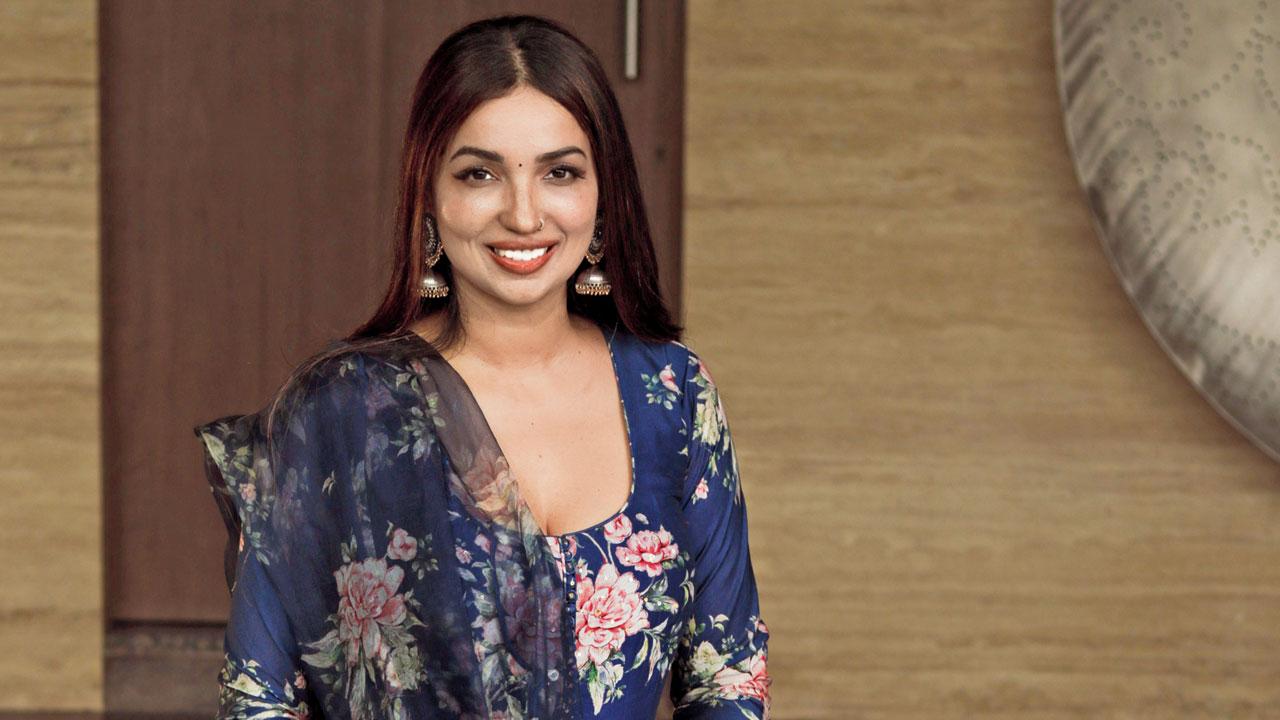
As netizens critique Pannu’s ‘toxic’ character in Phir Aayi Hasseen Dillruba, writer Kanika welcomes the debate; says there must be conversation about imperfect people
Mohar Basu (MID-DAY; August 5, 2024)
In Kanika Dhillon’s words, crocodiles star in a leading role alongside Taapsee Pannu, Vikrant Massey and Sunny Kaushal in Phir Aayi Hasseen Dillruba. Any Bollywood film lover can guess where the inspiration stems from.
“I have been a Khoon Bhari Maang [1988] fan. I’ve always wanted to write a moment that would be a hat-tip to that film. The shot in the trailer, where a crocodile comes next to their boat, is personal,” smiles the writer-creator.
Coming three years after Haseen Dillruba (2021), the romantic thriller follows the lives of Pannu’s Rani and Massey’s Rishu as another suitor enters the equation. Dhillon says the sequel is a pulpy offering, just like the first part.
“I loved creating this world of Haseen Dillruba. The audience’s love was unprecedented. Taapsee was gung-ho [about the sequel] from the concept level. Vikrant backed me completely. The mauj comes from my artistes who tell me to make a movie that’s raw and riskier. Now, we have gone bolder. The audience reminded me last time that they are ready for risqué stories. So, we shouldn’t fear giving them the unconventional.”
But the opinions on the trailer have come by the bulk. The line about Rani being ‘badchallan’ has triggered a dialogue about toxic stories being glorified. The writer-creator says she has been tackling the character’s toxicity since part one.
“A section of the audience picked on these aspects of the film, and rightly so. These are healthy debates. Movies about imperfect characters and their flaws must start these conversations. All reactions that come to me are welcome. But I would feel bad if my stories are met with indifference. I love being polarizing. I’m an artiste. If I have written a story, I’m aware that it is made for all factions of society.”
Rani is the centrepiece of the Netflix film, as she uses love and betrayal to her advantage. Does Dhillon view the character as an alpha?
“Rani is the heroine, Rishu is the hero, Abhimanyu [Kaushal’s character] is the catalyst to the plot. I am Dinesh Pandit [a bestselling novelist in the film], and Pandit’s words dictate everyone’s actions. He is the alpha. The film is edgy, wicked and messy, and the audience should know this is in no way a sanitised world. My actors helped me land the story the way I wanted. Anurag Kashyap rightly says Taapsee and I are both mad. Rani is a mix of us. Taapsee is a woman of spine, and someone who stands her ground.”
You can pick any film of Sushant Singh Rajput’s, and a piece of him will stay back with you-Kanika Dhillon
8:15 AM

Rachana Dubey (BOMBAY TIMES; June 6, 2021)

She further adds, “In my career, I have seen actors going through narrations and asking for time to revert. They don’t commit immediately, but he did.”
Kanika says, “It was so refreshing to sense that he was living the story that I was narrating. It was a complete delight to narrate the script to him. He could feel Mansoor in his bones, he said. It was quite an experience. We sent the final script to him. He sent me a message that with every reading of those 100-odd pages, he could see a new facet of Mansoor. It feels so overwhelming when someone respects your effort in such beautiful ways.”
Recalling the effort Sushant took to get into the skin of the character, Kanika says, “He made the effort to read the screenplay a number of times. I sent him about a hundred pages, he made notes running into 150 pages as to how he will play the part. For the first time, I had come across an actor who could go so deep into his preparation to bring something on paper to life. In everything that happened last year, we forgot to celebrate the actor that Sushant was. You can pick any film of his, and a piece of him will stay back with you. We stayed in touch throughout the filming of Kedarnath and the post-production. I would hang out on the sets in Mumbai, where they shot the pre-climax portions. Initially, I had also been on the sets in Kedarnath.”
Talking about the kind of work Sushant would put into his roles that would not be visible to others, Kanika shares, “In his bid to feel the character closely, he had changed the entire feel of his bedroom. Usko aisa bana diya jaise usmein Mansoor rehta ho! I do my homework as a writer, but Sushant did more than his homework as an actor. I have not come across another person who goes to such lengths. The day I found out what he had done to his room, I knew no one could play Mansoor better. Sushant, like his character in the film, left a void behind. Sushant was the most perfect embodiment of Mansoor in Kedarnath. I had hoped we would work together again, but destiny had other plans.”
Heroes are no longer gender specific-Kanika Dhillon
8:06 AM

Lauded for giving Bollywood a strong female character in Rumi, Manmarziyaan writer Kanika says film reflects today’s women
Mohar Basu (MID-DAY; September 20, 2018)
In shaping a feisty and unapologetically self-centred character in Rumi, writer Kanika Dhillon gave Bollywood a leading lady it was in dire need of. Manmarziyaan is winning appreciation as much for the performances of its lead actors — Taapsee Pannu, Abhishek Bachchan and Vicky Kaushal — as for the strong female voice that takes the narrative ahead.
Dhillon says Rumi is simply a reflection of today’s women. “Rumi is imperfect, free-spirited but she owns up to her decision. She anchors her feistiness and madness with a headstrong quality,” begins Dhillon, adding, “Today, women are claiming their space in the world. Cinema mirrors the changing society and I am glad we are making evolved women characters. We aren’t a weaker sex anymore. Heroes are no longer gender specific. Every generation has certain heroes, women are the heroes of this generation.”
The change can be felt off camera, too — Dhillon has been credited as the creative producer of the Anurag Kashyap-directed film. The writer reveals that she feels empowered in the present scenario of movies where writers get a lot more due than they did a decade ago. “People shouldn’t have to hand things to us on a platter. As writers, we need to create our space with assertive voices. It’s something that is earned and our peers have to support us. The perception is steadily changing.”
With the film having changed hands several times, it was easy to get disillusioned. However, Dhillon says Kashyap — known for his noir thrillers — was the best choice to helm a love story. “The story was my baby and it was crucial to place it in the right hands. Anurag was the best person to direct Manmarziyaan. Only he could have got the edginess and rawness of the plot. It was a collaboration from which I had so much to learn. My biggest takeaway was that I had to be patient.”

Subscribe to:
Posts (Atom)