Showing posts with label Kanika Dhillon. Show all posts
Showing posts with label Kanika Dhillon. Show all posts
Taapsee Pannu returns for Haseen Dillruba 3, with script work officially underway
10:16 AM
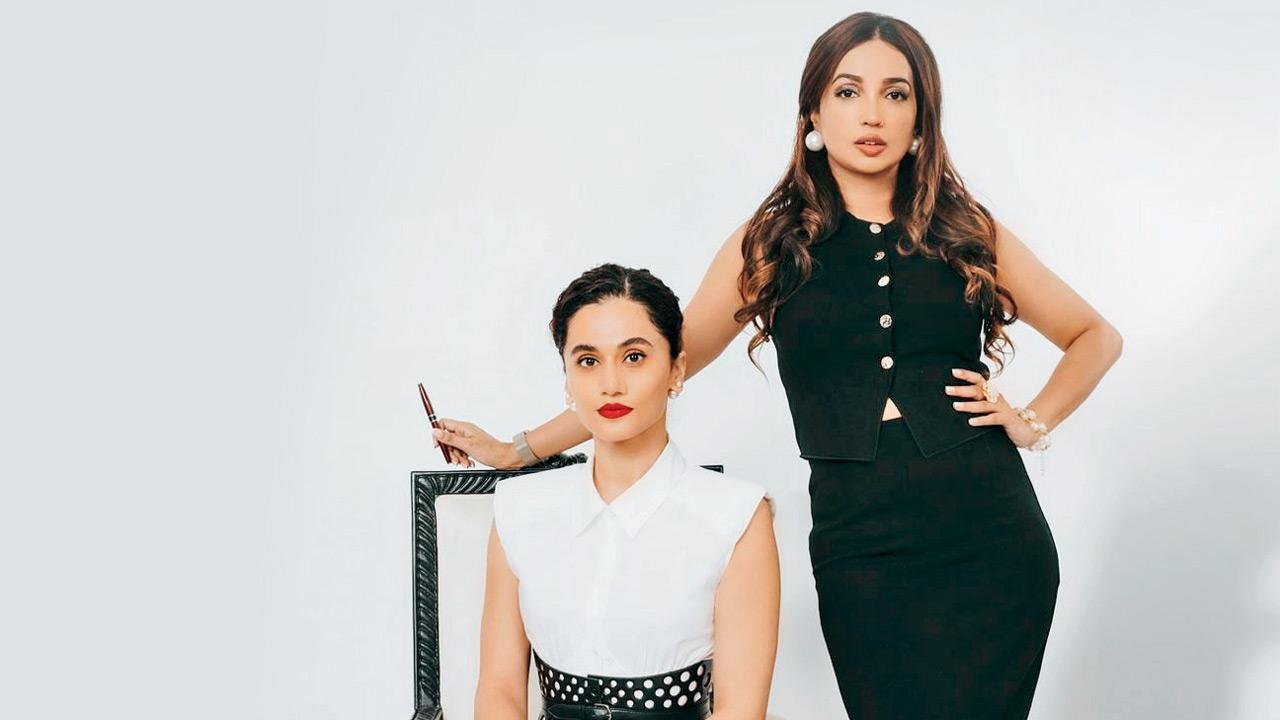
The writing for Taapsee Pannu’s third Haseen Dillruba film has begun, promising more seductive thrills, drama, and high stakes
Priyanka Sharma (MID-DAY; May 4, 2025)
She is back to put her charm on display and seductively woo the men in her life. The fiery femme fatale of one of Netflix’s popular thrillers isn’t done just yet. Taapsee Pannu returns for the third instalment of the Haseen Dillruba franchise. A month after the actor and the film’s writer-producer Kanika Dhillon teased the third edition in an online interaction, mid-day has learnt that work on the script is officially underway.
“The prep is in full-swing. The team knew that the love story between Rani and Rishu [played by Vikrant Massey] with its pulpy narrative had scope for another part,” says a source. The romantic crime thriller originally premiered on the OTT giant in 2021, quickly earning cult status for its mix of small-town charm, seductive tension, and unexpected twists. Its sequel, Phir Aayi Haseen Dillruba, released in August 2024, continuing the twisted tale of love.
Now, insiders suggest that the third part will raise the bar even further. “It is one of the most successful titles for the platform. So, the aim is to create a more fun, juicy and thrilling third part,” the source adds.
Pannu has wrapped up Gandhari and is filming Mulk 2, directed by Anubhav Sinha. Despite her packed schedule, she will dive back into the world of passion and peril by end of the year.
Taapsee Pannu refuses to use a stunt double; we are so much in awe of the leaps she takes-Kanika Dhillon
8:16 AM

Having churned out OTT hits with Haseen Dillruba franchise and Do Patti, writer-producer Kanika Dhillon reveals she is developing a drama for theatres after the actioner Gandhari
Priyanka Sharma (MID-DAY; February 25, 2025)
Kanika Dhillon has a new dream. After establishing a wide audience base with the Haseen Dillruba franchise and Do Patti (2024) on OTT, the writer-producer is big-screen bound. “My next after Gandhari will be a theatrical offering. As a writer, I have done big-screen films like Kedarnath [2018] and Dunki [2023]; now, as a producer, the big screen is the dream,” Dhillon reveals.
So, what’s her next all about? She remains tight-lipped about the details, only saying, “The story will be drama pro max.” But before she sets foot in the world of drama, another genre has her undivided attention—action. Gandhari, which marks the writer-producer’s reunion with her frequent collaborator Taapsee Pannu, is currently being shot. Devashish Makhija’s directorial venture revolves around Pannu’s protagonist, a mother who is out to rescue her child.
Dhillon is evidently excited about foraying into the action genre, as she says, “I love action films. Taapsee, at one point, was keen to do action. Our stars usually align. When you start something new, you need someone to take that leap of faith with you.”
In Pannu, she has found a collaborator who, like her, goes all out when telling a story. “Taapsee refuses to use a stunt double. In one moment, I see her pulling off a stunt and we are all clapping, and then I wonder, ‘Has she landed well?’ We are so much in awe of the leaps she takes,” Dhillon shares.
The writer-producer recalls that when Gandhari was announced last year, the industry was “curious” about how Pannu and she would tackle the genre that is believed to be a male domain. Over her 18-year journey, Dhillon says she has battled many such perceptions steeped in sexism. “First, they used to say pulp doesn’t work; then they said women don’t write pulp. Today I am called for panels and they say, ‘You have created an only-pulp franchise.’ Before I get a thumbs up, I always have to cross a ‘No’,” she says, adding that gender stereotypes in the industry aren’t only restricted to what women write, but also extend to their appearance.
“Initially, I used to hear remarks like, ‘Have you come to audition?’ But I decided that I won’t hide behind mota chashma and kurta, or any stereotype of how a writer should be. So, I started dressing up. I was furious with that condescending judgment.”
If producer pays writers more, and they deliver, it’s the producer who makes more money-Niren Bhatt
9:32 AM
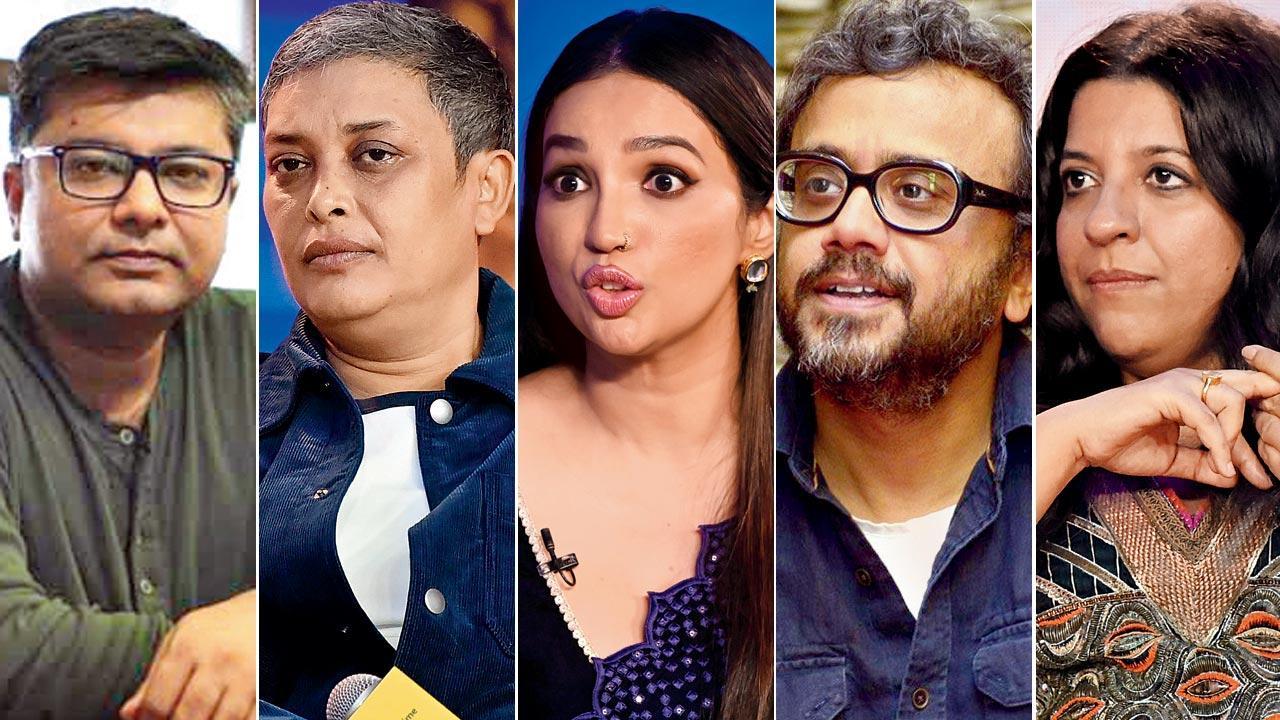
Niren Bhatt; Reema Kagti. Pic/Kirti Surve Parade; Kanika Dhillon. Pic/Satej Shinde; Dibakar Banerjee. Pic/Getty Images; Zoya Akhtar. Pic/Kirti Surve Parade
At the recently concluded 7th edition of the Indian Screenwriters Conference, writers spoke about the industry’s unhealthy practices that are hurting the ones who shape the backbone of the project—the story
Priyanka Sharma (MID-DAY; February 23, 2025)
Never seen before”, “phenomenal”, “relevant”, “hatke” are just some of the adjectives stars often deploy to sell the stories of their next releases during promotions. But one hardly hears the names of the writers, whose work prompt stars to green-light their projects. But the invisibilzation of screenwriters in the Hindi film industry doesn’t begin when a film nears release. It goes back to the beginning of the process, when a writer’s words start taking shape.
As we catch Niren Bhatt at the seventh edition of the Indian Screenwriters Conference held by Screenwriters Association (SWA), the man behind last year’s blockbuster Stree 2, says a brainstorming session between a director and a writer ends up with the former taking the writing credit. “Directors stealing credit is a practice that has been going on for years. The final credit slate will feature them as both director and writer of the project, while the actual writer is given credit somewhere else.”
The fight for rightful credit is exhausting and many a time, a writer is forced to make do with the remuneration and move on. But how is that struggle any better, when more often than not a writer’s pay is dependent on everything else but his/her story. “A writer friend of mine recently showed me his contract with a studio, which I will not name, where it was mentioned that the tranches (of his fee) were dependent on the actor’s approval and once the director comes in, then on his approval. Those kinds of contracts are unhealthy,” shares Bhatt, who also had his share of unfair contracts at the beginning of his career, but success has made negotiations easier. “People need to realize that if you pay writers more, and they deliver, it’s you who makes more money,” he adds.
“Young writers sit with bigger writers or producers and directors, soak in all that these people say, and go home and write. And then, they get the last credit. Just talking a lot doesn’t make you a writer. Only the ones who writes, is a writer. This is one of the biggest challenges that young writers are struggling with today,” says filmmaker-writer Reema Kagti, behind acclaimed works like Talaash, Made In Heaven and Dahaad. She makes her point in her art as well. Her upcoming work, Superboys Of Malegaon, penned by Varun Grover, features an emotionally charged dialogue, which says, “Writer baap hota hai, writer”.
But a mere small talk with any screenwriter in Mumbai will reveal that a writer actually the neglected child of a large family. From stolen credits to abominable fee, Bollywood screenwriters pay a heavy price for every written word. “It’s obnoxious,” says Zoya Akhtar, Kagti’s frequent writing partner and co-producer on Superboys Of Malegaon.
She breaks down why exploitation of writers is casual. “Because everyone thinks they can write. I can’t think I can act or be a cinematographer, as these are very ‘specialized’ skills. With writing, everyone thinks they know end mein kya hona chahiye. They don’t understand a lot of the times what the integrity of the story is.”
Filmmaking doesn’t happen in isolation, it thrives on collaborations, which naturally involve suggestions and inputs from cast and crew members. But that shouldn’t dilute a writer’s role and position, Akhtar says. “Every actor I have worked with isn’t a prop. They are talented beings, who have their process to reach a character, whether we have written it or not. They will come up with their suggestions. As a filmmaker or a writer or a showrunner, it’s your job to filter it, by thinking, is this adding to the larger narrative or the theme I want to sell?”
Screenwriter-producer Kanika Dhillon is reminded of her initial days, when producers and directors would be baffled at her demands. After all, the industry notoriously expects writers to forgo fairness in lieu of work offered to them.
“When I used to go for meetings with producers or directors, their main grouse would be, ‘How are you talking like this? This has never happened here. No writer asks or says this. Hence, you can’t get it’. So, every time I have crossed a milestone, I have made sure to speak about it. So others can do it as well,” she says. Even today, after Dhillon has created a successful filmography that features titles like Manmarziyaan, Kedarnath and Haseen Dillruba (Part 1 and 2), she is asked to not speak up for writers’ rights. “I am told, ‘Arey, you have achieved so much. Why do you need to speak up?’ But why should I not? My success has emboldened me.”
Bhatt believes speaking up is the only option. “Don’t say ‘I am just a writer. No one bothers about me’.” But self-victimization is only natural, when an artiste is constantly pushed to a corner. That’s where community support becomes essential, says National Award-winning filmmaker-writer Dibakar Banerjee.
“A lot of the writers, who work here, are not from Mumbai. They try to write, survive, and face all the existential and creative questions. They are trying to improve their craft. In this kind of a situation, having a community with shared problems, thoughts and ecosystem really works. A community is most important so that nobody is left alone. If you are left alone, you will be exploited. If you are in a community, it’s that much harder to exploit you because we all stand for each other,” he says, lauding the efforts of SWA to uphold a writer’s rights and back him/her in time of need.
"I really hope that this kind of building from strength to strength really reaches that level, where no writer at least who is a part of SWA, feels alone. It’s when you feel alone, you start getting depressed, having doubts about your craft and start listening to idiotic requests from a studio or a platform, who doesn’t understand what you are trying to do. In every which way you become vulnerable. Writers in this city are the most needed and the most neglected at the same time. I have seen the advantages of having a community. That can be anything, your crew, a number of like minded people, who are there. Like, I just got a call from a writer and he had something to say, which was very hard to share. But he shared. That’s what having a community feels like.”
Taapsee Pannu takes my mad ideas and runs wild with them-Kanika Dhillon
8:28 AM
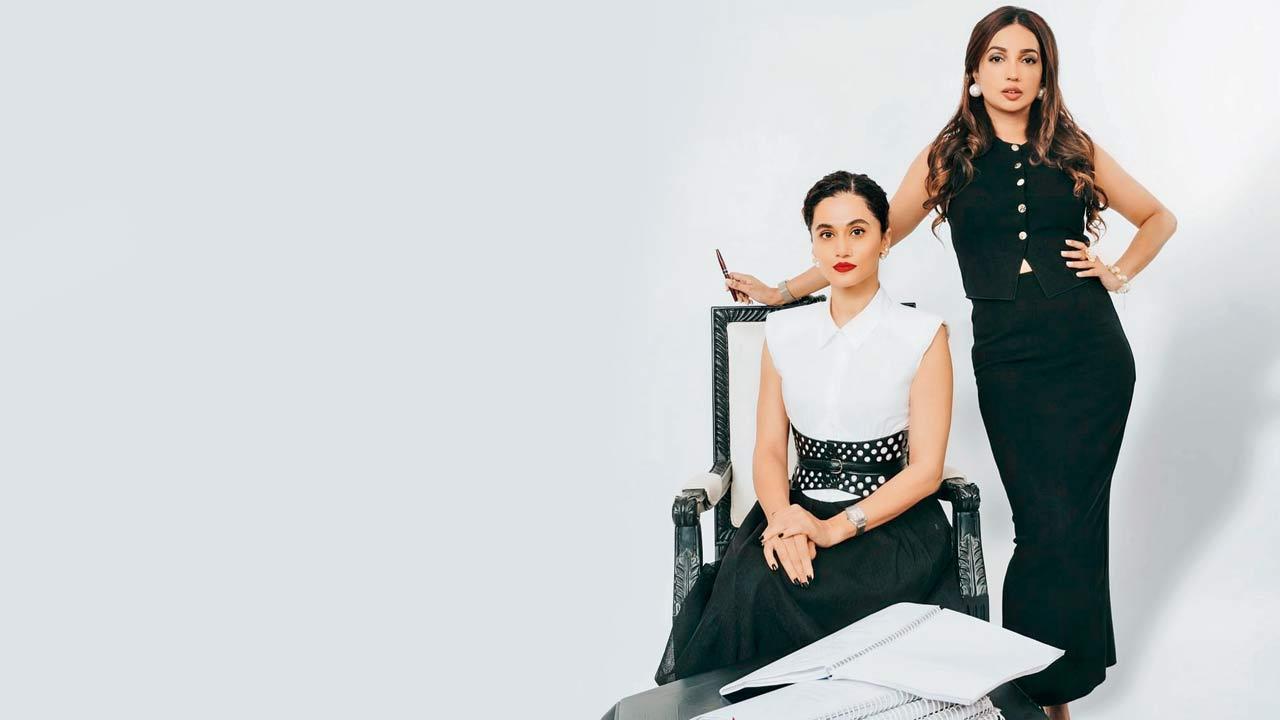
Writer-producer Kanika Dhillon, whose Do Patti has become 2024’s most-watched OTT film, on how her creative synergy with Taapsee Pannu has led them to make the woman-led actioner, Gandhari
Mohar Basu (MID-DAY; January 25, 2025)
There is no formula to a successful movie. But looking at writer-producer Kanika Dhillon’s filmography may make you think otherwise. With Do Patti (2024), she has delivered the most watched OTT film of the year, as per viewership data. In 2021, she achieved the feat with Haseen Dillruba. When we get on a call with her, that’s what we begin with: Has she cracked a formula to success?
“There is never a formula,” she laughs. “No subject is niche; the tryst is to make it accessible to a larger audience. That’s how even when I take a layered theme like domestic abuse, it has a large audience engagement. You have to determine early on who you want to reach out to. According to that, you determine the film’s syntax.”
Armed with these lessons, Dhillon has kicked off her next OTT film, Gandhari, helmed by Devashish Makhija of Joram (2023) fame. The two are as different as chalk and cheese. “It’s proven that the DNA of the most able babies are the ones that come from different bloodlines. Devashish is indie, and I’m [mainstream]. I think Gandhari will be the best baby,” says Dhillon.
It’s designed as a full-blown actioner led by Taapsee Pannu, who plays a mother out to rescue her abducted child. “I’m an action junkie. I watch two to three action films a week. What’s a gamble is doing an action film with a female at the centre. It’s not done often, but Gandhari will stand out because it’s also a compelling story.”
This is her sixth outing with Pannu after Manmarziyaan (2018), Rashmi Rocket (2021), the Haseen Dillruba franchise, and Dunki (2023). Working with the actor, she says, is great for a simple reason. “She takes my mad ideas and runs wild with them. Our sense of righteousness and rage have brought Devashish, Taapsee and me together. The hyper-masculine stories have taken over. Gandhari is perhaps the antidote we need.”
Even as male-led actioners are dominating the scene today, Dhillon notes that the tide is slowly turning. “The focus in the past year has been on stories. Of course, there are challenges with female-led films. The ambition is not always supported by the finance it deserves. But if a story is made on the correct budget and is engaging, you will get recognition.”
We have more women in film industry today due to amenities like vanity vans, bathrooms-Kajol
8:52 AM

It’s Kajol first time ever playing a cop, and Kriti Sanon’s first double role. Together they talk about navigating writer Kanika Dhillon’s unpredictable, scary world
Sucheta Chakraborty (MID-DAY; October 20, 2024)
I’ve always loved thrillers. Be it [those by] Agatha Christie, James Hadley Chase or Sidney Sheldon,” producer, author and screenwriter Kanika Dhillon tells us. “There are various artistes, directors and writers who have been influences, [for instance]—David Fincher, in the way he holds tension. I also really enjoy writing thrillers.”
Do Patti, releasing on Netflix this week, is her second thriller this year after the Taapsee Pannu-starrer Phir Aayi Haseen Dillruba, a sequel to 2021’s twisty Haseen Dillruba. Dhillon, however, is quick to point out the differences between the films.
“Hasseen Dillruba was a pulpy thriller, it was in-your-face, loud and unapologetic. Do Patti is more inward, subtler—its unpredictability creeps up on you. These films are at two different ends of the spectrum. I’m really enjoying the diversity and exploring these nuances within the larger genre of thriller,” she shares.
Dhillon has also co-produced the film with its star Kriti Sanon, and shares how the experience taught her of the importance of good collaborators. “It made me appreciate the kind of people I partner with [because] they have your back and you are in it together. One really values that as a new producer.”
Do Patti is a story of siblings, twins, played by Sanon, who do not have “obvious physical differences except for the length of their hair,” the actress points out.
“They were born and brought up in the same environment, and speak in a similar manner. It is their personalities, the way they react to things, their expressions, and their [respective emotional] baggage from their past, that was different.”
And then, there’s Kajol. “The writer and producer in me were doing cartwheels,” Dhillon tells us excitedly of the day the actress accepted the role. The character, a cop assigned to investigate a case involving Sanon’s characters, had to have a sense of authority and believability, especially since much of the story is told from her perspective
“The audience has to instantly connect with her and we knew that Kajol, as an artist, connects hugely with audiences across age groups and borders. [Getting her] was a big win,” the screenwriter admits.
“I have been offered the role of a cop before, but I didn’t want to do a throwaway [role] just because I hadn’t done it before,” shares Kajol. “It had to be done properly and in the right way. I felt that this was the right script for it. I loved it from the get-go.”
Though the script had enough to go by, the character underwent some alterations during the process of filming. “We got a little bit of a dialect and I think when you speak differently, you walk differently. Your entire body language changes,” Kajol observes.
Kajol and Sanon have worked together previously in 2015’s Dilwale. “A lot has changed in her since then,” chuckles Kajol about her co-actress. “Dilwale was [Kriti’s] second film and she’s done a lot more movies in this time. Experience takes its toll, allows you to grow up.” She admits that the Rohit Shetty film didn’t have too many scenes of them together and by comparison, Do Patti was “a more involved” experience. There was “a lot more meat [to work with]” this time around.
The younger actress recalls the time when they shot Dilwale as one when she was still making sense of the world of acting and film sets and was both reserved and in awe of the people and processes around her.
“I don’t think we broke the ice at that point because [we didn’t have a lot to go by]. I am glad that in this film we spoke about other things and discussed scenes.” Besides being a remarkable performer, Sanon points out how Kajol is honest enough to indicate if a co-actor can do better in a scene. “She’s open to things if it’s good for a scene and when there’s a little pat on the back from her, it just means so much.”
Kajol, from a film family herself, who has now effectively worked for more than three decades in the industry, speaks of some of the changes she’s been witness to over the years. Vanity vans, she says, have been a positive change. “We didn’t have them when I started work. It was ridiculously difficult to be on location and change clothes, or use the bathroom. One of the reasons I think we have more women in the film industry today is the proper amenities we have now. It has made a huge difference. I know it sounds small, but it isn’t.”
But there are things she misses about the old days too. “I think one of the great things was that we didn’t have mobile phones. It gave us a lot more freedom and because you didn’t have a phone, you had nothing better to do on set. So, you bonded. When you sat around on a set with another hundred people, you were bound to talk to somebody. And, your friends came over in between shots. I think at that time everything was not so specialized, so a 100-people unit was considered a really big unit. [The industry] has gone from being a small business to a big business. That’s the main difference.”
Makers of Do Patti construct set with a huge chess board and flashing lights for promotional song shoot
2:44 PM
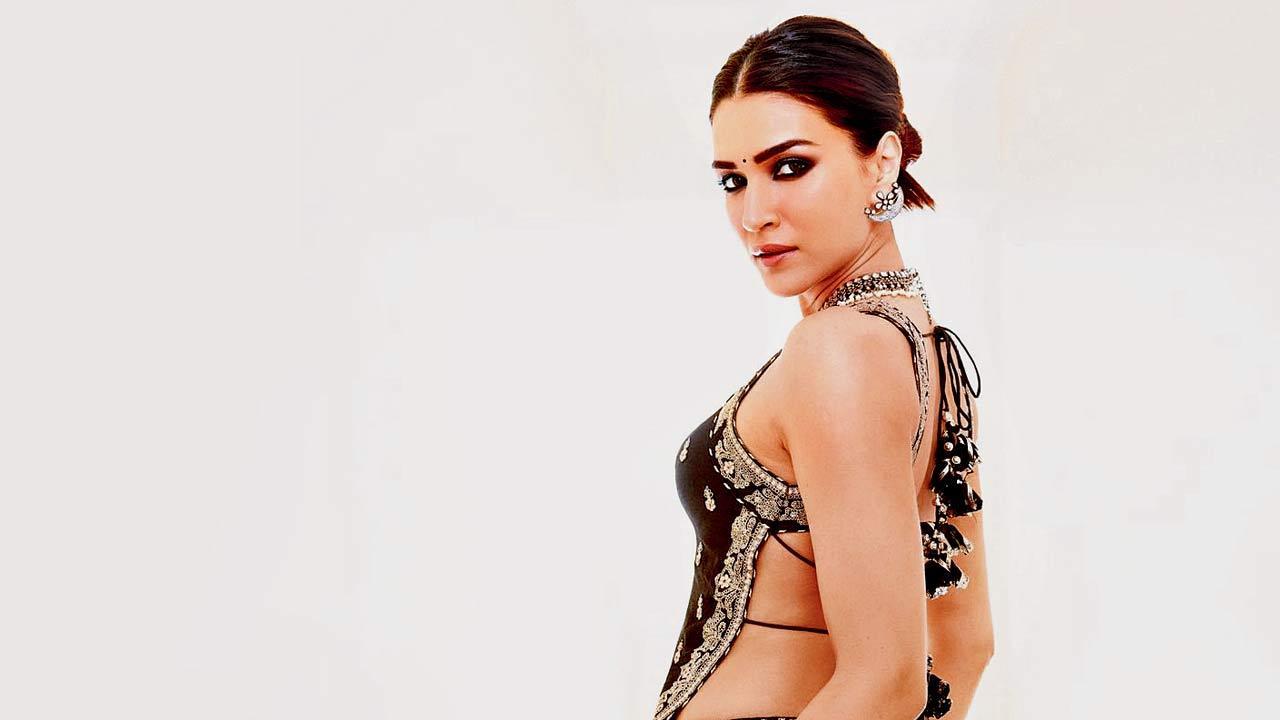
Kriti Sanon goes above and beyond to facilitate a promotional song for her first production film, Do Patti
Upala KBR (MID-DAY; October 13, 2024)
Every first is a cherished memory, whether it’s one’s first love or first job. For Kriti Sanon, the actor-turned-producer, Do Patti marks her debut behind the camera. The National Award-winning actor has joined forces with writer-producer Kanika Dhillon for the direct-to-OTT film, which also stars Kajol and Shaheer Sheikh. Sanon plays a double role in the film. Although the pressures are high, she appears to be ticking all the right boxes to ensure everything is perfect before the release. Earlier this month, they released the song Raanjhan; and have now wrapped up filming another promotional track.
“Kriti has been a hands-on producer, immersing herself completely in the creative experience,” a source reveals, noting that both Dhillon and Sanon have been involved in every aspect from scripting to casting.
“She was involved as much as Kanika in securing Kajol for the project. Do Patti is also Kriti’s first thriller, so she’s particularly excited about it. In fact, she met choreographer Vijay Ganguly a few weeks before the shoot to discuss the finer details of the number, which will also feature Kajol and Shaheer.” Tanishk Bagchi has composed the new track, a lively dance number “with a huge chess board and flashing lights.”
The song captures the deep, dark, and dangerous mood of the thriller. The source further shares that, since the movie is scheduled to release by the end of the month, “a set was constructed overnight at a studio in Juhu by late production designer Rajat Poddar.”
They plan to release the song next week, following the trailer launch on October 14. Do Patti tells a twisted tale about twin sisters who harbour secrets. “Kajol plays a police officer trying to uncover the truth in an attempted murder case set against the backdrop of the fictional town of Devipur in Uttarakhand. The story is narrated from Kajol’s perspective. Shaheer, who is making his Bollywood debut with this film, portrays Kriti’s love interest,” the source continues.
The film, which also stars Tanvi Azmi, is set to release on Netflix on October 25. The principal shooting was completed in December, with only a few songs left to film.
The missing case of spin-offs in India
8:31 AM
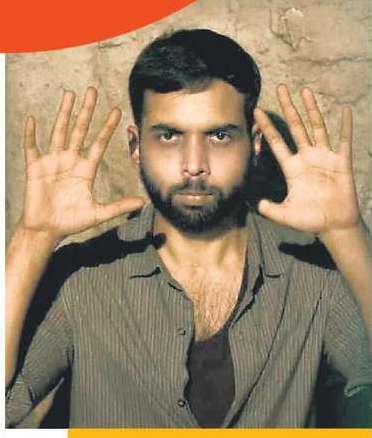
While the spin-off culture is soaring in popularity among Western makers, Indian industry seem to be lagging in this area. Assessing the reasons, experts weigh in
Rishabh Suri (HINDUSTAN TIMES; August 24, 2024)
While spin-offs have been around for a long time, superhero franchises and fantasy series have recently popularized the idea of giving fan-favourite characters their own spotlight, especially on OTT platforms. The offshoot plotlines of these characters, who would otherwise get minimal screen time in big-budget blockbusters, successfully allow makers to not only satisfy the audience but also utilise world-building. Some of the popular examples of spin-off series, which already have multiple seasons in the pipeline, include Gen V (The Boys), House Of The Dragon (Game of Thrones) and The Rings Of Power (Lord of the Rings).
Even though such offshoot productions, whether as films or shows, are all the rage in the West among the makers, the trend is yet to gain momentum in India. To understand more, we speak to some Indian makers and actors for their take on its surprising absence in India, along with pros and cons of the same.
MAINTAINING THE MYSTERY
A project includes a specific number of characters, each with a unique role to play. For actor Gulshan Devaiah, who plays Chaar Cut Atmaram in the series Guns & Gulaabs, not everyone’s story needs to be highlighted in a separate spin-off, as that might take away from the original plot.
“I have no idea why we’re not doing spin-offs but I’m not sure if it’s a good trend to follow. In my case, I’d say there shouldn’t be any spin-off for Atmaram. Some characters lose their charm if there’s no mystery to them,” Devaiah shares.
PRESSURE OF THE ORIGINAL PLOT
Actor Sharib Hashmi, who plays JK in The Family Man series, echoes a similar sentiment and feels that spin-offs shouldn’t be made just so that the original project remains relevant. “It should only be made if there is ample scope, and should not be seen as a mere opportunity to earn money or stay relevant.” However, Hashmi is not altogether against the idea.
He continues, “I would be the happiest if my character gets a spin-off but only if there is a good story. Look at Better Call Saul (Breaking Bad), which had such a brilliant storyline, and is as good as the original.”
BEGINNING AFTER THE ENDING
While original plots might leave very little room for detours, for Kanishk Varma, director of Sanak (2021) and the third season of the cricket-based thriller Inside Edge, a spin-off is a great way to immerse in the universe whose original story has reached a certain finale.
“You have to know when to throw in the towel. You cannot keep on dragging a story. So, spin-offs are a very cool idea of coming back. You have a scope of going back to a series and working on something you wanted to do in a particular season of the show.”
NEED FOR A CHANGE
While offshoot productions are lacking in India, writer Kanika Dhillon, who has been behind the story of Hasseen Dillruba (2021) and the latest instalment, Phir Aayi Hasseen Dillruba, opines that we are soon going to catch up.
“We have already caught on to the multi-universe sequel culture, which is prevalent in Hollywood. So, I am sure spin-offs will become a thing here as well, especially since people give a lot of love to [side] characters,” she shares.
Abhishek Banerjee, whose character Hathoda Tyagi from the series Paatal Lok fetched him critical praise, adds, “A lot of characters have the potential [for a spin-off] after they become a hit with the audiences. So, I feel the audiences would definitely want that change.”
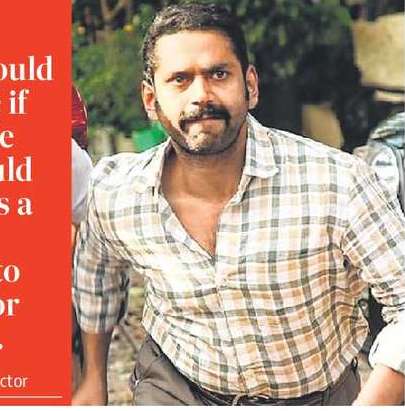
At 17, I was just competing, just chasing. At 37, I have stopped running the race-Taapsee Pannu
4:01 PM

Anshul Chaturvedi (BOMBAY TIMES; August 22, 2024)
Taapsee Pannu talks about the journey from ‘running like a headless chicken’ in her 20s to the sorted, more self-assured 30s.
You turned 37 this year. Many years back, Vidya (Balan) had said in an interview to us that ‘at 34, I feel much more confident than I was at 17 - I don’t miss the younger years, I don’t regret ageing.’ Is the sentiment the same with you?
Yeah, yeah, same here. I 100% agree. Mere profession ki demand aisi rehti hai ki tum regularly accessible raho, ya regularly media se baat karte raho, but I’ve a life beyond films. My time is very precious. And my mental state is very precious to me. So I’ve started protecting myself in terms of who I expose my mind or myself to. I don’t want to lose my vulnerability by trying to build a wall and be the template type for everyone just because that’s what sells or that’s how you should be. I don’t want to get affected very easily.
This comes with contradictions, doesn’t it? Building a complete wall changes your personality. But being unguarded lets people walk all over you. You find your mid points, your windows in the walls?
Yes, yes. One of my reasons to become an actor was not to do a 9-5 job. Now if I start building a wall, then it will start feeling like a 9-5 job. You are always second-guessing the intention of the person sitting across you – which is just occupying too much of my mindspace when I’ve so many other things in my life to do, things that are not only about my image or my work. So I started protecting myself. I decided that now, I am going to expose my mind or my ideas to only people who I know are safe spaces. That is why I have (in) the last couple of years stopped talking to a lot of people. I kind of don’t go out and be seen just because ‘jo dikhta hai woh bikta hai’.
I have stopped running the race of being the most seen, the most viewed – the search for the superlative adjective, mera ab khatam ho gaya hai. I have realized nothing is the ‘most’. No matter where you reach, there will always be people above and below you. There is no point in running that stupid race. I want to enjoy the time I’ve here rather than always trying to run behind a milestone – and then reaching there and probably realizing ‘oh abhi toh kuch aur aa gaya hai’. It’s never gonna end in this profession.
In what ways are you at 37 different from what you were at, say, 17?
Every way. I think I have much more control over my mind. It’s not as easy to trigger me now as it was probably at 17. Age se hi fark padta hai woh.
But there is no guarantee of age equals maturity, is there?
17 pe it will be very easy to trigger someone. Now, obviously, people can still continue to be like that. But that is the difference in me. Uss time toh I was like the majority, but now I feel it’s not easy to trigger me because I kind of started to see things from a perspective. Does it even matter in the long run? Why am I investing my effort and time on this right now? And I realized there is nothing called coming first anymore. It’s about whether you are really happy while doing what you are doing every day.
Otherwise, I was just chasing, I was just competing in everything. Competing at getting maximum attendance to scoring maximum to winning the most number of accolades to all these competitive exams where you are given rankings. All these things, they have changed now. And I think a clarity of priorities has now come to me – it had in fact started coming to me as my 30s started.
“The 30s” is a tricky space – so much is written about it on social media. For many, hitting 30 is like ‘the best years are after me now’, that sort of sentiment. There is also the age-related stereotyping in industries such as showbiz. How did you handle the 30s transition in an industry where everything is so magnified, literally, wrinkles and beyond?
My 20s went in coming to terms with the fact that I’ve become an actor. I was wrapping my head around this profession. Meri life mein most things have happened late – compared to what I see girls doing now. Though I have no regret. I’m so glad I completed my education properly. Then I started from scratch. I went south and learnt a new language. I’m glad that I went through the drill because it kind of honed my patience and my tolerance. The 20 to 30 transition was therefore mostly accepting ki haan, now I know where I am and what I’m doing. Most of my contemporaries – not contemporaries, they’re actually relatively junior – they start in their teens. Either they have been made to go into this profession or they don’t know any better, so everything happens very early.
Main jab 30s mein pahunchi toh maine realise kiya ki – I didn’t even realize where my 20s went. Like when I started off in the Hindi film industry, I was probably in mid-20s already, which is late for a lot of girls to start. I keep thinking about it ki yaar maine apne career mein woh rom-com wali cheezein kari hi nahi hain. Kyunki when I came here, I didn’t have an option but to take up the more serious parts because there were other relatively younger or relatively more popular girls who were doing my age wale parts. By the time I became popular and influential enough, I had lost that 25-26-year-old space. I had crossed 30. Now, I’m too old to do the parts that I really wanted to do when I was 25-26. I was forced to get older roles because those were the only parts open for someone like me. And now, I don’t have an option. I don’t really know also how much I can add to a character in her 20s because the twenties have changed so much from 10 years back, when I was that age.
But I have no regrets. I really feel happy that I am this age. They also give me roles which they say are aged 28 – which is supposed to be a golden number, apparently.
There are a lot of girls who are not okay with the script saying this character is 32 or 33. And they are like why can’t it be 28? And I am like how does it make a difference kyunki screen pe koi bol nahi raha hai tumhari age. It is in your head ki you are 28 or 32.
But I feel I have a better grip over my character if it’s in the 30s because I kind of knew myself better when I was in 30s than in 20s. Because 20s mein hustling hi itni zyada chal rahi thi ki I was like a headless chicken – achha abhi south mein ho gaya, abhi Hindi mein aana hai, next kya karna hai, main ye nahi kar sakti, mujhe woh mil nahi raha hai. With so much going on, I didn’t have the frame of mind to sit down and realise ki hota kya hai ye 20s? It just went in hustling – I didn’t enjoy them.
Even on screen, I never got to play someone in 20s. I was paired opposite people almost double my age in my south career. So much so, that there was a point I remember when an actor – who was my age or a year or two older – refused to star opposite me and said no, she looks older than me. Because I had worked with actors who were older to him. So, for him, I was older. So, my age was actually defined by my co-actors who I work with!
It’s not like that has gone away. It’s there even now. There are so many times that actresses are not chosen opposite certain stars saying that iski screen age zyada lagti hai. That’s what happened to me in those early years. I took an opportunity to star opposite big stars, thinking it’s a big film, only to fall into the trap and realize that younger stars now don’t want to work with me.
Now, of course, my trajectory is such that it doesn’t really matter to me anymore. But even now, the big so-called young superstars who are 40+ don’t want to star opposite girls who are 30+. They themselves might not be young, but they want younger girls opposite them.
It doesn’t affect me as much it affected me 10 years back. Now I just laugh at it – how frivolous and shallow it is.
No regrets, though?
No. Regret is too heavy a word. But yeah, I miss having those rom-coms in my kitty where I could look like a college girl and dance around. Last I tried to do it in Judwaa 2 (2017), when I was 30. And people just couldn’t digest it at that point. They were like, ‘No, you’ve gone too far in a different direction. It’s awkward to see you like that (laughs).’ So, yeah, I lost out on that.
Actresses try to do the fun, younger stuff first. I didn’t have that option, so I had to take the heavy lifting stuff first and then there was point of no return.
Maybe Vidya ke saath bhi yehi hua hoga, maybe Tabu ke saath bhi yehi hua hoga. My question is why do we wait for these actresses to turn so called middle-aged to realize how relevant they are when they have been consistently doing that level of work?
Our love stories actually don’t give much space to older women in the way they are written, do they?
You know, not just writing, I’m telling you from the other side, because I have a script – which is about this mid-30s woman who falls in love with a much younger boy. And you won’t believe it, the problem is the people who are financing it. Ek major platform se toh we got a mandate like – how is this even right? Because a mid-30s woman – she was married and had a kid with someone else, and later on, she
falls in love with someone else. It was rejected on ethical grounds. That this is just so not right! And imagine an OTT platform telling you that right now. Theatre ki toh hum abhi baat hi nahi karenge.
I remember there was a proper upmarket woman – like the mother of someone who’s my age – who, after seeing Manmarziyaan said to me, ‘But that was wrong, haan. What the character did with Abhishek Bachchan (his character). Itna achha aadmi tha. Shaadi karne ke baad why did your character go back to Vicky Kaushal’s character?’
Matlab, even women will not see a woman as a normal human being who can make mistakes. She should always be projected and presented like a devi. There are the two Ds – Devi or Daayan. It cannot be midway. I remember this during Thappad also – that you put her on such a pedestal that it is difficult for her to be treated like a normal human being. I had to take help of a writer like Kanika (Dhillon) who wrote Manmarziyaan, who wrote Haseen Dillruba, and ended up doing those grey characters. So much so that now if I do too much of a white character – people will not accept it (laughs)!
Which I’m very happy about. I’ve no qualms about it. Like I said, I have missed that bus of doing the righteous, miss-goody-two-shoes kind of roles, but I am glad that this lane that I have chosen doesn’t have many who are like that.
Even the ones who I feel have the potential to be in this lane – probably they have still not settled the fact in their head that this is a good enough lane and a competitive enough lane to be a part of. They still think that to be that big Bollywood heroine the only raasta is the mainstream, classic way.
Which wasn’t your route. When I entered the Hindi film industry, I realized that there are far more good-looking women who are able to do that stuff (mainstream) very well. I can’t compete with that. I decided I might as well push myself in another direction rather than force-pushing myself in these big commercial films where either I will not get through at all, or even if I get through it, it will be the leftover stuff. Now that I’ve kind of become a producer and I’m trying to put together stuff, I’ve realized how even women in the industry think when they approach a subject. In interviews, they talk a lot about how there are not enough scripts or there are not enough people making such films…
…but when such scripts come, they don’t take it?
No, they don’t, and I have seen this first hand, and so now my whole perspective has changed. There are a lot of things that I’ve learnt after becoming a producer.
I may well be wrong, because I’m the wrong gender to say this – but is it a mistake to assume that all women are feminists?
Oh, yeah, and it is also a mistake to assume that all men are not feminists. I have come across so many of them who are more feminist than probably I was. Feminism is not gender specific.
Anurag Kashyap rightly says Taapsee Pannu and I are both mad. Rani is a mix of us-Kanika Dhillon
8:20 AM
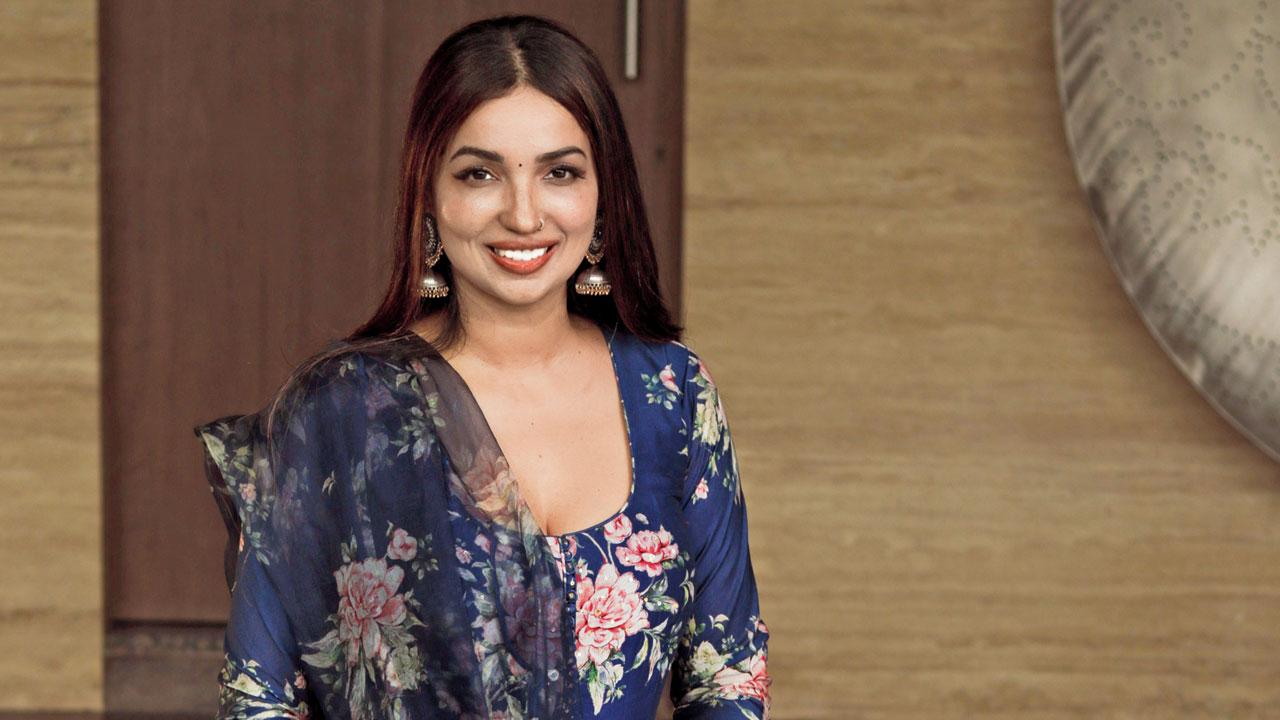
As netizens critique Pannu’s ‘toxic’ character in Phir Aayi Hasseen Dillruba, writer Kanika welcomes the debate; says there must be conversation about imperfect people
Mohar Basu (MID-DAY; August 5, 2024)
In Kanika Dhillon’s words, crocodiles star in a leading role alongside Taapsee Pannu, Vikrant Massey and Sunny Kaushal in Phir Aayi Hasseen Dillruba. Any Bollywood film lover can guess where the inspiration stems from.
“I have been a Khoon Bhari Maang [1988] fan. I’ve always wanted to write a moment that would be a hat-tip to that film. The shot in the trailer, where a crocodile comes next to their boat, is personal,” smiles the writer-creator.
Coming three years after Haseen Dillruba (2021), the romantic thriller follows the lives of Pannu’s Rani and Massey’s Rishu as another suitor enters the equation. Dhillon says the sequel is a pulpy offering, just like the first part.
“I loved creating this world of Haseen Dillruba. The audience’s love was unprecedented. Taapsee was gung-ho [about the sequel] from the concept level. Vikrant backed me completely. The mauj comes from my artistes who tell me to make a movie that’s raw and riskier. Now, we have gone bolder. The audience reminded me last time that they are ready for risqué stories. So, we shouldn’t fear giving them the unconventional.”
But the opinions on the trailer have come by the bulk. The line about Rani being ‘badchallan’ has triggered a dialogue about toxic stories being glorified. The writer-creator says she has been tackling the character’s toxicity since part one.
“A section of the audience picked on these aspects of the film, and rightly so. These are healthy debates. Movies about imperfect characters and their flaws must start these conversations. All reactions that come to me are welcome. But I would feel bad if my stories are met with indifference. I love being polarizing. I’m an artiste. If I have written a story, I’m aware that it is made for all factions of society.”
Rani is the centrepiece of the Netflix film, as she uses love and betrayal to her advantage. Does Dhillon view the character as an alpha?
“Rani is the heroine, Rishu is the hero, Abhimanyu [Kaushal’s character] is the catalyst to the plot. I am Dinesh Pandit [a bestselling novelist in the film], and Pandit’s words dictate everyone’s actions. He is the alpha. The film is edgy, wicked and messy, and the audience should know this is in no way a sanitised world. My actors helped me land the story the way I wanted. Anurag Kashyap rightly says Taapsee and I are both mad. Rani is a mix of us. Taapsee is a woman of spine, and someone who stands her ground.”
Kanika Dhillon plans a cinematic universe with Taapsee Pannu’s Haseen Dillruba and Kriti Sanon’s Do Patti characters
8:46 AM
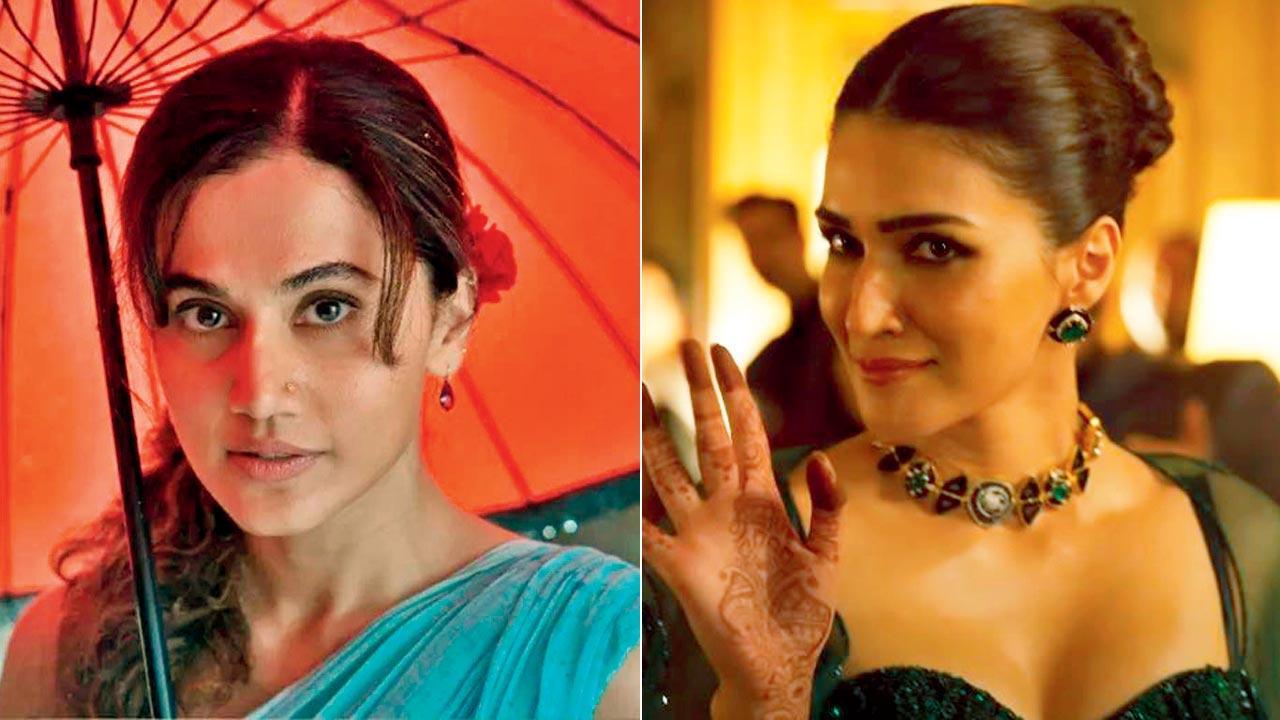
Writer-producer Kanika plans to create female-led cinematic universe with crossover between Taapsee’s Haseen Dillruba and Kriti’s Do Patti characters
Upala KBR (MID-DAY; June 29, 2024)
Ever wondered what would happen if Kangana Ranaut’s quirky Bobby from Judgementall Hai Kya (2019) met Taapsee Pannu’s fiery Rani from Haseen Dillruba (2021)? Writer-producer Kanika Dhillon often finds herself toying with that thought. In recent times, the screenwriter has given Hindi cinema many strong women on screen, be it in Manmarziyaan (2018), Kedarnath (2018) or Haseen Dillruba. Now, it is heard that Dhillon, who has turned producer with the upcoming Do Patti, is considering creating a cinematic universe populated by some of these characters. Like in YRF’s spy universe, these stories will be distinct, yet see the characters crossing paths with each other.
One could argue that in terms of the genre their films belong to, the characters are far removed from one another. But what unites them is that they are fierce, decisive, and not ones to shy away from making mistakes.
A source reveals, “Haseen Dillruba emerged as the most-watched Hindi film on Netflix in 2021, leading the makers to create the sequel, Phir Aayi Hasseen Dillruba. Then, there is Do Patti that sees Kajol as a cop chasing down Kriti Sanon’s character Saumya Sood. Kanika is planning to create a crossover universe with certain characters soon.”
Having launched her production house Kathha Pictures in 2023, Dhillon has chalked out plans for the way ahead.
Eager for the new chapter, she says, “My women are imperfect, strong-headed, and make stupid decisions. There is a natural tendency to create these characters that resonate with people. I have some strong female-led stories in the pipeline, but it’s a bit early to talk about the star cast.”
Is there a plan to build a cinematic universe comprising these characters? Say, a crossover between Pannu’s Rani and Sanon’s Saumya?
“Yes, why not? There are a lot of strong, messy female characters in my upcoming movies. At the same time, Rumi from Manmarziyaan, Rani from Haseen Dillruba, and Bobby from Judgementall Hai Kya were loved. I’m hoping the [upcoming parts] will receive as much love. So, isn’t it the best time to bring unique stories and strong characters to cinemas?”
Taapsee Pannu marries long-time beau Mathias Boe in Udaipur?
9:17 AM

BOMBAY TIMES (March 26, 2024)
According to reports, Taapsee Pannu tied the knot with her boyfriend, Mathias Boe, in an intimate ceremony in Udaipur on March 23. Only the couple’s families and close friends were present at the much-guarded wedding.
Three days ago, Taapsee’s Thappad co-actor Pavail Gulati, posted a group picture of what looked like a celebration and captioned it, “Twinkle twinkle little star, we have no idea where we are!” This gave rise to buzz that he was one of the guests at Taapsee-Mathias’ wedding.
Filmmaker Anurag Kashyap and screenwriters Kanika Dhillon and Himanshu Sharma, too, were apparently part of the celebrations. Till the time of going to press, there was no official confirmation from the actress.
------------------------------------------
HINDUSTAN TIMES (March 26, 2024)
Taapsee Pannu, 36, tied the knot with former Denmark badminton player Mathias Boe, 43. The couple were dating for a long time and had an “intimate” wedding ceremony in Udaipur, Rajasthan on March 23, reportedly.
“The pre-wedding festivities kick-started on March 20. The couple was sure they didn’t want any media attention on their big day. Both of them are known to be private... they wouldn’t have had it any other way,” a source said.
The actor’s Thappad (2020) co-star Pavail Gulati was in attendance, along with close friend, writer-producer Kanika Dhillon and her husband Himanshu Sharma. “Filmmaker Anurag Kashyap, who shares a close bond with Pannu also flew to Udaipur,” reported News18.
Dhillon took to Instagram to share photos with the #MereYaarKiShaadi. Gulati posted a photo with the actor’s sister Shagun Pannu and cousin Evania Pannu. Actor Abhilash Thapliyal’s post said “IYKYK”. We reached out to the actor, but didn’t receive any response from her or her team at the time of going to press.
My ambitions have gotten bigger after I became a mother-Kanika Dhillon
9:57 PM
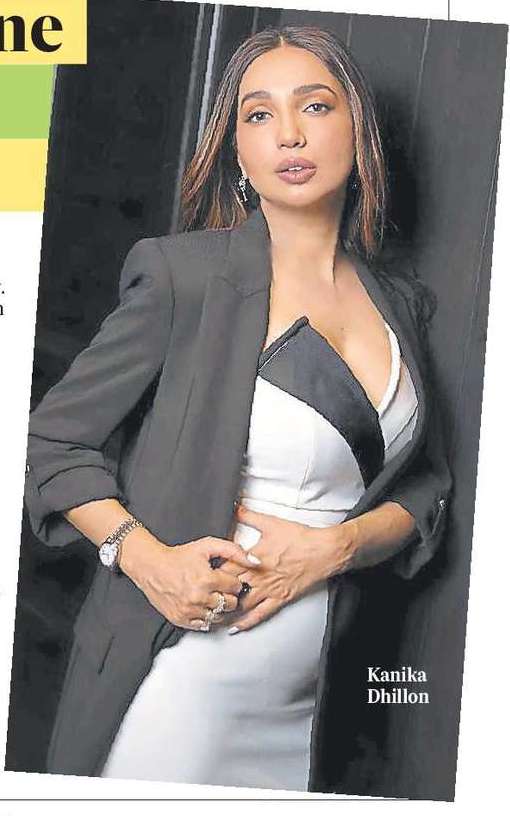
Akash Bhatnagar (HINDUSTAN TIMES; March 8, 2024)
Writer-producer Kanika Dhillon has been the name behind films like Manmarziyaan (2018), Haseen Dillruba (2021) and Dunki (2023). Yet, it has been a difficult career journey for her. “I refuse to live someone else’s idea of what an ideal successful woman is and that has been my biggest challenge as well as my biggest victory,” says Dhillon.
On International Women’s Day today, talking about representation of women in cinema, the 39-year-old states, “In popular culture, the ideal woman image has dominated, and we’ve had a narrow definition of being a woman.”
She adds that while things are changing for the better, there is still a long way to go. However, Dhillon also points out how women themselves pose danger for their own gender. She says, “We have a patriarchal narrative with men, but the women who are pandering to it and are hypocritical about it, are the bigger problems today. As women, when we pull other women down, we are doing a bigger disservice. This hypocrisy by women is more dangerous than men.”
Dhillon and husband-writer Himanshu Sharma welcomed their baby boy Veer in 2021, and while she loves being a mother, she points out the bias against working moms. Revealing a shocking incident, she shares, “I was in a meeting with a man who wanted to renegotiate my contract’s commercial terms because I was pregnant, and he thought I won’t be able to fulfil my responsibilities.”
Yet, Dhillon calls becoming a mother “the best thing that has happened to me.” “Opposite to what is said, my ambitions have gotten bigger after I became a mother,” she concludes.
Kajol plays a cop for the first time in Do Patti; picture from the shoot location out
8:58 AM
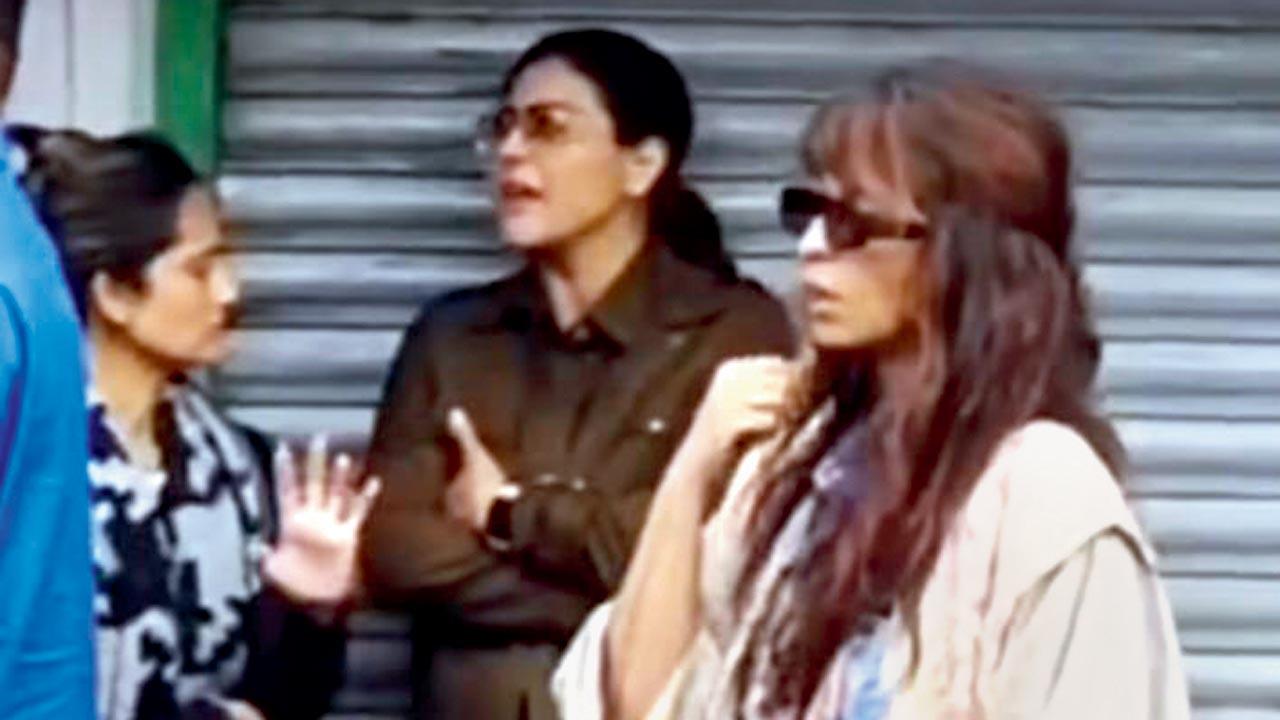
mid-day lays its hands on pictures from Do Patti shoot that sees Kajol playing a cop for the first time in her 31-year career; the actor chases Kriti Sanon’s character in the thriller
Upala KBR (MID-DAY; October 18, 2023)
For the past 12 years, we’ve seen Ajay Devgn roar on screen as the no-nonsense cop Bajirao Singham, a role that he is reprising in Singham Again. But it looks like he has another fierce cop right at home. One hears that Kajol plays a tough-as-nails police officer in Do Patti, which also stars Kriti Sanon and Shaheer Sheikh. Sanon and writer Kanika Dhillon’s maiden production went on floors on August 18 with a brief shoot in Mumbai, before the unit headed to Nainital. On Saturday, the unit wrapped up the Uttarakhand schedule.
mid-day laid its hands on a few pictures from the shoot, which have Kajol sporting the khaki uniform and shades. Those in the know say that the actor plays a fiery character in Shashanka Chaturvedi’s directorial venture. That’s not surprising considering Dhillon has a knack for writing strong-minded female protagonists—be it Rumi from Manmarziyaan (2018), or Rani in Haseen Dillruba (2021).
A source reveals, “Kajol portrays a tough-talking, sassy police officer from north India in the mystery thriller. Kriti’s role is equally exciting. In the movie, Kajol’s character is in hot pursuit of Kriti, chasing her across Mussoorie, Landour and Nainital. In her three-decade career, the actor has essayed diverse roles, but the opportunity to play a cop never arose before. She was immediately drawn to this complex role.”
While Kajol was an integral part of the Uttarakhand schedule, Sanon and Sheikh joined her last week. “The two actresses filmed some dramatic scenes. Brijendra Kala too was a part of these sequences. On Saturday, the unit wrapped up the schedule with a party,” adds the source.
The film’s third leg will begin in Mumbai by the month-end. It is Kajol’s third Netflix offering after Tribhanga (2021) and Lust Stories 2. In July, the actor made her web series debut with The Trial.
We are lucky to have a superstar like Shah Rukh Khan, who values female presence in a film-Taapsee Pannu
9:03 AM

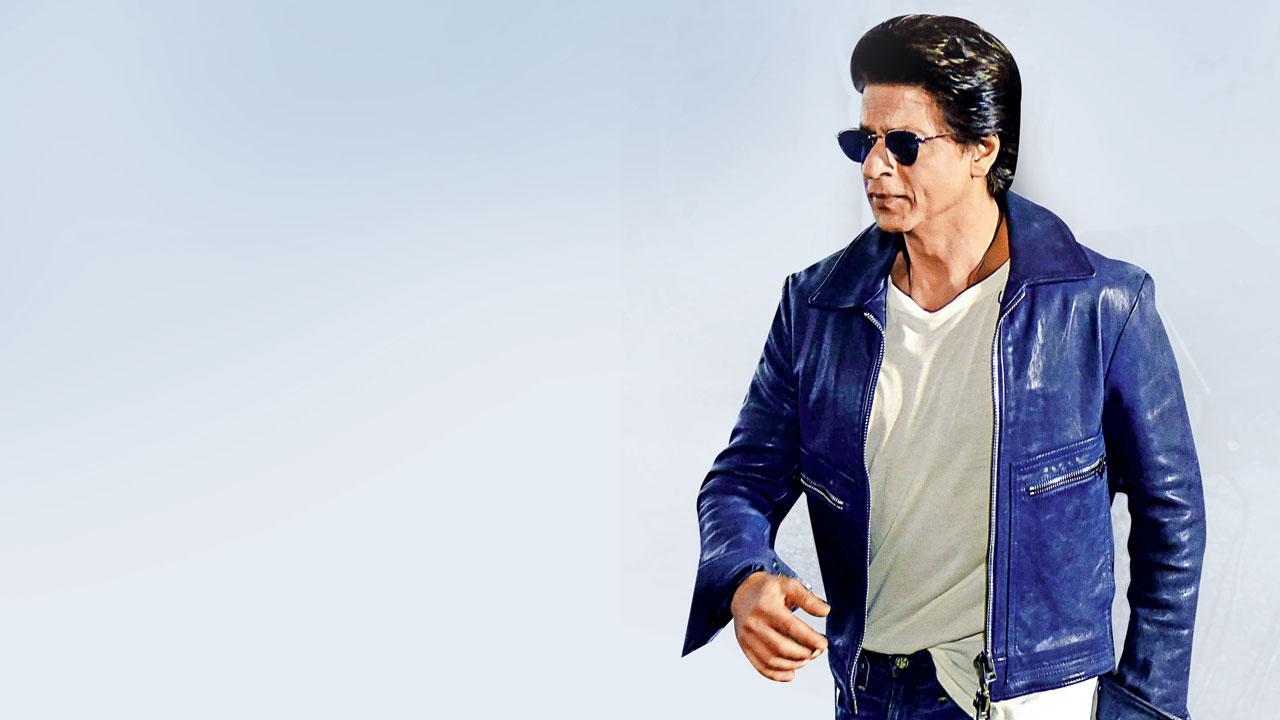
Noting that Hirani’s movies usually create memorable male protagonists, Taapsee says Shah Rukh and her character are on equal footing in Dunki
Mohar Basu (MID-DAY; October 14, 2023)
Almost every Bollywood actor harbours the dream of working with Shah Rukh Khan. For Taapsee Pannu, who shares screen space with the superstar for the first time on Dunki, the experience has been more fulfilling than she had imagined. Her biggest takeaway—she deeply admires Khan’s ability to offer a level-playing field to his leading ladies.
“We are lucky to have a superstar like Shah Rukh Khan, who values female presence in a film. The one common thing that actresses [in his movies] have is their agency. No one else will make decisions for a female character. Her decision might be out of line from what she is expected to do, but be it right or wrong, it is hers to make. In Dunki, [my character] has agency and power,” states Pannu.
Rajkumar Hirani completes the troika in Dunki. The director has a knack for shedding light on important subjects through humour, and the Christmas release won’t be any different. But Pannu points out an aspect that separates Hirani’s previous blockbusters from his upcoming release.
“This isn’t the usual Raju Hirani world. Raju sir is known for creating great characters—be it Munna Bhai, Sanju or PK. The men he creates are so impactful. But in this film, people will probably also remember me a bit when they walk out of the theatres. It’s one of those films where the woman will have a strong impact. I am lucky I landed this role, and that this was the combination on the table.”
Pannu’s safe haven remains Kanika Dhillon, who serves as a co-writer on the project. For Dhillon, Dunki is a homecoming of sorts as she began her career with Khan’s Red Chillies Entertainment.
All praise for the superstar, she says, “He is an actor who surrenders to a story and the director. He places his faith in the writing and creative team. You are aware of how smitten you feel around him, but work-wise, he is a director’s actor who never interferes or limits anyone. With Dunki, Raju sir, Abhijat [Joshi, writer] and I have created a world that’s unseen. Taapsee’s character isn’t unhinged like [she is] in Haseen Dillruba [2021] because the story is paramount. I was excited to see her in an avatar I had never seen before.”
Taapsee Pannu never asks, 'who is the male lead'?-Kanika Dhillon
8:10 AM
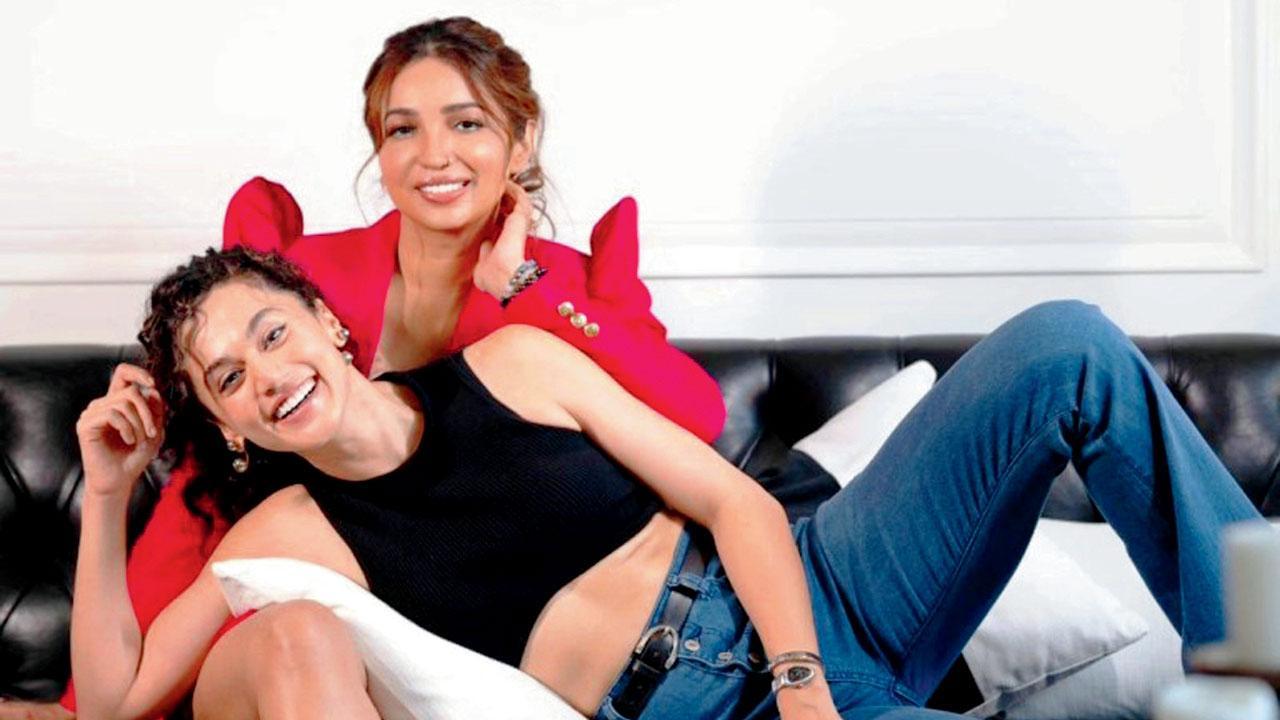
Describing Phir Aayi Hasseen Dillruba as ‘wilder’ than its 2021 original, Taapsee Pannu and writer Kanika Dhillon on how they push each other to create spirited female characters
Mohar Basu (MID-DAY; September 21, 2023)
You may not always agree with the characters’ decisions, but they don’t give a damn. That is the beauty of the parts created by actor Taapsee Pannu and writer Kanika Dhillon—from Manmarziyaan’s (2018) Rumi to Haseen Dillruba’s (2021) fiery Rani. The actor-writer duo are now ready with the romantic thriller’s second instalment, titled Phir Aayi Hasseen Dillruba (PAHD). Dhillon had so much fun creating unpredictable characters in Pannu’s Rani and Vikrant Massey’s Rishu that a sequel, she says, was inevitable.
“I didn’t want new lead characters for the sequel. We have gone more wicked with Rani and Rishu. During the narration, Taapsee joked, ‘Aapne kya kha ke script likha?’ Phir Aayi is wilder than the first part,” says Dhillon.
Lust and betrayal were at the heart of the 2021 Netflix film, which told the story of Rani who pursues a love affair after marrying the mild-mannered Rishu. Sunny Kaushal joins the cast for the Jayprad Desai-helmed sequel.
Even as she is tight-lipped about how the murder mystery moves ahead, Pannu says, “Here, the situations are messier. I knew I had to up my game. Rani is a seductress. This time, we knew that being daring will pay off, because it did the last time. The audience enjoys radical things. I didn’t fear failing anymore, so I played it with abandon.”
Though Haseen Dillruba was lapped up by viewers, Rani’s decisions were widely debated. How does the judgment affect their work?
Pannu reflects, “We faced backlash and judgment for Manmarziyaan too. But both characters are decision-makers. It’s never the men who force them; it’s their choice. Feminism is not about equal opportunity alone, it’s also about a woman’s free will. I like flawed characters that kickstart a conversation.”
Pannu admits that the ability to remain wild takes a hit as one grows up. But their pursuit to bring uninhibited women to screen bonds Dhillon and her. After PAHD, the two have Dunki in the pipeline. “We are now making wilder characters. Creating something predictable doesn’t work for either of us,” says the actor.
Dhillon adds, “Taapsee’s faith in me makes me take risks. There have been times when I have considered other actors for roles that I’ve written, but they ask questions like, ‘Who is the male lead?’ Taapsee never asks such questions. She is [confident] about shouldering a film.”
Shah Rukh Khan has taught me most of the things I know about storytelling and Bollywood-Kanika Dhillon
3:19 PM
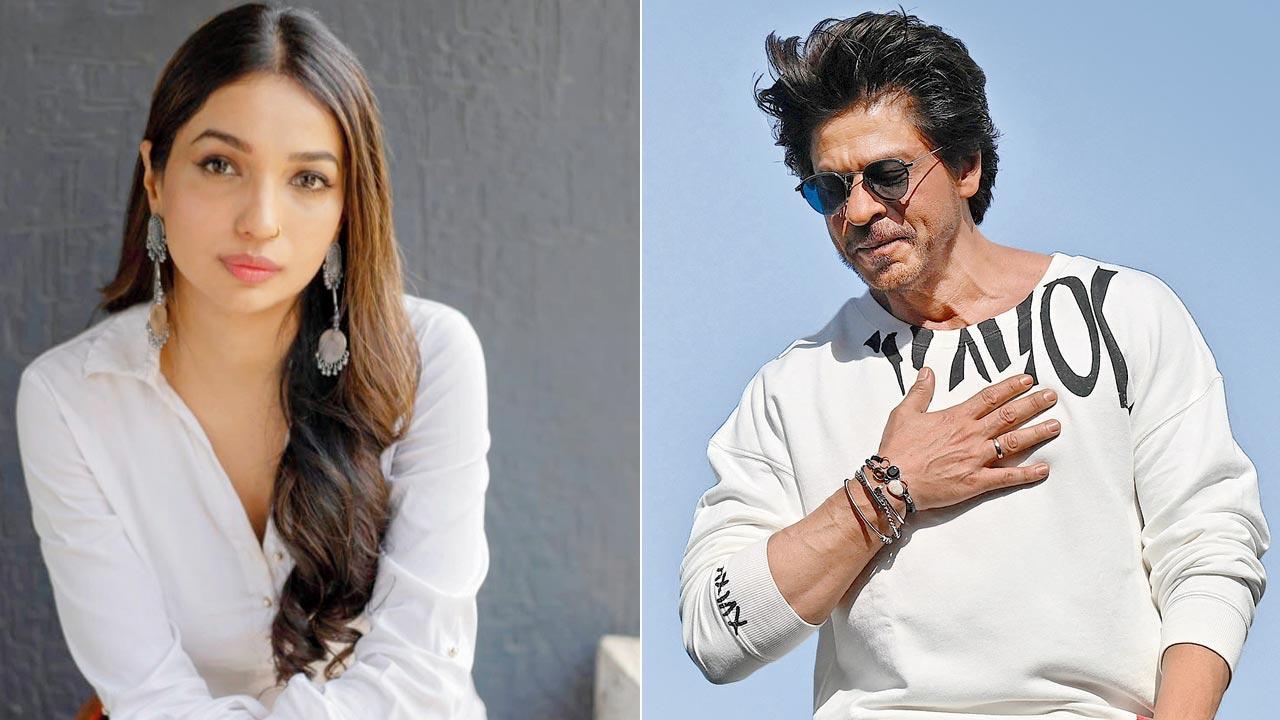
Writer Kanika, who started her career in Shah Rukh’s production house, on reuniting with the superstar for Dunki
Priyanka Sharma (MID-DAY; July 30, 2023)
With Dunki, it’s a homecoming of sorts for Kanika Dhillon. Over 16 years ago, she began her Bollywood journey with Shah Rukh Khan’s Red Chillies Entertainment as a script supervisor and assistant director. Today, she shares the writing credit on the superstar’s Christmas offering.
“I am a fan first, so I was happy that I got to work with him again. I hope I get to do more work with him because that’s the dream,” begins Dhillon, who has co-written Dunki with director Rajkumar Hirani and Abhijat Joshi.
During her four-year stint at Khan’s production house, Dhillon served as an assistant director on Om Shanti Om (2007), and wrote the screenplay and dialogues of Ra.One (2011). As she turns producer with Katha Pictures, she is reminded of her days as a rank newcomer.
“Shah Rukh is the best mentor I’ve ever had. He has taught me most of the things I know about storytelling and Bollywood. Also, I have worked with so many people, but I haven’t seen a producer like Shah Rukh. He is magnanimous, and teaches you to be a better human being.”
At the moment, Dhillon is busy with the prep of her maiden production, Do Patti that will be led by Kajol and Kriti Sanon. The thriller is set to go on floors in a month. What’s also keeping her busy is the sequel to Haseen Dillruba (2021), Phir Aayi Haseen Dillruba. While the Taapsee Pannu and Vikrant Massey-starrer was directed by Vinil Mathew, the sequel has been helmed by Jayprad Desai. Dhillon, who serves as a writer and co-producer, promises more twists with Phir Aayi Haseen Dillruba.
“It is twice as wicked and unpredictable as the first film. We were so happy with the love we got for Haseen Dillruba. So, we are coming with the sequel soon.”
From an assistant director to a writer to now a producer, it has been a long and steady rise for Dhillon. “I feel a sense of gratitude when writers come up to me and say, ‘Ma’am, your work has inspired us to write more.’ They can see that you can achieve milestones in your career.”
Everybody wondered whether it would work out but Kajol loved the story-Kanika Dhillon
8:41 AM
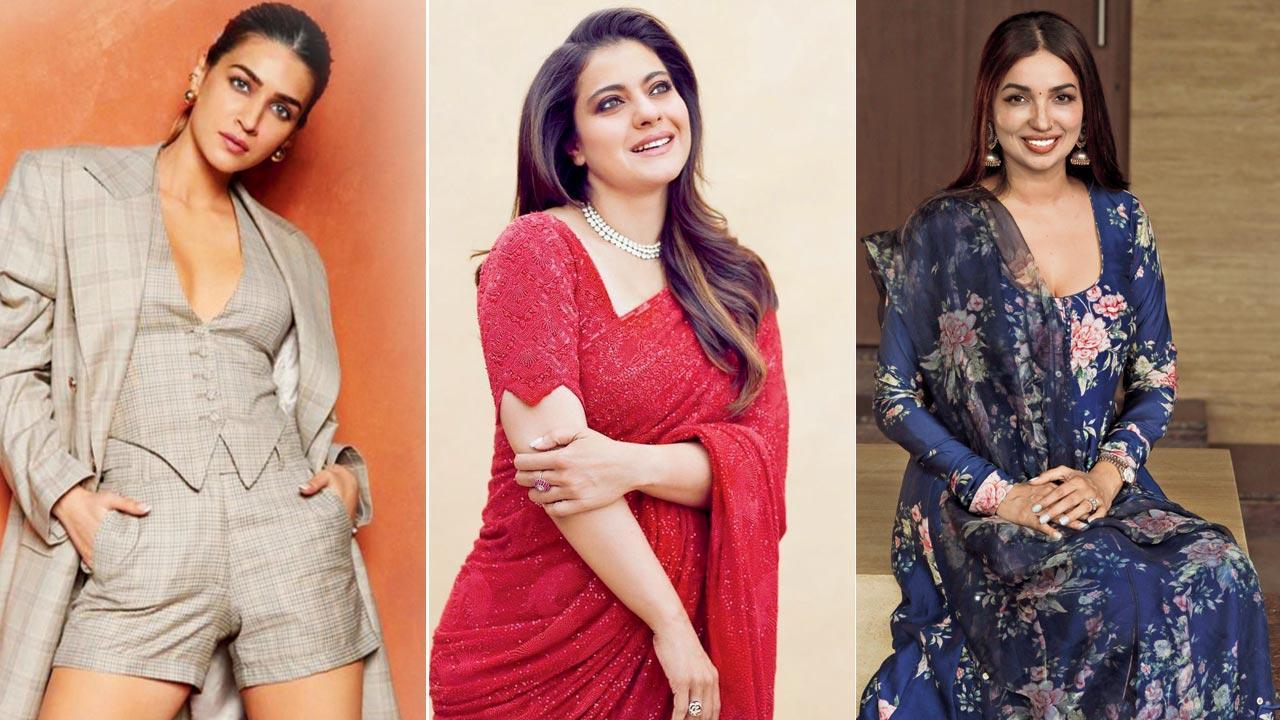
Determined to go big with her maiden production, writer Kanika discusses how she roped in her first choices Kajol and Kriti Sanon for Do Patti
Priyanka Sharma (MID-DAY; July 18, 2023)
Writer Kanika Dhillon remembers that in the initial years of her career, she would spend considerable time figuring out the right contacts that would help her find her footing in the industry. Right then, she promised herself that if she rose to a position of power, she would build a platform for writers so that they could focus on their craft instead of chasing contacts. Katha Pictures, the production house that she launched last week, is the realization of that belief.
“I want the growth of my production house to be linked to grooming of new writers,” begins Dhillon, asserting that unheard stories will be at the centre of her productions.
Dhillon has found one such story in Do Patti. The writer—who has penned Manmarziyaan (2018) and Haseen Dillruba (2021), among others—announced the launch of her banner with the mystery thriller that will star Kajol and Kriti Sanon. She says that Sanon was so impressed by the story that she decided to join her as a producer.
“I was in touch with Kriti way before I even finished the script. That’s how I have functioned while writing the last three-four films. I reach out to the actors before I finish writing a story because I write to the actor’s strength,” explains Dhillon.
Getting a nod from Kajol is not easy. But Dhillon was certain that when it came to her maiden production, she had to dream big. “I’ve been a fan of Kajol ma’am. Everybody wondered whether this would work out, but I thought this is my first film, and I should be ambitious and unafraid. So, I went to Kajol ma’am to narrate the story, and she loved it.”
Through her scripts, Dhillon has championed strong, unconventional female characters. It’s only natural then that as a producer, she wants to bring more women to the forefront. “[Recently], I was hiring a few women as my executive producers. I was told, ‘Ma’am, how will we get a woman in this role? They can’t negotiate, they are emotional.’ I said, ‘Can’t you see you are talking to a woman? I am the boss!’ I have told my production house members to make sure we hire women in the team.”
We chose a regressive narrative for Raksha Bandhan so that we could arrive at a progressive one-Kanika Dhillon
8:32 AM

The writer says while a section criticized the makers for showing a social evil like dowry, the film had ‘people from the interior Hindi belts’ in mind
Rishabh Suri (HINDUSTAN TIMES; September 27, 2022)
Actor Kanika Dhillon is content with the response her projects over the last one year, including Haseen Dillruba (2021) and Rashmi Rocket (2021), received. However, it was her this year’s outing as a writer, Raksha Bandhan, which ignited a lot of discussion, as the film’s subject revolved around the practice of dowry. A section criticised the makers for showing the social evil.
The actor-writer says, “Aanand (L Rai, filmmaker) sir, Himanshu (Sharma, co-writer) and I set a goal, not to educate the people on Twitter and the metros, who know that dowry is not good. They know a woman should be self-reliant. We were talking to people from the interior Hindi belts, where these concepts are still alive. We have the statistics. Women dowry deaths are rampant, mostly happening in the interiors,” says the 40-year-old.
The protagonist of the film, played by actor Akshay Kumar, represented the section that didn’t know that dowry is a social evil, continues Dhillon.
“His character didn’t know anything about women’s empowerment. So, we had to take the focus there. We chose a regressive narrative so that we could arrive at a progressive one. I totally understand why the viewers felt it was regressive. But as a writer, we can’t talk to the same audience all the time,” Dhillon reasons.
She cites the example of her own other film, Kedarnath, which was set in the heartland.
She adds, “The section that found it weird is the one that’s educated and empowered, so some things will make them uncomfortable. If we are not making you feel that, that means we are not doing something right. Discomfort is a good thing. If there’s no reaction, there’s no piece of work.”
Strong, real, imperfect: Is OTT redefining female characters?
8:22 AM

Renuka Vyavahare (BOMBAY TIMES; September 17, 2022)
Kate Winslet’s scruffy, vaping detective in Mare Of Easttown went on to become one of the most-talked-about characters on OTT last year. The actress attributed the success of the series to viewers, who are ‘starved’ of shows that realistically portray women and their bodies. She revealed in an interview that she was fascinated with people falling in love with a wildly flawed, messy, broken, fragmented, difficult woman. The moral ambiguity of Jennifer Aniston’s Alex Levy in The Morning Show was equally intriguing.
Are women-fronted stories on streaming platforms increasingly straying from the conventional perceptions, even in India? Do women no longer need to be good or bad, victims or warriors, in order to be leading ladies?
‘OTT HAS CREATED SPACE FOR FULL-FLEDGED FEMALE CHARACTERS’
It is not that Shefali Shah hasn’t impressed us with her performances on the big screen for years, but today, she is among those actresses who are setting the OTT space on fire. The digital space has changed the course of her career. She says, “OTT has definitely changed the game for me. Unfortunately, a lot of heroines were accessories in films before. On OTT, there are full-fledged female characters. They are not just fillers for a project around the main hero.
Shefali adds, “Characters are now written for women of all ages. In commercial cinema, the shelf life of women for lead roles used to be between 18 and 25 years. Uske baad seedha maa bana do. Like in real life, even in cinema women would be recognized by the relationship they had with the key people. Mera role kya hai? Iski maa ka role hai, uski behen ka role hai. Woh sab relationships hai. Mera role kya hai? It’s ridiculous and changing finally.”
‘IN THE ’90S, ACTRESSES HAD TO PORTRAY A GLAM & DAINTY IMAGE BEFORE LANDING A SUBSTANTIAL ROLE’
Raveena Tandon, the quintessential ‘sheher ki ladki’ of Bollywood in the ’90s, made her OTT debut and a powerful comeback to acting with the web series Aranyak. The whodunit set in the hills showed the actress in a completely different light. But why didn’t Bollywood trust her more often with such roles?
Raveena says, “The film industry is evolving, and female-led stories have found a home today, on streaming platforms and in Bollywood as well. If you look at the 90s and early 2000s, actresses had to portray a glam and dainty image for years before landing a role that would actually do justice to their acting prowess, but with streaming platforms, that gap has bridged. The streaming space definitely allows for more freedom to explore and tell more nuanced female-led stories.”
She further adds, “My character in the series – Kasturi Dogra is one of the main reasons why I chose Aranyak for my streaming debut. She is a strong, ambitious cop, but not perfect. Aranyak and many other stories today are those of real, strong, imperfect women that deserve to be told.”
‘WE CAN NOW WRITE STORIES OF FIERCE, INDEPENDENT, IMPERFECT WOMEN’
Screenwriter Kanika Dhillon (Haseen Dillruba) agrees that OTT has changed the game for female characters. She says, “OTT is definitely giving a medium to storytellers where we don’t need to portray unidimensional women, or women as a subplot to the men. We can write them as ‘leading ladies’ in the true sense. Historically, the term leading lady is used for a female actor paired opposite the male actor leading the story, however, small or insignificant the role, as long as there is a romantic angle. But I am glad, we can now write stories of fierce, independent, imperfect women who truly lead stories and carry the project on their shoulders.”
Speaking of the business and creative point of view, she explains, “OTT has a major role in providing the platform that can make these female stories economically viable, give them reach and an audience, at par with a male leading the story. When I write for OTT, I am unfettered by the norm, historical patterns, and market diktats, compared to other mediums. So yes, I can definitely have my women go the Madonna route. As she says, ‘I am tough, I am ambitious, I know what I want and if that makes me a b***h, okay!’ Rather than a coy, de-mure, lovable ‘Hindi film heroine’! And with this kind of an attitude, I can write my characters without adhering to stereotypes of a certain approved look and standard of beauty or behaviour.”
‘OTT HAS MORE WOMEN IN POSITIONS OF POWER SO THAT HELPS IN GETTING NUANCED FEMALE STORIES ACROSS’
Renuka Shahane wrote and directed Tribhanga, a film that follows warring women from a dysfunctional family, starring Kajol, Tanvi Azmi and Mithila Palkar. As a writer and director, she says, “I couldn’t get my mind out of Mare Of Easttown. OTT allows you the space and possibility for nuance. When you go to a theatre to watch a film, the idea is to get entertained. There is nothing wrong with that, but it keeps you from having certain emotional experiences. OTT exposes you to global content, so you also feel compelled to follow your conviction. I wanted to do this (what I did with Tribhanga) for a long time on the big screen but didn’t take the risk. With prominent female actors like Deepika Padukone, Kangana Ranaut, Priyanka Chopra or Alia Bhatt becoming producers, more incredible female stories will find a voice. OTT has started that revolution of sorts. There is space for all genders and ages, which is rare in films. I liked Fleabag and the female characters in Bombay Begums, and even the tone and humour of Sumukhi Suresh’s Pushpavalli. OTT has a lot more women in positions of power so that helps for sure in getting nuanced female stories across.”
‘NON-LEAD FEMALE CHARACTERS ARE REDUCED TO ‘HEROINE KI DOST’ OR ‘HERO KI BEHEN’ ON THE BIG SCREEN’
Aahana Kumra says that OTT is a breath of fresh air for female artistes. She says, “It has given us a voice. Non-lead female characters are simply reduced to heroine ki dost or hero ki behen in films. If you turn 40 or 50, you will end up playing a mom-in-law in TV serials doing kitchen politics. OTT has ensured that stories are far more powerful now. Thanks to these platforms across languages, incredible female roles are now being written across the globe. I don’t need to wear layers of makeup and look pretty always. I can look realistic.”
She adds, “Of course, there have been some powerful female characters in films in the past as well. I can’t deny that, but they are more relatable now. Shefali Shah in Delhi Crime, Konkona Sen Sharma in the short Geeli Pucchi (part of the anthology Ajeeb Daastaans) were incredibly realistic. I just hope we don’t get stuck in the loop of star-driven culture that plagued our films before. I hope the digital platforms don’t go that road as I am getting an inkling of that already.”
Tamannaah Bhatia believes that OTT has helped us shed our inhibitions as a society to a huge extent. She shares, “The digital space is breaking stereotypes for sure! Now we can pick roles without thinking log kya sochenge. That time of finding the courage to play a hatke part is long gone. Hatke roles are the real parts today.”
Haseen Dillruba team developing a sequel?
8:29 AM
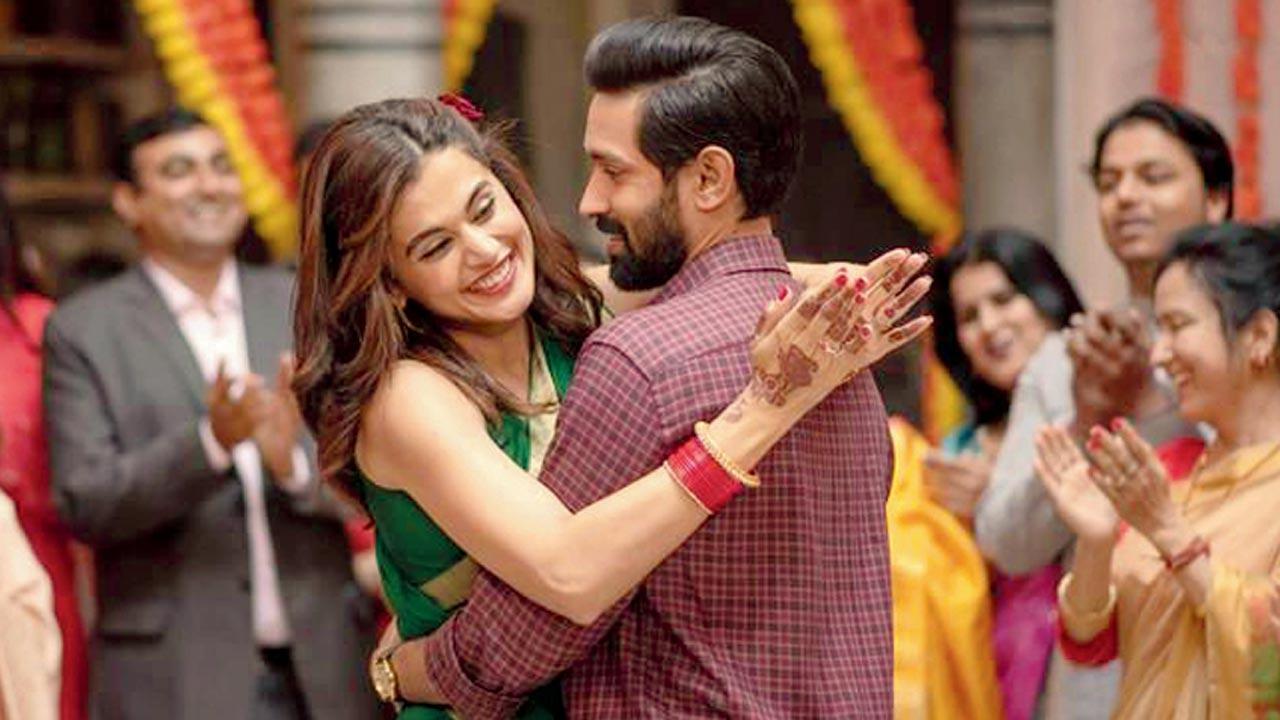
Sources say Haseen Dillruba team developing a sequel to Taapsee-Vikrant’s pulpy thriller
Mohar Basu (MID-DAY; July 6, 2022)
One would think that the journey of Rani and Rishu, essayed by Taapsee Pannu and Vikrant Massey respectively, reached its resolution in the climax of Haseen Dillruba (2021). But it looks like the Netflix film, which was lapped up by the audiences despite critics’ mixed reviews, is set to get a sequel.
Sources say that the producers have greenlit the second instalment, which has moved to the writing stage. A source reveals, “There is interest in the film because it broke into the Indian market in a way that no other Hindi movie on Netflix was able to. Its success can be attributed to its story and pulpy treatment. The producers and the streaming giant are pursuing the idea of a sequel. Writer Kanika Dhillon is toying with the idea of picking up the narrative from where the first part ended.”
In telling the story of a seemingly mismatched couple, Haseen Dillruba explored lust and infidelity, before switching gears to become a fast-paced murder mystery.
When asked about the sequel, Pannu remained non-committal, stating, “All I can say at this point is that I can’t deny [the news].”
Subscribe to:
Posts (Atom)