Showing posts with label Kamathipura. Show all posts
Showing posts with label Kamathipura. Show all posts
Every now and then people say, ‘now she is not talking like Alia, she talks like Gangu’-Alia Bhatt
8:48 AM

Co-writer of the book that inspired Bhansali to envision a film on Kamathipura’s godmother of the ’50s, mid-day’s Jane Borges meets Alia Bhatt for an evening chat on what it took to metamorphose into the sassy fighter
Jane Borges (MID-DAY; February 27, 2022)
Kamathipura is gritty at its worst, but otherwise plain, sombre and dull. There are days when it will surprise you; like the last time this writer visited the area, notoriously remembered as Asia’s largest red-light district. This was in June 2016 for an article I was pursuing for this very newspaper on the gentrification of the neighbourhood of Mumbai with the infamous pincode 400008. Real estate kingpins had been covetously eyeing the rundown tenements. The hope was that the dingy pinjras would slowly come to be replaced by plush high-rises, white-washing any stains of a murky past.
That day, 11th lane was cradled in chaos. A group of sex workers huddled around me, disturbed and desperate, as they spoke about the “burqewale log” or masked goons who’d beat them up with rods and chappals, threatening them to leave. The alleged harassment and growing anti-prostitution sentiment among the new conservative residents may have left them shaken, but despite the lack of support, they tenaciously held on. Between 2002 and 2012, Kamathipura’s sex workers had dwindled from 30,000 to roughly 2,000. The shrinking numbers had left many silenced. In a ruinous, decrepit pinjra that led into a maze of rooms, partitioned by thin curtains, I met more women, who feared stepping out and making a scene of protest. They spoke of having no one to plead their case to, because there was nobody to listen.
If this was the Bombay of the 1950s and ’60s, such a story, we recall thinking to ourselves, would have played out very differently. This was the era when Gangubai Kathewali or Kathiawadi as disparate accounts call her, the matriarch and self-appointed godmother to women living on the margins, reigned. I had heard of her during a chance conversation with a veteran journalist when we passed through her home in Kamathipura 12th lane; it later inspired my co-writer and I to pursue her story for a book we were then working on.
The “iron-willed” Gangubai’s life was not an ordinary rags-to-riches tale. Sources say she was tricked into prostitution as a young woman by her alleged lover. Gangubai who hailed from an affluent home in the Kathiawar region of Gujarat, never found the courage to return to her family. Instead, she chose the bold path, overturning misfortune to consolidate power—taking charge as brothel madam at a young age, and finding a friend in Pathan warlord Abdul Karim Lala—to become an equally revered and feared figure, who hobnobbed with journalists and politicians. She took the cudgels for her women, and minced no words, when taking down her detractors. Her wit was the stuff of lore. Local legend is that she met with Jawaharlal Nehru, seeking his intervention in a proposal to displace sex workers. How would Gangubai have responded to the anti-prostitution movement in Kamathipura of 2016? It’s not hard to imagine.
Yet, Gangubai’s (fondly known as Ganguma) role in safeguarding Kamathipura seems to have disappeared into oblivion after she passed on in the late 1970s. The renewed interest in her life has come with Sanjay Leela Bhansali’s Alia Bhatt-starrer Gangubai Kathiawadi that hit screens on Friday, and which was inspired from the book I co-authored with S Hussain Zaidi.
All writers have their quirks; some like me, are wary about book-to-screen adaptations. But, it’s hard to be indifferent about a character that’s so close to home, revived by an actor whose oeuvre is enviable. Interviewing Bhatt was more a project of curiosity.
The day I am to meet Bhatt, we’ve spent the day thinking about the real Gangu, whose legend permeated the gullies of Kamathipura. Except for a framed photograph I had seen hang on a wall in one of the houses I had visited during my research, I have no visual memory of her. Now, pictures of Bhatt in the film’s stills, where she has christened herself Gangubai, inundate my thoughts. Talk about how Bollywood can take up mind space. The ‘reel’ Gangu walks into the Bandra studio where we’ve been waiting for a while, her hurried steps making her aware that she has caused a slight delay. Her posse of stylists and makeup artists follow closely behind. Bhatt complains about the plastic chairs we are going to be sitting on—it’s not a starry tantrum, she’s just concerned about how it will look on video. She drops a quick, “hi”, requesting me to sit.
Edited excerpts from the interview.
Let’s start from the beginning. When you were approached to play the character, what were your first thoughts?
Fear (laughs). I was a bit confused about how I’d be able to portray her. She was very fierce, brave, sassy, and unique. For someone from that era to create waves with her words, with her conversation, and the way she thought—she literally started a movement to fight for the [cause of] women of Kamathipura. She did it because she believed in it. These are all amazing traits to portray, and it’s an author-backed role, so there was a lot of fear. But with time, it all settled. I was so taken in by the fact that Sanjay sir [Bhansali], who is a visionary, was choosing a subject like this—because it’s totally unlike the films he has done—and believed that I could portray Gangubai Kathiawadi.
You’ve done female-driven films before. There’s Highway, Dear Zindagi and Raazi—I personally think they are all very powerful, feminist films. How is Gangubai different?
In Gangubai, the character is the film. It’s a biopic; it’s based on a true life story; the character’s journey is very episodic. It’s these episodes in her life that brings the story together. For me, it’s one of the first films [I’ve done] that’s so character-driven. You know, even when I’m promoting the film, people ask me to do the Gangbai pose or say the Gangubai dialogue. Characters like these are not written often, and definitely not written for women. If you fall in love with the character, you’ll fall in love with the film.
As a student in Bombay, I had heard about Kamathipura, but it’s only when working on the book and subsequently, as a journalist, did I really experience what this place meant in the larger scheme of things. Generally, movies tend to paint a more colourful picture of a neighbourhood like it, but in reality it feels like a dark hole. The place may have been as unfamiliar to you, as it was once to me. Did you research or visit the place that your character inhabited?
We were going to do a trail, where I’d just drive through Kamathipura and see [the neighbourhood]. But, for some reason it never happened. And then [Sanjay] sir only said, ‘Hold on! If she hasn’t gone yet, let her not go’. [Incidentally] we were starting with a sequence [in the film] where she is thrown into a place that she doesn’t know [anything about].
On the first day of the shoot, I remember being very nervous. We started with a scene where it’s her first night in Kamathipura; it was also a difficult sequence. All the girls [actors] were sitting in their positions and getting ready before they went out [on work]. I was genuinely uncomfortable [watching the scene play out]—it was also visible in my body language. In a way it helped that I wasn’t well-versed with the area. It worked for that sequence.
As far as the research goes, I watched a few videos and documentaries that sir sent my way. There’s a certain hardness and blankness in the eyes [of the women], which comes from hitting rock bottom. It’s just about surviving and getting through the day.
But also vulnerable. How challenging was it for you to portray this dichotomy?
Often, while saying a dialogue, there’s actually a totally different dialogue playing out in the brain. So, this dichotomy [in Gangubai’s character] was very enjoyable to me—where, for instance, when she says, ‘Maa ka naam kaafi nahin hain,’ she is possibly abusing this person in her head. I love the fact that she is vulnerable, but also needs to display strength. I love that she is childish, but also mature.
Journalists have to think objectively about their characters; I think for an actor it may work differently. Were you emotionally invested in Gangubai’s story?
I don’t think I was able to separate myself from the character. I am able to separate myself from the day of work; after the shot is done, I can go back to not continuing to act, because I am not really a method actor in that sense. But, I think a part of the character is now in me, and I sort of feel comfortable that way. Every now and then people say, ‘now she is not talking like Alia, she talks like Gangu’. I think in my own Alia way, I have become Gangu. I lived vicariously through her; it’s a great feeling of abandon to be as free, open and clear as Gangu.
It’s been three years.
Yes, that’s right.
So, you’ve been living and breathing the character for this long.
A very long time, yes. Also, when I was shooting for this film, I was not shooting for anything else. I was living the character; even at home, I used to talk about it. I remember the first time I narrated the script to Ranbir [Kapoor], it was only in the middle of the pandemic. I was sitting and doing so much work on it, by myself. The stakes became much higher [with the pandemic], because you had to make sure that it’s a good product for people to come back to the theatres and watch.
Tell us which shade of Gangubai was most challenging for you to portray?
Venom. I remember this shot very clearly, where sir told me, ‘I want to see the venom in your eyes’. I don’t think I have venom in me to give. That comes from a hard place from being totally broken down. Sir told me to think of someone I didn’t like. And while I did that, nobody brought venom to my mind. That was a very difficult shot. Eventually, I don’t know how I did. I should ask him.
How was it working with Sanjay Leela Bhansali?
Amazing. With him, you feel alive, you know you are creating.
He is known to get the best out of actors.
Best out of everyone. Because he is not settling for mediocre involvement. He wants the highest output because that’s what he gives. When the day is not going well, sir will go to his van and change his clothes. He’ll come out in a new outfit, and say that he was feeling stuck and wanted to change. He allows for the creative juices to flow in such an unpredictable manner that he expects the same out of you as well.
While watching the trailer, and of course, the songs, I saw a very different Alia from what we’ve seen over the last decade. There’s something about the body language—the nuances of it. How tricky was it to imbibe this, considering apart from written material and photos of Gangu, you didn’t have anything else to fall back?
In fact, I find that most interesting. You have the final dish, but you don’t have the ingredients and now you need to figure how to put it all together. That is so much more enjoyable. Maybe someday, I will do a part, where I have to emulate the person exactly. And that will be a completely different kind of challenge.
Also, there were a few things we knew about her; if she came to Bombay to become an actor, she might have been a bit theatrical; if she gave this big speech, she might have been a great thinker. You kind of build that into the character.
There’s been some criticism about your portrayal from certain sections of the film industry.
I am not averse to criticism; I don’t think anyone needs to bow down to me. I am not even claiming to be a great actor. So, criticism doesn’t bother me in general; and people jumping the gun before watching my film also doesn’t affect me. I am the sort to believe in goodness and [spreading] positivity. So, negative and baseless things don’t reach my ears.
Alia, the actor, turns 10 this year. How would you define the decade?
Beautifully chaotic—lots of ups and downs. Every day has resulted in making me the person I am. So the description is not good, great, or successful; none of that. It’s a bit of a beautiful mess, and I love it.
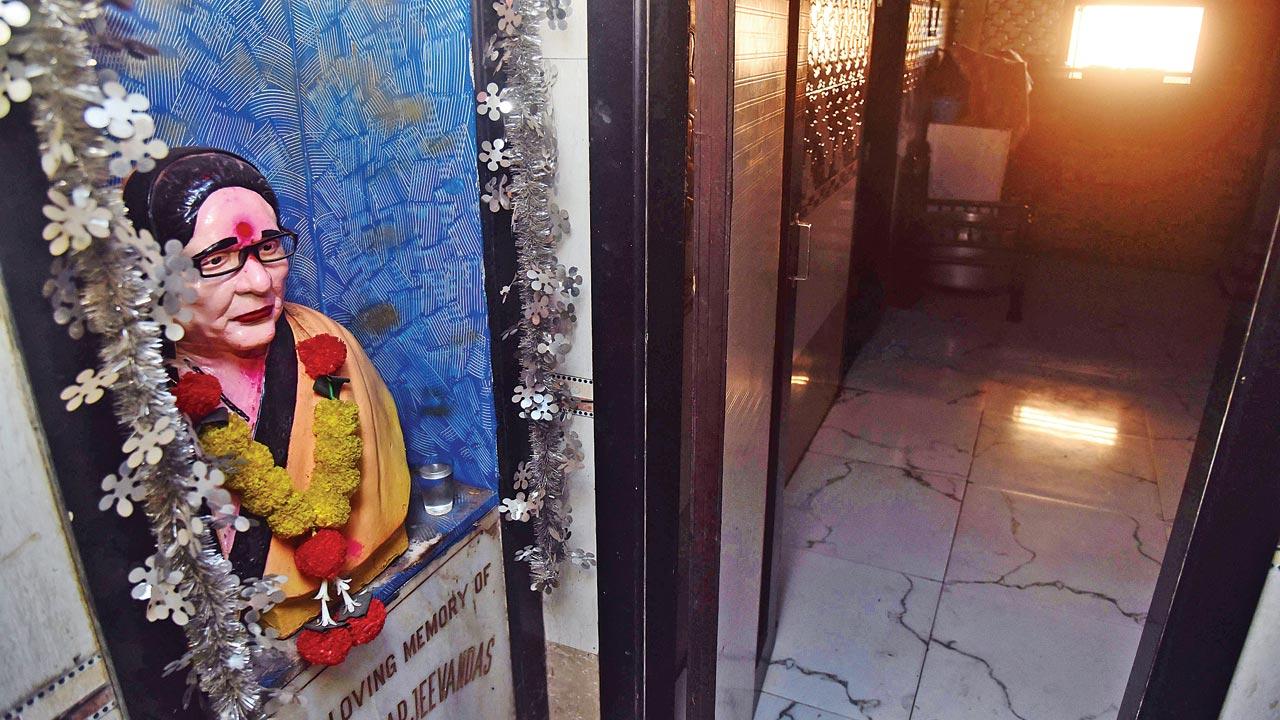
After Gangubai’s death, busts were installed in Kamathipura, like this one inside a tenement that was reportedly under her jurisdiction. It carries the name Gangubai Harjeevandas Kathiyawadi and her date of passing September 8, 1977. It appears to have been installed in 1981 by “Sasa Ratna Alias Aunty Family”, according to the inscription below the bust. Pic/Shadab Khan
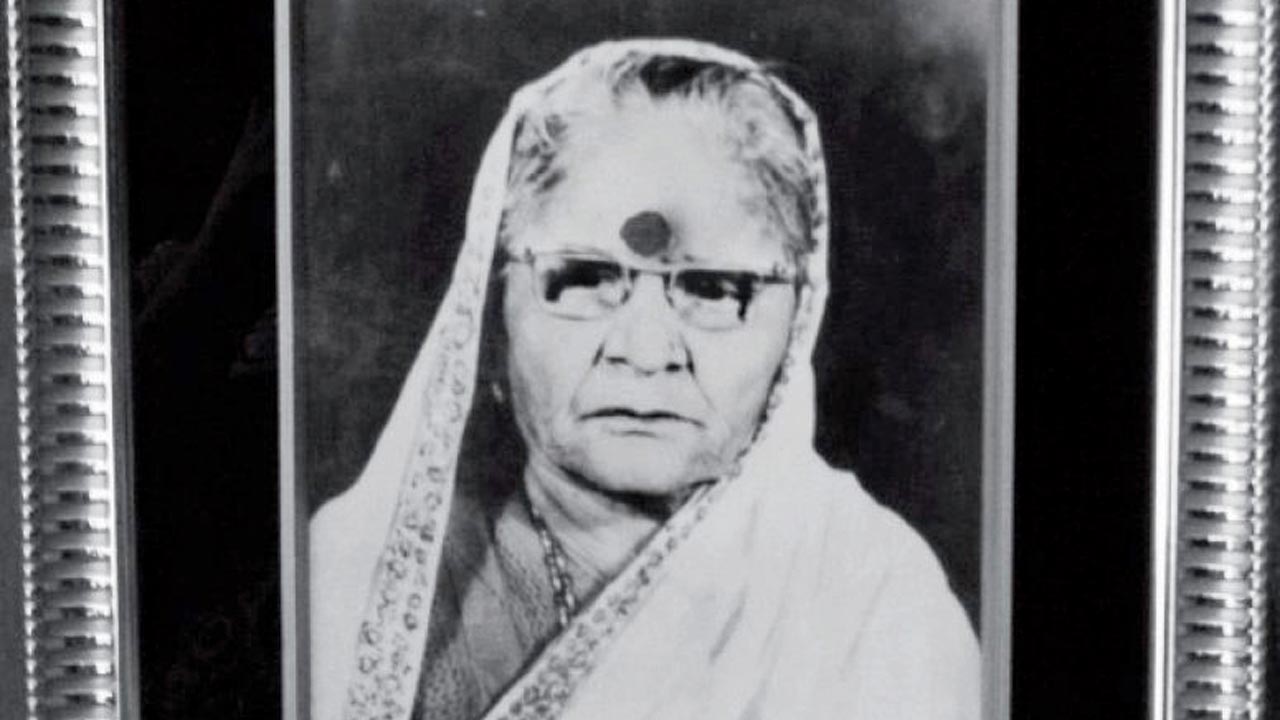
A photo frame of Gangubai hangs in one of the homes in Kamathipura. Pic courtesy/Westland Books
Bombay High Court junks pleas against Gangubai Kathiawadi
8:35 AM
THE TIMES OF INDIA (February 24, 2022)
Mumbai : The Bombay High Court on Wednesday dismissed two petitions and disposed of one filed against Sanjay Leela Bhansali’s film ‘Gangubai Kathiawadi’, scheduled to be released across 3,500 theatre screens in India and 1,000 screens overseas on Friday.
The petitions dismissed — filed by Kamathipura MLA Amin Patel and local resident Shraddha Surve (37) — were against the use of the words ‘Kamathipura’ and ‘Kathiawadi’ in the movie.
Patel’s counsel Dhruti Kapadia, at the hearing before bench of Chief Justice Dipankar Datta and Justice MS Karnik, said the sentiments of local residents were hurt as a trailer suggests that the entire Kamathipura area is a red-light district and sought a proper disclaimer. The petition filed by Surve, a homemaker, argued by counsel Yogesh Naidu, said the trailer was released on social media on February 4 and the Central Board of Film Certification (CBFC) and Bhansali Productions have “neglected” to rename Kamathipura, where some part of the movie was shot, and have shown “disrespect towards the area and its residents”.
The HC took exception to the petitions being filed at the last minute and that no one had raised any objections to the CBFC certificate. “Can’t expect the court to go out of its way and grant relief. Just because we are not strict about procedure in PILs, doesn’t mean challenges will not be laid. We will be drastically reducing the weight of the certificate [if relief is granted despite no challenge to it],” the bench observed orally, while dismissing the two petitions.
The high court said that a detailed order will be made available later.
A petition filed by Hiten Mehta was disposed of after the bench was informed that it was based on a wrong notion. Advocate Ashok Saraogi, appearing for Mehta, argued that in one scene the main character goes to a dentist and the dialogue mentions “China”. Senior counsel Ravi Kadam, representing the filmmakers, explained that the area shown in the movie actually has Chinese dentists.
Presenting his arguments against the other two petitions, Kadam said: “The movie is to depict what was Kamathipura in the 1950s, not to denigrate an area.”
Additional solicitor general Anil Singh, for CBFC, said the petition be dismissed as the trailer was released on February 4 and challenged at the last minute.
CBFC asks for 12 cuts in Madhur Bhandarkar’s India Lockdown despite an ‘A’ certificate
8:16 AM

The filmmaker now plans to approach the revising committee
Rachana Dubey (BOMBAY TIMES; October 22, 2021)

The CBFC has directed Madhur to edit two visual scenes involving phone sex and physical relations between a sex worker and her client. The rest of the cuts have to do with the language used in the film. Madhur, who had visited the red-light area in Mumbai with Shweta as part of his research and prep, has decided to approach the revising committee for redressal.
The filmmaker says, “All these cuts are from the track that focusses on a sex worker’s life in Kamathipura. The language, I’m told, is problematic. From where I see it, it has been used to keep the story authentic and we are ready to accept an ‘A’ certificate. But removing so many words and important scenes will dilute the impact and essence of the plot. To retain the authenticity in the film, I had to keep these elements as a part of the narrative. We also had visited Kamathipura before the shoot and I have tried to stay as close to reality as possible. I am okay with the ‘A’ rating, but I have been asked to make 10 audio cuts and two visual cuts, which I feel is unacceptable. We now plan to approach the revising committee.”
The name of the series is The Tattoo Murders only in India; in other countries, it released as Kamathipura-Tanuj Virwani
8:02 AM
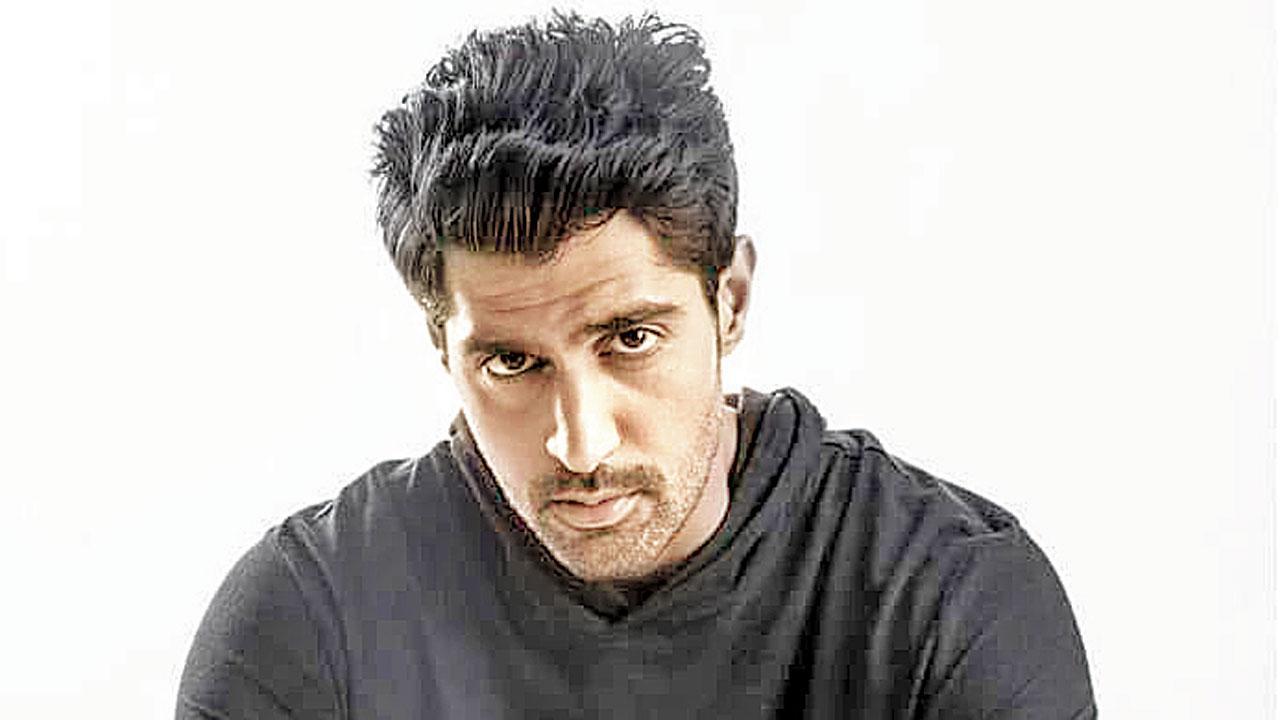
After playing an all-black antagonist in The Tattoo Murders, Tanuj Virwani says he wants to attempt a full-fledged comedy
Letty Mariam Abraham (MID-DAY; May 18, 2021)
He is a star son, but Tanuj Virwani takes pride in having paved his own way in the big, bad world of showbiz. The actor is enjoying the reactions to two back-to-back projects in The Tattoo Murders that sees him as a ruthless baddie, and Murders Meri Jaan. In a candid chat with mid-day, Virwani talks about playing the antagonist for the first time in the Tattoo Murders and his desire to attempt comedy after a spate of serious roles.
Edited excerpts from the interview.
Why was the series’ name changed from Kamathipura?
Some sections of the society had a problem with the title. They thought we were depicting Kamathipura and the sex workers in a negative light, which is not true. To avoid controversies, Disney+ Hotstar decided to change the title to The Tattoo Murders. However, the name is only changed in India; it dropped in other countries as Kamathipura.
Is it risky to take up the role of an antagonist when you’ve yet to establish yourself as a leading man?
Digital entertainment gives you freedom to take such risks. Luckily, my line-up of projects includes hero-centric and massy projects, so I didn’t mind dabbling in this. I often attempt different characters and see how people respond to them. When you are fronting a project, there is a lot more responsibility on you. In The Tattoo Murders, the principal character is played by Meera Chopra. [The creative freedom due to lack of pressure] allowed me to give a more gutsy performance. Unlike in Inside Edge, there is a box, and I must operate within it.
What drew you to this project?
After wrapping up Code M, I was in the midst of Inside Edge 3 and was to follow it up with Cartel. With all these shows, the onus [of their success] lay on me. So, I wanted to do something different. I liked the narration of The Tattoo Murders, and where my character eventually ends up. I look up to George Clooney and Brad Pitt — they are popular because they are leading actors as well as the world’s best character actors. They will shine bright, no matter whether they are in an ensemble drama or solo project. That’s the kind of balance I want in my career.
Tell us about your other series, Murder Meri Jaan.
It’s a detective drama with a mix of rom-com. I essay the role of a serious poker-faced ACP — almost like Abhishek Bachchan from Dhoom — who is chasing a con girl who has lured over 19 men into a fake marriage, and ran away with their money. I fall in love with her without realising that she is the culprit I’ve been chasing. It was shot over a start-to-finish schedule in Bhopal.
Are you getting typecast with dark, serious roles?
Mumbai Meri Jaan is lighter in tone compared to the other projects I am doing. I see it as my holiday project where I can have fun with my character. I want to try an out-and-out comedy because I enjoy the genre and have never got the chance to attempt it. I hope I get more such opportunities in the future. My mother [Rati Agnihotri] is concerned about my dark roles. She complains, ‘People are dying or killing or using drugs in every [series]. We never did all this’. I keep telling her that I am the product of the times we live in.
Shweta Basu Prasad visits Mumbai’s redlight area to prep for a role in Madhur Bhandarkar’s India Lockdown
8:06 AM

Rachana Dubey (BOMBAY TIMES; February 4, 2021)
Madhur Bhandarkar’s India Lockdown, which went on the floors recently, encapsulates the difficulties faced by several sections of the society during the lockdown in 2020 due to the Coronavirus crisis. Using four interconnected stories, the film underlines what happened when the lockdown brought every business to a near-halt and impacted the livelihoods of millions of Indians. One such section that was deeply impacted by the pandemic was the sex workers in Mumbai's red-light districts.
Actress Shweta Basu Prasad plays a sexworker, Mehrunissa in Bhandarkar’s film. She visited Mumbai’s red-light area, Kamathipura, a fortnight ago as part of her research for the character. “I believe that the characters I play are real and I like to dive deep into them. Unless I do that, the audience will not engage with the character. I also work extensively to write a backstory for them and be a part of the tech recce,” she says, adding, “In this case, I’m playing Mehrunissa, a sex worker. Two weeks ago, Madhur sir and I, with our team, went to Kamathipura, where we met many sex workers. Sir felt that my language was too polished for the part, so the idea was to understand how much I have to change my language and get comfortable with their other nuances. He wanted me to meet the women to understand how they think. They had such overwhelming stories about their lives, the way the lockdown impacted them and their business. It was an experience of a lifetime to just get a first-hand insight into their living conditions and their houses. It all helped me write a backstory.”
Shweta denied having any apprehensions about visiting the district. She explains, “I’m a student of journalism and have seen and made documentaries. Besides, this trip was related to my work. The only apprehension was to not say something inappropriate or ask questions that may make them feel uncomfortable. I didn’t want to cross that line. The women were generous to open up about their life stories, they helped us in our narrative. As an artiste, this is one of those precious times in life when one gets to push the envelope. And guess what? I did meet a Mehrunissa there. My character is dedicated to her; she’s just like the character I am playing.”
Shweta, who will start shooting for the film soon, sums up, “With Madhur sir on my side, I am certain we will sail through. Besides, I’ve also seen Tabu in Chandni Bar (2001), Kareena Kapoor Khan in Chameli (2003), Konkona Sensharma in Traffic Signal (2007), and Smita Patil and Shabana Azmi in Mandi (1983). And now, it’s my turn to bring their heartbreakingly beautiful stories on to the big screen.”

Tanuj Virwani gears up to shoot in the UAE
8:49 AM

Kavita Awaasthi (HINDUSTAN TIMES; June 28, 2020)
Actor Tanuj Virwani is thrilled that two of his projects will commence next month in the UAE. He has been signed on for two new web series, starring R Madhavan and Jimmy Sheirgill, respectively, which were scheduled to start shooting before the Coronavirus lockdown was announced.
“The outbreak is quite contained in the Emirates and it might be a relatively better environment to shoot in rather than in India, where the number of cases are rising everyday. The plan is to shoot in mid-July but it is subject to permission from the authorities in Abu Dhabi. Plus, international flights have to resume, too. We will have the entire cast and crew, so, a total of 80-90 people will travel from India. It’s a wait-and-watch kind of situation. These are unprecedented times, so safety is a major concern as we don’t want the shoot to stall once it starts.” He admits that the producers are also thinking about chartering a flight to reduce the potential risk.
The Inside Edge actor states that the guidelines in the UAE are strict and stringent, which “is quite reassuring”. He says, “They instil confidence in me. But the scenario is constantly evolving, so will know more soon. The government might relax a few rules or put some stringent measures in place. I am sure once we land, we will have to quarantine ourselves for a certain period of time. Everyone in the unit will have to be alert and mindful and ensure to maintain proper hygiene. As an actor, my focus is on the story and my role. I am leaving all this to my producers.”
Virwani will be shooting for both the web shows but will make two separate trips as he has few projects in India that might start shooting in July end. “I have some patchwork left for the next season of Inside Edge and have to shoot for two other web shows, Cartel and Kamathipura. I will have my work cut out as every time I go from one country to the next, I will be quarantined for sure,” he signs off.
I learnt that there are different rate card for girls-Meera Chopra
8:29 AM

Section 375 actor Meera Chopra chronicles what she learnt during her prep for cop act in upcoming web show, Kamathipura
Sonil Dedhia (MID-DAY; September 26, 2019)
Having earned accolades for her act as a rape victim in Section 375, Meera Chopra has trained her focus on her next, Kamathipura, a series that dabbles in the flesh trade. Essaying the part of a cop in the web show, Priyanka Chopra Jonas's cousin says she had to frequent the red-light area to acquaint herself with it.
"As a cop posted in that place, I had to familiarise myself with the area. My team took me to Kamathipura for three days, and we travelled across places like gully no 12 and 13, where access for the common folk is restricted," says the actor, who investigates a spate of murders in the area for the Amazon Prime series, helmed by Shravan Kumar.
While it was meant to be an educative affair for her act, the prep, Chopra admits, often posed facts that rendered her unnerved. "At times, I'd see [troubled] girls willing to be bitten by snakes in a bid to get intoxicated. I learnt that there are different rate-card for girls. Those standing on the ground floor are 'cheaper' than those on the floors above. For me, it was shocking. I never even imagined that a place like this existed in Mumbai."
The success of Section 375, she says, has been a validation of sorts for her. "I've been waiting for this acceptance for a long time. Often, I would be tempted to do projects against my will, merely for the sake of visibility. But, I always decided to wait for the right offer."
Besides dance, we would also help the kids in Kamathipura with their studies-Vikrant Massey
8:20 AM

As told to Avinash Lohana (MUMBAI MIRROR; July 23, 2019)
 I had joined the Summer Funk course at Shiamak Davar’s dance institute (left) when I was around 16. I had a blast and even won an award after being adjudged one of the best dancers. Unfortunately, the trophy broke while I was returning home from the performance hall. Now, that was heart-breaking. But I guess I must have caught the eye because soon after, I was selected for a special potential batch and started assisting an instructor by the name of Kunal.
We were given two options: we could teach at one of Shiamak’s commercial classes or as a part of an initiative, train the kids of sex workers in Kamathipura. I chose the latter and worked as an assistant instructor with them for almost a year. Besides dance, we would also help them with their studies. It was an incredible experience and life back then was hectic.
I remember I would catch the 5.50 am local train from Andheri to Grant Road. On the way, I would grab a samosa-pav and Rooh Afza-laced milk. The class would go on for an hour or so after which Kunal and I would go to an Irani bakery for breakfast. Then, I would leave for college while he would head towards a work commitment. In the evening, all the instructors would meet again for training. Our day never ended before 10 pm, sometimes even 11 pm. I was one of the youngest instructors, VJ Manish Anand was one of my colleagues, and I have fond memories of the time we spent with those kids.
I earned my first salary from a school assignment. Some people had flown down from New Zealand and were working on a catalogue. They needed a still photographer for their project and zeroed in on me. I was paid Rs 200 for those pictures and I used the money to play video games.
While I was dabbling in all this, I knew deep down that I wanted to be an actor but the plan was to get into it after completing my education. But when I was 17, I was working at the dance institute where I met this producer who offered me a TV show. It was Diwali night. I grabbed the offer and shot for it, waiting impatiently for the show to air. But because of some legal issues between the producers and the broadcasters, it was stuck. It finally released after six years in the 2 am slot. And my mother would stay awake to watch it.
However, while I was waiting for it, I worked in the same producer’s office for two-three months as an assistant in the creative team. I would conduct auditions. After that I tried but since no offers were coming my way, I joined a coffee shop in Juhu. I was the cleaner-cum-worker. The idea of starting work at such an early age was to support myself and my family in whatever way I could. I worked at the coffee shop for six to seven months. My job included monitoring the restrooms to see that they were cleaned every few hours. I had to check if the soap and the tissue paper were there, among other things. Sometimes my friends would show up and order a cappuccino, leaving behind a Rs 10-Rs 20 tip for me.
Occasionally, I would see people giving me the ‘look’, wondering why a well-spoken guy like me was working at a coffee shop. One of my seniors there knew I had acting aspirations and would encourage me a lot. He called me “sundar ladka” and believed good things were in store for me.
I hung on to my acting dream and eventually Dharam Veer (below) happened in 2008. This TV show was a fictional story of two princes set in 13th century Aryanagar with me playing the righteous and dutiful Dharam and Rajat Tokas as Veer. This was followed by Balika Vadhu a year later, followed by other TV shows like Baba Aiso Varr Dhoondo and Qubool Hai, followed by my big Bollywood break in Lootera in which I played Ranveer Singh’s friend. I have just wrapped up Meghna Gulzar’s Chhapaak with Deepika Padukone.

Subscribe to:
Posts (Atom)