Showing posts with label Kalyanji Anandji. Show all posts
Showing posts with label Kalyanji Anandji. Show all posts
Mohammed Rafi at 100: From a barber shop to India’s heart
8:08 AM

From Chaudvin Ka Chand Ho to Chahe Koi Mujhe Junglee Kahe…Yahoo to Sar Jo Tera Chakraye, Hindi films wouldn’t have been the same without the magically versatile voice of Mohd Rafi, whose 100th birth anniversary falls today
Avijit Ghosh (THE TIMES OF INDIA; December 24, 2024)
On returning from a trip abroad sometime in the 1960s, Shammi Kapoor gave a listen to a song recorded for him by Mohd Rafi and was astounded by how the singer had captured his verve and andaaz to the last detail. “I asked him how he did it. Rafi saab smilingly said, ‘I imagined this is how Shammi would jump or roll or lift his hand or shake his leg or head, and sang accordingly,” the filmstar told TOI in 2010, a few months before he passed away.
It was this ability to infuse an extra dimension to any song – courting duets, farewell ballads, boisterous qawwalis, immersive devotionals, up-tempo folk, soft ghazals, complex classicals, naughty nightclub numbers – that made Rafi the most popular and versatile male playback singer of the 1950s and ’60s. He could even yodel; just listen to Unse rippi tippi ho gayee (film: 'Agra Road', 1957). Shringar, karuna, hasya, roudra, veera – his voice could effortlessly express each rasa (emotion).
On his 100th birth anniversary, it’s evident that Rafi’s popularity is undiminished. On every digital music platform and online video portal, Rafi playlists abound. There are adoring fans in the unlikeliest of places and a Rafi clone in every small-town orchestra.
But talking to those who shared both the recording booth and stage with him, one realises that their indelible memories are as much tied to Rafi, the singer, as Rafi, the man. And they run out of adjectives in describing his humility, nobility and gentleness. As singer Sudha Malhotra says, “He was perfect in everything.”
Singer Usha Timothy remembers how he made her relax during the recording of her first duet, Tu raat khadi thhi chhat pe (film: 'Himalay Ki God Mein', 1965). “Kalyanji [Anandji’s composer half] told me, ‘Jamm ke gaana, aapke saamne sher hai. [Sing with gusto, you are facing a tiger].’ I was a teenager, got nervous and fumbled during the recording. But when ‘saab’ (as she refers to Rafi) came to know why, he immediately put me at ease with his gentle talk.”
Other singers, too, acknowledge his human touch. Malhotra talks of Naa To Karvaan Ki Talash Hai and Yeh Ishq Ishq Hai, two iconic qawwalis from the film, ‘Barsaat Ki Raat’ (1960). “He was very encouraging and made me feel like I know everything and am singing very well,” says Malhotra. The qawwalis had multiple singers with Manna Dey, Asha Bhosle and S D Batish also joining in.
Rafi didn’t have any pretensions. Preeti Sagar remembers recording for comedian Mohan Choti’s film, ‘Dhoti, Lota aur Chaupati’ (1975), when a musician said something in English that Rafi couldn’t comprehend. “When the guy went away, he just asked me, ‘What's he saying?’. He didn't feel embarrassed asking me. He didn’t pretend to understand. Everyone knows he was an extraordinary singer. But he was also an honest soul. He never behaved big or flaunted his seniority. He was very affectionate, just wonderful.”
Another incident showcases his professional and benevolent side. In 2010, music director Khayyam told TOI that during the recording of the poignant Jaane kya dhoondti hain (film: 'Shola Aur Shabnam', 1961), Rafi had a 102-degree fever. “But he was worried about the producer’s losses and we went ahead with the recording. Despite the fever, nobody could have sung it better.”
Loved In Tokyo
Rafi captivated listeners home and abroad. Timothy, who toured worldwide with Rafi as part of a musical troupe, recalls a show in Tokyo for a mostly Japanese audience that didn’t know Hindi or Urdu. “We wondered how they would react. But when he started singing, Madhuban mein Radhika naache (film: 'Kohinoor', 1960), there was all-round applause. The announcer later told him, ‘We just love listening to your voice, even though we don’t understand the words. His voice had that kind of taseer [effect],” she says.
Born in Kotla Sultan Singh village, about 20km from Amritsar, Rafi left for Lahore when he was 12 to assist his elder brother, who ran a barber shop. But as Sujata Dev writes in the neatly-detailed biography, ‘Mohammed Rafi: Golden Voice of The Silver Screen’, he was obsessed with music. In a radio interview, Rafi named the peerless K L Saigal, Vidya Nath Seth and Pankaj Mullick as singers who had influenced him.
The biography also recounts how Rafi, still a teenager, was “giving a shave to a customer” and singing when he was heard by chance by Jiwan Lal Mattoo, All India Radio’s Lahore programme executive. Impressed, Mattoo offered him an audition in 1943, which he passed easily.
A year later, he left for Bombay with mentor Hameed, a friend of his brother Deen, to try his luck in films. “The ’40s tested Rafi’s tenacity and desire to become a successful singer,” writes Dev.
Shining Bright Among Stars
Male playback was a crowded place those days with Mukesh, Manna Dey, Kishore Kumar, Talat Mehmmod, Hemant Kumar – all masters in the making – jostling for space on the podium. Rafi rose to the top in the 1950s and stayed there for most of the 1960s, as Binaca Geetmala records show, when the Kishore Kumar reign began.
Rafi’s success spawned a generation of singers influenced by his voice and style to a greater or lesser degree. Anwar, Shabbir Kumar, Mohd Aziz, Jaspal Singh, Sonu Nigam being some of the notable ones. “Whatever I am, my name, my livelihood, it’s because of him. Woh mere rom rom mein baste hain. [He’s in the breath of my being],” says Baroda-born Shabbir.
“His voice made us aware of every twist in life, of every season that comes and goes. Every song he sang was complete from the adayegi to expression. He wasn’t just singing songs; if you listen carefully, he was also acting and choreographing them. Some actors are remembered only for what Rafi saab sang for them,” says Shabbir.
Jaspal says Rafi could sing in any octave and it made no difference to his voice. “His throw of words remained matchless,” says the singer, who still regrets that the only song he recorded with Rafi was for an incomplete film, ‘Sarhad’. Adds Timothy, “For him, singing wasn’t a profession, but a form of prayer.”
Rafi stormed back to prominence with ‘Laila Majnu’ (1976) and kept the momentum up in ‘Hum Kisi Se Kum Nahin’ (1977) and ‘Sargam’ (1979). The untimely end came following a heart attack in 1980. He was 55. Mukesh and Kishore Kumar, too, died in their 50s.
Over the decades, Rafi fans have carried out campaigns and online petitions demanding the Bharat Ratna for him. In his lifetime, he had only received the Padma Shri. But it’s undeniable that across the globe Mohammed Rafi remains Bharat’s Ratna.


I can never pick my favourite Lata Mangeshkar song, but making Don together was memorable-Anandji
8:07 AM
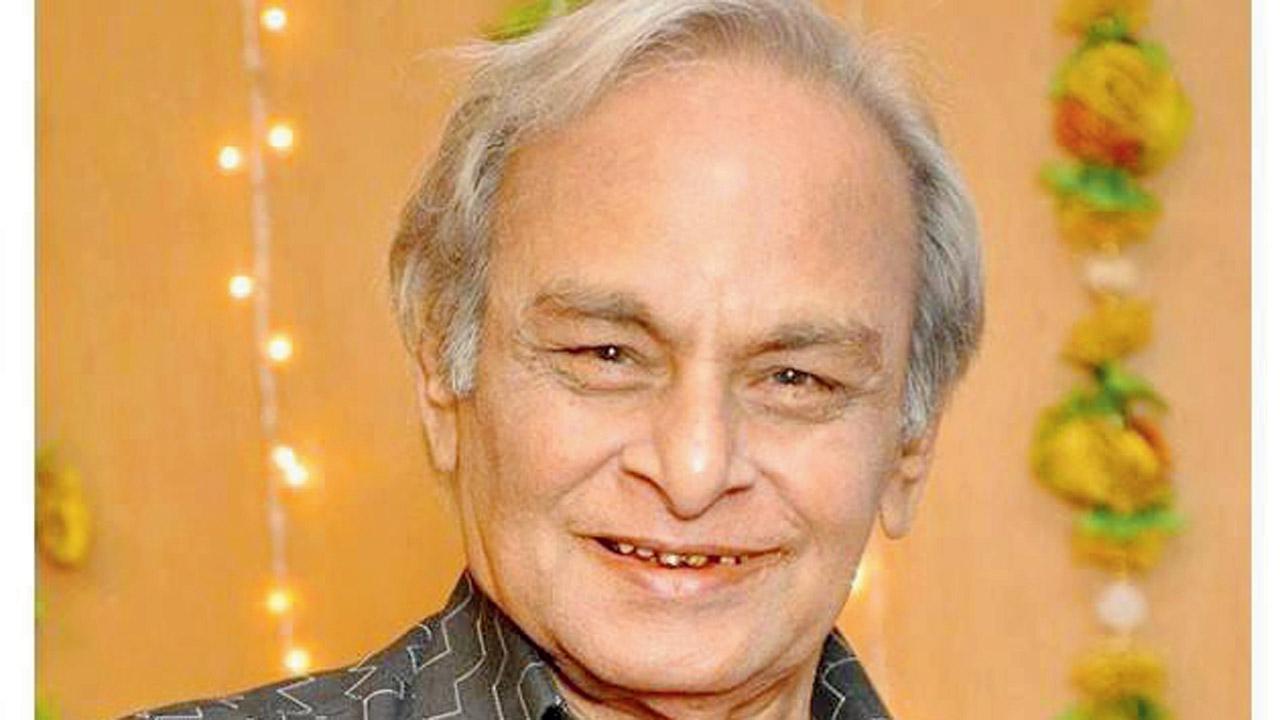
As told to Mohar Basu (MID-DAY; February 7, 2022)
When you’ve worked with someone for five decades, you don’t have just one memory that you cherish. Lata ji is someone I grew up with. We lived close by, and back then, she wasn’t Lata Mangeshkar — the Nightingale of India for us. Nor were we the hit duo of Kalyanji-Anandji. We were all newcomers, bonding as peers who love music.
Studios were basic then, and we used to record two songs in a day. Because of the noise [during the day], we would record only at night. Photographic recording was the norm when we worked. So, we could never hear, what we’ve recorded, on the same day. There was no option to rewind. Lata ji had worked with musicians pre-independence, so she had to ability to mould herself based on the musician’s style. She picked up in no time. She was the smoothest to work with because of her experience. She never lost her hunger to work harder. As a singer, she had only a singular aim — to creatively satisfy her music director.
I can never pick my favourite Lata song, but making Don [1978] together was memorable. In a film that is a thriller and not a romantic outing, a song of hers [Jiska mujhe tha intezaar] stands out because she made the material her own. The same stands true for Zanjeer [1973]. She made our music popular with her voice. Every song of hers lives beyond her. She is immortal because her art lives on. I love Kora Kagaz [1974]. Her songs feel like a life philosophy.
One has to go of course, but Lata is immortal because of her legacy. She was disciplined, dedicated and grounded till the end. Even in the last ten years when she wasn’t singing actively, she would never give in to food indulgences. She never thought she is brilliant at what she did. She always turned around and asked if it was good enough, wondering what more we needed.
I feel artistes should not get married-Alka Yagnik
9:10 AM

Alka Yagnik tells the story behind the yesteryear hit to interviewer Neeti Mohan
Soumya Vajpayee Tiwari (MID-DAY; July 9, 2018)
While Neeti Mohan is in awe of her senior, Alka Yagnik, the veteran is all praise for the young star and how newer singers are confident about their skills. As they settle for an interview peppered with music at a Juhu five-star, they walk each other through their musical journeys. Edited excerpts from the tete-a-tete:
Neeti to Alka
You redefined how singers carry themselves. Before you, few female singers would pay attention to dressing.
I am fond of good clothes and accessories, and I like to dress up. Earlier, for almost 15 years, my life was limited to home and studio. I would record five songs daily, and do stage shows occasionally. Later, when I started getting a little more time for myself, main apne shauk poore karne lagi.
At stage shows earlier, singers were only expected to perform well, with little attention paid to their dressing. But today, the spotlight is also on your appearance when you perform live.
Earlier, media was not so active and you wouldn't be clicked wherever you went. I did several shows with Kalyanji-Anandji and Laxmikant-Pyarelal. They taught me how to conduct myself on stage. Gradually, I started speaking to the audience. Back then, so much importance was not given to outfits, background dancers and presentation. I was a shy person. I could let go of my inhibitions only when I was in front of the mic. Now, I am a changed person on stage. I make the audience laugh.
(Mohan adds)
I experience something similar when I perform live — mere andar ki diva unleash ho jaati hai.
Do you feel singers are also actors?
Absolutely! Performing arts are always connected. You have to be an actor to be a good singer. When I sing a song, the actor in me comes out as I emote for the track. Actors also have a singer in them. Unless they have an idea of rhythm and sur,how will they dance to a song?
You said you would record five songs daily. How did you take care of your voice?
I had tonsillitis since childhood. My doctor suggested not to get it operated as my tonal quality would change. So, I had to live with tonsillitis attacks. The good thing was that the more I would sing, meri awaz utni hi khulti thi. Some artistes get tired after singing a couple of songs, but my voice used to blossom.
Do you remember recording a song with a bad voice?
When I had to record Ek Do Teen [Tezaab, 1988], I could barely talk. The song required strong throw, and we didn't have technical help those days. Mehboob Studio was filled with musicians that day — there was a 45-member chorus and around 100 instrumentalists. I told Laxmiji [of Laxmikant-Pyarelal] that I was not in a state to sing. He said, “Aap socho hi mat uske baare mein, aur bas gaao.” Though we had to finish recording before 12 am, we hadn't had a single take till 11.30 pm because balancing all the instruments was taking long. Finally, when it was all set up, Laxmiji said, “Alkaji, sing a rough version today. We will dub your voice again.” I belted out the number in one go. But that dubbing never happened. He was so happy with the song that he said, “Agar aapko lagta hai is gaane mein aapka gala kharab hai, to aap mera har gaana kharab gale se gaao.”
I read that when Osama Bin Laden's Abbottabad house was raided in 2011, hundreds of your song recordings were found.
Somebody had told me when this was reported. I felt weird. I think maybe he too had an artiste inside him (laughs).
Have you ever thought of teaching music?
Music cannot be taught. Either you are a singer or you're not. I always guide singers who need help. Over the years, I've done so many reality shows, and the participants often send me their works or come over to my home for suggestions.

Alka to Neeti
Do you plan to get married?
It has been on my mind of late. I hope to get into a relationship now.
(Yagnik adds)
I feel artistes should not get married. An artiste's life is erratic and most of them are moody. In such cases, the partner has a tough time adjusting to his/her moods and schedules. Even Ashaji [Bhosle] often says kalakaaron ko shaadi nahin karni chahiye.
(Mohan)
I have been in a relationship with my music and career. I am so busy that I don't have time for a guy in my life.
(Yagnik)
I got married early and my daughter [Syesha Kapoor] was born within a year. It was around the same time that Ek Do Teen and Qayamat Se Qayamat Tak (1988) released, and my career took off. I used to feel guilty that I wasn't able to devote time to my husband and her.
What kind of songs are your forte?
I don't know my forte yet. As a kid, I used to sing a lot of Hindustani classical songs and bhajans. When I went to a boarding school in Pilani, Rajasthan, I learnt folk music. I was there for seven years and would hear local women sing Marwari songs.
Did you always want to become a singer?
As a kid, I loved being on stage - be it acting, singing or dancing. I could never pick one, so I would often be in a fix. We used to have an hour-long extracurricular class daily. My dramatics, music and dance teachers would fight over me for their respective sessions. I struggled to figure out what I enjoyed the most. Eventually, I realised that when I sing, I get to do all three things - sing, dance and act - together. That's when I decided to participate in a singing reality show. I recently performed with A R Rahman sir in Kochi. I sang Jiya Jale Jaan Jale live and put up a Bharatanatyam act for it. It was fulfilling.

Amitabh Bachchan was cursing me because his mouth was corroded from the chuna-Chandra Barot
7:59 AM

Roshmila Bhattacharya (MUMBAI MIRROR; May 17, 2018)
“Don ka intezaar to gyrah mulkon ki police kar rahi hai lekin Don ko pakadna mushkil hi nahin namumkin hai...” Four decades later, this iconic dialogue in Amitabh Bachchan’s distinctive baritone still resonates. Yes, the line has been reiterated by Shah Rukh Khan in Farhan Akhtar’s 2006 remake, Don: The Chase Begins Again, but for me Don will always be the Big B.
Chandra Barot, who directed the 1978 crime thriller with Bachchan in the double role of Don and Vijay, has fond memories of Farhan as a boy of four when he’d drop by their place for the script, which was co-written by his father Javed Akhtar and his erstwhile partner Salim Khan. “My film is still remembered for its brilliant lines, including 'Mujhe jungli billiyan bahut pasand hai'. I was surprised when I found some of them repeated in the new Don. I always gave the credit for the film’s success to Salim-Javed’s fantastic script,” says Barot who turned director to bail out his cinematographer-friend Nariman Irani.
Irani was in the red after his 1972 film, Zindagi Zindagi, flopped. He was the cinematographer for Manoj Kumar’s Roti Kapda Aur Makaan and Barot who was the assistant director on the social drama, along with its actors, Bachchan, Zeenat Aman and Pran, decided to collaborate with Irani on his second production that would help him pay off his debts. Don opened in 1978 which boasted of several other Bachchan starrers, including Deven Verma’s Besharam, Sultan Ahmed’s Ganga Ki Saugandh, Ramesh Behl’s Kasme Vaade, Yash Chopra’s Trishul and Prakash Mehra’s Muqaddar Ka Sikandar. He had also given the voiceover for Satyajit Ray’s Shatranj Ke Khilari which released the previous year.
“Raj Kapoor saab’s Satyam Shivam Sundaram also arrived in 1978 and it seems incredible that Don put me in the league of these ace directors,” says Barot. He recalls how Dilip Kumar had raved about the film to Ramesh Sippy and Manoj Kumar after seeing it at a special trial and the latter had groused that he had yet to see it. Barot had assisted Manoj Kumar for nine years and admits that on the first day of the shoot, he was influenced by his mentor-director while taking his first shot. It had Bachchan as Don, using Helen with a gun to her head as a human shield to get away from the cops, telling her, “Yeh tum jaanti ho ki yeh revolver khali hai, main jaanta hoon ki yeh revolver khaali hai, lekin police nahin jaanti ki yeh revolver khali hai.” After the take, Irani groused that Barot’s long shots were taking the focus away from Helen’s beautifully lit face. “After that, though I still thought like Manoj Kumar, I’d execute the shot like Chandra Barot that gave Don its distinctive stamp,” he reasons.
The above mentioned scene was preceded by Helen’s seductive “Yeh Mera Dil”. They’d booked Mehboob Studio for two days, till 10 pm, but wrapped up early on the second afternoon. Barot decided to shoot a small scene of DSP D’Silva (Iftekhar), approaching Vijay with a picture of his lookalike asking him if he had seen the man before. “The studio’s canteen was turned into Vijay’s home in the slums, his two foster children visible through the wire mesh. We had no idea what Don would look like, so we used a picture of Amitabh from Premji’s Majboor, suave in a jacket. Vijay was dressed in a lungi from Hill Road and a red shirt,” he informs.
Before the film was completed, Irani died in an accident while working on another film. Barot plodded on. On Manoj Kumar’s suggestion “Khaike Paan Banaraswala” penned by Anjaan for Dev Anand’s Banarasi Babu but not used, was incorporated. “Anand ji (of Kalyanji-Anandji, the film’s composers) was my neighbour and I’d often bump into him late at night when he returned home, his lips stained with the red of beetal juice from chewing paan all day. So I ordered 30-40 paans and made Amitabh eat them all before the shoot. The next morning he was cursing me because his mouth was corroded from the chuna,” Barot laughs.
The film was released without any promotion and he remembers going with Bachchan to check out the hand-painted, life-size posters as they went up. “Critic Devyani Chaubal wrote it off as a flop but one of my photographer friends, Rahul, sent me a picture of crowds snaking around Tardeo’s Ganga Jamuna, as also Excelsior theatre, when the advance booking opened. After it opened, bandwallas would play 'Khaike Paan Banaraswala' and 'Yeh Mera Dil' at weddings,” he says, adding that at musical shows abroad, Bachchan would enter to the tunes of “Main Hoon Don” and bring the curtains down with “Khaike Paan Banaraswala.”
Barot who attended one such show in New York, after Bachchan recovered from the near-fatal blow delivered on the sets of Coolie, remembers the rush of Indians at Madison Square Garden and policemen patrolling on horseback. “A surprised local admitted he had never seen such crowds even for a Michael Jackson concert and so many Indians thronging the venue,” he laughs, asserting that the Don lives on going by all the compliments showered on him when his directorial debut turned 40, not just from strangers across the world, some who wanted to make a documentary on the film, but also friends like Manmohan Shetty, Sanjay Gadhvi, Jaya Bachchan and Helen whom he would call Helenski on the set.
People from Dharavi to Chandigarh are listening to English rock, dubstep-Priya Panchal
7:39 AM

Garima Sharma (BOMBAY TIMES; August 1, 2014)
The appetite of Indian audiences for unique music is increasing rapidly. These evolving tastes are creating a space for every genre possible.
Singer-lyricist Priya Panchal, who has recently lent her voice to the
nursery-rhyme-turned-song Johnny Johnny from Akshay Kumar-starrer
Entertainment, feels that this new dynamic is allowing people like her
to expand their horizon and not be scared of experimenting with sounds.
Starting at the
age of six, Priya completed 2,500 stage shows with composer duo
Kalyanji-Anandji before she decided to turn singer and lend her voice to
songs like Gale Laga Le (F.A.L.T.U) and Saibo (Shor In The City). She
started her career with the musical duo Sachin-Jigar and today, she is
married to Jigar, in love with writing lyrics and attracted to the
thought of experimenting with her voice. Excerpts from an interview:
You
have both sung and written for Entertainment.
I like to stretch myself as an artiste, be it for my writing or singing. I really enjoyed singing Johnny Johnny for Entertainment and also writing Tera Naam Doon. Sachin-Jigar love to experiment with my voice and I really like that they explored this other side of my voice. Khoon Choos Le from Go Goa Gone is another one I really enjoyed.
How did you make the transition from stage shows to playback singing?
I started singing at the age of six and then for the next 15-16 years, I toured all over the world with Kalyanji-Anandji. I wanted to pursue music, but not the life of stage shows. I was in college and used to write for myself, when my friends told me that I am good at writing and should explore more avenues in that field. I met Sachin-Jigar on Facebook. They were looking for a fresh writer for F.A.L.T.U and that's where it all started. I wrote something for them and I also used to sing the scratches for them. A couple of times, some producers/directors heard my voice, and said, 'Let's try her.' That's how I started singing.
You started working with Sachin-Jigar and got married to Jigar. Was it love at first sight?
Not at all, actually! We've been working for 3-4 years, but I used to hate him and his long hair. Actually, I used to hate their lifestyle. It's more like an arranged marriage for us. Jigar's parents were looking for a girl for him. Likewise, my parents were looking for a match for me, so Sachin played cupid and suggested to our parents that they should get us married since we are from the same field and understand this well. We actually fell in love after our engagement.
What projects are keeping you busy now?
I am writing for Happy Ending and ABCD 2 along with Mayur Puri. I have sung a romantic track in Hero too.
What do you enjoy more writing or singing?
I have been singing all my life. It's a part of me. Writing is more like a hobby. I never imagined that I'd be a Bollywood lyricist. Even when I get to write a melody today, I don't know if I would be able to do justice to it, so in that sense, I am partial to singing.
What do you have to say about the new genres of music making in-roads into Bollywood?
The music scene is growing and lots of new artistes are getting a chance, thanks to the access we have to social media. Audiences have developed their own taste. People from Dharavi to Chandigarh are listening to English rock and dubstep. The new generation is evolving with new music and it's a healthy step. But, that by no way means that melodies are going to die. A very simple melody like Tum Hi Ho (Aashiqui 2) got all the awards last year. That's the best case in point.
I like to stretch myself as an artiste, be it for my writing or singing. I really enjoyed singing Johnny Johnny for Entertainment and also writing Tera Naam Doon. Sachin-Jigar love to experiment with my voice and I really like that they explored this other side of my voice. Khoon Choos Le from Go Goa Gone is another one I really enjoyed.
How did you make the transition from stage shows to playback singing?
I started singing at the age of six and then for the next 15-16 years, I toured all over the world with Kalyanji-Anandji. I wanted to pursue music, but not the life of stage shows. I was in college and used to write for myself, when my friends told me that I am good at writing and should explore more avenues in that field. I met Sachin-Jigar on Facebook. They were looking for a fresh writer for F.A.L.T.U and that's where it all started. I wrote something for them and I also used to sing the scratches for them. A couple of times, some producers/directors heard my voice, and said, 'Let's try her.' That's how I started singing.
You started working with Sachin-Jigar and got married to Jigar. Was it love at first sight?
Not at all, actually! We've been working for 3-4 years, but I used to hate him and his long hair. Actually, I used to hate their lifestyle. It's more like an arranged marriage for us. Jigar's parents were looking for a girl for him. Likewise, my parents were looking for a match for me, so Sachin played cupid and suggested to our parents that they should get us married since we are from the same field and understand this well. We actually fell in love after our engagement.
What projects are keeping you busy now?
I am writing for Happy Ending and ABCD 2 along with Mayur Puri. I have sung a romantic track in Hero too.
What do you enjoy more writing or singing?
I have been singing all my life. It's a part of me. Writing is more like a hobby. I never imagined that I'd be a Bollywood lyricist. Even when I get to write a melody today, I don't know if I would be able to do justice to it, so in that sense, I am partial to singing.
What do you have to say about the new genres of music making in-roads into Bollywood?
The music scene is growing and lots of new artistes are getting a chance, thanks to the access we have to social media. Audiences have developed their own taste. People from Dharavi to Chandigarh are listening to English rock and dubstep. The new generation is evolving with new music and it's a healthy step. But, that by no way means that melodies are going to die. A very simple melody like Tum Hi Ho (Aashiqui 2) got all the awards last year. That's the best case in point.
Meet the guitar doc who fixes guitar of prominent Bollywood musicians
8:38 AM

Saurabh Datar (MID-DAY; March 30, 2014)
In an unassuming workshop at Charkop, Kandivli, Sunil Shinde is surrounded by guitars — broken, bent, modified, or some new ones. He is India’s foremost guitar luthier (a term used to describe someone who makes a lute or other string instruments), and the biggest names in the music industry seek him out.
“My skill is god’s gift — I never attended classes to learn how to repair guitars,” says the 40-year-old.
It all began in 1989, when he joined Alberto Music, a Malad store. After picking up some chops from its owner Salvadore Dias, he started repairing and fixing guitars full- time. Working at Alberto also exposed him to several books on guitars. “I would repair a guitar and compare what I had done to the manuals; it matched.” Soon, Shinde began servicing legendary Bollywood musicians such as Kalyanji-Anandji, Pyarelal and guitarists Dilip Naik and Ramesh Iyer.
Going solo In i996, Shinde established his own workshop and his clients moved with him as well. Today, he serves Ehsaan Noorani and Loy Mendonsa, bass guitarist Karl Peters, guitarist Kalyan Baruah, indie stars Papon and Rabbi Shergill, Sandeep Chowta and Clinton Cerejo. The list goes on to about 3,000 clients.
Ehsaan Noorani swears by Shinde. “I wouldn’t trust my guitars with anyone else. I send them to Sunil every month for maintenance.” During the 2006 deluge, Noorani’s guitar was damaged when Empire Studios was flooded. “ I thought it was gone. But he fixed it!” says Noorani. “I have a Parker Fly guitar, made of mahogany graphite. Once, to detect a problem, Sunil put the guitar in an X- ray machine,” he exclaims.
The Doc is also inventor Shinde also customises guitars according to client requirements. One such request came from singer-director Avdhoot Gupte. “Once, he wanted an intrument which combined western and Indian sounds. The protagonist in the film, Ek Tara, is a musician who undergoes a transformation,” explains Shinde. After about a year of research, creating designs, and working on prototypes, Shinde invented the ‘gitara’, a combination of the ektara and the guitar. “It has six strings and same number of frets as a guitar, but emits a more Indian sound. But, it can also be used in western tonality,” he explains.
The gitara will be patented. Ek Tara, will release in April. Shinde also invented another instrument, combination of a mandola and a mandolin, on the request of veteran Bollywood mandolin player Chandrakant Lakshpati.
Shinde says he never feels like composing music, though he is in touch with composers. ‘Ehsaan sir’, as Shinde calls him, got him imported tools and books.
The Guitar Doc now plans to set up a factory to produce guitars under his own name. He hopes his two boys will also learn the skill. “They’re young now. But, that’s all for the future. For now, I’m happy.”
Subscribe to:
Posts (Atom)