Showing posts with label Kahaani 2. Show all posts
Showing posts with label Kahaani 2. Show all posts
Yami Gautam Dhar to replace Vidya Balan in Kahaani franchise?
9:48 AM

HINDUSTAN TIMES (July 27, 2026)
Vidya Balan-starrer Kahaani may have a new leading lady. Filmmaker Sujoy Ghosh is returning for a third instalment in the franchise, with actor Yami Gautam Dhar set to headline the film, reported Pinkvilla.
“Kahaani 3 is a new story altogether... Yami’s character has a very strong arc. The film is still in the pre-production stage, and the team is working on the timelines for the shoot,” a source told the outlet.
The source added that Ghosh “has a very clear vision for the Kahaani world. He is working closely with the team to ensure that the third film feels fresh but still carries the soul of the franchise.”
We reached out for a comment to both actors, but they remained unavailable till the time of going to press. As of now, it is unclear whether any actors from the earlier films will appear in the new project. The franchise includes Kahaani (2012) and Kahaani 2: Durga Rani Singh (2016), both starring Balan in different roles.
Sujoy Ghosh on decade-long Kahaani 2 plagiarism row: “It was one battle after another”
10:43 AM

Niharika Lal (BOMBAY TIMES; May 3, 2026)
It was like one battle after another, and winning this case was like winning an Oscar” – that’s how Sujoy Ghosh describes his decade-long battle in court over the plagiarism accusations against his film Kahaani 2: Durga Rani Singh (2016) . Now, after the case was quashed last month, he is revisiting the ordeal.
At a discussion hosted by the Screenwriters Association in Mumbai, Ghosh recalled the nightmare that the case caused.
‘IP IN OUR COUNTRY IS TREATED AS A CRIMINAL CASE’
Ghosh, who wrote and directed the film, said the complainant had first approached the SWA, which found no connection between the two scripts. He then went to court, allegedly concealing this. Ghosh said he discovered the SWA verdict later after missing the email and submitted it in court, adding that the complainant was a serial litigator.
He shared, “In 2016, we had just released Kahaani 2: Durga Rani Singh, which is the sequel to Kahaani, and Robin da (Robin Bhatt), who was part of the SWA, called me and said, ‘ Arey tune kuch kiya kya?’ I said, ‘What did I do?’ He said, ‘There is a gentleman who is accusing you of copying his script.’ I didn’t take it seriously because I had not. So I said, ‘No, I didn’t,’ and I gave all my details to Robin da.”
He explained, “I didn’t realize it. I didn’t take it seriously because it’s like somebody tells you, ‘you killed that person.’ ‘No, I haven’t!’ Why should I take it seriously? And that was my biggest mistake. And then suddenly, I had a criminal case against me because IP in our country is treated as a criminal case. So if I accuse you of plagiarizing – and that’s a big word – then a criminal case can be filed. Initially, I didn’t take it seriously. It’s like a little snowball that starts gathering momentum. It piles up, grows bigger, and before you realize it – boom! It has hit you. I was like, ‘yeh kya ho raha hai?’ It was one battle after another. It kept growing. The Supreme Court also took a lot of time. And thanks to the court, we got a judgment stating that whenever someone accuses another of copying any work, certain steps must be followed before making such a claim.”
Background
After Kahaani 2 was released, a case of copyright violation was filed against writer-director Sujoy Ghosh. The complainant, Umesh Prasad Mehta, had written a script for the film Sabak. He alleged that Ghosh had copied that script for Kahaani 2. A criminal complaint followed, and a June 7, 2018 summoning order by the Chief Judicial Magistrate triggered a legal battle that lasted nearly a decade.
In March 2026, the SC quashed the copyright infringement case, noting that Ghosh’s script had prior registration and that the complaint was baseless. Ghosh told the SC that the complainant was a serial litigator. He added that the complainant had approached the SWA, which found no similarity between the scripts and cautioned the complainant, but he allegedly concealed this verdict before proceeding with the case.
‘Would suggest fellow writers – don’t take such complaints lightly’
Writer Preeti Mamgain, who was hosting the session, and writer Jyoti Kapoor, then convenor of the SWA in Sujoy’s case, explained that regardless of who files a complaint – producer, director or writer – the SWA calls both parties. “We listen to both sides. Jo bhi verdict hota hai, we send it to both parties,” they said.
Mamgain added, “We have had cases where someone went directly to court, and the court sent the script to us.” Sujoy said, “The biggest mistake I made, which I would suggest to all fellow writers, was not taking it seriously. I didn’t give it the seriousness it deserved. There is no point in thinking you are safe because you know you are innocent.”
There’s something about the Bengali culture that just feels very familiar-Vidya Balan
2:30 PM

Onkar Kulkarni (BOMBAY TIMES; October 11, 2024)
Dressed in a red Banarasi sari, Vidya Balan enthusiastically soaked in the Durga Puja festivities at the Chembur Durga Puja Association. The actress, who believes, “Ami mon theke Bengali (I am a Bengali at heart)”, immersed herself into the celebrations – from blowing the conch, playing the dhak to gorging on some irresistible Bengali mishti. She talks to us about her connect with Durga Puja, her Bengaliness and how Satyajit Ray has a role to play in her love for Bengali culture.
‘My first visit to a Durga Pujo pandal was in my early 20s’
While growing up, Vidya was more familiar with Navratri than Durga Pujo. She tells us, “We celebrated Navratri every year in the South Indian way. For us, Navratri meant ‘girl time’. My mom would call her female friends and their girls over for haldi kumkum and we would visit others too. My first visit to a Durga Pujo pandal was only in my early 20s. I’d done a music video, Kabhi Aana Tu Meri Gali, with Euphoria and Pradeep Sarkar (director of Parineeta). Since I lived in Chembur, dada’s then assistant Paula, invited me to this pandal because she was going to be singing here.”
‘Fortunate to explore various facets of Durga Maa through my work’
As she revisits this pandal after 20 years, Vidya gets nostalgic. She says, “The image of Durga Maa instantly called out to me. What Durga Maa stands for resonated with me at a very deep level, even before I could articulate it or understand it. I’ve been fortunate to explore various facets of Durga Maa in some of my most popular films.”
‘Bengalis are known for their beautiful women and their beautiful weaves’
The Kahaani actress loves the khichuri along with begun bhaja (brinjal fry) bhog served during pujo. One of the other highlights is, of course, dressing up in gorgeous saris. “I love wearing saris with the red bindi, and hair left loose, and now I also have my own shakha pola (the traditional Bengali white and red bangles). Bengalis are known for their beautiful women and their beautiful weaves. I wear all kinds of saris, but I love Bengali saris, the Dhakai, Baluchari and even the simple Bengal cotton saris. I remember on one of my early trips to Kolkata, I had gone to Punjabi House at Gariahat and bought my mom a sari for Rs. 135, and she still has it.”
‘I see Navratri and Durga Puja as a celebration of the divine feminine’
Apart from the grand celebrations, the festival is also a tribute to the divine feminine, Maa Durga. Vidya shares, “I see Navratri and Durga Pujo as a celebration of the divine feminine and the power of Shakti. I guess my sister and I have imbibed that from my mother. Growing up, I had examples of a lot of strong women in my life, including my mother, aunts, neighbours and sister, who I’ve always said is my hero. They are all delicate, simple women, but women with a lot of strength. So, when you grow up with such role models, you believe that you can do whatever you want to do in life and that femininity is not an appendage, it is powerful.”
‘The first time I visited Kolkata, it felt like this was also home’
Vidya has had a strong association with Bengal and its culture. In one of her most outstanding performances, Kahaani, she was called Vidya Bagchi, and the final moment in the film culminated in a Dashami scene. She made her acting debut with a Bengali film, Bhalo Theko, and then her Bollywood debut with Parineeta, which was set in Bengal.
She says, “There’s something about the Bengali culture that just feels very familiar. You know, I visited Kolkata for the first time only in 2003, but the moment I went there, it felt like this was also home. I’ve also shot a lot of important films in my career, including Bhalo Theko (2003), Parineeta (2005), Kahaani (2012), Kahaani 2 (2016) and Te3n (2016) in Kolkata.”
‘Satyajit Ray has a role to play in my love for Bengali culture’
“I think Satyajit Ray also has a role to play in my love for Bengali culture. I’ve watched a lot of Bengali films, and I know some songs and rhymes (like aabol-taabol) too. I couldn’t have imagined that my film debut would be in the land of Ray. I didn’t get an opportunity to work with him, but I’ve had a lot of people tell me that I look like one of his favourites, Madhabi Mukherjee (laughs)!”

I’m running to keep up with the audience-Sujoy Ghosh
4:08 PM
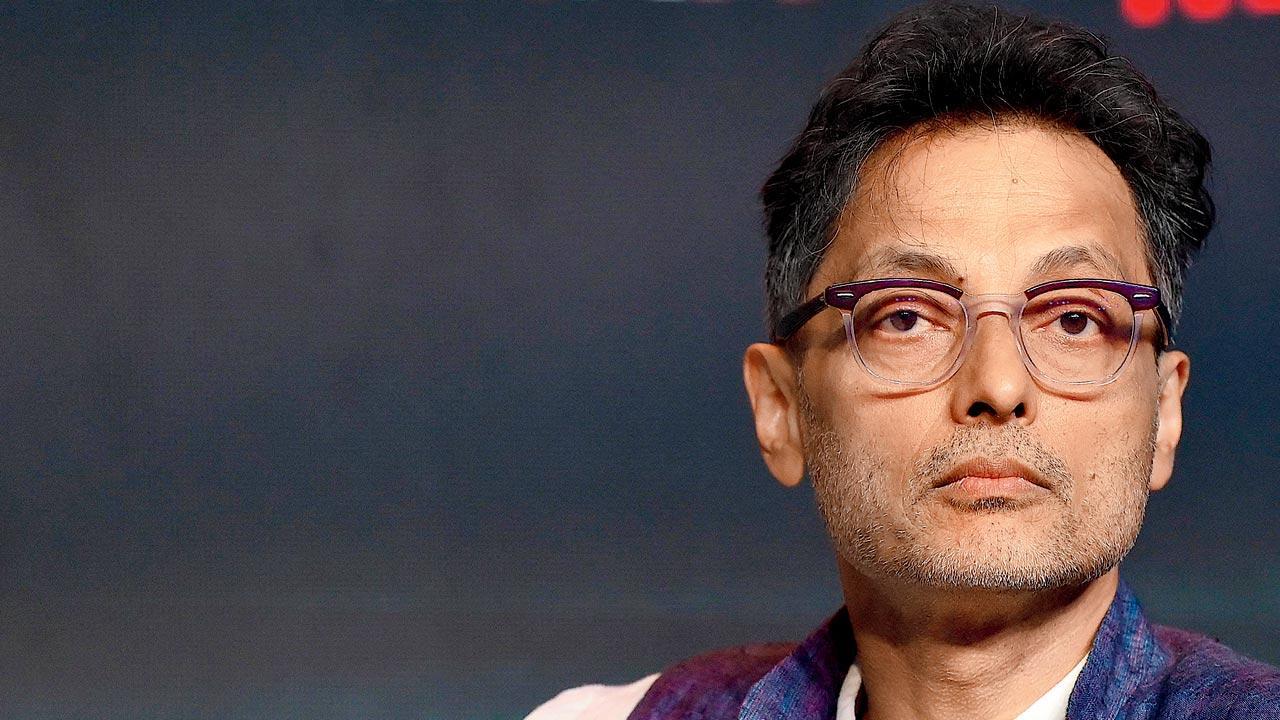
Filmmaker Sujoy Ghosh speaks of adaptations, choosing too-pretty-to-leave Kalimpong as location and keeping up with audience tastes in the build-up to his Kareena Kapoor-starrer Jaane Jaan
Sucheta Chakraborty (MID-DAY; September 10, 2023)
“It was a doomed love story and I loved it because the only other love story I could think of in comparison was King Kong,” filmmaker Sujoy Ghosh tells us about his upcoming Netflix film Jaane Jaan, which is based on the 2005 Japanese novel The Devotion Of Suspect X by Keigo Higashino. It’s a book brought to him years ago by friend and screenwriter Kanika Dhillon. He recalls being drawn to it instantly.
“You don’t know whether it’s a good story or a bad story, but it’s a story you have identified with,” he explains. “It really got to me because I saw characters in that book who were big [and] honourable. It was something I was not used to. In Japanese culture, honour is a very big thing and [people are] big hearted. I wish I was like Naren [Jaideep Ahlawat’s character]. I wish I had that kind of honour instilled in me, the values, beliefs and morals that he has.”
Since Anukul, Ghosh’s 2017 short film starring Parambrata Chatterjee and Saurabh Shukla, based on a short story written by Satyajit Ray, this is the first time that Ghosh has adapted a story for the screen. “I was dying to,” he tells us excitedly.
“These people are experts in what they do. They’re born to write stories. I would love to have all my films based on books if I had my way.”
Aranyer Din Ratri, Bengali author Sunil Gangopadhyay’s novel, which was famously adapted for the screen by Saytajit Ray in 1970 has been on his mind for long. “But it is too scary.” There is the burden of responsibility and the need to be loyal and respectful to the source material because there is the looming sense of someone having worked very hard to put the story together. “I shouldn’t be messing with a story just because I can.”
Rabindranath Tagore’s short story Kabuliwala is a work he says he hopes to adapt one day. “I will do it before I retire,” Ghosh smiles. “Have to do one Tagore, at least.”
Jaane Jaan is set in the hill town of Kalimpong in West Bengal, a location that Ghosh has used previously in 2016’s Kahaani 2: Durga Rani Singh. But the Kalimpong of the new film is different. “That’s how it should be,” he insists.
“Even the Kolkata of Kahaani versus the Kolkata of Te3n [which he produced] versus the Kolkata of Bob Biswas [which he wrote and co-produced] are different. At least I hope they are. That’s the whole trick. You should shoot in the same city, but the city should also be a character. The city should reflect the story that you’re telling. My world is very important; it should be a character in the film.”
Misty and far away from the city bustle, Kalimpong in the Himalayan foothills, Ghosh tells us, lent itself perfectly. “I feel any character within a story is believable if the world in which they are is believable. Now, if you’re showing somebody who’s academically inclined, who wants a quiet life, who is looking to restart her life, you would need a world which is smaller. It’s a smaller community where people know each other.”
His own familiarity with the terrain also undoubtedly contributed to his choice. He recalls a time when he and a friend hired a car and went to Kurseong and from there to Kalimpong and Darjeeling. “We kept falling in love with the places and didn’t want to leave, and then my wife had to call us back,” he laughs. “I could do a whole film by the banks of the Teesta.”
While creative concerns and a director’s sense of discipline remain largely the same while making a film for the OTT space, what changes for Ghosh is the way the film is presented.
“If I know that you’ll see my film on a mobile, an iPad, a computer or a television screen, my framing would change a little,” he says, explaining that for a theatrical film he can include more wide shots. “I try to keep that in my mind, but don’t let it dictate me. In Jaane Jaan, you’ll know that the framing is a little different from, for example, a Badla or a Kahaani.”
The process he finds pushes him to think differently, an important requisite “to move with the times”. “We have to learn to serve people who watch films on their mobiles. Whether we like it or not, they do.”
Ghosh began his filmmaking career in 2003 with the ‘cool’ indie musical comedy Jhankaar Beats and has since gone on to make several hit thrillers starring industry A-listers. The biggest change in his life he feels, however, is technology.
“When I started out, technology was never a faculty of filmmaking. Now, it’s as important as editing or cinematography or directing because you have so many possibilities if you know how to harness technology in your film, to create the world, to tell your story. And it’s changing rapidly. A lot of my friends do some amazing things with technology and I don’t know how to, but I would love to learn.”
There is also the matter of the audience’s evolving tastes. Ghosh says that at the time when he started out, people were not that exposed to global cinema. “But now, I’m competing with the evolution of taste. When you see my film, your benchmarks are different. You’re not just seeing a film, you’re also assessing it. Technically, is it sound? How well has he shot it? How good is the VFX? If I give you a lazy film, you’ll be able to spot it a mile away. Their expectations and demands from a film are changing, and I am just running to keep up with them.”
I got sc****d trying to find money for Kahaani-Sujoy Ghosh
8:29 AM

Juhi Chakraborty (HINDUSTAN TIMES; March 9, 2022)
Over the last 10 years, Kahaani has got a cult status, something that filmmaker Sujoy Ghosh finds flattering. “I don’t feel 10 years [have passed]. People still talk to me about the film like it released yesterday,” he says.
But Ghosh says that the journey of the film from inception to execution was a tough one, especially since it was a female-led story. “It was tough to get people to back the film, given the fact that it was an action/thriller with a female protagonist, from a director like me, who was coming out of two massive flops (Home Delivery: Aapko... Ghar Tak, 2005, and Aladin, 2009). There was nobody around and I knocked on every door. I got sc****d trying to find money for Kahaani,” he says.
Ghosh shares that after the film released, the notions changed. “[Someone from] a big studio came to me and said, ‘What a twist, our eyes popped out’ and I was thinking, ‘I narrated the script to you, twice, were you not listening?’” he recalls.
Ghosh is content that the film triggered a change in the film industry. “Kahaani helped assure people with money and the producers that such films can be made and they can make money, too. So, people started investing money in films with female protagonists,” he explains.
Ghosh credits actor Vidya Balan for believing in the film from the beginning. “Kudos to Vidya for carrying this film on her shoulders. It was a story we wanted to tell and be associated with,” he says, adding that he is looking forward to taking the franchise forward. We did Kahaani 2: Durga Rani Singh (2016) and Bob Biswas (2021) and if the right script comes up, we will do more,” he ends.
We often borrow from Vidya Balan's closet as she has an enviable collection of sarees-Pranay Jaitly & Shounak Amonkar
8:06 AM

SAY IT WITH SILK: A Kanjeevaram saree with differently-hued blouse, both from her wardrobe, combined with temple jhumkas and a bindi make for a perfect I-Day post
As told to Ankita Chaurasia (MUMBAI MIRROR; September 16, 2020)
 We first worked with Vidya Balan in 2016, when we styled her for an exhibition. We didn’t hear from her till later that year, when one evening, her manager made a panic call at 10 pm, wondering if we could style her up for a Kahaani 2 promotional event scheduled for 9 am the next morning. We woke up our designer friends, got them to open up their stores and when we finished dressing her up, Vidya smiled and said, “Welcome to the team”. Since we had just shifted base from Milan, she was our first B-Town client with whom we learnt a lot about celebrity styling.
Vidya’s always ready to experiment and gives us a lot of time for styling sessions, so she can try everything we’ve shortlisted. For our first session, we gave her 50 looks and she didn’t reject any outright. Instead, with her inputs, we were able to alter every outfit to her taste.
Her comfort zone is anything Indian. She carries off sarees and angrakhas beautifully because of her classic features. We’ve also been exploring the Indo-Western space and are trying different drapes, silhouettes, cuts, and patterns. When we do Western wear, its cinched at the waist and flared in the bottom; that silhouette suits her body type well.
Vidya prefers natural fabrics and since she is not brand conscious, we can mix and match local and international brands to create a unique look. We often borrow from her closet, too, as she has an enviable collection of sarees and blouses. Jewel tones work like magic against her skin. And yes, she absolutely hates powder blue.

GO INDIGO: Vidya loves indigo and this block print angrakha is the right silhouette for her. We paired it with chunky earrings with indigo stones to create a monochromatic look
COMFORT FIRST: This straight high-neck kurta has a bohemian vibe and playful pom-poms. Anklelength pants make it uber comfortable for a day out
PRICE-LESS!: A Chettinad cotton saree we bought at a weavers’ exhibition for just Rs 1100, styled with small hoops and a red bindi, did the trick here. Vidya’s hair was pulled back in a simple ponytail for the effortlessly au naturel look
I LOVE MY INDIA: This simple kurta got a modern touch with an asymmetrical cut, kalamkari work sleeves and a block-print body. We paired it with printed pants and golden strappy heels
VOCAL FOR LOCAL: This half-and-half saree was locally sourced from a weaver. The pleats part is cotton which gives it structure while the pallu is a light chiffon, providing us with a beautiful drape, and the dull golden border keeps it in place
Jugal Hansraj says being out of people’s mind is a fear
9:52 AM

Juhi Chakraborty (HINDUSTAN TIMES; September 6, 2020)
It’s been a while since Jugal Hansraj shifted base to the USA. The actor, who was last seen in Kahaani 2 (2016), says though he misses being in front of the camera, he isn’t desperate.
“I have really enjoyed doing my work, but there are a lot of important things in life. I mean yes, being out of sight, out of mind is a fear, but I hope people who want to work with me will reach out. People who want to remember you will do so anyway,” he shares.
Citing the example of director Sujoy Ghosh, who helmed his last big screen outing, Hansraj says, “Before Kahaani, my last film was almost nine years ago. But he did offer me a film, didn’t he? He had even offered me Jhankaar Beats (2003), but I could not take it up then as I was doing another film. So, it shows that if somebody has to think of you, they will.”
Hansraj, who has also helmed two films — Roadside Romeo (2008) and Pyaar Impossible (2010) — is looking at the prospect of developing web content in India.
“I am in Mumbai every three months, but because of the Coronavirus pandemic, I haven’t been to Mumbai since March. I am developing a series for an OTT player along with producers and directors, working with a writer to creatively oversee and develop the project,” he adds.
Actors don't have a shelf life, stars do-Vidya Balan
8:21 AM

Vidya Balan busting the myths around girl bonding in Bollywood, the shelf life of actresses and why her career isn't a chore for her
Mohar Basu (MID-DAY; August 18, 2019)
We meet Vidya Balan on the last day of Mission Mangal promotions. Dressed in finery after swiftly wrapping up last-minute work, she settles in her sea-facing room at a suburban five-star. "During Kahaani (2012), I made a personal record of 58 interviews in a day. This feels a lot a lighter," she starts off. Feet up, sinking inside a quilt, a visibly exhausted Balan retains her affable smile as we chat about the shifting definition of a female actor, the reason behind her long gaps, the myth of female catfights and the long wait up to her passion project—the Indira Gandhi biopic.
Edited excerpts from the interview.
It's been a year and half since Tumhari Sulu (2017). Why did you take such a long gap?
I did three films back to back [Kahaani 2, Begum Jaan, Tumhari Sulu] and after that I didn't want to jump into another one immediately. I loved Mission Mangal which is why I took it up. I need time to rejuvenate after gruelling work and family time is sacrosanct; I prefer to take things at my own pace. There have been instances in the past when I have gone on set and said, "Pack up kab hai?" That's a red flag for me. My work cannot become a chore. I am not here to churn films, neither am I in any tearing hurry to get anywhere. I am here for a lifetime.
But the common assumption is that actors have a shelf life.
Actors don't have a shelf life, stars do. Being in the public eye and living under constant scrutiny can get daunting and draining after a while. By design, that is changing because the fabric of movies and audience is changing. Hence the concentration is on becoming a better actor [with each film], not a star. My 'care-a-damn' attitude works and it is the only way I know [how to survive], which is why I am here [in Bollywood] for as long as I want to.
In a cast full of women, all stars in their own right, how regular were the catfights?
(Laughs) That's a cliché. People believe when female actors work together, tensions and insecurities run high. However, in my experience, that is hogwash. I did Begum Jaan with an ensemble female cast [and there were no catfights]. It's even more creditable here because each of us—Taapsee (Pannu), Nithya (Menen), Sonakshi (Sinha), Kirti (Kulhari)—are stars in our own right. We were secure and it was a joyous experience to work together. High time we made a girls' road trip film in India. The cliché [about catfights] was probably true in the past, but women stand together today.
Being the primary lead in the film, doesn't it bother you that Akshay Kumar's face is more prominent on the poster?
[The emotion is] far from it. If Mission Mangal does well, we will all gain from it. Having his face [on the poster], guarantees more footfall in the theatres; and I have no qualms using his stardom. In the films I headline, I am prominent on the poster. We all have prominent roles, but when there is a star like Akshay Kumar, it makes sense. I know the film I signed up for and I am okay with whatever they do to market it. My experience helps me see things in perspective.
Last November, filmmaker Radha Bharadwaj reached out to mid-day about a legal suit she filed on you for passing her film idea (similar to Mission Mangal) to R Balki.
And we won the case. Although I never met Radha, her script came to me through my agent, Bling [Entertainment]. I was offered four films on the same subject. One script that Atul Kasbekar wanted to produce was still at the ideation stage; and there was nothing for me to do in it. Ronnie Screwvala had a similar script with two character options—a 22-year-old and a 55-year-old—I declined it because I fit neither. Each of the scripts gave me the feeling of something missing. Mission Mangal scripted beautiful personal lives for each scientist, the science was simplified, the mission was detailed and I loved it. I was on board as soon as I finished reading. Having spent 15 years in the business, I respect everyone who comes to me and I pride myself for my integrity. Not once have I shared another person's idea with another filmmaker. I am happy truth prevailed.
Did you feel targeted because you are a star?
We are definitely scrutinised more. I felt it was unfair to me, considering I never announce my own films. It always comes from a director or producer. I was taken aback when it happened and that too on the first day of our shoot. Last one month, the pressure increased because Radha wanted clarity before our film's release. I can empathise with that, especially for someone who has worked on a script for long. The information is on public domain and there is no limit on how many films can be made on the same subject, like the Bhagat Singh biopics that all happened at the same time.
What is next in the pipeline?
I start prep for the Shakuntala Devi biopic soon. The Indira Gandhi biopic [based on author-journalist Sagarika Ghose's book Indira: India's Most Powerful Prime Minister] will take more time to be structurally drafted and Ritesh Batra is working hard on it. The web series is a mammoth amount of work. It is a passion project.
Are you involved in the writing process of the series?
I don't have the talent, bandwidth or discipline for it [writing]. I respond better to what is being written. May be by year-end, once the material is ready, we could start discussions. It may also take another two years, but it's worth the wait. Sometimes, I worry that it's taking too long, but then, I don't have to go anywhere. Good things require patient brewing.
Any plans to venture into production someday?
No. Ronnie offered me the producer credit [for Natkhat] because there is no money in short films. Siddharth [Roy Kapur, husband] is a producer. Honestly, I am living my only dream of being an actor. Producers have plenty to handle, and I am clear, I want to be on the other side, being handled (laughs).

I am here to stay, so it doesn’t matter how many films I do in a year-Vidya Balan
7:52 AM

Madhureeta Mukherjee (BOMBAY TIMES; August 14, 2019)
In an industry where the power scale continues to tip largely towards the leading male stars, Vidya Balan has held her own; making brave moves and rare choices. The scenario is gradually changing, and mindsets, too. And Vidya, whose upcoming film Mission Mangal is on the verge of release, rightly explains, “It takes a lot to stand up for yourself, and I think women are slowly getting there.” In a conversation with BT, she expresses her opinions on the over-sensitive section of the social media, how women should adeptly use their EQ to make the cut in a man’s world, and how she doesn’t need to clock in more movies to prove a point. Read on...
We have seen you lead the show in most of your films, and then, here is this ambitious mission-to-Mars film, with a new director and a huge star cast. You haven’t really been seen in this space before...
WelI, I had worked with Jagan (Shakti, director) on Paa (2009), as he was assisting R Balki then. He showed me all the videos and presentations he had, and I asked him why he wanted to make this film. For a first-time director, Mission Mangal is quite an ambitious film to attempt. He said that he has been wanting to tell this story for a long time now; also, his sister (Sujatha) is a part of the Indian Space Research Organisation (ISRO), hence, he knew quite a few scientists. He had done hours of research and culled out all the highlights to make it cinematic. I had been offered films on the same subject thrice before, but none of those really interested me. But when Balki narrated this story to me, I instantly said… I am in. That is a rarity for me.
The information and details about MOM (Mars Orbiter Mission) are pretty much in the public domain, but the way the lives of the characters in the film are fictionalised, it gives the film a wholesome feel. What interested me about the story is not just the mission, but what the characters were going through in their personal lives. Thankfully, I believe that in reality, those scientists didn’t go through such conflicts, but cinematically, we needed that. So, here, we juxtapose both — their lives and the mission at hand.
Add to that, a bunch of very talented women sharing screen space, which is a rarity, too...
Akshay was already on board when I heard the story, and then they told me about the rest of the cast. I thought that if this cast comes together, it will be fantastic. I am so glad it did. How often do you get to work in an ensemble cast like this, and in this day and age?
In an interview, Taapsee Pannu said that it is tough to get an A-list male actor to feature in a film where the women have a massive role to play? Having headlined so many films as a ‘hero’ in the typical sense, if I might say so, what do you have to say to that?
I think it is fantastic that Akshay is part of a film (as actor and co-producer) that has so many female actors. That is incredible. I have seen a lot of films that came along, but it didn’t get a so-called superstar. I am talking about the early days of my career, around 2005-2006, when there were quite a few films which the male superstar didn’t consider at all, because they had a woman playing the protagonist. They didn’t end up doing it, the budget didn’t get justified, and finally, the film was shelved. Hence, this project (Mission Mangal) is a fantastic attempt. Having said that, there is still a long way to go. If it was just one woman in this film, then we’d have to see how far it would have gone (laughs!).
When the first poster of the Mission Mangal was released, it became a talking point. People felt that Akshay got more prominence in it than the rest of the actresses. While it is important to have such conversations, the industry’s point of view remains that whoever draws in the audience leads the promotions. In fact, your other co-stars from the film like Tapsee and Sonakshi, too, agreed on it. Your thoughts...
Well, we are in the business of cinema. And finally, if Akshay is going to sell the maximum tickets, it only makes better business sense. Slowly, actresses are gaining in strength, and someday, our faces will be equal, if not bigger than the lead actor. I am saying this in jest, and with no feeling of being slighted or anything. Also, I really feel that we are getting touchy about too many things these days. It is great that today there are conversations about so many things (on social media) that people would not speak about before, but sometimes, I do think that the people who are commenting are not even aware of what they are saying. They want to be part of a herd, and they feel compelled to take on other people’s opinions, just so that they look like they have one, too.
Do you feel pressurised to comment on various issues, give your point of view (POV), react and respond to everything being said and done (in the universe of movies and the world around us).
Yes! People out there want everyone to give their opinion on everything. Many times, I don’t have a POV on a lot of things, and I am okay with admitting that. If someone asks me about some political developments in our country, I say that I can’t comment on it as I am not fully aware of it. I don’t think as actors we need to be aware of everything. In that case, even non-actors should be aware of everything. Why are we actors held to higher standards than everyone else? We are blamed for everything like all the evils in our society, perpetuating stereotypes, not standing up for a cause, not giving an opinion, or not rallying together. It is like we are held responsible for everything, why?
Talking about feats, you have pulled off quite a few on celluloid. A lot of the characters you have portrayed, like Ishqiya (2010), The Dirty Picture (2011) and Begum Jaan (2017), command authority and exude power. In reality, do you feel that women think twice before exercising their power in various areas of life? Is a woman’s show of strength often considered to be arrogance in a man’s world?
Women are emotionally extremely strong, while men are physically strong. The moment a woman enters the left-brain domain, she brings a certain soft power and EQ (emotional quotient) to the table. We use that to bring out the best in people and situations. When we are in a man’s world, we often start thinking that we need to be like men to be successful. And when that happens, you begin to take on their aggression and other traits. I feel that’s not needed. When there is a marriage of our strength and theirs, we can achieve great results. Sometimes, I know that we (women) have had to portray ourselves as being more powerful, more aggressive, only so that we are seen as professionals and not soppy, emotional people. This struggle makes it harder for us. Of course, there are individual differences in all of this. We suppress that power that we naturally have within ourselves. The more we become comfortable with ourselves, the more we won’t feel the need to align with what we see as expressions of power in men. Women can redefine power. Yes, it’s true that women often tend to accept less, because they feel that they can’t ask for more, or ask for what is rightfully theirs — whether it is more responsibility or respect. It takes a lot to stand up for yourself, and I think women are slowly getting there.
The good thing is that today, whether a film is headlined by women, men, or both, or by a huge line-up of stars, beyond a point that does not matter. At least, for a section of the audience, who is looking for good content, great stories and nothing else...
Yes, this means that we will churn better content, and it is a great time to be in the movies. This also means that today, it’s not just the superstars’ films that have chances of getting an audience and doing well. It opens the horizon for all of us and there is an audience for every kind of film. In the past, I remember someone telling me, ‘I don’t know if India is ready for a space film’. The way Mission Mangal is made, whether or not you are ready for it, you will get it. It is simplified, without compromising on what needs to be explained. The parlance is not scientific in that sense. If you ask me, which is my favourite sci-fi film, I have very few, as I get intimidated by science.
Also, today, the audience is looking for heroes in common people. They are keen to see stories about simple heroic deeds that impact their lives. Right?
Now, we are no longer saying that the hero is some other-worldly being. If the hero is one of us, that excites the audience. Hence, we are seeing all kinds of unlikely heroes. Today, the hero does not need to bash up ten people; instead, if that person is able to live his or her life well and realise their dreams, then that is inspiring. It makes the audience feel that they have a chance at being a hero, too. That is what social media is doing, isn’t it? It makes everyone feel that their voice has value and their words have power. I am not sure if that it is a great thing always, in this respect, but that is what is happening.
There was a point earlier when you were trying to fit in, be a certain type and look a certain way. Then you broke those barriers and set yourself free from those trappings. Subsequently, we saw you flourish in roles like The Dirty Picture (2011), Kahaani (2012) and more, but still at that point, you were in the process of gaining a strong foothold in the industry. Now, having made a crack (a big one at that), and settling into a space that truly belongs to you, is life calmer? Are you more in control and has it slowed your pace, work-wise?
I did three intense films back-to-back, Kahaani 2 (2016), Begum Jaan (2017) and Tumhari Sulu (2017). When you are leading films like that, there is prep, shoot, dubbing and promotions. Five months or more are consumed by one film. I had three releases in a span of one-and-a-half-years or less. It got a bit too much. I also need time for myself, spend time with family, read and travel. It was coincidental that the subjects that I had liked were being developed. The only ready project was Mission Mangal, which I agreed to do immediately. I know that I am here to stay, so it doesn’t matter how many films I do in a year. I think that I am an eternal optimist. I always feel that this is the best time of my life. I felt that way even in my worst phase, at a time when my films were not working. I have this attitude and it is a blessing. I feel that I am having the best time of my life and wonder how it can get any better. I am still as passionate about cinema and that has not changed at all. Like I said, I don’t feel the need to clock in a certain number of films. I did a Telugu film in between, which was like doing two films and I ended up shooting more than I thought I would. I am starting the biopic on Shakuntala Devi immediately after Mission Mangal releases. I want to work at my pace. I think after that phase, where I had five hits and then my films flopped one after the other, I kept thinking about what is going wrong. I couldn’t figure what needed fixing, and then, that phase taught me that nothing needed fixing. I realised that this is how it is, and this is how it is always going to be. If that phase (of success) wasn’t permanent, even this wouldn’t be. I guess, it is all about growing up. And the amazing thing is that, the more I grow up, the more I am in touch with the child in me. It is because it frees you. I am not waiting for validation, approval or acceptance anymore, it’s all there (in your head). It is never an absolute, but I am definitely better than I was before.

Kathua rape: Vidya Balan joins hands with NGO to increase awareness on child sexual abuse
8:00 AM

In the wake of Kathua case, Vidya Balan joins hands with NGO to increase awareness on child sexual abuse, likely to reach out to the government for support
Mohar Basu (MID-DAY; May 16, 2018)
In light of the increasing cases of child sexual abuse, Vidya Balan has taken it upon herself to take forward the cause she addressed with Kahaani 2 (2016) where she played a survivor of sexual assault. The actor has come on board as the goodwill ambassador of Arpan, a Mumbai-based non-profit organisation that works in tandem with schools and communities to increase awareness on the subject.
Besides offering counselling services to survivors of such incidents, and training parents and teachers to be vigilant, the organisation has designed the Personal Safety Education programme, which has been included in the curriculum of over 100 schools across Mumbai. The project is aimed at teaching children how to protect themselves from sexual predators, with an emphasis on understanding the good touch and bad touch.
As she steps into her new role, Balan will work with the organisation to expand the reach of the project to other schools across Maharashtra. A source says, "Vidya will also help them formulate new initiatives that can be added to the current programme. Once the complete programme has been designed, they are considering reaching out to the Ministry of Women and Child Development, requesting them to make it mandatory in schools."
In a country that is largely inhibited when it comes to discussing the grim reality, Vidya Balan says her first objective is to start a dialogue on the subject. "My message to everyone is, don't think that child sexual abuse is something that happens to others' children. The unfortunate truth is that it could happen to your child, or it could be happening to your child," she says.
The actor adds that parents and teachers need to play a larger role in combating the social malaise. "We need to acknowledge when we see the signs. We need to educate our children so that when they experience an unsafe situation, they are empowered enough to get away and seek help from a trusted adult." Balan adds that the Kathua rape case has been a rude eye-opener for the society. "Given the current scenario in our country, it is critical that we step up and work towards preventing this social evil now more than ever."
What's intriguing about playing Arun Gawli is the duality in his personality-Arjun Rampal
7:53 AM

Lasyapriya Sundaram (BOMBAY TIMES; July 31, 2017)
Arjun Rampal has taken on
the mantle of playing the real life don, Arun Gawli, in the upcoming
biopic Daddy. After starring in Sujoy Ghosh's hard-hitting film Kahaani 2
last year, Arjun has once again opted for a narrative that hinges on
realism. Ask him if he is drawn to these roles and the actor says, “I
prefer realism unless it's a fantasy film where one has to create one's
own reality. In case of Kahaani 2, Sujoy was keen that I played the
role with a certain air of nonchalance. What's intriguing about playing
Arun Gawli is the duality in his personality. He was not referred to as
bhai, don or ustaad. Instead, he was referred to as Daddy - which
reflects endearment. When I met the people who worked with him, they had
a lot love and respect for him. And when I met Arun Gawli, I realised
what makes him an endearing man. He is gentle, polite and well-mannered.
But, obviously there is something very dark in his personality too. I
wanted to play the role as close to reality and then leave it to the
audience to judge if he is a Daddy or a gangster.“
Vidya Balan joins Rahul Bose's initiative against child sexual abuse
7:40 AM

Sonil Dedhia (MID-DAY; July 25, 2017)
Child sexual abuse is a grim reality in our country — one that is often swept under the rug. But actor Vidya Balan believes that it is time to speak up against the social malaise and fight it head-on. The actor has collaborated with Rahul Bose’s NGO HEAL [Help Eradicate Abuse through Learning] to fight child sexual abuse.
Balan played a survivor of child sexual abuse in Sujoy Ghosh’s Kahaani 2: Durga Rani Singh (2016). During a promotional event, the actor had said, “The abuse is often so traumatic that it paralyses people. No one wants to talk about it… It leaves you hopeless.” The actor is aware of how the victims are often scarred by the episode, but is hopeful that this initiative will help in creating a dialogue between parents and teachers, and the child to address the subject of sexual abuse. It also aims to help deal with any situation of abuse faced by children.
Talking about her association, Balan says, “After Kahaani 2 released, many people reached out to me to share their personal experiences of the trauma. What was shocking though was that many people I thought I knew well, were also victims of it. We tend to believe that child sexual abuse doesn’t happen to people we know. That’s when I realised how wrong my perception was. So, when Rahul told me about his initiative to fight this stigma in our society, I immediately decided to be a part of it.”
A lot of people equate feminism with man-hating and that's very disturbing-Vidya Balan
8:18 AM

Lasyapriya Sundaram (BOMBAY TIMES; April 12, 2017)
After an unforgettable debut
in Bollywood with Parineeta (2005), Vidya Balan established herself as
an actor par excellence with roles in films like Paa, Ishqiya, The Dirty
Picture, Kahaani and Kahaani 2. While critics have not stopped raving
about this National Award-winning actor's ability to deliver one
knock-out performance after another, her films in the past five years
haven't worked their magic at the box office. Vidya, who will be seen
essaying the role of a brothel madam in Srijit Mukherji's period and
Partition drama, Begum Jaan, spoke to BT about her latest labour of
love, dealing with box-office failures and why feminism doesn't mean
being a man-hater. Excerpts...
When you started out, did you think that eventually, you would be in a position where roles will be written for you?
That always sounded fancy, but I didn't know what kind of roles people would write for me. However, I love the fact that people write roles for me; I feel humbled. You keep hearing that a particular role was written keeping Amitabh Bachchan in mind and wonder how that works... and suddenly, it happens to you. But consciously, I never worked towards it or even desired it.
You have always played hard-hitting roles, but your character Begum Jaan is different from what you have done so far. So, how did you go about fleshing out your character?
I saw the Bengali film (Rajkahini) and it struck me as extremely powerful and moving. But then, I consciously blanked out my memory of the film. Today, if you ask me how a particular scene was done in the Bengali film, the answer is, I don't know. That's the only way I could have brought in my interpretation of the character. For me to understand that it is about power, I had to have conversations with Srijit. It's a well-written script, so all I had to do was read it and enact the scenes. But the fun is when you flesh it out a bit - get into details people don't necessarily watch on screen, but nevertheless lend life to those moments. Begum Jaan rules the space she lives in, so her body language is very chauda. When we asked ourselves why she would not set up her kotha somewhere else, we realised that each one of us is trying to establish our roots somewhere or the other. And just because Begum Jaan belongs to the fringe section of the society, it doesn't mean that she doesn't feel the need to do that. She doesn't care if you decide to partition the country. She says that's irrelevant to her whether you are calling it India or Pakistan; it is her house and she will deal with it the way she wants to. She doesn't seek approval. These might have been mere words when Srijit and I were discussing the story, but thanks to those conversations, I could bring her alive.

You have often said that the first day of shoot sets the tone of the film for you. What was day one like on the set of Begum Jaan?
On day one, my shoot was with Naseer saab (Naseeruddin Shah). The scene portrayed Begum Jaan's feminine and charming side - she negotiates with the Raja, almost seducing him with her charm. I looked at Srijit and said, 'After all those conversations about her fearless, aggressive nature, you are making me do this'. But sometimes, it's the best way to start. The most unexpected thing happens on the first day and you nosedive into it; there is no other way to go.
You are critics' darling. However, your last five films have not worked at the box office. How did it affect you?
At times, it saddened me and at times, it broke my heart. At times, it destroyed me and at times, it didn't affect me. I invest a lot in the films that I do. So, there is always a part of me that wants love, acceptance and approval and it gets measured in terms of box-office success. After a spate of successful films, Ghanchakkar didn't work and I didn't know how to deal with it. When Shaadi Ke Side Effects didn't work, I was angry. When Bobby Jasoos didn't work, I felt like a victim. When Hamari Adhuri Kahani didn't work, I was devastated. And then, when Kahaani 2: Durga Rani Singh didn't work, I disconnected from the numbers game. And maybe that's why I had to go through this; so that I could go back to focusing on what I enjoy doing - the process of moviemaking and even the promotions. Today, I am very glad that I went through that phase, though when I went through it, I am not sure I felt the same way. I feel maybe there was a lesson in store for me.
Actors are considered to be vain, but you have never let that come in the way of portraying a character...
I feel I am vain because I like to do whatever I can to make a character come alive. On screen, I have to think about what the character would like to wear. Her economic or social background also needs to be taken into account. So, those things dictate how I look in a film. If I am looking true to the part, it satisfies and excites me. I am not Vidya Balan, the star on screen, and that distinction is very clear in my head. Of course, there is a part of me because I am playing the role, but I am not playing myself.
The word 'feminism' is dropped very often these days. Do you think it's misconstrued? What's your take on feminism?
If by feminist, you mean somebody who values herself, her body, her space, her choices or the right to her choices, yes I am a feminist. But I am definitely not a man-hater. A lot of people equate feminism with that and that's very disturbing. Yes, you are challenging the status quo by wanting to assert yourself, your individuality and your individual space. I am at the centre of my universe and I happen to be a woman. I don't feel any lesser than anyone else and I won't settle for anything less. I won't settle for anything but the best.
When you started out, did you think that eventually, you would be in a position where roles will be written for you?
That always sounded fancy, but I didn't know what kind of roles people would write for me. However, I love the fact that people write roles for me; I feel humbled. You keep hearing that a particular role was written keeping Amitabh Bachchan in mind and wonder how that works... and suddenly, it happens to you. But consciously, I never worked towards it or even desired it.
You have always played hard-hitting roles, but your character Begum Jaan is different from what you have done so far. So, how did you go about fleshing out your character?
I saw the Bengali film (Rajkahini) and it struck me as extremely powerful and moving. But then, I consciously blanked out my memory of the film. Today, if you ask me how a particular scene was done in the Bengali film, the answer is, I don't know. That's the only way I could have brought in my interpretation of the character. For me to understand that it is about power, I had to have conversations with Srijit. It's a well-written script, so all I had to do was read it and enact the scenes. But the fun is when you flesh it out a bit - get into details people don't necessarily watch on screen, but nevertheless lend life to those moments. Begum Jaan rules the space she lives in, so her body language is very chauda. When we asked ourselves why she would not set up her kotha somewhere else, we realised that each one of us is trying to establish our roots somewhere or the other. And just because Begum Jaan belongs to the fringe section of the society, it doesn't mean that she doesn't feel the need to do that. She doesn't care if you decide to partition the country. She says that's irrelevant to her whether you are calling it India or Pakistan; it is her house and she will deal with it the way she wants to. She doesn't seek approval. These might have been mere words when Srijit and I were discussing the story, but thanks to those conversations, I could bring her alive.
You have often said that the first day of shoot sets the tone of the film for you. What was day one like on the set of Begum Jaan?
On day one, my shoot was with Naseer saab (Naseeruddin Shah). The scene portrayed Begum Jaan's feminine and charming side - she negotiates with the Raja, almost seducing him with her charm. I looked at Srijit and said, 'After all those conversations about her fearless, aggressive nature, you are making me do this'. But sometimes, it's the best way to start. The most unexpected thing happens on the first day and you nosedive into it; there is no other way to go.
You are critics' darling. However, your last five films have not worked at the box office. How did it affect you?
At times, it saddened me and at times, it broke my heart. At times, it destroyed me and at times, it didn't affect me. I invest a lot in the films that I do. So, there is always a part of me that wants love, acceptance and approval and it gets measured in terms of box-office success. After a spate of successful films, Ghanchakkar didn't work and I didn't know how to deal with it. When Shaadi Ke Side Effects didn't work, I was angry. When Bobby Jasoos didn't work, I felt like a victim. When Hamari Adhuri Kahani didn't work, I was devastated. And then, when Kahaani 2: Durga Rani Singh didn't work, I disconnected from the numbers game. And maybe that's why I had to go through this; so that I could go back to focusing on what I enjoy doing - the process of moviemaking and even the promotions. Today, I am very glad that I went through that phase, though when I went through it, I am not sure I felt the same way. I feel maybe there was a lesson in store for me.
Actors are considered to be vain, but you have never let that come in the way of portraying a character...
I feel I am vain because I like to do whatever I can to make a character come alive. On screen, I have to think about what the character would like to wear. Her economic or social background also needs to be taken into account. So, those things dictate how I look in a film. If I am looking true to the part, it satisfies and excites me. I am not Vidya Balan, the star on screen, and that distinction is very clear in my head. Of course, there is a part of me because I am playing the role, but I am not playing myself.
The word 'feminism' is dropped very often these days. Do you think it's misconstrued? What's your take on feminism?
If by feminist, you mean somebody who values herself, her body, her space, her choices or the right to her choices, yes I am a feminist. But I am definitely not a man-hater. A lot of people equate feminism with that and that's very disturbing. Yes, you are challenging the status quo by wanting to assert yourself, your individuality and your individual space. I am at the centre of my universe and I happen to be a woman. I don't feel any lesser than anyone else and I won't settle for anything less. I won't settle for anything but the best.

Why Vidya Balan needs to reconsider her film choices
7:53 AM

Subhash K Jha (DNA; December 13, 2016)
Things are not really going well for Bollywood’s ‘female Aamir Khan’, as she has been labelled.
Vidya Balan’s pile-up of failed films at the box-office just got bulkier, with the eagerly awaited Kahaani 2 under-performing at the box-office. This is Vidya’s sixth flop in a row as a leading lady. Earlier, Rajkumar Gupta’s Ghanchakkar in 2013, Saket Choudhuri’s Shaadi Ke Side Effects, Samar Shaikh’s Bobby Jasoos, Mohit Suri’s Hamari Adhuri Kahaani and Ribhu Dasgupta’s Te3n also failed to ignite the box-office.
The film industry’s faith in her copious talent has not translated into footfalls at the theatres. All eyes are now on Begum Jaan (Srijit Mukherji’s Hindi remake of his own Bengali blockbuster Rajkahini) where again Vidya plays the central role. The film opens in March 2017. Srijit says, “Every film has its own destiny. I am not worried at all. Besides, I hear Kahaani 2 has broken even.”
Trade expert Atul Mohan has a pessimistic opinion on why Vidya’s career is on the downslide. “Vidya’s choice of films can be debated. Some — actually many of them — were bad.” Film critic Raja Sen jumps to Vidya’s defence. “I think Balan is a fine and respected actress who has chosen a few exceptionally poor projects. I think the answer lies not in questioning her status but in her doing more films more frequently. The hits will come, but we definitely need her on screen more often.”
But trade analyst Amod Mehra is harsh in his judgment of VB’s career prospects. Dismissing her career as extinct, Mehra says, “The only role she can now play is that of the late Jayalalithaa. Only a miracle can save her career now.”
For Indian society, idea of abuse is unclear-Vidya Balan
7:59 AM

Kahaani 2 star on the theme of her suspense thriller since it can now be revealed
Vidya Balan (MID-DAY; December 9, 2016)
 It is heartening that we, Sujoy [Ghosh, director] and I, could tell this
story. Child sexual abuse is a reality. I'm glad we could handle the
subject sensibly and sensitively. It’s a good thing that we enveloped
the theme in the guise of a thriller, to give it pace and buoyancy or it
could have ended up preachy.
Abuse is often so traumatic, that it paralyses people. No one wants to talk about it, and I am not just referring to those who face it. Statistics prove it is an experience that every second person undergoes; sexual abuse is dark and leaves you hopeless. Whenever we talk of abuse, we aren’t referring to stray incidents of groping in public places. In most cases, abuse is continual. But Sujoy’s story offered a ray of hope at the end of the tunnel. We knew that the film needed a positive resolution.
I read up a fair bit on sexual abuse before we started shooting. I met Pooja Taparia, who heads the NGO Arpan. She offered me material and insight into the lives of sexual abuse survivors. It was traumatic to learn that families of survivors though aware of the incidents, keep mum. When you are molested in a mall, you have the option of turning around and kicking the person where it hurts. I can’t imagine the helplessness of not being able to retaliate. Family members who exploit the vulnerable get away with it because there is some form of co-dependence, either emotional or financial, which doesn’t allow them to address the abuse.
I remember the story of a friend who was once visiting a cousin for the weekend. She was in her early teens. At night, when her cousin fell asleep, her husband lay down next to my friend. He tried to fondle her but somehow she escaped. When she told her mother, she said, ‘Kuch hua toh nahin’. It’s probably because for Indian society, the idea of abuse is unclear. We aren’t sure what qualifies as offensive and not. It’s subjective; it depends on what is perceived as abuse by an individual. The onus is on parents to understand and address what makes their child uncomfortable.
My character had to look unattractive. Vidya wore drab colours. It’s because she doesn’t want to attract attention. She doesn’t wash her hair, her skin is dry, nails chipped, skin around them peeling. Sujoy wrote Vidya’s character as intricately detailed. She abhors physical contact of any sort. There is a scene in which she is standing in a train and when a woman slumps on her due to a jerk, she cringes. When her suitor touches her, she panics because it takes her back to a disturbing part of her life. The film says that abuse has a long-standing psychological impact. Survivors begin believing they invited it. As women, we are always taking the onus for most wrongs that happens to us. But child sex abuse happens to boys too.
Filmmakers limiting number of prints in single screens in the wake of a cash-strapped audience
8:02 AM

Natasha Coutinho (MUMBAI MIRROR; December 7, 2016)
Prime Minister Narendra Modi’s demonetization drive has single screens running empty. Producers and distributors are limiting the number of prints they are releasing in these theatres in an effort to keep losses down to the minimum. Some films they are holding back in the week of release and only parting with the prints after they have finished their multiplex run by which time interest in them has died down.
 Jayantilal Gada, the producer of the recently-released Kahaani 2: Durga
Rani Singh admits that he curtailed the release of his thriller and gave
prints to only 1-2 per cent of the single screens. “And despite this,
we have taken a hit of Rs 10 crore in our profits since we have to bear
some of the expenses for every theatre we release our film in and today
it’s not possible to recover this money. We targeted the multiplex
audience as they pay with plastic. In fact, if the promotions hadn’t
begun we might have held the film back,” informs Gada, optimistic of
recovering his cost from satellite and music rights and the overseas
market.
Nitin Datar, President of the Cinema Owners and Exhibitors Association of India, grouses that it’s an “unfair move”, noting that while Kahaani 2 may have been appreciated more in multiplexes it should’ve released everywhere simultaneously to beat piracy.
“Dear Zindagi too wasn’t screened in many single screens in the first and even second week. We can’t force makers to give us their films but if audience turns their back, it will take us months to bring them back and eventually even producers and distributors will lose money. Even in areas where there are no multiplexes, they are opting for a limited release,” he asserts, adding that he has advised members to update technology so people can pay by card. Santosh Bhatia, exhibitor for Premiere Gold Cinema, Dongri, notes that they charge just Rs 100 as compared to a Rs 300 multiplex ticket yet makers are preferring the latter because they have no change to pay them.
Manoj Desai, executive director of G-7 and Maratha Mandir cinemas admitted that his audience has reduced by around 45 percent but is confident that had Force 2 been released under normal circumstances, it would have packed in full houses in the single screens.
 Trade
analyst Komal Nahta opines that you can neither blame producers for
safeguarding their interests nor single screen owners for protesting the
treatment meted out to them. “You can’t force filmmakers who are anyway
making more multiplex-centric films. After demonetization,
entertainment is the last priority for the single screen audience
because everyone is busy exchanging notes, visiting chartered
accountants or queueing up at ATMs. Single screens have as good as shut
down because even if they re-release an old film they have no
collections to speak of. At the moment every producer is petrified about
the shortage of currency notes,” he says.
Producer Bhushan Kumar has pushed the release of his next, Wajah Tum Ho from December 2 to December 16. Earlier, Saansein had delayed its release from November 11 to 25. Wajah Tum Ho director Vishal Pandya admits the delay was because of the cash crunch in smaller centres. “We have worked on the film for a year and it would appeal to single screens who’d bring in the revenue. This way we also get more time for promotion,” he reasons.
(Crisp) Movie Review: KAHAANI 2 by FENIL SETA
11:33 AM

Kahaani 2 has a spellbinding first half that keeps viewers totally on the edge of their seats. In fact, there’s so much happening and it’s executed so nicely that one is simply left amazed. Will Kahaani 2 turn out to be better than part 1 is what I was thinking! But alas, I soon got my answer. And the answer was no. The second half is where the film becomes a bit unrealistic and unconvincing. It’s also predictable although at one point, it does give viewers a jolt. But the punch delivered by Kahaani 4 years ago is missing. Even Kolkata is not shown much. Vidya Balan however is simply fantastic. Naisha Khanna (young Mini) rocks the most. Arjun Rampal also does fairly good without going overboard. Kharaj Mukherjee as Arjun’s senior leaves a huge mark. Jugal Hansraj is okay while the actress playing his mother is quite nice. Manini Chadha as Arjun Rampal’s wife is a great discovery. Tota Roy Chowdhury (Arun) is lovely. Overall, it’s a nice attempt and I am sure this film will be seen (or must have already been seen) by fans of Kahaani and Vidya!
P.S.: The new anti-smoking ad featuring Rahul Dravid is BAD! I miss ‘Iss shehar ko yeh hua kya hai’ ad…
My rating - *** out of 5!
Did Kahaani 2 break the sequel jinx?
8:00 AM

Shilpi Sampad (MID-DAY; December 6, 2016)
Franchise films that hit screens over the last month and half — Rock On 2, Force 2 and Tum Bin 2 — failed to set the box office coffers ringing. Blame it on demonetisation or a general disinterest on the audience’s part, each of the highly anticipated sequels bit the dust. The trade was expecting last Friday’s release, Vidya Balan-starrer Kahaani 2, to change the industry’s fortunes and in its opening weekend, the thriller has collected Rs 16.97 crore. But, the question here is: has this sequel managed managed to break the jinx of the twos falling in a row?
Trade pundit Taran Adarsh says, “It has managed to break the jinx to an extent, and that’s evident from the day-wise growth in collections. Post demonetization, entertainment is not on top of people’s priority list now. But, with Dear Zindagi, which released on November 25, normalcy had somewhat returned. Things are slowly but surely getting back on track. Business is expected to recover with Aamir Khan’s Dangal.”
However, box office analyst Amod Mehra disagrees. “Kahaani 2 didn’t live up to expectations. The opening was poor, and the weekend saw a small rise in business. To its disadvantage, the audience has been comparing the film to the first part. For good business, the film has to bank only on positive word-of-mouth buzz now,” he explains.
It’s too early to declare if the Sujoy Ghosh film will meet the same fate as the other sequels, argues tradesmith Amul Mohan. “I wouldn’t want to jump the gun. Kahaani 2 is slightly more expensive than the first instalment, and given a darker subject this time, the family audience has been isolated, so to say. Demonetization has also played a part in keeping movie buffs away from theatres. But, things will look up around fortnight later when Dangal releases,” he adds.
Box office grapples with demonetisation: Exhibitors & producers speak up
8:00 AM

While multiplexes claim that they aren't heavily impacted, the demonetization drive has, in fact, affected the movie business, with BO collections taking a hit. BT takes a closer look into the matter
Rachana Dubey (BOMBAY TIMES; December 2, 2016)
 It has been nearly a month
since India slipped into demonetisation mode. Businesses, across, have
been affected without an exception. Even though the box office has just
begun to recover, we know it will be a slow ride down that road. Most
November releases have fared below expectations, and footfalls, over
all, have seen a considerable dip. Naturally, single screens have felt
the pinch harder. Fearing low collections, producers are now reassessing
the release dates of their films which they'd blocked months in
advance.
Rock On 2, which hit the screens on November 11, was the first big Hindi film to release immediately after the demonetisation drive. Despite a buy-one-get-one-free offer on tickets, the musical registered below par numbers. The animation flick, Chaar Sahibzaade: Rise of Banda Singh Bahadur, which released the same day, registered comparatively decent collections. That week's third release, Dongri Ka Raja, wasn't even in the running. Force 2 and Tum Bin 2 came a week later. While the former saw decent numbers during the opening weekend, the latter didn't make the grade. Fortunately, Dear Zindagi helped the business sense some relief from frightening box-office numbers. The Alia Bhatt-Shah Rukh Khan-starrer has brought in a ray of hope. All eyes are now set on Kahaani 2: Durga Rani Singh that opens today.
 “There's a 50 per
cent dip in collections in most territories as compared to what we see
usually at this time of the year. A lot of cinemas are running shows on
minimum capacity, which adds to their expense. When people can't
withdraw even modest sums, how will they spend on movie outings?
Luxuries come after necessities, right?“ rues producer Mukesh Bhatt,
head of the Film and Television Producers Guild of India (FTPGI).
He adds, “What did the government plan for single screens and smaller multiplex chains that can't survive even when the times aren't as bad? An average weekend collection of Rs 40 crore has slipped by 50 per cent. Even Aamir Khan's upcoming release Dangal could take a hit, the difference might be felt.“
Clearly, not all movie patrons rush to cinemas after a long day at the bank queues. The demonetization drive, which initially didn't seem like it would affect Bollywood's basic modalities, seems to be taking a toll. Producers are now watching out for the box-office collections of December's two big-ticket movies, because the performances of these films would pave the way for releases slated from January 2017.
 Mumbai-based distributor Rajesh Thadani says,
“If Dangal doesn't perform well, most producers will
be forced to reassess their dates. Not that they aren't doing it right
now. For example, Wajah Tum Ho was pushed ahead. The impact of
demonetisation is slowly wearing out, but it will take a while for the
business to stabilise and recover.“
Sanjay Ghai, a Delhi-based distributor and cinema chain owner, points out, “Postponing dates will add to promotional costs and affect the producer's math. Recovery from films will slow down because a transformation like this takes long to settle in. In most centres, across the last month, weekdays have been weaker than weekends.“
Manoj Desai, the owner of single-screen theatres in Mumbai, has another issue at hand. “We don't get subsidies. While the tickets cost around Rs 100 each, people have been coming to us with Rs 2000 notes. Where will we find so much change to return? Even with low prices, we're finding it difficult to sustain,“ he sighs.
However, the picture is not entirely bleak. Hollywood film Doctor Strange registered good numbers, building on its young, multiplex-going target audience, familiar with the online ticketing infrastructure. Indore-based distributor Aditya Chowksey says, “Some Hindi releases had rank bad content. Even a regional film like Ventilator (which released on November 4) did far better business than the Bollywood fare. Doctor Strange held its own; Ae Dil Hai Mushkil continued its run, too. Good content has had takers even in bad times. Yes, the figures have seen an overall slump, but that's not entirely due to demonetisation.“
Kamal Gianchandani of a national multiplex chain says that he was surprised to find that his revenue hadn't been impacted as badly as he feared. “The use of plastic money has doubled up at chains like ours. People don't use cash even at food counters and parking lots. We were lesser affected because our patrons used digital wallets. But to say that a film tanked because of the economic drive alone is a bit much. If that was the case, international and regional films wouldn't have done well, right? It's time to look within and figure out why and where we are losing money,“ he sums up.
I feel desirable, but if there's a standard of desirability I don't fit into, I can't help it-Vidya Balan
7:50 AM

Madhureeta Mukherjee (BOMBAY TIMES; November 30, 2016)
She takes you to places
where other Sometimes artistes deep, unknown corners. Bringing every
moment on screen to life - with her curious eyes and chortled laughter.
If her stark strokes in cinema stun you, a heartfelt conversation with
her leaves you gaping in awe. She bares her fears and scars. No
cover-up, no charades. Just the Real Picture. She's broken stereotypes,
made new rules. She's been crowned and criticised. She knew this ride
wasn't going to be easy. It got rough, and she got tough.
Days before the release of Kahaani 2: Durga Rani Singh, directed by
Sujoy Ghosh, Vidya Balan, sits pretty (with no make-up), looking out at
the sea in her lovely apartment and demystifies some doubts, some myths,
some secrets. Like I said...nothing fake, all raw and real.
You've said that you get drawn towards women-centric films? Do you feel such roles attract you?
I think it's a two-way street. I have been offered such roles since Parineeta (2005), and then Ishqiya came along (2010). With these films I was taking baby steps and it peaked with The Dirty Picture (2011) and Kahaani (2012). Though even in typical, commercial Hindi films, my roles always had substance. Also, I think it's a function of the times that we are living in. We were at a point where we were ready to tell these stories, so it opened up more doors for writers who had written such stories, but kept them away thinking that they will never be made. Suddenly, there was new hope, I was doing these films and they were successful. After that, some of these films didn't work, but it was not that my choices had changed.
The 50's and 60's had some impactful films driven by women. We often tend to forget that because of the dearth of such subjects that followed...
Yes, that's why it is called the Golden Era of cinema. Though often in those films, you still revered the sacrificial role of women. In that sense, there has been a change; there is no glorification or vilification anymore. In today's movies, you see women as humans who have flaws, limitations and ambitions. Earlier, there were few like that, but the rest largely derived their identity from the men around them. Now, we have identities of our own and that is getting translated on screen.
You broke down while working in Kahaani 2. Do the characters you play affect you very deeply?
I have come to accept that I am intense and I don't know film. I need to do other things like travel, read, watch films and laze around. I only do films that I am completely convinced about. So whether the film works or not, I don't regret it later.
Five hits in a row, and you were the toast of Bollywood. Then it came crashing down with a series of flops. Given how intense you are, is failure also much harder to deal with?
Yes, the heartbreak is so much more, especially after seeing such a high. After a string of successful films people told me, 'You have the midas touch. How do you choose such scripts?' I have done lengthy talks and sessions on that...and then these films started failing (laughs!). I thought to myself...I hope I didn't give these talks too early in my life. It was devastating. I went through a roller coaster, also because I was going through health issues. Generally, when you are physically low, everything else gets magnified. When Ghanchakkar failed, I felt that I had personally failed my husband Siddharth (Roy Kapur) as his company had produced it and it was our first film post marriage. Initially, I didn't accept it, I kept saying...kal collections accha ho jayega. Then Shaadi Ke Side Effects and Bobby Jasoos followed. People told me that the audience wanted to see more of me in women-centric films, but Bobby Jasoos was that.
Did this phase compel you to rethink your choices?
Before Hamari Adhuri Kahani (HAK), (Mahesh) Bhatt saab called me and said, 'I have some concerns that your films haven't worked post marriage'. I told him there is nothing I can do about that, and I have no qualms if he chose to cast someone else. Incidentally, I had gone to speak to him about leaving the film because of my health issues, and when he expressed his concern, I thought it was universe's way of saying this isn't working out. That was a tough day for me, as I came home and opted out of Sujoy's film, too. I told Bhatt saab, 'I don't regret being married, and I don't know why the films haven't worked. To me, it is not because I am a married woman, but because the films failed. If that's the perception, I don't want you to carry that baggage.' I am so glad that he was blatantly honest. It made me question if there was some truth to this myth of married actresses in Bollywood. When I looked around me, I saw that Kareena (Kapoor Khan) had just delivered a hit in a typically commercial film. Aishwarya (Rai Bachchan) had also been signed on for Ae Dil Hai Mushkil, so this couldn't be a measure. Sometimes you feel that it doesn't matter how much you have achieved, one failure and you are back to square one.
But you went ahead and did HAK...
Bhatt saab told me that he had written the script for me and he wouldn't do the film with anybody else. He also told me, 'Keep the script. Even at 50 if you want, you can get some director to make this'. However, he had another concern - he wanted me to lose weight. I said I couldn't promise that as I was going through a health issue. I am someone who enjoys exercising and eating right, but my body had changed. For three-and-a-half years I was being medicated for a condition which had messed with my system completely. When I went off the medication, it was like a boomerang. I told him that I would walk out of his office with as much respect, but I couldn't take the pressure of him wanting his leading lady to look lighter. I was sure that I wasn't going to go under the knife, or do liposuction. After having achieved so much, you are eventually judged on the basis of your body. And poor body of mine...how much judgement and criticism it has gone through. And I am not talking in respect to my conversation with Bhatt saab, but the general perception of people. I had reached a stage where I said that I don't want to be judged anymore, so if it means not doing a role, it is okay. I feel desirable, but if there is a certain standard of desirability I don't fit into, I can't help it. HAK got delayed due to Emraan Hashmi's son's health and I ended up doing the film. I will always appreciate that Bhatt saab was brutally honest with me - that's Mahesh Bhatt for you. Even today, I can't bear to see Bobby Jasoos, as I was at my lowest point. It reminds me of a time in my life when I was not feeling good about myself. And today, it's not like my situation has changed, my attitude has. I'm back to accepting and loving myself.
So after HAK, you decided to take a break...
I took a break to think if I wanted to continue doing what I was doing. Since I was 11, I only wanted to act, and suddenly I felt that I was losing my dream. I was unsure about the one passion I lived for. On the last day of HAK shoot (and no one knows this) I told my family that I was not going to get back to work for a while. I started refusing offers. Siddharth was confused, and my family patiently listened to me. They let me vent, cry and even bore the brunt of it. I would write my thoughts down, sometimes shred it to pieces, too. I was just purging all the angst and anger (there was a lot of it) out of my system, it was difficult. I wasn't convinced about the perception of married actresses in our industry, but I guess, Bhatt saab actually vocalised it for me. It's like your worst fear coming true. I went through a process of extricating all these thoughts out of my system. Slowly, I realised my value as an individual, woman and actor. When you get rid of all the excess baggage, you begin to accept yourself again. I am still reeling under the effect of medication that has wrecked my system. My body has changed dramatically.
During The Dirty Picture, it was a revelation to see everyone applaud you for putting on weight and flaunting it with such abandon for a role. Then quickly people started bodyshaming and criticising you for the same weight...
That's right! If you put on weight for a role, everyone says... 'Arre wah, what an actor!' Then they bring you down for the same thing. After The Dirty Picture, I thought that if there were any issues that I had with my body and weight...I had let myself go. But then, the universe came knocking at my door and said, 'Hello, I am still here and there are things about yourself that you still need to accept'. It is not easy to be told by everyone...'OMG! You have lost weight, or you have put on weight, why don't you exercise'. The comment is, after all, always about weight loss or gain. I feel it's none of your business. Now, it doesn't bother me, I am feeling good and happy in my space. I am back to work with a vengeance. I had to go through all this to understand what my passion means to me. Looking back, I can't imagine that I had reached a stage where I thought I would give it all up. These cycles happen and I am happy admitting that I have gone through it and I have come out stronger and happier. I was meant to go through it to accept more of myself.

Subscribe to:
Posts (Atom)