Showing posts with label Kabir Singh. Show all posts
Showing posts with label Kabir Singh. Show all posts
Kanikka Kapur on being mistaken for Kiara Advani: "I laughed a lot"
4:20 PM

Vishakha Pandit (HINDUSTAN TIMES; August 6, 2026)
The first-look posters of Batwara 1947 sparked confusion online, with several social media users mistaking lead actor Kanikka Kapur for actor Kiara Advani and wondering whether the latter was part of the Partition drama.
Reacting to the chatter, Kanikka, 31, tells us that while such comparisons are not new, the scale of the response took her by surprise: “When I saw people had mistaken me for Kiara in the poster, I laughed a lot. People have compared me before, but never this much. I thought maybe when they watch the movie, they will keep looking for Kiara.”
Kanikka recalls facing similar comparisons during her web show ImMATURE season 2, when her ponytail look was placed alongside Kiara’s look from Kabir Singh (2019): “I’m sort of used to being compared to her. A lot of people say I look like her and a lot of people say I don’t.”
The actor, who stars opposite Karan Deol in the Rajkumar Santoshi directorial, says she takes the mix-up in good humour: “Honestly, I don’t mind because I find her really pretty. If people think I look like her, it’s fine.”
I didn’t expect Kabir Singh to become a hit-Nikita Dutta
9:12 AM

Onkar Kulkarni (MUMBAI MIRROR; June 22, 2026)
Seven years after Kabir Singh became one of Bollywood’s most discussed films, Nikita Dutta still finds herself revisiting its impact. The actress, who played Jiya Sharma in the blockbuster which released on June 21, 2019, says the film continues to remain relevant, because conversations around it never seem to end.
Nikita says, “For me, it was a career-defining moment. After 2019, the way filmmakers looked at me and approached me changed completely. I give this film almost 99 percent of the credit for that.”
Ironically, despite the success of the Telugu original Arjun Reddy, Nikita wasn’t convinced the Hindi remake would become such a phenomenon.
“I actually thought the opposite. We’ve seen films work brilliantly in the South and then not perform the same way in Hindi. So I didn’t expect Kabir Singh to become a hit. It taught me that sometimes you need to trust the filmmaker more than your own instincts.”
Talking about stepping into Jiya Sharma’s shoes, Nikita reveals, “Jiya was an actress, so in some ways I was just playing a subtler version of myself. Sandeep Reddy Vanga sir asked me to watch Arjun Reddy, and when I met him, all he wanted to know was whether I liked the film and the character. There were no lengthy discussions about character graphs or detailed preparation.”
Yet playing Jiya wasn’t as easy as it looked, largely because the character spoke so little. “When you don’t have dialogues, everything depends on your expressions. This was the first time I was trying that kind of subtle performance.”
The film’s success also left a lasting impact on her personally. “A big success changes you. It gave me confidence and self-belief. I suddenly felt there was something I was genuinely good at. That’s a very powerful feeling for an actor.”
In O'Romeo, I was the heroine. Triptii Dimri used to take just 2 minutes to get ready-Shahid Kapoor
3:25 PM

Shahid Kapoor has defined the conflicted hero. Now, he talks creative honesty, family validation and bridging the gap between mass and meaningful cinema
Sonal Kalra (HINDUSTAN TIMES; February 13, 2024)
Actor Shahid Kapoor has played brooding men before, but as O'Romeo releases today, he appears surprisingly at ease. Calm, measured, almost detached from the chaos his character brings to screen. Excerpts...
O'Romeo is your fourth outing with filmmaker Vishal Bhardwaj. Does the script even matter now, or when he calls, is it an immediate yes?
In spirit, I would say yes to the latter! But from a professional POV, no. I don’t think any artist can give themselves to something unless they connect with it. When the connection is not there, there is always something missing in the product. In O'Romeo, of course it’s the titular part; I play Ustraa. And with Vishal Bhardwaj, it’s always a world that he creates. Ustraa’s attitude is that of Romeo. If, as creative people, you don’t connect, it is wrong for you to do the film. If you won’t be honest, it is unfair for everybody else. I very much connected with this film. I had one preset in my head before I met him, and I was very clear that at this stage in my career, I don’t want to do a film that is too experimental or a film meant for a smaller, intellectual audience and not for a wider audience, who have a simpler mindset and whose approach to filmmaking is that they go to theatres to get entertained. There’s the cinema you love and the cinema that people love. The whole endeavour has been for years to find a Ganga-Jamuna moment between them, to meet a middle ground. This film is an attempt at achieving that; it’s meant for an intelligent audience but also very much like a typical, mass audience.
In terms of intensity, where would you rank Ustraa, alongside Haider and Kabir Singh?
I wouldn’t place him in the same space as Haider and Kabir. Ustraa is a very entertaining character. What’s unique about him is that he is dark yet soft, and can also be very funny. He is a complete laundiyabaaz, yet falls in love to a degree that he loses himself. He’s a gangster but scared of his grandmother, played by Farida Jalal ji.
You want to be thrown into something that challenges you. My scenes with Nana Patekar sir are also special.
Which sequence in O'Romeo was the toughest or made you feel proud?
The toughest real estate in this film was actually my body! It was covered in tattoos; it would take two and a half hours to put them on before I got on set. Triptii Dimri, my co-star, had a no-makeup look. I told her, “In this film, I am the heroine. Tu toh do minute mein ready ho kar aa jaati hai set pe!”
O'Romeo isn’t like a superhero film where 75% of the work is done by costume and VFX. Then we had action sequences at night. I had undergone major hip surgery during one such sequence. That was very challenging.
Whose approval matters the most once they see your film?
First, I need to be happy with what I have done, which is always a challenge. Even above me, it’s the filmmaker. If they are not satisfied, there’s no point to the entire experience. I should be able to add more value than they expected. For me, the filmmaker comes first.
Beyond that, I have a very talented family, whether it’s my mother Neliima Azim, father Pankaj Kapur, brother Ishaan Khatter, or wife Mira Kapoor. They support me unconditionally, and I am always curious to know their views. They’re all very different from each other.
How affected are you by social media today?
Anybody who says they’re not affected, I don’t know... I wonder if they’re living under a rock. But anybody who says it deeply affects them is putting themselves in a dangerous place.
When you go on social media, you don’t know who is writing, under what name, or under what circumstances. It’s important not to live in a bubble. People around you will praise you. You live a privileged life. But you don’t know what the wider audience feels. It’s a difficult journey. Open up, but be mindful of how much you allow to sit in your system.
Main hamesha yeh kehta hoon – aapke bolne ki aukaat honi chahiye, tabhi mooh kholna chahiye. Yeh maine bachpan mein seekha tha.
What trait angers you?
In this profession, people can be very dual-faced with stars. Saamne kuchh, peeche kuchh. I don’t like that. I respect people who disagree and have a reason for it. There are rebels without a cause. Then there are those who stand by what they believe. Honesty and authenticity are very important.
Do your kids know they’re children of a star? Do they watch your movies?
The minute their dad stops doing adult films, I guess! When he decides to do frothy stuff. The next one is Cocktail 2. I did Teri Baaton Mein Aisa Uljha Jiya (2024). What ignites me as an actor are shades that aren’t just white.
I asked for five times my usual fee but Kabir Singh makers agreed-Adil Hussain
9:36 AM

(L-R) Raj Vasudeva and Adil Hussain in ‘Mercy’. Pics/Instagram, Youtube
As Mercy is honoured at the London Independent Film Festival, actor Adil Hussain is disappointed that celebrated indie movies find no takers on home turf
Komal RJ Panchal (MID-DAY; October 16, 2025)
There is an allure to quieter cinema, the kind that satiates the soul. That’s what Adil Hussain seeks with every project. And achieves too. A case in point being his latest indie film, Mercy, which won the Best International Feature Award at the London Independent Film Festival earlier this week. “I play a sort of conscience keeper,” says Hussain of his character, Father Joel, in the Mitul Patel-directed drama. “He resolves people’s crises — moral, emotional, or spiritual.”
Despite its recent international win, Mercy is yet to release in India. The senior actor is disappointed that meaningful stories are often overlooked in the Indian market.
“Such films don’t meet the market’s appetite for gloss and spectacle. The market is dominated by big-budget, flashy storytelling, leaving little space for quieter cinema. People assume films like Mercy will come to streaming eventually. Meanwhile, social media floods them with shallow entertainment. People have become lethargic about seeking stories that touch them deeply,” he reflects.
Hussain — who has championed quality stories with Life Of Pi (2012), English Vinglish (2012), and Mukti Bhawan (2016) — notes that meaningful cinema can survive only if both creators and the audience make conscious efforts.
“Unless distributors, producers, and OTT platforms collectively push to promote such films, they’ll keep getting lost in the noise of short-form entertainment and cheap thrills. We must not forget that true art entertains the soul, not just the senses.”
In his four-decade career, the actor has built a rich filmography. His appearance in Kabir Singh (2019), however, was a departure from his usual projects. Later, he expressed regret about being a part of the movie, leading director Sandeep Reddy Vanga to state that Kabir Singh brought Hussain more fame than his other “art films”. He also threatened to replace Hussain’s face with an AI version of him in the movie.
Broach the subject, and Hussain, with his usual grace, admits, “It’s my fault that I did not read the script. I was travelling extensively with Mukti Bhawan then and didn’t have the time to go through the full script or watch the original Telugu version [Arjun Reddy]. I even told my manager to quote five times my usual fee, hoping they’d back out — but they agreed.”
He eventually accepted the role after reading what he thought was a “brilliantly written” scene. However, his perception changed after watching the film. “I found it misogynistic. When I saw the film, I thought, ‘What have I done?’”
He, however, emphasizes that his regret was personal, not accusatory. “It’s not about what Sandeep Reddy Vanga has done — it’s my responsibility. I could have said no. Several women friends expressed disappointment. It was important for me to say I regret doing that film.”
As a singer, the most powerful thing is to be part of someone’s healing-Jubin Nautiyal
8:52 AM
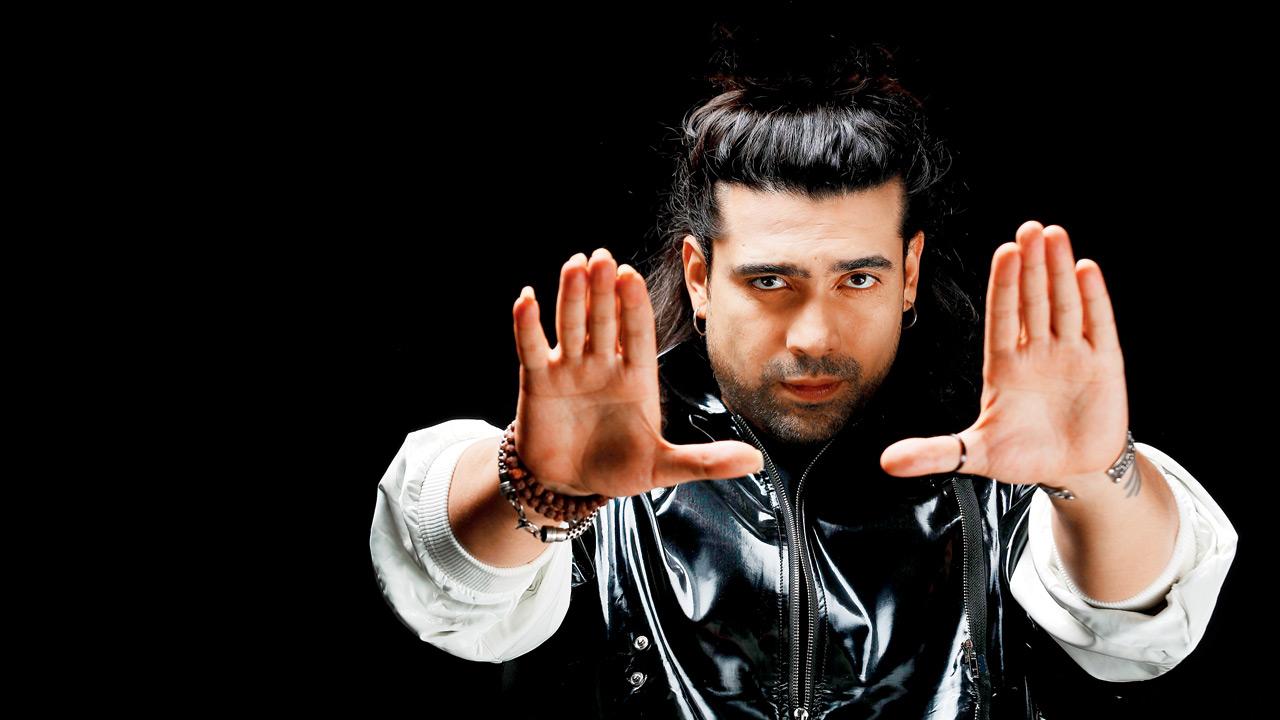
Jubin Nautiyal, the voice behind hits ‘Barbaad’ and ‘Bas Ek Dhadak’, attributes his success to the songs’ ability to soothe people’s soul
Priyanka Sharma (MID-DAY; August 4, 2025)
The past month was nothing short of a gift for Jubin Nautiyal, with two of his songs, Barbaad from Saiyaara and Bas Ek Dhadak from Dhadak 2, emerging hits. Naturally, the singer and musician is elated. But after a successful 11-year-long career, there is more he wants to add to his discography. “I find myself imagining what it’d be like to sing a jazz piece in an old-world setting,” he smiles. In a chat with mid-day, Nautiyal walks down memory lane to talk about the songs that made him a star, and the hunger that drives him.
Excerpts from the interview:
What was your discussion with composers Javed-Mohsin or director Shazia Iqbal before you went behind the mic for Bas Ek Dhadak?
The tune Javed-Mohsin shared with me was moving. I remember sitting in the studio, closing my eyes as the first notes played, and thinking, ‘This isn’t just melody; it’s a feeling’. Shazia Iqbal gave me a beautiful brief. She said, “Don’t sing it. Feel it like a broken heart.” Singing for Karan Johar’s [banner] added its own magic. They treat music with grandeur.
The title track of Dhadak (2018) was much appreciated. Naturally, there would be comparisons. Did that put any pressure on you?
The original Dhadak track was iconic. It’s still hummed across the country. I remember listening to the original when it released and thinking, ‘What a pure expression of love!’ So, I was aware of the expectations. But during the recording of Bas Ek Dhadak, I kept telling myself, ‘This is a new story.’ I reminded myself to honour this moment, this emotion.
Your voice has come to be known for love ballads. When you look back, is there a song that you feel personally proud of?
Humnava Mere, and Raataan Lambiyan [Shershaah, 2021] have touched people, but Tujhe Kitna Chahein Aur Hum [Kabir Singh, 2019] is a special song. When we performed it live at IIT Roorkee, 40,000 people were singing along. Even now, fans tell me how these songs helped them navigate heartbreak. As a singer, the most powerful thing is to be part of someone’s healing.
You’ve had another chartbuster last month with Barbaad from Saiyaara. How was your experience of working with Karan Johar and Mohit Suri?
Working with Mohit Suri sir is like stepping into the mind of a poet. During Barbaad, he narrated the scene — he told me what the character was feeling, the silence between the lines, and that helped me tap into the emotion more deeply. With Karan Johar, sir, the experience is about scale. When you know your song will be treated with such cinematic beauty, it elevates your own delivery.
At this stage of your career, do you feel excited by the work coming your way, or think you deserve more diverse opportunities?
I’m grateful for everything that’s come my way. There are days I find myself imagining what it’d be like to sing a jazz piece in an old-world setting, or to blend folk with electronic sounds. When I visited Uttarakhand a few months ago, I heard a local shepherd sing. I thought, ‘Why haven’t I explored this sound yet?’ So, I started exploring local sounds from Uttarakhand and collaborating with them.
What’s next on your plate?
I’ve been thinking about making an acoustic album — something intimate, stripped down. I also want to tap into Indian folk, learn from local artistes, and blend that authenticity into contemporary sound.
It would be very hard for me to slap a girl in a scene; wouldn't be able to do it-Rajkummar Rao
8:27 AM
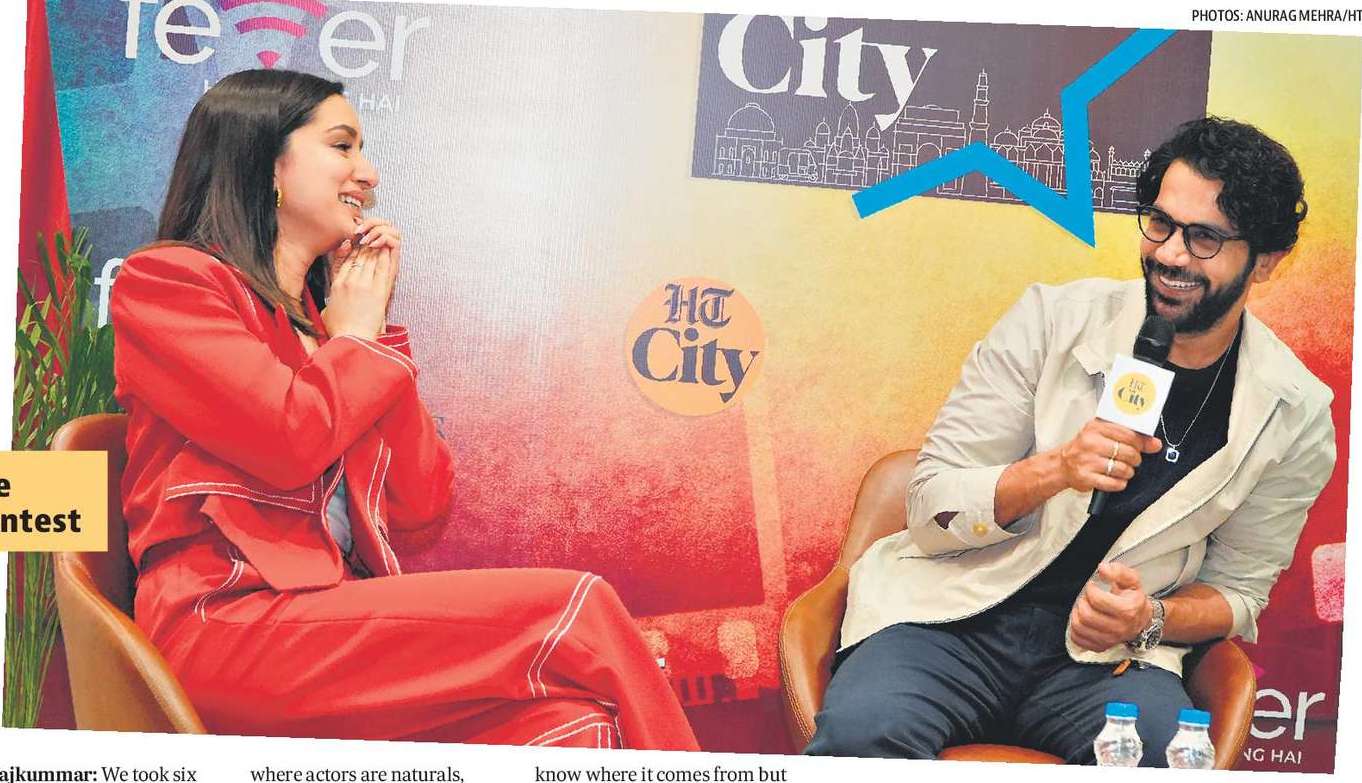
Stree 2 actors Rajkummar Rao and Shraddha Kapoor came calling to meet the winners of HT City Stars in The City contest
Sonal Kalra (HINDUSTAN TIMES; August 16, 2024)
Braving the downpour, Stree 2 stars Rajkummar Rao and Shraddha Kapoor recently brightened up HT’s New Delhi office with their infectious energy. At HT City’s Stars in the City event, the duo had a lively chat with Sonal Kalra, Chief Managing Editor (Entertainment and Lifestyle), Hindustan Times. During the conversation, Rao candidly shared a boundary in his acting career: “It would be very hard for me to slap a girl in a scene. I wouldn’t be able to do it.”
When asked if he would have taken on a role like Kabir Singh, Rao responded thoughtfully, “Maybe, but I would have had a lot of discussions with my director about that scene. Unless it’s something integral, like breathing for the character, I would get into a big debate with my director.”
The 2019 film, directed by Sandeep Reddy Vanga, was a box-office success, but it also drew significant controversy. Actor Shahid Kapoor’s portrayal of the titular character, criticized for his violent and toxic behaviour towards his love interest, Preeti, sparked much debate. Rao made it clear that the infamous slap scene was a line he wouldn’t cross.
I believe in fairytale love: Shraddha
Shraddha Kapoor was all smiles as she engaged with the winners of the HT City’s Stars in the City contest, answering everything from her upcoming projects, music to the big question — marriage.
Initially sidestepping the topic, she shared, “I am so lucky to receive so much love everywhere — it’s a huge blessing. I don’t know where it comes from, but it’s very humbling. There’s a special connection I have with my fans. Little girls hug me, calling me their ‘big sister,’ and even elderly people tell me I exude positive energy. I just want to say thank you!”
But Kapoor didn’t leave it at that. Addressing the marriage question directly, she added, “As far as marriage goes, I absolutely believe in fairytale love — that’s what I imagine. Whenever that happens for me, I would love to take it to the next level and get married.”
Kapoor, who has always been mum about her personal life, has recently been in the news for a breakup with scriptwriter Rahul Mody, who wrote the 2023 rom-com Tu Jhoothi Main Makkaar, starring her. Fans speculated that the actor not only unfollowed Mody, but also stopped following his sister, the production house and his dog on social media.
-------------------------------------------------
Despite heavy rains, Rajkummar Rao, lead of Stree 2, visited HT’s New Delhi office to meet the winners of HT City Stars In The City contest. With fans hooting ‘We love you, Vicky’, the actor was in for an interesting interaction, to be joined a little later by co-star Shraddha Kapoor for a conversation with Sonal Kalra, Chief Managing Editor (Entertainment and Lifestyle), Hindustan Times.
What is your special connection with Delhi?
Rajkummar: Delhi is my home, I was born and brought up here. My theatre at Mandi House (National School of Drama), college in South campus, everything started here. I left Delhi in 2005 but my family still lives in Gurugram. I always look forward to coming here for family, food and wonderful dilliwallahs!
Shraddha: Delhi has been a big part of my childhood. My dad (Shakti Kapoor, actor) and his side of the family are from here. It is the second place after home where I’ve spent a lot of time. I have the best memories with my daada-daadi, chaacha, bua, and cousins in Karol Bagh, eating the best kind of food with them.
Why did it take this long to come out with Stree 2?
Rajkummar: We took six years to come out with a sequel because we just didn’t want to make it for the sake of it. We wanted to build a universe and tap the right story for a true sequel, not just to cash on its success.
Do you feel it is important to study acting, or is it only experience that matters?
Rajkummar: There are no rules. It always helps when you study the field you want to pursue. I wouldn’t have been the same actor today if it wasn’t for FTII (Film and Television Institute of India, Pune). But, there are also examples in the industry where actors are naturals, including Alia Bhatt, Konkona Sen Sharma, Kangana Ranaut. The education boosts your confidence, especially if you are an outsider in the industry. But even if you don’t study, you learn on the job.
Your popularity on social media is outstanding. What would you say about that?
Shraddha: I’m so lucky to get a lot of love everywhere, it’s a huge blessing. There is a special connection that I have with my fans. There are little girls who come to hug me and say, ‘You are like our big sister!’ Elderly people tell me that I exude a positive energy. I don’t know where it comes from but it’s very humbling. I just want to say thank you!
How has your married life been?
Rajkummar: Marriage is beautiful. I am so happy to be married. There is a feeling of completion. We are the people that we were with each other. We are best friends. According to me, friendship is the key! Patralekhaa (actor) is my go-to person for feedback on my films. She is an honest critic, tells me everything, be it good or bad.
Which would you choose between Punjabi and Maharashtrian food?
Shraddha: It is very tough, I’ve grown up eating both cuisines, how would I choose one? If I talk about my comfort food, then it has to be aaloo ka parantha with dahi and achaar. But, I also love pooran poli. So, I would start with parantha and end with pooran poli. Whenever I’m in Delhi, I also make sure I eat chhole bhature. Food is life, it is khushi!
In the past 14 years of your career, what are the changes that you have observed in yourself and the industry?
Rajkummar: We are working on our craft and art form, along with challenging ourselves. The new generation is way smarter than ours. Today’s audience sees that someone is putting effort and going out of their way. So, in terms of audience and content, many things have changed.
Shraddha: So many learnings, so many things to be proud of. I have got the opportunity to work with so many wonderful people in the past 14 years. Within me, a change has come in terms of what kind of work I want to do and what kind of films I want to be a part of. I’m now confident in picking roles and scripts.
Will you also pursue singing full time like acting?
Shraddha: I have some notes where I’ve written lines. I also have some voice notes where I’ve hummed music. In fact, I created some chords on the piano. I have a bank of all these things but I’m still wondering how I should take it forward. It is something on my mind and I would love to pursue it.
Compiled by Navya Kharbanda
For the longest time, I was offered the role of either a poet or a terrorist-Kunal Kapoor
8:59 AM
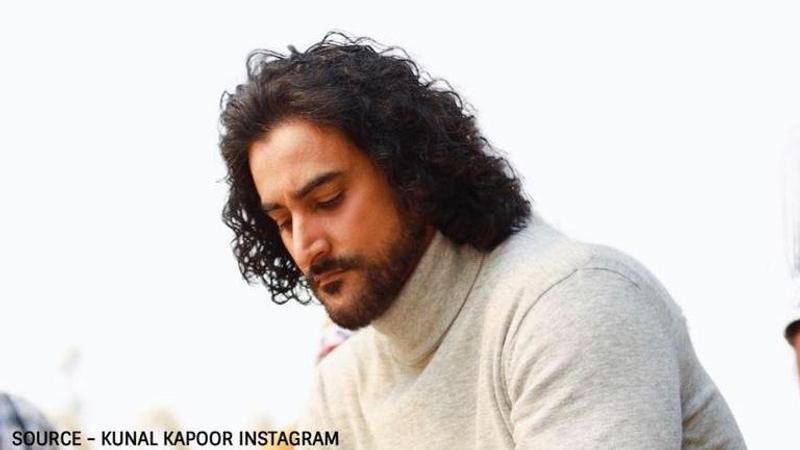
Vinay MR Mishra (BOMBAY TIMES; July 18, 2024)
In 2004, Kunal Kapoor debuted with Meenaxi: A Tale of Three Cities, after which he went on to do a prominent and probably one of his most memorable roles in Rang De Basanti. It’s been two decades since the actor started his journey as an actor. Talking about falling in love with cinema, he shares, “At the core, I believe I am a storyteller, and for me, this is the best place to be.”
Elaborating on his decision to pursue a career in show business, Kunal says, “I discovered movies by chance after doing many things in my life. I became an assistant director (assisted director Rakeysh Omprakash Mehra on Aks), and once I was on a set, I felt this was the most magical place.”
“It was the most exciting place to be – whether as an actor or a storyteller. But it’s also a place with its own set of challenges. There have been ups and downs, there have been very exciting times, and then, there have been frustrating times. But when you’re in a place you love, you take everything in your stride and move on,” says Kunal.
‘Waiting for the right script can be frustrating’
In his 20-year-long career, Kunal has never really spoken about the ups and downs he has faced. He says, “Sometimes you don’t get the kind of work you’re looking for. You’ve to wait for it, and that can be a bit frustrating. It’s like being part of a football match; everyone’s playing the match, and you’re sitting on the bench waiting for your chance to get in.”
He further adds, “For the longest time, I was offered the role of either a poet or a terrorist. Those were the two kinds of roles that constantly came to me. As an individual, you know there’s so much more you can do and explore.”
‘I am working on 6 scripts with different writers’
Kunal hints at the lack of lucrative acting gigs as the reason for concentrating on writing and production. The actor, who was seen in the web show The Empire, explains, “At one point, I realised I wasn’t getting the kind of work I wanted. Instead of waiting, I decided to create the work that I wanted to be a part of. It pushed me in the direction of writing. Today, I am working on six scripts with different writers and also acting in four projects. I feel I have probably entered the best phase of my career now.”
‘I didn’t fit the mould of a stereotypical Bollywood hero’
Over the years, the syntax of movies and storytelling has changed, which Kunal believes is the best thing to have happened. “When I started out, there were certain kinds of movies that would be made, and the hero was expected to be of a certain kind. You had to fit into a mould, which I didn’t. There were certain expectations about the kind of films that you had to do. And I didn’t enjoy those films. Fortunately, what’s happened is that the mould has changed now, and different kinds of characters are being written, and different stories are being made. That’s the kind of space I enjoy,” he says.
‘I feel the audiences would not have accepted Animal or Kabir Singh 10 years ago’
Kunal believes that the quintessential Hindi movie hero has also evolved along with our movies. “Today, the audience accepts all kinds of heroes. You have characters like Shahid Kapoor in Kabir Singh and Ranbir Kapoor in Animal. These characters wouldn’t have worked maybe 10-12 years ago because people expected heroes to be a certain way. The more we stretch that mould, the better it is for everybody,” he signs off.
Sandeep Reddy Vanga takes a jab at Adil Hussain’s ‘regret’
8:43 AM

HINDUSTAN TIMES (April 19, 2024)
Filmmaker Sandeep Reddy Vanga’s ‘alpha’ instinct seems to have kicked in after actor Adil Hussain said recently in an interview that he regrets being a part of Vanga’s 2019 film Kabir Singh.
“Ur ‘belief’ in 30 art films didn’t get as much fame to u as ur ‘regret’ of 1 BLOCKBUSTER film did... I regret casting u, knwing that ur greed is bigger than ur passion. NOW I’ll save U from the shame by replacing Ur face with AI help Now smile properly (sic),” Vanga wrote on X alongside a clip of Hussain’s interview.
In the aforementioned interview, the actor said that he became a part of Kabir Singh (played the college Dean) without reading the script. He added that he told his manager to ask for more money so that the makers would say no, but they still agreed to it.
Shahid Kapoor and Kiara Advani-starrer Kabir Singh emerged as one of the biggest blockbusters of 2019, collecting over Rs. 250 cr at the domestic box office. However, a section of the society also called it misogynistic. Vanga’s 2023 film Animal faced a similar storm of controversy.
‘IT LEGITIMISES MISOGYNY’
“I have said it before that the only film I regret doing is Kabir Singh. I think a film like it celebrates something which is not beneficial for the society. It legitimizes male misogyny and violence against anybody (does not have to be a woman),” Adil Hussain had told AP Podcast recently.
Star Positions 2023: Alia Bhatt, Deepika Padukone, Kiara Advani, Shraddha Kapoor lead the way
8:42 AM

Box Office India Trade Network
The box office has been back for two years now and now enough films have been released to get an idea of star positions post the pandemic. As far as female leads go, Alia Bhatt is the undisputed number one being the main force driving for the success of GANGUBAI KATHIAWADI and ROCKY AUR RANI KII PREM KAHAANI. She is probably the only female star who is a a box office draw and can carry a film alone.
The box office numbers of films featuring Alia Bhatt have always been better in Mumbai city and Pune even when the content is more of a North type of film like 2 STATES or RAAZI and this has continued with GANGUBAI KATHIAWADI and ROCKY AUR RANI KII PREM KAHAANI. So, when a heroine has a few places always outperforming, it really helps at the box office though it will be tougher ahead as these two centres are very unpredictable at the moment.
There are probably three other female leads that can be called stars today and they are Deepika Padukone, Kiara Advani and Shraddha Kapoor. So the ranking today is as follows and its difficult to put someone in fifth place as either no one is able to make much of an impact or other female leads don't hold the same value as before.
1. Alia Bhatt
2. Deepika Padukone
3. Kiara Advani
4. Shraddha Kapoor
There was a time when Deepika Padukone was well clear of the field but there were not many films towrds the end of the last decade just before the pandemic and the attempts to succeed in films where the female lead is the driver did not work like FINDING FANNY and CHHAPAAK. The last named was a huge downer just before the pandemic. PATHAAN came post the pandemic and it probably undid some of the CHHAPAAK damage which was a mistake of epic proportions for a heroine like Deepika Padukone..
Kiara Advani had made huge strides just before the pandemic with films like KABIR SNGH and GOOD NEWWZ and even in the pandemic, she had a blockbuster song Burj Khalifa and the film LAXMII (2020) which is probably still the only genuine HIT to be premiered on digital. The run continues post the pandemic and at the moment, she is that quintessential Hindi film heroine who fits well into all genres and is also able to pair up with most leading male stars. In popularity with the youth, she could actually be ahead of Deepika Padukone at this point of time.
Shraddha Kapoor is the fourth genuine female star today and actually should probably be doing better but there are so few films and this is just not the case over the last few years but even now post pandemic it will be only two releases in around four years with TU JHOOTHI MAIN MAKKAAR and STREE 2. The popularity is there but films have to come to prove this.
After these four, it would probably be names like Katrina Kaif, Kareena Kapoor, Kriti Sanon and Disha Patani. Katrina Kaif had TIGER 3 which did well and that is the zone she fits into well but there are very few films made like that. But the issue is that its difficult to slot her into that so called female content film zone unless its action genre but those films are also very less if any.
Kareena Kapoor has had LAAL SINGH CHADDHA and a television film but has face value and the talent still to work at the box office given the right film. But obviously too many television films will dilute the equity as far as theatrical value is concerned which will only make box office success harder especially in a female led film.
Kriti Sanon was on a upward curve before the pandemic hit and just behind Alia Bhatt and Kiara Advani as fas as the girls who made an entry in the last decade were concerned. Post pandemic, the audience has not been that kind with major duds and now its about whether this trend can reverse with the right films.
Disha Patani is similar to Shraddha Kapoor with so little work. There is some credit to go to her for the initial of EK VILLAIN RETURNS. So, there is some popularity there but again, you need back to back films to reach that genuine star status.
Generally there is dearth of popular heriones for the youth hero/heroine film as Alia maybe has become too big for this zone, Deepika will not pair well with the younger actors while Shraddha hardly does films leaving Kiara. But with her run at the box office, she will probably have the choice of the bigger films and there are four female stars who actually make a difference.
This makes it even more difficult to make that medium budget comedy/action /love story as the younger male stars have not hit huge heights at the box office, Hence, you need a pairing with a popular heroine to make it a package to get that initial audience out but those heroines are limited in supply.
I don’t want to be naive. The box office signifies popularity-Shahid Kapoor
8:24 AM
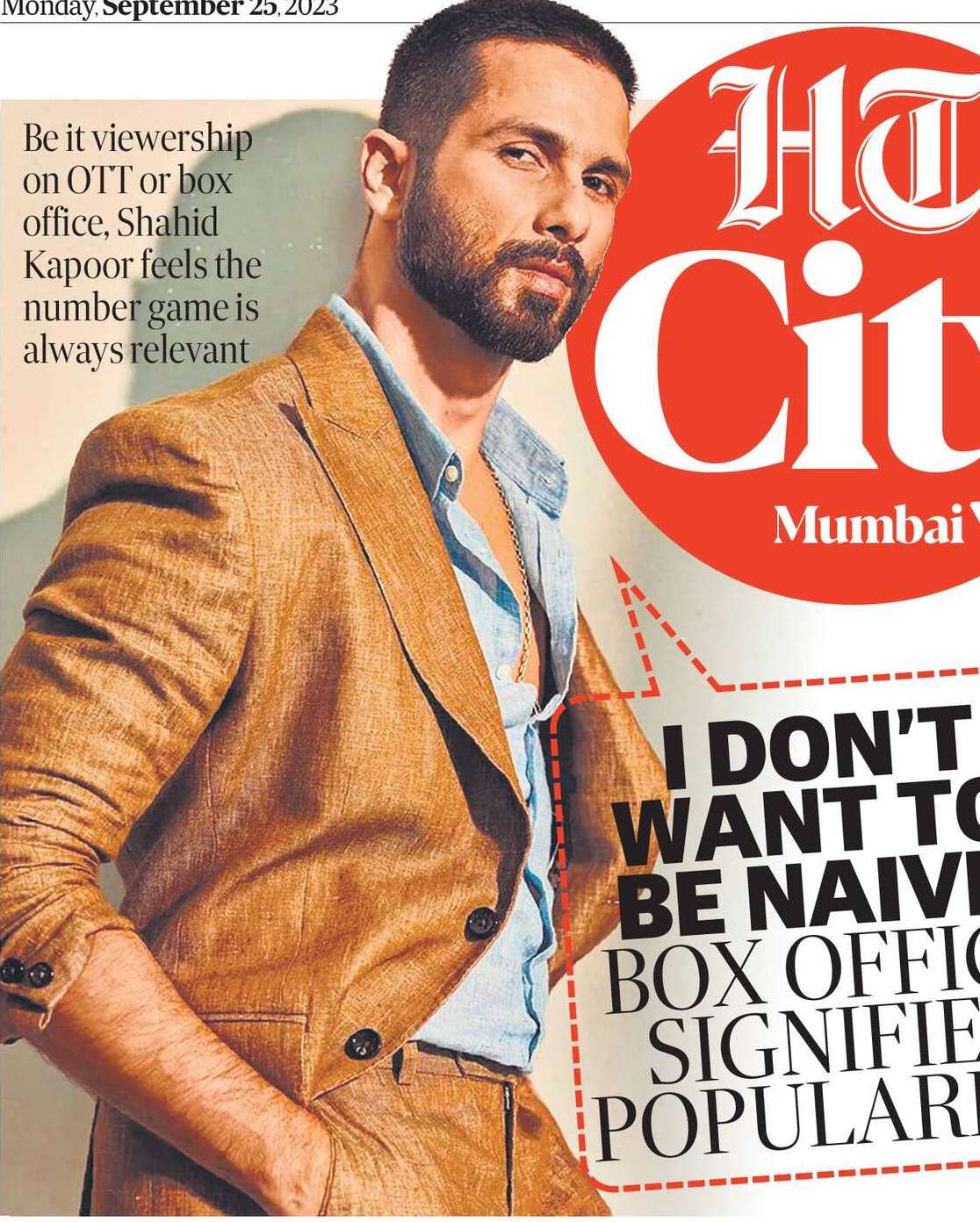
Be it viewership on OTT or box office, Shahid Kapoor feels the number game is always relevant
Rishabh Suri (HINDUSTAN TIMES; September 25, 2023)
Shahid Kapoor, whose projects Farzi and Bloody Daddy made it to the ‘most watched on OTT list’, believes that the very fact people still track viewership numbers means that the numbers game, including at the box office, is always a hot topic.
“I don’t want to be naive. The box office signifies popularity, size of your reach and how many people have consumed your content. That’s never going to change,” shares the actor, adding, “Different types of content are now accepted, maybe writers, directors and actors will feel less boxed in. There’s freedom to express yourself and do different things without a track record to look back on and say, ‘Only this thing works’.”
Kapoor’s next is an untitled theatrical release with actor Kriti Sanon.
While the audience is more discerning today, the 42-year-old looks back at the time when they weren’t influenced by box-office collections. “Earlier, people used to say film achhi thi ya buri thi, but now they are aware of so many things. Sometimes, the audience may not realize they’re being psychologically converted into believing that every successful film (one that rakes in a lot of money at the box office) is a good film.”
Ask how he selects projects he wants to work on and Kapoor says, “I think that the content should land — trends and taste changes, but a good film is a good film. Many people asked me, ‘Why are you doing Farzi after Kabir Singh (2019)?’ [I did it] because it was fantastic content,” he signs off.
Sumit Saxena, sexuality educator Apurupa Vatsalya discuss how Kaalkoot challenges gender roles and toxic masculinity
8:08 AM
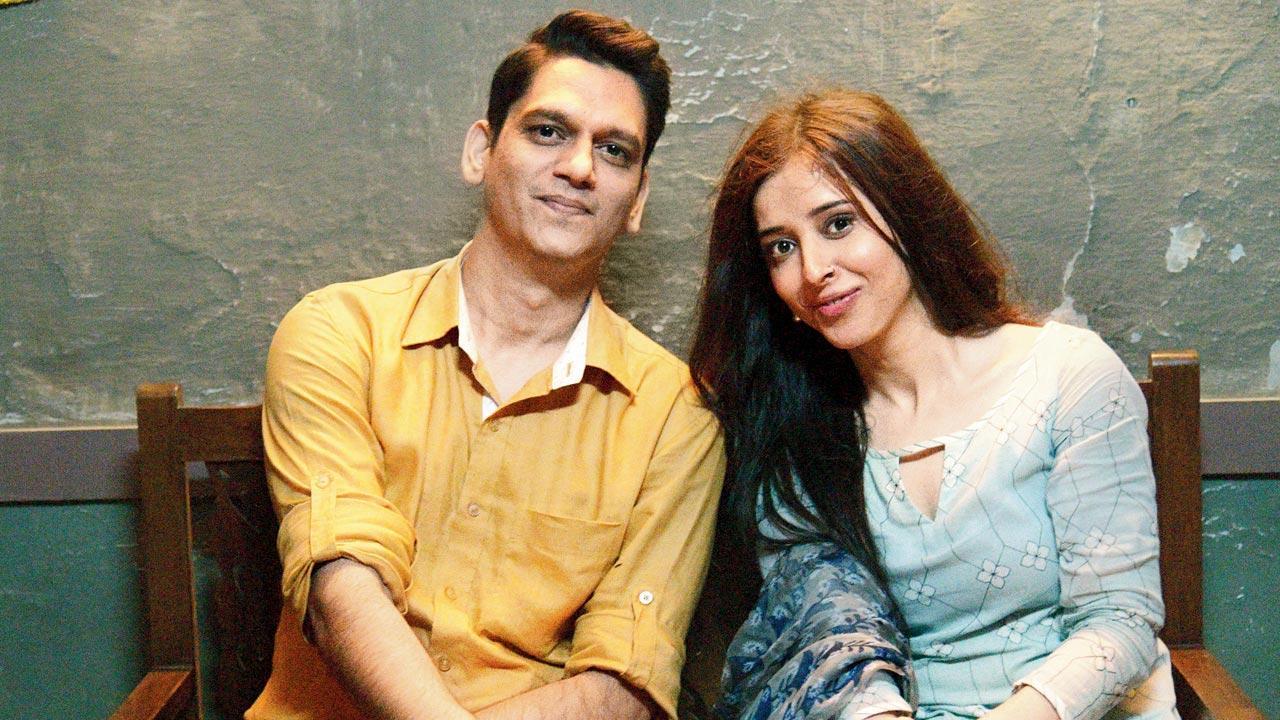
Vijay Varma and Suzanna Mukherjee in Kaalkoot
With Vijay Varma playing an unassertive cop in Kaalkoot, director Saxena and sexuality educator Vatsalya discuss how the show challenges gender roles and toxic masculinity
Letty Mariam Abraham (MID-DAY; August 1, 2023)
In a scene in Kaalkoot, we see Vijay Varma’s character, cop Ravi Shankar Tripathi, climbing a wobbly ladder, tentatively and hesitantly. His fear is only heightened by his boss, who hollers at him from below. Moments later, a junior cop climbs up the ladder swiftly, while Ravi is mocked for his inability to perform the task. The humiliation is repeated in another instance when he is unable to stand up to his boss in a game of badminton. Through these little snippets, Kaalkoot presents a meek, hesitant and quiet-mannered protagonist. And fortunately, a new gaze through which to look at a ‘hero’.
“When Kabir Singh [2019] released, it was lambasted for romanticizing toxic male behaviour. But there was another film, Bareilly Ki Barfi [2017], which wanted the audience to laugh at Rajkummar Rao’s character for not being ‘masculine’ enough. Now, if that is the kind of clown you create, then Kabir Singh is the kind of hero you will get. What we have tried to do in our show in the initial bits—when he looks unassertive, unambitious, and lost—is that we empathized with him,” begins writer-director Sumit Saxena.
Toxic masculinity
Kaalkoot sees Varma’s character investigating an acid attack case. In telling the tale of acid attack survivor Parul, essayed by Shweta Tripathi Sharma, the series delves into society’s distorted idea of masculinity, how that propagates toxic masculinity, and gender violence.
Sexuality educator Apurupa Vatsalya says the Jio Cinema offering holds up a mirror to society and challenges its notions that an ideal man is assertive, domineering and is the protector and provider. “At the outset, you see the hyper-masculine cops ridicule a fellow cop for being too empathetic. It is viewed as a character flaw. The suggestion is that he will not be capable as a cop because he is too emotional. He is doing all the macho things—riding a bike, investigating—and looks masculine, but because he is not assertive enough, he is suddenly incapable of his position. Toxic masculinity is sometimes ingrained. You’re not supposed to express your emotions or cry. They have grown up internalizing their emotions,” shares Vatsalya.
As the series progresses, it sheds light on the microaggressions that often denote toxic masculinity. In an instance, the cops are quick to determine that Parul must be a sex worker, after discovering a bottle of whiskey from her bag. Another scene sees two cops discussing slapping their wives for not being submissive and quiet—“haath chhoot jaata hai,” they say.
Breaking down such patterns, Vatsalya says, “I perceive toxic masculinity as when men do not have the opportunity and space to express and explore the wholeness of masculinity. It therefore spills out in ways that are harmful, not just for themselves, but also for the people around them. They subjugate women by slapping them, and disallow other men from expressing their identity.”
She adds that masculinity should not immediately be implied to be toxic. “There are beautiful expressions of masculinity. It’s important to also see whether a person, irrespective of their gender, is in touch with their masculinity and femininity, both.”
Toxicity not gender specific
The sexuality educator also highlights that toxic masculinity is not always gender-specific, women are often seen as gatekeepers of this mindset and behaviour. “Women also perpetuate this masculinity. So, these expressions of masculinity and femininity are gender-agnostic. If we then automatically move away from the notion that masculinity and femininity are equal to men and women respectively, we can then move away from the binary formula.”
In Kaalkoot, Saxena illustrated this point through the character of Rashmi. Envious of Parul’s beauty, confidence, and the attention she garners from men, Rashmi uploads Parul’s explicit pictures on an adult website and poses as her to talk to men. “One brute way would have been to cast Rashmi as someone who is oversized and has attention deficiency [from the opposite gender]. Instead, we showed her as an average-looking person, but who suffers from her own insecurities, which gave her [that vicious] personality,” explains Saxena.
Vatsalya agrees that misogyny stems from different markers and years of patriarchy, and makes us all victims. “The privilege of beauty is something we value. Unfortunately, it is based on how one appears, their body size, the complexion of their skin, and so on. Rashmi, like all of us, is victimized by the structure of patriarchy. We are raised with a scarcity mindset—we are taught constantly that women have few opportunities, we are fighting for the same few jobs and the same few men. We are taught and raised to be each other’s competition, and are not taught the values of sisterhood.”
The series, while offering commentary on society’s ills and prejudices, is equally cognisant of its protagonist’s shortcomings. Varma’s character calls off his marriage when he realizes that his fiancée has epilepsy. His anger stems from the fact that his fiancée hid the detail from him. As he evolves in the course of the narrative, he realises that he too harbours male entitlement and patriarchy—the very ideas that he claims to fight. Vatsalya, who is also a lawyer, explains this dichotomy.
“Nobody who is inflicting harm on another person is thinking of themselves necessarily as a perpetrator. They might be viewing themselves through a moralistic lens, and considering themselves the saviour or hero. Everyone is a hero in their own story, but they might be a villain in someone else’s story. When Vijay Varma’s character invites or rather tries to humiliate his fiancée by saying, ‘Have sex with me, then I will marry you,’ [he is using] sex and sexuality as a tool of control. This draws us back to [the clause of the ideal woman being a virgin]. The negotiations we make with patriarchy are not rational.”
Need for dialogue
Saxena and Vatsalya agree that the only way to combat misogyny or toxic masculinity is to have a constant dialogue about it, thus fighting our conditioning. The director asserts, “We must talk about whatever makes us uncomfortable. Clinical psychologist Jordan Peterson had noted that Voldemort in Harry Potter is called, ‘He who must not be named’. Why is that? Because the true nature of horror is unspeakable. So when you speak about the horror of life, it reduces [the conflict]. There is a sense of grim horror in the show. To end the horror, we must speak of it.”
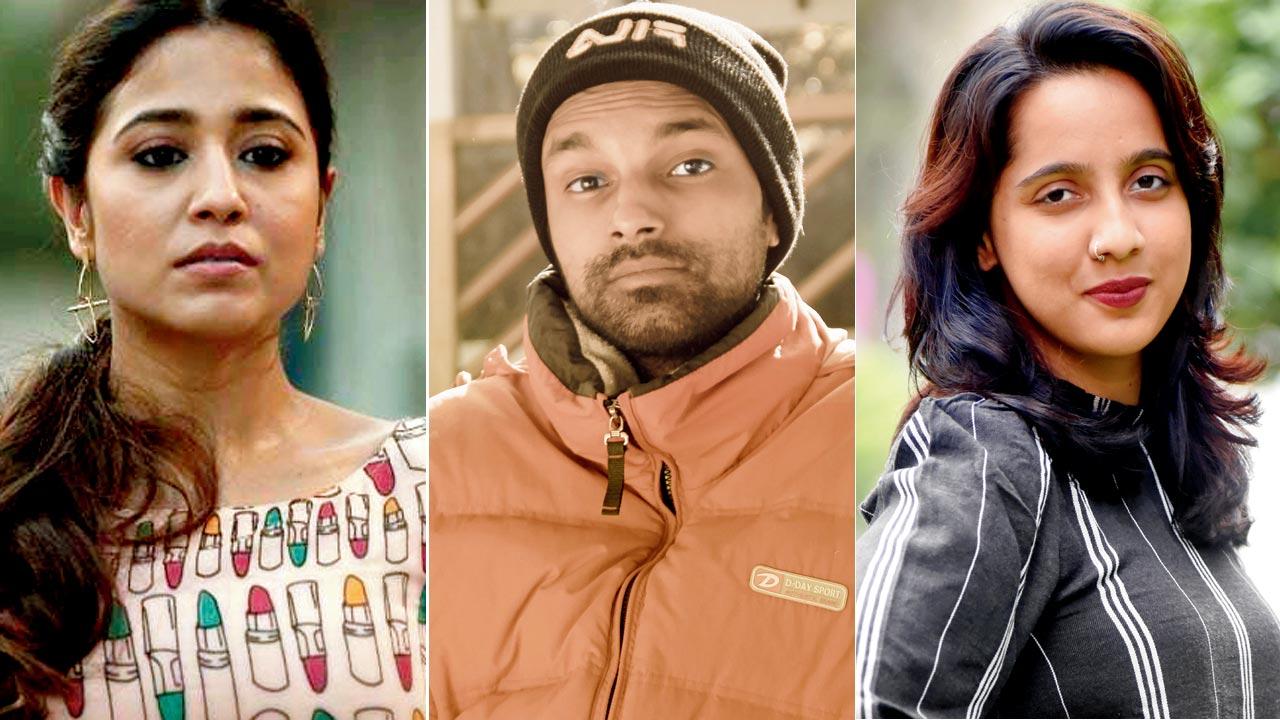
Shweta Tripathi, Sumit Saxena and Apurupa Vatsalya
I kept thinking, ‘Why did I do Padmaavat?’ I had no perspective-Shahid Kapoor
8:23 AM
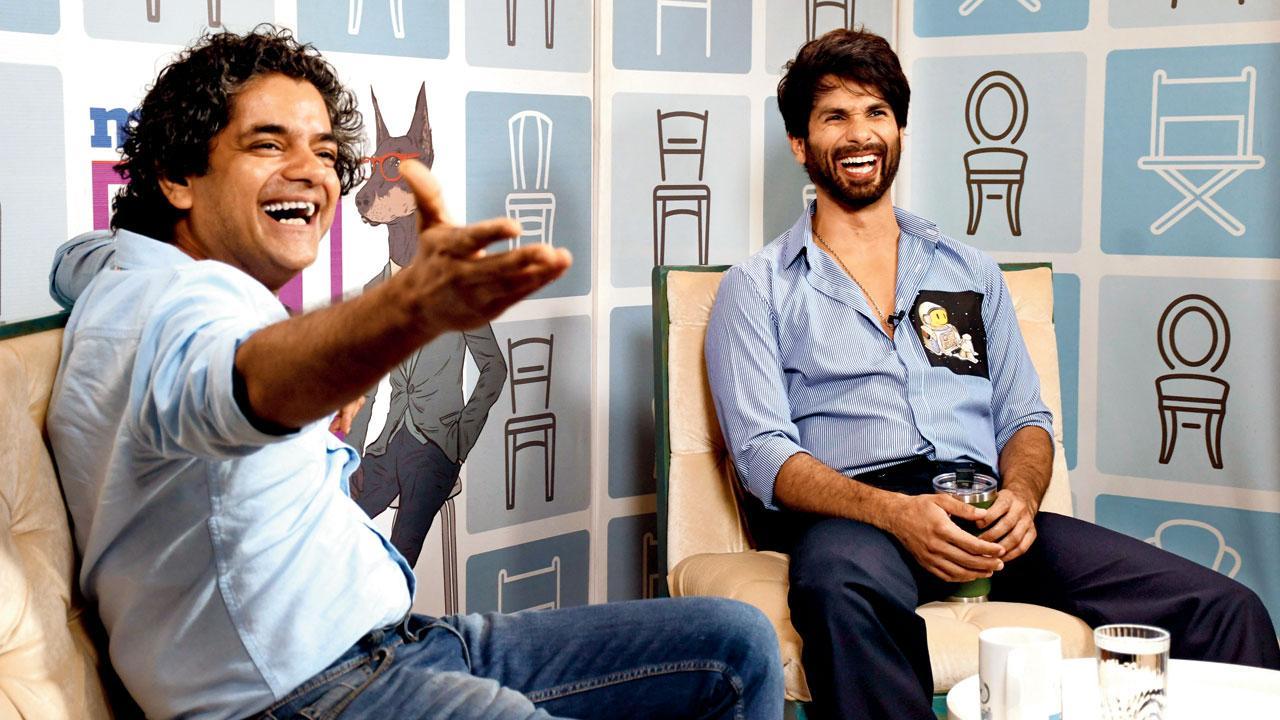
Ishq Vishk to Jab We Met, Kaminey to Kabir Singh—Shahid Kapoor on his 20 years of Bollywood
Mayank Shekhar (MID-DAY; July 8, 2023)
It was around when he was about six or seven, Shahid Kapoor recalls, his father Pankaj Kapur took him out to New Delhi’s popular food joint, Nirula’s, for a meal. Unbeknownst to what would hit them, the two were suddenly surrounded by “a hundred people, who’d picked up gajar [carrots], and were charging at them on their restaurant table—almost like zombies, going, Hehehe…. Gajar khaiye, gajar, hehehe…”
“Par mein bete ke saath pizza kha raha hoon [But I’m having pizza with my son],” Pankaj Kapur shot back. But no avail. The public was, of course, responding to Pankaj Kapur’s iconic role of Detective Karamchand, and his love for gajar, in the 1980s, on Doordarshan.
Father-son had to eventually rush out of Nirula’s. Shahid told his dad, who was visiting him from Bombay then, to never take him out again! “By virtue of distance, the interaction between him and me was anyway limited.”
Shahid’s parents had separated/divorced, when he was quite young. He was then growing up in Delhi, with his mother, Neelima Azeem, and his maternal grandparents, who were both journalists with the Russian publication, Sputnik.
Sasha, that’s the “ghar ka naam” his grandparents gave him—and that his tribe of fans, self-named Shanatics, call Shahid by—is also a common Russian name, he points out.
It was only when he turned 10, that Shahid also moved to Bombay to be with his mom, a trained classical/Kathak dancer, who was looking at a career in acting.
Shahid himself was one of the top dancers at Shiamak Davar’s dance academy—moving up from the back rows, at dance performances, to the front row, and eventually becoming a trainer at the institute, “which is how it works at Shiamak’s school; you have to prove yourself, every step of the way.”
In fact, if you notice closely, you can find Shahid dancing in the group in Subhash Ghai’s Taal (1999), even Yash Chopra’s Dil Toh Paagal Hai (1997). On stage, he was ecstatic to be “moving right behind Aishwarya Rai, Salman Khan, at popular award shows.” By 16, Shahid says, he was already earning enough to manage without pocket money from home, “even help out with the household income.”
A picture, from a trivia night, we show Shahid, is of him with actor Ayesha Takia. They’re both such lovely children, posing with coffee mugs to the TV screen. Shahid and Ayesha were the OG: “I’m a Complan boy, she’s a Complan girl!”
He laughs, “Ayesha was a really big [child] star at the time. We had to wait for her to turn up on the set, while I got my solo shots done!” But these were “one-off appearances on screen, because I was a cute kid, and someone or the other saw and cast me.” His mom was clear she didn’t want him to get full-time with commercial/advertising work still.
Cut to: 2003. Which is when I first met Shahid, seated quietly at the reception area of the mid-day newspaper office, in Lower Parel. A publicist had called to check if I might be free to say hi to a young kid he’d brought along. I was a young recruit/intern type at that office myself.
Having stepped out for a minute as a favour to the publicist, you could see other people quizzically wondering who this boy in their midst was. They had seen him somewhere, just not sure where.
“Back then, before there was social media, it used to take years for you to reach out to people. Now, it can happen in weeks and months,” Shahid recalls. The exact date for that first meet-up is not hard to figure. Shahid says his debut film, as lead, the teenage romcom, Ken Ghosh’s Ishq Vishk, released on May 9, 2003.
On that Friday, he’d excitedly gone over to Bombay’s Sterling cinema to watch himself on the big screen for the first time: “Between noon, and when the film finished, while I had just been around doing nothing, the people’s perception of me had totally changed. Barricades were put up. I was too young, at 23—which from an exposure point of view, is very different from how 23-year-olds are, now. And I thought, oh, wow, is this what stardom is?”
That ‘media round’ must’ve taken place a couple of days after. Which is almost exactly 20 years since, that we’re recording the episode of Sit with Hitlist, at the mid-day office again (this time in Bandra East).
Only that Shahid is full of confident banter that’s hard to reproduce in text—he’s a major Bollywood star (with over 50 releases to his credit). Having been through a “turbulent journey, of ups and downs”, and indeed a cracker, eclectic career—over those two decades.
Starting out as the ‘chocolate boy’ romantic lead (Ishq Vishk to Jab We Met), graduating to a more action/masala hero (Bloody Daddy, his last release), and even layered parts, whether on the big screen (Kaminey to Kabir Singh), or OTT platforms/series (Farzi).
Even at the beginning of his stint, young Shahid never introduced himself as son of the great Pankaj Kapur. We might have seen him differently. It was a conscious, self-respecting call he had taken—of making it on his own.
For four years, Shahid remembers, between age 18 and 22, he’d simply been incessantly screen-testing for parts: “I like the word ‘struggler’, they use [only] for aspiring actors. It’s true. It’s a life full of rejections. Four years means about 1,200 days—and I would have easily given about 200 auditions.”
None of those films apparently made anybody’s career, so he’s glad for it. One of which, Shahid says, he rejected himself—N Chandra’s Style (2001), because he was clear, even at that age, that he would debut only as the solo-lead.
It’s another matter, he says, that once Ishq Vishk did well, commercially—he was considered too young for producers to cast opposite existing, established female leads: “They’d rattle out names of three-four popular, female stars, and say, ‘You’ll look like a kid with them! Where’s your ‘mardaangi’ [manliness]? There was no work for my age-bracket, and for the way I looked.”
Also, he submits, there was a perception in Bollywood at the time, that a star was born, at best, only once every half a decade: “And Hrithik [Roshan] had already become huge [with Kaho Naa... Pyaar Hai] in 2000. Vivek Oberoi quickly followed [with Company] in 2002. So, apparently [by law of averages], I didn’t stand a chance!”
Of course, all these rules are assumptive. They fail in the face of public choice, which is impossible to predict. Another such rule I point out to Shahid is how, when it comes to a loyal female following—the credibility built from a particular film cements it so much for a male lead sometimes, it can easily lead last them a lifetime.
Take Ryan Gosling, for instance. Take The Notebook (2004) out of his filmography. And he wouldn’t garner half the female fans that’s stuck around him since. Likewise, with Shah Rukh Khan, and Dilwale Dulhania Le Jayenge (1995). The connect is irreversible. The persona sustains. I wonder if it’s the same relationship with the female demographic that Shahid attained with Imtiaz Ali’s Jab We Met (2007), first. He says, “I know Jab We Met gets a lot of credit [as it should]. But let’s not forget Vivah [2006]. It was a small-budget film—by the legendary [producers] Barjatyas’ standards.”
“Their [more expensive film, with modern sensibilities] Main Prem Ki Diwani Hoon had just failed. Sooraj [Barjatya] and his father [Raj Kumar Barjatya] were planning to do a movie, with new actors, to test their original, traditional lower middle-class audiences/sensitivities. Vivaah is the last Indian movie to do a ‘silver jubilee’ (25-week run in theatres),” Shahid claims.
Audiences like me, of course, remember him more for Vishal Bhardwaj’s Kaminey (2009)—decidedly from the dark side of the moon, which was as diametrically a U-turn for his onscreen image.
We wonder how different could it be to be on a Barjatya set, over Bhardwaj’s: “Chalk and cheese. Vishal doesn’t like anything sweet. He’d keep asking me to go ‘kamina’. Sooraj would want me to throw way all city [slicker] influences, and be sweet. It’s schizophrenic [to be on both sets]!”
As for Imtiaz Ali, Shahid recalls, “He was a new director, when he came to me. The first thing that struck me was how good-looking he was, himself, [lost] in his dreamy thoughts. Then the fact that he narrated out of a bound script, which wasn’t common. Back then, you heard a 30 to 40-minute narration that the director would then develop, if you said yes [to it].
“The script had ‘Geet’ written on it. I asked him, ‘What does this mean?’ He said that’s the heroine’s name. I told him, ‘The next time you go to a hero—don’t go with a script with the heroine’s name on it!’
The next time, he came to me with the same script, he had ‘The Train’ written on it,” Shahid laughs.
Eventually they settled on Jab We Met, because big daddy Pankaj Kapur came up with the title over dinner: “I was telling him about how I want an English-Hindi mixed title, and what the story was about.
He said, call it Jab We Met.” Which was one of the titles entered into a public poll held by a newspaper. “The other was Bhatinda Express. The third one I don’t recall. People picked Jab We Met!”
As for his female following—evidenced from the fact that this conversation itself is being recorded with an all-women audience—Shahid attributes much to his more recent, by far the biggest hit of his career, Sandeep Reddy Vanga’s Kabir Singh (2019), as well.
The film was a scene-by-scene remake of Arjun Reddy in Telugu, by the same director. So Shahid knew exactly what he was walking into—the part of a drug-addled abusive boyfriend, that remains his most controversial yet. So much so that it’s been four years, and he feels the need to defend it still.
He says, “There were so many people refusing to accept that people are liking the film. I was like, ‘Arey bhai, logon ko acchi lag rahi hai, tum log baithe ho apni [high] chair mein—suggesting, how dare you like the film? Well, accept it.”
He’s also willing to engage on the criticism. Which is perhaps not that people were refusing to acknowledge the commercial numbers/footfalls. But that the film was about the sort of character, who may exist in real life, surely. But who was instead being lauded as a hero of sorts. That was the issue that some people may have had with arguably a misogynist subject.
Shahid disagrees, “Well, Kabir slaps the girl [Kiara Advani]. She slaps him back. But when he slaps her, it is so shocking that it stays with you, and it disturbs you, right? Everything that happens to him after in his life, is a downward spiral. Until the last moment when somehow, the girl agrees to be with him! He is a complete mess. A very cinematic character. It is like Taxi Driver, or Scarface.”
The deranged Travis Bickle (Robert De Niro) in Taxi Driver ultimately kills himself, though. “Kabir Singh is actually about how everyone should get a second chance. In love, who hasn’t messed up? And if you see it, right from the promo—at no point is it being said that he is a great guy.”
“I’m nothing like him. But as an actor, it’s my job to play different characters. You don’t have to like him. You should like my performance. He’s not the hero. He’s the protagonist.”
Which can be said of Shahid’s equally messed up, Punjabi hip-hop star, Tommy Singh, from Abhishek Chaubey’s Udta Punjab (2016). What did he find in common between both the characters?
“Nothing, besides that they are both Singhs,” Shahid laughs. “There is a scene [in Udta Punjab], where Tommy says that he’s never done anything for anyone else. And that he must [for Alia Bhatt’s character]. He’s been completely self-centred. Which is how he’s different from Kabir, who gives it all [for his love]. And she’s nice enough to have him back. Love stories must end with a note of hope.”
The other thing common between Tommy and Kabir is, of course, that they are both substance abusers, isn’t it? “Yes.” Played by an actor, who’s a sworn vegan, and teetotaler! It’s something you don’t associate with movie-stars still. “You can call me boring, I don’t mind,” Shahid smiles.
The other thing unusual for a movie star is getting into an arranged marriage, which is what Shahid made as a life-decision, when he married young Mira Rajput, in 2015.
“Well, if you’d asked me then, I’d have said arranged marriages don’t make sense to me, either. But it happened [organically].” He says they met through family: “We were part of the same spiritual group that I was obviously aware of. She was all of 20 years old. I was 34. I was a little embarrassed [about that].
“But I was really looking for someone who could understand both aspects of my life—the spiritual side, and that I’m an actor [a public figure]. She was genuinely interested in figuring me out as a person. And you can tell, when these things are real. She was not affected [by my profession].”
The first time they got on the phone, Shahid remembers, they spoke for seven hours straight. He knew he’d found the one. He feels the same way about her family, that he treats as his own: “They’re very classy, and sorted people.”
During the two years of the pandemic, Shahid says, he stayed over with his in-laws’ throughout, in a place called Dera, in Punjab: “We had reached there, just three days before the lockdown got announced.”
A few years back, Shahid had recounted to us a trigger point on this aspect of his life. He’d been single for a while. He was returning home, alone, having had won the Filmfare Award for Vishal Bhardwaj’s Haider (2014).
That big night, he slept with his statuette. Acknowledging a thing amiss, that he must do something about: “I felt the need for a companion. But even then, I didn’t know I’d find a perfect life-partner. It’s tough.”
Up until then, you could describe Shahid as ‘seriously monogamous’: “I had always been that guy in my 20s—in long, settled relationships.” The other aspect that early success in showbiz thankfully affords the young is a rich, rockstar life, when you’re merely in the 20s. Sports stars are similarly privileged. I’m sure that must’ve been a legit high, before he decided to proverbially settle down.
“It’s a stupid high,” Shahid explains. “So, I’d go and buy myself a fancy sports car, and then I would feel like, ‘Why did I do this? Now, I am broke, again!’ You’re a little stupid in your 20s—making stupid choices, and then you blame other things. When I look back, I’m like, ‘Okay, I should have made better choices, I would have been more comfortable, yar!’”
Which is to say, “I also didn’t have time for anything—too busy holding on to my position [professionally], working on the set 240 days of the year; let alone promoting my films thereafter.”
How about dating the hottest women in Bollywood, though—surely that’s a great perk of being a star into only life’s second decade, when most others are busy moving up from the low rank/station, attempting a half-decent living!
Shahid isn’t particularly impressed/nostalgic by that reminiscence: “See, at the end of the day, you are dating good-looking women. But you are also considered desirable, and good-looking, right?
“So, it is not something that you are getting three levels above your own league! I mean, there were enough women interested in me as well, right?” Spoken truly with that feisty swag of a 20-something!
Looks apart, going by talent from pedigree alone—as a star performer, doubtlessly, Shahid has picked up his dancing skills from the mother, and acting prowess from the father. He’s quick to point out here,
“I was more happy about getting my hair from my mom, and acting chops from dad! I was like, ‘Dad, I don’t want your hair!’
“He was semi-bald at 30, and he used to keep messing with me saying, ‘I’m an actor, I can play all kinds of characters. Abhi toh tu hero ban gaya hai, agar tere baal udd gaye toh tujhe kaam hi nahi milega [You’ve become a star. Now if you lose your hair, you’ll get no work!].’ He used to mess with me, dude!”
Much as the father and son couldn’t have had a more separate career graph, from the looks of it, Shahid did indeed imbibe the ambition of gaining respect as an actor from Pankaj Kapur. It’s part of his natural training.
“I’d seen all my father’s film, growing up—whether that be Rui Ka Bojh [1997] or Ek Doctor Ki Maut [1990]. Jaane Bhi Do Yaaro [1983] is, of course, one of my favourite films ever.”
The two collaborated most ambitiously as actor-director, in fact. Wherein Pankaj Kapur debuted as filmmaker with Mausam (2011), starring Shahid in the lead. They’d produced the film as well—charting a story as wide in scale as The Gone with the Wind, no less.
This was around the time, Shahid says, that he’d himself gone through a makeover, in terms of how he’d go about his career goals.
“I was done with walking into a set, being given dialogues to perform right there, and carrying on. I wanted to approach films with a sense of commitment, and had chosen to work in one project a year.” Which is the time and energy he spent on Mausam, along with his father, who spent over year and half on it.
“But we realized, that’s not how everyone else works. And so, while the film was in production, others had moved on. We were finding it hard to match dates [with cast/crew]. Even when I saw the film’s final cut, I knew this was not going to land [well]. It wasn’t the film that my father had envisioned.” Mausam bombed at the box-office, causing a career setback for Shahid, to start with.
One of the things, it appears, that Shahid regrets about stardom is the sort of time it takes to finally get a hang of the system: “By the time you know exactly what’s going on, you’ve already lost eight to 10 years. When you come from a [mainstream] film family, on the other hand, you’ve experienced much, up, close and personal, already.” That’s the advantage, he says, his half-brother, young Ishaan Khatter, has.
Having grown up under the wings of Shahid: “He’s watched me and my choices closely, and always had an opinion on it. For instance, he wouldn’t like me in a [Dil Bole] Hadippa, but totally love me in Kaminey. As an elder brother, you sort of become the guy riding the motorcycle, with him on the back seat!”
Having seen all his films, it would be fair to suggest some of Shahid’s early script-sense could be befuddling, at best. For instance, I point out, what could have made him sign up for a pic like Paathshala (2010), that I remember wondering the same, even while watching it: “That was a friend who asked me to give him seven days of my life, and he badly needed it.” All choices have a reason.
Consider Prabhu Dheva’s R… Rajkumar (2013), and Rajkumar Santoshi’s Phata Poster Nikhla Hero (2013), that Shahid hit the screens with, soon after Mausam hadn’t worked, theatrically.
“That was [me seeking] commercial success. If you’re not successful, you actually have no power to make any choices. So, you just have to get successful, first. It’s simple. R… Rajkumar, in fact, did well. And Phata Poster did not.”
From a film industry POV, he looks at movies very differently, Shahid concedes. Namely, you need films of all palette to march on as an industry: “What I don’t get is people who can only make dosas saying, that those who eat burgers, are no good. That’s not how it works. I stay away from such people.”
And it’s not that commercial success, or massive footfalls, is the only criterion, surely. Soon after the release of Sanjay Leela Bhansali’s blockbuster, Padmaavat (2018), there were news reports suggesting Shahid wasn’t pleased with his own presence in the pic, along with Deepika Padukone and Ranveer Singh, who evidently stole the show. Was there any merit to these assertions?
He candidly admits, “It’s true. Everyone was lovely in that film. And I don’t want to get into details. But I kept thinking, ‘Why did I do this film?’ I had no perspective. And I don’t want to blame anybody.”
Which also relates to insecurities that come naturally with an actor’s mercurial job? To take another example of published reports, there was one about how Shahid didn’t get along with co-star Kangana Ranaut, during the making of Vishal Bhardwaj’s Rangoon (2017). True?
“Not true. I got along fine with Kangana. She’s a fine actor.” Long pause. Okay, that is a long pause. “What do I say? You’re not asking me anything else. You’re talking about insecurities, looking in from the outside into an actor’s life. But it may not be [those] insecurities. There are so many things that can be there, if first of all, there is a problem!”
Which is fair. And being a star, as against a professional actor alone, inevitably involves media scrutiny—as part of the job, even if an occupational hazard, on occasion. Surely, over two decades of being right at the centre of Bombay showbiz, has come with its own potholes.
The one story I remember concerning Shahid, and in fact mid-day—shortly after we met first at the newspaper’s office reception—were a series of paparazzi pictures that the tabloid had published in 2004, starring Shahid and his girlfriend then, taken at a Juhu nightclub, Rain.
Those pictures were clicked by a bunch of kids randomly hanging around in the nightclub, with a digital camera. There were no feature-phones with cameras at the time.
Those juvenile delinquents arrived at the mid-day office, demanding Rs 500 for the set of blurry but innocuous images/video of Shahid, kissing, in love, evidently. Unmindful of possible minders around.
I wonder what that did to Shahid, once those pictures appeared, in what became a big, salacious, tabloid story. Which was hardly a big deal though, if you look at it objectively, rather than voyeuristically.
“Of course, it was a big deal. Let’s be honest—putting out pictures like that would get you a lot of eyeballs. That’s the honest truth of it. It’s okay. You know, we all take it with a pinch of salt. But what was your question, again?”
The question was, what did he feel about it, when that happened, then? I don’t think he’s spoken about it in all these years.
“Oh, I was destroyed at the time. I was just 24 years old, a kid. I felt my privacy had been invaded, and I could do nothing to protect it. I was a mess. At that age, especially—because you don’t even know your own feelings. You are figuring out how to be with a girl you are dating. And in the middle of all that, this happens…”
What’s changed with stardom and the media landscape since, of course, is that practically everyone is with a smart phone, making videos, pictures, selfies in public. Shahid, 42, reasons, “Now, you are aware that [a paparazzi snap] like that is 100 percent going to happen. At that time, we were caught off guard by it.
“So, that is like an informed devil, as opposed to an uninformed-devil scenario, then. You at least know, ‘Yeh toh hone wala hi hai. Also, ab toh meri shaadi ho gayi hai, bacche ho gaye hain (Now, I’m married with kids). Nobody is interested in those things about me. They have other 24-year-olds to focus on.”
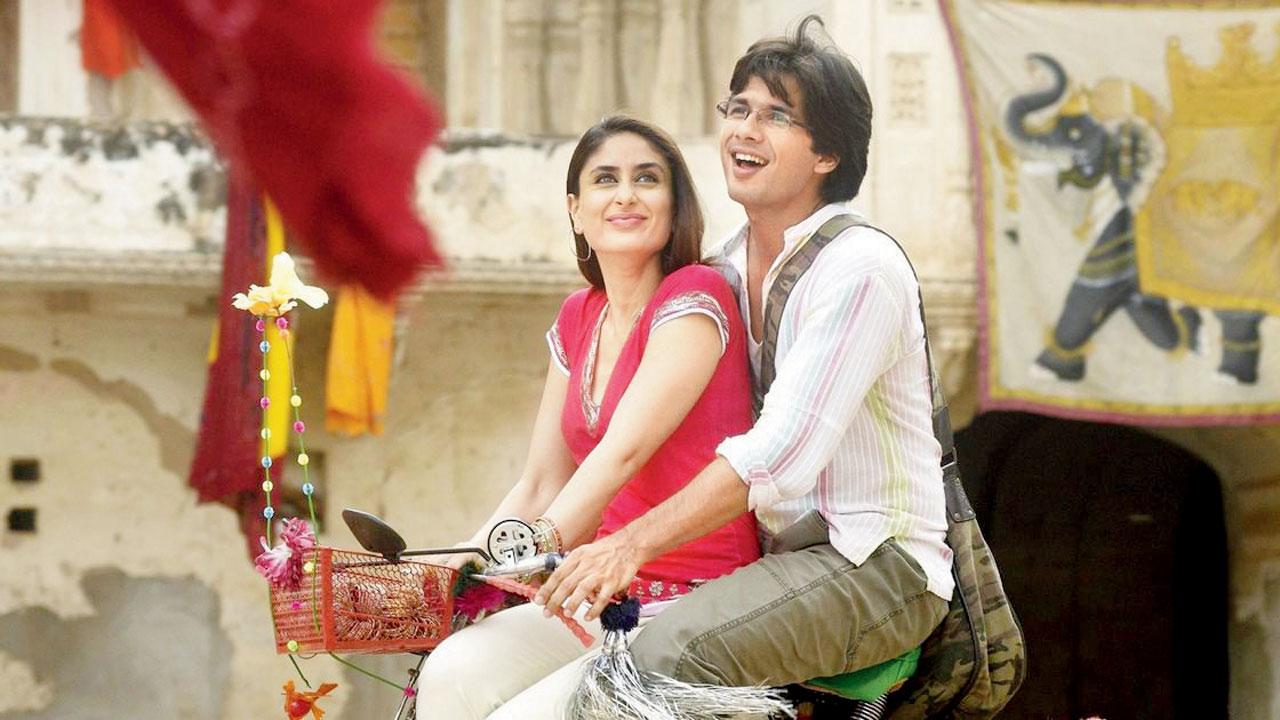
Koffee With Karan Season 7: I was made to wait for eight hours by Shahid Kapoor, says Kiara Advani
8:38 AM
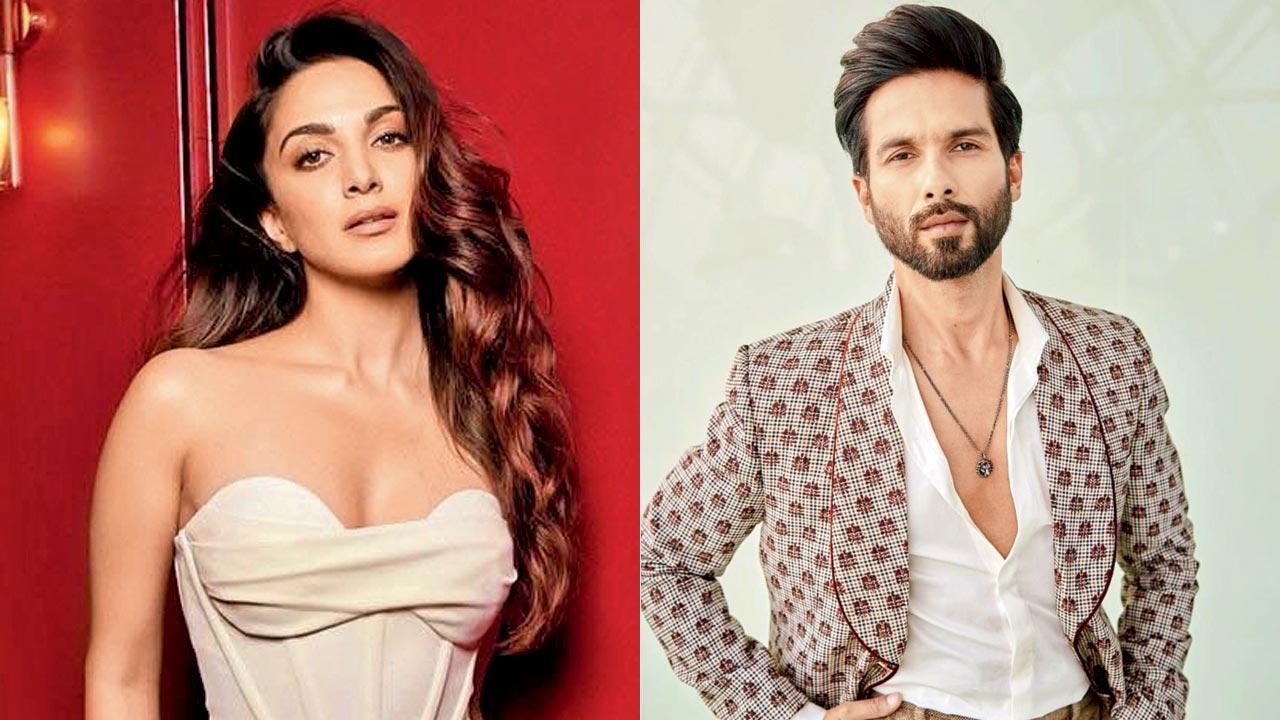
Kiara reveals on KJo’s show how she didn’t start off on a great note with Shahid during Kabir Singh shoot
MID-DAY (August 24, 2022)
Karan Johar has a knack for bringing out celebrities’ candid side on Koffee with Karan. It stands true for his upcoming episode as well that sees Kiara Advani grace the couch with actor-friend Shahid Kapoor. While the two had delivered a smashing hit in Kabir Singh (2019), Advani revealed that they did not quite start off on a great note during the film’s shoot. Reason — Kapoor apparently made her wait for hours before filming a scene.
In a segment of the Disney+ Hotstar offering, she recollects how she “bi**h-slapped Shahid” in her head. “It was my third or fourth day of shooting. I was made to wait for eight hours because there was a discussion on what shoes Shahid would wear in the next scene,” she exclaims.
Surprised at the anecdote, the filmmaker-host sided with Advani, saying, “If I were made to wait for eight hours for a discussion on shoes, I would bi**h-slap too.” Advani, who is said to be dating Sidharth Malhotra, also opened up on her love life on the chat show, admitting that the two are “more than good friends.”
Releasing a film in theatres is a blessing that we had taken for granted-Shahid Kapoor
7:53 AM

Rachana Dubey (BOMBAY TIMES; December 28, 2021)
In about a year, he will complete two decades in the Hindi film industry. The actor has enjoyed pushing his boundaries with roles that have brought to fore his versatility every time. Shortly after Kabir Singh, he jumped on to the OTT bandwagon, investing a lot of time in his first show, while being deeply involved in the Hindi adaptation of Nani’s Telugu hit, Jersey, which releases this week. In an interview with Bombay Times, Shahid Kapoor talked about being a part of two remakes in his 20-year-long career, and more. Excerpts...
Close on the heels of a hit like Kabir Singh, you chose to swing towards a web series. Of course, Jersey was in the works, too. And now, you have a line-up of some really challenging roles for 2022. What’s been driving your choices lately?
The film choices I make today are based largely on instinct. The first thing you feel from deep down inside is an amalgamation of all that you have experienced in life. And the first voice you hear is the purest; I am trying to listen to that. Of course, there are other factors that you have to account for.
It’s been two years since Kabir Singh released. I feel like kiske pair chooke thank you bolu that I again have a film releasing in theatres. It’s a blessing that we had taken for granted. At a young age, you take many things for granted, and with time, and ups and downs, you learn to respect everything in front of you. I am going through that time in life. I felt at ease after doing Kabir Singh. That was not the feeling I thought I would have after the film. Everyone wants a film with big numbers, right? If I have that big-number film, I thought, I probably will become more self-assured, but it turned into a more humbling experience. I have been just as hardworking. When something has to happen, it will happen at the right time. You learn to appreciate the energies of the universe and stop having ownership over it. I think that is a big realisation everyone must hopefully have in their life. After Kabir Singh, it was only a matter of months before we went into a lockdown which was an uncertain period.
Jersey was only halfway done with its shoot at that time, right?
We had half of Jersey to shoot. Shooting movies, which we took for granted, suddenly felt like a privilege. The circumstances were insecure, tentative and we were unsure as as to how we would make movies or and how would we find that atmosphere to make a movie like Jersey, which is personal, emotional, and not some sort of an itemised story. It needed to feel palpable and believable. After that phase, one has learned to appreciate everything that one took for granted. I always worked hard, but at times, I did things that I didn’t understand although everyone felt that was just the thing to do, so I went along. I came into the industry at a time when films were in a certain space which I didn’t connect with. They were not story or character-driven. I wanted to do films of the kind that I had grown up watching. I was doing things that were not me, but today, I am working on things that are closer to my sensibilities.
After spending about 15 years in the business, Arjun Reddy and Jersey remakes became two exceptions that you made in quick succession. What is drawing you to remakes?
Why not do a remake? Art is very fluid. People who critique art create certain boundaries for themselves. We all do, actually. We create boundaries which are limiting. I think the most interesting thing about art is that it’s limitless. As far as you are able to make it your own, and be honest, you can try anything. Shakespeare had said that there is no story that has not been told before. It’s not like I am looking out for remakes. It was an opportunity that came my way. Arjun Reddy was the first remake I did. Mira (Rajput, his wife) had seen it and said that I’d be a fool to let it go. I was tempted and yet, unsure. But I did it. And I enjoyed myself. I have a lot of respect for the fact that it is not that easy to do remakes or adaptations.
While shooting for Jersey, you were also working on your first web show with Raj Nidimoru and Krishna DK (Raj and DK). In their recent chat with us, they had mentioned how you took it on as a challenge and the pressure is more on you than them...
And if Jersey works, the pressure is probably back on them (laughs!) No, on a serious note, they had called me for a film, but I asked if they had something in the digital domain. I have loved their work and they have an understanding of narrating a story in an episodic manner in the long form. They were surprised that I was interested, and this was soon after Kabir Singh. They wondered why. My question is: why would Matthew McConaughey go from Dallas Buyers Club to True Detective? He has the maturity to understand that it’s the quality of content that travels. There is an audience waiting to consume good stories and characters. This is the time to go back to the basics. Why did I come here to be an actor in the first place? It’s to be able to tell good stories and play some characters that will help me evolve, challenge my abilities and push me as an actor. I don’t think digital is any smaller than theatrical. It might get bigger. I think we’re also being hypocritical here — we love content, but we want to discriminate between the content we’d like to work on as actors. Do it, enjoy it. Over-calculation is not so much fun.
In the last eight years, while your volume of work has gone up, do you try to strike a balance between work hours and family time? Do you consciously choose roles that will also make your kids proud of you when they grow up?
Yes, I do. Once you are married and have kids, you realise that, that is where life begins. Everything just converges. There is a thrust, focus and clarity in every sphere of life. I have felt that shift and I am grateful for it. As for Mira, when we fight, I use it all for my intense scenes, and when we have happier moments, I use that energy to spread positivity. It works for me in every way.

Zabaan Sambhal Ke: Mumbai Police calls out misogyny in Bollywood films
8:13 AM

Rachana Dubey (BOMBAY TIMES; October 3, 2021)
Be it creating awareness about following the lockdown guidelines or the need to mask up during the pandemic, the Mumbai Police’s social media handle has often retorted to wit and humour to highlight various social issues. On many occasions, Bollywood movie dialogues, posters and pictures have been tactfully weaved in to deliver the message in a filmi fashion, along with a sense of humour. Recently, the Mumbai Police social media handles put out a bunch of dialogues from various Bollywood movies, which was aimed at putting the spotlight on the misogyny and casual sexism that exists in our society and in cinema.
The post read — “Cinema is a reflection of our society — Here are (just) a few (of many) dialogues both our society & cinema need to reflect upon. Choose your words & actions with care — unless you want the law to intervene! #LetsNotNormaliseMisogyny #MindYourLanguage #WomenSafety (sic).” It was accompanied by snapshots of the dialogues from movies like Hum Tumhare Hai Sanam (2002), Maalamaal (1988), Dabangg (2010) and Kabir Singh (2019), among others.
While a dialogue from Dil Dhadakne Do, too, is among the ones listed here, the writers of the film — Zoya Akhtar and Reema Kagti — have used this situation in the movie to specifically highlight the sexist attitude that’s prevalent in society. In Dil Dhadakne Do, following Rahul Bose’s statement about allowing his wife to pursue her career, Farhan Akhtar points out the inherent sexism in his views.
There have been various debates and discussions over the past few years about how women have been portrayed in cinema and the need for change. We spoke to contemporary Bollywood writers for a perspective on the subject and the debate around misogyny, sexism and feminism.
‘SOMETIMES, WE NEED TO CREATE A CHARACTER TO DEPICT THE CONTRASTING IDEOLOGIES’
Hussain Dalal, who is known for his dialogues of films like Yeh Jawaani Hai Deewani, 2 States and Kalank, among several others, asserts, “I’m grateful that the Mumbai Police called it out, I love what they do with swag. As for misogynistic characters in our films, I think it’s an insecure male who treats a woman badly. There’s no concept of an alpha male. Either he’s a well-brought-up, happy, secure person or there’s something in him that needs immediate attention. Misogyny in my understanding is as deep-rooted as any mental health issue and cinema in no way should be promoting the idea. Yes, sometimes, we need to create a character to depict the contrasting ideologies. That’s not promoting misogyny, in fact, it is underlining the issue for people to understand.”
Talking about the way he approaches his characters, Hussain says, “I have never disrespected women while writing some strong male characters or dialogues, and vice versa. If we become over-woke, we can’t have humour in our films. Also, a person getting offended is not always right. The thing is, dialogues in films have a context in which they are presented, and they have to be seen with it.”
‘CINEMA IS A POWERFUL TOOL AND IT MUST TAKE SOME RESPONSIBILITY’
Films, especially in the ’80s and ’90s, often romanticised and normalised a man pursuing a woman by following her or not taking no for an answer. Piyush Gupta, who has co-written films like Dangal, Chhichhore and Bhoothnath Returns, shares, “I think any pop culture, especially cinema has had a deep imprint on our minds. People who grew up in the ’80s and ’90s were exposed to a chhed-chhad song in the movies. The boy-chasing-the-girl number was an accepted thing and it did have its social impact.”
However, he points out that things are changing today. “Cinema needs to have some sort of conscience while saying something,” he says, adding, “It’s a powerful tool and it must take some responsibility and have a moral compass attached while creating a piece of work. Also, I believe that having a misogynistic character in the film is not about idolising them. The filter we use is the point of view of our film. Everything is a building block to create that view. The main mudda should be clear. For that, if you have to create an opposing viewpoint, you must. But that in no way should be assumed as the promotion of something like misogyny.”
‘WE HAVE TO APPROACH A CHARACTER FOR WHAT IT IS’
Among the dialogues highlighted by the Mumbai Police were lines like ‘Woh meri bandi hai’, written by Siddharth-Garima for Kabir Singh. The duo has also contributed to films like Ram-Leela and Toilet: Ek Prem Katha, among others. Siddharth Singh of Siddharth-Garima says, “I just wish that they had also picked up the strong lines that we have written, empowering the woman in a film. Like we had some strong dialogues for Bhumi Pednekar in Toilet: Ek Prem Katha. We have to approach a character for what it is. When Rahul Bose’s character in Dil Dhadakne Do says that ‘I allowed her to run her business’, the rest of the film actually goes all out to highlight that he’s so wrong in thinking like that. A society is made of all kinds of people and that needs proper depiction. Unless you depict the harmful thoughts prevalent, how will you depict the solution for it? With no conflict, how will anyone write a strong film? Kabir Singh’s character was not meant to be idolised. He is not someone you are supposed to look up to. And if someone looked up to him, then he needs to look within.”
‘CREATORS ARE DOING THEIR BIT, BUT VIEWERS HAVE TO DO THEIR BIT TOO’
Garima Wahal of the duo sums up, saying, “Citing dialogues in isolation is not fair because everything is written keeping a situation and the character in mind. In popular culture, there are extremely misogynistic songs and films which actually need to be picked on, and they are the kind of things that we as creators need to avoid today. If I see the other side of the coin, misogyny and feminism are also abused terms. There is change and there needs to be more change, inside out. Siddharth and I had a tough time casting for a film about a woman making some very bold choices in her life — and by that, we don’t mean that she’s a drunkard or a scamster or some kind of a loose wagon. No mainstream heroine wanted to do it without a strong male opposite her. Dialogues have to be seen in perspective and are interpreted differently by different people. Creators are doing their bit, but the viewers have to do their bit as well.”
The Batra family said I was exactly like Dimple Cheema-Kiara Advani
8:40 AM
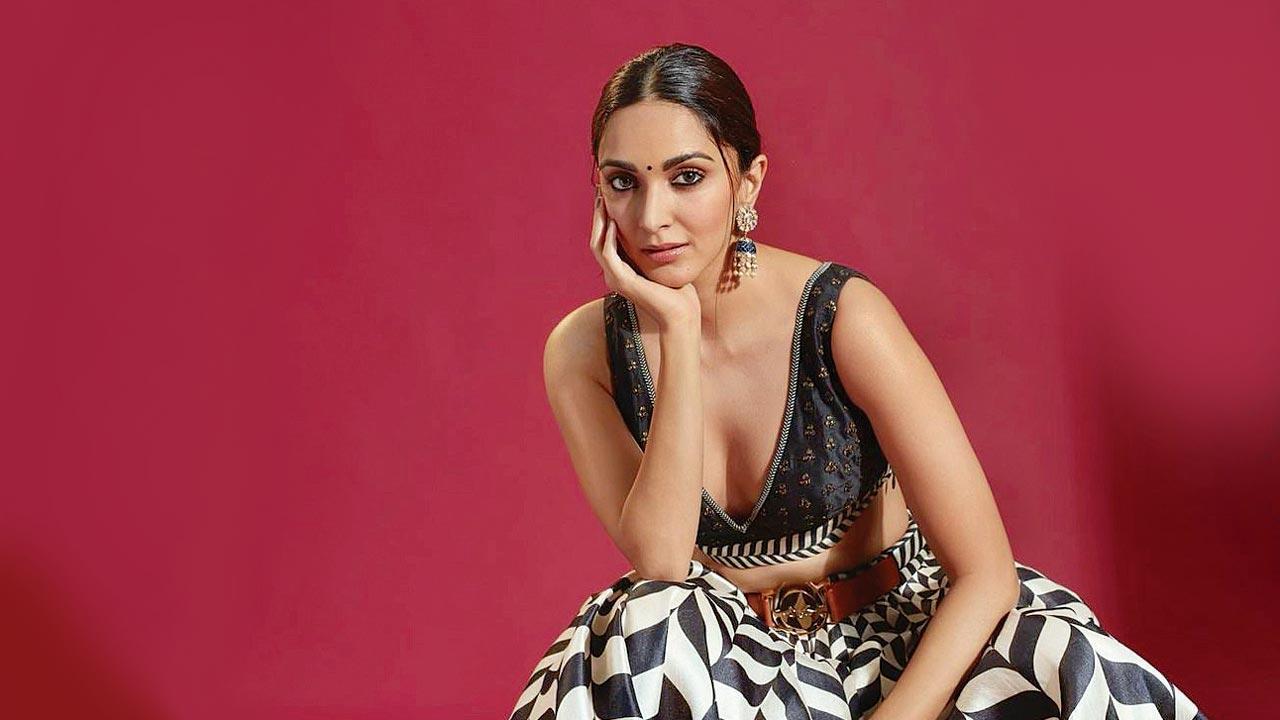
Hoping that Captain Batra’s fiancée will be proud of Shershaah, Kiara says appreciation from Kargil War hero’s family moved her to tears
Mohar Basu (MID-DAY; August 19, 2021)
When she walked into Shershaah, Kiara Advani knew she had a good film in hand. Now, as the Sidharth Malhotra-starrer is receiving unanimous love from audience and critics, she is pleased as well as grateful. “Even at a script level, we knew this film had the potential to move people. But the response has surpassed our expectations,” she begins. The team’s biggest win is that the biopic on Captain Vikram Batra has been highly appreciated by the Batra family.
Asked if she has heard from Dimple Cheema yet, Advani — who plays Batra’s love interest in the Amazon Prime Video offering — says, “I messaged her after the film. This is an emotional movie for her. I want to respect her privacy right now. When I met Captain Batra’s family after the film, they said I was exactly like [Dimple]. That moved me to tears. I know the songs have deeply touched her. She must be proud that the story is resonating with people.”
The film’s post-credits reveal that after the Kargil War hero’s demise, Cheema decided to not marry. The actor says she bought into their love story instantly, rare as it was. “I believe in that kind of eternal love. I have seen examples of that in my parents, and now, in Dimple’s love story. It is aspirational for a generation like ours, which is more fast-paced.”
That brings us to her love life — she is rumoured to be dating co-star Malhotra. Zealous fans rooting for them have given them the moniker #Sidiara. Partly coy, partly cautious, Advani says, “We are happy that our on-screen chemistry is appreciated. But I feel it’s our honest intention of playing Vikram and Dimple authentically that is [being praised].”
For the actor, the film’s success has reaffirmed her belief in her choice of projects. “Since Kabir Singh [2019], every day has been an effort to top the character of Priti. People couldn’t get her out of their minds. After almost [two] years, Dimple has done that; it feels like a win. I have always been instinctive with my choice of characters, and will continue choosing with abandon.”
I could not have done Kabir Singh without Mira Rajput's love and support-Shahid Kapoor
8:18 AM

BOMBAY TIMES (June 23, 2021)

“I just want to tell great stories to people and I feel that’s the best part of being an actor. In my career, I have done many movies which did not have any story, but I have now understood the importance of storytelling. Kaafi time laga mujhe samjhne ke liye par ab main samajh gaya hun,” he said.
“So I would now try my best to be a part of those projects which have a good story, irrespective of whether the role is thin or fat, big or small...my aim is to tell great stories,” he added.
Apart from this, Shahid also praised his wife Mira for supporting him throughout the movie. “Mira really liked the film. In fact, she was the one who convinced me to take up Kabir Singh. I could not have done it without her love and support. I can’t imagine anything without her. I remember how she used to tolerate that ‘daadi wala Kabir’ (bearded look) and then the ‘clean-shaven one’,” he quipped.
The film was a remake of the Telugu film Arjun Reddy and Sandeep Reddy Vanga helmed both the versions. In the Hindi remake, Kiara Advani was paired opposite Shahid Kapoor, while the original movie starred Vijay Deverakonda and Shalini Pandey.
“Thank you for giving so much love to the film — especially for making my flawed role the most successful one yet,” Shahid signed off.
Subscribe to:
Posts (Atom)