Showing posts with label Kabhi Alvida Naa Kehna. Show all posts
Showing posts with label Kabhi Alvida Naa Kehna. Show all posts
Karan Johar's series Nazdeekiyan to draw inspiration from Kabhi Alvida Naa Kehna
10:41 AM
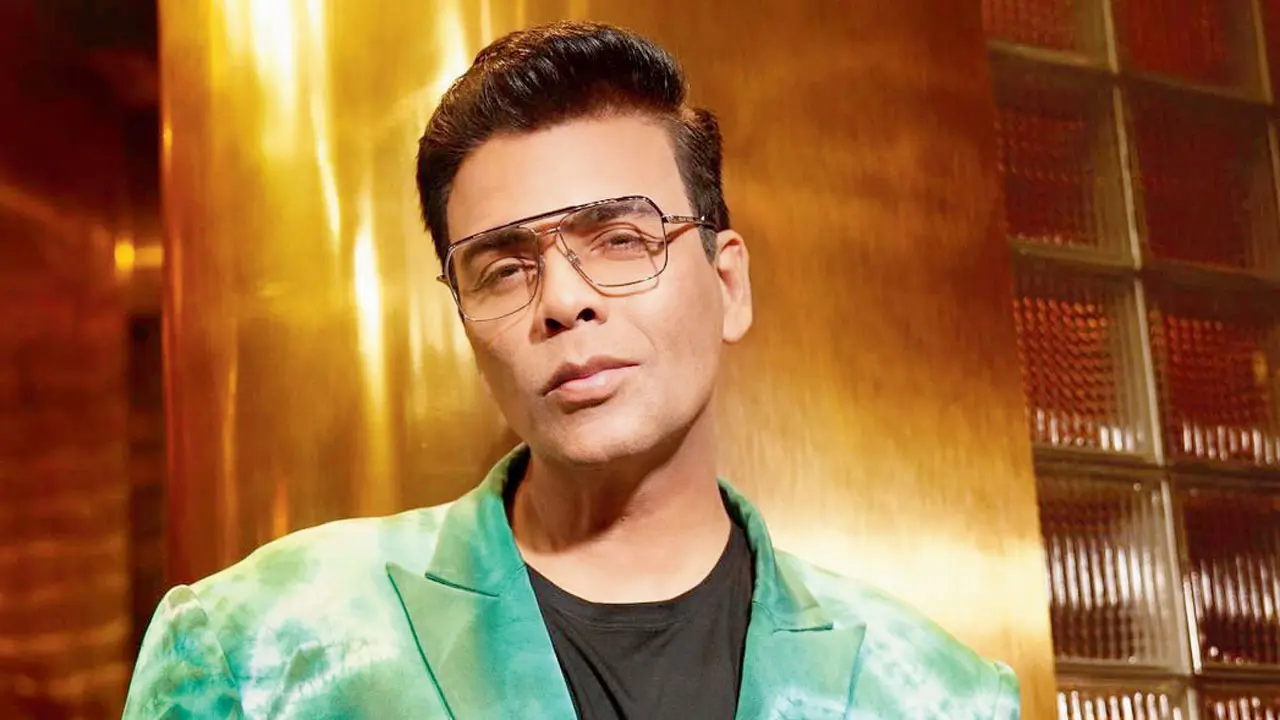
Revolving around two couples, Karan Johar’s upcoming series Nazdeekiyan explores themes of loyalty, duty, and desire, inspired by the filmmaker’s 2006 offering Kabhi Alvida Naa Kehna
Priyanka Sharma (MID-DAY; April 4, 2026)
In March, Prime Video announced Nazdeekiyan, produced by Karan Johar’s Dharmatic Entertainment, as part of its 2026 slate. Revolving around two couples, the upcoming series explores themes of loyalty, duty, and desire. Sounds familiar? It did to us, too. Perhaps Johar did not look too far for inspiration when creating this show. Sources have told mid-day that ‘Nazdeekiyan’ is inspired by the filmmaker’s all-star offering, Kabhi Alvida Naa Kehna (2006).
A source revealed, “The series is a contemporary take on infidelity. ‘Kabhi Alvida Naa Kehna’, though controversial at the time, aged well, with generations resonating with the four leads’ conflict. The team at Dharmatic was keen to revisit the idea, and from there, the story for ‘Nazdeekiyan’ was fleshed out.”
Director Ruchir Arun’s 20-episode series, however, is not a direct adaptation of the Shah Rukh Khan and Rani Mukerji-starrer that told the story of two people finding love outside marriage. Another insider shared, “The DNA is similar, but the situations and setting of the four leads here are different.”
No one can change society with one film-Karan Johar
7:56 AM

Niharika Lal (BOMBAY TIMES; April 25, 2024)
Karan Johar was in Delhi recently to speak at the AIMA’s (All India Management Association) 9th National Leadership Conclave. Addressing the role of cinema in society, Johar said that over time, cinema does bring about change and hopes that filmmakers who fail to grasp this concept now will one day realise how important their voice is.
‘WHAT WE PROJECT, WHAT WE SAY, HAS TO BE CONSIDERED WITH SENSITIVITY’
Karan said, “I believe (as filmmakers), we have tremendous power, and therefore, with tremendous power comes tremendous responsibility. What we project and what we say, we have to consider it with some amount of sensitivity because people take the spoken word very seriously. Of course, no one can change the fabric of society with one feature film. It is not possible. It takes a lot of work and a lot of cinema if you want to drive home a point today. I believe so many films that talk about women empowerment are finally hitting home today. Nothing happens overnight.”
He continued, “Of course, there is a flip side to that as well. There have been films that continue to be harmful, but I hope those filmmakers realize with time how important the platform they have is, how important their voices are.”
‘WHAT SOME SAY DUMBING DOWN, I CALL IT MAKING AN ISSUE ACCESSIBLE TO PEOPLE’
Talking about how he blends sensitive issues into mainstream cinema, Karan said, “There are two things – there are some cerebral filmmakers who will be very-very true to their communication and do it in a way that is perhaps not understandable to a large section of society.”
Johar added there are second kind of filmmakers like him who try to make the message more accessible, but which critics call dumbing down of content. However, he doesn’t agree that it is dumbing down the message.
He said, “It is what I call accessibility. Can you talk about the issue in such a way that it is accessible to people who may not understand nuance? We need to communicate it with a certain amount of front-footedness. If you are sensitive about the issue and sensitive about it reaching a vast audience, it will happen organically and that’s what I have tried to do even in Rocky Aur Rani Kii Prem Kahaani.”
‘THERE’S A MOMENT IN ROCKY AUR RANI, WHERE RANVEER ADDRESSES CANCEL CULTURE; THAT’S WHAT HAPPENED TO ME’
“Kabhi Alvida Naa Kehna (2006) was about breaking stereotypes and exploring the grey areas of human relationships. As a filmmaker, I feel the need to evolve and explore territories that may not be conventional but are what our society experiences daily. Topics like monogamy and infidelity are often brushed under the carpet in traditional family settings. I thought I have to address it. I have tried to push the envelope. There are certain things that I won’t do anymore. I feel that we have made our errors in the past, but all this I have realized in due time. At that time, I didn’t know any better. There’s a moment in Rocky Aur Rani, where Ranveer addresses cancel culture and says, ‘I didn’t know better, but don’t cancel me, correct me.’ That’s what happened to me.”
A woman is never allowed to or asked, ‘Are you attracted to this man?’-Rani Mukerji
9:32 AM

Niharika Lal (BOMBAY TIMES; November 28, 2023)
Rani Mukerji isn’t big on Bollywood romance movies that do not talk about a woman’s wants and choices, and says that in that aspect, films like Kabhi Alvida Naa Kehna or Hum Tum were way ahead of their time.
While Kabhi Alvida Naa Kehna was not that big a hit at the time, it raised uncomfortable questions, says Rani. “I think it is important to always stand by strong films and strong roles. Sometimes, you may not get the (right) audience, but in the history of Indian cinema, it will always be remembered as a film that was ahead of its time,” she said during a discussion about her characters.
‘I WORK HARD TO MAKE MY CHARACTERS REAL’
“I work hard towards making my characters real – in terms of how they walk, how they talk – because I firmly believe that body language makes a huge difference in terms of how you perceive a particular person. Fifty per cent of an actor’s battle to make the character believable lies in the appearance. If you look the character visually, half the battle is won, and the other half is what you need to perform. I can be Tina (Kuch Kuch Hota Hai) and also be Alisha (from Ghulam), and I can also be Michelle (from Black).”
‘IMPORTANT TO TALK ABOUT A WOMAN’S WANTS AND HER CHOICES’
It is very important to talk about a woman’s wants and her choices. Just because the husband doesn’t beat you, it does not mean that you are in love with him. I think people give less importance to a woman being in love. What is important for a lot of people and their families is – is the man settled? Is he from a good family? But physical chemistry is not given too much importance. It’s like a man can choose that, but a woman is never allowed to or asked, ‘Are you attracted to this man?’ ‘Would you like to marry him?’
A lot of people were watching the film in extreme discomfort because nobody wants to face their own reality. That is the feedback Karan (Johar) received for his film. It opened the eyes of a lot of people, and they took the decision of being happy. The film was very different from what we are taught – that you have to compromise and adjust, and of course we have to, but there should (also) be love in the relationship. Because even in a relationship of love, there will be compromises, marriage as it is very demanding; and if you are in a marriage that is loveless then it becomes even more difficult.
‘IT IS IMPORTANT TO KNOW WHAT AND HOW A CHARACTER THINKS OR FEELS’
For Naina (from Hichki), I had to meet a lot of people who had Tourette syndrome. I also did an interview with Brad Cohen, who was the inspiration behind Hichki. To play a character, it is also important to know what and how that person thinks or feels emotionally. At the end of the day, we are portraying emotions that touch the audience. What distinguishes a scene is the emotion that comes from behind the scene. When a writer writes a scene, he is actually writing what a character is going through, and for me, it is very important to portray those emotions.
‘NO ACTOR SHOULD BE JUDGED ON THE BASIS OF AGE’
The audience has kept me going for the last 27 years, and I hope they keep me going for the next 27… My audience has helped me break the age barrier and I promise my audience that I will act till I’m 80. No actor should be judged on the basis of their age. I think it is only because our cinema is known as popular cinema, and you want to see young people all the time. The trick is also to accept that you are not always going to look young.
‘BLACK TRANSFORMED ME AS A HUMAN’
(Black made me realize) that there is nothing impossible, but we condition ourselves to believe that there are things we cannot do. Our attitude in life should be that we have to make this possible. And that’s what Black did for me; it transformed me as a human. Sanjay Leela Bhansali makes it a point to bring out the best in you and transports the audience.
-----------------------------------------
Monika Rawal Kukreja (HINDUSTAN TIMES; November 28, 2023)
With a diverse body of work, Rani Mukerji has impressed audiences each time she has come on the big screen. Perhaps the only female actor in Bollywood to have a franchise (Mardaani) that she carries on her shoulders, Mukerji has also essayed characters across age groups. At the 54th International Film Festival of India, during the masterclass Delivering Compelling Performances, she spoke about the debate around ageism in the film industry.
“[In our cinema], you want to see young people on screen all the time because that’s what probably compels the youth to watch films. But it’s also important to not be delusional and believe that you are always going to be young,” she said, adding, “You can be young at heart (comma) but to accept your age and the roles that suit your age is also important for the audience to accept you in a character.”
Since making her debut 27 years ago with Raja Ki Aayegi Baaraat, Mukerji has been able to stay relevant and, at the same time, experiment with characters that aren’t necessarily her age. “That’s how my audience has loved and accepted me over the years. In fact, they have helped me break this ageism barrier. I promise them that I’ll work till I’m 80,” she said.
Mukerji, who played a mother of two in Mrs Chatterjee vs Norway earlier this year, continued, “In my third film, Kuch Kuch Hota Hai (1998), I played a mum and did it throughout my 20s. I’ve consciously tried to not give importance to the age of the character and instead do justice to the role, so that the audience doesn’t think of Rani Mukerji but believes in that character.” Stressing on believability for every part one takes up, she added, “If I’ve to play a college student today, I would first tell the audience that I’m a mother, and at the age of 40, have decided to go back to college.”
Mukerji also played a 60-year-old in a sequence in Hichki (2018). “It was a challenge that an actor took up to look older. But when an actor takes the challenge to look younger, it’s ridiculed because you don’t want them to try and tell the audience that they’re young. So, it’s important to accept who you are, what you are and look after yourself,” she wrapped up.
For Gehraiyaan, I revisited experiences, mental health issues-Deepika Padukone
8:24 AM

Collaborating with Shakun for the first time on noir relationship drama Gehraiyaan, Deepika says she dug deep to play “vulnerable” character
Uma Ramasubramanian (MID-DAY; January 21, 2022)
Shakun Batra has a way with relationship dramas, showing us the ache of unrequited love in Ek Main Aur Ekk Tu (2012), and the frailty of familial ties in Kapoor & Sons (2016). With Gehraiyaan, whose trailer dropped online yesterday, he scrutinizes modern-day romances. At the centre of his noir drama is Deepika Padukone. The actor admits that finding her footing initially wasn’t easy as the role required her to be “emotionally naked”.
“To be able to [portray] that on screen, [the emotions] had to come from a deep place. I had to dig deep and revisit places that weren’t pleasant,” says Padukone, who turned inwards for inspiration. “I had to revisit experiences from my own life, as well as [my experience of] dealing with mental health issues. All of that [helped me play] this character that needed to be raw, naked and vulnerable.”
The Amazon Prime Video offering, also starring Siddhant Chaturvedi, Ananya Panday and Dhairya Karwa, marks Batra’s first collaboration with Padukone. The director notes that her emotional transparency enhanced her act. “The hunger she had for this [role] surprised me. We spoke about her anxiety, her experiences in different relationships and how we can make that a part of the story. I was trying to draw her real self into the character.”
In an industry that loves its frothy romances and happily-ever-afters, a story on infidelity is a change of pace. Batra asserts that his film is less about love, and more about choices and their consequences. “I have seen infidelity [being explored] in Kabhi Alvida Naa Kehna [2006] and Kabhi Kabhie [1976], but they spoke about finding a soul mate. Here, infidelity is not under the garb of finding that one true love. I am trying to explore relationships that step outside the conventional boundaries.”
Kudos to the audience, they are making everyone in Indian cinema pull up their socks-Karan Johar
8:44 AM

Madhureeta Mukherjee (BOMBAY TIMES; May 25, 2019)
Yes, he’s known for all the glossy, glam, snazzy and stylish stuff we see on screen, but that’s only one aspect of his cinema. As Karan Johar rightly says, “I am a victim of my own image.” As a filmmaker, in the last few years, he’s backed some interesting movies like Kapoor & Sons (Since 1921), Raazi, Kesari and there’s more coming up from his platter — from biopics, a horror thriller to a fantasy film, and a historical drama. Today, as he turns another year older (and is bringing in his birthday in his favourite New York City), he tells us about his learnings over the past two decades, and how the world in and around cinema has grown and changed. And undoubtedly, he’s moved with the times, too, because in his own words, “being relevant is my mainstay.” This talkathon goes on long after the coffee is over, so let’s get started...
 Last year, your production house had a great run with Raazi and Simmba. 2019 started with a film like Kesari, which grew from strength to strength. It was a war film, unlike anything that your production house has ever backed...
It was a challenge to put Kesari out there with the right dose of action, emotion and tell it the way it deserved to be told. It was such a brave narrative, and the one and only choice for the film was Akshay Kumar. There was nobody else who could play the protagonist with that kind of conviction. When the director, Anurag Singh, narrated the story to us, it gave us gooseflesh. We didn’t know what the outcome would be, as this was a new space for Dharma Productions; this was our first war film. Kesari is what it is, because of the passion and conviction of two men, Anurag Singh and Akshay Kumar.
For the longest time, you were known for making certain kinds of films, like romances, family dramas and stories in that zone. However, there has been a turn with the variety of projects that you are dabbling with now, with films like Raazi (2018), Kesari, Brahmastra, Takht…
I am a victim of my own image, in a way. I have produced a series of films which are against the grain of what people perceive Dharma Productions, my production house, to be, whether it is Kapoor & Sons (Since 1921), Raazi or Kesari. We have tried to break ground, and we have dealt with subjects ranging from infidelity and homosexuality to patriotism. We have covered the landscape in terms of genres in movies and yet, I am asked, ‘Oh, you make candy-floss films?’ I have decided to remain silent, because no matter what I do, the baggage of what I have done will never stop coming in the way of people’s perception of me. I know that I represent a certain kind of image, and I will always bear the brunt of that, no matter what I produce or direct.
This year we have an interesting line-up of releases with Good News (Akshay Kumar–Kareena Kapoor Khan), the untitled horror thriller (with Vicky Kaushal). Films like the Gunjan Saxena biopic (Janhvi Kapoor), the biopic on Captain Vikram Batra (Sidharth Malhotra), Brahmastra (Ranbir Kapoor-Alia Bhatt) and Sooryavanshi (Akshay Kumar-Katrina Kaif) are all work in progress and will see a 2020 release.
Is there a strategic plan in place to bring such movies to the table, which, as you said, covers the landscape of genres?
We want to tell stories that we strongly believe in. There are stories that will go right, and stories that will go wrong. I am not chasing stories where I want good-looking people in good-looking places. It’s not a strategic decision; instead, it is an organic decision that comes as a result of our love for cinema. I feel that there is a certain order of our times that has changed. Today, we are in a very high-content zone, if we do something that is been-there-done-that, it will not do great business. Kudos to the audience, they are making everyone in Indian cinema pull up their socks.
It is getting tougher to get large volumes of audience to the theatre. Today, the moviegoers want far more value for their buck and filmmakers can’t rely on a stars’ fandom anymore. Would you agree?
We are in the toughest space now, films don’t open anymore. If the audience likes the film, over time, it grows. Gone are those bumper opening days, where the audience would stand in a queue to buy tickets. It is a thing of the past. The south film industry still has a loyal fan base, we don’t. And that is because we have treated our fans so badly with the content that we have dished out, that we don’t deserve their love anymore. We have to win their love all over again. So now, what makes a difference to the film’s success are these three words — ‘word of mouth’. That has become the biggest marketing tool. We can dance at malls, we can run around town with the cast of our movie as much as we want to, but eventually, word of mouth is what could take your film towards the victory line. Today, only two kinds of films work — high concept or big event. If the big event goes right, like it did with Baahubali, then nothing like it! By high concept, I mean a film like Badhaai Ho. So, you need to have either one of those, whatever lies in between…no one is interested in that. There was a time when people would say, ‘Oh, some films are critic-proof.’ There is also nothing like that anymore.
 Yes, everyone has an opinion on movies, and it’s out there, on chat groups, posts on social media, it’s everywhere…
(Cuts in) On the morning that your film releases, you have thousands of websites writing about your film, and everyone is a critic. Films are sparking so much conversation. On the day my film hits the theatres, from my building’s security man, my school friends, relatives, neighbours…everyone is texting and giving their opinion. And I am thinking to myself, I haven’t even asked you? (laughs!). Maybe that’s great, as the universe is throwing it at our faces, and telling us, ‘Listen, if you are putting something out there, you better make it good. Or don’t make it at all’.
With Takht, you are back in the director’s seat after three years. And it’s a film rooted in history and set in the Mughal era, a subject that we have never seen you associate with...
It is a lesser known fact that I am obsessed with history. Through my college years, I read a lot about history, and the Mughal era has always fascinated me, as it was such a majestic and menacing period. I have read several books on it and so many interpretations of it. I was always keen on making a film set in this period, and when Sumit Roy, who is a historian and the screenplay writer of the film, came up with a beautiful narrative embedded in this era, I was drawn towards it. This is the first film where I haven’t written a single line of the screenplay, which many might believe is a good thing, but I am okay with it. Hopefully, I won’t be criticised about making another film about rich people, because we can’t deny that the Mughals were rich at the time they ruled, and I can’t change history (laughs!). At its core, it’s a strong, emotional family story. The film will go on the floors by the end of the year, and I hope that I can bring such a strong narrative to life through the movie.
A few years ago, in an interview, you had told us, “I think the biggest reason why most directors take so much time to make their movies is their fear of failure. We are so nervous about holding on and maintaining our equity. I am very afraid of failure. I feel more accountable than upset.” With time, would you say your fears have lessened? Have you become more comfortable about taking risks and braver about your choices?
I have stopped fearing failure. I try to accept it, embrace it and make it my biggest teacher. Every time I succeed, I feel relieved, but every time I fail, I feel more energised. I have a new spring in my step. We all know that Kalank didn’t work, and post that I analysed it. We all felt that the film was special. Yes, we know that it was not accepted by the audience, but it does not take away from the fact that we have learnt from it. We sat down and spoke about it and said… ‘Okay, maybe there is a reason that this has happened’. Sometimes, you can’t find the reason for your success, but there is always a reason for failure.
Has this come with experience, age and maturity? Would you have dealt with the failure of a film the same way ten years ago?
Yes, I guess experience does make a difference. Post Kalank, I felt that I was standing tall as the leader of that pack and trying to control the energies of everyone. You have to stand tall with your team in times of failure, though it is harder. If you are leading the team, your energy is most critical. You can’t start falling apart and appear shaken up. You have to say…Let’s grow from here, and let’s emerge stronger. That’s what we all did together. When I made Kabhi Alvida Naa Kehna (KANK), it was met with such polarised responses. I made KANK after the success of Kabhi Khushi Kabhie Gham. I was much younger then, and I felt slightly invincible. When your film is not loved universally by the audience, it is not easy to deal with it. Now, after so many years, I have people coming up to me and telling me what they liked about the film, and how they didn’t like it when they saw it back then.
Sometimes, films live on. They don’t possibly make the cut commercially at that point of time for various reasons, but if a film is strong, it will live on. Box office numbers are a tag, but films are forever. We cannot remember films just for its BO tag, we have to remember films for what they create. If you have forgotten a film after two decades, then it probably wasn’t worthy of being remembered. A film has to rise above its BO status. Look, films are a tough business. We are the only industry which is judged on the same day by the whole world. Everyone, including your friends, family, neighbours and peer know your success or failure. It is exhausting at the end of it and that’s why so many people in the industry can fall off the edge. But you got to keep your chin up and move on.
A few years ago, you had said that as you were growing older, you felt the need to direct more films. But now, your quantity of work, as a producer is more...
I made the choice to turn my production house into an active studio. Yes, it could be at the cost of me not directing as many films. I have made eight films, but if I directed a film every two years, and along with that, just did some reality shows, I’d be a richer man. I chose the other path, as it was my way to contribute more to cinema. You can judge my cinema, you can hate me, you can love me, but I think I have earned the privilege…that the one thing you will not be is, indifferent to me. I think not being indifferent is being relevant and being relevant is my mainstay.

I hope to prove people wrong with Takht-Karan Johar
8:46 AM
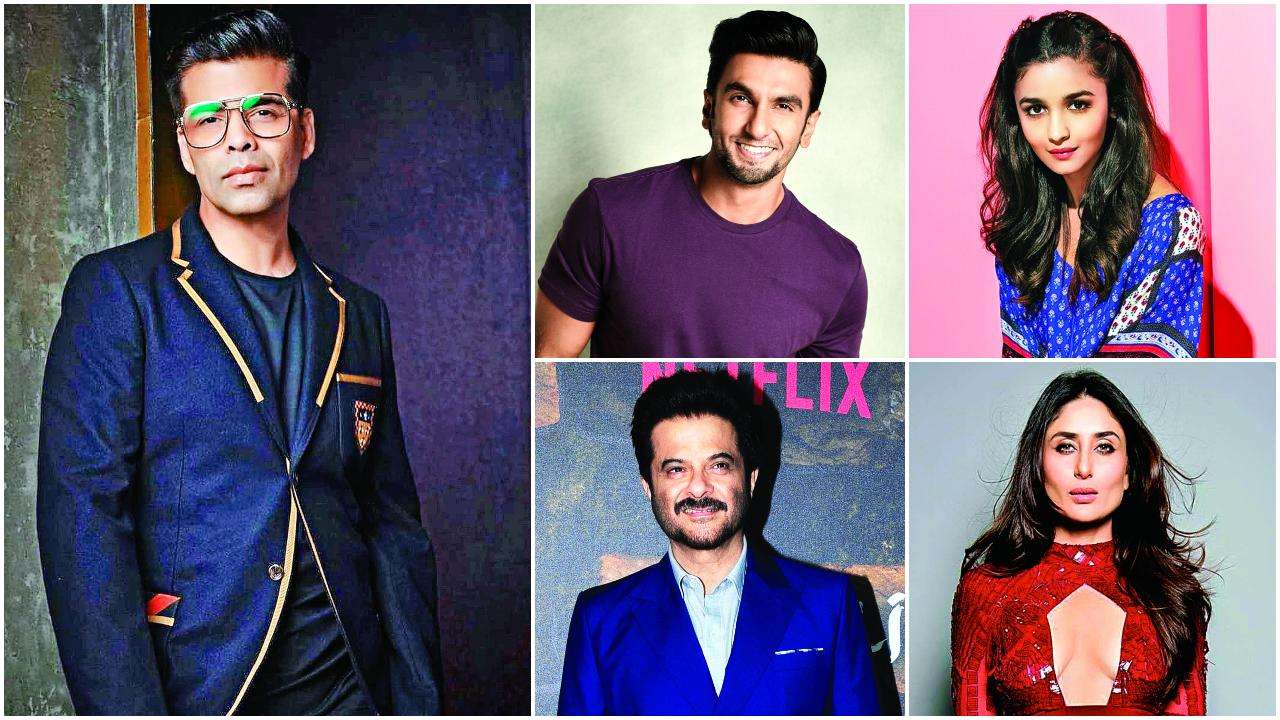
Nayandeep Rakshit (DNA; December 16, 2018)
Ever since Karan Johar announced that his forthcoming film Takht is a historical epic, it is being compared to Sanjay Leela Bhansali’s period dramas, especially since the movie also stars Ranveer Singh, who has already acted in SLB’s magnum opuses like Bajirao Mastani (2015) and this year’s Padmaavat.
Set against the backdrop of the Mughal Era, Takht, which also stars Kareena Kapoor Khan, Alia Bhatt, Anil Kapoor, Vicky Kaushal, Janhvi Kapoor and Bhumi Pednekar, goes on floors next August.
However, KJo says it’s unfair to draw such parallels. He explains, “Many people were shocked when they heard I was doing a period film. It doesn’t necessarily mean that they should compare me with Sanjay. He’s a master of the craft and I hope the audience enjoys my period film just as much. If you ask me whether my language as a filmmaker will come across or not, I’ll only say that I can’t keep myself away from anything I do (referring to the larger-than-life scale of his films that have dollops of drama and romance).”
The maverick also argues that he’s often not acknowledged for the ‘different cinema’ that he offers to viewers. “The idea is to take myself out of my comfort zone. I have tried to do that even with the short films I’ve helmed and the topics that I’ve addressed as a filmmaker. But somehow, I never get credit for such things. I’m often told, ‘Oh, you make movies that are only about rich people and first-world problems.’ I’m fed up of justifying myself, but it’s sad that no one talks about a My Name Is Khan (2010) or a Bombay Talkies (2013) or a Lust Stories (2018). I even raised a topic like infidelity in Kabhi Alvida Naa Kehna (2006), which was considered taboo. But everyone will just go on about the popcorn, bubble and the sets of Kabhi Khushi Kabhie Gham (2001) and Kuch Kuch Hota Hai (1998). So, I’m doing Takht thinking, ‘Maine kuchh naya nahin kiya hai’. But I hope to prove people wrong with it,” asserts Karan.
At my screen test, they made me wear Mamta Kulkarni's clothes-Rani Mukerji
3:03 PM

One of Bollywood's most sensational talents, Rani Mukerji meticulously deconstructs her life before and after films
Mayank Shekhar (MID-DAY; June 28, 2018)
Firstly, we've got to thank you and your filmmaker husband Aditya Chopra as well for coming over. He's an invisible man, surely he's sitting in the room, is he?
Yes, he is. You've got to find him. You had to see Mr India through a red tint. Now I can't decode which colour makes him appear!
No, seriously, does he actually exist?
Of course. And the proof is in the pudding — my daughter. She didn't get baked and come out of the oven (laughs).
I was coming up the lift, and everybody knew you were coming over, one of them said, she's married. The other went, to some Chopra, god knows who! Of course, you've known Aditya for years. Do you remember the first time you guys met?
It's quite historic in my head, actually. He had called me for a film called Dulhan. That movie never got made. But I became his 'dulhan' (bride), eventually, in life.
Was he producing the film?
He was actually directing it. And I had signed up for Kuch Kuch Hota Hai. So he'd asked me a bunch of professional questions that he does with everyone. And this was much before the first film I did for Yash Raj, which was Mujhse Dosti Karoge (2002). And, of course, Saathiya (2002), although that was more of a Bobby Bedi production, with Yash Raj presenting it. Shaad had come to me and said he was remaking Mani Ratnam's film. I was like, "Why are you remaking a great film that Mani Ratnam's already made?" Yash [Chopra] uncle was involved with the film. So was Adi. They were actually shocked to hear that I had said no.
You said no, simply because it was a remake?
Sometimes we actors think we know it all, although actually we don't know anything. And we have to have people guide us to do the right things. Obviously I wasn't guided properly, and in my enthusiasm of youth, I said no. That's when Adi called me for a meeting, asked, "What's the reason for you not doing this film?" I didn't have a good enough answer, so I said, "Because the girl doesn't have a good role." He just burst out laughing!
True, the film's all about the girl.
Yes, that's when Adi realised that I'm a clueless person in the industry. If I can say that the girl's role in Saathiya has no meat, then I must be really cracked!

What's he like as a person?
I think the best way to describe Adi is that he's a great leader. He's got great leadership qualities. After so many years in the industry, it's really difficult for me to respect someone — we tend to know people, in, and out. Adi is somebody I can genuinely respect as a human being, and this has been the case from even before I became his wife and life-partner.
You mean he has paternal qualities; or is a natural mentor?
I wouldn't say paternal. He's essentially a no-nonsense person. He tells you in your face, the way it is. I think that's great, because a lot of people in films need that reality check. You are surrounded by people who constantly tell you that you're the best. He's a really good bubble-buster in that sense. You need someone to say "You're good, but not the best!" Also, whenever someone goes to him for advice, he puts the other person's interest first, before his own. I think that's a rare quality to have, not only in business, in life as well.
What surprises me most about him is when someone told me the poster on the wall behind his desk is that of Fernando Meirelles' gritty-gangster film City Of God (2002), essentially Brazil's Satya (1998). Now that's the last film I'd associate with Aditya Chopra. Does he still have the poster?
Yes, it's still there! My education of foreign language films, or the films I know at all, is thanks to Adi. There's so much to learn. I think it's important for every actor to not only see the big, entertaining blockbusters, but watch films, where the performances are so real, it's hard to tell it's a performance.
You obviously come from a space where you simply didn't want to be an actor, and was forced into it, by your mom, right?
Not forced. I just thank God I was really a good, obedient daughter! In 1993, I got offered a film called Aa Gale Lag Jaa, which I didn't do. Growing up in Juhu, being from a film family was not really looked upon as cool, as it is now. Back then, being from a film family was like, "Oh, you're from films?" That word 'filmy' was treated as an abuse.
Bollywood was basically uncool.
Yes, Bollywood wasn't seen as a place you could make a career out of. I was in my 10th standard, when I got offered Aa Gale Lag Jaa by Salim uncle (Salim Akhtar), and I had the most bizarre reaction: I started crying! I was like, "How can you offer me a movie?" My mom and dad cajoled me, "You don't have to cry. He's only offered you a film." Eventually Urmila (Matondkar) did that film. Two years later, Salim uncle came back to me because Mamta Kulkarni had said no to Raja Ki Aayegi Baraat (1997). My mom asked me if I wanted to just give it a try, and if I didn't like it, I could always go back to college. I thought she was being practical. At my screen test, they made me wear Mamta Kulkarni's clothes that she had worn in Salim uncle's previous film. And I was like, what are these clothes? They put glycerine in my eyes. It was crazy for me.

And this was just the screen test.
And it was a disaster. My mom saw it and realised I wasn't cut out for this. But Salim uncle said I was really photogenic and the cameramen were really happy with me. He asked me if I wanted to join an acting class. I joined Roshan Taneja's school. The first thing he (Roshan) told my father and that remains stuck in my head is that acting is not something that can be learnt. It's not mechanical. You have to feel it. It's a process, being another human being, for a particular amount of time. In my class, there were Jimmy Sheirgill and Chandachur Singh, prepping for their film with ABCL (Amitabh Bachchan Corporation Limited).
Tere Mere Sapne, which had Arshad Warsi in it as well?
Yes, Tere Mere Sapne (1996). And Jimmy was preparing for Maachis (1996), if I'm not mistaken. The whole group was in awe of Chandrachur Singh, because he was the next 'Amitabh Bachchan', had a deep voice, had been cast as lead in an ABCL production. I would diligently go for the morning and evening classes. I just didn't want people to laugh at me (when the film came out). The day I gave my first short for the film, it just came to me. They said, "Cut." I was like, "Shit I actually did it." It wasn't difficult for me. From that day onwards, I've never looked back as an actor.
It just happens when the camera rolls?
I think I just need the camera to come alive.
Also you're from a hardcore showbiz home. Most people don't know how the Mukerjis were once the biggest family in Bollywood — owning, running Filmalaya, Filmistan… Can you take us through these titans, and how's everyone related?
My father would have made this more entertaining. So it goes this way. S (Sashadhar) Mukerji was the producer of films like Naagin, Anarkali, and several others. He was the producer for Filmistan. Someone else owned the studio — Jalaram, if I'm getting his name right. S Mukerji was the only one who branched out of our family in Jhansi, ran away from home, to make movies. My grandfather, who was a judge, and S Mukerji, were brothers. So, S Mukerji joined Bombay Talkies. His wife was Kishore and Ashok Kumar's sister.
Okay, so that's how those two families are related.
Yes, it starts from there. And then my dad, who passed out from Allahabad University, came to Mumbai to be with his uncle, S Mukerji and his brothers Subodh, and Prabodh, who had also joined him to make films like Junglee and others. Are you getting it?
Trying.
So at that time they were these four. My dad started off as a camera person and then became a director. It was a family thing. So they made a lot of films for Filmistan, and once they became sought-after, they went ahead and bought Filmalaya. That's when the onset of Filmalaya happened. Kajol's grandfather is S Mukerji.
So Kajol's grandfather is your grandfather's brother.
Correct.
How is filmmaker Ayan Mukerji related?
Kajol's father [Shomu Mukerji], and Ayan's father, Dev Mukerji, are brothers. So, if you've seen Ek Bar Mooskura Do (1972) — that song (hums it), Tu hamari thi, jaan se pyari thi — that actor, Debu Mukerji, is Ayan's dad. His older brother is Joy Mukerji. So it's Joy, Debu, and Shomu — Shomu is Kajol's dad. Because my father was so intimately involved, everybody feels my dad was Debu kaka and Shomu kaka's brother. Actually they are cousins. So, Kajol and Ayan are first cousins, and I'm the second cousin — to make things clear. From my mother's end, her youngest sister was an actress in Bengal. So for her, acting didn't seem like a far-fetched idea. But my dad was like, "Why would my daughter be an actress?"
You did work in your dad's film though.
Yes. Again to make things clear, Biyer Phool [in Bengali, directed by Ram Mukerji] is not my first film. Raja Ki Aayegi Baraat is. They both released on the same day. But I shot for Raja Ki… first.Then Ghulam (1998) happened, Kuch Kuch Hota Hai followed.
Ghulam with Aamir, KKHH with SRK, which was your first film with Salman?
Hello Brother (1999). I'm sure you must not have given it a good review
Loved it.
Don't say that. Not good for your reputation! I had a lot of fun shooting for Hello Brother, and working with the Khan family, so full of love, is one of the greatest memories. And everyone was shocked that the film didn't do well. The conclusion that everybody draws, after 24 years, is probably that they shouldn't have killed Salman (in the film), they should have killed Arbaaz instead.
That's really mean.
No, I think Arbaaz will also agree. I hope so. Coming back to working with the Khans, what I actually observed working with, especially Aamir and Shah Rukh, because they were the first people I interacted with after my first film, is that they were so on top of everything, their dedication, sincerity, always on time on the set, working on the takes, ensuring every shot is perfect. I had no idea what a successful person/actor was supposed to be like. And that kind of made me choose a working path where I also believe that every film you do should seem like it is your last. This learning process, for me, started with Shah Rukh, Aamir.
Your school, as it were, since you didn't even have the time to finish your acting course before your first film?
I actually just observe people. It gets embarrassing sometimes when a person catches me staring at them! And that's my job. My husband finds it irritating when we go out.
So you can place a person for all the memorable roles you've done, for instance the girl in (Mani Ratnam's) Yuva (2004)?
Of course. There were so many of my house-helps, who I observed. They would chat with my mother about their alcoholic husbands beating them up. I'd noticed their body language, the way they talked, their conversations.
That train scene in Yuva is iconic, seemed like a lived experience.
That's what happens with me, certain things just get stuck in my head, and when prepping for a character, they just come back to me. For me body language is truly important. It differentiates your character from previous ones — the way I walk, talk, I try to change that in every film. I don't know how many people notice it. But Javed uncle [Javed Akhtar] always tells me I am the only actor he knows, who can really make good use of hands. Often, actors don't know what to do with their hands.

And you are quite different in each of your films. Apparently the role that changed your approach to performance was Kamal Hasan's Hey Ram?
I went to Chennai to shoot for Hey Ram. At the time, I was doing glamorous roles in films in Mumbai. It was expected out of me to look good all the time, put make-up; wear five-inch heels, because you can't have a short heroine. My first day of shoot for Hey Ram was the closest I came to a Hollywood kind of set-up — make-up room had pictures of hair-continuity. A bell would ring at 6 am to start shoot. We were to report at 5 am. There was a call-sheet given, which was unheard of back then, with every minute slotted. So I get ready the way I thought I am supposed to. I walk in to the set, find Kamal ji and cinematographer K V Anand standing. Kamal ji looks at me, says, "What have you done to your face?" I'm like, "What? Is there something on my face?" He asked me why had I put make-up on and told me to go wash my face. I was shocked first, and then thought he was joking; ragging me on the first day. I also had a flight back in the evening to shoot Kaali Nagin song for Mann. I just dabbed my make-up, reduced my lip-stick, came back. He was like, "No, I told you to wash your face!" This time I washed my face completely, and he went, "I can see my Aparna [her character] now." Then he called the make-up artist to put on a bindi, he himself put some kajal, and he said, "Leave the rest to the cameraman, he will do his job." When I mentioned I wasn't tall, he said, "I'm not tall either. You have to be tall with your achievements," and insisted on me wearing flat chappals. Then, of course, I carried on that tradition in films that I could. In Saathiya. In Black, I remember Sanjay [Leela Bhansali] told me, "You are playing a blind person, I need your eyes to be dead. We have to give you black lenses so your eyes don't emote at all." I remember just wearing those lenses, scrubbing my face with tomatoes in the morning, because it gives you that freshness.
Does it?
Yes, chalo tamatar kharido sab log [Laughs]. But, like I said, I was confident about not wearing any make-up. Thank god Mani sir didn't have to tell me to wash my face! I already knew it.
Since you brought up Black, Ranbir Kapoor asked us to check with you if you remember the first time you faced the camera with him.
Yes! He was assistant director on that film. We were in Shimla. We didn't have Mr Bachchan's [Amitabh Bachchan] dates, so we started without him. We were shooting the film's first scene, where Nandana (Sen) and I are driving home. I open the car door. I can sense Mr Bachchan by the fountain, and I take him in. Since we didn't have him, we had the great Ranbir Kapoor wearing the cap, and his costume, sitting near the fountain. After that, I just jumped on him, threw him off the fountain, he was on the ground [Laughs]. When you see the making of Black, you'll only see me dancing, or making Sanjay laugh all the way until he says, "Action." He was also having fun.
You'd be chilling on set, and when the camera rolled, you'd become that person? It was an intense role.
But I always leave the intensity for the camera. With me it has always been all about spontaneity.
You basically trust your instincts.
Yes, and I also do my homework well. Like I work mentally on a role, or a script. Everything is in my head. For Hichki, for the first time I was playing a character with tourette syndrome. So, of course, Siddharth Malhotra [director], Maneesh Sharma [producer] and my husband were all worried.
It can go either way, right?
Not that they doubted me, but we didn't have a point of reference. If you are playing a cop, we have seen hundreds of them, so you know things you will not do, otherwise it'll look like a copy, or do it similarly but better. With Hichki, no actor had ever performed it earlier, apart from Johnny bhai [Johnny Lever] in Chori Chori Chupke Chupke. That's how I remember someone having a tick on screen. So they asked me if I could show how I would tick, but I said no. Because that's my process. I do it when I shoot.
Why would you not show it to them?
Because it would not come to me. When the camera rolls, I suddenly become that character. I can't explain in words but that's who I am as an actor. Also, for me, clothes play a really important role. I need to wear the clothes to become the character. It gives me an incentive to become that part. All the designers get fed up with me by the end of a film, because I need to get even a simple salwar kameez, jeans or T-shirt right.
Did you meet people with Tourette syndrome?
The parents of the kids who have this syndrome aren't really open to sending them for such things. For them their child's comfort is rightly of utmost importance. So it was difficult to get somebody to come forward. We did manage with a boy, who came with his parents, but apparently he was a huge fan of mine, so for the two hours he sat with me, he didn't tick even once. He wanted to be at his best. And then I spoke to Brad Cohen [author of Front Of The Class], and it kind of opened my mind to how a person, who has lived with this syndrome, is from childhood onwards. I also got emotional content for my character from him, because the film was inspired by his life.
Did you go through a similar process while you were doing four films a year back in the day?
No, because the films I was doing then didn't really require my character to get into such details. But thanks to Hey Ram, Yuva, and Saathiya, I got a chance to explore how you can give a character a distinct voice, and individuality. At the same time, me in Hum Tum will be different from Kabhi Alvida Na Kehna. Though I am wearing clothes from abroad, I'm still dressed differently, it's not the same. There are tiny differences in all characters.
What have you taken back from your characters?
From Black, I learnt the most — about how to be self-reliant, independent, and not take life for granted. It also taught me how to be humble and be thankful for everything we have in terms of our vision, or that we can hear, talk. The other problems in life are really small.
What about your character in KANK?
Never marry for any other reason, but love. And that really helped me as a single person. That was the time when I would obviously get married, and think of a family, and that was a strong message that came out from the film.
To you personally?
Karan [Johar] kept talking about it. He said this is why so many divorces happen, because people are marrying for wrong reasons — to have children, as their biological clock is ticking, or for companionship at old age. But you should marry only for love, when the excitement of everything moves away, what will actually keep the couple together, is love.
From the guy's perspective, it was really hard to understand Abhishek Bachchan's character. What was wrong with him, he seemed perfectly fine.
We asked Karan the same thing. And Abhishek and I had just delivered Bunty Aur Babli. The audience really loved our pairing. A lot of them who saw KANK questioned why I was leaving him in the film, and going for Shah Rukh. Karan's explanation was the dynamics Maya (my character) shared with Rishi [Abhishek's character] was maternal; in a way she was his mother. He is a bit childish. She is not really in love with him. She loves him, but there is a difference. My character actually gets married because she was brought up by Mr Bachchan's character in the film, she is indebted to him, and can't say no. At that point in time, she feels that this is love, because she is best friends with Rishi, and he loves her to death. She has an OCD issue over cleanliness. After she falls in love with Shah Rukh, her house is pretty shabby, because somewhere she's found her comfort. We always hear about couples getting divorced but think they were so good together, why did they separate? They may be great people individually, but aren't meant for each other.
You got back on a film set for Hichki after a gap of two and years. Apparently you were crying on your way to work?
That also had a lot to do with my daughter.
You were missing her already?
There are certain fears that a first-time mother goes through, so many different emotions attack you, which you aren't even aware of. I don't know if it's a hormonal jump-up in the system, or the fact there's someone completely dependent on you for everything. Or so we think. As parents, we over-think, as if we are the only people who have given birth. On that particular day, I was just thinking if I have taken the right decision, with coming back to films so soon. Not that I was doubting my call, just wondering if it was too early for me. Adira was just 14 months old.
Does Adira mean anything in particular? It's obviously a combination of Aditya, and Rani.
It also means noble, powerful, strong, star. So there are lot of meanings in different languages. I got lucky actually, because I wasn't really looking at combining the two names. But then I checked, and wow, it was a bonus [laughs].
You know there is a stereotype for Bengali moms, right?
It's not a sterotype. It's a fact. Let's not waste time analysing the situation. Bengali mothers are Bengali mothers, that's all I can say [Laughs]. They are like tigresses. For them everything is about protecting their cub. It's never about cub ko chhod do jungle mein. They would be like, nahin, hum saath jayege. We will be there at every single step. My brother is around 45 now, but my mother treats him like he was just born yesterday, so you can imagine. But I think that is our speciality. And I'll always be around Adira.
Feel sorry for her already. Poor girl has no idea what's going to happen to her!
[Laughs] She in for a shocker. I can see a lot of my husband in her though. For her, no means no, and yes means yes.
Does she have a distinctive voice like yours?
No, she has a sweet voice.
The reason I ask you about voice is because filmmakers used to dub over your voice initially?
Not initial films. For Raja Ki Ayegi Baraat, I dubbed myself. In Ghulam, Aamir, Mukesh Bhatt and Vikram Bhatt felt that probably I didn't have the shrill, nice and beautiful voice that heroines used to in those days. Aamir had a conversation with me, he said, "You are a fan of Sridevi, and her voice was dubbed for so many of her films, so it's okay. We should do anything for the betterment of the film." For him it is all about the team. Nobody is bigger than the film. At the time, I thought he made sense, and I agreed. Being a newcomer I didn't have a choice, but it was gracious of them to inform me. Ghulam and Kuch Kuch Hota Hai were being shot simultaneously. We were shooting the KKHH teaser. I was to start dubbing for it, and Karan asked, "I believe your voice is being dubbed (by someone else) in Ghulam, why?" I told him that they thought my voice was not good. He asked me whether I had dubbed for my first film. He asked me if I had any issues with dubbing at all. He told me to dub for KKHH. Karan took that decision, and that sort of changed everything for me. KKHH was such a popular film. Everyone saw it. There was acceptance for my voice.
And they appreciated the fact that your voice was different in a very nice way.
Yes, I guess. I remember Aamir calling me after watching KKHH, saying, "Babes I think we made a huge mistake by dubbing your voice. And your voice is really good." For me that was a really amazing moment, since I respect him so much. The fact that he called and said that they had made a mistake was a big thing for me as a newcomer.
We're going to round off this conversation with the beginning of your life. I hear you had been misplaced right after birth!
Can you imagine someone took me away? I was so cute.
How did that happen?
It was really dramatic. Ayan's dad was also there. My mum had delivered me and she was in the room in the hospital. Ayan's father, Debu kaka, was visiting my mom. The nurse got the baby, and kept her next to my mother for feeding. She was talking to my uncle, looked at the child and said, "This is not my baby." My uncle told her she had gone mad. She said her child had light eyes. They called the nurse, who insisted that the baby she had brought in was the correct one. They checked the tag, and it was wrong. Then mom started howling, shouting, "Mera bachcha kaha hai?" And the whole melodrama began. My mom and uncle went to all the rooms to look for me. I was found in the last room, which had a Sardar family. That person actually had eight girls. I was the ninth one over there. My mom went, "Woh mera baccha hai." And they said, "Nahi aap aise kaise bol rahe ho. Yeh humara baccha hai." They checked out the tag, records and everything, and finally I was returned to my mother.
Otherwise you would be in a Dil Bole Hadippa family [which by the way is one of the most loved films in Germany].
Yes, I would have been Diljeet Kaur, or someone [laughs]. But I finally got married to a Punjabi. So it was destiny, I guess.

I’ve become a victim of perception-Karan Johar
8:50 AM

Nayandeep Rakshit (DNA; February 12, 2018)
It’s hard to ignore Karan Johar. When the filmmaker is not directing movies, he is producing films across various genres, judging a talent show on television, and doling out love advice on the radio. As he manages to sneak out some time from his frenetic schedule, we catch up with him at his plush office. Over the next half hour, Karan discusses how his definition of love has evolved in his films, breaking stereotypes on celluloid and making peace with people not taking him seriously anymore. Read on...
Very few filmmakers like Yash Chopra had their own language of love. You make love stories a certain way. Did you take after him?
I’m not too sure whether I have ever made a film with a certain thought. Eventually, the movies that you write are a reflection of your own emotions, thoughts and ideologies — whether in love or in any other aspect of life. When I penned Kuch Kuch Hota Hai, which was my directorial debut, it was more of an innocent take on a commercial cinema. I was adding all the elements — be it songs, comedy, emotions, manipulations as well as the scale and drama. At the same time, I was trying to be clever and saying things that I felt strongly about at that time, as an innocent bystander at 24. So, I was balancing the mainstream elements of films with my aesthetics and feelings. I believed in things like, ‘Ki hum ek baar jeete hain, ek hi baar marte hain aur pyaar ek hi baar hota hai, shaadi bhi ek hi baar hoti hai.’ Though within the movie, it’s contradictory (smiles). But it was just what I thought. The next story that I wrote was Kal Ho Naa Ho, but it was more about love, loss and living your life to the fullest. The third one was Ae Dil Hai Mushkil (ADHM) which was again a one-sided love story. It’s about what everyone has been through in life. Even I have faced these bouts of unrequited love. I felt it was a relatable and heartfelt film as nobody had taken it as a topic right through. I don’t know if I’m trying to change the language of love but my cinema has certainly evolved as per my life.
Even the definition of love has changed over the years, vis-a-vis your movies...
(Cuts in) So, from innocence, it has gone into a proper evolution to cynical, which is Kabhi Alvida Naa Kehna (KANK) and now, it’s into like abandon.
Is it because your perspective on love, too, has changed over the years?
Yes, it has. And it will always reflect in my films. I went through deep innocence to ‘yaar, nahin hone wala kuch’ to cynicism. Then, it was ‘So what if I didn’t get my love? Let me celebrate the feeling I have,’ which is what ADHM was about.
Talking about KANK, it was a bold move on your part. Do you think it was way ahead of its times?
I don’t agree that films are way ahead of their times. They are just reflections of a filmmaker’s soul at that moment. Today, I don’t feel like I would have wanted to make it. I made it then and I was happy. Yes, people had diverse opinions on the films but who knows, maybe even today people won’t accept a movie like that. After all, it’s not that moralities have changed, just the time has.
Would you attempt at making something like that again given that the audience is accepting different films today?
Is it? Really? (Smiles) I don’t think so. I think we are still very deep-rooted and judgmental about most things. Don’t go by what you read on Twitter or what’s posted on social media about evolution and progression. Even today, we are an exceptionally traditional country and brush emotions under the carpet. We are rather hypocritical by nature when it comes to admitting our flaws. It also comes to a stereotypical version of a perfect household, no matter what the chinks in our armour or grey areas in our life are. I don’t think we’re still ready to accept infidelity, homosexuality, or even anything which we immediately get judgmental about.
The way homosexual characters have been portrayed in your films recently, like Kapoor & Sons (K&S) and Sanjay Leela Bhansali’s Padmaavat, they aren’t caricatures anymore...
I think it’s an extremely bold move by our filmmakers to put it out there. I’m proud of Kapoor & Sons and how Shakun Batra handled the entire story. I think it was told beautifully. But anything in your face, which is extreme like I mentioned, is going to meet with a storm in our enormous teacup. Everyone’s running afraid of putting things out there. Because then they become ‘less commercial’. K&S was also understated for a reason because we were afraid that if it’s too in your face, then it would bother an audience, which I find, is quite unfortunate. I feel as a filmmaker, we must tell stories with abandon. It was liberating for me to direct the first Bombay Talkies short because I spoke about repression in a marriage and homosexuality.
Sometimes, you succumb to societal pressures, get married and end up ruining lives. It was an important story to address. Like the second omnibus film, which I’m making for Ronnie Screwvala, is called Love and Lust. Again for that, a bunch of filmmakers are helming different films on diverse issues. It’s liberating to make such movies in that format. But will one make a multi-star cast big-length feature film on any of these topics? I’m not sure if anybody is interested in it.
So many actors turned down Fawad Khan’s role in K&S. Do you believe it has to do with image?
Yes, I had offered Fawad’s part to six different actors and no one did it. No matter what reasons they gave, I felt they were afraid of playing a homosexual man on screen. Having said that, they had a reason and I didn’t judge them for it.
When an actor refuses a film, do you take it to heart?
No, because I think an actor is a creative entity. Whenever you go onto a film set, you need to have complete love for what you’re about to do. So, if you’re going to succumb to a film because of all the external pressure or strategies, it’s going to affect your performance. I’ve approached many actors a couple of times who have refused, but I would still go back to them if I feel the need. I never take it personally because it’s professional.
But today, you have created a brand of your own and everyone wants to work with you. What’s your first reaction when they decline your offer?
It’s disappointment but never anger. I never hold it against anybody. I think most lead actors in the country have said no to me at some point of time, but eventually, I’ve worked with all of them. When they refused a role, they just didn’t connect to the material at that point.
Everyone expects a certain kind of entertainment from you and your films. Does it bother you?
Absolutely! I think I’m a victim of perception and I pay the price for it as well. It’s unfortunate that just because I’m in your living space on a daily basis, I’m not taken as seriously as I should be and the fault is mine. I’m so accessible, affable and amiable that everybody thinks they can take me for granted — say and do what they want and I’m supposed to take it rightly because I’m this jolly fellow who is happily around. So what should I do? Distance myself from everyone, get stuck up in a room and pretend to be arrogant in order to be taken seriously? I can’t do that because that’s not who I am.
I don’t carry the Karan Johar tag with me anywhere I go. Because it’s not who I was raised to be. I was brought up to be someone who would be loving, accepting, affable and respectful of the environment. I cannot be this uppity filmmaker who just sits on his laurels. If I’m at 300 events in a year and on television, it’s because I like it.
Today, I judge a talent show, I host a talk show and give love advice on a radio show. I don’t mind it. So, are you going to take me less seriously as a filmmaker because I do all this? Then, that’s your problem. Am I going to get upset about it? I used to but now, I take it with a pinch of salt. I don’t get taken as seriously as Sanjay Leela Bhansali or Rajkumar Hirani because they’re intense filmmakers who just do their work and nothing else.
Is it also more about being too honest and unabashed?
No, I don’t think it’s about honesty. It’s about perception and I can play act perception. All I need to do is stop going out of my house for a year, living in my office, screaming about five times a month, going off social media and giving intense close-ups when the paparazzi arrives to click pictures of me in a driving car. Then, I’ll be taken seriously. But if I wear my Gucci jumpers, high heel shiny shoes, and I’m grabbing headlines on Twitter or on the newspaper every day, how will you take me seriously? I’m all over the place and don’t blame anyone for that.
Perhaps, sometimes I don’t take myself so seriously. But at some point, it pinches. I’m like, ‘S**t ya, I have done this. So, give me credit for it.’ But I won’t get it because my last name is Johar!
I have never claimed to be the country's most versatile director-Karan Johar
8:21 AM

Madhureeta Mukherjee (BOMBAY TIMES; December 30, 2016)
When he started out, his
brand of cinema was called `bubblegum' romance. But it's been long
since that bubble popped. Karan Johar has moved on. Now, his stories are
deeper and braver. He's shaken himself out of his comfort zone and his
audience, too. Like he aptly says, “A film that ignites a conversation
is a film that's worked.“ Yes, KJo fuels conversations - with his movies,
writing, or just the way he lives his life. In a chat with BT, he
shares his views on relation ships, duniyadaari and his love for his
godchild, Aryan Khan.
 Do you see yourself evolving with your movies, as a director and as a person?
The older you grow, your thoughts, feelings, moralities... all of it adapts. I have become non-judgmental which reflects in my movies. Starting from KANK (Kabhi Alvida Naa Kehna) to ADHM (Ae Dil Hai Mushkil), I have seen a change. I don't judge anyone. When I meet people who are probably succumbing to infidelity, I tell myself that I won't judge them as I don't know their true story. The way I view relationships has changed. Many people have come into my life and left - for the right or wrong reasons. I can stand tall and very proudly say that I've done the right thing even in the wrong circumstances.
You always manage to pull off an ensemble cast. Most of the actors in your films are your friends, too. I'm assuming they come with their set of expectations, demands and egos?
Most creative people are exceptionally sensitive and being sensitive to their emotions is something I do as a filmmaker. I think directors rarely regard the extreme anxieties of an actor. Just facing the camera in front of hundred people can be overwhelming. If I have to give an instruction, I never scream it out loud; I talk in the confines of a closed room. I'm always calm in the face of a crisis. So, I've never faced a problem with any lead actor of my film. I have a great amount of respect for actors, as they represent the tonality and syntax of a director's vision.
You'd said that ADHM was a very personal film, so I'm certain that the anxiety over its fate must have been that much more. With its success, I guess it all seems worth it now...
Well, so much happened, before, during and after the release of the film that it felt like we have weathered a storm. It has been received well by the audience in India and internationally, too. I always deal with my success with relief and failure with contemplation. So, right now, if you were to ask me if I am happy, no, I am relieved. Also, I've told myself that I have to get a film on the floor next year, come hail or storm. These long gaps between my films are just not happening.
The film raked in good numbers, but there were mixed reactions too. How do you deal with criticism?
I read every review of my film, I read everything. I like to understand what people have to say about my work - be it good, bad or ugly. I listen to them and I absorb it. ADHM is the one film that I wouldn't change anything about. In the past, I have agreed to the fact that I have made mistakes and that I could change something about my movies, but not with ADHM. With this film, there was no inherent compromise or lies. It's bare, it's dark and it's out there to be judged.
Ranbir Kapoor's last few films before ADHM didn't do wonders at the box office; he must be overjoyed with the reactions to this?
I am so glad that Ranbir Kapoor the superstar is back, as an actor he didn't go anywhere. He was outstanding in Tamasha, in Bombay Velvet, too. I don't think anyone has ever doubted his acting ability, but now he is back as a superstar. I believe that a film that ignites a conversation is a film that's worked. You can hate a film or love it, but if you are indifferent to it...that's scary. And I feel you can't be indifferent towards ADHM.
In an industry where relationships are known to be fragile, how do you keep up with so many ties?
I don't do anything extraordinary. I do whatever my core personality allows me to do. I strongly believe in the word duniyadaari. Kuch cheezein...you have to do. You have to honour relationships that come into your life. I believe we are nothing without the people around us. There is not a single message that I don't reply to. I feel grateful that the industry has given me so much. Hence, expressing gratitude is important and it takes very little of your time. People who don't do these things are being disrespectful.
Do you see yourself making gritty, hard-hitting cinema, ever?
If I feel like it, I will make it. I am happy to watch it, though I might not necessarily be happy to make it. I have never claimed to be the country's most versatile director. I am not. I know one world, I know one zone and I hope I can achieve success within that space.

You have spoken a lot about launching Shah Rukh Khan's son, Aryan. Any news on those plans?
Aryan is my godchild. Currently, he is in Los Angeles and he has four years of university ahead of him. When he comes back he is going to decide if he wants to be in the movies. And if he does, of course, I will be a big part of it as a director or just as a guiding support. For me, Aryan being launched is like my son being launched. I will be this hyper relative breathing down his neck. I have held Aryan in my arms when he was six months old, and walked around the streets of London. Now he is a grown up, good looking boy with six packs and all set to face the world. I feel so proud. Of course, I track him all the time. When I see any images of him online, he gets messages from me in the middle of the night. I ask him, 'What are you doing, who is this person with you in the frame?' I feel like a possessive parent who wants to know exactly what he is up to.
Ever imagined SRK and Aryan in the same frame?
I think SRK and Aryan will be totally dynamic in the same frame, as they are great with each other. I have spent so much time with them and seen the relationship they share.
The older you grow, your thoughts, feelings, moralities... all of it adapts. I have become non-judgmental which reflects in my movies. Starting from KANK (Kabhi Alvida Naa Kehna) to ADHM (Ae Dil Hai Mushkil), I have seen a change. I don't judge anyone. When I meet people who are probably succumbing to infidelity, I tell myself that I won't judge them as I don't know their true story. The way I view relationships has changed. Many people have come into my life and left - for the right or wrong reasons. I can stand tall and very proudly say that I've done the right thing even in the wrong circumstances.
You always manage to pull off an ensemble cast. Most of the actors in your films are your friends, too. I'm assuming they come with their set of expectations, demands and egos?
Most creative people are exceptionally sensitive and being sensitive to their emotions is something I do as a filmmaker. I think directors rarely regard the extreme anxieties of an actor. Just facing the camera in front of hundred people can be overwhelming. If I have to give an instruction, I never scream it out loud; I talk in the confines of a closed room. I'm always calm in the face of a crisis. So, I've never faced a problem with any lead actor of my film. I have a great amount of respect for actors, as they represent the tonality and syntax of a director's vision.
You'd said that ADHM was a very personal film, so I'm certain that the anxiety over its fate must have been that much more. With its success, I guess it all seems worth it now...
Well, so much happened, before, during and after the release of the film that it felt like we have weathered a storm. It has been received well by the audience in India and internationally, too. I always deal with my success with relief and failure with contemplation. So, right now, if you were to ask me if I am happy, no, I am relieved. Also, I've told myself that I have to get a film on the floor next year, come hail or storm. These long gaps between my films are just not happening.
The film raked in good numbers, but there were mixed reactions too. How do you deal with criticism?
I read every review of my film, I read everything. I like to understand what people have to say about my work - be it good, bad or ugly. I listen to them and I absorb it. ADHM is the one film that I wouldn't change anything about. In the past, I have agreed to the fact that I have made mistakes and that I could change something about my movies, but not with ADHM. With this film, there was no inherent compromise or lies. It's bare, it's dark and it's out there to be judged.
Ranbir Kapoor's last few films before ADHM didn't do wonders at the box office; he must be overjoyed with the reactions to this?
I am so glad that Ranbir Kapoor the superstar is back, as an actor he didn't go anywhere. He was outstanding in Tamasha, in Bombay Velvet, too. I don't think anyone has ever doubted his acting ability, but now he is back as a superstar. I believe that a film that ignites a conversation is a film that's worked. You can hate a film or love it, but if you are indifferent to it...that's scary. And I feel you can't be indifferent towards ADHM.
In an industry where relationships are known to be fragile, how do you keep up with so many ties?
I don't do anything extraordinary. I do whatever my core personality allows me to do. I strongly believe in the word duniyadaari. Kuch cheezein...you have to do. You have to honour relationships that come into your life. I believe we are nothing without the people around us. There is not a single message that I don't reply to. I feel grateful that the industry has given me so much. Hence, expressing gratitude is important and it takes very little of your time. People who don't do these things are being disrespectful.
Do you see yourself making gritty, hard-hitting cinema, ever?
If I feel like it, I will make it. I am happy to watch it, though I might not necessarily be happy to make it. I have never claimed to be the country's most versatile director. I am not. I know one world, I know one zone and I hope I can achieve success within that space.
You have spoken a lot about launching Shah Rukh Khan's son, Aryan. Any news on those plans?
Aryan is my godchild. Currently, he is in Los Angeles and he has four years of university ahead of him. When he comes back he is going to decide if he wants to be in the movies. And if he does, of course, I will be a big part of it as a director or just as a guiding support. For me, Aryan being launched is like my son being launched. I will be this hyper relative breathing down his neck. I have held Aryan in my arms when he was six months old, and walked around the streets of London. Now he is a grown up, good looking boy with six packs and all set to face the world. I feel so proud. Of course, I track him all the time. When I see any images of him online, he gets messages from me in the middle of the night. I ask him, 'What are you doing, who is this person with you in the frame?' I feel like a possessive parent who wants to know exactly what he is up to.
Ever imagined SRK and Aryan in the same frame?
I think SRK and Aryan will be totally dynamic in the same frame, as they are great with each other. I have spent so much time with them and seen the relationship they share.

Aishwarya is like an anchor for me-Abhishek Bachchan
7:42 AM

Abhishek Bachchan gets candid about work, family and how he feels he will always be in his father's shadow
DNA (October 18, 2014)
Being happy doing whatever he does is the most
important thing for Abhishek Bachchan. And that’s something that comes
across in his interview with Niranjan Iyengar on Look Who’s Talking on
Zee Café.
The actor elaborates, “I was really sad when Khelein Hum
Jee Jaan Sey didn’t get the response it deserved. I believed that
freedom fighter (Surya Sen) deserved a better response. At that time,
what the film’s director Ashutosh Gowariker told me, really hit me. He
said, ‘Set a goal for yourself and be happy when you achieve it. Be
happy when you do your work perfectly. Don’t care about the world. You
can’t lose yourself in quests of pleasing others. It’s of no use.’"Home is where family is
“Going back to a happy, healthy family at the end of the day is more important than being successful,” says AB Jr. He confesses that he’s more like his mother than his father and even acts like her. “I am a people’s person like her. I am very outgoing. My dad is a loner. He likes to have us around. He would call us in his study and we used to sit there for hours without saying a word. We were never brought up as star kids. We were any other normal family,” he admits.
About his soulmate, Abhishek says they were meant to be. “Aishwarya is like an anchor for me. My parents had always given me the freedom to do whatever I wanted. I was carefree. After marriage and my daughter’s arrival, I have become more responsible. Aishwarya is my buddy, a friend. I can discuss anything with her. Our relationship is not based on her being Aishwarya Rai or me coming from an illustrious family. It is just about two people falling in love which was organically grown. We shot three films back-to-back for a year at that time. It started during Guru. We were meant to be, it’s destiny.”
And about his daughter, Abhishek says that, at times, Aaradhya behaves older than him! “She is a very easy, very happy, very loving kid. Aishwarya has to be given the credit for the same. She is always around for Aaradhya. Even when Aishwarya will start working, there won’t be any problem as she is very organised. She thinks about everything beforehand. I have only once changed a diaper as Aishwarya is so prompt that she hardly gives anyone else a chance to do anything. I will never do anything that will bring shame to my daughter today or 10 years down the line.”
Shyness is a trait that comes easily to him. “I cannot walk into a room alone (restaurants, public spaces). So, the mobile phone is a boon. I pretend that I am on call if I have to be alone in public spaces!”
One has rarely spotted him without a beard. The face fuzz has been a constant feature since he was studying abroad he had long hair and a beard. “I look very innocent and immature without a stubble,” he grins.
And no, he is not obsessed about looking good on screen. “I am not a vain person. I am in the wrong profession, I guess. I feel I don’t have to look good onscreen all the time. I should look the character,” he shares. It’s the same about skin show. He feels that one doesn’t have to take off his shirt just because he has a good physique. “If it’s the need of the character then fine. I give a lot of importance to physicality as it’s an important part of getting into character. That is why I had put on a lot of weight for Guru,” he says.
Most difficult scene
What was his most difficult scene, Abhishek said that Kabhi Alvida Naa Kehna (KANK) was a challenging film. “Hrishi’s character was really difficult. I had to play a man who’s innocent like a kid. In a particular scene where I meet Rani (Mukerji) for the first time after we split up and I have to inform her that my dad is dead and hand over his photo. My dad (Amitabh) is playing that character and it’s his photo I am holding in my hand. It was the most difficult scene of my life. There are few moments in every actor’s life where it’s more personal than acting. The scene started and I was holding my dad’s picture and say that he is dead. After the scene I just broke down and started crying. I was sitting in a corner and Karan came up to me as he understood what I was feeling. He just hugged me as he too was missing his dad. He got teary-eyed too; even Rani started crying looking at us. It was too special. Mickey (Contractor) took me for a long drive after that where I told I am in love with Aishwarya. We were not dating then.”
Battling criticism
Abhishek is sensitive to criticism. Raavan, he said, was a very tough film for him both physically and mentally. “Media criticism after the film was disheartening. I lost my confidence after that. There were times when I did not want to go home as I used to feel that I am not worthy of father’s name. I am still picking up the pieces after that. I understand as public figures we are subjected to public scrutiny. But we actors are human beings too with real feelings. One doesn’t need to be shown the mirror in public on weekly basis.”
But this serious side aside, he’s a known prankster who loves to fool around and have fun. “I am free-spirited. I have worked on different levels of film-making, so I am comfortable with people on set. I too have lot of inhibitions as an actor. Mingling with others on the set and having fun helps me manage that,” he says, adding that it bothers him when people think he is not serious about his work because he is funny.
Catch the episode on Zee Cafe on October 19 at 9 pm.
Salman Khan is all instinct and heart; reacts instantly-Karan Johar
9:04 AM

Karan Johar who has moved Shhuddhi to Diwali 2016 insists that he will release a film on Christmas 2015 with Sanjay Leela Bhansali's Bajirao Mastani; also discusses his equation with SRK, Salman and Imran but is mum on Kajol
Roshmilla Bhattacharya (MUMBAI MIRROR; July 17, 2014)
Mirror (May 28, 2014), had reported that Salman Khan may sign Shuddhi. Yesterday, the film's producer Karan Johar, made it official with a tweet saying that Salman was on board and Shhuddhi will be a Diwali 2016 release.
When Mirror caught up with the filmmaker, Karan said, "Salman loved Karan Malhotra's narration. He's all instinct and heart, and reacts instantly. Once Karan wraps up Warrior in mid-2014, he'll start work on Shhuddhi."
But he has not forfeited his December 25, 2015 date with the theatres. He will release another film on Christmas, with Sanjay Leela Bhansali's Bajirao Mastani, but wouldn't say which of his directors would play Santa. When asked if he discussed the development with Bhansali, Karan retorted, "I have a formal, civil and amicable equation with Sanjay Bhansali, nothing beyond that. So there's no reason for me to speak to him about Shhuddhi. He didn't discuss the Bajirao Mastani announcement with me. We do our own thing."
It is obvious that there's no love lost between the filmmakers after Bhansali allegedly poached Karan's second choices for Shuddhi, Ranveer Singh and Deepika Padukone. "I'd like to believe that a filmmaker of his stature would never resort to poaching," said Karan curtly.
"There was no formal announcement on our part, about the cast, it was all media speculation. I'm just happy and proud to have Salman. This is our first major collaboration after his special appearance in my debut film, Kuch Kuch Hota Hai."
The timing is perfect. With Salman and Shah Rukh Khan having buried the differences last year, Karan won't be accused of switching sides. "I don't want to comment on their relationship. My father (Yash Johar) believed in one-on-one rapport with the fraternity and I have no issues with anyone. I've known Salman and his family all my life," he said.
Is the equation just as great, with SRK? It's been five years since their last film, My Name Is Khan, and the actor didn't even turn up on his chat show this season? "He was busy with his film Happy New Year," explained Karan, arguing that SRK's absence from his chat show was no reflection of the affection they share.
"Shah Rukh will always be a part of my banner while his banner is my home turf. His children are like my own and Gauri is my best friend. With Kareena and Shah Rukh my relationship goes beyond the work we do. Shah Rukh sees my father in me and he is a part of my life. It's sad that I have to justify this strong connect to the media," he groused.
And what about Kajol? The vocal Karan clammed up, "I don't want to comment on Kajol." The words returned in a torrent when the subject turned to Imran Khan and their fallout after Gori Tere Pyaar Mein. "If anyone is to blame for the film's failure, it's not Imran, Kareena or the director Puneet Malhotra, but me. I was the oldest and wisest and failed them as a producer. Imran is a sincere, hardworking actor and I'd love to work with him again. Avantika and he are two of the nicest people I know," he said.
Tarun Mansukhani whose Dostana 2 was shelved after five years, is also reportedly in his bad books with the first draft of the Priceless remake too getting a no-no. Karan refuted this, saying that Tarun's final draft is Priceless. "And he'll go back to Dostana 2 too if we can come up with an entertaining and sensitive story," he asserted.
His kitty today is full of remakes and collaborations and Karan admitted that he is not averse to sharing his brand, pointing out that his last two collaborations, Hasee Toh Phasee and 2 States hit paydirt. He also reminded us that Karan Malhotra successfully retold the '90s cult drama, Agneepath.
There's only one film, Karan Johar wants to remake -- his own Kabhi Alvida Naa Kehna. "I made it on too lavish a scale and built up expectations. It should have been made as an intimate drama of two couples. In eight years, my perspective on marriage has changed. And even those who hated the film in their 20s understand it today, even though we as a society continue to be hypocritcal. But that's not going to stop me from remaking the film," he asserted. Will, he make it with the same cast? "That'll depend on when I make the film," he said.
The film will revolve around two couples, but this time there will be a child involved too. Karan has always been very vocal about his paternal feelings and once had wanted to adopt a baby. Now that Riteish Deshmukh has designed a beautiful home for him, will he bring a baby home? "I already have three babies - Alia Bhatt, Varun Dhawan and Sidharth Malhotra - who have made me proud and validated my frivolous decision to make a high school musical to launch them. And 13 directors who are part of my family. Right now the company is the focus, so I can't take on the responsibility of another life. But one day I want to be a father as I know that only a child can complete me," he said emotionally.
May be one day...
Subscribe to:
Posts (Atom)