Showing posts with label Kaalpurush. Show all posts
Showing posts with label Kaalpurush. Show all posts
Why Bengali films are giving trams a pass now
8:13 AM

Scrapped trams stored at the Tollygunge tram depot
Modern Kolkata Moves In The Metro And App-Cabs While Its People Are Shifting To Highrises. So, The Tram Is Reduced To A Cliche That Appeals To The Outsider But Not Contemporary Bengali Directors
Priyanka Dasgupta (THE TIMES OF INDIA; February 19, 2023)
There’s a West Bengal tourism commercial that shows the city through the lens of a foreigner. Its last sequence features a tram car chugging past the Maidans by night on Route 36. The climax is the spectacular entry of Bengal’s brand ambassador, Shah Rukh Khan, singing Tagore’s ‘Ami chini go chini tomare ogo bideshini’. When the tram car finally chugs out of the frame, the camera zooms in on the words, ‘Experience Bengal: The sweetest part of India’.
Six years since the commercial aired and a pandemic later, Kolkata’s once-ubiquitous trams are chugging out of the city. Even the sound design of contemporary Bengali cinema no longer uses the chimes of tram bells to capture Kolkata’s essence.
Inseparable For Years
Bengali cinema’s tram connection meandered from Satyajit Ray’s ‘Mahanagar’ (1963) to Amitabha Chaterji’s ‘Manohar & I’ (2018) via Buddhadeb Dasgupta’s ‘Kaalpurush’ (2005), Atanu Ghosh’s ‘Abby Sen’ (2015), Nandita Roy and Shiboprosad Mukherjee’s ‘Praktan’ (2016), Srijit Mukherji’s ‘Ek Je Chhilo Raja’ (2018), and Raj Chakraborty’s ‘Parineeta’ (2019).
Not just films, even their opening credits celebrated this connection. Subrata Mitra filmed the two-minute-long title sequence of Satyajit Ray’s ‘Mahanagar’ (1963) by only focusing on a moving tram cable. Once Ray’s credits for the film’s screenplay, music and direction have rolled, the camera moves inside the tram car to freeze on Anil Chatterjee’s tired face.
“Ray used just the electric cable to depict the big city. In the background score, he also changed the tempo and volume of violin, flute and cello to heighten the drama of everydaylife,” said Riddhi Goswami, a member of the Ray Society.
Criss-crossing tram wires form the backdrop for the opening title card of Mithun Chakraborty-Rahul Bose-Sameera Reddy starrer ‘Kaalpurush’. “My father loved everything quaint and old that stood witness to time and defined his Kolkata in its purest form,” said music director Alokananda Dasgupta, daughter of the film’s director, the late Buddhadeb Dasgupta.
Later in the film, Bose falls asleep inside a compartment and has imaginary conversations with his father about his love, hatred, regret and memories. “It is such a vulnerable and sensitive scene. What better than the long-lost tram to act out this metaphor of extended realism in his film,” she added.
Metaphorical Journeys
Ritwik Ghatak used trams in ‘Bari Theke Paliye’ as a metaphor for Kolkata’s mechanical transport. But film scholar Sanjoy Mukhopadhyay said Ray and Ghatak used trams differently. “In Ray’s ‘Apur Sansar’, the tram becomes a space where dreams turn into reality when Apu reads the editor’s letter. In contrast, the tram in ‘Bari Theke Paliye’ symbolizes crude mechanization and not fantasies.”
Trams also appear in Mrinal Sen’s ‘Interview’. “The protagonist nabs a pickpocket in a tram. That was more of an emblem of day-to-day life and living in 1970s’ Kolkata,” Mukhopadhyay said.
Parked In Nostalgia
Once an emblem of modernity and the metropolitan mind, trams now symbolize old-world charm. “People who joined college in the midor late-1980s remember how romantic tram rides were during noon, especially if a couple got the front seats just behind the driver’s cabin,” said Atanu Ghosh, who directed the 2015 sci-fi film ‘Abby Sen’. “As a tribute to my fond memories, I devised the tram ride scene as a metaphor for nostalgia and romance in ‘Abby Sen’. In the story, Abby travels 33 years back in time from 2013 to 1980 and meets his wife in an illusion scene inside a tram.”
Poet-turned-filmmaker Srijato penned ‘Chol rastae saji tramline’ for Srijit Mukherji’s ‘Autograph’ (2010) that highlighted the word tram. Despite the song’s popularity, Mukherji didn’t use a tram shot to picturise it. He waited for eight years to use the tram as the setting for the conversation between Aparna Sen and AnjanDutt in ‘Ek Je Chhilo Raja’. “Tram for me is quintessential Kolkata. I use trams to portray a character of the city which is traditional, old-world, slightly laidback with its own rhythm or something very intimate, quaint and personal,” Mukherji said.
Few contemporary Bengali films use trams for a nuanced portrayal of urban loneliness. One rare exception is a 13-minute-long scene from ‘Manohar& I’, which is among British Film Institute’s 10 great films set in Kolkata. Two strangers-turned-acquaintances hop on to a tram car. The languid pace and the empty space of a tram car allow a lot of time for the characters to communicate. The camera placed up close captures the hoardings and wall graffiti through the huge windows while the protagonist garnishes his narrative with half-truths and yearnings.
“In between their conversation, I deliberately kept some top shots of a serpentine tram negotiating the traffic. The tram becomes a metaphor for Kolkata’s indifference that alienates migrants from the suburbs. The metropolis shuts them up inside boxes. Their existence resonates with tram cars moving around the city like long matchboxes in motion,” director Amitabha Chaterji said.
Iconic For The Outsider
Most contemporary Bengali films steer clear of the tracks to avoid clichés. Besides, their plots have long shifted to highrises where the chimes of tram bells hardly reach. “As a child, I used the tram regularly while commuting. But trams have now disappeared from the cityscape. If I set a realistic film in the city, where is the space for trams since my characters will use the metro and app-cabs?” said director Aniruddha Roy Chowdhury.
But those who haven’t lived in this city as an insider rely on trams, Howrah Bridge and Victoria Memorial to reinforce a stereotype. From Mani Ratnam’s Yuva (2005) and ‘Guru’ (2007), Sujoy Ghosh’s ‘Kahaani’ (2012), Tigmanshu Dhulia’s ‘Bullett Raja’ (2013), Shoojit Sircar’s ‘Piku’ (2015), Dibakar Banerjee’s ‘Detective Byomkesh Bakshy!’ (2015) to Mridul Toolsidas’ ‘Toolsidas Junior’ (2022), Kolkata’s trams and even tram depots remain the perfect backdrop for period films and romantic songs.

Buddhadeb Dasgupta's shots were like a choreographed scene-Prosenjit Chatterjee
8:08 AM
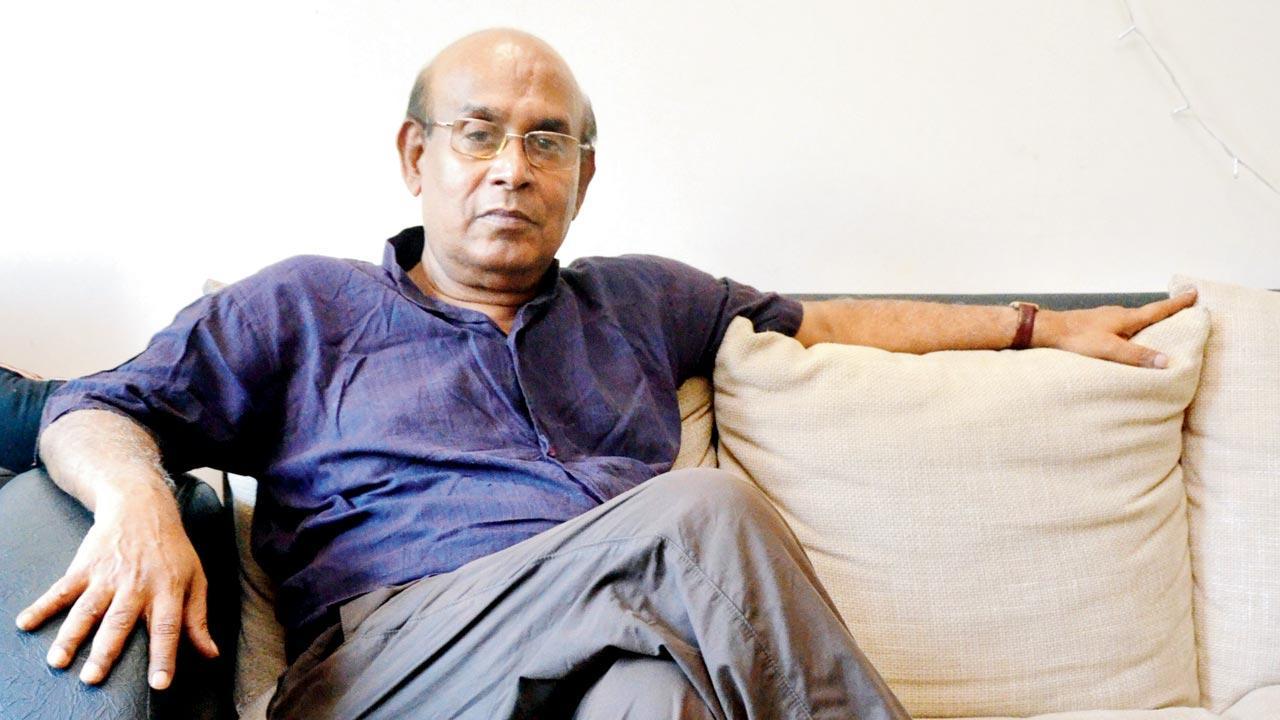
Prosenjit Chatterjee pays tribute to the legendary filmmaker, Buddhadeb Dasgupta, who passed away at 77
As told to Upala KBR (MID-DAY; June 11, 2021)
I was lucky to do two films with Buddha da – Swapner Din [2004] and Ami, Yasin Ar Amar Madhubala [2007]. Unfortunately, they never got a proper commercial release in India. Ami, Yasin Ar Amar Madhubala was screened at Toronto Film Festival and Swapner Din won the Best Film [gong] at the National Awards. He wanted me to do Kaalpurush [2005], where I was to play Mithun da’s [Chakraborty] son, but our dates didn’t match. [I couldn’t be part of] Uttara [2000] because I couldn’t go bald and put on weight [at the time].
Parallel cinema has a [restricted] budget, but we never asked for remuneration as we wanted to work in such films. When I went to meet Buddha da for the narration of Swapner Din, the first thing he told me was, ‘Ami tomake ekta gamchar taka debo [I can pay you the price of a cotton towel].’ I had to change my look to that of an ordinary boy and tone down my skin [colour]. He didn’t think that a successful mainstream hero would go out of his way, put his heart and mind into the role. He was happy. Buddha da would tell people, ‘Prosenjit is a dedicated director’s actor because he is always with the director — from the shoot to managing the sequences and coming up with solutions’.
Buddha da had a huge fan-following at international film festivals and his movies catered to that audience. Hence, all his movies had an international touch. The way he would set up his cameras, by putting one trolley on top of another, and choreograph their movements was different. He worked with the best cameramen and his lighting created magic. I remember we once shot with lanterns for a scene in a dhaba. [Despite] minimal light, it looked completely natural. If actors couldn’t understand the frame, Buddhada would call for me and ask me to rehearse with the rest of the actors.
Every sequence that I have shot with Buddha da was challenging. In Swapner Din, there was a chase sequence where the police were firing at us. Buddha da wanted a real gun for the shot [licensed and brought from Kolkata]. It was a scary moment for me, but dada wanted it. I will never forget that scene in my life. We did rehearsals and workshops at his home before the shoot began. He would take just two to three shots in a day. The first shot had to be filmed at 4.30-5 am to coincide with the sunrise. He considered it the magic hour. So, we rehearsed for the scenes at 2.30 am. [Post] 6: pm, it was pack-up unless there was a night scene. His shots were like one fully choreographed scene and if anything disrupted it — like a cow or person walking across the background — the scene would be shifted to the next day. Buddha da would not take another shot of the same scene that day.
Subscribe to:
Posts (Atom)