Showing posts with label Kaalkoot. Show all posts
Showing posts with label Kaalkoot. Show all posts
I would like to see some actors being papped outside an acting class too someday-Vijay Varma
4:38 PM

Renuka Vyavahare (BOMBAY TIMES; February 22, 2024)
No one does dancing-on-the-grave-derange better than Vijay Varma. Dahaad was a testament to his ability to take you to the darkest corner of the human psyche. While he excels at nailing unhinged parts, it was his big-hearted Moeen (Gully Boy) that made him a household name. From being overlooked at the red carpet to being stopped for a photo, he shared his journey with Bombay Times in a heartfelt chat on a quiet afternoon in his quaint seaside apartment in Mumbai. Excerpts..
Gully Boy put you on the map and it was a gamechanger for you. But it takes years of hard work to be an overnight success, isn’t it?
I belong to a Marwari family, born and raised in Hyderabad and we are into business. We don’t believe in education as that’s for people who want to do jobs and we do business (laughs). Before Gully Boy, there was a lot of trial and error, waiting, false starts, misstarts and non-starts. I was cast for something but that didn’t take off, did a film but it didn’t release, far too many defeats than victories. It was a tough 7-8 years of wait. Right before Gully Boy I was at my lowest low because I was waiting for some films to release. They finally released and did nothing for me. They went unnoticed. I felt I don’t stand a chance in the film industry. When Gully Boy casting happened, I went in all jaded thinking even if I do this film, no one is going to notice me anyway. I was so used to not being looked at. I had a small part in it (Moeen) and to my great fortune, it did wonders for me. It changed the course of my career. People didn’t want to know my name or look at my face before that. They didn’t care. It took me a decade just for casting directors to recommend my name to someone and that someone to know it. On the contrary, those who belong to film families, everyone knows them already and that’s a massive advantage.
How does it feel to be acknowledged and recognized today? You have come a long way.
It feels like insaaf hua hai. Justice has been served. This was in the works for long. It’s heartening to see that a lot of brilliant actors are getting the spotlight today. You need to up your game as well. From being a supporting actor to a leading man, it’s been quite a journey for me and it’s not a common graph. Irrfan was a massive inspiration for me because his journey was also tough. He became a pioneer of sorts, a role model for people like me. Also, you don’t always need to look outside. You need to have that insatiable hunger for work, and I have that even now. No appreciation should stop you from wanting to do more work.
The definition of a hero has also evolved over the years, isn’t it?
When we went to the film school, I remember there were people who taught horse riding, action etc because that was the making of a hero. Before that the focus was on voice and speech. Today it’s about ‘actor banna hai toh gym ja beta. Get the body and shed your clothes’. If you are someone who enjoys the gym, please go. If you think that it isn’t one of the main requirements for an acting job, you don’t need to. I would like to see some actors being papped outside an acting class too someday! It should be made fashionable to get papped outside an acting school.
As someone who excels at playing a range of dark characters, does the impact of a film or series on people weigh on your mind or do you view these roles as characters that exist in society, and hence deserve to be portrayed?
I want to act. I don’t want to be a role model because that’s a lot of weight on my shoulders. I am not a leader. I don’t want to change people’s lives. I want to have a great life myself. I am very clear about that. I want to make something of my life, and I have no other means to do that except through the work that I do. A role model is someone who is willing to take charge and be responsible for others’ choices and wellbeing. I don’t want the baggage of being a role model. I don’t have great leadership qualities either.
Isn’t cinema a catalyst for change though?
I was part of a film called ‘Pink’. It sparked a dialogue on ‘consent’ and made it a household conversation. ‘No means no’ became a thing so yes, cinema can be effective, but does it have the power to change the world? I don’t think so. Policies have the power to change the world. If you are a gullible vulnerable person who can be affected by certain content, you should be careful about what you watch. For someone like me who has an appetite for watching all kinds of stuff, I don’t think that can affect my life in a way that it can change me. It can give you an insight. It opens a door to looking at something that maybe I wasn’t looking at before but that’s about it. What I do with it is my choice, whether I act on it or not.
Glorification of negative characters has been an ongoing debate. Do you set any boundaries when you essay these characters?
I’ve played all kinds of men. Men who are terribly broken, evil, suffering, or torturing others. The projects that I have been a part of, never glorified these men. It has to do with how a director perceives the world. It’s their take, their moral and ethical graph. Actor is a medium for that story to be told and thus needs to be a blank slate or a canvas on which anything can be painted. If we start questioning the morality of each character, I don’t think I would be a part of any stories that I did. If I was too scared to play a serial killer or the wife-beating abusive husband, I wouldn’t have had the opportunity to play a deranged person, which is a lot of actors’ dream (role), to portray that unhinged side of human psyche. If I was trapped in the idea of masculinity, I wouldn’t have agreed to play a man who gets beaten by his wife and mother-in-law (Darlings). You must break these notions and step out of your comfort zone.
When people like you for taking the risk, it’s a different high. I also want to do roles where people say, “Isn’t he the sweetest” (laughs)! Kaalkoot is one of my favourite works. ‘Jaane Jaan’ was also quite refreshing for me as an actor. I am drawn to characters that surprise me. The reason I stay away from run of the mill roles is due to their predictability. I need to discover something new and discover myself through my roles.
Do you fear being stereotyped?
I did Pink at the time because I didn’t know the repercussions of playing a negative role. But soon after, I realized everyone wanted me to play a negative character. I was inundated with those offers. That was a wakeup call for me. People do start seeing you a certain way if something has worked. That’s when I chose to do different roles and not let that perception get to me. It just takes one good performance to break that stereotype and I knew I had that in me. I wasn’t worried because I knew I had Darlings, Jaane Jaan and Kaalkoot coming my way, too.
Sumit Saxena, sexuality educator Apurupa Vatsalya discuss how Kaalkoot challenges gender roles and toxic masculinity
8:08 AM
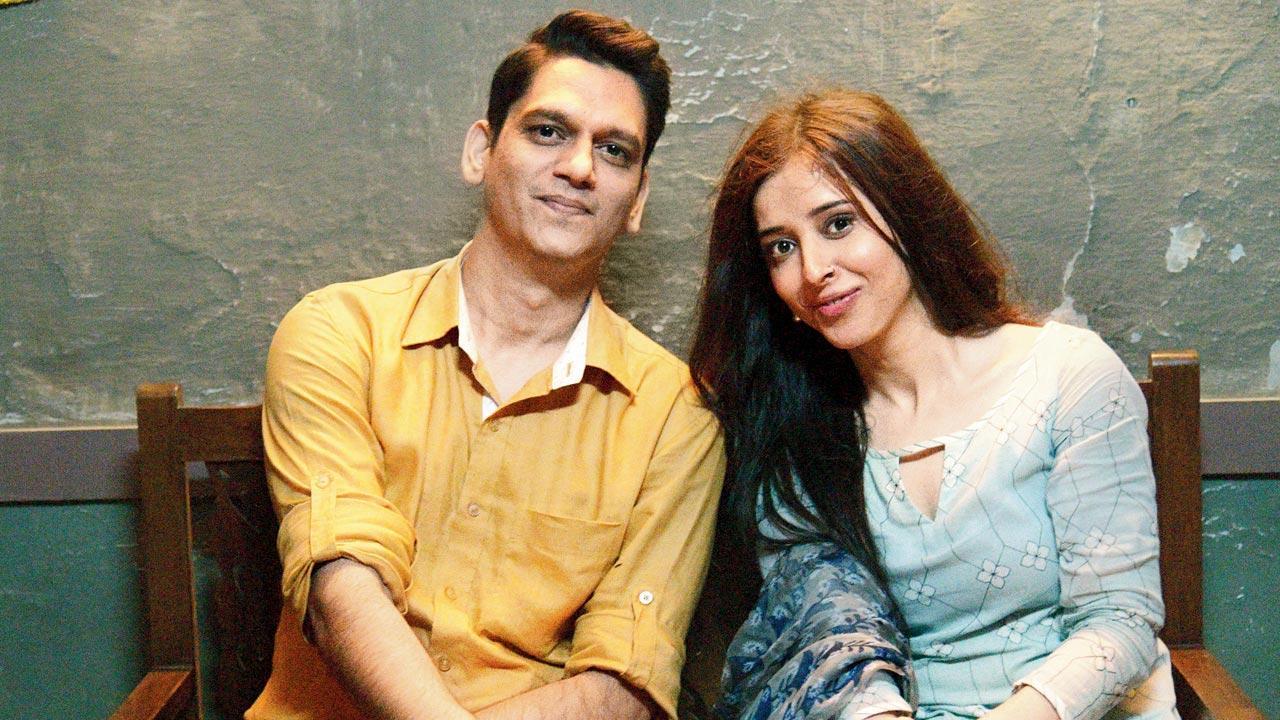
Vijay Varma and Suzanna Mukherjee in Kaalkoot
With Vijay Varma playing an unassertive cop in Kaalkoot, director Saxena and sexuality educator Vatsalya discuss how the show challenges gender roles and toxic masculinity
Letty Mariam Abraham (MID-DAY; August 1, 2023)
In a scene in Kaalkoot, we see Vijay Varma’s character, cop Ravi Shankar Tripathi, climbing a wobbly ladder, tentatively and hesitantly. His fear is only heightened by his boss, who hollers at him from below. Moments later, a junior cop climbs up the ladder swiftly, while Ravi is mocked for his inability to perform the task. The humiliation is repeated in another instance when he is unable to stand up to his boss in a game of badminton. Through these little snippets, Kaalkoot presents a meek, hesitant and quiet-mannered protagonist. And fortunately, a new gaze through which to look at a ‘hero’.
“When Kabir Singh [2019] released, it was lambasted for romanticizing toxic male behaviour. But there was another film, Bareilly Ki Barfi [2017], which wanted the audience to laugh at Rajkummar Rao’s character for not being ‘masculine’ enough. Now, if that is the kind of clown you create, then Kabir Singh is the kind of hero you will get. What we have tried to do in our show in the initial bits—when he looks unassertive, unambitious, and lost—is that we empathized with him,” begins writer-director Sumit Saxena.
Toxic masculinity
Kaalkoot sees Varma’s character investigating an acid attack case. In telling the tale of acid attack survivor Parul, essayed by Shweta Tripathi Sharma, the series delves into society’s distorted idea of masculinity, how that propagates toxic masculinity, and gender violence.
Sexuality educator Apurupa Vatsalya says the Jio Cinema offering holds up a mirror to society and challenges its notions that an ideal man is assertive, domineering and is the protector and provider. “At the outset, you see the hyper-masculine cops ridicule a fellow cop for being too empathetic. It is viewed as a character flaw. The suggestion is that he will not be capable as a cop because he is too emotional. He is doing all the macho things—riding a bike, investigating—and looks masculine, but because he is not assertive enough, he is suddenly incapable of his position. Toxic masculinity is sometimes ingrained. You’re not supposed to express your emotions or cry. They have grown up internalizing their emotions,” shares Vatsalya.
As the series progresses, it sheds light on the microaggressions that often denote toxic masculinity. In an instance, the cops are quick to determine that Parul must be a sex worker, after discovering a bottle of whiskey from her bag. Another scene sees two cops discussing slapping their wives for not being submissive and quiet—“haath chhoot jaata hai,” they say.
Breaking down such patterns, Vatsalya says, “I perceive toxic masculinity as when men do not have the opportunity and space to express and explore the wholeness of masculinity. It therefore spills out in ways that are harmful, not just for themselves, but also for the people around them. They subjugate women by slapping them, and disallow other men from expressing their identity.”
She adds that masculinity should not immediately be implied to be toxic. “There are beautiful expressions of masculinity. It’s important to also see whether a person, irrespective of their gender, is in touch with their masculinity and femininity, both.”
Toxicity not gender specific
The sexuality educator also highlights that toxic masculinity is not always gender-specific, women are often seen as gatekeepers of this mindset and behaviour. “Women also perpetuate this masculinity. So, these expressions of masculinity and femininity are gender-agnostic. If we then automatically move away from the notion that masculinity and femininity are equal to men and women respectively, we can then move away from the binary formula.”
In Kaalkoot, Saxena illustrated this point through the character of Rashmi. Envious of Parul’s beauty, confidence, and the attention she garners from men, Rashmi uploads Parul’s explicit pictures on an adult website and poses as her to talk to men. “One brute way would have been to cast Rashmi as someone who is oversized and has attention deficiency [from the opposite gender]. Instead, we showed her as an average-looking person, but who suffers from her own insecurities, which gave her [that vicious] personality,” explains Saxena.
Vatsalya agrees that misogyny stems from different markers and years of patriarchy, and makes us all victims. “The privilege of beauty is something we value. Unfortunately, it is based on how one appears, their body size, the complexion of their skin, and so on. Rashmi, like all of us, is victimized by the structure of patriarchy. We are raised with a scarcity mindset—we are taught constantly that women have few opportunities, we are fighting for the same few jobs and the same few men. We are taught and raised to be each other’s competition, and are not taught the values of sisterhood.”
The series, while offering commentary on society’s ills and prejudices, is equally cognisant of its protagonist’s shortcomings. Varma’s character calls off his marriage when he realizes that his fiancée has epilepsy. His anger stems from the fact that his fiancée hid the detail from him. As he evolves in the course of the narrative, he realises that he too harbours male entitlement and patriarchy—the very ideas that he claims to fight. Vatsalya, who is also a lawyer, explains this dichotomy.
“Nobody who is inflicting harm on another person is thinking of themselves necessarily as a perpetrator. They might be viewing themselves through a moralistic lens, and considering themselves the saviour or hero. Everyone is a hero in their own story, but they might be a villain in someone else’s story. When Vijay Varma’s character invites or rather tries to humiliate his fiancée by saying, ‘Have sex with me, then I will marry you,’ [he is using] sex and sexuality as a tool of control. This draws us back to [the clause of the ideal woman being a virgin]. The negotiations we make with patriarchy are not rational.”
Need for dialogue
Saxena and Vatsalya agree that the only way to combat misogyny or toxic masculinity is to have a constant dialogue about it, thus fighting our conditioning. The director asserts, “We must talk about whatever makes us uncomfortable. Clinical psychologist Jordan Peterson had noted that Voldemort in Harry Potter is called, ‘He who must not be named’. Why is that? Because the true nature of horror is unspeakable. So when you speak about the horror of life, it reduces [the conflict]. There is a sense of grim horror in the show. To end the horror, we must speak of it.”
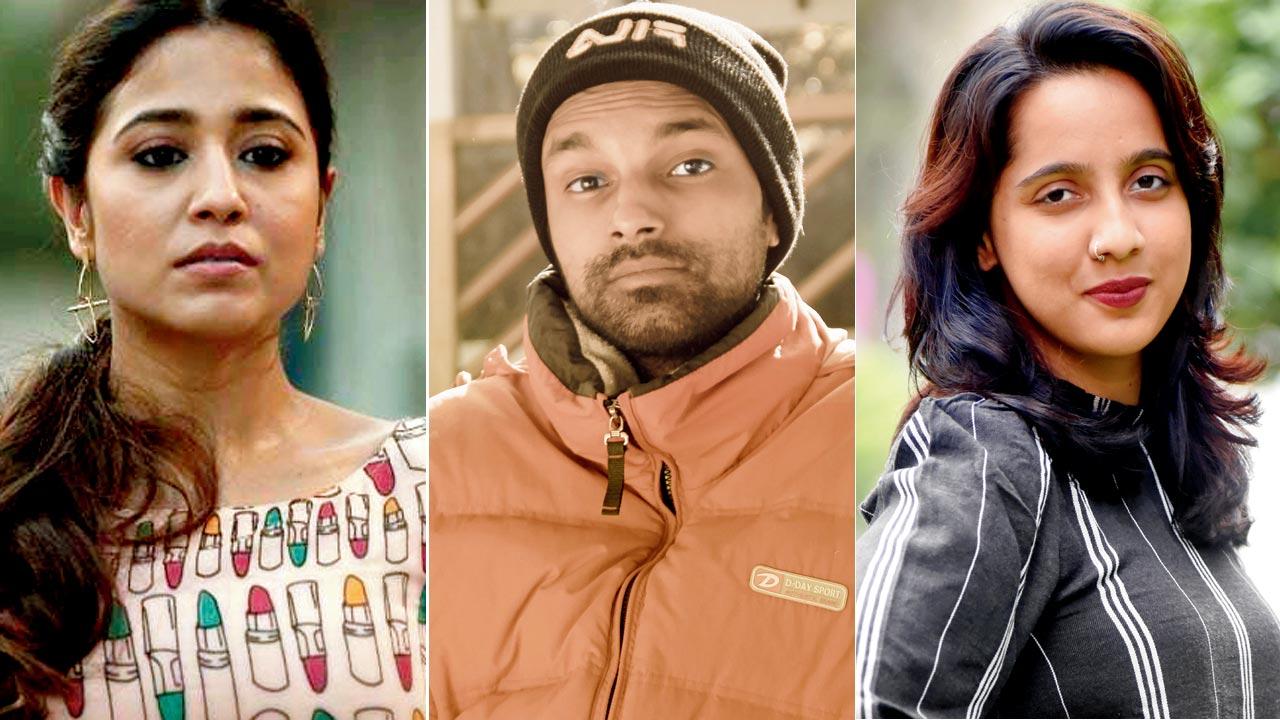
Shweta Tripathi, Sumit Saxena and Apurupa Vatsalya
Studios would say, ‘Who the f**k is Vijay Varma?’, says Kaalkoot writer-director Sumit Saxena
8:44 AM
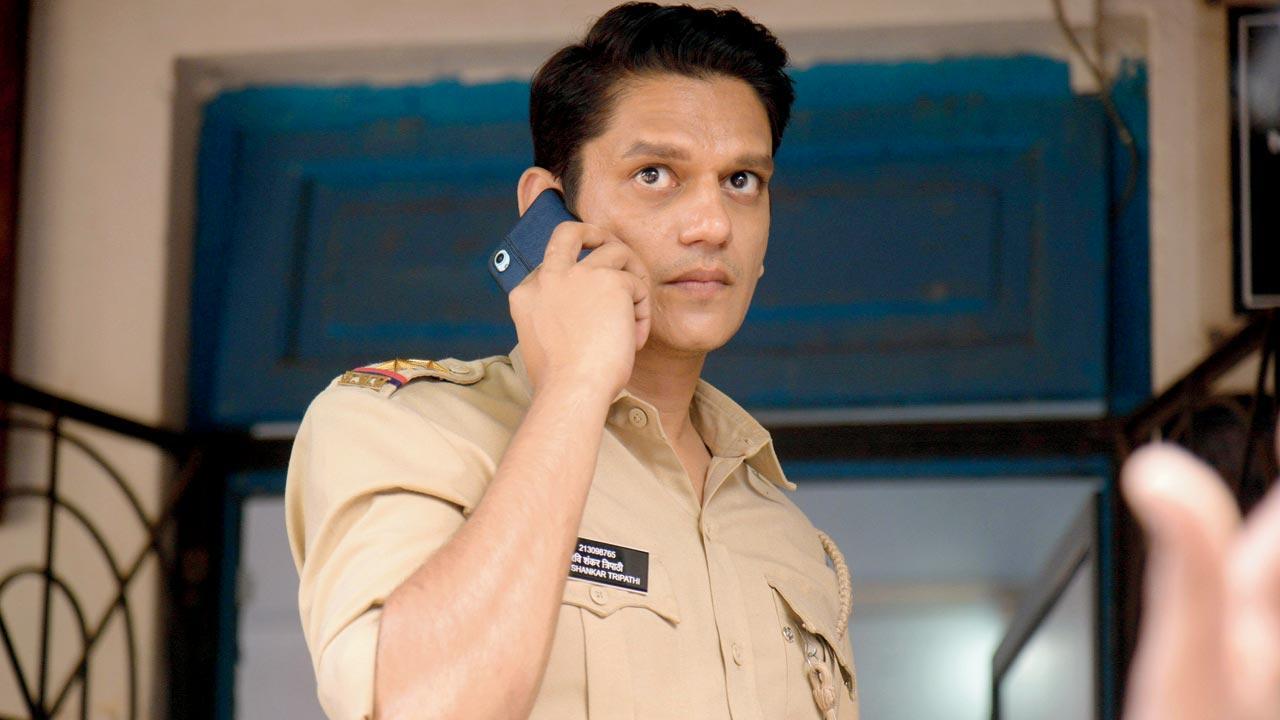
Director Sumit, who was pitching Kaalkoot to studios since 2016, on how he waited many years to make the series with Vijay
Letty Mariam Abraham (MID-DAY; July 29, 2023)
It speaks volumes about an actor’s calibre when a writer pens a story keeping him in mind. To Kaalkoot writer-director Sumit Saxena, Vijay Varma was always the only choice to lead his series. This, years before the industry woke up to the actor’s talent with Gully Boy (2019). “This was even before Pink [2016] happened,” Saxena highlights, underlining that he had developed the story in early 2016.
The director recounts that he knew Varma since 2008, and teamed up with him on a show titled Cheers in 2016. That was enough to tell him that the actor would be the perfect choice for the Jio Cinema series, which revolves around a police officer investigating an acid attack case.
“[After I wrote Kaalkoot], I had countless meetings with studios, where I showed them the script and asked them to cast Vijay. They would say, ‘Who the f**k is Vijay Varma?’ [In my head], I’d say, ‘There will be a time when you will know who he is.’ At the time, I told Vijay that I’d make the show with him some day, and that we would give a resounding clapback to all those who didn’t know him.”
Besides co-writing the series with Arunabh Kumar, Saxena penned poems that take the narrative ahead, often conveying a message. While some are uplifting, others are bold, sprinkled with expletives.
“You usually don’t hear cuss words in literary Hindi poetry. A literary artist fought with me over using Maa ch**** duniya in a poem. She argued that this is not how a great Hindi poet would ever write, and I said that was exactly my point,” he shares, adding that they wanted to show Varma’s on-screen father, portrayed by Tighmanshu Dhulia, as a liberal poet.
Another poem is titled Tumhari jaangon ke beech. The director emphasises that the idea is “not to titillate or entertain”. He says, “It’s a sincere poem, postdated by the late husband reminding his wife to move on after he is gone.”
Asked why he wanted Varma’s character to read out the poem to his mother, Saxena reasons, “The father wanted his son to be okay with his mother’s sexuality, to be okay with it if she chooses another partner after his death.”
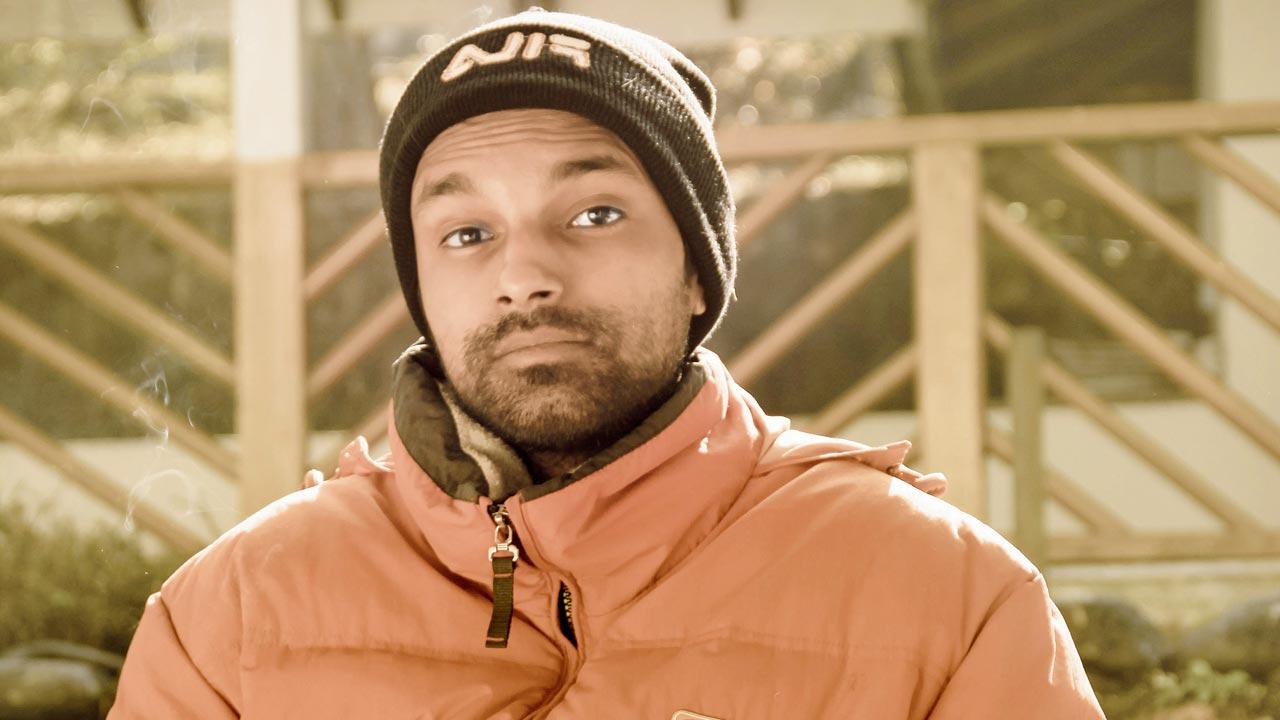
Men manufacture a certain idea of masculinity-Shweta Tripathi
8:50 AM
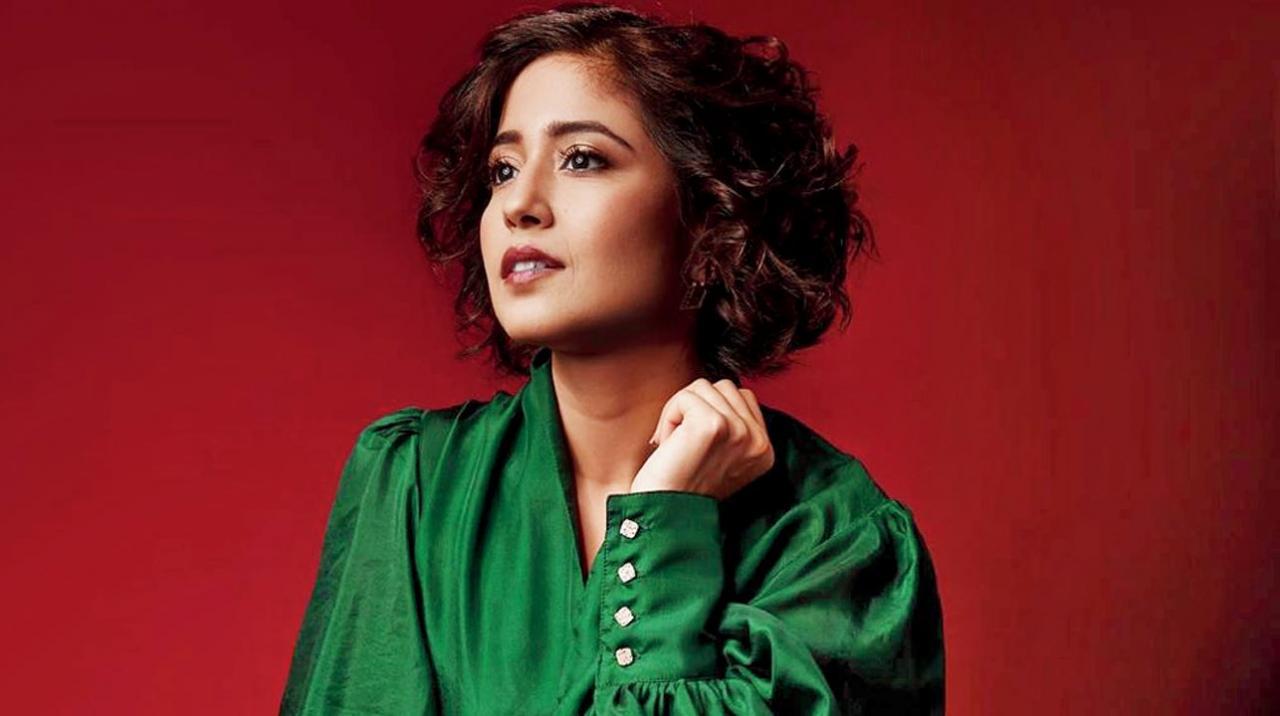
Leading Kaalkoot that delves into acid attack cases, Shweta says the show goes beyond to reflect toxic masculinity
Letty Mariam Abraham (MID-DAY; July 23, 2023)
Shweta Tripathi Sharma is inherently drawn to “tougher, edgier, and morally hazy roles.” Kaalkoot ticked the first box, giving her a powerful role. Couple that with the opportunity to work with director Sumit Saxena, and it was an instant yes from the actor.
“When I choose any project, the material, character, and story are of the utmost importance, but it is also important to know who the makers are. If you have a great script in the wrong hands, it isn’t [going to bear fruit]. I trusted Sumit’s vision because I had worked with him before on a short film,” says Tripathi.
The Jio Cinema series sees Tripathi play an acid attack survivor, while Vijay Varma essays an earnest cop who puts his might behind solving an acid attack case. As part of her research, she met a few acid attack survivors. While she struggled to keep her tears in check while listening to their stories, she drew from their strength.
“They were laughing, giggling, sharing stories, and telling me about their lives. Hats off to them because when something like this happens, you are changing not only their face or skin; you are changing who they are, their dreams, and who they want to be. No one has the right to change somebody’s life.”
Even as the crime thriller is centred on acid attacks, writers Saxena and Arunabh Kumar have gone beyond the subject to show how society sets unrealistic beauty standards and promotes toxic masculinity.
Emphasizing that validation comes from within, the leading lady says, “We live in a world of capitalism and consumerism, and the concept of beauty that we sell bothers me. Also, Ravi [Varma’s character] is often told that in order to be a good cop, he needs to project masculinity. This story also delves deeper into the reasons why men are the way they are in our society. They manufacture a certain idea of masculinity, a certain beauty standard, and [create a flawed ideal of] how a woman should be.”
I’ll ask my mother to watch Kaalkoot as I’m playing a nice guy after a long time-Vijay Varma
8:07 AM
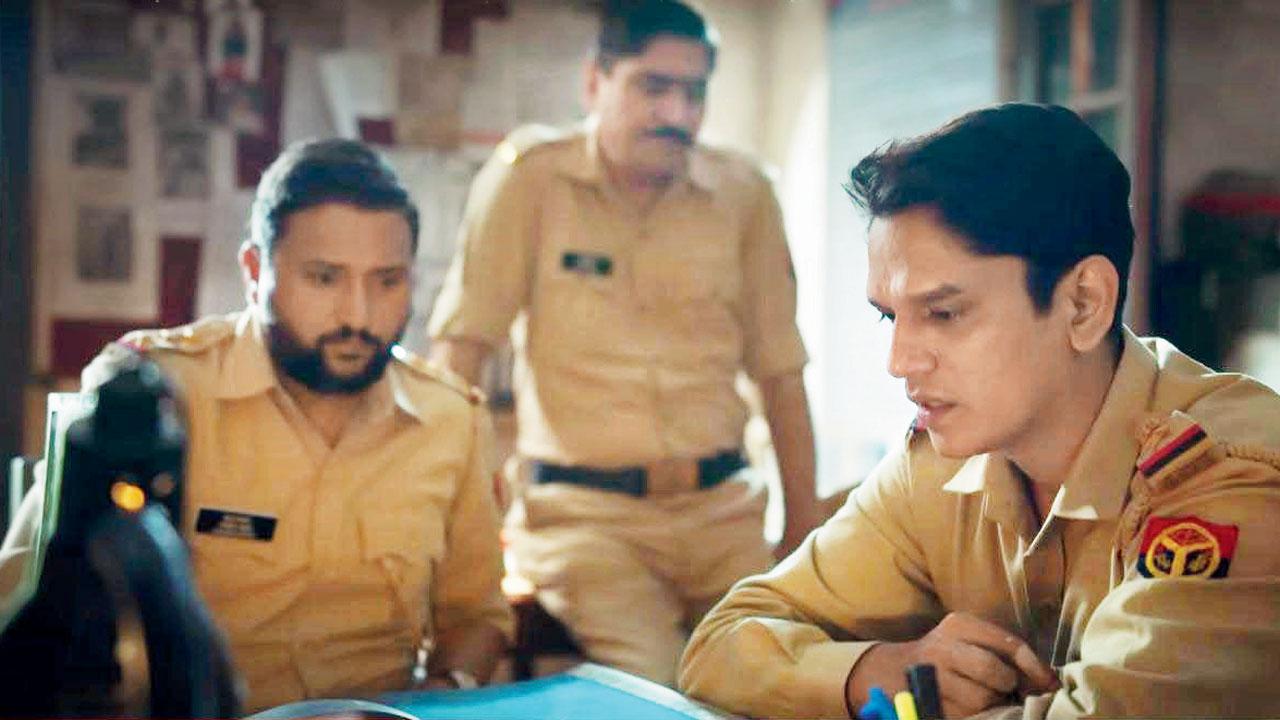
Admitting that his family hasn’t watched his last few offerings as he essayed negative characters, Vijay on the challenge of portraying a naïve cop in Kaalkoot
Upala KBR (MID-DAY; July 17, 2023)
When Vijay Varma says he found the script of Kaalkoot “unputdownable,” it carries weight. After all, here is an actor who seems to be attracting powerful stories—be it Darlings (2022) or Dahaad. But he had another reason to gravitate towards director Sumit Saxena’s crime drama. It has him portray a positive character after a spate of negative roles.
“Playing an idealistic, wide-eyed police officer like Ravi Shankar [his character in Kaalkoot] was a refreshing homecoming. In 2013, I started my journey as an actor by playing a police officer in Monsoon Shootout, and now after 10 years, I’m playing a similar role again,” he says.
The Jio Cinema series, also starring Shweta Tripathi Sharma, revolves around Varma’s cop who initially seems unfit for the job, but throws himself into it when a case hits too close to home. “He steadily understands himself through his work. I have been part of some good dramas, but Kaalkoot was unputdownable. It starts with an acid attack case, and then, over eight episodes, delves into how other characters are involved in such attacks.”
Varma is known to dive deep into research and prep for his roles, and it was no different for Kaalkoot. Since the story is set in Prayagraj, he worked with a diction and voice coach to perfect the accent.
“The bigger challenge was to find the naiveté of an inexperienced idealist. To be naïve is tough for so-called thinking actors. In Kaalkoot, it was my personal pursuit to act dumb.”
Barring the upcoming series, playing complex and troubled characters has become the actor’s calling card. Surely, such characters must not be easy to shake off after the shoot. Varma has a simple “detox” process.
“When a character gets to me, I go and talk to my mother. I step out of my character and become her son again. That’s the best form of love any actor can have to become themselves again. The talk brings me back to reality.”
So, will he show the crime drama to his mother? “It has been a while since I have asked my family to watch anything as I play dark characters. But I’ll ask my mother to watch this because I’m playing a nice guy after a long time,” he laughs.
Subscribe to:
Posts (Atom)